
Crypto World
Bitcoin Chart Flashes Golden Cross. Is the Bear Market Finally Over?

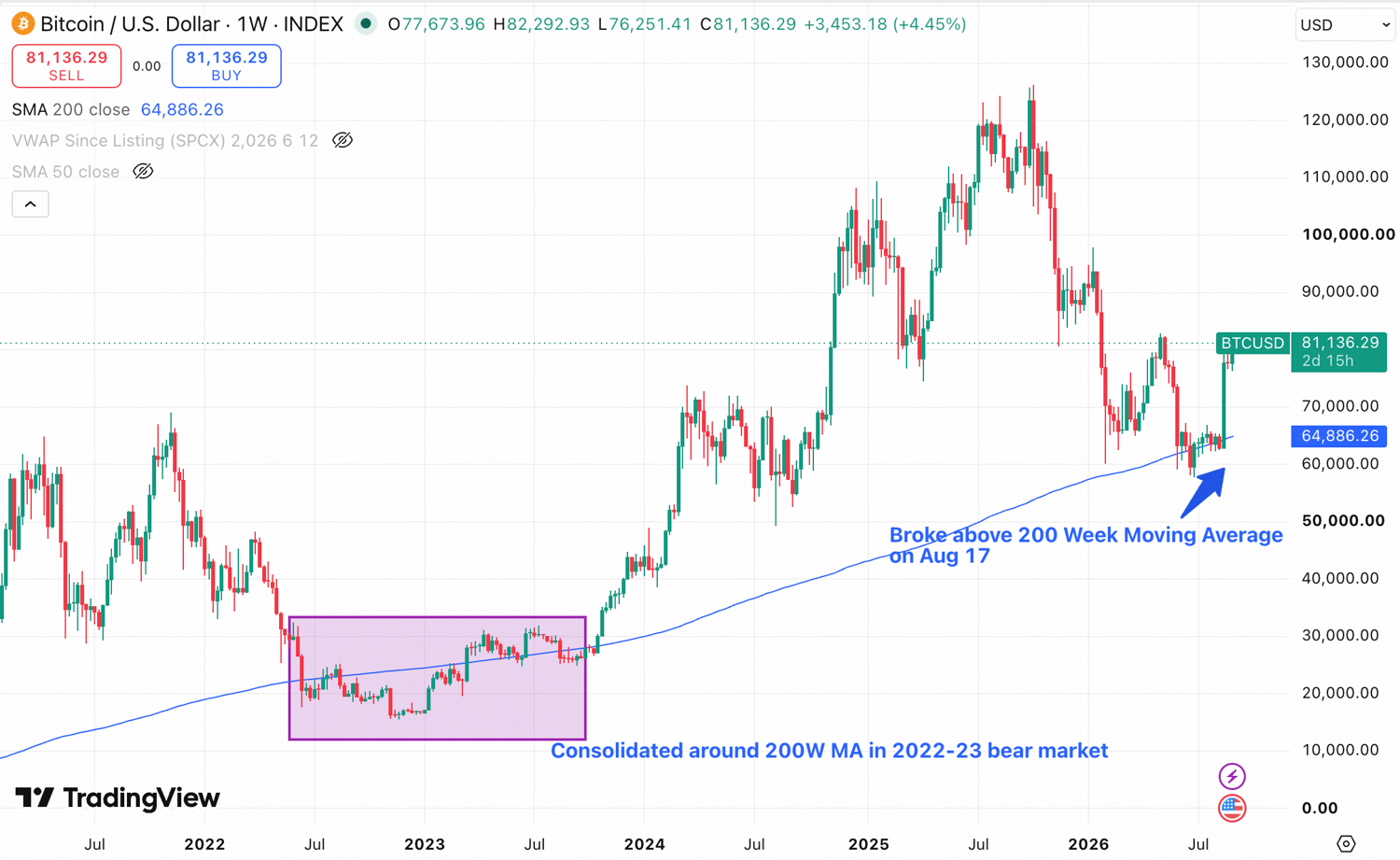
After its strongest August since 2017, Bitcoin (BTC) has faced renewed volatility in September as hawkish Fed signals and strong jobs data pressure risk assets.
Yet, the daily chart has flashed a key bullish signal: a golden cross that bulls have awaited for almost a year. The setup has sparked optimism among analysts that the bear market may finally be over.
But is the signal strong enough to confirm a lasting trend reversal?
Analysts at BloFin note this is the first such crossover since the death cross of November 2025. In Bitcoin’s history, the same setup has usually preceded significant rallies. However, the analysts argued that critical confirmation is still missing.
Bitcoin’s Golden Cross Comes With a Weekly Asterisk
A golden cross forms when a shorter-term moving average moves above a longer-term one. Traders read it as a sign that a trend is turning up.
Bitcoin last recorded a golden cross in May 2025, and the asset went on to set a new all-time high in October. It gained more than 16% during that period.
BloFin’s confirmation framework sits on the weekly chart rather than the daily one. The desk uses the 200-week moving average (200W MA) to identify where long-term bottoms form, and treats the 50-week moving average (50W MA) as the stronger test of a new trend.
Bitcoin trades above its 200W MA and below its 50W MA. It has met the first condition but not the second.
Why the 200-Week Moving Average Matters For Bitcoin Price Direction
Bitcoin has spent most of its history above the 200W MA, and its lowest prices in a cycle have generally formed around the level. That happened in 2015 and 2018, and BTC briefly returned to the area during the March 2020 crash.
The 2022 cycle broke from that precedent. Bitcoin fell below the 200W MA and stayed there while the market absorbed a series of major deleveraging events. The FTX collapse added further pressure later that year.

BTC set its cycle low beneath the indicator, then recovered and reclaimed the level during the subsequent rebound.
According to BloFin, the 200W MA has never posted a weekly decline. Four years of long-term appreciation have kept the average moving higher.
Bitcoin’s 200W MA Differs From Stocks and Gold
That steady climb is not a general property of long-term averages. BloFin Research noted that the S&P 500’s 200-week MA has lost momentum during prolonged periods of weak performance.
The index stagnated for parts of the 1960s and 1970s. The dot-com crash and the 2008 crisis then prolonged weakness from 2000 to 2012.

Gold followed a similar pattern. After the metal peaked in 2011, its 200W MA flattened and eventually turned lower during the multi-year decline that followed.

Trading above the 200W MA still does not answer whether the bear market has ended. Bitcoin can consolidate near the level for months before a durable recovery takes shape, as it did through 2022 and 2023.
The 50-Week Bullish Signal Bitcoin Has Yet To Reclaim
Bitcoin’s past cycles give traders a stronger reason to watch the 50W MA. The level has repeatedly separated major recoveries from temporary relief rallies.
Bitcoin lost this average during the downturns of 2014, 2018, late 2021, and late 2025.

The opposite happened during cycle recoveries. Bitcoin reclaimed the 50W MA in 2015, 2019, and 2023, and each time a longer-term uptrend followed.
A golden cross can signal improving momentum on the daily chart. Reclaiming the 50W MA would extend that improvement to the weekly trend BloFin uses to date cycle turns.
A weekly close above the level would be the first step. Holding it would show that resistance has turned into support.

BloFin flags a trade-off in waiting for that. By the time Bitcoin reclaims the 50W MA, the price may already sit well above its cycle low.
Traders who wait for the confirmation may miss part of the initial rebound. What they gain is stronger evidence that the market has left its previous bear-market structure behind.
The post Bitcoin Chart Flashes Golden Cross. Is the Bear Market Finally Over? appeared first on BeInCrypto.


U.S. Bank says it has successfully completed a live cross-border payments pilot using its proprietary USBDC stablecoin issued on the public Stellar network. The test involved transfers between U.S. Bank entities in North America and Europe, while also exercising key stablecoin controls such as minting, redemption, freezing, and clawback.
The bank described the pilot as a validation of its internally developed Digital Asset Platform, which is designed to connect tokenized assets and stablecoin operations with existing banking risk, compliance, and operational systems. U.S. Bank said Wednesday that it is now evaluating additional use cases, including cross-border treasury operations, liquidity management, and moving collateral onchain.
Key takeaways
- U.S. Bank completed a live cross-border payment test with USBDC on Stellar, transferring value between entities in North America and Europe.
- The pilot included not just transfers, but also operational stablecoin capabilities like minting, redemption, freezing, and clawback.
- U.S. Bank framed the exercise as proof of its Digital Asset Platform’s ability to integrate stablecoin workflows with traditional bank controls.
- The bank is exploring next-step applications such as onchain collateral movement and cross-border treasury and liquidity management.
USBDC pilot targets real payment and stablecoin controls
According to U.S. Bank, USBDC was issued and transferred on the public Stellar blockchain during the pilot. Unlike smaller demonstrations that focus primarily on technical connectivity, this test centered on a banking-grade flow: moving funds between separate U.S. Bank entities across regions, with the stablecoin acting as the settlement mechanism.
Importantly, U.S. Bank said the trial also validated the stablecoin’s administrative and risk features—specifically minting and redemption, as well as the ability to freeze and claw back funds. For banks, those controls are not optional “nice-to-haves”; they are central to compliance and operational governance when tokenized value is used outside of internal ledgers.
U.S. Bank linked the results to its Digital Asset Platform, a system the bank has been building to bridge tokenized assets and traditional banking infrastructure. The bank’s emphasis on integration with risk, compliance, and day-to-day operations suggests the institution is trying to move beyond proof-of-concept toward something that can fit within existing regulatory and internal control frameworks.
Digital Asset Platform becomes a bridge between banking and token rails
U.S. Bank said the transaction helped confirm that its Digital Asset Platform can connect the stablecoin lifecycle to established banking workflows. In practical terms, that means the institution is working to ensure that token issuance and transfer activity can be managed with the same operational disciplines used for conventional banking systems.
The bank is also exploring broader applications for the platform. U.S. Bank specifically pointed to cross-border treasury operations and liquidity management, along with moving collateral onchain—areas where the operational overhead of settlement and the speed of fund movement can materially affect how financial institutions manage capital and risk.
The bank’s framing matters for investors and market participants because it highlights a recurring theme in institutional stablecoin adoption: the technology itself is only part of the story. The ability to integrate with compliance, governance, and operational monitoring often determines whether a pilot can progress into a repeatable product.
U.S. Bank expands on earlier Stellar work
This cross-border pilot builds on U.S. Bank’s earlier digital asset efforts. The bank said it launched a dedicated Digital Assets and Money Movement organization in October 2025 focused on stablecoin issuance, crypto custody, asset tokenization, and digital money movement. That internal structure indicates the project has been treated as a longer-term initiative rather than a short-lived experimental desk.
U.S. Bank also previously indicated that it has been testing custom stablecoin issuance on Stellar since at least November 2025. In that earlier phase, the bank said it was working alongside PwC and the Stellar Development Foundation. Taken together, the timeline suggests the institution has moved from stablecoin issuance testing on a blockchain to a broader operational exercise that includes cross-border transfers and full stablecoin administrative functions.
Readers watching the institutional stablecoin space should note what appears to be the bank’s progression: first establishing the issuance capability and ecosystem partnerships, then refining operational mechanics, and finally running a live cross-border settlement scenario designed to stress the operational and governance layer.
Broader banking stablecoin momentum continues
U.S. Bank’s announcement lands as the wider banking sector continues to accelerate stablecoin projects, even as parts of the industry have pushed back on how stablecoins should be allowed to behave in markets.
Earlier coverage from Cointelegraph noted that American banks have raised objections to proposals that would let stablecoin issuers and crypto platforms offer yield or rewards. Even so, major lenders and financial institutions are still moving ahead with their own token plans, often positioning them around payments, settlement, and institutional workflows rather than consumer yield incentives.
Cointelegraph also reported that on Sept. 1, 21 large financial institutions—including Bank of America, Citi, Goldman Sachs, Deutsche Bank, and UBS—announced plans to form a company to issue stablecoins. The group’s plan, as described in that reporting, is to launch a U.S. dollar-denominated stablecoin in the first half of 2027 before expanding to other G7 currencies, with a target spanning wholesale, institutional, and retail use cases. The stated focus includes cross-border payments and digital asset settlement.
Separately, Fidelity has already entered the stablecoin market with its Fidelity Digital Dollar (FIDD), issued through Fidelity Digital Assets and available to retail and institutional investors. According to DefiLlama data referenced by the original coverage, FIDD had about $50 million in circulation at the time of writing, with DefiLlama providing ongoing stablecoin supply tracking: DefiLlama—Fidelity Digital Dollar.
For market participants, these parallel efforts underscore that the industry is not waiting for a single “breakthrough” policy moment. Instead, large banks appear to be pursuing stablecoin infrastructure that can support cross-border and settlement use cases while they work through regulatory and market-structure questions.
Next, investors and builders should watch whether pilots like this translate into broader deployments with measurable adoption—such as increased settlement frequency, expanded corridor coverage, or more formal linkage to treasury and collateral workflows—and how institutions manage stablecoin governance features under real-world regulatory scrutiny.


The Hyperliquid Policy Center has asked a federal court to dismiss CME Group’s lawsuit against the CFTC, arguing that the derivatives exchange lacks standing and cannot rely on the Commodity Exchange Act provisions cited in its complaint.
Summary
- HPC says CME has not shown a competitive injury caused by the CFTC’s decision.
- The group argues CME’s commercial interests fall outside the relevant Commodity Exchange Act protections.
- CME wants the court to overturn the approval of Kalshi’s Bitcoin perpetual futures contract.
- The CFTC has separately requested dismissal, with CME due to respond by Oct. 2.
Hyperliquid policy group disputes CME’s standing
The Hyperliquid Policy Center said in a Tuesday X announcement that it had submitted an amicus brief supporting the Commodity Futures Trading Commission in its legal fight with CME. An amicus filing allows a person or group outside a case to offer arguments that may help the court consider the dispute.
HPC, an advocacy group with ties to the Hyperliquid Foundation, based its request on two alleged defects in CME’s case. Its first argument concerns whether CME has suffered the type of injury required to bring the lawsuit in federal court.
CME has relied on a legal principle known as competitor standing. Under that doctrine, a business may establish an injury when government action increases competition in a defined market and creates a predictable economic disadvantage for the company bringing the case.
According to HPC, the CFTC’s decision does not meet that standard because it allows every registered U.S. futures exchange, including CME, to seek approval for comparable perpetual products.
“The CFTC order it challenges does nothing of the kind,” the group said while rejecting CME’s competitor-standing argument.
Rather than placing CME under different rules from its rivals, the agency’s policy provides registered exchanges with a route to list perpetual futures if their products comply with the Commodity Exchange Act and CFTC regulations. HPC therefore contends that CME cannot treat its decision not to use the same route as an injury caused by the regulator.
A recent dismissal request from the CFTC made a similar argument. The regulator told the court on Sep. 2 that CME could seek permission to list comparable contracts and described any disadvantage created by its refusal to do so as “self-inflicted.”
The CFTC also cited CME’s trading data, noting that its Bitcoin and Ether futures volumes in June and August exceeded the levels recorded in May, when Kalshi’s contract received approval. According to the agency, the figures weaken CME’s claim that the decision produced a concrete competitive loss.
CME’s interests may fall outside CEA protections
HPC’s second objection focuses on the “zone of interests” test, which examines whether a plaintiff’s concerns relate to the purposes of the law it has invoked.
In its brief, the group argued that “CME is an unsuitable challenger because its interests fall outside the zone of interests of the CEA provisions it invokes.”
CME’s lawsuit relies on sections of the Commodity Exchange Act that govern how derivatives products are classified and approved. HPC maintains that the exchange is using those provisions to protect its commercial position rather than an interest Congress intended the law to cover.
The CFTC raised the same issue in its motion, arguing that the relevant parts of the Act do not protect an established exchange from lawful competition. A judge could dismiss the case on standing or zone-of-interests grounds without deciding the main question of whether perpetual contracts qualify as futures or swaps.
HPC also accused CME of using the lawsuit to restrict product development in U.S. derivatives markets. Since the CFTC’s decision applies to registered futures exchanges, the group said CME remains free to list a similar instrument but has chosen to challenge another venue’s approval.
“At least for now, CME has decided not to. But instead of leaving other futures exchanges to make their own commercial decisions, CME has asked a court to take the decision out of their hands,” HPC said. “We filed this brief because CME’s anticompetitive effort must fail.”
CME lawsuit centers on futures versus swaps
Filed in the U.S. District Court for the District of Columbia on June 18, CME’s complaint challenges the CFTC’s May 29 approval of Kalshi’s BTCPERP contract and an agency policy statement addressing perpetual futures.
Perpetual contracts track an underlying asset without carrying a fixed expiration date. Funding payments between long and short traders help keep their prices aligned with the referenced market, allowing positions to remain open without traders having to move into a later-dated contract.
CME argues that the lack of a fixed expiry means the products are swaps under the Dodd-Frank Act rather than conventional futures. According to its complaint, the CFTC departed from its previous treatment of similar instruments and created a new regulatory approach without completing a formal rulemaking process.
The exchange has asked the court to vacate Kalshi’s approval and the related policy statement. Its complaint also alleges that the regulator acted arbitrarily and bypassed requirements established by Congress.
As earlier legal coverage from crypto.news explained, the classification determines which trading, registration, and oversight requirements apply. Treating the contracts as futures gives designated contract markets a more direct route to list them, while a swap classification would place the products under a different part of the federal derivatives framework.
The CFTC maintains that the Commodity Exchange Act does not require a futures contract to have a fixed expiration date. It reviewed Kalshi’s application under Regulation 40.3, which permits a designated contract market to request formal approval for a new product.
After assessing BTCPERP, the regulator found that the contract complied with the act and its rules. The agency also said the approval did not mean every perpetual design would qualify, as proposed contracts could still require individual review based on the underlying asset and product terms.
Kalshi was not named as a defendant in CME’s lawsuit. Coinbase, which received related regulatory relief for certain perpetual products, was also not named.
U.S. perpetual futures market continues to expand
For American traders, the court case could affect which regulated platforms can offer perpetual contracts and which legal framework applies to the products. Perpetuals had long been concentrated on offshore crypto exchanges, where access and leverage terms often differ from those permitted at CFTC-regulated venues.
Kalshi has continued adding contracts while the case remains pending. In June, the exchange filed for HYPE perps after rolling out Bitcoin and Ethereum perpetual futures for U.S. customers. The submission placed Hyperliquid’s native token among several crypto assets targeted for regulated derivatives products.
Hyperliquid itself operates an offshore decentralized perpetual exchange and restricts direct access from the United States. A separate route into the U.S. market could come through regulated infrastructure rather than opening the existing platform to American users.
In August, Hyperliquid Labs and Kraken parent Payward entered advanced discussions about offering selected Hyperliquid-linked contracts through Bitnomial, a CFTC-regulated derivatives exchange owned by Payward. Under the reported structure, eligible U.S. traders would access selected products through Bitnomial instead of connecting directly to Hyperliquid.
Payward has presented the proposed arrangement to the CFTC, according to Bloomberg, but the parties have not announced regulatory clearance, a launch date, or the contracts that could be included.
Meanwhile, the CFTC’s dismissal motion has moved the CME case into its next procedural stage. CME must submit its response by Oct. 2, after which the regulator may file a reply, and the court will decide whether to dismiss the action or proceed to CME’s claims over the classification and approval process.
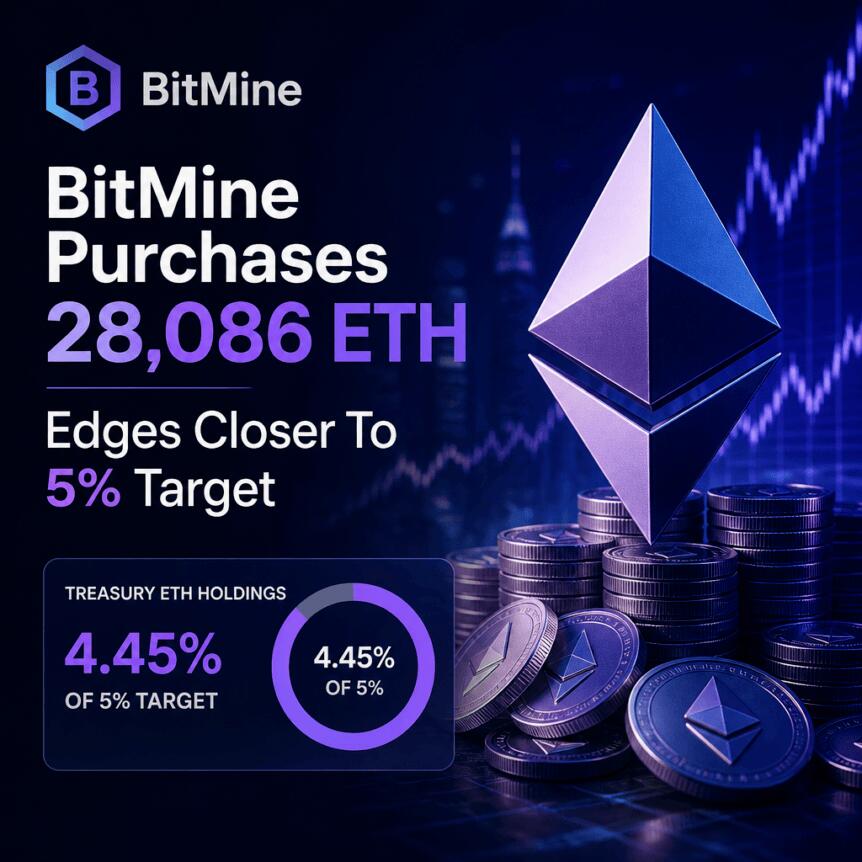
BitMine Immersion Technologies acquired 28,086 ETH for around $70.1 million last week. The purchase takes the Ethereum Treasury company’s total holdings to 5.93 million ETH, 4.9% of the token’s circulating supply.
Chairman Tom Lee is bullish on ETH, citing positive crypto legislation, tokenization, and blockchain-based AI as positive market developments.
BitMine Announces ETH Purchase
According to a treasury update, BitMine held 5,929,198 ETH as of September 7, following its latest purchase. The purchase was completed at $2,495 per token, with the company’s total holdings valued at around $14.79 billion. BitMine began purchasing ETH on June 30, 2025, with Lee stating the company has added ETH every week since.
BitMine’s previous purchase saw the company acquire 53,501 ETH, taking its total holdings to 5,901,112 ETH as of August 30. Other weekly purchases include 9,926 ETH in the week ending August 16, and 32,447 in the week after.
BitMine also disclosed it was close to reaching its target of owning 5% of Ethereum’s total supply. The company needs to hold approximately 6.1 million ETH to meet its target, a figure it calls the “Alchemy of 5%.” The company currently is 170,802 ETH short of its target, although this figure can change as Ethereum’s total supply fluctuates.
BitMine also disclosed it held 211 BTC, a $180 million stake in Beast Industries, a $91 million investment in Eightco Holdings, and $593 million in cash and marketable securities. The company valued its combined crypto, cash, securities, and strategic investments at $15.7 billion.
Staked ETH Revenue
BitMine also disclosed it had staked 5,067,309 ETH through the Made in America Validator Network and other external staking partners. The company’s staked position is worth around $12.6 billion at its reference price of $2,495 and accounts for 85% of its holdings. The company has estimated its staked ETH could bring in $330 million in annualized staking revenue, based on a seven-day annualized yield of 2.61%. If BitMine stakes its entire ETH holdings, it could generate $386 million in revenue. However, these figures are projections, not fixed revenue.
Staking is an important revenue generator for BitMine. A treasury report revealed the company generated $45.7 million through staking and validation in three months ending May 31, which is 98% of its quarterly revenue of $46.5 million. Staking also supports BitMine’s preferred stock structure. The company’s Series A Perpetual Preferred Stock trades on the New York Stock Exchange. Lee has also said the company’s staking income could be used to fund preferred share dividend payments.
AI and Tokenization Could Support Ethereum
Lee has maintained a bullish outlook on ETH and other prominent cryptocurrencies, including BTC. Lee also stated that ETH outperformed the S&P 500 during the third quarter, making it the best-performing macro asset. He identified ETH, BTC, and SOL as the market’s strongest performers since June 30, arguing that institutional investors may want to increase their exposure to these assets.
“We believe there are multiple positive catalysts as we head into the final months of 2026.”
Lee named the upcoming vote on the CLARITY Act, tokenization, renewed crypto purchases, and the growing use of blockchains by AI agents. Lee believes tokenization and AI could benefit Ethereum more compared to Bitcoin. The BitMine chairman has previously linked Ethereum demand to blockchain and AI, and predicted that ETH will outperform BTC during the ongoing market cycle, witnessing growth similar to the 2017-2018 cycle, when ICOs supported price action, and 2020-2021, when NFTs drove network activity.
Disclaimer: This article is provided for informational purposes only. It is not offered or intended to be used as legal, tax, investment, financial, or other advice.

Brentwood, TN – (September 9, 2026) — Canary Capital Group LLC (“Canary Capital”), a digital asset investment management firm, today announced the launch of the Canary Staked TRX ETF (Ticker: TRXS). The Fund seeks to provide exposure to the spot price of TRX, the native utility token of the TRON blockchain network.
In addition, the Fund also seeks to earn additional TRX through participation in the TRON network’s delegated proof-of-stake validation process, with net staking rewards reflected in the Fund’s net asset value.
“The Canary Staked TRX ETF brings investors exposure to one of the world’s largest blockchain settlement networks through a registered exchange-traded structure, while also enabling investors to benefit from potential staking rewards,” said Steven McClurg, CEO of Canary Capital. “As stablecoin adoption continues to grow globally, TRON has become a critical piece of the infrastructure powering digital asset payments and settlement. We believe investors are increasingly looking beyond digital assets themselves and toward the networks driving real-world blockchain adoption.”
TRON has emerged as one of the leading blockchain networks for stablecoin activity, supporting more than $94 billion in circulating Tether (USDT). The chain also processes the highest USDT transfer volume of any blockchain, totaling approximately $5.6 trillion year-to-date. Known for its speed, scalability, and low transaction costs, the TRON network serves as critical infrastructure for decentralized finance, global payments, and blockchain-based applications.
The TRON network is governed by TRON DAO, the community-governed Decentralized Autonomous Organization (DAO) dedicated to accelerating the decentralization of the internet through blockchain technology and decentralized applications (dApps).
“The launch of the Canary Staked TRX ETF demonstrates the growing recognition of the TRON network as critical infrastructure for the global digital economy and provides institutional investors with a new way to access a network that is already powering real-world financial activity at scale,” said Justin Sun, Founder of TRON. “We appreciate Canary Capital’s leadership in bringing TRX to the ETF market and welcome innovations that broaden investor participation in the TRON network while advancing the integration of blockchain infrastructure into traditional financial markets.”
With the launch of the Canary Staked TRX ETF (TRXS), Canary Capital continues its mission to make digital asset investing simple, secure, and accessible while expanding investor access beyond Bitcoin and Ethereum into the next generation of blockchain infrastructure.
For more information on TRXS, click here.
Media Contacts
Canary Capital
media@canaryetfs.com
TRON
About Canary Capital
Canary Capital is an investment management firm that blends rigorous risk management, strategic foresight, and innovative thinking to deliver private placement strategies, crypto hedge fund solutions, treasury management solutions, and publicly traded funds, with a focus on enterprise technology.
About TRON DAO
TRON DAO is a community-governed DAO dedicated to accelerating the decentralization of the internet via blockchain technology and dApps.
Founded in September 2017, the TRON blockchain has experienced significant growth since its MainNet launch in May 2018. Today, TRON hosts the largest circulating supply of USD Tether (USDT) stablecoin, which currently exceeds $94 billion. As of September 2026, the TRON blockchain has recorded over 403 million in total user accounts, more than 15 billion in total transactions, and over $28 billion in total value locked (TVL), based on TRONSCAN. Recognized as the global settlement layer for stablecoin transactions and everyday purchases with proven success, TRON is “Moving Trillions, Empowering Billions.”
TRONNetwork | TRONDAO | X | YouTube | Telegram | Discord | Reddit | GitHub | Medium | Forum
Disclosures and Risk
The Canary Staked TRX ETF (Ticker: TRXS) is an exchange-traded product that is not registered under the Investment Company Act of 1940 (the “1940 Act”) and therefore is not subject to the same regulations and protections as ETFs and mutual funds registered under the 1940 Act. Investing involves risk, including the possible loss of principal. An investment in TRXS is subject to a high degree of risk and heightened volatility and is not suitable for investors who cannot afford the loss of their entire investment.
The Fund’s investment objectives, risks, charges and expenses should be considered before investing. The prospectus contains this and other important information, and it may be obtained at https://canaryetfs.com/trxs/prospectus/. Read it carefully before investing.
An investment in TRXS is not a direct investment in TRX. Staking rewards are not indicative of the Fund’s performance, are not guaranteed, and may change frequently, including experiencing significant declines.Digital assets, such as TRX, are a relatively new asset class, and the market for digital assets is subject to rapid changes and uncertainty. Digital assets are largely unregulated and digital asset investments may be more susceptible to fraud and manipulation than more regulated investments.
TRXS is subject to rapid price swings, including as a result of actions and statements by influencers and the media, change of assets, and other factors. There is no assurance that TRXS will maintain its value over the long-term.
Staking provides the Trust with the opportunity to create and earn additional TRX. The Trust will be entitled to all TRX generated by the Trust’s staking, after deduction of certain staking-related expenses. This additional TRX will increase the net assets of the Trust, benefiting Shareholders. Certain of such TRX may be treated as income to the Trust and may be held for future distribution to Shareholders, subject to procedures and requirements disclosed elsewhere in the Prospectus.
Staking comes with a risk of loss of TRX. None of the Fund’s assets, including any staked assets, are subject to the protections enjoyed by depositors with Federal Deposit Insurance Corporation (“FDIC”) or SIPC member institutions. The staked assets may also be subject to “slashing” penalties. Slashings occur when a validator attests to two different histories of the chain and penalties occur when a validator is offline for a prolonged period of time.
The Fund itself will not engage in staking activities, including the operation of a validator node. Instead, the staking program will be administered by the Fund’s sponsor, who will utilize service providers including the custodians and staking providers. While the Fund’s sponsor does not expect the activities of the staking providers to result in slashing penalties, there can be no guarantee that slashing penalties will not occur.
Furthermore, the custodians’ and staking providers’ liability to the Fund for the actions associated with the Staking Program is limited, and the custodians and staking providers may lack the assets or insurance in order to support the recovery of any losses incurred. Accordingly, there can be no guarantee that the Fund would recover any of its staked assets, or the value thereof, if it is subject to slashing or penalties.
The Fund is new with a limited operating history.
Paralel Distributors LLC, Marketing Agent. Paralel is unaffiliated with Canary Capital.
CRNY 159
The post Canary Capital Launches the First US Spot Staked TRX ETF (Ticker: TRXS) appeared first on BeInCrypto.


Compound Foundation has launched a USDC lending market with loan-to-value ratios of up to 87% as part of its $52 million plan to attract institutional capital.
Summary
- The market supports ETH, wstETH, WBTC, and cbBTC as collateral for USDC borrowing.
- Loan-to-value ratios range from 81% for Bitcoin collateral to 87% for ETH.
- Compound said DeFi Saver, K3, KPK, and Yearn joined the oversubscribed launch.
- A Compound delegate has questioned whether the DAO retains final control over the market.
Compound Foundation said in a Sept. 9 announcement that its Institutional Market runs on Compound v3 and separates selected collateral into a lending pool designed around specific liquidity and risk conditions.
Borrowers can use Ether (ETH), wrapped staked Ether, Wrapped Bitcoin, or Coinbase Wrapped BTC to access USDC. The market gives ETH an 87% loan-to-value ratio, while wstETH carries an 85% ratio. WBTC and cbBTC each have an 81% ratio.
Each collateral asset has a $10 million borrowing cap. Liquidation factors range from 86% for WBTC and cbBTC to 93% for ETH, while penalties begin at 5% for ETH and rise to 10% for both Bitcoin-backed assets.
Compound promoted the product as an institutional-only market in its announcement. However, its official market page states that anyone can borrow, while approval applies to suppliers seeking additional incentives.
Compound market pairs higher LTVs with a narrow collateral list
By limiting the market to four liquid collateral assets, Compound said it can offer terms based on their individual risk and liquidity profiles instead of applying one set of conditions across a large group of tokens.
Institutions often manage larger positions and follow internal risk controls that differ from those of retail users, according to the foundation. Compound said the new structure provides increased borrowing capacity, defined collateral parameters, and direct operational support.
A dedicated contact will assist participating institutions with onboarding, market updates, and other operational matters. Compound also said USDC suppliers will receive the standard market yield, while approved lenders can qualify for extra incentives.
The rewards program will distribute as much as 200,000 USDC on a pro-rata basis over three months. Applicants must supply at least 100,000 USDC, and only the first $20 million in eligible deposits will count toward the program.
Compound said the market was oversubscribed when it opened, naming DeFi Saver, K3, KPK and Yearn among the participants. The foundation did not provide the amount committed or explain how much demand exceeded the available capacity.
“With today’s Institutional Market launch, we are taking the first step toward building infrastructure to meet institutional client demands, including better capital efficiency, clearly defined risk, and a much higher standard of service,” Compound Foundation Executive Director Aaron Schnarch said.
According to Schnarch, early demand encouraged the foundation, which plans to release more capabilities over the coming months.
KPK co-founder and CEO Marcelo Ruiz de Olano said direct access to a team familiar with institutional requirements made the market attractive to his company.
“Compound is combining the capital efficiency of onchain markets with the level of service institutional participants expect,” Ruiz de Olano said.
Institutional market follows Compound’s $52 million program
Three weeks before the product launch, crypto.news reported on Compound’s new management team and its DAO-approved, two-year development program.
COMP holders approved $28 million for operations and another $24 million for growth and incentives. The package represents the largest development allocation in the protocol’s history, according to the foundation.
Only $14 million was moved to the foundation’s multisignature wallet at the start of the program. The remaining $38 million stayed in reserve, with future releases linked to delivery targets such as assembling an engineering team and producing a Compound v3 integration kit.
Along with Schnarch, the management group includes Chief Operating Officer Christopher Donovan and Chief Product Officer Steven Liu. Team members brought experience from Coinbase Custody, Anchorage Digital, Near Foundation, Maple Finance, HSBC, and Broadridge Financial.
The program covers institutional lending, real-world assets, and tools that allow financial companies to connect with Compound’s infrastructure. Improving capital efficiency also forms part of the plan, as does building credit products around traditional finance requirements.
Founded in 2018, Compound helped establish blockchain-based borrowing and lending through permissionless markets governed by COMP holders and delegates. The foundation says the protocol has processed about $480 billion in cumulative deposits and borrowing volume, although the figure does not represent current assets held on the platform.
Data cited by The Defiant placed Compound’s total value locked near $1.53 billion around the launch, with approximately $638 million borrowed. Ethereum accounted for about $1.42 billion, or 93%, of the protocol’s locked assets.
US financial firms are also expanding crypto-backed credit
For US institutions, Compound’s use of USDC and Bitcoin or Ether collateral places the product alongside several recent crypto-backed lending programs, although the legal structures and access models differ.
In August, JPMorgan’s collateral program was reported to allow institutional clients to pledge Bitcoin and Ether for US dollar loans through its Kinexys digital asset platform. Fidelity Digital Assets and Coinbase Custody were named among the custodians holding the pledged assets.
Kraken and Maple also introduced a USDC-funded lending facility in June. Their structure uses a bankruptcy-remote special purpose vehicle to fund overcollateralized loans backed by Bitcoin and Ether, with Maple providing senior financing and Kraken servicing the loans.
Retail access to onchain credit has expanded through centralized platforms as well. Coinbase added an Ethena-linked USDC vault in June, using Morpho markets and allocations managed by Steakhouse Financial.
Unlike bank and special-purpose-vehicle lending arrangements, Compound’s new market operates through its v3 smart-contract infrastructure. The foundation described Compound v3 as having completed four years of production use without an exploit, a performance claim made by Compound rather than an independent auditor.
Compound delegate questions who controls the market
While the product was open, Compound delegate ugurmersin submitted a governance proposal asking for the DAO to receive ultimate authority over the Institutional Market.
The delegate said Compound governance did not appear to have approved the market’s current control structure. According to the proposal, the Treasury Management Committee administers the product, while a separate multisignature wallet holds authority over its collateral settings and other parameters.
Ugurmersin also said the committee’s existing DAO mandate covers treasury management rather than the operation of a lending market. The delegate could not identify a mechanism allowing COMP holders to withdraw the administrators’ permissions under the present setup.
Under the proposed changes, the foundation and committee could continue handling daily market operations. Administrators would have 10 business days to publish a full map of their permissions and 30 days to transfer final authority to Compound governance.
The Compound Foundation had not posted a public response to the governance proposal at the time of publication.

Crypto industry trade groups are asking a judge to halt Illinois’ upcoming 0.2% tax on cryptocurrency transactions, arguing the measure is unconstitutional and would force companies to incur substantial compliance costs before the rule even begins.
According to the Crypto Council for Innovation (CCI) and the Blockchain Association (BA), they filed a motion for a preliminary injunction in the Circuit Court of Sangamon County, Illinois, seeking to block enforcement ahead of the tax’s planned start in January 2027. The request comes after the groups previously sued to challenge the law itself.
Key takeaways
- CCI and BA have moved for a preliminary injunction to stop Illinois’ 0.2% tax on crypto transaction volume from taking effect in January 2027.
- The groups argue the tax would trigger irreparable harm, including major spending on systems and resources while key details remain unclear.
- Illinois enacted the digital asset tax in June as part of the state’s FY 2027 budget, described as a “privilege tax.”
- The challenge is part of a broader pattern of Illinois regulation targeting crypto-related activity, including prediction markets.
Trade groups seek to pause Illinois’ crypto transaction tax
CCI and BA said in a Wednesday filing that they are seeking immediate court intervention to prevent Illinois from enforcing its 0.2% levy on cryptocurrency transactions before it becomes effective in January 2027. The motion asks the court to block enforcement while the underlying legal dispute continues.
Ji Hun Kim, CEO of CCI, said the clock is forcing companies to act now without sufficient clarity. In his statement, he argued firms are being pressured to build systems for a tax he says violates constitutional rights, under the threat of criminal penalties, and that this diverts employees and other resources from other priorities.
The groups’ central contention in the injunction request is that the compliance burden and related operational disruption amount to “irreparable harm”—a standard courts often require before issuing emergency relief.
Illinois’ tax was enacted as a “privilege tax” in June
Illinois Governor JB Pritzker signed the digital asset tax into law in June, placing it in the state’s fiscal year 2027 budget. As described by related reporting, the measure is structured as a “privilege tax” and taxes crypto users based on transaction volume rather than income.
The timing is at the center of the legal and practical dispute: the tax is set to take effect on Jan. 1, 2027. CCI and BA argue that the state’s early enforcement timeline compels immediate spending even though the law is still contested in court.
Illinois’ approach is also notable for being among the first in the U.S. to single out cryptocurrency transactions for a transaction-based levy rather than treating them through more general tax frameworks.
Legal challenge argues constitutional and statutory violations
The motion for a preliminary injunction follows a lawsuit filed earlier by CCI and BA to challenge Illinois’ digital asset tax. In the complaint and accompanying arguments described in earlier coverage, the groups contend the law violates multiple legal protections, including the U.S. Constitution, the Illinois Constitution, federal and state due process laws, and the federal Internet Tax Freedom Act. (One component of the challenge is reflected in the complaint document published by the groups, linked in earlier reporting.)
Another trade group, the Digital Chamber, also filed a similar lawsuit days earlier. Together, the parallel suits suggest the dispute is not limited to a single industry representative, but rather a broader coalition concerned about how the tax is designed and implemented.
Summer Mersinger, CEO of the Blockchain Association, framed the issue as a wider regulatory risk. He said waiting costs the state little but moving forward could prompt other jurisdictions to adopt similar tactics, given the precedent that Illinois could set.
Illinois also targets prediction markets alongside crypto
While the crypto transaction tax is one of the most immediate issues facing digital asset firms in Illinois, it is not the only area where the state has moved to restrict or regulate activity tied to the broader crypto ecosystem.
Separately, Illinois has also pursued rules affecting prediction markets. Kalshi has filed a lawsuit against Illinois officials over a law that took effect July 1 and “expressly bans sports event contracts,” according to earlier reporting. Kalshi’s complaint argues the state action conflicts with federal law and requires licensing steps that it says it cannot comply with under federal constraints.
In addition, Pritzker signed an executive order in April that banned state employees from betting on platforms associated with prediction markets. The executive action was described as a measure intended to reduce insider trading risk amid the growth of online prediction markets and event-based gambling contracts.
Taken together, these moves illustrate how Illinois’ regulatory posture is extending beyond simple taxation and into conduct restrictions around crypto-adjacent markets.
What to watch next in the court fight
The immediate question for investors and operators is whether the court grants emergency relief—keeping the 0.2% tax from starting in January 2027—while the constitutional challenge proceeds. For firms doing business in Illinois, the outcome may determine whether they must begin large-scale compliance work on a short runway or can pause until the legal issues are resolved.
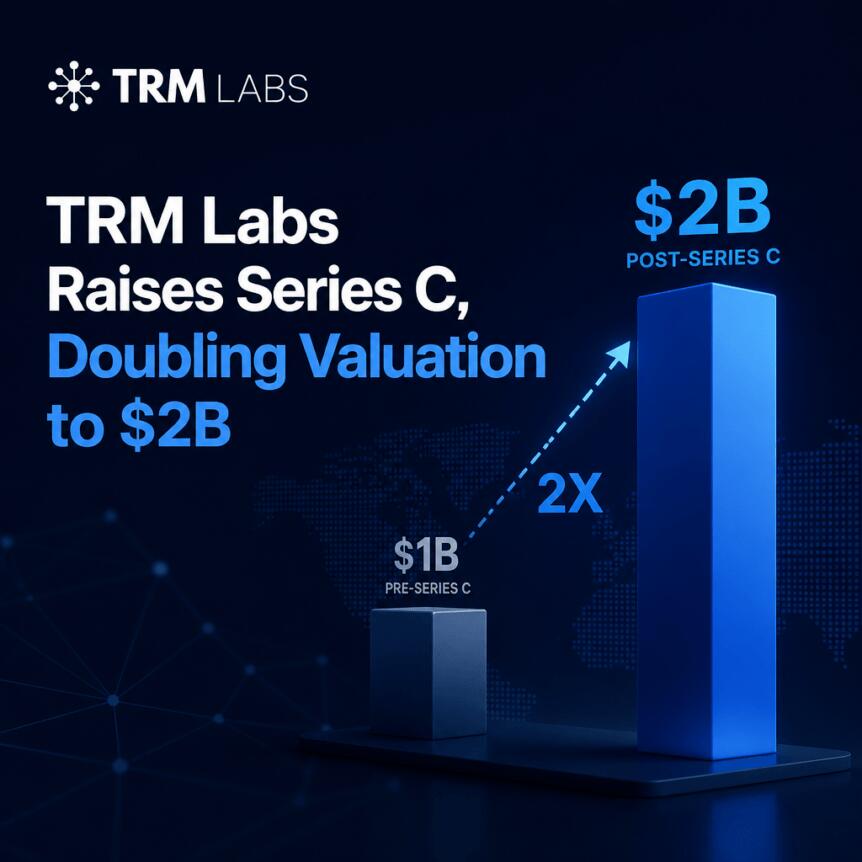
Blockchain intelligence firm TRM Labs has reportedly doubled its valuation to $2 billion after expanding its Series C funding round led by Blockchain Capital. In an announcement Wednesday, the company said it did not disclose the amount of the latest investment, but stated that its annual recurring revenue has quadrupled over the past three years.
The new financing expansion comes on the heels of a $70 million Series C round in February, which was also led by Blockchain Capital. TRM provides blockchain intelligence and investigation software used by more than 600 government agencies and private-sector organizations across 75 countries, according to the company.
Key takeaways
- TRM Labs’ valuation has risen to $2 billion following an expanded Series C round led by Blockchain Capital.
- The company did not specify the size of the latest investment, but said its annual recurring revenue has quadrupled in three years.
- TRM’s products target investigations into fraud, money laundering, sanctions evasion, and other forms of digital crime.
- Federal procurement activity and a legal challenge involving an ICE contract have placed TRM’s role in government-focused intelligence in the spotlight.
Valuation lift tied to revenue growth
For investors, TRM’s disclosed performance metrics matter as much as the valuation headline. The company’s claim that annual recurring revenue has quadrupled over the past three years signals accelerating commercial traction, even though the size of the most recent Series C expansion remains undisclosed.
Before the February round, TRM was valued at $930 million, according to data compiled by Traxcn. It then crossed the $1 billion valuation threshold in a Series C that reportedly included Citi Ventures and Galaxy among the investors, setting up the momentum that now culminates in the doubled valuation.
Why demand is growing for blockchain intelligence
TRM says its AI-powered tools are used to investigate fraud, money laundering, sanctions evasion, and other categories of digital crime. That positioning aligns with the company’s references to broader enforcement and complaint trends.
TRM pointed to reported losses submitted to the FBI’s Internet Crime Complaint Center rising to $21 billion in 2025 from $16 billion in 2024. The firm also said it has observed a 40% year-over-year increase in criminal adoption of AI in 2026, citing its AI-in-Crime Adoption Index.
While those figures are company-provided context rather than independent metrics released alongside the funding update, they help explain why blockchain intelligence vendors are being treated as strategic infrastructure by both public agencies and regulated private institutions.
US government work and the court challenge
The funding expansion arrives roughly two months after US Immigration and Customs Enforcement (ICE) awarded TRM a roughly $95 million, one-year contract for forensic software and support services for Homeland Security Task Force investigations. Such awards can be pivotal for blockchain intelligence firms: they not only provide revenue visibility, but also serve as proof points that government teams can integrate the tools into ongoing operations.
However, TRM’s government role has not been without controversy. Earlier coverage notes that rival Chainalysis challenged ICE’s sole-source award in federal court later that month, alleging the decision was “arbitrary, capricious, and unreasonable.” The dispute underscores a key tension in the government procurement landscape for specialized digital forensics: even when a contractor claims performance and fit, competitors may argue process and selection standards were not met.
For TRM, the court case is important to monitor alongside the commercial narrative of rising revenue. For potential customers and partners, the outcome could influence procurement timelines, contract renewals, and how agencies evaluate alternative vendors for similar intelligence and investigation needs.
What to watch next
With TRM’s valuation now at $2 billion and revenue growth framed as a multi-year trend, the next signals to track are whether the company can sustain its A recurring revenue momentum and how the legal challenge around ICE’s contract develops—especially if it affects future government purchasing decisions.

MasterCard and Visa cards are seen in this illustration photo taken in Krakow, Poland on March 29, 2024.
Nurphoto | Nurphoto | Getty Images
Fintech company Ant International announced Thursday it has signed on Visa and Mastercard to collaborate on a new standard for payments made via AI agents, in a bet that they will be used more and more by consumers and businesses.
In a statement, the companies cited McKinsey projections expecting AI agents will handle $3 trillion to $5 trillion of global consumer commerce by 2030. But Jiang-Ming Yang, chief innovation officer of Ant International, told CNBC that AI agents’ potential for hallucination meant “we need to make sure people feel safe.”
“Trust is the foundation of the AI transformation,” Yang told CNBC in an interview.
Building trust in AI payments
The new collaboration will focus on how the payment companies can “know your agent,” Ant said in the announcement, which includes building common standards that link each agent to a valid entity, assess each agent’s behavior and monitor them.
It’s an effort to increase interoperability for users of the different systems.
“If [an] agent registers with Ant, they don’t need to register again with Visa, Mastercard,” Yang said.
In the past 12 months, Visa, Mastercard and Ant International have each announced their own systems, known as protocols, for AI agents to complete payments securely.
While U.S. credit card giants Visa and Mastercard dominate transactions in developed economies, many developing economies tend to use electronic payment systems known as e-wallets. More than 50 of these e-wallets have partnered with Ant International, which runs an “Alipay Plus” app.
These digital wallets have also started to link to credit cards and are becoming a more common way to pay than with physical cards. Digital wallets accounted for 56% of global e-commerce value and 33% of point-of-sale value in 2025, for more than $13 trillion in spending, according to payment processing company Worldpay.
Now that technology needs to develop securely for AI-driven spending.
“Interoperability across Know-Your-Agent frameworks is essential to making agentic commerce work at scale,” said Pablo Fourez, chief digital officer at Mastercard, stressing the need for a consistent way for merchants and payment processors to recognize which AI agents they can trust.
Ant International separated nearly three years ago from Hangzhou-based Ant Group, which runs the Alipay mobile payments app in mainland China.
Alipay announced Wednesday that users can set regular requests to make Starbucks orders via one of its AI features.
Users can tell the app to “buy me a Starbucks iced Americano at 10 a.m. every day,” which will regularly place the order at the designated time, before prompting the user to complete the payment, according to a press release.
Users can currently also make recurring ride-hailing requests from Didi via the same Alipay AI tool.
— CNBC’s Matthew Tan contributed to this report.


RedStone has launched price feeds for a FalconX private-credit vault holding more than $170 million in exposure across Monad, Plume and MegaETH.
Summary
- RedStone distributes the FalconX vault’s signed NAV from Ethereum to three additional networks.
- AA_FalconXUSDC holders can use supported tokens as collateral without first redeeming their positions.
- RedStone checks updates through signature verification, deviation limits, staleness rules, and circuit breakers.
- Permission requirements and thin secondary liquidity could still complicate liquidations during market stress.
RedStone brings FalconX credit pricing to three chains
In a statement shared with crypto.news, RedStone said it had integrated its pricing infrastructure with Pareto’s Credit Vaults, starting with a FalconX vault carrying more than $170 million in private-credit exposure.
Through the vault, institutional investors deposit USDC to finance part of FalconX’s prime brokerage business. Depositors receive AA_FalconXUSDC, a token representing the senior tranche of their position in the underlying credit portfolio.
Interest earned by the vault accrues within the token’s net asset value, raising its redemption value over time. M11 Credit curates the product, underwrites FalconX, and monitors the credit exposure on an ongoing basis, according to the announcement.
RedStone reads the vault’s NAV from its Ethereum contract and publishes the value through standardized feeds on Monad, Plume and MegaETH. Lending protocols on each network can then use the feed to calculate how much a holder may borrow against AA_FalconXUSDC.
Without such a feed, each protocol or network would need to establish its own connection to the source contract on Ethereum. RedStone’s system instead distributes the same valuation wherever the supported token is deployed.
Holders can use AA_FalconXUSDC as collateral without redeeming it first, allowing the underlying position to continue earning interest while they borrow other assets. Actual access depends on which lending markets accept the token and the risk limits each protocol applies.
“Tokenization is only the first step. What comes after is what truly matters,” RedStone co-founder Marcin Kazmierczak said in the announcement.
“Pareto’s FalconX Credit Vault demonstrates how tokenized institutional credit can work in the onchain finance ecosystem beyond standard issuance.”
FalconX calculates the NAV before RedStone publishes it
Speaking to crypto.news, Kazmierczak said FalconX calculates and signs the AA_FalconXUSDC NAV off-chain based on the vault’s private-credit portfolio. RedStone delivers the reported value rather than independently valuing the underlying loans.
Once FalconX signs an update, RedStone’s oracle nodes collect it and test it against deviation thresholds and heartbeat rules. The system publishes the NAV onchain only after it passes the required checks.
Safeguards include confirmation from multiple nodes, verification of FalconX’s signature, and checks designed to reject updates that are too old. Circuit breakers can also stop publication when a reported value moves beyond preset limits.
According to Kazmierczak, the controls protect against accidental entries and unusual updates before one incorrect value reaches several networks. They do not replace FalconX’s responsibility for determining the fair value of the credit portfolio used to calculate NAV.
All three destination chains receive the same signed value from a single source. Each network therefore refers to FalconX’s underlying valuation rather than producing a separate calculation that could diverge from the others.
A disruption can still interrupt delivery. If Ethereum experiences an outage or another supported chain becomes congested or undergoes a reorganization, the affected network continues to display the last valid signed NAV until a fresh update can be verified and delivered.
Kazmierczak said staleness and heartbeat rules govern the treatment of delayed values. The approach avoids publishing data drawn from a reorganization or creating inconsistent NAV calculations, although prices may remain temporarily stale during an outage.
RedStone previously deployed an oracle on Stellar in March 2026 as the network developed its lending activity and tokenized-asset infrastructure. By August, Stellar held more than $3 billion in real-world assets, while slightly over $2 million sat in lending pools capable of accepting RWAs, according to a report on its DeFi gap.
FalconX vault NAV may differ from its liquidation value
Although the feed supplies a fair-value estimate, Kazmierczak said lending protocols should not treat the reported NAV as the price they are certain to recover during a forced sale.
“This isn’t an oracle question, it’s a risk parameter question for the lending protocol.”
Protocols must decide how much of the reported value they will recognize as collateral. Kazmierczak said they should apply haircuts that account for possible slippage, limit borrowing according to realistic secondary-market depth rather than the vault’s total assets, and leave a buffer between the liquidation threshold and a stressed exit price.
RedStone can provide the feed and risk ratings through Credora, but each lending protocol or its curator remains responsible for setting collateral factors, borrowing caps and liquidation thresholds.
Liquidity has become a central issue for tokenized assets as issuance has grown faster than their use inside decentralized finance. A Sept. 4 analysis found that 89% of tokenized RWAs in a $34.6 billion market remained outside active protocol use, with about $3.79 billion deployed at the time.
FalconX has separately expanded its institutional lending activity. In August, the company and Ethena launched a $1 billion lending facility that uses part of USDe’s backing assets to finance secured, overcollateralized loans for institutional borrowers.
The facility places collateral with qualified custodians and uses a special-purpose vehicle through which FalconX originates and services the loans. Institutional lending accounted for $310 million, or 6.9%, of USDe’s backing in early July.
For U.S. market participants, FalconX’s role links the vault to a prime broker with operations in New York, although the company says product availability depends on jurisdiction and the FalconX entity providing the service. Pareto also describes its credit products as regulatory-compliant offerings designed for professional investors, asset managers, digital-asset funds and fintech companies.
Permissioned tokens require approved liquidators
Transfer restrictions create another issue when private-credit tokens serve as collateral. Kazmierczak said an accurate NAV does not ensure that a liquidator can receive, move, or sell AA_FalconXUSDC after a borrower defaults.
Because the asset is permissioned, a prospective liquidator may need to appear on the issuer’s whitelist before taking custody. Even an approved party could struggle to sell the position immediately if the token has limited secondary-market liquidity.
“Reliable pricing is necessary but not sufficient,” Kazmierczak said. “Pricing solves the ‘what is it worth’ problem; execution/liquidity access is a separate problem that needs a permissioned settlement mechanism.”
RedStone has developed Settle to address the execution stage by auctioning liquidation or redemption rights to whitelisted solvers that have completed know-your-customer checks. According to Kazmierczak, a selected solver can take control of the asset and use the issuer’s regular redemption channel rather than depend on an open secondary market.
The company introduced RedStone Settle in May 2026 as a settlement layer for restricted real-world assets used in DeFi lending. Its design separates price discovery from the legal and operational process required to transfer and redeem permissioned tokens.
Pareto reports roughly $225 million in total value locked across its tokenized private-credit products. The FalconX Credit Vault is the first Pareto product covered by the integration, with additional NAV feeds planned as Pareto deploys more vaults on other networks.
According to RedStone, its infrastructure provides data on more than 110 chains for over 200 clients, including Securitize, Morpho, Pendle, Spark, and Compound. The company also supplies pricing data for tokenized products, including BlackRock’s BUIDL, Apollo’s ACRED and Hamilton Lane’s SCOPE.


DoubleZero co-founder Austin Federa has defended open access to Kalshi’s faster election-market data feed while confirming that the infrastructure remains read-only and provides no way to submit or execute trades.
Summary
- DoubleZero Edge distributes Kalshi order-book data but does not route or execute orders.
- Any participant can subscribe to the same feed, according to co-founder Austin Federa.
- Dedicated fiber and multicast replace the public-internet delivery used by Kalshi’s API and WebSocket.
- DoubleZero will publish transport benchmarks but will leave market-quality reporting to Kalshi.
Austin Federa told crypto.news that professional traders tend to compete on speed with each other, while tighter competition between market makers can produce narrower spreads and better prices for other participants.
Federa was responding to concerns that professional firms receiving faster information could gain an advantage over retail users who continue to access Kalshi through slower public-internet connections.
“Our answer to the imbalance concern is open access: the fastest data path shouldn’t be private rails and at unreachable price-levels. By placing Kalshi election market data over DoubleZero rails, anyone, from anywhere, can subscribe to the same stream,” Federa said.
DoubleZero announced on Sep. 9 that Kalshi’s election and politics markets had become available through DoubleZero Edge ahead of the U.S. election season. The service distributes Kalshi’s full election order book, including bids, offers and completed trades, over a dedicated fiber network.
DoubleZero says open access addresses the retail gap
Although subscribers receive data faster than users relying on ordinary internet routes, Federa said access to the feed is not restricted to a selected group of trading firms.
Professional market makers may use the information to update their quotes more quickly, but Federa argued that competition among such firms can benefit other users through tighter spreads and improved prices. DoubleZero has not yet released data showing whether the Kalshi integration has changed either measure.
Access still requires a paid subscription. According to Federa, a customer can buy the feed through DoubleZero’s website without entering a traditional sales process. The subscription is linked to a cryptographic identity and the internet address of the machine receiving the data.
Once subscribed, the customer installs a connector using a single command. Federa said the software configures the receiving machine, creates a private tunnel into DoubleZero’s network, and begins running the connection.
A status command allows the subscriber to check whether the tunnel is active and which data channels the machine has joined. The connector then converts the broadcast into JSON and serves the information locally, allowing a trading system to read live instruments, quotes, and order-book updates.
Kalshi faces an uneven legal environment across the United States even as its federally regulated markets expand. As crypto.news reported on Sep. 8, conflicting state court rulings could divide prediction-market access and liquidity between states.
Aaron Courtney, chief compliance officer at ProphetX, said in the earlier report that the conflicting decisions could leave users in some states with access to federally regulated platforms while users elsewhere remain restricted. The dispute centers on whether federal oversight of designated contract markets prevents states from applying their own gambling laws.
Kalshi orders cannot be executed through DoubleZero Edge
While traders can feed DoubleZero’s data into their own systems, Federa stressed that the product does not provide an order-entry function.
“DoubleZero Edge is a read-only distribution platform for market data into a trader’s tech stack. DoubleZero Edge has no execution functionality.”
Participants cannot use the infrastructure to submit, route, or complete trades. Orders must still pass through Kalshi’s trading systems, leaving DoubleZero to operate solely as the transport layer between the source data and subscribers.
Federa compared the setup with two established methods for receiving exchange information. Under the public model, firms connect to Kalshi’s API or WebSocket through the open internet, request updates, and assemble their own view of the order book.
Each company maintains its own connection, receives its own copy of the data, and manages the systems needed to turn separate responses into a usable market view. Network routes and delivery times may differ because the information passes through the public internet.
Traditional exchanges such as the New York Stock Exchange, Nasdaq and CME use another model. According to Federa, they publish data once and broadcast it to subscribers over private fiber through a process known as multicast.
Kalshi’s feed applies the second model to a prediction market, he said. Data leaves Kalshi through the direct interface it provides to institutional participants, travels across DoubleZero’s dedicated fiber network and reaches subscribers through one broadcast.
Every subscriber is intended to receive the same sequenced message at the same time, reducing the work each firm must perform to collect and rebuild the order book.
Dedicated fiber changes how Kalshi data reaches traders
Federa said DoubleZero receives information through the fastest direct interface Kalshi makes available to institutional users. From there, Edge uses dedicated fiber and multicast, while Kalshi’s existing public API and WebSocket remain dependent on public-internet routes.
DoubleZero has not supplied figures showing the exact latency difference between the services. According to Federa, the company will release benchmark data as results become available during the initial product-testing phase.
Subscribers can choose between top-of-book data, which contains the best available bid and offer, and full-depth data containing every price level. DoubleZero had already offered separate feeds for Kalshi’s sports markets and crypto perpetual futures before adding election and politics contracts.
Kalshi has continued adding products that place it within both prediction markets and regulated U.S. derivatives trading. On Sep. 4, the exchange added five crypto perpetuals tied to BNB, Cardano, Worldcoin, Aave, and Venice Token.
The additions increased its lineup to Bitcoin and 17 altcoin perpetual contracts, according to the earlier report. Kalshi operates as a Commodity Futures Trading Commission-regulated designated contract market, and its dollar-margined perpetuals give U.S. traders long or short price exposure without requiring them to hold the underlying tokens.
Kalshi’s event contracts and crypto derivatives remain subject to separate regulatory and legal questions. CME Group has challenged the CFTC’s treatment of Kalshi’s Bitcoin perpetual contract, arguing that the product should fall under rules for swaps instead of conventional futures.
DoubleZero will measure delivery instead of Kalshi’s markets
To assess Edge, DoubleZero will track how quickly an update moves from its source to subscribers, how consistently users receive the same sequenced order book, and how fresh the delivered information remains compared with public-internet feeds.
Federa separated those transport measures from spreads, order-book depth, and price behavior during major political events. Kalshi controls the trading venue, he said, while DoubleZero only delivers its data.
Faster and cleaner information could help market makers adjust quotes more quickly, according to Federa, but he said DoubleZero would not use Kalshi’s spread or depth figures as performance measures for Edge.
“We will publish data on the delivery layer,” Federa said. “We will not publish venue market-quality scorecards from DoubleZero.”
Market integrity has received added attention as Kalshi expands contracts tied to politics and other real-world events. On Aug. 31, the exchange banned George Santos after its compliance department found that he had traded contracts based on whether he would attend President Donald Trump’s 2026 State of the Union address.
Kalshi said Santos earned $17,839.57 after trading both sides of the attendance market while controlling information about his plans. The exchange imposed a $71,356 penalty and permanently barred him from its platform, while a separate CFTC settlement ordered him to disgorge $17,569.98, pay a $17,500 civil penalty and stop trading on CFTC-registered venues for three years.
According to the same report, Kalshi said it conducted more than 150 investigations in the first quarter of 2026, blocked over 100 suspected insider-trading attempts and referred 20 cases to law enforcement.

XRP and GOLD are about to FLIP!!!!!

Former wartime canteen girl from Peterlee celebrates 100th birthday
Robinhood at Goldman Sachs Communacopia + Technology Conference 2026: broadening its financial reach


-
 Crypto World1 day ago
Bitcoin price risks $76K drop as $78K support weakens
-
 Tech2 days ago
Memory prices are slowing because buyers ran out of money
-
 Crypto World1 day ago
Ethereum price stalls below $2,500 as ADX drops to 11
-

 Crypto World1 day ago
Robinhood Stock: How To Take Advantage With Reduced Risk
-
 Sports2 days ago
Phones confiscated, players sent home: Pakistan’s England tour turmoil revives memories of Mohammad Amir, Salman Butt and Mohammad Asif’s 2010 Lord’s spot-fixing scandal | Cricket News
-

 NewsBeat1 day ago
England up in reading, maths and science rankings as Scotland and Wales dip
-
 Crypto World18 hours ago
Bitcoin price holds near $79K as cycle drawdowns narrow
-
 Crypto World1 day ago
Brent Crude Oil Moves Above $100 for the First Time in 3 Months
-

 Business23 hours ago
Meta debuts long-awaited personal AI agent, Muse
-

 Crypto World2 days ago
Visa expands stablecoin card network to 160 programs
-

 Business2 days ago
Egyptian TV Presenter Sarah Khalifa, 11 Others Sentenced To Death In Major Drug Trafficking Case In Cairo
-
 Tech2 days ago
Strong Password Policy and Password Manager Guide
-
 Crypto World1 day ago
Intel Stock Jumps 9% on Chip Price Hike Report, US Stake Gains $36 Billion
-

 Entertainment1 day ago
Big Brother Spoilers: Dee SPINS & HUSTLES Votes – Yash Questions the Pact
-

 Sports1 day ago
Ballon d’Or 2026 Nominees: Lionel Messi In, Cristiano Ronaldo Out; Erling Haaland Included In Top 30
-

 Business1 day ago
ServiceTitan, Inc. (TTAN) Q2 2027 Earnings Call Transcript
-

 Tech1 day ago
Google’s revived nuclear power plant gets $1.9B loan from US government
-

 Tech1 day ago
Meta debuts its Muse AI agent. Will consumers trust it?
-
 NewsBeat1 day ago
Tehran’s assertive rhetoric signals a new and dangerous phase in conflict
-
 Business1 day ago
Oil Higher on Hormuz Escalation, Weighing on Sentiment
You must be logged in to post a comment Login