Connect with us

Business

Apple’s First Foldable iPhone Will Be Judged by Tight Supply and a Steep $2,000-Plus Price Tag

Published

on

Foldable iPhone

CUPERTINO, Calif. — Apple’s first foldable iPhone will not succeed or fail the way a regular iPhone does. It will succeed if a scarce, expensive object sells out and becomes a second generation. It will fail if the crease, the hinge or the price turns it into a one-year curiosity.

The company has not published an official name, price or ship date in a press release. What is public is a pile of supply-chain math and reporting from people who cover Apple for a living. Bloomberg’s Mark Gurman has described a book-style phone, often called iPhone Ultra inside the company, with a 7.8-inch inner display and a 5.5-inch cover screen, folded to about the size of a passport. Designers compared the open device to a Magic Trackpad. John Ternus, who became chief executive on Sept. 1, was expected to introduce the category as the centerpiece of Apple’s September event. A second-generation foldable is already in testing for 2027, Gurman has reported — the clearest sign Apple is not treating the product as a stunt.

Price is the first verdict. Early internal targets sat under $2,000, echoing the iPhone X’s $999 debut in 2017. Memory shortages pushed later discussions toward $2,199, with loaded storage near $3,000, according to Gurman’s sources. Analyst Ming-Chi Kuo of TF International Securities has used $2,300 to $2,500. Samsung’s Galaxy Z Fold 8 starts at $1,899. IDC has talked about an average selling price around $2,500. None of those figures is Apple’s list. All of them put the device above every prior iPhone and into luxury-goods math.

Volume is the second verdict. Nikkei Asia reported that Apple told suppliers to prepare about 10 million foldable units for 2026, up from 7 million to 8 million. Kuo’s July survey put second-half assembly at 7 million to 8 million, with only 500,000 to 1 million in the September quarter — about 10% of that half-year total, against 20 million to 22 million iPhone 18 Pro and Pro Max units in the same quarter. He said the foldable may be announced with the Pros and go on sale later, as the iPhone X did in 2017, when Face ID and OLED were hard to make. “The foldable iPhone, given its limited 3Q26 shipments, may also not open for pre-orders or officially go on sale until 4Q26,” Kuo wrote. He expects pre-orders to sell out and waits of four to six weeks or longer through December.

Advertisement

That is a designed scarcity, not a mass rollout. Total iPhone output this year is still discussed in the 220 million range. A foldable that ships 8 million to 10 million units is a high-end sidecar. Foldables were about 1.6% of global smartphones in 2025. Counterpoint has said Apple’s entry could lift the category and take roughly a quarter of foldable shipments in 2026, cutting Samsung’s share from about 40% to 32%. Success, in that frame, is stealing a slice of a small pie and making the pie grow.

Nabila Popal, senior research director at IDC, is bluntly bullish. “Trust me, despite the high price, the foldable iPhone will be wildly successful,” she said. “I won’t be surprised if it becomes the ‘Birkin’ of smartphones in China.” IDC has talked about more than 10 million first-year shipments. That is the success case: status object, wait list, China line out the door, software that uses the inner 4:3 panel like a small iPad.

The failure case is older than Apple. Foldables have cracked, creased and worn out in public for years. Supply-chain reports this year said hinge parts struggled in durability tests and that mass production slipped from June toward August, compressing the runway to holiday shelves. A crease that is “far less apparent” than Samsung’s, as Gurman’s sources describe it, still has to survive a year in a pocket. iOS 27 beta code has included fold detection and iPad-style split view, which is the software bet: two apps, reading, a cover screen for the subway. If the apps feel like a stretched iPhone, buyers who paid $2,200 will notice.

Gurman has written that Tim Cook returned from Asia around 2020 “unusually energized” after seeing Samsung and Huawei foldables in use and pushed the project. Ternus, he reported, helped “push it over the finish line.” Those are secondhand accounts, not podium quotes. They matter only as evidence that the phone is a multiyear executive project, not a supplier experiment.

Advertisement

Apple’s record with new shapes is mixed. The iPhone X was scarce, expensive and then became the template. The first Apple Watch was mocked and then became a business. The Vision Pro was scarce, expensive and stayed a niche. A foldable iPhone is closer to the X than to the headset if software and durability hold. It is closer to Vision Pro if the hinge is a service appointment.

Judging “success” in week one will be a mistake. Sold-out pages measure hype and allocation. Kuo said the real test is late 2026 into early 2027, after launch noise fades and factories catch up. A second model already in the lab is Apple voting that the category survives that test. A $3,000 top configuration is Apple voting that a few million rich customers are enough.

The honest forecast is split. As a product line, the foldable iPhone is likely to “succeed” the way the Pro Max succeeded: not by replacing the slab phone but by becoming the expensive halo that funds the rest of the lineup. As a mass-market revolution, it is set up to “fail,” because 10 million units is not the iPhone business and $2,000-plus is not a replacement cycle for most of the 220 million. Samsung proved foldables can exist. Apple is trying to prove they can be desirable enough to wait six weeks for. That is a narrower question than the internet will ask on announcement day, and it is the only one the shipment numbers are built to answer.

Advertisement
Continue Reading
Click to comment

You must be logged in to post a comment Login

Leave a Reply

Business

Widow sues Amazon, aviation partners over deadly Miami jet crash

Published

on

Widow sues Amazon, aviation partners over deadly Miami jet crash

The widow of a man killed in Sunday’s fiery Amazon jet crash in Miami has filed a wrongful death lawsuit accusing the retail giant and its aviation partners of negligence and a string of dangerous landing mistakes. 

Yaraisi Santiso Morejon alleged the disaster was caused by pilot error, inadequate personnel training and the use of an unairworthy aircraft, according to the complaint reported by Courthouse News.

Advertisement

Her husband, Yoel Rodriguez Naranjo, was among five people killed when the Boeing 767 overran a runway at Miami International Airport and slammed into two vehicles before erupting in flames.

Morejon also alleged that the flight was conducted under hazardous conditions, citing an active thunderstorm in the area, the outlet reported. 

DATA SHOWS AMAZON JET’S KEY BRAKING SYSTEMS DID NOT DEPLOY DURING DEADLY MIAMI CRASH: NTSB

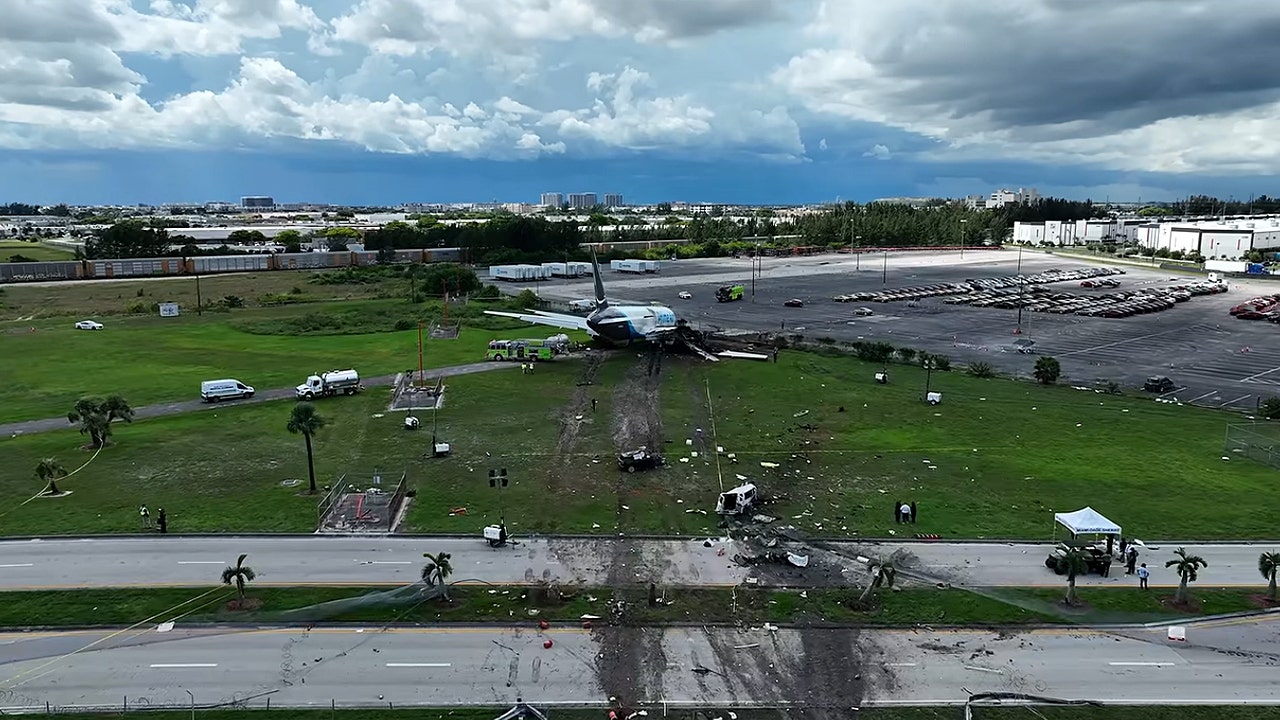
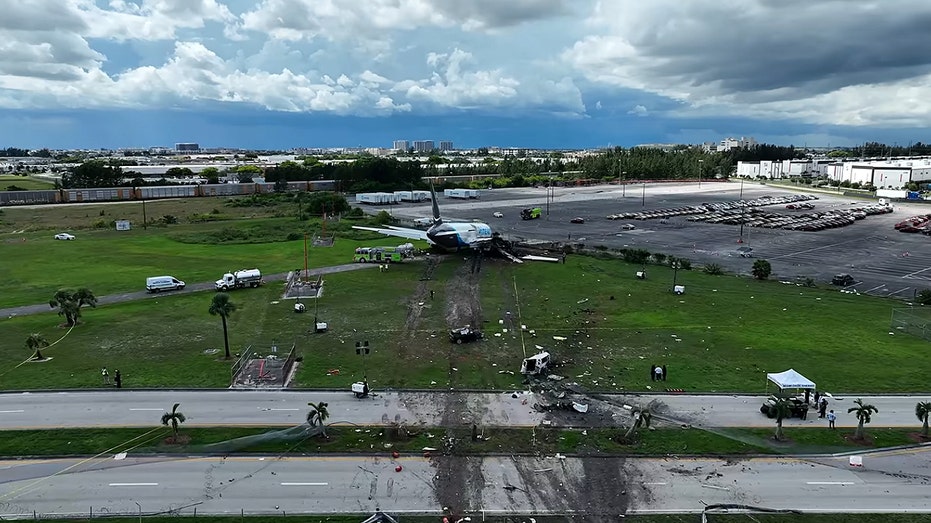
Aerial view of plane crash

Aerial view showing the long debris path and perimeter damage from the runway overrun. (National Transportation Safety Board / Fox News)

“This disaster was not an unavoidable accident,” Morejon said. 

Advertisement

The complaint named the pilots as Captain Joseph Carroll, 55, and co-pilot Jaime Felipe Silva Molina, 37, accusing them of touching down far past the safe zone on the runway.

The plane reportedly landed more than 40 knots, or 46 mph, faster than the recommended speed, touched down 4,000 feet past the target zone and failed to perform a proper nose-flare maneuver, in which the pilot gently raised the aircraft’s nose just before touchdown to slow its rate of descent.

When the approach became unstable, the pilots failed to execute a mandatory go-around or declare an emergency, the suit alleged.

The jet ultimately plowed through the perimeter fencing and overran the runway by about 1,300 feet.  

Advertisement

VICTIMS IDENTIFIED IN FATAL AMAZON CARGO JET CRASH AT MIAMI AIRPORT

Officials walk near crushed van.

Investigators assess a crushed white van struck near the cargo jet crash. (National Transportation Safety Board / Fox News)

The National Transportation Safety Board (NTSB) on Tuesday said investigators are still working to determine what happened during the crash and have not released an official cause. 

Flight operator 21 Air was also accused of inadequately training its pilots, providing poor crew supervision and imposing demanding flight schedules.

Prior safety complaints from former employees were also ignored or suppressed, according to the outlet. 

Advertisement

Crews were reportedly pushed to fly without proper rest, pilots with limited English skills were allowed to fly and aircraft remained in service despite ongoing problems, the suit alleged. 

In a statement to Fox Business, Amazon said every jet operated on its behalf was flown by an FAA-certified air carrier under FAA-approved operations and maintenance programs. 

“The FAA actively oversees each carrier’s programs and any changes are individually reviewed and approved by the FAA,” the company said. “These programs require: licensed individuals to perform regulated activities, recurrent training of licensed personnel, and routine aircraft inspections and maintenance at regular intervals.”

Damaged car near plane crash.

A destroyed vehicle sits near evidence markers in front of the downed Amazon Air freighter. (National Transportation Safety Board / Fox News)

After the incident, 21 Air issued a statement extending its condolences to those impacted. 

Advertisement

“Our deepest condolences are with the families and loved ones of those who lost their lives. Our immediate priorities are supporting those affected, assisting the authorities, and ensuring that accurate information is communicated as it becomes available,” the operator said. 

AMAZON CARGO PLANE OVERRUNS MIAMI AIRPORT RUNWAY AND STRIKES ‘MULTIPLE’ VEHICLES; 5 DEAD, 5 INJURED

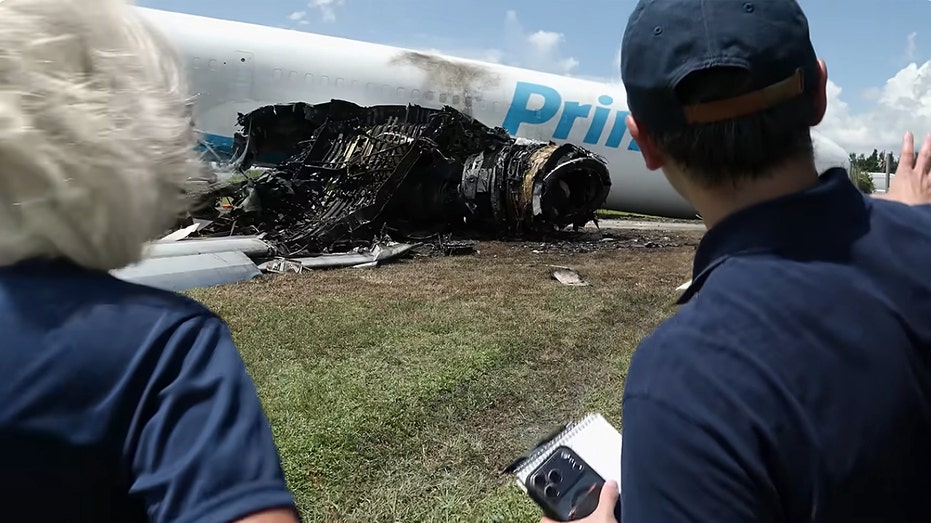
Officials examine charred jet engine

Officials inspect the charred engine assembly on the side of the Amazon Prime Air fuselage. (National Transportation Safety Board / Fox News)

Meanwhile, the aircraft owner, Atlas Air, was accused of supplying an aging 32-year-old plane and failing to ensure that critical stopping systems were fully operational and safe. 

Authorities on Tuesday revealed that key braking systems, including speed brakes and thrust reversers, were not deployed during landing, citing available recorded data recovered from the crash. The NTSB said investigators will continue analyzing the circumstances of the incident. 

Advertisement

CLICK HERE TO DOWNLOAD THE FOX NEWS APP

Ticker Security Last Change Change %
AMZN AMAZON.COM INC. 252.40 -4.57 -1.78%

Amazon was also named in the suit for allegedly failing to adequately oversee the operations. 

In a statement, the retail giant expressed its sympathies to those affected by the crash and said it was working with investigators and its operators on the matter. 

Amazon added that using independent air carriers was “standard practice in commercial aviation.” 

Advertisement

“Major U.S. (and foreign) passenger airlines also contract with independent carriers to operate flights under their brand but as separately certificated and regulated air carriers,” Amazon said.

Continue Reading

Business

Mortgage rates surge to the highest since June 2025

Published

on

Mortgage rates surge to the highest since June 2025
Average 30-year fixed mortgage rate surges to nearly 7%

A jump in oil prices after renewed hostilities in the Iran war is pushing bond yields higher, and mortgage rates are following suit.

The average rate on the 30-year fixed loan jumped 6 basis points on Monday to 6.87%, according to Mortgage News Daily. That is the highest level since June 2025. It’s now up 12 basis points since Thursday and has risen more than 30 basis points in the last two months.

“While rates are technically at their highest level in more than a year, they haven’t exactly exploded with surprising, new momentum,” said Matthew Graham, chief operating officer at Mortgage News Daily. “Instead, it’s been more of a slow grind fueled by the usual suspects: inflation expectations, elevated bond issuance, and economic resilience. All three of those factors are subject to at least some variability in the future.” 

The expectation had been for falling rates this year, but the war with Iran and its resulting rise in oil prices upended that. The day before the war started, at the end of February, the rate on the 30-year fixed was 5.99%.

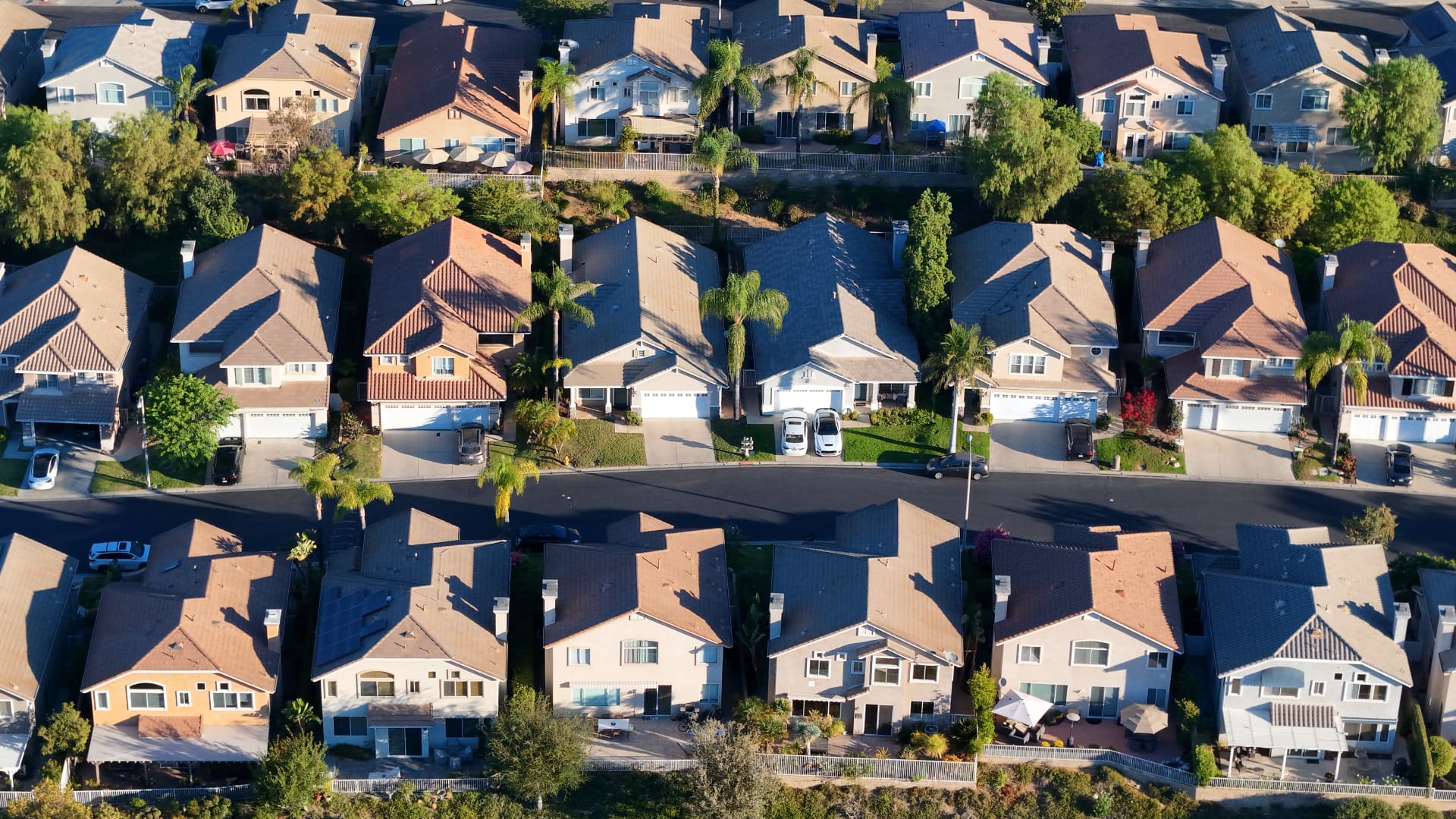
To put that into perspective, for someone buying a $450,000 home, which is right around the national median, putting 20% down on a 30-year fixed mortgage, the monthly principal and interest payment today would be $2,363. That is $207 a month more than it would have been back at the end of February.

Advertisement

Get Property Play directly to your inbox

CNBC’s Property Play with Diana Olick covers new and evolving opportunities for the real estate investor, delivered weekly to your inbox.

Subscribe here to get access today.

And that’s just the payment. When rates go up, fewer borrowers can qualify for a mortgage, as it shifts the debt-to-income ratios that lenders rely on for safe lending.

This comes on top of higher home prices, which seem to now be accelerating again in some parts of the country, due to lean supply.

Advertisement

Nationally, prices in June were up 1.5% year over year, up from the 1.2% rise in May, according to the latest S&P Cotality Case-Shiller home price index.

“As financing costs are kept high for prospective buyers, current homeowners remain reluctant to give up the low mortgage rates secured in prior years,” said Rebecca Kaufman, associate director of commodities at S&P Dow Jones Indices, in a news release.

Continue Reading

Business

‘JLR job cuts a cause for uncertainty and worry’

Published

on

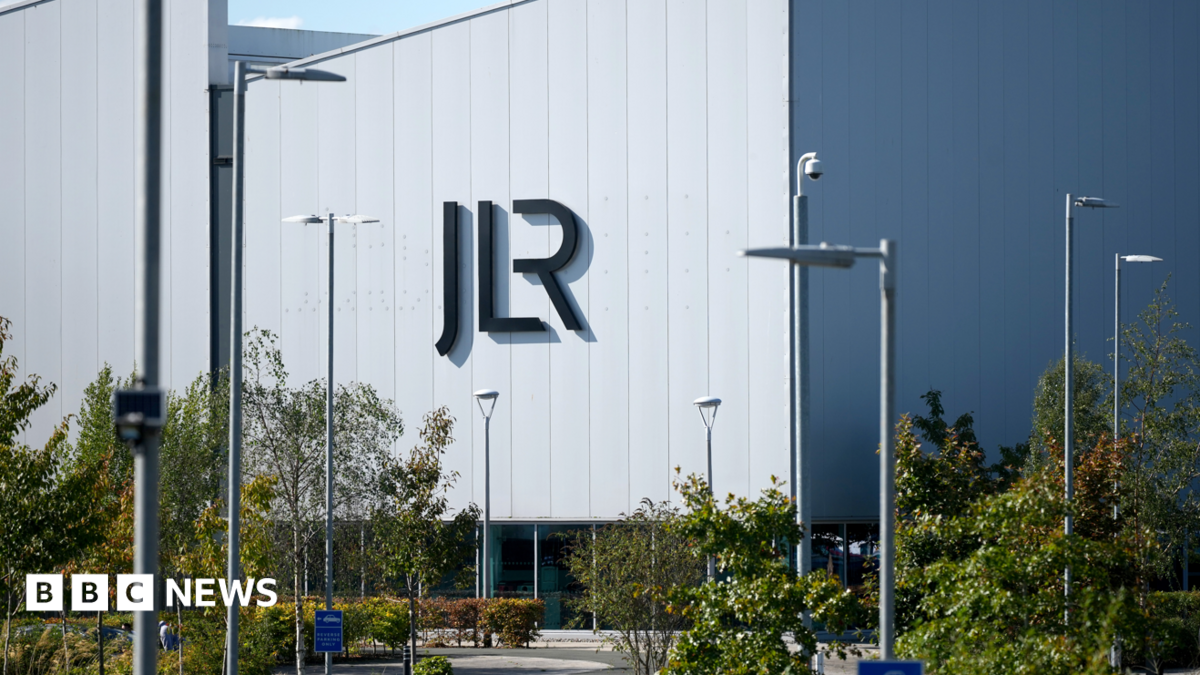
A large white building with the letters JLR in black writing on the side

Evtec supplies parts to JLR and chairman David Roberts said it was a “worrying time”.

“A lot of the jobs here, if they go, they go, they leave the sector,” he said.

“And these are jobs with real skills that take years to build and it’s easier to lose them.”

JLR has been dealing with falling sales, the consequences of a devastating cyber-attack that paralysed production last year, competition from China and rising energy prices.

Advertisement

At the same time, it has invested billions in an effort to reinvent itself for an electric future.

Dr Steve McCabe, a political economist from Birmingham City University, said he believed the job cuts were a strategic move.

“What JLR are trying to do is clean themselves up and make themselves more efficient in the hope that alowes them to survive,” he said.

“The hope is of course that its a temporary thing,” he added.

Advertisement

The company’s reinvention is due to take another step forward when it unveils a new electric car on 6 October.

Kevin Moreley, a former managing director of the Rover Group believes it could be a pivotal moment.

He said: “I always thought that only 300 redundancies for JLR was a little optimistic given the new Jaguar launch is still unpredictable, and VW are making 100,000 workers redundant.

“4,000 will not be the end of it if the new Jaguar doesn’t sell the numbers they hope.”

Advertisement
Continue Reading

Business

Marvell Stock Jumps After CEO Lifts Two-Year AI Outlook and Credits Trust for the 241% Rally

Published

on

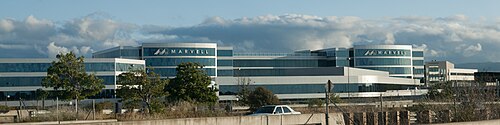
Marvell Technology

NEW YORK — Marvell Technology shares rose sharply Wednesday after Chief Executive Matt Murphy told investors the company’s two-year sales outlook had jumped by $6.5 billion and that trust with hyperscale customers, not a single product cycle, explains a 241% gain over the past year.

The stock traded at $238.04 around 10:41 a.m. Eastern, up $12.63, or 5.60%. The move extended a rebound from an August selloff that followed earnings and talk of “lumpiness” in custom AI accelerators. Over 12 months Marvell has far outpaced Broadcom, whose shares rose about 6.6% in the same stretch, according to CNBC.

On CNBC’s “Mad Money” on Tuesday, Murphy said the December view of about $10 billion in revenue this year and $13.5 billion in 2027 is obsolete. Marvell now expects about $12 billion this year and $18 billion next year — $30 billion across the two years, up from $23.5 billion. Data centers are the engine. The company booked roughly $2 billion of data-center sales in 2023. Murphy said more than $15 billion of next year’s $18 billion should come from that market.

“So basically, we’ve come in a full year and taken the company from $2 billion and change in data center revenue in 2023 to $15-$16 billion next year,” he said.

Advertisement

He located the edge in relationships, not slogans. “In this market, these large hyperscale customers and the ecosystem around it, it’s really based on trust,” Murphy said. “I think trust has been a huge part of it in our brand and our credibility.”

That trust has names. Marvell announced a partnership with Nvidia in March that ties custom silicon and optics into the NVLink world. In August it disclosed an expanded commercial agreement and warrant with a major hyperscaler widely identified as Google, covering inference accelerators, storage controllers, network interface cards, memory-interface chips and near-memory compute. Google had long been viewed as Broadcom’s flagship custom-silicon account. A $2 billion Nvidia investment in Marvell AI-related work appeared in company filings. Amazon remains a longtime customer even as Qualcomm this week advertised its own Amazon work — a reminder that hyperscalers dual-source and that no socket is permanent.

The numbers behind the interview are recent. On Aug. 27 Marvell reported fiscal second-quarter revenue of $2.74 billion, up 37% from a year earlier, above a $2.71 billion estimate. Adjusted earnings were 94 cents a share, a penny or two above consensus depending on the tape. Operating cash flow was $605.5 million. Data-center revenue rose 46%. Third-quarter guidance was $3.15 billion, plus or minus 5%, and adjusted earnings of $1.10 a share, plus or minus 5 cents — both above Street figures at the time. Management raised the fiscal 2027 sales view to about $12 billion from $11.5 billion and fiscal 2028 to about $18 billion from $16.5 billion.

Custom silicon is the volatile piece. Murphy said on the August call that custom demand is accelerating in the second half and that the business should more than double year over year in fiscal 2028, then speed up again in fiscal 2029. He has also been blunt that custom revenue is lumpy because hyperscalers build in waves. That lumpiness is what knocked the stock in late August even as the quarter beat. Optics and interconnect still carry more of the AI dollar than XPUs in some independent models. Electro-optical parts, not the accelerator die, remain the steadier print.

Advertisement

Marvell is taking that portfolio to the AI Infra Summit this week, showing switches, optics and custom attach silicon as one stack. Celestial AI, bought to push co-packaged optics, is in the same story: management has talked about a $500 million annualized co-packaged-optics run rate in 2028 and $1 billion in 2029.

Competition is the discount rate. Broadcom still owns a large share of custom ASICs. Nvidia owns training. Qualcomm is knocking on Amazon’s door. Marvell’s pitch is that it will work with all of them — the “Switzerland of AI,” as Wednesday’s market commentary put it — selling the networking and the second-source accelerator rather than trying to replace the GPU. That only works if Google, Amazon, Meta and Microsoft keep writing multiyear warrants and if the custom ramps do not slip a quarter.

Valuation already assumes they will not slip. The stock trades at a premium to many semiconductor names on next-year earnings. A $238 handle on a company that was a connectivity specialist a few years ago prices in $18 billion of 2028 sales and a data-center mix that would have been science fiction in 2023. An investor day in early October is the next chance for Murphy to put three-year targets under that price.

Wednesday’s tape is simpler. The CEO went on television, raised the two-year top line by more than a quarter from the December plan, said data center will be most of the company next year, and attributed a 241% rally to trust. Buyers marked the stock up 5.6% before lunch. The August scare about lumpy XPUs is not gone. It is just quieter than a $15 billion data-center run rate spoken out loud.

Advertisement
Continue Reading

Business

Yelp Inc. (YELP) Presents at Goldman Sachs Communacopia + Technology Conference 2026 Transcript

Published

on

OneWater Marine Inc. (ONEW) Q1 2026 Earnings Call Transcript