Connect with us

NewsBeat

Rapist stepson of Norway’s new King is shunned by his step-grandmother Queen Sonja at her husband’s funeral…and earns a glare from the Bishop

Published

on

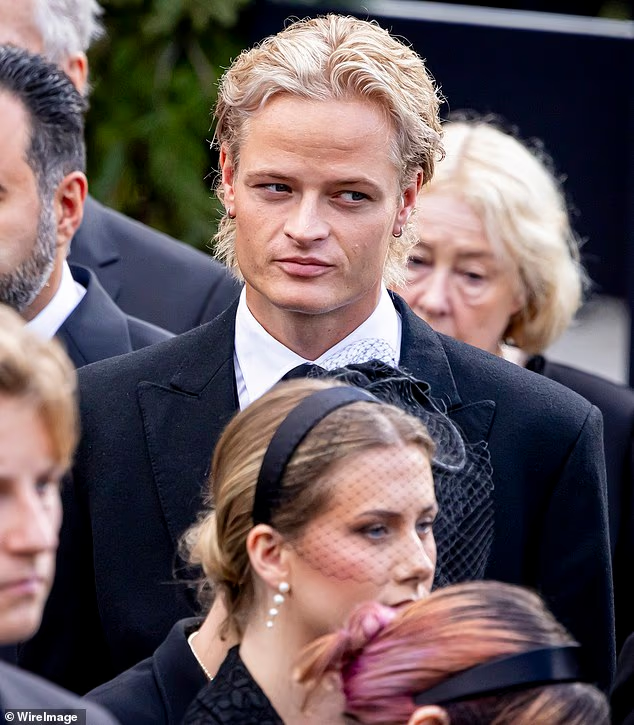
The disgraced stepson of Norway's new monarch appeared to be shunned by his step-grandmother Queen Sonja at the funeral of her husband King Harald V's on Wednesday. Pictured, Marius Borg Høiby

The disgraced stepson of Norway’s new monarch appeared to be shunned by his step-grandmother Queen Sonja at the funeral of her husband King Harald V’s on Wednesday.

Marius Borg Høiby, 29, who has no royal title or duties, is currently serving a four-year prison sentence under house arrest at his parents’ Skaugum Estate while he appeals his conviction for two counts of rape. 

He joined his stepfather King Haakon VIII, and half-siblings Crown Princess Ingrid Alexandra, now heir to the throne, and Prince Sverre Magnus, as well as his mother Queen Mette-Marit at Oslo Cathedral for the service.

However, in a sign of his fall from grace, Høiby, dubbed the ‘black sheep’ of the Royal Family was sat in the row behind his loved ones, with his step-aunt Princess Martha Louise and her daughters.

Advertisement

He also appeared to be shunned by his step-grandmother Queen Sonja. In a video shared online on X, Harald’s widow, 89, hugged each one of Martha Louise’s daughter, who Høiby arrived alongside.

But when the moment came for her step-grandson to come forward for an affectionate greeting, the Queen started a conversation with the Bishop of Oslo Sunniva Gylver, perhaps hoping to avoid hugging the rapist. 

It’s unclear if the two shared a more positive hello off camera, since Høiby wasn’t seen during the entirety of the clip.

Meanwhile, the Bishop looked somewhat stern as she greeted Mette-Marit’s son from a previous relationship on the steps of the cathedral ahead of the service. 

Advertisement

The disgraced stepson of Norway’s new monarch appeared to be shunned by his step-grandmother Queen Sonja at the funeral of her husband King Harald V’s on Wednesday. Pictured, Marius Borg Høiby

The Bishop looked somewhat stern as she greeted Mette-Marit's son from a previous relationship on the steps of the cathedral ahead of the service

The Bishop looked somewhat stern as she greeted Mette-Marit’s son from a previous relationship on the steps of the cathedral ahead of the service

Høiby previously joined his relatives to carry the coffin of Harald from the Royal Palace to the palace chapel last week while temporarily released, sparking fierce backlash from royal fans.

Advertisement

Haakon’s stepson was convicted on two counts of rape and jailed for four years following a six-week trial that laid bare allegations of violence, drug abuse and sexual misconduct.

An Oslo court also found him guilty of assaulting his former girlfriend, Nora Haukland, issuing threats and committing traffic offences, although he was acquitted of two other rape charges.

The 29-year-old had been charged with sexually assaulting four women who were asleep or otherwise unable to resist between 2018 and 2024.

The conviction marked a fall for Hoiby, who grew up in the public eye after his mother married then Crown Prince Haakon in 2001 when he was just four years old.

Advertisement

Although he does not hold a royal title or carry out official duties, he has long been closely associated with the Norwegian royal family.

Judge Jon Sverdrup Efjestad handed down the sentence after hearing evidence linked to 40 charges, including four alleged rapes, assaults, breaches of restraining orders, drug offences and driving violations. One charge relating to a restraining-order violation was overturned.

The court heard how Hoiby’s drug addiction spiralled in recent years, while investigators presented more than 800 messages and a series of self-made videos of sexual encounters as evidence during the trial.

Marius Borg Høiby, 29, who has no royal title or duties, is currently serving a four-year prison sentence under house arrest at his parents' Skaugum Estate while he appeals his conviction for two counts of rape

Marius Borg Høiby, 29, who has no royal title or duties, is currently serving a four-year prison sentence under house arrest at his parents’ Skaugum Estate while he appeals his conviction for two counts of rape

Advertisement
Høiby joined his stepfather King Haakon VIII, and half-siblings Crown Princess Ingrid Alexandra, now heir to the throne, and Prince Sverre Magnus, as well as his mother Queen Mette-Marit at Oslo Cathedral for the service

Høiby joined his stepfather King Haakon VIII, and half-siblings Crown Princess Ingrid Alexandra, now heir to the throne, and Prince Sverre Magnus, as well as his mother Queen Mette-Marit at Oslo Cathedral for the service

However, in a sign of his fall from grace, Høiby, dubbed the 'black sheep' of the Royal Family was sat in the row behind his loved ones, with his step-aunt Princess Martha Louise and her daughters

However, in a sign of his fall from grace, Høiby, dubbed the ‘black sheep’ of the Royal Family was sat in the row behind his loved ones, with his step-aunt Princess Martha Louise and her daughters

He also appeared to be shunned by his step-grandmother Queen Sonja. In a video shared online on X, Harald's widow, 89, hugged each one of Martha Louise's daughter, who Høiby arrived alongside (pictured)

He also appeared to be shunned by his step-grandmother Queen Sonja. In a video shared online on X, Harald’s widow, 89, hugged each one of Martha Louise’s daughter, who Høiby arrived alongside (pictured)

One alleged rape took place in the basement of the family home, the court was told.

Advertisement

Høiby, who denied the most serious allegations, including rape, while admitting to some lesser offences, was not physically present in court for the verdict and instead joined proceedings via video link.

Haakon and Mette-Marit were pictured visiting Høiby in custody ahead of the sentencing in June, but they did not attend the high-profile trial that rocked the country.

Ahead of the trial, Haakon made his longest statement about the charges against Høiby, noting ‘we care about him and he is an important member of our family’, while reiterating that his stepson is not a working royal and does not have any titles. 

The monarch said: ‘Our thoughts are with everyone who is affected by this case. It has an impact on the individuals, their families and all those who care about them. We understand that this is a difficult time for many of you, and we sympathise. 

Advertisement

‘At the same time, it is reassuring to know that we live in a state governed by the rule of law. I am confident that those responsible for overseeing the proceedings will ensure that the trial is conducted in as orderly, proper, and just a manner as possible. 

‘Marius Borg Høiby is not a member of the Royal House of Norway and is therefore autonomous. We care about him, and he is an important member of our family. He is a citizen of Norway and, as such, has the same responsibilities as everyone else – as well as the same rights.’

On Thursday, royals from around the world including Prince William and Princess Anne attended the funeral of King Harald V.

The Prince of Wales represented his father King Charles at the service at Oslo Cathedral, while his aunt, the Princess Royal, attended in a private and personal capacity as godmother of the new King Haakon.

Advertisement
The Bishop of Oslo Sunniva Gylver greets Hoiby at the front of Oslo Cathedral

The Bishop of Oslo Sunniva Gylver greets Hoiby at the front of Oslo Cathedral 

Hoiby arrives for the funeral of Norway's King Harald V at Oslo Cathedral

Hoiby arrives for the funeral of Norway’s King Harald V at Oslo Cathedral 

Norway's Prince Sverre Magnus, King Haakon and Crown Princess Ingrid Alexandra led the funeral procession

Norway’s Prince Sverre Magnus, King Haakon and Crown Princess Ingrid Alexandra led the funeral procession 

The funeral procession with Norway's King Harald's coffin leaves the Palace on the way to Oslo Cathedral on the day of his funeral

The funeral procession with Norway’s King Harald’s coffin leaves the Palace on the way to Oslo Cathedral on the day of his funeral

Advertisement
Queen Mette-Marit appeared solemn at her father-in-law's funeral

Queen Mette-Marit appeared solemn at her father-in-law’s funeral

They were joined by other royals, including King Felipe of Spain, Queen Rania of Jordan and Princess Charlene of Monaco

The coffin was taken from the palace to the cathedral in a procession of senior Norwegian royals including King Haakon, foreign guests and representatives from Norway’s and other parliaments. 

Haakon walked behind the coffin, draped with the red Norwegian royal standard, alongside his eldest child Crown Princess Ingrid Alexandra, his son Prince Sverre Magnus and his sister Princess Martha Louise.

Advertisement

Queen Mette-Marit, who missed her husband’s swearing-in ceremony due to ‘complications’ from her recent lung transplant surgery in June, and Harald’s widow Queen Sonja followed the coffin in a car.  

King Frederik and Queen Mary of Denmark and King Carl XVI Gustaf and Queen Silvia of Sweden also joined the procession.

Political leaders including Norwegian prime minister Jonas Gahr Store, German president Frank-Walter Steinmeier and Ukrainian president Volodymyr Zelenskyy were also in attendance. 

The public lined the streets of the Norwegian capital in their thousands to bid a final farewell to Harald, who reigned for 35 years.

Advertisement

Scores of churches, libraries, cultural centres and city halls were also making big screens available for the public to watch the funeral, public broadcaster NRK reported.

A 21-gun salute rang out over the capital at the start of the funeral procession.

From left, King Hakkon, Prince Sverre Magnus, Crown Princess Ingrid Alexandra, Marius Borg Hoiby, Princess Martha Louise, Leah Behn and Emma Behn carry the coffin of King Harald V

From left, King Hakkon, Prince Sverre Magnus, Crown Princess Ingrid Alexandra, Marius Borg Hoiby, Princess Martha Louise, Leah Behn and Emma Behn carry the coffin of King Harald V

The Norwegian royal house also has kinfolk in other European royal families. Harald and Haakon are related to both King Charles and Spain’s King Felipe, who are all descendants of Queen Victoria. 

Advertisement

King Harald V passed away on August 28 at the age of 89 after suffering a rare blood condition known as haemolytic anaemia.

His son immediately became King Haakon VIII and last week pledged an oath of allegiance to Norway’s constitution in parliament.

Ahead of the funeral, Norwegians waited patiently to file past Harald’s coffin as it lay in state in the chapel of the royal palace in Oslo, with the queue stretching seven hours long over the weekend.

After the funeral, Harald’s coffin will be taken in a procession to the palace chapel at Akershus Castle, where the late king’s ancestors are buried.

Advertisement

After a private ceremony for the Norwegian royals, who will be joined by some of the foreign guests and senior Norwegian officials, it will be lowered into the crypt.

Today, the throne’s role in Norway is largely symbolic and power lies with the elected government and parliament, but the Norwegian royal family retains a role in promoting the wealthy Scandinavian nation around the world.

Norway’s monarchy traces its origins to King Harald Fairhair in the ninth century. When Norway regained its independence from Sweden in 1905, three-quarters of voters in a national plebiscite approved restoring the monarchy.

A minute’s silence was held across Norway at the start of the funeral ceremony. Eulogies were delivered by Norway’s parliament speaker and prime minister, and there was a candle-lighting ceremony with representatives of different faiths.

Advertisement

The government says it’s not an official holiday, but schools and workplaces could individually opt to let students and employees tune in for today’s events. The government advised that ‘noisy events should be suspended while the funeral is ongoing’. 

Source link

Continue Reading
Click to comment

You must be logged in to post a comment Login

Leave a Reply

NewsBeat

Homeowner unearths largest Viking silver hoard ever found in Denmark: ‘Biggest surprise of my life’

Published

on

Homeowner unearths largest Viking silver hoard ever found in Denmark: ‘Biggest surprise of my life’

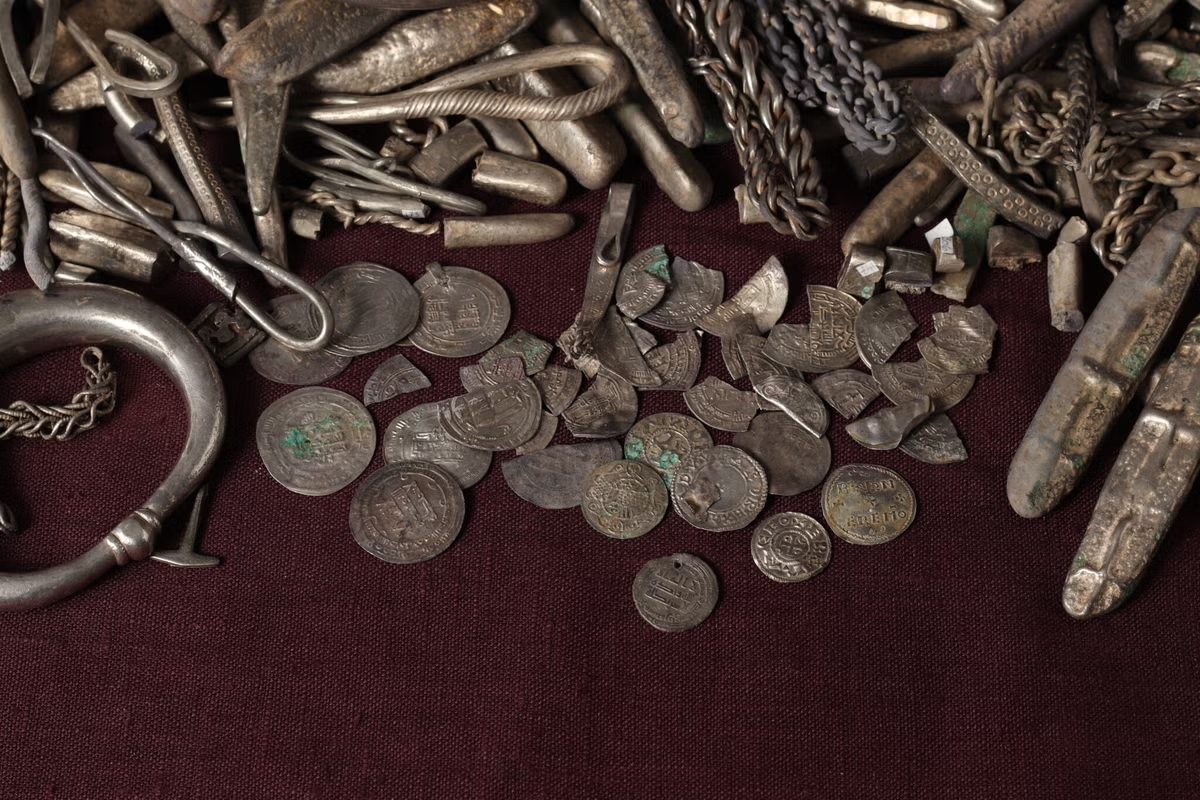
A homeowner stumbled upon the largest hoard of Viking Age silver ever found in Denmark while doing gardening work to remove “stubborn grass” in his backyard.

The treasure, weighing about 18.5kg, was discovered in the northern region of Rebild. It’s almost three times bigger than the largest Viking Age silver hoard unearthed in the country previously.

Archaeologists who inspected the hoard said the treasure was placed in a clay vessel and buried sometime in the 10th century.

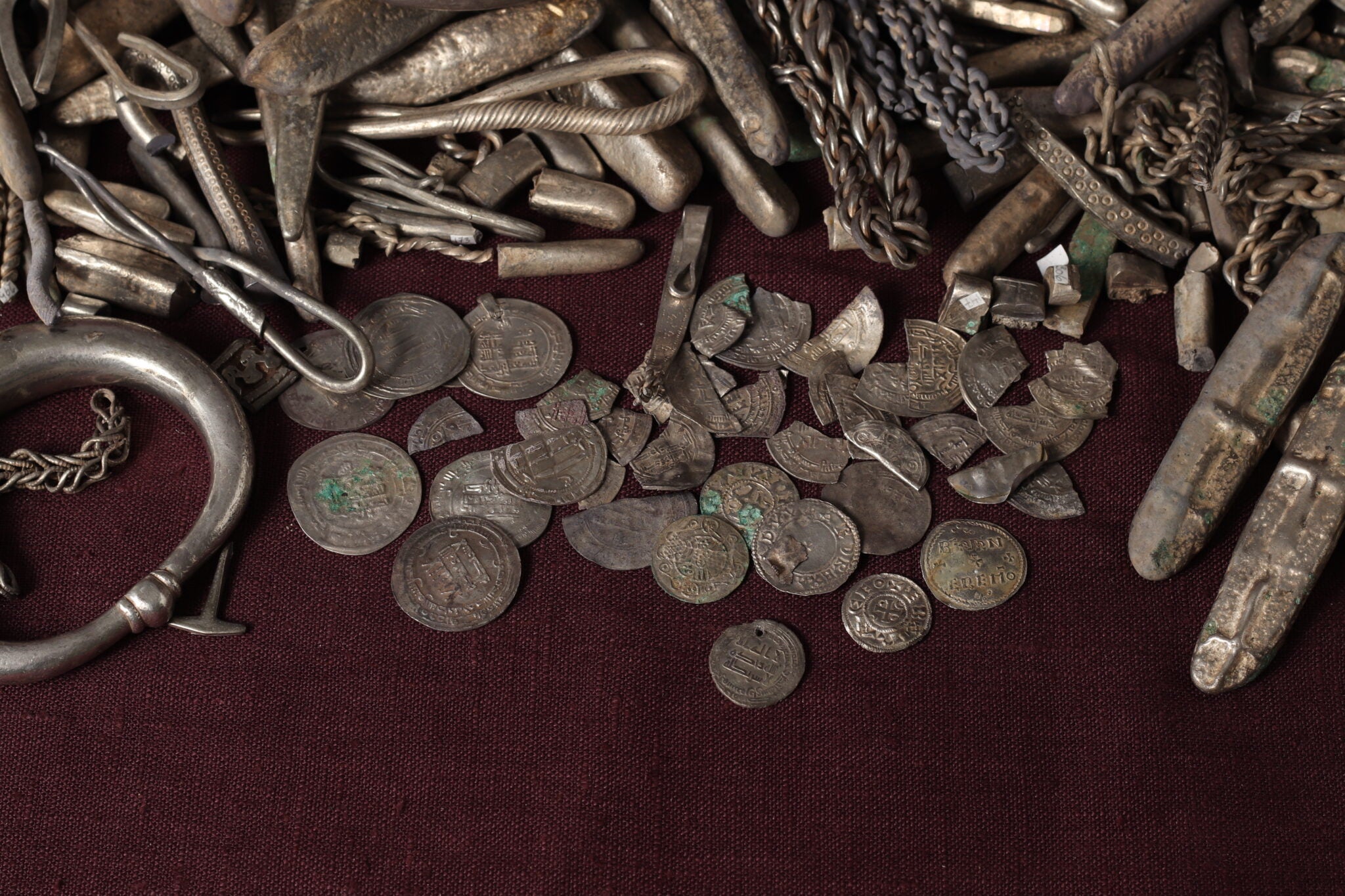
It consisted of almost 700 objects, including silver bars, bracelets, 50 coins, and a small Thor‘s hammer artefact that likely served as a lucky charm.

Advertisement

“It should’ve just been a few hours of hard gardening work removing stubborn grass, stones and gravel for a new tiled terrace, but it turned out to be the biggest surprise of my life,” said the homeowner, who asked to remain anonymous.

“After half an hour of digging, my grip hit something that made a strange sound. At first I thought it was old iron, or fence wire and some potsherds, but when I started digging with my hands, I was able to fish one metal object after another out of the ground.”

Viking Age silver hoard unearthed at Rebild
Viking Age silver hoard unearthed at Rebild (Museum of Northern Jutland)

Nearly 320 of the more than 700 objects were found whole in their original clay vessel, while the rest were scattered as fragments in the soil around it.

“This is a find of great importance for our understanding of the Viking Age in Denmark,” archaeologist Torben Sarauw from the Museums of North Jutland said. “Not just because of its size but also because the treasure clearly shows how silver functioned as wealth and a means of payment in the Viking Age. It’s like finding a safe from the Viking Age.”

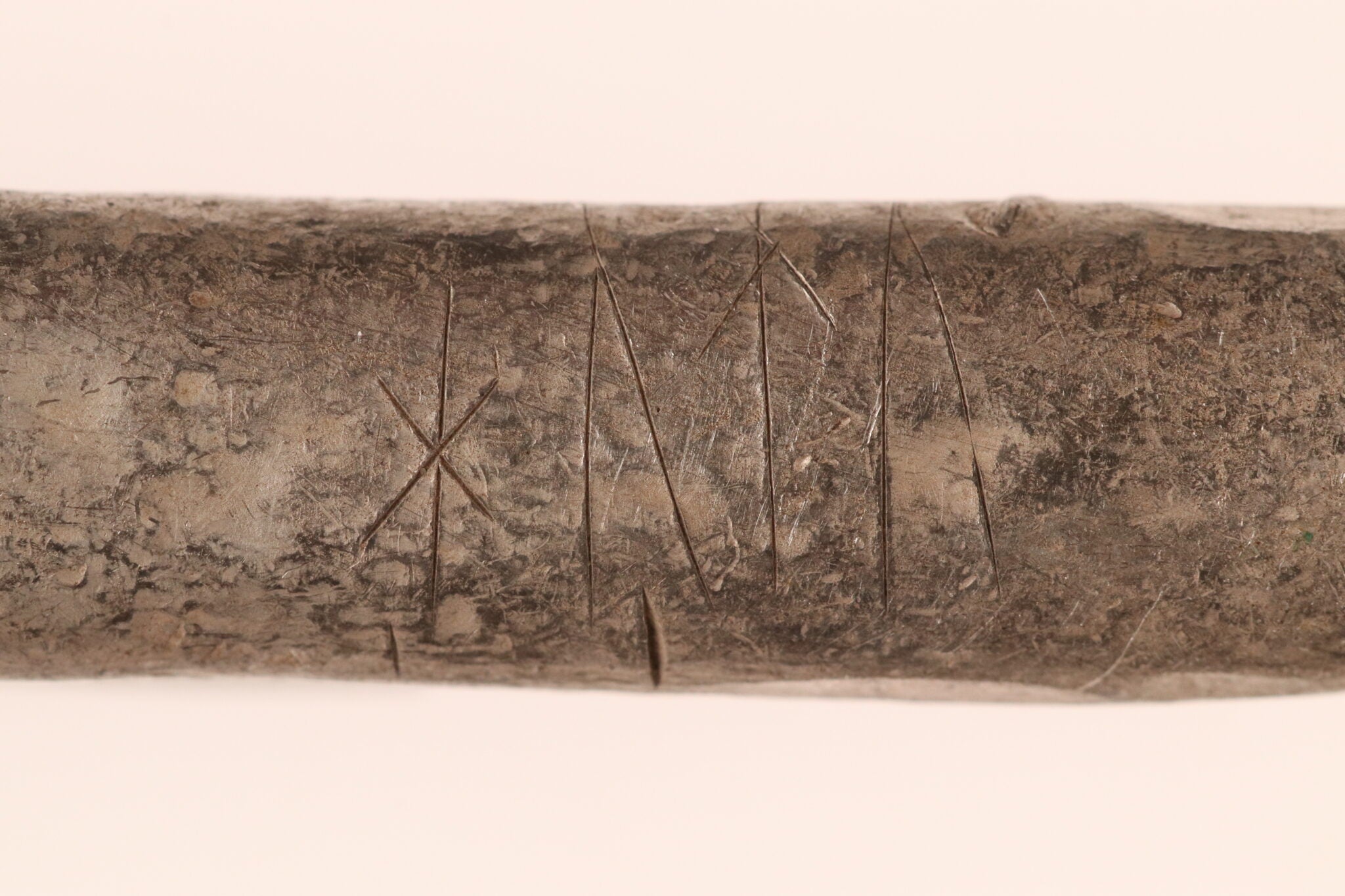
One of the silver bars is engraved with runes that can be read as “hutu”. Researchers suspect it may be a name, an ownership symbol, or some other significant form of marking.

Advertisement
Silver fragments clustered by weight
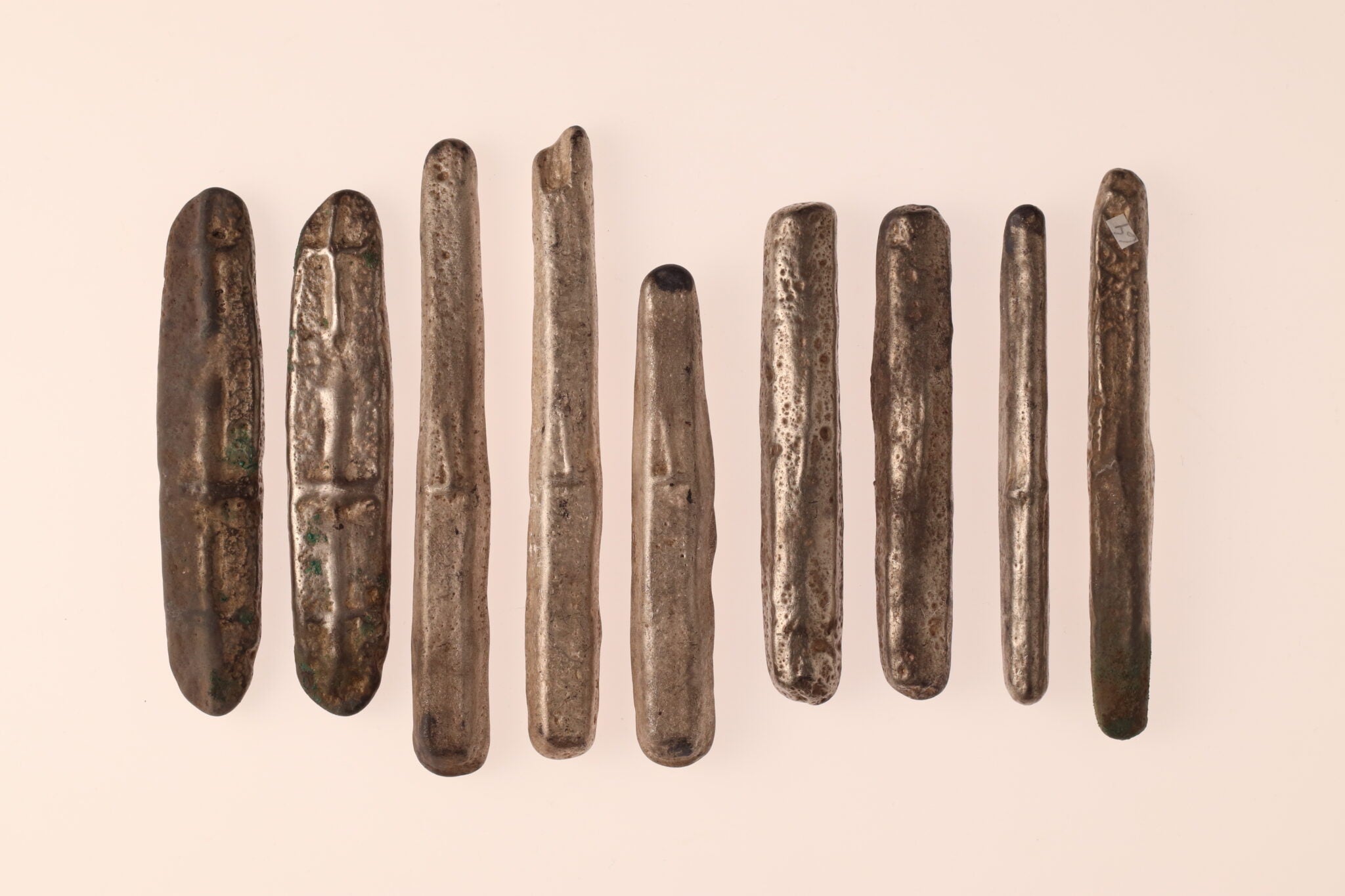
Silver fragments clustered by weight (Museum of Northern Jutland)

The hoard is also peculiar as it is dominated by bars, jewellery and silver clips, with coins only making up a very small part of the total weight, unlike previously discovered Viking treasure in Denmark.

“When we analyse the weight of the silver objects, the treasure reveals information about the economic practices of the Viking Age,” Dr Sarauw said.

“The treasure does not only consist of beautiful objects. Most of them are part of a structured value system by weight.”

During the Viking Age, scrap silver, bars and jewellery were used as means of payment, with the weight of the silver being the decisive measure. People often cut silver into smaller pieces or melted it down.

Archaeologists could see signs of this practice in the Rebild hoard as well where a large number of silver bars, bracelets, and scraps were found grouped around specific weight groups.

Advertisement
Runes engraved on silver bars
Runes engraved on silver bars (Museum of Northern Jutland)

The hoard contained Arab dirhams as well as Anglo-Saxon coins, pointing to Denmark’s connection with large parts of Europe and areas far to the east during the Viking Age.

Two of the Anglo-Saxon silver pennies were minted under King Edward the Elder, who reigned from 899 to 924, providing an important dating point for the hoard.

“That’s what is fascinating about the find,” Dr Sarauw noted. “The silver was hidden in Rebild, but it points to a much larger world.”

“The new silver treasure shows that the Rebild area wasn’t a peripheral region,” the archaeologist said, “but part of the large economic and cultural connections that linked Scandinavia with the areas around the Baltic Sea and the Islamic world to the east, as well as with the North Sea area, England and western Europe to the west.”

Source link

Advertisement
Continue Reading

NewsBeat

SNP challenges Scottish Labour leadership candidates over IndyRef2 trigger following PM’s intervention

Published

on

Daily Record

EXCLUSIVE: A Nationalist MSP described the positions taken by Michael Marra and Joe Fagan on an IndyRef2 as “laughable”.

The SNP has challenged the two candidates vying to become the next leader of Scottish Labour to spell out how a second referendum on independence can be achieved.

Advertisement

Party members have one week left to vote for either Michael Marra or Joe Fagan to take charge following the resignation of Anas Sarwar in July.

The new Scottish Labour leader will be unveiled on September 19 and will likely face immediate pressure from the Nationalists over the UK Government’s repeated refusals to sanction an IndyRef2.

It comes after Andy Burnham yesterday told the House of Commons there would be no vote on the constitution until it’s “clear” a majority of Scots want one.

The PM had previously told John Swinney that a second referendum remains “off limits”.

Advertisement

Burnham was asked at PMQs about the position of Northern Ireland, where a border poll can be triggered if the Secretary of State believes a majority of people would vote for Irish unification.

SNP MP Chris Law said voters in Scotland should have the “equal right to choose their own future” as those in the province.

Burnham responded: “I would say exactly the same situation in Scotland. I am not aware that there is a majority of public support for another referendum and until that changes there won’t be one.”

The comments were seized on by the SNP who called for Fagan and Marra to spell out whether they agreed.

Advertisement

Nationalist MSP David Linden said: “Michael Marra and Joe Fagan have so far failed to answer a very basic question – how do the Scottish people exercise our democratic right to decide our own future?

“The pair want to lead the Labour Party in Scotland, but their answers have so far been laughable. “Senior Labour Party politicians are breaking ranks or tripping over themselves trying to explain their thought process on such a simple concept – what is the mechanism for the Scottish people’s voice to be heard?

“There are First Ministers across these islands that support constitutional change, but the Labour Party in Scotland do not believe the Scottish people has the ride to decide our own future. It is absurd.

“The people of Scotland will democratically decide our own future and unless the leadership of the Labour Party respects that basic democratic principle – the deeper their difficulties will become.”

Advertisement

Fagan previously told the Record he would never back an IndyRef2 if he wins the leadership this month.

The South Scotland MSP also said he would not support a cross-party agreement to produce a route map for a second referendum.

Speaking to the Record, Fagan was asked if there are any circumstances in which he as party leader would support indyref2. “No,” he said.

He added: “The question I think you are really asking is are there circumstances in which another independence referendum is legitimate? That is up for the people who are proponents of independence and a referendum to set out their case.”

Advertisement

Marra previously echoed Burnham’s position and claimed “here has to be sustained clear majority in favour” of a referendum before one can take place.

Speaking at a radio debate, the MSP was asked how voters move to independence. Marra said: “Well, they [the SNP] have to generate the settled will of the Scottish people and that will become an inevitability at that point if it becomes such.”

He added: “I think you measure it in a variety of ways. I suppose you would look at opinion polls. You would look at election results. There are mechanisms and ways.”

Source link

Advertisement
Continue Reading

NewsBeat

A fifth of parents haven’t saved money to support kids into adulthood

Published

on

A fifth of parents haven't saved money to support kids into adulthood

A poll of 2,000 parents with kids under 18 found 23 per cent feel unprepared for the cost of supporting their children into adulthood.

In addition, 51 per cent are worried they won’t be able to contribute towards their child’s university education or living costs if they were to attend.

Conversely, 79 per cent have already started putting money aside, with plans to help fund future costs such as getting on the property ladder or supporting key life events like weddings.

Advertisement

Meanwhile, 46 per cent are concerned they’ll be forced to retire later than planned to have to support their kids through their early adult years.

Kathleen Brooks, research director at investment platform XTB, which commissioned the research, said: “Supporting children into adulthood is becoming an increasingly long-term financial commitment.

“And many parents are recognising the importance of starting early and building savings gradually over time to ease that pressure.

“While future costs can feel daunting, even small, regular contributions made over a long period can make a meaningful difference and help families feel more financially prepared for the milestones ahead.”

Advertisement

Based on the Bank of England’s inflation targets, analysts from the platform believe the total cost of a three-year university degree in the UK could exceed £91,000 by 2040, increasing from around £23,000 a year to more than £30,000 annually.

For those living and studying in London, the total cost could approach £119,000, with yearly costs rising from around £30,000 to nearly £40,000.

The study of parents also identified the reasons they feel underprepared – including everyday living costs making it difficult to save (64 per cent), future costs feeling too high (40 per cent) and having more than one child to plan for (39 per cent).

In total, 42 per cent regularly put money aside, 33 per cent do so occasionally and five per cent have put in a one-off amount.

Advertisement

While 49 per cent have raised less than £5,000 for their child reaching adulthood.

On average, parents have £5,508 saved for their child heading to university.

With mums and dads wanting to contribute towards accommodation costs (47 per cent), tuition fees (41 per cent) and everyday living expenses (33 per cent) the most.

And 82 per cent agreed supporting children into adulthood has become more of a longer-term financial commitment for the current generation than previous, with parents now expecting their children to move out at an average age of 26.

Advertisement

The research carried out through OnePoll found the most common method to put money aside for their youngsters is via a children’s savings account (39 per cent), a Junior Cash ISA (24 per cent) and a general savings account (22 per cent).

Respondents said saving would be easier if they knew how much to save (22 per cent), understood how to invest (18 per cent) and had a better understanding of the different savings options available (18 per cent).

Kathleen Brooks, from XTB, added: “Many parents are understandably focused on setting money aside, but it’s also important to think about how those savings are working overtime.

“The earlier families start planning, the more opportunity they may have to build a financial foundation that can support their children through major life moments, whether that’s university, buying a first home or taking other important next steps into adulthood.

Advertisement

“Creating a financial plan early can provide greater flexibility when those major life milestones eventually arrive.”

Source link

Advertisement
Continue Reading

NewsBeat

Iran war won’t end until after US midterm elections, says Trump

Published

on

A cut of of Anthony Zurcher wearing a suit and tie in front of a red, black, grey and blue graphic background featuring the US Capitol Building

Trump also said further negotiations with Iran could possibly happen, “but it’s not something we’re looking at”.

The US president initially predicted the war, which is now in its seventh month, would last only a matter of weeks. The conflict, and its knock-on effects on everything from gas to groceries, has led to a steep decline in his approval ratings – and pressure from those within his party, including devout supporters, to quickly end the war.

Midterm elections will be held on 3 November, and Republicans are in danger of losing their control on Congress.

At the convention, Trump sought to energise the party ahead of November. Historically, a sitting president’s party tends to lose seats in Congress in the midterm elections.

Advertisement

Fighting in the Middle East has intensified in recent days, as oil facilities throughout the region come under attack, driving up the global price of fuel and any item that requires shipping.

The price of oil hit $100 a barrel on Wednesday for the first time since July. Similarly, earlier this week the price of US diesel hit an all-time-high, which is likely to cause a ripple effect on prices across the US.

On Wednesday, the US military said it had attacked five oil tanker ships with ties to Iran. Tehran, in response, launched attacks on two US Navy destroyers and eight oil tankers in the Strait of Hormuz, causing “heavy damage” to the vessels, according to Iranian state media.

A day earlier, the Iran-linked Houthis in Yemen launched a wave of attacks in Saudi Arabia, sparking fires at oil facilities.

Advertisement

The fighting, which began again recently after a 60-day ceasefire between the US and Iran formally expired last month, has also raised predictions that the rising fuel costs could lead to higher interest rates in the US.

Source link

Continue Reading

NewsBeat

Xabi Alonso attones for big Chelsea FC mistake and key talking points from Leeds win

Published

on

Xabi Alonso attones for big Chelsea FC mistake and key talking points from Leeds win

Talk of Chelsea possessing the most fearsome attack in the land will only increase after this.

Two goals down and facing a humbling Carabao Cup exit at home to Leeds United with Xabi Alonso’s much-changed line-up inviting scrutiny, his emergency half-time quadruple substitution began to pay off.

The Blues scored four goals in 12 second-half minutes and added two more besides, securing their place in the hat for the fourth round with a 6-3 win and eliminating the visitors with a brutal, ruthless goalscoring performance after the interval.

Debutant struggles as selections backfire

Advertisement

Chelsea are only involved in three competitions this season and had gone strong in the previous round against Luton Town, so Alonso was expected to do so again for the visit of Leeds, taking the Carabao Cup seriously.

Instead, he sprung a surprise, rotating heavily and handing a senior debut to 16-year-old Reggie Watson in midfield.

Struggles: Reggie Watson

AFP/Getty

Picking such a second team backfired. Watson had impressed in pre-season games against Western Sydney Wanderers, Tottenham Hotspur, AC Milan and Johor Darul Ta’zim but struggled to summon the same level of composure at Stamford Bridge.

Advertisement

Source link

Continue Reading

NewsBeat

How ‘positive’ stress could improve the welfare of zoo animals

Published

on

How ‘positive’ stress could improve the welfare of zoo animals

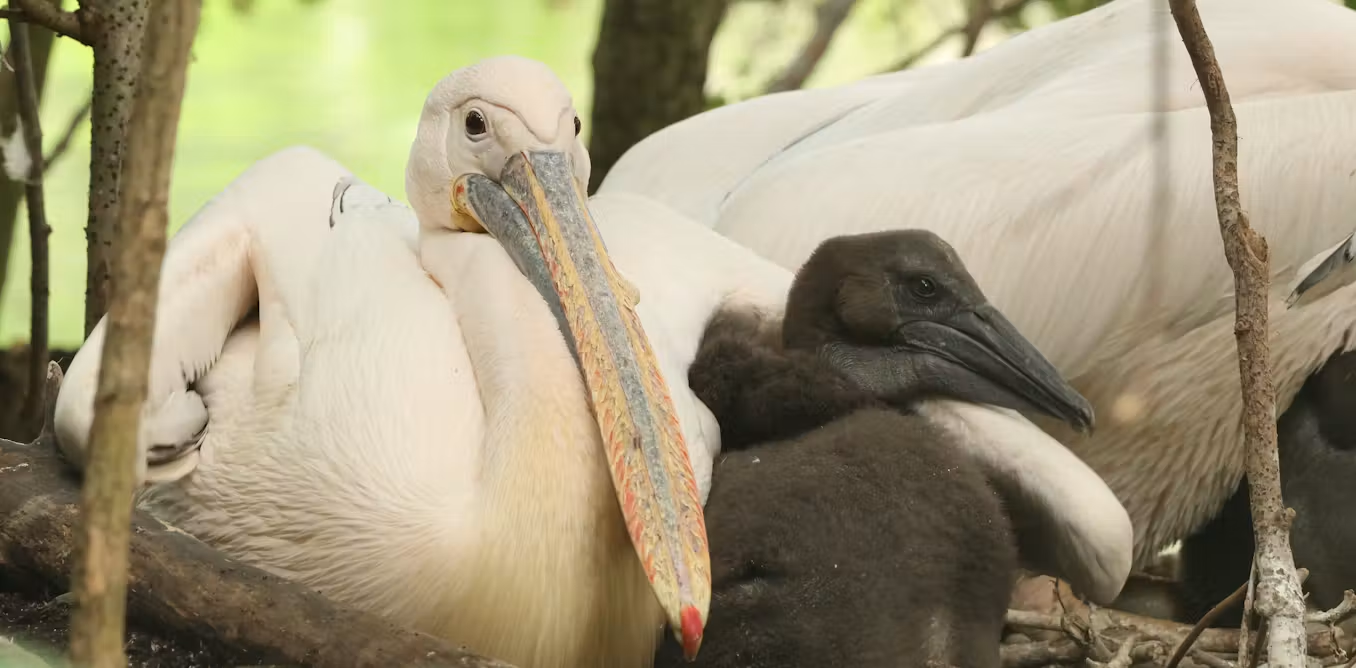
Pelicans have resided in St James’s Park, London for 360 years. But the current flock have been a summer sensation due to the first hatching of chicks in the park’s history.

Pelican breeding in zoos is demanding for these birds, because the right environmental and social conditions need to come together. Rather than simply being comfortable, the birds need to encounter and respond to cues that stimulate courtship, nesting and reproduction.

This unusual nesting at St James’s Park provides an interesting example of how responding to biologically relevant stressors is a positive part of an animal’s life. Multiple factors are likely to have contributed to the pelican nesting. The heatwave, the flock’s dynamics and the compatibility of the individual birds seem to have created the right conditions for the first time in centuries.

Four pelican chicks have hatched in St. James’s Park, marking the first time the park has ever welcomed the pitter patter of tiny pelican feet.
Nick Burnham/Samuel Bonham

In my recent research, I evaluated the importance of positive stress to zoo and aquarium animal welfare and found it is crucial for the wellbeing of captive animals.

Advertisement

Researchers call the beneficial response to a stressor, “eustress” – eu being the Greek prefix for good.

Courtship, reproduction and chick-rearing are all natural stressors. Priorities change, energetic and physical needs alter, and adults spend more time on offspring. This stress, however, is not necessarily bad. For example it can provide learning opportunities and enhance the animals’ behavioural repertoire.

As we learn more about what good animal welfare is, it is becoming clear that meaningful challenges which reflect an animal’s natural ecology help them have more autonomy over how they live. Eustress also helps animals cope better with averse situations.

Zoos do not need dramatic changes to provide these experiences. Small challenges can be built into everyday care: food can be hidden in different locations, or new scents and natural materials introduced. Animals can encounter new ground materials and surfaces (such as soil, bark and sand), changes to ropes or branches, or vegetation that naturally changes with the seasons. Enrichment can also encourage animals to explore different parts of their existing enclosure or use familiar resources in new ways.

Advertisement
White and dark grey pelicans perched on rocks.
All pelican chicks start out dark brown/grey, turning white (or the adult colours they are for that species) over a couple of years.
Paul Rose, Author provided (no reuse)

Variation is key. If food always appears in the same place, at the same time and in the same way, there is little need for an animal to make decisions or adapt.

Many zoos already provide these opportunities. The next step is to think more deliberately about the challenge itself: is it meaningful, does the animal have a choice about engaging, and can it successfully overcome it? The aim is not to make life unnecessarily difficult but for animals encounter novelty or problems they can solve.

Rather than simply giving an animal what it needs to survive, we should provide opportunities for the animal to use their skills and make decisions.

What might this look like at your local zoo then? Meerkats (Suricata suricatta) are one example. Wild meerkats do not encounter their food neatly presented in a bowl. They need to sniff, dig and investigate their surroundings, while members of the mob keeps watch for danger.

Meerkat lounges on deckchair with parasol
Too relaxed?
Cookie Photos/Shutterstock

Finding food is also a social challenge for these animals. Young meerkats learn about unfamiliar foods by observing and interacting with more experienced adults. Older meerkats help youngsters acquire important food handling skills.

Zoos can recreate elements of these challenges by scattering or hiding food, providing a sandy floor that encourages digging and creating elevated lookout points. Likewise, zoos can encourage social opportunities by providing complex feeding experiences where animals forage together. A 2021 study found that zoo meerkats retain the sentinel behaviour seen in their wild counterparts, suggesting that opportunities to perform these sort of activity remains important even when predators are absent.

Advertisement

The same principles apply underwater. Common clownfish (Amphiprion ocellaris) also encounter environmental and social challenges. On coral reefs, clownfish forage in a complex three-dimensional environment and depend on a host anemone for protection. They live in a strict social hierarchy. The largest fish is the dominant female, followed by the breeding male and then smaller, non-breeding fish. This social group is known as as a “queue”, as subordinate fish can move up through the hierarchy. In the aquarium, recreating this social group by housing a shoal of clownfish around the correct host anemone species allows for more choice and for fish to express a richer behavioural repertoire.

This brings us back to St James’s Park’s pelicans. Successful breeding has introduced perhaps the most natural challenge of all. Finding a partner and rearing young to maturity requires animals to change how they spend their time and respond to altered demands. When animals work for a reward, scientists call this contrafreeloading.

However, zoo animals can experience negative stress when a stressor is prolonged, overwhelming, unnatural or beyond their control. Examples can be excessive noise, incorrect climate conditions or being unable to retreat from something they find threatening.

The lesson for zoos is a good life should not necessarily be an entirely effortless one. Welfare is enhanced when animals can express behaviour their evolutionary history has equipped them to perform. Eustress is not giving every zoo animal the same kind of “challenging enrichment”. The challenge needs to make biological sense for that particular species.

Advertisement

Source link

Continue Reading

NewsBeat

Long Eaton school chaplain settles LGBT sermon unfair dismissal case

Published

on

A cut of of Anthony Zurcher wearing a suit and tie in front of a red, black, grey and blue graphic background featuring the US Capitol Building

A chaplain who used a sermon to tell pupils they did not have to believe in “LGBT stuff” has reached a legal agreement with the school that dismissed him.

Rev Bernard Randall was sacked by Trent College in Long Eaton, Derbyshire, in 2019, two months after the sermon. He appealed and his dismissal, external was overturned, but he was later made redundant after refusing reduced hours.

After losing an unfair dismissal claim, his case had been set for a new tribunal over possible bias on the panel that made the ruling, and Trent College was ordered to pay Randall about £20,000 in costs, according to a court document.

Advocacy group Christian Concern said a confidential settlement had since been reached.

Advertisement

An employment tribunal heard Randall opposed parts of a programme the school was implementing to try to improve LGBT inclusivity.

Randall told the tribunal he believed elements of the programme – devised by charity Educate and Celebrate – were Marxist, revolutionary, atheist and incompatible with Christian values.

He said some of the terminology within the programme was “ideologically loaded and misleading”, and he highlighted phrases such as “sex assigned at birth” and “cisgender”.

Randall told the tribunal: “Educate and Celebrate went beyond a neutral stance of inclusivity into the implantation of ideas I consider to be identity politics.”

Advertisement

He said he was inspired to write the sermon, delivered in June 2019 to pupils aged between 11 and 17, after he was asked by a sixth-form pupil: “Sir, how come we are told we have to accept all this LGBT stuff in a Christian school?”

Randall included the question within the sermon, which he said concerned school leaders.

He also said, in his sermon: “You do not have to accept the ideas of LGBT activists.”

Christian Concern said Randall’s sermon reflected the Church of England’s teaching on marriage, but it triggered complaints from some pupils, parents and staff members, who said it nearly left them in tears.

Advertisement

Randall was removed from his role as chaplain at the fee-paying boarding school and reported to the government counter-terrorism watchdog Prevent.

The Derby Telegraph reported, external Randall appealed against his dismissal, which was overturned, but he was given a final warning. Trent College then informed Randall it wanted to reduce the chaplaincy role to seven hours, term-time only, which he did not accept and was therefore made redundant.

Source link

Advertisement
Continue Reading

NewsBeat

How cash-in-hand businesses can get stuck in the informal economy

Published

on

How cash-in-hand businesses can get stuck in the informal economy

Around 10% of the UK economy operates off the books. That means billions of pounds worth of cash-in-hand payments that never get taxed.

But all of that cash isn’t necessarily being handled by career criminals. Much of it is being earned by the hard work of painters and decorators, hairdressers or landscape gardeners.

Many of these workers will have started off using cash payments as a springboard – a cheap, low-risk way to test whether a business idea works before committing to the formalities (and costs) of making everything official.

But sometimes these businesses end up trapped in the “informal” or “hidden” economy – not because of personal greed or an aversion to paying tax, but because they can’t afford to lose the customers that helped them get started in the first place.

Advertisement

Our research highlighted the problems workers face as they set out intending to build a fully legal and legitimate tax-paying business.

Many cash-in-hand businesses win their first customers – who may be supportive neighbours or friends – by being cheap. Working in cash, without the tax and overheads a registered business has to carry, they can undercut everyone else.

Those prices then become expected and lead to word-of-mouth recommendations. As one self-employed plasterer told us: “At the start I kept the price low just to get work, to build it up. But now people expect that [same] price.

“If I raise it, they’ll go somewhere else. It’s hard to change it once you’re known for being cheap.”

Advertisement

A heating engineer commented: “Initially, I did build a good customer base, but now I know [it was] because I was so cheap. I wasn’t accounting for tax and all that.”

Trust and reputation can grow by being a familiar, reliable face in the neighbourhood. As one painter and decorator explained: “I didn’t need a website or anything. People know me around here, they knew I’d do a good job. That’s how I got work, just word of mouth. That’s all I needed.”

A cash-in-hand economy runs on trust, reputation and identity – which is precisely why lots of businesses don’t manage to leave it behind.

Becoming an “official” business can feel like breaking faith with the people who vouched for you, or like turning into a business you never set out to run. This became problematic for a lot of the businesses in our study.

Advertisement

As one business owner who works in car repairs put it: “People know you because you’re one of them. Once you try and go bigger, that changes.”

Some of our interviewees saw the formal system as having been built for someone else. One told us: “I’ve seen lads go legit and get hammered by the tax man for one [accounting] mistake. I don’t trust it. I pay my dues in other ways – doing good work, looking after the lads I work with. That’s how we survive.”

Regardless of the rationale for operating in the cash-in-hand economy, staying informal was not seen as a comfortable or easy choice.

One business owner who eventually registered described life off the books as being “on edge all the time”. But for most, the pull of the community outweighed the push of the risk.

Advertisement

Their legitimacy came from their neighbours, not from HMRC, and they protected the version that paid them.

Trust and identity

Government policy treats going legitimate as an administrative step, but our research suggests it is actually more of a social transition. It asks the business owner to reprice every relationship they have, and to change who they are in their community. Support schemes that ignore this will keep failing.

Cash wash.
Ajit Wick/Shutterstock

If it takes a village to raise a child, something similar is true of small businesses. The first customers, the word-of-mouth referrals, the neighbour who vouches for you all help a new business get going. But the same village which has raised that business can also hold it back.

The UK government estimates the hidden economy accounts for around 6% of the country’s £59.2 billion annual tax gap.

Advertisement

Our research points to two things that could make a big difference. One would be a phased route into formality, where tax and compliance obligations build up gradually, softening the income shock that all-or-nothing registration creates.

Secondly, support needs to reach people through channels they already trust, such as trade networks, suppliers and peers, rather than official letters from institutions they avoid.

Leaving the cash economy is much more than a change of paperwork – it is a change of identity. And that is why so few ever fully make it.

Advertisement

Source link

Continue Reading

NewsBeat

Steve McManaman snubs Arsenal and names his two Champions League favourites | Football

Published

on

Steve McManaman snubs Arsenal and names his two Champions League favourites | Football
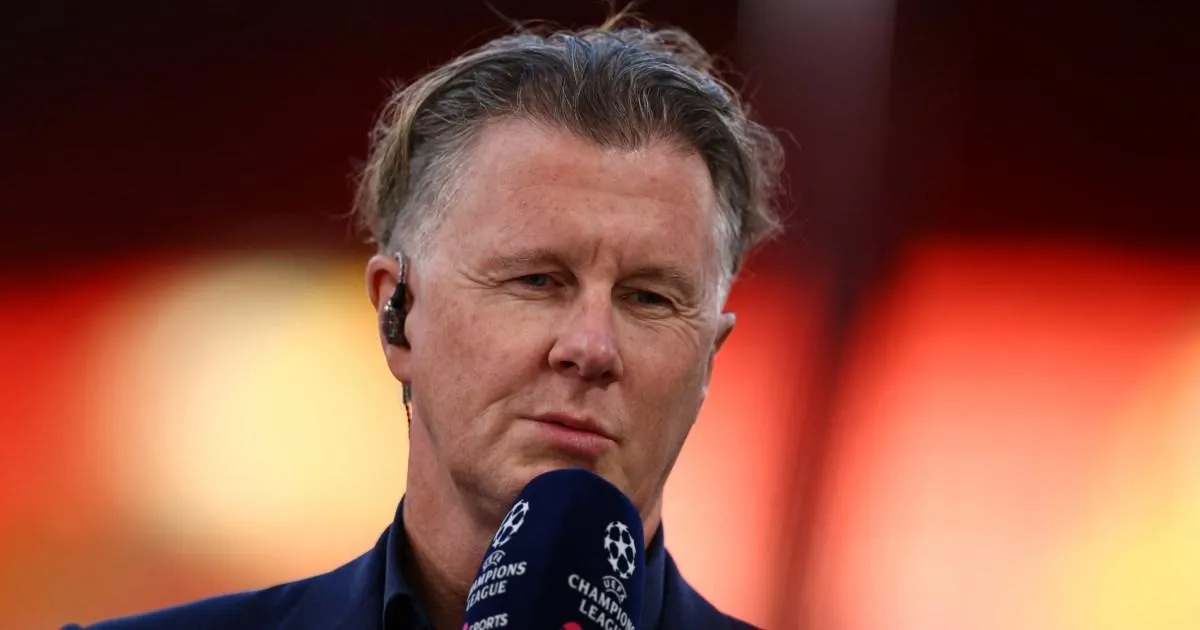
Former Liverpool winger Steve McManaman (Picture: Reuters)

Steve McManaman snubbed last year’s finalists, Arsenal, as he named his two favourites to win the Champions League this season.

Arsenal continued their perfect start to the season with a well-earned 1-0 win over Serie A side Napoli on Wednesday.

Martin Odegaard, who scored at the weekend against Chelsea, continued his rich vein of goalscoring by netting the winner in Naples in the 75th minute.

The Gunners enjoyed a memorable run to the final last season before suffering a heartbreaking penalty shootout defeat to back-to-back winners PSG.

Advertisement

Sign up for In The Mixer, Metro’s football newsletter

Get exclusive analysis and previews of the biggest games every Friday. Sign up now for free.

And after another summer of impressive recruitment, Mikel Arteta’s side will expect to reach the latter stages of the competition once again this time around.

Advertisement

However, two-time Champions League winner McManaman believes that defending champions PSG and Spanish giants Barcelona are both likelier winners of this season’s competition.

Speaking on TNT Sports, he said: ‘PSG are favourites of course because they’ve won it the last two years.

RESTRICTED TO EDITORIAL USE Mandatory Credit: Photo by Giuseppe Maffia/NurPhoto/Shutterstock (17143371bz) Declan Rice of Arsenal FC celebrates with Martin Odegaard at the end of the UEFA Champions League 2026/27 League Phase MD1 match between SSC Napoli and Arsenal FC at Diego Armando Maradona Stadium on September 09, 2026 in Naples, Italy SSC Napoli v Arsenal FC - UEFA Champions League 2026/27 Phase MD1, Naples, Italy - 09 Sep 2026
Martin Odegaard scored as Arsenal beat Napoli (Picture: Shutterstock)

‘I think Barcelona are very strong, they’ve been excellent in La Liga. They look as if they’re going to score every time they go forward and they’ve got six forwards at the moment, which helps them.

‘They’re up there certainly, they’ve improved from last year so they’ll be close.’

Ask Metro


Advertisement

Use AI to go deeper into the stories you care about – powered by Metro and trusted publications.

PSG got their defence underway with a comfortable 6-1 win over Slovan Bratislava, while Barcelona looked equally impressive in their 5-1 victory over Feyenoord.

epa13226928 Fabian Ruiz of PSG celebrates with teammate Lucas Hernandez (L) after scoring the 6-1 goal during the UEFA Champions League league phase match Paris Saint-Germain against Slovan Bratislava, in Paris, France, 09 September 2026. EPA/YOAN VALAT
Defending champions PSG got underway with a comfortable win (Picture: EPA)

Elsewhere, Liverpool picked up their first European victory under Andoni Iraola with a 2-1 comeback victory over Atletico Madrid.

Bradley Barcola made his first start since his big-money move from PSG, but McManaman doesn’t believe the Frenchman’s arrival will automatically turn Liverpool into Champions League contenders.

Advertisement

‘I think he makes them better, he’s shown what he can do in a PSG shirt and won the Champions League a couple of times, so we know he’s got experience,’ McManaman added.

‘I think he can make Liverpool’s starting XI better but whether that makes them anywhere close to favourites I would probably doubt.

‘I think it’s a transitional year for Liverpool, and I think there will be a few ups and downs a bit like last year. I hope they improve on where they finished last year, but I don’t expect them to be challenging on all fronts.

‘I would have preferred them to have added a few more bodies into this side just to bulk up the squad with a little bit more experience, so I’m off that fence of hoping they qualify for the Champions League and have a good run domestically, I’d like them to really challenge for trophies in this country.’

Advertisement

For more stories like this, check our sport page.

Follow Metro Sport for the latest news on
FacebookTwitter and Instagram
.

Advertisement

Source link

Advertisement
Continue Reading

NewsBeat

‘You don’t need to be an expert to support someone who’s struggling’: Prince William launches initiative about suicide prevention through the power of sport

Published

on

Prince William pictured on World Suicide Prevention Day at Principality Stadium on September 10, 2025 in Cardiff, Wales

The Prince of Wales will today launch a landmark new initiative to raise awareness about suicide prevention through the power of sport.

He has joined forces with stars including England captain Harry Kane, F1’s George Russell, footballer Alan Shearer, Olympian Dame Kelly Holmes and cycling stars Sir Jason and Dame Laura Kenny to create a new On Your Side ‘toolkit’, a practical guide enabling people to spot the warning signs better, as well as build knowledge and confidence to offer more timely support.

Suicide is the single biggest killer of men under the age of 50 in the UK.

And while the future king’s initiative is designed to help both sexes, it is hoped that sport will provide a new way of reaching those men who traditionally find it difficult to talk about their emotions or reach out for help.

Advertisement

In a speech at Everton football club today, on World Suicide Prevention Day, William will say: ‘My hope is that every sporting organisation in the country will look at what is being launched today and ask a question: “What more can we do?” 

‘Because the opportunity before us is enormous. Sport has the ability to reach people who may never walk through the door of a mental healthcare service. 

‘People who may never seek support themselves and may be struggling in silence. The sporting community can change that.’

As well as the practical guide, which will be distributed to sporting organisations both grassroots and professional the length and breadth of the country, stars including Kane and Russell have recorded a special film with the prince showcasing the power of having a conversation about suicide.

Advertisement

Prince William pictured on World Suicide Prevention Day at Principality Stadium on September 10, 2025 in Cardiff, Wales

Today William will host an event at the Hill Dickinson Stadium in Liverpool, the home of Everton Football Club, attended by representatives from across the sports world and well-known figures including Dame Kelly Holmes, Gabby Logan, Campbell Hatton, Jill Scott and Dame Laura Kenny

Leaders from major sports organisations will also announce details of their commitments to the initiative.

Advertisement

The Football Association, of which the prince is Patron, will commit to embedding the toolkit across its entire organisation, as well as its community and grassroots football network.

The Premier League and British Cycling will announce their commitment to prioritising suicide prevention across their organisations, and Team GB will use the resource with all athletes and staff.

In addition, over a dozen other sports organisations have signed up to become champions of the toolkit, committing to embedding practical, evidence-based suicide prevention techniques across their organisation, using the resource to strengthen their approach and help inspire wider action across all sports.

The initiative is the result of a collaboration between William’s charitable arm, The Royal Foundation, the British Standards Institution and the charity Chasing the Stigma.

Advertisement

Hazel Detsiny, Executive Director of The Royal Foundation, said: ‘This toolkit is the first of its kind, uniting the sector across all sports and at every level, with the aim of bringing about meaningful change.

‘Sport can be a powerful force for connection and support, and everyone engaged in sport has the power to make a difference to those at risk of suicide.

‘Research commissioned by The Royal Foundation shows that the sports sector has the potential to be a powerful platform for suicide prevention but is hampered by stigma – particularly among men and elite athletes – as well as gaps in skills, knowledge and resources.

‘The findings show strong goodwill and pockets of effective practice across sport, but that the sector’s scale and diversity mean activity is often siloed, inconsistent, and unevenly resourced. At grassroots level, many clubs lack clear guidance on how to recognise risk and respond appropriately.’

Advertisement
The Prince of Wales will today launch a landmark new initiative to raise awareness about suicide prevention through the power of sport

The Prince of Wales will today launch a landmark new initiative to raise awareness about suicide prevention through the power of sport

Join the discussion

How can sports communities break the silence and stigma around men’s mental health struggles?

The toolkit explains how to create safe and supportive environments where people feel able to speak up and support others in distress, including outlining appropriate language and providing conversation starters.

Advertisement

It also hopes to make suicide prevention part of everyday practice, including policies and ways of working.

Footballer Alan Shearer suddenly lost his best friend and ex-Newcastle teammate, Gary Speed, in 2011.

The two men had seen each other just hours before his death and had been planning a holiday together when Wales manager Speed apparently took his own life at the age of just 42.

He said: ‘For me this is obviously very personal and it feels particularly poignant that it is being launched at Everton, a club that meant so much to Gary Speed. 

Advertisement

‘We can’t all know when somebody is struggling but we can all be better at asking and listening and helping someone find the right support. 

‘That’s what On Your Side is all about, giving people across sport practical advice to help start those conversations. Prince William has done a huge amount around mental health and support.

‘You don’t have to be an expert, you don’t have to have all the answers, but I hope that everyone in sport will use the toolkit. We can all be on the same side.’

A spokesman for the Prince of Wales said it was well known that he has worked for many years to support changing the national conversation on mental health and this was a development of that.

Advertisement

‘The prince is very passionate about sport and truly believes in its ability to bring people together,’ they said.

He has already invested £1 million of his charity’s funds to set up a national suicide prevention network.

For confidential support, call Samaritans on 116 123, visit samaritans.org or visit https://www.thecalmzone.net/get-support 

Source link

Advertisement
Continue Reading

Trending

Copyright © 2025