
Crypto World
Trump Dangles $5,000 Payout to US Adults as Support Hits New Low Before Midterms

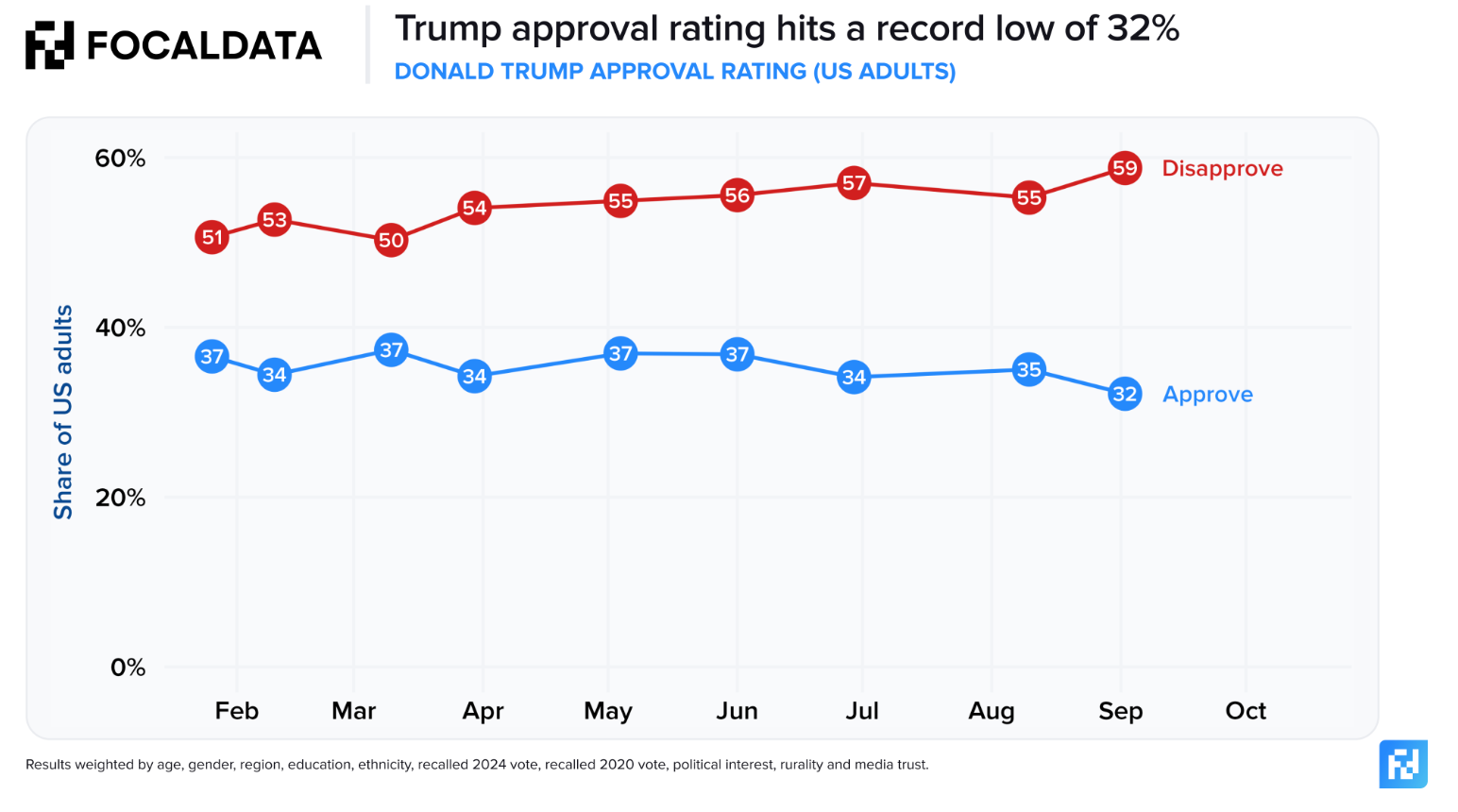
President Donald Trump promised a $5,000 payout to every American adult if Republicans keep Congress this November. The pledge came hours after a new poll put his approval rating at a record low.
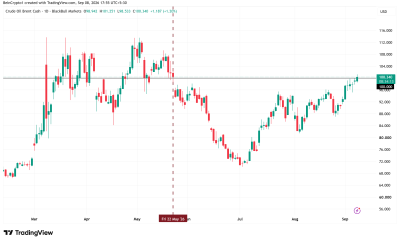
The pledge came at the Republican Party’s first-ever midterm convention in Dallas. It landed the same day Brent crude oil topped $102 a barrel as fresh US strikes hit Iranian tankers.
A Populist Pledge Against Slipping Support
Trump told the crowd a Republican sweep would fund the payout through the country’s economic success. He called it a dividend, comparing it to a company paying out to shareholders. He gave no details on funding or timing.
The promise lands as Trump’s numbers keep sliding. A Financial Times/Focaldata poll this week put his approval at 32%. That is down three points from August, the lowest reading since the pollsters began tracking in May.

Separate polls from Reuters/Ipsos and the University of Massachusetts Amherst show his general approval underwater by roughly 30 points. The same Financial Times/Focaldata poll found only 22% approve of his handling of the economy, against 71% who disapprove.
Prediction markets have already priced in the shift. Polymarket bettors now give Democrats better-than-even odds of sweeping Congress in November.
Why Crypto Traders Are Watching
The pledge echoes Trump’s earlier tariff dividend proposal from last November. Analysts then said direct cash, rather than tax credits, could push fresh capital into Bitcoin (BTC) and other risk assets.
That reading matters for crypto traders too. Falling approval raises the odds of a Democratic Congress. That could reshape the CLARITY Act, a bill splitting crypto oversight between the SEC and CFTC.
The oil spike, tied to the US-Iran war that began in February, adds another variable. It complicates the Federal Reserve’s rate decision on September 15 and 16, a meeting already framed as a test of whether war-driven energy costs outweigh a cooling labor market for Bitcoin’s rate-sensitive trade.
Bitcoin’s spot price traded near $77,900 at press time, up roughly 0.7% over 24 hours. The speech itself left prices largely unmoved.
Washington now has a fiscal promise with no funding source and a war pushing energy costs higher. Traders are left deciding whether that combination adds real inflationary pressure, or just campaign noise before November.
The post Trump Dangles $5,000 Payout to US Adults as Support Hits New Low Before Midterms appeared first on BeInCrypto.



Coinbase CEO tells CNBC the crypto industry gets regulatory clarity whether or not the Senate passes the bill on Sept. 15.
Barclays raised its year-end S&P 500 target to 7,950 from 7,800 on Wednesday, leaving roughly 4% upside from the index’s latest close.
The bank pointed to durable demand for artificial intelligence (AI) and repeated beat-and-raise results from Big Tech, which kept earnings momentum intact.
The Earnings Math Behind the New S&P 500 Target
Venu Krishna, head of US equity strategy at Barclays, lifted the firm’s 2026 earnings estimate to $365 per share from $337. The 2027 forecast moved to $414 from $389, while the 2027 index target stayed at 8,800.
Big Tech earnings grew 35% from a year earlier in the second quarter, up from 30% in the prior period. Earnings across the rest of the technology sector jumped 88%.
Corporate earnings have also continued to beat Wall Street expectations. LSEG data showed that 86% of the 492 S&P 500 companies that reported exceeded analyst estimates. That figure stands well above the long-term average of 67.5%.
“Tech continues to deliver standout beat-to-miss ratios, with healthcare and energy also showing strength, while Real Estate and Utilities lagged,” the note read.
Krishna expects hyperscaler capital spending to pass $1.1 trillion in 2027, a 67% increase from the prior year.
“Growth is expected to moderate in 2028, though spending is still projected to rise by approximately 30%. Google and Amazon are expected to be the largest contributors, with Meta close behind,” the analyst added.
Other major banks have also raised their year-end forecasts for the benchmark index. JPMorgan raised its year-end target to 8,000 on Monday. Furthermore, research firm CFRA now expects the index to reach 8,050.
HSBC lifted its S&P 500 target to 8,100 from 7,650 on Tuesday. The bank cited strong earnings and continued AI infrastructure spending.
Follow us on X to get the latest news as it happens
Everything Outside AI Starts to Catch Up
That concentration cuts both ways. AI stocks accounted for about 45% of the S&P 500’s market capitalization and drove nearly all of the rally.
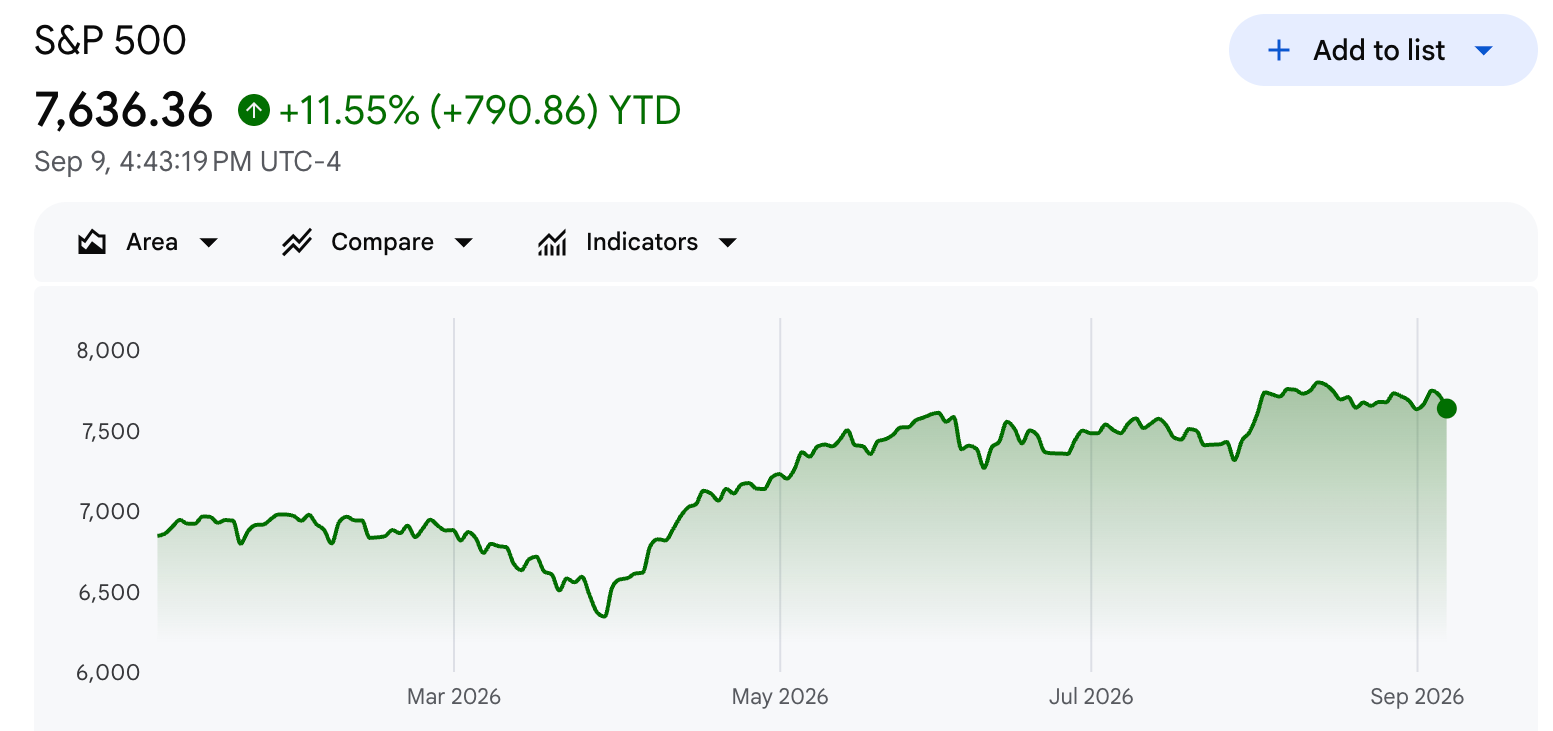
The gap shows up in the tape. The S&P 500 closed at 7,636.36 on September 9, up 11.55% for the year.

The US 500 Excluding Artificial Intelligence Enablers Price Return Index (SPXXAI) sits at 3,197.09, a 4.48% year-to-date gain. BeInCrypto previously reported that the gauge had slipped below its February launch level while the headline index climbed.

Stocks outside the AI trade have therefore turned positive. However, they still trail the broader benchmark by roughly seven percentage points.
Barclays stayed conservative on valuations, citing doubts over how durable AI spending will prove, sticky inflation, geopolitical uncertainty, and a more hawkish rate path. Strategists have flagged 2027 as the year the bet will be tested.
Whether 7,950 arrives has less to do with the broad market than with whether the hyperscalers keep writing the checks.
Subscribe to our YouTube channel to watch leaders and journalists provide expert insights
The post Barclays Sees 4% Upside for the S&P 500 on Tech Earnings Strength appeared first on BeInCrypto.


BlackRock warned on Sept. 8 that rising Japanese government bond yields could weaken demand for U.S. Treasuries by giving Japanese investors more attractive returns at home.
Summary
- Japan’s 10-year government bond yield briefly exceeded 3%, its highest level since 1996, BlackRock reported.
- Yen-hedged 10-year Treasuries yield about 2% for Japanese investors, versus roughly 3% on domestic bonds.
- Japan holds roughly $1.1 trillion in U.S. Treasuries, making potential capital repatriation globally relevant today.
- BlackRock estimates a hypothetical 5% portfolio shift would redirect approximately $55 billion toward Japanese assets.
- Markets fully price a Bank of Japan rate increase this month, according to BlackRock’s commentary.
Japan’s 10-year government bond yield briefly exceeded 3% for the first time since 1996, while its 30-year yield reached a record 4.18%.
The shift matters because Japan holds roughly $1.1 trillion of U.S. Treasury securities. Decades of low and negative domestic interest rates encouraged Japanese banks, insurers and pension funds to invest abroad. Higher Japanese yields are beginning to alter that calculation.
Japan bond yields now compete with U.S. debt
A Japanese investor can earn approximately 3% from a 10-year Japanese government bond, according to BlackRock’s commentary. A comparable U.S. Treasury produces about 2% after the investor hedges the dollar exposure back into yen using rolling three-month currency forwards.
The comparison does not mean Japanese investors will immediately sell their foreign holdings. Hedging costs change with currency and interest-rate conditions, while institutions also consider liquidity, portfolio duration and regulatory requirements. However, the return advantage that pushed capital overseas has narrowed.
Fitch Ratings reached a similar view on Sept. 9. The rating agency said higher yields could encourage Japanese institutions to retain more capital domestically. Fitch did not forecast a broad liquidation of existing bond portfolios.
BlackRock used a hypothetical 5% shift in Japan’s Treasury holdings to illustrate the scale. Such a move would redirect about $55 billion, equal to roughly 7% of the U.S. Treasury’s expected net borrowing during the quarter. The calculation is a scenario, not a forecast of actual selling.
Bank of Japan tightening raises repatriation risk
Japanese yields have risen as inflation, wages and yen weakness increase pressure on the Bank of Japan to tighten policy. The central bank raised its policy rate to 1% in June and left it unchanged in July.
BOJ board member Kazuyuki Masu said on Sept. 10 that the bank may need to increase rates more rapidly if inflation accelerates. A Reuters poll found economists expected a rise to 1.25% during September, followed by further tightening through 2027. Those forecasts remain subject to the BOJ’s decision.
The yen previously weakened to about ¥160 per dollar before recovering. The U.S. and Japan also conducted a coordinated yen-buying intervention, the first joint operation of its kind since 1998. A stronger yen can reduce the value of unhedged overseas assets for Japanese investors and make domestic holdings more attractive.
A weaker yen creates a different risk. Japanese authorities could sell foreign assets to finance intervention, potentially adding pressure to U.S. Treasuries. BlackRock described this as a possible feedback loop rather than a confirmed capital flow.
Higher global yields add pressure to Bitcoin
The global bond sell-off continued into Sept. 10. The 10-year JGB yield stood near 2.91%, below its recent 3% peak, while the U.S. 10-year Treasury yield reached approximately 4.84%. The 30-year U.S. yield traded near 5.29%.
Higher government bond yields can weigh on Bitcoin and other non-yielding assets by increasing the returns available from lower-risk securities. They can also raise corporate borrowing costs and reduce liquidity available for speculative markets.
As crypto.news reported, Bitcoin faced a possible decline toward $70,000 after retreating from $82,283 and struggling to hold the $78,000–$79,000 area. That weakness coincided with rising Treasury yields, stronger oil prices and renewed inflation concerns.
Bitcoin’s reaction does not establish that Japanese yields caused its decline. Crypto prices respond to several factors, including ETF flows, leverage, dollar liquidity and investor positioning. Japan’s rate reset adds another source of competition for global capital.
Inflation and central-bank decisions come next
U.S. consumer inflation data scheduled for Sept. 11 will shape expectations before the Federal Reserve’s Sept. 15–16 policy meeting. A stronger inflation reading could support higher U.S. yields and reinforce competition between bonds and risk assets.
Investors will then focus on the Bank of Japan’s September decision. A faster tightening cycle could push JGB yields higher and strengthen the yen, increasing incentives for Japanese institutions to hold more domestic assets.
The main indicator will be actual portfolio data rather than modelled scenarios. U.S. Treasury disclosures, Japanese institutional reports and currency-hedging costs will show whether investors are repatriating capital or merely adjusting new purchases.
BlackRock remains underweight Japanese government bonds because it expects yields to face further upward pressure. Its central argument is conditional: rising domestic returns could reduce Japanese demand for U.S. debt, but the scale and timing of any shift remain uncertain.


United States authorities restrained more than $52 million in crypto linked to Xinbi Guarantee and its vendor network as part of a coordinated operation against the scam marketplace.
On Wednesday, the US Justice Department said its Scam Center Strike Force seized two wallets used by Xinbi to collect vendor payments containing about $12 million. Law enforcement also sought restraints against 47 additional wallets believed to be connected to money laundering across Xinbi’s network.
The DOJ said the US District Court for the District of Columbia authorized the seizure of Telegram channels hosting the marketplace on Sept. 7. According to the unsealed warrant, vendors used the channels to advertise money laundering, custom scam-investment websites and recruitment services for scam compounds in Southeast Asia.
The operation targets the financial and communications infrastructure supporting industrial-scale scam centers, expanding enforcement beyond individual operators to the marketplaces and service providers that allow the networks to function. The DOJ credited stablecoin issuer Tether with assisting in the investigation.
Treasury sanctions Xinbi and technology providers
In a coordinated action on Wednesday, the US Treasury Department said its Office of Foreign Assets Control (OFAC) designated Xinbi as a significant transnational criminal organization. OFAC also sanctioned Singapore-based SafeW Technology and Cambodia-based Anwen Technology for allegedly providing technological and financial support to Xinbi.
According to the Treasury, Xinbi began moving its merchant and money-laundering networks to SafeW’s encrypted messaging application around June 2025 as law-enforcement scrutiny intensified. Anwen allegedly developed XinbiPay, also known as NewPay, a crypto wallet and payment application used by the marketplace.
Related: US, UK launch joint alliance targeting crypto scam centers
The Treasury said Xinbi has processed over $24 billion in crypto and fiat since around 2022, primarily through Southeast Asia. The department said its platform has been used by North Korean hackers and entities connected to the sanctioned Prince Group.
The sanctions block Xinbi’s US property and interests and generally prohibit US persons from transacting with the designated entities.
The latest US action follows UK sanctions imposed against Xinbi. On March 26, the UK government imposed sanctions on Xinbi aimed at cutting the platform off from crypto access. Under the sanctions, UK assets connected to Xinbi will be frozen, and the platform will be barred from the country’s financial, trade and travel networks.
Magazine: Tether sued over $42M in frozen coins, 6,600 students get crypto loans: Asia Express
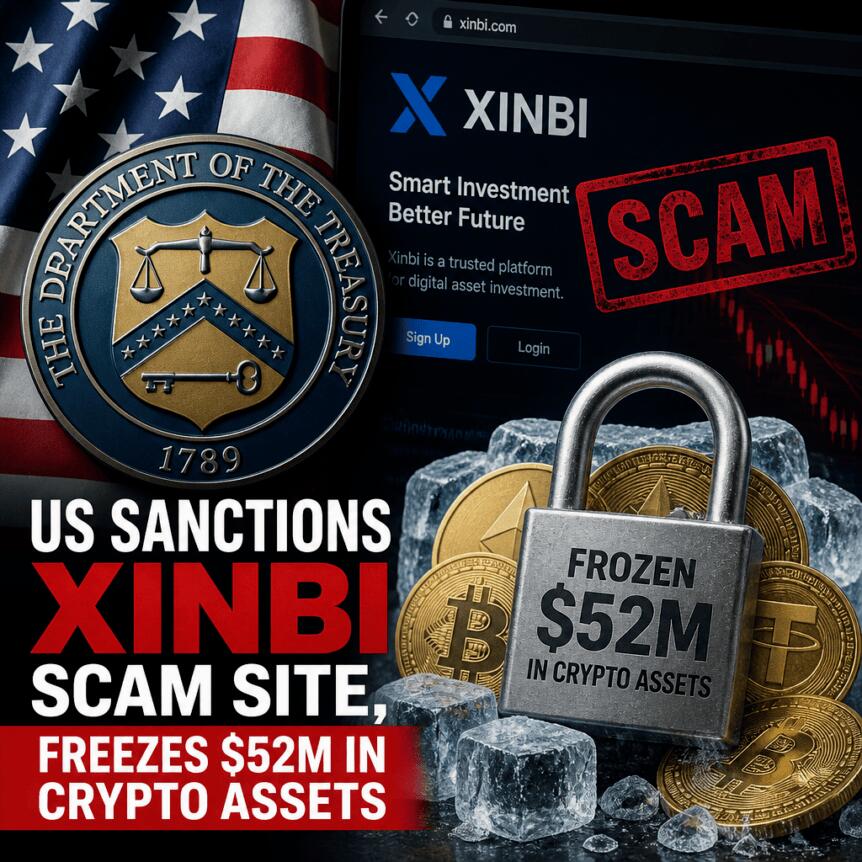
US authorities have moved to disrupt Xinbi Guarantee, a crypto-enabled scam marketplace, by seizing funds tied to the platform and sanctioning the organization and its technology providers. The Department of Justice (DOJ) said more than $52 million in cryptocurrency associated with Xinbi and its vendor network was restrained as part of a coordinated operation against the illicit operation.
In parallel, the US Treasury’s Office of Foreign Assets Control (OFAC) designated Xinbi as a significant transnational criminal organization and sanctioned SafeW Technology and Anwen Technology, alleging they supplied the infrastructure used to run the scheme. The actions target both the financial rails and the communications tools that help scam centers scale.
Key takeaways
- The DOJ reported seizing two Xinbi-linked wallets used to collect vendor payments totaling about $12 million, plus seeking restraints on 47 additional wallets tied to money laundering.
- US court authorization also covered Telegram channels used by Xinbi vendors to market laundering services, scam-related websites, and recruitment offerings.
- OFAC sanctions block Xinbi’s access to US-based property and generally prohibit US persons from engaging with designated entities.
- Treasury alleged Xinbi shifted parts of its messaging and payments stack to technology provided by SafeW and Anwen starting around June 2025 as enforcement pressure increased.
- Xinbi has reportedly processed more than $24 billion in crypto and fiat since about 2022, largely routed through Southeast Asia.
DOJ seizes wallets and targets Xinbi’s vendor payments
According to the DOJ, its Scam Center Strike Force seized two cryptocurrency wallets associated with Xinbi that were used to collect payments from vendors. The wallets contained approximately $12 million.
Beyond the immediate seizures, prosecutors said a request for restraints extended to 47 additional wallets believed to be connected to money laundering across Xinbi’s broader network. The move reflects an approach aimed not only at identifying individual participants, but also at disrupting the payment flow that enables scam marketplaces to function.
The DOJ added that a US District Court in the District of Columbia authorized the seizure of Telegram channels hosting the marketplace on Sept. 7. Prosecutors say the unsealed warrant describes vendors using these channels to advertise money laundering services, custom scam-investment websites, and recruitment services for scam centers operating in Southeast Asia.
Importantly for market participants, the DOJ framed the operation as an attempt to dismantle the “financial and communications infrastructure” behind industrial-scale scam centers—an enforcement theme that has increasingly focused on platforms and intermediaries rather than only end operators.
Treasury sanctions Xinbi and alleged tech enablers
In the separate but coordinated Treasury action, OFAC designated Xinbi as a significant transnational criminal organization. The Treasury also sanctioned SafeW Technology and Anwen Technology, based on allegations that they provided technological and financial support to Xinbi.
Treasury stated that Xinbi moved portions of its merchant and money-laundering networks to SafeW’s encrypted messaging application around June 2025, describing the timing as occurring as law enforcement scrutiny intensified. Treasury also alleged Anwen developed XinbiPay—referred to as NewPay—a crypto wallet and payment application used by the marketplace.
For investors and compliance teams, these designations matter because they extend risk awareness beyond “scam tokens” or isolated wallet addresses. They highlight how enforcement can shift to the tools, services, and integrations that help illicit platforms operate at scale, including messaging layers and payment apps.
Reported crypto volume and links to other sanctioned groups
The Treasury said Xinbi has processed more than $24 billion in crypto and fiat since around 2022, with activity primarily involving Southeast Asia. The agency also stated that the platform has been used by North Korean hackers and entities connected to the sanctioned Prince Group.
OFAC explained that the sanctions block Xinbi’s US property and interests and generally prohibit US persons from transacting with designated entities. This can complicate any attempts to route funds through US touchpoints, even if the scam’s primary activity is overseas.
The DOJ also credited Tether with assisting in the investigation. While the details of that assistance were not expanded upon in the provided material, the attribution is notable given how stablecoin rails can be used in both legitimate and illicit activity contexts.
Escalating crackdown across the US and UK
This latest US action follows earlier steps by the United Kingdom. Cointelegraph previously reported that the UK imposed sanctions on Xinbi in a separate crackdown.
As described in the provided material, on March 26 the UK government sanctioned Xinbi with the goal of limiting the platform’s access to crypto. Under those sanctions, UK assets tied to Xinbi would be frozen, and the platform barred from the country’s financial, trade, and travel networks.
Taken together, the US and UK moves show how enforcement can tighten access across major jurisdictions. They also signal that regulators are increasingly willing to treat scam marketplaces as broader criminal enterprises with identifiable enabling infrastructure—communications channels, payment tools, and vendor services—rather than as isolated bad actors.
What to watch next
Law enforcement has now targeted both Xinbi’s wallets and the communications channels used to recruit vendors and promote laundering services. The next question for the industry is whether additional wallets tied to the remaining 47 restrained targets—and other infrastructure providers connected to SafeW, Anwen, or XinbiPay/NewPay—will be named or constrained as investigations mature.


Malone Lam pleaded guilty on Sept. 8 to participating in a racketeering conspiracy that U.S. prosecutors linked to more than $245 million in cryptocurrency thefts.
Summary
- Malone Lam pleaded guilty to one RICO conspiracy count involving $245 million in cryptocurrency thefts.
- Prosecutors said Lam organized an international network using social engineering and occasional residential break-ins worldwide.
- More than 4,100 Bitcoin were stolen from one Washington resident during the August 2024 attack.
- The criminal enterprise operated from October 2023 through at least May 2025, court documents show.
- Judge Colleen Kollar-Kotelly scheduled a December 8 status hearing without announcing Lam’s sentencing date yet.
The 22-year-old Singaporean national entered his plea before U.S. District Judge Colleen Kollar-Kotelly in Washington, D.C. He admitted one count of participating in a Racketeer Influenced and Corrupt Organizations conspiracy, according to the Justice Department’s official statement.
Prosecutors described Lam as the organizer of an international network that targeted cryptocurrency holders through impersonation, account takeovers and occasional home break-ins. The group allegedly stole funds worth more than $245 million.
The guilty plea establishes Lam’s criminal responsibility in the conspiracy. Allegations involving defendants who have not pleaded guilty or been convicted remain unproven.
Malone Lam admits organizing the crypto theft network
Court documents say the enterprise began no later than October 2023 and continued through at least May 2025. Participants met through online gaming platforms and operated across several U.S. states and foreign jurisdictions.
Prosecutors said Lam used the online names “Anne Hathaway,” “$$$” and “King Greavy.” He identified prospective victims, organized social-engineering operations and assigned roles to other participants.
The group allegedly included database hackers, target researchers, impersonators, money launderers and residential burglars. Hackers obtained information from compromised websites, servers and databases purchased through dark-web markets.
Callers then contacted wealthy cryptocurrency holders while pretending to help resolve security problems. Prosecutors said the callers persuaded victims to disclose information that allowed the group to drain their wallets.
When remote methods failed, some conspirators allegedly targeted physical homes containing hardware wallets. In related coverage, a member of the same crypto theft ring received 78 months in prison for conduct that included residential burglaries.
The case grew from a 4,100 Bitcoin theft
The investigation originally centered on the theft of more than 4,100 BTC from a Washington, D.C., resident on Aug. 18, 2024. The Bitcoin was worth more than $230 million at the time.
The original Justice Department release accused Lam and Jeandiel Serrano of obtaining access to the victim’s accounts and laundering the proceeds through exchanges, mixers, pass-through wallets and peel chains.
Blockchain investigator ZachXBT previously identified the victim as a Genesis creditor. According to his investigation, the callers impersonated Google support before posing as representatives of cryptocurrency exchange Gemini.
They allegedly convinced the victim to reset security protections and use screen-sharing software. That process exposed information needed to transfer the Bitcoin.
The Justice Department expanded the prosecution in May 2025 through a superseding indictment. It added 12 defendants and described a wider enterprise responsible for more than $263 million in alleged thefts.
The broader total included a separate theft of more than $14 million in July 2024. The latest guilty-plea announcement uses a figure of more than $245 million for Lam’s admitted conspiracy conduct.
Stolen cryptocurrency funded cars and nightclub bills
Prosecutors said members spent stolen funds on rental mansions, private jets, security guards, watches, designer clothing and at least 28 exotic vehicles.
The vehicles were valued between $100,000 and $3.8 million each. Nightclub spending allegedly reached $500,000 per evening, while expensive handbags were distributed during parties.
The group also used crypto-to-cash services and shell companies to disguise ownership of assets. Some participants allegedly shipped bulk cash through the mail inside stuffed toys.
Money laundering supported the enterprise by converting stolen cryptocurrency into cash or assets. Conspirators allegedly used virtual private networks and chains of intermediary wallets to make transactions harder to trace.
Lam was arrested on Sept. 18, 2024, according to the original indictment announcement. The Justice Department’s newest release lists Sept. 18, 2025, but that conflicts with the contemporaneous court record and appears to be a clerical error.
Prosecutors previously alleged that Lam continued directing associates while held in pretrial detention. Those allegations included requests for conspirators to purchase luxury handbags and deliver them to his girlfriend.
As previously reported, another participant received 70 months for laundering stolen cryptocurrency connected to the same wider enterprise.
December hearing comes before sentencing
Judge Kollar-Kotelly scheduled Lam’s next status hearing for Dec. 8, 2026. The Justice Department did not announce a sentencing date or expected prison term.
The court will determine Lam’s sentence using the applicable federal statute, advisory sentencing guidelines and other factors. His plea agreement may also address cooperation, restitution and forfeiture, but the Justice Department did not publish those details in its announcement.
Three agencies led the investigation: the U.S. Attorney’s Office for the District of Columbia, the FBI’s Washington Field Office and IRS Criminal Investigation.
Federal offices in California, Florida and New Jersey also provided support. Assistant U.S. Attorneys Christopher Howland and David Liss are prosecuting the case.
Lam’s plea does not end the wider prosecution. Charges against other defendants remain pending, while several participants have already pleaded guilty or received sentences.
The case also shows how attackers combine digital deception with physical threats. Crypto.news reported that home invasions accounted for 37% of documented physical crypto attacks through mid-2026.
Further court filings should establish Lam’s sentencing schedule, forfeiture obligations and any restitution owed to victims. No recovery total was disclosed with the guilty plea.
Circle agreed to acquire Singapore-based payments company Tazapay for $400 million in an all-stock transaction, according to a Sept. 8 announcement and an accompanying U.S. regulatory filing.
Summary
- Circle agreed to acquire Tazapay for $400 million in stock, subject to regulatory approvals globally.
- Tazapay processes more than $25 billion annualized volume through payout rails spanning over 100 markets worldwide.
- Circle says stablecoins already account for approximately 60% of Tazapay’s total transaction volume across markets.
- Deal completion requires MAS approval and other customary conditions, with closing currently expected during 2027.
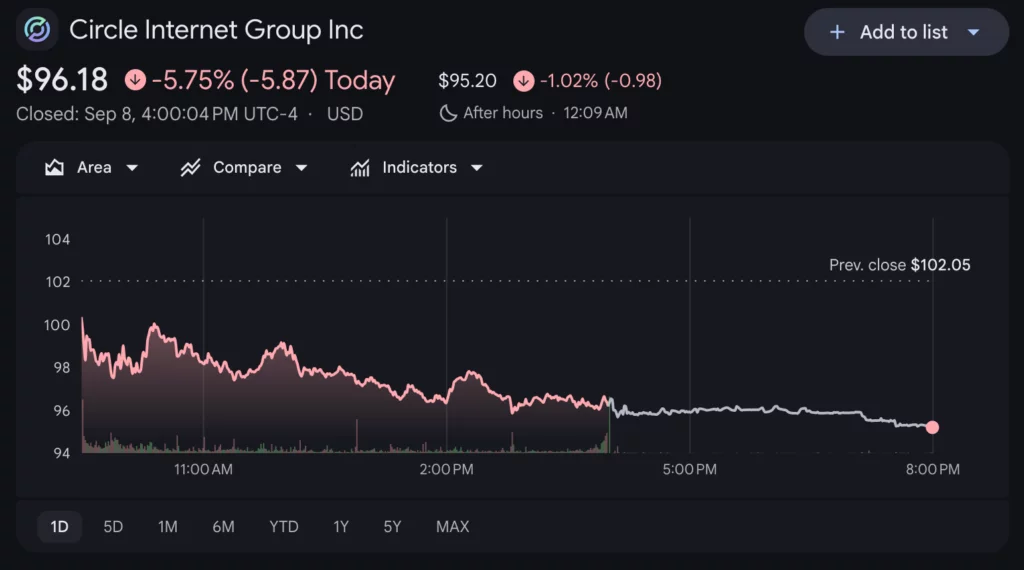
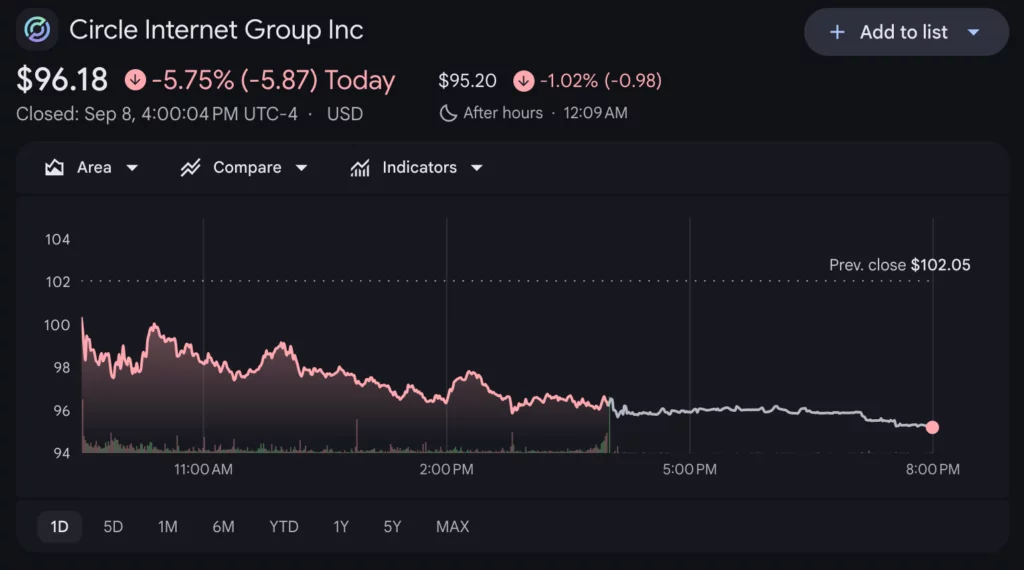
- CRCL shares fell 5.8% Tuesday, closing at $96.18 after the acquisition was publicly announced earlier.
The Circle Tazapay acquisition is expected to close in 2027. Completion remains subject to customary conditions and regulatory approvals, including clearance from the Monetary Authority of Singapore.
Circle plans to use Tazapay’s banking connections and local payout infrastructure to extend USDC-based payments across Asia-Pacific and emerging markets. Tazapay processes more than $25 billion in annualized payment volume and supports payout rails across over 100 markets, Circle said.
Circle will pay $400 million through Class A shares
Circle disclosed the purchase terms through a Form 8-K filing with the U.S. Securities and Exchange Commission. The agreement was signed on Sept. 4 through Taurus Acquisition, an indirect wholly owned Circle subsidiary.
The $400 million consideration will consist of Circle Class A common stock. The final number of shares will be calculated using Circle’s volume-weighted average closing price over the 20 trading days preceding completion.
The price remains subject to adjustments for Tazapay’s unpaid debt, transaction expenses and available cash. Circle will initially withhold shares equal to 5% of the consideration for specified indemnification claims. Another 3% will be held for additional claims.
The first holdback is scheduled for release in stages over 18 months after closing. The additional shares could remain restricted for as long as four years, subject to any unresolved claims.
Circle also plans to grant $25 million in restricted stock units to selected Tazapay employees after completion. Those awards will vest in eight quarterly installments, beginning around 27 months after closing.
Tazapay adds payout rails across more than 100 markets
Tazapay provides cross-border payment infrastructure to payment service providers, financial institutions, online marketplaces and technology platforms. Its network includes more than 60 banking and fintech partners.
Circle said approximately 60% of Tazapay’s transaction volume already involves stablecoins. Combining the platform with USDC could connect blockchain settlement with local bank accounts and payment methods in markets where recipients still require domestic currencies.
Tazapay’s reported payment volume has expanded quickly. The company said in an August 2025 funding release that it processed more than $10 billion annually. Circle now places the figure above $25 billion.
Those numbers are company-reported metrics and have not been presented as independently audited transaction data. The companies also did not disclose Tazapay’s revenue, profit or contribution expected after completion.
Circle Ventures previously invested in Tazapay. The Singapore company also raised capital from Ripple, Peak XV Partners, Norinchukin Capital, GMO VenturePartners, January Capital and ARC180.
Circle Tazapay acquisition extends the USDC network
Tazapay has worked as a design partner for Circle Payments Network since 2025. Circle introduced the network to support cross-border transactions using stablecoins and compatible domestic payment systems.
As crypto.news previously reported, Circle Payments Network introduced real-time stablecoin settlement for business payments, remittances, treasury transfers and payroll. Buying Tazapay would give Circle direct ownership of infrastructure that already connects to that network.
Circle has also expanded through partnerships. In related coverage, Nium connected USDC settlement with payouts across 190 countries, while a Fireblocks integration opened local currency payouts across more than 50 countries.
The Tazapay transaction differs because Circle is acquiring the provider rather than connecting through a commercial partnership. Ownership could give Circle greater control over product development, routing and institutional integrations. Whether it produces those benefits depends on regulatory approval and successful integration.
Circle claimed the combination would help make USDC “the default payment rail for cross-border commerce.” That statement is forward-looking. USDC still competes with bank transfers, card networks, other stablecoins and regional payment systems.
Regulatory approval remains the next major step
MAS approval is the clearest outstanding requirement. The SEC filing also refers to other regulatory clearances, employee retention conditions and the absence of a material adverse change before closing.
The agreement allows either party to terminate the transaction if it has not closed within an initial nine-month period. That deadline may be extended, but not beyond 15 months, when specified regulatory approvals remain outstanding. The agreement does not include a termination fee.
Circle said Tazapay customers should experience no immediate changes to their services, APIs, pricing or support. The companies have not announced an integration schedule or identified which payment corridors will receive USDC support first.
Circle shares closed at $96.18 on Sept. 8, down approximately 5.8%. The shares traded between $95.20 and $101.14 during the session. The broader decline cannot be attributed solely to the acquisition without additional evidence.
The next verified developments will likely include regulatory filings, MAS approval and Circle’s issuance of shares at closing. Circle must also file a prospectus supplement covering the resale of shares delivered to Tazapay sellers and equity holders.


Fidelity Digital Assets renewed its institutional push for the Fidelity Digital Dollar on Sept. 9, positioning the Ethereum-based stablecoin for payments, settlement and tokenized markets.
Summary
- Fidelity Digital Assets issued FIDD on Ethereum, pegged one-to-one and redeemable for one U.S. dollar.
- Reserves include cash, short-term Treasuries and liquid assets held at Bank of New York Mellon.
- Fidelity discloses circulating supply daily while PwC independently examines monthly reserve reports under AICPA standards.
- Eligible clients can trade FIDD through Fidelity platforms, while Kraken and Bullish support external access.
- Fidelity reported approximately 50.09 million FIDD outstanding, matching its disclosed market capitalization at one dollar.
Fidelity’s public dashboard showed approximately 50.09 million FIDD outstanding, giving the token a market capitalization of about $50.09 million at its $1 redemption value.
The statement expands on FIDD’s intended uses rather than announcing a new token. Fidelity unveiled the stablecoin in January 2026 and began publishing reserve reports in February. Its latest communication presents FIDD as a bridge between conventional financial accounts and blockchain-based markets.
Fidelity Digital Dollar combines issuance and reserves
Fidelity Digital Assets, National Association, issues FIDD and allows eligible customers to purchase or redeem each unit for $1. The national trust bank manages token issuance, custody and trading. Fidelity Management & Research Company manages the assets backing the circulating supply.
According to Fidelity’s published terms, the reserves may include Treasury securities with no more than three months remaining to maturity, overnight reverse repurchase agreements, government money market funds and deposits at regulated U.S. banks. Fidelity says the assets remain in segregated accounts, including accounts at Bank of New York Mellon.
FIDD does not distribute interest earned from those reserves to token holders. Fidelity Digital Assets retains the income. The terms also state that FIDD is not legal tender, receives no FDIC or SIPC insurance and carries no guarantee from a government agency.
FIDD targets payments and on-chain settlement
Fidelity describes FIDD as a payment instrument rather than an investment designed to generate returns. The company identified continuous settlement, account funding, capital transfers and tokenized real-world assets as possible applications for institutional and retail customers.
FIDD operates as an ERC-20 token on Ethereum. Holders can transfer it to eligible Ethereum addresses, although network gas fees apply. Fidelity can restrict addresses or freeze associated tokens when it suspects sanctions violations, fraud, criminal activity or other legal and operational risks.
Eligible customers can buy or sell FIDD through Fidelity Digital Assets, Fidelity Crypto and Fidelity Crypto for Wealth Managers. The stablecoin is also available through Kraken and Bullish, extending access beyond Fidelity’s own platforms.
Direct redemption remains subject to eligibility requirements. Holders need an approved Fidelity account and must complete identity verification, anti-money laundering and sanctions checks. Fidelity says qualifying redemptions generally settle almost immediately but may require up to two business days.
Daily disclosures support FIDD’s reserve model
Fidelity publishes FIDD’s circulating supply and reserve net asset value after each business day. It also prepares monthly reserve reports examined by PricewaterhouseCoopers under standards established by the American Institute of Certified Public Accountants.
These reports assess whether the reserve value equals or exceeds the nominal value of outstanding FIDD on a specified reporting date. The process is an attestation of management’s reserve information, not a full audit of Fidelity Digital Assets’ financial statements.
Fidelity’s dashboard showed FIDD trading at $1 with about 50.09 million units outstanding when checked. CoinGecko also placed the token close to its intended peg. However, Fidelity’s terms warn that prices on third-party markets may temporarily move above or below $1.
Fidelity enters an established stablecoin market
FIDD joins a concentrated dollar-stablecoin market led by Tether’s USDT and Circle’s USDC. Fidelity is competing through its custody, trading and asset-management infrastructure rather than through the size of FIDD’s current circulation.
Institutional stablecoin services are expanding across lending markets. As crypto.news reported, Compound opened a USDC lending market with defined collateral requirements and loan-to-value ratios reaching 87%.
Stablecoin lending is also expanding outside the U.S. In related coverage, Coinbase extended USDC lending into Brazil through Morpho-powered markets, showing how dollar tokens are being integrated into regional financial services.
The next test for FIDD is whether Fidelity can generate regular use beyond exchange trading and transfers between customer accounts. Fidelity said additional exchanges may support the token, but it provided no listing timetable, circulation target or expected transaction volume.
Future daily disclosures will show whether FIDD’s supply grows, while monthly reserve reports will provide evidence about its backing. Adoption will depend on exchange distribution, institutional integrations and whether clients use FIDD for settlement rather than holding it primarily as on-chain cash.


DeFi Development Corp. closed its $11 million CHAD preferred stock offering on Sept. 8, creating a new financing channel for its Solana treasury strategy.
Summary
- DeFi Development closed an $11 million CHAD offering and received approximately $10.3 million net proceeds.
- CHAD sold at $8 per share with a $10 stated amount and 13% initial dividend.
- Company intends to use substantially all net proceeds to purchase additional SOL for its treasury.
- CHAD is perpetual non-convertible preferred stock ranking ahead of common equity but behind debt obligations.
- The first dividend payment is scheduled October 1 for shareholders recorded September 30, filings show.
The Nasdaq-listed company sold 1.375 million shares of Variable Rate Series C Perpetual Preferred Stock at $8 each. The security trades on the Nasdaq Capital Market under the ticker CHAD and carries a $10 stated amount.
DeFi Development received approximately $10.3 million in net proceeds after underwriting discounts, commissions and estimated expenses, according to its latest SEC filing. The company said it used the proceeds for general corporate purposes, including working capital, SOL purchases and strategic initiatives.
CHAD’s final offering was smaller than earlier terms
The completed offering differed from preliminary terms published earlier in September. DeFi Development previously proposed selling 2.2 million shares at $9 each, which would have generated $19.8 million in gross proceeds.
As crypto.news reported, those earlier CHAD terms included a $19.8 million offering and a possible 330,000-share overallotment. The completed transaction instead involved 1.375 million shares priced at $8.
The underwriter received a 30-day option to purchase another 206,250 shares at the final public offering price. R.F. Lafferty & Co. acted as the sole book-running manager.
DeFi Development’s final release said Fundstrat co-founder Tom Lee participated alongside other investors. Lee also serves as chairman of Ethereum treasury company BitMine Immersion Technologies.
The company calls CHAD the first SOL-backed “Digital Credit” instrument. This is DeFi Development’s description of the product, not a separate regulatory classification. Legally, CHAD is publicly traded preferred equity issued by a U.S. company.
The 13% dividend rate can change
CHAD begins with an annual dividend rate of 13%, calculated against its $10 stated amount. Because investors paid $8 per share, the initial effective yield is approximately 16.25%.
That yield is not guaranteed. Dividends are payable only “when, as and if declared” by DeFi Development’s board and when legally available funds exist. The board may review the dividend rate monthly or more frequently.
The company cannot reduce the rate by more than 50 basis points during a single adjustment. Management said it intends to use the variable rate to support CHAD’s market price within a longer-term range of $9.95 to $11.
That objective remains forward-looking. Dividend adjustments do not ensure that CHAD will reach or remain near its $10 stated amount.
DeFi Development established a reserve covering 12 months of dividends at the initial 13% rate. It deposited $1.30 per issued share into a separate account using existing cash, financial instruments or digital assets.
The first payment is scheduled for Oct. 1 and will cover the period from issuance through Sept. 30. Shareholders recorded at the close of business on Sept. 30 will qualify. Later dividends are intended to be distributed each business day after board approval.
CHAD gives preferred holders priority over common stock
CHAD is perpetual and has no scheduled maturity date. It is also non-convertible, meaning holders cannot exchange their preferred shares for DFDV common stock.
Preferred shareholders rank ahead of common shareholders for dividend payments and asset distributions during a liquidation. However, CHAD ranks below DeFi Development’s existing and future debt. It is also structurally junior to liabilities held by the company’s subsidiaries.
DeFi Development may redeem CHAD for $11 per share, plus accumulated and unpaid dividends, after its Nasdaq listing. It can also redeem all remaining shares following specified tax events or if outstanding CHAD shares fall below 25% of all shares issued across current and future offerings.
Because CHAD does not convert into common stock, the completed issuance did not increase DFDV’s common share count. Management consequently expects the transaction to increase SOL per common share after the proceeds are invested.
That outcome has not yet been established. It will depend on the amount of SOL acquired, transaction costs, SOL’s market price and changes in the company’s fully converted share count.
DeFi Development plans additional Solana purchases
DeFi Development said it expects to deploy substantially all net proceeds into additional SOL. However, its SEC filing also permits spending on working capital and strategic initiatives, meaning the full $10.3 million is not legally restricted to Solana purchases.
The company held approximately 2.33 million SOL and SOL-equivalent assets before the offering closed. In August, it acquired about 19,000 SOL at an average price of $98.14, as previously reported when its treasury reached 2.33 million SOL.
The reported treasury total includes SOL equivalents. DeFi Development has not provided a current breakdown separating native SOL, liquid staking tokens and other SOL-denominated holdings.
Unlike Bitcoin, SOL can generate staking rewards. DeFi Development operates validator infrastructure and also stakes tokens through external validators. Management argues that this yield could help support its preferred dividends and broader earnings.
Staking returns remain variable and cannot be treated as guaranteed income. They depend on network inflation, validator performance, delegated stake, fees and SOL’s dollar value.
DFDV common shares closed at $5.99 on Sept. 8, up approximately 2%. SOL traded near $104 on Sept. 9. No verified evidence directly connects either movement to the CHAD closing.
The next scheduled event is CHAD’s Sept. 30 record date, followed by its first dividend payment on Oct. 1. DeFi Development also plans to disclose updated SOL holdings and its SOL-per-share figure after deploying the proceeds.


Hunter Biden has defended his LAPTOP memecoin hours before its Sept. 9 launch on Base, saying 20% of the supply will be distributed through community airdrops while 30% will be tied to political, crypto and cultural predictions.
Summary
- Hunter Biden defended LAPTOP ahead of its Base launch, describing the memecoin as a way to reclaim the laptop controversy.
- LAPTOP will allocate 20% of its supply to community airdrops, including wallets that lost money holding TRUMP.
- Another 30% will be tied to political, crypto and cultural predictions, with tokens either burned or sent to charity based on the outcomes.
- Kraken deleted a promotional LAPTOP post after trader criticism, while Base founder Jesse Pollak said the network chose not to help design or promote the token.
In an X post early Wednesday, Biden acknowledged the criticism surrounding the project and framed LAPTOP as an attempt to take ownership of the laptop controversy that followed him for years. “I understand the cynicism,” he wrote. “Why something that has been so misused by grifters?”
Biden used President Donald Trump’s TRUMP memecoin as his main comparison, calling the token a “grift” and citing losses suffered by its holders. Nearly 989,000 wallets that bought TRUMP were sitting on a combined $3.81 billion in unrealized losses by July, according to Nansen data previously covered by crypto.news.
The LAPTOP launch has already drawn criticism from crypto traders, while Kraken deleted a promotional post about the token and people connected to its planned distribution have distanced themselves from the project.
LAPTOP token will use airdrops and conditional burns
LAPTOP is scheduled to launch with a total supply of 1 billion tokens on Base, the Ethereum layer 2 network developed by Coinbase. Biden said the project will use several supply allocations covering community distributions, its founders and a series of predetermined events.
The community allocation accounts for 20% of the supply. Some of those tokens are earmarked for wallets that lost money holding TRUMP, alongside other groups included in the project’s planned airdrops.
Biden’s Substack subscribers were previously named among the recipients, while a mailing list associated with video journalist Andrew Callaghan’s Channel 5 was included in the original distribution plan.
Another 30% of the total supply is linked to a set of political, crypto and cultural predictions. The project has established 30 predetermined outcomes, with the tokens assigned to each event handled differently depending on the result.
If a prediction comes true, the tokens linked to it will be burned and permanently removed from circulation. Tokens attached to predictions that do not materialize will instead be sent to charity.
The initial LAPTOP launch plan included events such as a Democratic victory in the 2028 US presidential election, Bitcoin reaching another all-time high and LAPTOP overtaking TRUMP’s market capitalization.
Founders, including Biden, are allocated another 30% of the supply. Those holdings will be subject to lockups and vesting restrictions, with the initial structure placing the founder tokens under a six-month lock before they are gradually released over more than two years.
A further 20% has been set aside for areas including liquidity, exchange listings, legal expenses, administration and charitable purposes.
Biden warned prospective buyers that his involvement should not be treated as a promise of financial returns.
“You should not expect me or anyone else to make this token more valuable for you,” he wrote. “LAPTOP isn’t just about owning something, it’s about saying something.”
Hunter Biden targets TRUMP after billions in holder losses
Biden’s criticism of TRUMP comes after the presidential memecoin lost most of the value reached shortly after its January 2025 debut.
TRUMP launched days before Trump’s second inauguration and climbed to an all-time high of $73.43. By Aug. 13, 2026, the token had fallen to a record low of $1.37, representing a decline of roughly 98% from its peak.
The token briefly rallied 93% in August, climbing from $1.37 to $3.60 in 10 days before dropping sharply after wallets linked to the team transferred 2.62 million TRUMP worth $6.21 million to OKX.
Nansen data cited in July showed that 988,905 of the roughly 1.48 million wallets that had bought TRUMP since launch were holding combined unrealized losses of $3.81 billion.
Trump’s 2025 financial disclosure separately reported a $636 million payout tied to the TRUMP memecoin licensing arrangement. His total crypto-related income for the year exceeded $1 billion, with some calculations placing the figure near $1.4 billion.
Public Citizen later estimated that investors across Trump-linked crypto ventures were at least $4.7 billion underwater. Its calculation included approximately $3.2 billion in losses associated with TRUMP and another $1.45 billion connected to World Liberty Financial and Trump Media investors.
LAPTOP’s decision to allocate tokens to losing TRUMP wallets directly places the rival political memecoin inside its distribution model.
Crypto traders push back before LAPTOP launch
The planned launch faced resistance almost immediately after Biden announced the token earlier this week.
Kraken deleted a promotional social media post about LAPTOP after traders questioned why the crypto exchange was promoting another political memecoin. The exchange had not publicly said that it abandoned any potential listing plans, while the LAPTOP project said exchange listings would be disclosed when trading begins.
Callaghan separately distanced himself and Channel 5 from the project after the program’s mailing list was named as part of the planned token distribution.
The journalist said Channel 5 had nothing to do with the memecoin and did not consider crypto a legitimate investment. Callaghan said Biden had previously asked whether he could use the mailing list when launching a new product, but Channel 5 later said subscriber information was removed before an email was sent.
Base executives faced similar questions because LAPTOP is being deployed on the Coinbase-backed network.
Base founder Jesse Pollak said Biden’s project had approached the team, but the network made a “conscious decision” not to help design or promote the token. The distinction follows earlier debate over Base’s involvement with creator and content tokens, an area where Coinbase CEO Brian Armstrong acknowledged in July that the network had “messed up” on content coins.
Pollak subsequently stepped back from leading the Base App to focus on the blockchain after saying demand for its earlier social products had fallen sharply. Coinbase took control of the app while Base redirected attention toward trading, payments and other financial products.
Hunter Biden turns laptop controversy into token branding
The LAPTOP name refers to the computer that became a major political issue after Biden left it at a Delaware repair shop in 2019.
Data said to have originated from the device included emails concerning Biden’s overseas business dealings, along with personal photographs, messages and videos involving his drug use and private life. The material became the subject of political attacks, investigations and online memes over the following years.
Biden has now incorporated the same episode into the identity and marketing of his crypto project, describing the token as a way to take control of something that had repeatedly been used against him.
“They turned laptop into a weapon,” Biden wrote. “I turned it into a token.”

How Much Money Can I Make For a Homeless Guy in 1 Hour

Man who assaulted nursing staff while inpatient at Belfast hospital sentenced

Bill on non-UPF certification passes in California


-

 Crypto World1 day ago
Bitcoin price risks $76K drop as $78K support weakens
-
 Tech2 days ago
Memory prices are slowing because buyers ran out of money
-

 Crypto World1 day ago
Ethereum price stalls below $2,500 as ADX drops to 11
-

 Crypto World2 days ago
Robinhood Stock: How To Take Advantage With Reduced Risk
-

 NewsBeat1 day ago
What went right this week: an ‘historic’ fall in violent crime, plus more
-
 Crypto World21 hours ago
Bitcoin price holds near $79K as cycle drawdowns narrow
-
 Sports2 days ago
Phones confiscated, players sent home: Pakistan’s England tour turmoil revives memories of Mohammad Amir, Salman Butt and Mohammad Asif’s 2010 Lord’s spot-fixing scandal | Cricket News
-

 NewsBeat2 days ago
England up in reading, maths and science rankings as Scotland and Wales dip
-
 Crypto World2 days ago
Brent Crude Oil Moves Above $100 for the First Time in 3 Months
-

 Business1 day ago
Meta debuts long-awaited personal AI agent, Muse
-

 Crypto World2 days ago
Visa expands stablecoin card network to 160 programs
-

 Business2 days ago
Egyptian TV Presenter Sarah Khalifa, 11 Others Sentenced To Death In Major Drug Trafficking Case In Cairo
-
 Tech2 days ago
Strong Password Policy and Password Manager Guide
-

 Crypto World2 days ago
Intel Stock Jumps 9% on Chip Price Hike Report, US Stake Gains $36 Billion
-
 Crypto World6 hours ago
Bitcoin price risks $70K if $78K neckline breaks
-

 Crypto World2 days ago
Pump Fun and Kraken delete Hunter Biden $LAPTOP promotion
-

 Tech1 day ago
Meta debuts its Muse AI agent. Will consumers trust it?
-

 Entertainment1 day ago
Big Brother Spoilers: Dee SPINS & HUSTLES Votes – Yash Questions the Pact
-

 Business1 day ago
ServiceTitan, Inc. (TTAN) Q2 2027 Earnings Call Transcript
-

 Tech2 days ago
Google’s revived nuclear power plant gets $1.9B loan from US government
You must be logged in to post a comment Login