
Crypto World
GE Aerospace To Buy Key Industry Supplier For Nearly $12 Billion


GE Aerospace (GE) announced a deal worth nearly $12 billion to acquire long-term supplier Consolidated Precision Products. Shares of GE Aerospace eased Tuesday, while CPP rival Howmet Aerospace (HWM) retreated. A GE Aerospace supplier for 15 years, CPP makes engineered castings, alloys, metals and other aerospace components. The deal is designed to help GE bolster its castings manufacturing capacity. In…
Copyright ©2026 Investor’s Business Daily, LLC. All rights reserved. 87990cbe856818d5eddac44c7b1cdeb8

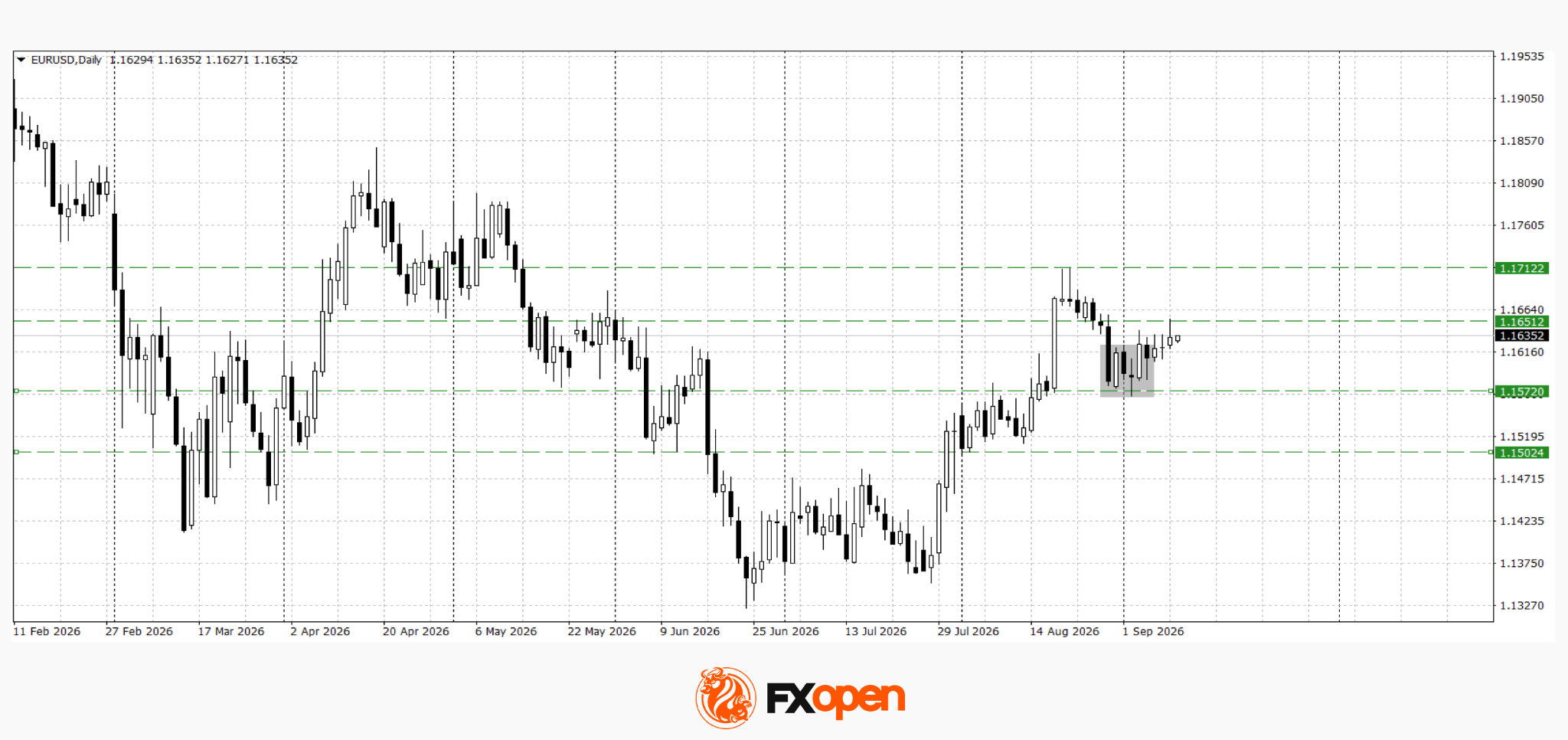
The euro and pound are showing subdued moves against the US dollar and have shifted into consolidation following their recent price action. Market participants are reluctant to establish new positions ahead of a key batch of macroeconomic data that could alter expectations for the future policy stance of the major central banks.
The next key market catalysts will be inflation data from Germany and the US. Today, Germany’s annual CPI is forecast to accelerate to 2.9% from 2.8%, which could reinforce expectations of further policy tightening by the ECB and provide support for the euro. However, tomorrow’s US inflation data will be the main event. Headline CPI is expected at 3.4% year-on-year and 0.4% month-on-month, while core CPI is forecast at 2.4% and 0.2%, respectively. Following the strong employment report, higher-than-expected inflation could strengthen expectations that the Federal Reserve will maintain a hawkish stance and support the dollar, while signs of easing price pressures could limit its upside.
For the pound, tomorrow’s UK economic data will provide an additional catalyst. UK GDP for July is forecast to show no growth after expanding by 0.3% in the previous month, despite expectations of a recovery in manufacturing output. Weaker-than-expected figures could reinforce expectations of a more dovish stance from the Bank of England and limit the recovery potential of GBP/USD.
EUR/USD
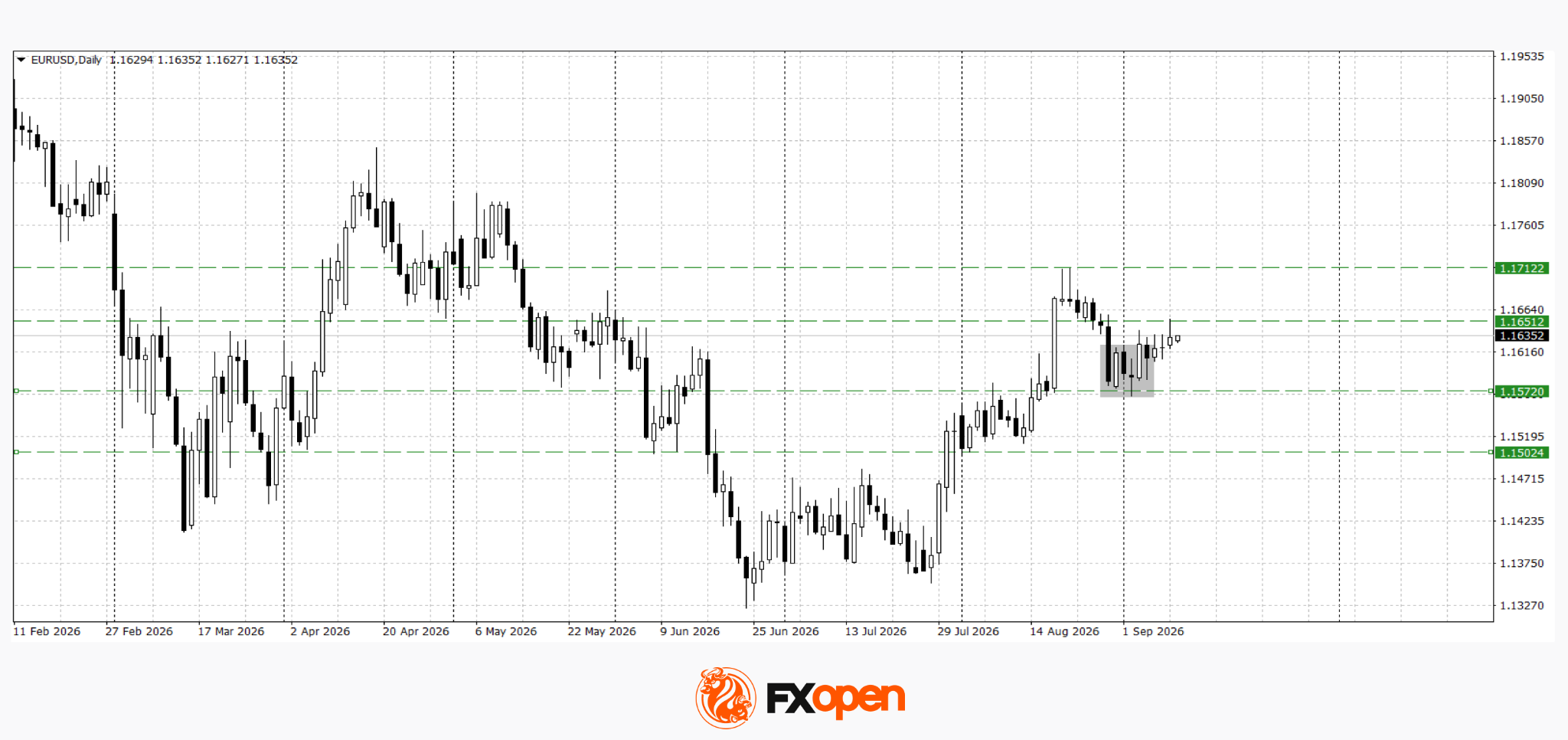
Over recent trading sessions, EUR/USD has been consolidating within a relatively narrow range of 1.1570–1.1650. A breakout and sustained move above 1.1650 could pave the way for a retest of the August high near 1.1710. A sustained move below 1.1570 could trigger further downside towards 1.1500.
Key events for EUR/USD:
- today at 09:00 (GMT+3): Germany’s Consumer Price Index (CPI);
- today at 15:30 (GMT+3): US Producer Price Index (PPI);
- today at 15:30 (GMT+3): US initial jobless claims.
GBP/USD
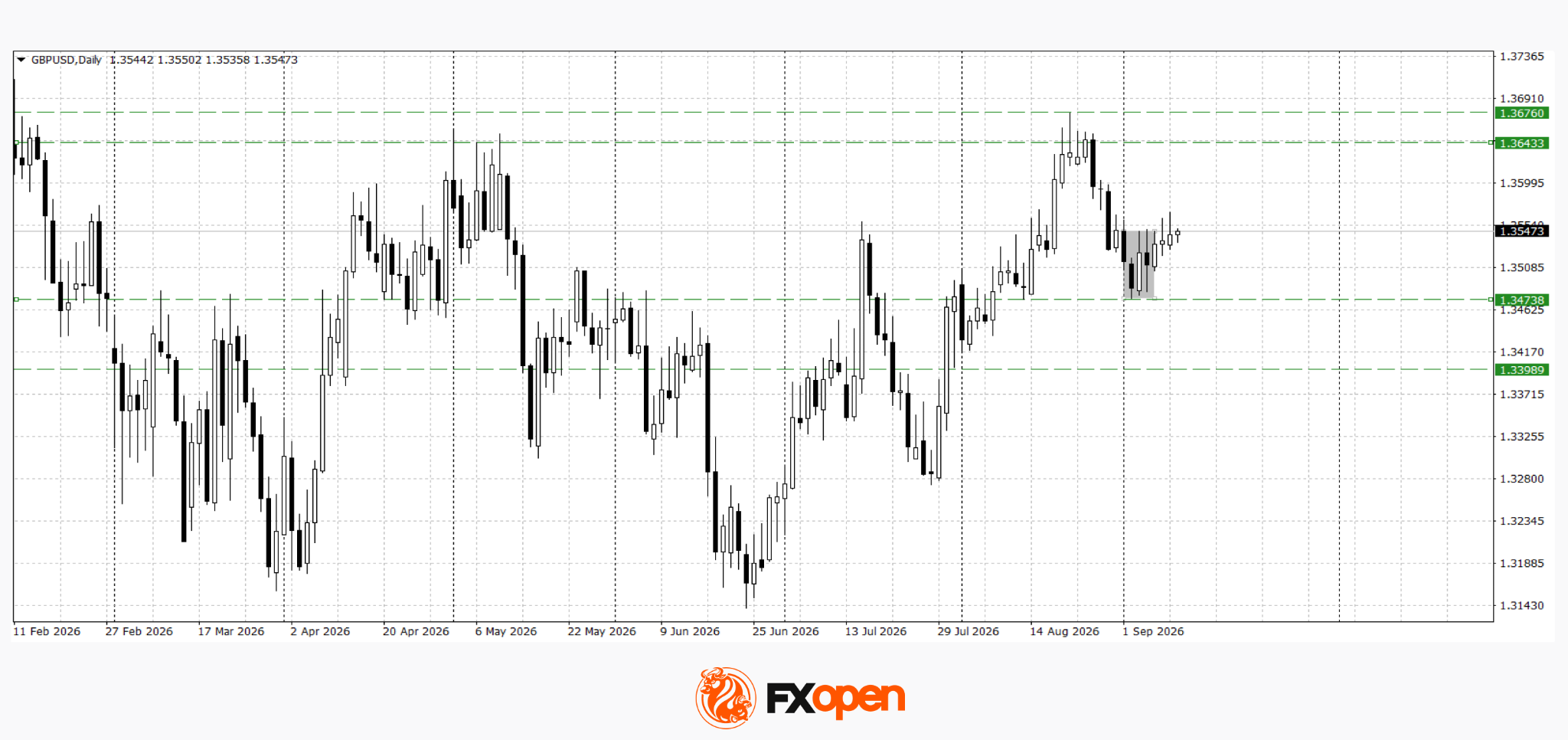
Following a retest of the 1.3470 support level on the daily chart, a Stick Sandwich pattern has formed. If the price establishes itself above 1.3500 and this level turns into support, the advance could continue towards 1.3640–1.3680. A sustained move below 1.3470, by contrast, would increase the likelihood of a deeper downside correction.
Key events for GBP/USD:
- tomorrow at 09:00 (GMT+3): UK Gross Domestic Product (GDP);
- tomorrow at 09:00 (GMT+3): UK manufacturing output;
- tomorrow at 15:30 (GMT+3): US core Consumer Price Index (CPI).
Overall, EUR/USD and GBP/USD remain in consolidation near key technical levels ahead of a new batch of macroeconomic data. For the euro, Germany’s inflation figures will provide an additional catalyst, while the pound is likely to remain sensitive to UK GDP data. However, US inflation will remain the main focus for both pairs, as it could reshape expectations for Federal Reserve policy and determine the dollar’s next direction.
Trade over 50 forex markets 24 hours a day with FXOpen. Take advantage of low commissions, deep liquidity, and spreads from 0.0 pips (additional fees may apply). Open your FXOpen account now or learn more about trading forex with FXOpen.
This article represents the opinion of the Companies operating under the FXOpen brand only. It is not to be construed as an offer, solicitation, or recommendation with respect to products and services provided by the Companies operating under the FXOpen brand, nor is it to be considered financial advice.


US authorities have restrained roughly $52 million in scam-linked crypto in a single day and seized the Telegram channels of Xinbi Guarantee, a Chinese-language illicit marketplace.
Elliptic says its multi-year tracking of Xinbi’s wallets enabled the Secret Service to act. Treasury sanctions landed the same day.
Inside the $24 Billion Xinbi Guarantee Economy
Xinbi is a Chinese-language marketplace that runs on Telegram and sells services to scam center operators. Vendors advertise custom fraud websites, money laundering, and recruitment for compounds in Southeast Asia.
Elliptic exposed the operation in May 2025. The firm now counts at least $24 billion in transactions since 2022, second only to Huione Guarantee, which handled $31 billion before shutting down in 2025.
A linked payments arm, Xinbi Pay, has processed another $6 billion. Most of that flowed in Tether (USDT) on the TRON blockchain. The United Kingdom sanctioned Xinbi in March 2026.
Follow us on X to get the latest news as it happens
Xinbi Turns to USDD After the Freeze
Prosecutors seized two Xinbi payment wallets containing about $12 million and moved against 47 more, according to the Justice Department, which credited Tether for its help.
“After scamming money from hardworking Americans, criminals operating overseas laundered it through the Xinbi Guarantee network, which operated under the false assumption that they were out of the reach of U.S. law enforcement,” Tara McLeese, Special Agent of the US Secret Service, said.
The Office of Foreign Assets Control designated Xinbi a significant transnational criminal organization on the same day. It separately designated two entities that supported the marketplace.
Prosecutors also announced a Madagascar deployment, where authorities dismantled 13 Chinese-run compounds and arrested nearly 400 people. Strike Force agents spent two weeks assisting and processing more than 3,200 devices.
Xinbi condemned what it called arbitrary freezing and promised to compensate customers. It then swapped roughly $2.8 million of leftover USDT into Decentralized USD (USDD), a stablecoin with no issuer freeze function.
That escape route has limits, since Elliptic notes USDD is partly backed by freezable USDT. Guarantee marketplaces run on trust, and merchants now know their deposits can vanish without warning.
Subscribe to our YouTube channel to watch leaders and journalists provide expert insights
The post DOJ Restrains $52 Million in Crypto Tied to Chinese Scam Marketplace Xinbi appeared first on BeInCrypto.


Hardware wallet makers Trezor and BitBox have warned users about phishing emails disguised as urgent security notices after suspected compromises involving third party email services.
Summary
- Trezor warned users not to click links in a fraudulent email claiming an STM32 entropy vulnerability after its email provider was breached.
- BitBox said its newsletter provider was likely compromised, with several Bitcoin companies appearing to have been targeted through the same provider.
- The phishing warnings follow recent hardware wallet security incidents, including a ShipMonk breach that exposed data belonging to more than 80,000 Trezor customers.
- BitBox patched two severe firmware vulnerabilities in August but reported no known exploitation or stolen user funds.
Trezor said on Wednesday that its email provider had been breached and warned users not to interact with a fraudulent message titled “Critical Security Alert: STM32 Entropy Vulnerability.” The company told recipients not to click any links in the email.
BitBox issued a similar warning the same day after users received a phishing email impersonating the company. Its preliminary review found that its newsletter provider was likely compromised, with several Bitcoin companies appearing to have been targeted through a provider they shared.
Trezor phishing email claims entropy vulnerability
The fraudulent Trezor email presented the supposed STM32 entropy vulnerability as a security problem requiring users to take action.
Trezor rejected the message and confirmed that it was a phishing attempt. The company said the affected third party email provider had been breached, while its warning focused on preventing recipients from following links contained in the message.
The phishing campaign comes after a real entropy related vulnerability affected another hardware wallet maker earlier this year. A Coldcard firmware flaw disclosed in July involved weak random number generation that could result in vulnerable wallet seeds.
The Coldcard issue stemmed from a build configuration error that caused affected devices to use a software pseudorandom number generator instead of the intended hardware random number generator. The vulnerability affected Coldcard Mk3 firmware dating back to March 2021.
Attackers later exploited the weakness to identify wallets created with vulnerable seeds. An attack on July 31 initially moved 594 BTC worth approximately $38 million from around 500 addresses, with later analysis connecting more addresses and Bitcoin to the same vulnerability.
As crypto.news previously reported, the Coldcard security incident prompted Kraken Chief Security Officer Nick Percoco to call for independent audits of hardware wallet seed generation. Coinkite released firmware fixes, but wallets created using vulnerable seeds still required users to generate new seed phrases and move their Bitcoin.
BitBox said in July that its devices were not affected by the random number generation vulnerability.
BitBox points to newsletter provider compromise
BitBox said its preliminary investigation indicated that its newsletter provider was likely compromised after phishing emails impersonating the hardware wallet company reached users.
The company found that several other Bitcoin businesses had been targeted and appeared to use the same newsletter provider. BitBox warned subscribers about the phishing attempt while continuing to investigate the incident.
The phishing campaign followed a separate BitBox security disclosure in August, when the company patched two firmware flaws affecting its hardware wallets.
One of the vulnerabilities could have allowed malicious firmware to be installed under certain conditions. The second involved Bitcoin address handling and could have affected how addresses were verified.
BitBox said there was no known exploitation of either vulnerability and no user funds were reported stolen. Updated firmware was released to address both issues.
Hardware wallet users have faced attacks that do not require compromising the devices themselves. Some campaigns instead rely on impersonating wallet manufacturers and persuading users to disclose recovery information.
In February, attackers sent physical letters impersonating Trezor and Ledger and directed recipients to scan QR codes for supposed authentication or transaction checks.
The hardware wallet phishing campaign used official looking letters and deadlines to create urgency. The QR codes directed users to malicious websites that requested 12, 20 or 24 word recovery phrases under the pretense of verifying wallet ownership.
Anyone who obtains a recovery phrase can recreate the associated wallet and control its funds. Trezor and Ledger said legitimate hardware wallet providers do not ask users to enter, scan, upload or share recovery phrases through websites or other external channels.
Trezor customer data breach affected more than 80,000 users
Trezor’s latest phishing warning follows separate disclosures involving customer information held by its shipping provider ShipMonk.
On Aug. 13, Trezor disclosed that unauthorized access to ShipMonk systems had exposed data belonging to 13,689 customers.
The initial disclosure covered 11,742 customers whose names, email addresses, phone numbers and shipping addresses were exposed. Another 1,947 customers had their names, cities and email addresses compromised.
Trezor said its own systems were not breached and its hardware wallets, private keys and recovery phrases remained secure. The company warned that the exposed customer information could be used for more convincing phishing and impersonation attempts.
The ShipMonk incident was mentioned in previous coverage of the BitBox firmware vulnerabilities, alongside another customer data exposure involving hardware wallet maker SafePal. Neither incident compromised the companies’ hardware wallets or recovery phrases.
Trezor expanded its ShipMonk disclosure on Sept. 4 after learning that another approximately 67,000 U.S. customers were affected.
The additional records belonged to customers who placed orders between November 2019 and August 2021 and included names, email addresses, phone numbers, shipping addresses and order numbers.
Combined with the customers identified in August, the expanded disclosure brought the number affected by the ShipMonk breach to more than 80,000.
Trezor said it had previously received assurances that the older customer information had been deleted from ShipMonk’s systems. The company learned on Sept. 2 that the records had remained stored by the shipping provider.
Hardware wallet phishing has taken several forms
Trezor has dealt with phishing attempts through other communication channels before the latest email provider incident.
In June 2025, attackers abused the company’s contact form by submitting requests using targeted users’ email addresses. Trezor’s system then generated automated responses that appeared to come from its legitimate support infrastructure.
The Trezor contact form attack allowed the phishing messages to appear more credible because recipients received communications associated with the company’s support process.
Trezor said at the time that its internal email infrastructure had not been breached. The company warned users that it would never request their wallet backup and said recovery information should remain private and offline.
The phishing attempts targeting Trezor and BitBox this week instead led both companies to point to third party email services. BitBox said several Bitcoin companies appeared to have been targeted through a shared newsletter provider, while Trezor confirmed that its email provider had been breached.

Boston Scientific (BSX) said Tuesday an August cybersecurity incident is likely to have a material impact on its third-quarter and full-year results. Shares dropped 5.9% to 44.98, widely undercutting their 50-day moving average. The company said the Aug. 25 incident will likely prevent it from reaching the net sales growth and adjusted earnings per share guidance issued with its second-quarter…
Copyright ©2026 Investor’s Business Daily, LLC. All rights reserved. 87990cbe856818d5eddac44c7b1cdeb8
Coinbase CEO Brian Armstrong said on Sept. 9 that the exchange is building a financial account for AI, while company documentation shows that agents can already access isolated portfolios and execute supported trades.
Summary
- Coinbase Brian Armstrong said the exchange is building a financial account designed for AI agents.
- Coinbase for Agents already supports isolated portfolios, cryptocurrency trading, derivatives, equities, and portfolio management tools.
- Users can limit an agent’s exposure by funding a separate portfolio with controlled account permissions.
- x402 payments for agent-consumed research, data services, and computing are officially listed as coming soon.
- Coinbase warns AI agents may misinterpret instructions and says users remain responsible for authorized actions.
Armstrong disclosed the project while responding to Ruby on Rails creator David Heinemeier Hansson, commonly known as DHH. Hansso asked which company would build the first “agentic bank” where a machine could receive an allowance and permission to manage routine expenses.
“Coinbase is building the financial account for AI,” Armstrong responded. The brief statement did not provide a launch date, product name, fee structure or regulatory details. It should therefore be treated as a description of Coinbase’s direction rather than confirmation of a new banking product.
Coinbase’s current documentation supplies more detail. Coinbase for Agents is already available as a trading connection between supported AI applications and Coinbase Advanced Trade. The service uses a remote Model Context Protocol server or a local command-line interface.
Isolated portfolios limit the money agents can access
Coinbase documentation advises customers to create a separate portfolio, fund it only with assets they are prepared to expose and restrict an agent’s permissions to that portfolio. This structure limits the amount at risk if an agent misunderstands an instruction or submits an unexpected order.
The service currently supports spot trading across more than 900 cryptocurrency pairs. It also supports eligible U.S. futures, S&P 500 equities, portfolio monitoring and conversions between USDC and U.S. dollars. Equity access and derivatives remain subject to customer eligibility and applicable regulatory restrictions.
Transfers made through an agent’s API permissions can move assets between authorized Coinbase portfolios. According to Coinbase, those permissions do not allow withdrawals to external blockchain addresses. Customers may also revoke an application’s access through their Coinbase security settings.
The equity functionality forms part of Coinbase’s wider expansion beyond spot crypto. As crypto.news reported, Coinbase filed two SEC registrations for U.S. stock perpetuals, although those filings did not establish a product launch date.
x402 could let agents pay for individual services
Coinbase is separately developing x402, a payment protocol that allows humans or machines to pay for an online resource within an HTTP request. Its overview says agents can purchase tool calls, data or other digital services without completing a conventional checkout or subscription process.
Coinbase says its developer platform has processed more than 100 million x402 payments across Base and Solana. That company-reported figure counts payment activity, but it does not establish how many independent users or autonomous agents initiated those transactions.
Direct x402 payments through Coinbase for Agents remain listed as “coming soon.” The planned functions include payments for research, data APIs and computing resources consumed by an agent. Coinbase has not published a firm activation date.
Independent researchers have also identified security concerns. A July 2026 study reported rule violations across 15 x402 facilitators and described possible asset theft, unpaid service use and gas abuse. The researchers said affected providers, including Coinbase, acknowledged the findings and adopted mitigations.
Users remain responsible for every agent action
Coinbase expressly warns that AI agents can make mistakes, misread instructions or produce inaccurate results. Users remain responsible for reviewing and authorizing trades, transfers and account changes made through agentic workflows.
The documentation recommends clearly stating the asset, amount, order type and selected portfolio. Coinbase’s testing found that some models could choose the wrong trading pair or stop after previewing an order instead of executing it. Those limitations complicate Armstrong’s broader vision of machines independently managing financial tasks.
Coinbase has not said whether the planned financial account will include cards, bank transfers, recurring bills or direct merchant payments. It also has not explained how identity checks, disputes, refunds and legal responsibility would work when software initiates a transaction.
The next confirmed milestone would be the activation of x402 payments inside Coinbase for Agents or a formal product announcement describing broader spending functions. Until then, Coinbase offers an AI-connected trading account with controlled portfolio access, rather than a complete autonomous bank account.


BitBox said multiple Bitcoin companies appeared to have been targeted through a shared newsletter provider, while Trezor confirmed a breach at its email service.

Unicoin has sued Uniswap Labs in New York federal court, seeking declarations that its UNICOIN brand does not infringe Uniswap’s trademarks and asking the court to cancel Uniswap’s federal UNI trademark registration.
Summary
- Unicoin has sued Uniswap Labs after receiving demands to stop using the UNICOIN name and transfer unicoin.com and unicoin.org.
- The lawsuit seeks a ruling that UNICOIN does not infringe Uniswap’s UNI, UNISWAP or UNICHAIN marks.
- Unicoin wants Uniswap’s federal UNI trademark registration canceled, arguing that UNI is generic or descriptive and widely used.
- Unicoin said Uniswap knew about its business for more than two years before raising trademark claims ahead of its planned offering.
Unicoin said in a Sept. 8 complaint shared with crypto.news and filed in the U.S. District Court for the Southern District of New York that the dispute followed months of demands from Uniswap, which accused the company of trademark infringement, dilution, cybersquatting and unfair competition. Uniswap had known about Unicoin for at least two years before making its first trademark claims in June, according to the filing.
The lawsuit asks the court to rule that Unicoin can continue using its name and unicorn logo without infringing the UNISWAP, UNI or UNICHAIN marks. Unicoin is separately challenging U.S. Trademark Registration No. 7,307,721 for UNI, arguing that the term is generic or, at most, descriptive without acquired distinctiveness.
Unicoin lawsuit targets Uniswap’s UNI trademark
The dispute began with a June 3 letter from Uniswap’s lawyers demanding that Unicoin permanently stop using UNICOIN and other names containing UNI in connection with cryptocurrency, blockchain, decentralized finance or a decentralized ecosystem.
Uniswap demanded the transfer of unicoin.com and unicoin.org, an accounting of Unicoin’s revenue and profits, reimbursement of its legal fees and an agreement preventing future use or registration of the disputed marks, according to the complaint.
Unicoin rejected the demands on June 23, telling Uniswap that it had independently developed the UNICOIN name and had continuously used it since 2021. Its lawyers argued that the brands had different appearances and commercial meanings and that widespread use of the UNI prefix weakened Uniswap’s claim to exclusive rights over it.
Uniswap rejected that response on July 17 and maintained that UNICOIN was likely to cause confusion with UNISWAP, UNI and UNICHAIN. It warned that it would consider other legal remedies if the matter was not resolved to its satisfaction.
Another exchange followed before Uniswap sent a final letter on Aug. 14. The complaint said Uniswap again demanded the removal of references to the UNICOIN token and told the company it would not continue the back and forth, while warning that legal remedies remained available.
Unicoin has now asked the court to settle the dispute before Uniswap brings an infringement case.
Unicoin says UNI is too common for exclusive protection
A central part of Unicoin’s case challenges the strength of the UNI mark itself.
Uniswap owns a federal registration for UNI covering technology used to issue cryptocurrency tokens that holders can use to vote on and govern a blockchain protocol. The registration lists Sept. 16, 2020 as the first commercial use date and was registered in February 2024.
Unicoin argues that “uni” is a common prefix derived from the Latin word unus, meaning “one,” and appears in words ranging from unit and union to universe, university and unicorn. Its complaint says more than 3,600 registrations in the U.S. Patent and Trademark Office database contain UNI, with approximately 1,000 currently live.
The company extended that argument to crypto, identifying several projects that use UNI or names beginning with the same letters. It said multiple unrelated cryptocurrencies have traded under the UNI ticker, while projects including Unibot, Unifi Protocol DAO, UniLend Finance and Unibright use similar naming conventions. Some UNI-formative crypto projects cited in the complaint predate Uniswap’s September 2020 governance token.
Unicoin wants the court to cancel Uniswap’s UNI registration on the grounds that UNI is generic or merely descriptive without secondary meaning and fails to function as an identifier of a single source. Because the registration is less than five years old, the complaint argues that it has not become incontestable under federal trademark law.
Unicoin disputes risk of consumer confusion
Unicoin has based another part of its case on differences between the two companies’ products and branding.
Its complaint describes UNICOIN as an asset-backed cryptocurrency marketed under the tagline “The Smart Coin for Smart People,” while Uniswap operates a decentralized exchange tied to its UNI governance token and Unichain blockchain. Unicoin said it had withdrawn plans for a separate governance token under the UNICOIN name and renamed a planned proprietary blockchain so it no longer used a UNI prefix.
The filing makes a similar distinction between the names themselves, arguing that UNICOIN refers to a digital coin, UNISWAP conveys trading or exchange, and UNICHAIN refers to blockchain infrastructure.
Unicoin said years of marketing by both companies had produced no known cases in which consumers asked whether it was connected with Uniswap. It claimed to have sold to thousands of investors and coinholders in more than 100 countries while spending millions of dollars on advertising, including Times Square billboards, buses, taxis and major industry events.
The complaint includes a side-by-side comparison of the companies’ unicorn logos on page 14. Unicoin describes its design as angular and made from sharp lines, compared with the curved unicorn imagery used by Uniswap.
Trademark fight comes before Unicoin offering
Unicoin claims the timing of Uniswap’s demands is significant because they arrived shortly before its planned public offering.
The company said Uniswap founder Hayden Adams had publicly commented on Unicoin in May 2024, showing that Uniswap knew about the business more than two years before sending its first infringement letter. According to the complaint, Adams wrote that Unicoin should face scrutiny from the U.S. Securities and Exchange Commission. Unicoin characterized the comment as evidence of personal hostility, an allegation Uniswap has not yet answered in the case.
The SEC later brought its own case against Unicoin. As crypto.news previously reported, the regulator sued the company and several executives in May 2025, accusing them of raising more than $100 million through allegedly misleading and unregistered securities offerings. Unicoin CEO Alex Konanykhin denied the allegations and said the company would fight the case.
Uniswap has faced separate litigation and regulatory disputes. In March, a federal judge dismissed a class action that sought to hold Uniswap Labs responsible for alleged scam tokens and rug pulls traded through its protocol. Judge Katherine Polk Failla dismissed the remaining claims with prejudice after earlier federal securities claims had been rejected.
A separate intellectual-property case brought by Bancor-linked entities ended in Uniswap’s favor in February after they accused the company of infringing patents covering technology used in automated decentralized trading. The patent infringement case concerned the constant product automated market maker technology used by the protocol.
Uniswap had previously faced SEC scrutiny over allegations that it facilitated unregistered securities trading and operated as an unregistered broker-dealer. The agency ended its Uniswap investigation without taking enforcement action in February 2025.
In its latest lawsuit, Unicoin is seeking five forms of substantive relief covering non-infringement, dilution, cancellation of the UNI registration, cybersquatting and unfair competition. It wants declarations allowing continued use of UNICOIN and its domains, cancellation of Uniswap’s UNI registration and an award of reasonable attorney fees and costs. Unicoin has demanded a jury trial on issues eligible to be tried by a jury.
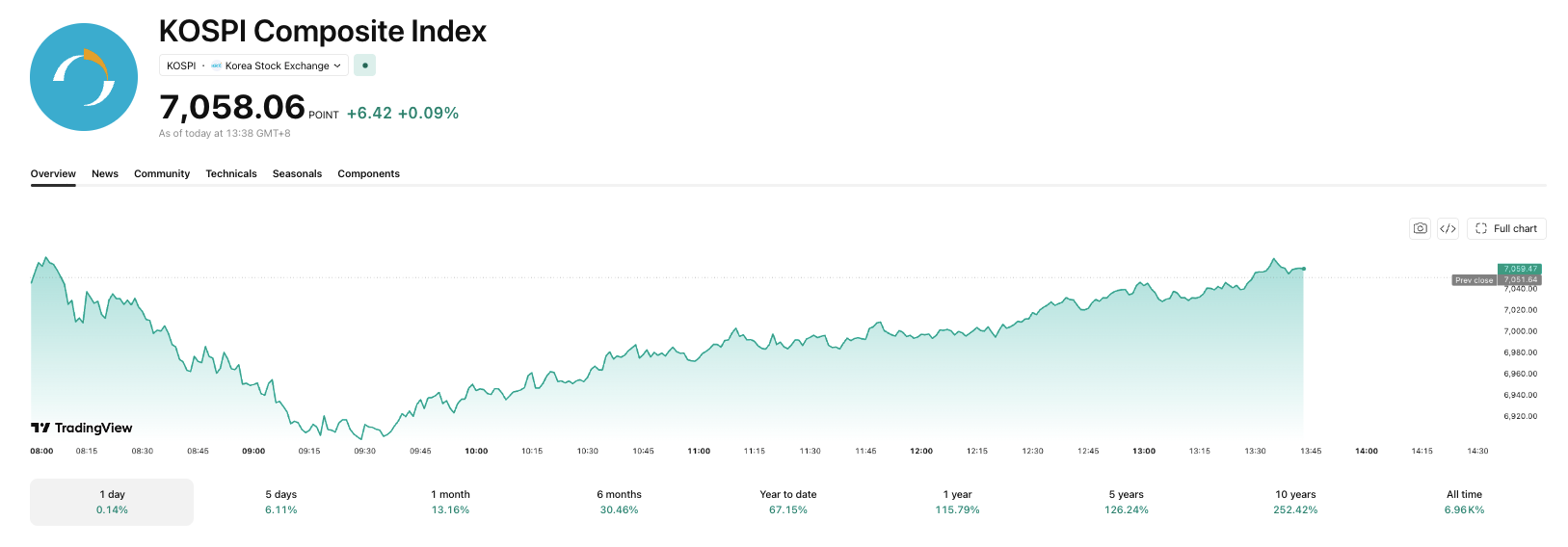
South Korea’s KOSPI dipped toward 6,920 early Thursday before recovering to 7,058.06, up 0.09% on the day. The swing came as the Bank of Korea (BOK) said the index’s daily volatility this year is the widest of any major market.
The BOK measured daily volatility at 4.1%, roughly double Japan and Taiwan. Samsung Electronics, SK Hynix, Hyundai Motor and LG Energy Solution all traded lower earlier in the session as foreign investors sold a net 496.4 billion won of shares.
Semiconductor concentration drives the swings
The BOK’s September credit report traced the KOSPI’s plunge from above 9,200 to the 6,200 range last month to heavy semiconductor sector weighting. Samsung and SK Hynix make up 51.2% of the index and drove 69.3% of its decline in that selloff.

Two-times leveraged exchange-traded funds (ETFs) tied to the two chipmakers grew from $3.33 billion to $10.7 billion in a single month after their May listing, deputy governor Park Jong-woo said. Retail margin loans also hit a record before unwinding sharply during the correction.
Oil and yields add fresh pressure
Thursday’s early dip came as Brent crude held above $100 a barrel on renewed Middle East fighting, while the US 10-year Treasury yield sat near 4.84%. South Korea’s import-dependent economy is especially exposed to energy shocks.
The session also marked quadruple witching, adding derivatives-driven volatility just as Kospi’s chip rally tried to hold its footing. Kiwoom Securities analyst Han Ji-young still expects buybacks and returning foreign buyers to offer support.
The BOK recommended closer monitoring of leveraged ETFs, cautioning that their recent shrinkage does not remove the need for continued oversight.
The post KOSPI Struggles to Hold 7,000 as Bank of Korea Flags Record Volatility appeared first on BeInCrypto.
NVIDIA announced on Sept. 9 that it is working with eight Australian infrastructure providers on an AI factory buildout targeting up to two gigawatts of capacity by 2027.
Summary
- NVIDIA and eight Australian partners plan up to two gigawatts of AI capacity by 2027.
- Australian providers will operate the AI factories while NVIDIA supplies computing, networking, software and support.
- Sharon AI plans to deploy up to 68,000 NVIDIA GPUs using DSX infrastructure in Australia.
- IREN’s planned Bundey campus in South Australia is designed for 800 megawatts of capacity overall.
- Australia currently has 1.6 gigawatts of computing capacity, according to published Data Centres Australia estimates.
The planned expansion involves Firmus, Sharon AI, IREN, Megaport, ResetData, CDC, NEXTDC and AirTrunk. According to NVIDIA’s official announcement, the partners will develop land, power and powered-shell capacity capable of hosting multiple generations of NVIDIA DSX infrastructure.
NVIDIA will provide accelerated computing systems, networking equipment, software and technical support. The participating companies will operate the facilities. That structure means the two-gigawatt figure represents a collective capacity target, rather than a single NVIDIA-owned data center.
The proposed buildout would be larger than Australia’s existing data center computing capacity. Australia currently has about 1.6 gigawatts, according to Data Centres Australia and market researcher DC Byte, figures cited by Reuters.
Eight partners will divide infrastructure responsibilities
Sharon AI plans to deploy up to 68,000 NVIDIA GPUs connected through NVIDIA Quantum InfiniBand and Spectrum-X Ethernet networking. The company said the systems would serve Australian startups, enterprises, government agencies and research organizations requiring locally hosted computing capacity.
IREN will combine NVIDIA’s DSX reference architecture with its experience in power, land, data centers and GPU operations. Its contribution includes the planned 800-megawatt Bundey campus in South Australia. IREN has historically operated Bitcoin mining infrastructure but has increasingly expanded into AI cloud services and high-performance computing.
That shift reflects a wider overlap between cryptocurrency mining and AI infrastructure. Both businesses require access to large power supplies, cooling systems and computing facilities. In related coverage, crypto.news examined why AI chips are increasingly being compared with scarce digital assets as demand for computing capacity grows.
CDC said it operates more than 550 megawatts across Australia and New Zealand, with another 800 megawatts under construction. The company also claims its facilities use renewable electricity and zero-water cooling systems. Those environmental statements are company claims and have not been independently verified across every proposed site.
NVIDIA DSX connects facilities with AI software
NVIDIA describes DSX as a full-stack AI factory platform covering facility design, computing, networking, software and reference architecture. The system is compatible with CUDA and is designed to support later generations of NVIDIA hardware without requiring operators to redesign every infrastructure layer.
The company said expanded capacity would give Australian organizations greater access to NVIDIA Nemotron open models. Healthcare technology company Heidi is using Nemotron tools for clinical applications, while Atlassian is applying NVIDIA technology to semantic search and other features within its Rovo AI platform.
However, NVIDIA did not disclose the expected cost of the Australian buildout, individual investment commitments or how much of the targeted capacity already has financing, planning approval or grid connections. The two-gigawatt target should therefore be treated as a forward-looking plan rather than completed infrastructure.
Power access will determine whether the target is reached
The scale of the proposal brings power availability, grid connections and cooling requirements into focus. Data centers consume electricity continuously, and high-density GPU clusters can require more advanced cooling than conventional computing facilities.
NVIDIA said additional capacity could support new power-generation projects, but it did not identify specific generation assets or electricity contracts. Australian authorities and infrastructure operators will need to assess network connections, construction approvals and local environmental requirements for individual projects.
NEXTDC separately announced plans to raise A$1.1 billion through convertible notes to support its expanding AI infrastructure portfolio, Reuters reported. The financing is broader than the NVIDIA collaboration and should not be treated as funding solely for DSX facilities.
The next measurable developments will be site approvals, power agreements, construction milestones and GPU delivery schedules. NVIDIA and its partners have not published a shared timetable showing how much capacity should become operational during each stage before 2027.
NVIDIA also cautioned that its infrastructure projections remain subject to demand, partner execution, regulation and technology availability. Investors can monitor those risks through the company’s SEC filings, alongside future announcements from the eight Australian partners.
Hardware wallet maker Trezor said its third-party provider was breached and warned users that an email titled “Critical Security Alert: STM32 Entropy Vulnerability” was not sent by the company but was instead a phishing attempt.
The company urged users not to click any links.
Trezor Phishing Scam
In an update on X, Trezor said it had taken down the domain and was investigating how hackers accessed its legitimate domain. The phishing message in question attempted to convince users that a serious security flaw has been found in STM32 microcontrollers used in its devices. According to the fabricated warning, STM32 microcontrollers could generate recovery phrases without enough randomness, potentially putting users’ funds at risk. The email further claims that as many as 25% of devices may be affected.
The issue may not be limited to Trezor users, according to Casa CEO and co-founder Nick Neuman. He noted that reports of similar messages have surfaced among people using the BitBox device as well.
This isn’t the first time a third-party partner connected to Trezor has suffered a security breach. In August, the platform disclosed a similar security incident involving its logistics partner, ShipMonk, which compromised personal details tied to a large number of customers.
The exposed information included contact and delivery data. An earlier disclosure put the number of affected individuals at 13,689. However, Trezor later confirmed that roughly 67,000 additional US customers were impacted, which pushed the total to 80,689 people whose information was exposed.
Hardware Concerns
A separate security test also raised concerns about the TROPIC01 chip found in Trezor’s Safe 7 wallet. In June, Ledger’s Donjon researchers found that, with specialized equipment and physical access to a device, an attacker could interfere with the chip while it checks firmware.
The researchers used a carefully focused 1064 nm laser to trigger faults during the boot and update process. This could allow modified firmware to run. Trezor, however, said the finding does not put users’ funds at risk.
Blockchain investigator ZachXBT has been pretty blunt about hardware wallets in the past. He had earlier said that all hardware wallets are “complete garbage” and that he wouldn’t use them for important transactions or to store funds, and suggested keeping a separate iPhone just for wallet use instead.
The post Fake Trezor Warning Claims 25% of Devices Are Vulnerable in Latest Phishing Campaign appeared first on CryptoPotato.

Euro and Pound Await New Drivers: Inflation and UK GDP in Focus

Politics Home | Effective obesity strategies must harness the power of family influence

‘Scientific evidence backing my case’: Anaya Bangar hits back at critics, claims no ‘unfair advantage’ | Off the field News


-

 Crypto World1 day ago
Bitcoin price risks $76K drop as $78K support weakens
-
 Tech2 days ago
Memory prices are slowing because buyers ran out of money
-

 Crypto World1 day ago
Ethereum price stalls below $2,500 as ADX drops to 11
-

 Crypto World2 days ago
Robinhood Stock: How To Take Advantage With Reduced Risk
-

 NewsBeat1 day ago
What went right this week: an ‘historic’ fall in violent crime, plus more
-
 Crypto World23 hours ago
Bitcoin price holds near $79K as cycle drawdowns narrow
-
 Sports2 days ago
Phones confiscated, players sent home: Pakistan’s England tour turmoil revives memories of Mohammad Amir, Salman Butt and Mohammad Asif’s 2010 Lord’s spot-fixing scandal | Cricket News
-

 NewsBeat2 days ago
England up in reading, maths and science rankings as Scotland and Wales dip
-
 Crypto World2 days ago
Brent Crude Oil Moves Above $100 for the First Time in 3 Months
-

 Crypto World8 hours ago
Bitcoin price risks $70K if $78K neckline breaks
-

 Business1 day ago
Meta debuts long-awaited personal AI agent, Muse
-
 Crypto World2 days ago
Visa expands stablecoin card network to 160 programs
-

 Business2 days ago
Egyptian TV Presenter Sarah Khalifa, 11 Others Sentenced To Death In Major Drug Trafficking Case In Cairo
-
 Tech2 days ago
Strong Password Policy and Password Manager Guide
-

 Crypto World2 days ago
Pump Fun and Kraken delete Hunter Biden $LAPTOP promotion
-
 Crypto World2 days ago
Intel Stock Jumps 9% on Chip Price Hike Report, US Stake Gains $36 Billion
-
 Tech1 day ago
Meta debuts its Muse AI agent. Will consumers trust it?
-

 Entertainment1 day ago
Big Brother Spoilers: Dee SPINS & HUSTLES Votes – Yash Questions the Pact
-

 Business1 day ago
ServiceTitan, Inc. (TTAN) Q2 2027 Earnings Call Transcript
-

 Tech2 days ago
Google’s revived nuclear power plant gets $1.9B loan from US government
You must be logged in to post a comment Login