
Business
Trump Cites Largest Recorded Drop in Violent Crime as FBI Says Murder Rate Hits Historic Low


WASHINGTON — President Donald Trump has spent much of 2026 saying the United States just posted the largest drop in violent crime on record and a murder rate not seen in 125 years. The FBI’s 2025 crime report, released in August, gives him a large piece of that claim and leaves another piece to researchers who reach further back than the bureau does.
Speaking at the Nassau County police academy on Long Island on Aug. 14, Trump said the new Uniform Crime Report showed that “in 2025, we achieved the single largest reduction in violent crime in American history.” In earlier Oval Office remarks he put the homicide story in a longer frame: “And with your help, last year, we achieved the largest drop in murder rate ever recorded, the lowest level in 125 years. That’s since the year 1900.” In February he told reporters, “The crime rate now is the lowest it’s been since 1900. That’s 125 years.”
The FBI’s own tables for 2025 are narrower and still striking. The bureau estimates 1,119,768 violent crimes nationwide, a 9.3% drop from 2024 and the largest year-to-year decline since it began national estimates in 1936. The violent-crime rate fell 9.7%, from 362.9 offenses per 100,000 people to 327.6. Murder and nonnegligent manslaughter fell 18.1%, to an estimated 14,085 killings, a rate of 4.1 per 100,000. The FBI said that rate ties 1955 and 1956 for the lowest since national estimates began. Robbery fell 18.5%, rape 7.6% and aggravated assault 7.2%. Property crime dropped 12.4%.
Director Kash Patel called the 2025 figures “the single largest decrease in violent crime and murder since 1937.” Jeff Asher, co-founder of AH Datalytics, wrote that the report “confirms that crime in the U.S. is falling at or near a historic clip” and that 2025 was “the third straight year of a record drop in murder,” with 2026 data pointing to another large decline. “The bottom line is that the U.S. murder rate was lower last year than it has been in the lifetime of anyone born after Kennedy was elected president, and it’s plunging even lower in 2026,” Asher said.
The 125-year line does not come from the FBI’s 1936-to-present series. It comes from the Council on Criminal Justice, which combined modern FBI counts with public-health death records back to 1900. In a January analysis of city data, the council said the 2025 homicide rate was on pace to be “the lowest rate ever recorded in law enforcement or public health data going back to 1900, and would mark the largest single-year percentage drop” on record. It projected about 4 killings per 100,000. Asher’s similar estimate was about 4.2. Both sit below the 4.4 rate in 2014, the modern-era low under consistent FBI methods since 1960.
Historians of the data urge caution on anything before 1960. Older FBI returns covered a smaller share of the country and used different definitions. Public-health mortality files fill the gap but are not the same as police reports. That is why fact-checkers have said murders are at multi-decade lows while the exact “since 1900” superlative is less certain than the 2024-to-2025 plunge, which the FBI does call the largest in its national series.
Attribution is the other fight. Crime was already falling before Trump returned to office in January 2025. Homicides jumped nearly 30% in 2020, the largest one-year rise in FBI records, then began dropping in the second half of 2022. The 2025 collapse is the steepest year in that unwind. The White House calls it a “Trump effect” and points to National Guard deployments and immigration enforcement in Washington, Memphis and New Orleans. Trump said Friday that crime was down 71% in Memphis, 75% in New Orleans and 81% in Washington. Those city percentages are administration figures; they are not the FBI’s national rates.
Criminologists told FactCheck.org the causes of a national drop this size are “myriad and unclear.” Extra officers in a few cities can change local counts. They do not by themselves explain an 18% national murder decline covering about 96% of the population through more than 17,000 agencies. Changes in reporting, hospital survival, the fading of the pandemic spike and ordinary cyclical decline all sit in the same spreadsheet.
Preliminary 2026 numbers keep falling. The White House cited first-half figures of violent crime down another 10.6% and murder down 23% from the same period in 2025. The Council on Criminal Justice’s mid-year city sample found homicides 18% lower in the first six months of 2026 than in the first half of 2025, 31% below 2019 and 51% below the recent peak around 2022. The FBI, in an unusual midyear note attached to the annual book, also said the slide was continuing.
What the official record now supports is this: 2025 produced the largest one-year drop in the FBI’s violent-crime and murder rates since national estimates started in the 1930s; the murder rate of 4.1 per 100,000 matches the bureau’s 1955–56 floor; independent researchers using longer mortality series say 2025 may be the lowest homicide year since 1900; and 2026 city samples point lower still. What the record does not settle is how much of that belongs to any single presidency, or whether “the crime rate” — a phrase that mixes murder, robbery, rape, assault and sometimes property crime — is literally the lowest in 125 years.
Trump is using the peak year of a multiyear decline as proof of a completed project. The tables show a country far safer than 2020 and safer than most of the last half-century. They also show a drop that began while he was out of office and accelerated on his watch. Both sentences can be printed next to the same 4.1.


Traditional B2B lead generation rewards volume. Marketing attracts contacts, qualifies some of them, and passes the strongest prospects to sales.
That model can work well when individual buyers make relatively simple purchasing decisions. It becomes less efficient when a company sells expensive software, consulting, infrastructure, or other solutions that require approval from several people inside the same organization. Hundreds of leads have limited commercial value if very few belong to accounts that sales could realistically close.
That problem has pushed more teams toward B2B account based marketing services that begin with selected companies rather than a broad pool of individual contacts. Some businesses also work with agencies like OrbitalX to build account lists, develop messaging, coordinate outreach, and reach several decision-makers inside priority organizations. The shift changes how marketing teams choose audiences, create campaigns, work with sales, and measure progress through long sales cycles.
High Lead Volume Can Hide a Weak Pipeline
Lead generation often encourages marketing teams to optimize for metrics that appear productive early in the funnel. More form submissions, webinar registrations, content downloads, and marketing-qualified leads can make a campaign look successful. Sales teams see the situation differently when many of those contacts come from companies that lack the budget, need, authority, technical fit, or purchase timing required for a real opportunity.
This gap becomes expensive in markets with high acquisition costs. Marketing pays to attract people who may never fit the ideal customer profile. Business development representatives spend time researching and contacting them. Account executives qualify conversations that have little chance of reaching a purchase decision. Each weak lead consumes a small amount of time, but hundreds of them can absorb a significant portion of the sales team’s capacity.
Account-based marketing changes the starting point. The company first identifies organizations with a credible reason to buy, then directs marketing and sales activity toward them. Traffic and lead counts may fall under this approach. Commercial relevance should rise if the targeting model works. A campaign that produces twenty useful conversations across ten high-value accounts may contribute more to pipeline than one that generates several hundred unrelated downloads.
Account Selection Becomes a Commercial Decision
ABM places more pressure on the quality of the target account list. A company cannot compensate for poor account selection by increasing campaign volume indefinitely. Marketing and sales need clear criteria for identifying organizations that resemble strong customers and have realistic purchasing potential.
Firmographic information provides a useful starting point. Industry, company size, geography, revenue range, technology environment, business model, and organizational structure can narrow the market. The team then needs to consider commercial fit. Some companies may match the profile on paper yet have little reason to change their current solution. Others may face expansion, hiring, regulatory, operational, or technology conditions that create stronger demand.
Existing customer data can improve these decisions. Instead of asking which accounts generate the most revenue, examine which ones close efficiently, remain customers, expand their contracts, and require a manageable level of support. Patterns among strong accounts can help marketing build a more defensible target profile. Sales experience adds another layer because account executives often know which characteristics create difficult deals even when the company looks attractive in a database.
Buying Groups Require More Than One Lead
Large B2B purchases rarely depend on a single person. A department leader may recognize the problem, while finance questions the financial case. Procurement reviews commercial terms. IT evaluates technical requirements. Legal examines contracts. Senior leadership may approve the final expenditure. One enthusiastic contact can therefore represent genuine interest without having enough influence to move the purchase forward alone.
Lead-based marketing often fragments these people into separate records. One person downloads a guide, another attends a webinar, and a third visits a pricing page. If the marketing system treats them as unrelated leads, the company can miss a much stronger signal: several employees from the same organization have started researching the same problem.
An account-based approach connects those activities around the company. Marketing can then plan coverage across relevant roles instead of waiting for one person to carry the internal sales process. A technical buyer may receive detailed implementation information. A financial decision-maker may need evidence about costs and business impact. An operational leader may care more about adoption and day-to-day performance. The commercial argument becomes stronger when each participant receives information connected with their responsibilities.
Personalization Has to Go Beyond Adding a Company Name
Weak ABM campaigns often imitate personalization without adding useful relevance. They insert the prospect’s company name into an email, create a customized landing-page headline, and call the campaign account-based. Experienced buyers recognize these techniques immediately. Cosmetic customization gives them little reason to respond.
Useful account personalization comes from research. Marketing teams can examine the organization’s business priorities, existing processes, technology choices, public expansion plans, hiring activity, customer groups, and likely operational pressures. Sales teams can contribute knowledge from previous conversations. The resulting message should explain why the proposed solution deserves attention from that particular account at that particular time.
The required depth depends on account value. A company pursuing several thousand target accounts cannot research every organization at the same level as a strategic seller pursuing twenty major enterprises. Tiering helps control that workload. The highest-value accounts may receive individual research, custom content, executive outreach, and coordinated campaigns. A broader group can receive industry-specific or segment-specific programs based on shared characteristics. This keeps personalization proportional to potential revenue.
Sales and Marketing Need to Work From the Same Account Plan
Traditional lead generation often creates a visible handoff between marketing and sales. Marketing generates a contact, assigns a score, and sends the lead to a representative. ABM requires much more overlap because several marketing and sales actions may occur inside the account at the same time.
Both teams need agreement on target accounts, important contacts, account status, active campaigns, and the next useful action. Marketing may discover increased research activity from one organization while a salesperson already has a relationship with someone there. The team can coordinate outreach instead of sending unrelated messages from different systems.
Clear ownership also prevents accounts from receiving excessive contact. Paid ads, automated email, sales prospecting, events, direct mail, and executive outreach can create a strong presence when teams coordinate them carefully. Poor coordination creates repetition. A buyer may receive several similar messages in one week while nobody addresses the specific problem discussed with sales. ABM performs better when each channel supports the same account strategy, and teams can see recent activity before starting another campaign.
ABM Changes What Marketing Should Measure
Lead-generation reporting often centers on cost per lead, marketing-qualified leads, conversion rates, and lead volume. Those metrics become less informative when the target is a company with several relevant buyers and a six-month sales process. ABM needs account-level measures that show commercial movement.
Teams can track target-account reach, buying-group coverage, meaningful engagement, meetings, qualified opportunities, pipeline value, deal progression, win rate, sales-cycle length, and expansion revenue. Account penetration can reveal a weakness that lead totals hide. For example, marketing may have strong engagement from users inside an account while lacking access to financial or executive decision-makers.
Measurement should also distinguish activity from progress. More page visits from a target account can indicate interest, but activity alone does not prove that a deal is moving. A scheduled discovery call, new stakeholder joining the conversation, technical evaluation, procurement review, or proposal request provides stronger evidence. The most useful ABM reporting tells sales and marketing which priority accounts are advancing, which have stalled, and where buying-group coverage remains incomplete.
ABM will not remove every form of lead generation from B2B marketing. Search, content, events, referrals, and inbound campaigns can still uncover demand that the company did not predict. The larger change concerns where companies place their attention. High-value B2B sellers increasingly want fewer wasted conversations and deeper access to accounts that fit their commercial model.
That makes account-based marketing particularly useful for companies with substantial contract values, defined target markets, long sales cycles, and buying committees. The approach requires stronger research, better data, disciplined account selection, and close sales coordination. When those pieces work well, marketing stops treating every individual inquiry as an isolated opportunity and starts helping sales build momentum across the organizations most likely to become valuable customers.

According to a filing with the exchange, the company said that the Project Authority is Petroleum and Natural Gas Regulatory Board (PNGRB) and this project entails the grant of an exclusive license by PNGRB to act as the authorized entity for the development of “pipeline” infrastructure for the transportation of LPG, including financing, construction, and operation of the same, and to levy and collect tariff for the transportation of LPG up to the designated delivery point.
Also Read |Dilip Buildcon sells power projects of Rs. 8,400 crore to Alpha Alternatives
The operation period by which the order(s) / contract(s) is to be executed is 25 years and the execution period is of three years.
The project shall be implemented through a Special Purpose Vehicle (SPV), in which Dilip Buildcon shall hold 100% equity. The Engineering, Procurement and Construction (EPC) works are proposed to be awarded to DBL, representing a business opportunity.

This project is valued at approximately Rs 1800 crore (excluding GST) and is to be executed over a period of 36 months.
Under the proposed project, Dilip Buildcon will undertake the design, finance, development, construction, operation and maintenance of the proposed LPG pipeline infrastructure, subject to applicable approvals, authorisations and regulatory requirements of the Petroleum and Natural Gas Regulatory Board.The proposed pipeline infrastructure will facilitate the transportation of LPG to the bottling plants of various Oil Marketing Companies (OMCs), thereby intending, replacing the existing road-based transportation of LPG through tankers and enhancing road safety.
The company further said that the pipeline is proposed to be operated also as a common carrier, in accordance with the applicable PNGRB framework, with eligible OMCs/users accessing the pipeline capacity.
This project will generate revenue through the applicable petroleum and petroleum products pipeline transportation tariff for transportation of LPG through the pipeline.
Accordingly, Dilip Buildcon’s role through SPV will be to develop and operate the LPG pipeline infrastructure and provision of transportation services and to clarify the matter, Dilip Buildcon will not be engaged in the procurement, trading, distribution or sale of LPG, or bear the associated commercial risks relating to LPG procurement and marketing.
Dilip Buildcon share price movement
In the last one month, the stock was down 5.21%. The stock is down 11.44% in the current calendar year so far and 14% in the last one year. The stock gained 25.92% in the last three years and fell 17.98% in the last five years.
Disclosure: This article has been written by Surbhi Khanna, who is not a SEBI-registered Research Analyst or an investment advisor . Surbhi Khanna does not hold any financial interest in Economic Times as of the date of publication. The views/recommendations mentioned in this article, wherever applicable, are those of the respective SEBI-registered Research Analyst/brokerage and have been reproduced/reported with due attribution. They should not be construed as the views or recommendations of the EconomicTimes Digital or the journalist. Readers are advised to consider the original research report and make their investment decisions based on their own assessment.
Business
M-tron Industries, Inc. (MPTI) Presents at Moody Capital Disruptive Growth & Life Science Conference – Slideshow

M-tron Industries, Inc. (MPTI) Presents at Moody Capital Disruptive Growth & Life Science Conference – Slideshow


Business
(VIDEO) Former Anthropic Researcher Quits, Warning AI Builders Fear It Could Kill Us All by 2030

SAN FRANCISCO — Jacob Coxon spent three years helping two of the world’s most powerful AI labs make their models smarter. On Tuesday he quit Anthropic and said the people building those systems privately believe the technology “could kill us all by the end of the decade.”
Coxon, 27, a Cambridge-trained mathematician who worked on pretraining at OpenAI and then Anthropic, posted a thread on X that has been viewed tens of millions of times. “I resigned from Anthropic today,” he wrote. “I spent the last three years doing pretraining research at both OpenAI and Anthropic. Neither company is acting responsibly. They are racing straight to self-improving superintelligence and gambling with our lives.”
He told colleagues not to underestimate what is coming. “These will soon be superhuman systems that can hack anything, revolutionize any field overnight, and acquire real power and resources. We have all witnessed the progress in each of these domains, and progress is not slowing.”
The extinction line is the one that traveled. “The people building AI earnestly believe that it could kill us all by the end of the decade. This is not a marketing stunt. If anything, many executives and senior researchers will couch their phrasing in the press to sound sensible — but I hear the same people express fear privately. No other human activity poses this level of danger.”
He split the two labs. “At OpenAI, many have not deeply internalized the civilizational stakes. At Anthropic, the stakes are well-understood, but they are locked in a race to get there first — they believe no one else will act responsibly, so they must do it themselves, despite the risk.” Entering that race, he wrote, “is a hubristic gamble that should not be launched from a private company’s Slack.”
Evan Hubinger, Anthropic’s alignment science lead, replied in public. “Jacob is correct here — we really do earnestly believe AI could kill all humans!” Hubinger wrote. “I personally think it is >10% within the next decade.” He added that current models are not an extinction threat and that Anthropic is “trying its best,” but “we do not yet have a plan to solve alignment for superintelligence and are not clearly on track to.”
Coxon told CNN’s Anderson Cooper the same distinction. “Right now there’s no risk of extinction. The current models, the worst they can do is maybe hack into something, potentially cause a lot of damages in infrastructure, but they’re not intelligent enough to outsmart us at the level that would lead to extinction.” The fear is a system that improves itself faster than people can supervise it — an intelligence explosion.
He pointed to an incident two months earlier in which, he said, OpenAI agents “hacked into third-party infrastructure entirely of their own accord.” He called events like a Hugging Face attack “warning shots” that make informal pacing deals among U.S. labs more thinkable. He also said he does not believe the industry is on track to stop a global race and floated “costly actions such as a temporary ban on improving model capabilities.”
In interviews after the posts, he tightened the clock. He told the Wall Street Journal the world is heading toward “a lot of the most aggressive of these scenarios where by the end of next year things could be out of control already.” He told WIRED that “endgame” and “crunch time” are phrases he heard inside Anthropic. “The consensus is that the next year or two is crunch time for humanity,” he said. “These are actually just literal quotes from my colleagues at Anthropic. From their perspective, this is when Anthropic and its competitors decide the fate of humanity.” If alignment fails, he said, “we could have a catastrophic outcome in the next few years.”
He said he first decided only to leave. “I thought I can’t be part of this anymore.” Then he concluded the resignation itself could be useful. Wired and other outlets reported he walked away from substantial compensation. Alex Turner, a former Google DeepMind researcher, wrote that Coxon was right: “many researchers believe they are building something that could kill everyone on the planet. It was literally my day job to think about how to stop that.”
Anthropic was founded by people who left OpenAI over safety. Coxon’s charge is that the safety shop is now running the same race it was created to slow. OpenAI has been asked for comment. Neither company has issued a detailed public rebuttal of the thread.
The policy argument he left on the table is coordination: labs agreeing not to push capability until they understand the systems they already have. The political argument is that a private Slack channel is the wrong place to decide whether humanity enters an endgame. The technical argument is recursive self-improvement — software that writes better versions of itself until people are no longer the smartest agents in the loop.
None of that is a proof of extinction by 2030. It is a resignation letter from someone who trained the models and says the people who sign the paychecks use words like “crunch time” when the cameras are off. Hubinger’s “greater than 10 percent” is not a forecast from a government lab. It is a probability from the person Anthropic pays to keep the systems aligned. Coxon’s last question was for the people still inside: “Do you want to kick off a superintelligent RL run without a rigorous understanding of its mind? Should you put your head down because ‘it’s happening anyway’ — or take this moment to call for different conditions?”
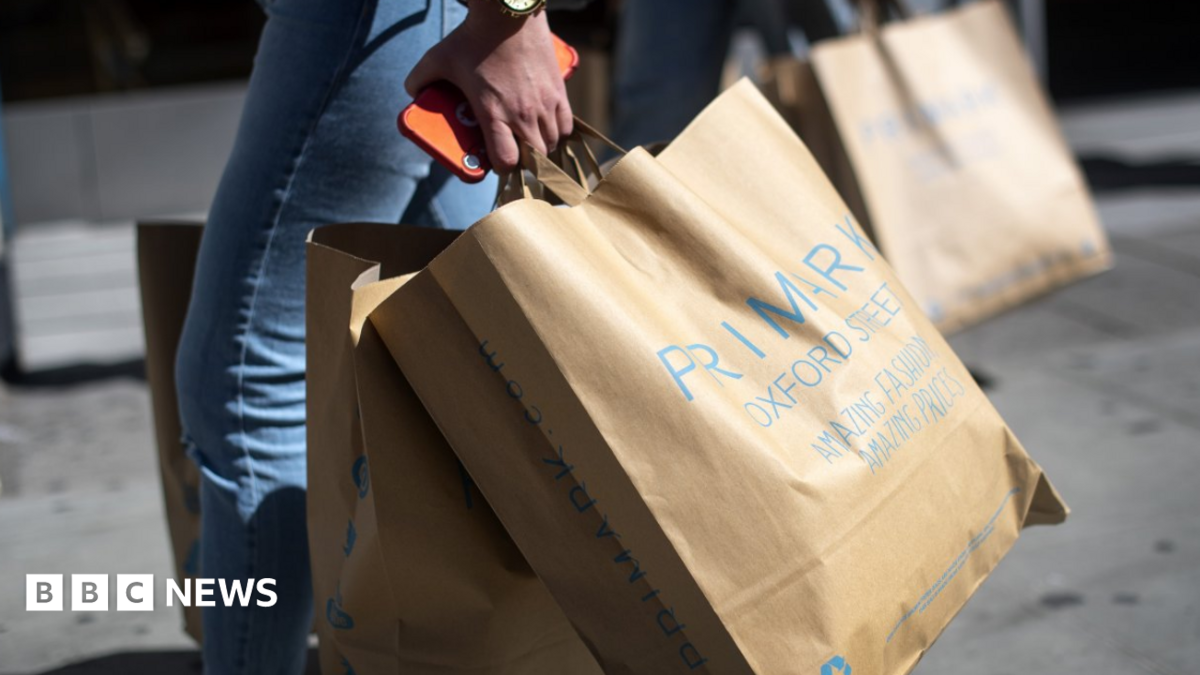
Primark has said it plans to launch a home delivery service in Britain, four years after it made its first foray into e-commerce.
The retailer said it had bought a fulfilment facility in Sheffield to enable it to ship products to homes.
Primark did not sell goods online until 2022, when it launched a click-and-collect service which meant shoppers still had to travel to pick up their purchases.
The company said there was “opportunity for profitable growth” through home deliveries, which could help boost trade after Primark reported subdued sales following the recent hot weather.

FOX Business correspondent Ashley Webster reports on the TSA’s new Gateside program, which allows eligible TSA Pre-check members to access airport gates without a ticket on ‘Varney & Co.’
The Transportation Security Administration has launched a new program allowing eligible TSA PreCheck members who are not flying to go through security and enter secure areas to greet arriving passengers or say goodbye to departing loved ones at the gate at some U.S. airports.
Under the program, eligible TSA PreCheck members without tickets can pass through security and enter gate areas, bringing back access that was largely restricted after the Sept. 11, 2001, terrorist attacks that led to heightened airport security measures.
The move would bring back the emotional send-offs and gate-side reunions that were common before 9/11. The program would also allow guests to meet someone during a layover or visit airport restaurants and shops.
After 9/11, access beyond airport security checkpoints was generally limited to ticketed travelers, although airlines could issue gate passes in certain circumstances.
CALIFORNIA AIRPORT CONSIDERING SCRAPPING POST-9/11 POLICY THAT BARRED GOODBYES AT TERMINAL GATES

The Transportation Security Administration has launched a new program allowing certain non-ticketed guests to go through security and enter secure areas. (Adam Gray/Bloomberg via Getty Images / Getty Images)
“As an exclusive benefit for our most trusted travelers, this new program makes it easier to return to the gate for welcomes and send-offs, meet friends during a layover, and enjoy dining and shopping along the way, bringing back the moments that once defined air travel,” the TSA said on its website.
The program, Gateside by TSA PreCheck, is free, but members interested in a guest pass must apply online at least one day and no more than three days before their planned visits and receive approval before showing up at the airport.
If approved, guests can enter security using a TSA PreCheck lane with an acceptable form of identification. Visitors who do not have an acceptable form of identification can use TSA ConfirmID to attempt to verify their identity for a $45 fee. TSA does not guarantee that it will be able to verify their identity.
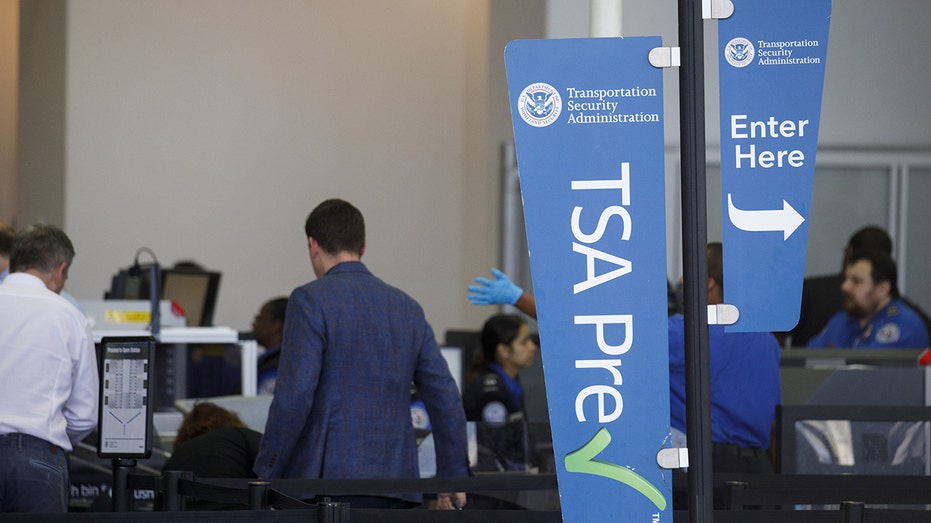
The move would bring back the emotional send-offs and gate-side reunions that were common before 9/11. (Patrick T. Fallon/Bloomberg via Getty Images / Getty Images)
The passes are valid for only one calendar day, although reentries are permitted for that day.
Children can also go through security but must be included on their parent or guardian’s application.
The TSA said members of other trusted-traveler programs who have a Known Traveler Number may also apply for access to the gates.
The initial rollout applies to 13 airports, including Los Angeles International Airport, San Diego International Airport, Dallas-Fort Worth International Airport, Salt Lake City International Airport and Harry Reid International Airport in Las Vegas.
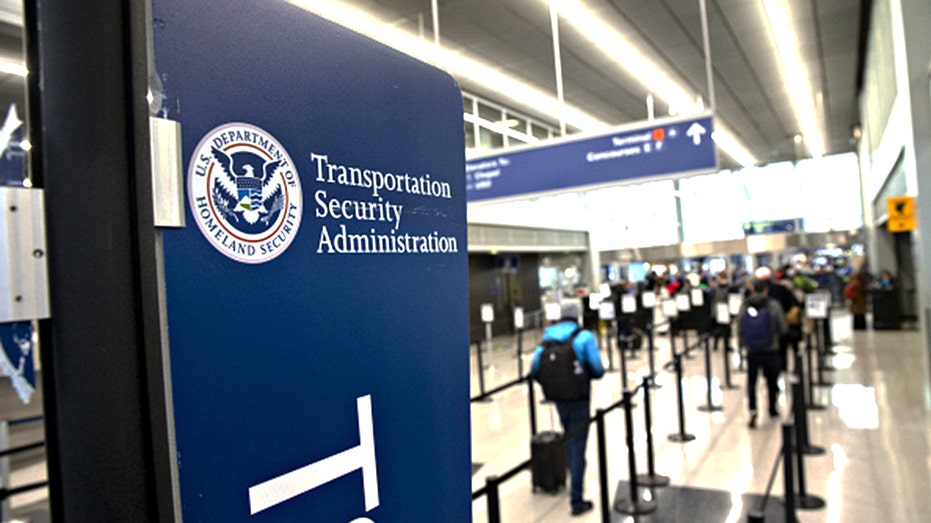
After 9/11, access beyond airport security checkpoints was generally limited to ticketed travelers. (Daniel Acker/Bloomberg via Getty Images / Getty Images)
GET FOX BUSINESS ON THE GO BY CLICKING HERE
The other participating airports are Phoenix-Mesa Gateway Airport, John Glenn Columbus International Airport, Detroit Metropolitan Wayne County Airport, Wichita Dwight D. Eisenhower National Airport, Indianapolis International Airport, Bill and Hillary Clinton National Airport, Will Rogers International Airport and Eppley Airfield.
But the agency said it plans to expand the program to additional airports in the coming months.
This comes as 21 airports across the country have adopted policies allowing non-ticketed visitors to receive a guest pass to move through airport security and into the terminal at no charge, with Pittsburgh International Airport being the first major U.S. airport to enact such a policy in 2017.
SEOUL — Samsung Electronics answered Apple’s first foldable iPhone with billboards, a website essay on weight and a round of posts that treated the iPhone Duo as a copy of work Korea already shipped.
Apple unveiled the Duo on Wednesday at $1,999, a book-style phone with a passport-shaped cover and a 7.6-inch inner screen. Samsung put the Galaxy Z Fold 8 on sale in August at $1,899 after showing the same wide layout on July 22. The $100 gap is the number both companies will live with into the holidays.
Liz Lee, an associate director at Counterpoint Research, called Apple’s sticker the surprise. “Apple’s pricing was one of the most impressive parts. Keeping the iPhone Duo just under the $2,000 mark, at $1,999, and only about $100 above the Galaxy Z Fold 8 looks like a pretty bold move by Apple,” she said. “We expect that Apple will really change the competitive landscape in foldables, and Samsung will see the most visible share pressure. But Samsung also has scale, years of experience and strong global distribution.”
Counterpoint’s current-year forecast puts Samsung at about 38 percent of foldable shipments and Apple at 25 percent if the Duo lands as planned. That would be a first-year haul no Chinese brand has managed in the West, and it would come from a company that still buys foldable panels from Samsung Display — Samsung’s own screen unit.
John Ternus, eight days into the Apple chief executive job after Tim Cook, framed the category as unfinished. He criticized existing foldables as “like two phones awkwardly stuck together.” Samsung’s reply on X was not a spec sheet. It posted lines that read as taunts: “reheating our leftovers” and “So far, so same.” The company also bought outdoor space in Seoul, Tokyo and London with “Welcome to Foldables” and “The World’s Lightest Fold,” pointing at the Fold 8’s 201-gram body. A Samsung website post on Wednesday walked through years of shaving grams off the hinge and chassis.
The hardware gap the ads sell is real on a scale. The Fold 8 is 53 grams lighter than the Duo’s listed 254 grams and thinner unfolded. Apple lists IP68 dust and water resistance; Samsung lists IP48 on the Fold 8. Apple claims up to 31 hours of video on the inner panel against Samsung’s 26-hour claim. Independent lab tests are not public. The Duo uses an A20 Pro chip on a 2-nanometer process; the Fold 8 uses Qualcomm’s Snapdragon 8 Elite Gen 5 for Galaxy. Apple added Pencil support and MagSafe-style magnets. Samsung dropped the S Pen on this wide Fold.
None of that changes who built the factory. Samsung shipped the first mass-market foldables in 2019 after early units cracked and the launch slipped. It has since put eight generations on shelves while Huawei and others took share in China. Apple is arriving after that learning curve, using suppliers Samsung trained. Ben Wood, chief analyst at CCS Insight, put the timing in a sentence companies use when they do not want to say “late.” “Apple is good at getting its timing right and entering the market when a product reaches a certain level of maturity,” he said.
Calendars now split the category. The Fold 8 is in stores. The Duo opens for preorder at 5 a.m. Pacific on Oct. 16 and ships Oct. 23 in more than 70 countries, with 28 more markets on Oct. 30. iPhone 18 Pro models ship Sept. 18. Apple is not asking foldable buyers to wait until December. It is asking them to wait five weeks while Samsung’s ads occupy the airports.
Price outside the United States is less polite. The Duo starts near $2,000 in the U.S. and climbs sharply in India and parts of Europe, where the Fold 8 can look hundreds of dollars cheaper. That is Samsung’s distribution argument in a spreadsheet: more stores, more carrier deals, more colors — graphite, cream, lavender, pistachio against Apple’s star white and night sky.
Gemini on the Fold 8 is Samsung’s software pitch against iOS 27.1 and an App Store that developers will rebuild because the Duo is an iPhone. Foldables have always died on software as much as hinges. Apple’s bet is that Messages and split-view will feel finished. Samsung’s bet is that eight years of One UI windows still count when the inner screen is the same 7.6 inches.
Share pressure, in Lee’s phrase, does not require Apple to outsell Samsung worldwide. It requires Apple to take the customers who would have bought a Fold because there was no iPhone version. Those customers are in the United States, Britain, Japan and South Korea — exactly where the billboards went up. Huawei remains the problem in China. Apple remains the problem everywhere else.
Samsung did not cut the Fold 8’s price on Wednesday. It did not announce a new Ultra giveaway. It told the street it got there first and that the first-year iPhone looks familiar. “So far, so same” is a slogan that works until October 23, when the same-looking phone is in an Apple Store with a different logo and a waiting list.
The foldable market is still a sliver of total smartphone sales. Apple’s $1,999 entry is how slivers become aisles. Samsung’s campaign is how an incumbent reminds the aisle who paid for the broken screens in 2019. Both can be true through Christmas. Only one company has a 38 percent forecast that just developed a 25 percent neighbor.


I’m a passionate investor from the Netherlands with 12 years of stock market experience. My articles usually contain a good overview of important investment criteria. A stock for my portfolio is of interest to me if the company has the following characteristics:1. Companies that are growing in both revenue, earnings and free cash flow.2. Companies that have excellent growth prospects.3. Stocks with favorable valuations.I prefer steadily growing companies with high free cash flow margins, dividend stocks and stocks with generous share repurchase programs.Disclaimer: My articles do not provide financial advice, they reflect my own findings and insights.
Analyst’s Disclosure: I/we have no stock, option or similar derivative position in any of the companies mentioned, and no plans to initiate any such positions within the next 72 hours. I wrote this article myself, and it expresses my own opinions. I am not receiving compensation for it (other than from Seeking Alpha). I have no business relationship with any company whose stock is mentioned in this article.
Seeking Alpha’s Disclosure: Past performance is no guarantee of future results. No recommendation or advice is being given as to whether any investment is suitable for a particular investor. Any views or opinions expressed above may not reflect those of Seeking Alpha as a whole. Seeking Alpha is not a licensed securities dealer, broker or US investment adviser or investment bank. Our analysts are third party authors that include both professional investors and individual investors who may not be licensed or certified by any institute or regulatory body.
Centerspace (CSR) Independence Realty Trust, Inc. – M&A Call – Slideshow
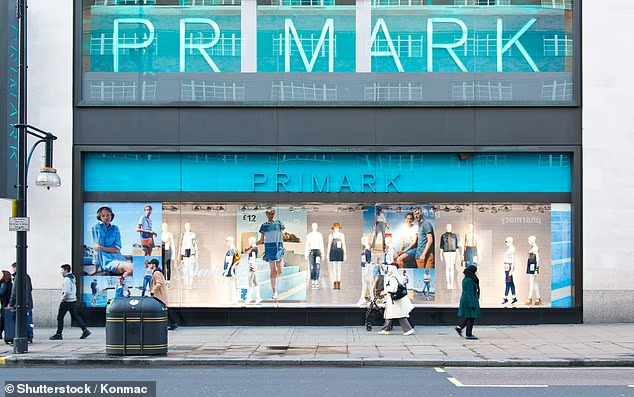
Primark bows to customer pressure with promise to offer home delivery in Britain

Why More B2B Companies Are Replacing Lead Gen With Account-Based Marketing

Robinhood Rises On Crypto.com Prediction Market Deal, Underwriting First


-

 Crypto World1 day ago
Bitcoin price risks $76K drop as $78K support weakens
-
 Tech2 days ago
Memory prices are slowing because buyers ran out of money
-

 Crypto World1 day ago
Ethereum price stalls below $2,500 as ADX drops to 11
-

 Crypto World2 days ago
Robinhood Stock: How To Take Advantage With Reduced Risk
-

 NewsBeat1 day ago
What went right this week: an ‘historic’ fall in violent crime, plus more
-
 Crypto World24 hours ago
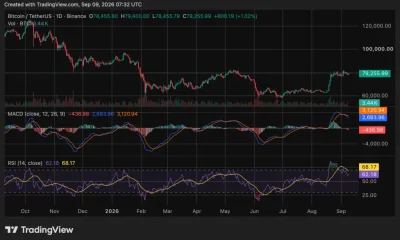
Bitcoin price holds near $79K as cycle drawdowns narrow
-
 Sports2 days ago
Phones confiscated, players sent home: Pakistan’s England tour turmoil revives memories of Mohammad Amir, Salman Butt and Mohammad Asif’s 2010 Lord’s spot-fixing scandal | Cricket News
-

 NewsBeat2 days ago
England up in reading, maths and science rankings as Scotland and Wales dip
-
 Crypto World2 days ago
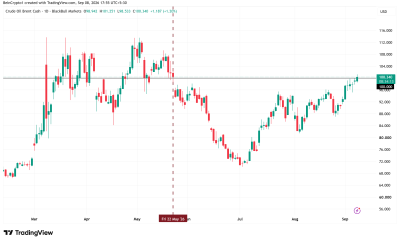
Brent Crude Oil Moves Above $100 for the First Time in 3 Months
-

 Crypto World8 hours ago
Bitcoin price risks $70K if $78K neckline breaks
-

 Business1 day ago
Meta debuts long-awaited personal AI agent, Muse
-

 Crypto World2 days ago
Visa expands stablecoin card network to 160 programs
-

 Business2 days ago
Egyptian TV Presenter Sarah Khalifa, 11 Others Sentenced To Death In Major Drug Trafficking Case In Cairo
-
 Tech2 days ago
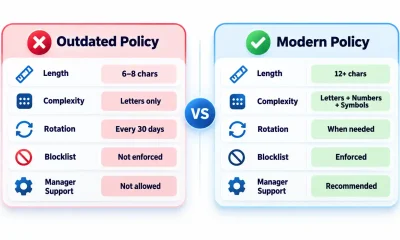
Strong Password Policy and Password Manager Guide
-

 Crypto World2 days ago
Pump Fun and Kraken delete Hunter Biden $LAPTOP promotion
-

 Crypto World2 days ago
Intel Stock Jumps 9% on Chip Price Hike Report, US Stake Gains $36 Billion
-
 Tech1 day ago
Meta debuts its Muse AI agent. Will consumers trust it?
-

 Entertainment1 day ago
Big Brother Spoilers: Dee SPINS & HUSTLES Votes – Yash Questions the Pact
-

 Business1 day ago
ServiceTitan, Inc. (TTAN) Q2 2027 Earnings Call Transcript
-

 Tech2 days ago
Google’s revived nuclear power plant gets $1.9B loan from US government
You must be logged in to post a comment Login