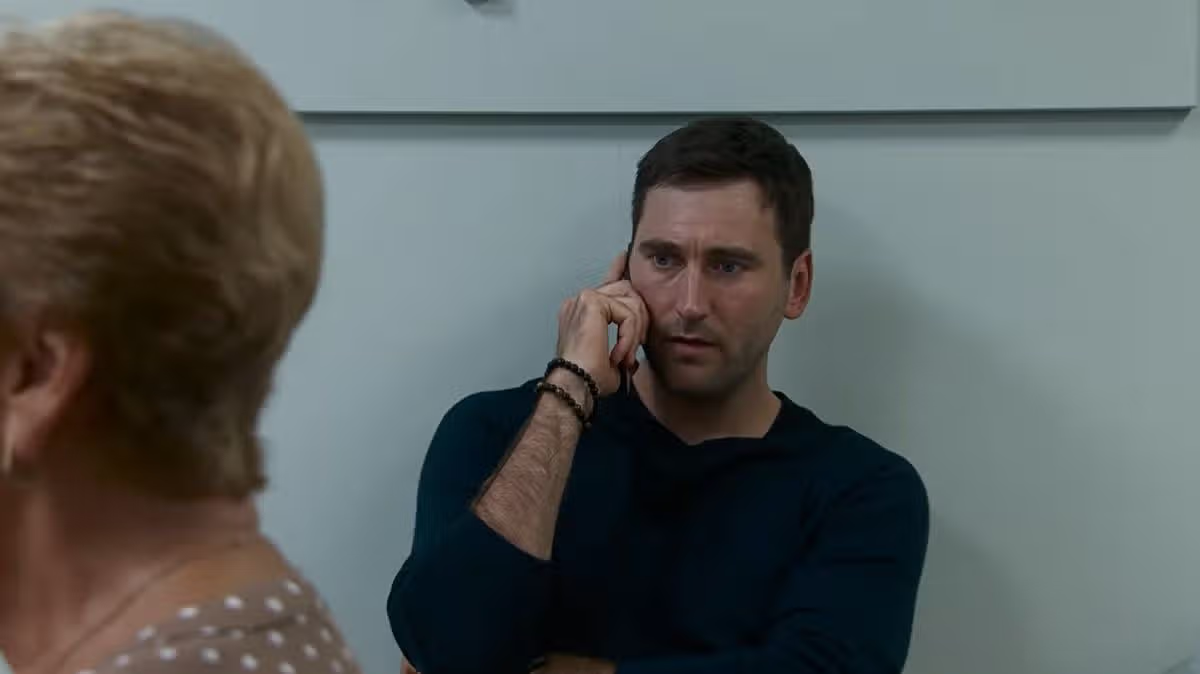
Corrie viewers have seen Kit Green being diagnosed with breast cancer this week
Coronation Street fans have been praising a decision made in Kit Green’s cancer storyline as they spotted a ‘new duo’ in the long-running show.
Advertisement
As fans of the ITV soap, which is filmed in Salford, know, it was back in 2024 that the detective made his first appearance in Weatherfield after Bernie Winter went on a mission to find her long-lost son, Zodiac, who ended up being the detective who had been renamed Christopher by his adoptive parents.
Kit’s life has since evolved on the cobbles, having discovered he has a son, teenager Brody Michaelis, and he was also seen enjoying a romance with Sarah Platt – until she recently dumped him when she was put on remand for the murder of Theo Silverton.
Click here to sign up for more Coronation Street updates in our newsletter
Now, actor Jacob Roberts is currently tackling a new health storyline for his character, Kit, who was seen being diagnosed with breast cancer in scenes aired this week.
Advertisement
The diagnosis comes on the back of the death of Bernie’s aunt, Celeste, who made Gemma Winter-Brown aware that the family may carry the familial BRCA gene. Carrying a familial BRCA (Breast Cancer) gene mutation means inheriting a harmful change in the BRCA1 or BRCA2 genes from a parent, which significantly raises your lifetime risk of developing certain cancers.
But as Bernie and Gemma face testing, unbeknownst to them and the viewers, Kit has already been seeking medical help due to concerns about his own health, and has been diagnosed with stage 3 breast cancer, which had already spread to his lymph nodes.
The Coronation Street production team are working closely with Macmillan Cancer Support and Breast Cancer Now to accurately portray Kit’s cancer while raising awareness of the very real risks of the illness amongst men.
During Wednesday’s (September 9) episode of Corrie, viewers saw Kit accidentally collide with Ross Wilkes in the Rovers, causing him to spill his drinks. When Kit clutched his chest in pain, Ross accused him of overreacting, unaware of his diagnosis. It caused Kit to lose his temper and punch him straight in the face. Fuming, Ross said he would be reporting Kit, as Bethany Platt dragged him out.
Later, Todd Grimshaw, who knows about Kit’s recent diagnosis, headed to see Ross and try to smooth things over for him. Ross said he wouldn’t press charges, but would accept a few beers as an apology. It was then during Thursday’s (September 10) episode of Corrie that Todd was seen telling Kit that he’d smoothed things over with Ross, and that he should share his news with his family, which came after he joined him at an earlier hospital appointment.
And it was the scenes between the pair that got fans talking on social media. @sabbyissingular said: “What a great duo these two are! Whoever at @ITV, @itvcorrie decided too have Todd involved in this kit storyline… YOU deserve a raise! Two characters who couldn’t be further from one another but alike in so many ways! Made ever more fab by Jacob & Gareth themselves! #corrie.”
@C70268211 commented: “I knew Todd would do a George. Kit can’t hold off telling others for much longer though. You can’t blame other characters for not understanding fully if they don’t know. #Corrie.” @tardisgirl93 added: “No but I loved this scene. Todd supporting Kit? This is a great idea #corrie.”
The Yorkshire Shepherdess will appear at Everyman Northallerton later this month for a behind-the-scenes celebration of the hit More4 show.
Our Farm Next Door: A Behind-the-Scenes Celebration will take place on Wednesday, September 30, ahead of series four.
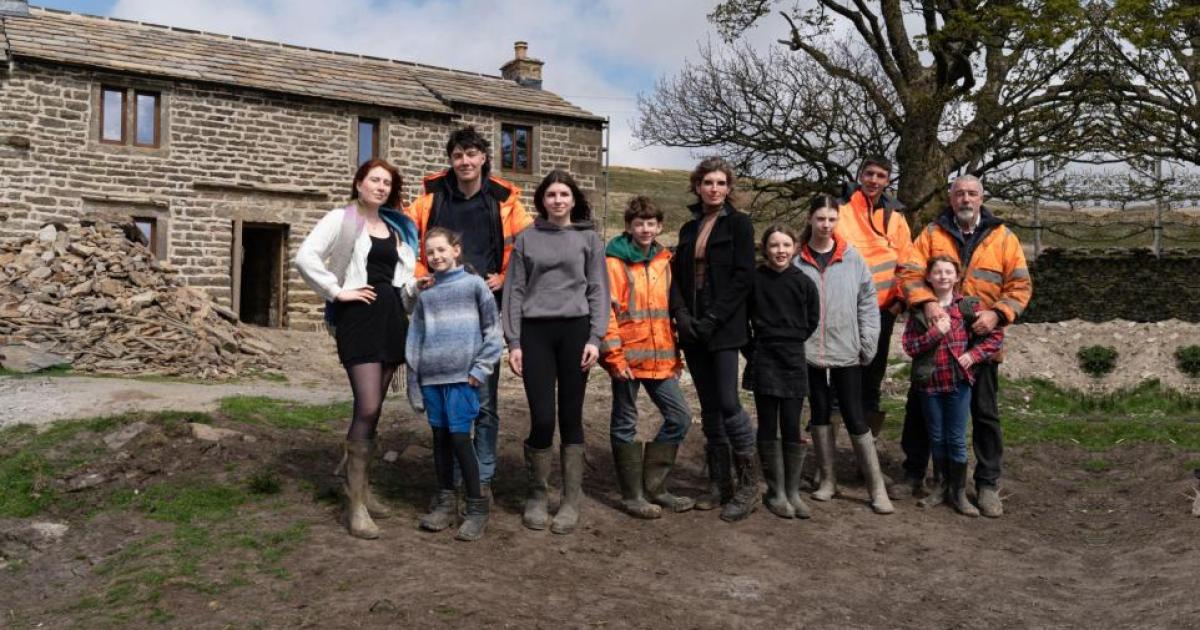
The Owen family from Our Yorkshire Farm and Our Farm Next Door (Image: CHANNEL4)
Amanda and special guests will discuss how the programme began and followed her family’s ambitious restoration of Anty John’s farmhouse.
Fans will also see an exclusive preview of what to expect when Our Farm Next Door returns to More4.
Advertisement
It comes three years after work began on the ancient farmhouse near the Owen family’s famous Ravenseat Farm in Swaledale.
The event will revisit the biggest moments from the first three series and reveal how the show is made in one of the Yorkshire Dales’ most remote areas.
Amanda Owen’s Our Farm Next Door to return for series four
Our Farm Next Door: Amanda, Clive and Kids follows Amanda, her former husband Clive Owen and their nine children as they farm in Swaledale and transform the derelict Anty John’s property.
Channel 4 confirmed in August 2025 that the programme had been commissioned for two more series after its success on More4.
Advertisement
The broadcaster said the it would follow the family as work moved indoors, including decisions about the rooms, plumbing and running water.
Cameras have also continued to document Amanda, Clive and their children’s daily lives on the farm.
Series three aired in early 2026, covering the work at Anty John’s and major family moments including Clive’s 70th birthday.
The show has been a More4 success, with Lime Pictures reporting that series three’s second episode grew its audience and ranked third among the week’s top 30 multichannel programmes.
Viewers can now discover how the show is made before series four reaches screens.
Viewers have seen the older children build lives and careers of their own while the younger ones take on bigger roles around the farm.
Reuben Owen has built a career in heavy machinery and groundwork away from Ravenseat, while eldest daughter Raven has taken a very different path from the remote family farm.
The project began with a largely derelict building that needed painstaking restoration before its interior could become a family home.
The show has followed the transformation stone by stone while exploring the property’s history and former residents.
The Our Farm next Door promo poster (Image: CHANNEL 4)
Channel 4 has said the family bought the house as part of its plans for the future.
Advertisement
Amanda has also investigated the property’s connection to Anthony Clarkson, a historic Swaledale map-maker linked to it.
Executive producer Mark Robinson described the project as the story of a family rooted in the Yorkshire Dales bringing a house back to life.
Series four will continue that story.
Our Farm Next Door event in Northallerton
Our Farm Next Door: A Behind-the-Scenes Celebration will be held at Everyman Northallerton, at the Treadmills development on East Road, on Wednesday, September 30.
Advertisement
Tickets cost £12.50 through the Royal Television Society.
Fans will hear from Amanda Owen and special guests and see footage from series four before it airs on More4.
The event comes years after the Owens became household names on Channel 5’s Our Yorkshire Farm, as their television story continues.
While that programme ended in 2022, Amanda, Clive and their children later returned to screens with Our Farm Next Door, putting Ravenseat, Swaledale and the transformation of Anty John’s back at the centre of their story.
Advertisement
Amanda and Clive announced their separation in June 2022 but said they would continue working on the farm and co-parenting their nine children.
A Washington Post editorial invoked the Bible to downplay the potential threat posed by artificial intelligence and instead warned of looming government overreach against Big Tech — while failing to note that billionaire Post owner Jeff Bezos recently co-founded an AI company.
The unsigned editorial, published Wednesday evening under the headline “AI hysteria jumps the shark,” came in response to comments in which current and former Anthropic employees said people working on AI projects “earnestly believe” the technology could kill all humans within 10 years.
“Scripture warns against false prophets,” the Post‘s editors wrote. “The Gospel of Matthew says that no one but God, ‘not even the angels of heaven,’ knows the day or hour of the end times.”
The editorial, posted outside the news outlet’s formidable paywall, also condemned the “chilling sweep” of legislation proposed by independent Sen. Bernie Sanders of Vermont and Democratic Rep. Greg Casar of Texas to pause advanced AI development and ban “artificial superintelligence.”
Advertisement
“Politicians should not seek to regulate a fast-moving technology they don’t understand,” the editors wrote.
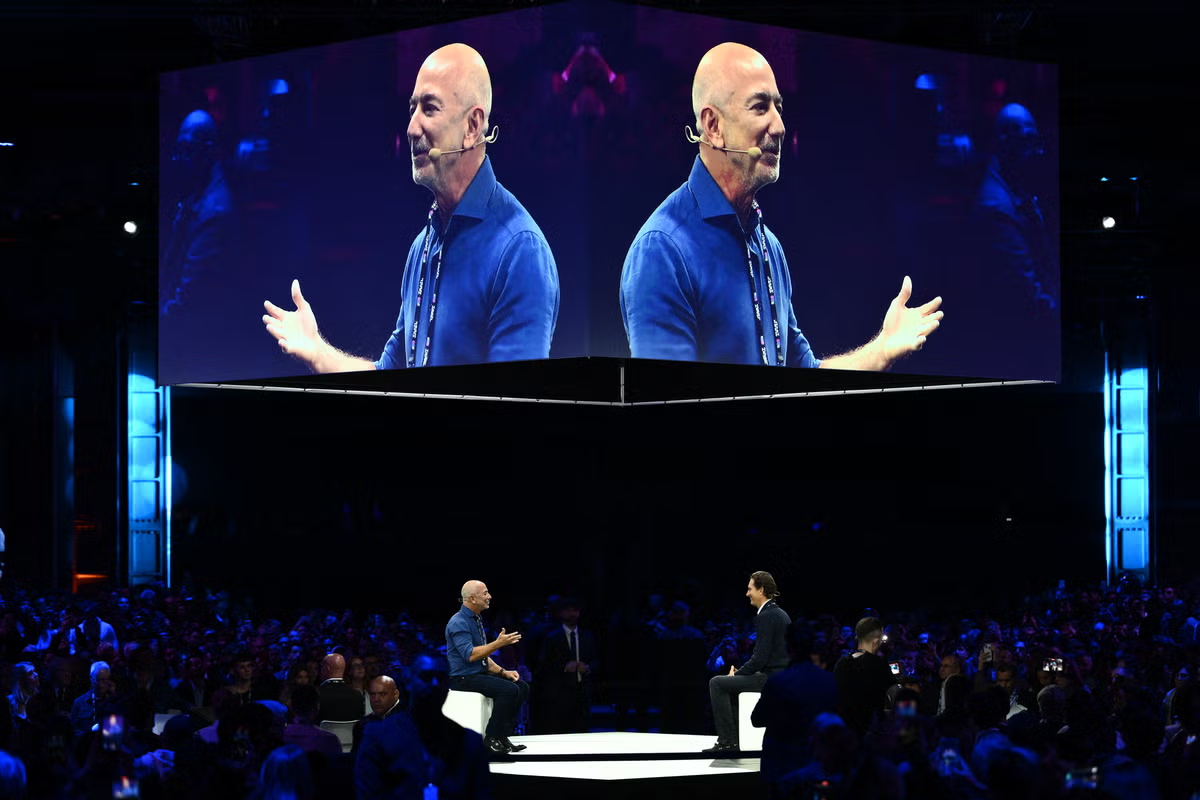
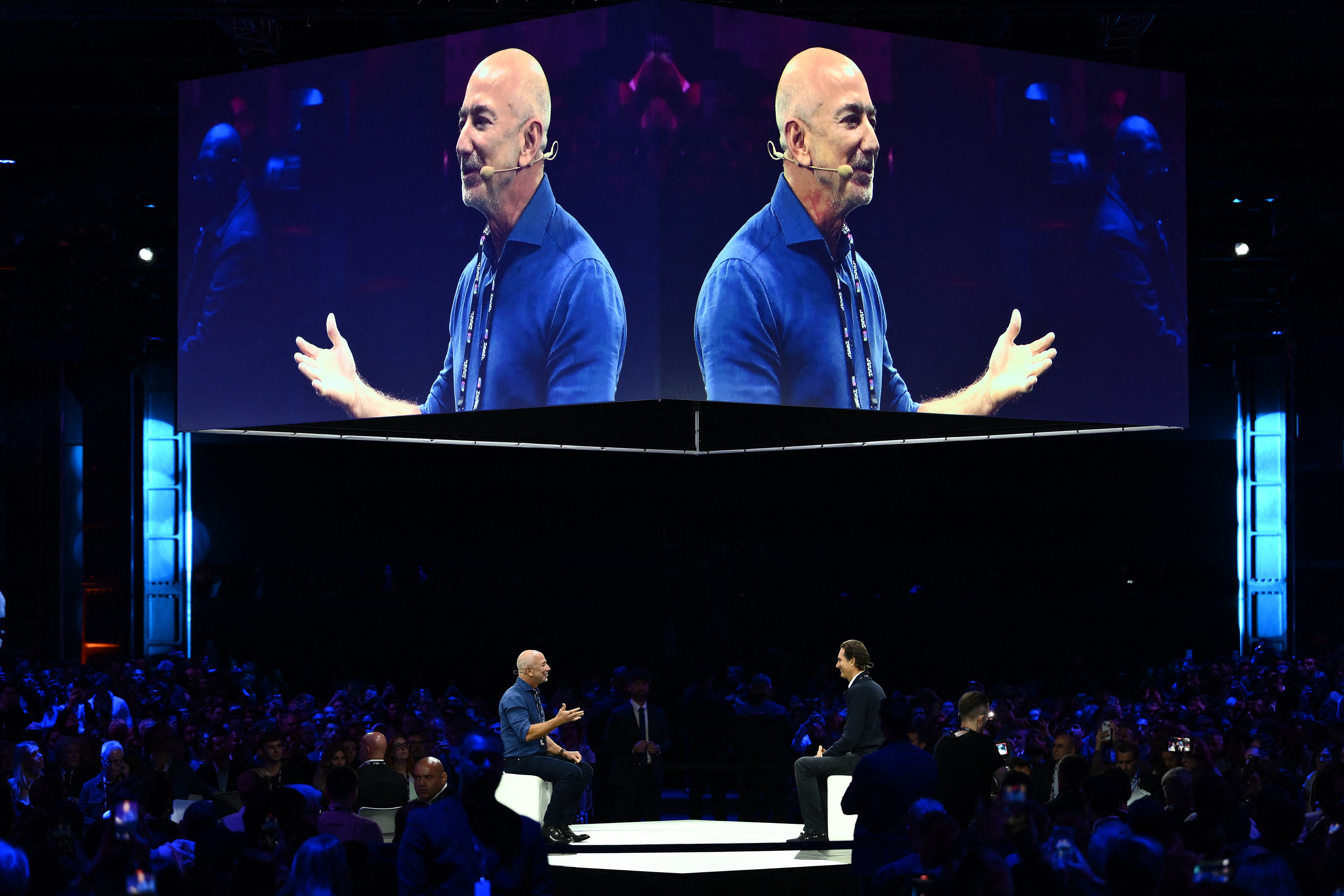
Jeff Bezos speaks with Stellantis chairman John Elkann at the Italian Tech Week 2025 in Turin in 2025. A Washington Post editorial that downplayed the potential threat to humanity posed by artificial intelligence didn’t mention that billionaire owner Bezos recently co-founded an AI company (AFP/Getty)
The editorial made no mention of Amazon founder Bezos, who bought the Post for $250 million in 2013 and last month ranked No. 10 on Time‘s list of the most influential people in AI.
The magazine cited his role as co-founder and co-CEO of the AI startup Prometheus, which was launched in November 2025 and valued at $41 billion in June, with Bezos telling CNBC that its work “will make it much easier for engineers to design physical objects.”
A Post spokesperson didn’t immediately respond to an inquiry from The Independent regarding the editorial’s apparent lack of full disclosure.
The editorial came as Bezos — whose Blue Origin space company reportedly holds about $1.1 billion in federal contracts — has significantly softened his stance against President Donald Trump, with whom he feuded during Trump’s first term over the Post‘s coverage of the White House.
Advertisement
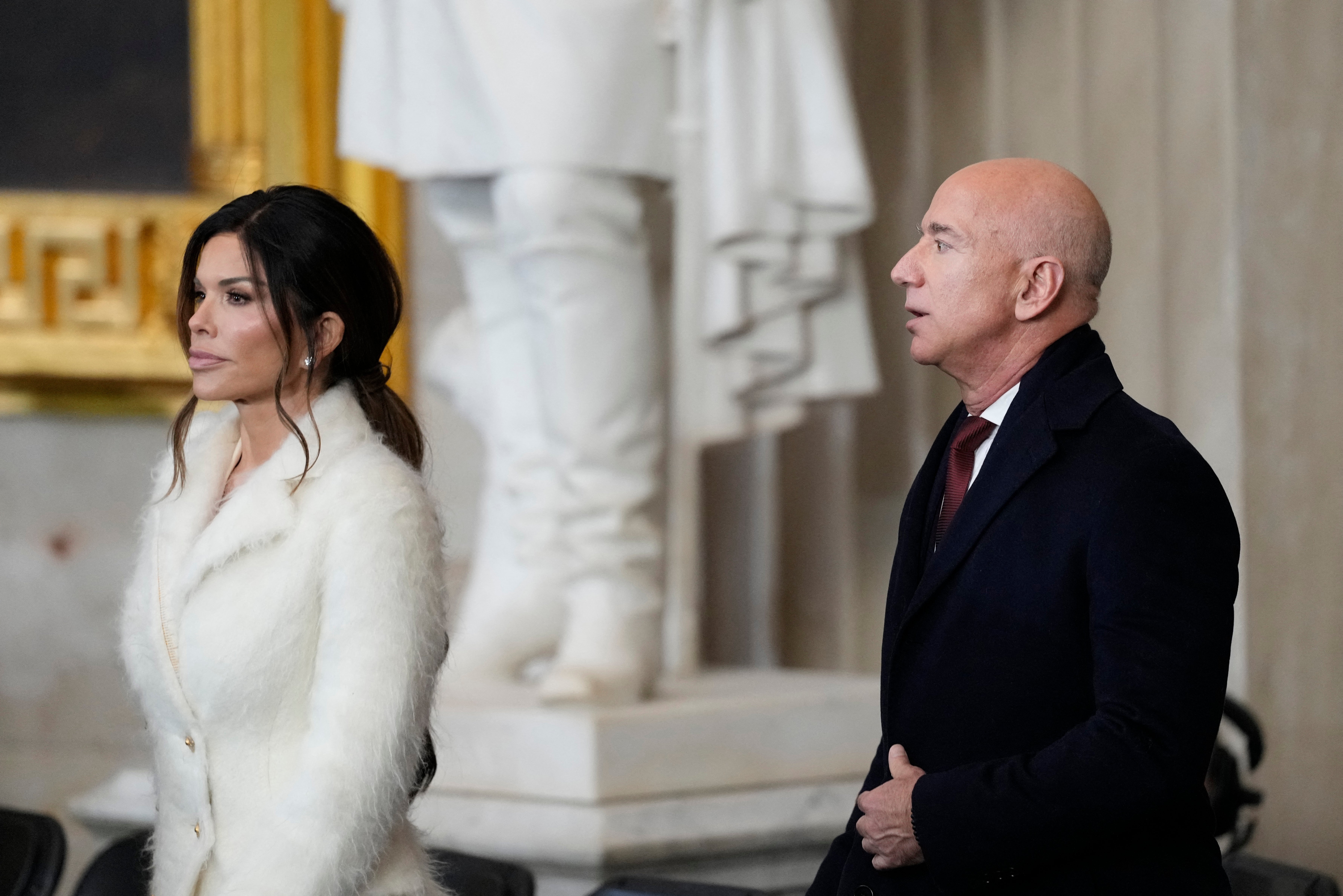
Amazon, where Bezos is executive chairman and owns nearly nine percent of the company’s stock, donated $1 million toward Trump’s 2025 inauguration, which he attended with future wife Lauren Sánchez.
The company also gave an undisclosed amount to help fund construction of the president’s controversial $600 million White House ballroom, and spent $40 million on a widely panned documentary about first lady Melania Trump that IMDb says grossed about $16.7 million worldwide.
Bezos and then-fiancee Lauren Sánchez in the Capitol Rotunda while attending the inauguration of Donald Trump as the 47th president in Washington on January 20, 2025 (AFP/Getty)
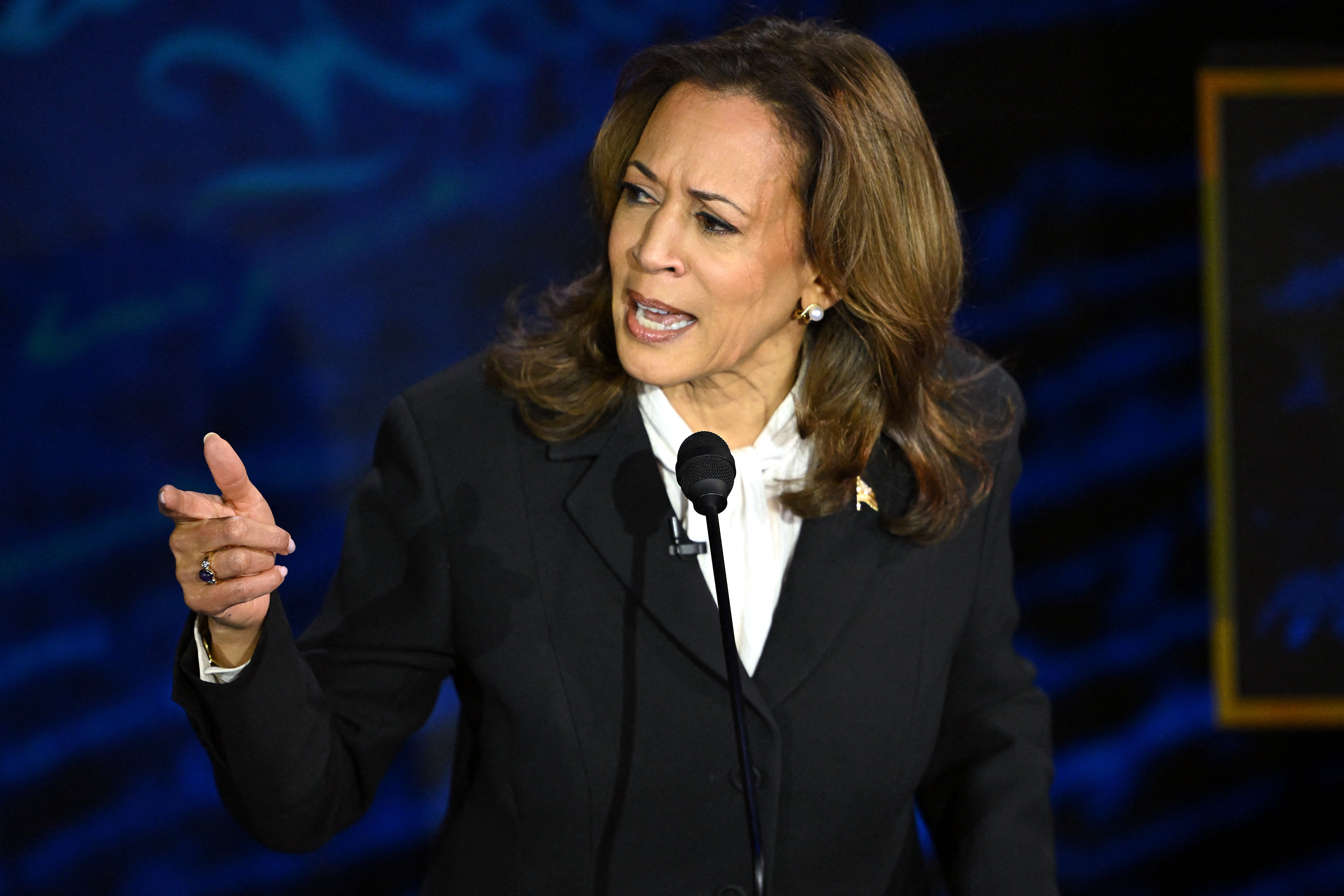
The Post has also been undergoing a period of upheaval under Bezos, including the loss of about 300,000 subscribers and associate editor David Maraniss, a 48-year employee, after the owner vetoed a 2024 endorsement of Vice President Kamala Harris over Trump and ended the paper’s practice of endorsing candidates.
The Post lost another 75,000 subscribers early last year after Bezos said its opinion pages would only promote “personal liberties and free markets,” leading to the resignation of top opinion editor David Shipley.
His right-leaning successor, Adam O’Neal, announced his resignation in July, telling colleagues it was best for him and his family, according to The New York Times.
Advertisement
Several high-profile opinion columnists, including Pulitzer Prize winners Eugene Robinson and Jonathan Capehart, have also resigned or taken buyouts since the libertarian shift in the Post‘s editorial tone.
The spark for Wednesday’s AI editorial was a series of Tuesday social media posts in which Anthropic employee Jacob Coxon said he’d resigned his position after three years “doing pretraining research at both OpenAI and Anthropic.”
Bezos vetoed a Washington Post endorsement of then-Vice President Kamala Harris, seen here debating Trump at the National Constitution Center in Philadelphia, Pennsylvania, on September 10, 2024 (AFP/Getty)
“Neither company is acting responsibly. They are racing straight to self-improving superintelligence and gambling with our lives,” he wrote.
Coxon also said, “The people building AI earnestly believe that it could kill us all by the end of the decade.”
In response, Anthropic employee Evan Hubinger, who holds the title of alignment science lead, wrote, “Jacob is correct here — we really do earnestly believe AI could kill all humans!”
Advertisement
“I personally think it is >10% within the next decade. I believe Anthropic is trying its best, but we do not yet have a plan to solve alignment for superintelligence and are not clearly on track to,” he added.
Spokespersons for Anthropic and OpenAI didn’t immediately respond to inquiries from The Independent.
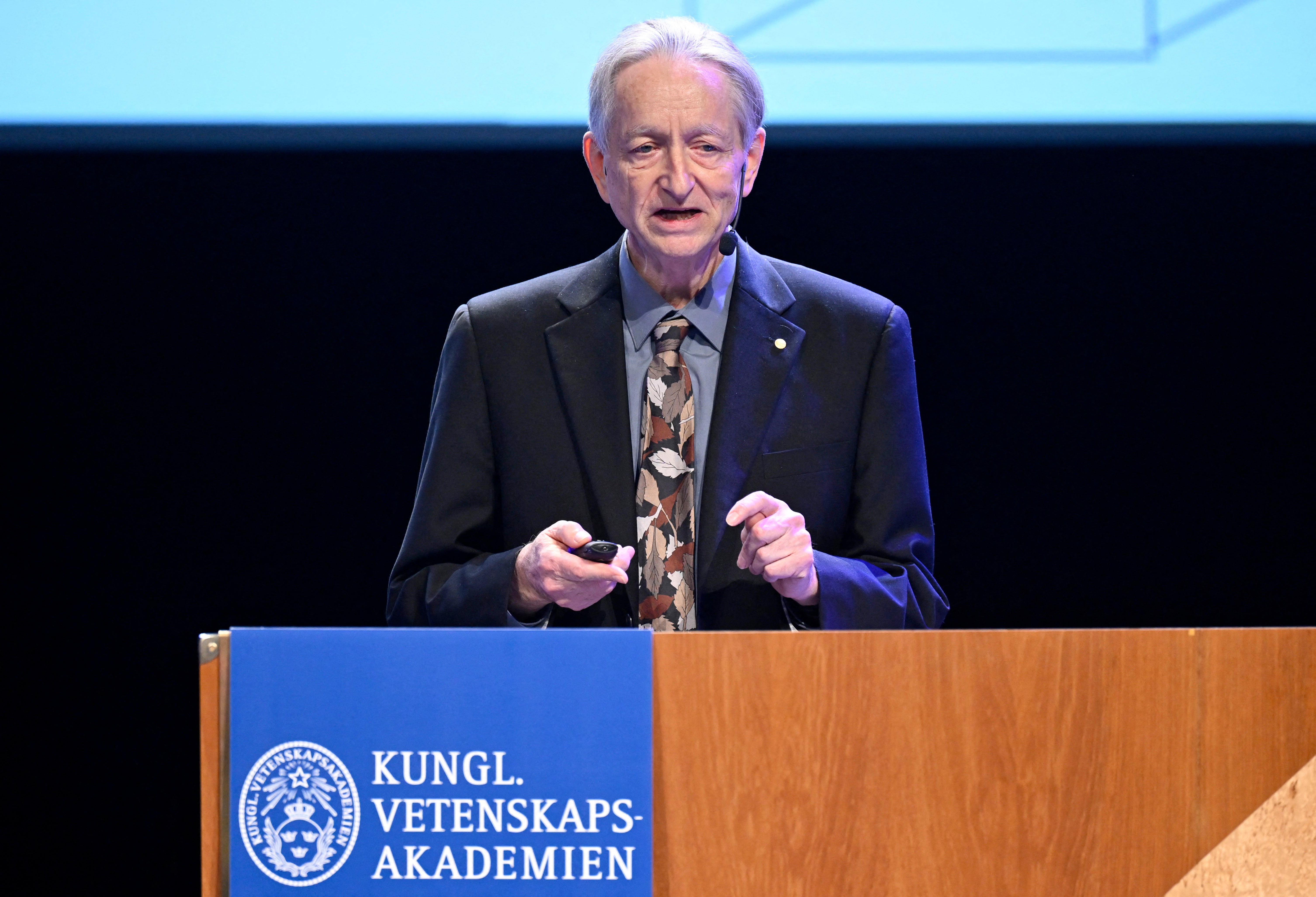
The posts followed similar warnings about the potential impact of AI from major tech figures including Elon Musk, Google co-founder Eric Schmidt and Nobel Prize winner Geoffrey Hinton, a retired computer scientist who’s been called the “godfather of AI.”
Retired computer scientist and ‘godfather of AI’ Geoffrey Hinton, seen here delivering his Nobel Prize lecture in Aula Magna, Sweden, on December 8, 2024, is among the major tech figures who have warned of the potential threats posed by AI (AFP/Getty)
A 2024 survey of more than 4,000 AI researchers around the world found that only 3 percent “were most worried about the long-term, speculative scenario in which advanced, out-of-control AI poses a threat to human existence,” according to Responsible Ai UK, a group of British academics.
The most frequently cited concerns about AI were malicious use, misuse, misinformation and the impact on jobs, RAiUK said.
Advertisement
The Post‘s editorial came as polls have consistently shown that about seven in 10 Americans oppose AI-related data centers in their communities.
It acknowledged that predictions of people being killed by AI were “concerning” but said they “merit a certain skepticism.”
“People working at the frontier may know more than most about what today’s models can do. But that does not give them special knowledge of what machines that do not yet exist will someday become — or how society will adapt to the challenge,” it said.
The editorial also held out the promise of “the many potential upsides of AI, such as the developing breakthrough medicines.”
Advertisement
But left unsaid were the results of a May study, published by leading medical journal The Lancet, in which Columbia University researchers found that the rate of fabricated sources in biomedical papers surged 1,200 percent from 2023 to 2025, according to the University of Minnesota’s Center for Infectious Disease Research & Policy.
The authors offered several possible explanations, including intentional misconduct, but noted that previous studies found that up to 69% of AI-generated references in “biomedical contexts” were made up.
Mark Russell, 37, also reversed into a garden wall, threw a bike through a window and caused around £10,000 worth of damage
20:03, 10 Sep 2026Updated 20:05, 10 Sep 2026
A disgruntled boyfriend drove into the front of his ex girlfriend’s house before returning and reversing into a garden wall before ramming into a police car. He caused more than £10,000 worth of damage to the house and the police cars.
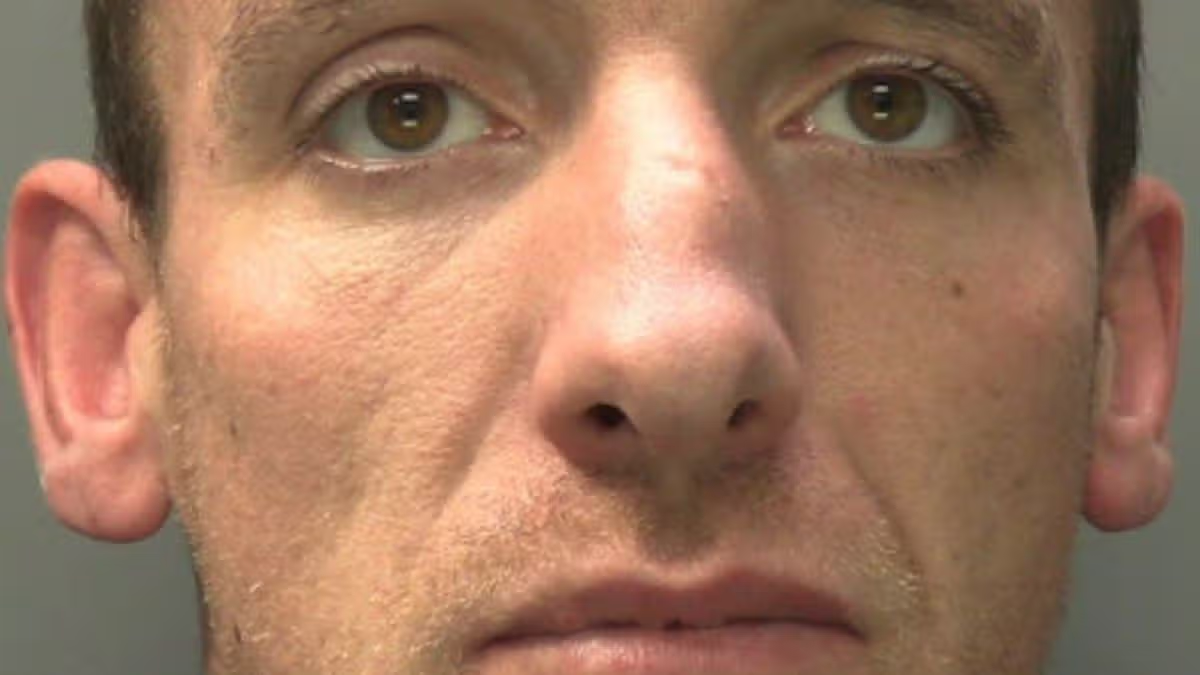
Mark Russell, 37, turned up at his ex partner’s home in Ebbw Vale at around 3am on May 4 but she wasn’t there. He hammered on the front door and disturbed his ex’s niece who was babysitting at the house.
A sentencing hearing at Cardiff Crown Court on Thursday heard the defendant was intoxicated and demanded his bank card, which his ex’s niece threw out the window. Don’t miss a court report by signing upto our crime newsletter here
Advertisement
Prosecutor Alex Orndal said Russell got into his Jeep and used it to ram into the front of the house.
The defendant then threw a bike through the window, causing damage to the door, lamp, and a Ring doorbell before he drove away.
At 5.30am, Russell returned and hammered on the door again before getting into the Jeep and reversing into a garden wall, causing £1,103 worth of damage.
The police attended and a number of police vehicles attempted to block the defendant’s Jeep in, but he rammed a police car in order to make his escape.
Advertisement
Two officers inside the car received minor injuries. The extent of the damage caused to the police cars was valued at £9,666.
The defendant was arrested and interviewed, and told police he was not the driver of the car and couldn’t remember anything because he was drunk.
Russell, of Moorland Road, Ebbw Vale, later pleaded guilty to dangerous driving and criminal damage.
The court heard he has a total of 26 previous convictions.
Advertisement
In mitigation, Nigel Fryer said his client is currently serving an 84-month prison sentence for burglary, but is using his time in custody well having learnt to read and write.
The defendant has children and plays a big part in their lives.
Recorder Robin Rouch sentenced Russell to eight months imprisonment, to be served consecutively to his current sentence.
The defendant was also disqualified from driving for 62 months.
Advertisement
Get daily breaking news updates on your phone by joining our WhatsApp community here. We occasionally treat members to special offers, promotions and ads from us and our partners. See our Privacy Notice.
York Council’s Labour Leader Cllr Claire Douglas said there was a balance to be struck when using Anti-Terror Traffic Regulation Orders (ATTROs) as proposals to make powers permanent were approved.
Cllr Kate Ravilious, the council’s Labour transport spokesperson, said it would not mean powers which had barred Blue Badge holders and others from driving into the city centre would be used more.
But opposition Liberal Democrat leader Cllr Nigel Ayre said Blue Badge holder access to the city centre should never have been politicised as the threat of vehicle attacks grows.
The executive’s decision on Wednesday, September 9, is set to see an ATTRO covering York city centre put in place permanently.
Advertisement
RECOMMENDED READING:
It will mostly lie dormant with the council, police and others deciding when to activate the restrictions on a case-by-case basis during events or in response to specific threats.
Duncombe Place and Deangate would be subject to the restrictions when they are active along with the rest of the footstreet area.
ATTROs have also been used during royal visits and emergency services events.
Advertisement
The area around the south side of York Minster is also proposed to be included so powers can be used during New Year’s Eve gatherings.
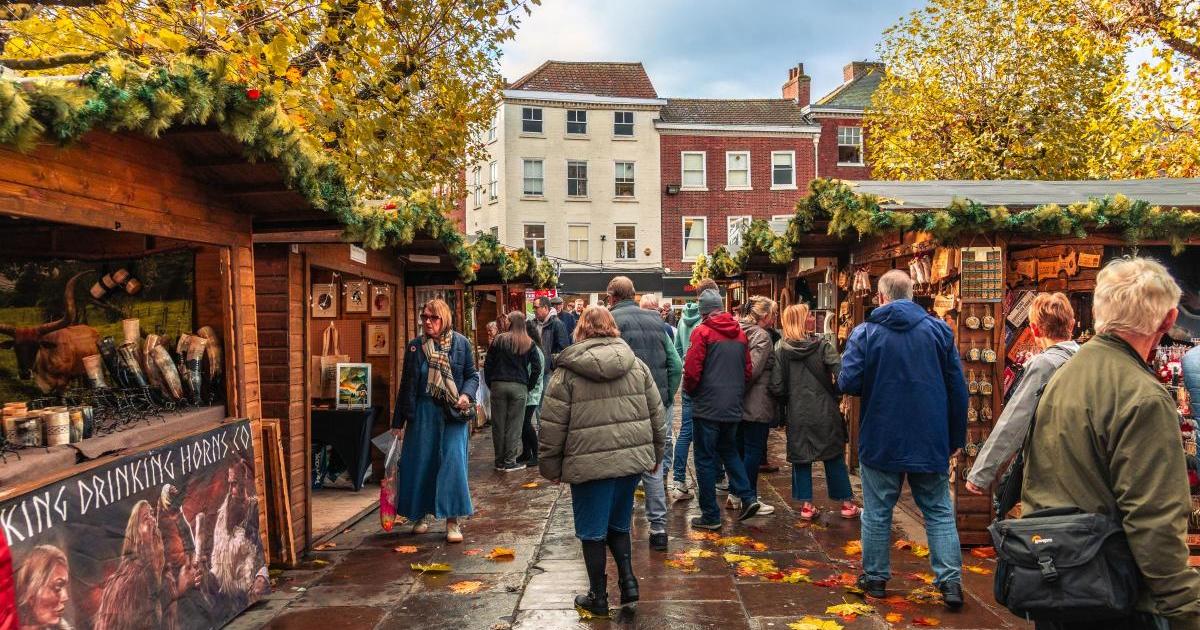
‘Servicing periods’ outside of events, such as allowing Blue Badge holders and others back into the footstreets during the Christmas Market after 7pm, would generally be provided.
Council officials have said it will allow them to respond to requests to close roads more quickly and help affected residents, businesses and others plan accordingly.
But objectors branded the moves draconian and said they were concerned the use of the powers could escalate and were fearful of where it could lead.
Advertisement
A temporary ATTRO was brought in during last year’s Christmas Market, which saw drivers including Blue Badge holders barred from city centre footstreets during the event’s opening hours.
The council approved North Yorkshire Police’s request for the measures after officers said they were needed to deter potential terror attacks.
But disabled people said the measures restricted their access to the city centre in the run up to Christmas.
A map showing the area covered by the Anti-Terror Traffic Regulation Order (ATTRO) (Image: City of York Council)
The Christmas Market is set to trial closing on Tuesdays for a rest day this year as part of efforts to ease the impact of restrictions on those affected.
Advertisement
Labour Transport Executive Member Cllr Ravilious said Wednesday’s decision would streamline the process of using the powers and allow the council to take a more consistent and evidence-based approach.
Labour Council Leader Cllr Douglas said there would be good reasons to bring traffic bans in if there was a terror threat.
But she added it would restrict residents’ ability to get around their home city.
Cllr Douglas said: “It’s always a really difficult and sensitive issue for the city and there’s a balance to be struck.”
Advertisement
But Liberal Democrat opposition leader Cllr Nigel Ayre said decisions around security in the city centre were best left to the police.
Cllr Ayre said: “The safety of our residents should not be a political matter.
“It was incorrect for people to previously suggest the terror threat was exaggerated.
“The number of vehicle attacks has significantly increased.”
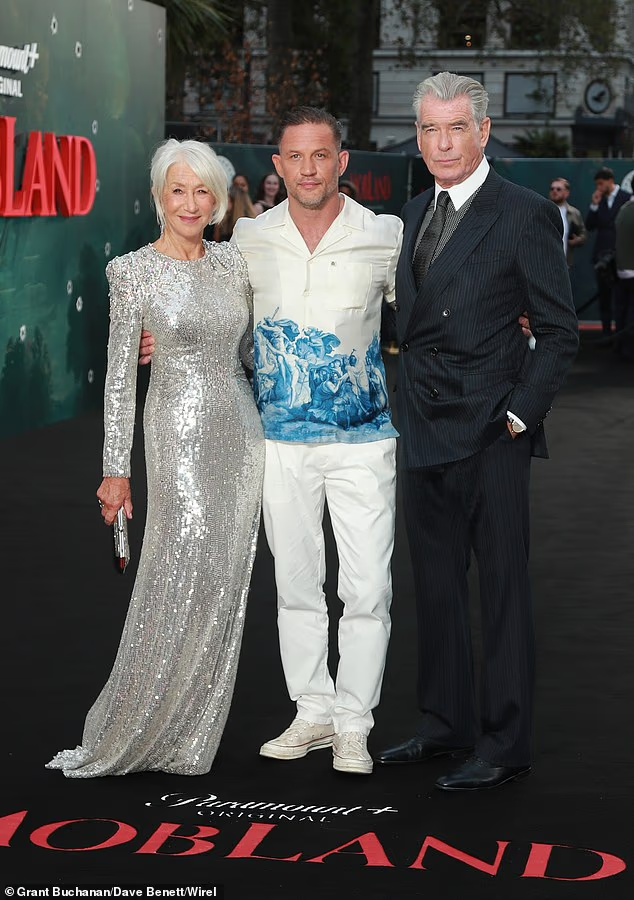
Helen Mirren, 81, sparkles as she cosies up to a very casual Tom Hardy at the MobLand season two premiere in London – after actress defended her co-star following reports of major cast tension
Dame Helen Mirren proved there is no bad blood between the MobLand cast as she cosied up to Tom Hardy at the season two premiere in London on Thursday night.
Since the last series, it appears there has been more drama off-screen than on, with reports of major tension between Tom and production during filming leading to claims he is departing the show.
And just days after the actress, 81, defended the actor, 48, the pair appeared to be getting on like a house of fire as they posed for snaps on the red carpet.
Embracing Dame Helen as she dazzled in a sequinned dress, the two looked at ease together before joining Pierce Brosnan.
Advertisement
Dame Helen, who plays Maeve Harrigan in the Paramount+ series, looked sensational in a £4,470 silver sequined gown from designer Jenny Packham.
Yet while Dame Helen dressed up for the occasion, it appeared Tom had missed the memo as he chose not to wear a suit and opted for a more casual Rogue & Sons $825 white shirt and trousers.
His bold shirt featured a blue painting of The Tower of Babel by German artist Wilhelm von Kaulbach.
Guy Ritchie’s London-set crime drama is back, as viewers are thrown back into the world of the Harrigan family and their fixer, Harry Da Souza, played by Tom Hardy.
Advertisement
Dame Helen Mirren, 81, sparkled as she cosied up to a very casual Tom Hardy and Pierce Brosnan at the MobLand season two premiere in London on Thursday
The pair appeared to be getting on like a house of fire as they posed for snaps on the red carpet – just days after the actress defended the actor, 48, following reports of major tensions
Dame Helen and Tom embraced each other with a sweet hug
Advertisement
Dame Helen dazzled in a £4,470 silver sequined gown from designer Jenny Packham
The pair put on a friendly display as they posed for snaps
Pierce Brosnan, who plays Maeve’s husband Conrad Harrigan, put on a dapper appearance in a pinstripe blazer jacket and black and white spotted shirt.
Meanwhile Laura Pulver made sure to stand out from the crowd in a strapless yellow dress from American fashion designer Prabal Gurung.
Advertisement
Pairing the dress with silver drop earrings, the star was seen posing with leading woman Dame Helen and co-star Joanne Froggatt.
Emmett J Scanlan showcased his muscular physique in a sheer black top which he wore under a black blazer jacket.
Other celebrities in attendance included Millie Mackintosh, Roxy Horner, Kimberley Garner and Nadiya Bychkova.
The premiere marks the first time the gangster drama cast have all publicly reunited following the controversy surrounding lead star Tom’s on-set behaviour
Advertisement
Over the past few months there were reports of behind-the-scenes friction involving Tom, with stories claiming there were disagreements over the direction of the show.
However, his co-star Dame Helen recently jumped to his defence and said people should be ‘free to f*** up’.
There were accusations of major tension between Tom and production during filming led to reports of him departing the show.
It’s since been reported the actor and producers Jez Butterworth and David Glasser are working through their creative differences in time to start shooting series three.
Advertisement
Dame Helen, who plays Maeve Harrigan in the Paramount+ series, dazzled in a £4,470 silver sequined gown from designer Jenny Packham
Conrad Harrigan ( Pierce Brosnan ) and Maeve Harrigan (Dame Helen Mirren ) are the power couple at the centre of the family
Laura Pulver made sure to stand out from the crowd in a strapless yellow dress from American fashion designer Prabal Gurung
Pairing the dress with silver drop earrings, the star was seen posing with leading lady Dame Helen and co-star Joanne Froggatt
Advertisement
Dame Helen and Laura held hands in a sweet moment
Pierce completed his look with a matching tie, matching pinstripe suit trousers and stylish shades
Their co-star Joanne Froggatt wowed in a black maxi dress with dramatic shoulders
Millie Mackintosh looked incredible as she attended the premiere
Advertisement
The show’s director Guy Ritchie and Jacqui Ainsley looked loved up on the red carpet
Roxy Horner caught the eye in a black mesh mini dress
Kimberley Garner sizzled in a plunging blue maxi dress
Thomas Tuchel cut a smart figure for the event
Advertisement
Nadiya Bychkova (L) and Ekin-Su Cülcüloğlu (R) turned heads in white
Aimee Fuller looked stylish in double denim
Nick Moran appeared in high spirits on the red carpet
Sally Wood stunned in a black mini dress
Advertisement
Spencer Matthews looked stylish in an orange suit
Meanwhile, Dame Helen has doubled down on her defence of Tom, after previously showing her support for her co-star via a ‘Love you now and always’ Instagram post and stating publicly she would work with him again in a ‘heartbeat’.
‘You do learn certain things as you get older,’ she recently mused to Radio Times. ‘About how to work with people, really.’
Admitting that whilst she has certainly not become more forgiving of people she added: ‘What you learn is every single person is different; every single person has their own way of doing things.’
Advertisement
‘There’s not one way, there’s a million different ways.’
‘What you want is what’s on the screen, or what’s on the stage, to be great. And the only way to do that is for everyone to feel that they can be free to create and explore and experiment and f*** up,’ adding that she herself has ‘endlessly’ ‘f**ked up’.
The star, who reprises her lead role alongside Tom, Lara Pulver, Mandeep Dhillon and Teddie Allen, gushed that she loves ‘to work in an ensemble situation, and MobLand is very ensemble. It suits me just fine.’
Tom’s dismissal from MobLand was first reported in the Puck newsletter in May. The report blamed ‘clashes with producers among others’, during production of season two.
Advertisement
Just as season two is set to hit screens, season three is set to go into production this autumn.
It’s been reported that his character Harry was not written out at the end of series two.
Season two picks up after the bloody events of the first season as Harry is caught between increasingly dangerous factions and has to keep the Harrigan operation from imploding.
Conrad Harrigan (Pierce Brosnan) and Maeve Harrigan (Helen Mirren) are still the power couple at the centre of the family – but their relationship and their grip on the organisation are under considerable strain.
Advertisement
The Harrigans are attempting to present a united front while new rivals move against their criminal empire.
Written and directed by Benedict Andrews, Electra/Persona is two plays conjoined. The first is a version of Sophocles’ ancient Greek tragedy Electra, and the second is a stage adaptation of the 1966 Ingmar Bergman film Persona.
In Sophocles’ play, Electra seeks vengeance for her father, Agamemnon, who upon returning from war was murdered by her mother, Clytemnestra.
Clytemnestra feels justified in the killing because Agamemnon sacrificed her first-born daughter, Iphigenia, to win the gods’ favour in war. Electra and her other sister, Chrysothemis, wait for the return of their brother, Orestes, whom Electra hopes will enact the revenge.
At the start of Persona, the famous actress Elisabeth Vogler has stopped speaking entirely after performing onstage as Electra. In hospital, a doctor assigns a young and talkative nurse, Alma, to help in Elisabeth’s recovery.
Advertisement
Alma accompanies Elisabeth when her convalescence is transferred to a house in the country. Filling the silence, Alma begins to share her deepest secrets. When she discovers that Elisabeth has been writing letters to the doctor about her confessions, a confrontation ensues.
Linking these two narratives brings to the fore a range of complex meanings. Instead of driving a particular message home, Andrews happily trusts the audience to draw their own connections.
The play stars Cate Blanchet and Nina Hoss, who take turns at the roles of Electra/Elisabeth or Clytemnestra/Alma depending on the toss of a coin.
This sets up the continued themes of blurring image, appearance and personas, which draw on the dreamlike quality of the Bergman film – or films influenced by Bergman, such as David Lynch’s surrealist masterpiece Mulholland Drive (2001).
Advertisement
Before the play begins, Blanchett, Hoss and Ella Lily Hyland (playing Chrysothemis/doctor) enter the theatre from the audience, who applaud. At the performance I attend, Blanchett quips: “We haven’t done anything yet.”
Upon instruction, an audience member flips a coin and Hoss calls “heads”. It is tails. Blanchett says: “Fuck it, I’ll do Electra.”
Hoss and Hyland sit in the front row facing the stage, while Blanchett moves to a container of white face paint, puts some on her hands, then rubs it onto her face and clothes, thus becoming Electra – and the play begins.
Advertisement
The white face paint each actor puts on before joining the scene recalls the masked performance of tragedy in antiquity. Ancient Greek actors wore masks with exaggerated features to be projected out to a large audience .
In contemporary mask work, the donning of a mask is an embodied transformation from actor to character. As persona is Latin for mask, this choice serves as a subtle connection to the second narrative, and lays foundations for the production’s investigation of both performing and blurring identity.
Between stage and screen
Throughout the Electra story, the actors don multiple costumes of other characters from Sophoclean inspiration. They play as Agamemnon, Orestes, the sacrificed daughter Iphigenia, and sometimes even versions of themselves. This heightens the mixing of roles established in the opening coin toss.
In my research into casting practices, I have explored the potential meanings made when different actors play the same role within a production.
Advertisement
In ancient tragedy, actors would play more than one character by exiting and returning in a different mask. Within Electra/Persona, this use of casting and costuming contributes to ideas about the performance of self, and the risk of getting lost in being someone else. By the end of the Electra story, it is unclear precisely who is the one exacting revenge.
Hoss and Blanchett alternate the roles of Electra/Elisabeth and Clytemnestra/Alma in the play. Monika Rittershaus / National Theatre
There is then a transition into the Persona narrative. Still on stage, the actors remove their white make-up and prepare for their new roles.
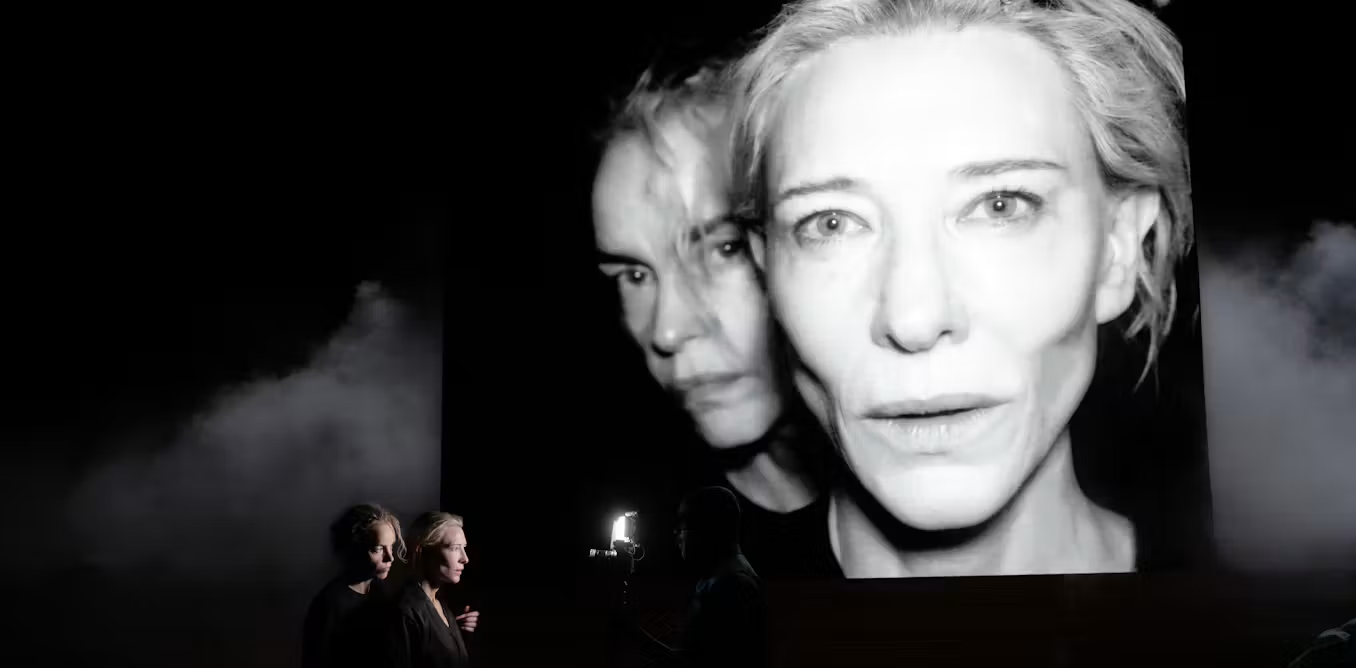
Blanchett transitions into Elisabeth and Hoss into Alma. A screen comes down in the centre of the stage which displays live-feed video footage from a camera Blanchett carries around the stage with her throughout.
One of the main differences between stage and screen acting is that the former is a telling medium and the latter a showing medium. Stage actors often assess the size of their role by how many lines they have. Screen actors count the amount of time they have on screen, as there are often reacting shots and close-ups which reveal the character’s inner monologue.
Advertisement
By having non-speaking Elisabeth displayed on the screen and Alma on stage with all of the lines, this artistic choice capitalises on the strengths of both mediums while asking questions like: who is the one really performing? Is the theatrical or the filmic image more authentic?
As the second narrative draws to a conclusion, the blurring of persona and medium becomes more complex and surreal. Who is who? Who is taking advantage of whom? The relationship between the two women results in a powerful and permanent blur.
Magda Willi’s set also plays on these ideas of blurring and mirroring. At the edge of the stage is a 23-step staircase of bleached wood, running from stage left to right and almost to the top of a proscenium arch.
The play blends live film of the two actresses with action on stage. Monika Rittershaus / National Theatre
It recalls the seating in an ancient amphitheatre. And by having us face a large empty audience space, it almost puts us in the position of being the show.
This is amplified in the transition from Electra to Persona, when the screen first descends and shows a live-feed of the audience. Not only are we facing another audience, but that other audience is ourselves.
Advertisement
In ancient Athens, Electra was not presented as a standalone play, but accompanied by two other tragedies and a satyr play (a bawdy, satirical drama). The other tragedies may have been connected by a continued narrative, as with the only surviving tragic trilogy, Aeschylus’s Oresteia. But they may also have been connected thematically, allowing the audience to draw connections for themselves.
Electra/Persona taps into this ancient tradition, allowing the audience to think through these complex stories and performance aspects. This is an evocative and artful play, driven by two powerhouse performers.
Electra/Persona is on at the Lyttelton Theatre, London, until October 10.
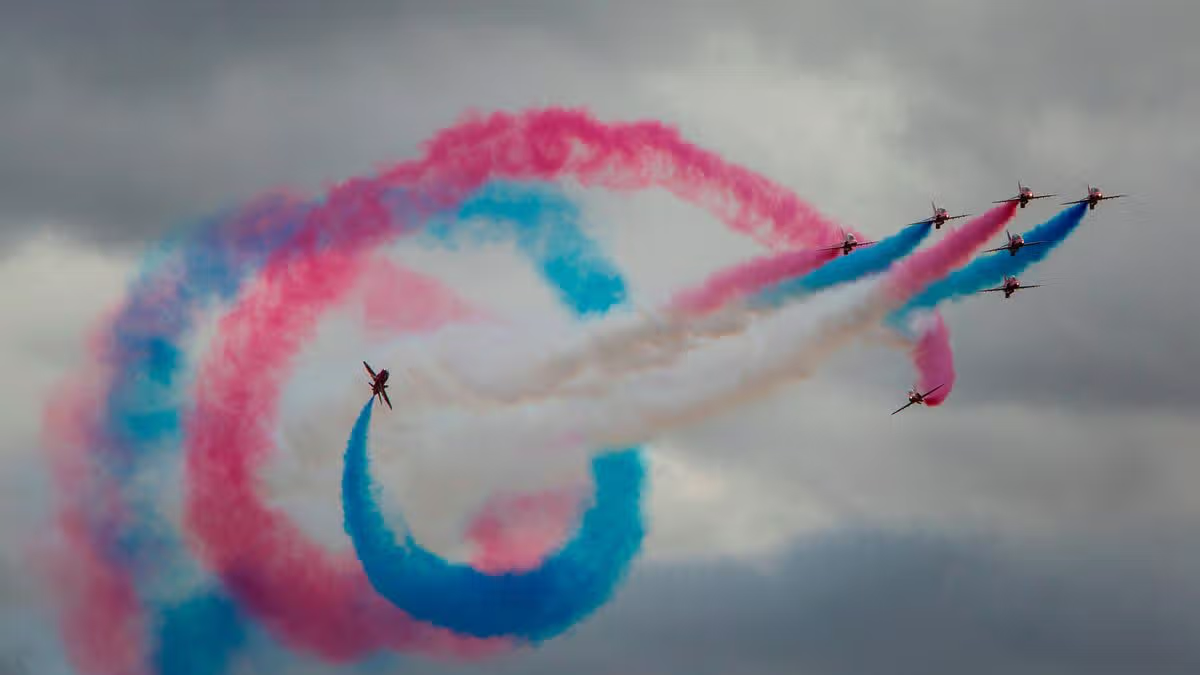
Spitfires, Hurricanes and the renowned Red Arrows will be flying over Cambridgeshire this weekend. Every year, the Imperial War Museum in Duxford has a flying season with regular air shows throughout spring, summer and autumn giving people plenty of opportunities to watch some aircraft in action.
Advertisement
The impressive air show also offers other activities happening throughout the weekend to keep each visitor happy and entertained. This weekend is one to mark in the calendar if you haven’t already as the Duxford Battle of Britain Air Show will take place on Saturday, September 12 and Sunday, September 13.
You can enter the museum from 8am and the air show will begin at around 1pm, with the flight line closing from about 12pm. The event will end at 7pm.
Tickets for adults aged 16 or over cost £49.50 but you can save 10 per cent if you are a IWM member. Children 15-years-old or younger go free with a standard ticket booking.
Tickets for either the Saturday or Sunday air show are available to buy here.
Advertisement
The flying show is the main event of the day, with many iconic aircraft included in the fly list this year. These include: Supermarine Spitfire MK I X4650 which starred in the 2017 film Dunkirk; Hawker Hurricane MK IIB BE505, the world’s only airworthy two-seat example of the famous Hurricane; Supermarine Seafire MK XVII SX336; and the Red Arrows, one of the world’s premier aerobatic display teams will feature on Saturday only. The display will be between 1.25 and 2pm.
The air show may seem like a long wait from arrival leading up to 1pm but there is an array of activities for families to enjoy throughout the day. The event will host live performances such as the Duxford Dancers, The Umbrella Big Band and D-Day Darlings.
There is a Traditional Steam Fair with a Galloper Carousel, Helter Skelter, Swing Boats and Toy Town ride for young children from 10am to 6pm. There is also a Miniature Steam Train running from 10am to 6pm as well as a Spitfire Design Studio on Sunday only.
Advertisement
For the true aircraft and history enthusiasts, Second World War re-enactors and Living History groups will take you on a journey through time with immersive storytelling. A ticket includes access to the museum’s extensive collections as well, so it is worth saving some time to take a stroll around some of the museum’s displays.
There are also a range of food and drink retailers across the airfield to ensure everyone can find something to enjoy on this action-packed day.
How to get there?
The museum is ideally located near the M11 and takes about 15-minutes to reach from Cambridge. If you are driving, parking is limited and a parking permit must be purchased when you buy the event tickets.
Advertisement
Alternatively, if driving is easier but you are eagerly trying to avoid the inevitable queues on the day, you could consider using the Trumpington Park and Ride. A free shuttle bus service is available from Cambridge railway station and Trumpington Park and Ride, making it easy to access the event.
She said her husband feared she was ‘going to die’ at one point
A woman who experienced a miscarriage was originally told a needed surgery could be done in around two weeks before she was later rushed to hospital in an emergency. The woman, 35, and her husband had been undergoing IVF privately and became pregnant in July following their second embryo transfer.
Advertisement
The woman, who asked not to be named, experienced a miscarriage which was confirmed on August 13. After the miscarriage was confirmed, she opted for surgical management to remove the remaining pregnancy tissue.
However, the couple claim they were told Addenbrooke’s Hospital in Cambridge could not provide the surgery for around two weeks, due to a lack of available surgical capacity/cover.
At the time, the woman raised concerns about whether it was safe or appropriate for a woman with a confirmed miscarriage requiring surgical management to be left waiting for this length of time. She was particularly worried about the risks of bleeding, retained pregnancy tissue and infection, adding it was “unacceptable”.
Following concerns raised by the 35-year-old of the potential risks, a midwife booked her in at another hospital for August 21, more than a week after the miscarriage was confirmed. She was then rushed to Addenbrooke’s Hospital by ambulance after haemorrhaging in the early hours of August 18, days prior to her scheduled surgery at another hospital.
Advertisement
The 35-year-old said she had developed significant bleeding and was passing large clots. She described them as the size of “golf balls”.
She was told she would not receive a scan until the following morning (August 19). The bleeding continued and her blood pressure reportedly dropped. Following escalation, her IV fluids were increased and a scan was performed.
Her blood pressure subsequently dropped again and later that day, she was taken for emergency surgery to remove the remaining pregnancy tissue. She said it was difficult for her to accept that it went from being told there was no timely surgical slot available to requiring emergency surgery after haemorrhaging.
The grieving woman felt as though it shouldn’t have reached a stage where it was an emergency. She said her husband thought she “was going to die” at one point.
Advertisement
The woman said her experience raised questions about “patient safety, access to urgent gynaecological care and the wider provision of care for women experiencing pregnancy loss”. She said this has been “physically and emotionally traumatic”.
Cambridge University Hospitals NHS Foundation Trust (CUH) adheres to treatment guidelines set by the National Institute of Clinical Excellence. A CUH spokesperson said they send their “deepest sympathy” to anyone who experiences pregnancy loss and miscarriage.
After being sent home, the 35-year-old returned to the hospital within days suffering in pain. She said that it was “getting worse” over time at home and ended up being in “complete agony again”.
During this subsequent admission, she again became concerned that the seriousness of her condition was not being recognised. Tests identified infection markers, where the patient required antibiotics before being discharged, she claimed. She said she was left asking what might have happened if they had accepted the initial plan and gone home.
Advertisement
The woman explained that there were individual members of staff who were “exceptional” during her care. However, her concern remains with the system they are working within.
The woman added: “We were already grieving the loss of a very much wanted IVF pregnancy. We then found ourselves fighting for access to surgical care, being taken to hospital by ambulance following haemorrhaging, requiring emergency surgery and subsequently being readmitted with infection.”
She said her and her husband paid for their own IVF and said “not only is it a financial commitment but we have been wanting to do this for three years so it makes it an even harder loss. Addenbrooke’s is meant to be this gold-standard hospital but they didn’t have slots to do a procedure that was needed.”
A CUH spokesperson added: “We always aim to treat patients requiring surgical management after a miscarriage as quickly as possible, and we work with our health partners to provide alternative options so patients can be seen sooner.
Advertisement
“Sometimes waiting times can be longer due to growing demand for our services, but we are working hard to reduce these, and this year have increased theatre space and invested in additional staff.”
Oldham MP Jim McMahon has welcomed plans to give England’s mayors the power to introduce a levy on overnight visitors. But critics have warned it could cause ‘irreparable harm’ to the tourism industry
19:50, 10 Sep 2026Updated 19:50, 10 Sep 2026
The Minister for devolution has said the Government’s tourist tax is about ‘proportionality and fairness in the system’, despite critics saying it could cause ‘irreparable harm’ to the tourism industry.
Jim McMahon, MP for Oldham West and Royton, said the plans to give English mayors more powers to introduce an overnight visitor levy on visitors, from 2028, were welcomed by regional leaders.
The tax will be a percentage of the accommodation cost and will apply to hotels, B&Bs and even short-term lets such as Airbnbs. Temporary accommodation and shelters or refuges would not be subject to the levy. The rate will be uncapped but the Government believes mayors won’t charge more than five percent.
Advertisement
Click here to get the biggest stories straight to your inbox in our Daily Newsletter
Mr McMahon defended the move, saying it was about giving elected regional leaders greater freedom to raise money and spend it on local priorities.
“There’s just a growing sense now that too much of the country is being held back by that approach, one by the inability to actually raise revenue to spend on local priorities, but then also just on spending decisions,” he told the Manchester Evening News. “The number of red tape governments… over generations have put on local government and regional government is part of the problem.
Advertisement
“The direction of travel we’re going in is more fiscal freedom for our mayors, recognising that they have a democratic mandate to the local residents that they can be judged through the ballot box.”
The move had already been hinted at by Andy Burnham last month, in his first sit-down interview with this paper. Mr Burnham did not explicitly rule out tax rises, when asked about the financial challenges of delivering his ambitious 10-year-plan for the country.
He said the decision to put up local taxes was for regional mayors, who would be able to impose certain surcharges, such as an overnight visitor levy.
Greater Manchester already has its own City Visitor Charge – a £1 per room, per night fee, that was introduced in April 2023 to pay for measures aimed at attracting more tourists.
Advertisement
Government sources have insisted mayors are unlikely to make the tax too high in order to protect local tourism industries, but the levy’s lack of an upper limit has sparked concern.
Mr McMahon said it was ‘deliberate’, adding: “Government can’t on the one hand say that we trust local leaders to do what’s right for their area, and we believe in that direct democratic accountability between them and their electorate and then say, but by the way, the government is going to bind your hands.”
But he insisted that mayors were aware that the levies would need to be ‘proportionate’.
Mr McMahon said the tax needed to be a percentage of the accommodation rather than a flat fee.
He said: “The reason for that is, you can imagine a weekend in Blackpool, a modest B&B – why on earth should you pay a flat fee that means you pay exactly the same as somebody who’s staying at The Ritz in London.”
He added: “I think there’s a thing about proportionality and fairness in the system, where we have been quite clear about that.”
It is yet unclear how much Greater Manchester Combined Authority could actually raise from this proposed levy. Mr McMahon said it was for GMCA to do the analysis on how much to charge.
Advertisement
“Even in a modest economy, this is money that wasn’t there before,” he said.
Plans for the tax were first announced under former prime minister Keir Starmer.
Angela Rayner, Secretary of State for Housing, Communities and Local Government, outlined the proposals during a meeting with regional mayors in No 10 North in Manchester on Thursday.
She said: “Our amazing towns and cities, and our picturesque rural and coastal communities welcome millions of visitors every year – local leaders should have the power to make the most of that popularity.
Advertisement
“This measure will give mayors the choice to raise and reinvest funding where it’s needed most. It’ll help support the local services, public spaces and attractions that both residents and visitors rely on, with decisions taken by people who know their area best.”
More than 42 million international visitors came to the UK last year, spending more than £32bn.
Downing Street said the levy is about ensuring the benefits of tourism stay in local communities and would only apply to people paying for overnight accommodation.
Advertisement
However, the spokesperson was unable to say if areas without mayors would be able to introduce a visitor levy.
So-called tourist taxes are commonplace across European cities such as Rome, Berlin, Paris and Amsterdam.
Edinburgh introduced a five percent charge this summer.
However, Europe has half the VAT rates on hotels and hospitality – at 10 percent.
Advertisement
Mr McMahon rejected claims this could risk making holidays in Britain more expensive.
“If you go to large parts of Europe or America, you will pay the national sales tax but you’ll also pay a local sales tax on top of that…and then on top of that you can pay an overnight tax,” he said.
“But why do you go away? It’s for the experiences. I think this matters for quality of life, people do like the ability to go around the world in an affordable way. But it’s important that Britain can compete.”
The Government insists the levy will shield families from disproportionate costs for cheaper holidays.
Advertisement
The plans have sparked strong opposition from the hospitality industry.
The owner of Premier Inn, Britain’s biggest hotel chain, said it would be ‘hugely damaging’ and urged ministers to ‘avoid inflicting what could be irreparable harm on this large and vital sector of the economy’.
Industry trade body UKHospitality points out that England already has a higher tax base than many continental destinations with tourist taxes.
Advertisement
“It is simply not true to say that this is a standard thing elsewhere in the world,” said Allen Simpson, chief executive of UKHospitality. “It’s not a question of who levies the tax, it’s a question of the tax level, and we are making one of our biggest export sectors uncompetitive.”
He told BBC Radio 4’s Today programme that the plans would put jobs at risk in some communities, and that the new tourism tax in Edinburgh was “already having damaging effects”. He said holidays in the UK were “already more expensive” than they appeared because of higher VAT.
“What we’re talking about here is an open-ended power for mayors to set tourism taxes at any level they want,” Simpson said. “And remember that if you go to Paris, if you go to Rome, if you go to Berlin, you’re paying a small tourism tax, but it’s capped.”
He continued: “It will be the case that you’ll have holiday parks which can’t open in the shoulder seasons, and of course people who go on holiday will just have that little bit less money in their pocket.”
Advertisement
However, Mr McMahon pointed to popular holiday destinations like Lake District and Cornwall, saying they ‘they deal with the impact of tourism, in terms of being able to fulfill the demands of tourism and provide public services… and just improving that visitor experience‘.
He said it would ultimately be down to mayors to decide whether they will actually impose the levy.
She wrote on social media: “Labour’s answer to everything? Tax more. Hotels already face 20% VAT. Now they’ll face VAT on Labour’s new tourism tax too.”
Advertisement
The announcement was also slammed by Reform UK leader Nigel Farage, who said ‘holidays in Britain will become hundreds of pounds more expensive’. He claimed the two Reform mayors in Greater Lincolnshire and Hull and East Yorkshire ‘won’t touch the ‘levy’.
The Conservative shadowing housing secretary David Simmonds said: “VAT is already charged at 20% on hotels – much higher than in other countries – and now they’ll pay VAT on this tourism tax too: a Labour double whammy.”
Content cannot be displayed without consent
Henri Murison, chief executive of the Northern Powerhouse Partnership, said local leaders are ‘better placed than Whitehall in deciding how revenue should be spent.
But he warned about the overall tax burden on tourism.
Advertisement
He said: “We do need to consider the balance of tax raised overall by Scottish authorities, in Wales and now the English regions added to that by UK Government.
“In our Budget consultation response, we have called on the government to undertake a review on the international competitiveness of the current rate of VAT on hotel stays and related costs alongside introducing this new Mayoral power to make sure the UK maximises inbound tourism.”
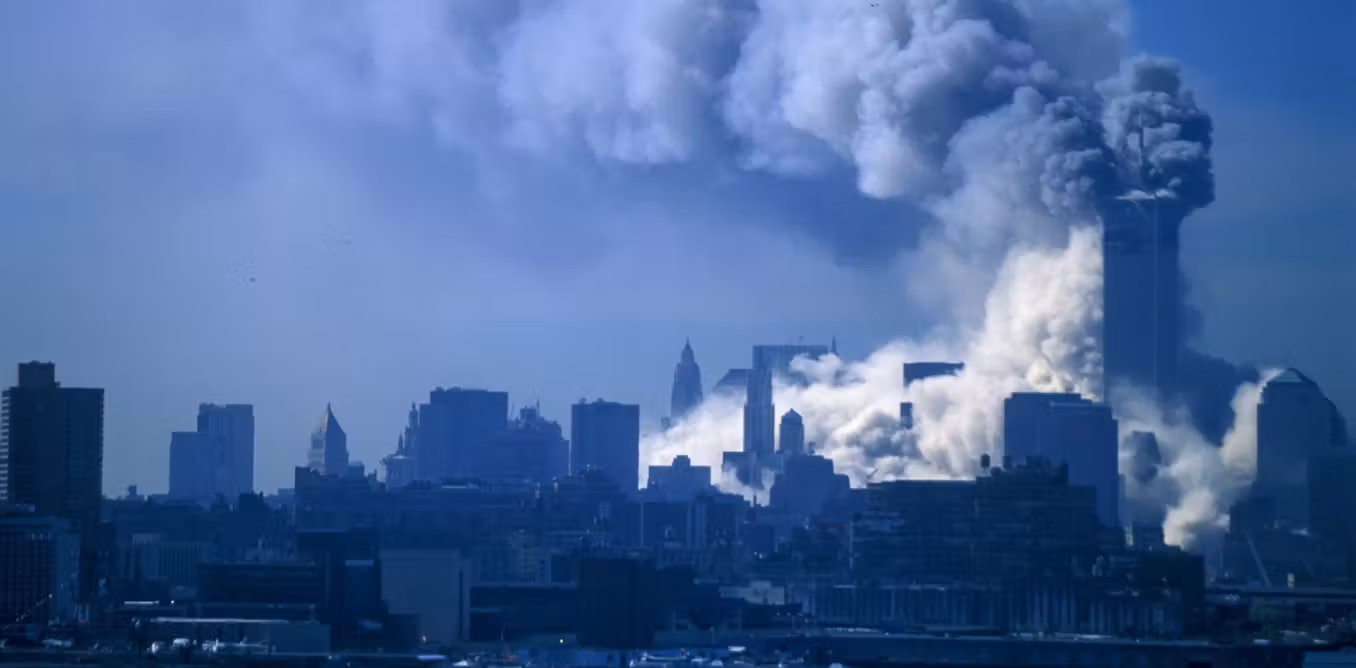
It has been 25 years since the devastating attacks of September 11 2001. Amid the reflection that followed emerged the most comprehensive examination of any terrorist attack in history, the 9/11 Commission Report. Several statements in this forensic diagnosis continue to shape our understanding of those events. These range from the intelligence systems that were “blinking red” in the months preceding the attacks to various institutional “failures of imagination” that left the threat unrecognised.
Yet the commission’s investigation into the circumstances of the 9/11 terrorist attacks was also, fundamentally, a report on how to reimagine and improve security. The commission’s recommendations foreshadowed and legitimised a new model of security that emerged from the ashes of the twin towers, one centred on protecting critical infrastructure using an integrated security architecture.
The 9/11 commission’s blueprint involved integrating agencies, systems and technologies. This principle took many forms. The integration of intelligence reporting is illustrated by UK’s Joint Terrorism Analysis Centre (JTAC). Technology became weaved into security activities. Important spaces were fortified using a “layered security” approach.
Symbolic buildings, financial districts, city centres, stadiums, high-end shopping malls, and especially airports were the first to be upgraded. Passenger preclearance, biometric documents, full-body scanners, armed police patrols and the canopy of surveillance cameras became the building blocks of these contemporary fortresses. With each attack following 9/11, this template is reasserted. Whatever the threat, the answer is always more integration, more technology, more layers, more of the same.
Advertisement
But after 25 years of building these new architectures of security and a vast expenditure of blood and treasure to fight the global war on terror, are we any safer?
Academics and security experts are asking this question. The conclusion is generally that that a similar attack is improbable – though obviously nobody can say for sure. But we offer a very different analysis based on many years spent examining security systems up close.
Our new book, The Empty Watchtower: Counterterrorism After 9/11 draws on two decades of empirical fieldwork. We experienced these developments and their legacies first hand. Across five distinct case studies, we saw expensive, poorly integrated and porous security systems that look the part but are prone to catastrophic failure.
This journey led us into surveillance control rooms and secure sites to study the rollout of biometric security systems in airports, cities and major sporting events. We participated in counterterrorism training programmes in multiple countries and, more recently, conducted ethnographic research while embedded with specialist surveillance units in several European countries.
Advertisement
Advanced surveillance?
The immediate aftermath of 9/11 stimulated a clamour to do something, to bring certainty against uncertain and terrifying possibilities. International airports became another kind of frontier, a key testing ground for new surveillance systems. Technologists recommended fabulous new solutions for identifying hostile actors, all while keeping the flow of law-abiding passengers moving.
But across all five of our recent case studies, we found security staff who did not understand the technical systems they operated, surveillance cameras pointed in the wrong direction – and declining morale. In one location, the crisis management control room – the centre of the fortress – was used for storage.
Over the past decades, the security sector has placed huge emphasis on training staff to conduct behavioural detection – spotting signs of imminent threat through observation of body movement or facial expressions. We spent months in several European capital cities with covert surveillance teams observing the practice.
In several jurisdictions, these teams carried out their missions to a high standard. But what was the standard? Thankfully, terrorism is rare (though less so in countries destabilised by the war on terror). This means that standards are hard to verify in terms of proving a negative; an absence of rare attacks.
Advertisement
It also means that, in many countries, most indicators of a potential threat are rarely more than signs of stress, fatigue, or other maladies that often affect people in crowds. And so, advanced behavioural and technological systems focused on ordinary people as if they had something to hide.
Worse, because of the discretion accorded to counterterrorism policing, and lack of oversight, the full power of the state was sometimes trained on vulnerable people who had broken no law. Worse still, many of these new post-9/11 policing techniques were improperly integrated with technology-based systems. At times, this convergence targeted entire communities, evident in the abandoned Project Champion in 2011, which involved hundreds of cameras being installed in mainly Muslim areas of Birmingham.
Hidden vulnerabilities?
Several countries where we studied counterterror policing, such as the UK and France, struggle with the number and diversity of individuals on their counterterrorism watchlists. Therefore, we cannot afford to rely on the intelligence services to unmask every terrorist network or foil every attack.
Instead, we have become dangerously reliant on the security fortresses, composed of layers of technology and policing techniques. In our book we review several major attacks during the recent past, such as the Brussels airport attack in 2016. We show that successful terrorist attacks disrupt the points at which technology and human systems integrate – separating the layers of security and potentially leading to destabilisation and collapse.
Advertisement
The intersection of these two domains – technology and organisational systems – has been crucial to both the success and failure of security practice. Yet shortcomings exist in each of these components. As our otherwork has shown, security technology is routinely overhyped, with benefits assumed and failures routinely overlooked. Abandoned experiments with facial recognition technology, unstaffed control rooms, and AI hallucinated “intelligence” all constitute real world examples that speak to an uncritical faith in technology.
The most successful environments we encountered arose from the initiative, competence and motivation of specific individuals.
Following another pattern set out in the 9/11 commission report, responses to terrorist attacks routinely call for more technology and better integration. Systemic failure and absent technology is easily diagnosed. But correcting them is harder, particularly when solutions call for embellishments of the same systems that were the problem in the first place.
This article features references to books that have been included for editorial reasons, and may contain links to bookshop.org. If you click on one of the links and go on to buy something from bookshop.org The Conversation UK may earn a commission.





































You must be logged in to post a comment Login