This post is brought to you in paid partnership withMSI
Not every AI task needs the scale of the cloud. An employee searching company documents, a retail kiosk answering product questions, or a digital sign reacting to customer behavior all need fast responses, but they don’t necessarily need to send every prompt to a remote data center. Running those workloads locally reduces latency, keeps sensitive information closer to where it’s generated, and can lower the ongoing cost of AI deployments. As a result, many organizations are moving toward hybrid AI architectures that handle routine requests on-device while reserving cloud models for tasks that genuinely need more processing power.
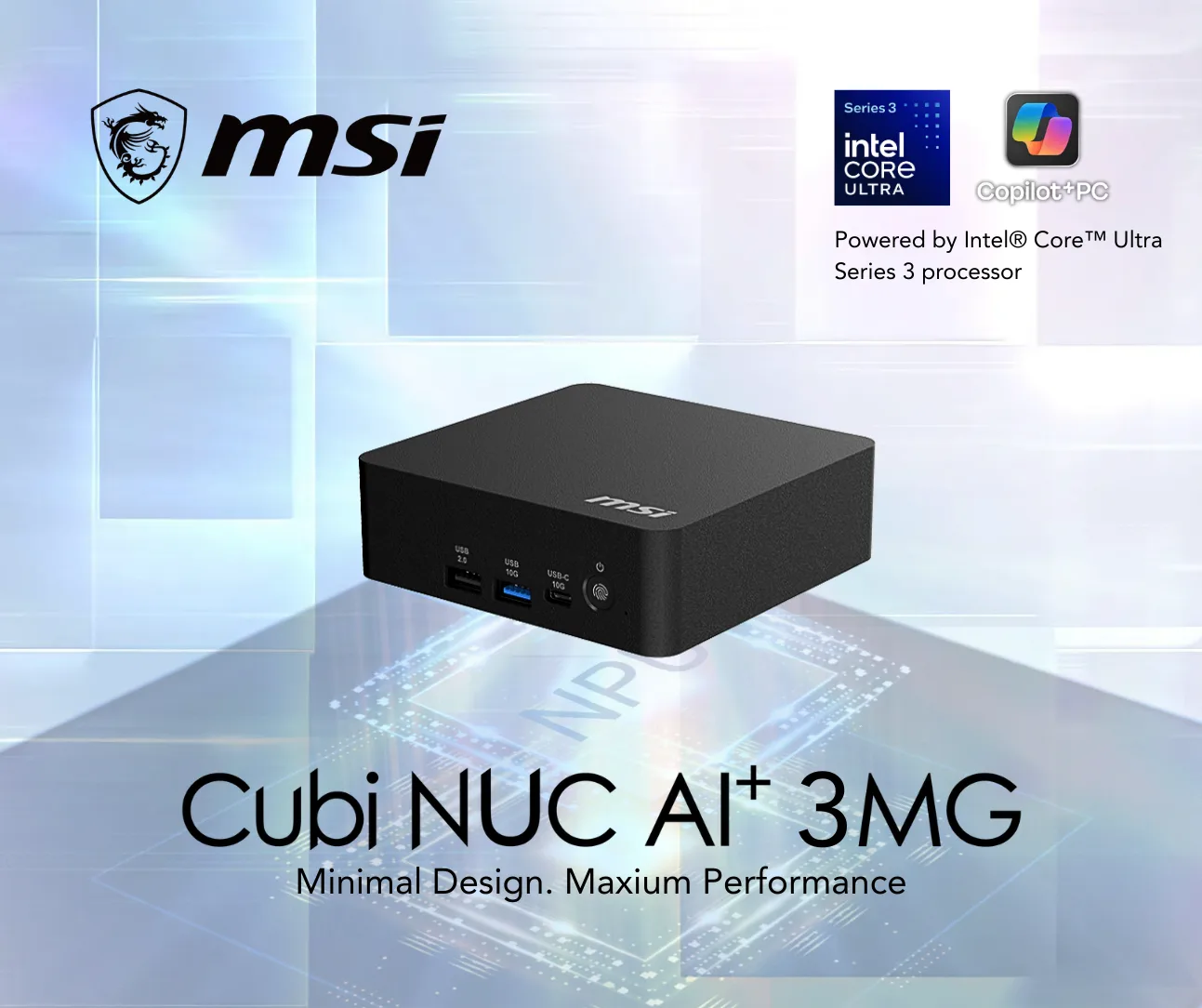
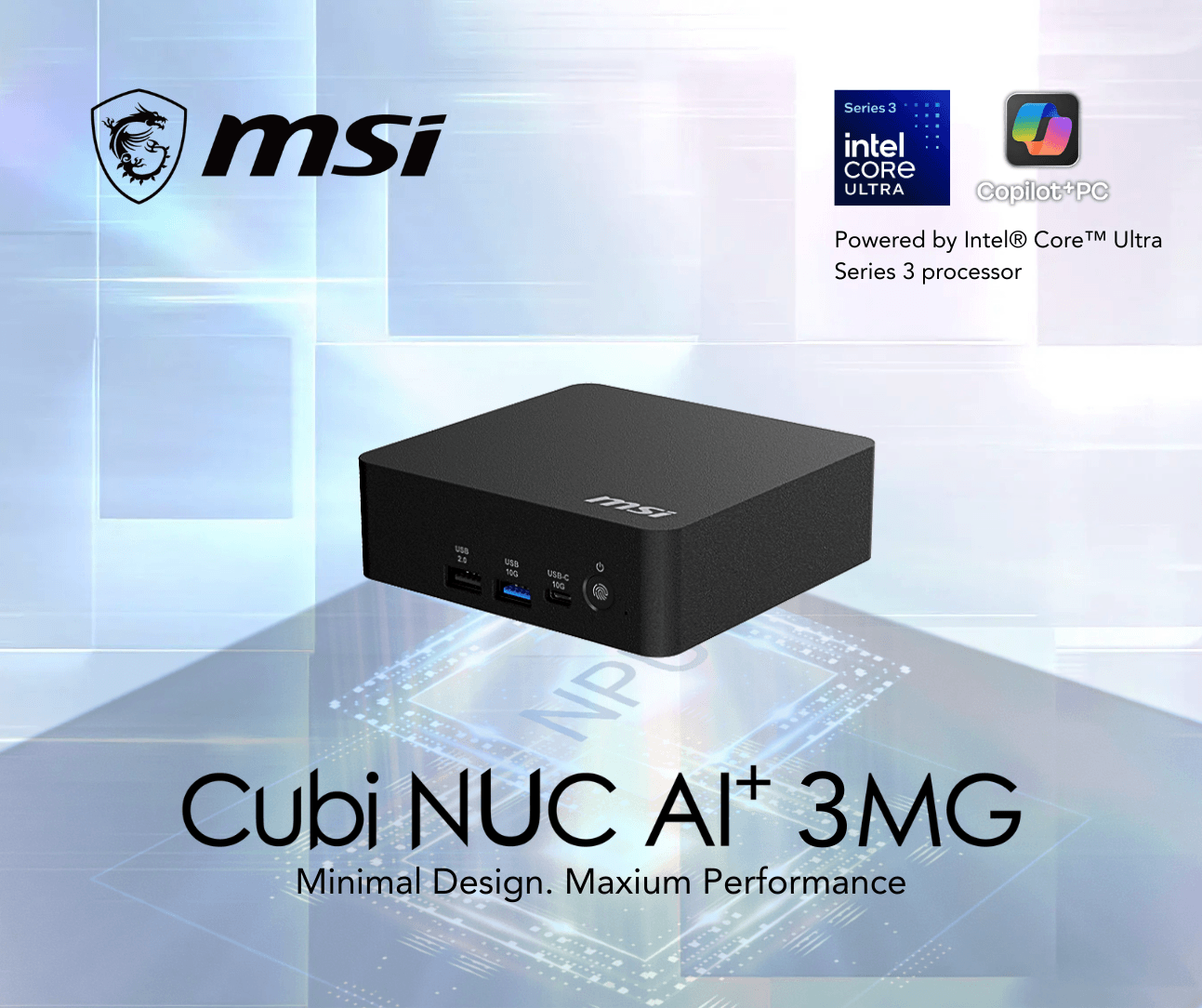
Hardware has evolved alongside that shift. Systems like the MSI Cubi NUC AI+ 3MG, powered by Intel’s Core Ultra Series 3 platform, combine a CPU, Xe3 GPU, and dedicated Neural Processing Unit (NPU) in an ultra-compact chassis. Instead of relying on one processor to do everything, each component handles the workloads it’s best suited for, making it possible to run quantized language models, retrieval pipelines, and AI workflows locally before reaching for cloud resources only when necessary. The platform delivers up to 100 TOPS (Tera Operations Per Second) of theoretical AI performance across the CPU, GPU, and NPU, although real-world performance depends on the model, workload, and configuration.
Building a local AI agent, in practice, means pairing that hardware with a software layer that can plan a response, retrieve the right information, and decide in real time whether a request stays on-device or gets escalated to something bigger. It isn’t about replacing the cloud altogether, rather it’s about deciding which workloads benefit from staying at the edge and which are better served by larger models. Getting that balance right starts with understanding how local AI differs from cloud AI, what role hybrid deployments play, and what kind of hardware is required to support them.
Advertisement
Why businesses are bringing AI agents to the edge
Cloud AI transformed how businesses adopted generative AI because it removed the need to invest in expensive infrastructure. Teams could access powerful language models through an API and start building applications almost immediately. Cloud models still make the most sense for complex reasoning, large-scale content generation, and workloads that demand the latest frontier models.
Many day-to-day AI interactions, however, don’t require that level of processing power. Searching internal documentation, summarizing meeting notes, helping customers navigate a store, answering policy questions, or monitoring connected devices are repetitive tasks that benefit more from low latency and predictable performance than from the largest possible model. Sending every request to the cloud also means paying for every interaction while moving information outside the local environment, even when the task could have been completed on-device.
Privacy is another factor driving the move toward edge AI. Organizations working with financial records, healthcare data, intellectual property, or confidential business documents often need tighter control over where information is processed. Running an AI agent locally allows sensitive requests to remain inside the organization’s network by default, reducing unnecessary data transfers and making it easier to meet internal governance and compliance requirements.
Hybrid AI has emerged as the middle ground. Routine requests can be answered locally, while more demanding queries are escalated only when additional reasoning or specialized knowledge is required. Instead of choosing between local AI and cloud AI, organizations can combine local and remote resources and let routing policies decide which environment is best suited for each request.
Advertisement
Local AI vs. cloud AI: Which deployment model makes sense?
Hybrid deployments are becoming increasingly common because they offer the best of both approaches. Local hardware handles predictable, high-frequency tasks with minimal delay, while more powerful models remain available for requests that exceed the capabilities of the local system. The result is faster responses without losing access to more capable models when a request genuinely needs one.
The hardware behind a local AI agent
Running an AI agent involves far more than generating text. Every interaction passes through multiple stages, including understanding the request, retrieving relevant information, deciding whether external tools should be called, generating a response, and maintaining context for future interactions. Those workloads place very different demands on the hardware.
Modern AI PCs distribute those tasks across three different processing components instead of relying entirely on the CPU. The CPU manages orchestration and system logic, the GPU accelerates parallel AI workloads such as inference and embeddings, while the NPU is optimized for sustained, power-efficient AI processing using quantized models. Working together, they allow multiple AI tasks to run simultaneously without overloading a single component.
The MSI Cubi NUC AI+ 3MG follows that design philosophy. Intel’s Core Ultra Series 3 architecture combines CPU, GPU, and NPU resources within the same platform, giving developers the flexibility to distribute AI workloads instead of forcing every task through a single processor. Expandable memory, NVMe storage, support for up to four 4K displays, and high-speed networking also make the system suitable for edge deployments where AI often runs continuously rather than in short bursts.
Advertisement
Choosing capable hardware is only one part of the equation, though. The software stack determines how requests flow through the system, how documents are retrieved, when tools are called, and whether a query should stay on the device or be handed to a larger model. Understanding that architecture is the foundation for building a local AI agent that is both responsive and scalable.
MSI
Start with the tasks the local system can handle
Building an agent starts with defining the work it’s expected to perform. A system such as the MSI Cubi NUC AI+ 3MG can be configured for smaller, repeatable tasks where a lightweight local model has enough capability to deliver the required result.
An employee could use the system to proofread a document before sending it out, prepare a response to a routine email, summarize information from a set of files, or work through a simple office process. These tasks don’t necessarily require the largest available AI model, making them suitable candidates for a local agent.
The distinction between a chatbot and an agent becomes important here. A chatbot primarily responds to what a user types. An agent can take an instruction and work through the steps needed to complete it. If the task involves retrieving information, using an approved tool, processing a file, or carrying out several actions in sequence, the agent can coordinate those steps rather than leaving the user to perform each one manually.
In this type of configuration, the Cubi can consequently serve as the first layer in the workflow, taking care of routine requests directly on the machine.
Advertisement
Adding the agent layer
The hardware provides the foundation, but the agent itself comes from the software stack. A local language model can generate text, but an agent needs additional capabilities to interpret instructions, manage steps, interact with tools and return a completed result.
Tools such as Hermes Agent can be used to build this kind of lightweight agentic setup on the Cubi. The exact configuration will depend on the tasks involved and the software environment, but the basic principle remains the same: the local model becomes one component within a system that can act on an instruction rather than simply answer it.
A typical workflow might begin with a request such as asking the agent to review a document. The agent can process the instruction, work with the relevant file, apply the required task and return the result. A similar setup can support routine email assistance or other structured office workflows, provided the necessary tools and permissions have been configured.
Keeping the initial workload focused is useful during deployment. Starting with a handful of predictable tasks makes it easier to evaluate response quality, resource requirements and the boundaries that should be placed around the agent.
Advertisement
Choosing the right local model
The language model is another important part of the setup. A compact AI PC is better suited to appropriately sized and optimized models than to treating every available model as an option.
Quantized models can reduce the resources required for local inference, making them a practical starting point for a mini PC. Models such as Mistral 7B, Llama 3 8B, or Phi can be evaluated according to the quality, speed and capabilities required by the particular workflow.
The model doesn’t have to perform every possible task. The objective is to find a model that’s capable enough for the jobs assigned to the local system while leaving sufficient resources for the agent framework and other applications running on it. Tools such as Ollama, LM Studio and Text Generation WebUI can also simplify the process of testing local models and configurations before settling on a deployment.
Give the agent access to the right tools
Agentic AI becomes more useful when it can work with the information and applications involved in an actual workflow. A local assistant intended for office tasks, for example, may need access to documents or other approved resources rather than relying entirely on information contained within the language model.
Advertisement
Retrieval-Augmented Generation (RAG) can be used to connect the agent with an organization’s own information. Instead of relying solely on what the language model learned during training, the agent can search internal documents, retrieve relevant information, and use it to generate a grounded response. This can help keep answers aligned with current policies, product documentation, or internal knowledge bases.
The same principle applies to permissions. An agent should have access only to the files, applications and actions it needs. Businesses can define which workflows are automated and what information the agent is allowed to use, creating a more controlled environment for everyday AI assistance.
Making the mini PC the edge agent
The next step is to give the mini PC a defined position within a larger AI architecture. Rather than expecting it to handle every possible workload, it can operate as the edge agent.
Routine requests remain with the local system. A proofreading task, a straightforward email response, a document-based question or another lightweight workflow can be processed by the local agent. More demanding requests can follow a different path when the local configuration isn’t sufficient.
Advertisement
The agent can be configured to consider factors such as workload complexity and the resources required before deciding where a request should be processed. If the Cubi isn’t equipped to handle a particular task, for example, it can route the request to a larger local system, allowing the workload to be completed without sending the organization’s information outside its own environment.
Connect the edge agent to a more powerful local AI system
A local AI deployment doesn’t necessarily have to choose between a mini PC and the cloud. A more powerful on-premises AI system can provide another layer for workloads that exceed what the edge system is configured to handle.
MSI’s wider AI PC portfolio provides examples of how that type of setup can work. The MSI EdgeXpert, powered by the NVIDIA GB10 Grace Blackwell platform (DGX Spark), can serve as a more powerful local inference system alongside the Cubi. The MSI PRO MAX EDGE AI+, powered by AMD Ryzen AI Max+ (Strix Halo), provides another example of the kind of higher-performance local system that can complement an edge mini PC.
Together, these systems can form a two-level architecture. The Cubi NUC AI+ 3MG acts as the edge agent, handling smaller and more frequent tasks, while EdgeXpert or PRO MAX EDGE AI+ can take on workloads that require substantially more processing power. This allows the organization to scale its local AI capabilities without making the cloud the automatic destination for every request.
Advertisement
For example, an employee could send a routine proofreading request to the Cubi and have it completed locally. A more demanding request involving a larger model or heavier inference could be routed onward to EdgeXpert or PRO MAX EDGE AI+. The user still interacts with the same overall AI workflow; the infrastructure underneath simply assigns the task to the system better suited to handle it.
The case for keeping AI processing local
The strongest argument for this architecture is control over information.
Reducing latency and cutting ongoing token and API costs are important reasons to process more AI workloads locally. For many organizations, though, privacy can matter even more. A cloud or hybrid architecture may offer greater convenience and access to larger models, but some environments require tighter control over where sensitive information is processed and whether it ever leaves the organization’s network.
That can include government agencies working with restricted information, schools responsible for protecting student data, law firms handling confidential case materials, and healthcare organizations managing sensitive patient information. In these environments, keeping appropriate AI workloads local can reduce unnecessary data transfers and give organizations greater control over how information is handled.
Advertisement
A routine task involving confidential material can therefore be handled by an edge system without automatically sending the underlying information to an external AI provider. If the task requires more processing power, the request can instead be directed to an approved local AI system, allowing the organization to preserve a local-first architecture even as workloads become more demanding.
The arrangement also changes how organizations think about AI costs. A business that sends thousands of small requests to an external API is effectively paying for every interaction. Moving appropriate routine workloads to local hardware can reduce the number of external token and API requests, while larger local systems can provide additional capacity for workloads that outgrow the mini PC.
Cloud AI can still have a role when a task genuinely requires capabilities that aren’t available locally. The advantage of the architecture is that the cloud becomes one option in the workflow rather than the unavoidable destination for every request.
What is the best way to scale a local AI agent?
A practical deployment can begin with the edge system alone. Install the local AI environment, select a suitable model, add the agent layer, and configure a small number of clearly defined workflows. Once those tasks are working reliably, the organization can identify which requests require more processing power.
Advertisement
A second, more powerful local AI system can then be introduced as the higher-performance layer. Routing rules can determine which tasks remain on the edge system and which are passed to the larger system. The organization can refine those rules as workloads become more varied.
A staged approach avoids turning a simple AI deployment into an infrastructure project from day one. The edge system remains useful as the everyday local layer even after additional processing resources are introduced.
Local, cloud, or both?
Building a local AI agent isn’t about abandoning the cloud. It’s about using local hardware where it offers the greatest advantage and treating cloud AI as an extension rather than the default destination for every request.
Modern mini PCs have reached the point where they can support that approach. Systems such as the MSI Cubi NUC AI+ 3MG combine CPU, GPU, and NPU resources in a compact form factor that can run language models and agentic workflows locally. Software such as Hermes Agent can provide the agent layer, while more powerful local systems can take over when a workload demands additional processing power.
Advertisement
For organizations exploring agentic AI, this creates a practical path toward a hybrid architecture. Routine tasks can stay close to where they’re generated, sensitive information doesn’t have to be sent to an external service by default, and cloud or higher-performance local resources remain available when they’re genuinely needed.
Frequently Asked Questions
Can a mini PC run a local AI agent?
Yes. Modern AI-focused mini PCs can run quantized language models, Retrieval-Augmented Generation (RAG), tool calling, and workflow orchestration locally. A system such as the MSI Cubi NUC AI+ 3MG can also be configured with an agent layer such as Hermes Agent to handle routine AI workflows directly on the PC.
What tasks can a local AI agent handle?
Suitable tasks include proofreading, routine email assistance, document processing, summarization, searching company information, and other basic office workflows that don’t require a large frontier model.
What is the advantage of hybrid AI?
Hybrid AI combines the speed and privacy of local inference with the flexibility of additional processing resources. Routine requests can stay on-device, while more demanding tasks can be routed to a larger local system or cloud model when needed.
Advertisement
Why is an NPU important for AI workloads?
An NPU is designed to perform sustained AI inference efficiently while consuming less power than relying on the CPU or GPU alone. It’s particularly well suited to running quantized AI models over extended periods.
Can local AI agents access company documents?
Yes. By adding a Retrieval-Augmented Generation (RAG) layer, AI agents can search internal documents stored in vector databases and use that information to generate grounded responses.
What happens when a workload outgrows a mini PC?
Hybrid routing can send it to the cloud or to a more powerful on-premises system. In a local-first architecture, a system such as the MSI Cubi NUC AI+ 3MG can handle routine requests at the edge while more demanding workloads are routed to systems such as MSI’s EdgeXpert or PRO MAX EDGE AI+.
Does local agentic AI eliminate the need for cloud AI?
No. Cloud AI can still be useful for workloads that require capabilities or processing power beyond the local environment. The advantage of a local-first setup is that routine requests don’t have to be sent to the cloud by default.
Advertisement
How does local AI reduce API or token costs?
Routine requests processed locally don’t need to generate an external API request. For organizations handling large volumes of smaller AI tasks, reducing those cloud interactions can lower usage-based token and API costs.
This content is paid for by the brands indicated. Digital Trends works closely with advertisers to highlight their products and services to our readers. Although this article is informational and not opinionated, it reflects thorough fact-checking by our team to ensure accuracy. Our dedicated partnerships team, not external advertisers, crafts all branded content in-house. For more information on our approach to branded content, click here.
153 million US driving licences have been leaked on a Russian cybercrime platform
Among those apaprently discovered in the stolen data is US Secretary of Defense Pete Hegseth
The FBI is now investigating the leak, which has been traced to an identity verification company
A data leak of 153 million US drivers licenses is said to have been shared on a Russian cybercrime forum, with US Secretary of Defense Pete Hegseth among those leaked prompting an FBI investigation.
Security researcher Brian Krebs identified the leak – which included his own data – as originating from a hack of an identity verification service. Louisiana-based IDScan provided ID verification for various well-known companies, including FedEx and Hertz car hire.
The data was shared on a Russian forum called Exploit, a long-established online community of cybercriminals. Following news of the leak, the identity theft service “Nexus” has apparently scrubbed its existence from the Dark Web.
Latest Videos FromTechRadar
Advertisement
Driving licenses and more
It wasn’t just US driving licenses that were found in the archive of recently-collected personal data. Krebs’ investigation found that Nexus claimed other types of data, and found a further 1.1 million driving licenses from Canada.
Other identity documentation alleged to be in the leak include 10 million identification cards, three million travel documents and international IDs, and 579,000 medical cards. The data was available to browse, notes Krebs, with Nexus providing details: “Records are available to preview before purchase with pertinent information redacted. Customer photos are displayed if available.”
The leak has a personal dimension for Krebs. Not only was his driving license in the collection, so was that of his mother. It has proved to be a useful coincidence, one that has enabled the security and privacy researcher to establish how the data was sourced by Nexus.
Both licenses were used for a car hire, which Krebs traced to Hertz. Others affected by the leak had also used the service, which has used New Orleans-based IDscan for identity verification.
Sign up to the TechRadar Pro newsletter to get all the top news, opinion, features and guidance your business needs to succeed!
The company, which claims to perform 21 million verifications a month, is yet to issue a statement on the matter. Its marketing and operations leader, Jillian Kossman, told the journalist: “At this point I’m not able to share any additional information, but the updates you have provided have been welcome, and helpful to our team’s investigation.”
Advertisement
Where is the data?
Krebs reports that he was alerted to the data on August 31, 2026, little over a week ago. Regular checking noted that the data was still being added to, increasing by “nearly 400,000” records prior to publishing his investigation on September 1.
Since then, however, it seems that Nexus has vanished, along with the data. But how widely was the data downloaded before that happened? While the FBI investigates, it falls on the American and Canadian public to be extra vigilant and wary of identity fraud.
A threat actor, likely Russian-speaking, used hundreds of AI agents to develop and launch a global exploitation campaign targeting vulnerable PaperCut NG/MF servers.
The agents were tasked with building, testing, and refining exploits for CVE-2026-81578 and CVE-2026-82078, both security flaws affecting PaperCut Software and flagged as actively exploited earlier this month.
Attack and threat intelligence company GreyNoise says the campaign began on August 31, combining OpenAI’s Codex and DeepSeek models with commodity offensive tools.
The AI agents also generated target lists through the Netlas internet scanning and discovery platform.
Advertisement
GreyNoise data indicates that the operation compromised at least 440 PaperCut instances linked to 395 distinct organizations across 48 countries.
The attacker harvested credentials from 280 victims, obtained operating system or domain secrets from 147, and obtained administrator privileges at 12 organizations.
Most of the victims were in the education sector, accounting for roughly half of all breaches. The United States was the most targeted country, followed by the United Kingdom, France, Spain, and Canada.
According to GreyNoise, the threat actor specified a list of countries to avoid, including Russia, China, Iran, Ukraine, Belarus, Moldova, Brazil, and South Africa. However, the agents did not consistently follow these rules.
Advertisement
GreyNoise underlines that AI enables attackers to launch rapid attacks that leave defenders with very tight response margins.
“The adversary went from an empty workspace to first achieving RCE against a real victim in just under four hours, first domain admin in an additional two hours, and once the full campaign launched, compromised at least 11 organizations in 26 seconds,” GreyNoise notes.
“In one instance, the adversary went from initial access to full domain administrator in seven minutes against a high school in the United States.”
Attack timeline Source: GreyNoise
The researchers observed three attack paths after exploiting the PaperCut flaws:
Dumping LSASS memory and registry secrets from domain-joined PaperCut servers, then passing recovered credential hashes to domain controllers (“pass-the-hash” attack).
Using the “noPac” attack against environments still vulnerable to CVE-2021-42278 and CVE-2021-42287.
Directly adding a newly created account to Domain Admins when PaperCut ran on a domain controller or under a domain administrator service account.
In all cases, the attackers used the DCSync post-exploitation technique to obtain a complete NTDS.DIT dump with domain credentials.
The attacker’s toolkit includes Ligolo-ng, Mimikatz, Certipy, BloodHound, Rubeus, Impacket, NetExec, and custom Rust credential-collection utilities.
Advertisement
GreyNoise could not determine the attacker’s campaign objective, but the access could be used for data theft or ransomware operations.
System administrators are advised to apply PaperCut’s emergency security updates addressing CVE-2026-81578 and CVE-2026-82078 immediately, and follow the vendor’s recommendations in this bulletin.
Overall prevention scores can hide what happens after initial access. Once attackers are using valid credentials, prevention drops sharply.
The Blue Report 2026 measures defenses technique by technique across 338 million simulations run in customer production environments.
The September update for Amazon’s cloud-based gaming service Luna comes with multiple new features, the most prominent of which is one that will allow up to 7 other players to remotely participate in the same gaming session.
Since its aggressive relaunch earlier this summer, Amazon has pinned its hopes for Luna on multiplayer games and the casual market. Anyone with an active Amazon Prime subscription has access to Luna and can launch it directly from the Prime Video app, which allows them to stream an assortment of video games to their TV, browser, or tablet via Amazon’s cloud servers.
This includes around 60 casual-friendly multiplayer games, designed to be playable by just about anyone of any age as a group activity, and some of which are exclusive to Luna as a platform.
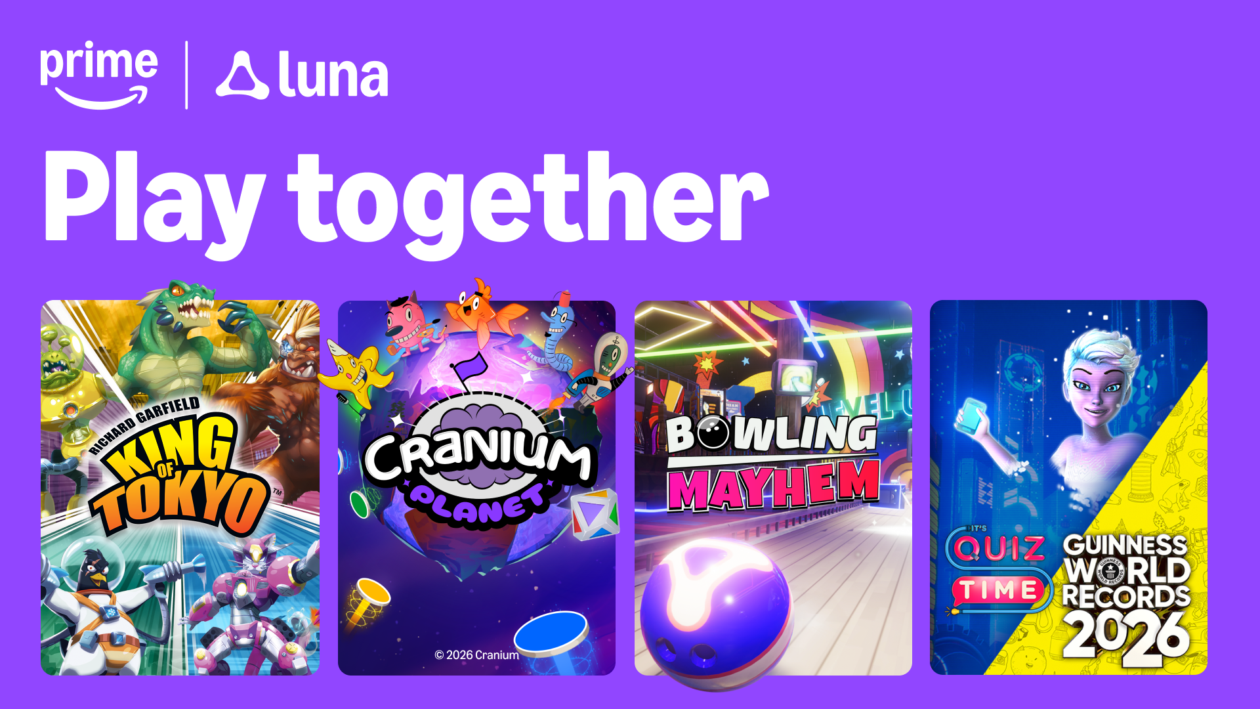
Its newest feature, Remote Play, changes how multiplayer titles work on the service. One player with a Prime subscription can now invite up to 7 other people to participate remotely in a multiplayer Luna game, as long as all 7 of those people have an account on Amazon and a compatible device. This reportedly works with every multiplayer game on Luna, including those that formerly required every player to physically be in the same room.
Two new games have been added to Luna’s library that specifically take advantage of Remote Play. This includes a Luna-exclusive mobile version of Magic: The Gathering creator Richard Garfield’s 2011 board game King of Tokyo, in which players take the role of giant monsters fighting one another in the ruins of Japan.
Advertisement
(Amazon press image)
Other additions to Luna this month include access to two relatively recent games from the French publisher Ubisoft: 2024’s Star Wars: Outlaws and 2023’s Avatar: Frontiers of Pandora, the latter of which is set in the universe of James Cameron’s film franchise.
Amazon has not shared user data for Luna since its recent relaunch, so it’s difficult to tell from outside the company how much of an audience it’s been able to build. Luna represents a bet by Amazon that, in the midst of the ongoing component crunch and the related rise in hardware costs, it can build an audience by offering access to popular video games via whatever devices people might already have in their homes.
A few years ago, cloud gaming as a whole was one of the major topics in the games industry, with some analysts going so far as to predict that it was the future of hardware. Instead of purchasing an Xbox or PlayStation in your own home, you’d simply dial into a remote server and stream games to your TV.
That gold rush has largely faded in recent years, as the furor over genAI has stolen some of its thunder, but cloud gaming is still a going concern and a surprisingly competitive market. Luna might be the most accessible option for would-be cloud gamers, as it’s bundled into a subscription that 200 million households already have, but it’s quietly up against giants like Nvidia, Microsoft, and Sony.
Some of the biggest names in the games industry have placed a quiet bet that the “RAMageddon” will quietly push audiences further towards the cloud. As yet, there’s no solid evidence whether or not it’s paid off. Still, if you’re looking to get into video games but missed your window to get a relatively inexpensive computer or console, the cloud might offer you some worthwhile options.
Universal Music Group and ElevenLabs have signed a multi-year licensing agreement and will build a music creation platform on it that lets fans produce remixes, mashups, new interpretations and personalised vocal experiences using tracks from artists who choose to take part.
It is ElevenLabs’ first deal with a major label, covers product development as well as licensing, and extends to further artist and fan products over the coming years. The platform is in development, will be launched by ElevenLabs, and will sit separately from its existing Music API and ElevenMusic products.
This is not the Universal catalogue; it is whichever artists and songwriters opt in, and the announcement names none of them, gives no launch date, and discloses no financial terms. Everything that determines whether this matters, including how many artists say yes and what they are paid, is absent.
What makes it a European story is who signed it. ElevenLabs was founded by two Poles, the Polish state took an $11mn stake in the company earlier this year, and its chief executive Mati Staniszewski has been talking publicly about $600mn of revenue. The first AI audio company to be licensed by the world’s largest record company is not American.
Advertisement
“AI opens up incredible possibilities for interacting with our favorite music and artists,” said ElevenLabs cofounder and CEO Mati Staniszewski.
“By combining UMG’s global community and rights management expertise with our AI models and products, we’ll enable artists and songwriters to create powerful new experiences for their fans, and ensure they are fairly compensated.”
It also completes a pattern that has taken about eighteen months to form. Suno launched models trained on licensed catalogue from Warner and BMG this week; Universal has already done an AI covers and remixes deal with Spotify, and the majors have taken equity positions in AI companies including Stability.
Meanwhile, Sony is suing Udio over 30,000 songs, and a German court has found that Suno infringed copyright. The industry is running licensing and litigation at the same time, which is not a contradiction. It is the mechanism: the lawsuits set the price, and the deals collect it.
ElevenLabs already sells a music API to media and social platforms and an app for generating original songs, both built without a major-label licence. Adding a licensed product alongside them means the company can now offer developers something its rivals cannot, and it makes Universal a distribution partner rather than a plaintiff.
Advertisement
For a company whose core technology has spent three years being described as a threat to performers, being the first one a major label signs is worth more than the licence fee.
The specifically uncomfortable part is what ElevenLabs is good at. Personalised vocal experiences, in a product built by a voice cloning company, touch the exact thing the industry fought hardest to control. Universal spent 2023 getting an AI-generated fake of two of its artists pulled from streaming services. It is now licensing vocal work to the company whose technology we have reported is reviving Stan Lee for digital cameos.
That is not an accusation of hypocrisy. It is the whole logic of the deal. If synthetic vocals are going to exist, a label would rather they exist under licence, with consent from the artist and a payment attached, than as an unlicensed track going viral on a Tuesday.
Sir Lucian Grainge framed it as putting artists and fans at the centre and unlocking new revenue.
Advertisement
“The most exciting possibilities for AI and music are those that put artists, songwriters, and fans at the center,” said Sir Lucian Grainge, Chairman & CEO, Universal Music Group.
“UMG and ElevenLabs are aligned that responsible AI can inspire discovery, deepen engagement between artists and fans, and unlock new revenue opportunities for the creative community.”
Whether it works depends on things nobody has said. If a fan can generate a personalised vocal from a participating artist, who owns the output, how is it licensed onwards, and can it be uploaded to a streaming service?
For Europe, there is one more thing worth watching. ElevenLabs operates under the AI Act, and a consumer product that generates synthetic voices of identifiable people carries transparency obligations regardless of how thoroughly the rights are cleared. A licence from Universal settles the copyright question, but it does not settle the labelling one.
Subscriptions that already use the service can continue creating, modifying, and managing sync groups and member databases until retirement. Other subscriptions can no longer adopt it.
The service uses a hub-and-spoke model, with an Azure SQL database serving as the hub and other databases joining its synchronization group. Members can be other Azure SQL databases or on-premises SQL Server databases, which require a sync agent. A conflict resolution policy determines whether the hub or member database takes precedence when changes clash.
SQL Data Sync supports scenarios including hybrid environments, in which applications and databases are split between local infrastructure and Azure, as well as geographically distributed applications.
Advertisement
Microsoft acknowledged that customers will need to choose among several possible replacements. It offered little technical explanation for the retirement, referring only to evolving “operational, security, and compliance requirements.”
Microsoft announced the retirement two years ago, but blocking first-time deployments gives customers another reason to begin planning their transition. Microsoft lists alternatives including Azure Data Factory, Azure Functions, read replicas, linked servers, database mirroring, availability groups, and transactional replication. However, it noted that “there is no single replacement that maps to every SQL Data Sync configuration.”
Existing users have just over a year to migrate before the final cutoff. Those without a migration plan will need one before the service shuts down. ®
Nifty little AMOLED screens are easy to get nowadays, and [Sophie D] demonstrates they are both thin and light enough to be worn with OpenChoker, a design for a choker necklace that was a hit at DEF CON.
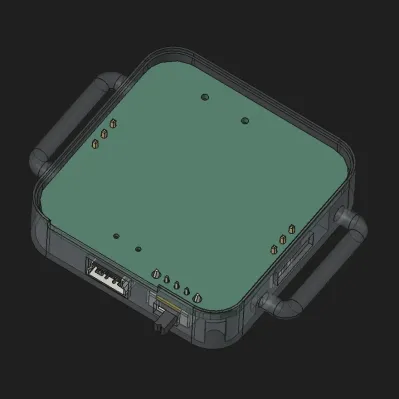
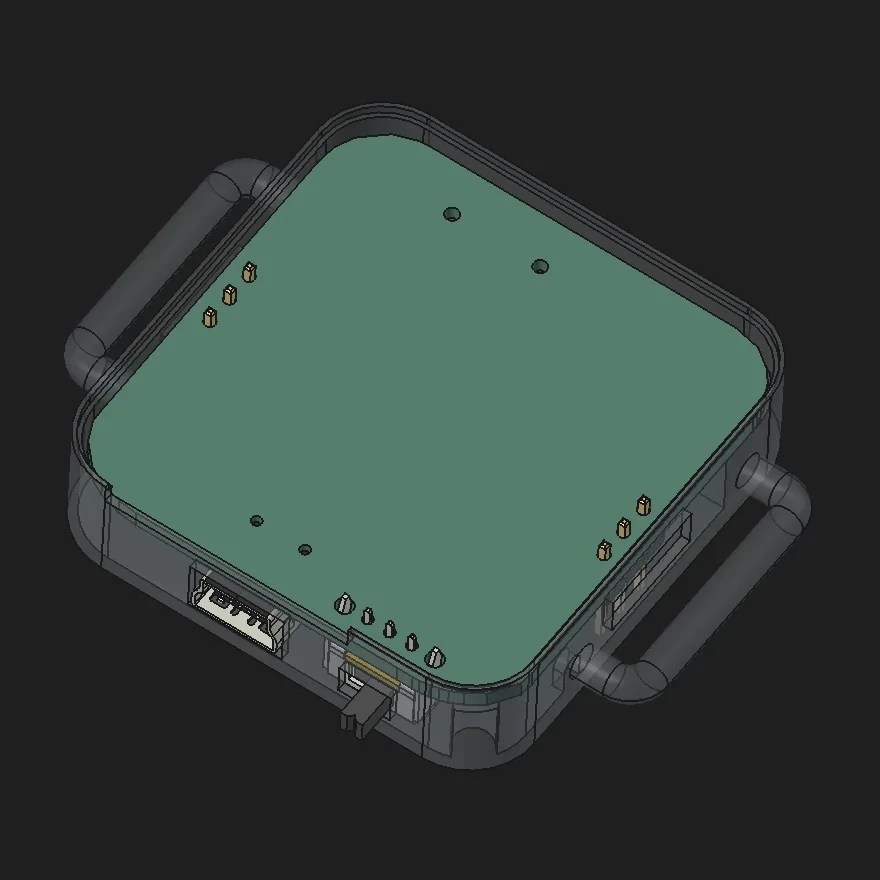
The choker consists of an AMOLED touchscreen flanked by short RGB LED strips. Behind the display is the PCB which contains an RP2350 and micro SD card slot for external storage, and at the rear of the choker is an 18650 cell to power it all. The display plays an eye-catching animation that gets generated on the fly while the LEDs sparkle away.
[Sophie] shares a number of interesting takeaways from designing and building this device. One is that the bulk of the PCB design work was interfacing to the display, since no existing footprint or reference design could be found. So if you find yourself with a Hello Lighting HL020E21-02 2.14″ touchscreen display you’re hankering to use in your own project, do yourself a favor and check out [Sophie]’s board design instead of starting from scratch.
Advertisement
Battery life was more than enough for a device like this. A single 18650 cell powered the choker effortlessly for a 16-hour stretch and still the cell measured a robust 3.7 V. While a light-up choker used indoors isn’t a great candidate for wearable solar power, it’s encouraging that there’s no need for a tethered battery pack.
Another tip to consider relates to the screen’s touch sensitivity. In short, the capacitive touch screen responded perfectly when plugged into a development computer, but when mounted and isolated on the choker it responded so poorly as to be useless. It didn’t keep the rest of the choker from doing its job, but it might be worth keeping in mind as something to watch out for with a device like this.
There’s one final mystery [Sophie] ran into: with only one day to spare, glue used to affix some wires ended up melting away the wire insulation, revealing bare copper. We’re not sure what happened there, but if nothing else it’s a reminder that Murphy’s Law is always ready to strike when one is on a deadline.
Microsoft worries developers are submitting a higher volume of extensions due to AI
It’s already made some review changes, but the Edge team has had to make further changes
Edge extensions will also be reassessed every 15 days to prove quality
Microsoft‘s Edge team has warned that vibe coding has contributed to a sharp rise in extension submissions for the browser simply because developers can build and tweak their extensions far more quickly.
While the company largely sees this as a positive for the Edge ecosystem, which has always struggled against the likes of Chrome, it also worries about the additional pressure its own developers now face.
Even though the team introduced an “expedited review process” in 2025, its “review pipeline has experienced additional strain” and review times are suboptimal.
Latest Videos FromTechRadar
Advertisement
Edge has seen a huge rise in AI-generated extension submissions
As a result of this additional stress, the company says it’s streamlined how extension submissions move through the review pipeline in order to reduce the amount of time developers wait for approval, but crucially, the changes do not reduce the number of checks or reduce the standards.
One of the changes include the addition of automated systems to identify known policy violations and security issues.
“Our objective is to make Edge the easiest place to build, publish, and grow an extension,” Microsoft wrote, but the company clearly knows Edge falls short of Chrome in terms of outright user adoption.
Per the latest Statcounter figures, Chrome accounts for 71% of all desktop browsing sessions, with Edge in a distant second place with an 11% market share.
Sign up to the TechRadar Pro newsletter to get all the top news, opinion, features and guidance your business needs to succeed!
At the same time, Microsoft is also making changes to its Featured badge, which assesses extensions across “more than 60 quality signals.” The increasingly automated system will now re-check extensions every 15 days – “With this more frequent cadence, high-quality extensions can earn recognition sooner, and developers receive faster feedback on their investments in quality,” the company added.
More than 40 cars are listed on the platform currently
Car shoppers in Singapore now have a fresh option to browse new and used vehicles, following the launch of Grab’s online car marketplace on Sep 9.
At the time of writing, there were more than 40 cars listed on the website, including used ones belonging to dealerships such as SG Car Choice and CarTimes Automobile. Some also belong to Grab’s rental arm, GrabRentals.
Used cars are priced between S$11,800 for a Mazda 3 Sedan with eight months left on its certificate of entitlement and S$204,997 for a Toyota Alphard Hybrid with seven years left.
On the other hand, all of the over 20 new cars listed are either electric or hybrid vehicles. These include models such as the BYD Seal 6 DM-i plug-in hybrid, Dongfeng Box Electric Essential and Proton e.Mas 7 Electric, as well as the Hyundai Kona Hybrid.
Advertisement
Those looking to list their vehicles for sale can reach out to the company via email.
Some of the motor dealers who are listed on the platform also supply cars to Grab’s private-hire and taxi operations.
A spokesperson for Volt Auto, the authorised distributor of Dongfeng electric vehicles (EVs), told The Straits Times that the company did not have to pay to list its cars on the website. The dealer views the marketplace as a fresh avenue to reach customers, on top of its existing marketing efforts.
Ng Choon Wee, commercial director of Komoco Motors, the Hyundai distributor, also told the publication that there are no sales targets set for its participation in the marketplace at the moment.
Advertisement
In a press statement on Sep 9, Grab said that the Car Marketplace was launched to simplify vehicle sourcing, adding that the marketplace will offer “more pathways” for drivers looking to own EVs. More comprehensive vehicle data, including EV-specific diagnostics, may be added to listings belonging to GrabRentals.
The website also advertises the services of digital bank GXS AutoLoan, which is backed by Grab Holdings and telco Singtel.
When asked whether buyers need to take out loans from GXS to finance their purchases from the marketplace, the firm said GXS AutoLoan is “one of the financing options” available to its private-hire drivers, who, according to the GXS AutoLoan webpage, can finance the entire cost of their private-hire car through the scheme.
Oracle Red Bull Racing put Sebastian Vettel’s 2012 championship RB8 onto Madrid Metro rails this week and drove it through closed tunnels as if a subway line had suddenly become a racetrack. Heritage Team staff and Spanish engineering collective Andtonic did the work at Metro de Madrid’s Canillejas workshops, racing a two-week deadline to finish custom metal wheels before the Spanish Grand Prix weekend at the new Madring circuit.
The rail gauge was already near enough to the RB8’s track width that neither the car nor the rails needed to be shortened. Everything depended on wheels that were light enough not to damage the suspension, transmission, or driveshafts. Early prototypes were very hefty. The final pieces consisted of a central hub and precision-cut spokes weighing 29.8 kilos each, which is about twice the weight of a regular Formula One wheel. Renault’s 2.4-liter RS27 V8, which produces approximately 750 horsepower at 18,000 rpm, remained in situ. The kart test came first, followed by the real car.
RED BULL CAR – LEGO Speed Champions Oracle Red Bull Racing RB20 F1 Race Car buildable model for Red Bull and Formula 1 fans
AUTHENTIC DETAILS – This F1 race car features design details from the real-life 2024 version, including a rear wing, halo bar, and wider rear tires…
F1 MINIFIGURE – The vehicle kit includes an F1 driver minifigure wearing a Red Bull outfit and a winged helmet to place inside the F1 race car’s…
Patrick Friesacher, a former Minardi driver, took over once passenger service was suspended. He passed Estadio Metropolitano station and the Sacedal and Chamartín depots, traveling almost five kilometers of gloomy tunnel. The steel wheels slipped slightly at first, but eventually held. Friesacher described the journey as strange, and he now includes Metro driver on his resume.
After 45 years, Spanish Grand Prix racing returns to Madrid, having previously taken place at Jarama in 1981. Madring will even have a Metro station inside the circuit grounds, allowing fans to ride underground to the track. Red Bull brought the old double-title vehicle down there first, filming the entire process, and leaving the current drivers, Max Verstappen and Isack Hadjar, to tackle the asphalt this weekend. [Source]
Google on Thursday introduced a new password manager switching experience on Android that doesn’t require you to download CSV files when migrating to a new app.
With the new feature, users will be able to move all of their passwords — and even passkeys — between apps seamlessly.
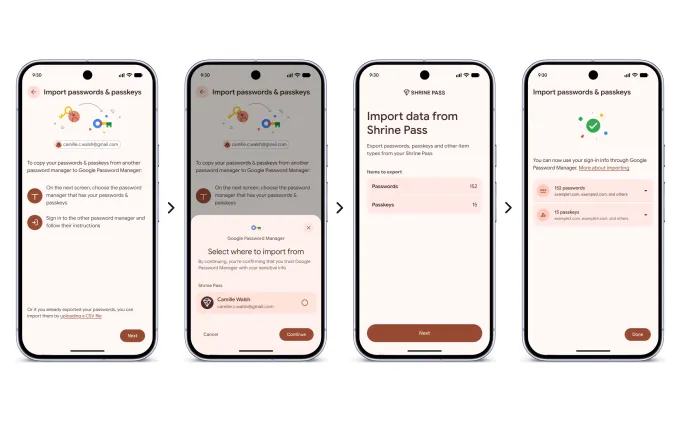
To use the new system, users first open their new password manager app and choose to import or copy passwords from the old manager app. Android will detect manager apps on the device and coordinate transfer between both apps. Users can review the information being transferred and approve it in a few taps.
Image Credits:Google
Because this method also supports passkey transfer, users won’t need to set them up again when moving to a new password manager app. Plus, the company said that this averts the risk of exposing data from a CSV file.
Google said the new experience is already available on select partners as well as in Google’s own password manager app. Bitwarden, 1Password, and Dashlane are currently supported, with more apps coming in the future.
Advertisement
The password manager switching feature will be available on all devices running Android 8 or above.







.jpg)




















































You must be logged in to post a comment Login