Connect with us

Business

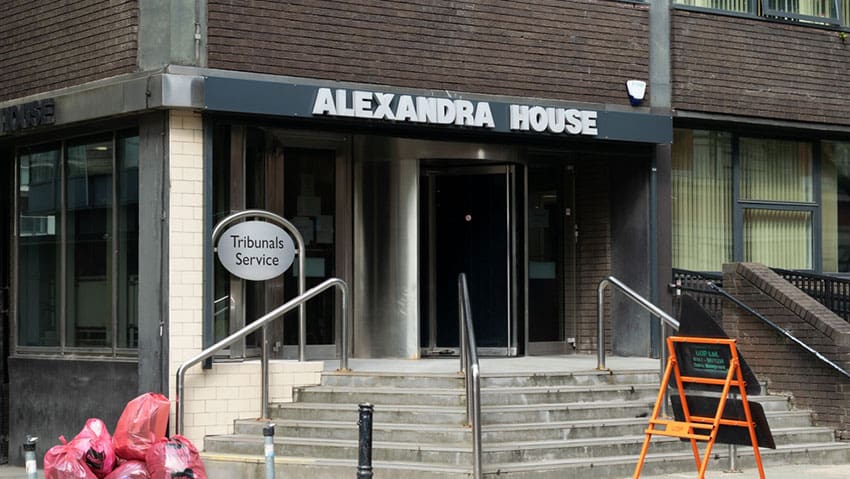
Employment tribunal backlog hits record 70,000 cases

Published

on

Employment tribunal backlog hits record 70,000 cases

The number of single claims waiting to be dealt with by the Employment Tribunal reached a record 70,000 at the end of June, according to official figures published today.

Tribunal statistics for April to June 2026 from the Ministry of Justice show single claim receipts rose by 28 per cent compared with the same period last year, while disposals fell by 6 per cent.

The single claim open caseload rose by 51 per cent over the same period, which the release attributed to receipts continuing to exceed disposals over the past year. The ministry said the caseload had reached its highest level in the published series.

The tribunal received 14,000 single claims in the quarter and disposed of 6,100. Across single and multiple claims, 537,000 claims were open at the end of June.

Chloe Grant, senior associate at specialist workplace and disputes law firm Bellevue Law, said: “The latest Employment Tribunal statistics show a system buckling under the strain.”

Advertisement

Grant pointed to the rise in single claim receipts and the fall in disposals, which she said had pushed the open caseload to its record level. “This means more individual claims are waiting to be heard than ever before, with more than half a million claims now sitting in the Employment Tribunal system overall, leaving employers and employees alike facing longer waits, higher costs and prolonged uncertainty,” she said.

Multiple claim receipts fell by 19 per cent and disposals by 29 per cent compared with a year earlier, while open multiple claims rose by 3 per cent, the figures show.

The tribunal received 11,000 multiple claims in the quarter, within 500 lead cases, and disposed of 4,100. There were 467,000 open multiple claims at the end of June, across 7,600 open lead cases. The release notes that multiple claims can represent many individual cases linked to a single employer, which is why their volumes can change sharply from quarter to quarter.

In total, the tribunal received 25,000 claims and disposed of 10,000 in the three months to June. Business Matters reported last December that active claims, including single and multiple cases, had climbed to 515,000 by the end of September 2025.

Advertisement

The figures come as the Employment Rights Act 2025 is rolled out. Under the government’s implementation timeline, the time limit for bringing a claim to the Employment Tribunal will increase from three to six months on 1 October. For breach of employment contract claims in Scotland, the change takes place on 9 November.

The qualifying period for unfair dismissal will fall to six months for dismissals from 1 January 2027, when compensatory awards will also be uncapped.

“These figures arrive against the backdrop of some of the most significant employment law reforms in a generation. With limitation periods for most claims set to double from October 2026, and eligibility to bring unfair dismissal claims set to expand significantly from January 2027, Tribunals face the prospect of even greater demand in the years ahead,” Grant said.

She said legislative changes were not the only factor. “Growing awareness of employment rights, combined with AI-powered tools and easier access to legal information, mean it is easier than ever for individuals to identify and pursue potential claims. Taken together, these developments risk creating a perfect storm for a system that is already struggling to keep pace.”

Advertisement

Grant said: “More robust Tribunal case management, firmer ACAS intervention, and/or greater use of alternative dispute resolution may all help to resolve disputes sooner and reduce the number of cases for judges to determine, but such options would still require meaningful investment from the government, which doesn’t appear to be on the agenda.”

“Final hearings are already routinely being listed two or even three years after a claim is issued, meaning justice delayed risks becoming justice denied,” she added. “Without a major injection of additional resources, these figures raise serious questions about how the system will cope with what lies ahead.”

The next quarterly tribunal statistics are due on 10 December.


Jamie Young

Jamie Young

Jamie Young is Senior Reporter at Business Matters, covering SME finance, employment law and Westminster policy since 2016. He has reported on every Budget and Autumn Statement since 2018, helped make sense of the ‘covid era’ and the bounce-back loan scheme from launch through the fraud investigations, and broke the magazine’s coverage of the 2024 late-payment reforms. He joined Business Matters straight from completing his BA in Administration from Exeter University and is NCTJ-qualified. Reach him at jyoung@cbmeg.co.uk

Advertisement

Continue Reading
Click to comment

You must be logged in to post a comment Login

Leave a Reply

Business

Skyworks at Goldman Sachs conference: merger, margins and growth

Published

on


Skyworks at Goldman Sachs conference: merger, margins and growth

Continue Reading

Business

Ibotta at Goldman Sachs Communacopia + Technology Conference 2026: growth returns

Published

on


Ibotta at Goldman Sachs Communacopia + Technology Conference 2026: growth returns

Continue Reading

Business

Foreign investors continue buying spree; pour Rs 12,921 cr in first week of Aug

Published

on

Foreign investors continue buying spree; pour Rs 12,921 cr in first week of Aug
Foreign Portfolio Investors (FPIs) maintained their buying spree in Indian equities, investing Rs 12,921 crore in the first week of August, driven by improving macroeconomic conditions, expectations of US rate cuts, lower crude oil prices and a stable rupee.

The inflow follows a Rs 20,200-crore investment in July, marking a sharp turnaround after four consecutive months of heavy selling.

FPIs had withdrawn Rs 49,340 crore in June, Rs 32,963 crore in May, Rs 60,847 crore in April and a massive Rs 1.17 lakh crore in March. Prior to this selling streak, they had invested Rs 22,615 crore in February, according to CDSL data.

Despite the recent buying, foreign investors have remained net sellers in Indian equities in 2026, withdrawing Rs 2.41 lakh crore so far, already exceeding the Rs 1.66 lakh crore outflow recorded during the entire 2025.

Advertisement

Market experts said the recent inflows reflect improving investor sentiment, supported by expectations of US rate cuts, softer crude prices and a stable rupee.


The RBI’s improved growth and inflation outlook has further strengthened confidence, while relatively low foreign ownership of Indian equities leaves room for fresh allocations, said Vedant Gupte, Co-Founder and CEO of investment platform Trackk.
Importantly, a large share of the recent buying has come through the secondary market, signalling stronger interest in listed Indian companies rather than merely IPO allocations, Gupte added.”The sustained buying by both FIIs and DIIs was largely driven by the de-escalation of geopolitical tensions, which helped strengthen investor confidence and supported positive market sentiment,” said Pabitro Mukherjee, Deputy Vice President-Research, Bajaj Broking.

V K Vijayakumar, Chief Investment Strategist at Geojit Investments, said an important trend in FPI buying is their preference for sectors such as automobiles, consumer durables and healthcare.

Foreign investor interest has also extended to the debt market, which continued to attract inflows. FPIs invested Rs 622 crore in debt through the general route during the period under review.

Advertisement
Continue Reading

Business

Critics Say Bullock, Kidman ‘Cast Quite The Spell’ In Mixed Reviews For ‘Practical Magic 2’

Published

on

Taylor Sheridan's 'Lioness' Season 3 Set for August 2 Premiere

LOS ANGELES — Sandra Bullock and Nicole Kidman are earning near-unanimous praise from film critics for their performances in “Practical Magic 2,” even as early reviews for the long-awaited sequel to the 1998 cult classic have landed considerably more mixed on the film as a whole.

The sequel, which arrived in theaters Thursday, reunites Bullock and Kidman as sister witches Sally and Gillian Owens nearly 28 years after the original’s release. Directed by Susanne Bier from a screenplay by Akiva Goldsman, Georgia Pritchett and Kelly Marcel, the film is based on Alice Hoffman’s 2021 novel “The Book of Magic” and takes the Owens family to the United Kingdom for a new setting, swapping the original’s quest to vanquish the vengeful spirit of Gillian’s murdered ex-boyfriend for a globe-spanning adventure centered on protecting and embracing the family’s magic.

As of Tuesday afternoon, ahead of the film’s release, “Practical Magic 2” held a 32% Rotten Tomatoes score, with GoldDerby later reporting the figure had settled at 35%, alongside a Metacritic score of 46. Those numbers land roughly in line with the original 1998 film’s own critical reception at the time, which scored 30% on Rotten Tomatoes and 48 on Metacritic, even though “Practical Magic” went on to develop a devoted fan following over the ensuing decades, reflected in its strong 73% Rotten Tomatoes audience score.

Despite the tepid critical consensus surrounding the film overall, virtually every review singled out Bullock and Kidman’s chemistry and performances as the sequel’s clear highlight. Angie Han of The Hollywood Reporter wrote that “if the jokes seem a bit more exaggerated this time and their bond much less complex, the palpable affection coursing between Kidman and Bullock remains as sturdy a foundation as ever.”

Advertisement

Adrian Horton of The Guardian, who gave the film 3 out of 5 stars, offered a similarly qualified but ultimately positive assessment.

“The midnight margarita redux may feel obligatory, but there’s just enough magic here to still, despite everything, cast a peculiar spell,” Horton wrote.

Brian Truitt of USA Today praised director Bier’s willingness to lean into darker material within the story.

“Bier, like Griffin Dunne previously, isn’t afraid to get a little dark and weird with the magic,” Truitt wrote, referring to the original film’s director.

Advertisement

Not every reviewer found enough to salvage the overall experience. ComingSoon’s Jonathan Sim delivered one of the sharper critiques of the film’s underlying premise.

“No amount of midnight margaritas can save a sequel with a doomed premise,” Sim wrote. “Practical Magic 2 is a sequel that struggles to justify its own existence, largely because it has to undo nearly everything that made the ending of the original so satisfying.”

Collider’s Taylor Gates offered an equally pointed assessment of the film’s shortcomings.

“Practical Magic 2 lacks the charm, whimsy, and heart that made the original film a classic; instead, it’s a mess, with a plot both convoluted and bland,” Gates wrote.

Advertisement

Variety’s review similarly noted that while the sequel revisits elements that made the original beloved among its core fan base, it fails “to correct the flaws that made everyone else all but forget it for three decades.” Consequence gave the film a C+ grade, writing that “even when cursed with a substandard script, Bullock and Kidman still cast quite the spell.”

Beyond its two lead stars, the sequel introduces Joey King and Maisie Williams as Sally’s daughters, Kylie and Antonia Owens, while welcoming back original cast members Dianne Wiest and Stockard Channing, who reprise their roles as the sisters’ eccentric aunts. Lee Pace also joins the cast in a new role that has drawn specific attention from critics. IndieWire’s review highlighted the romantic subplot involving Pace’s character and Bullock’s Sally, describing the two actors as “remarkably comfortable together” on screen, even while noting Bullock has shared more overtly combustible on-screen chemistry with other leading men in her career. The review praised how the film handles a conversation between the two characters about the terrifying prospect of Sally putting herself out there romantically again, arguing the moment shifts the Owens family curse from “a mystical conceit” into “a brutally ordinary challenge that faces so many wonderful people.”

That same review credited both Bullock and Kidman for their sustained commitment to the characters across nearly three decades, writing that it’s “impossible to overlook the accumulated lives of the real women reviving these characters” and that both actresses “deserve their flowers for not only starring in the 1998 film but evolving with its story.”

Rotten Tomatoes’ own roundup of early reactions characterized the sequel as offering fans more than enough reason to return to theaters despite its flaws, framing the film’s appeal as rooted primarily in the simple pleasure of seeing Sally and Gilly reunited on screen regardless of setting or plot specifics.

Advertisement

“Fans of this franchise will be happy enough just to see Sally and Gilly again in any setting,” the outlet’s summary of early reviews noted.

Despite the mixed-to-negative critical reception, the film’s commercial prospects remain closely tied to the sustained cultural affection the original “Practical Magic” has built over the years, particularly among fans who have embraced the film as a beloved entry in both the witch movie genre and broader autumn-season comfort viewing traditions. With “Practical Magic 2” now in theaters, its ultimate box office performance and audience reception, distinct from the largely lukewarm critical response, will offer a clearer picture of whether that decades-long fan devotion can carry the sequel to commercial success despite its rockier critical reviews.

Continue Reading

Business

Space Exploration Technologies Corp. (SPCX) Presents at Goldman Sachs Communacopia + Technology Conference 2026 Transcript

Published

on

OneWater Marine Inc. (ONEW) Q1 2026 Earnings Call Transcript