
Crypto World
Valinor Launches Tokenized BDC Fund On Superstate



Valinor Digital launched a tokenized fund that holds a basket of publicly traded business development companies, offering qualified purchasers exposure to a private credit return profile with daily subscriptions and redemptions, the firm said on Thursday. The Valinor BDC Exposure Fund, ticker VBDC,… Read the full story at The Defiant

Ripple Treasury has expanded its GSmart platform with policy-controlled AI tools for forecasting, liquidity, risk, reconciliation, and reporting, as 60% of eligible customers use its Risk Insights feature.
Summary
- GSmart keeps financial calculations separate from AI-generated explanations and recommendations.
- Human approval remains mandatory before the platform carries out financial transactions.
- 60% of eligible customers use Risk Insights, while 44% use Forecast Insights.
- Ripple Treasury will present the expanded platform at Sibos 2026 in Miami.
According to a Ripple Treasury announcement, the updated GSmart system uses specialized AI agents to examine treasury data while enforcing controls set by each company.
Rather than allowing AI models to calculate financial results and act on them without review, the platform separates the underlying calculations from the AI layer. Deterministic engines handle the financial calculations, while GSmart reads company policies, identifies patterns in treasury data, and explains its recommendations.
Finance teams retain control over each transaction because the system requires a person to approve any financial action. Ripple Treasury said the setup gives companies access to more automated analysis without handing final authority to an AI agent.
Ripple Treasury keeps humans in control of transactions
GSmart’s agents focus on defined treasury functions, including cash forecasting, liquidity management, financial risk, account reconciliation, and reporting. Each agent examines information related to its assigned function instead of operating as a general-purpose assistant across the company’s financial systems.
When an agent detects activity that may breach an internal rule, it can alert the treasury team and identify the policy behind the recommendation. Users can then review the relevant clause and the supporting data before deciding whether to proceed.
Ripple Treasury said the feature is designed to make AI recommendations easier to trace. Instead of giving users an unexplained warning or proposed action, GSmart can show which internal control produced the result.
Knowledge Studio acts as the governance layer for the agents. Treasury teams use it to define the policies, permissions, and internal controls that guide how GSmart examines financial information.
Within Analytics Studio, Ask GSmart provides a conversational tool for treasury data. Users can submit questions in everyday language and retrieve information without creating a separate report or manually reviewing several data sets.
The company said its system does not give AI final control over payments or other financial transactions. GSmart can find an issue, explain the supporting policy, and recommend an action, but an authorized employee must approve the transaction.
GSmart adoption reaches 60% for risk monitoring
The expanded features are already available across Ripple Treasury’s enterprise customer base rather than being tested through a limited pilot, according to the company.
Ripple reported that 60% of customers eligible for Risk Insights have activated the feature. Risk Insights searches for unusual exposures and possible policy breaches, giving treasury teams a way to examine issues before approving related activity.
Forecast Insights has reached 44% of eligible customers. The feature compares expected cash flow with actual results and identifies differences that may affect a company’s liquidity planning.
By examining those gaps, the platform can bring potential cash shortages or excess balances to the attention of treasury staff. The employees responsible for the company’s finances can then assess the information and decide whether to move funds, adjust forecasts, or leave existing plans unchanged.
Reconciliation tools form another part of the update. Ripple Treasury said GSmart can help users find differences between financial records while its reporting functions organize treasury information for review.
The company has presented the agents as tools for specific work processes, with policy controls applying across the recommendations they produce. Its approach places automated analysis before the approval stage rather than allowing software to authorize and complete transactions on its own.
AI governance concerns drive demand for policy controls
Ripple Treasury introduced the update as companies increase their use of autonomous software across finance and other business functions.
Citing Gartner research, the company said an average Fortune 500 business could operate more than 150,000 AI agents by 2028. Yet only 13% of organizations believe they currently have the governance needed to manage such agents properly, according to the same research cited in the announcement.
Ripple Treasury positioned GSmart’s policy references and approval requirements as controls for finance departments that must explain how decisions are reached. The model gives employees a record of the policy used by an agent before they accept or reject its recommendation.
“Every CFO is under pressure to embrace AI,” Ripple Treasury Senior Vice President Renaat Ver Eecke said.
Ver Eecke added that financial decisions also need to be explainable, governed, and compliant. GSmart’s design addresses those requirements by keeping the AI interpretation separate from the engines that calculate financial results.
Finance departments often work with payment instructions, liquidity forecasts, debt positions, foreign exchange exposure, bank balances, and other sensitive records. Under Ripple Treasury’s stated model, agents can examine such data and flag an issue, but the company’s authorized staff remain responsible for approving the related action.
Ripple builds GSmart on its GTreasury business
Ripple Treasury grew out of GTreasury, the treasury management software company that Ripple acquired in 2025. Following the purchase, Ripple renamed the business and placed its established corporate treasury operations under the Ripple Treasury brand.
The company said the platform handled more than $13 trillion in transaction value during 2025 across over 1,000 customers. The figure covers activity recorded through the former GTreasury business and does not represent XRP settlement volume.
Separating the figures is important because Ripple Treasury serves corporate finance functions that extend beyond blockchain payments. Its platform covers cash management, forecasting, reconciliation, risk oversight, reporting, and other treasury processes, while Ripple operates separate digital-asset and payment services.
The GSmart expansion adds governed AI functions to those existing treasury workflows. Ripple said the product is already active among enterprise customers, as shown by the adoption rates reported for Risk Insights and Forecast Insights.
In the United States, Ripple Treasury plans to demonstrate the expanded system at Sibos 2026, scheduled for Sep. 28 through Oct. 1 in Miami. The event is expected to bring together banks, payment companies, and corporate treasury teams for discussions covering AI, payments, and digital finance.

The OFAC also suspended three Iran-related aviation authorizations that “allowed for overflights, and for non-U.S. airlines to fly U.S.-origin or U.S.-controlled commercial aircraft into Iran.”
The sanctions, and their international reach, are intended to “intensify Iran’s economic isolation, to further degrade their military capability, and push them to some kind of a concession or settlement that favors the United States,” Jack Roush, a PhD candidate affiliated with the Iranian History Initiative at the London School of Economics, tells TIME.
Here’s what to know about the latest sanctions, how they extend beyond the borders of Iran, and the economic pressure mounting against Tehran.
Aviation sanctions target Kazakhstan, Malaysia, Turkey, and UAE-based firms
The U.S. Treasury has accused Iran of using front companies and other pass-through entities in third countries in an attempt to evade aviation links back to Tehran and has extended sanctions to nine internationally-based entities it alleges have aided these efforts.
Coinbase has restored the Coinbase Wallet name just over a year after replacing it with Base App, positioning the self-custodial product around multichain trading, perpetual futures, prediction markets and tokenized stocks.
Summary
- Coinbase Wallet will serve as a testing ground for assets unavailable on the company’s centralized exchange.
- Hyperliquid supplies more than 290 perpetual markets, with leverage reaching 50x for eligible users.
- The wallet supports 10 networks, including the newly added Robinhood Chain and Monad.
- U.S. users remain unable to access some products because of geographic restrictions.
Coinbase confirmed through its official Google Play listing that the Base App has returned to the Coinbase Wallet name as the product focuses on multichain trading, transfers, and earning features.
Ryan Kass, head of Coinbase Wallet product, said in a statement that the wallet would function as a “test kitchen” for products and assets that Coinbase may not list on its centralized exchange. Long-tail tokens will appear once they are minted on supported networks, while the company plans to connect additional chains after they launch.
Trading inside the wallet takes place onchain, according to Kass. Users can also follow selected traders and view their activity, a feature he said may help them find trading opportunities.
Coinbase will keep the product self-custodial, meaning customers retain control of their private keys and assets. According to Kass, the wallet automatically identifies and hides tokens classified as scams or malicious assets.
Coinbase Wallet puts trading ahead of social features
Coinbase renamed Coinbase Wallet as Base App in July 2025, combining trading and payments with messaging, social feeds and mini-apps. The company promoted the product as an “everything app” built around its Base layer-2 network.
After the social features failed to attract the expected use, Coinbase began rebuilding the app around financial products. CEO Brian Armstrong said in March that the company’s social experiment “didn’t quite work,” while Base creator Jesse Pollak later acknowledged that creator-focused products had fallen short.
In July, Pollak handed leadership of the app to Jordan “Cobie” Fish and returned his attention to the Base blockchain. As crypto.news reported, Pollak said demand for social products had “disintegrated completely,” leaving Base behind competitors in prediction markets and perpetual futures.
Kass said Coinbase can change direction quickly when a product strategy fails to deliver the intended result. He described Base App as an “opinionated experiment” and said the restored name better explains its place within Coinbase’s product lineup.
“The Coinbase Wallet name better captures the product’s role as Coinbase’s self-custodial front door to the ‘everything exchange,’” Kass said. “While Base app was an opinionated experiment, Coinbase Wallet gives users access to all of onchain finance.”
Although the app is taking back its old name, Coinbase is retaining trading and financial features developed during the Base App period. Messaging and other selected functions will also remain available.
Hyperliquid perpetuals lead the trading push
Perpetual futures powered by Hyperliquid are the first example of the wallet’s testing-ground model. Coinbase added the integration in August, giving eligible users access to more than 290 markets and leverage of up to 50 times on certain contracts.
The Hyperliquid perpetuals launch covered contracts tied to Bitcoin, Ethereum, stocks and commodities. Hyperliquid executes the trades while users open and manage positions through the Coinbase interface.
Perpetual contracts allow traders to take leveraged long or short positions without owning the referenced asset. Unlike traditional futures, they do not expire, while funding payments between traders help keep contract prices close to spot prices.
Coinbase said the integration is unavailable in the United States, the United Kingdom, and Canada, among other restricted markets. Leverage also depends on the selected asset, so not every contract carries the advertised 50x maximum.
For American customers, Coinbase operates a separate regulated futures service through Coinbase Financial Markets, a futures commission merchant registered with the Commodity Futures Trading Commission and a member of the National Futures Association. The regulated service is separate from Hyperliquid trading inside Coinbase Wallet.
Under the new branding, Coinbase is promoting the wallet with the phrase “no KYC, no waiting, and no borders.” Its website states, however, that individual products remain subject to location-based limits, making access dependent on a user’s jurisdiction.
Coinbase earns revenue from trading and product fees inside the wallet. The company did not provide details about the fee structure or figures showing whether the trading focus has increased user numbers.
Tokenized stocks and prediction markets face product reviews
Coinbase Wallet also gives eligible customers access to prediction markets and tokenized stocks. According to Kass, Coinbase applies “vigorous product and compliance reviews” before adding a new market or asset class to the app.
Individual tokens follow a different process. Assets become available by default after they are minted on a supported chain, although the wallet’s detection system can hide tokens linked to scams or harmful activity.
Coinbase brought four tokenized U.S. stocks to Base in August, offering eligible non-U.S. investors onchain exposure to Apple, Nvidia, Meta and Alphabet. The 1:1-backed stock tokens were issued through a Coinbase-controlled company in the Abu Dhabi Global Market.
Each token represents a beneficial interest in an underlying share held through a segregated custody arrangement, according to the product prospectuses. The securities are not registered under the U.S. Securities Act of 1933 and cannot be offered or sold to U.S. persons.
Prediction markets carry separate access questions in the United States. Coinbase Financial Markets has argued that federally regulated event contracts fall under the CFTC’s authority, but several states have challenged sports-related contracts under their gambling laws.
In August, a federal judge denied Coinbase relief against enforcement by Michigan officials. The preliminary ruling left the underlying lawsuit unresolved while allowing the state to continue defending its sports betting authority.
Coinbase Wallet adds Robinhood Chain and Monad
Following the name change, Coinbase Wallet supports Base, Bitcoin, Ethereum, Solana, BNB Chain, Optimism, Arbitrum, Polygon, Avalanche, Monad, and Robinhood Chain. Robinhood Chain and Monad were not included on the Base App’s previous list of supported networks.
Multichain support reduces the app’s earlier focus on Coinbase’s own layer-2 network, although Kass said Base would remain central to the wallet. Assets issued on Base may appear as they gain market attention, alongside tokens from other supported networks.
“Base remains central to Coinbase Wallet, and you’ll see Base assets naturally appear in the app as they trend,” Kass said.
According to Kass, displaying Base assets beside products from other networks will give users additional ways to discover tokens available through the self-custodial app.

The dispute between Blockstream and the party claiming to be a white-hat hacker has taken a sharper turn, according to Samson Mow’s latest update.
The hacker has accused Blockstream of serious security failures, while claiming that the company allocated only $1.5 million, or possibly nothing, to secure $5 billion in assets.
Fresh Clash With Blockstream
Calling this a “flagrant neglect of security,” the hackers demanded that Blockstream pay a 10% bug bounty from its own funds and warned that failure to do so could result in a 15% loss for Liquid users.
The message also accused Blockstream of being “delusional, greedy, and arrogant” over its handling of security. The hackers further said they planned to publish the private key needed to decrypt their conversations afterward.
Meanwhile, Liquid has kept the sidechain paused as Blockstream and Federation members work on further security fixes, address a chain split, and prepare for a coordinated restart. Users have also been told not to send Bitcoin to Liquid peg-in addresses until the network is back online.
The latest message comes after roughly 4,000 BTC, worth around $320 million at the time, was taken from Liquid’s Federation wallet on September 6. The party behind the withdrawal initially claimed to be white-hat hackers and said the funds would be returned once Blockstream fixed the security issue and patched all affected nodes. After Blockstream confirmed the bridge nodes had been patched, 3,400 BTC was returned to the Federation wallet, while roughly 598 units remained with the hackers.
Consequences Ahead
Mow, in a separate tweet, warned the hackers that they may be underestimating the consequences of what they have done. He said that Blockstream’s decision to communicate with them through PGP was already a “courtesy” and questioned whether publicly admitting to taking the BTC and then demanding a bounty was really a “wise move.”
The former Blockstream Chief Strategy Officer also suggested that the group had left behind more clues than it might realize and cautioned that trying to return the funds does not necessarily mean they can simply walk away from the incident.
“As a white hat, the road only widens; as a black hat, you’re forever on edge. Dreaming of walking away with assets unscathed is nothing but delusion. Some doors, once opened, can never be closed again.”
The post Liquid Hackers Call Blockstream ‘Delusional, Greedy, and Arrogant,’ Demand 10% Bounty appeared first on CryptoPotato.
With the growing popularity of the tokenization of sovereign debt on public blockchain platforms, the discussion around the XRP debt case is getting more and more popular. The data available now, however, separates practical activity on blockchain platforms and speculations related to the possible usage of XRP by governments.
According to the measurements provided by RWA.xyz and conducted on August 20, 2026, the amount of tokenized non-U.S. sovereign debt on the Stellar platform is about $490 million. Stellar emphasizes that it has become a leader in this particular type of activity and outperformed even Ethereum in this area.
The point is that Stellar leads in terms of non-U.S. government debt, while Ethereum remains a leader in the market of tokenized Treasuries. In addition, Stellar reports the development of its entire RWA ecosystem.
According to Stellar, in June 2026, tokenized RWA reached $3 billion. They included sovereign bonds, Treasury products, investment funds, credit instruments, and gold.
XRP Is Being Accused in Relation to the U.S. National Debt
The debate about XRP revolves around another possible application of the asset. XRP advocates have argued that this token can eventually be applied within the U.S. financial infrastructure in areas such as payments, liquidity, or settlements.
Some online debates have gone even further and proposed that XRP could be involved in strategies linked to the U.S. national debt. However, there is no policy evidence showing that any such program exists.
The Vice President of the United States, JD Vance, has talked about economic growth and the establishment of a sovereign wealth fund while speaking about the economy of the United States. This discussion did not reveal any XRP-based strategy to manage or repay the national debt.
This distinction is important because the presence of a big national debt does not prove that some specific cryptocurrency will be used to address this problem. Tokenization of the national debt involves presenting an already existing financial instrument on blockchain technology.
XRP and Tokenization Tell Two Separate Tales
The market is continuing to keep an eye on XRP regarding institutional adoption of blockchain technologies. The price of XRP is currently around $1.40, and the recent market data is showing support at around $1.32 and resistance at around $1.46.
But price levels alone cannot confirm adoption by the government or any particular use case associated with debt obligations. A better example would be something that shows actual use and adoption by institutions.
For example, Stellar is giving us a glimpse of how assets, like Mexican CETES or Brazilian government bonds, among others, are being utilized on blockchain networks to give access to selected sovereign assets.
But the case of institutional adoption for XRP would remain somewhat prospective. Possible applications of XRP would include cross-border payments, liquidity, settlement, and other infrastructure applications. Any confirmation from a government or another institution of a debt-based strategy for using XRP will confirm or refute such assumptions.
Therefore, the tokenization trend is demonstrating blockchain adoption by traditional finance, but this alone cannot prove XRP usage in relation to U.S. national debt.


Liquid Network has resumed block production without processing transactions after a $320 million Bitcoin withdrawal forced the sidechain to halt operations.
Summary
- Functionary nodes have resumed signing and validating blocks after receiving required software updates.
- Transactions and BTC peg operations remain suspended while Liquid monitors the network.
- Hackers returned 3,400 BTC, leaving about 598 BTC outside the federation wallet.
- Elements v23.3.4 changes how the software verifies and stores confidential transaction proofs.
Liquid Network said in a Thursday update that its functionary nodes were again producing blocks as intended, but the network would operate “without transactions” while developers monitored its condition.
The limited restart allows Liquid to test its updated infrastructure without reopening transfers or exposing the peg system to new activity. According to the network, keeping transactions disabled will help operators “confirm full stabilization” before they restore other services.
Functionary and bridge nodes have received the required software changes, Liquid added. Its functionaries can now sign and validate blocks, though users cannot yet send regular transactions or move funds between Bitcoin and Liquid.
Peg operations also remain suspended, including withdrawals approved through Peg-out Authorization Keys, or PAKs. Liquid said the restrictions would stay in place while it works to restore the reserve that supports Bitcoin issued on the sidechain as L-BTC.
Liquid Network has restarted with transactions disabled
Block production represents only one part of Liquid’s return to service because its transaction and bridge systems remain unavailable. The network has not provided a date for reopening either function.
Under normal conditions, users deposit BTC into the federation-controlled peg and receive an equal amount of L-BTC for use on Liquid. Holders can later burn L-BTC through an approved peg-out service to release the corresponding Bitcoin on the base layer.
Operators stopped that process after an actor created unbacked L-BTC by exploiting a proof-verification flaw in Elements, the open-source software behind Liquid. The actor then submitted the tokens through SideSwap’s authorized peg-out service, prompting the federation to release real Bitcoin.
As crypto.news previously reported, the transaction removed about 3,996 BTC and reduced the federation wallet from approximately 4,205 BTC to about 202 BTC. The withdrawal represented roughly 95% of the Bitcoin held in the wallet at the time.
Liquid described the actors as “purported white-hat hackers” after they identified themselves as white hats through messages attached to Bitcoin transactions. Their claim did not establish that they had permission to create the L-BTC or withdraw the underlying Bitcoin.
SideSwap said a customer had sent 4,000 L-BTC to its peg-out service, which processed the request under its normal system. Liquid and SideSwap said the key used to authorize the transaction had not been compromised.
Elements update changes proof-verification cache
One day before restarting block production, Liquid released an emergency Elements update designed to address the flaw connected to the withdrawal.
Elements v23.3.4 changes the cache keys used when validating range proofs, according to Liquid. Range proofs allow the network to confirm that a hidden transaction amount is valid without publicly revealing the amount, forming part of Liquid’s confidential transaction system.
The affected software stored successful proof-verification results so nodes could reuse them instead of repeating the full calculation. Previous reporting found that the cache did not include enough transaction context, allowing a valid proof result to be reused where it should have failed.
By exploiting that weakness, the actor created L-BTC without first locking an equal amount of Bitcoin in the federation wallet. Functionary nodes running the affected code accepted the tokens, while SideSwap’s peg-out process treated them as valid L-BTC and processed the withdrawal.
Liquid said version 23.3.4 hardens the cache keys associated with range proofs. Functionary and bridge nodes received the update before block signing restarted, although the network is still withholding transactions while operators check the deployment.
Liquid’s federation uses functionary nodes to confirm sidechain blocks and control the Bitcoin held behind L-BTC. The system relies on 15 rotating functionaries and requires 11 signatures to move funds from its multisignature wallet, according to an earlier technical account of the incident.
No federation signing key was reported stolen during the withdrawal. The failure instead involved the software used to decide whether the L-BTC submitted for redemption was valid.
Hackers returned 3,400 BTC after nodes were patched
Communication between Blockstream and the actors took place through messages embedded in Bitcoin transactions. In one message, the actors said they would return the assets after the vulnerable nodes had been repaired.
“Please fix the bug first,” the message said. “Make sure every node is patched. Then we will transfer the money back safely after confirming the fix.”
Blockstream later sent a signed message stating that its bridge nodes had been patched and that the Bitcoin was “safe to return.” Following that confirmation, the actors transferred 3,400 BTC back to the federation wallet.
The 3,400 BTC repayment restored about 85% of the withdrawn funds. At the time of the transfer, the returned Bitcoin was worth approximately $270 million.
About 598.5 BTC remained in the withdrawal-linked address after the repayment. The outstanding balance was worth roughly $46 million based on the Bitcoin price cited in the supplied report, though its dollar value changes with the market.
No public agreement has identified the remaining Bitcoin as an approved security bounty. The actors have not publicly stated whether they plan to return another portion, while Blockstream has not announced terms allowing them to keep the balance.
Ledger Chief Technology Officer Charles Guillemet questioned the white-hat label after the partial repayment. In an X post, he argued that retaining about 600 BTC without publicly disclosed terms looked more like extortion than a standard security reward.
L-BTC holders await restoration of peg services
Liquid operates as a federated Bitcoin sidechain that allows exchanges, trading firms and other users to transfer BTC-linked assets with shorter settlement times than Bitcoin’s base layer. Blockstream launched the production network in 2018 using Elements software.
L-BTC depends on Bitcoin held in the federation wallet to maintain its one-to-one backing. Until Liquid restores peg operations, holders cannot use the normal bridge process to redeem L-BTC for native Bitcoin.
A previous bridge security explainer described how systems that lock assets on one chain and issue linked tokens on another depend on their custody, validation, and message-processing controls. A failure in any part of that process can suspend redemptions even when the underlying blockchain continues to operate.
For U.S. users, the current effect is limited to access and operations rather than a stated change in federal policy. American L-BTC holders face the same transaction and peg restrictions as users elsewhere, while BTC held directly on Bitcoin’s base layer remains separate from the Liquid system.
No U.S. regulator or law enforcement agency has announced an action connected to the withdrawal. Liquid also has not given a timetable for restoring transactions, PAK-authorized peg-outs, or other bridge operations.

A grant application went into Claude, its safety filter caught it and refused. Days later, the same operator was back, and the refused prompts were reportedly flowing to a rival AI model instead.
Anthropic published that story about itself, revealing a case where an AI company shows its own models touching possible biological weapons work.
The Grant That Got Blocked
The application sought money to study chikungunya, a mosquito-borne virus that brings months of pain and has no cure. The plan was to help it spread better and dodge the immune system. Civilian scientists wrote it. A military institute was to host the work.
Every exchange was blocked, but it found a workaround. The service carrying those researchers built a fallback to a competitor’s model. Claude helped write that code. The job was sold to it as a fix for over-refusal.
Five Cases, No Proven Intent
The report runs 154 pages and carries five biology cases. Anthropic banned the accounts, withheld the labs, then stopped short of the accusation everyone expected.
“We do not assert that they intended harm, and identifying them or their labs could expose them to harm,” the team said in the report.
Notably, however, the filters did work sometimes. A bird flu researcher was pushed onto weaker models, and Anthropic calls that help mostly clerical.
Anthropic Biological Weapons Cases by the Numbers
| Figure | What it counts |
|---|---|
| 154 | Pages in the report |
| 5 | Biology cases published |
| 35 | Research efforts found in a 30-day sweep of state-linked institutions |
| 1 hour | Time one user took to draft a smallpox-family grant on Opus 5 |
Follow us on X to get the latest news as it happens
The Part That Should Worry People
Most of those 35 efforts were ordinary civilian science. That is the problem. The same knowledge builds a vaccine or a weapon, and a filter cannot read a mind.
“A classifier cannot simultaneously enable benefit and prevent harm,” Anthropic said.
Its limits have been tested before. In April a Discord group reached its restricted model on day one.
Against the backdrops of these growing scares, Washington is moving,. with representatives Ted Lieu and Nathaniel Moran filing the AI Kill Switch Act in July. It would force developers to keep the power to shut their systems down.
The same report also banned clients who used Claude to track dissidents.
The post Anthropic Says AI Aided Possible Biological Weapons Research appeared first on BeInCrypto.
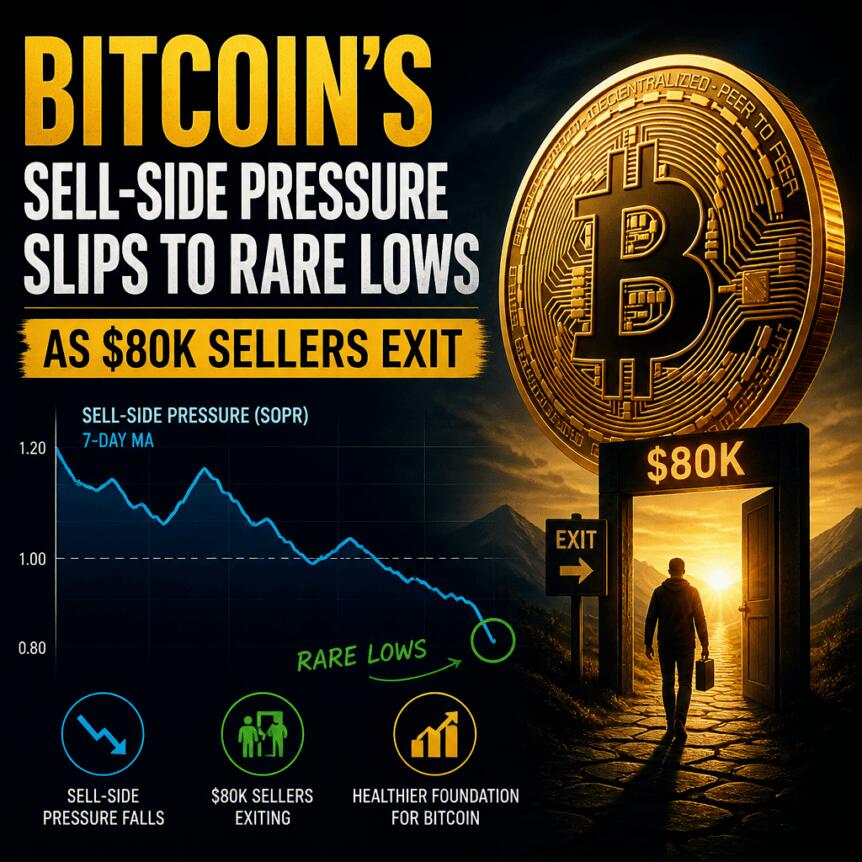
Bitcoin’s near-term sell pressure has eased sharply, with onchain data pointing to a “low sell-side risk” environment as August profit-taking fades into September. Glassnode’s latest weekly onchain report shows Bitcoin’s sell-side risk ratio has fallen to 7—down from 16 in September—an improvement that can matter for traders who watch realized profits as a trigger for faster, more emotional selling.
The same Glassnode update also highlights how long-term holders are realizing profits more selectively, while US spot Bitcoin ETF investors remain deeply underwater on an aggregate basis relative to their breakeven level near $86,000.
Key takeaways
- Glassnode reports Bitcoin’s sell-side risk ratio reset lower, dropping to 7—among the lowest readings recorded.
- Lower selling pressure coincides with Bitcoin holding most of its roughly 25% August gains.
- Long-term holders’ share of realized profit fell to 47% from 88% at the August peak.
- US spot Bitcoin ETF investors have spent 229 sessions below the aggregate breakeven point near $86,000, with paper losses around $3.9 billion.
Why the sell-side risk ratio matters
Glassnode frames its sell-side risk ratio (SSRR) as a measure of “realized” pressure rather than just price movement. The metric takes the total value of onchain realized profits and losses and divides it by Bitcoin’s realized market capitalization. In other words, it aims to capture how much US-dollar value has actually changed hands versus the size of the realized coin base for the period in question.
In the report, Glassnode says lower SSRR values typically align with conditions such as “macro market bottoms, accumulation phases and relatively low sell-side risk environments.” That interpretation is particularly relevant for markets that have recently rallied, because periods of heavy realized profit can increase the likelihood that holders decide to lock gains if price momentum stalls.
September cooling after August’s rebound
Glassnode ties the SSRR decline to a post-rebound shift in realized behavior. The company noted that SSRR reached 16 when Bitcoin surged to multimonth highs above $80,000 in late August. As of this week, the ratio has more than halved to 7, which Glassnode characterizes as one of the lowest readings on record.
The onchain analytics platform argues that the August price rebound “drawn little supply,” referring to an absence of meaningful supply emergence in onchain activity. Glassnode also contextualizes how unusual this is versus other periods: it pointed out that similar “supply draw” conditions were not observed in the same way at later points in the year, and that only a small share of days across the past year have posted readings lower than today.
That matters because a low SSRR environment can reduce the probability that even a relatively modest pullback immediately triggers aggressive selling. It doesn’t eliminate downside risk—price can still move on macro factors or liquidity—but it can change the balance between who is likely to sell and how much profit exists to be realized.
Profit-taking shifts: long-term holders selling less
Beyond aggregate sell pressure, Glassnode also focused on who is realizing profits onchain. The report defines long-term holders as wallet entities that hold a UTXO without spending it for at least six months. According to Glassnode, these holders are realizing profits at a lower rate this month.
Specifically, Glassnode says long-term holders’ share of realized profit has fallen to 47% from 88% at the August peak. It also notes that September’s realized profit spike on September 3, 2026 was under half the size of August’s. The combined message is that the “profit who sells” dynamic appears to be shifting away from the most patient holders.
“The sellers this month are recent buyers, and even they are selling less.”
For investors, that distinction can be meaningful: recent entrants are often more sensitive to near-term price changes, while long-term holders typically respond differently. If the selling impulse is increasingly concentrated among newer holders—and even they are moderating—it can help explain why SSRR is trending down even after a strong month.
ETF breakevens remain a key reference point
Even with improving sell-side risk, the report underscores that ETF positioning is still a notable overhang. Glassnode says US spot Bitcoin ETF investors would return to aggregate profit at roughly $86,000. According to the report, Bitcoin has closed below that level for the past 229 sessions, and ETF investors’ paper losses are currently around $3.9 billion.
This doesn’t necessarily mean ETF holders are selling aggressively—paper losses can persist through drawdowns when investors maintain exposure through continued inflows or hold through volatility. But from a behavioral perspective, breakeven levels often become a psychological and institutional reference point. If prices revisit $86,000, ETF investors may face pressure to reassess risk, while the opposite scenario (further declines) could intensify the temptation to reduce exposure.
The SSRR decline may therefore help temper fears that a correction automatically forces a cascade of realized selling. At the same time, ETF breakeven dynamics serve as a reminder that a large cohort is still sitting on losses, and that sentiment could change quickly if price action approaches or moves away from that threshold.
Readers should watch whether SSRR stays near these low levels as Bitcoin’s price continues to trade relative to the $80,000 area and whether ETF performance moves ETF investors closer to—or further from—aggregate breakeven near $86,000. The key question is whether September’s “lower sell-side risk” environment persists as realized profit levels evolve.
Crypto World
New Clarity Act text tweaks DeFi, credit union provisions, but road ahead for bill remains murky


The Clarity Act needs 60 votes when the Senate returns from its recess next week. Republicans circulated a fresh draft on Thursday ahead of the vote.
Nasdaq has put $100 million into Payward, the parent company behind the Kraken cryptocurrency exchange, as part of an expansion push into tokenized assets. The investment is positioned to connect Nasdaq-listed equities to tokenized trading through Kraken’s platform, while also bringing Nasdaq surveillance tools into Payward’s broader markets infrastructure.
The deal deepens an already existing relationship between Nasdaq and Payward. In March, Nasdaq announced its partnership with Payward to support tokenized equities, and Thursday’s announcement adds both capital and operational integration.
Key takeaways
- Nasdaq’s venture arm invested $100 million in Payward, valuing Kraken’s parent at $21 billion, according to people familiar with the matter cited by Bloomberg.
- Kraken is set to offer tokenized versions of Nasdaq-listed stocks on its own exchange platform.
- Payward will adopt Nasdaq surveillance technology across its venues spanning crypto, equities, tokenized equities, futures, and options.
- The move follows recent European expansion efforts tied to tokenized stocks from other major exchanges, including Deutsche Börse and the London Stock Exchange.
- RWA.xyz data shows tokenized stocks have a distributed value above $2.9 billion, up 7.4% over the past month.
Nasdaq invests in Kraken’s parent to scale tokenized equity offerings
Nasdaq disclosed that its venture unit made the $100 million investment in Payward. Payward is the corporate parent of Kraken, which has been positioning itself as a venue for digital-asset trading and, increasingly, tokenized versions of traditional financial instruments.
Under the terms of the announcement, Kraken will offer tokenized versions of Nasdaq-listed stocks directly on its own platform. The announcement builds on the framework Nasdaq and Payward outlined earlier, including a partnership described by Cointelegraph in March as focused on issuer-centric tokenized equities.
For investors, the practical significance is straightforward: the investment signals that tokenized equities are moving from isolated pilots toward more mainstream exchange distribution channels. Kraken’s customer base and trading infrastructure may become a larger on-ramp for investors seeking 24/5 access to equity-linked products—an approach other venues have also been testing.
Surveillance tech integration across crypto and tokenized markets
Beyond the capital infusion, Nasdaq said Payward will adopt its surveillance technology across multiple market types. According to the announcement, the coverage will extend across Payward’s crypto venues, equities venues, tokenized equity venues, futures, and options.
That matters because surveillance and monitoring are central to how regulated trading ecosystems address market integrity, compliance, and risk management. Rather than treating tokenized equities as a separate back-office experiment, the announcement describes a consolidation of tooling across asset classes and trading formats.
In effect, Nasdaq is leveraging its infrastructure and regulatory experience to support a wider deployment of tokenized products—while Payward gains access to a standardized monitoring layer that can help it scale listings and operations without reinventing compliance workflows for each new category.
What the $21 billion valuation implies for the tokenization race
Bloomberg reported that the investment valued Kraken’s parent, Payward, at $21 billion, citing people familiar with the matter. Nasdaq did not provide that valuation figure in the disclosure itself, but the reported number gives readers a benchmark for how much strategic capital major exchange operators are willing to attach to blockchain-native market infrastructure.
Cointelegraph previously noted that Nasdaq has been pushing for “always-on” markets, which includes exploring regulatory pathways for trading tokenized stocks. In the context of this latest investment, the $21 billion figure suggests tokenization is becoming a core part of Nasdaq’s growth narrative rather than a side project.
Earlier this month, Nasdaq also shared plans to acquire Level Markets as part of its always-on strategy. And a year ago, Nasdaq filed a proposal with the US Securities and Exchange Commission related to tokenization—showing that the current momentum is supported by longer-term regulatory work rather than a sudden shift.
Momentum across major exchanges: Deutsche Börse and London Stock Exchange
Nasdaq’s move arrives amid a wider flurry of exchange activity around tokenized equities.
Earlier this month, Kraken partnered with the London Stock Exchange to launch access to 24/5 trading of tokenized stocks tracking UK equity products, with the initiative expected to start in 2027. In April, Deutsche Börse invested $200 million in Payward, aligning with its own plans to broaden access to blockchain-based securities and tokenized investment products.
Taken together, these investments show that competitive pressure is no longer limited to cryptocurrency trading. Exchange groups are positioning tokenized stocks as part of the next evolution in market access—especially in markets where investors want trading flexibility outside traditional windows.
For market participants, the key question now is not just whether tokenized equities can be issued, but whether liquidity, custody, settlement, and compliance can scale across multiple issuers, venues, and jurisdictions without fragmenting the user experience.
How big is the tokenized stocks market today?
Tokenization remains a niche compared with the broader equities market, but growth is visible. Data compiled by RWA.xyz indicates the current distributed value of tokenized stocks is more than $2.9 billion, up 7.4% over the past month.
That metric doesn’t directly measure overall trading volume across all tokenized products, but it provides a useful read on how much capital is currently locked into tokenized stock representations. With Nasdaq’s $100 million bet and broader exchange partnerships around tokenized equities, the next phase to watch is whether distributed value and real trading activity rise in tandem.
As Nasdaq, Kraken, and other exchanges continue to connect tokenized stocks to mainstream trading infrastructure, investors should pay close attention to how quickly tokenized Nasdaq-listed stocks launch on Kraken, how surveillance and compliance integration affects operational rollout, and whether distributed value continues accelerating alongside new listings.

Cocaine dealer asks judge to ‘don’t delay’ sentencing so he’s sent straight to jail

League could rework TV packages

Ripple Treasury expands governed AI tools for finance


-
 Tech2 days ago
Memory prices are slowing because buyers ran out of money
-

 Business21 hours ago
Micron Stock Climbs Above $1,031 as AI Memory Crunch and a $50 Billion Outlook Fuel the Rally
-
 Crypto World2 days ago
Bitcoin price risks $76K drop as $78K support weakens
-

 Business22 hours ago
AMD Stock Climbs After Management Lifts 2027 Data Center Outlook Toward $70 Billion in AI Sales
-
 Crypto World2 days ago
Ethereum price stalls below $2,500 as ADX drops to 11
-

 Crypto World2 days ago
Robinhood Stock: How To Take Advantage With Reduced Risk
-

 NewsBeat2 days ago
What went right this week: an ‘historic’ fall in violent crime, plus more
-
 Crypto World23 hours ago
Bitcoin price risks $70K if $78K neckline breaks
-
 Crypto World2 days ago
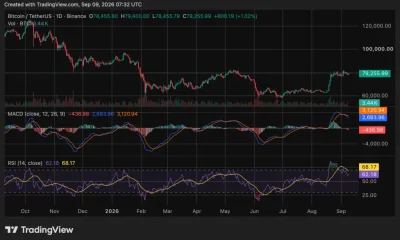
Bitcoin price holds near $79K as cycle drawdowns narrow
-

 Business2 days ago
Meta debuts long-awaited personal AI agent, Muse
-
 Sports2 days ago
Phones confiscated, players sent home: Pakistan’s England tour turmoil revives memories of Mohammad Amir, Salman Butt and Mohammad Asif’s 2010 Lord’s spot-fixing scandal | Cricket News
-

 NewsBeat2 days ago
England up in reading, maths and science rankings as Scotland and Wales dip
-
 Crypto World2 days ago
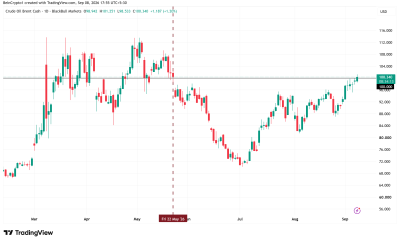
Brent Crude Oil Moves Above $100 for the First Time in 3 Months
-
 Crypto World2 days ago
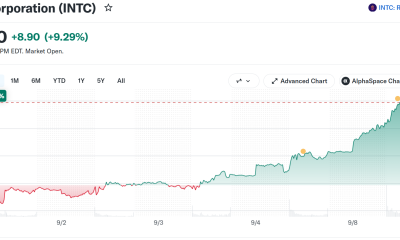
Intel Stock Jumps 9% on Chip Price Hike Report, US Stake Gains $36 Billion
-

 Crypto World2 days ago
Pump Fun and Kraken delete Hunter Biden $LAPTOP promotion
-
 Crypto World3 days ago
Visa expands stablecoin card network to 160 programs
-
 Crypto World20 hours ago
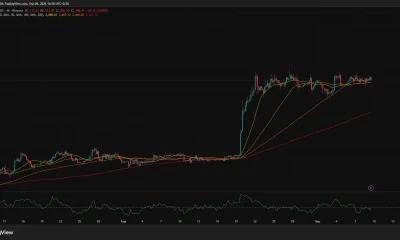
Ethereum price breakout hinges on a close above $2,535
-
 Tech3 days ago
Strong Password Policy and Password Manager Guide
-

 Business3 days ago
Egyptian TV Presenter Sarah Khalifa, 11 Others Sentenced To Death In Major Drug Trafficking Case In Cairo
-
Business2 days ago
Xometry at Goldman Sachs Communacopia + Technology Conference 2026: growth, AI and Siemens
You must be logged in to post a comment Login