
Entertainment
The Classic Quentin Tarantino Called “One of the Few Perfect Movies Ever Made” Is Officially Streaming

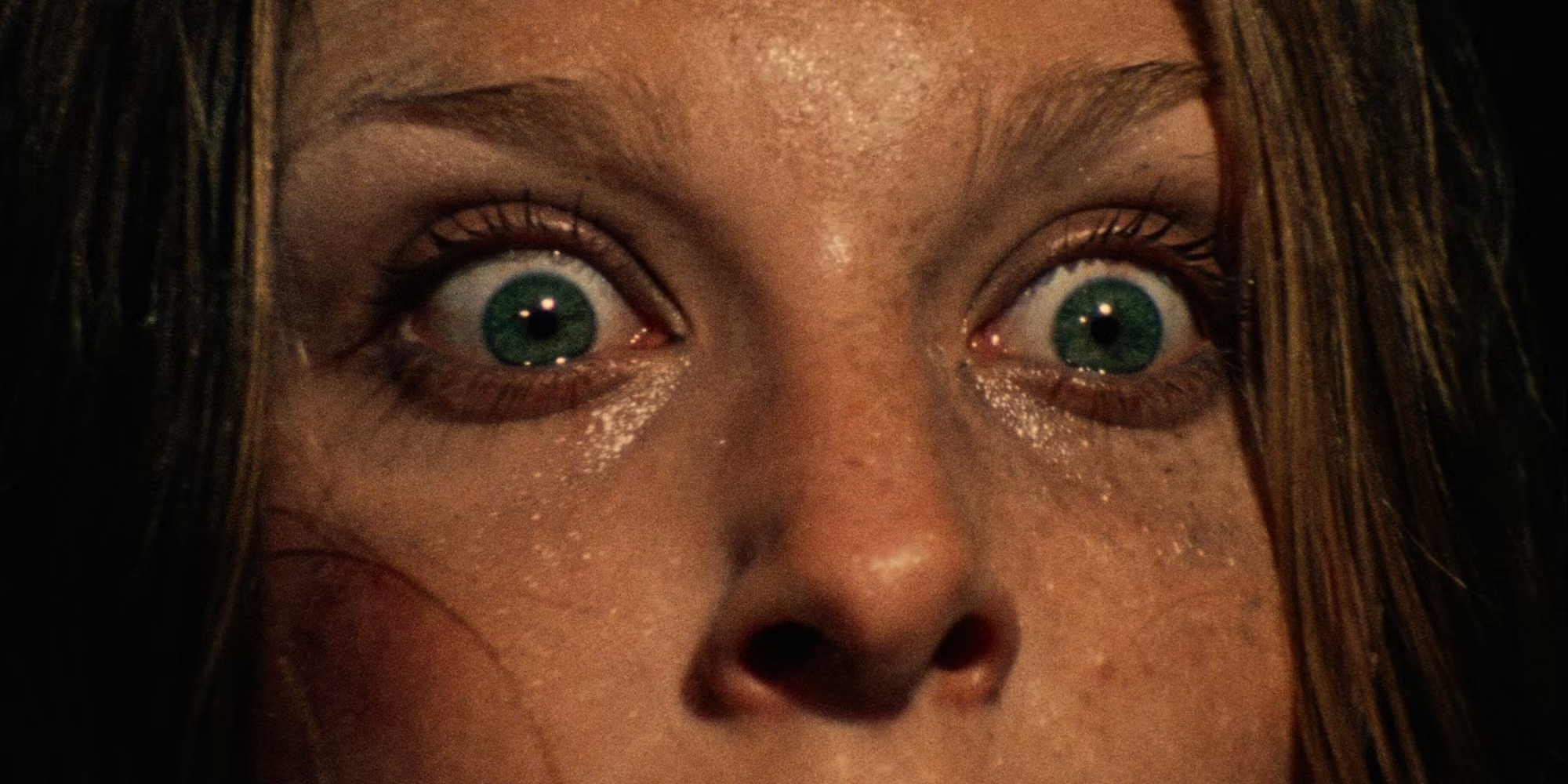
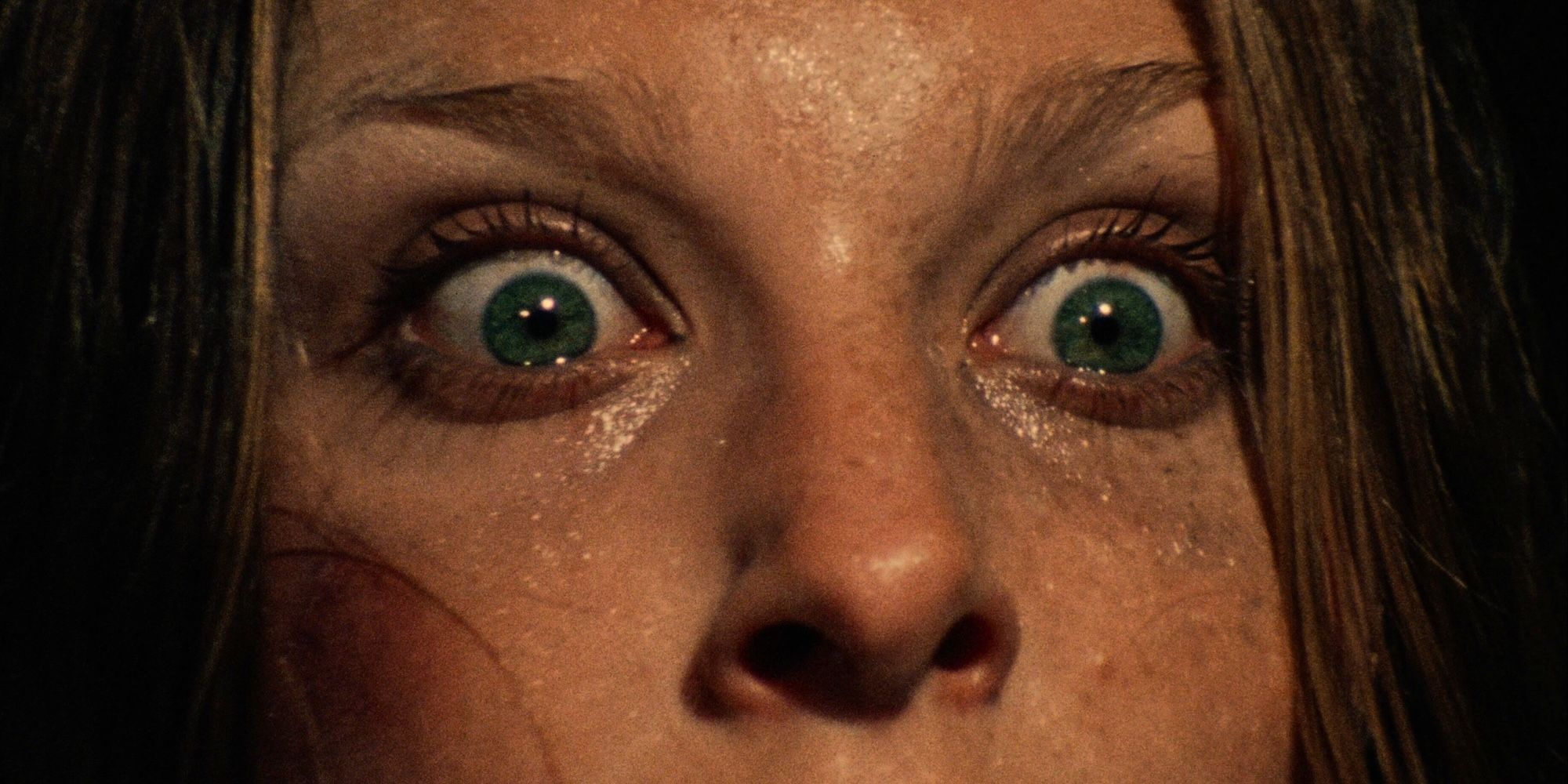
Director Quentin Tarantino frequently shares his list of favorite movies, ranging from broad best-of-the-year lists to breakdowns of more obscure genres. His favorite movie of 2026, for instance, is the Netflix crime-thriller The Rip, starring Matt Damon and Ben Affleck. His favorite spaghetti Western, on the other hand, is Sergio Leone‘s epic The Good, the Bad and the Ugly. Tarantino has also made his love for grindhouse cinema quite apparent over the course of his career. Around two decades ago, he collaborated with Robert Rodriguez on a grindhouse double-bill released theatrically; his installment, Death Proof, is widely regarded as his most minor work. Unsurprisingly, Tarantino has a list of favorite grindhouse films, and the highest-rated movie on it is currently streaming on Prime Video and Shudder. In his book “Cinema Speculation,” Tarantino described it as one of the few “perfect” movies ever made.
Not every movie with a vaguely exploitation-cinema vibe can meet Tarantino’s guidelines for what qualifies as grindhouse cinema. Number-one on the list of requirements, he explained in a 2008 interview, is that the movie in question must have played in an actual grindhouse — that is, not a mainstream theater. “Halloween could be on here, but Friday the 13th couldn’t, because that was a Paramount movie,” he explained. Tarantino’s favorite grindhouse movie is an 83-minute horror classic that spawned a franchise that continues to this day, and is about to be rebooted by Curry Barker, the director of this year’s smash-hit Obsession.
Here’s Where You Can Watch Quentin Tarantino’s Favorite Grindhouse Movie on Streaming
We’re talking, of course, about The Texas Chain Saw Massacre. Director Tobe Hooper‘s controversial slasher movie was partially inspired by the crimes of serial killer Ed Gein and was banned in several countries for its graphic content. The movie was produced on a shoestring budget of $140,000, and it went on to gross $30 million. It now holds a “Certified Fresh” 85% score on the aggregator website Rotten Tomatoes, where the consensus reads, “Thanks to a smart script and documentary-style camerawork, The Texas Chainsaw Massacre achieves start-to-finish suspense, making it a classic in low-budget exploitation cinema.” The movie launched a franchise that has survived decades, and was most recently rebooted by Netflix in 2022. A new movie, directed by Barker, will be produced and distributed by A24. You can watch Hooper’s 1974 original on Prime Video, and stay tuned to Collider for more updates.

Continue Reading
There is no point in watching a great thriller if you’re not calculating all the time. You start calculating. Who has the gun? Who knows more than they are admitting? How long until somebody makes the choice that ruins everything? The room around you becomes irrelevant because the movie has quietly turned you into another nervous participant. That is the standard here. Not merely suspenseful. Not merely dark.
And the best part is how differently they do it. One weaponizes an empty room. Another turns Los Angeles traffic into a death clock. The tension changes shape every time. The grip does not. These are 8 most exciting thrillers of the 21st century and they make sitting still feel strangely difficult.
8
‘The Invisible Man’ (2020)

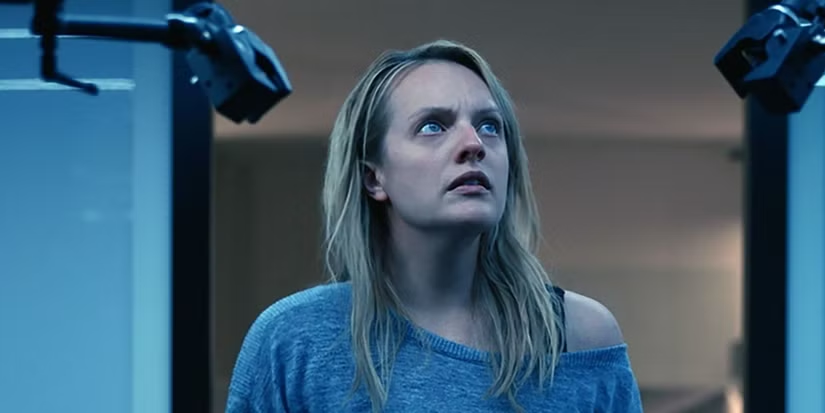
Cecilia Kass (Elisabeth Moss) escapes an abusive relationship in the middle of the night, convinced that Adrian Griffin (Oliver Jackson-Cohen) will never willingly let her go. Then Adrian is reported dead. The Invisible Man immediately understands the cruelest possible question to place inside that relief. What if Cecilia is right to remain afraid even when nobody else can see what she sees?
The movie gets enormous mileage from apparently empty space. A doorway held in frame for slightly too long becomes suspicious. A chair seems occupied even when it is not. A breath, footprint, or minor movement suddenly matters because Cecilia’s safety depends on proving the existence of something designed to leave no proof. The restaurant sequence is especially vicious because it takes a public place, somewhere that should feel safe, and turns one impossible act into instant catastrophe. The sci-fi hook is clever, but the real tension comes from everyone around Cecilia deciding that fear itself is evidence against her.
7
‘Collateral’ (2004)

Max Durocher (Jamie Foxx) thinks he is picking up one more passenger during another long night driving a cab through Los Angeles. Vincent (Tom Cruise) gets in, offers him a large fare for several stops, and seems unusually composed. Then a body crashes onto the roof of the taxi.
From there, Collateral turns the city into a route Max desperately wants to escape. Vincent has a schedule to keep and several people to kill before sunrise, which gives every delay a strange double meaning. Traffic can save Max or trap him. A nightclub becomes a maze of cops, targets, and gunfire. Even the quieter scenes feel dangerous because Vincent can switch from philosophical conversation to lethal efficiency without changing his tone very much. The coyote crossing the empty street briefly stops both men and somehow makes Los Angeles feel even stranger. By dawn, the entire city seems to have become part of the chase.
6
‘Gone Girl’ (2014)

Amy Dunne (Rosamund Pike) disappears on her fifth wedding anniversary, leaving behind blood, an overturned living room, an anniversary treasure hunt, and a husband who looks increasingly terrible on television. Gone Girl spends its first half asking whether Nick Dunne (Ben Affleck) killed his wife. Then it becomes far more entertaining once you realize that question was only the entrance.
The media circus is almost as dangerous as the marriage itself. Nick’s smile beside Amy’s missing-person poster becomes national evidence of guilt. Amy’s diary provides one version of their relationship, while reality keeps exposing how carefully both spouses curate themselves for other people. Then “Cool Girl” arrives, not simply as a speech but as a brutal explanation of the performance Amy believes women are expected to maintain. The movie is wickedly funny because Nick and Amy understand each other better than anyone else ever could. That mutual understanding is precisely what makes the marriage terrifying.
5
‘Sicario’ (2015)

The convoy into Juárez is where Sicario announces the kind of movie it intends to be. FBI agent Kate Macer (Emily Blunt) sits inside an armored vehicle surrounded by men who seem completely comfortable with a level of danger she is still trying to understand. Bodies hang from an overpass. Traffic slows near the border. Everybody starts watching the surrounding cars.
Nothing explodes for several minutes, yet the scene is almost unbearable. That is the movie’s specialty. Kate is constantly entering rooms where the rules have already been agreed upon by people who did not bother telling her. Alejandro Gillick (Benicio del Toro)’s calm makes him difficult to read, while Matt Graver (Josh Brolin) treats the entire operation with the casual confidence of someone who has accepted moral compromises Kate is still discovering. The tunnel raid pushes that feeling into literal darkness. You are not excited because you understand the plan. You are excited because Kate does not.
4
‘Prisoners’ (2013)

Certainty is the most frightening thing in Prisoners. Two little girls disappear on Thanksgiving. Their families remember a suspicious RV parked nearby. The police find Alex Jones (Paul Dano), but there is not enough evidence to hold him. Keller Dover (Hugh Jackman) hears him say just enough to become convinced the answer is standing right in front of him.
Keller kidnaps Alex and begins trying to force information from him, turning a father’s desperation into something the audience cannot comfortably endorse or dismiss. Detective Loki (Jake Gyllenhaal), meanwhile, follows clues through abandoned properties, old cases, mazes, and people whose connection to the disappearance keeps changing shape. The movie thrives on the gap between what Keller believes and what Loki can prove. Rain seems to fall constantly, rooms feel airless, and every hour lost feels catastrophic. Even before the case fully reveals itself, the pressure has already done damage nobody can undo. Not to mention that Jackman’s acting was so intense, and at one point he punched so hard in improvisation that his co-stars got scared.
3
‘Uncut Gems’ (2019)

As funny as it sounds, Uncut Gems is a brilliant thriller. Howard Ratner (Adam Sandler) is the only person in Uncut Gems who seems to believe Howard Ratner is one smart move away from fixing everything. That belief survives gambling debts, furious collectors, family problems, business trouble, and every previous smart move that made the situation worse.
The black opal gives Howard a new obsession because Kevin Garnett (Kevin Garnett) becomes convinced it has special power, and suddenly jewelry, basketball, debt, and superstition are all part of the same frantic calculation. Howard keeps borrowing against things he does not truly control, then using the temporary breathing room to make another bet. Doors jam. Phones ring. People shout over each other. Even a Celtics game becomes difficult to watch because Howard has built a wager complicated enough to make every possession feel life-or-death. The remarkable thing is that you eventually start wanting his insane plan to work. That is how completely the movie traps you inside his brain.
2
‘The Departed’ (2006)

Billy Costigan (Leonardo DiCaprio) is working undercover inside Frank Costello (Jack Nicholson)’s organization. Colin Sullivan (Matt Damon) is working inside the Massachusetts State Police for Costello. Both sides know they have a rat. Neither side knows exactly who.
That setup gives The Departed a wonderful cruelty because almost every conversation contains information somebody is not supposed to have. A phone left vibrating on a table can become more frightening than a gun. Billy is being crushed by the strain of living among criminals who would kill him immediately if they knew the truth, while Colin keeps improvising ways to protect a secret life that looks increasingly impossible to maintain. Costello enjoys making everyone around him uncomfortable, which makes even casual conversations feel unstable. Then the movie reaches the elevator, and if you know, you know. Few thrillers are this funny, nasty, and committed to reminding you that one bad second can erase a very careful plan.
1
‘No Country for Old Men’ (2007)

Llewelyn Moss (Josh Brolin) finds the aftermath of a drug deal in the Texas desert, discovers a case containing two million dollars, and takes it home. He knows exactly what kind of trouble that money represents. He takes it anyway.
The chase that follows in No Country for Old Men feels terrifying because Anton Chigurh (Javier Bardem) barely seems to participate in ordinary human urgency. He moves at his own pace, uses a captive bolt pistol like something borrowed from another nightmare, and occasionally lets a coin toss decide whether another person gets to live. The gas-station scene contains almost no action, yet “call it” becomes unbearable because the man behind the counter slowly realizes the stakes before he understands the reason. Moss is resourceful enough to make the pursuit exciting, especially during the motel and border stretches, but the movie keeps widening beyond hunter and hunted through Sheriff Bell (Tommy Lee Jones)’s exhausted perspective. That is what gives the tension such unusual weight. You are watching a chase, but you are also watching an older man realize the world no longer behaves according to rules he recognizes.

No Country for Old Men
- Release Date
-
November 21, 2007
- Runtime
-
122 minutes
- Director
-
Joel Coen, Ethan Coen
- Writers
-
Ethan Coen, Joel Coen

In fantasy, villains are beloved characters. All readers need is an evil sorcerer, a cruel king, or a tyrant who only wants to gain more power, and they have plenty of good reasons to hate any of them. Still, some of the most interesting villains in fantasy literature make their readers’ relationships with them complicated. This can happen when villains commit awful deeds but justify their actions; they may be cruel, but they have also suffered cruelty at the hands of others; or, in some cases, they are such unique personalities that readers feel sorry for them when they fail.
The five fantasy novels discussed below show that a villain can be cool even if they’re completely unlikable. They need to give readers a reason to understand them. Before long, that understanding can turn into sympathy, sympathy can turn into investment, and suddenly you’re cheering for someone you probably shouldn’t.
The Poppy War by R.F. Kuang

The Poppy War is the debut novel by author R.F. Kuang. It follows the life of subdued Fang Runin, also known as Rin. After hardships as a war orphan, she wants to fight the arranged marriage set for her, and her only escape leads to the dangerous Keju exam, a difficult national test that grants her admission to Sinegard, an elite military school in her nation. The book starts as a run-of-the-mill fantasy novel, but gradually grows darker and more twisted as Rin learns about her shaman powers tied to the Gods. Once the war breaks out, her academics become purely practical, and she has to face the reality of war.
Rin is the type of character who proves that the term villain does not fully encompass her complexity. Her actions turn out to be more reckless and more extreme, and her rage ultimately pushes Rin to commit a horrifying crime. Nevertheless, throughout the story, Kuang helps readers understand why Rin has become such a person. She has been the victim of severe violence and discrimination, had to face manipulations by those in power, and had to endure all these terrible events of war. None of that excuses what she does, but it makes her choices understandable. Her rage becomes a source of power, and Kuang makes it increasingly difficult for readers to separate Rin’s violence from the world that taught her violence was the only language anyone respected.
Vicious by V.E. Schwab

In Vicious by V.E. Schwab, Victor Vale and Eli Cardale are college roommates who become fascinated by the possibility of creating superhuman abilities. Their research reveals that near-death experiences can transform ordinary people into ExtraOrdinaries, and the two decide to test the theory on themselves. It works, but the experiment destroys their friendship. Ten years later, Victor has spent years in prison, while Eli has reinvented himself as a celebrated hero with a very different mission: eliminating other ExtraOrdinaries. Victor escapes prison with his new friend Mitch and sets out to find Eli, turning what began as a scientific experiment into a deeply personal revenge story.
Victor is ruthless, calculating, and perfectly comfortable hurting people if he believes there’s a reason for it. He also has absolutely no interest in pretending otherwise. Eli, meanwhile, has convinced himself that killing other ExtraOrdinaries makes him a hero, giving Vicious a deliciously warped take on the superhero story. Victor’s desire for revenge isn’t noble, but Schwab makes his perspective increasingly persuasive because Eli’s supposed heroism is built on hypocrisy. Victor also develops genuine attachments, particularly to Sydney, that complicate the idea that he’s simply a cold-blooded monster.
The Lies of Locke Lamora by Scott Lynch

The Lies of Locke Lamora by Scott Lynch features Locke Lamora, a thief, a con artist, and an exceptionally talented liar. He also happens to be the leader of the Gentleman Bastards, a gang that specializes in elaborate schemes designed to separate wealthy nobles from their money. Their home is Camorr, a sprawling fantasy city inspired by medieval Venice, where the criminal underworld runs by its own rules. Locke and his crew technically maintain a respectable reputation as petty thieves while secretly pulling off enormous cons. That arrangement works beautifully until a mysterious criminal known as the Gray King begins dismantling Camorr’s criminal hierarchy.
Calling Locke a villain isn’t quite accurate, but calling him a hero would be even harder to defend; he lies constantly, steals for a living, manipulates people for money, and has no problem bending or breaking rules when it benefits him. Yet Lynch gives him the qualities that make a morally questionable character impossible to resist. When the Gray King destroys Locke’s carefully constructed world and murders members of his crew, Locke’s desire for revenge becomes nonobjective. Locke is the sort of character who can walk into a disaster of his own making, somehow make everything worse, and still have you desperately hoping he gets out alive.
The Young Elites by Marie Lu

A decade after a horrible blood fever ravaged the kingdom, many of the survivors bear the marks of their ordeal in The Young Elites by Marie Lu. The malfettos are treated like dangerous outcasts, and a smaller group emerges from the disease with wondrous powers and becomes known as the Young Elites, while the Inquisition Axis fervently hunts them down, fearing they will destroy the kingdom. Adelina Amouteru is one of those malfettos. After years of abuse from her father, she kills him by accident after her powers awaken, leading to her being sentenced to death. She is saved by the Dagger Society, a group of Young Elites who oppose the kingdom, although joining them is far from helping Adelina become a true fantasy hero.
Adelina’s narrative gets interesting precisely because she becomes less likable while always remaining understandable. The protagonist is paranoid, selfish, cruel, and increasingly full of rage and fear. Her illusion abilities are tied to these emotions, and the feelings that make her dangerous also make her powerful. Lu shows that Adelina’s bad traits aren’t hidden from the reader; instead, she describes the abuse and suffering that made her who she is before showing that she has gained the power to fight back.
The Blade Itself by Joe Abercrombie

Joe Abercrombie’s The Blade Itself doesn’t bother with the traditional fantasy distinction between good guys and bad guys. Its world is packed with people who are compromised, selfish, violent, or all three, and the story follows several of them as political conspiracies, wars, and old grudges begin colliding. There’s Logen Ninefingers, a notorious Northman trying to outrun his bloody past; Jezal dan Luthar, a vain nobleman obsessed with fencing and status; and Sand dan Glokta, a former war hero who has become a torturer for the Inquisition after being brutally crippled. Then there’s Bayaz, an enigmatic wizard who claims to be the First of the Magi and quickly becomes entangled in the others’ lives. The result is a fantasy story where almost everyone has a reason to make you uncomfortable.
Glokta might be the clearest example of why Abercrombie’s characters are so difficult to categorize. He’s a torturer. He extracts confessions through agony and works for a deeply corrupt institution. By any conventional standard, he’s a villain; yet Glokta is also one of the most perceptive people in the story, and his investigations expose corruption that the supposedly respectable members of society would rather keep hidden.
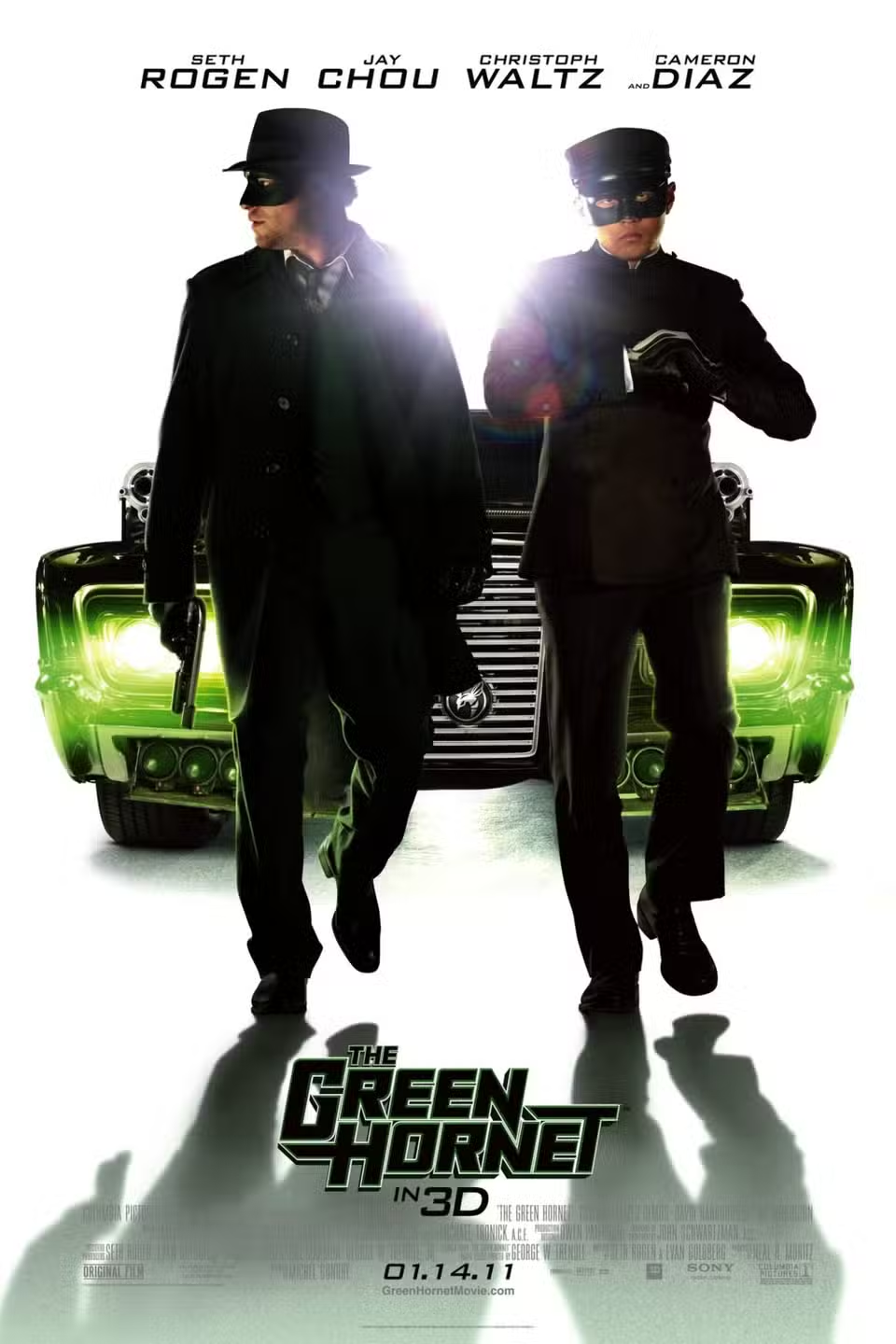
After the success of Tim Burton‘s Batman in the late 1980s, studios across town dedicated themselves to producing movies based on other pulp comic strip characters from the 1930s and 1940s. One of the most prominent superheroes of that era had already been featured in a short-lived television series in the 1960s, around the same time as the Adam West and Burt Ward Batman series — in fact, both shows were created by the same man, William Dozier. However, the other property didn’t get a proper film adaptation until much later, during the second wave of superhero cinema in the 2010s. The movie’s production was riddled with problems, and its star later described the experience of making it as a “nightmare.” Now, the movie is streaming for free in the United States, so if you haven’t checked it out, now is your chance to do so.
It was released in 2011, just a year before Marvel’s The Avengers and during Phase One of the Marvel Cinematic Universe. Interestingly, the movie didn’t follow the path established by the MCU, nor was it a grounded epic in the vein of Christopher Nolan‘s The Dark Knight Trilogy. One of the many reasons behind its perceived failure was that it refused to be put in a box. Appearing on Marc Maron‘s WTF Podcast, Seth Rogen shared stories about the making of the movie, and said that the script was under constant scrutiny from the studio, while the expensive action sequences were not paid attention to at all. “What we spent literally $50 million dollars on, no one checks out. And that’s what’s crazy. The way the money was spent and the way the money is spent on a lot of these movies is crazy,” Rogen said.
Here’s Where You Can Watch the Failed Superhero Franchise-Starter for Free
We’re talking, of course, about The Green Hornet, also featuring Jay Chou, Cameron Diaz, Christoph Waltz, Tom Wilkinson and a pre-Stranger Things David Harbour. The movie was directed by Michel Gondry, and his inexperience at tackling big-budget projects quickly became an issue. “It was his first movie with more than a $20 million budget and this was a $120 million budget,” Rogen said, citing his own shortcomings in the action genre as well. The movie ultimately grossed around $230 million worldwide. The movie now holds a 45% score on the aggregator website Rotten Tomatoes, where the consensus reads, “It’s sporadically entertaining, but The Green Hornet never approaches the surreal heights suggested by a Michel Gondry/Seth Rogen collaboration.” You can watch The Green Hornet for free this month on Pluto TV, and stay tuned to Collider for more updates.

- Release Date
-
January 14, 2011
- Runtime
-
119 Minutes
Entertainment
Netflix’s Latest Release Officially Takes Over Streaming, and It’s Not a Movie or Series
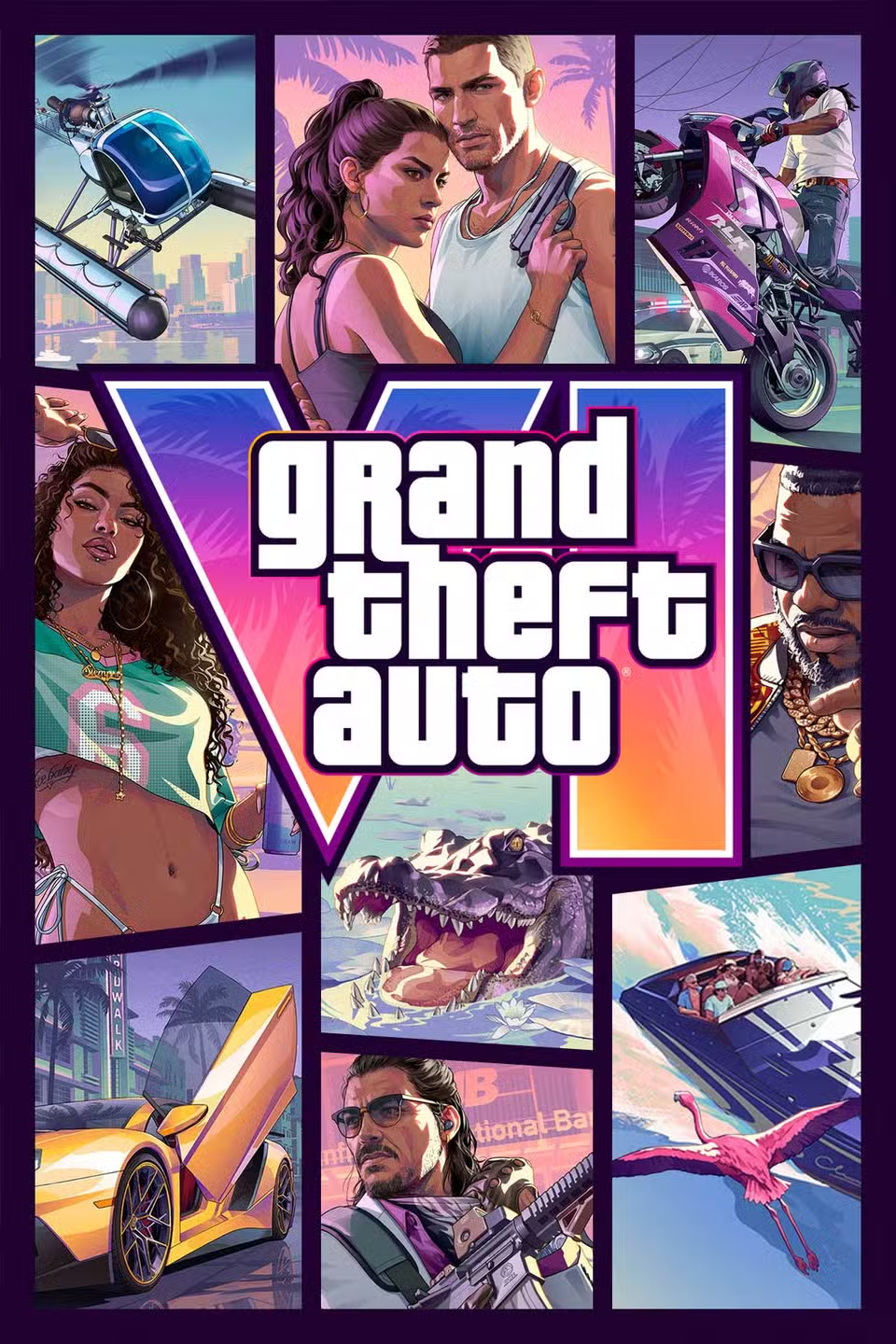
Netflix has a history of putting its finger on the pulse of what matters, from Stranger Things to Squid Game. The newest hot ticket item, however, is not a movie or television series. As everyone came down with Grand Theft Auto fever, the streamer followed suit. Grand Theft Auto VI is imminent after 13 years of waiting, and Netflix has just the thing to tide fans over before its release. The 23-minute-long featurette, Grand Theft Auto VI: An Extended Look, has exploded in the pop culture zeitgeist.
As Netflix continues to find its niche in the new world order of streaming, the early look at the new video game has driven viewers to the platform in droves. According to FlixPatrol, the short feature has had 14,000 hours of viewership in just one week. This bodes well for the game that is one of the most anticipated of the year. Grand Theft Auto VI: An Extended Look gives viewers a hint at what is to come, and it does not disappoint.
‘Grand Theft Auto VI’ May Be the Crowning Achievement For the Video Game Series
It goes without saying that in the decade that fans have been waiting for a new Grand Theft Auto game to be released, there have been some major achievements in the industry. When Grand Theft Auto V first came out, The Witcher 3: The Wild Hunt had not been released. Since then, it won Game of the Year, while The Last of Us Part I was remade, and The Last of Us Part II was released. It is a brave new world, and the extended look into Grand Theft Auto VI seems to indicate that there is a reward for patience.
The featurette introduces Jason and Lucia, partners in crime – and in life if gamers choose to do so. This game marks the return to Vice City, a fictionalized version of Miami. Together, they try to rise through the ranks of the criminal world while maintaining personal relationships and even their own physique, depending on how gamers play.
The upcoming game has outdone itself in comparison to all other Grand Theft Auto ventures, if the brief hint at the gameplay is any indication. The details present in the short are nothing short of miraculous. The animation seems to be worth the wait, as are the complexities of gameplay. Players have the option to romance their partner and can choose options like holding hands and texting each other.
They can also switch back and forth between Jason and Lucia at will. Players can also take their avatars to the gym if that is how they desire to spend their time. This new Grand Theft Auto adventure is more than dabbling in realism. The attention to detail is mind-blowing and far exceeds the potential of previous games. The inside look at this new iteration is more than a gameplay trailer. It shows off the lengths Rockstar went to impress potential gamers. Those who may not have initially had a mind to play the game may want to after its exposure on Netflix. It seems that video games are back, and many people will be taking the day off when this one is released on November 19.

- Released
-
November 19, 2026
- ESRB
-
Rating Pending – Likely Mature 17+
- Engine
-
Rockstar Advanced Game Engine (RAGE)
- Multiplayer
-
Online Multiplayer
- Prequel(s)
-
Grand Theft Auto 5

Serial killer thrillers and supernatural horror don’t always make comfortable bedfellows, but Osgood Perkins found a particularly disturbing way to combine the two. Two years ago, Perkins made a film that paired the procedural hunt for a killer like Silence of the Lambs into something a lot more horrifying, while also burying Nicolas Cage beneath a mountain of prosthetics and, in doing so, giving him one of the best showcases of his career.
Two years later, Longlegs has officially discovered a new streaming home. The horror hit from Neon has landed on Hulu in the United States, just in time for those who want something new and pants-soilingly terrifying to watch in the spooky season. Longlegs is also available through Disney+ for subscribers with the appropriate Hulu access.
Longlegs sees us follow Lee Harker (Maika Monroe), an FBI agent who’s assigned to investigate a mysterious serial killer (Cage) who is linked to a string of, it would appear, inexplicable family murders. At first, she begins uncovering occult clues that seem to link them all together, but the investigation gets a lot more disturbing for her, and us, when she starts to realize that she has a connection to the killer that makes things a lot more personal than she could have ever contemplated.
The cast also features Blair Underwood (L.A. Law) as Agent Carter, Alicia Witt (Dune) as Ruth Harker, Michelle Choi-Lee (Yellowjackets) as Agent Browning, Dakota Daulby (Billy the Kid) as Agent Fisk, Kiernan Shipka (Chilling Adventures of Sabrina) as Carrie Anne Camera, and Jason William Day (The Last of Us) as Father Camera.
‘Longlegs’ Was One of 2024’s Biggest Horror Hits
For the most part, critics adored what Perkins did with Longlegs, which currently has a score of 85% on Rotten Tomatoes, from more than 300 reviews, with particular praise going to the oppressive atmosphere and, of course, Cage himself. Audiences were a bit put off, though, giving it a 61% Popcornmeter score. But that’s not something that stopped it from becoming a sleeper hit, as it earned more than $74 million domestically alone. The film also did wonders for Monroe, once again cementing her as a scream queen in the making following her breakout roles in The Guest and It Follows.
Longlegs is streaming now on Hulu.

- Release Date
-
July 12, 2024
- Runtime
-
101 Minutes
Romantic comedies often get reduced to their own surface mechanics, possibly more than any other genre. Aspects such as the meet-cute, the misunderstanding, the airport dash, the happy ending and countless others. But ironically, some of the most enduring entries in this category are not about falling in love at all. They are more about loss, the grief that comes with it, and losing a relationship, or a version of yourself and using romance as the vehicle to process it rather than the core driving force of the narrative. With two rom-com classics in About Time and Sleepless in Seattle hitting Netflix on September 1st, now feels like the right moment to revisit why films like these two have held up so much longer than their genre peers.
This distinction is crucial because it explains why certain entries have stuck around decades after their initial release while flashier, more conventional entries have faded into the abyss. Grief gives these movies a certain level of emotional stakes that the genre’s traditionally comedic structuring doesn’t allow for. It forces their characters to change in ways a simple obstacle-to-love plot rarely demands. The comedy still exits just in a more clever and sporadic manner. But look at all seven of these films, and it is actually rarely ever romance driving the plot itself.
But what truly separates this list from other well-known romantic comedies is how little their central romances actually resolve the grief driving them. A death, a divorce, an illness, a memory slipping away. None of these things gets neatly tied up by the arrival of a new partner, no matter how satisfying the ending feels. Instead, love becomes the space where these characters finally let themselves feel what they had been avoiding. That’s the true difference the movies encompassing this list have, that has allowed space for them to stay in the cultural zeitgeist long after many of their peers have mostly been forgotten. Revisiting them with that lens changes almost everything about how their famous scenes actually land.
7
‘Notting Hill’ (1999)

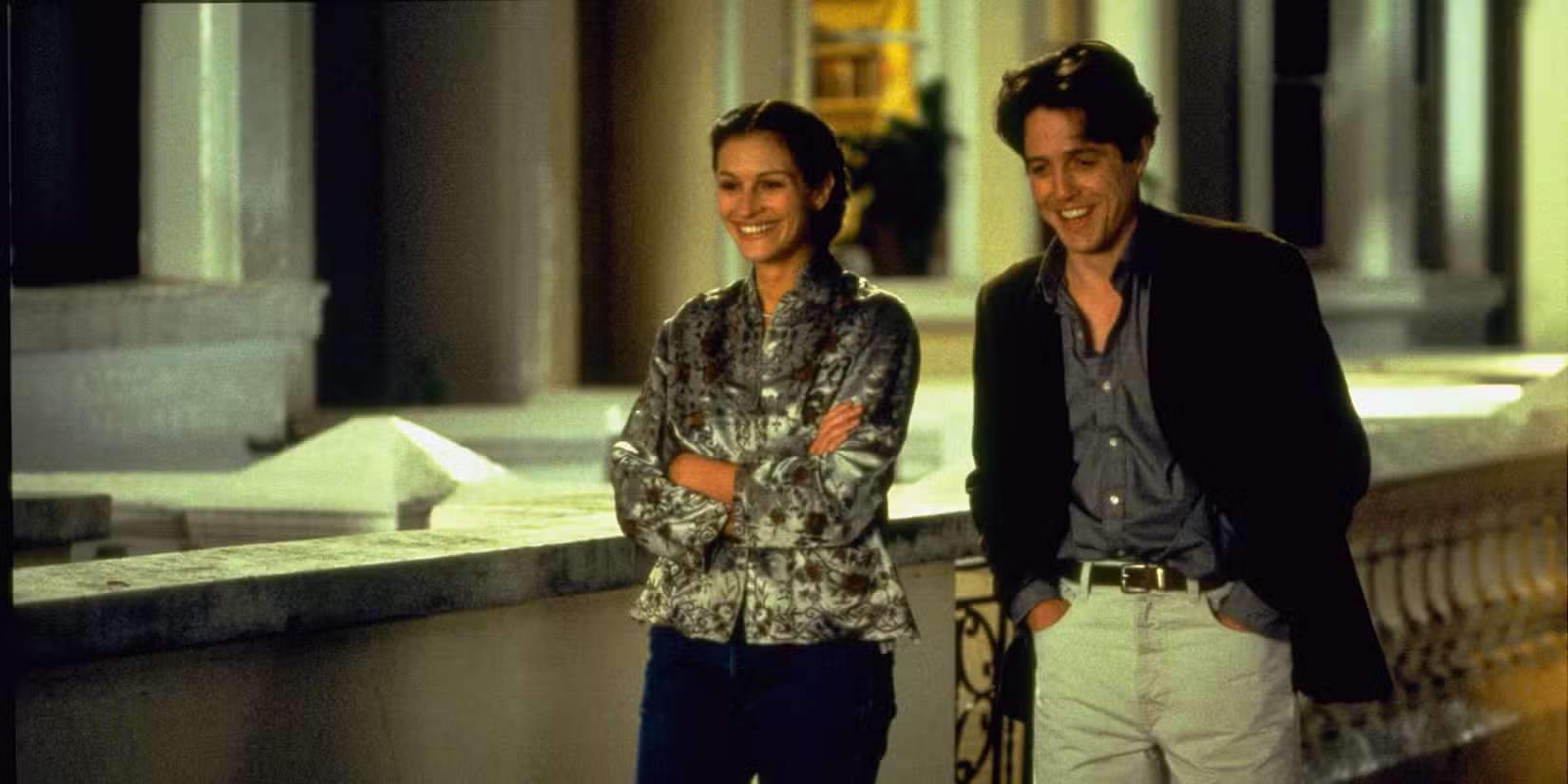
On the surface, Notting Hill is a straightforward fish-out-of-water romance between an ordinary bookshop owner and a famous movie star. But, the arc of bookkeeper William Thacker, played by Hugh Grant, only makes sense once you notice how much he is feeling loss and how it has already been defining the majority of his life. He is divorced, his travel bookshop is barely staying afloat, and his social circle is a small, tightly bonded group of friends that were built as a replacement family for a life that didn’t go as planned. His hesitation throughout the film is not really about Anna’s (Julia Roberts) fame or even the tabloid chaos that seems to follow her everywhere. It is really about a man who has already been disappointed before, and has arranged his entire existence — his eccentric roommate Spike and his low-stakes bookshop routine — around never being disappointed again.
That undercut of a quiet resignation that he holds, is what gives the films more famous, sweeping moments their weight. William’s growth in the movie is really about relearning how to risk loss again after already absorbing one. All culminating in his decision to chase Anna down instead of letting his old ways get the best of him. The romantic optimism the project exudes, crystallized in that final Notting Hill garden scene, resonates so acutely because it is fighting against a real lived-in grief. Divorce rarely gets this much screen time in a genre built on first loves.
6
‘About Time’ (2013)

About Time wears its premise as a time-travel romance, but the film’s actual emotional center has pretty much nothing to do with its central couple. Tim’s relationship with his father, played by Bill Nighy, and the years he spends trying to appreciate ordinary moments before being able to revisit them, is the story the film is actually telling. The romance with Mary (Rachel McAdams), functions as the backdrop against which Tim learns to value the time he has, useful and sweet in its own right, but never the film’s true stakes. It is that devastating gut punch when Tim learns he can no longer travel back once his father has died. That, his journey has really been about a version of mortality and fatherhood rather than pure romantic love.
By the end, About Time has largely abandoned its central love story, choosing to sit with the grief behind the narrative directly. It shows Tim reliving ordinary days with his father, playing ping pong, walking on the beach, lone last time before accepting he cannot anymore. Richard Curtis structures the entirety of the back half of the film around that farewell and not any romantic climax one might have expected. Its a clear example of a movie using that romcom structure as a Trojan Horse of sorts, to build a narrative focused on loss. Audiences walk in expecting a love story and walk out having cried over a father-son relationship instead.
5
‘The Big Sick’ (2017)

The Big Sick complicates its own marriage structure by removing its female lead from most of the film’s runtime. It places Emily in a medically induced coma and forces Kumail to fall in love with her parents, Terry and Beth instead while confronting the very real possibility that she might die. This movie never lets the audience forget how close its central relationship comes to ending before it ever truly begins. It turns what could have been a standard culture-clash romance about Kumail’s Pakistani family and arranged marriage expectations into something closer to a meditation on anticipatory grief. Since it’s based on the real courtship of Kumail Nanjiani and Emily V. Gordon, the movie treats the medical crisis with an attention and care most romcoms never attempt.
It is a tension that is constantly overshadowed by the threat of loss, which gives the movie’s comedic beats real meaning and a weight beyond traditional genre-infused bits. And Kumail’s growing bond with Emily’s parents becomes its own kind of grief-adjacent relationship, constructed out of a shared fear and long hospital waiting-room silences. It makes the eventual resolution to the story feel earned and lived in rather than just another simple, sweet romantic comedy entry. By the time Emily wakes up, The Big Sick has already done the emotional heavy lifting of grieving a relationship that technically never ended. It makes its actual reunion almost secondary to everything before it, cleverly side-stepping a massive genre stereotype.
4
‘Marley & Me’ (2008)

Image via 20th Century Studios
Marley & Me is really a film about marriage, even though its true emotional architecture is built around a dog’s lifespan. And, by extension, the couple’s own passage through young adulthood into middle age and eventual loss. John and Jennifer’s relationship survives job changes, career disappointments, and multiple children, but the movie frames all of it through Marley’s aging body. Director David Frankel uses the destructive, exuberant Labrador as a clock counting down toward an ending the audience knows is coming from the opening scenes. Owen Wilson and Jennifer Aniston play the marriage itself with a genuine and relatable warmth, but the film’s subject is how a family measures time through a dog who ages vastly quicker than they do.
It is that structure which turns what could have been a fairly conventional marriage dramedy into a heart-breaking story about the intricacies of what keeps a family together. The harder, more mournful moments weaved between the lighter and happier comedic beats: Marley eating jewelry, terrorizing the vet, destroying furniture, all to disarm the audience before delivering one of the genre’s most devastating final acts. It is a form of grief that is inventively disguised as a family comedy for the majority of its runtime, only revealing its real intentions in the final fifteen minutes when Marley’s decline becomes impossible to ignore. Few films marketed this directly to families have ever been willing to sit with a beloved animal’s death this directly.
3
‘Silver Linings Playbook’ (2012)

Silver Linings Playbook uses romance as a mechanism through which two deeply wounded people process very different kinds of loss. For Pat (Bradley Cooper), it’s his marriage, his mental stability, and the life he had before a bipolar breakdown landed him in a psychiatric hospital. And for Tiffany (Jennifer Lawrence), it’s the loss of her husband and her own sense of self and struggle with mental illness after his sudden death. Neither character is remotely ready for a conventional relationship, and David O. Russell‘s film is honest about that. He lets their connection slowly and methodically develop through shared damage, blunt honesty and mutual recognition instead of your typical romcom chemistry. Their courtship, built around a dance competition neither one of them is qualified for, becomes less about romance and more about two people learning to function again.
But what makes this one truly work is its refusal to treat either character’s grief as something a relationship simply cures. Their bond is messy, halting and forged on real emotional wreckage, complete with restraining orders, family dysfunction and a mental illness handled without much sentimentality. The films ultimately hopeful ending is enhanced through how their grief doesn’t pretend to ever be fully resolved, only that they have found someone equipped to sit inside it with them. That distinction is what separates it from far tidier films about recovery.
2
‘Eternal Sunshine of the Spotless Mind’ (2004)

Eternal Sunshine takes the genre’s usual approach to loss and inverts it entirely, following a couple who choose to erase the memory of their relationship rather than simply mourn its end. The film becomes a meditation on grief experienced in reverse, watching Joel (Jim Carrey) relive and lose his memories of Clementine (Cate Blanchett) in real time as the erasure procedure takes hold. It forces him to confront exactly what he is giving up as it disappears piece by piece. Michel Gondry’s disorienting visual style makes that process feel unsettling, the memories collapsing and rearranging as Joel fights to keep pieces of Clementine alive in his own mind.
That structural choice makes the film’s eventual, cautious optimism feel hard-won rather than saccharine. Instead of a couple falling in love for the first time, as in many straightforward romance movies this one ends with two people choosing to risk the same loss again, fully aware of what heartbreak costs after literally watching it happen on screen. Their final “okay” is one of the more loaded one-word endings in the genre due to all of what the audience just witnessed them lose and rebuild. It reframes the entire genre’s usual assumption that love is inherently worth the risk into something the characters have to actively, consciously choose.
1
‘Sleepless in Seattle’ (1993)

Sleepless in Seattle spends most of its runtime pretending to be about a meet-cute that hasn’t happened yet. The true emotional core of the movie is Sam’s (Tom Hanks) grief for his late wife Maggie and his young son Jonah’s inability to process losing his mother. The film’s famous long-distance romantic tension between Sam and Annie (Meg Ryan) works because it is built on top of real, carefully depicted mourning. It follows a widower slowly, hesitantly opening himself back up to the possibility of love without ever suggesting his grief had an expiration date. Nora Ephron gives Sam’s late-night radio confession real vulnerability rather than treating it as just a cute plot device, and it becomes the emotional catalyst for everything that follows.
The movie has endured as one of the genre’s defining entries decades later, precisely because of its handling of grief in such a mature, realistic manner. Its romance feels earned rather than convenient because the film takes real time to sit with loss first, letting Sam’s healing, not his falling in love, become the actual engine driving the story toward its famous Empire State Building ending. Annie and Sam barely speak to each other for most of the film, which only underscores that the real story was always about a father and a son learning how to move forward. The romance, when it finally arrives, feels like a natural byproduct of that healing rather than its whole point.

- Release Date
-
June 24, 1993
- Runtime
-
105 minutes
- Director
-
Nora Ephron
- Writers
-
David S. Ward, Nora Ephron, Jeff Arch
- Producers
-
Gary Foster
Entertainment
‘Sopranos’ Meets ‘Yellowstone’ in Hulu’s 7-Part Crime Drama Now Climbing the Streaming Charts

If there’s one thing television has taught audiences time and time again, it’s to never mix family with business — especially when it involves crime. Back in the ’90s, The Sopranos showed the psychological toll being in the mob had on Tony Soprano (James Gandolfini) and how it nearly cost him his family. More recently, Yellowstone showed how past family demons can rise from the grave while the Duttons protect the legacy of their land.
In between the two hits, there’s the biker crime drama Sons of Anarchy. Following SAMCRO (Sons of Anarchy Motorcycle Club) Vice President Jax Teller (Charlie Hunnam), the leading man has always envisioned the organization as a symbol of freedom and brotherhood, which is what his late father would have wanted. But with SAMCRO now operating as a money-making enterprise — illegal, of course — Jax begins to question his purpose within the club, leading certain family members to become concerned about where he’s taking SAMCRO moving forward.
What Is ‘Sons of Anarchy’ About?
Sons of Anarchy follows the day-to-day operations of SAMCRO in Charming, California, as told through the eyes of Jax. Since the passing of its original leader, a.k.a. Jax’s father, John Teller (Nicholas Guest), SAMCRO has been led by President Clay Morrow (Ron Perlman), who is also Jax’s stepfather. The motorcycle club has its own hierarchy, with level-headed Bobby Munson (Mark Boone Junior), violent Sergeant-at-Arms Tig Trager (Kim Coates), and fellow founding member Piney Winston (William Lucking), to name a few. Despite the strict hierarchy within the club, split loyalties and betrayals eventually sees SAMCRO fall apart as, one by one, the most long-standing members of the club are taken out.
On the outside, SAMCRO operates a repair shop under Teller-Morrow Automotive Repair. However, the legitimate business is merely a front for its criminal activities, serving as a base to orchestrate illegal gunrunning, supply firearms to other groups, and make deals with rival gangs. As the son of the founder, Jax is naturally SAMCRO’s protégé. But when he discovers a hidden manuscript from his late father detailing the motorcycle club’s early years, before it became the criminal enterprise it is today, Jax begins having second thoughts about the direction his fellow members have taken. His growing doubts eventually put him at odds with certain members and force him to reconsider the future of SAMCRO.
‘Sons of Anarchy’ Is a Modern-Day Take on Shakespeare’s Hamlet
Shakespeare fans might be quick to notice just how similar Sons of Anarchy is to Hamlet. There’s the relationship between Jax and his late father, John, as well as his current stepfather, Clay. Unsurprisingly, Clay doesn’t agree with John’s vision for SAMCRO. Although the two are founding members of the club, Clay rejects John’s pacifist approach, instead believing in ruling with an iron fist and embracing the criminal underworld. Jax’s mother, Gemma (Katey Sagal), shares the same vision as Clay. But like Hamlet, Jax is guided by the spirit of his father and begins to see SAMCRO through John’s eyes.
By the time Jax finally gets the opportunity to run the club the way he wants to, however, he realizes that the biker dynasty he has inherited is a rotten apple. No matter how hard Jax tries to eradicate the evil within the club, he ironically can only do so through violence, trapping him in a vicious cycle of toxicity. The more he tries to reclaim his father’s original vision, the more he destroys himself in an attempt to make it whole again. This cycle escalates throughout the series, which becomes increasingly apparent in Jax’s transformation. Audiences first see him as a bright and hopeful member of SAMCRO, but over the seasons, he grows into a darker and more ruthless figure whom they can barely recognize anymore.
‘Sons of Anarchy’ Pushes Each Season to Even Greater Extremes

Sons of Anarchy starts humbly with Jax’s existential crisis within the club, but the problems facing SAMCRO quickly grow beyond its own walls. As the seasons progress, the club faces increasingly dangerous enemies, including a white supremacist group, a corrupt IRA leader, and a possible RICO investigation threatening the club’s livelihood. As threats increase, SAMCRO slowly starts to unravel as members are forced to choose between the club and their own lives and the lives of their loved ones.
Jax also struggles with his own family, both with Wendy (Drea de Matteo), his ex-wife and the mother of his son, Abel, and with Tara (Maggie Siff). While Wendy struggles with addiction in the early seasons of the show, its Tara’s influence on Jax that makes him reconsider his role in the club, resulting in Gemma turning on her son and Tara in brutal retaliation. As these personal and criminal conflicts clash, the series delivers disturbingly upsetting scenes and shocking deaths that will keep fans of The Sopranos on the edge of their seat. With seven seasons and plenty of drama, it’s no surprise that Sons of Anarchy continues to climb the charts on the Apple TV store.

Sons of Anarchy
- Release Date
-
2008 – 2014
- Directors
-
Paris Barclay, Guy Ferland, Gwyneth Horder-Payton, Peter Weller, Billy Gierhart, Kurt Sutter, Stephen Kay, Adam Arkin, Paul Maibaum, Phil Abraham, Terrence O’Hara, Allen Coulter, Charles Haid, Charles Murray, Karen Gaviola, Mario Van Peebles, Michael Dinner, Seith Mann, Tim Hunter
Luke Evans is opening up about a touching letter he sent to Tim Curry just before his death.
Evans, 47, took on the Dr. Frank-N-Furter role for his 2026 Broadway debut — a role made famous by Curry in the original 1975 film, The Rocky Horror Picture Show.
Speaking to Entertainment Weekly in an interview published on Friday, September 11, Evans shared that he sent correspondence to Curry to thank and compliment him for his performance that was so inspiring.
“He was very appreciative,” Evans told the outlet. “I think he was very sick when he got the letter — he was struggling a lot — and I’ve spoken to his publisher since. He struggled to speak and talk, so I think he was really in a bad place, but what a legacy.”

Tim Curry, best known for his scene-stealing role in The Rocky Horror Picture Show, died on Tuesday, August 25. He was 80. The Los Angeles Police Department tells Us that officers responded to a radio call for a “death investigation” at Curry’s home at 11:23 p.m. on Tuesday. Curry’s cause of death was not immediately […]
Evans added that he felt a connection to the late star due to their shared character, even though they portrayed Dr. Frank-N-Furter decades apart.
“What was very strange was the day that he did die, the news — of all the incredible things he did, and he did many incredible, iconic roles — it always started with the same person: Frank-N-Furter,” Evans reflected. “And I had just played him, so there was this real deep connection that I had, even though I’d never met the man. It was a strange, beautiful, tragic way to end my New York experience, but I’ll never forget it.”

Luke Evans. (Photo by Michael Loccisano/Getty Images)
News broke on August 26 that Curry died at age 80. The Los Angeles Police Department’s North Hollywood Division told Us at the time that officers responded to a call for a rescue ambulance to Curry’s home around 11:23 p.m. on Tuesday, August 25. (Us reached out to Curry’s rep for comment.)
Following Curry’s death, Evans shared the touching letter via an Instagram post, captioning it, “RIP Tim Curry. And thank you x.”


“Although we’ve never met, you’ve been part of this journey from the very beginning. Every actor who puts on Frank inevitably walks into a conversation that started with you, and I’ve felt that every night,” part of the letter read.
The letter continued, “Being compared to you has been one of the greatest compliments I’ve ever received, even though it’s a compliment no one could ever hope to live up to. There is, and always will be, only one Tim Curry.”
While previously reflecting on his role as Dr. Frank-N-Furter with LA Magazine, Curry said he looked back at the 1975 film “with a sort of bemused tolerance” after it launched his career in the industry. “It’s neither a blessing nor a curse,” he said. “I was lucky to get it.”
Us has affiliate partnerships. We receive compensation when you click on a link and make a purchase. Learn more!
Finding a slimming black dress is harder than it looks, but not once you see Penélope Cruz‘s genius outfit. The Bunker actress wore a classy dress that flattered from every angle, and we found the luxe look on sale for only $44!
Cruz arrived in Venice for the 2026 Film Festival in a slinky black dress, classic slingbacks and an oversized Chanel tote slung over her shoulder. The real showstopper was the dress, which had a wrap silhouette, ruched detailing and a clever gathered front knot that cinched her waist. This identical version hits all the same notes.
Get the Zesica Midi Wrap Dress for $44 (was $60) at Amazon! Please note, prices are accurate at the date of publication but are subject to change.
Like Cruz’s, this Zesica Midi Wrap Dress features a deep V-neck, long sleeves and a side-gathered waist, but instead of a knot, it has a decorative clasp. It’s a piece that whispers ‘elegance’ instead of shouting for attention.

If you’ve ever wondered how Hamptons rich moms look polished through the cool mornings and warm afternoons, it’s because they have the perfect transitional dress. Gwyneth Paltrow is borrowing the aesthetic — as are we — for only $39! In a TikTok recap of her off-duty wardrobe, Paltrow blessed Us with a “seven days of […]
The sleek clasp creates a diagonal line across your midsection that flatters your tummy and creates the illusion of an hourglass figure with no effort — appreciated at any age, but especially after 50.
One happy shopper raved, “There is gentle ruching at the waist, which is very flattering and helps the dress fit nicely in all the right places.” They added, “It has a comfortable stretch and feels soft and silky when worn.”
Another five-star reviewer wrote, “The long sleeves make it especially appropriate for fall and cooler weather, and I like that the overall design is classic enough to accessorize several different ways.”
Pair this chic wardrobe staple with pointed slingbacks and a structured tote for Cruz-in-Venice energy, or dress it down with tall boots and a leather jacket for date night. No matter how you style it, you’ll look and feel your absolute best.
Get the Zesica Midi Wrap Dress for $44 (was $60) at Amazon! Please note, prices are accurate at the date of publication but are subject to change.
Looking for something else? Explore more chic dresses, and don’t forget to check out all of Amazon’s Daily Deals for more great finds!
UsNow Fall Sale Alert: These chic fashion finds are up to 60% off – plus free shipping
Welcome to fall with our biggest sale of the season. Our favorite dresses, tops, handbags, and shoes are all on sale + free shipping. Inventory is limited so hurry before they’re gone.

It’s time to clamber out of the center of the world and set sail for — or rather submerge into — a world where magnificent underwater creatures and humans alike threaten your voyage. Twenty Thousand Leagues Under the Sea is arguably Jules Verne’s most famous book, and its story has returned to the screen with AMC’s 10-episode sci-fi series Nautilus.
Originally developed by Disney Entertainment before AMC Networks licensed the U.S. and Canadian rights, Nautilus revives Captain Nemo’s (Shazad Latif) futuristic submarine and its rowdy crew, serving as a prequel that provides a backstory for the enigmatic captain. It essentially acts as an allegory against British imperialism, and though that message is powerful, it isn’t the main reason the show is worth watching. Nautilus‘ ability to beautifully emulate the sense of adventure in Verne’s tale is what makes it stand out.
‘Nautilus’ Is a ‘Twenty Thousand Leagues Under the Sea’ Adaptation
In the pilot, we are introduced to the plight of Nemo and his radicalized crew. They are fleeing the tyranny of a menacing governing body dubbed “The Company,” which represents British imperialism, and head out to open water to escape rather than with a specific destination in mind. The show also fleshes out the source material by depicting Nemo as Indian, restoring an important part of the character’s identity that Verne later made explicit in The Mysterious Island. The force Nemo is escaping from is also given a much more tangible presence here.
Like in the source material, there is also a ship that comes across Nemo’s submarine and mistakes it for a sea monster. When the ship tries to attack it, Nemo is forced to fight back, resulting in a shipwreck. He manages to save a number of the occupants, including the voracious daughter of an English engineer, Humility (Georgia Flood), and her fiercely protective chaperone (Céline Menville). But unbeknownst to Nemo, Humility has ties with The Company, essentially ensuring they will continue to pursue the submarine to save her and thus complicating his efforts to escape.
‘Nautilus’ Is Driven by Immersive and Gripping Adventure
Now, the political commentary in Nautilus is important and powerful, but it only works because the adventure is engaging and spiritually faithful to Verne’s writing. Like the book, the show is full of rich imagery, bringing Verne’s vivid descriptions to life with a bright color palette, detailed sets, and thoughtful costumes. It’s as striking as it is immersive, drawing you in immediately and making the prospect of an adventure in this world inviting. But this isn’t merely a setup for the treacherous voyage ahead; Nautilus maintains this level of vitality throughout its 10 episodes, making every narrative beat as visually stimulating as the last.
What’s more exciting is that the inevitable sea monsters are treated with the same care and detail. And what’s an underwater adventure series without a cool sea monster? From giant squids to electric eels, they are all terrifying while peering from the circular window in the submarine, even more so when the characters are in the water with only a helmet between them and the creature. These creatures are not just for show, as heart-pounding action sequences follow each perilous appearance of an underwater dweller.
Nautilus keeps us hooked on the voyage by sustaining its stakes and creating a real sense of danger that makes us worry about our favorite characters. That danger isn’t only reserved for the fights against fantastical creatures, but also comes from the humans themselves, whether that be those on the crew or those chasing them down on behalf of The Company. With potential threats constantly emerging from the fogginess of the deep blue, its plunging pace delivers the novelty and anticipation that make adventure stories so enticing.
Captain Nemo and Humility’s Relationship Heightens the Stakes in ‘Nautilus’

The sense of adventure in Nautilus is also created by the performances, which heighten the stakes and keep us invested in this twisty voyage. Nemo is naturally at the center of this, putting much of the pressure on Latif’s shoulders as he takes on one of Verne’s most famous characters. The series also restores Nemo’s Indian identity, a part of his history made explicit by Verne in The Mysterious Island but omitted from several previous screen adaptations. Luckily, Latif strikes a compelling balance between enigma and vulnerability in his performance as Nemo, ensuring he remains the mercurial, mysterious captain of this futuristic submarine while peeling back enough layers to hook us into the character even more.
As such, the political strife is practically the perfect backdrop to this story. It informs Nemo’s motivations and yearning for freedom while grounding the fantastical adventure in a real point of history: British colonial rule over India. Next to Nemo, Humility’s motivations onboard are also tied to the political climate. Where Nemo is driven by escape, Humility is bound by duty to her father and country. Flood’s performance reflects this conflict, as the plucky, resourceful noblewoman who is handy with a wrench finds herself torn between her obligation to return home and her evolving relationship with Nemo and his crew.
Latif and Flood’s on-screen chemistry is light-hearted, fun, and warm, making us root for them as their unlikely bond evolves during the hilarious antics on board the submarine. But more importantly, it fleshes out the stakes of the adventure, heightening the sense of real, palpable danger as we encounter new and unfamiliar perils. After all, we certainly cannot have an adventure series without genuinely fearing for our characters’ lives. Nautilus definitely has a powerful anti-colonial message running through it, but it isn’t driven by politics; it is propelled forward by the excitement and novelty of venturing into the unknown, making it a thrilling sci-fi adaptation of Verne’s famous book.

Nautilus
- Release Date
-
2024 – 2023
- Network
-
Prime Video
- Directors
-
Michael Matthews, Ben C. Lucas, Isabelle Sieb
- Writers
-
Matthew Parkhill, Sian Ejiwunmi-Le Berre, James Dormer, Melissa Bubnic, Sonya Desai
-

Richard E. Grant
The White Rajah
-


News Videos2 minutes ago
From Poverty to Multi-Millions: The Proven Path to Financial Freedom

NewsBeat3 minutes ago
US President Donald Trump says he would ‘love to see’ a united Ireland

Business4 minutes ago
Best Mutual Funds Place Mammoth Bets On These 6 Stocks

Tech4 days ago
Memory prices are slowing because buyers ran out of money

Business2 days ago
Micron Stock Climbs Above $1,031 as AI Memory Crunch and a $50 Billion Outlook Fuel the Rally

Business3 days ago
AMD Stock Climbs After Management Lifts 2027 Data Center Outlook Toward $70 Billion in AI Sales
News Videos2 minutes ago
From Poverty to Multi-Millions: The Proven Path to Financial Freedom

News Videos8 minutes ago
Unga mama ipadi thana ? #shorts #shortvideo #shortsfeed #trending #funny #comedy #money #like

News Videos16 minutes ago
What Is Crypto Currency and Bitcoin?All about crypto currency by Khan Sir #cryptocurrency #khansir
-
Tech4 days ago
Memory prices are slowing because buyers ran out of money
-
 Business2 days ago
Micron Stock Climbs Above $1,031 as AI Memory Crunch and a $50 Billion Outlook Fuel the Rally
-
 Business3 days ago
AMD Stock Climbs After Management Lifts 2027 Data Center Outlook Toward $70 Billion in AI Sales
-
 Crypto World4 days ago
Bitcoin price risks $76K drop as $78K support weakens
-

 Crypto World4 days ago
Robinhood Stock: How To Take Advantage With Reduced Risk
-

 Crypto World4 days ago
Ethereum price stalls below $2,500 as ADX drops to 11
-

 NewsBeat4 days ago
England up in reading, maths and science rankings as Scotland and Wales dip
-

 Crypto World2 days ago
OKX launches 10x OpenAI, Anthropic X-Perps in Europe
-

 Crypto World2 days ago
2 Chip Stocks Broke Out This Week. Neither Was Nvidia
-
 Crypto World4 days ago
Intel Stock Jumps 9% on Chip Price Hike Report, US Stake Gains $36 Billion
-

 NewsBeat4 days ago
What went right this week: an ‘historic’ fall in violent crime, plus more
-

 Crypto World3 days ago
Bitcoin price risks $70K if $78K neckline breaks
-
 Business3 days ago
Meta debuts long-awaited personal AI agent, Muse
-

 Fashion20 hours ago
Weekend Open Thread – Corporette.com
-

 Crypto World1 day ago
Diesel Tops $6 a Gallon for the First Time as 28 States Set Records
-

 Crypto World1 day ago
XAG/USD: Silver’s Short-Term Rally Meets Its Moment of Truth
-

 Crypto World3 days ago
Bitcoin price holds near $79K as cycle drawdowns narrow
-
Crypto World2 days ago
Ethereum Price Analysis: Consolidation at $2.5K Tests Momentum as On-Chain Activity Surges
-

 Crypto World2 days ago
Ethereum price breakout hinges on a close above $2,535
-
 Sports4 days ago
Phones confiscated, players sent home: Pakistan’s England tour turmoil revives memories of Mohammad Amir, Salman Butt and Mohammad Asif’s 2010 Lord’s spot-fixing scandal | Cricket News
You must be logged in to post a comment Login