
Crime
Baby murder parents have sentences increased to minimum of 21½ and 17¾ years


Header image: AI-generated illustration by WordUp News.
Two parents who murdered their 13-week-old son have had their sentences increased by the Court of Appeal, after senior judges ruled the original minimum terms “unduly lenient”. Klevi Pirjani, 38, will now serve at least 21 years and six months, and Nivalda Pirjani, 35, at least 17 years and nine months.
How the sentences increased on appeal
The couple, from Seacombe on the Wirral, were jailed for life at Liverpool Crown Court in March. Klevi Pirjani received a minimum term of 19 years. Nivalda Pirjani’s was reported as 15 years by the BBC and the Daily Record, and as 15 years and three months by The Independent. The Independent’s figure fits the new term, which is an increase of two years and six months for each parent.
Attorney General Ellie Reeves referred the cases to the Court of Appeal. At a hearing in London on Tuesday, barristers for the government argued the original terms did not “meet the justice of this terrible case”. Bill Emlyn Jones KC said the trial judge had chosen the right starting point, but that the murder was so serious that a significant upward adjustment was needed to reflect “very substantial aggravating features”.
What the court heard about the baby’s death
Lord Justice Jeremy Baker, sitting with Mr Justice Goose and Mr Justice Hilliard, said the couple subjected their son to “routine” assaults that grew more severe and ended in a “particularly callous” murder. The judges went further than finding the terms lenient. They said the original sentences “significantly underestimated the aggravating factors” and that they should be set aside altogether.
The baby was taken to Alder Hey Children’s Hospital in November 2024 with severe head injuries after a 999 call from the family home in Percy Road. Paramedics arrived within two minutes, but he never regained consciousness and died five days later. The court heard he had suffered 41 bone fractures across at least four separate incidents. These included fractured ribs, legs and sternum, which Mr Emlyn Jones said showed “long-standing physical abuse” that emerged while the baby was in hospital.
It has never been established which parent inflicted the fatal blow or blows to the right side of the baby’s head. Mr Emlyn Jones told the court that “whichever it was, they did so with the encouragement of their partner”. Sentencing them in March, Mr Justice Andrew Baker said the pair were “in this together, encouraging each other”, and described who had “fatally battered” the child as “the guilty secret of a warped relationship”.
Defence arguments rejected
Both parents opposed the application. Rupert Bowers KC, for Nivalda Pirjani, accepted her sentence was “of course” lenient, but said nothing suggested the trial judge had erred in principle. Sarah Vine KC, for Klevi Pirjani, called his term “undoubtedly lenient, but not unduly”, adding that “leniency in itself is not a vice”. The appeal judges disagreed. The couple watched by video link from HMP Wakefield and HMP Styal and showed no visible reaction as the sentences increased.
The case reflects the Unduly Lenient Sentence scheme, which lets the Attorney General ask the Court of Appeal to review sentences in serious cases. Here the judges did not merely nudge the terms upward but ruled the original minimums should be replaced.
Detective Chief Inspector Holly Chance of Merseyside Police said the force “remains committed to protecting children and bringing offenders before the courts”. She urged anyone with concerns to come forward, saying specially trained officers would “treat you with sensitivity and compassion”.
Explore more on this topic with Vexel Search.
WordUp Morning
Ten stories, both sides of each, in five minutes. Free, every weekday at 7am.
We'll email you a link to confirm. Unsubscribe any time.

Crime
Road rage van driver jailed for 3.5 years after deliberately running over cyclist while delivering blood

Header image: AI-generated illustration by WordUp News.
A road rage van driver who was carrying blood products to a south London hospital has been jailed for three years and six months after deliberately driving into a cyclist, leaving the young man with fractures that needed metal plates and screws to repair.
Mark Okotie, 44, of Naylor Road, Southwark, was sentenced at Woolwich Crown Court on Tuesday. He had been convicted of causing grievous bodily harm with intent after a trial earlier this month. The attack happened at about 5.40pm on 20 March 2024, during the evening rush hour on New Cross Road in Lewisham.
What the court heard about the road rage van driver’s actions
The court heard that Okotie moved his van into the left lane “seemingly without looking” and came close to the cyclist. At the next set of traffic lights, the cyclist spat in the direction of the van. The spit “went through the open driver’s window”, jurors were told.
Dashcam footage from inside the van, released by the Metropolitan Police, shows Okotie turning the steering wheel sharply and driving into the cyclist. The cyclist went under two wheels of the vehicle. Footage from other vehicles and CCTV also captured the collision. Witnesses told officers they saw the van swerve out of its lane into the cyclist’s path and then accelerate. One said he believed the driver was trying to kill the cyclist, according to the Evening Standard.
Injuries and lasting impact on the cyclist
The cyclist, a man in his 20s, was taken to hospital with multiple fractures to his pelvis and a fractured femur. He later needed surgery to insert metal fixings into his pelvis and leg.
In a victim personal statement released by police, he said the effects have continued more than two years on. He used to jog every morning before work but has not been able to since. “When I hear a van or a large vehicle coming up behind me when I’m cycling it can make me panic,” he said. He also said he is now more cautious around people and tends to keep to himself in unfamiliar groups. He added that some things he would have liked to do, such as skydiving, are now probably out of reach.
Defence mitigation and the judge’s words
Defence barrister Mandisa Knights told the court that Okotie, a father of eight and a grandfather, mentors young people to keep them away from the violence he was exposed to as a young man. She said he had “departed so drastically from the man that he is” and described the incident as “a momentary relapse in retaliation”.
Sentencing him, Recorder Neil Haythorne called it “a moment of extreme road rage, which appears entirely out of character from what I have heard about you”. He added: “You used the van as a highly dangerous weapon.”
The judge did not disqualify Okotie from driving, noting that he has been driving for the two and a half years since the incident.
Police response
Detective Inspector Steven Andrews, who led the investigation, stressed the contrast between the purpose of the journey and what happened on it. “Instead of continuing a journey intended to support potentially lifesaving treatment, he chose to place someone else’s life at risk,” he said.
He said officers moved quickly to secure dashcam and CCTV footage and gather witness evidence, which left “no doubt about Okotie’s culpability”. He added that he hoped the sentence would show that deliberate violence on London’s roads “will be robustly investigated and prosecuted”.
The case shows how much weight the evidence from cameras and witnesses carried. The court was told of a brief provocation, and the footage showed a deliberate response to it. The judge’s description of the van as a weapon reflects how the law treats a vehicle used on purpose to injure someone, which is very different from a driving mistake. The sentencing hearing also heard that the road rage van driver was, by his own barrister’s account, a respected figure in his community, and that did not prevent a prison term.
- Road rage van driver deliberately mowed down cyclist while delivering blood (The Independent)
- Shocking moment van driver deliberately mows down cyclist in road rage incident (standard.co.uk)
- Moment road rage van driver delivering blood to hospital deliberately smashes into cyclist (mirror.co.uk)
- Moment van driver deliberately runs over cyclist while delivering blood for hospital patients in road-rage row – as culprit jailed for three-and-a-half years (dailymail.com)
Explore more on this topic with Vexel Search.
WordUp Morning
Ten stories, both sides of each, in five minutes. Free, every weekday at 7am.
We'll email you a link to confirm. Unsubscribe any time.
Crime
RAF Fairford plot: two men charged, court told of alleged £70,000 from handler police link to Iran

Header image: AI-generated illustration by WordUp News.
Two men have been charged under the National Security Act 2023 in connection with the alleged RAF Fairford plot, after a court heard prosecutors’ claims that a handler known as “Ali” directed a convoy of petrol-laden vans towards the Gloucestershire airbase. Both men are accused and are presumed innocent, and none of the allegations has been tested at trial.
Mohmed Abdulkarim, 24, and Nouman Essghir, also 24, both from Westminster, London, appeared at Westminster Magistrates’ Court on Tuesday. Abdulkarim is charged with assisting a foreign intelligence service, which counter-terror police say they believe to be Iran. Essghir is charged with entering a prohibited place for a purpose prejudicial to the UK. Essghir has been remanded in custody. Abdulkarim, who appeared in a wheelchair, was granted bail on conditions that include surrendering his passport. Both are due at the Old Bailey on 20 November.
What prosecutors told the court about the RAF Fairford plot
Prosecutor Louise Gray set out the Crown’s allegations. She told the court that on 27 September a group of men were directed to drive vans to the US-operated base by “Ali”, who is believed to be abroad and to be acting in the interests of the Iranian state. According to the prosecution, the organiser stayed in phone contact with the men, told them to park and walk away, and then said a bomb had been planted. One of the five men then called 999, saying the group had been tasked with driving the vans for a new business venture.
Police found three white vans bearing the logo “Fuel2You” and arrested five men. The court heard no explosives or improvised explosive devices were found. Officers did find a metal oil drum in each van, two containing petrol, as well as plastic water butts and internet-enabled dashcams. Police have previously said a quantity of petrol was seized.
The allegations against each defendant
The two charges relate to different alleged conduct. Essghir’s concerns 22 August, about a month before the incident. Prosecutors allege he visited the base and filmed around its perimeter on a video call with Ali. He is accused of returning on 27 September, when he was among those first arrested.
Abdulkarim is accused of helping Ali by buying mobile phones, collecting cash and purchasing five vans, including the three used at Fairford. The court heard allegations that he received multiple payments from Ali totalling around £70,000, and that £300 of petrol was put into the drums before the journey. Prosecutors also said the defendants had known Ali for years, and that Ali was potentially linked to an earlier incident at the Israeli embassy involving online propaganda videos that suggested a drone chemical attack.
Police bail questions and the wider investigation
The case has drawn scrutiny because the five men first arrested were released on police bail the day after the incident. Assistant Commissioner Laurence Taylor, head of National Counter Terrorism Policing, acknowledged this had prompted “significant questions and speculation”. He said counter-terror tactics can look “illogical” but always have a rationale, and argued the approach had produced “swifter progress, better evidence” and the charges announced this week. US President Donald Trump had said at the time he was “surprised” the men were released.
Police say re-arrests on 20 October led detectives to interview Abdulkarim. A 25-year-old UK-Iranian dual national who was re-arrested the same day on suspicion of assisting a foreign intelligence service has been released without charge, though he remains on police bail from his first arrest on 1 October. BBC reporting puts the total number of men arrested in the investigation at eight, and Guardian reporting says five other men remain on police bail.
Mr Taylor said police had seen “a range of incidents in recent months” that they believe were directed by the Iranian state. Iran has previously denied any involvement in the Fairford incident.
Why the base matters
RAF Fairford has been used by the US Air Force as a forward operating location for decades. In recent months, B-1 and B-52 bombers flew from it to the Middle East after the UK approved its use for defensive strikes against Iran. After the September incident, the bombers were moved back to the US. Mr Trump said they were removed because of “some threats” but gave no details.
With the defendants due at the Old Bailey next month, the allegations will now be tested through the courts. Until then, the claims made on Tuesday remain the prosecution’s case, not findings of fact.
Explore more on this topic with Vexel Search.
WordUp Morning
Ten stories, both sides of each, in five minutes. Free, every weekday at 7am.
We'll email you a link to confirm. Unsubscribe any time.

Header image: AI-generated illustration by WordUp News.
A suspected fetal abduction in southeastern Kentucky has left a 41-year-old mother of three dead and a community searching for answers, after police say a man kidnapped, robbed and killed a pregnant woman before cutting the fetus from her womb.
DeMarcus Kenneth Johnson-Wright, now in custody in Tennessee awaiting extradition, faces charges of domestic violence murder, robbery, kidnapping and tampering with physical evidence in connection with the death of April Barlow Celio, according to the Pineville Police Department. Officers were called to a home in Pineville on September 23 and found Celio dead. It wasn’t until the medical examiner’s office began its work that investigators discovered the full horror of the crime: Celio had been pregnant, and the fetus was missing from her body. Investigators say they later recovered the fetus, though police have not detailed where or in what condition it was found.
How the Fetal Abduction Investigation Unfolded
Cases involving a fetal abduction are exceedingly rare in American crime data, which is part of what has made Celio’s death so disturbing to investigators and the public alike. Pineville police have released only a limited account of how the case developed, but the timeline shows a fast-moving pursuit of a suspect with a documented history of violence.

Authorities first secured an arrest warrant for Johnson-Wright on kidnapping and robbery charges on September 25, two days after Celio’s body was discovered. Murder and evidence-tampering charges followed five days later, suggesting investigators spent that window building out the homicide case even as they moved to take the suspect into custody on the lesser charges. Police describe Johnson-Wright as having an “extensive violent criminal history,” including outstanding warrants in Tennessee predating this case.
With assistance from the U.S. Marshals Service, investigators tracked Johnson-Wright roughly 250 miles away to a home in Clarksville, Tennessee, where he was arrested on September 30. Officers searching the residence say they recovered evidence connected to the case, though the Pineville Police Department has not specified what that evidence included.
Unanswered Questions in the Fetal Abduction Case
Despite the arrest, significant gaps remain in the public record. Police have not disclosed the relationship between Johnson-Wright and Celio, nor have they offered a motive for the killing or detailed how the alleged robbery and kidnapping unfolded before her death. Celio’s official cause of death has also not been released, and investigators have not said whether the recovered fetus survived or whether it had a viable chance of survival after being removed from the womb.
Those unanswered questions have not stopped Celio’s family from trying to make sense of the loss. Her sister, Amanda De Paz, started a GoFundMe campaign to help cover funeral costs, describing the devastation of losing a sibling to violence.
“My sister was murdered,” De Paz wrote in the fundraiser. “There are no words that can truly explain what our family is going through right now. One moment she was here — someone we could call, hug, laugh with, and love — and now we are trying to figure out how to say goodbye to her far too soon.”
Celio leaves behind three children, who De Paz said are now left to process not only grief but the specific horror of how their mother died. “They are left with questions, memories, and the heartbreaking reality that their mother’s life ended in violence,” the fundraiser states. “No child should ever have to carry that kind of loss.”
What Comes Next
As of this week, Johnson-Wright remained held in a Montgomery County, Tennessee, jail pending extradition back to Kentucky, where he will face the full slate of charges tied to Celio’s death. Extradition proceedings between states can take days to weeks depending on whether a defendant contests the transfer, and it remains unclear whether Johnson-Wright plans to fight his return to Kentucky.
Once he is back in Bell County, where Pineville is located, prosecutors will need to build a case that accounts not just for the killing itself but for the additional, legally complex element of the fetal abduction — removal of the unborn child from the womb — which could factor into how the case is charged and prosecuted under Kentucky law.
For now, Pineville police say the investigation remains active, and they have not ruled out additional charges as more evidence from the Clarksville search is processed. Law enforcement officials have urged anyone with information about the circumstances surrounding Celio’s death to come forward, as investigators continue piecing together the events that preceded one of the more harrowing crimes the small Kentucky town has seen in recent memory.
Explore more on this topic with Vexel Search.
WordUp Morning
Ten stories, both sides of each, in five minutes. Free, every weekday at 7am.
We'll email you a link to confirm. Unsubscribe any time.

Header image: AI-generated illustration by WordUp News.
A 22-year-old British national has become the seventh person arrested in connection with a security scare at RAF Fairford, as counter-terror detectives continue to probe one of the most sensitive incidents to hit a UK military installation in recent memory.
The man was detained in Westminster, London, on Tuesday on suspicion of preparing terrorist acts, police said, in relation to an incident outside the Gloucestershire airbase on 27 September. No one has yet been charged, and investigators describe the case as still very much live.
Vehicles, evacuations and a widening RAF Fairford inquiry
The investigation began after officers were alerted to three “suspicious vehicles” near the base, close to the village of Whelford. A major incident was declared and dozens of nearby homes were evacuated as armed police moved in overnight.
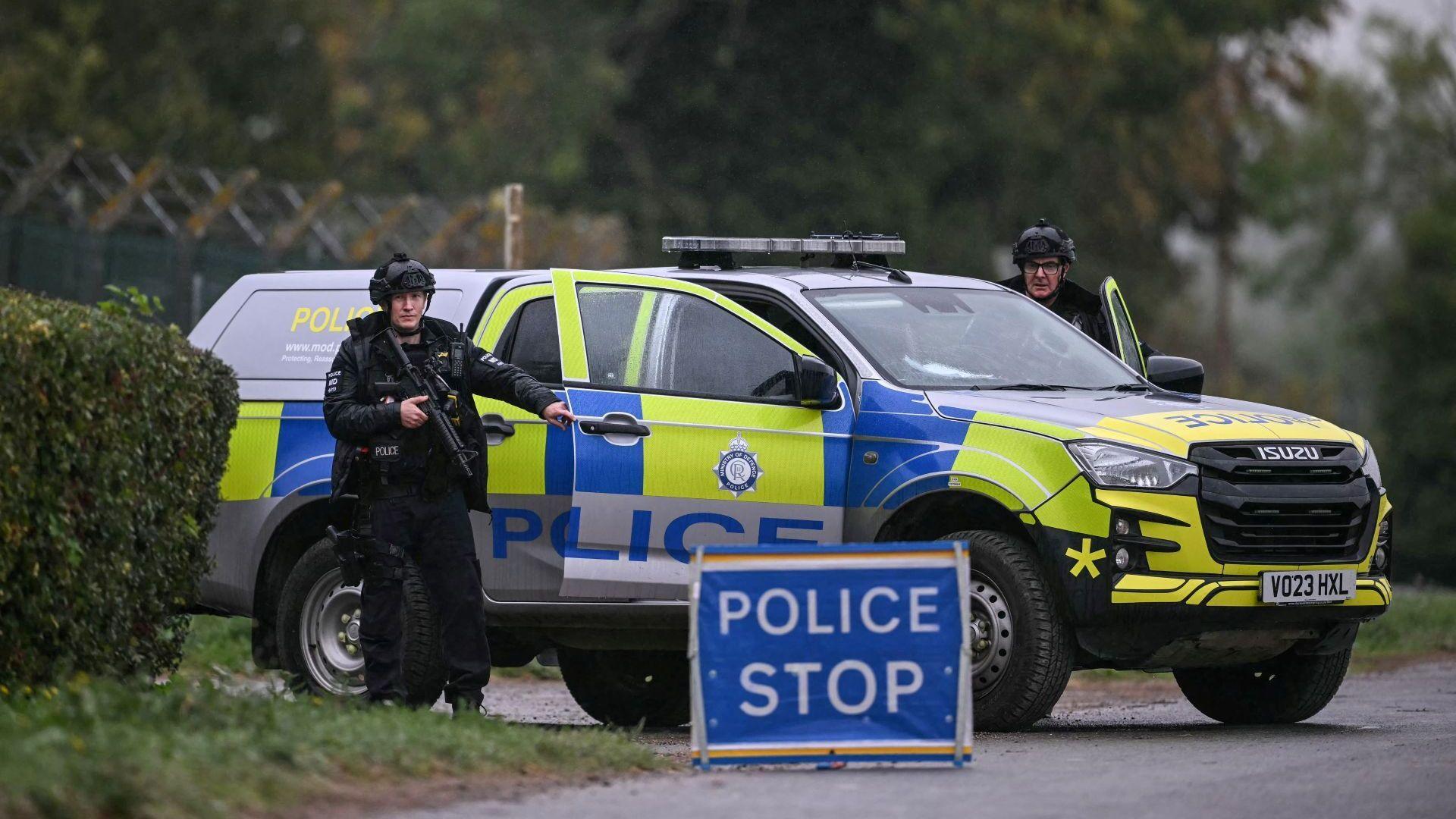
Five men, aged between 23 and 25, were arrested in the early hours of that morning as the vehicles were reported travelling towards the perimeter of RAF Fairford. They were initially held on suspicion of explosives offences before the allegations were escalated to preparation of a terrorist act. All five were subsequently released on police bail, a move Counter Terrorism Policing described as an “investigative decision” rooted in “experience and strategy” rather than a sign the threat had eased.
A sixth suspect, a 25-year-old dual British-Iranian national, was arrested in Westminster on 1 October and also later released on bail. The latest arrest brings the total to seven, though the force has been careful to stress that bail and release do not equate to any of the men being cleared of suspicion.
Vicki Evans, senior national coordinator for Counter Terrorism Policing, said the case “remains a live investigation” and that officers are “pursuing multiple lines of enquiry” as they work to establish exactly what the suspects were planning and why the base was targeted.
Why RAF Fairford matters strategically
RAF Fairford has been used by the US Air Force for decades and has taken on heightened significance this year after the UK approved American requests to use the base for potential defensive operations linked to tensions with Iran. In recent months it has served as a launch point for US B-1 and B-52 bombers flying missions toward the Middle East.
That strategic role has placed the base under intense scrutiny since the September incident. On Sunday it emerged that the US had withdrawn its bomber fleet from RAF Fairford entirely, flying the aircraft back to American soil. President Donald Trump confirmed the move was deliberate, telling reporters outside the White House: “They didn’t fly out by accident. There were some threats. And rather than tempting the enemy, we’ll capture the enemy and beat the enemy. But why should we leave them there? So we moved them around a little bit. Not very far.”
He declined to give specifics about the nature of the threats. US Vice-President JD Vance offered a softer explanation, saying the bombers had been relocated “out of an abundance of caution.” American media reports have suggested intelligence pointed to a potential Iranian-linked drone attack on the base, though the BBC said it had not independently verified those claims.
A spokesperson for US European Command, which oversees American military activity across the continent, said it would be “inappropriate to discuss matters of intelligence” but confirmed the US would “continue to assess the threat environment” at its installations. The spokesperson added that American forces remain at the “highest state of readiness” and would take “appropriate actions to protect our people, our platforms, and the bases where our forces operate.”
Downing Street’s shifting message
Before Trump’s remarks on Monday, a No 10 spokesperson had sought to reassure the public that RAF Fairford was safe, pointing to the president’s earlier praise for the UK’s “police, defence and security services.” That messaging has since been complicated by Trump’s own confirmation that specific threats prompted the bombers’ withdrawal, raising fresh questions in Westminster about how closely British and American assessments of the risk at RAF Fairford are aligned.
For now, counter-terror police say their focus remains on the ongoing investigation rather than speculation about troop movements. With seven arrests made and none resulting in charges so far, officers have given no timeline for when the inquiry into the events at RAF Fairford might conclude, only that multiple lines of enquiry are still being actively pursued.
Explore more on this topic with Vexel Search.
WordUp Morning
Ten stories, both sides of each, in five minutes. Free, every weekday at 7am.
We'll email you a link to confirm. Unsubscribe any time.
Crime
Idaho Teen, 19, Charged With Murder in Stepfather Shooting Over $2,000 Bathroom Job Gone Wrong

Header image: AI-generated illustration by WordUp News.
TITLE: Idaho Teen, 19, Charged With Murder in Stepfather Shooting Over $2,000 Bathroom Job Gone Wrong
KEYWORD: stepfather shooting
DESCRIPTION: A $2,000 bathroom renovation dispute turned deadly in Idaho, as a 19-year-old faces murder charges in his stepfather’s shooting death.
A dispute over an unfinished $2,000 bathroom renovation has ended in a fatal stepfather shooting in rural Idaho, with a 19-year-old now facing a first-degree murder charge and the possibility of life behind bars.
Michael Dudley is accused of killing his stepfather, 47-year-old Howard Schofield IV, on September 18 at the home the two shared with Dudley’s mother in New Plymouth, a small farming town roughly 30 miles northwest of Boise. According to a probable cause affidavit obtained by local outlet EastIdahoNews.com, the confrontation began not over anything dramatic, but over home repairs that never got done.
A Bathroom Deal That Fell Apart
Investigators say Dudley and his girlfriend had paid Schofield more than $2,000 to renovate the bathroom in their trailer, which reportedly had no working facilities. When the promised work never materialized, Dudley went to his mother’s house to retrieve some of Schofield’s belongings as a form of repayment, according to the affidavit.
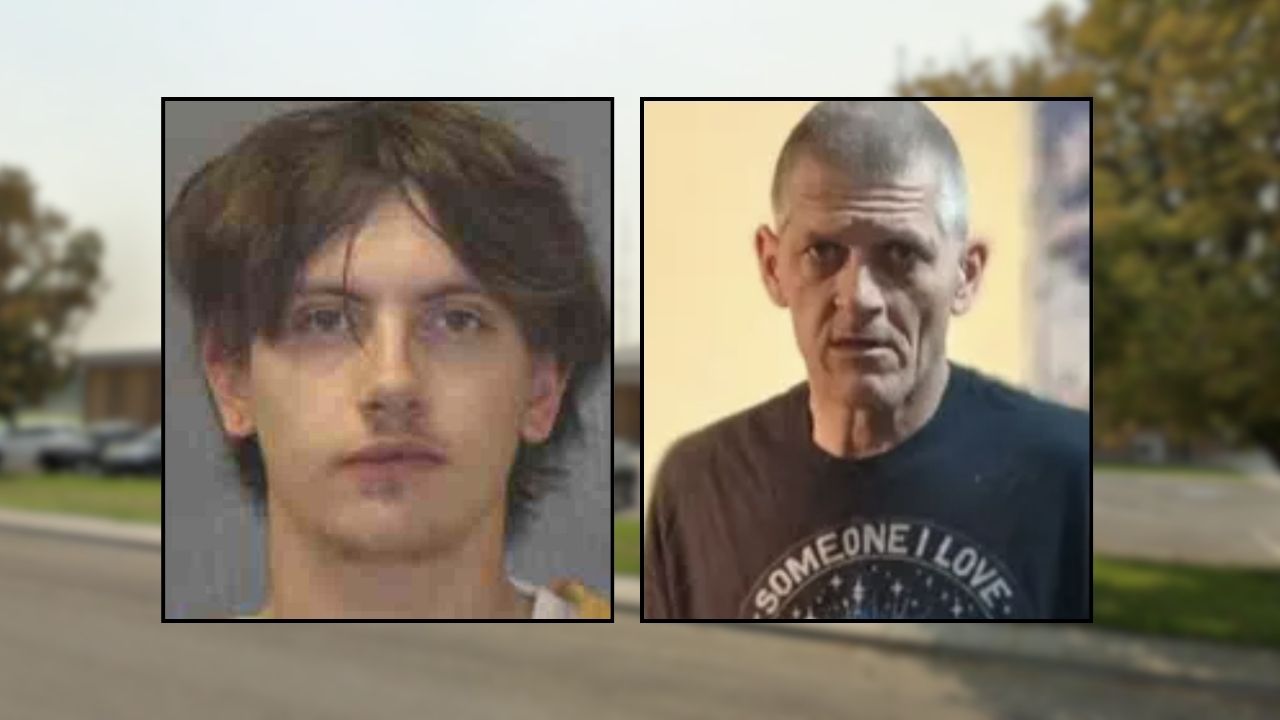
Schofield confronted his stepson, accusing him of theft, and the two men’s argument quickly spiraled into a physical altercation. Dudley later told police that Schofield began hitting him and that he was simply trying to defend himself.
Girlfriend’s Statement Complicates the Case
Dudley has insisted to investigators that he “never pulled the trigger and never intended on shooting” Schofield, claiming the gun — which he was carrying in the pocket of his sweatshirt — discharged only after his stepfather grabbed for it during the struggle. The single shot struck Schofield in the chest, and he was pronounced dead at the scene.
But a statement from Dudley’s girlfriend, included in the affidavit, raises troubling questions about what happened before the two men ever came to blows. She told police she did not personally witness the shooting, but recalled hearing Dudley yell at Schofield to stop hitting him during the fight. More significantly, she said that before the pair even left for Dudley’s mother’s house, Dudley told her he wanted to shoot Schofield in the foot “to make him jump and work” — a remark investigators are treating as evidence of premeditation rather than a spur-of-the-moment accident.
That alleged statement sits at the heart of the prosecution’s case, undercutting Dudley’s claim that the gun went off accidentally during a chaotic struggle. Whether a jury ultimately views the remark as dark hyperbole from a frustrated young man or as proof of intent could determine whether Dudley is convicted of murder or a lesser charge.
Charges and What Comes Next
Dudley has been charged with first-degree murder and burglary in connection with the stepfather shooting, and he remains in custody at the Payette County Jail on $1 million bond. His next scheduled court appearance is set for October 19, when attorneys are expected to address the charges and set a timeline for further proceedings.
Law enforcement officials in Payette County have not released additional details about the gun involved or whether Dudley had a history of conflict with his stepfather beyond the renovation dispute. The case underscores how quickly ordinary domestic disagreements — in this instance, a stalled home improvement job — can escalate into deadly violence when firearms are present.
As the case moves through the Idaho court system, prosecutors will likely lean heavily on the girlfriend’s account of Dudley’s stated intentions before the shooting, while the defense is expected to argue that the deadly outcome was an unintended consequence of a physical fight that Schofield himself escalated. For now, the full truth behind the fatal encounter remains tied up in competing narratives, with a judge and eventually a jury left to sort out what really happened inside that New Plymouth home.
Explore more on this topic with Vexel Search.
WordUp Morning
Ten stories, both sides of each, in five minutes. Free, every weekday at 7am.
We'll email you a link to confirm. Unsubscribe any time.

Header image: AI-generated illustration by WordUp News.
A sprawling cash smuggling operation that funnelled almost £30 million out of Britain in suitcases bound for the United Arab Emirates has been dismantled, with nine members of the network now sentenced following a National Crime Agency investigation.
Over nearly two years, between December 2017 and November 2019, couriers linked to the group boarded Emirates flights from Manchester, Birmingham and Brussels carrying bundles of cash hidden among clothing in up to five suitcases at a time. The money, collected from organised crime groups across northern England, was destined for a British organiser based in Dubai who directed the operation remotely and is still awaiting extradition to the UK to face trial.
How the cash smuggling network operated
According to the NCA, the scheme relied on a rotating cast of couriers who gathered hundreds of thousands of pounds at a time from criminal contacts in cities including Manchester, Liverpool, Southport, Sheffield and Huddersfield. The cash was stuffed into clothing and packed into luggage before couriers flew it to Dubai, where it would be declared on arrival — sidestepping the UK’s legal requirement to declare large sums before departure.
Investigators say the alleged organiser used WhatsApp to issue instructions to members of the group, directing them on where to collect money and when to travel. In return for their role in the cash smuggling runs, couriers were rewarded with stays in upscale Dubai hotels, expensive meals, and nights out at nightclubs and beach clubs — perks that effectively turned the illegal transfers into a lifestyle as much as a job.
The operation was aided in part by a corrupt insider: Emma Rauf (née Royle), a 34-year-old Emirates check-in attendant at Manchester Airport, who helped couriers move cash through the airport undetected. She initially denied wrongdoing but changed her plea to guilty in March this year.
Cracks begin to show
The scheme began to unravel after authorities seized £788,455 in cash at UK airports across three separate incidents, triggering the NCA investigation that would eventually expose the full scale of the network. Among those caught was Sheikh Jobe, a 33-year-old recruited by Rauf’s brother Ben Royle, who was arrested after £306,040 was detected in his luggage at Manchester Airport in October 2018.
Other members of the group had far more extensive involvement. Sophie Logan, who worked as a personal assistant to the alleged organiser, flew to and from Dubai 38 times over two years, declaring £3.9 million in cash on arrival across 14 of those trips. Devanyl Graham made 18 trips declaring £4 million. A Bradford family — Heather Jeffrey and her children Sheldan Noel and Lamara Noel — between them moved nearly £13 million across 30 trips, with messages showing the organiser personally directing Jeffrey to collect cash from Huddersfield and Sheffield.
Sentences handed down
Following a 12-week trial at Bolton Crown Court, a jury convicted Graham, Sheldan Noel, Lamara Noel, Jeffrey and Logan on 4 June. Rauf had already pleaded guilty in March, while Royle and Jobe entered guilty pleas before the trial began.
On 2 October, Logan was sentenced to seven-and-a-half years in prison, Jeffrey to six-and-a-half years, Graham to six years, Lamara Noel to five years, and Royle to four years and three months. Jobe received a six-month suspended sentence, a three-month curfew and 200 hours of community service. Rauf is due to be sentenced on 29 October, with Sheldan Noel’s hearing scheduled for 27 November.
A warning on illicit finance
NCA branch commander Jon Hughes said the case highlighted how central physical cash smuggling remains to organised crime, despite the rise of digital alternatives. “This crime group smuggled enormous quantities of cash, to remove it from the attention of law enforcement,” he said. “Illicit cash is the lifeblood of organised crime groups, fuelling violence and insecurity around the world. This is why disrupting its supply is a priority for the NCA and our partners, hitting crime groups in the pocket where it hurts the most.”
The agency notes that international money laundering networks increasingly combine old-fashioned methods like cash smuggling with cryptocurrency transfers and exploitation of banking systems to move billions of pounds in dirty money each year. The outcome of this case, officials say, demonstrates that even sophisticated, multi-year operations spanning international borders can eventually be traced back through seized cash and digital communications.
With several defendants still awaiting sentencing and the alleged ringleader yet to face trial following extradition, the case remains open — but the convictions secured so far mark one of the more substantial blows dealt to a cash smuggling network operating between the UK and the Gulf in recent years.
- Crime group members who smuggled large amounts of cash to the UAE are sentenced (nationalcrimeagency.gov.uk)
Explore more on this topic with Vexel Search.
WordUp Morning
Ten stories, both sides of each, in five minutes. Free, every weekday at 7am.
We'll email you a link to confirm. Unsubscribe any time.
Crime
Assaults on trains on Britain’s Railways Hit Record 25,000 a Year as Transport Police Ranks Shrink


Header image: AI-generated illustration by WordUp News.
Assaults on trains across Great Britain have climbed to their highest level on record, with official figures showing almost 25,000 incidents reported in a single year — a jump of a fifth that has left rail staff and passengers increasingly fearful of using the network they rely on every day.
The numbers, released by the Office of Rail and Road, cover a wide spectrum of behaviour: threats, verbal abuse, spitting, head-butting and sexual harassment, alongside incidents that caused no physical injury at all. But buried within the total is a harder number that unions say should alarm anyone who boards a train or works on one — nearly 2,500 physical assaults on staff, or roughly seven every single day.
For those on the front line, the statistics simply confirm what they already feel in their bones. At Exeter St Davids station last week, when a train was halted unexpectedly, staff immediately assumed the worst. “Someone will have kicked off,” one worker said. “It happens all the time. My boss got head-butted recently.” On this occasion they were wrong. But the fact that violence was their first guess speaks volumes about daily life on the railway.
Why assaults on trains keep climbing
Rail unions, including the RMT and TSSA, say the surge is horrifying but far from surprising. They point to a steady hollowing-out of policing on the network: the number of British Transport Police officers fell by more than 10% between 2024 and 2026, even as passenger numbers and reported incidents have gone in the opposite direction. Fewer staffed stations and a thinner police presence, they argue, have left both workers and travellers more exposed.
Many staff now wear body cameras simply to document what happens to them on shift. “I think it’s so sad that we have those,” said one rail worker in south-west England who has spent two decades on the job. “The threats, the abuse, the violence we see is off the scale.” He pointed to drink, drugs and untreated mental health crises as recurring factors. “If you’re out on the street you can steer clear, but if you’re on a train or a platform you can’t. Our workplaces are becoming more and more dangerous.”
Others describe a job that has changed fundamentally since the pandemic. One guard in the north of England recalled being punched in the head by a passenger during his last service of the night: “I’ve had to look away to see the door controls and the next thing I know, I’m waking up on the platform.” He said verbal abuse is now a daily occurrence for every guard he knows. “Now it’s mostly bad days, and you’re searching for good days, where nothing’s said, or nothing happens. The amount of times we’re getting threatened now with physical attacks, even when you walk through the train and say, ‘Tickets, please.’”
It isn’t only uniformed conductors and guards who bear the brunt. Contractors working trackside say they too have become targets, even though their jobs have nothing to do with delays or cancellations. “We sometimes get sworn at and even spat at,” said one contractor based in Somerset. “It’s just a minority, but somehow they think we’re responsible for slow journey times, cancelled trains. We’re in bright orange so we’re easy targets.”
A wider pattern across public transport
The spike in assaults on trains mirrors a broader deterioration across public transport. Bus drivers have reported repeated abuse and threats, prompting the Unite union to sound similar alarms. In London, Transport for London staff working on the roads are now issued with “spit kits” — forensic saliva collection tubes — because that form of assault has become so routine that evidence-gathering has had to be built into the job.
Violence against women and girls on public transport is drawing particular attention from policymakers. Speaking at the Labour party conference this week, the minister for buses and local transport, Simon Lightwood, described the problem as a “national emergency.” The mayor for the north-east, Kim McGuinness, said that beyond practical measures such as better lighting, more staffing and expanded CCTV, women need confidence that reporting an incident will actually lead to action. “Knowing that if you raise an alarm something is going to be done,” she said, is essential. “It’s a choice to use public transport or not … if you’re accepting 50% of the population don’t feel safe, that’s not good.”
For an industry still working to win back passengers and revenue lost since the pandemic, the economic stakes of this crisis are significant. A railway perceived as unsafe — for staff or travellers — risks further eroding ridership and straining recruitment at a time when operators are already battling cost pressures and public scrutiny over reliability. Unions argue that restoring staffed stations, rebuilding transport police numbers and investing in visible deterrents are not just safety measures but a financial imperative for a network that depends on public trust.
With reported assaults on trains now at a record high and the underlying causes — thinning police numbers, untreated mental health and addiction issues, and a culture of abuse normalised since the pandemic — showing no sign of easing, rail staff say they simply want to feel safe doing an ordinary day’s work. As one guard put it, success now looks less like job satisfaction and more like survival: a shift where, for once, “nothing’s said, or nothing happens.”
Explore more on this topic with Vexel Search.
WordUp Morning
Ten stories, both sides of each, in five minutes. Free, every weekday at 7am.
We'll email you a link to confirm. Unsubscribe any time.
Crime
Tennessee’s Botched Execution Leaves Christa Pike on Ventilator, Prompts Resignation and Investigation

Header image: AI-generated illustration by WordUp News.
A botched execution in Tennessee has left death row inmate Christa Pike unconscious and on a ventilator four days after prison officials attempted to put her to death, raising fresh questions about the state’s lethal injection protocols and the broader machinery of American capital punishment.
Pike, 50, has not regained consciousness since Wednesday night, according to her lawyer, assistant federal defender Stephen Ferrell. She remains under guard in hospital as doctors try to clear a massive dose of the barbiturate pentobarbital from her system. “We don’t know right now, and we may never know what sort of torture she endured during that process, where her consciousness was, what physical pain there was, what mental torture she went through,” Ferrell said.
Tennessee prison officials administered two doses of the lethal injection drug, but the pentobarbital did not kill her. Her legal team says her arms were burned and blistered by the caustic chemicals during the attempt. Pike has reportedly given someone medical power of attorney, though her lawyers say they have not been told who that person is or what instructions they may have received.

How the Botched Execution Unfolded
Pike’s execution had already been thrown into chaos hours before the lethal injection began. A federal appeals court halted the process so it could more thoroughly examine whether the jury that originally sentenced her to death had properly considered claims of childhood sexual abuse. The US Supreme Court intervened, overturning that stay after an eight-hour delay, clearing the way for the execution to proceed that night.
Pike was 18 when she and her boyfriend tortured and killed her classmate, Colleen Slemmer, in 1995, a crime that made her one of the youngest women ever sentenced to death in the United States. Her case had already drawn scrutiny over the years because of her age at the time of the offense and her history of alleged abuse.
Her lawyers have since asked a court to compel Tennessee prison officials to preserve all written records, communications, images and video connected to the execution, anticipating a lengthy legal fight over exactly what happened inside the death chamber.
A Pattern of Failures Inside Tennessee’s Death Chamber
This is not the first time this year that Tennessee has failed to carry out a scheduled execution. In May, officials were unable to complete the execution of Tony Carruthers after staff successfully placed an IV line in one arm but could not establish a required secondary line. Taken together, the two incidents have intensified criticism that the state’s capital punishment system is poorly managed and dangerously opaque.
Ferrell has been blunt in his criticism of how little the public is told about the process. “The state of Tennessee has got to start telling its people exactly what it is doing so that in the democratic process, the people of Tennessee can decide if that’s what they want to be done in their name,” he told CNN. Like many death penalty states, Tennessee keeps closely guarded secrets around how its lethal injection drugs are manufactured, sourced and tested for quality before use.
The fallout from the botched execution has already reached the top of the state’s correctional leadership. Frank Strada, commissioner of the Tennessee Department of Correction, announced his resignation on Saturday, just days after the failed procedure. Governor Bill Lee has since ordered an independent investigation into the state’s execution protocols, to be led by former US attorney Ed Stanton.
Notably, this is not Stanton’s first time scrutinizing Tennessee’s capital punishment procedures. He previously reviewed the system in 2022 after Governor Lee halted an execution at the last minute, a review that found the state had failed to follow its own lethal injection protocol at the time. Critics say the recurrence of serious procedural breakdowns, years after that earlier warning, suggests deeper systemic problems that have gone unaddressed.
Questions That Remain Unanswered
For now, Pike’s medical fate remains uncertain. Her defense team says it could be days before anyone knows whether she will recover from the effects of the failed lethal injection, and a spokeswoman for her legal team has asked for respect of her privacy during the ordeal. Meanwhile, the investigation ordered by Governor Lee is expected to examine not just what went wrong on the night of the botched execution, but whether Tennessee’s entire approach to capital punishment needs to be overhauled.
The case has reignited a long-running national debate over lethal injection as a method of execution, with critics arguing that repeated failures, secrecy around drug sourcing, and inconsistent staff training point to a system ill-equipped to carry out executions reliably or humanely. Supporters of capital punishment, meanwhile, maintain that isolated procedural errors should not be used to challenge the legitimacy of death sentences handed down by juries.
As Pike remains hospitalized and unresponsive, her case has become a flashpoint in that debate, a stark illustration of how a single botched execution can ripple outward into resignations, investigations and renewed scrutiny of how states carry out their most severe punishment.
Explore more on this topic with Vexel Search.
WordUp Morning
Ten stories, both sides of each, in five minutes. Free, every weekday at 7am.
We'll email you a link to confirm. Unsubscribe any time.

Header image: AI-generated illustration by WordUp News.
Article by: Jack Dalton
A string of violent crime cases surfaced this week from Texas to Washington state, painting a grim snapshot of how quickly ordinary moments — handing out food, riding an e-scooter, working a cash register — can turn deadly. Taken together, the cases reveal a pattern that keeps showing up in police blotters nationwide: senseless gun violence erupting from the smallest of triggers, often fatal within seconds.
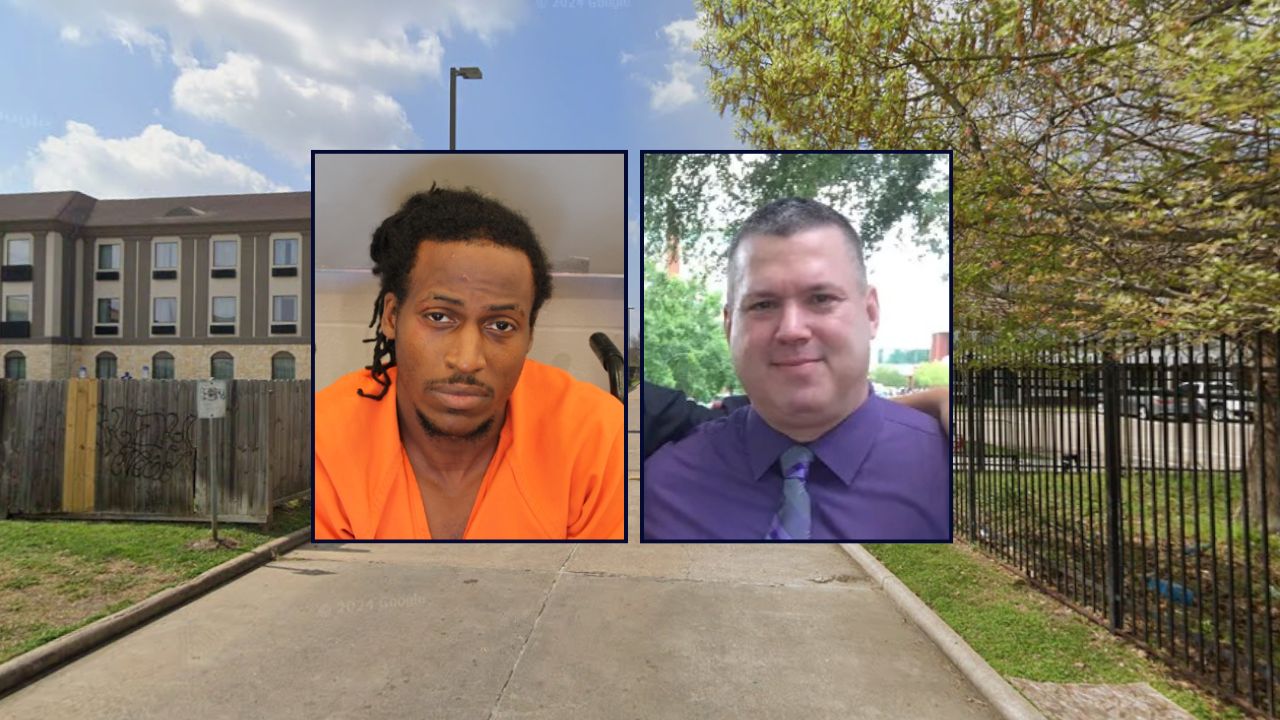
In Houston, a 58-year-old chef named John Donat was gunned down early Wednesday while doing something he had done for years — driving around in his Chevrolet Tahoe, handing out home-cooked meals to homeless people he passed. According to Houston police, Donat was approached by a man who demanded money. When Donat apparently refused, the man opened fire. Witnesses told officers they heard gunshots before Donat’s SUV crashed through a wooden fence in a hotel parking lot. He was pronounced dead at the scene.
Police arrested 30-year-old Otis Parks and charged him with capital murder. Donat’s son, Nick Donat, told local television that his father — a South Carolina native who had battled addiction himself — had a soft spot for people struggling with drugs and collected food from local banks to cook for others “a lot over the past couple of years.” Parks remains jailed on $250,000 bond, with his next court date set for December 14.
A Spat Over Scooters Ends in Gun Violence
Across the country in Washington state, another act of casual violence claimed the life of a U.S. Coast Guard lieutenant. Connor Overstreet, 29, was riding Lime e-scooters with two friends just after 1 a.m. on August 23 near Bryn Mawr-Skyway, south of Seattle, when a passing Toyota Prius exchanged words with the group. The car reportedly stopped, and when Overstreet approached the passenger side, he was shot in the chest. The vehicle sped off, and Overstreet died at the scene.
Investigators tracked the Prius two days later in nearby Kent, where a passenger was seen discarding a backpack containing a Ruger .357 revolver. Phone location data allegedly placed 18-year-old Isaiah Bolar at the shooting scene and tracked his movement along the same route the Prius took afterward. Bolar now faces second-degree murder and eluding-police charges and is due in court this week.
The Houston and Washington cases underscore how often lethal gun violence stems not from long-simmering conflicts but from fleeting, almost trivial disputes — a denied request for cash, a few angry words exchanged on the street.
A Family Shattered by Domestic Gun Violence
Not all of this week’s violence came from strangers. In Windom, Minnesota, 39-year-old Jamie Lee Voelker was sentenced to 12 years and six months in prison for shooting his 70-year-old mother, Kathryn Voelker, seven times with a .22-caliber handgun last July. Voelker told investigators he had smoked a THC vape beforehand and had no memory of the shooting or of breaking into a neighbor’s home afterward, where he damaged a bathroom before being arrested.
He pleaded guilty in July to second-degree murder and first-degree burglary under what Minnesota law calls a “Norgaard plea,” which allows a defendant to accept responsibility even without remembering the crime, so long as they acknowledge prosecutors have enough evidence to convict. Minnesota Attorney General Keith Ellison called the case “absolutely horrific,” adding that accountability was “an important step in healing” for Voelker’s family and the Windom community.
A similarly devastating case out of Georgia closed this week when 64-year-old Teodros Mulat Shibeshi was sentenced to life in prison without parole, plus 25 years, for killing his ex-wife’s sister at an Ethiopian grocery store in Lilburn in April 2024. Shibeshi pleaded guilty to malice murder, aggravated assault and a firearms charge after shooting 57-year-old Tigist Lulesegud multiple times during an argument and wounding her brother in the leg. A witness recalled Shibeshi declaring he was “taking myself out now” before turning the gun on himself — though he survived. Gwinnett County District Attorney Patsy Austin-Gatson said she hoped the sentence would “bring justice” to the victim’s grieving family.
Children Left Behind Amid the Chaos
Not every case this week involved a firearm. In Tampa, Florida, a toddler’s solo walk along a busy road led deputies to uncover a far more alarming scene. A passerby spotted the barefoot child wandering near N. 42nd Street and Hellenic Drive on a Friday evening and alerted police. When deputies traced the child’s home, they found the front door wide open and four more young siblings alone inside, with the stove left on and smoking and several children in soiled diapers.
Their father, 41-year-old Glenn Jones, was supposed to be watching the children while their mother was at work. He was arrested on five counts of child neglect when he returned home; authorities have not said where he had been or how long the children were left unsupervised. Jones is being held on $25,000 bond.
While it involved no shooting, the Tampa case fits into the same broader picture emerging from this week’s reports: moments of ordinary life — a drive to feed the hungry, a scooter ride with friends, a trip to the grocery store, a parent’s absence — turning in an instant into tragedy. Whether through senseless gun violence or stunning neglect, the cases serve as a sobering reminder of how fragile safety can be, even in the most mundane circumstances, and how swiftly the justice system is now moving to hold the accused accountable.
- Chef who was giving back to his community by feeding the homeless shot to death after he refused to give man money: Cops (lawandcrime.com)
- Toddler walking alone along busy road leads to discovery of other young kids inside home with stove turned on and smoking: Cops (lawandcrime.com)
- Man who tried and failed to kill himself sentenced for murdering ex-wife's sister and shooting her brother at grocery store (lawandcrime.com)
- Coast Guard officer riding Lime e-scooters with friends killed after he exchanges words with man in Prius in road-rage attack: Cops (lawandcrime.com)
- Man who smoked THC vape then blacked out and shot his mother 7 times before breaking into neighbor's bathroom learns his fate (lawandcrime.com)
Explore more on this topic with Vexel Search.
WordUp Morning
Ten stories, both sides of each, in five minutes. Free, every weekday at 7am.
We'll email you a link to confirm. Unsubscribe any time.

VanEck Wealth Builder ETF Puts Indirect Bitcoin in One 0.26% Fund

Baby murder parents have sentences increased to minimum of 21½ and 17¾ years

Nintendo’s Indie World Showcase Lands Oct. 28 at 10 a.m. ET, and It Runs Just 15 Minutes


-

 Fashion5 days ago
Weekend Open Thread: Anine Bing
-

 Fashion5 days ago
Coffee Break: Elodie-R Coat – Corporette.com
-

 Tech & AI3 days ago
New conversion kit lets builders fit ATX motherboards and standard PC GPUs inside Apple Mac Pro case
-
Tech & AI7 days ago
Can It Be Both Cheap And Cheerful?
-

 Sports5 days ago
Will Bayern Munich star Harry Kane win the Ballon d’Or?
-

 Tech & AI7 days ago
Bose Acquires Skullcandy: The Real Prize Is an Audience Bose Couldn’t Reach
-

 Tech & AI5 days ago
Startups don’t need to go viral to win customers
-

 Tech & AI4 days ago
S’pore’s NTU ranks 1st globally in AI & NUS dominates engineering
-

 Tech & AI6 days ago
Acer Swift Air 14 (2026) Review
-

 Tech & AI7 days ago
Blackstone’s Jas Khaira says fears over AI-buildout debt are overblown
-

 Fashion6 days ago
THE BROOCH CHRONICLES
-

 Business & Hustles5 days ago
The future of the convenience channel
-

 Sports7 days ago
Why Expanding the College Football Playoff to 24 Teams Is a Bad Idea
-

 Business & Hustles7 days ago
Abbott to spin off Nutrition business
-

 Fashion7 days ago
Khaite’s Fall 2026 Campaign is All About Contrast
-
 Entertainment4 days ago
‘Shocked’ Director Addresses Amanda Bynes’ Last On-Screen Performance
-

 Tech & AI4 days ago
Instacart reportedly discussed selling itself with DoorDash and Uber
-

 Tech & AI7 days ago
Netflix Is Making Billions. So Why Is It So Hard to Find Something Worth Watching?
-

 Sports6 days ago
NBA 2026-27 Sixth Man of the Year Candidate Prediction Market Picks
-

 Business & Hustles4 days ago
US oil company plans first well in Greenland in 2027 amid Trump push
You must be logged in to post a comment Login