Connect with us

NewsBeat

Bat causes chaos on Glasgow train as passengers duck to avoid creature

Published

on

Daily Record

Passengers on board the Gourock to Glasgow route were left ducking on the carriage.

Bat caught flying inside Gourock to Glasgow train

Forget snakes on a plane – it was a bat on a train that caused chaos on Saturday.

The mammal found its way onto a ScotRail service from Gourock to Glasgow Central.

Commuters were left ducking for cover when the wee bat decided to fly around the carriages in circles looking for an exit.

In a video posted on social media, passengers can be heard laughing and screaming as a ticket inspector attempted to encourage the bat to escape.

When it did eventually make its way to freedom, the ScotRail driver made a congratulatory announcement over the tannoy.

One passenger said: “It was certainly something a bit different on a Saturday afternoon journey.”

Another referenced the recent filming of the Batman movie in Glasgow, joking: “It had a starring role in Glasgow apparently.”

Advertisement

A third added: “Hope it made it back to the bat cave.”

ScotRail has been contacted for comment.

Get more Daily Record exclusives by signing up for free to Google’s preferred sources. Click HERE.

Source link

Advertisement
Continue Reading
Click to comment

You must be logged in to post a comment Login

Leave a Reply

NewsBeat

Rangers vs Celtic LIVE: Scottish League Cup latest score, match highlights, goal updates from Old Firm derby

Published

on

Rangers vs Celtic LIVE: Scottish League Cup latest score, match highlights, goal updates from Old Firm derby

O’Neill rested some players in midweek in preparation for today’s game, while Rangers have a decision to make in attack due to a spate of injuries. Bragging rights are, once again, on the line, ahead of these two doing it all again in the league next Sunday. Follow the game LIVE below with our dedicated match blog, featuring expert insight and analysis!

Source link

Continue Reading

NewsBeat

Have they no humanity? How Spanish police have intensified the grief suffered by families of nine British expats killed in a wildfire – with one woman left to find her father’s bones in his burned-out BMW FIVE WEEKS later

Published

on

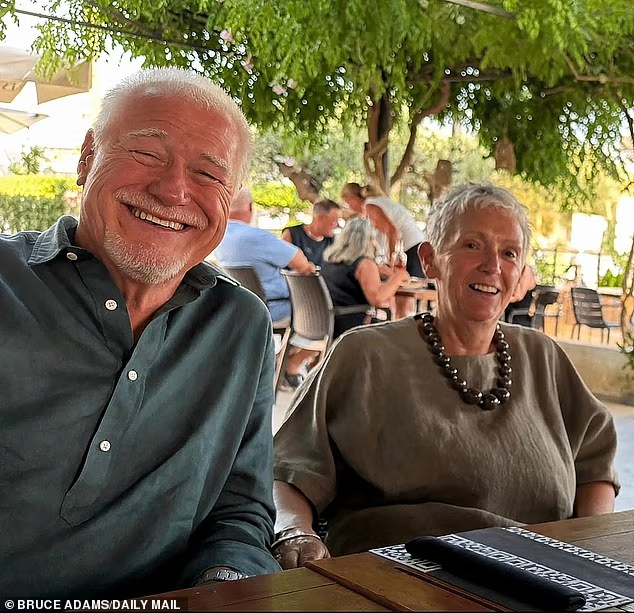
Pictured: Danielle Gillam-Kirton parents, Pete and Fran Gillam who were among the Brits killed in Spanish wildfires this summer

As a local funeral director handed Danielle Gillam-Kirton a small urn containing the ashes of her parents, who were among the nine Britons killed in a Spanish wildfire this summer, she had no reason to suspect there was anything more to remember them by.

After all, a female police officer had assured her that the burnt-out black BMW 5-series car, in which they had vainly sought to escape when flames raced towards their hilltop villa, had been forensically searched and ‘nothing’ more had been found.

Soon afterwards, the lives of popular expats Pete and Fran Gillam were celebrated at a moving memorial service in the village of Bedar, 60 miles from Almeria, where they had retired after building a successful business in the education sector.

For Danielle, 42, an assistant headteacher and mother-of-three from Nottinghamshire, and her elder sister, Natalie Lindsay, it was a small but important milestone in the healing process.

Advertisement

Two months on from the deadly July 9 conflagration, however, closure is nowhere in sight. As with some other bereaved families, Danielle says she is locked in an ‘ongoing nightmare’. Though she is too measured and dignified to say it in so many words, it is being caused by the shameful incompetence – and some might say the cold indifference – of the Spanish authorities’ handling of the aftermath of the wildfire.

Instructed to go to a municipal car pound where the wrecked BMW had been dumped and photograph it for an insurance claim, she and her husband, Mark, were surprised to see a padel racquet belonging to Mr and Mrs Gillam lying in the open boot.

This was on August 12, four weeks after they had been assured that nothing had been left inside. If police searchers had overlooked the racquet, or chosen to leave it there, they later surmised, what else might the car contain?

Then on August 19, after securing permission to return to the pound, this gnawing question was answered in the grimmest way imaginable.

Advertisement

Pictured: Danielle Gillam-Kirton parents, Pete and Fran Gillam who were among the Brits killed in Spanish wildfires this summer

A female police officer had assured her that the burnt-out black BMW 5-series car (pictured) had been forensically searched and ‘nothing’ more had been found

A female police officer had assured her that the burnt-out black BMW 5-series car (pictured) had been forensically searched and ‘nothing’ more had been found

Pictured: Billows of smoke rise into the sky as flames tear through the fields of Almeria, Spain on July 10

Pictured: Billows of smoke rise into the sky as flames tear through the fields of Almeria, Spain on July 10 

Advertisement

‘Firstly, we found my father’s mobile phone lying on the central console, where he always left it,’ Danielle told me this week.

‘And there were all their keys, some coins, and bits of jewellery. The clothes they had taken with them [when they evacuated] had gone, but the [clothes] hooks were still lying down, as if they hadn’t been disturbed.’

But it was when she reached down to pick up a large object lying in the steering well that Danielle recoiled in horror.

‘Oh my God, it’s a bone!’ she cried out, instantly realising she must be holding part of her father’s body.

Advertisement

‘I’m no scientist, but it looked to me like every picture of a hip joint, or part of a pelvis, that I’ve ever seen. My husband then recovered fragments of other bones.

‘One looked like part of a rib and I think there were some forearm bones. I was convinced it was my father, and I was beside myself.

‘I kept saying, “I can’t believe he has been left here for five weeks”.

As shock gave way to anger, she photographed the remains, placed them in a tub, and took them to Bedar town hall.

Advertisement

‘Look, these are my father’s bones! Look at them!’ Danielle challenged the mayor, Angelo Francisco Collado. ‘He was as shocked and horrified as we were,’ she says, and urged her to take them to the Guardia Civil, the national police who conducted the search.

There she met with a very different response. Though she was told the bones would be examined at a Madrid forensics lab, senior officers added dismissively that they must belong to animals.

Since the bones were so big and the only sizeable creatures living in the Bedar Mountains are goats and wild boar, this prompted Danielle to ponder sardonically how and why a ‘cow would have climbed into the passenger seat of the vehicle during a fire’.

Two forensic anthropologists have since examined the pictures she took and both say the bones are human.

Advertisement

One told the Daily Mail: ‘There were bone fragments from a finger of an adult, a portion of the pelvis and a fragment from the scapula, which are not something easily confused with animal bones.’

Danielle is now convinced that the police didn’t even trouble to search the car, which would mean that the female officer was either given the wrong information or lied to her.

However, on Thursday, when I last spoke to her, she was in purgatory. For she had just received a message from the British Consul saying that three weeks after handing the bones to the police, they were yet to say where they were being kept, and whether they had been tested.

‘I understand that, for them, my story is just about one night that happened months ago, but for us this is an ongoing nightmare,’ Danielle told me, her stoical demeanour giving way to tears.

Advertisement

‘It seems we are fighting an uphill battle for decency and respect. Surely they [the Spanish authorities] want to alleviate our distress and give us comfort. But there is just this silence… we feel quite alone with it.’

The Bedar wildfire in July, thought to have been sparked by a fallen power cable, went curiously under-reported in Britain given that nine expats were among the 15 multi-national victims killed in one small village.

Perhaps this was because people back home were absorbed by the World Cup, Wimbledon and our own heatwave problems. But near Almeria temperatures soared close to 40 degrees.

The ninth British victim, Michelle Leake, had survived her 40 per cent burns for eight weeks but succumbed to complications from her injuries in a Seville hospital on Tuesday.

Advertisement
Danielle says she is locked in an ‘ongoing nightmare caused by the shameful incompetence of the Spanish authorities’ handling of the aftermath of the wildfire

Danielle says she is locked in an ‘ongoing nightmare caused by the shameful incompetence of the Spanish authorities’ handling of the aftermath of the wildfire

Pictured: Burnt out vegetation following the wildfires in the Spanish province of Almeria

Pictured: Burnt out vegetation following the wildfires in the Spanish province of Almeria

The care worker died a heroine, having stayed with the 93-year-old woman she was looking after, Audrey Curry, as the fire closed in, before carrying her in her arms as they attempted to flee.

Ms Curry was a neighbour of the Gillams on a mountain locally known as ‘English Hill’, whose panoramic views of the Almeria coast make it a desirable settlement for more affluent British incomers. Accessible only via one perilously narrow and twisting road that was challenging for me to negotiate this week, even in daylight and good weather, one shudders to imagine how difficult it must have been for panicking residents shrouded in smoke and flames at nightfall.

Advertisement

The Gillams had reached only the second hairpin bend, about 300 yards from their elegant, ochre-coloured villa, when they became hopelessly trapped.

Perhaps because he suffered from asthma, Pete remained inside the car to the last, while Fran, who may have been trying to direct other stuck vehicles, was outside on the road.

Ms Curry is thought to have died near this same spot, now marked by a bouquet and the distinct outline of the Gillams’ BMW scorched in the tarmac.

The other victims were living or staying in Paraje el Curato, another remote hamlet of high-end villas, a few miles from English Hill.

Advertisement

Inching along its only access road, with its sheer drops and impossible bends, one wonders whether planners gave any thought to the safety of its residents when they signed off on the development.

Given that this area is notoriously vulnerable to wildfires stoked by the searing summer sun and whipped by fierce winds that howl through the canyons, were the incomers warned that they were settling in the heart of a potential inferno?

Certainly, their family members say they received no warning before the July fire sealed them into the hamlet, which now resembles an eerie moonscape of blackened rock and skeletal trees.

The contrasting condition of the villas bears testimony to the wildfire’s devilish capriciousness. While some were badly damaged, others remained untouched as the wind meant flames suddenly leapt in different directions.

Advertisement

If we believe officials such as Mayor Collado and Antonio Sanz, the regional minister responsible for emergency response, it would have been counterproductive to send out a blanket evacuation order to Bedar’s 970 residents using Spain’s recently installed ES alert system, which sets off a mobile phone alarm.

Though the system was used when wildfires raged in other parts of Spain, where only one person died, they insist the best option was for a local official who knew the terrain to deliver the warning house-by-house.

The dangerous task was left to Bedar’s lone police officer, Diego Castro, but how many homes he reached is a moot point. Danielle says all her parents heard was the sound of his siren as he rushed past their villa.

As with many of the expats, the Gillams were not members of a municipal WhatsApp group where the town hall belatedly posted some warning messages. It is mainly used by Spaniards.

Advertisement

Soon after the fire, however, Andalucia’s regional president, Juanma Moreno, added to the families’ distress by claiming residents were given ample time to evacuate but some had ignored the advice.

‘Failure to follow those recommendations probably caused the tragic outcome,’ he said, effectively accusing them of causing their own deaths.

Among those incensed by this hasty and wholly unproven claim is Duncan Chard, whose elderly parents, Michael and Christine, were killed.

Originally from Bristol, they retired to Bedar 25 years ago, and Mr Chard, 82, had built their home in el Curato himself to ‘create their little bit of paradise in the sun’.

Advertisement

‘My father has two prosthetic knee replacements,’ his son said this week. ‘There was no way he was going to try to run for his life through the valley unless that was his only option as a last resort.

‘He was being brave. He died fighting. He did not die because he was being stupid or not following instructions.

‘There were no instructions. What the Spanish authorities said afterwards has been very hurtful… they are trying to protect their arses.’ The Chards had tried to drive to safety in a convoy of five or six cars carrying several other residents, three of them British.

Finding the only road out impassible, however, they were forced to retreat down a dirt-track until they reached a dead-end.

Advertisement

The only man to get out alive was Malcolm Timbrell, 70, who found his property when he and his wife, Annette Kilgore, 69, appeared on the Channel 4 programme ‘A Place in the Sun’.

Remembering they had left their cats, Charlie and Lilly, in the villa, he dashed back on foot to fetch them. When he got back, he took shelter in a car that for some reason didn’t combust in the fire, but Annette was in another of the vehicles that burst into flames.

As the fire moved towards the trapped group, at terrifying speeds of 300 yards a minute, they gathered on a natural platform, below which was a valley of tinder-dry bush and scrub.

Yet they still had good phone signals, and from Belgium, Thomas-Wolf Verdonckt was in contact with his 63-year-old father, Stanislas, for about an hour before the end came.

Advertisement

A keen wildlife photographer, Mr Verdonckt knew the terrain ‘like his backyard’, his son says, but as he described his fast-diminishing options he says he remained admirably calm.

It is unclear why a helicopter wasn’t sent to rescue them from the platform, but it is thought it was too dangerous to land in the high winds and thick smoke.

A Spanish man whose two friends were among the group told me he repeatedly phoned 112, the emergency number, and gave their GPS co-ordinates, but by the time a fire truck was able to reach them it was far too late.

Mr Verdonckt had escaped with his black rescue dog, Schubi, and asked Thomas to take care of him if he did not make it out alive. But four days later, when the Belgian virologist had discovered that Schubi had died by her owner’s side, he returned to recover the dog and was deeply disturbed by what he saw.

Advertisement

He found himself trampling on the victims’ scattered remains and remnants of their belongings: their spectacles, buckles, shoes and jewellery.

He assumed they would soon be cleared away. Yet to his anger, on August 9 when he returned with other relatives to create a memorial for the victims – a cairn of painted stones bearing poignant messages – the bones and personal effects were still there.

Determined to spare people from suffering the same indignities when, as it surely will, the next wildfire comes, several families, including the Gillams and the Chards, have banded together.

Their aim is to have the fire investigated, to understand how it occurred, whether mistakes were made in dealing with it and if so by whom – and how it might have been prevented.

Advertisement

As Danielle told me, their intention is not to scapegoat any individual but to gain answers to the many pressing questions surrounding this avoidable tragedy, and in so doing help to save lives.

It is a noble aim.

The police and governmental officials might begin to make redress by explaining how Danielle was put through the torment of finding her father’s bones – and return them to her for burial as soon as possible.

  • Readers wishing to support efforts to establish how this tragedy happened and help prevent loss of life in wildfires can visit helpbedar.com to contribute
  • Additional reporting by Gerard Couzens

Source link

Advertisement
Continue Reading

NewsBeat

Your legal rights to record a conversation

Published

on

Wales Online

Covert recording is becoming increasingly common – but it can rightly land you in legal hot water

In the era of smart glasses, covert recording has become increasingly common. However if you think this means you can record conversations at home in the work place or out without consequence, this is not strictly true.

Advertisement

Depending on what you are recording and what you plan to use the recording for, there are different legal parameters. In general, recording a conversation is not illegal in the UK but that does not mean it’s entirely risk free.

Criminal law, data protection law and employment law all apply differently depending on who is recording, what they are recording and how they use it.

According to DMA Law, if it is strictly for personal use, you do not have to inform people you are recording.

However, if you intend to share the recording with a third party, then things change. If the recording is released to the public without the consent of the participant, it can be a criminal offence.

Advertisement

Journalists will sometimes release covert recordings in their reporting – this is because they either obtain consent for the recordings, or successfully argue that the contents of the conversation are in the public interest.

Some people prefer to record meetings at work rather than hand take notes as it is more efficient.

If you want to record a meeting, it’s a very good idea to ask for permission before recording just to cover all your bases.

Advertisement

Recording conversations in private places carries a higher risk than in public.

In homes, work places or other private settings carry a higher expectation of privacy, which means the risk of recording being illegal is higher.

In public spaces, you can generally record – however, if you record a private conversation or use the recording you could still be in trouble.

Even if the recording was lawful, if you share it without the consent of those involved, it can still be illegal as they can breach defamation laws, the Data Protection Act or privacy laws.

Advertisement

If the recording contains personal information, it’s even more likely to be a serious offence.

Recording a conversation you are not involved with, such as intercepting a phone call or bugging a room, is usually illegal unless you are authorised by police or have a court order.

Source link

Advertisement
Continue Reading

NewsBeat

How to survive Britain’s head lice plague as experts warn the bugs are becoming RESISTANT to common treatments. Here’s what REALLY works to banish them for good

Published

on

Head lice are tiny blood-sucking insects that infest the hair and scalp, where they feed and lay eggs close to the skin

Source link

Continue Reading

NewsBeat

First Ministers to discuss ‘pursuit of different attitude from UK government’

Published

on

Belfast Live

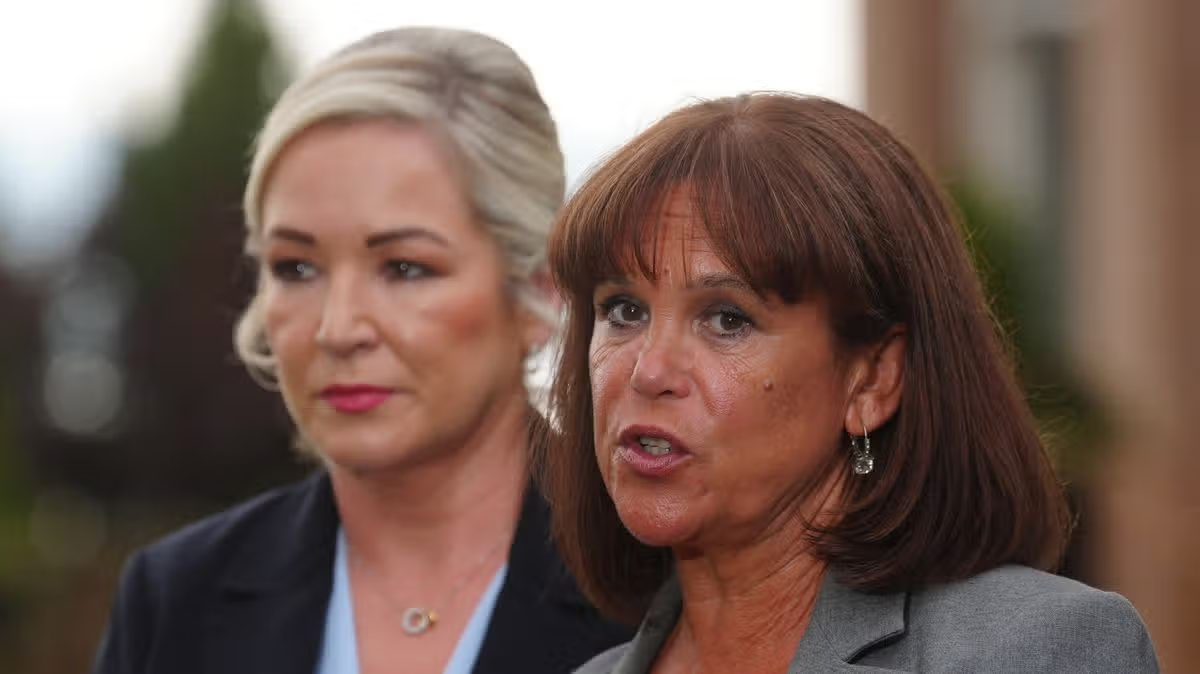
Michelle O’Neill and Mary Lou McDonald will meet Scottish First Minister John Swinney and Welsh First Minister Rhun ap Iorwerth in Cardiff tomorrow

The First Ministers of Wales, Scotland and Northern Ireland will discuss the “pursuit of a different attitude” from the UK Government when they meet on Monday, Rhun ap Iorwerth has said.

The Plaid Cymru leader will speak to Scottish National Party leader John Swinney and Sinn Féin vice president Michelle O’Neill in Cardiff about shared interests.

Advertisement

The trio will also discuss the future of independence for their respective countries.

Mr ap Iorwerth told the BBC’s Sunday With Laura Kuenssberg the group will talk about what they have in common and what they do not.

“What we don’t is we have distinct nations with our own trajectories and our own priorities, but there are areas on which we see it very, very important to cooperate, as in Scotland on child poverty, for example, Northern Ireland on the economics of renewable energy,” he said.

“But there’s also something that ties us together isn’t there?

Advertisement

“That pursuit of a different attitude from UK government.

“It could be around the constitutional question.

“It could more acutely be around fair funding, making sure that resource is shared in a way that is equitable, that feels fair, that we have the powers to build a future for the people that we represent.”

He said he wants to pursue powers over natural resources, policing, and justice.

Advertisement

“We can work together as first ministers across these islands I think in a positive way for the people we represent whilst also absolutely reflecting on the fact that we have differences between us,” he added.

Policing is devolved in Northern Ireland and Scotland but not in Wales, where the policy area is reserved to Westminster.

Plaid Cymru entered government in Wales in May after a historic election result saw it oust Welsh Labour from power for the first time in more than two decades.

For all the latest news, visit the Belfast Live homepage here and sign up to our daily newsletter here.

Source link

Continue Reading

NewsBeat

Newscast – Will Reform Have To Give Their Mega Donations Back?

Published

on

Newscast - Epstein Files: New Mandelson and Andrew Allegations

Available for over a year

After Reform’s £72 million record donations, we’re looking at whether they’ll be allowed to keep the money.

Legislation is going through Parliament that could limit the amount of money foreign donors can give, and be applied restrospectively, but Robert Jenrick has said the recent donations were “entirely in line with the law”.

And there’s been a shift in tone from tech bosses since the concerns about AI raised by researchers this week. We look at what a more controlled future for AI might look like.

Advertisement

You can now listen to Newscast on a smart speaker. If you want to listen, just say “Ask BBC Sounds to play Newscast”. It works on most smart speakers.

You can join our Newscast online community here: https://bbc.in/newscastdiscord

Get in touch with Newscast by emailing newscast@bbc.co.uk or send us a WhatsApp on +44 0330 123 9480.

New episodes released every day. If you’re in the UK, for more News and Current Affairs podcasts from the BBC, listen on BBC Sounds: https://bbc.in/4guXgXd

Advertisement

Newscast brings you daily analysis of the latest political news stories from the BBC. The presenters were Laura Kuenssberg and Paddy O’Connell. It was made by Chris Flynn and Eleanor Harrison-Dengate. The social producer was Joe Wilkinson. The technical producer was Ben Andrews. The assistant editor is Chris Gray. The senior news editor is Sam Bonham.

Programme Website

Source link

Continue Reading

NewsBeat

The Cambs area with biggest ‘baby bust’ since 2010 where fewer children are being born

Published

on

Cambridgeshire Live

Fewer babies are being born compared to 15 years ago

Fertility rates are falling across Cambridgeshire with every part of the county having fewer babies than they were 15 years ago. It reflects a similar picture nationwide where the country recorded the fewest number of live births since 1977.

Advertisement

More than 585,000 children were born last year which is down from a 21st Century high of around 729,000 in 2012. The declining number of births has led to a fall in the country’s fertility rate, which is a measure of how many babies women have in their lifetimes.

The fertility rate varies between district areas in Cambridgeshire. Peterborough had the highest (1.63) compared to the Cambridge city area with a rate of 0.87.

Collins Dictionary describes a marked decline in birth rate as a ‘baby bust’ as opposed to a ‘baby boom’ when there is a large increase in the number of babies born during a particular time. The total fertility rate was 1.39 babies per woman in England and Wales in 2025. That’s down slightly from 2024, when the rate was 1.41 babies per woman.

The biggest fall in fertility over the last 15 years nationally is in the London borough of Greenwich. Back in 2010, the fertility rate was 2.17 children per woman. That’s now dropped to 1.18 per woman, almost one less baby per woman.

Advertisement

Large drops have also occurred in North Somerset (falling from 2.19 to 1.33), Salford (from 2.06 to 1.22), Southwark (1.80 to 0.97), and East Lindsey (from 2.20 to 1.39). Pendle has the highest fertility rate in the country. There are an average of 1.93 children per woman in the Lancashire town. That’s down from as high as 2.3 per woman back in 2010 though. Luton has the next-highest fertility rate at 1.93 children per woman, followed by Oldham with 1.87, Bradford with 1.84, and Barking and Dagenham with 1.83.

The age at which people have children has been increasing since the 1970s. The average age for mothers was 31.1 years in 2025 and 33.9 years for fathers. Back in 2010, the average age for mothers was 29.5 years. In 2000, it was 28.5 years, in 1990 it was 27.7 years, in 1980 it was 26.9 years, which was up from a record low of 26.4 years in 1975.

Source link

Advertisement
Continue Reading

NewsBeat

Gynecological Discharge Signs You Shouldnt Ignore

Published

on

Gynecological Discharge Signs You Shouldnt Ignore

While we have made some strides in tacking taboos surrounding women’s health, there are still some topics that many of us are uncomfortable discussing even with our doctors.

In fact, according to new research conducted by Femtech health brand Daye, a quarter of people surveyed said they would feel too ashamed to raise concerns about discharge with their GP and almost half wouldn’t speak to their pharmacist about it, either.

This research was commissioned by Daye for their ‘Discharge The Taboo’ campaign, which aims to challenge misconceptions around vaginal discharge and reframes discharge as data. For the most part, discharge is a sign of a healthy body doing its job, and when it changes, it’s one of the clearest early signals that something may be wrong.

We need to crack down on the shame around vaginal discharge

Advertisement

According to Daye, health experts say delaying conversations about changes in vaginal discharge could mean infections and other gynaecological conditions take longer to be diagnosed, underlining the importance of recognising changes and seeking advice when something doesn’t seem right.

To help break down this taboo, Daye has launched The Stains Explained series featuring gynaecological expert, founder, and CEO of the brand Valentina Milanova. In this series, the brand have created videos which explain the difference between normal vaginal discharge and the warning signs, helping women build confidence in understanding their bodies and encouraging more open conversations.

Commenting on the shame surrounding discharge, Milanova added: “Vaginal discharge is a normal, healthy part of the body’s natural defence system, yet generations of women have grown up believing it’s something to hide.

“Schools hardly educated us on it, doctors rarely bring it up unprompted, and a lack of funding into women’s health research has only widened the gap. Social media has also stepped into that gap with misinformation and widespread women’s health content censorship.”

Advertisement

When to worry about vaginal discharge

According to their guide:

  • Yellow or green discharge could signify an STI such as chlamydia – a condition that must be treated promptly to prevent long-term health issues
  • Grey discharge, especially if watery or fishy, often indicates bacterial vaginosis and usually requires antibiotics
  • Pink or red discharge can be a result of irritation or cervical bleeding, while red outside of a period could indicate infection or in rare cases, cervical cancer

Milanova says: “Too many women are suffering in silence, and that’s not their failure; it’s the failure of a healthcare system that continuously neglects female physiology.

“Better body literacy helps women know that there’s nothing to be ashamed of, and enables them to seek medical advice sooner when needed and avoid unnecessary worry when they don’t.”

Daye’s at-home testing solutions are designed to help remove some of the barriers created by stigma and access, giving women objective health information they can take into clinical conversations with healthcare professionals to support earlier and more informed care.

Advertisement

Source link

Continue Reading

NewsBeat

Orlando Bloom begs for international aid at world’s largest refugee camp as cuts fuel crisis

Published

on

Daily Mirror

EXCLUSIVE: The Hollywood star, 49, called for action to help those on the brink of despair in the Cox’s Bazar refugee camp where more than 1million Rohingya Muslims are facing a humanitarian crisis

Thousands of ramshackle homes line up row after row in the world’s largest refugee camp – as international aid cuts risk plunging fleeing Rohingya Muslims further into a humanitarian crisis.

Astonishing drone footage shows the scale of the site at Cox’s Bazar, Bangladesh, where more than 1 million people are struggling to survive in a network of 33 squalid camps. Cuts to international aid – including an expected 40 per cent slash to UK budgets – has threatened to leave a generation of children lost.

Now UNICEF is warning they are facing a £10 million funding gap, as they revealed Bangladesh alone has suffered a 56 per cent in bilateral UK aid. Today Hollywood star Orlando Bloom, 49, who visited the camp last year, urged global leaders to step up and help those most at risk of exploitation.

Advertisement

The Pirates of the Caribbean actor told the Mirror: “The children I met in Cox’s Bazar had dreams for their future. Today, those dreams are at risk. Funding cuts are pushing essential services to breaking point, leaving Rohingya children more vulnerable to illness, violence and missing out on education.

“These children have already endured unimaginable hardship. Their childhoods should not depend on political choices made thousands of miles away, including the decision to cut aid. If caring about childhood is yes in principle, it should be yes in practice.

“That means investing in the health, education and protection children need not just to survive, but to thrive, fulfil their potential and become unstoppable.” It is almost a decade since a brutal campaign of persecution forced more than a million Rohingya Muslims to flee Myanmar and make a terrifying journey into neighbouring Bangladesh.

Advertisement

Since then, they have made their homes in Cox’s Bazar, where aid agencies have battled to provide a sustainable place to live. But despite their efforts, they say more than 150,000 children are unable to access education.

Elsewhere 954,616 refugees, including 290,455 children aged under five, have reported skin diseases since January 2025. More than 800 children were affected by grave violations, including abduction, recruitment, injuries and sexual violence, in the first quarter of 2026 alone.

It comes as UNICEF UK launches a new campaign, No Choice But Childhood, highlighting how conflict, extreme poverty and climate change are cutting childhood short for millions of children around the world, while aid cuts risk undermining decades of progress.

Advertisement

Jo Rea, UNICEF UK Director of Advocacy, said: “Extreme poverty, climate change and conflict are cutting childhood short for millions of children around the world. Yet with the right investment, a different future is possible.

“As aid cuts threaten to undermine decades of progress, UNICEF UK is calling on the UK Government to dedicate 25% of its international development budget to support and strengthen the vital services and systems that children around the world rely on every day to survive and thrive.”

In 2016 the Mirror visited Banfladesh and watched as thousands of Rohingya Muslims trekked for days to escape the hell of Myanmar’s Rakhine district where they were forced out by the military. They found themselves in Cox’s Bazar – 70 miles south of Bangladesh’s financial capital Chittagong.

Advertisement

Myanmar is overwhelmingly Bhuddist and regards the Rohingya as illegal immigrants. The clan – the world’s largest group of stateless people – have been denied citizenship.

The current cycle of misery began in 2012 when rioting left 200 dead, mainly Rohingya. Muslims were largely driven out of the cities and 130,000 set up home in camps in Bangladesh.

An FCDO Spokesperson said: “The UK remains committed to supporting some of the world’s most vulnerable people, with over 70% of all UK geographic support allocated to the most fragile and conflict-affected states.

Advertisement

“Across our development work, children remain a priority, including through programmes that boost education outcomes, tackle child malnutrition, champion the rights of women and girls, support vital healthcare services and respond to the climate crisis.”

Source link

Continue Reading

NewsBeat

‘Slim chance’ government will hit 1.5m new homes target, Rayner tells BBC

Published

on

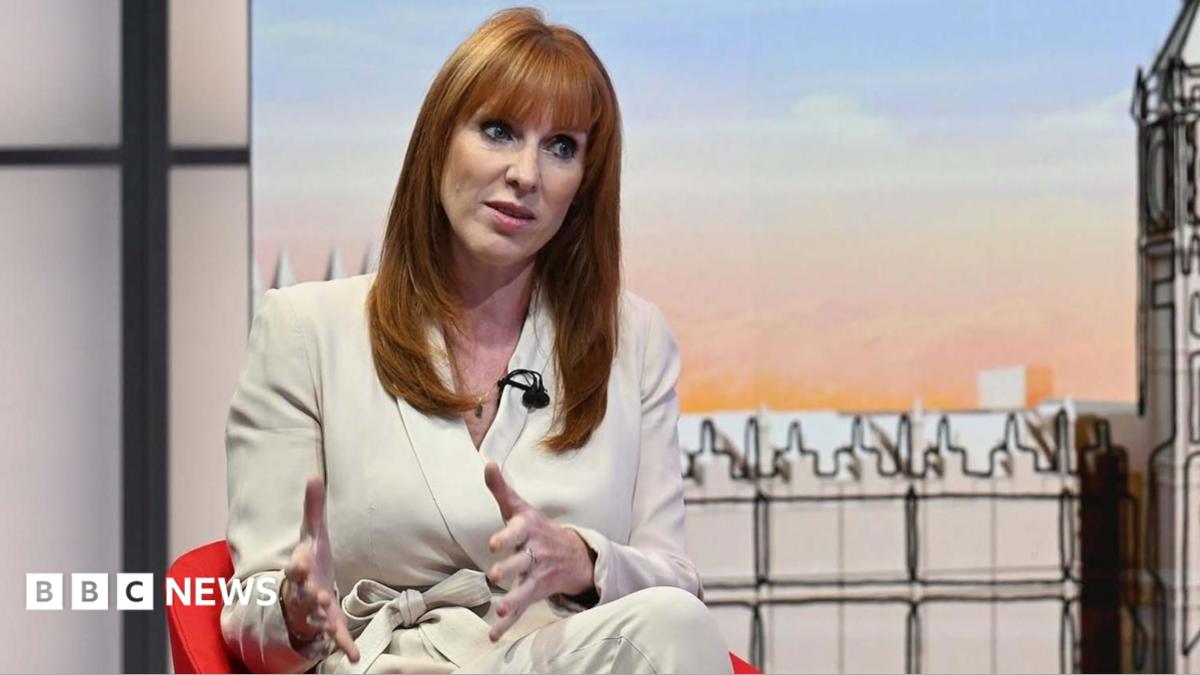
Angela Rayner sitting on the set of the BBC's Sunday with Laura Kuenssberg programme.

There is only a “slim chance” the government will meet its target of building 1.5 million homes in England by the next election, Housing Secretary Angela Rayner has told the BBC.

“Headwinds” including the Iran war and rising construction costs are making it harder to meet the key Labour manifesto pledge, Rayner told the BBC’s Sunday with Laura Kuenssberg.

“But I’m definitely not giving it up,” she said, and stressed that the government was “making a difference” through investing billions in social and affordable homes.

Data up to March this year suggested the government was behind on the rate of construction needed to meet the goal, which housebuilders have previously warned was too optimistic.

Advertisement

Labour promised to hit the target through building both private and social housing by the end of the current parliament, meaning summer 2029 at the latest.

This implied an average of 300,000 new properties would be needed each year – a rate of construction not seen in decades.

Rayner told the BBC on Sunday: “It’s a slim chance, but I’m definitely not giving it up.”

She said it was important to keep the goal – which she said had always been a “stretch target” – in place, but that she was “being honest with the public” that it would be difficult to achieve.

Advertisement

Source link

Continue Reading

Trending

Copyright © 2025