
Politics
Alistair Strathern MP: ‘The power of play can transform children’s healthcare’


For so many children, going into hospital carries connotations of fear and a lack of autonomy, and even trauma that can carry through to adulthood. It can mean unfamiliar rooms, scary equipment, painful procedures, and adults using words that they neither understand nor are explained to them. With the right support, we can help make this experience less frightening, and play is one of the most effective and efficient ways to make that happen.
The argument for health play is increasingly being won. Across the NHS, more clinicians and leaders recognise that play is not an optional extra, but a vital part of good practice in children’s healthcare. The challenge now is making sure every child benefits from it, and that this happens consistently.
In 2025, Starlight, the UK’s leading charity transforming children’s healthcare through play, and NHS England jointly produced the Play Well Toolkit. Since the launch of this guide for healthcare professionals on how to design, plan, and deliver high-quality health play services, the government has committed to the adoption and implementation of the Toolkit across ICBs and NHS trusts by 2027. This is a hugely significant step in the right direction, and we now need this progress to continue.
We now need to see delivery. Starlight’s recent freedom of information research found that 80% of Integrated care boards (ICBs) are not yet committed to adopting the Toolkit, none has a dedicated health play budget, and only 5% include health play in their children and young people’s strategies. We can surely do better than this.

MDU warns Chancellor clinical negligence system ‘not fit for purpose’

Northern Ireland RE curriculum is ‘indoctrination’ – Supreme Court
It should be impossible to ignore the benefits. At University College London Hospitals, an MRI programme supported by a health play specialist enabled 38 out of 42 children aged four to eight to complete scans while awake, reducing waiting times for MRI scans under general anaesthetic by 24%. Elsewhere across the country, 3D scanner models, preparation sessions and distraction techniques have helped children cope with procedures that might otherwise have required clinical restraint, sedation or avoidable distress.
Few interventions can reduce trauma for children, improve outcomes, and save the NHS money, yet health play delivers on all three. That’s why last week in Westminster, I hosted a drop-in event alongside Starlight which brought together MPs, Peers, NHS leaders, clinicians, health play specialists, advocates, young people, and families to discuss how to make the government’s commitment a reality.
At the drop-in, Nailah (a member of Starlight’s youth panel) spoke powerfully about her experience of therapeutic play in healthcare. She said, “I grew up in hospital, I have had so many surgeries, and the play specialist really got me through it and supported me through all these difficult times”.
Powerful comments like these reiterated that no child should have to experience unnecessary fear or trauma as part of their healthcare. Every child should have access to care that recognises their right to play, their need to understand, and their ability to cope when they are properly supported.
None of us could fail to be moved by such testimony, and no policy-maker should fail to be moved by the evidence. Consistent access to play provision on the NHS can reduce trauma, improve outcomes, and ease pressures. There’s not a moment to lose in ensuring 2027 is the year we make this vision a reality.

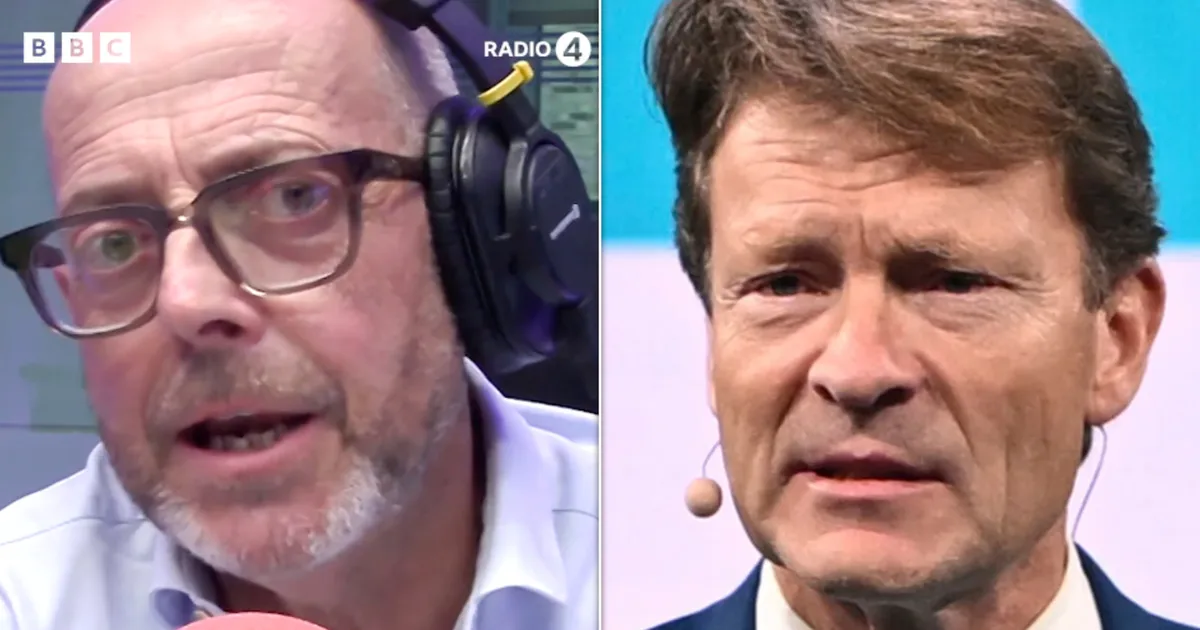
The pair clashed amid claims Reform may have to hand the money back because Ben Delo and Christopher Harborne have not been living in the UK long enough.
Delo has moved back to the UK from Hong Kong, while Harborne is now registered to vote in Hampshire, although it is unclear whether he still lives in Thailand.
Donations from people based overseas are impermissible under UK law.
Nigel Farage said he was “humbled and honoured” when each man donated £36m to his party in the space of 24 hours at the weekend.
Reform have insisted that neither man has asked for anything in return for the cash.
But on Radio 4’s Today programme this morning, presenter Robinson asked Tice: “What do you think first attracted two cryptocurrency billionaires to give tens of millions of pounds to a party promising to cut their taxes, to limit regulation of their business and limit competition for them as well?”
Tice replied: “Their patriotic love for a fantastic country that is being ruined under a bunch of socialists.”
Later in the interview, Robinson told Tice that Delo and Harborne have “already got everything they want” from Reform.
He said: “These men who are giving £72m have already got Reform UK agreeing to lobby the Bank of England to change its policy – threatening to sack the governor because of his attitude to this – threatening to cut taxes on cryptocurrency and change the regulatory approach.
“So far from getting nothing, they’ve already got a lot from you, haven’t they?”
Tice replied: “If you look at the timelines, you’ll realise your analysis is completely wrong because we met the governor of the Bank of England exactly a year ago. These donations have been made very recently.”
Housing secretary Angela Rayner yesterday suggested Reform may have to give at least some of the money back because Christopher Harborne has not been based in the UK long enough to be a permissible donor.
But a Reform source told HuffPost UK: “We wouldn’t be putting out extremely confident statements if we didn’t know their personal circumstances.”
A party spokesman said: “We are 100% confident both [donations] are legal and won’t ever have to be handed back.”
Listen to Commons People, the podcast that makes politics easy. Every week, Kevin Schofield and Kate Nicholson unpack the week’s biggest stories to keep you informed. Join us for straightforward analysis of what’s going on at Westminster.

Rich’s Monday Morning View
Prime minister Andy Burnham has called Brexit one of the “wrong turns” taken in recent decades. His government will seek closer links between Britain and the European Union – rescheduling this November’s summit. New research from British Future finds public support for that direction of travel, but uncertainty about quite how far that should go. It also shows how re-opening Britain’s debate on Europe will require both sides to overturn their assumptions and take a fresh approach if they wish to prevail.
Burnham’s own post-Brexit journey reflects the cross-pressures of the British debate. A decade ago, he worried that calls for a second referendum before leaving the EU would only deepen public disdain for an out-of-touch political class. As mayor of Greater Manchester, he wanted the government to be more open about the damage – and aspired to see the UK rejoin again in his lifetime. He put that on the back burner when running to return for parliament in Leave-voting Makerfield. Now, as prime minister, Burnham must determine what direction to take and negotiate with his EU counterparts.
A new youth mobility deal should be achievable and has public support. But the new research finds Burnham could also go further too – though it does not find a consensus on where people would like to end up.
Two fifths of the public are at the poles of this debate: an “all in” group of 22% who would like a referendum as soon as possible to overturn the 2016 result, and another fifth who are against closer links. But most lie in between or are undecided: a quarter of the public are contingent pro-Europeans, who would like to join the single market at least, but retain doubts about free movement. A similar-sized group of pragmatic sceptics favour practical cooperation on many issues, without rejoining the single market or the EU itself. There is also a large group, often younger, who are disengaged from the whole debate.
MDU warns Chancellor clinical negligence system ‘not fit for purpose’
Northern Ireland RE curriculum is ‘indoctrination’ – Supreme Court
As Burnham arrived in Downing Street through an internal party coronation, his government is constrained, at least for this parliament, by the ‘Red lines’ of the 2024 Labour manifesto: no bid to rejoin, and no membership of the single market, customs union or freedom of movement. Yet the new research shows that most of the public do now support a closer relationship than these ‘red lines’ would allow.
For the government, getting practical may be part of the solution. Increasing pragmatic cooperation with the EU in this parliament, especially on youth mobility, defence and asylum, will be popular with voters. Beyond November’s summit, Burnham will need a strategy to dissolve or redraw his red lines, while being clear that the Brexit decision itself could not be undone without a future referendum.
Yet for a decade, Britain’s two Brexit tribes have mostly been refighting the last referendum. They often sound happiest to carry on doing so. Dominic Cummings, the strategist behind the Leave victory, believes “tell them again” would be the winning slogan in a new vote. Those who lost in 2016 believe the tide has turned in their favour. The research shows that both tribes may need to look beyond the 2016 referendum trenches to persuade the public about the choices in the decade to come.
Generational change is a challenge for both sides. Leave won most strongly among over-65s, and its voters were significantly older than those for Remain. Demographic change has removed the Leave majority of 2016, even if nobody had changed their minds. By the time of the next general election, one in five of the public – everybody under 30 – will have been too young to vote in that referendum. Few believe there have been benefits from Brexit, but nor can pro-Europeans take their support for granted. We found the under-30s least aware of the issues or invested in the arguments. Complaints about how the public were misled a decade ago will leave cold those who may have been in primary school at the time.
So those pushing to go further and closer should not be complacent that young people’s dissatisfaction with Brexit, and demographic changes as older Leave voters pass away, will give them a winning hand.
Supporters of Brexit need a forward vision too, of how the UK charts a course through global uncertainty and an unreliable ally in the US. And with most of the public supporting pragmatic alignment with Europe on trade, defence and other issues, blanket opposition will win few friends beyond a shrinking core.
The popularity of Boris Johnson’s “Get Brexit Done” reflected a public exhaustion with the divisions of this subject. So there are mixed views about future referendums. But we are going to have to talk about Europe again – and both sides of the debate may need to move on if they hope to connect with voters in 2026 and beyond.

Gary Oldman has backpedalled somewhat after his recent comments about the future of the James Bond franchise.
Earlier this month, the Oscar winner was being interviewed on Canadian TV when the rumours about his Slow Horses co-star Jack Lowden potentially being in line to play 007 were raised.
“It’s been rumoured that he’s on the shortlist” Gary noted, before suggesting that we’re “going to find out pretty soon” if there’s any truth to it.
“[Producers] have made their choice,” he then alleged. “But they have not announced it yet. So, my fingers are crossed for Jack.”

Last week, Gary took part in a Q&A session at TIFF, where he mentioned the recent report that there are now “six people on a shortlist” to play Bond.
“I heard a rumor that they’ve picked James Bond, but they haven’t announced it yet, which is their prerogative,” he continued, before clarifying: “So I do not know [who has got the part].”
“But I’m hoping it’s Jack,” he added.
Back in August, The Rest Is Entertainment host Richard Osman claimed to have inside knowledge that Jack had been picked to succeed Daniel Craig as the next 007, praising the idea and calling the actor “an incredible Bond”.
Shortly after this, the US outlet Page Six reported that there were now six actors still in contention, with Jack among them.
However, they said that the top pick for the job was Heartstopper and SAS Rogue Heroes actor Jack Barton, with Callum Turner and Jacob Elordi’s names also mentioned, alongside Harris Dickinson and Paul Mescal.
Movie producer Amy Pascal previously shared that the film studio Amazon MGM was looking for “something really different” when it comes to the next James Bond, and was keeping an eye out for someone “stirring and exciting and different”.
Little else is known about the upcoming 26th instalment in the James Bond film series, other than that it will be written by Peaky Blinders and House Of Guinness creator Steven Knight and directed by Oscar nominee Denis Villeneuve.
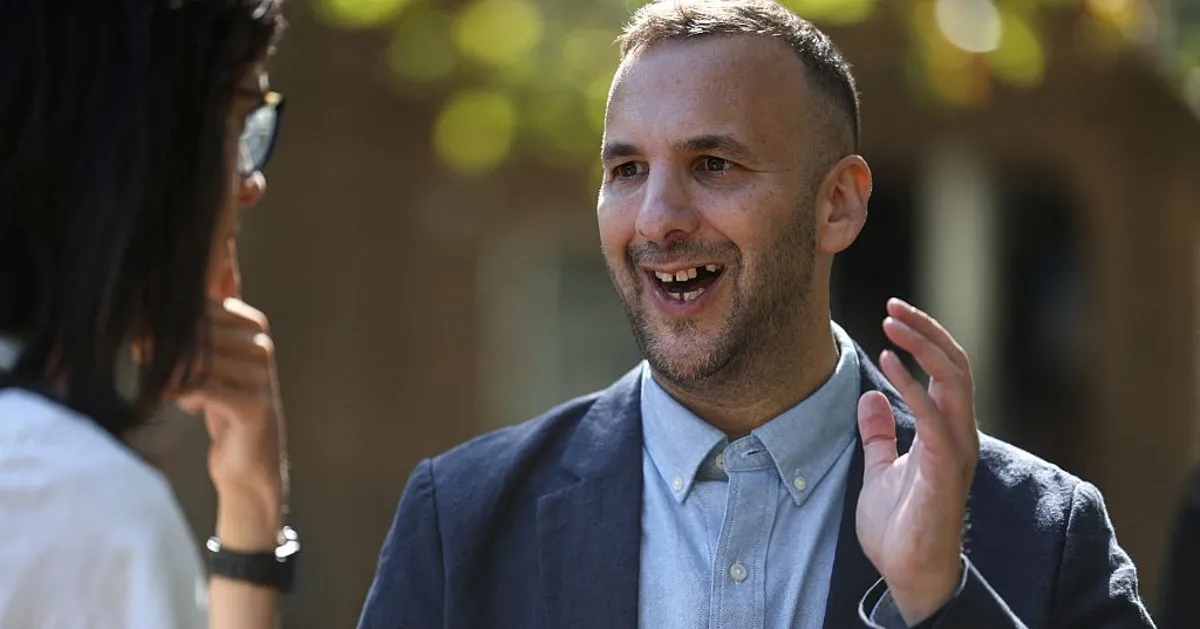
Senior Labour sources have denied that a victory in a crunch by-election next month could trigger a snap general election.
Voters in Holborn and St Pancras will go to the polls on October 8 to choose a successor to Keir Starmer.
The former prime minister retained the seat with a majority of around 11,500 at the 2024 election, and the constituency has been held by Labour since it was created in 1983.
However, the Greens are hopeful of pulling off a major upset after choosing party leader Zack Polanski as their candidate last week.
It has been reported that Labour see the by-election as a “dry run” for a possible early general election.
A Labour win, it has been claimed, would show that under Andy Burnham’s leadership, the party is no longer losing the support of left-of-centre voters to the Greens.
“If we can beat Polanski in a by-election it will show that Labour is in good shape to fight a general election,” one source told The Independent.
However, a senior Labour source told HuffPost UK that was “utter utter horsegrade manure”.
A second Labour insider said: “It’s utter nonsense. The party is about to have a new general secretary in three weeks. Nobody is even talking about prepping for a general election.”
Labour has enjoyed an increase in support since Burnham became PM in July, and is now ahead of Reform UK and the Conservatives in most opinion polls.
But an analysis by Election Maps UK forecast Labour would lose its 166-seat majority if an election were held now.
It suggested that Labour would comfortably be the largest party with 253 MPs, but would probably need the support of the Lib Dems to govern.
Burnham himself has repeatedly ruled out the prospect on an early election.
Speaking to the BBC in July, he said: “There’s no early general election. I don’t think people want it.”
Listen to Commons People, the podcast that makes politics easy. Every week, Kevin Schofield and Kate Nicholson unpack the week’s biggest stories to keep you informed. Join us for straightforward analysis of what’s going on at Westminster.

You don’t have to be an open-borders fanatic to want writers and others to be able to cross frontiers to exchange views with like-minded people abroad. Unfortunately, this is not the view of the UK Home Office, which increasingly prefers to keep out anyone whose views offend the progressive establishment.
Since last year, anyone seeking to visit the UK visa-free has had to get an Electronic Travel Authorisation (ETA). A consequence is that apparatchiks can now keep out anyone officialdom disapproves of at the click of a mouse.
Home Office officials have relished their new powers. Polish MEP Dominik Tarczyński, who wanted to attend the first Unite the Kingdom rally, was banned from entering the UK in May. Two critics of Israel who had been invited to speak at the Oxford Union, Hasan Piker and Cenk Uygur, were denied in June. Dutch right-wing lawyer and anti-immigration activist Eva Vlaardingerbroek had her ETA rejected in January. Most recently, the Christian Finnish parliamentarian Päivi Räsänen was prevented from addressing a conference in Northern Ireland on religious freedom when her ETA was pulled at the last minute, apparently owing to a conviction in Finland over a pamphlet attacking homosexuality she had written more than 20 years ago.
This isn’t exactly new. Senior members of the Westboro Baptist Church, which notoriously claims that God hates gays, have been excluded for some time. So too have a few inflammatory critics of Islam like Robert Spencer (and, to be fair, have many Islamist fanatics as well). In 2018, three prominent anti-Islam activists were denied entry to the UK.
This is very worrying. True, we must always have the right to control who comes to the UK. And we must be able to take into account what they might say if admitted. There is nothing immoral about shutting out the loud-mouthed Islamist bigot who publicly demands the end of democracy, and the subjection of everyone to some dark Sharia code. Equally, while free speech means our police must, however awkwardly, hold the ring between our own home-grown firebrands and their opponents, this does not mean we must admit any foreign rabble-rousers who want to come here and make their life even more difficult.
But that’s not really what’s going on her. Attending a demo is not the same as whipping up a frenzied mob of rioters. Speaking at the Oxford Union is hardly dangerous rabble-rousing. And it’s hard to see any harm whatsoever in allowing a venerable Finnish politician to address an obscure Northern Irish conference on religious liberty. It’s hard to avoid concluding that the Home Office has simply decided that its job description includes policing the opinions that can be heard in Britain, with a particular focus on any views that offend the lanyard class.
If the aim of these visa bans is to prevent such views gaining ground in Britain, then it’s not going to work. After all, even if a speech can’t be given in Britain, the internet means it can still be made to Britain. Indeed, trying to stop views being expressed here by publicly keeping out the person wanting to express them almost certainly gives them much more publicity than they otherwise would have got.
More to the point, it sets a dreadful example for free speech. If we believe in the free flow of intellectual discussion, there is something very odd in saying the same speech can be given at the Oxford Union by a British citizen but not a foreign commentator, or that a religious meeting should be prevented from hearing a particular view on sexual ethics if delivered by a Finn, but allowed to hear it from a Brit.
In short, it should not be the role of immigration officials to decide which temporary visitors’ views are acceptable and which aren’t. Those who come may be scumbags with views that make people sick. So be it. Let them come and speak. If you don’t like what they say, the answer is to shout it from the rooftops, not to create some genteel cordon sanitaire and enforce it with the power of the state.
Andrew Tettenborn is a professor of commercial law and a former Cambridge admissions officer.
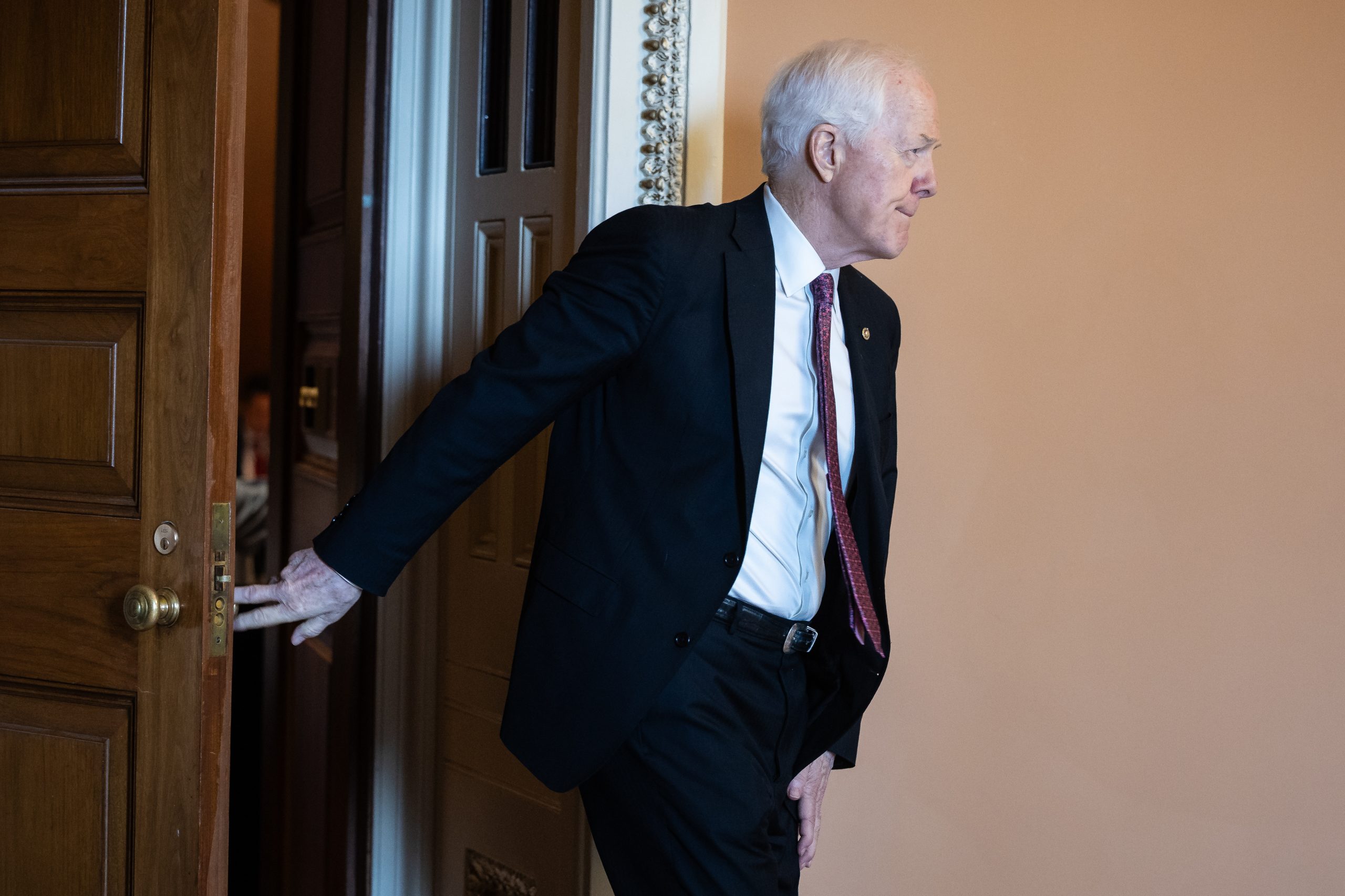

Prominent Texas Republicans are denouncing Bo French, a Republican nominee to join the state’s railroad commission, after he made a xenophobic post describing a group of Asian American students attending a University of Texas football game as a “problem.”
French posted a photo on X of UT students celebrating in the crowd and wrote: “I heard UT graduation this year looked like this. I didn’t believe it. The problem is now obviously far worse than anyone imagined.”
Sen. John Cornyn immediately condemned the post as racist and called on other Republican officials to speak out.
“This is the Republican nominee for statewide office,” Cornyn wrote on X. “Are other Republican elected officials going to condemn the intolerance and racism, or look the other way while it becomes normalized. This is how great political parties self-destruct. Sad.”
Texas Gov. Greg Abbott also rejected French’s message in a statement shared with POLITICO, saying the picture instead showed Texans united behind their college football team, which had just defeated top-ranked Ohio State.
“That is not my message,” Abbott said. “A selective picture of Longhorn fans celebrating our biggest home victory-ever-actually shows a way that Texans unite. We all support our college football teams.”
“The way we win the state is the same way we win football games,” Abbott added. “We unite under the brand of Texas.”
Abbott also defended Texas’ hard-line immigration policies, saying unity “doesn’t mean that Texas cannot also lead in having the toughest immigration laws of any state in America and freezing H1B visas at our universities.”
Several Republican members of the Texas House also joined in the backlash. State Rep. Lacey Hull urged French to remove the post, writing: “This post breaks my heart. I see college kids cheering on their football team. I see Texans.”
State Rep. Jared Patterson called the post “racist” and said it demeaned students because of their race or ethnicity.
“There is absolutely nothing Christian or conservative about looking at a crowd of young Texans at a college football game, seeing the color of their skin, and declaring that they are a ‘problem,’” Patterson wrote on X. “These are 20-year-old kids cheering for their university — not political props and not targets for racial attacks.”
Texas House Speaker Dustin Burrows similarly wrote that opposing immigration policy does not justify “demeaning people because of their race or ethnicity,” adding that French’s post has “crossed the line” and should be deleted. State Rep. Jeff Leach offered a more succinct request: “Delete this, Bo.”
But French also drew support from some Republicans who attacked Cornyn for condemning him. Former Texas GOP Chair Matt Rinaldi accused Cornyn and other Republicans of mortgaging “our children’s future for government handouts and cheap labor,” while state Rep. Andy Hopper called Cornyn a “smug globalist” who had brought the policies at issue to Texas.
French has repeatedly engaged in inflammatory rhetoric. Earlier this year, he suggested Republicans should fear Islam and advocated for deporting 100 million people.
Representatives for French and Lt. Gov. Dan Patrick did not immediately respond to requests for comment.
I always find political donation stories somewhat amusing. They’re as predictable as night follows day. Party X receives a large donation and parties y and z say how outrageous it is and call for legislation to cap donations. Admittedly, it’s unprecedented that a party is offered two £36 million donations in the same week, and there’s no doubt that for Reform UK, it could be a gamechanger. Nigel Farage says it will enable them to prepare for government and will ‘level the playing field’. Up to a point, Lord Copper.
Angela Rayner was touring the studios this morning muttering darkly about outlawing donations like these, but we’ve heard it all before. She also threatened retrospective legislation. I wonder how realistic that is. If these donations are in line with the law as it is, then it would be fundamentally undemocratic to force Reform UK to return the donations at a later date, especially if they have already spent some of the money.
Of course, the Conservatives and Labour have also received huge donations from individual and trade union donors over the years. Lord David Sainsbury has donated £24.75 million to Labour, admittedly over many years. Frank Hester has donated £20 million to the Conservatives since 2023. The trade unions donated £68 million to Labour during the last parliament, according to Robert Jenrick today. On its own, United the Union, and its predecessor, the TGWU, have donated more than £78 million over the years. Assuming Jenrick’s figure is correct, you can see why Farage describes their donations as levelling the playing field.
All of these donations are perfectly legal, but to the ordinary voter, they leave a nasty smell. People naturally assume that the donors are driving a bargain – that for a large donation, they expect something in return. In my experience, that is not true, and most donors act in a philanthropic way. But I do understand why people don’t believe that.
During the 2005 Conservative leadership contest, I was responsible for handling all the donors to David Davis’s leadership campaign. We were only allowed to raise £100,000, but not a single donor ever demanded a quid pro quo for their donation.
Elected politicians of all parties absolutely hate dealing with donors and donations, but raising money is necessary for every political party to be able to fund its day to day operations and local and national election campaigns. If that is to no longer be permissible, or limited to a capped amount, then the only alternative is for the taxpayer to fund political parties through a regime set up by the State. But I wonder how many taxpayers would think this was a wise use of their taxes. Not many, I suspect.
As a final observation, I think Reform’s decline in support over the last few months is at least in part because some of their less hardline supporters felt the £5 million personal donation to Nigel Farage didn’t pass their sniff test. I’ve had callers to my LBC show say as much. They felt let down by Nigel Farage. Will these two massive party donations increase that trend? I don’t know, but what I do know is that Crypto is a very dodgy way of making money and is prone to foreign influence and money laundering. I make no comment on the two gentlemen who are donating this money to Reform, but given one of them has faced serious allegations in the US and had to be pardoned by Donald Trump, they had better be sure that this money is completely kosher. And you can’t blame their political opponents for asking serious questions.
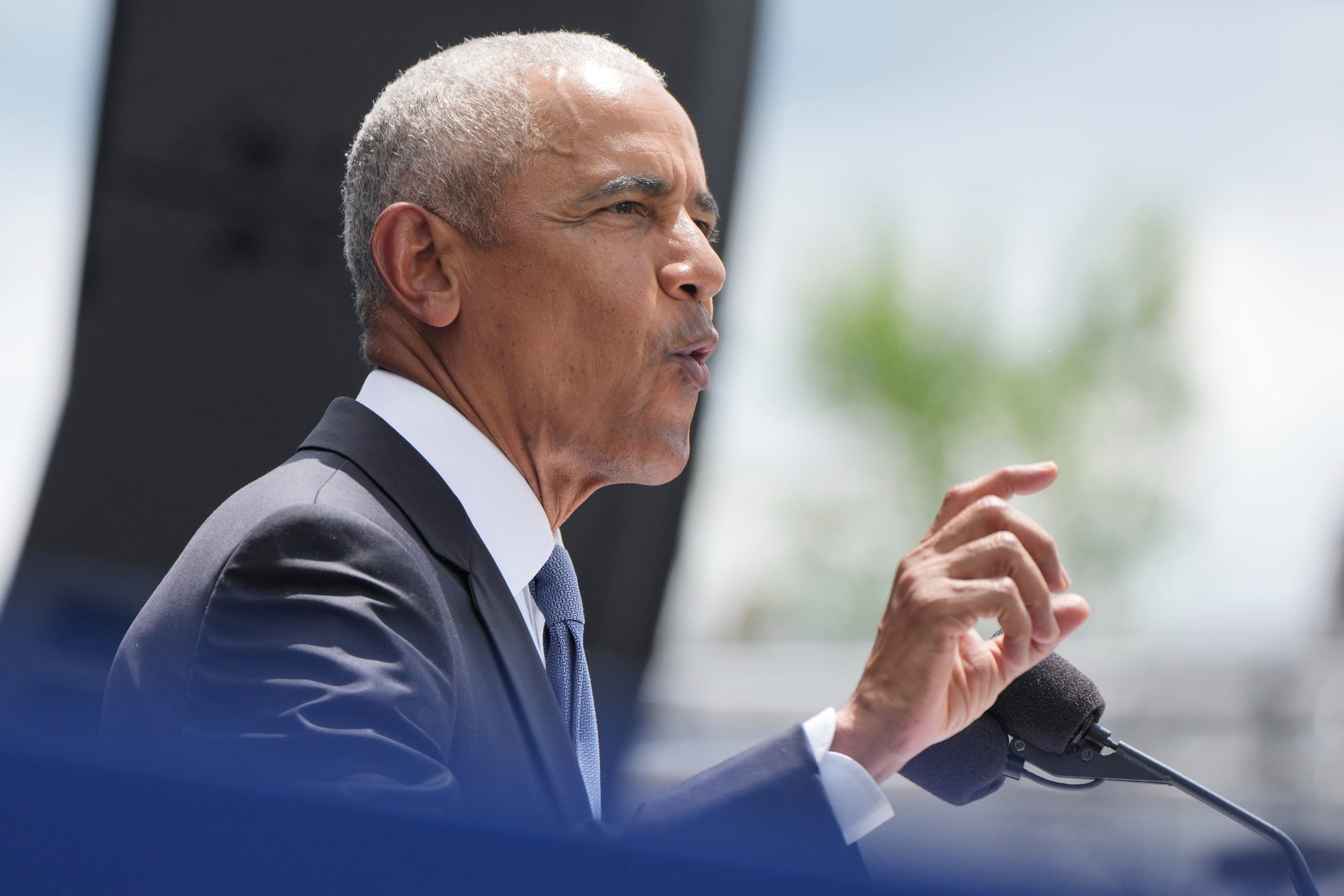

Former President Barack Obama is urging Democrats — including 2028 presidential candidates and congressional leaders — to more aggressively focus on a comprehensive AI agenda, warning in a closed-door fundraiser that the technology is at an inflection point.
“This is something that is moving very fast in private hands, and if we don’t get on top of it, I think can be dangerous,” Obama said at the fundraiser Thursday, according to a partial transcript of his remarks provided by his office. “If we do get on top of it, I do think it’s beneficial.”
Speaking alongside House Minority Leader Hakeem Jeffries at the New-York Historical Society in Manhattan, Obama said he is neither a “doomer” nor an “accelerationist.” His remarks come amid increasing alarm over the technology’s advance, with executives at two of the country’s leading AI labs joining Elon Musk in calling for slowing its development, following months and years of cries from within the industry for government to act.
Obama said AI development would be “one of my central agendas” if he were running for president, throwing down a gauntlet as the shadow 2028 Democratic primary debate responded to the AI leaders’ calls.
“I would have a very clear plan, and I would talk about this, and I would say, here’s our plan for safety, here’s our plan for making sure our kids are not corrupted by this,” Obama said, according to excerpts of his remarks shared with POLITICO by his office and first reportedby The New York Times.
Among the top concerns, Obama said: “I would be thinking about the economic impacts in very concrete ways and understanding what does it mean if there’s going to be job displacement. Where is that going to hit? How are we going to respond? Are there going to be limits to the amount of displacement that can take place? What is that going to mean for our social safety net? If it turns out that you’ve got a lot more people who can’t find full-time work because they’ve been rendered redundant, how are we going to respond?”
He also called for Congress to take action, telling Jeffries that Democrats should “put together a framework for a very public conversation” centered on the biggest issues.
Obama’s remarks mark a larger shift for both himself and the Democratic Party writ large: He governed as a tech-friendly Democrat, who broke POTUS tech barriers by having a laptop and iPad while in office and whose 2011 town hall at Facebook headquarters was widely seen as typifying the administration’s friendliness with Silicon Valley.
The Obama era was also known for Washington’s failure to confront the growing monopolization of power in the tech industry, most famously in the Federal Trade Commission’s 2013 decision not to file an antitrust lawsuit against Google. (The first Trump Justice Department later filed such a suit seven years later.)
Already on Sunday, at least two potential 2028 Democratic presidential candidates addressed the issue of slowing the pace of cutting-edge AI development, or otherwise keeping their products from launching pandemics or cyberattacks.
Speaking on NBC’s “Meet the Press,” former Transportation Secretary Pete Buttigieg said Democrats need to “address it head on.”
“There needs to be safeguards. There need to be rules. There need to be limits. There needs to be a kill switch on rogue AI,” Buttigieg said, criticizing congressional Republicans and the White House for not moving quicker to rein in AI development.
Pennsylvania Gov. Josh Shapiro, who has gone from courting AI investment to pumping the brakes on data center development, posted to X Sunday that it’s “long past time for our federal government to step up, take this seriously, and put up some guardrails — both here at home and on the global stage.”
The calls for “some guardrails” are still much milder than the proposals coming from the far left of the Democratic caucus, including the proposal by Sen. Bernie Sanders (I-Vt.) and Rep. Greg Casar (D-Texas) to pause the development of advanced AI models and permanently ban “artificial superintelligence.” And Obama’s remarks underscore the leadership vacuum in a Democratic Party that remains in the wilderness after brutal 2024 losses and continues to struggle to unify around a policy agenda.
In a portion of his remarks, Obama acknowledged the lack of high-level leadership on the AI issue, saying that “part of the job for us is to give people a reason to believe again in the idea of the democratic project, the American project, the economy that works for everyone, opportunity for every kid, to reassure people that if we work together, we can deliver those things. That’s hard to do without somebody in the White House to lead the charge, but I do think that people are ready for that message.”
President Donald Trump, meanwhile, has dismissed any worries about AI posing an existential threat, telling reporters last week that he’s mainly worried about beating China to dominate the technology.
Obama compared AI to other “dangerous technologies like nuclear power,” but added that it did not have the same “natural” and “physical constraints” on it that is not “under state control.”
In Congress, House and Senate lawmakers have sought to advance legislation to slow down or impose limits on AI development, so far without success. One key Senate proposal, led by Sen. Amy Klobuchar (D-Minn.) and Senate Majority Leader John Thune, faces an uncertain future because of differences over how to impose a legal duty on Silicon Valley companies that would hold them liable for harms their models cause. Another contentious issue is whether the legislation should preempt state from imposing their own AI laws.
House Speaker Mike Johnson said Sunday morning he would support talks with tech leaders on AI but insisted that developers — not Congress — are primarily responsible for ensuring their products are safe.
As lawmakers campaign in their districts ahead of the midterm elections, they are fighting to own the messaging as voters sour on data centers and the impact of AI systems on jobs and education, among other key areas.
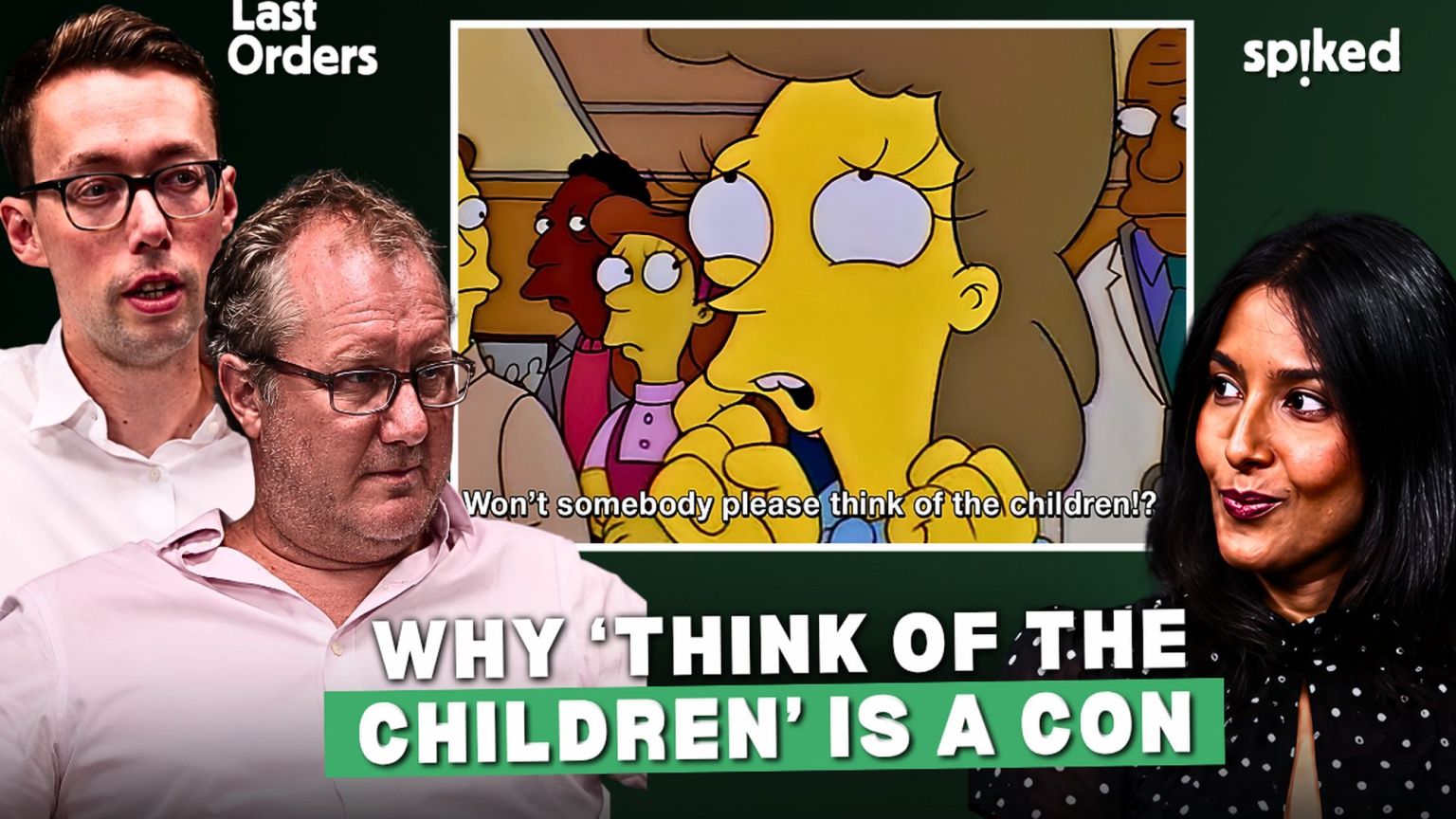
The post Why ‘think of the children’ is a con appeared first on spiked.

Prayer for Financial Breakthrough | God, I Need a Miracle
Oasis fans urged to take five steps for 2027 tour tickets before 4pm announcement today

Lawyer Ben Caratti called as Reliance chase parents' debt


-
 Tech6 days ago
Memory prices are slowing because buyers ran out of money
-

 Tech20 hours ago
The Latest Weird Thing to Play Doom Is the Mapped-Out Brain of a Fruit Fly
-

 Business4 days ago
Micron Stock Climbs Above $1,031 as AI Memory Crunch and a $50 Billion Outlook Fuel the Rally
-

 Business4 days ago
AMD Stock Climbs After Management Lifts 2027 Data Center Outlook Toward $70 Billion in AI Sales
-

 Crypto World5 days ago
Bitcoin price risks $76K drop as $78K support weakens
-

 Fashion3 days ago
Weekend Open Thread – Corporette.com
-

 Crypto World6 days ago
Robinhood Stock: How To Take Advantage With Reduced Risk
-

 Crypto World3 days ago
XAG/USD: Silver’s Short-Term Rally Meets Its Moment of Truth
-

 Crypto World4 days ago
2 Chip Stocks Broke Out This Week. Neither Was Nvidia
-

 Crypto World5 days ago
Ethereum price stalls below $2,500 as ADX drops to 11
-

 NewsBeat6 days ago
England up in reading, maths and science rankings as Scotland and Wales dip
-

 Business3 days ago
10 Most-Streamed Songs On Spotify In 2026 So Far, Led By Ella Langley’s Dominant Run On The Charts This Year
-

 Crypto World3 days ago
OKX launches 10x OpenAI, Anthropic X-Perps in Europe
-

 Tech4 days ago
Battery life is the only iPhone 18 Pro and iPhone Duo upgrade I care about. Apple didn’t disappoint
-

 Crypto World3 days ago
Diesel Tops $6 a Gallon for the First Time as 28 States Set Records
-

 Crypto World6 days ago
Intel Stock Jumps 9% on Chip Price Hike Report, US Stake Gains $36 Billion
-

 Tech4 days ago
Apple Watch Ultra 4 vs Watch Ultra 3: Should you really spend another $799?
-

 Crypto World4 days ago
Bitcoin price risks $70K if $78K neckline breaks
-

 Crypto World6 days ago
Pump Fun and Kraken delete Hunter Biden $LAPTOP promotion
-

 NewsBeat5 days ago
What went right this week: an ‘historic’ fall in violent crime, plus more
You must be logged in to post a comment Login