


Connect with us

Tech

Trump Told Supporters To “Cheat Like Hell.” The NY Times Went With “A Bit Tired Of Politics.”

Published

on

By now it’s old hat to point out that the mainstream media bends over backwards to pretend that Donald Trump is a “normal” president. The number of times you could point to the coverage and question how the media would cover things if a Democratic president did anything even remotely similar is impossible to keep track of.

But there were two separate things that happened at Trump’s fake GOP “midterm convention” (there was no convention, it was just a rally) and the way the media handled each tells you plenty about how stupid things have become. First up, Trump stated that if the Republicans win the midterms, every American would get a $5,000 check. This is both illegal and ridiculous.

It’s illegal because 18 USC 597 makes it a crime to offer an expenditure to induce someone to vote a particular way — which is precisely what dangling $5,000 checks in exchange for a Republican Congress is. It’s ridiculous because Trump promises this kind of bullshit all the time and never delivers. Here’s a compilation of him making unfulfilled promises of “dividend” checks over and over again:

@thebulwark.com did a supercut of all the prior times Trump said he was going to give Americans a $5000 check or whatever. It is glorious

Catherine Rampell (@crampell.bsky.social) 2026-09-11T19:32:49.093Z

Advertisement

The proper way to cover this story is something along the lines of “President Trump, facing dismally low approval ratings, tries to illegally bribe voters to support the GOP.” The checks are never going to happen, and everyone (including Trump) knows it’s never going to happen. But, instead, the mainstream media pretended that this was a serious proposal worth taking seriously.

A collection of news headlines from various media outlets reporting on Donald Trump's promise to give $5,000 checks to U.S. adults if Republicans win the midterms.

Yes, some of those headlines express skepticism, but within the range of normal policy proposal skepticism. The NY Times coverage, for example, focuses on what “experts say” about the proposal, and how much it would cost (over $1 trillion) and that it would require Congressional approval. It gets quotes from people to argue both the pros and cons of the whole thing, and literally says “it’s complicated” after asking whether such payments “could face legal challenges.” It even tries to “both sides” it by comparing it to a totally distinguishable situation where — in the midst of COVID shutdowns — some Democrats expressed policy support for general stimulus checks.

Then, the next night, in his next speech, the President of the United States — who has spent years falsely accusing others of “rigging elections” and “cheating” despite the near total lack of evidence of any significant voter fraud in the US — had people pledge allegiance to him personally (not the flag, not the Constitution, not America, but to him personally). He then literally told them to cheat and commit voter fraud in the election, before adding that anyone who doesn’t vote (presumably for MAGA candidates) would go to hell.

“Please raise your right hand,” Trump told a stadium packed with his supporters as he was met with some laughter. 

“I pledge to the greatest president in the history of the United States that loves us so much he can’t even breathe, that I will go out with my family, my friends,” he continued.

“I don’t care if I’m registered or not. I’m going to try and cheat like hell like they do. There’s never been bigger cheaters. I don’t care,” he said. “I am going to go out and I am going to get my friends, my family, and we are going to vote on Nov. 3rd or we are going to vote before that.” 

Advertisement

Trump said it went without saying that people would vote Republican.

“OK. So help me God,” he concluded the pledge.

“You know what happens if you don’t vote? You go to hell,” he added. “You know that, OK? You go to hell, and I don’t want that to happen to you. So please go and vote, because together we will defeat the communists.”

Here’s video of the first part of that, with the pledge and telling everyone to cheat and commit voter fraud:

Advertisement

Trump: "Please right your right hand. I pledge to the greatest president in the history of the United States. That loves us so much he can't even breath. That I will go out with my family, my friends, I'll do it any way – I don't care if I'm registered or not, I'm going to try to cheat like hell…"

Aaron Rupar (@atrupar.com) 2026-09-11T02:32:28.497Z

And yes, Trump defenders will claim that he was joking. And everyone is laughing. Or they will claim that he’s only saying this because (as he notes as he says it) he claims (falsely) that the Democrats are cheating. But this kind of facetiousness is the whole point: to anyone offended, he can claim he was joking and mock you for taking him literally, while the MAGA faithful hear it and know exactly what he means.

Frankly, if any Democratic president (or, hell, almost any other Democratic politician) did either thing — having supporters pledge loyalty to them personally, or telling them to cheat in the election — it would generate headlines for weeks. There would be all sorts of hand-wringing among the pundit class about how un-presidential it was, and how the president is expected to bring decorum and support election security and isn’t supposed to be part of a personality cult.

Hell, when Barack Obama accepted the Democratic nomination for president in 2008, the NY Post had a freakout that he would do so on a stage with Greek columns, attacking him for acting like a Greek god with the headline: “Temple of Dem on Mt. O-Lympus.”

Advertisement

But the mainstream media basically played the whole thing down. There were a few headlines about it, but mostly side stories, or just the video clip, not a story about the statement or what it means. But just look at the NYT’s “midterm” coverage the day after (this screenshot is from Friday morning):

A screenshot of The New York Times website featuring a section titled "2026 Midterm Elections" with various political news articles and images.

Nothing in any headline or promo line gets at the pledge or the demand to cheat. The main article goes with the title that he’s “a bit tired of politics” (which is hardly newsworthy), and then the text totally plays down what Trump actually said:

In 2026, he closed out an unusual midterm convention organized in his honor by saying he was a little bored of politics. He seemed more interested in telling supporters to swear on something holy — which seemed to be himself — that they would go out and vote for Republican candidates in November.

“Please raise your right hand,” Mr. Trump instructed a rowdy crowd of thousands inside a Dallas arena on Thursday evening. Many of them complied. “I pledge to the greatest president in the history of the United States that loves us so much he can’t even breathe that I will go out with my family, my friends, I will do it any way — I don’t care if I’m registered or not, I’m going to try and cheat like hell, like they do.” (Mr. Trump usually frowns on election fraud.)

He added: “I am going to go out, and I’m going to get my friends, my family, and we are going to vote on November 3.”

And that’s basically it on the topic. Even the parenthetical “usually frowns on election fraud” is laughably misleading. All of this just seems like an attempt to sanewash the insane.

Advertisement

Yes, covering every crazy thing that Trump says or does makes you seem like you’re crazy too. But it’s incredible which stories the media focuses on and which they minimize. These two examples in quick succession make it clear that in an attempt to make the Trump presidency seem more “normal” than the out-of-control authoritarian cult-of-one-man that it actually is, they will treat an illegal and ridiculous bribe as a legitimate policy proposal, while burying the part where he has supporters swear fealty to him personally and then tells them to break the law.

Source link

Continue Reading
Click to comment

You must be logged in to post a comment Login

Leave a Reply

Tech

No Rolling Power Outages for California Since 2020 – Thanks to 17,000 MW of New Battery Storage

Published

on

“Californians just made it through the hottest August on record without having to endure any rolling power outages,” reports the Los Angeles Times. In fact, the state hasn’t implemented rotating power outages since 2020.

Because “Over the last few years, California has quietly but dramatically increased the resiliency of its electrical grid through a significant expansion in battery energy storage.”

These batteries hold onto solar energy captured during the day, so it can be sent to the grid as demand peaks in the evening and morning, when most people are at home running air conditioners and other appliances.
During the August heat wave of 2020, the California Independent System Operator, which manages the flow of electricity for most of the state, declared a Stage 3 Emergency and hundreds of thousands of households lost power in rolling outages. At the time, the system had less than 100 megawatts of battery storage available, according to system spokesperson Jayme Ackemann. Today, it has more than 17,000 megawatts available….

According to Ackemann, the system seeks to add 20,000 to 25,000 megawatts of battery storage capacity by 2045 — the same year it has set a goal of achieving carbon neutrality. That means the state would remove as many carbon emissions from the atmosphere as it emits.

Advertisement

In recent years, California has steadily grown the share of electrical power generated by renewable sources — such as solar, wind, geothermal and hydropower — which bolstered the resiliency of the grid by increasing the overall amount of energy available. An uptick in people installing rooftop solar panels has provided an additional power boost, Ackemann said. In May, California became the first known large-scale power system in the world to have relied on more than 50% solar power for an entire month…. California’s grid is also now integrated with electrical systems across much of the Western United States. This means that if there is an extreme heat event in Southern California, energy from a cooler area such as the Pacific Northwest can be imported to help meet regional demand. All of this has collectively helped the state’s electrical system weather this year’s long-lasting heat.

“Southern California continued to break temperature records this week when Long Beach and Anaheim reached a blistering 107 degrees and Escondido hit 112 degrees…”

Read more of this story at Slashdot.

Advertisement

Source link

Continue Reading

Tech

Elon Musk’s X corp files to dismiss App Store favoritism case

Published

on

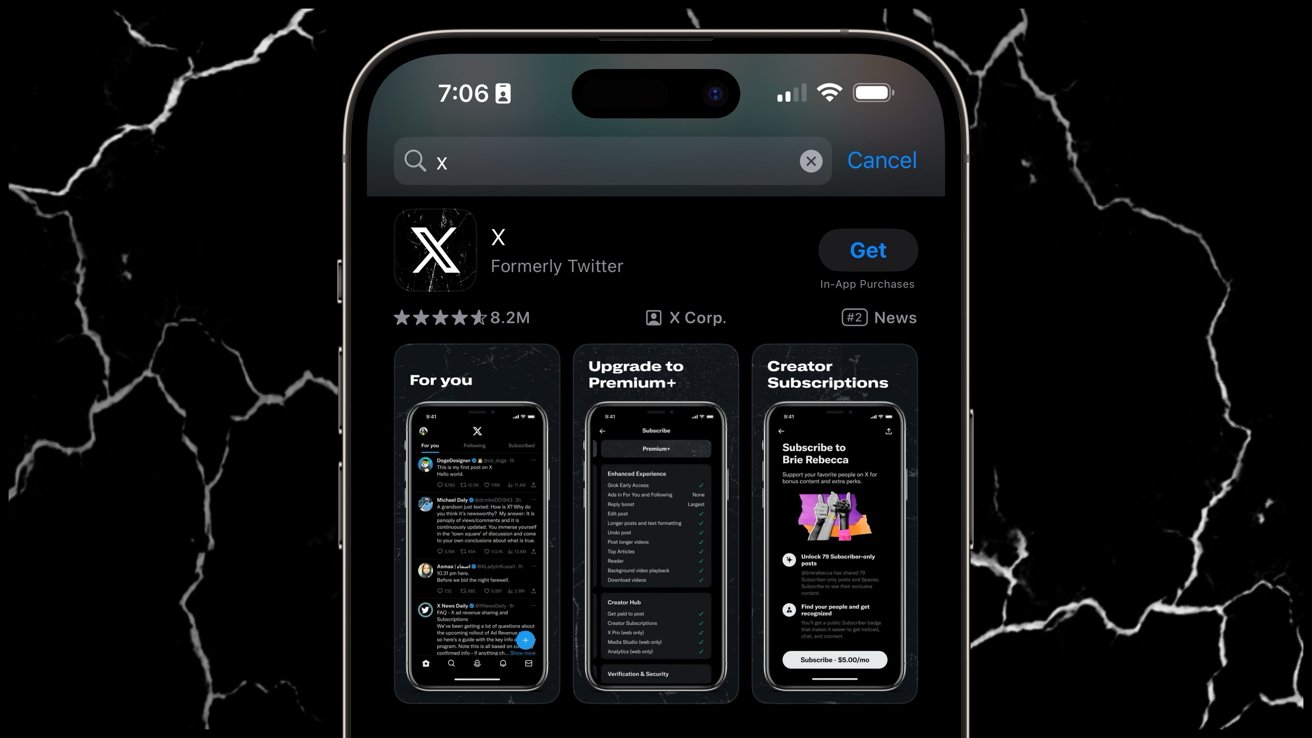
Elon Musk has moved to dismiss its lawsuit against Apple regarding the App Store given preferential treatment to OpenAI over xAI’s apps. There are unanswered questions.

The court filing on Monday, September 14 is pretty sparse, other than the request to dismiss. It’s not yet clear if there’s some kind of settlement, or if Musk has decided his case is baseless.

OpenAI was named in the suit as well. Notably, it’s just Apple that Musk is asking the court to remove from the case, and OpenAI will need to fight two major legal battles with industry titans at the same time.

Apple and OpenAI were sued by Elon Musk’s xAI, now owned by SpaceX, due to alleged anticompetitive practices. The trial hasn’t been going well for Musk so far, as it was accused of destroying and withholding evidence previously.

Advertisement

The suit alleging preferential treatment has been sketchy from the beginning. As Musk’s own Grok noted when asked by a social media user, other companies other than OpenAI have been on the top of the App Store.

DeepSeek was in the App Store top spot in January 2025. Perplexity followed on July 18, 2025. Both happened after the June 2024 OpenAI and Apple partnership.

Further complicating the suit, app data aggregator SensorTower has also noted that Grok was on the peak App Store spot on February 18, 2025 and February 19, 2025 after Grok-3 was made free.

The case has been moving at a snail’s pace since it was brought on August 2025. In May 2026, SVP of Software Engineering Craig Federighi was brought in as a document custodian.

Advertisement

Current Apple CEO Tim Cook was also requested as a custodian, but that was denied.

And, more recently, a judge has ruled that Elon Musk’s emails must be entered into the record. It’s still not clear what has triggered Musk’s request.

We have reached out to Apple and X corp for more details. We are not expecting a response from either, but a return call from Apple is more likely.

Advertisement

Source link

Continue Reading

Tech

Pre-Orders For The Android-Based Googlebook Laptops Open On September 21

Published

on

Gemini Intelligence is at the heart of the operating system.

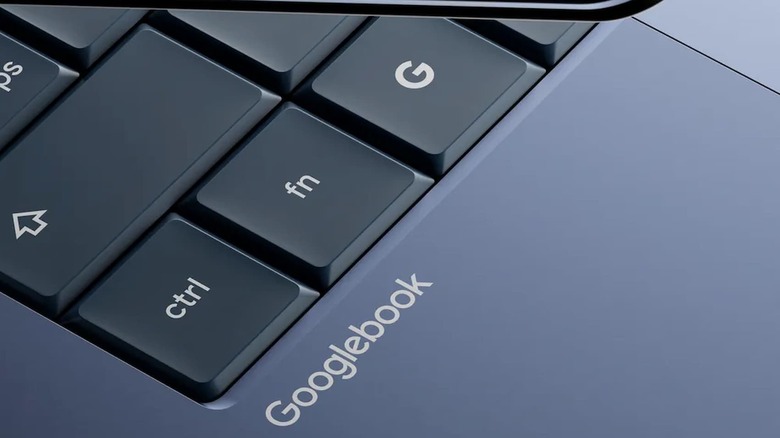
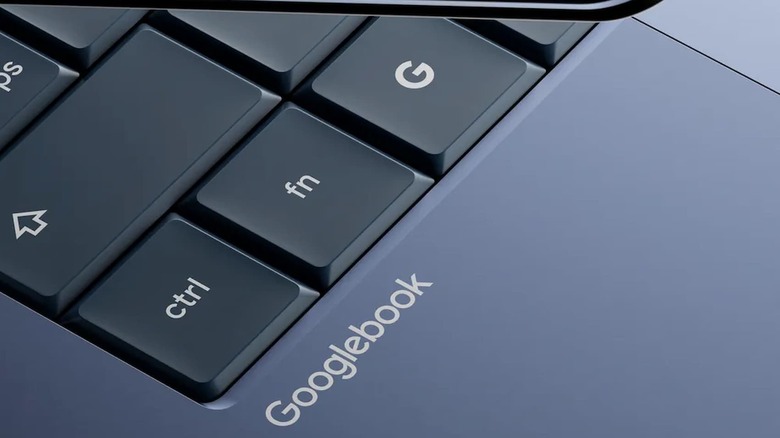
We’ll soon learn a lot more about Googlebooks — a new line of higher-end laptops from Google — as pre-orders are about to open. As noted by 9to5Google, the company told folks who signed up for updates on the devices that they (and you) can lock in an order starting on September 21 at 9AM ET. The same date appears on the Googlebook website.

Since Google announced its latest laptop brand back in May, the company hasn’t said too much officially about what to expect from them. They’ll run on a version of ChromeOS that’s based on Android. Models from Acer, ASUS, Dell, HP and Lenovo (all of which have made Chromebooks) are on the way. Of course, Gemini Intelligence is at the heart of these laptops.

One of the AI-powered features Googlebooks have is called the Magic Pointer. Wiggling the cursor turns it into the Magic Pointer, which makes it sound a bit like a Power Ranger or something. When you aim this at something on your screen, your Googlebook will offer contextual suggestions on actions you can take. 

Advertisement

In addition, you’ll be able to generate custom widgets. Googlebooks (which feature a “glowbar” on the lid) will have deep integration with Android phones as well.

Source link

Advertisement
Continue Reading

Tech

There’s more than meets the eye (or ear) with the AirPods 5

Published

on

Apple has announced the AirPods 5 – that, you obviously know – and they’re coming with Active Noise Cancellation as standard.

Now, while I’d say there’s still some debate to be had over the designation of ANC in an open-ear design, this type of feature in an open-ear design has gone from a rarity to becoming more widespread.

And with the cheapest version of the AirPods 5 at £119 / $129, that’s made ANC open-ear a fairly affordable proposition for iOS owners. And given the AirPods sell like hotcakes, it’ll likely give Apple even more dominance in the headphone market. Impressive, considering they’re a device brand first and less a ‘traditional’ headphone brand.

But I’m beginning to monologue. The inclusion of ANC in an AirPods model at such an affordable price is a good thing, and I reckon it’s all to do with your hearing health.

Advertisement

SQUIRREL_PLAYLIST_10208756

Advertisement

Is it actually ANC?

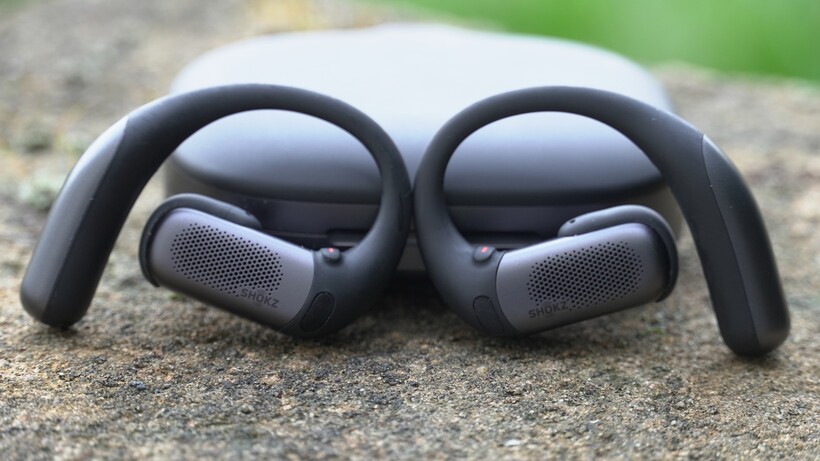
Shokz OpenFit Pro headphonesShokz OpenFit Pro headphones
Image Credit (Trusted Reviews)

I think it’s odd that Apple has designated this feature as Active Noise Cancellation (ANC). While I risk making myself look like a fool against the mighty Apple, the way ANC works is by using a feedforward mic – an external microphone that detects noise before it reaches your ear, and a feedback mic – one that sits close, if not in your ear, that analyses the noise in that region.

The open-design, where it nestles in your earlobe rather than in your ear proper, doesn’t seem close enough for that ANC system to work. Noise Reduction seems like a better way to describe it, but it’s certainly not as attractive to people who think it will cancel noise completely.

Apple says it’ll cancel up to 50% more noise than the AirPods 4 with ANC did, which sounds impressive; and Apple says the Transparency mode will sound more natural, but that’s a laughable claim to me. If you want to hear what’s around you, just turn the ANC off. A Transparency mode seems a needless feature for a headphone that’s primarily designed to let you hear what’s around you.

Advertisement

That’s my scepticism detailed for you, but truly, I think the inclusion of (cough) Noise Reduction is a good thing. It’s featured on several products before, and I alluded to it towards the end of 2025 when I wrote about the continuing progress of open-earbuds.

Shokz is the name most widely associated with the open-ear design, and its OpenFit Pro added Noise Reduction earlier this year, but I think even they have been caught off guard – gazumped, you might say – by Apple pricing the AirPods 5 so low; a low price will bring this technology to more people.

Advertisement

Noise Reduction takes open-ears to another level

Apple-AirPods-5-lifestyleApple-AirPods-5-lifestyle
Image Credit (Trusted Reviews)

Whenever I test open-ear designs, my ears take a battering in noisy environments. I’ve recently tested a new pair in terms of call quality, and while the person on the other end heard me fine, I could not hear a thing they were saying when I was walking on a street or in a restaurant waiting for an order. All I could hear was a cacophony of sound.

And that isn’t good for your ears. We’re always subjected to loud noises wherever we go, and life at times can seem louder than ever, but wearing headphones can shield you from that noise, and open-ear designs have never been particularly good at that.

Advertisement

With noise reduction, you can take the edge off the noise. On a plane, on the Underground (or subway), in a loud indoor environment (pubs make my ears want to explode), headphones can subdue and save your ears from being pelted by the racket around you. I wear headphones on public transport and whenever I fly – I feel like my ears are better for it.

Apple makes no mention of hearing health in its press release, which surprises me a little given they’re so focused on health in other areas, but regardless, the addition of noise reduction at this price means more people will be able to get this type of experience – and it could help your hearing health in the long term.

Advertisement

Source link

Advertisement
Continue Reading

Tech

You Can Use Gemini To Help You Organize Your Files On Google Drive

Published

on

It’ll suggest changes and all you need to do is approve them.

If you do a lot of work online, there’s a good chance your Google Drive has accumulated way too many documents, photos and other files. Unfortunately, Google has typically made organizing your digital life through Drive difficult, with a web client that doesn’t have a particularly useful search function to find and move things around. With this in mind, Google recently introduced a tool to help people get their digital lives in order. And before you ask: yes, it uses AI.

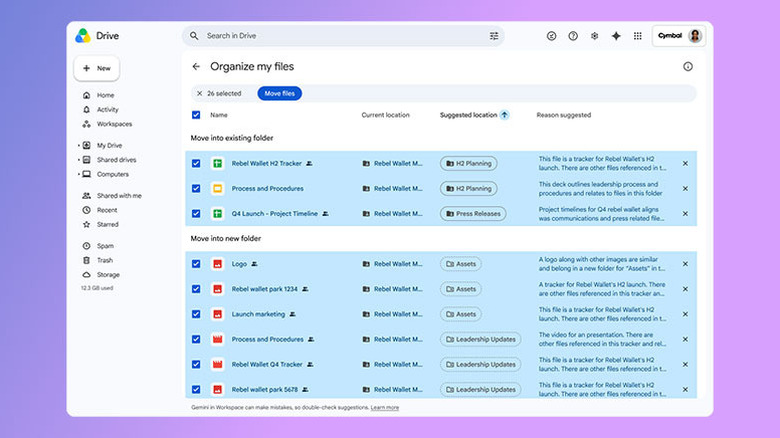
Last fall, Google began testing a feature called Organize My Files in Drive, and began rolling it out to Workspace users in June. Like a lot of the features the company has introduced recently, it relies on Gemini. In this case, “Gemini can help you organize your Drive by providing suggestions of where to move loose files based on your organizing structure and strategies,” says Google.

Advertisement

How to get Gemini set up

Before you can task Gemini with cleaning up your Google Drive, there are a few requirements worth noting. First, you’ll need a Google AI Pro or AI Ultra subscription. The feature isn’t available to free accounts, which means it will not appear in Google Drive’s interface if you aren’t already a paid user.

If Google Drive is your primary cloud storage, this requirement is not the worst thing to spend your money on since the AI Pro subscription, priced at $20 per month, comes with 5TB of additional space and a YouTube Premium Lite subscription (amongst other things). 

Organize My Files in Drive is also available to Business, Enterprise and Education customers, but keep in mind you won’t be able to use your workplace account to organize your personal files. Additionally, you can’t use Gemini to organize files and folders you share with your colleagues. The feature only works with private folders.

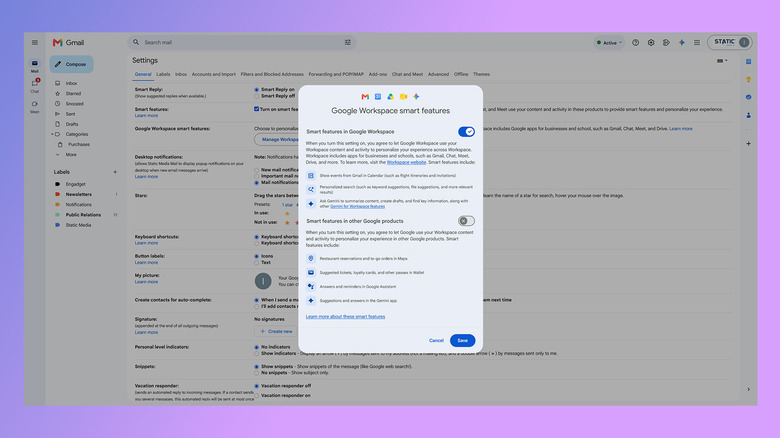
Next, you need to enable Smart features in Google Workspace. This setting is enabled by default in most markets where Google offers Workspace. If you’re unsure if smart features are active on your account, here’s how to check:

Advertisement
  1. In Gmail, tap the cog icon.
  2. Select See all settings.
  3. Under the General tab, scroll down and click Manage Workspace smart feature settings.
  4. If turned off, enable smart features in Google Workspace.

How to use Gemini to organize your files

Once you’ve met the above requirements, using Gemini to organize your files is straightforward.

  1. Open Google Drive on the web and select My Drive.
  2. Click Suggest file moves toward the top of the interface.
  3. Review Gemini’s suggestions, which you’ll see in a new window.
  4. Approve any changes you want Gemini to carry out by using the checkboxes next to each action.

While reorganizing your Google Drive, Gemini may recommend you create new folders to store your files. You can preview every file or document it suggests moving through the cards that appear when you hover your mouse over them. One thing Gemini won’t do for you is rename your files. For that reason, how much utility you get out of the tool will vary.

Gemini doesn’t appear to read the contents of your documents to generate its suggestions. So you’ll get the most out of its organizational efforts if all your files are already named and follow some sort of naming convention and hierarchy. If you have a lot of untitled documents, Gemini may not be able to help you.

If you need to go through all your files to name them, you might as well organize them into folders while you’re at it. You’ll then be able to use Gemini in the future to sort any files you forget to properly file after creating them.

Advertisement

Source link

Continue Reading

Tech

1xBet Kenya Review: Licensing, Payments, Tax and Risks in 2026

Published

on

This article, “1xBet Kenya Review: Licensing, Payments, Tax and Risks in 2026,” was originally published at https://www.blogthetech.com/1xbet-kenya-review/. If you are reading it anywhere else, it was copied without permission.

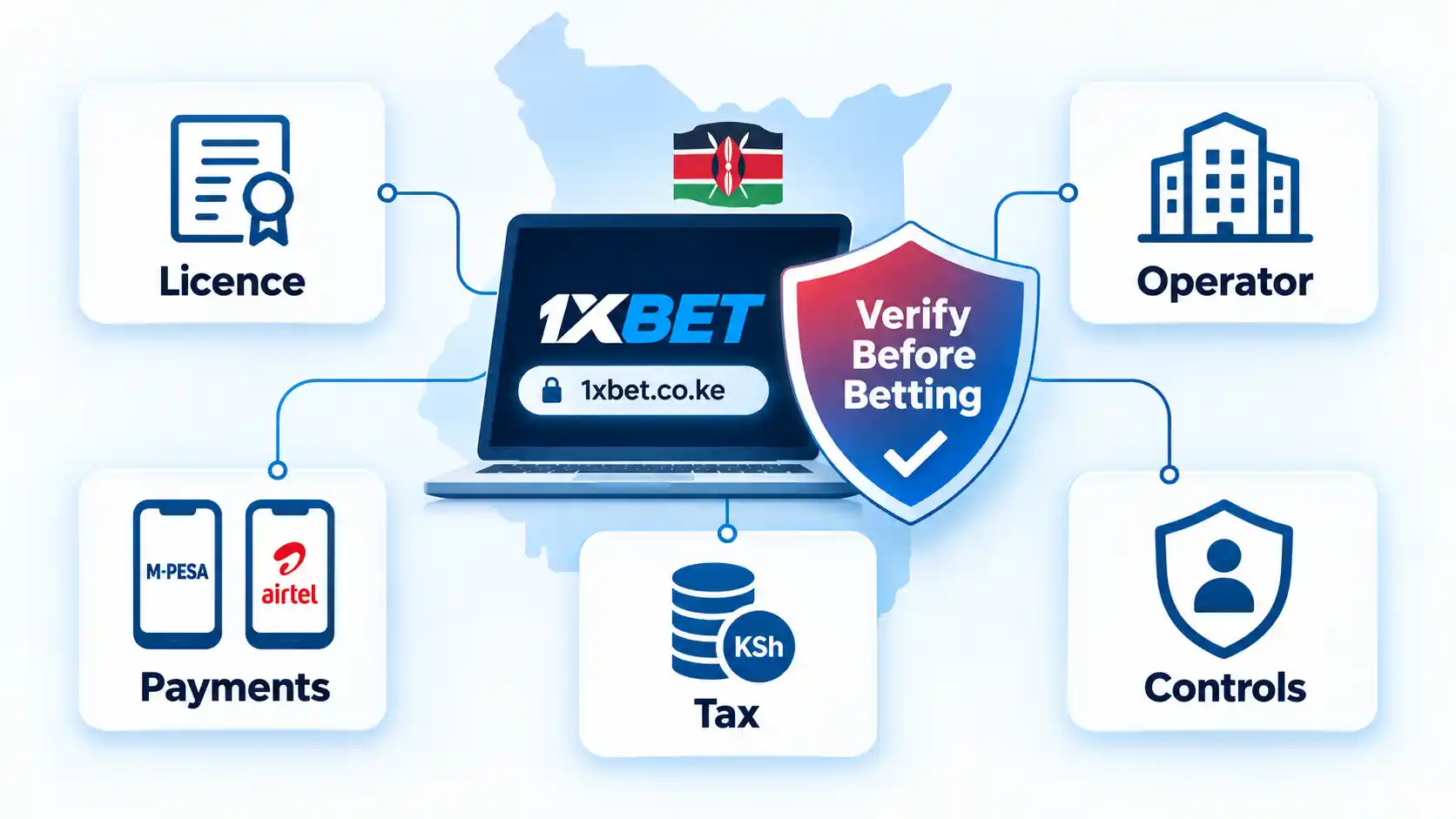
This research-based 1xBet Kenya review examines its current licence claims, operator-name mismatch, M-Pesa and Airtel Money terms, withdrawal verification, Kenyan tax treatment, self-exclusion rules, and the evidence readers should verify before depositing or submitting identity documents.

Source link

Continue Reading

Tech

Responsible AI for Higher Education

Published

on

This interactive webinar will introduce the different types of AI, address the concerns with AI, share how we IBM are approaching Responsible AI, and offer guidance to students about what they can do – as individuals, and members of their IEEE chapters. Participants will also have the opportunity to to apply the Responsible AI approach to a particular use case – IBM Bob, a software development life cycle agent, and Q&A. This will be an interactive session, so have phones ready to engage!

Register now for this free webinar!

Source link

Advertisement
Continue Reading

Tech

What Are The Differences Between Them?

Published

on

Both serve the same purposes, but there are some subtle differences.

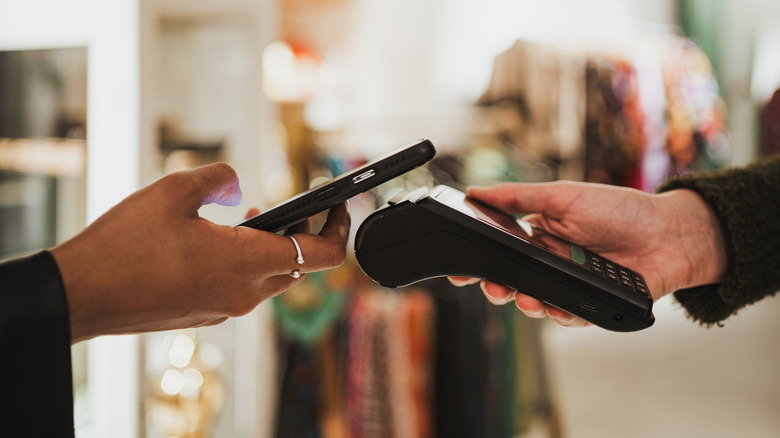
Apple Wallet and Google Wallet, as their names suggest, have similar purposes. You use them as your digital wallet: a secure place to keep your payment cards, tickets and other everyday passes on your phone. Apple Pay and Google Pay are the services that handle the payments, but it’s the Wallet apps that store everything. The names are often used interchangeably, though they refer to different parts of a connected process.

As long as the retailer accepts mobile payments and your card’s payment network, and your card provider supports the wallet service, you should be able to use your digital cards to pay in-store and online. Which one you use is dictated by whether you own an iPhone or an Android phone. They’re both similar in the basics, but have some differences in what you can add and how you’re able to use them.

Advertisement

Both tools offer similar core functionality

Google and Apple both want the Wallet app to be your go-to place for everything you’d otherwise stick in your physical wallet or purse. Credit and debit cards are the obvious items, but this also also includes loyalty cards, gift cards, boarding passes, event tickets, and train or bus tickets. It can even hold NFC-supported passes, like a digital hotel key or car key, as well as workplace access cards for buildings. This all depends on your location and whether the company providing the pass supports digital wallets. As long as NFC support is there, there’s a chance it’ll work.

Getting your payment cards into either app is straightforward. In Apple Wallet, tap the plus button and choose Debit or Credit Card. In Google Wallet, tap Add to Wallet > Payment card. You’ll need to follow the prompts, then verify with your bank or card provider. As long as the issuing entity supports this function, the card should then be set up for you to use.

Some differences become apparent in support for other passes. Apple Wallet expects items you’re adding to officially support digital wallets; you’ll usually see an Add to Apple Wallet button in emails, apps or similar. This is useful, as it means the Wallet app can support specific features. For instance, if an airline supports it, a boarding pass will automatically update with gate numbers, while also showing up on your Apple Watch. The experience is uniform, with a strict Apple template for passes and cards. Though in iOS 27, you can now add custom passes for otherwise unsupported items. 

Google Wallet has been more flexible for a longer time. It offers official Add to Google Wallet passes and can also import tickets and boarding passes from your Gmail inbox. More importantly, though, is its Everything Else option for digitizing photos of random cards and passes in your wallet. This makes it easy to store a parking, library or gym card. They’ll lack the live updates, but this support means you can move to a fully digital setup, even for the analog items in your wallet.

Advertisement

Apple Wallet keeps you going when your battery dies

Both Google Wallet and Apple Wallet are supposed to offer seamless experiences, which they do for the most part. Google Wallet is accessible through a web interface, while Apple Wallet isn’t. 

To pay in-person using an iPhone with Face ID, you’ll normally double-click the side button, authenticate with your face or passcode, then hold your phone near the reader. Older iPhones use Touch ID instead. With Google Wallet, you don’t need to press a button; just unlock your phone and hold it near the contactless reader. Your default card will handle the payment; you’ll need to open the app to choose another card. With Apple Wallet, you can pick a card before paying.

You can customize this slightly. If your iPhone has the Action button, you can assign a Shortcut to open Wallet, although this isn’t terribly useful since double-pressing the Side button already does this. Google Wallet supports shortcuts too, including a double-press of the power button on certain Pixel phones. This is worth using if you often pay with different cards.

Advertisement

You can also pay from your wrist with an Apple Watch or a compatible NFC-enabled Wear OS watch. Double-click the side button on Apple Watch or open Google Wallet on Wear OS, then hold your watch near the reader to make the payment.

Both apps can quickly make transit payments without authentication when you hop onto a supported bus, train or tram. Apple Wallet’s Express Mode lets you use eligible cards without waking or unlocking your iPhone, while Google Wallet’s Express Pay will also make transit payments without verification (though your phone screen needs to be on). Apple’s got the advantage here: on supported iPhones, eligible Express Cards can work for up to five hours after the battery runs out. This doesn’t work if you turn off the phone yourself.

Advertisement

Digital ID support depends on where you live

Digital IDs are a little more complicated. Unlike the banking world, support for digital IDs rests on states and governments. Thus, where you live matters more than anything, and advancements can take a long time. 

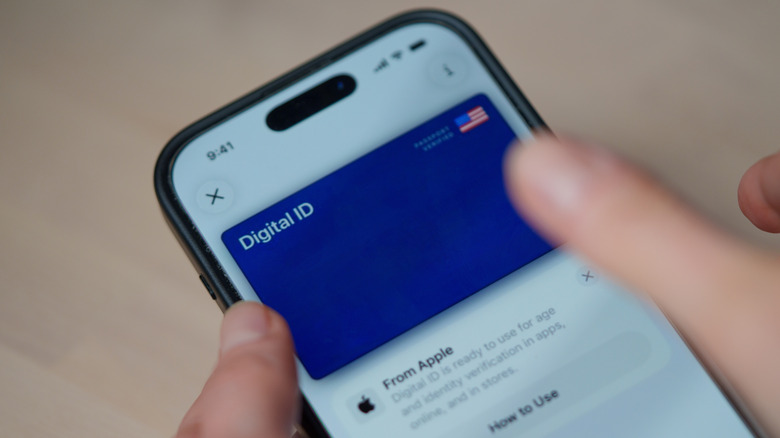
Google Wallet can create an ID pass from a passport issued by certain countries, but it isn’t a replacement for the physical document and won’t be universally accepted. Apple lets you add a driver’s license or state ID from participating US states and territories, but you’ll still need your physical ID wherever the digital version isn’t accepted (a lot of places, currently). Google Wallet also supports digital IDs, but like Apple Wallet, the support varies.

Even if your government has a digital ID program, there’s no guarantee that it’ll include support for Google Wallet or Apple Wallet. For instance, in the UK, plans for a digital driver’s license that acts as a form of ID and is intended as an alternative to photographic ID cards are still progressing. However, the British government has said these will be exclusively available in a separate app called the GOV.UK Wallet, and won’t be available for mainstream wallet apps. Google Wallet offers ID pass support in the UK, but it isn’t officially recognized.

Otherwise, Apple Wallet and Google Wallet have under-the-hood differences in how they process payments. Apple doesn’t store your transaction history or your true card details on its servers, while Google does collect details about your purchases and keeps your real card number on its servers. Both are secure, but Apple Wallet definitely gets points for privacy.

These differences are light enough that they’re worth being aware of even if they probably won’t tip you into buying a phone from the other side. Unless you’re considering Samsung Wallet on Android, your choice comes down to your phone’s ecosystem.

Advertisement

Source link

Advertisement
Continue Reading

Tech

Scammers are cashing in on the hype surrounding Apple’s latest iPhones

Published

on


As Apple’s newest iPhones hit the market, scammers are exploiting the hype with fake sites in the UK and unauthorized charges in Hong Kong.

Source link

Continue Reading

Tech

Hackaday Europe 2026: Space Oddities

Published

on

If you’re in motorsport, or maritime, or mining fields, you can always call on a technician to come down and fix something when it’s broken. You can lay hands on the parts, reconfigure things, make repairs, and get something working again. In space, that’s seldom possible. If you’re lucky enough to have a manned mission, you might be able to make some running repairs; if you’re working with an unmanned robot, probe, or satellite, your potions are altogether more limited. If you can’t find a fix, it’s game over—a particularly brutal result when huge budgets and years of work are on the line.

Janelle Wellons came down to Hackaday Europe to talk about space. More particularly, the engineering and debugging operations that keep all sorts of space programs alive. Her talk dives into some of the creative solutions engineers have had to come up with to save million-dollar missions from becoming unrecoverable boondoggles.

Janelle came down to Hackaday Europe to talk about space, because she lives and breathes it. An experienced aerospace engineer, she’s worked at NASA JPL and iSpace, contributing to the success of missions taking place far from our humble globe. She drew on that experience to talk through what it takes to keep a mission on the rails when things go a little sideways, which happens in space, just as it does anywhere else.
Advertisement
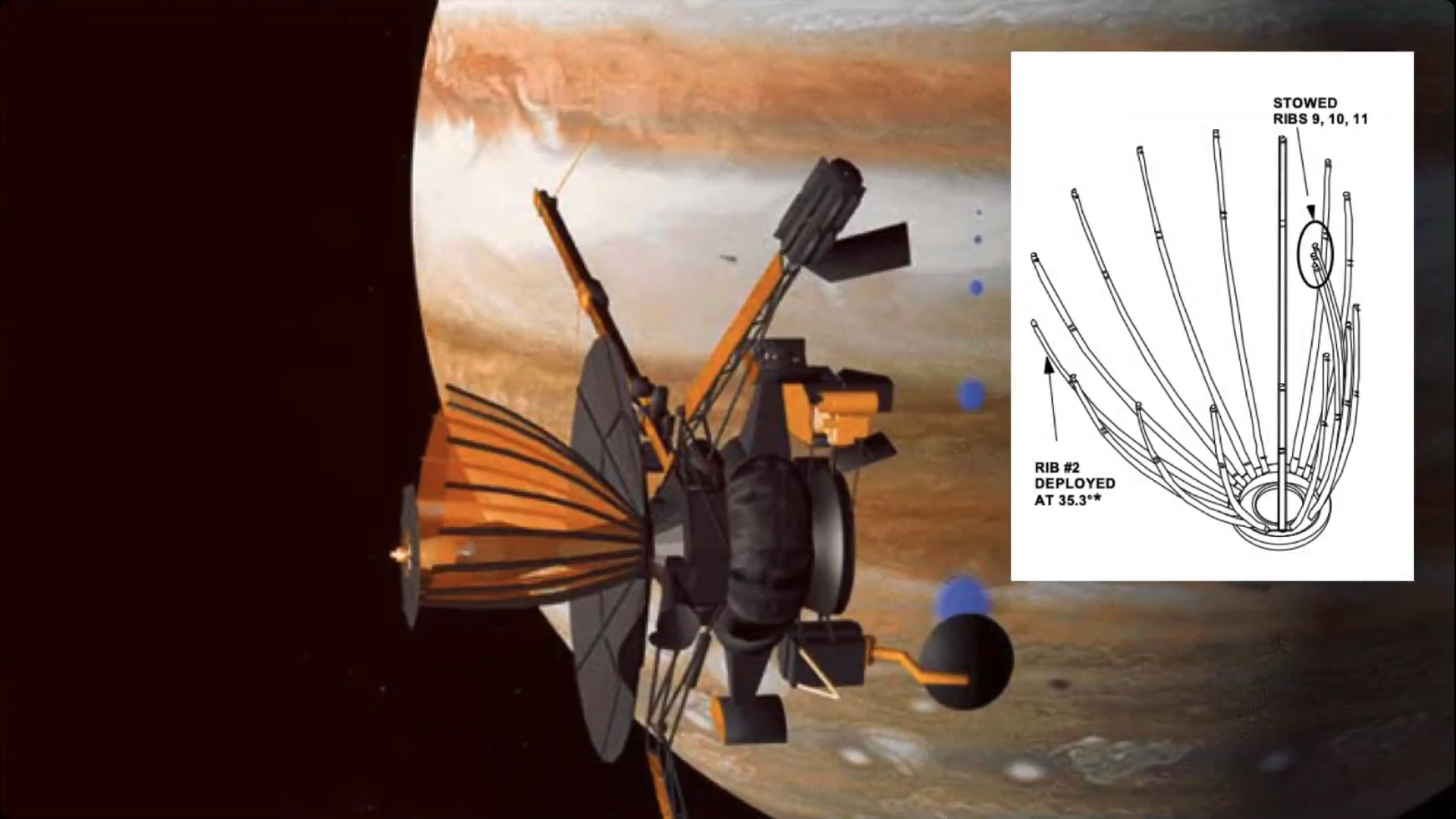
Galileo was supposed to have a powerful high-bandwidth link back to Earth. When the antenna failed to deploy, NASA engineers had to get creative to find a solution, as Janelle explains in her talk. Credit: talk slides

A fantastic example of that, retold in her talk, is the Galileo mission. It was built to travel far across the solar system, eventually winding up at Jupiter to study the Red Giant and its moons.  The probe was engineered with a pair of communication systems—a low-gain antenna for vital signs and management, and a high-gain antenna for sending science data and images back to Earth. The high-gain antenna was key to the mission, capable of offering 10,000 times the bandwidth of the low-gain antenna.

Tragically, though, the high-gain antenna never got to play its starring role. It didn’t deploy properly after launch, and that left NASA with a probe capable of capturing all this fantastic science data, but no way to send it home at a reasonable data rate. Janelle steps through the multiple hacks that make the most of the communication link with the low-gain antenna. NASA engineers whipped up compression algorithms for images and science data, and figured out how to array several Deep Space Network antennas for better signal. This netted an effective data transfer rate of 1,000 bits/second with the low gain antenna. It was still a far cry from the 134 kilobits per second that should have been possible with the high-gain antenna, but a huge leap forward from the 8-16 bits originally possible with the low-gain rig. Ultimately, it saved the mission, allowing the capture of mountains of scientific data on the largest planet in the solar system.

“NASA Astronaut Christina Cook is also working through troubleshooting steps of the waste management system that’s aboard the Integrity spacecraft.” – Ground control, Artemis II mission, 2026
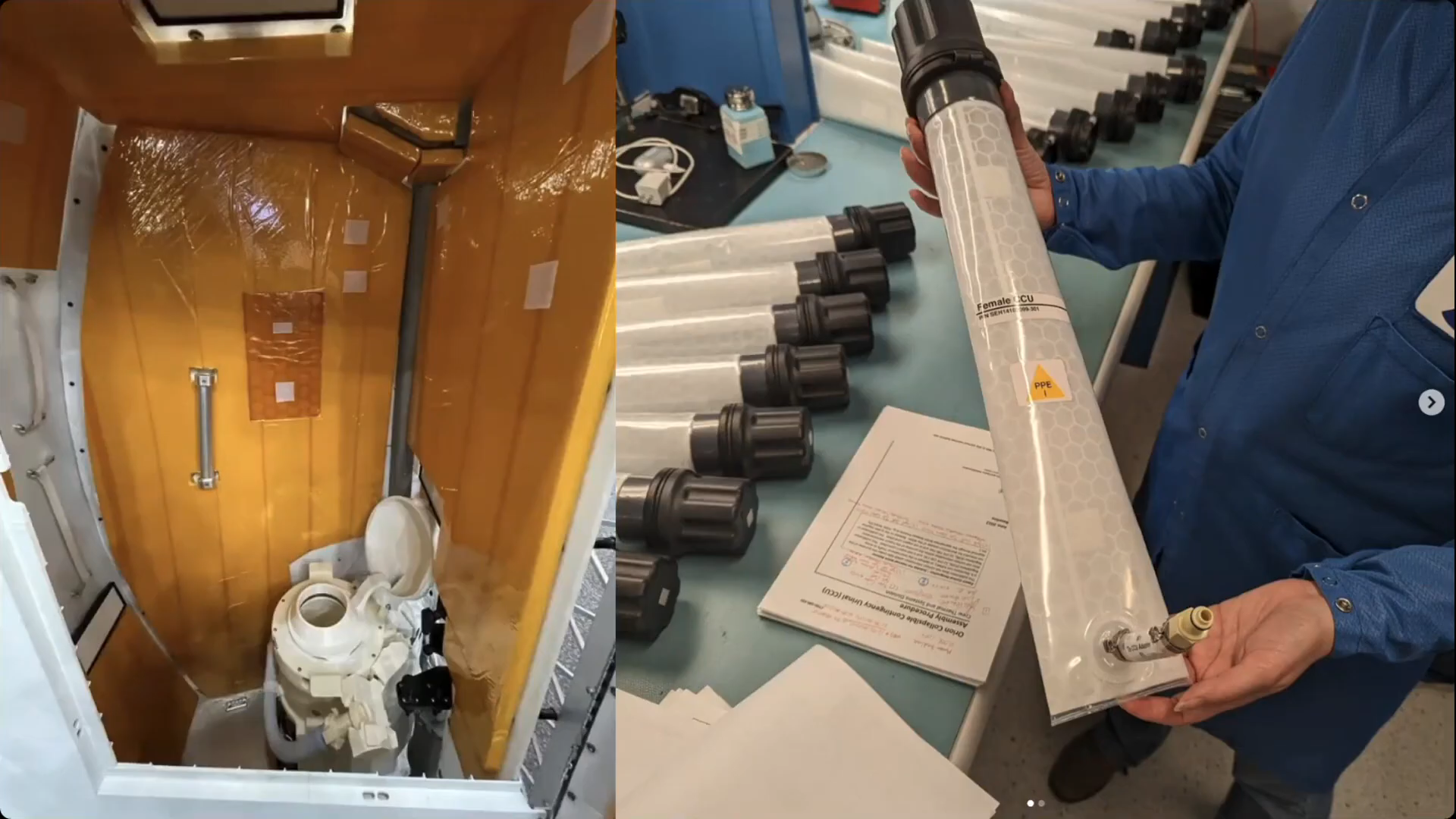
Left—the Artemis II toilet, a leap forward in space-based waste management technology. When it’s working, anyway. Right—the collapsible contingency urinals (CCU) used to capture and store liquid waste when the Artemis II’s main toilet was out of order. Credit: talk slides

Another great story told by Janelle concerned the Artemis II mission. The lunar flyby was part of NASA’s efforts to eventually return to the Moon itself, and was notable for debuting some special new hardware—the toilet. Unlike previous visits to the moon as part of the Apollo program, Artemis astronauts travel in luxury, with a proper commode built to handle the specific requirements of the zero-gravity space environment. Unfortunately, though, this new hardware had plenty of teething problems.

Early attempts to repair the system involved attempting to reprime the toilet’s pump by adding water to the system. It wasn’t long before the toilet threw another error, though. On the short-duration Artemis II mission, the toilet was set up to vent urine to space. Only, venting wasn’t working—with the suspicion being that the vent pipes had frozen over. The trick to solve this was simple—turning the spacecraft to face the vents towards the sun, so as to heat them enough to melt the blockage. Janelle also notes that during the multiple periods the toilet was down, the astronauts had to rely on alternative means of passing waste—showing a slide of the “collapsible contingency urinals” that did the job.
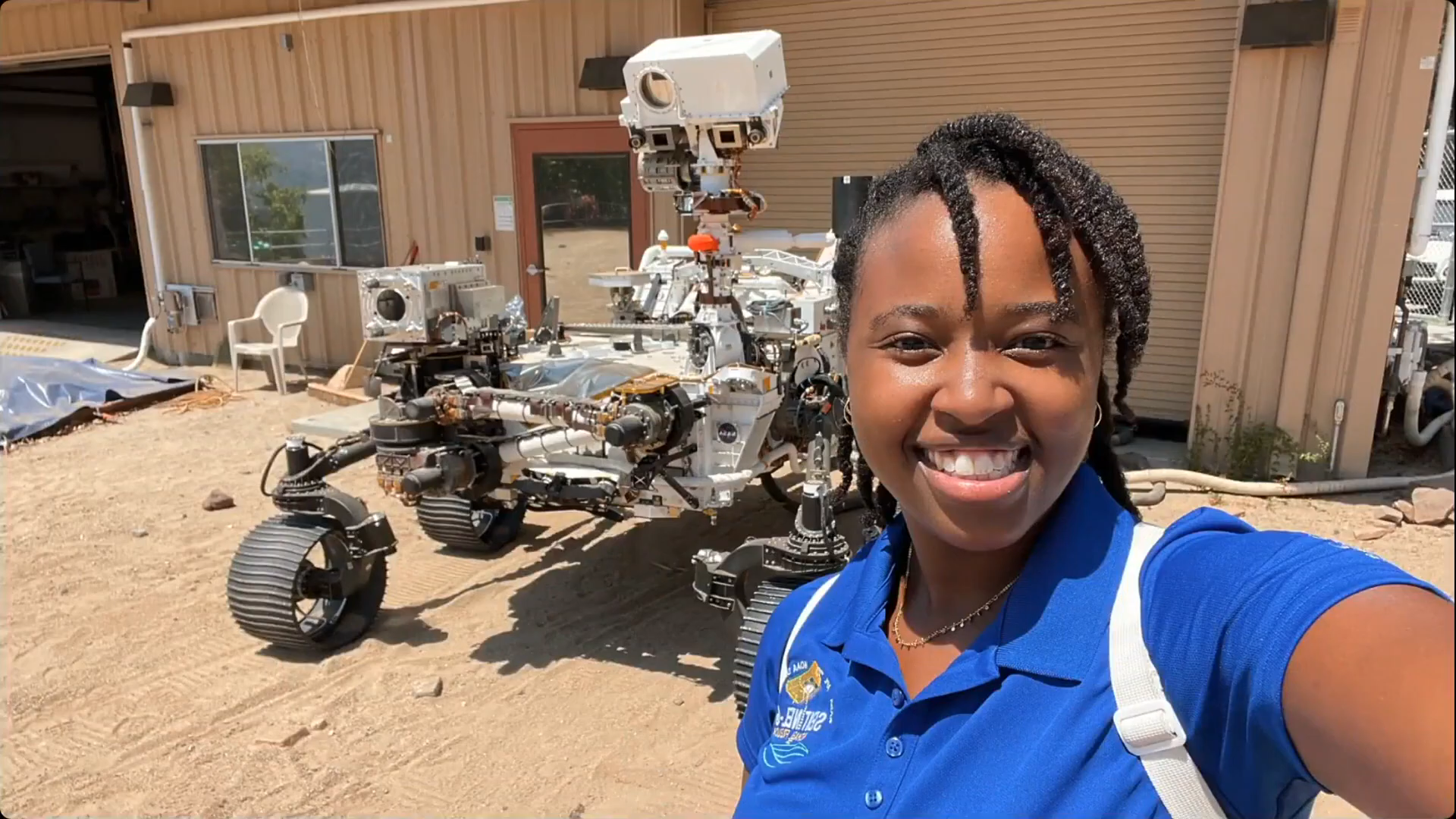
Janelle’s selfie, taken with the Perseverance twin rover at NASA JPL. Credit: Talk slides

There’s also a great look at Perseverance’s twin, which lives here on Earth. Janelle has been down to the Mars yard at NASA’s Jet Propulsion Laboratory, where engineers, in her words—”test before you do.” The problem is, when you’re driving a robot on a foreign planet, you can’t just send someone over to repair a broken wheel or flip it back up if it tips over. Thus, many maneuvers and operations are rehearsed in the Mars yard with the twin of Perseverance, running it over recreated obstacles to determine a safe plan of attack.

Source link

Advertisement
Continue Reading

Trending

Copyright © 2025