
Crypto World
Trump's $800 million stake into World Liberty Financial's token now has a timeline to becoming sellable

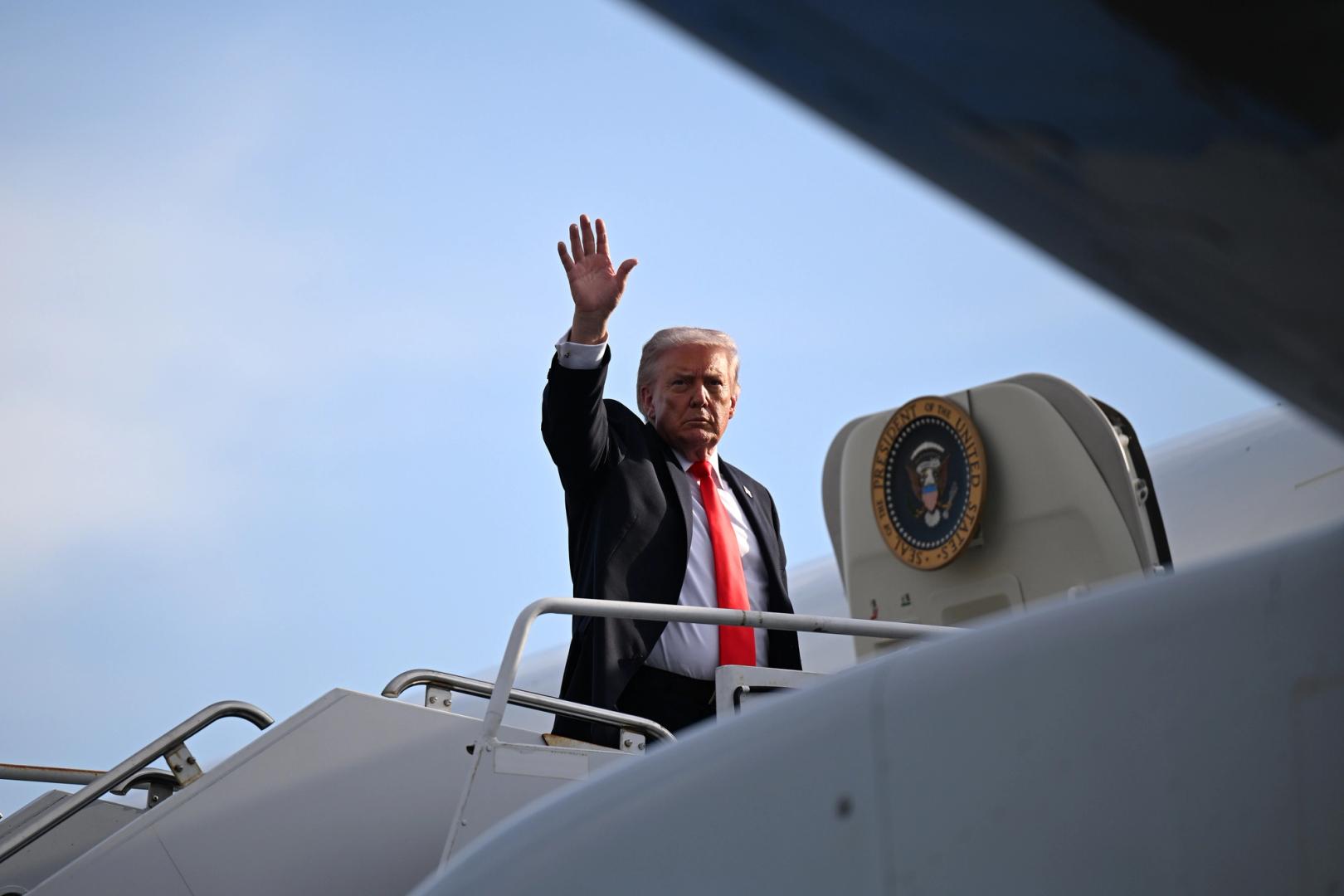
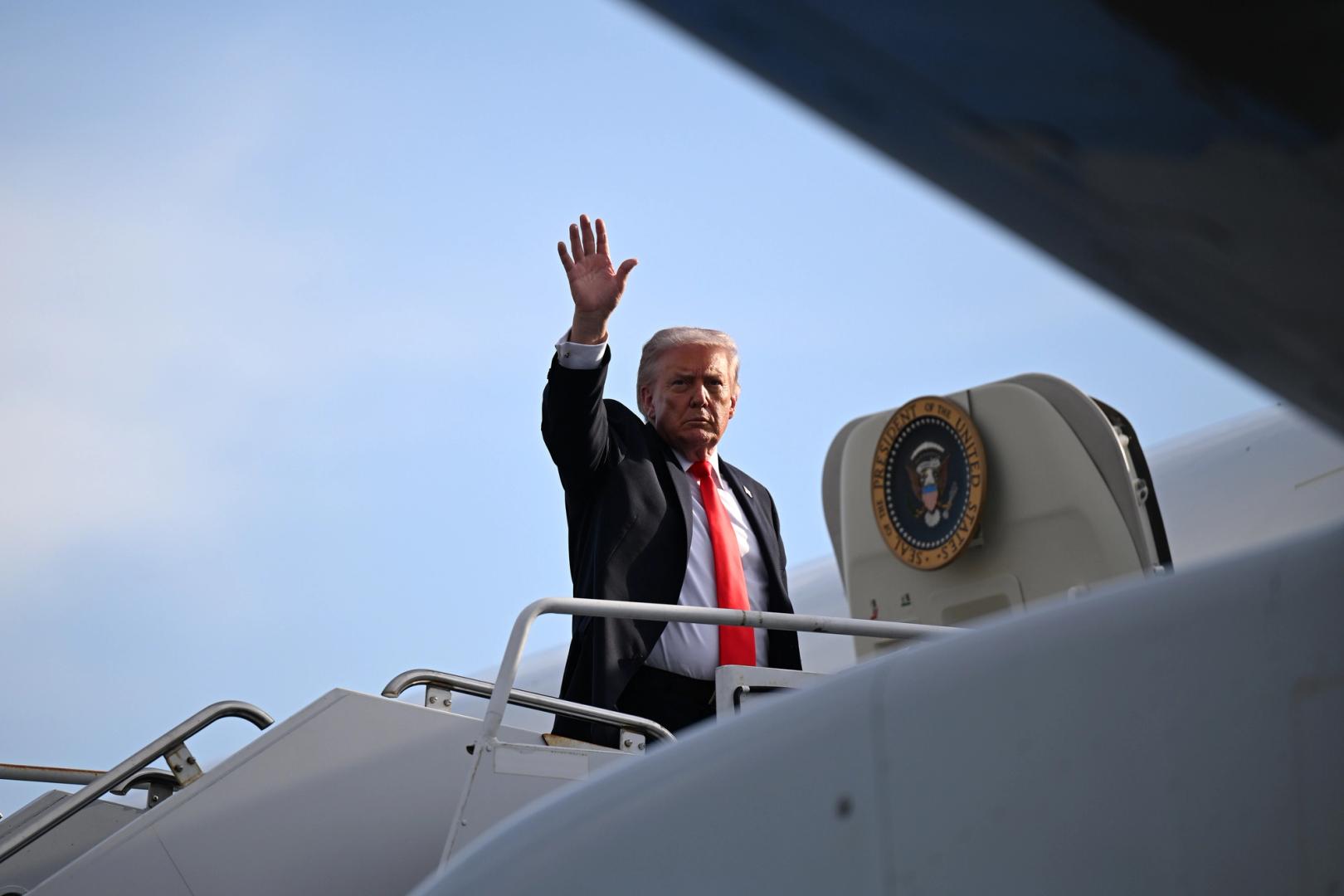
Onchain records show that an $800 million crypto stake that matched Donald Trump’s holding was moved into a vesting contract, locking any sales until 2028 after a mandatory 10% token burn.

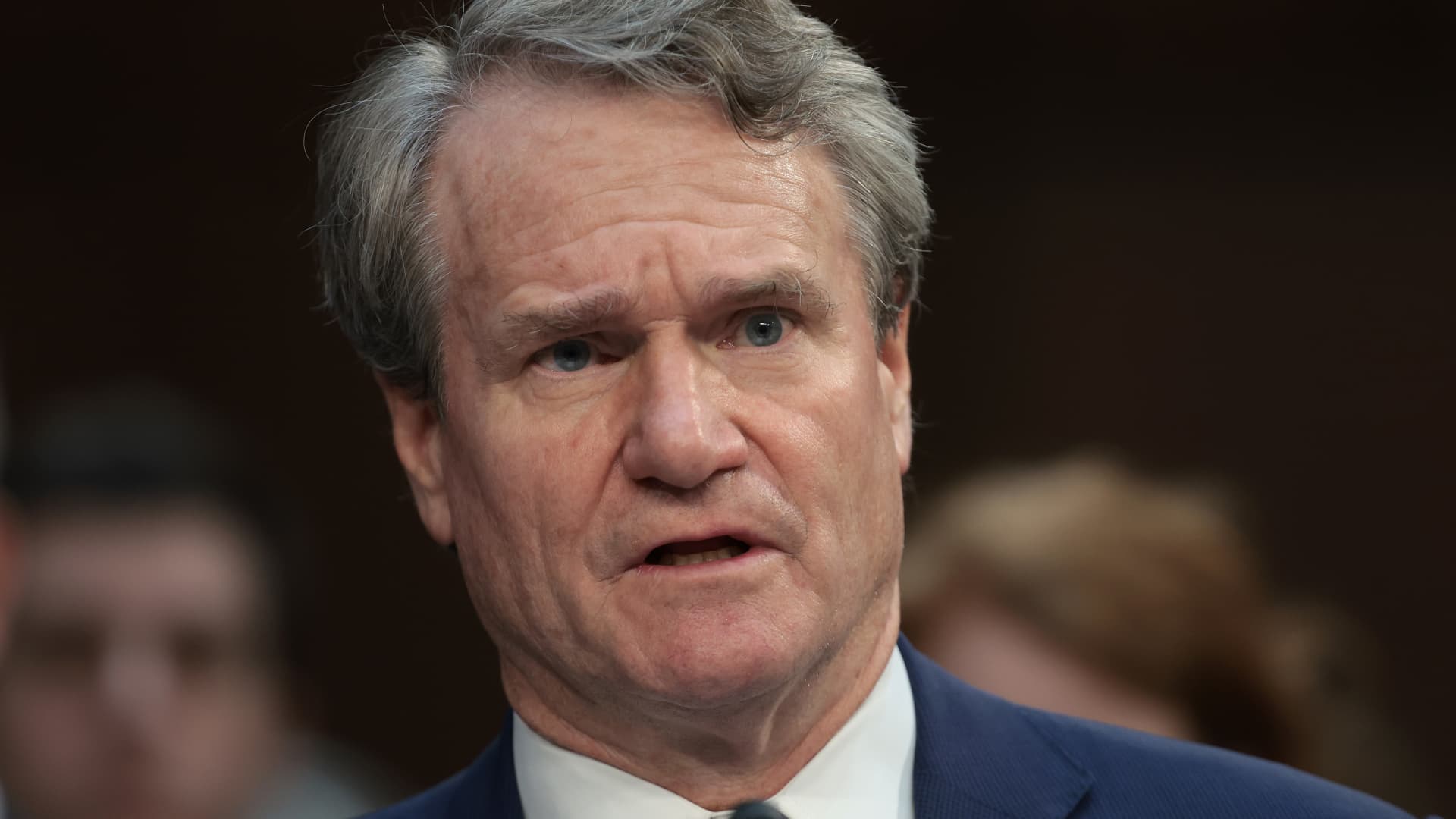
Brian Moynihan, Chairman and CEO of Bank of America, testifies during a Senate Banking Committee hearing at the Hart Senate Office Building on December 06, 2023 in Washington, DC.
Win Mcnamee | Getty Images
Bank of America is seeing a far more subdued few months for its Wall Street advisory and trading businesses after a blockbuster second quarter, CEO Brian Moynihan told analysts Monday.
Investment banking fees will likely decline by more than 10% in the third quarter from the year-earlier period, while trading revenue will be roughly flat, Moynihan said at a conference. That compares to a second quarter in which the bank posted a 50% jump in investment banking fees and a 33% jump in trading revenue.
“What we’re seeing is the market generally in investment banking is down 10%,” Moynihan said, citing Dealogic data. “We’re not as well positioned in some of the businesses that have more activity, so we’ll be down probably a bit more than that.”
Bank of America shares were down 5% in afternoon trading Monday following Moynihan’s comments.
The muted outlook from the country’s second-largest bank by assets could be an early signal that Wall Street’s AI-fueled advisory and trading boom might have hit turbulence.
While Moynihan pointed to a robust deal pipeline, particularly in middle-market investment banking, the projected double-digit decline in investment banking may make investors wonder if the industry’s surge in capital markets activity will prove short-lived.
Later Monday, Citigroup CFO Gonzalo Luchetti told analysts that investment banking is tracking for “low single digit” revenue growth in the third quarter, while trading was heading for “mid single digit” revenue growth.
Those figures could climb if Citigroup’s bankers and traders end the quarter on a strong note, he said.
“September is a key month,” Luchetti said. “These few weeks are very meaningful.”
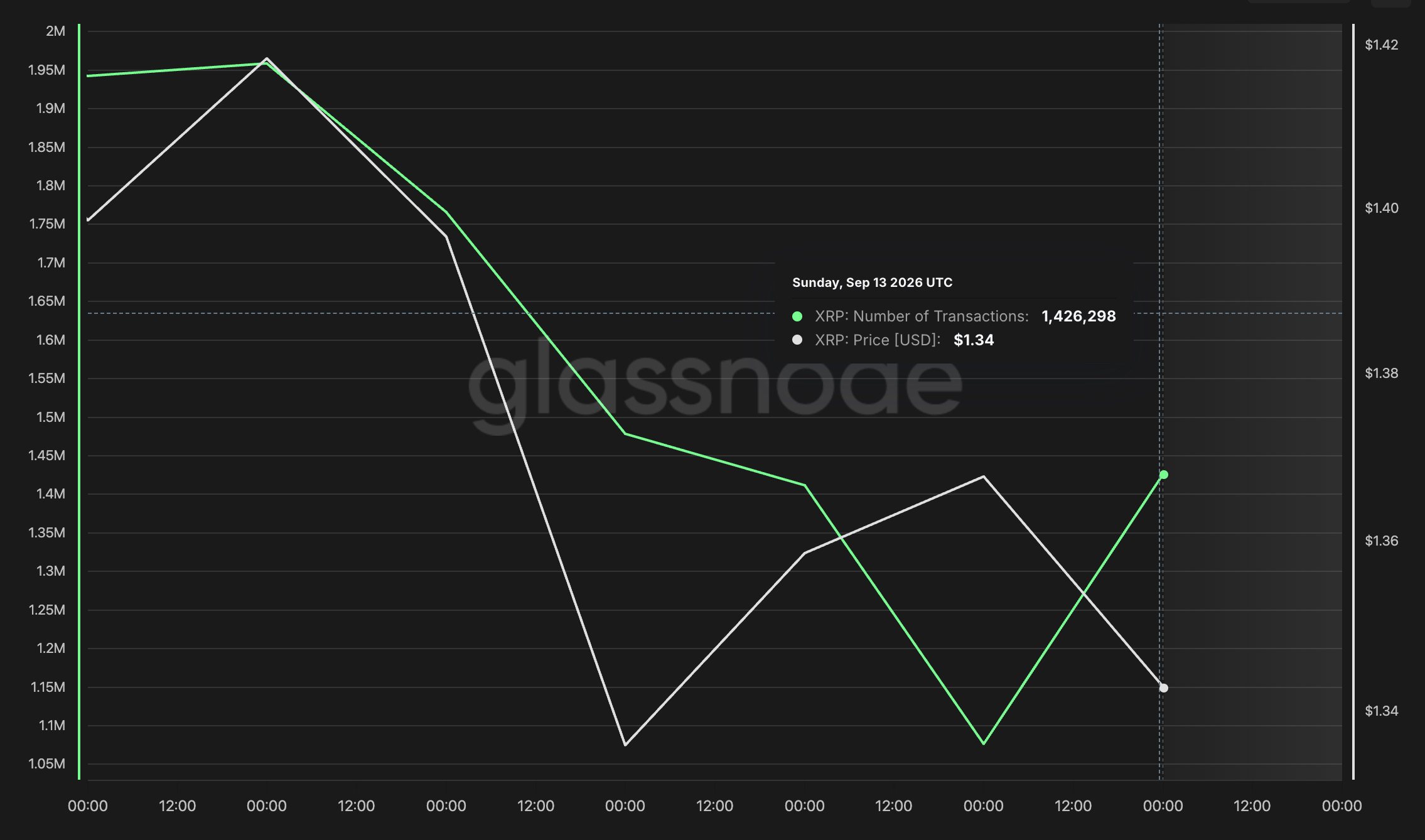
The XRP Ledger processed a record 3,254 transactions in ledger 106,965,249 yesterday, but 2,000 of the news came from just 20 accounts sending identical 1-drop payments, each worth one-millionth of an XRP.
The new high overtook two earlier single-ledger marks of 2,713 and 2,768 transactions, both set within a day of the record. At least 890 transactions failed with tec result codes but still burned fees, and the 20-account batch alone paid about 0.04 XRP in fees while moving just 0.002 XRP.

Discover: The Best Token Presales
Twenty Wallets, One Ledger
Ledger 106,965,249 closed on Sunday, Sept. 13, holding 3,254 transactions, a number far outside the normal range for the network. A scan of 7,600 consecutive ledgers from 18:00 UTC on Sept. 13 to 02:00 UTC on Sept. 14 found 638,801 transactions in total, an average of about 84 per ledger, with only 43 ledgers in that window topped 2,000 transactions, and only the record ledger cleared 2,800.
Twenty accounts sent exactly 100 transactions each, contributing 2,000 of the 3,254 total, and every one was a 1-drop payment. Combined, that batch moved just 0.002 XRP, less than a cent at current prices, while each transaction paid a 20-drop fee, meaning the group burned roughly five cents in aggregate to generate a transaction record with effectively zero economic transfer.
The remaining activity was more typical of ordinary XRP Ledger usage: 458 OfferCreate orders on the built-in decentralized exchange, 229 ticket creations, 74 check cashes, and 22 trust-line changes.
At least 890 transactions in the ledger failed outright with tec result codes, mostly payments whose paths ran dry or fill-or-kill orders that could not be filled. Daily XRPL activity stayed above 2 million transactions through early September, according to the report, peaking at 2.572 million on Sept. 3, so the concentrated 1-drop batch stands out as an anomaly rather than a continuation of a broader adoption trend.
As wallet concentration has shown elsewhere on XRP, a small cluster of addresses can distort network statistics without reflecting a shift in genuine demand.
Hussein Zangana, the XRP Ledger Foundation’s community director known as Vet on X, flagged the news in a public post and said the pattern most likely reflected throughput testing, noting that simple XRP payments place a very low load on the network. He did not identify who was behind the batch.
Earn $50 and Enter $300K Prize Draw on EdgeX
XRP News: Why The Fees Didn’t Spike?
Under XRPL’s own transaction-result documentation, a tec failure still destroys the XRP paid as a transaction cost and consumes a sequence number, even though the underlying action never completes. That means failed payments and unfilled offers padded the ledger’s transaction count without delivering any successful transfer, inflating the record’s headline number relative to its actual economic content.
The ledger absorbed the load without a fee spike because XRPL uses dynamic size limits rather than fixed block caps like Bitcoin. The network’s soft limit rises when a ledger contains more transactions than expected and falls if consensus takes longer than five seconds, and early Monday, the expected ledger size sat at 3,082 transactions with the open-ledger fee still at the 10-drop minimum.

A small sliver of the record ledger pointed to more substantive use: eight transactions carried memos from t54 labs’ x402 facilitator, the tool that lets AI agents pay for services in XRP and RLUSD, following the network’s milestone of 1 million AI agent transactions in July.
For traders, the takeaway is straightforward: a transaction record is not the same as a demand signal. The event is best read alongside other XRP catalysts this month that carry more direct implications for price, since whale-driven or bot-driven network activity has repeatedly diverged from actual buying pressure on XRP.
Trade XRP on Bybit and Get a Chance to Win Our $1,000 USDT Airdrop
The post XRP News: XRPL Records 2K Transactions from 20 Wallets appeared first on Cryptonews.
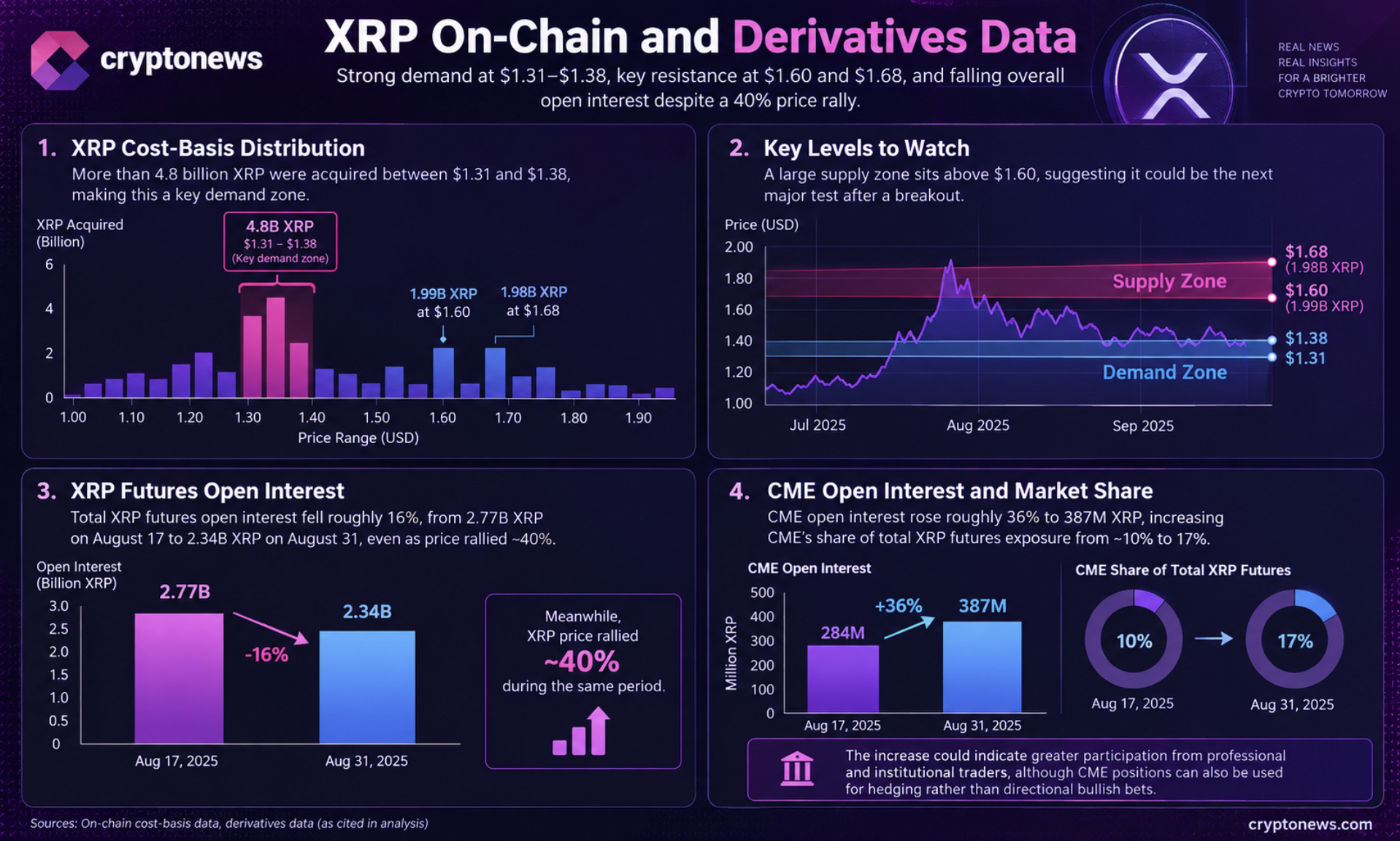
XRP price closed around $1.35 yesterday after trading as high as $1.43 two sessions earlier. Analyst identifies $1.38 as the level XRP needs to clear for a bullish breakout that could open a path toward $1.60. The setup remains conditional, however, with the token still trading near a closely watched support and resistance range.
Martinez, who posts as Ali Charts on X, has identified a triangle developing between $1.31-$1.35 support and $1.38 resistance. XRP needs to hold the support zone as it approaches the apex of that pattern, while a decisive move above $1.38 would confirm the breakout and could strengthen momentum.
Also, according to Ali, a break below $1.31 could instead weaken the near-term bullish structure and turn the current support area into resistance during a recovery.
Discover: The Best Token Presales
Why $1.38 XRP Matters More Than Most Price Resistance Levels?
Cost-basis data shows that more than 4.8 billion XRP were acquired between $1.31 and $1.38, making the band a potentially important demand zone. If buyers continue defending those levels, the concentration of holders near their acquisition prices could provide support beyond the triangle pattern itself.
The same data also highlights the resistance that may await above the breakout threshold. Approximately 1.99 billion XRP were acquired at around $1.60, followed by another 1.98 billion at around $1.68. That supply suggests $1.60 would be the next major test after a breakout rather than an unobstructed upside target.

Recent derivatives positioning provides a potentially constructive signal. Total XRP futures open interest fell roughly 16%, from 2.77 billion XRP on August 17 to 2.34 billion on August 31, even as XRP rallied almost 40% over the same period. That divergence suggests the rally was not simply driven by traders aggressively increasing leverage.
CME open interest rose roughly 36% to 387 million XRP, raising CME’s share of total XRP futures exposure from around 10% to 17%. The shift could indicate greater participation from professional and institutional traders, although CME positions can also be used for hedging rather than directional bullish bets.
Earn $50 and Enter $300K Prize Draw on EdgeX
The Technical Picture Isn’t Confirming Yet
Despite the potential bullish setup, XRP has not yet broken resistance. The 14-day RSI sits around 49.6, which is effectively neutral, while the MACD remains in a sell signal. XRP is also below its 50-, 100-, and 200-period simple moving averages, with the 200-period average near $1.39.
That alignment matters because the $1.38 breakout threshold sits near another technically significant moving-average resistance level. A decisive or convincing move above $1.38 would be needed to strengthen the bullish case, rather than leaving XRP below the major moving averages that currently remain overhead.
Trade XRP on Bybit and Get a Chance to Win Our $1,000 USDT Airdrop
The post XRP Triangle Puts $1.38 Resistance Ahead of $1.60 Test appeared first on Cryptonews.
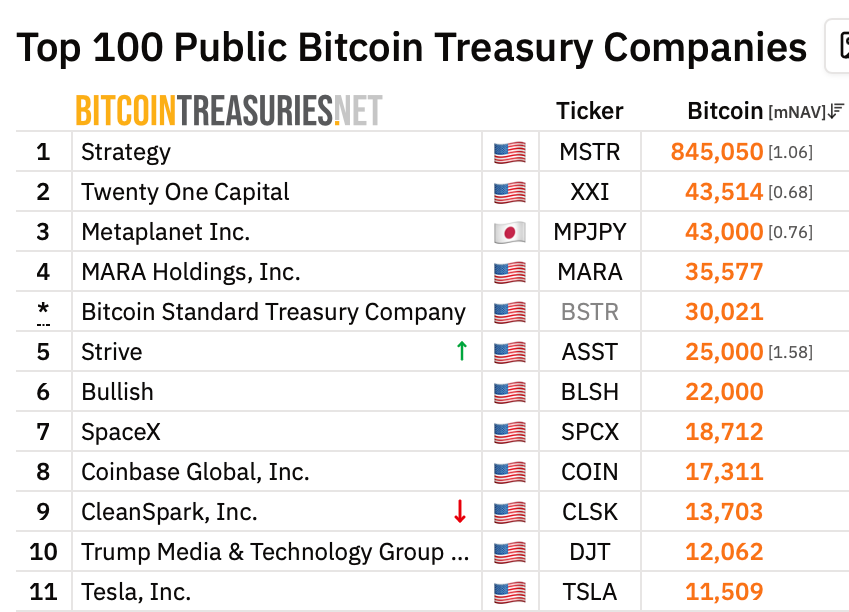
Strive, a top-five Bitcoin treasury company and asset manager, purchased 469 Bitcoin for about $36.6 million last week, bringing its holdings to 25,000 BTC.
According to a Monday filing with the US Securities and Exchange Commission, Strive acquired the Bitcoin between Sept. 8 and Sept. 11 at an average price of $77,954 per BTC, including fees and expenses.
The biggest crypto by market cap was last trading at $78,823, according to Coingecko data.
Strive CEO Matt Cole said the purchase was funded entirely through proceeds from sales of SATA, the company’s perpetual preferred stock, which has now surpassed $1 billion in notional value outstanding. The filing shows SATA shares outstanding increased by 402,541 over the same period to about 10.4 million shares.
As of Sept. 11, Strive also held $204.2 million in cash and cash equivalents and 505,000 shares of Strategy’s STRC preferred stock, valued at about $49.8 million.
Strive became the fifth-largest publicly traded corporate Bitcoin holder in late August, when a 1,800-BTC purchase pushed it past crypto exchange Bullish. The company was co-founded in 2022 by now-Ohio Republican gubernatorial candidate Vivek Ramaswamy and became a publicly traded Bitcoin treasury company in September 2025 following its merger with Asset Entities.
Related: Bitcoin rally sends crypto stocks soaring as miners, treasury companies jump
Strive valuation climbs alongside Bitcoin accumulation
Strive’s Nasdaq-traded shares gained more than 7% on Monday to around $29, extending a rally that has seen the stock price more than double over the past month, according to Yahoo Finance data.
The rally had already pushed Strive’s market capitalization above that of Metaplanet last week, despite the Japanese Bitcoin treasury company holding substantially more Bitcoin. As of Monday, Strive had a market capitalization of about $2.5 billion, compared with $1.9 billion for Metaplanet.
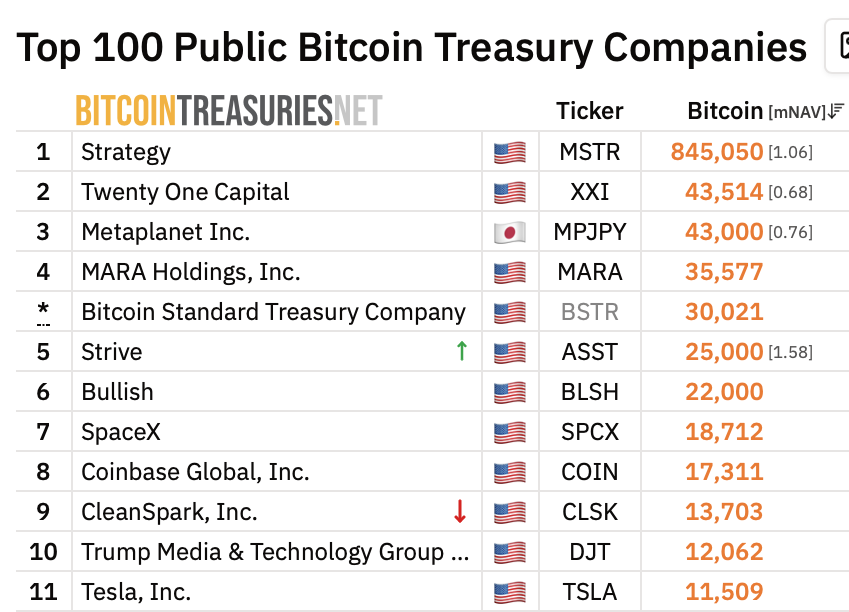
Top 10 Bitcoin treasury companies. Source: BitcoinTreasuries.NET
Strive’s rally has also pushed its shares above the $27 exercise price for warrants due to expire in mid-October. If warrant holders exercise them, they would buy Strive shares at $27 apiece, potentially providing the company with more than $700 million in new capital, according to BitcoinTreasuries.net.
Cole said earlier this month that it was “not out of the realm of possibility” for Strive to become the second-largest publicly traded corporate Bitcoin holder by year-end, though he said that was not his base case.
Magazine: Why are AI’s biggest companies suddenly asking to slow down?
Bitcoin (BTC) returned to $79,000 after Monday’s Wall Street open as markets dissected mixed signals over the US-Iran war.
Key points:
- Bitcoin rises above $79,000 as oil prices fall after US President Donald Trump suggests the Iran war could be nearing an end.
- Markets raise the odds of a 25-basis-point Federal Reserve rate hike to more than 90%.
- Bitcoin tests its 50-week exponential moving average after closing below the key trend line on Sunday.
Bitcoin gains as Trump references end to Iran war
Data from TradingView showed BTC/USD erasing its weekend losses and gaining around 3% on the day.
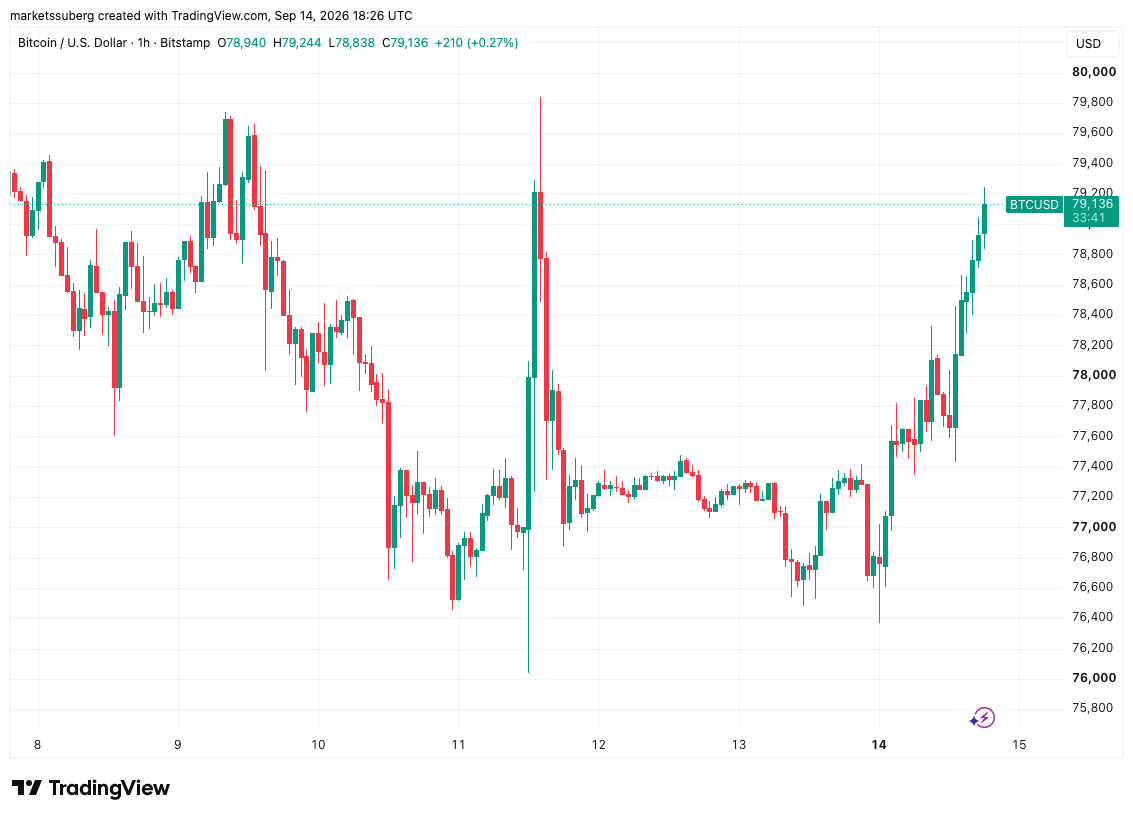
Crypto saw fresh upside as US President Donald Trump boosted prospects of a peace deal with Iran.
“The failing Nation of Iran wants to make a deal, quickly and badly. I will determine whether or not the U.S.A. will choose to engage – The concept of which we are open to,” he wrote in a post on Truth Social.
US equities initially gained at Monday’s Wall Street open but subsequently turned red amid ongoing uncertainty over the fate of key oil-transit routes in the Middle East. The S&P 500 was down 0.3% at the time of writing.
In addition to the Strait of Hormuz, both Saudi Arabia’s East-West pipeline and the Bab El-Mandeb Strait were under threat as the conflict expanded beyond Iran.
US WTI crude oil remained above $100 per barrel at the time of writing, while Brent crude traded at $105 per barrel.
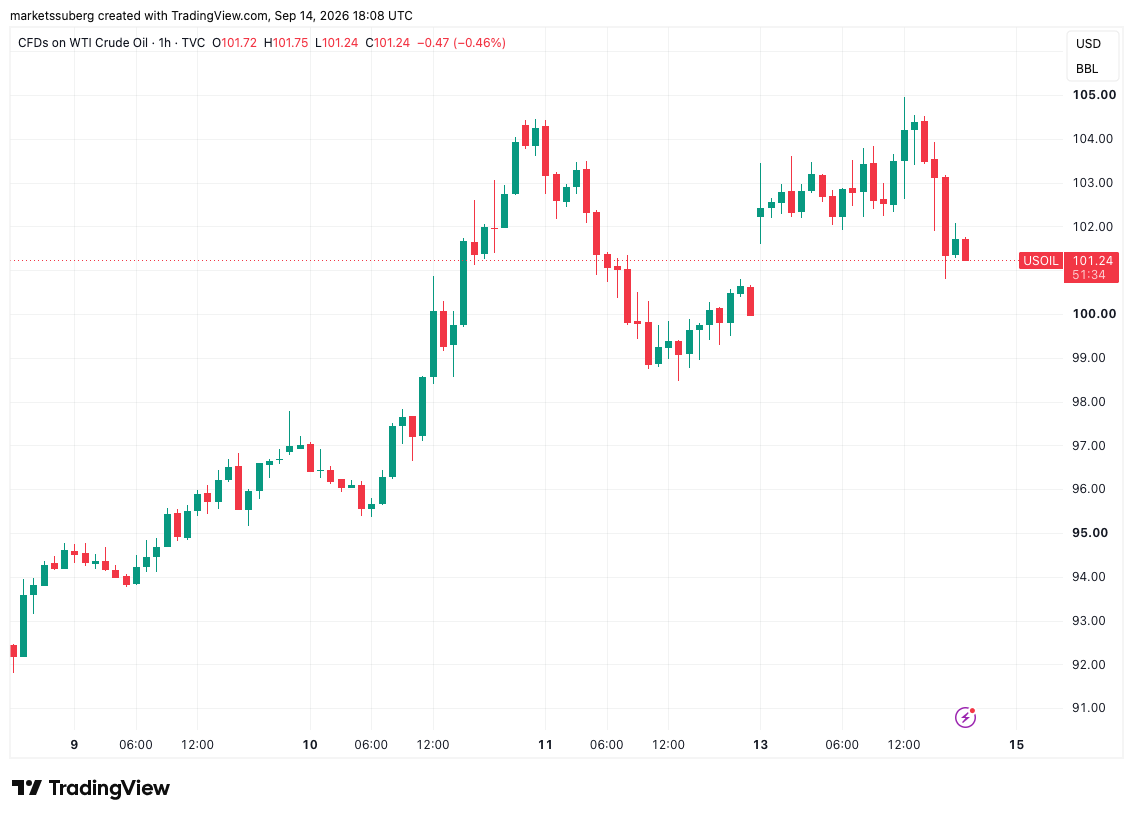
Trump later doubled down on his prediction of lower oil prices while also alluding to an end to the Iran conflict, causing oil prices to dip.
“With the temporary exception of Oil, prices are coming down sharply, and Oil will drop like a rock as soon as the Military Conflict with Iran is over, and that will not be long,” a separate Truth Social post read.
The latest data from CME Group’s FedWatch Tool puts the odds of a hike at 92.7%, up from 59.4% a week ago.
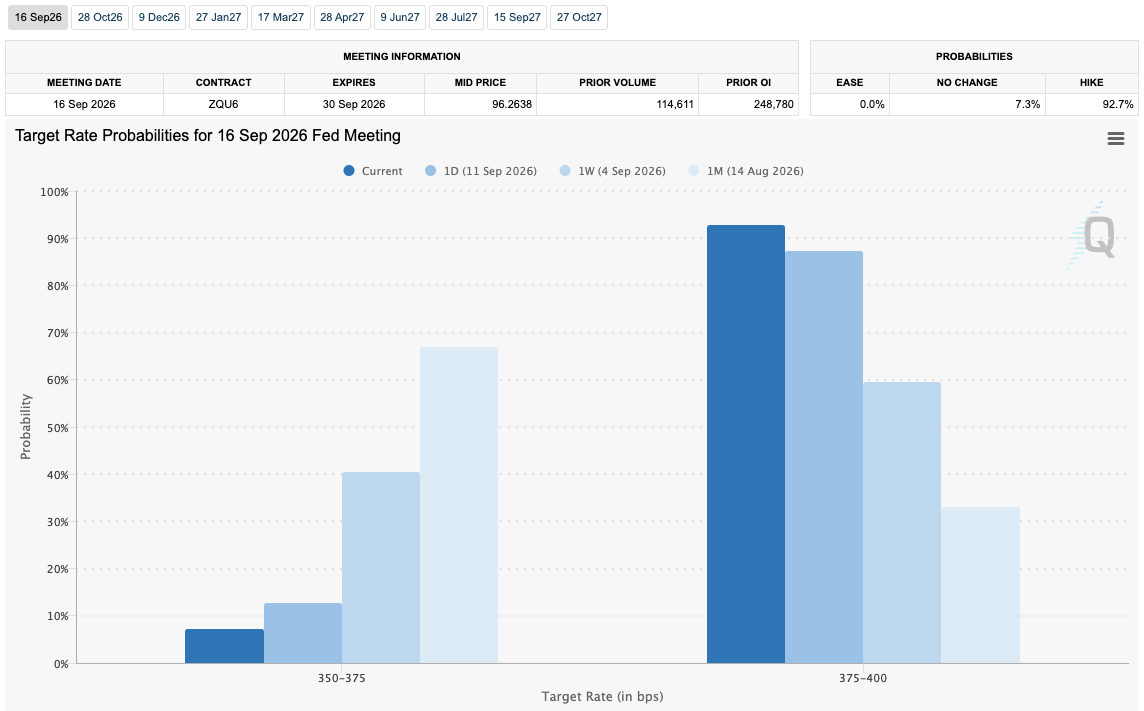
Commenting on the developments, trading company QCP Capital predicted that continued high oil prices would directly impact US financial policy. The Federal Reserve will announce its latest decision on interest-rate changes on Wednesday, with markets predicting a 25-basis-point hike to 3.75-4%.
“A prolonged disruption would increase the risk of higher energy costs feeding into transport and logistics pricing, potentially lifting inflation expectations and constraining the Fed’s ability to pause tightening even as growth slows,” QCP wrote on Monday, adding:
“This dynamic creates policy tension: continued energy prices could keep the Fed restrictive, while economic data weakness from higher energy costs could argue for patience.”
Focus shifts to Fed wording around interest-rate move
Discussing the implications of the week’s Fed decision for BTC price action, QCP argued that risk assets had already priced in a 0.25% hike, with less volatility expected as a result.
Related: CLARITY Act vote meets Fed rate hike: Five things to know in Bitcoin this week
An overall muted response to last week’s Consumer Price Index (CPI) inflation data, it argued, means that Fed officials’ language now mattered more than the decision itself.
“This containment reflects a shift in focus: the binary question of whether the Fed will hike has been answered; the critical issue for positioning is now how policymakers frame the move and what it signals about the path ahead,” it wrote.
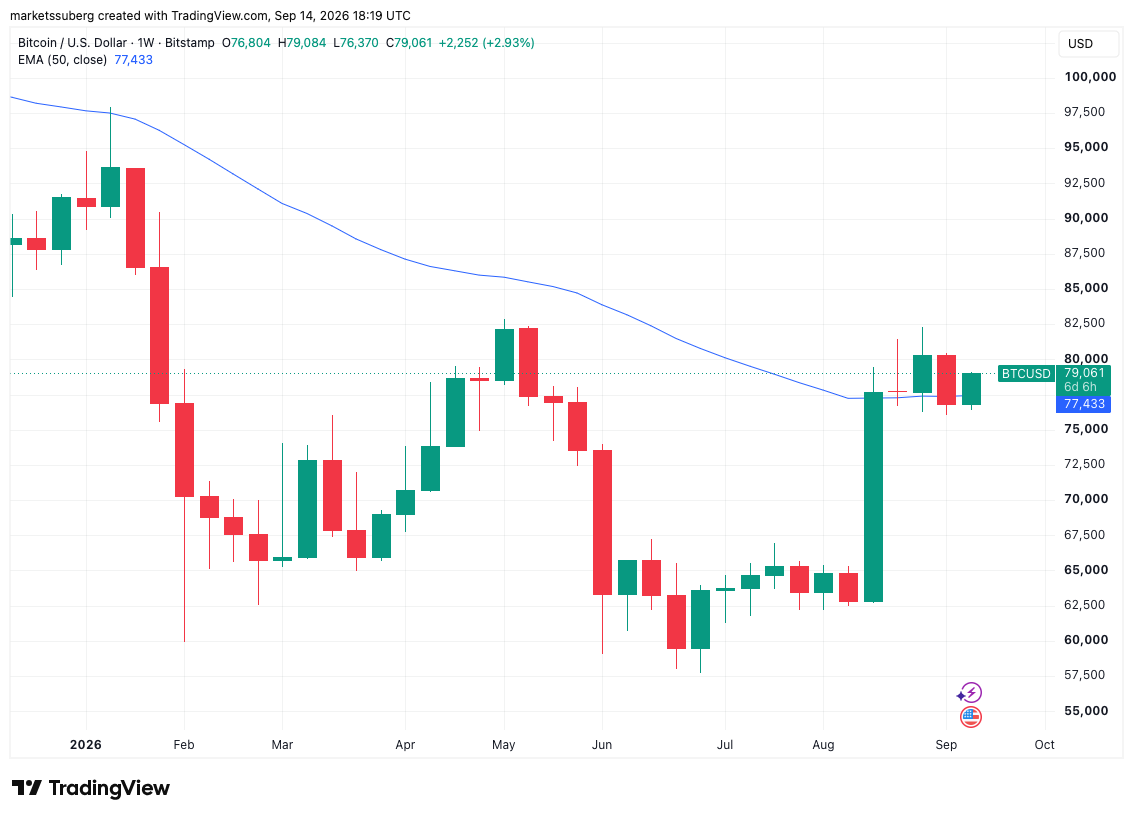
BTC/USD returned above its 50-week exponential moving average (EMA) at $77,430 on Monday after initially closing the weekly candle below it. As Cointelegraph reported, the 50-week EMA represents a key support target for Bitcoin bulls to reclaim as part of a bull-market comeback.
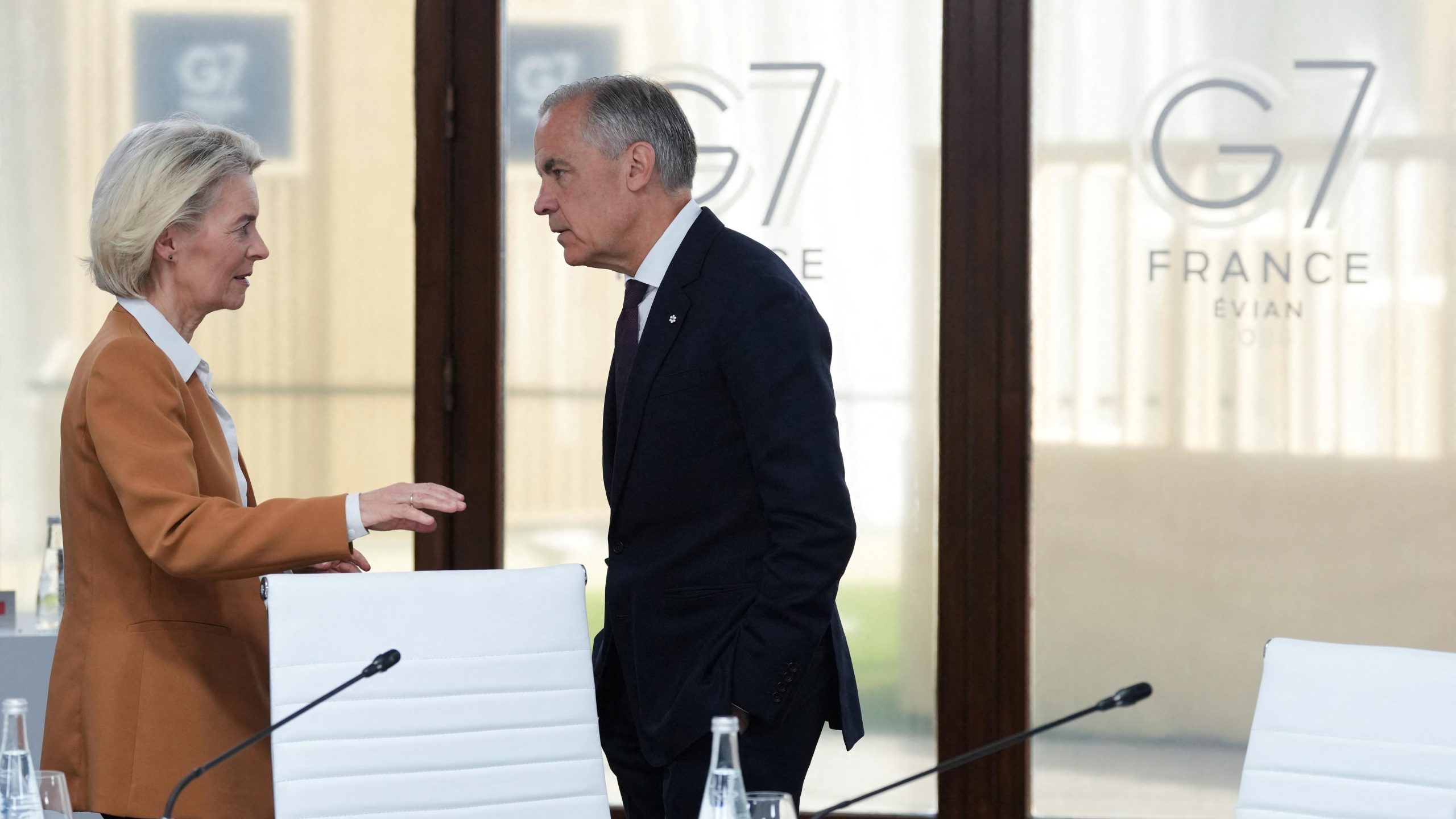
In July, Carney, in a joint op-ed with Finland’s President Alexander Stubb, urged the “middle powers of the world” to “unite.”
Championing middle power countries that possess significant economic power and diplomatic influence, but lack market or military power, the leaders implored: “In a rapidly changing world, we have the grit and the sisu to chart the path ahead—and we know that so have many others whom we invite to join us on this quest.”
Leblod explains that “ultimately trust has been eroded” with the U.S. and Canada must re-think its place in the wider global economy in the long-term.
“The first time we thought Trump was a blimp, but he’s not, and we’re looking at what’s happening in terms of democracy and political polarization, and a lot of Canadians think we can’t rely on the U.S.,” he says.
According to a poll by Nanos Research, conducted between Aug. 30 and Sept. 2, 74% of Canadians disagreed that “the U.S. is a trustworthy ally of Canada.” An earlier poll by Angus Reid Institute, conducted between July 10-14, found that 42% of respondents said they think the Canadian government should approach the U.S. as an enemy/potential threat.
Crypto World
White House Agrees to Major Crypto Ethics rules in a last-minute push to save the CLARITY Act

Senate Republicans have released another round of revisions to the CLARITY Act as they seek Democratic support ahead of a September 15 procedural vote on the cryptocurrency market-structure bill.
The latest version runs to 635 pages, adds provisions on ethics, enforcement, stablecoin yields, and digital-asset market operations, and represents a last-ditch bid to pass the CLARITY Act this year.
BREAKING: — Bull Theory (@BullTheoryio) September 14, 2026
 White House agrees to major crypto ethics rules in a last-minute push to save the CLARITY Act.
Senate Republicans just released a revised 635-page CLARITY Act ahead of Tuesday’s critical vote.
Major changes:
1. The new text includes Trump-backed ethics rules that… pic.twitter.com/77kWxZ6i6y
The CLARITY Act is a proposed framework for digital commodities. According to the Congressional Research Service summary of the House bill, it would generally give the Commodity Futures Trading Commission responsibility for regulating digital-commodity transactions.
This includes exchanges, brokers, and dealers. The measure also assigns the Securities and Exchange Commission a role in specified digital-commodity activities and transactions.
What Changed in the Revised 635 Page CLARITY Act Draft?
The revised text incorporates an ethics framework supported by President Donald Trump, restricting public officials from engaging in digital assets.
Under this framework, officials with significant crypto holdings must divest or place assets in a blind trust. Both the Department of Justice and state attorneys general will enforce these ethics rules, addressing previous Democratic concerns.
The Blockchain Regulatory Certainty Act now focuses on Bank Secrecy Act compliance and removes protections for criminal proceedings.
The bill includes miners and validators in these narrowed protections. The bill also introduces a circuit-breaker mechanism for stablecoins, allowing federal regulators to intervene during significant withdrawals from community banks.
Additionally, the bill proposes stricter limits on vertical integration, including rules on affiliate trading and potential conflicts at digital commodity exchanges, while state consumer protection laws remain unchanged. Developer protections will not override derivatives regulations or alter rules for prediction markets.
Make Your CLARITY Act Prediction Count With $25 For Free on Kalshi
Lummis Frames the Bill as Finished
Senate Banking Digital Assets Subcommittee Chair Cynthia Lummis said the bill followed a year of intense daily bipartisan negotiations and described it as ready. She said Trump had voluntarily agreed to ethics restrictions that she characterized as among the toughest applied to federal officials in U.S. history.
Lummis argued that Democrats had received the concessions they sought and should support the measure. Her comments came with the release of the final CLARITY Act text and focused on the ethics provisions added during negotiations.
Coinbase CEO Brian Armstrong also voiced support for the CLARITY Act ahead of the Senate vote. Speaking on CNBC’s Squawk Box Asia on September 10, Armstrong said the bill was ready for approval and cited support from law-enforcement groups, banks, and crypto companies.
Armstrong said the revisions addressed Coinbase’s main concerns with the legislation. Coinbase had previously raised several issues that it considered essential, according to reporting on the company’s position.
Supercharge Your Trading in 2026 With BloFin AI Trading Bots
What Does the Vote Actually Decide?

The September 15 event is a procedural vote tied to the CLARITY Act. It follows Senate Republicans’ latest changes as they seek Democratic backing for the cryptocurrency market-structure measure.
The legislation itself would establish a regulatory framework for digital commodities, which it defines as digital assets that rely on a blockchain for their value.
Under the bill summary, the CFTC would generally regulate digital-commodity transactions, while the SEC would retain jurisdiction over certain activities and transactions involving digital commodities.
The framework also includes requirements for trade monitoring, recordkeeping, and the commingling of customer assets. It would subject digital-commodity exchanges, brokers and dealers to the Bank Secrecy Act for anti-money-laundering and related purposes.
The Senate’s consideration of the revised text therefore centers on a bill that combines market-structure provisions with the newly revised ethics and enforcement measures.
Earn $50 and Enter $300K Prize Draw on EdgeX
The post White House Agrees to Major Crypto Ethics rules in a last-minute push to save the CLARITY Act appeared first on Cryptonews.

Leopold Aschenbrenner of hedge fund Situational Awareness has returned after losing billions of dollars in July — and he’s already losing money again.
CNBC broke the news Friday morning, six weeks after Aschenbrenner’s historic blow-up, that Situational Awareness was re-buying AI stocks and leveraged options on tech stocks.
By Monday’s open, every one of the six tickers tied to his fund had already collapsed, down as much as 8% from Friday’s close.
Situational Awareness is the fund Aschenbrenner still runs after a July collapse in AI valuations erased billions of assets from his portfolio.
Despite one of the most spectacular and well-publicized implosions of any fund manager in history, Situational Awareness quietly bought options tied to AMD, Bloom Energy, and CoreWeave this month. It also bought leveraged exposure to other AI names like SK Hynix, SanDisk, and the Roundhill Memory ETF.
CNBC sources dated those purchases between September 2-10.
The day after that news broke, those six names opened to negative returns of 5-8% amid a broad AI sell-off this morning.
Read more: Vibe coders faced with frontier AI outage
Leopold Aschenbrenner is losing money in AI again
Those six tickers didn’t fall because of Aschenbrenner but rather a viral, apocalyptic essay from Anthropic CEO Dario Amodei who believes that AI will take over the internet within 6-12 months.
Elon Musk said he agreed with it, and Sam Altman also backed the idea.
Broad Monday market coverage framed the resulting sell-off as a rotation out of crowded AI trades. Even Donald Trump weighed in on the debate.
The world found out Aschenbrenner was re-buying Friday, and all of his stocks were down by Monday.
- AMD closed for trading at $516.13 the day CNBC’s story ran; it opened Monday around $486, down roughly 6%.
- Bloom Energy fell 7%.
- CoreWeave and SanDisk each fell roughly 7%.
- SK Hynix and the Roundhill Memory ETF each fell about 8%.
Aschenbrenner, a former OpenAI researcher, launched Situational Awareness in 2024 with about $225 million.
Backers included Stripe co-founders Patrick and John Collison, former GitHub chief exec Nat Friedman, and investor Daniel Gross.
Using leverage as high as 400%, Aschenbrenner grew his portfolio and attracted follow-on financing to manage more than $45 billion by the start of July.
Then he suddenly lost the majority within weeks.
In July, AI stocks retraced a substantial amount of the price appreciation they had enjoyed during the first half of 2026.
Shares of Nebius, SanDisk, Micron, and CoreWeave each fell by more than one-third that month, forcing margin calls and an unwind across tech funds.
Liquidated in a fire sale, moved prime brokers
Ken Griffin’s Citadel bought the bulk of Situational Awareness’ portfolio at a substantial discount — reportedly after its holdings had sunk to roughly $10 billion, in what the Financial Times called the largest dollar loss in hedge fund history.
JPMorgan Chase, which had financed the fund’s leverage, cut the fund off afterward. Aschenbrenner moved his prime brokerage relationship to another boutique, Clear Street.
The comeback trade this month was supposed to look different. Rather than traditional margin, the fund has reportedly been using “flex options,” i.e. fully paid contracts that cap losses at the premium paid.
The shift in those instruments is tied to Aschenbrenner’s promise of a more conservative risk model that doesn’t seem to be particularly well-timed, given this weekend’s sell-off, regardless of its leverage ratio.
Got a tip? Send us an email securely via Protos Leaks. For more informed news and investigations, follow us on X, Bluesky, and Google News, or subscribe to our YouTube channel.
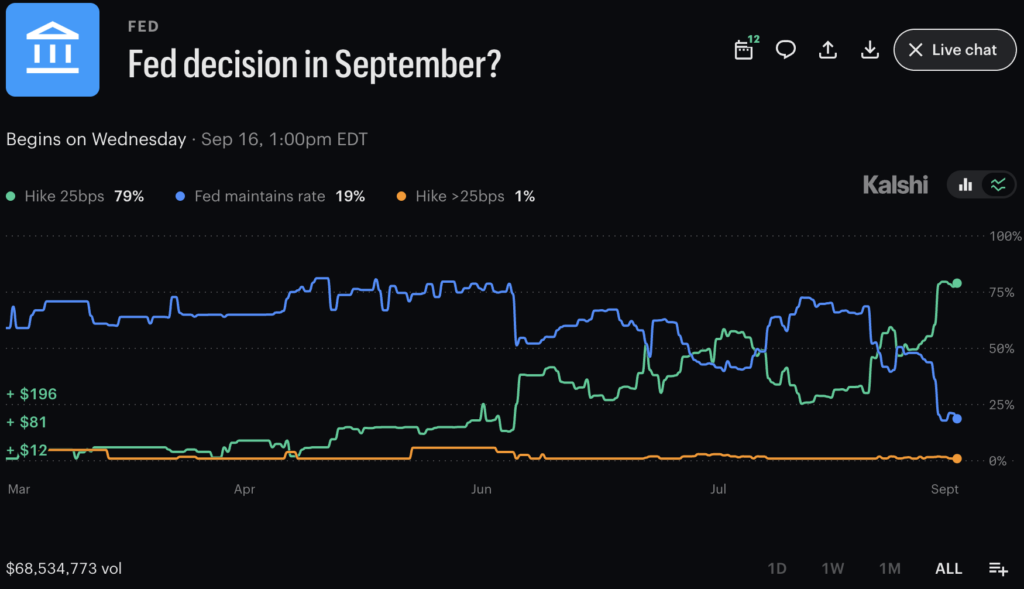
Kalshi traders assign a 79% probability to a 25-basis-point Fed hike at the Wednesday, September 16, 2026, FOMC meeting, with 19% pricing in no change and less than 1% split between a 50-basis-point move or either a 25-basis-point or 50-plus-basis-point cut, according to Kalshi markets.
That’s a market-implied probability, not a confirmed decision. Our call is that the Fed delivers the hike and pairs it with a higher-for-longer message, a combination that could pressure Bitcoin even if the rate move itself is already priced in.
The tension for traders isn’t really whether the Federal Reserve hikes. At 79%, that outcome is close to consensus. The tension is whether the FOMC’s accompanying language locks in expectations for further tightening or leaves room for a pause, and that distinction is what typically moves liquidity-sensitive assets in the hours after the statement drops.

What Is Driving the Hike Call on Kalshi?
The macro backdrop gives the Fed cover to move. The US Bureau of Labor Statistics reported that the Consumer Price Index rose +0.4% month over month in August and +3.4% over the trailing 12 months, a re-acceleration from July’s +0.1% monthly print.
Core CPI, which strips out food and energy, climbed 0.3% for the month and 2.4% year over year, still running well above the Fed’s 2% target.
Energy did much of the heavy lifting. BLS data show energy prices up 2.1% in August and 16.3% year over year, with gasoline alone up +3.9% for the month and +27.4% annually.
That’s a separate data point from the FOMC decision itself: the CPI release landed September 11, five days before the rate call, but it’s the clearest evidence the inflation fight isn’t over, and the strongest input behind the hike thesis.
For a deeper look at how that print maps onto specific price zones, see this breakdown of August CPI and Bitcoin levels.
Why the Decision May Matter Less Than the Message
— Eleanor Terrett (@EleanorTerrett) September 14, 2026
 NEWS: Senate Republicans have released new Clarity Act text featuring a revised ethics proposal agreed to by President Trump.
The text also contains changes to the sections on the Blockchain Regulatory Certainty Act (BRCA), stablecoin yield, and the so-called “Ag title.”…
A 79% probability suggests on Kalshi the hike is largely priced in, meaning Bitcoin and other risk assets often don’t react significantly to such anticipated outcomes.
Real market moves typically come from details like the statement’s tone, the dot plot, and any voting dissents, which current pricing doesn’t reflect.
Traders focus more on the Fed’s guidance than the actual hike, as a hawkish stance could tighten financial conditions and reduce risk appetite.
Conversely, signaling that the tightening cycle is nearing its end could change the market’s reaction to the same 25-basis-point hike. Essentially, traders are betting on which message the Fed will convey rather than the hike itself.
If the Fed Hikes, What Happens Next?
Three scenarios shape the near-term outlook, each representing forecasts rather than definitive outcomes.
Base Case: The Fed hikes by 25 basis points and issues hawkish guidance, likely pressuring Bitcoin and liquidity-sensitive assets, as this often strengthens real yields and the dollar.
Second Scenario: If the Fed hikes but clearly indicates it’s the final move in the tightening cycle, markets may view this as supportive for Bitcoin, turning a rate hike into a bullish signal based on the accompanying language.
Third Scenario: The Fed holds rates steady, currently assigned a 21% probability. This outcome would challenge the base case and likely create volatility, as it would be a surprise against strong hike expectations. The low odds of a 50-basis-point hike or a cut suggest limited potential for drastic shifts.
Don’t Miss: The Hottest Meme Coin Opportunities Silently Climbing the Crypto Ranks in September
The post Bitcoin Faces Fed Message Test as Kalshi Hike Odds Reach 79% appeared first on Cryptonews.
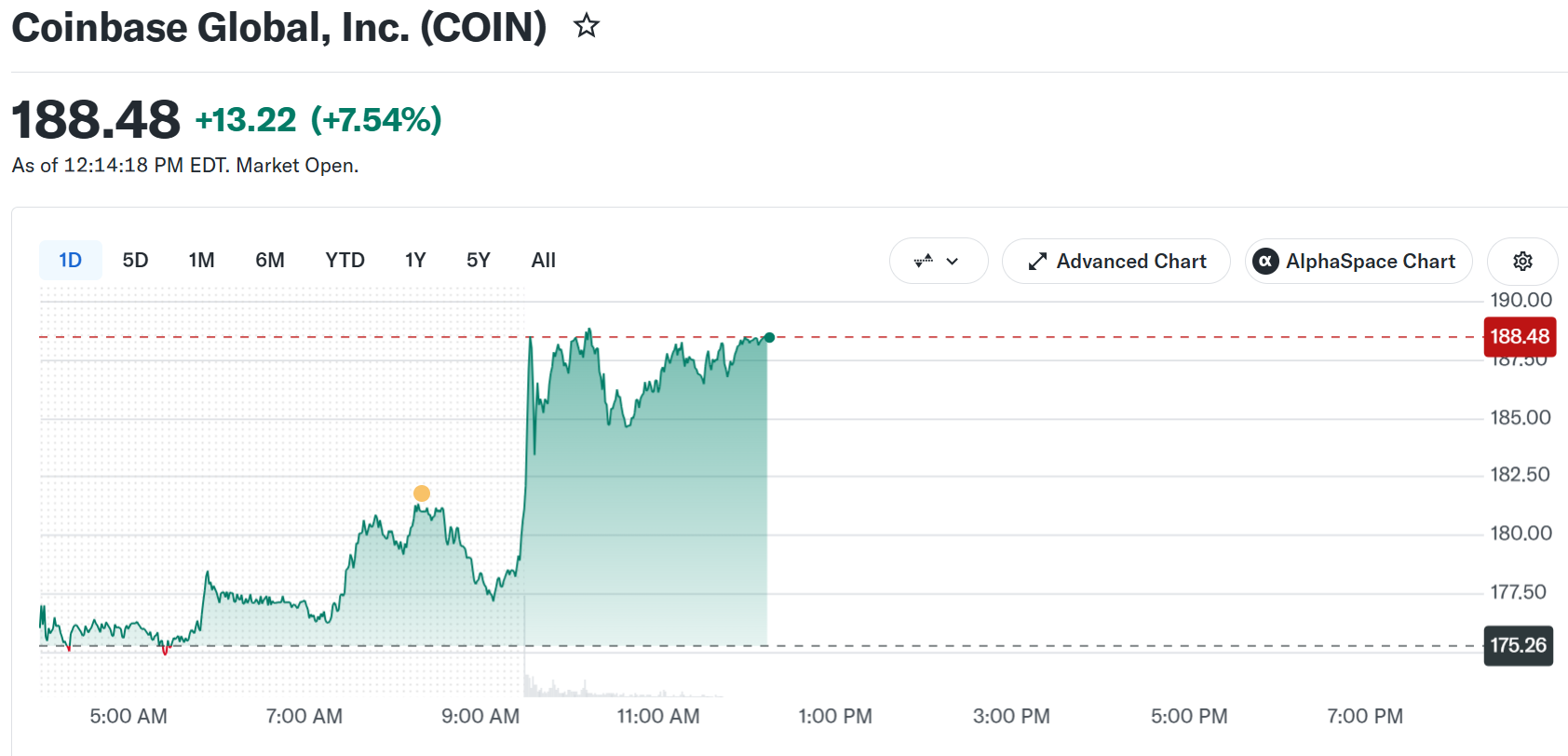
A Wall Street strategist warned on Sunday that the stock market could crack within 30 days. By Monday morning, one stock had ignored him completely.
Coinbase (COIN) jumped almost 8% and kept climbing, trading near $188.50. The fund tracking the 500 biggest US companies fell 0.8% in the same hours.

The Bear Who Moved the Stock
The warning came from Mike Wilson, Morgan Stanley’s chief US equity strategist. He told clients the danger was oil, not artificial intelligence (AI).
“I do think in the next 30 days, if oil goes to $120, $130, $140, that’s a drain on liquidity”
BeInCrypto covered that crash warning on Sunday. Coinbase shrugged it off a day later.
The lift came from Compass Point, a Washington firm that trades on politics. Analyst Ed Engel moved Coinbase from sell to neutral.
Amid his neutral bias, it is imperative to note that he did not say buy. Engel’s new target is $177. Coinbase cleared it on the open.
The Vote He Expects to Lose
Engel’s case rests on the Digital Asset Market Clarity Act. The Senate votes this week. The bill would decide which regulator polices crypto.
For Coinbase, that is the whole game. A rulebook means listing tokens without waiting to be sued. The bill slipped to September once already, and this is the last vote before November.
Engel expects it to fail.
So investors bought on a bearish note, chasing a bill that analyst thinks dies this week.
Wall Street Cannot Agree Either
MARA Holdings (MARA) went the other way, falling 2% after JPMorgan cut it to underweight over a data center venture with Starwood.
This has happened before, when Morgan Stanley ran near-identical math in May, investor relations chief Robert Samuels hit back.
“If you actually read the note, the math appears incorrect regarding the Starwood JV, even after we provided an illustrative example of how the economics work.”
Morgan Stanley is no bear here. It opened coverage on September 10 at $250, far above the $201 average across 28 analysts covering Coinbase.

Those targets run from $95 to $330. Monday answered the lowest voice in the room.
The post This One Stock Looks Bullish Amid Morgan Stanley's 30-Day Crash Warning appeared first on BeInCrypto.

Pulse: A New VHDL Simulator

Prince Archie and Princess Lilibet ‘removed from school’ by Duke and Duchess of Sussex after just two days of term – due to security fears

Furlani hires new CEO | Food Business News


-
 Tech6 days ago
Memory prices are slowing because buyers ran out of money
-

 Tech1 day ago
The Latest Weird Thing to Play Doom Is the Mapped-Out Brain of a Fruit Fly
-

 Business5 days ago
Micron Stock Climbs Above $1,031 as AI Memory Crunch and a $50 Billion Outlook Fuel the Rally
-

 Business5 days ago
AMD Stock Climbs After Management Lifts 2027 Data Center Outlook Toward $70 Billion in AI Sales
-

 Fashion3 days ago
Weekend Open Thread – Corporette.com
-

 Crypto World6 days ago
Bitcoin price risks $76K drop as $78K support weakens
-

 Crypto World6 days ago
Robinhood Stock: How To Take Advantage With Reduced Risk
-

 Crypto World3 days ago
XAG/USD: Silver’s Short-Term Rally Meets Its Moment of Truth
-

 Crypto World4 days ago
2 Chip Stocks Broke Out This Week. Neither Was Nvidia
-

 Crypto World6 days ago
Ethereum price stalls below $2,500 as ADX drops to 11
-

 Business3 days ago
10 Most-Streamed Songs On Spotify In 2026 So Far, Led By Ella Langley’s Dominant Run On The Charts This Year
-

 NewsBeat6 days ago
England up in reading, maths and science rankings as Scotland and Wales dip
-

 Tech4 days ago
Battery life is the only iPhone 18 Pro and iPhone Duo upgrade I care about. Apple didn’t disappoint
-

 Crypto World4 days ago
OKX launches 10x OpenAI, Anthropic X-Perps in Europe
-

 Crypto World3 days ago
Diesel Tops $6 a Gallon for the First Time as 28 States Set Records
-
 Crypto World6 days ago
Intel Stock Jumps 9% on Chip Price Hike Report, US Stake Gains $36 Billion
-

 Crypto World5 days ago
Bitcoin price risks $70K if $78K neckline breaks
-

 News Videos3 days ago
Facing Financial Fears
-

 NewsBeat6 days ago
What went right this week: an ‘historic’ fall in violent crime, plus more
-

 Tech5 days ago
Apple Watch Ultra 4 vs Watch Ultra 3: Should you really spend another $799?
You must be logged in to post a comment Login