
Crypto World
Ripple Price Analysis: XRP Trapped in Descending Channel as Key Levels Loom

XRP’s post-rally cooldown continues to take shape, with the asset struggling to convert its August surge into a renewed impulsive advance. The price remains trapped within a corrective structure, leaving the next breakout as the key signal for determining whether buyers can regain control.
Ripple Price Analysis: The Daily Chart
On the daily timeframe, XRP is trading around $1.40 after the explosive move from roughly $1.00 toward $1.55. Since that rally, however, the market has transitioned into a descending channel, producing a sequence of lower highs while volatility gradually contracts.
The latest rebound from the $1.32-$1.35 support area was rejected near $1.48, where the price also encountered the channel’s upper boundary. This rejection reinforces the descending trendline as the main technical obstacle. At present, that resistance is approaching the $1.43-$1.45 area.
Therefore, a confirmed daily breakout above the channel could represent an important bullish structural shift. In that case, XRP could initially challenge the previous $1.48-$1.55 highs before potentially targeting the major $1.61-$1.70 resistance zone.
On the downside, the $1.33-$1.36 region remains the nearest significant support. A breakdown below this area would weaken the recovery scenario and could expose the lower channel boundary, which is gradually converging toward the broader $1.22-$1.27 demand zone.
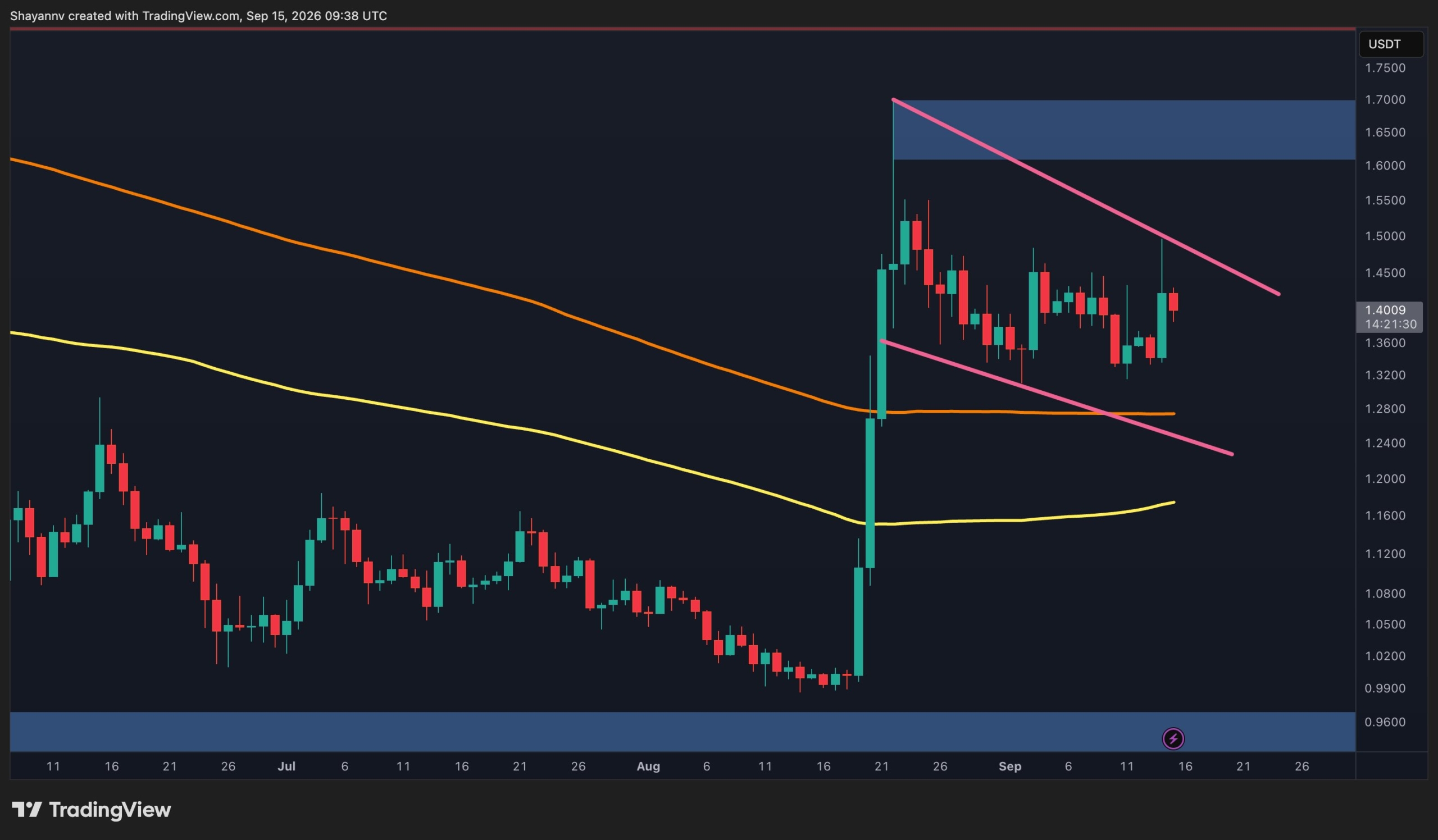
XRP/USDT 4-Hour Chart
The 4-hour chart shows the corrective structure more clearly. XRP recently bounced strongly from the $1.34-$1.36 support zone and rallied toward $1.48, but buyers were unable to break through the descending channel resistance. The rejection has since returned the price to approximately $1.40.
This leaves XRP caught between the $1.34-$1.36 support zone and descending resistance around $1.43-$1.45. A breakout above the latter would be the first meaningful indication that short-term momentum is shifting back toward buyers, potentially opening the path toward $1.48 and then $1.53-$1.55.
Conversely, another rejection followed by a loss of the $1.34-$1.36 support area would favor continuation of the correction. In that scenario, the lower boundary of the descending channel could become the next target, with the larger $1.22-$1.27 support zone providing a more substantial area of demand underneath.
For now, XRP remains in a corrective phase rather than a confirmed bearish breakdown. The reaction at the channel boundaries should provide the clearest indication of the next directional move.

The post Ripple Price Analysis: XRP Trapped in Descending Channel as Key Levels Loom appeared first on CryptoPotato.

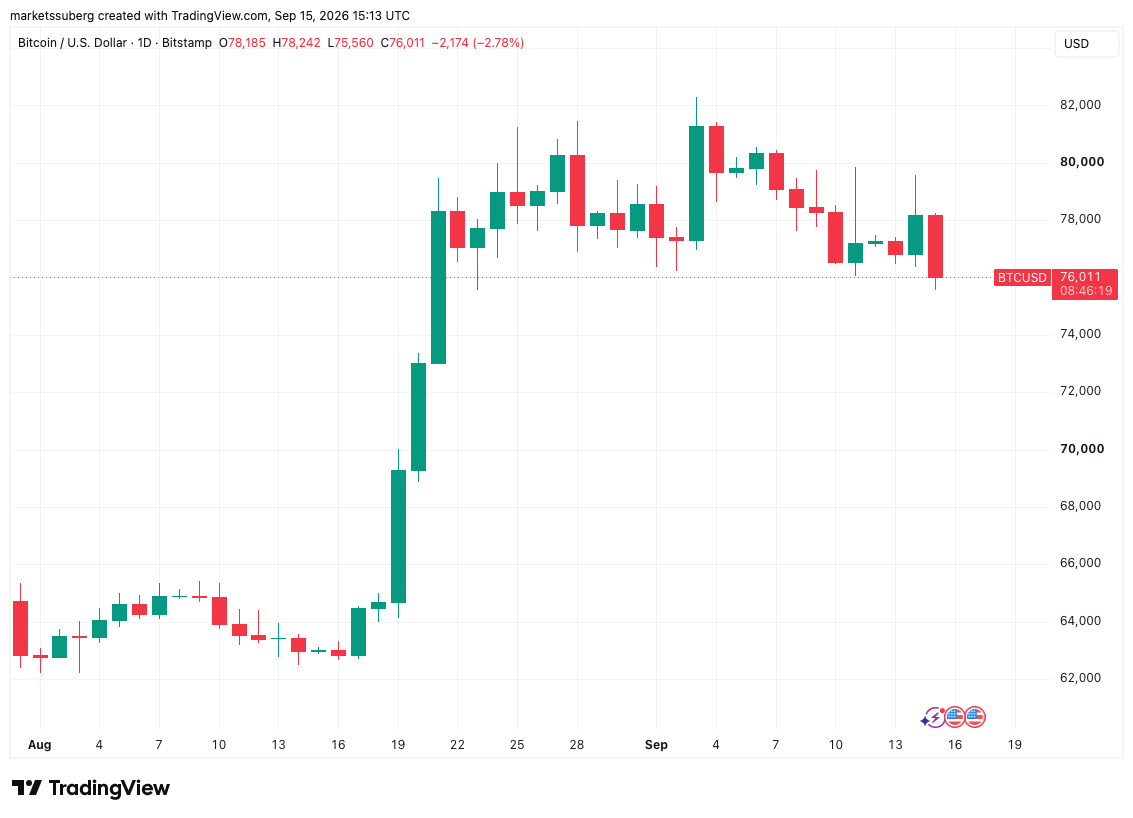
Bitcoin (BTC) saw month-to-date lows at Tuesday’s Wall Street open as global bond yields spiked and crypto markets awaited a key US Senate vote on the CLARITY Act.
Key points:
- Bitcoin dropped to $75,560, its lowest level so far in September ahead of the US Senate’s procedural vote on the CLARITY Act.
- Global bond yields in major economies set new macro highs as $100 oil prices remained a point of contention.
- Analysis expects that central banks around the world will raise interest rates going forward, traditionally a headwind for crypto markets.
CLARITY Act vote keeps crypto markets nervous
Data from TradingView showed BTC/USD dipping under $76,000, erasing a trip to $79,600 from the day prior.
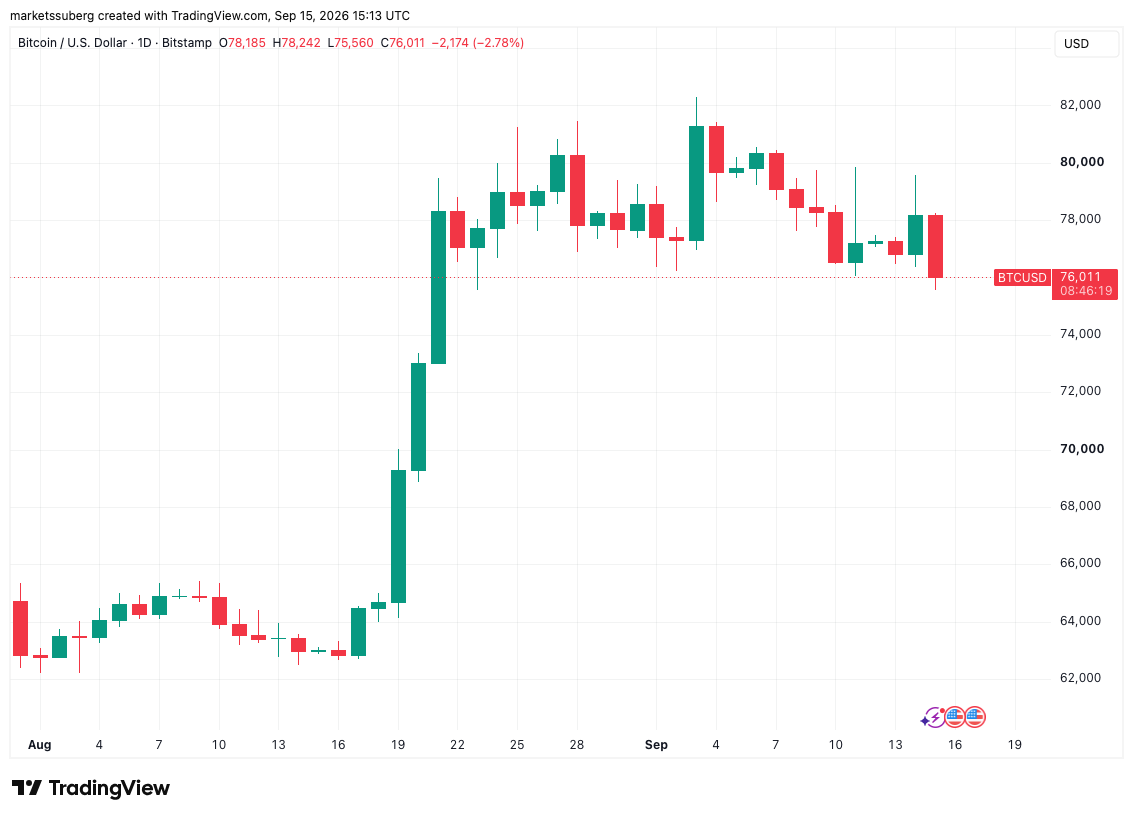
BTC/USD one-day chart. Source: Cointelegraph/TradingView
Crypto traders remained on edge ahead of the procedural vote on the CLARITY Act, due at 2:15pm Eastern time. The legislation will go forward to a Senate-floor debate should it gain the necessary 60 votes.
As Cointelegraph reported earlier, consensus sees barely any chance of success, despite optimism from some sources, with Polymarket users giving CLARITY mere 14% odds of becoming law in 2026 as of Tuesday.
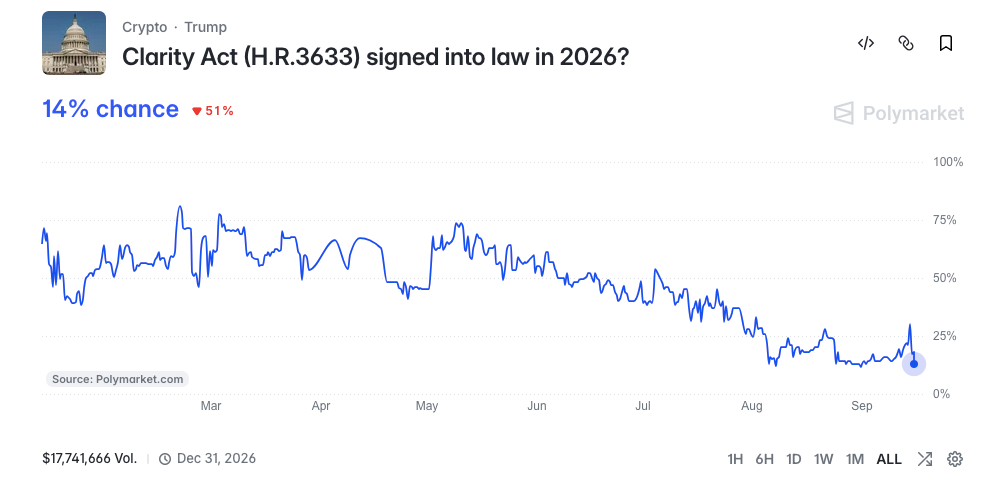
Implied odds for CLARITY act passing in 2026. Source: Polymarket
Commenting, trading company QCP Capital stressed that the act passing Tuesday’s procedural vote would have limited impact and form just one of several hurdles for proponents..
“The bill’s passage would clarify the respective regulatory roles of the SEC and CFTC, potentially strengthening the medium-term case for institutional adoption by reducing regulatory uncertainty,” it wrote in analysis on Monday.
“However, procedural progress does not guarantee final passage, and the timing of remaining legislative steps will determine the immediate market impact of any vote this week.”
Bond yields surge worldwide on oil-fueled inflation risk
US stocks, meanwhile, turned red on the day as bond yields around the world returned to their highest levels in decades. The US 10-year yield passed 5% for the first time since November 2023, going on to reach 5.041%, a level not seen since June 2007.
Related: Bitcoin short-term holders hit 30-day profit streak as bull-market odds improve: CryptoQuant
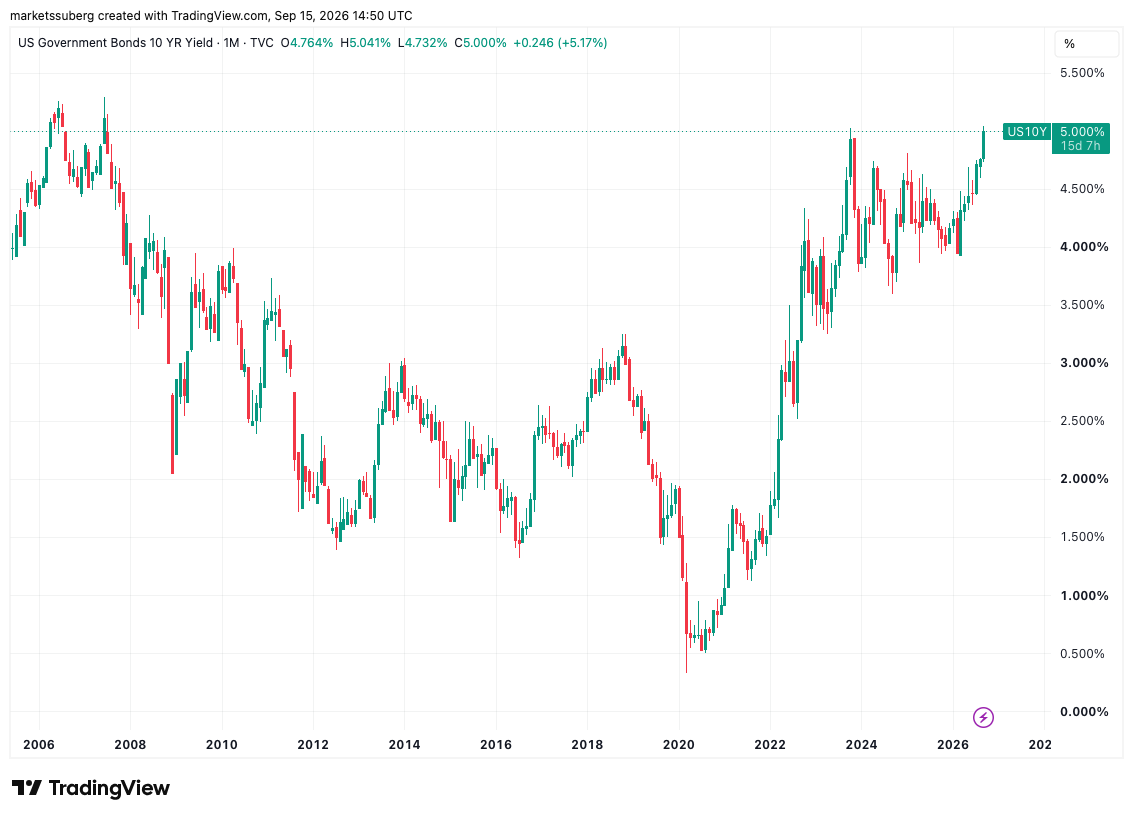
US 10-year bond yield one-month chart. Source: Cointelegraph/TradingView
Reuters further reported that the average 10-year yield for the world’s seven largest economies had reached 4.285%, its highest since mid-2008 around the height of the Global Financial Crisis.
UK and Japanese bonds also made headlines, as the UK 30-year yield reached 5.95% for the first time since March 1998, and the Japanese 10-year hit 3.04% — the highest in 30 years.
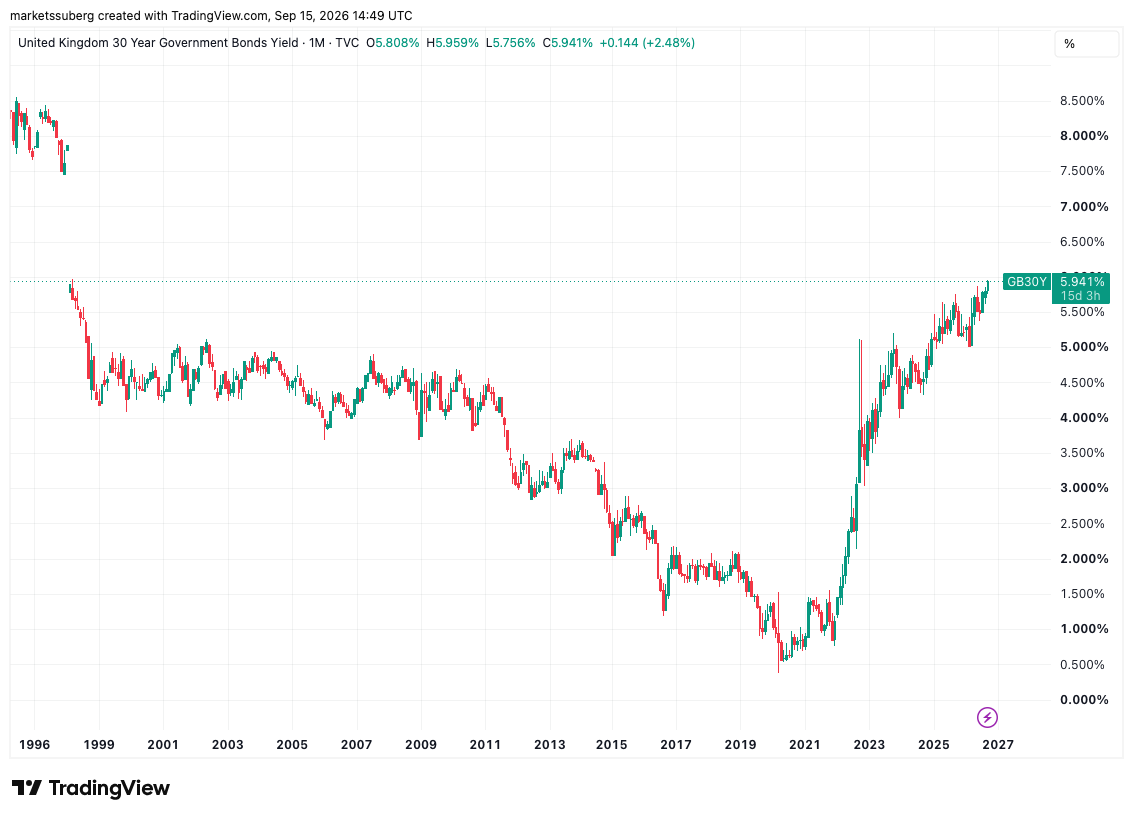
UK 30-year bond yield one-month chart. Source: Cointelegraph/TradingView
Responding, trading resource The Kobeissi Letter predicted that central banks would tighten policy as a result and enact interest-rate hikes. The US Federal Reserve is widely expected to hike its benchmark rate by 0.25% on Wednesday, while the Bank of Japan is expected to do the same at its Friday meeting.
“It’s clear what’s coming next. Monetary policy is shifting, rate hikes are returning, and the next battle against inflation has started. Just as we saw Treasury intervention in the US, the UK will likely soon intervene. Yields are simply unsustainable at current levels,” Kobeissi wrote in a post on X.
Bond yields continued to rise due to the threat of a fresh global inflation wave on the back of high oil prices, with several key transit routes at risk from a widening Middle East conflict. WTI crude oil neared $105 per barrel on Tuesday, headed for its highest levels since early May.
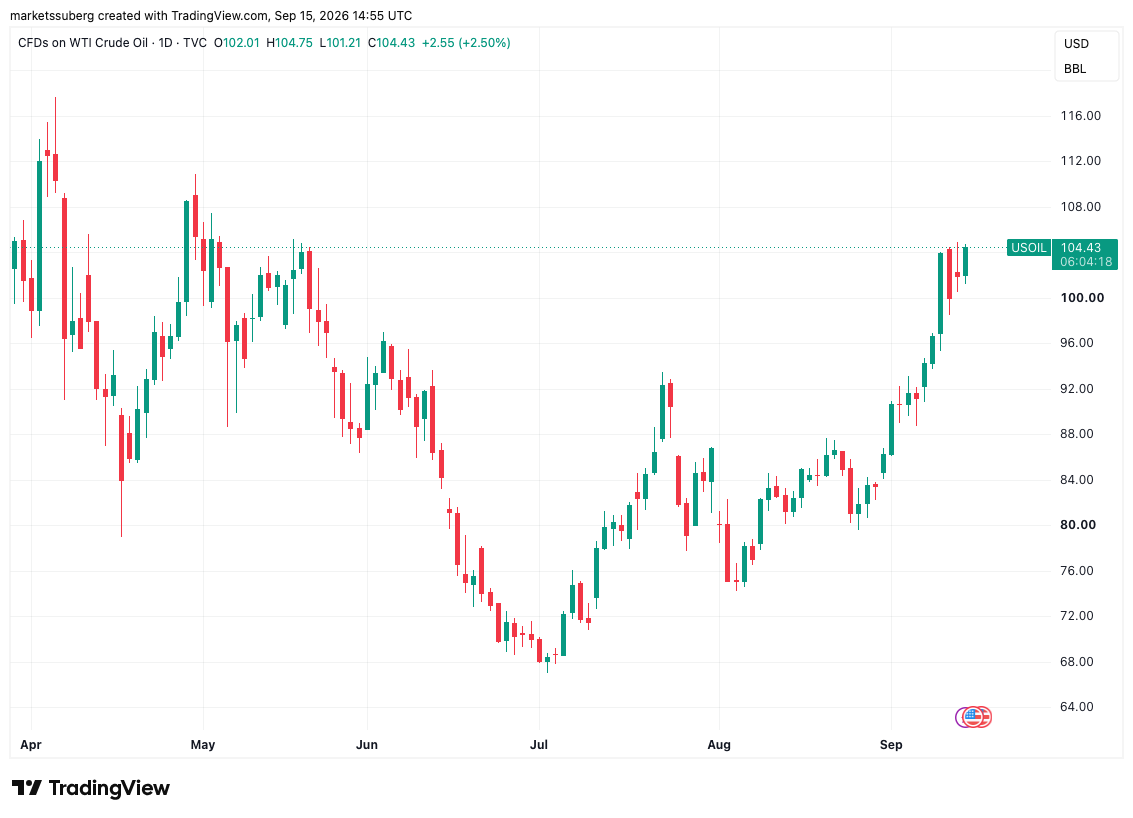
CFDs on WTI crude oil one-day chart. Source: Cointelegraph/TradingView


An Ethereum MEV bot known as Yoink has front-run an attempted Safe wallet exploit involving 2,900 rsETH, worth about $7.8 million, and paid nearly 19 ETH to secure the first position in the block.
Summary
- Yoink received 2,900 rsETH before the original exploit transaction reverted in the same Ethereum block.
- The bot transferred 2,882.37 rsETH to a separate address and routed 17.63 rsETH through Uniswap v4.
- BlockSec traced the exploit to weak authorization checks in an executor contract linked to a Safe module.
- Blockaid said a public keeper multicall let the attacker route funds through a malicious hook pool.
Yoink MEV bot takes the first position
PeckShield identified the incident as an approximately $7.81 million attack involving rsETH, a liquid restaking token associated with KelpDAO, after an MEV bot placed its transaction ahead of the suspected attacker.
On-chain records cited by security researchers show that Yoink received 2,900 rsETH in Ethereum block 25980525. From the total, the transaction sent 2,882.37 rsETH to the address 0xC70f00CD7E461686b04B0E912E309becA8b80ea0.
At the time the address was reviewed, its balance stood at 2,882.36740883 rsETH. No transfer from the address was described in the initial reports, and the available information did not identify its owner or establish whether the funds would be returned.
The remaining 17.63 rsETH moved to the Uniswap v4 Pool Manager. According to the transaction path, the Pool Manager then sent 18.95 ETH to the Yoink contract, which forwarded 18.93 ETH to the block builder.
Paying almost the full ETH amount to the builder left little direct ETH profit from that part of the transaction. The large payment instead appears to have served as the bot’s bid for priority placement, although the cited researchers did not publish a complete profit calculation covering the retained rsETH or other transaction costs.
Both Yoink’s transaction and the original exploit attempt landed in block 25980525. Yoink appeared at the top of the block, while the original transaction ran later and reverted. Security researchers viewed the ordering and failed follow-up transaction as evidence that the bot had detected the attack and moved first.
Such competition relies on maximal extractable value, or MEV, which comes from controlling the inclusion and ordering of transactions. A June 2026 crypto.news guide to MEV explained that searchers scan pending activity for profitable openings, assemble transaction bundles, and pay builders to place them in a chosen position.
Safe module checks allowed the exploit path
BlockSec attributed the underlying weakness to faulty authorization checks in an executor contract connected to an enabled Safe module. Under the firm’s account, attacker-controlled calls could pass through an executor that the wallet treated as trusted.
Safe is a smart contract wallet system that can require several signers to approve transactions. Its module framework also lets account owners add contracts that can perform specific actions under predefined rules, reducing the need for manual signatures on every operation.
An enabled module therefore becomes part of the wallet’s security boundary. BlockSec’s analysis indicates that the affected executor failed to confirm the authority behind a call correctly, allowing an outside party to reach functions through a trusted route.
The report describes a problem in the executor contract associated with the wallet configuration rather than a flaw in Ethereum’s consensus system. Available details also do not show that the core Safe contracts were compromised, so attributing the incident to the entire Safe platform would go beyond the security firms’ findings.
Blockaid provided a more detailed account of how the attacker tried to use the permission failure. According to the security company, the attacker accessed a public keeper multicall and directed a custom Uniswap v4 liquidity module toward a hook pool under the attacker’s control.
Uniswap v4 hooks are contracts that can run custom instructions at set points in a pool’s operations. Blockaid said the maliciously created hook pool was then used to unpack aEthrsETH into rsETH, producing the tokens targeted in the transaction.
Combining a public keeper function with a trusted execution route allowed the call to reach the custom liquidity setup, according to Blockaid’s analysis. Yoink’s bot saw the opportunity before the attacker completed it and submitted a competing transaction that captured the same output.
No statement included in the supplied reports identifies the suspected attacker, the Yoink operator or the block builder. The reports also did not say whether a recovery agreement, bounty negotiation or legal process had begun.
The rsETH transaction adds to 2026 DeFi losses
The attempted extraction occurred during a year of heavy losses across decentralized finance. A September report on DeFi security losses cited CertiK and Forbes estimates showing that protocols lost at least $1.3 billion to exploits during the first eight months of 2026.
The report found that compromised credentials and privileged access had overtaken traditional smart contract faults as the main source of losses by value. The Yoink incident differs in its reported mechanics because BlockSec traced the opening to authorization logic within an executor linked to a Safe module.
rsETH has also appeared in a separate major security event this year. In April, an attacker minted 116,500 unbacked rsETH after compromising infrastructure tied to a LayerZero verifier, according to the previous coverage. The attacker then used the tokens as collateral on Aave to borrow other assets.
Security researchers have not connected the April incident to the transaction in block 25980525. The two events involved different reported weaknesses, and the latest case concerned an attempted movement of 2,900 existing rsETH through a wallet execution path.
U.S. authorities have treated some MEV schemes as fraud
For U.S. users, the Yoink transaction also shows why the term “front-running” does not by itself settle the legal status of an on-chain trade. Federal authorities have pursued certain MEV operations when prosecutors alleged that their operators used deception or tampered with systems to obtain funds.
In May 2024, the U.S. Department of Justice charged two brothers over an alleged Ethereum scheme that obtained about $25 million in cryptocurrency within roughly 12 seconds. Prosecutors alleged that Anton and James Peraire-Bueno manipulated the process Ethereum traders used to order transactions and fraudulently gained access to pending private transactions.
The Justice Department charged the brothers with conspiracy to commit wire fraud, wire fraud, and conspiracy to commit money laundering. Its allegations concerned the methods allegedly used to obtain the trading information and manipulate the process, rather than treating every transaction-ordering strategy as automatically criminal.
No U.S. regulator or law-enforcement agency has announced an action involving Yoink or the attempted rsETH exploit based on the information supplied. The cited blockchain security firms have limited their findings to transaction ordering, the Safe-linked executor’s authorization checks, and the Uniswap v4 hook route used to unpack aEthrsETH.
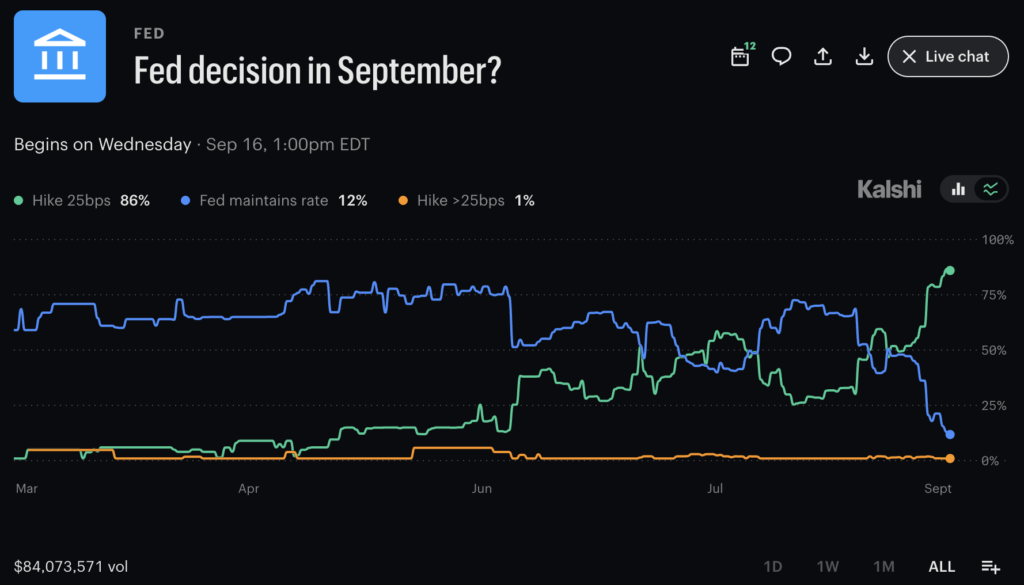
Prediction-market volume on the Federal Reserve’s September FOMC odds rate decision has topped $42M, with slightly more than half of participants backing a 25-basis-point hike and just over 45% expecting rates to remain unchanged, according to Federal News Network.
The close split puts the Sept. 15-16 Federal Open Market Committee meeting at the center of the macro calendar for markets, including Bitcoin.
The reported market showed little expectation of a rate cut despite President Donald Trump’s pressure for lower borrowing costs. The choices attracting meaningful interest were a hike or unchanged rates, leaving the September decision closely contested in the reported snapshot.
Kalshi on the other hand has over $85M wagered on the FOMC odds for today’s meeting, with only 12% believing that the rates stay the same, and 86% betting on a rate hike,

FOMC Odds: Why the Fed Decision Is Dividing Traders
Federal News Network reported that a strong August jobs report added another consideration to the Federal Reserve’s decision. The Consumer Price Index report is due Sept. 11, shortly before the FOMC meeting, and the report identified inflation, tariff disputes, and challenges in the Middle East as factors surrounding the rate debate.
According to the report, Federal Reserve Chair Kevin Warsh, who succeeded Jerome Powell earlier in 2026, has indicated that a rate increase could be preferable. Trump has advocated lower rates and has threatened to stop trading with countries with which the United States has a trade deficit if the Fed raises rates, the report said. These competing pressures form the backdrop to the narrow prediction-market split.
The same report characterized the decision as a close call. It said the Fed could keep rates unchanged for now and defer a hike to a later meeting, while acknowledging the economic case for addressing inflation through higher rates.
Make Your FOMC Prediction Count With $25 For Free on Kalshi
What the Split Signals for Bitcoin
For Bitcoin observers, the reported division reflects uncertainty around a closely watched policy decision rather than a settled market consensus. A rate hike and an unchanged-rate decision are the two outcomes that drew meaningful support in the Sept. 8 market snapshot, according to Federal News Network.
The reporting does not make a Bitcoin price forecast. Instead, it shows how prediction-market participants weighed the Federal Reserve’s next move as the meeting approached. That uncertainty is relevant context for traders following Bitcoin alongside broader interest-rate expectations.
A 25-basis-point increase would align with the marginal favorite in the snapshot. Keeping rates unchanged would align with the report’s view that the Fed might postpone a hike. The outcome remains a decision for the FOMC odds, and the prediction-market figures reflect participants’ views when they were reported, not the meeting’s outcome.
JUST IN:
87% chance the Federal Reserve raises interest rates by 25 bps at tomorrow's FOMC meeting. pic.twitter.com/M78S0g4JdZ
— Watcher.Guru (@WatcherGuru) September 15, 2026
What to Watch at the September FOMC Odds Decision
The Federal Reserve’s calendar lists the Sept. 15-16 meeting as one associated with a Summary of Economic Projections. The calendar also lists FOMC meetings for Oct. 27-28 and Dec. 8-9. The September meeting, the policy decision, and the associated projections will therefore be key items for market participants monitoring the rate outlook.
The table below reflects the Sept. 8 prediction-market snapshot reported by Federal News Network and is not a later or updated reading.
The source identified the August jobs report and the Sept. 11 CPI release as key inputs ahead of the decision. The report also noted the political pressure surrounding the meeting and the possibility that a hike could be pushed to a later meeting. For Bitcoin traders, the key takeaway is that the prediction-market reading showed a closely divided view of the September outcome.
Earn $50 and Enter $300K Prize Draw on EdgeX
The post FOMC Odds: A $42M Prediction Market Splits the September Fed Outlook appeared first on Cryptonews.

Start standing with your feet hip-width apart and a slight bend in your knees, holding a dumbbell in each hand or a loaded barbell in both hands in front of your thighs.
Keeping that slight bend in your knees, push your hips back and lower the weight in front of your legs until you feel a stretch in the backs of your thighs.
Pause briefly, then drive through your feet to return to the starting position.
Complete all repetitions, aiming for 8 to 15.

Chip and computer hardware stocks tied to the artificial intelligence buildout attempted a comeback Tuesday after Monday’s harsh sell-off. Nvidia (NVDA) stock tried to retake a key support level. Monday’s bloodbath was prompted by concerns that calls from AI leaders to slow development would hurt semiconductor and data-center hardware firms. On Monday, Nvidia stock tumbled 3.4% to 210.96 and closed…
Copyright ©2026 Investor’s Business Daily, LLC. All rights reserved. 87990cbe856818d5eddac44c7b1cdeb8

Ethereum’s exchange supply has fallen sharply over time. There are now 6.06 million ETH on such platforms compared with 22.9 million at the network’s June 2020 peak.
According to Santiment’s estimates, that represents a 73% decline in easily sellable supply.
Ethereum’s Supply Drain
Fewer ETH sitting near order books means less supply available for market sells and panic exits. The decline is supported by ETH moving into staking, ETF wrappers, treasury strategies, and long-term custody.
Validators are also locking the crypto asset to help secure the network. The analytics firm explained that demand does not need to surge for price moves to become stronger. As liquid supply shrinks, even smaller waves of buying can have a larger impact.
ETH remains at a structural inflection point, according to Crypto Patel, who identified the $2,567-$2,666 zone. A rejection could send the crypto asset toward $2,150, $2,000, or $1,800. A confirmed higher-timeframe close above $2,666 could instead open the path toward $3,100 and $4,000.
Meanwhile, Daan Crypto Trades stated that the asset has been on another “rollercoaster” ahead of the CLARITY Act vote and FOMC. Traders have been pre-positioning around the uncertainty. That has created high volatility and caused both sides to get taken out. The analyst sees little hope around the vote right now. If the vote fails or gets pulled, more downside is expected, followed by chop into the FOMC. After that, price action could become somewhat more normal again.
A Growing Treasury
One company in particular has been steadily adding to its Ethereum position. BitMine now holds 5,956,378 units after adding 27,180 tokens over the past week.
That gives the company 4.9% of Ethereum’s 122 million total supply. Its stated goal is to reach 5% under its Alchemy of 5% strategy. It has reached 98% of the way toward the target after buying the token every week since June 30, 2025. Most of its treasury is already staked. The company has 5,067,309 units locked through its MAVAN validator network. That is about 85% of its ETH holdings.
Tom Lee expects annualized staking revenue to reach $334 million. The estimate rises to $392 million once the entire ETH treasury is staked. Bitmine’s total crypto, cash, and moonshot holdings stood at $15.8 billion.
Separately, Ethereum ETFs recorded nearly $197 million in net inflows last week. The final trading session saw $216.4 million flow into the funds, which more than offset earlier outflows. The bullish momentum has carried into the new week. Monday brought another $121 million in net inflows, which pushed the monthly total closer to $450 million.
The post Ethereum Holders Are Pulling ETH Off Exchanges at a Historic Pace appeared first on CryptoPotato.

What does the repeal of power plant pollution limits mean?
The EPA’s repeal concerns climate pollution standards originally finalized by the Biden Administration in 2024. The regulations applied to coal-burning plants in operation and any prospective gas-burning plants, and required coal plants to install technology to capture most of its carbon emissions by 2039 in order to keep operating, while gas plants would have been required to operate on cleaner fuels, like hydrogen.
The Biden Administration predicted that the rule would have prevented up to 1,200 premature deaths, 360,000 cases of asthma symptoms, 48,000 school absence days, and 57,000 lost work days in 2035 alone. It also projected up to $370 billion in climate and public health net benefits over the next two decades.
The repeal of this rule is the latest in the Trump Administration’s attempts to roll back federal climate regulation. In February, the EPA finalized its repeal of the endangerment finding, the landmark 2009 ruling that provided a legal underpinning for greenhouse gas regulation. The agency also ruled that the Clean Air Act does not authorize the EPA to regulate vehicle tailpipe emissions, and eased Biden-era restrictions on hydrofluorocarbons, polluting chemicals used in refrigerators and air-conditioning.

In climate change crypto news, Bitcoin miners have spent years pitching hydropower as proof the network can run clean. Ethiopia just showed what happens when the water backing that pitch stops showing up on schedule.
The state utility slashed electricity supplied to Bitcoin and other data-mining companies by roughly 75%, leaving them with about 23% of contracted power.
NEW: — Africa Bitcoin News
 Ethiopia Cuts Power to Bitcoin Miners Amid Hydro Shortfall.
Ethiopia has sharply reduced electricity available to data-mining operations, including the country’s growing Bitcoin mining sector, as lower water inflows put pressure on hydropower generation.
Read More:… pic.twitter.com/Cds8KJLHAf

 (@AfriBitcoinNews) September 15, 2026
The question worth asking isn’t whether climate change killed Bitcoin mining in Ethiopia; it didn’t, but whether this is an isolated dry spell or a preview of what hydro-dependent mining hubs should expect more often.
This news dropped as BTC USD trades for $76,850, down -1.2% over the past 24 hours, following a -2.2% drop over the last seven days. Daily trading volume sits at $31.9Bn.

Climate Change Crypto News: Why Ethiopia’s Hydro-Powered Mining Bet Is Under Stress
Bitcoin-mining companies accounted for 35% of Ethiopian Electric Power Corp.’s revenue in the past financial year and consumed almost a third of the country’s total electricity production of 9,730 megawatts, according to Bloomberg.
That’s not a rounding error in a national power system; it’s a customer segment large enough to move the utility’s balance sheet and its dispatch decisions in the same breath.
EEP’s installed generation capacity grew 23% to that 9,730 MW figure over the past year, yet capacity utilization still fell to 60% against a 67% target, according to the Ethiopian Business Review. Data mining alone generated 50.37 billion birr in the last fiscal year, more than any other customer category.
The 23% figure making headlines is easy to misread. It’s the share of contracted mining supply that EEP is currently delivering, not 23% of Ethiopia’s total electricity consumption.
That distinction matters for anyone trying to size the real exposure here: mining’s slice of national output is still material, but the cut is a curtailment of one customer class, not a systemwide blackout.
For traders watching how operational risk feeds back into sentiment, it’s worth pairing this against the broader macro risks already weighing on BTC’s price action.
Never Miss a Swing Again: Use AI Copy Trading Bots From CryptoHopper
Cheap Renewable Power Is Still Weather-Dependent
The cut in power supply is primarily due to reduced inflows into Ethiopia’s hydroelectric dams, which generate about 95% of the Ethiopian Electric Power (EEP) output.
CEO Ashebir Balcha said the reduction was a pre-emptive measure ahead of a dry period, with incoming water levels tracking at least 20% below expectations.
Consequently, EEP adjusted its revenue and supply forecasts and reported losses of up to 50 megawatts per generating unit as reservoir levels declined.
While the situation highlights seasonal hydrological changes rather than direct climate change impacts, it underscores that a low-carbon power source isn’t always reliable. This distinction is important when considering Bitcoin price forecasting tied to stable global hashrate growth.
Earn $50 and Enter $300K Prize Draw on EdgeX
The Strongest Case Against Reading This as the Climate Change Crypto Reckoning
It’s tempting to read a 75% power cut as evidence that hydro-powered mining is fundamentally unsound. That reading overshoots what’s actually documented.
EEP said it plans to reassess its position in October, once clearer data on generation capacity for the new water year comes in – this reads as a seasonal management decision with a defined review point, not an announced phase-out.
The primary evidence describes a utility responding to declining inflows by protecting public supply, then explicitly planning to revisit the decision once the picture clarifies.
Broader claims circulating about a 2025 permit freeze, tariff reform, or a formal transition plan for crypto mining in Ethiopia sit outside what’s verified here and should be treated as separate reporting threads rather than confirmed facts tied to this event.
Discover: The Best Token Presales
The post Climate Change and Crypto: Ethiopia’s 75% Power Cut Tests Bitcoin Mining’s Green Pitch appeared first on Cryptonews.
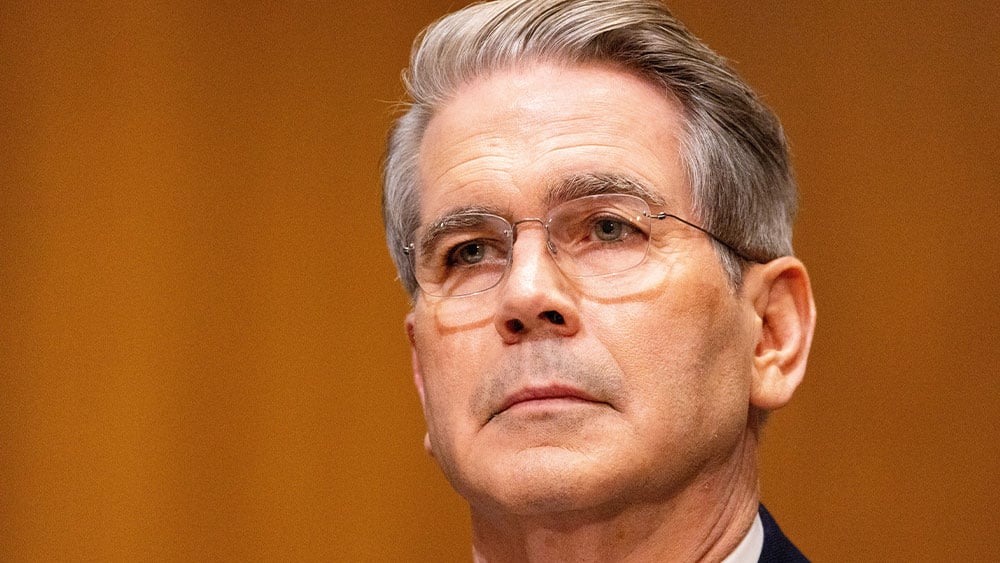
Federal Reserve Chairman Kevin Warsh and Treasury Secretary Scott Bessent both face credibility tests this week in their respective roles of fighting inflation and serving as the nation’s top bond salesman. With the 10-year Treasury yield holding near 5% on Tuesday, only one appears to have a good chance of success. A hawkish outcome of Wednesday’s Fed meeting, including a…
Copyright ©2026 Investor’s Business Daily, LLC. All rights reserved. 87990cbe856818d5eddac44c7b1cdeb8
A Brazilian bank collapse that cost depositors and insurers billions has now reached the country’s Supreme Court and presidential election.
Banco Master failed in November 2025 after attracting hundreds of thousands of savers with unusually high returns. Ten months later, allegations around its owner, Daniel Vorcaro, have pulled one of Brazil’s most powerful judges into the scandal.
On September 15, the Supreme Court is due to consider whether Justice Alexandre de Moraes should face an investigation over his contacts with Vorcaro. The hearing puts the court in the extraordinary position of examining one of its own members.

Brazil’s Biggest Banking Scandal?
Police evidence released this month alleges that the Bank’s owner Vorcaro contacted Justice Moraes shortly before his arrest. Moraes’ wife’s law firm also held a R$130 million contract with Banco Master.
Moraes denies wrongdoing. He has accused Justice André Mendonça, who oversees the investigation, of abusing his authority by releasing the material. The dispute has added a new layer to an already costly banking failure.
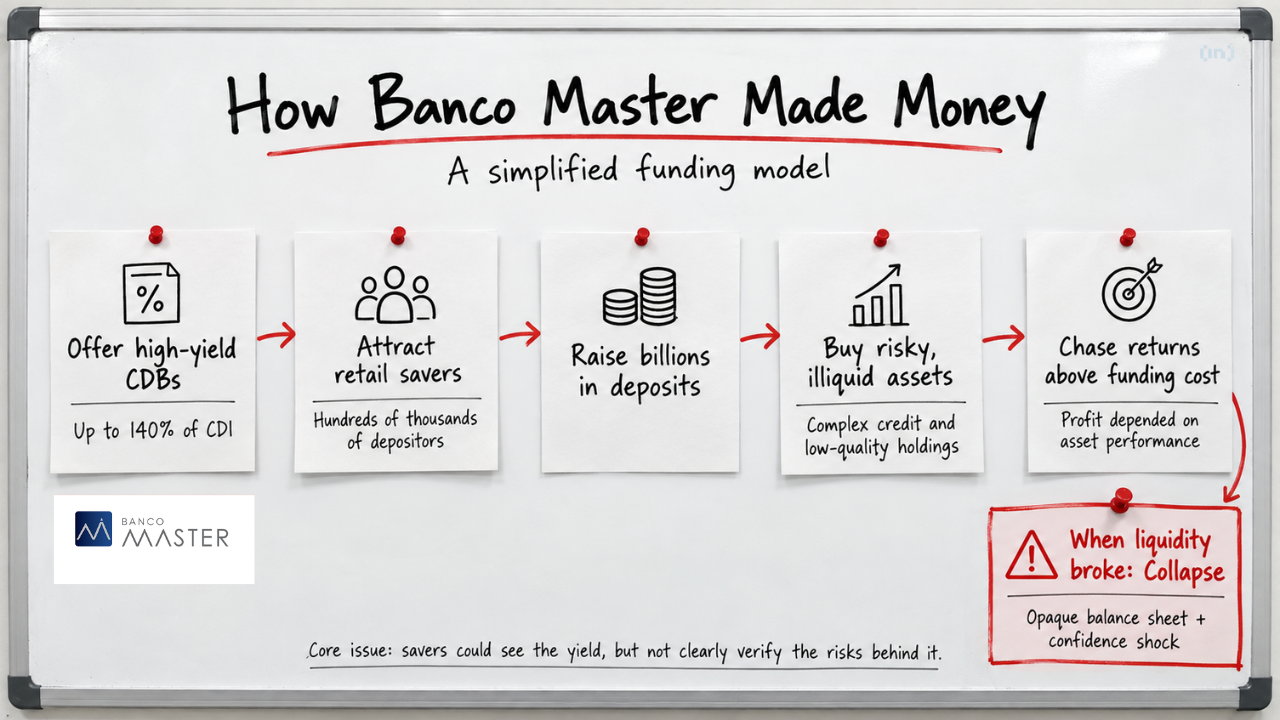
Banco Master had offered CDBs paying as much as 140% of Brazil’s CDI benchmark. It used that expensive funding to grow quickly while holding complex and illiquid assets.
Then the model broke.
Brazil’s central bank liquidated Master after citing a severe liquidity crisis and serious violations. The country’s deposit guarantee fund has since paid about R$40.2 billion to 722,000 clients linked to the group.

The legal consequences could extend further if investigators establish a conflict involving Moraes.
The legal consequences could extend further if investigators establish a conflict involving Moraes. “Potentially, but not automatically,” said João Luiz, managing partner at J. Pereira Advogados, when asked whether previous rulings could face challenges.
He said proven misconduct would not erase Moraes’ entire judicial record. However, defendants in individual cases could have stronger grounds to challenge decisions if they prove he lacked impartiality.
Meanwhile, the scandal has entered Brazil’s election campaign.
Senator Flávio Bolsonaro has called for Moraes’ removal and told supporters that voting for the current President Lula da Silva means supporting this scandal.
“Anyone who votes for Lula is voting for Alexandre de Moraes,” said Bolsonaro.
But even Bolsonaro is not free from this scandal. He also faces questions over financing linked to the Bank for a film about his father. He denies wrongdoing.
A bank that once sold extraordinary returns has now created a much larger problem for Brazil. This has now turned into a fight over trust in its courts, regulators and political system.
The post A $10 Billion Bank Collapse Is Now Shaking Brazil’s Election appeared first on BeInCrypto.

US 10-year Treasury bonds hit 19-year high ahead of Fed rate decision

Bitcoin Drops to $75.6K on CLARITY Act Uncertainty and a Fresh Bond-Yield Surge

Investigation Into Death Turns Cross-Country

Memory prices are slowing because buyers ran out of money

Weekend Open Thread – Corporette.com

Micron Stock Climbs Above $1,031 as AI Memory Crunch and a $50 Billion Outlook Fuel the Rally

“It’s Happening”! CRYPTO Is Triggering Its 2020 Bull Signal! (ETH, SUI, ADA, DOG, NIGHT)

Most Childish Couple I’ve Ever Had On Financial Audit

“Regulatory Skies Clearing” for Crypto? Tyrone Ross, Jr. on Bitcoin’s Path Ahead
-
 Fashion4 days ago
Weekend Open Thread – Corporette.com
-
 Business6 days ago
Micron Stock Climbs Above $1,031 as AI Memory Crunch and a $50 Billion Outlook Fuel the Rally
-

 Tech2 days ago
The Latest Weird Thing to Play Doom Is the Mapped-Out Brain of a Fruit Fly
-

 Business6 days ago
AMD Stock Climbs After Management Lifts 2027 Data Center Outlook Toward $70 Billion in AI Sales
-

 Crypto World7 days ago
Bitcoin price risks $76K drop as $78K support weakens
-

 Crypto World4 days ago
XAG/USD: Silver’s Short-Term Rally Meets Its Moment of Truth
-

 Crypto World5 days ago
2 Chip Stocks Broke Out This Week. Neither Was Nvidia
-

 Business4 days ago
10 Most-Streamed Songs On Spotify In 2026 So Far, Led By Ella Langley’s Dominant Run On The Charts This Year
-

 Crypto World7 days ago
Ethereum price stalls below $2,500 as ADX drops to 11
-

 Tech5 days ago
Battery life is the only iPhone 18 Pro and iPhone Duo upgrade I care about. Apple didn’t disappoint
-

 Crypto World5 days ago
OKX launches 10x OpenAI, Anthropic X-Perps in Europe
-

 Crypto World6 days ago
Pi Network ships Protocol 27 on a network with 14 million users and zero DeFi
-

 Crypto World4 days ago
Diesel Tops $6 a Gallon for the First Time as 28 States Set Records
-

 Tech6 days ago
Apple Watch Ultra 4 vs Watch Ultra 3: Should you really spend another $799?
-

 Crypto World7 days ago
CLARITY Act runs out of calendar as crypto regulation stalls
-

 News Videos4 days ago
Facing Financial Fears
-

 Crypto World6 days ago
Bitcoin price risks $70K if $78K neckline breaks
-
 Crypto World6 days ago
Bitcoin price holds near $79K as cycle drawdowns narrow
-

 NewsBeat7 days ago
What went right this week: an ‘historic’ fall in violent crime, plus more
-

 Business7 days ago
Meta debuts long-awaited personal AI agent, Muse
You must be logged in to post a comment Login