Connect with us

NewsBeat

The real reason Britons are more medicated than Danes

Published

on

The real reason Britons are more medicated than Danes

It is tempting to tell a tidy story in which people in Britain take too many pills because they exercise too little and eat too poorly, while Danes stay slim by cycling everywhere. The assumption is that Britain relies on medication to fix lifestyle failures, whereas Denmark relies on prevention.

But are Britons actually more medicine-dependent than the Danes? The honest answer is yes and no.

When it comes to the more routine maintenance of getting older – managing the physical wear and tear of the body – the two countries prescribe in remarkably similar volumes.

But where pills are sought to compensate for what society has failed to provide, Britain reaches for the prescription pad far more readily. And, crucially, the heaviest of that prescribing is concentrated in the UK’s most deprived communities.

Advertisement

Health Gap / Sundhedskløften is a collaborative series from The Conversation UK and Denmark’s Videnskab.dk exploring what the two countries can learn from each other when it comes to health and wellbeing.

From cycling and alcohol to inequality, healthcare and everyday habits, the series looks beyond hospitals and medical treatment to explore how culture, politics and society shape the way people live – and how healthy they are.


If you look purely at drugs prescribed to prevent disease, the stereotype of the overmedicated Briton falls apart.

Advertisement

Take heart disease. Around 13% of the Danish population are prescribed statins to lower cardiovascular risk. In the UK, the figure is nearly identical: the British Heart Foundation estimates 14 to 15% of adults take them.

This pattern holds for polypharmacy (taking multiple drugs regularly), too. Around half of all Danes aged 75 and over take five or more medicines a week; in England, the figure for the same age group is 51%.

So, a retired Dane and a retired Brit are taking roughly the same number of pills for chronic health conditions. Does this undermine the idea that Denmark prevents disease through lifestyle while Britain over-medicates? Not entirely.

Zoom out and the picture changes. In England alone, 1.26 billion prescription items were dispensed in 2024-25 – roughly 22 items per person, a 4% rise on the previous year. The equivalent Danish figure works out at around 13 items per person.

Advertisement

The UK government’s own reviews suggest around 10% of items dispensed in English primary care are overprescribed – meaning a medicine that isn’t needed, is no longer needed, whose harms outweigh its benefits, or that the patient would prefer to swap for a non-drug alternative.

So, if the two countries prescribe heart and blood pressure medications at similar rates, what’s driving Britain’s excess in volume? The answer lies in the drugs most directly tied to pain, anxiety and distress.

Prescribing for despair

The UK prescribes antidepressants at a rate well above the average across OECD countries, a club of mostly high-income nations. In England last year, over 92 million antidepressants were dispensed to nearly 9 million patients – roughly one in six adults.

In contrast, Denmark is the only country in Europe to have successfully reduced its antidepressant consumption in recent years, with a 4% decline between 2010 and 2020.

Advertisement

The story is similar for painkillers. In 2019, the UK had the highest overall opioid prescribing rate in the world. Danish opioid use has fallen by more than a third since 2010.

These are the medicines whose volume responds most directly to the conditions of people’s lives – used to treat chronic pain, mental distress and social isolation. Researchers and the UK Health Security Agency have linked rising prescribing of this kind to widening social and economic disadvantage. It is in these drug classes, rather than in cardiovascular disease or diabetes medicines, that the gap between Britain and Denmark opens up.

A pharmacist in front of shelves of medications.
A 2019 study found that the UK had the highest consumption rate of prescription opioids for pain management per capita in the world.
Yau Ming Low/Shutterstock.com

This national divergence is mirrored within the UK itself. Conditions like heart disease are more common in deprived areas, driven by higher rates of smoking, obesity, diet and polluted air, so it makes sense that more heart medicines are prescribed there too.

But the bigger gap – one that heart disease alone can’t explain – is in medications for pain, mood, anxiety and sleep.

Antipsychotics are dispensed nearly three times as often in the most deprived parts of England, compared with the least deprived. Opioid prescribing is roughly twice as high in the poorest areas, with nine of the ten highest-prescribing regions in the north of England.

Advertisement

Sleeping pills, anti-anxiety medications and nerve pain drugs are similarly concentrated in deprived populations. Public health officials explicitly link this dependence on prescription medicines to poverty.

Some researchers call this prescribing for “diseases of despair”. The trend aligns with a spike in suicides and alcohol- and drug-related deaths concentrated in these same communities over the last decade.

The illusion of autonomy

The cultural difference extends beyond the doctor’s office and on to supermarket shelves. In Britain, painkillers like paracetamol and ibuprofen are ubiquitous in corner shops and petrol stations. Co-codamol, a codeine and paracetamol combination, is the country’s second most dispensed painkiller, with millions of packs sold over the counter every year.

In Denmark, supermarket sales of basic painkillers are sharply restricted, and only a single weak codeine combination is available, kept behind pharmacy counters.

Advertisement

In the UK, this easy access is often framed as “patient autonomy” or “self-care culture”. But this framing obscures who bears the harm. When Britain restricted paracetamol pack sizes in 1998, overdose deaths fell by 43% and liver transplants caused by paracetamol poisoning dropped by 61%.
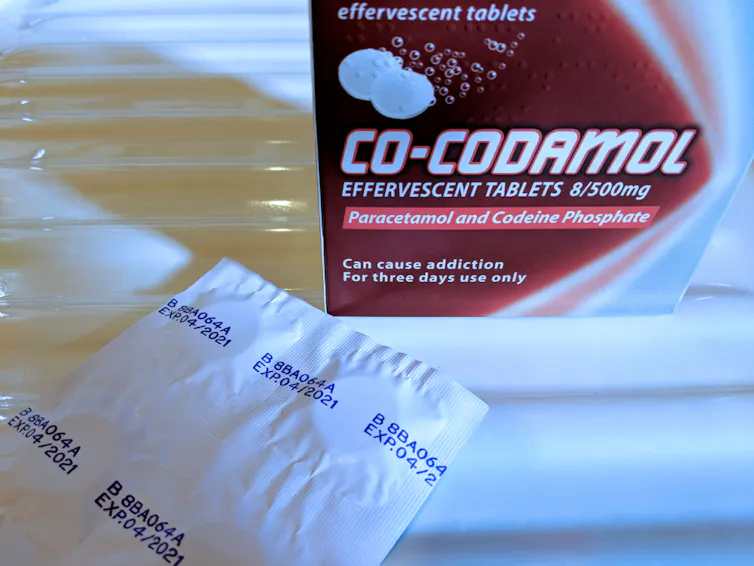
A box of co-codamol.
The UK’s second-most dispensed medicine.
Eddie Jordan Photos/Shutterstock.com

Treating the symptoms of inequality

Britain’s higher prescription rates aren’t just about medicine – they’re rooted in how society is structured. Denmark’s lower use of drugs for pain and psychological distress can’t easily be explained by clinical guidelines alone – it points to the protective effect of stronger social foundations.

With less inequality, a stronger safety net and an environment built to support people’s wellbeing, Denmark simply has fewer of the conditions that hardship and poor surroundings tend to cause.

In the UK, the opposite is true. Over a decade of austerity, widening wealth inequality and fraying public health infrastructure have had profound consequences. Poverty, insecure housing and precarious work don’t just make life harder; they are reliable predictors of chronic distress and long-term illness.

The gap in healthy life expectancy between the richest and poorest in England has widened to 19 years. Extreme inequality manufactures disease, creating populations that inherently need more medication.

Advertisement

This is the practical dilemma of UK general practice. In deprived areas, depression, chronic pain and anxiety are often driven by adverse living conditions. Without the tools to directly alter a patient’s housing or income, reaching for an antidepressant or a painkiller is a rational response to help patients cope. Medical interventions are increasingly deployed to manage structural problems.

The concentration of the UK’s prescription volume in medications for pain and mood disorders suggests this is not a purely clinical issue, but the predictable consequence of widening health inequalities.

Denmark’s lower reliance on medication is not simply a lifestyle choice, but the outcome of deliberate investment in equality, housing and social protection. The comparison with Britain suggests that where these foundations weaken, prescribing rises to fill the gap – a reminder of what such systems help prevent.


This series was commissioned as part of a partnership between Videnskab.dk and The Conversation, where articles are published in English and Danish.

Advertisement

Source link

Continue Reading
Click to comment

You must be logged in to post a comment Login

Leave a Reply

NewsBeat

Mother appeals for missing Bolton girl to come home

Published

on

Mother appeals for missing Bolton girl to come home

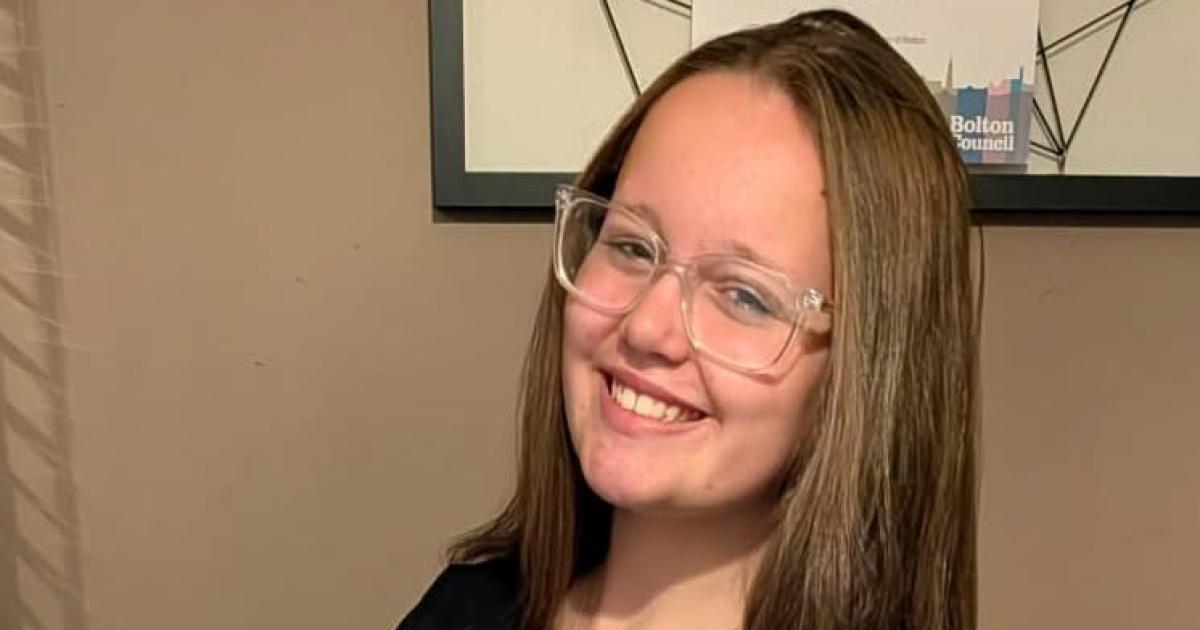
Police are continuing to appeal for information as the search for a missing 13-year-old girl reaches its fourth night.

Lillia, from Bolton, has been missing since Friday, September 11. 

She was last seen at Piccadilly bus station shortly before 11pm on Friday.

Lillia is described as being of slim build, around 5ft 5in tall, with brown hair and glasses.

Advertisement

When she was last seen, she was wearing a black zip-up hooded top, light blue baggy jeans and carrying a black Nike backpack.

Lilia has been missing since September 11 (Image: Bolton Police)

As efforts to find her continue, Lillia’s mother, Jessica, has this evening, issued an emotional appeal for her daughter to get in touch.

She said: “Lillia, you’re not in any trouble, I’m really, really worried.

“It’s been four nights now and you need to be safe.

Advertisement

“Please come home, we all love you very much.”

Police are urging members of the public to remain vigilant and report any potential sightings.

Anyone who has seen Lillia, knows where she may be, or was travelling on the bus she used on Friday evening, is asked to contact police in Bolton on 0161 856 5757, quoting reference MSP/06KK/0002168/26.

Anyone with information about her whereabouts is asked to contact officers as soon as possible.

Advertisement

Source link

Continue Reading

NewsBeat

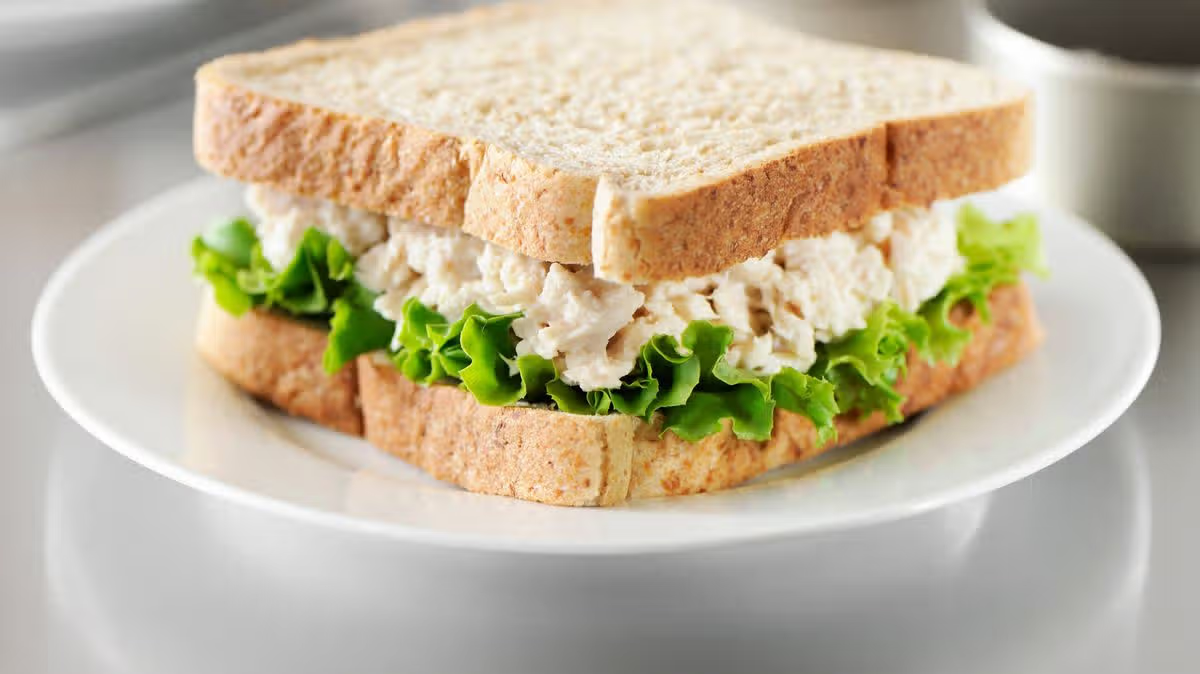
Tuna mayo sandwiches will be lighter and creamier if you add extra ingredient

Published

on

Wales Online

Adding an extra ingredient enhances the flavour and texture of the tuna filling

Tuna sandwiches are a classic favourite, loved for their simple ingredients and satisfying taste. Tuna, a creamy dressing and soft bread come together to make a comforting sandwich that works all year round.

Advertisement

They’re also quick and easy to put together, making them a great choice for a light lunch or a picnic.

Tuna works well with a wide range of ingredients, allowing for plenty of variety in flavour and texture. According to Princes, adding one extra ingredient to a tuna mayo sandwich makes all the difference.

That ingredient is crème fraîche, a thick, rich cultured cream that adds freshness, lightness and a gentle tang. The mayo provides a smooth base, while the crème fraîche loosens the texture and lifts the flavour. Together they create a filling that feels rich but not heavy.

Ingredients:

  • Your bread of choice
  • One tin of tuna chunks or steak
  • 65g mayonnaise
  • 25g crème fraîche
  • 15g spring onions, sliced
  • 15g diced gherkins
  • 10g diced capers
  • Half a lemon, juice only
  • 2g chopped dill
  • Salt and cracked black pepper to taste

Method:

Begin by weighing all your ingredients and finely chopping the spring onions, gherkins, capers and dill.

In a bowl, mix together the chopped ingredients with the mayonnaise, crème fraîche, lemon zest and tuna.

Season with salt and pepper, spread the mixture onto your bread of choice and squeeze the lemon juice over the top.

The crème fraîche adds a light, velvety texture and a gentle tang that cuts through the richness of the mayo, resulting in a fresher, more balanced filling. It works especially well with the spring onions, gherkins and capers.

Greek yoghurt can also work as a substitute for mayo in a tuna filling. It is lighter in texture, with a mild tang that brings out the tuna’s savoury flavour. It pairs particularly well with celery and red onion, and needs nothing more than a squeeze of lemon and a pinch of seasoning to finish.

Its considerably lighter texture and subtle tanginess enhance the savoury qualities of the tuna while simultaneously bringing out the flavours of any vegetables within the sandwich.

Source link

Advertisement
Continue Reading

NewsBeat

Amanda Owen shares life now at Yorkshire farm after Our Yorkshire Farm

Published

on

Amanda Owen shares life now at Yorkshire farm after Our Yorkshire Farm

The Yorkshire Shepherdess became a household name with former husband Clive Owen and their nine children on Channel 5’s Our Yorkshire Farm.

Although the programme ended in 2022, Amanda has continued sharing life in the Yorkshire Dales while farming and appearing on television with her family.

The 51-year-old revealed how she is spending her time as sheep are gathered from the moors for what she calls the “harvest of the Hills”.

(Image: CHANNEL4)

Posting photographs from the farm, Amanda said: “This is what we are on with at the moment.

Advertisement

“Gathering sheep in from the moors and picking up strays that other farmers have brought in.

“Trying to catch up with all the woolly wanderers and sorting out who is who. Who stays, who goes and where they go.”

The work will continue for months as the sheep are sorted for breeding, sale to other farms or the food chain.

Amanda added: “Over the next couple of months, there will be what is sometimes referred to as ‘The harvest of the Hills’.”

Advertisement

Breeding animals would be sold to farmers to replenish their flocks, while store animals would be reared for future sale.

Prime fatstock would go straight into the food chain. Amanda published the post on September 10.

Amanda Owen’s life now

Amanda remains closely associated with Ravenseat, the remote Swaledale farm where viewers first got to know the Owen family.

Amanda and Clive announced their separation in June 2022 after 22 years of marriage but have continued working together and raising their family.

Their nine children are Raven, Reuben, Miles, Edith, Violet, Sidney, Annas, Clementine and Nancy.

Advertisement

Amanda and Clive have also reunited on screen for More4’s Our Farm Next Door: Amanda, Clive and Kids.

The programme follows the family as they restore the derelict farmhouse known as Anty John’s while continuing their everyday farming lives in the Yorkshire Dales.

Channel 4 commissioned another two series in 2025, covering both series three and four, as work moved from the exterior of Anty John’s to the enormous job of transforming its interior.

The fourth series is now on its way.

Advertisement

Amanda is due to appear at a special Our Farm Next Door event at Everyman Northallerton on September 30, where fans will get an exclusive preview before the show returns to More4.

Source link

Advertisement
Continue Reading

NewsBeat

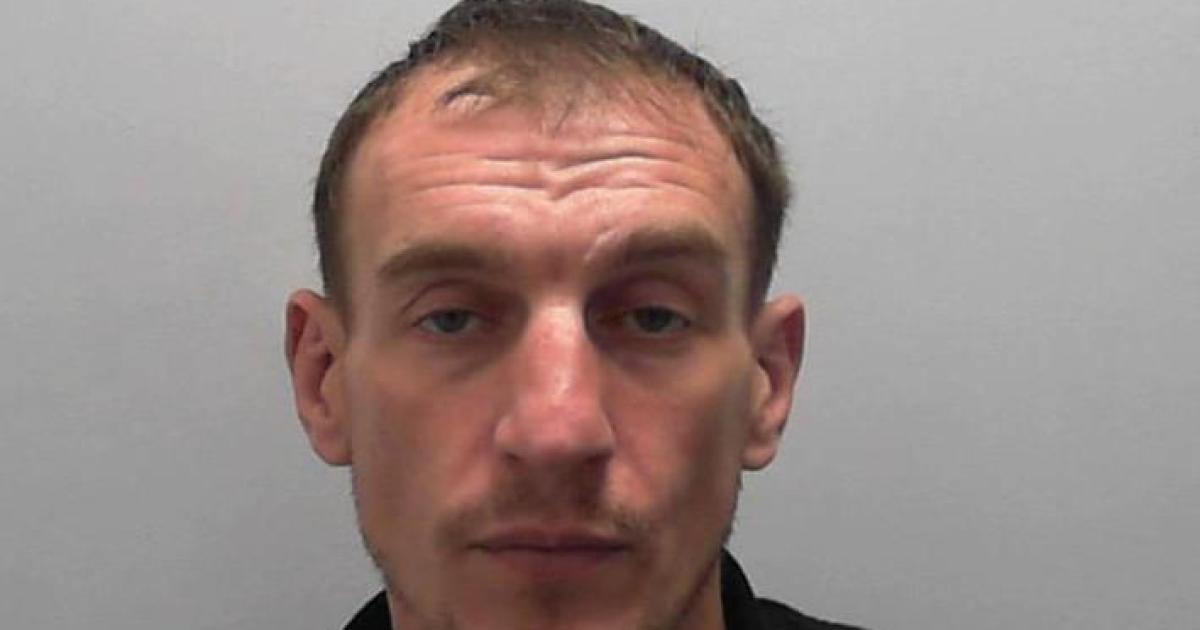
Homeless man broke anti-slavery law 3 times, court told

Published

on

Homeless man broke anti-slavery law 3 times, court told

Robert Chinchen, 37, climbed into a residential property in Queen Street, Scarborough, through a window at 3.20am, returned to the house at 7.30am four days later and seven days earlier he had been seen at a house in Elders Street, Scarborough, said Laura Peto, prosecuting.

York Crown Court heard he was forbidden to go to both properties under a slavery and trafficking risk order made by Scarborough magistrates in October last year after police convinced them he had been using violence and intimidation to get accommodation and vulnerable people needed protecting from him, the court heard.

Hours after police attended the Queen Street property, Chinchen was seen on the railway tracks at Scarborough Railway Station, claimed he had poured acetone over himself and threatened to set himself on fire.

Advertisement

Police persuaded him to leave the railway without carrying out his threat and arrested him, said Ms Peto.

Defence barrister Nick Peacock said: “He is homeless. He is attending properties where his friends live and trying to secure somewhere to live. Until this man gets somewhere to live these problems are going to persist.”

Chinchen, of no fixed address, pleaded guilty to three breaches of the order.

He has previous convictions for breaching the order, one committed on the day it was made, the court heard.

Advertisement

He was jailed for 32 months.

Mr Peacock said Chinchen had mental health problems, probably linked to his drug use.

“It is for this man to sort himself out,” he said.

“He has behaved himself while in custody. He has not taken drugs in prison.”

Advertisement

Chinchen was taking steps to improve himself while in custody.

Ms Peto said Chinchen was arrested on June 30 following a disturbance at the Elder Street house and released on bail.

On July 3, CCTV filmed him and another man outside the Queen Street house at 3.20am.

One man was on the shoulders of the other, opening a window and climbing in.

Advertisement

On July 7, CCTV caught Chinchen and two other men at the same house.

The slavery and trafficking risk order remains in force until the end of October 2030.

 Inspector Craig Regan, of the Scarborough neighbourhood policing team, said: “We welcome the prison sentence that has been handed to Robert Chinchen.

“It is the result of excellent police work and outstanding community partnership that we have built in Scarborough.

Advertisement

“This outcome sends a warning to others who target, manipulate, intimidate, and exploit vulnerable people. We will work with our partners and use every available power to rid you from our communities.”

Source link

Advertisement
Continue Reading

NewsBeat

Earl Spencer’s bombshell new book is stolen: Several copies of Earl’s explosive book about his sister Diana – and how King reacted to her death – are taken in raid on a Dutch lorry

Published

on

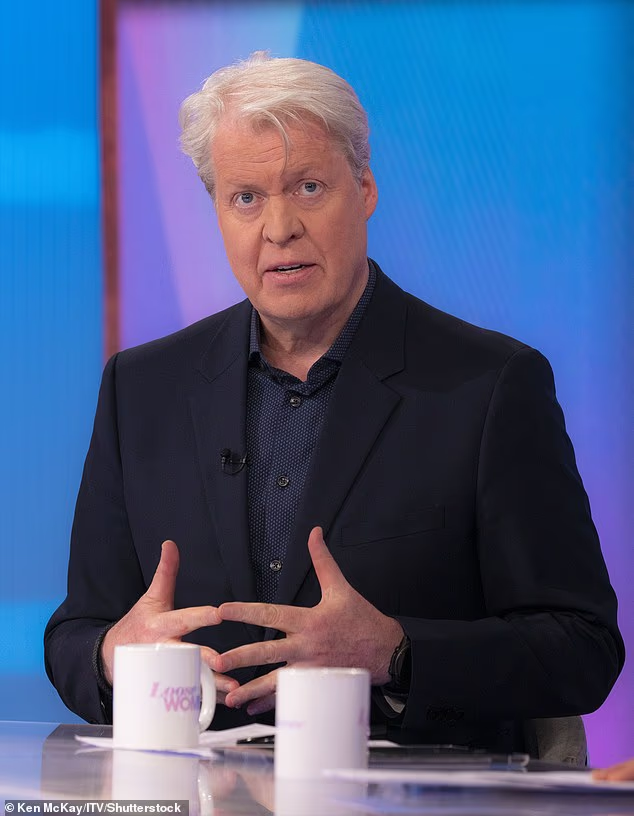
Earl Spencer's bombshell new book about his sister Princess Diana has been stolen (he is pictured in March)

Advertisement

Copies of Earl Spencer‘s sensational book about Princess Diana have been stolen from a lorry – just before its exclusive serialisation in the Daily Mail.

The memoir – Swan Song: Diana, My Sister – includes revelations about Diana’s deeply unhappy marriage with the then Prince of Wales.

It also describes the crisis that engulfed the Royal Family after her death in a car crash almost 30 years ago.

Last night a publishing insider said: ‘Earl Spencer has kept his silence for nearly 30 years and what he has to say about the King’s reaction when Diana died is utterly devastating.’ 

Advertisement

But, in an astonishing development, the Mail can reveal that a truck packed with thousands of copies of the book was broken into after it was parked overnight in a lay-by in the Netherlands earlier this week.

Just four copies, which had been wrapped in black plastic to hide their contents, were stolen in what publishing sources believe could have been an audacious plot to steal the highly anticipated book of the year before it hits the shelves.

Dutch police are investigating the mysterious break-in, with theories among industry insiders about who was responsible ranging from a gang of opportunistic thieves to a misguided, but highly informed, supporter of the Royal Family.

‘It’s extremely suspicious,’ one publishing source said last night. ‘Nothing like this has ever happened before. This is probably the biggest book of the year and the security surrounding it has been incredibly tight.

Advertisement

Earl Spencer’s bombshell new book about his sister Princess Diana has been stolen (he is pictured in March)

The front cover of the memoir, Swan Song: Diana, My Sister, is pictured. The book is set to be exclusively serialised in the Daily Mail

The front cover of the memoir, Swan Song: Diana, My Sister, is pictured. The book is set to be exclusively serialised in the Daily Mail 

The memoir includes revelations about Princess Diana's deeply unhappy marriage with the then Prince of Wales (Charles and Diana are pictured in 1985)

The memoir includes revelations about Princess Diana’s deeply unhappy marriage with the then Prince of Wales (Charles and Diana are pictured in 1985)

Advertisement

‘Every possible precaution has been taken to prevent it from being leaked ahead of its serialisation. Therefore this unprecedented incident is being taken extremely seriously.’ 

Swan Song is due to be published worldwide next Tuesday – in the UK by Penguin Michael Joseph, a division of Penguin Random House – with the Mail publishing an exclusive serialisation before the memoir is available in bookshops.

Described as ‘historic’ and ‘extraordinarily moving’, the memoir is a deeply personal account of Earl Spencer’s relationship with his older sibling and of her failed marriage. 

It also provides unprecedented insight into the seismic week following Diana’s death in August 1997, during which the House of Windsor was engulfed by a global wave of public grief and anger.

Advertisement

Buckingham Palace is understood to be braced for a string of shocking revelations that threaten to reopen the wounds of the former Prince and Princess of Wales’s highly acrimonious split and eventual divorce.

The Mail understands that a lorry with the books left a printing plant in central Europe on Monday on its way to a warehouse in the Netherlands before copies were distributed to Dutch bookshops.

At some point that evening the driver parked in a lay-by deep in the Dutch countryside to sleep. At around 8am he found the lorry had been broken into but, mysteriously, only a handful of wrapped copies of Swan Song were missing.

Shocked Penguin bosses in London were only told about the break-in at 3.30pm yesterday. 

Advertisement

It would not be the first time that a major book has been stolen just before publication. In 2003, a lorry with more than 7,000 copies of Harry Potter and the Order of the Phoenix, the fifth in the fantasy series, was stolen from a warehouse on Merseyside.

Ahead of the 30th anniversary of Diana’s death, Earl Spencer has vowed that his book, which will be published around the world and translated into 12 languages, will correct ‘untruths’ that have been told about his sister.

The Earl, 62, delivered a raw and defiant eulogy during Diana’s funeral at Westminster Abbey, which was broadcast to a worldwide audience of 2.5billion.

Advertisement

Source link

Advertisement
Continue Reading

NewsBeat

Heathrow expansion cannot go ahead without cutting flying emissions, say climate advisers

Published

on

Heathrow expansion cannot go ahead without cutting flying emissions, say climate advisers

Without the world reducing climate-warming emissions, most of which come from burning fossil fuels for power, homes, transport and industry, to net zero, global temperatures will continue to rise with worsening impacts including extreme heatwaves, floods, drought and rising seas.

Source link

Continue Reading

NewsBeat

Max Dowman-mania could make League Cup hottest ticket in town

Published

on

Max Dowman-mania could make League Cup hottest ticket in town

The players emerge from the Portman Road tunnel, Ipswich in their customary home blue shirts and white shorts, Arsenal in red and also white shorts. Last week Arsenal were made to change into red shorts to avoid a similar clash with Napoli, but apparently that’s no problem tonight. Modern football for ya!  

Here’s a reminder of the line-ups in full: 

Ipswich Town Walton; Furlong, Kipre, Greaves, Ouattara; Florentino, Nunez; McAteer, Mehmeti, Philogene; Flemming

Advertisement

Substitutes Palmer, Davis, O’Shea, Walle Egeli, Enciso, Clarke, Lukic, Maeda, Akpom

Arsenal Kepa; Zubimendi, Salmon, Gabriel, Lewis-Skelly; Guimarães, Merino; Dowman, Eze, Madueke; Gyokeres

Substitutes Meslier, Calafiori, Konsa, Tzolis, Odegaard, Ibrahim, Julienne, Saka, Havertz

Source link

Advertisement
Continue Reading

NewsBeat

North Yorkshire woman in her late 50s found dead in Harrogate

Published

on

North Yorkshire woman in her late 50s found dead in Harrogate

As a subscriber, you are shown 80% less display advertising when reading our
articles.

Those ads you do see are predominantly from local businesses promoting local
services
.

These adverts enable local businesses to get in front of their target audience – the local
community
.

It is important that we continue to promote these adverts as our local businesses need
as much support as possible during these challenging times.

Advertisement

Source link

Advertisement
Continue Reading

NewsBeat

Suffolk Police say boy, 3, who vanished from Brantham playground ‘won’t respond to his name’

Published

on

Daily Mirror

Suffolk Police has apologised for not updating the public on their search for missing three-year-old Noah, who was last seen near a playground in Brantham, Suffolk

More than 100 people have reportedly joined the search for a missing three-year-old boy in Suffolk.

Police are urgently appealing for help to locate Noah, who was last seen at approximately 3pm yesterday afternoon, Tuesday September 15. Noah is reported to have run off down an alleyway after visiting the playground in Merriam Close, Brantham.

Police described Noah as white, with curly ginger hair, and said he would not respond to his name being called, according to the BBC.

Advertisement

The youngster became separated from a relative after visiting the playground in Merriam Close, Suffolk Police said. Now more than 100 people are said to have joined the searches, the BBC reports.

A police spokesperson commented on the original Facebook post: “Thank you all for your comments, it is overwhelming to read the support people are offering.

“I apologise that we haven’t been able to reply sooner however I am sure you appreciate the volume of resources that are assisting with this and the sheer volume of contact from the public that our staff and officers are dealing with.

“As soon as there is any update, we will post on here. Thank you again.”

Advertisement

A spokesperson for HM Coastguard said: “We are assisting Suffolk Constabulary with an incident at Brantham by sending an HM Coastguard helicopter and Coastguard Rescue Teams from Felixstowe and Holbrook.”

Anyone who believes they have seen Noah is asked to contact Suffolk Police, quoting CAD 203 of 15 September.

The force can be contacted on its website or by calling 101. Alternatively, you can use the Live Chat service by clicking the icon at the bottom right corner of the Suffolk Police homepage here.

This is a Breaking News story. You’ll be more likely to see our stories when any big news breaks in future by simply by clicking this link. You can also join The Mirror’s WhatsApp Community or follow us on Google News, Flipboard, Apple News, TikTok, Snapchat, Instagram, Twitter, Facebook, YouTube and Threads – or visit The Mirror homepage.

Advertisement

Source link

Continue Reading

NewsBeat

UK in talks about joining global defence bank led by Canada

Published

on

Jack Clark, a man with short brown hair, dressed in a blue coat

The UK government is in discussions about joining a global investment bank, aimed at raising more money for defence spending.

Chancellor John Healey is considering a bid to join the Defence, Security and Resilience Bank (DSRB), not long after his predecessor Rachel Reeves rejected the idea.

Canada has been leading efforts to establish the bank, which supporters say would enable governments to borrow at lower costs to increase military spending.

Treasury officials stressed that no decision has been made. A government spokesperson said it was “fully committed to working alongside our international partners to scale defence industrial capacity.”

Advertisement

Before he cancelled commitments due to the death of his father, Prime Minister Andy Burnham had been due to meet Canada’s Prime Minister Mark Carney in the UK on Wednesday.

Nato Secretary General Mark Rutte is also travelling to the UK for his first meeting with the prime minister.

He is giving a speech in Oxfordshire, where he is expected to say the UK is “serious about security” and praise the country’s efforts supporting Ukraine.

He will also say that Nato will “not be intimidated by Russia’s campaign of hostile actions.

Advertisement

“Russia wants to stop us helping Ukraine – but their actions will only lead us to do more for Ukraine.”

It comes after Nato forces shot down a drone over Lithuania in the latest security scare on the alliance’s eastern flank, where tensions remain high amid Russia’s full-scale invasion of Ukraine.

And on Tuesday Denmark also accused a Russian warship of firing two emergency flares at one of its helicopters while it was tracking the vessel in the Baltic Sea.

Source link

Advertisement
Continue Reading

Trending

Copyright © 2025