Connect with us

Business

UK inflation rises to 3.1% as petrol prices and airfares surge

Published

on

Business Live

It comes ahead of Thursday’s Bank of England interest rate decision

For the first time in months, economists are unsure whether the Bank of England will cut interest rates.

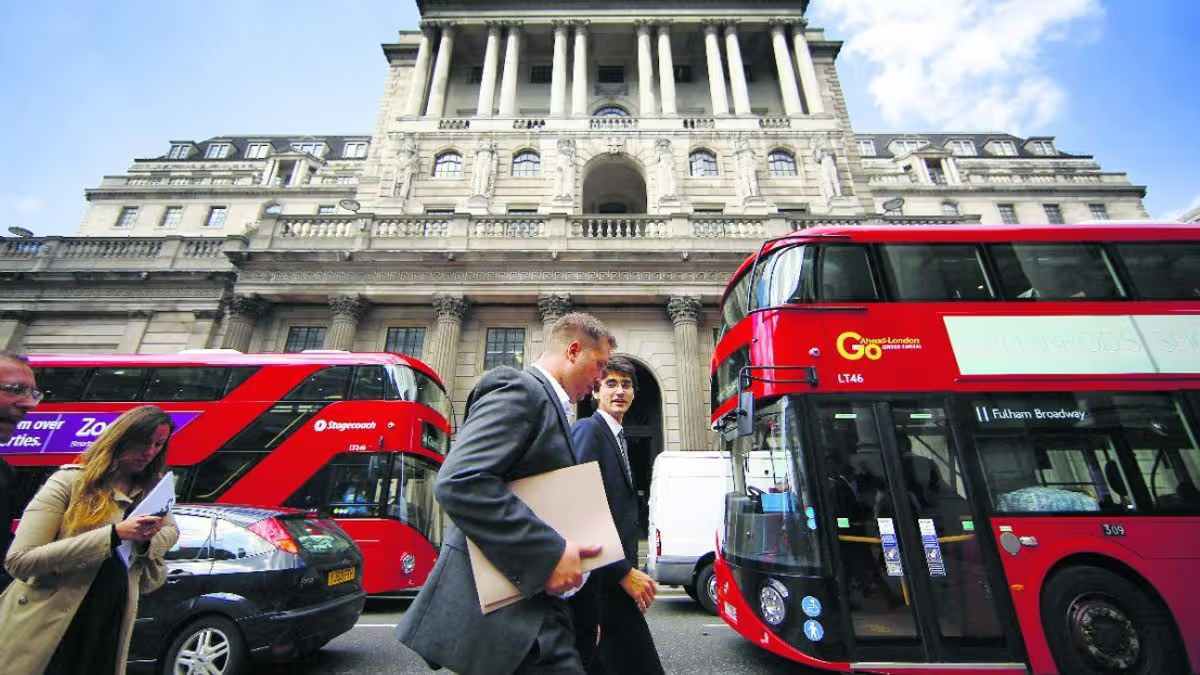
Bank of England building in London(Image: Bloomberg/Bloomberg via Getty Images)

Inflation edged upwards in the year to August, according to official figures, heaping further pressure on the Bank of England ahead of its interest rate decision on Thursday.

Advertisement

The Office for National Statistics (ONS) reported that consumer price index (CPI) inflation in the 12 months to August stood at 3.1 per cent, up from last month’s figure of 2.9 per cent.

The ONS also confirmed that services inflation held steady at 3.4 per cent, a closely watched measure that offers insight into underlying price pressures within the UK economy.

Food price inflation remained subdued at around 1.3 per cent, while core inflation, which excludes volatile items from the consumer basket, climbed by 2.6 per cent.

“Sharp price rises for petrol and diesel pushed inflation up again in August,” said Grant Fitzner, chief economist at the ONS, as reported by City AM.

Advertisement

“Higher airfares, particularly for long-haul journeys, also contributed to the increase. Rising crude oil and petrol prices increased the annual cost of raw materials and the price of goods leaving factories respectively.”

Chancellor John Healey said the war in the Middle East was “impacting on inflation worldwide”.

“We have taken early action to help families and businesses breathing space, by cutting tax on electricity bills, capping bus fares at £2 and lowering rates for pubs, social clubs and live music venues.”

Shadow chancellor Andrew Griffith argued that rising taxes on businesses and additional employment regulation meant costs were “being passed on to consumers in the weekly shop”.

Advertisement

“In difficult times, we need a serious government with a plan, not amateurs with a bunch of pet projects,” Griffith said.

The latest batch of pricing data could send policymakers on the Bank of England’s Monetary Policy Committee a fresh warning signal.

Inflation has remained above the Bank’s two per cent target for over two years, leaving some hawkish officials such as chief economist Huw Pill concerned about the Bank’s mandate to maintain price stability.

Several economists have called on the Bank to look beyond an energy price shock triggered by the Iran war that could drive prices up further in the coming months.

Advertisement

City AM’s Shadow MPC voted 6-3 in favour of holding interest rates unchanged at 3.75 per cent given wage growth had continued to ease and the labour market remained subdued.

Commenting on their decisions, Barclays chief UK economist Jack Meaning said he believed inflation to peak higher than previously anticipated in the coming months. Capital Economics’ Ruth Gregory suggested prices could be drifting towards an “adverse” scenario outlined by the Bank in the summer.

Should the Iran conflict continue to disrupt the supply of critical commodities into next year, oil prices could remain at levels unseen for years, potentially driving inflation to a peak of around 4.5 per cent.

Nevertheless, both Gregory and Meaning indicated that monetary policy remained restrictive, with limited evidence of second-round effects taking hold — a scenario in which accelerating wage growth drives prices higher, and vice versa.

Advertisement

“This is putting a huge amount of pressure on both the Bank of England and the government,” said Richard Carter, head of fixed income at Quilter Cheviot.

“With the Bank of England meeting tomorrow, today’s figures put a rate hike into the category of a genuine consideration, with at least one expected this year. Markets have begun to price in the potential for further rate hikes into 2027, highlighting that the UK has struggled to tame inflation recently and is not expected to do so soon this time around either.”


Continue Reading
Click to comment

You must be logged in to post a comment Login

Leave a Reply

Business

UK inflation pushed up by petrol and diesel price rises

Published

on

Jack Clark, a man with short brown hair, dressed in a blue coat

Rises in petrol, diesel and airfares pushed UK inflation up to its highest level in six months in the year to August.

Inflation accelerated to 3.1% from 2.9% , according to the Office for National Statistics (ONS).

The cost of filling up a vehicle soared in August as the conflict in the Middle East continued to disrupt global oil supplies. Petrol prices jumped to their highest for nearly four years, the ONS said, while diesel also rocketed.

Meanwhile, the cost of flying jumped during the key month for summer getaways.

Advertisement

Overall, motor fuel prices rose by 23% compared to August last year.

Oil hit more than $91 a barrel as the US-Israel war with Iran went on. That compares to around $73 just before hostilities began earlier this year.

As a result, average petrol prices have continued to climb and between July and August, they rose by 9.1p to 161.3p per litre.

“This is the highest price recorded since November 2022,” said the ONS. At that point, Russia’s full-scale invasion of Ukraine had pushed up global energy costs.

Advertisement

Capital Economics said, at this point, the effect of higher oil prices has not spilled over into other areas such as food and drink, where the pace of inflation remained at 1.3% in the year to August.

But its chief UK economist, Paul Dales, said: “Everyone knows that bigger rises in inflation are on their way.”

Grant Fitzner, chief economist at the ONS, said: “Rising crude oil and petrol prices increased both the annual cost of raw materials and the price of goods leaving factories respectively.”

Dales estimates that a combination of higher oil and gas prices and “the eventual ‘first-round’ effect of businesses passing on some of their higher energy costs” will lead to inflation peaking at 4.2% in January.

Advertisement
Continue Reading

Business

ECB’s wage tracker points to modest uptick in negotiated pay growth

Published

on


ECB’s wage tracker points to modest uptick in negotiated pay growth

Continue Reading

Business

BGC confirms Midland Brick's rationing

Published

on

BGC confirms Midland Brick's rationing

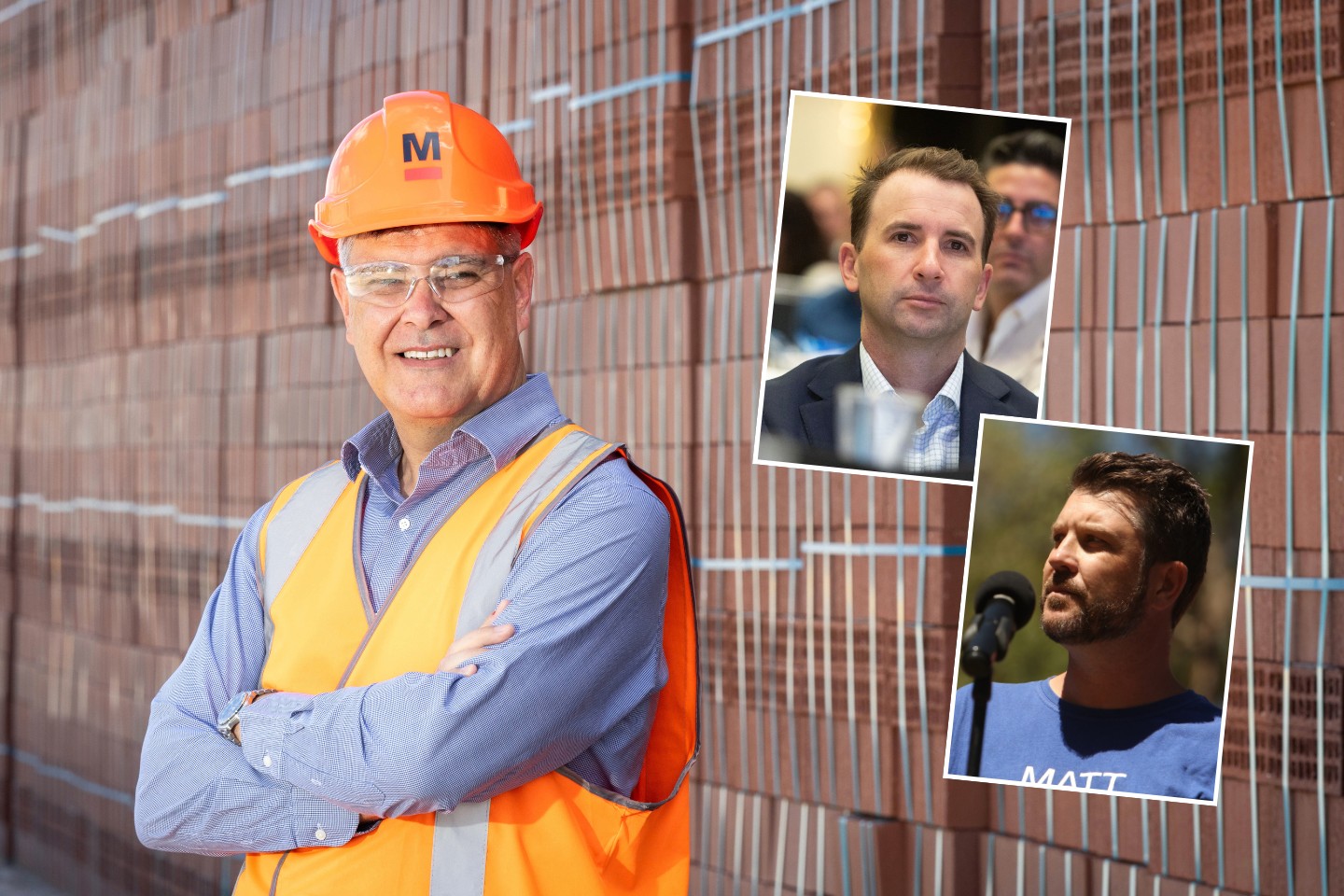
UPDATE: BGC chief executive Michael Allan has confirmed it intended to provide “greater clarity” to customers when its subsidiary Midland Brick announced it would begin rationing supply amid a shortage impacting all Western Australian builders using double brick.

Continue Reading

Business

Steven Bartlett OBSN venture launches with Authentic

Published

on

Steven Bartlett OBSN venture launches with Authentic

Steven Bartlett’s holding company Steven.com and Authentic Brands Group have launched OBSN, a joint venture that will invest in and build businesses around creators, with Bartlett saying he aims to deploy up to $400m in creator businesses over the coming years.

The venture, whose name is short for Obsession, was announced in New York yesterday. It was due to debut the same day at a creator-focused event in the city, where Maggie Sellers Reum, investor and founder of Hot Smart Rich, was to moderate a fireside conversation with Bartlett and Jamie Salter, founder and executive chairman of Authentic.

According to the two companies, OBSN is “designed for the world’s most ambitious and consequential creators”. At its centre is a platform providing news, analysis and live experiences for the creator economy, which the partners say is designed to become the sector’s “definitive voice and home”.

Free newsletters
Advertisement

The stories that matter to UK business, straight to your inbox.

Advertisement

How the partnership will work

Under the arrangement, Steven.com will lead OBSN’s media, technology, data and audience-growth operations. Authentic will contribute its expertise in brand building, product, licensing, strategic partnerships and global distribution.

The partners said every deal struck through OBSN would be tailored to the individual creator, whether that involves expanding a media business, developing products, growing licensing programmes, pursuing strategic partnerships or exploring investment and international expansion. They said the venture would provide creators with infrastructure, expertise and long-term partnership as well as capital.

The companies said they see opportunities to deploy hundreds of millions of dollars in the near term into creator-led businesses that meet their criteria.

“The next generation of global media companies and consumer brands will be built around creators. But a global audience of millions is not yet a company, and it certainly should not be the ceiling of a creator’s potential,” said Bartlett.

Advertisement

“Steven.com understands how to build media and audiences around creators, and Authentic understands how to build and extend brands around the world. OBSN brings those capabilities together so ambitious creators can reach the full scale of their ambition. We are aiming to deploy up to $400m in creator businesses over the coming years, OBSN is at the heart of that strategy.”

Matt Maddox, president and chief executive of Authentic, said: “Creators are redefining media and shaping the future of entertainment, with many poised to become multigenerational brands in their own right.”

He added: “By combining our complementary capabilities, we will identify, invest in and scale creator-led IP, capitalizing on a once-in-a-generation opportunity to strategically deploy hundreds of millions of dollars across the creator economy and build the brands of tomorrow.”

The companies behind OBSN

Steven.com is the holding company for Bartlett’s businesses, including The Diary Of A CEO podcast, marketing agency FlightStory, production business FlightCast and investment arm FlightFund. In October 2025 it was valued at $425m following investment from Slow Ventures and Apeiron Investment, with Bartlett retaining more than 90 per cent ownership. In December 2025, Bartlett also announced plans for Founded, a tech news website covering UK and US start-ups.

Advertisement

Authentic owns more than 50 brands, including Reebok, Champion, Ted Baker, Brooks Brothers, Hunter and Sports Illustrated, as well as rights linked to David Beckham, Shaquille O’Neal, Elvis Presley and Muhammad Ali. The company says it works with a network of more than 1,700 licensees and partners in more than 150 countries, and that its brands generate more than $38bn in annual systemwide retail sales. Its portfolio reaches nearly one billion social media followers, according to the company.

The move comes as advertising money shifts towards creators. Business Matters reported last year that creator platforms were forecast to overtake traditional media in global ad revenue for the first time.

OBSN said its creator economy media and events arm is already live, with more than one million followers on Instagram. The partners plan to expand it into new content formats, channels and live experiences, including festivals and official awards. Creators can register interest through the Obsession.com website.

Jamie Young
About the author
Advertisement

Jamie Young

Jamie Young is Senior Reporter at Business Matters, covering SME finance, employment law and Westminster policy since 2016. He has reported on every Budget and Autumn Statement since 2018, helped make sense of the ‘covid era’ and the bounce-back loan scheme from launch through the fraud investigations, and broke the magazine’s coverage of the 2024 late-payment reforms. He joined Business Matters straight from completing his BA in Administration from Exeter University and is NCTJ-qualified. Reach him at jyoung@cbmeg.co.uk

Advertisement

Continue Reading

Business

Solar Industries shares plunge 17% in 2 days. Why Jefferies, Nuvama still see up to 46% upside

Published

on

Solar Industries shares plunge 17% in 2 days. Why Jefferies, Nuvama still see up to 46% upside
Solar Industries shares fell another 4% on Wednesday to Rs 18,480 apiece on the NSE, extending their decline to more than 17% over two sessions as investors continued to digest the defence major’s Rs 12,951 crore acquisition of South Africa’s Omnia Holdings.

The stock had plunged nearly 14% on Tuesday following the announcement of the all-cash deal to acquire 100% of Omnia’s issued shares for $1.355 billion.

Despite the sharp selloff, Jefferies and Nuvama have advised investors to use the correction as an opportunity to add the stock, pointing to the potential benefits of the acquisition. The deal, Solar Industries’ largest overseas acquisition, is aimed at expanding its global commercial explosives and blasting solutions business, particularly across Africa’s mining markets.

The acquisition is expected to be completed in early to mid 2027, subject to customary conditions, including competition approvals under relevant jurisdiction. Upon successful completion of the transaction, Omnia will be delisted from the Johannesburg Stock Exchange and A2X Markets securities exchange.

Advertisement

Also read | Solar Industries shares crash 14% after acquisition of South Africa’s Omnia Holdings for Rs 12,951 crore

Jefferies on Solar Industries share price

Jefferies maintained its ‘Buy’ call for the shares of Solar Industries with a target price of Rs 28,160 apiece, implying more than 46% upside potential from the stock’s previous closing price of Rs 19,250 apiece. The international brokerage said the bulky acquisition could dilute the company’s FY28-29 EPS by 4-6%, and that for FY30 by 1% on normalised growth assumptions at Omnia. Defence share is likely to fall to 22-25% by FY30, as against 35-40% expected earlier.
However, Jefferies believes the correction offers a heightened opportunity to own a business with a 30% EPS CAGR potential and 25%+ ROE even considering the acquisition. Solar Industries saw its profits rise 10x in the last decade between market share gains globally in explosives, an acquisition in South Africa in 2024 and its foray in defence, the international brokerage noted, adding that management has a healthy track record on sound capital allocation and cash flow focus.“While share of defence on a consolidated basis will likely reduce, we believe that if the EPS CAGR and ROE profile of the consolidated entity remains at 30%+ and 25%+, respectively, any derating should be limited. Solar will likely move from a net cash entity to net debt:equity on consolidation of 1.2x in FY28, but this should quickly reduce to 0.5x by FY30 given strong cash flows,” Jefferies said.

Also read | Solar Industries to acquire South Africa’s Omnia for Rs 12,951 crore in biggest global expansion push

Nuvama on Solar Industries share price

Nuvama also has a ‘Buy’ call on the shares of Solar Industries with a target price of Rs 23,435 apiece, implying around 22% upside potential from the stock’s previous closing price. The brokerage said the acquisition will give Solar Industries enhanced control over Ammonium Nitrate sourcing, currently being externally procured, while expanding global reach.

Advertisement

Although its defence mix falls to 22% (post-deal) versus 27% of FY26 revenue, Nuvama views the debt-funded deal as pro-growth and self-financed.

Solar Industries share price

Solar Industries shares have dropped around 17% in one week and 7% in a month, but overall jumped more than 53% in 2026 so far. The stock has gained 27% in one year.

In the longer term, the shares of the explosives-maker have delivered explosive returns for its shareholders, rallying over 300% in three years and around 850% in five years. The company currently has a market capitalisation of around Rs 1.68 lakh crore.

Also read | Solar’s $1.3 bn bet is a turn for India’s defence-industrial complex

Advertisement

Disclaimer: This article has been written by Debaroti Adhikary, who is not a SEBI-registered Research Analyst or an Investment Adviser. Debaroti Adhikary and his/her ‘relative(s)’ (as defined under Section 2(77) of the Companies Act, 2013) do not hold any financial interest in the companies mentioned in this article as of the date of publication. The views/recommendations mentioned in this article, wherever applicable, are those of the respective SEBI-registered Research Analyst/brokerage and have been reproduced/reported with due attribution. They should not be construed as the views or recommendations of The Economic Times Digital or the journalist. Readers are advised to consider the original research report and make their investment decisions based on their own assessment. Brokerage disclaimers here.

Continue Reading

Business

A snapshot of today’s politics and parliament

Published

on

A snapshot of today's politics and parliament

Yes. Corporate subscriptions are available for teams and organisations, with discounted rates as user numbers increase. Pricing starts from $1,625 + GST per user.
Get in touch
to discuss the right option for your organisation.

Business News subscriptions are used by executives, investors, consultants and professionals who need to stay informed and make better decisions about the WA market. When you subscribe you’ll get

  • Unlimited access to WA’s most trusted business journalism
  • Data & Insights — detailed profiles of WA companies, people, projects and deals
  • MyBN — a personalised feed based on the companies, people and sectors you follow
  • Special publications and industry reports
  • Daily and weekly email newsletters

Data & Insights is a research tool built specifically for the WA market. It draws on more than 30 years of Business News reporting, updated regularly to reflect what’s happening now. Use it to:

  • Look up detailed profiles of WA companies, including financials, directors and ownership
  • Find decision-makers and track their career movements
  • Research live and completed projects across WA industries
  • Monitor deals, appointments and market activity
  • Access industry rankings and league tables

Data & Insights is updated daily by our dedicated research team, which uses the latest announcements, ASX filings and editorial coverage to keep our person, company, list and project records up to date.

Business News welcome all opportunities to make our dataset accurate, complete and current, so if you have an update request, please email the team at
general@businessnews.com.au, and we’d be happy to assist.

Advertisement

MyBN
is part of every subscription. It’s your personalised view of Business News. You can follow the companies, people, sectors and projects that matter to you, and get a news feed and alerts tailored to your interests. You can save articles to read later and retain only what you need.

Only subscribers have full access to all content on the Business News website.

Advertisement

If staying informed about the WA economy is part of your job, and/or you’re looking for networking opportunities in WA, Business News is built for you.

Business News subscribers are:

  • Executives and directors tracking competitors, clients and market movements
  • Investors and advisers researching companies, deals and industry trends
  • Consultants and professionals staying across sectors relevant to their clients
  • Business owners looking for leads, context and market intelligence

Most Business News publications cover national or global markets. Business News is focused entirely on Western Australia, which means the journalism, the data and the intelligence are all built around WA companies, people and projects — not adapted from a national feed. Data & Insights, included with every subscription, combines more than 30 years of WA-specific editorial research with live business data. There’s no comparable product for the WA market.

Advertisement

The Morning Digest Email provides a comprehensive wrap of the major headlines, relevant to WA business, and includes with a snapshot of the overnight news covering oil, gold and ASX-listed companies.

The Afternoon Wrap Email focuses on the news covered by our team of journalists during the course of the working day, including exclusive stories and analysis, all of which relates to WA business and the local economy.

The BN Weekender Email contains a wrap of the Business News from the week that was, highlighting the top stories in each area of WA business.
Sign up for free.

Advertisement

We’re happy to help.
Get in touch
and our team will come back to you.

Advertisement
Continue Reading

Business

K+S: The Upswing Is Not Indicative Of A Longer-Term Upside

Published

on

Potash Mineral Salt Ponds

K+S: The Upswing Is Not Indicative Of A Longer-Term Upside

Continue Reading

Business

Sensex rises 400 points, Nifty nears 23,250 as investors await Fed meeting outcome. What to expect?

Published

on

Sensex rises 400 points, Nifty nears 23,250 as investors await Fed meeting outcome. What to expect?
The Indian stock market rebounded on Wednesday, with the Sensex and Nifty rising around 0.5% each after Tuesday’s crash wiped out more than Rs 9 lakh crore from Dalal Street.

The Sensex rose over 400 points to above 74,400, while the Nifty 50 gained around 128 points to 23,247 as of 10:45 am. Broader markets remained weak, with the Nifty Smallcap 100 and Nifty Midcap 100 falling up to 0.8%.

Also read | Why Sensex crashed over 1,400 pts from day’s high, Nifty closed below 23,150 on Tuesday

Axis Bank, M&M, ITC and SBI shares rose around 2% to lead gains on Sensex; Reliance Industries, BEL, Adani Ports, HCL Technologies and Sun Pharma shares gained over 1% each. Bucking the trend, TCS, Eternal, NTPC and Tata Steel shares fell around 1% each.

Advertisement

Among the sectors, Nifty FMCG and Nifty PSU Bank indices gained more than 1% each, while Nifty IT, Nifty Metal, Nifty Pharma and few other indices slipped into the red. The overall market breadth remained negative, with NSE seeing 2,082 declines against 1,170 advances, while 108 stocks remained unchanged.

What lies ahead for Dalal Street?

The Federal Reserve is all set to announce the outcome of their FOMC meeting on Wednesday. The American central bank will likely raise its interest rate today, and deliver at least one more hike by the end of March, according to a majority of economists polled by Reuters.
Meanwhile, the weak market construct continues with elevated US bond yields and high crude prices contributing significantly to the weakness, said VK Vijayakumar, Chief Investment Strategist at Geojit Investments. So long as these two crucial macros remain high it would be unrealistic to expect a strong rebound in the market, according to the analyst.He noted that FIIs have been sellers in the market during the last 5 days, and with the US 10-year yield at 5%, they are likely to sell at every small rally in the market. In today’s meeting, the Fed is most likely to raise interest rates by 25 bps. However, this is unlikely to impact the market since it is already discounted by the market, Vijayakumar said, adding that more market-moving factors will be the Fed commentary on the evolving macro-outlook and the likely rate action going forward.

Also read | Paytm, MobiKwik, Pine Labs shares rally up to 6% after govt announces UPI fees above Rs 2,000. Why brokerages are bullish

“Even though the market is weak there are stock-specific opportunities in this market. Appointment of a new MD and CEO for HDFC Bank expected soon and the new MDR norms for digital transactions introduced by the NPCI are significant events that can influence the markets,” he added.

Advertisement

Technical view on Nifty

As feared, Nifty’s inability to float above 23515 has invalidated the upside attempt, said Anand James, Chief Market Strategist at Geojit Investments. He noted that the consequent days of closing below the lower Bollinger Band as well as yesterday’s bearish engulfing candle reflect strong bearishness but also point to peaking fear.

“We are still within the support band of 23,260-23,000, lending hopes of a revival, but a close below the same will bring 22,600-21,800 into the radar,” the analyst said, explaining the technical charts for the benchmark index.

Also read | Stocks to buy: BofA lists 22 Indian stocks as key picks as it turns bullish on Nifty after 2 years

Disclaimer: This article has been written by Debaroti Adhikary, who is not a SEBI-registered Research Analyst or an Investment Adviser. Debaroti Adhikary and his/her ‘relative(s)’ (as defined under Section 2(77) of the Companies Act, 2013) do not hold any financial interest in the companies mentioned in this article as of the date of publication. The views/recommendations mentioned in this article, wherever applicable, are those of the respective SEBI-registered Research Analyst/brokerage and have been reproduced/reported with due attribution. They should not be construed as the views or recommendations of The Economic Times Digital or the journalist. Readers are advised to consider the original research report and make their investment decisions based on their own assessment. Brokerage disclaimers here.

Advertisement
Continue Reading

Business

high street not Burnham’s to choose

Published

on

high street not Burnham's to choose

Sir Tim Martin, founder and chairman of JD Wetherspoon, has said it is “not up to” Prime Minister Andy Burnham to decide which shops operate on Britain’s high streets, in response to government plans to crack down on vape shops, gambling centres and other “rogue operators”.

In an interview with City AM, Martin said vape and betting shops were being made scapegoats of the government’s plans to revive town centres.

“I think it’s not up to the Prime Minister, or the leader of the opposition, to say what shops should be in high streets,” Martin told City AM. “In my view, if there’s demand for vape shops, and there are no other takers, then there’s no point in criticising vape shops.

Free newsletters
Advertisement

The stories that matter to UK business, straight to your inbox.

Advertisement

“A huge number of people vape, it’s legal, and they’re paying rent and rates, and they’re employing people. […] Vape shops and betting shops are legal businesses, and there’s no point in demoralising people who run legal businesses.”

Government plans for pubs and high streets

The government has said its 20 per cent reduction for pubs, social clubs and live music venues in England will take effect from April 2027, covering about 32,000 venues, with a typical pub saving an estimated £1,100 a year.

In August, the government set out plans under which vape shops will need planning permission to prevent openings near schools, and councils will get stronger powers to refuse new betting shops. It cited Centre for Social Justice analysis showing nearly 1,800 pubs and bars have closed since 2016, while vape and tobacco shops have risen to about 2,200.

Martin said he agreed with Mike Ashley, the Frasers Group owner, who attacked the Prime Minister’s high street policies as “populist”. Ashley told the Prime Minister the crackdown on vape and gambling shops was a pursuit of “good media soundbites” rather than an attempt to “address the real underlying issues of how the country’s financial affairs are managed”.

Advertisement

“I’m not a vaper,” Martin said. “I’m an ex-smoker, but so long as there are vapers and smokers in the land, and it’s not illegal, it’s pointless to suggest that high streets would be better off without those transactions taking place in the town centre.”

Tourist tax and VAT

Last week, the government set out plans to give England’s mayors powers to impose tourist taxes, with no cap, on accommodation fees. Hospitality leaders said the levy would add to the “significant tax burden” already facing the industry.

Martin said: “The UK has become a heavily taxed economy. If it’s a tax and it removes money from the public by meaning they have to pay more, I’m against it. I think we’ve had a lot of tax increases in recent years, and we don’t need any more.”

Pub sector leaders cite higher employer national insurance contributions, above-inflation minimum wage rises and supply chain costs driven up by the Iran war, and say pubs make small profits on the sale of a pint.

Advertisement

Martin said supermarkets had taken half of the beer trade away from pubs since he started in the sector, and that VAT was “the big disparity” between the two.

“We realise that the government would lose money if it stopped VAT on food in pubs, but I think it needs to rebalance taxes between pubs and supermarkets so that they’re approximately the same. Now they’re much higher in pubs,” he said.

On Thursday, Wetherspoon will cut the price of all its food and drink by 7.5 per cent to illustrate the savings it could pass on if the industry received a tax break.

Martin has backed a campaign led by chef Tom Kerridge for the VAT rate on hospitality to be cut from 20 per cent to 10 per cent. The campaign has faced accusations that the largest operators would keep the savings rather than pass them on to customers.

Advertisement

Martin, who bought his first pub in 1979, said conditions were “infinitely more difficult now” and that he would think twice about starting a pub company today.

“I think it’s quite important the type of business you get involved in, and with hindsight, maybe you wouldn’t go into a business whose main product has lost over half [of] its volumes to supermarkets,” he said.

Amy Ingham
About the author

Amy Ingham

Amy Ingham is a reporter at Business Matters, covering UK business news with a focus on breaking news, business policy, late payments and insolvency. She joined the magazine in 2026 after completing the NCTJ Diploma in Journalism at Harlow College’s journalism school. Her recent reporting includes British Steel’s nationalisation and its impact on SME suppliers, the decline in late payments by large firms, and Insolvency Service director disqualifications. Reach her at aingham@cbmeg.co.uk.

Advertisement

Advertisement
Continue Reading

Business

Northern Limited Term U.S. Government Q2 2026 Commentary (Mutual Fund:NSIUX)

Published

on

Northern Limited Term U.S. Government Q2 2026 Commentary (Mutual Fund:NSIUX)

Northern Trust Asset Management is a global investment manager that helps investors navigate changing market environments in efforts to realize their long-term objectives.

Entrusted with $1.2 trillion in assets under management as of March 31, 2024, we understand that investing ultimately serves a greater purpose and believe investors should be compensated for the risks they take — in all market environments and any investment strategy. That’s why we combine robust capital markets research, expert portfolio construction and comprehensive risk management in an effort to craft innovative and efficient solutions that seek to deliver targeted investment outcomes.

As engaged contributors to our communities, we consider it a great privilege to serve our investors and our communities with integrity, respect and transparency.

Northern Trust Asset Management is composed of Northern Trust Investments, Inc., Northern Trust Global Investments Limited, Northern Trust Fund Managers (Ireland) Limited, Northern Trust Global Investments Japan, K.K., NT Global Advisors, Inc., 50 South Capital Advisors, LLC, Northern Trust Asset Management Australia Pty Ltd, and investment personnel of The Northern Trust Company of Hong Kong Limited and The Northern Trust Company. Note: This account is not managed or monitored by Northern Trust Asset Management, and any messages sent via Seeking Alpha will not receive a response. For inquiries or communication, please use Northern Trust Asset Management’s official channels.

Continue Reading

Trending

Copyright © 2025