










It comes ahead of Thursday’s Bank of England interest rate decision

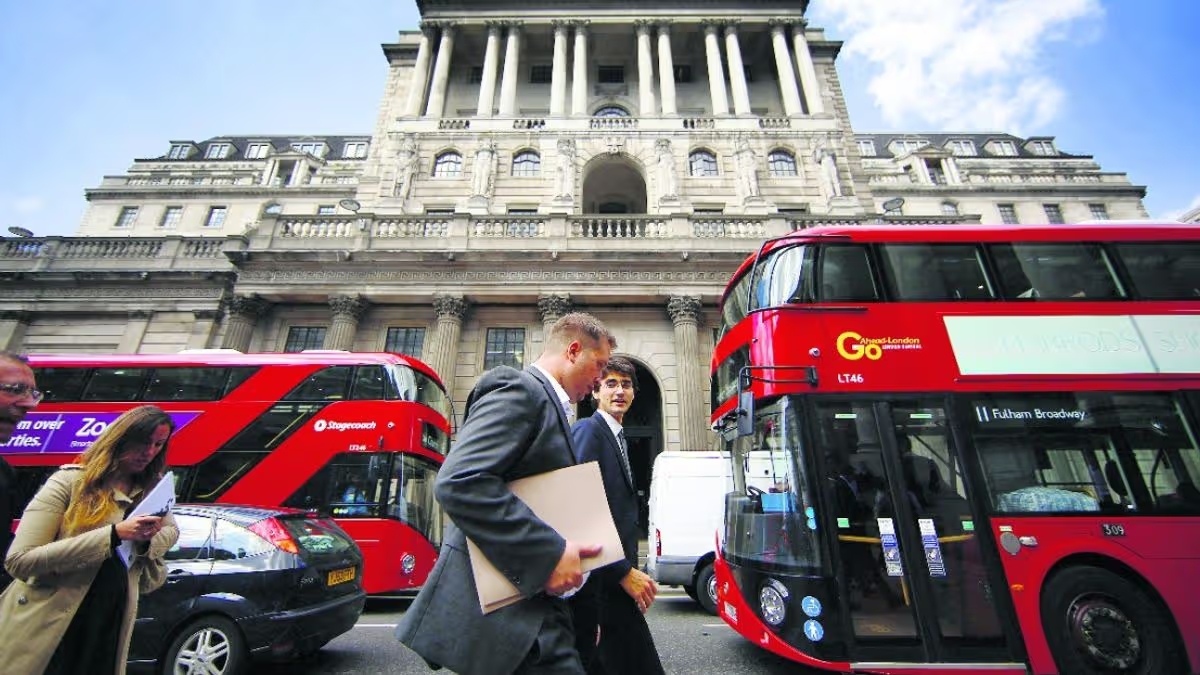
Bank of England building in London(Image: Bloomberg/Bloomberg via Getty Images)
Inflation edged upwards in the year to August, according to official figures, heaping further pressure on the Bank of England ahead of its interest rate decision on Thursday.
The Office for National Statistics (ONS) reported that consumer price index (CPI) inflation in the 12 months to August stood at 3.1 per cent, up from last month’s figure of 2.9 per cent.
The ONS also confirmed that services inflation held steady at 3.4 per cent, a closely watched measure that offers insight into underlying price pressures within the UK economy.
Food price inflation remained subdued at around 1.3 per cent, while core inflation, which excludes volatile items from the consumer basket, climbed by 2.6 per cent.
“Sharp price rises for petrol and diesel pushed inflation up again in August,” said Grant Fitzner, chief economist at the ONS, as reported by City AM.
“Higher airfares, particularly for long-haul journeys, also contributed to the increase. Rising crude oil and petrol prices increased the annual cost of raw materials and the price of goods leaving factories respectively.”
Chancellor John Healey said the war in the Middle East was “impacting on inflation worldwide”.
“We have taken early action to help families and businesses breathing space, by cutting tax on electricity bills, capping bus fares at £2 and lowering rates for pubs, social clubs and live music venues.”
Shadow chancellor Andrew Griffith argued that rising taxes on businesses and additional employment regulation meant costs were “being passed on to consumers in the weekly shop”.
“In difficult times, we need a serious government with a plan, not amateurs with a bunch of pet projects,” Griffith said.
The latest batch of pricing data could send policymakers on the Bank of England’s Monetary Policy Committee a fresh warning signal.
Inflation has remained above the Bank’s two per cent target for over two years, leaving some hawkish officials such as chief economist Huw Pill concerned about the Bank’s mandate to maintain price stability.
Several economists have called on the Bank to look beyond an energy price shock triggered by the Iran war that could drive prices up further in the coming months.
City AM’s Shadow MPC voted 6-3 in favour of holding interest rates unchanged at 3.75 per cent given wage growth had continued to ease and the labour market remained subdued.
Commenting on their decisions, Barclays chief UK economist Jack Meaning said he believed inflation to peak higher than previously anticipated in the coming months. Capital Economics’ Ruth Gregory suggested prices could be drifting towards an “adverse” scenario outlined by the Bank in the summer.
Should the Iran conflict continue to disrupt the supply of critical commodities into next year, oil prices could remain at levels unseen for years, potentially driving inflation to a peak of around 4.5 per cent.
Nevertheless, both Gregory and Meaning indicated that monetary policy remained restrictive, with limited evidence of second-round effects taking hold — a scenario in which accelerating wage growth drives prices higher, and vice versa.
“This is putting a huge amount of pressure on both the Bank of England and the government,” said Richard Carter, head of fixed income at Quilter Cheviot.
“With the Bank of England meeting tomorrow, today’s figures put a rate hike into the category of a genuine consideration, with at least one expected this year. Markets have begun to price in the potential for further rate hikes into 2027, highlighting that the UK has struggled to tame inflation recently and is not expected to do so soon this time around either.”






































You must be logged in to post a comment Login