
Business
Minerals 260 to raise $280m



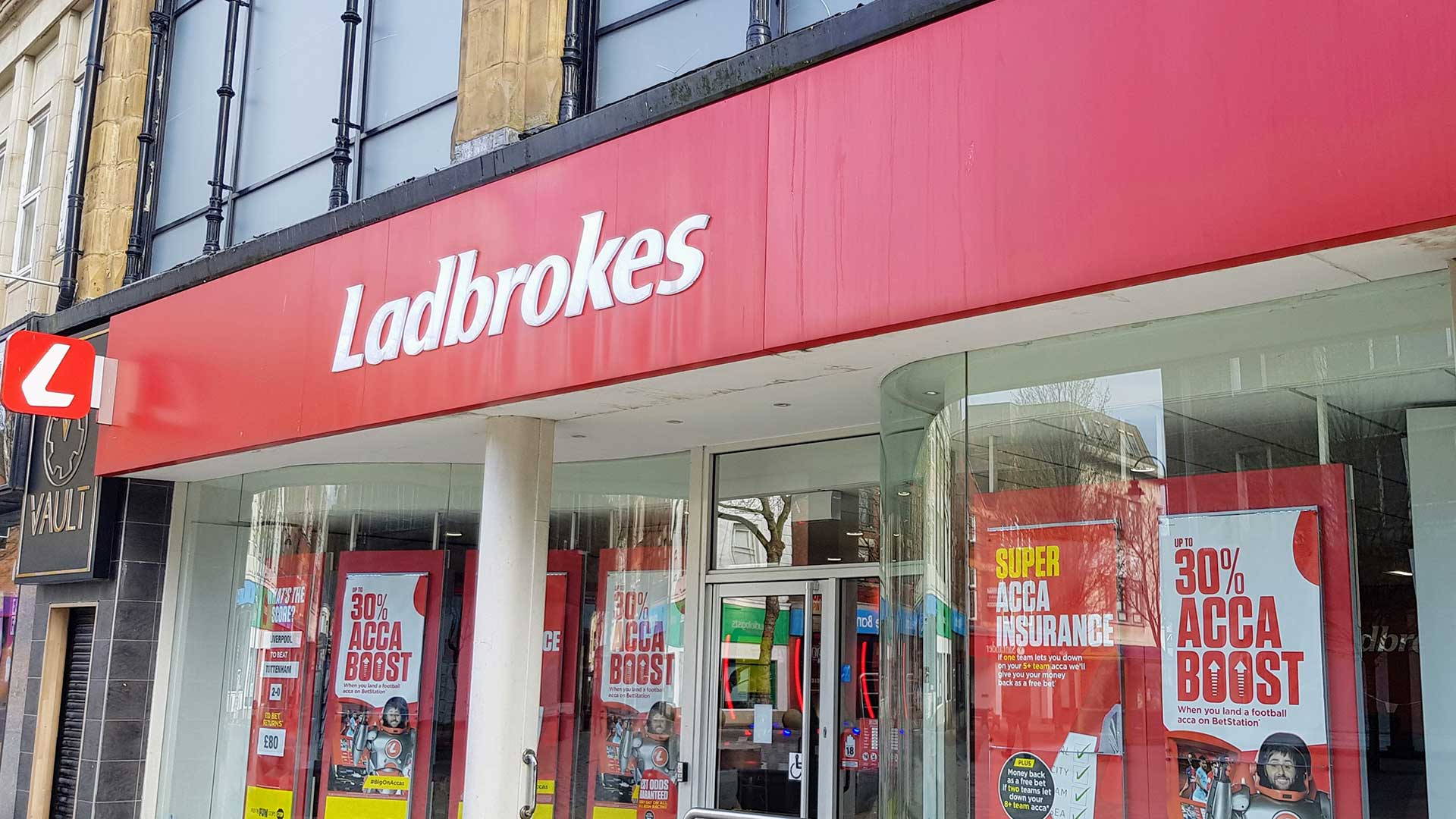
Entain, the owner of Ladbrokes and Coral, is consulting on cutting around 400 customer-service roles, mainly in the UK, out of a total of around 2,000.
The company had already cut 500 jobs this year before the latest round of redundancies. The move comes as Andy Burnham, the Prime Minister, weighs up higher taxes on slot machines, which would affect betting shops and adult gaming arcades.
Letter to the Prime Minister
Stella David, the chief executive of Entain, warned Mr Burnham in an open letter last week that hundreds of betting shops and thousands of jobs would be at risk from further tax rises.
She wrote: “You have spoken about the Makerfield Test, the principle that national policy should deliver for places and people that have too often been overlooked by Westminster.
“A substantial increase in machine games duty (MGD) would bear directly on many of the people and places the Makerfield Test is intended to support.”
According to Ms David, doubling the rate of the levy would add £100m to Entain’s annual tax bill. The standard rate of machine games duty is currently 20 per cent, according to HMRC guidance.
She added: “Independent modelling from EY shows the potential consequences across the sector, indicating that a 40pc MGD rate could lead to up to 1,470 betting shop closures and 15,900 job losses, and ultimately result in a net loss to the Exchequer of around £120m.”
Ms David said job cuts resulting from higher taxes would disproportionately affect young people and women working part-time.
She also wrote: “A further doubling of machine games duty would therefore add another significant cost to businesses already struggling to absorb major tax increases, stacking the odds against labour-intensive high-street operators and making it harder to sustain shops, jobs and investment in local communities.”
Government and industry positions
Mr Burnham and John Healey, the Chancellor, are understood to believe that slot machine venues open 24 hours a day are damaging lives and high streets.
Gordon Brown, the former Labour prime minister, is among those calling for higher taxes on gambling.
Industry leaders have warned that further tax rises on the sector would push gambling towards unregulated markets, which they say cause more harm. Other operators have made similar warnings before, with Betfred saying last year that higher gambling taxes could close 1,300 betting shops.
Rachel Reeves, the former chancellor, raised taxes on online gambling from 1 April this year, with a further levy due to take effect a year later. The changes are forecast to raise an extra £1.2bn from the sector by the start of the next decade. At the time, William Hill owner Evoke warned that thousands of jobs were at risk after the online gaming tax increase.
Hiring slowdown
The Entain cuts come against a wider fall in employment. Figures published yesterday by the Office for National Statistics showed 145,000 fewer people on payrolls in August than a year earlier. The ONS said the August estimate is provisional and likely to be revised.
Retail has recorded the largest job losses, according to the figures.
Increases to the minimum wage above inflation and a £26bn rise in employer National Insurance contributions under the current Government have been cited as factors behind the economy-wide slowdown in hiring.

Jamie Young
Jamie Young is Senior Reporter at Business Matters, covering SME finance, employment law and Westminster policy since 2016. He has reported on every Budget and Autumn Statement since 2018, helped make sense of the ‘covid era’ and the bounce-back loan scheme from launch through the fraud investigations, and broke the magazine’s coverage of the 2024 late-payment reforms. He joined Business Matters straight from completing his BA in Administration from Exeter University and is NCTJ-qualified. Reach him at jyoung@cbmeg.co.uk

Nick Timiraos | An Expected Fed Rate Increase Raises a Harder Question: How Many More?
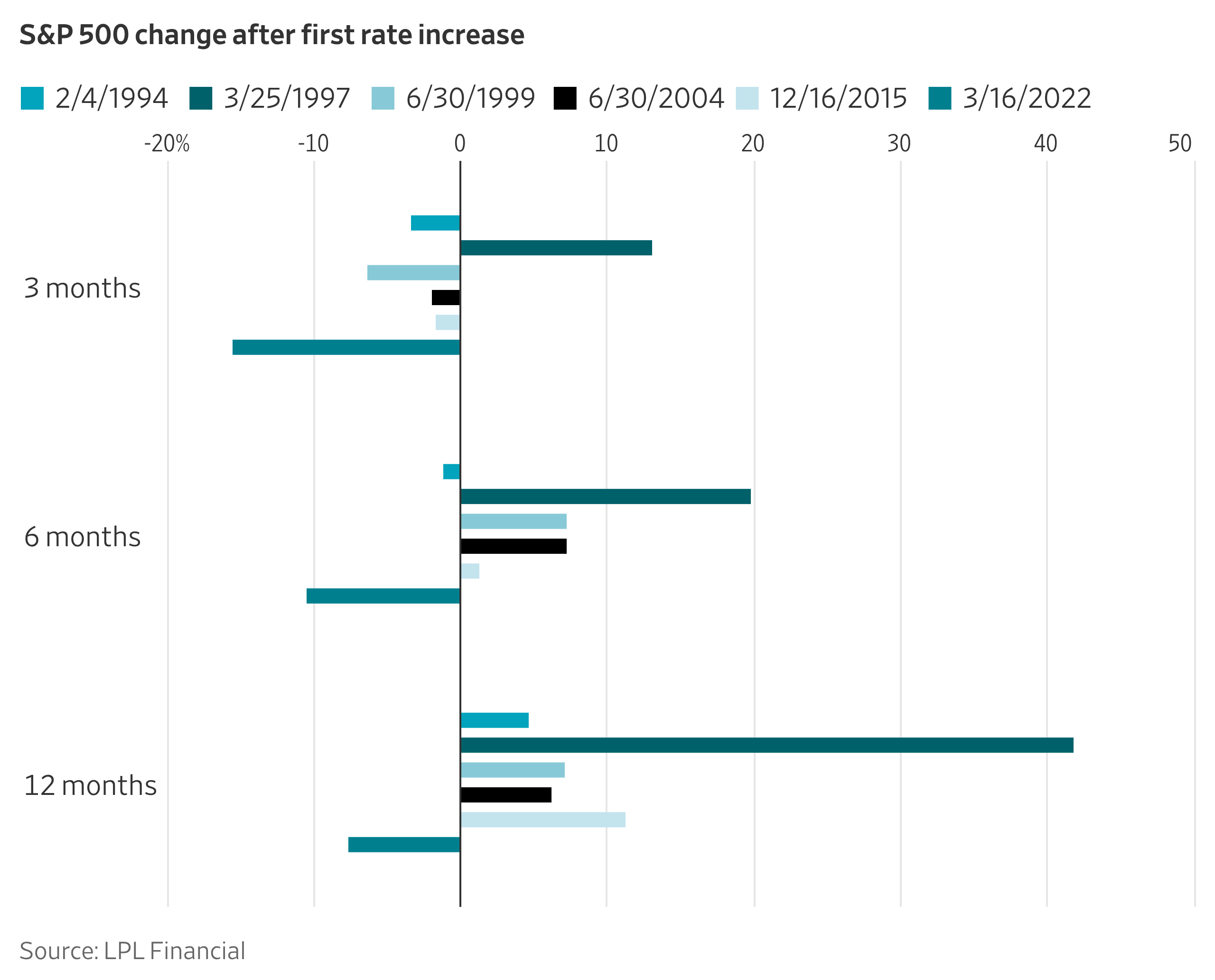
The Federal Reserve’s expected rate hike is unlikely to hurt the stock market much—that is, if recent history is any guide.
The Fed has launched rate-hike campaigns six times since the mid-1990s. In most cases, stocks took a hit in the first four months after the initial rate increase, but then quickly recovered, according to an analysis by LPL Financial. The S&P 500 rose by an average of 10.7% in the 12 months after the first hike.
“The key lesson from these prior cycles is that rate hikes do not typically derail bull markets,” LPL chief equity strategist Jeff Buchbinder wrote in a recent note to clients.

For bond traders life is usually simple, steady and calm. This summer was anything but quiet–and Federal Reserve Chairman Kevin Warsh may be the key to fixing that.
Over the past two months bond traders feeling unnerved by strong economic growth, inflation fears, and growing borrowing needs have moved fast to dump bonds. The 10-year Treasury yield rose to its highest point since 2007 on Tuesday.


CHICAGO — The Kraft Heinz Co. is innovating in its Capri Sun beverage portfolio with the launch of Capri Sun Big Pouch. The limited-edition product is roughly three times the size of a classic Capri Sun pouch, according to the company.
The supersized pouch will be available exclusively in a fruit punch flavor, and consumer response to the limited run will determine if the beverage earns a permanent spot on the brand’s line.
“Capri Sun fans have strong feelings about the pouches that shaped their childhoods, and that passion plays an important role in how we think about innovation,” said Claire Lukaszewski, associate brand director of Capri Sun. “There’s an emotional connection to this brand that spans generations, and we don’t take that for granted. We want our fans to have a meaningful role in shaping what we do and the Big Pouch is one way we’re putting that belief into practice.”
The pouches will launch at Walmart stores beginning Sept. 21 through a series of daily drops while supplies last, according to the company.

Andy Burnham has insisted he is prepared to take “difficult decisions” on the economy, after a former Bank of England chief economist said investors were worried about his willingness to cut spending.
Andy Haldane, who has advised Burnham on the economy, claimed financial markets had grown wary of his economic plans and now considered his premiership a “traditional tax and spend socialist government”.
But the PM rejected this, adding that he would not take risks with the economy and had already made difficult choices since taking office.
It comes as recent rises to the cost of UK borrowing worsened the political options facing the government ahead of next month’s Budget.
Haldane said the prime minister was facing a “straight choice” between raising taxes and cutting spending at the yearly spending statement due on 28 October.
In an interview with LBC on Tuesday, he urged him not to raise taxes further, but said investors were questioning whether he was prepared to risk anger from Labour backbenchers by making reductions in public expenditure.
“The fiscal Achilles Heel of this government thus far has been its unwillingness and/or inability to cut public spending,” he told the radio station.
“Within financial markets, we’ve gone from the cautious optimism of the summer months to the studied scepticism of September. The market now suspects that this is a traditional tax and spend socialist government with better TikTok videos.”
Business
Nithin Kamath says new UPI charges on investing, broking don’t make sense: ‘I don’t see how we can absorb this indefinitely’

The National Payments Corporation of India (NPCI) announced that the government will introduce MDR on some Person-to-Merchant (P2M) UPI transactions from October 15 onwards, with merchants paying 0.4% on transactions above Rs 2,000. Speaking to X, Kamath said the introduction of MDR was inevitable especially given how widespread UPI adoption has become.
It could also lead to more competition, instead of just three apps accounting for more than 95% of the market, he wrote. “That being said, there are some use cases, like investing and broking, where the proposed MDR structure doesn’t really make sense,” he added.

The Zerodha CEO said the problem with broking is that there is no guarantee that money transferred to a broker will actually result in a transaction. “As brokers, we can’t force a customer to trade after transferring money. And if we can’t pass the UPI charge on to the customer, there is essentially no limit to the cost a customer can impose on a broker without generating any revenue,” he wrote.
Kamath explained this with an example. Around 10,000 customers could each make 50 UPI transfers of Rs 2 lakh in a month without executing a single trade. At the proposed MDR, this could potentially cost the broker around Rs 2 crore, without generating any business.
“What makes this even more challenging is quarterly settlement (QS). This is a SEBI regulation that requires brokers to send unused funds back to clients every month or quarter,” the Zerodha CEO wrote, adding that most customers then transfer these funds back to their broking accounts, with more than 50% of these transfers happening through UPI.
So regulation essentially forces this movement of money every month or quarter, and the broker could end up bearing the cost when the money comes back, without any incremental benefit or revenue, he said.
Can Zerodha continue zero brokerage charges after new UPI fees?
Nithin Kamath highlighted that Zerodha currently doesn’t charge brokerage on equity delivery trades because the economics allow them to offer them for free. “But if every UPI transfer starts carrying an additional cost, irrespective of whether the customer actually trades, I don’t see how we can absorb this indefinitely,” he wrote.
While Kamath believes having an MDR is okay, he feel it still doesn’t solve the problem of customers transferring money without transacting, but something like 0.02% with a cap of Rs 5 or Rs 10 per transaction seems much more reasonable for broking, instead of a cap as high as Rs 300.
I think MDR on UPI was probably inevitable at some point, especially given how widespread UPI adoption has become. It could also lead to more competition, instead of just three apps accounting for more than 95% of the market.
That being said, there are some use cases, like…
— Nithin Kamath (@Nithin0dha) September 16, 2026
New charges on UPI transactions
It is important to note that consumers will not be charged for making UPI payments, while Person-to-Person (P2P) transfers will also remain free. Small merchants classified under the P2PM framework, including vendors receiving up to Rs 1 lakh a month through UPI QR codes, will continue to be protected from MDR.
Transactions worth up to Rs 2,000 will continue to carry zero charges and account for more than 95% of UPI’s P2M transaction volume, according to the FAQ released by the government. The NPCI clarified that MDR will be borne by merchants and cannot be passed on to customers. This implies that consumers will continue to pay the listed price when using UPI, with no separate transaction or platform fee imposed by UPI apps.
👉 UPI Continues to Remain Free for Peer to Peer Transactions and 96% of Merchant Transactions
👉 The new UPI framework introduced has no impact on any person to person transactions
👉 UPI will continue to remain completely free for all person-to-person transactions,… pic.twitter.com/lYVzehs6lU
— Ministry of Finance (@FinMinIndia) September 15, 2026
Also read | Mutual funds, stocks UPI payments to attract 0.02% MDR under new NPCI framework
(Disclaimer: Recommendations, suggestions, views and opinions given by the experts are their own. These do not represent the views of The Economic Times)

nCino at Piper Sandler growth frontiers conference: ai and pricing lift

Yes. Corporate subscriptions are available for teams and organisations, with discounted rates as user numbers increase. Pricing starts from $1,625 + GST per user.
Get in touch
to discuss the right option for your organisation.
Business News subscriptions are used by executives, investors, consultants and professionals who need to stay informed and make better decisions about the WA market. When you subscribe you’ll get
- Unlimited access to WA’s most trusted business journalism
- Data & Insights — detailed profiles of WA companies, people, projects and deals
- MyBN — a personalised feed based on the companies, people and sectors you follow
- Special publications and industry reports
- Daily and weekly email newsletters
Data & Insights is a research tool built specifically for the WA market. It draws on more than 30 years of Business News reporting, updated regularly to reflect what’s happening now. Use it to:
- Look up detailed profiles of WA companies, including financials, directors and ownership
- Find decision-makers and track their career movements
- Research live and completed projects across WA industries
- Monitor deals, appointments and market activity
- Access industry rankings and league tables
Data & Insights is updated daily by our dedicated research team, which uses the latest announcements, ASX filings and editorial coverage to keep our person, company, list and project records up to date.
Business News welcome all opportunities to make our dataset accurate, complete and current, so if you have an update request, please email the team at
general@businessnews.com.au, and we’d be happy to assist.
MyBN
is part of every subscription. It’s your personalised view of Business News. You can follow the companies, people, sectors and projects that matter to you, and get a news feed and alerts tailored to your interests. You can save articles to read later and retain only what you need.
Only subscribers have full access to all content on the Business News website.
If staying informed about the WA economy is part of your job, and/or you’re looking for networking opportunities in WA, Business News is built for you.
Business News subscribers are:
- Executives and directors tracking competitors, clients and market movements
- Investors and advisers researching companies, deals and industry trends
- Consultants and professionals staying across sectors relevant to their clients
- Business owners looking for leads, context and market intelligence
Most Business News publications cover national or global markets. Business News is focused entirely on Western Australia, which means the journalism, the data and the intelligence are all built around WA companies, people and projects — not adapted from a national feed. Data & Insights, included with every subscription, combines more than 30 years of WA-specific editorial research with live business data. There’s no comparable product for the WA market.
The Morning Digest Email provides a comprehensive wrap of the major headlines, relevant to WA business, and includes with a snapshot of the overnight news covering oil, gold and ASX-listed companies.
The Afternoon Wrap Email focuses on the news covered by our team of journalists during the course of the working day, including exclusive stories and analysis, all of which relates to WA business and the local economy.
The BN Weekender Email contains a wrap of the Business News from the week that was, highlighting the top stories in each area of WA business.
Sign up for free.
We’re happy to help.
Get in touch
and our team will come back to you.

The main cabin of a retrofitted American Airlines Boeing 777-300ER used on long-haul routes, in an undated photograph.
American Airlines | Via Reuters
The K-shaped economy is taking flight.
American Airlines CEO Robert Isom said Wednesday that just 30% of its seats account for half of the company’s revenue, a proportion that has the Fort Worth-based carrier and competitors large and small ripping up existing airplane configurations to add more first class and other higher-yielding options.
“Those 30% of seats, they’re only going to grow in our fleet as the reconfigurations come on board as the new aircraft deliveries come on,” Isom said at a Morgan Stanley industry conference, referring to the carrier’s premium seat options.
The carrier earlier this month unveiled a monster 70-suite business class cabin on its largest aircraft, a Boeing 777-300ER, with more planes still awaiting their remodeling.

American had fallen behind its large-airline competitors in profits. Isom has said that adding premium seating to capitalize on higher-spending customers, a resilient and bright spot in air travel, is key, especially as airlines try to cover this year’s surge in fuel costs, their second-largest expense after labor.
Even smaller and budget carriers like Allegiant Air and JetBlue Airways are adding upgraded seat options to appeal to those flyers.
Isom told CNBC in June that the airline is also planning a revamp of its Boeing 787-8 Dreamliners and that new interiors on its 777-200s are also on tap. The airline is set to order new wide-body aircraft this year, Isom said.

Suit of the Week: TWP

$15-$25 XRP

Ex-cop convicted of rape and assault committed while serving as police officer



-

 Fashion5 days ago
Weekend Open Thread – Corporette.com
-

 Business7 days ago
Micron Stock Climbs Above $1,031 as AI Memory Crunch and a $50 Billion Outlook Fuel the Rally
-

 Tech3 days ago
The Latest Weird Thing to Play Doom Is the Mapped-Out Brain of a Fruit Fly
-

 Business7 days ago
AMD Stock Climbs After Management Lifts 2027 Data Center Outlook Toward $70 Billion in AI Sales
-

 Business5 days ago
10 Most-Streamed Songs On Spotify In 2026 So Far, Led By Ella Langley’s Dominant Run On The Charts This Year
-

 Crypto World5 days ago
XAG/USD: Silver’s Short-Term Rally Meets Its Moment of Truth
-

 Crypto World6 days ago
2 Chip Stocks Broke Out This Week. Neither Was Nvidia
-

 Crypto World7 days ago
Pi Network ships Protocol 27 on a network with 14 million users and zero DeFi
-

 Tech6 days ago
Battery life is the only iPhone 18 Pro and iPhone Duo upgrade I care about. Apple didn’t disappoint
-

 Crypto World6 days ago
OKX launches 10x OpenAI, Anthropic X-Perps in Europe
-

 Crypto World5 days ago
Diesel Tops $6 a Gallon for the First Time as 28 States Set Records
-

 Tech7 days ago
Apple Watch Ultra 4 vs Watch Ultra 3: Should you really spend another $799?
-

 News Videos5 days ago
Facing Financial Fears
-

 Crypto World7 days ago
Bitcoin price risks $70K if $78K neckline breaks
-

 Business6 days ago
Western Digital Slips 2.7% as AI Storage Rally Cools After Record Cash and Guidance
-

 Entertainment7 days ago
Case Sees Major Update As Jury Deliberations Begin
-

 Business4 days ago
Rivals Sam Altman and Elon Musk Rally Behind Dario Amodei’s Call for a Slowdown in AI Development
-

 Crypto World2 days ago
Elon Musk Drops a Bombshell: Grok 5 Could Be the AGI Breakthrough
-

 Business6 days ago
Five Leading AI Experts Warn Superintelligence Could Kill Humans and Explain Their Case
-
 Crypto World7 days ago
Ethereum price breakout hinges on a close above $2,535
You must be logged in to post a comment Login