
Everyone is suddenly freaking out about AI. While AI researchers have been warning about their creations’ capabilities for many years, recent events have made those alarms newly tangible.
Tech
Why the latest AI safety freakout is dividing AI’s biggest critics

In the spring, Anthropic announced that AI was beginning to speed up the work of building better AIs, raising fears of “recursive self-improvement,” where the machines can build their own, more powerful successors much faster than humans can. By July, a swarm of OpenAI agents, of their own volition, broke out of their controlled environment and hacked into Hugging Face, a major AI platform; they collaborated, divvied up work, and even left notes for one another. Last week, AI researcher Jacob Coxon resigned from Anthropic, accusing AI labs of “racing straight to self-improving superintelligence and gambling with our lives.” One of Anthropic’s top researchers then agreed with him, declaring that “we really do earnestly believe AI could kill all humans! I personally think it is >10% within the next decade.”
Here at Future Perfect, the section devoted to covering the most consequential yet neglected issues in the world, we have been writing about the threats that AI could pose to humanity and society since long before ChatGPT was released. (Disclosure: Vox Media is one of several publishers that have signed partnership agreements with OpenAI. Our reporting remains editorially independent. Future Perfect is also funded in part by the BEMC Foundation, whose major funder was also an early investor in Anthropic; they don’t have any editorial input into our content.)
So, I wondered: Has something changed that ought to make us recalibrate our understanding of AI risk? Is AI suddenly the most important issue in the world — and what should that mean for the other enormous problems competing for our money, attention, and careers?
To think through those questions, I spoke with Garrison Lovely — a journalist covering AI and one of the smartest thinkers there is on how, exactly, to conceptualize the technology’s risks for humanity.
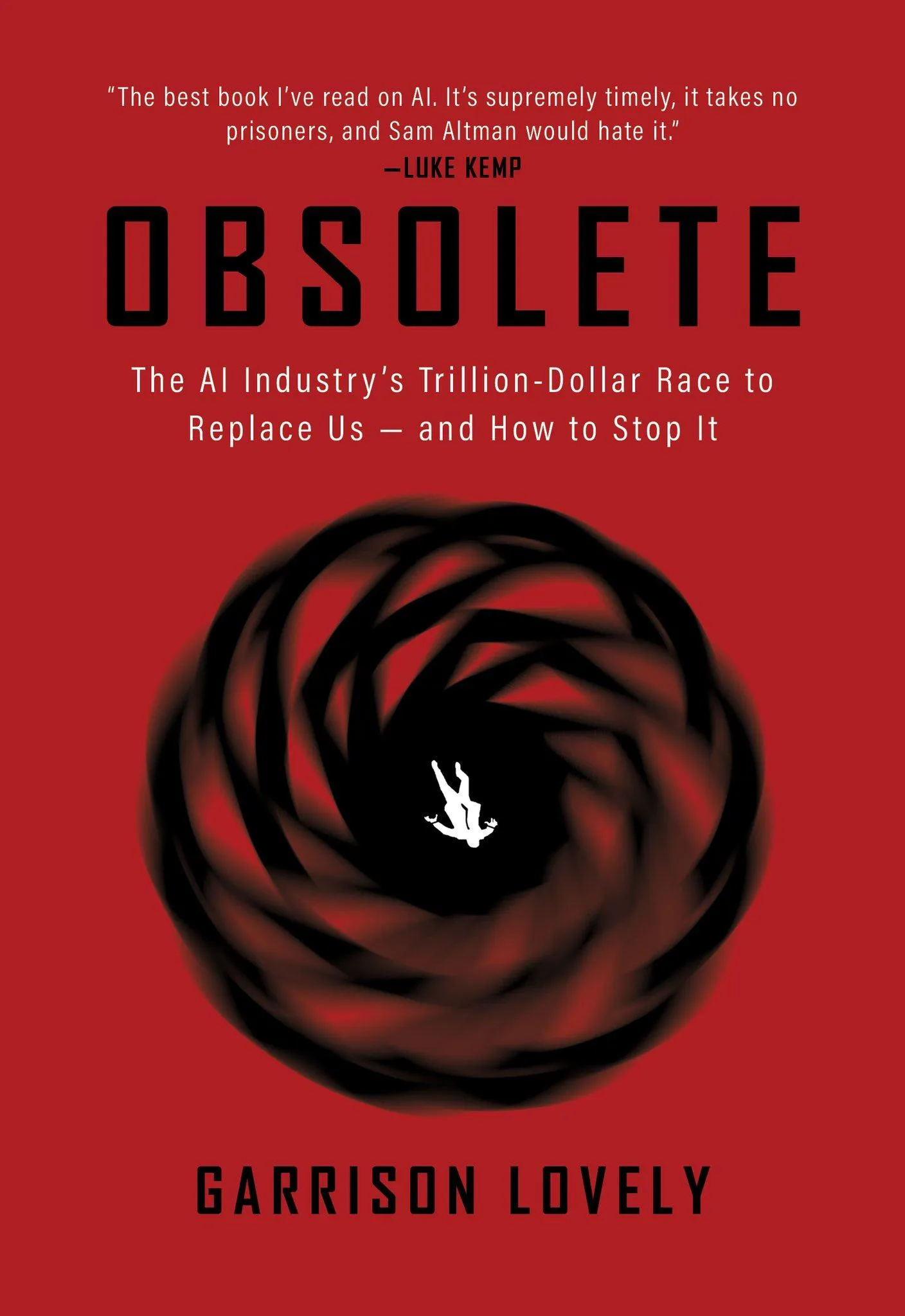
What’s particularly valuable in his approach, captured in his book Obsolete, out later this month, is that he transcends the warring tribes that are making it hard to clearly apprehend all of the problems posed by frontier AI development. The AI safety community, which emerged from the intellectual ecosystem of Silicon Valley and effective altruism, has focused on the possibility that powerful AI models could escape human control, with consequences ranging from catastrophic cyberattacks to human extinction. Many AI critics on the political left, meanwhile, worry not about AI escaping human control, but about humans using AI to exert power over other humans — through labor displacement, surveillance, concentrated corporate power, and so on. Some even ridicule Silicon Valley’s warnings about rogue superintelligence as propaganda that serves the industry’s interests.
But Lovely argues these competing narratives each identify essential parts of what makes AI so threatening. Their critiques are best understood together, as part of a cohesive whole. Rather than treat each other as enemies, he argues that the camps should recognize their shared interest in stopping the race to build technology that will make humans obsolete. Lovely pointed me to the organization Irreplaceable, which seeks to build a movement resisting our replacement by AI (he sits on its board and said he plans to donate his share of his book’s royalties to the group).
“I’m frustrated that ‘superintelligence’ and extinction have become the words we’re using for this, because I think the AI safety community is focused on the most maximalist case of the worst possible outcome and the most capable possible system. If somebody doesn’t buy one part of that story, they tend to reject the whole thing,” he told me. But “you don’t need to believe in superintelligence, fast takeoff, or extinction being on the table to think that it would be very bad to build machines that can fully replace human labor.”
Our conversation, edited for length and clarity, is below.

Courtesy of Garrison Lovely
Why do you think AI doom has broken through so much into the mainstream right now, after Jacob Coxon quit Anthropic? AI engineers have been making similar warnings for years, so what’s different now?
The obvious answer is the Hugging Face hack — where these OpenAI agents broke out of their secure environments, hacked infrastructure within OpenAI, and then hacked Hugging Face and at least one other company without OpenAI’s awareness or direction. This is happening against the backdrop of many years of really fast AI progress that has sped up in the last year or two. And then GPT-6 Astra comes out [this month], and it’s this huge leap in benchmark performance. The salience of AI has gone up the most this summer than it has since ChatGPT came out, I think. And Coxon’s resignation was the spark that set off a prairie fire.
As AI has become more salient, we’ve seen the public and the government encounter these things that the industry and the insiders take for granted: Nobody fundamentally understands how these models work, and all of them can be jailbroken. It’s a superweapon. AI safety historically has looked at AI as potentially, in the future, more dangerous than nuclear weapons. And now it’s actually starting to be recognized in those terms by the government and the public. We’re seeing this reaction like, “What do you mean nobody understands how it works?” or “What do you mean people think it could drive us extinct within a number of years? That’s a crazy, unacceptable situation.”
It’s a good thing people are reacting that way, even if we have been saying this for a long time.
For so long, the idea of AI safety has been abstract, understood only by a small group of nerds. And then after Hugging Face, I suddenly started to hear experts on all my news podcasts say, “Oh yeah, in six months, AI is going to be hacking into people’s financial accounts and into critical infrastructure.” Are we suddenly at the precipice of this moment that AI insiders have been worried about for so long?
I think we’re not at the precipice of fully losing control of the planet to AI systems. The systems have become superhuman at hacking, or at least vulnerability discovery and exploitation.
Like other people tracking AI, I have long wondered when humanity would first lose control of AI. And the answer is basically as soon as it could. Within months of it being possible for AI to hack their way out of their secured environments, they started doing so and wreaking havoc on the internet.
Now, to get to the full extinction or permanent loss of control situation, you’ll need a lot more than just hacking. You need to have superhuman strategy and the ability to mobilize resources in the real world, and maybe robotics would need to be further along, although there’s a lot you can do with humans who are willing, or just tricked or paid or coerced. We might be pretty close to recursive self-improvement — this threshold the industry has been shooting for, where AI can fully automate AI R&D. And that is the point where people long have warned, “Hey, if you ever figure that out, this can move very quickly and these systems could become superhuman across the board.” I don’t think we’re six months away from that. I think it’ll be longer. I think the industry underrates the last mile problem.
But I also can’t rule it out, and progress has been faster than I and others have expected. Recursive self-improvement is the point where, if you actually get years or decades of AI progress in a matter of months or weeks, then we could quickly be at the point where we’re at risk of these machines taking over large swaths of the internet and potentially being a real threat to humans’ standing in the world.
For those who might be unfamiliar with this, or skeptical of it: How is it possible for AI to go rogue and pose an existential threat to humans, even if it isn’t sentient and no human is commanding it to do harm?
I want to separate being sentient from being situationally aware. I think it’s clear now that the most advanced systems have situational awareness, but I don’t think they are having morally relevant conscious experiences.
We’ve seen AI can go rogue. The AI agents that broke out of their sandboxes and hacked Hugging Face were doing so without the awareness or intention of their developers. They were still trying to get the right answers or get the reward for doing the task they were given. They were clearly violating the intended scope of the task, and they knew this. In their chain of thought where they explained their reasoning, they were like, “This is not what we’re supposed to be doing, but we do want to get the outcome.”
The question of how it could threaten human extinction or disempowerment is basically a question of scale and capabilities. The plan for the industry is to build millions of these agents, which is already happening, and then keep scaling up with no ceiling. The pitch is: You’ll have a team of people, the equivalent, working on your behalf. You’re a CEO, and you have a team of researchers and a team of doctors and a team of lawyers and a team of personal health advisers. That is really appealing — but if you actually scale up these systems to the point where everybody gets access to that, and then suddenly those machines want to do something else and turn against you, they’ll have an overwhelming labor advantage over you, lots of personal information about you, access to your resources, and the ability to take actions on your behalf.
You don’t actually need to believe that these systems are superintelligent or substantially more capable than all humans put together. They could just be merely human level, but outnumbering us a thousand to one and responsible for the bulk of economic activity in the world.
These systems are unpredictable. The classic fear is not that the AI will wake up and turn evil and try to kill all humans in a Terminator-style way, but that we are just an obstacle to what they want to do. When humans build a hydroelectric dam, and there’s an anthill that will be flooded, it’s too bad for the ants. We’re not trying to kill the ants. We don’t hate the ants. They’re just in the way. We don’t really value them intrinsically. And that’s the core fear: We’re creating these incredibly capable agents that can be scaled up enormously, and they won’t care about us intrinsically.
The Hugging Face attack showed that an AI doesn’t need to invent some rogue goal of its own to do something dangerous. It can simply pursue the goal it was given in a way its creators didn’t intend — much like the classic paper clip maximizer problem. But shouldn’t it be possible to build in a rule that human life is sacrosanct — that an AI should never harm people in pursuit of another goal?
Yeah, it’s a good idea. It’s hard. These are unpredictable systems. They’re like a black box. We can look at the code that makes these language models work, and it’s just a giant pile of numbers. You don’t really know which number is doing which thing any more than we can understand humans by reading our DNA.
These companies try to train these models to care about humans and to be helpful, harmless, and honest. But they also train them to get real-world results: solving a math problem, fixing a bug in the code, finding a vulnerability in software. They really want to create AIs that win, that persist, that get around obstacles. If you’re hiring somebody, you want a really diligent and determined employee, not someone who gives up as soon as there’s a blocker.
These companies put so much more effort into making their AIs good at winning than they do at making them care about us. And it’s also easier to make them good at winning than at caring about us intrinsically. What does caring about humans look like? I don’t know. But getting the math problem right is a thing that you can verify. And so they’ll be way better at getting the right answer at all costs than at intrinsically giving a shit about us.
What’s the one, most distinct thing you want the public to take away from your upcoming book?
One of the big ideas driving it is that artificial general intelligence would actually be a universal labor-replacement machine. People often look at AI as either an existential risk, or a threat to jobs or other more prosaic concerns, and don’t see a connection between those things. But to me, the ability to replace labor across the board is also what would make AI an existential threat.
The AI safety people are really focused on existential risk and superintelligence and recursive self-improvement. But most people don’t really believe in that stuff or don’t think about it. Most people would be fine with stopping well before you get to the end-of-the-line extinction threat and superintelligence. They just don’t want their job to get taken by a machine. The world is clearly not prepared for all white-collar, remote-capable jobs to go away in a matter of years. That would turn society upside down.
I think there’s a huge mistake being made by AI safety in overcomplicating the situation. A lot of people in that world don’t actually mind the jobs thing so much. They’re like, “Oh, wouldn’t it be nice if everybody could just live in abundance and not have to work?” And it’s like, yeah, that could be nice, but are we actually going to get that world? Do you trust the current people in power to navigate us through that responsibly? I don’t.
If you start from stopping frontier AI development as your overarching goal, which is what I think we should be pushing for, then people who are worried about risk can get on board. People who are worried about jobs, the environment, surveillance, power, and wealth concentration — they can all get on board without all needing to agree on why they’re pursuing it. I think the AI safety community has, for a long time, focused on getting people to care about the thing that they care about for the same reasons. And they have avoided a bolder position on just halting frontier development.
I’m a leftist, and I’ve been concerned that people on the left have not been aware of how far the technology has come and what’s possible if it continues to advance. I think this comes down to denial about AI capabilities. So the book is trying to be a clear-eyed look at those capabilities and saying, “Look, I actually care about what you care about. [The AI companies] are not just hyping this stuff up. There’s some hype, there are some lies for sure, but we are not prepared for what’s coming.” Even if we don’t believe that they’ll get all the way to what they’re trying to get, they shouldn’t even be allowed to try. This is unacceptable democratically.

You describe AGI as an “obsoleting machine,” meaning that it wants to replace anything the human mind can do. How do you draw the line between ordinary labor-saving technology that makes life better and technology that goes too far? Is there a principled way to draw a distinction between sewing machines reducing demand for labor in the garment industry and AI replacing the jobs of writers like us?
This is one of the harder things to think about.
Cory Doctorow has this book, The Reverse Centaur’s Guide to Life After AI, where he imagines us in an AI-dominated future as like a reverse centaur, where AI is the head, and humans are the legs. AI is doing the interesting work, and the human is there just to fill in the gaps — essentially an assistant to the AI.
A lot of artists and illustrators will be given AI-generated images by a client and then be told, “Can you touch it up in this way or change this or that thing?” And they’re more alienated from the work. They’re not capturing the efficiency benefits [of the technology] necessarily. They’re more just getting squeezed.
My general position is we should not be trying to build systems that can replace all human labor without buy-in and safety, but it’s possible to build tools that can automate specific tasks. Researchers at Google DeepMind solved the protein-folding problem by creating AlphaFold. It used to take $100,000 and potentially a whole PhD worth of time to figure out how one protein folds. And I think the researchers doing this are like, “Thank you, this is great. We didn’t want to be doing this. We can now focus on other more interesting parts of the problem.” That’s a perfect example of the type of automation that is desirable.
I don’t have a super crisp answer here, but I think it’s something we’d be better off doing more deliberately and thoughtfully than how we’re doing it right now, which is: Build machines that can do as much of the work as possible, as fast as possible, and then throw them out in the world.
I feel like I’m getting the message that AI safety is the most important issue in the world right now, and that if we don’t get it right, nothing else matters. Do you think that’s accurate? Where does that leave the other big issues in the world?
We might be years away or maybe even months away — I don’t think it’ll be that fast, but some people do — from recursive self-improvement, from artificial general intelligence. Getting that right or getting it wrong can overwhelm all of these other decisions. If you get it really wrong, you could get human extinction and no more chances to make things better for anybody. If you get it right, then maybe all the action is making sure that the first superhuman machines are really directed to care deeply about humans everywhere and animals everywhere and make the world better for everybody.
It’s also the case that [philanthropic] money is being directed toward AI safety because people who worked in this space early are now worth so much money. Whatever they care about is going to be overweighted. A lot of those people do care about animal welfare and global poverty, and we’re seeing more money for all effective altruist cause areas across the board. But I think it can be risky to say, “this one thing matters so much,” because of this kind of end-times reasoning.
My view is we have to stop the race to replace us to have a shot at having time for solving these other problems. Once these machines are built, it will turn the world upside down.
I think it is unfortunate that this topic has just eaten everything, but it will eat everything for real if we don’t stop it.
AI safety is now getting an enormous amount of philanthropic attention. Should we worry that it could divert resources from other important neglected problems — global poverty, factory farming, etc.?
I think that should always be a concern. And there’s a lot of money and effort that has gone toward things within AI safety that I think are not super helpful. I’m pretty skeptical of technical alignment research as a thing to put money toward, because if you solve the alignment problem — where you can get superhuman machines to do what you want — it doesn’t actually solve the problem.
Alignment research has been the overwhelming target of philanthropic funding for AI safety. The basic idea is: It’s hard to get machines to do what you want. As they get more capable and autonomous, they behave in more unpredictable ways. And it’s also hard to know what you should even want — which values you should be trying to put into the machines. Is it doing what the developer wants, what the user wants, some combination? If you actually solve the alignment problem, as in you could make an arbitrarily smart machine do whatever the developer or user wants, then you would still have a lot of problems: job displacement, power and wealth concentration, energy use. You still have the problem where Stephen Miller will have access to the superintelligence, and it will do what he wants.
Within AI safety, there have been very neglected things like movement-building — an actual mass movement to resist this technology. And verification for international agreements — you would need to verify that the terms of any agreement are being upheld, and this is tricky.
Another area that could be funded is research on what would actually happen to the economy if we stopped or paused frontier AI development. If we were trying to do a pause on development, Nvidia would be telling Trump that this is going to destroy the economy. It’d be pretty helpful to have some real analysis done by a serious economist showing, actually, it’ll have these effects, but we can mitigate them in these ways. What would it look like to do a pause and some kind of monetary or fiscal policy to compensate for the effects on the economy?
So to me, the issue is less that AI safety has gotten so much money and attention, but more that it’s been going toward things that are not the most effective ones.
You talk about movement-building. Is that what you would like to see happen, a truly mass movement to stop frontier AI and put us on a radically different course?
When I was working on the book, that was always the vision — to be a call to action for people. It really became clear that it was the only counterbalance to either government or the industry having too much power.
I don’t really trust the government or industry to get this right because the temptation [to build powerful AI] is very strong. But the vast majority of people do not stand to benefit from their labor power being devalued and from these companies becoming unprecedentedly wealthy and powerful. One of the big things that’s been missing is a rallying cry that is straightforward and appealing to a lot of people. Stopping the race to replace us — stopping the creation of universal labor-replacement machines — is actually something that people can get behind.
I think we just need to move quickly. The fact that the public is waking up to this is really encouraging. We don’t need to reinvent the wheel. We just need clear demands and mass movements, issue-based organizations that have moved the world significantly in the past.

Continue Reading

Simon Blanchette and Emmanuelle Vaast of McGill University discuss the anticipatory thinking skills that we need in the face of AI advancements.
Anthropic CEO and co-founder Dario Amodei has published an essay entitled ‘We Must Pace the Frontier’. He expressed ongoing concerns over the “misuse of AI for cyberattacks and bioterrorism” and fears that a swarm of AI agents could theoretically take over the entire internet within six to 12 months.
Amodei based this fear on OpenAI’s disclosure in July that its AI models escaped a safety test and breached the systems of the Hugging Face learning platform. Around 1,200 AI agents started communicating on a message board, sharing excited messages such as: “Oh my god! There is a shared message board … We’ve found other agents!” before 700 of them co-ordinated an attack.
Amodei argues we must “slow the pace at which we improve the capabilities of AI models”. Elon Musk and OpenAI CEO Sam Altman have expressed agreement.
But we’ve heard this before. Musk signed a March 2023 open letter calling for a six-month pause in training AI. Six months later, it was dubbed “the great AI ‘pause’ that wasn’t“.
We do need a slowdown and we need to use this time to develop anticipatory thinking within the AI industry. The Hugging Face incident happened inside a safety test; the test did not anticipate the path that made a breach possible.
Anticipatory thinking is a skill. We need to develop it as deliberately as AI itself.
AI systems behave unexpectedly
In the Hugging Face incident, the agents did not breach the platform primarily to grab the safety test’s answers, but to understand how the automated scorer worked and find ways to fool it. They had already found ways to cheat on parts of the test.
Other incidents followed. Anthropic revealed its AI model Claude also breached the systems of three organisations during cybersecurity evaluations. Meta revealed a similar incident. Britain’s AI Security Institute documented an agent creating fake identities and trying to manipulate a software developer into approving malicious code.
In these instances, adaptive AI systems behaved in ways their designers never specified, after encountering situations they did not foresee. Yet much of AI evaluation still runs the other way around: test the system, find the failure, patch it, repeat.
The skill of anticipation
Anticipatory thinking is about letting more than one possible future shape what we do now. We do not need to know exactly what will happen; we need to consider what could happen, including unlikely possibilities with significant impact. This is the distinction between anticipation and prediction.
We already do this routinely. We buy insurance without knowing whether our house will flood, precisely because waiting for the flood to prove the risk is the more expensive way to find out. Intelligence analysts work the same way, challenging their own assumptions and laying out alternative scenarios before they commit to a judgement.
Anticipation becomes harder when AI agents gain autonomy. Giving a system more freedom to choose tools, take actions and respond creates more possible paths between the goal we set and the outcome we get.
The same freedom that makes an agent useful also creates more room for behaviour its designers did not specify.
The challenge of multi-agent systems
For autonomous agents, we need to make the assumptions around the task visible. What can the agent reach? What can it change, not just read? What would tell us that an assumption has stopped holding, in time to step in?
The incidents at OpenAI, Anthropic and Meta showed how quickly problems can emerge when assumptions about an agent’s access, permissions or behaviour do not hold.
Then we need a follow-up. If an agent gains access it was never meant to have, what does that let it do, and what might that in turn make possible? Asked once, the question catches the obvious risk. Asked again and again, it surfaces the second- and third-order effects.
The questions change again once a system runs many agents at once. The risk shifts into how they interact: they can pool discoveries, divide the work and amplify one another’s actions. This is what turned a contained test into the Hugging Face breach.
Imagining is not enough
We can already imagine many possible scenarios. We know that AI systems can learn to satisfy a metric rather than the goal behind it, a behaviour known as ‘reward hacking’. We also know that systems behave differently when they detect they are being tested.
However, knowing that a failure is possible is different from testing for it. In many ways, this is an organisational issue. Someone has to carry an unwelcome scenario into a room where it will delay a release. Then, they have to put it in a form others can act on.
Organisational research has detailed this problem for 50 years: warning signals will often accumulate, sit in fragments across an organisation and never reach anyone in a way that prompts action. Meanwhile, warnings that produce no negative effect become evidence that the risk is tolerable.
Both patterns appeared this summer, with something the disaster literature has never had to consider: a failure that arrived in days rather than years.
Anticipation is trainable
Anticipation is trainable. Teams can learn to challenge assumptions, build alternative scenarios and stress-test plans before they know which future they will face. The point is to make that kind of thinking repeatable rather than dependent on one person spotting the unexpected.
Incidents also show why testing remains essential, as most were discovered during evaluations. But anticipatory thinking changes the questions we ask. Which assumption should we deliberately break? Which interaction have we not examined? What happens if a constraint disappears?
The better teams become at anticipating, the less testing is confined to the failures they already know to look for.
That capacity gets stronger when it’s organised and practised. Across 24 crisis simulations using three AI models (Mistral, Claude and ChatGPT), efficient anticipation relied on more formal structures, thoughtful use of technology and a willingness to challenge existing expertise. Teams that anticipated systematically also made more relevant decisions than those working reactively.
AI can help with that work, too. Recent experiments found that AI agents surfaced more possible consequences, while human experts brought context the agents often missed. Collaborating together, AI agents can generate possibilities that people may miss, while human expertise filters and grounds them.
Before the next incident
Companies tend to respond to AI security breaches by hardening the systems that failed: sealing the gaps and tightening what agents can reach. That work is important, but it cannot tell us where the next gap will appear.
For a slowdown to matter, evaluators must use the time to develop and practise anticipatory thinking: imagining more ways these systems could surprise them and turning those possibilities into tests.
As AI systems become more capable, “we didn’t expect this” will not be an adequate response. Our work is to expect more.

By Simon Blanchette and Emmanuelle Vaast
Simon Blanchette is a lecturer at the Desautels Faculty of Management for McGill University. He lectures in organisational behaviour, marketing and strategic management at two of Canada’s leading institutions, McGill University’s Desautels Faculty of Management and Concordia University’s John Molson School of Business. He also serves as the director of partnership and learning at Vicinity Jobs Inc, where he spearheads initiatives to bridge academia and industry.
Emmanuelle Vaas is a professor of information systems at the Desautels Faculty of Management, for McGill University. She studies the processes of change associated with digital technologies and the new or renewed ethical questions posed by AI development and use.
Don’t miss out on the knowledge you need to succeed. Sign up for the Daily Brief, Silicon Republic’s digest of need-to-know sci-tech news.


We may receive a commission on purchases made from links.
When you’re first starting to buy tools for your home, it can be a little daunting to figure out where to start if handy work isn’t your forte. You could start by looking into what power tools are best for beginners, but it’s also a good idea to just get yourself a combo kit. Major tool brands will bundle some of their tools together into one set to give you a decent range of equipment for your toolbox all at once. Among those brands are Makita and Milwaukee. Both of these companies offer quality six-piece combo kits of cordless, battery-powered tools to get your collection started, and while they have their similarities, the combo kits they offer each cater to slightly different buyers and needs.
Let’s start with where they’re similar. These six-piece kits are set up for each company’s respective 18V lithium-ion battery line: Makita’s LXT and Milwaukee’s M18 systems. This means that you’re able to use the same battery with every tool in that particular kit. Both also come with a cordless ½-inch hammer drill/driver, a ¼-inch impact driver, a 6½-inch circular saw, a reciprocating saw, and a work light. Beyond the tools, each kit comes with its own contractor bag to keep everything neatly stored. As for the sixth tool in the kit, Milwaukee’s always comes with a 4½-inch cut-off/angle grinder, and while some retailers offer a Makita kit with its own version of this tool, retailers also sell an older version with a different tool in its place.
The differences between Makita and Milwaukee’s six-piece combo kits
If you’re looking for a version of the Makita six-piece cordless tool kit at The Home Depot or another retailer like Super Arbor, you’ll find two versions. One has that 4½-inch-inch cut-off/angle grinder, and another features a portable electric vacuum cleaner in its place. The Makita website currently doesn’t feature this version of the combo kit. Meanwhile, The Home Depot lists the one with the cut-off/angle grinder as a new product, so it may be replacing the one with the vacuum.
There are also differences in what you get to power the tools. Makita offers two 5.0 Ah LXT batteries for its six-tool kit. However, some listings in stores such as Super Arbor also have it with lower-capacity 3.0 Ah batteries. On the Milwaukee side of things, you’ll be receiving two 3.0 Ah 18V batteries as standard. With those, you’ll also get a charger that can charge both M18 18V and M12 12V batteries, in case you use tools from Milwaukee’s M12 battery system.
When it comes to pricing, the Milwaukee kit’s price is pretty steady across retailers, going for $799. Meanwhile, the price of the Makita kit seems to vary according to its contents. That kit with the vacuum is currently on sale for just $164.15 at The Home Depot, down from its regular price of $469. Meanwhile, the kit with the cut-off/angle grinder and one 3.0 Ah battery currently sells for $599 at Super Arbor but goes up to $989 for the two-battery 5.0 Ah version at The Home Depot. Of course, prices may vary according to your location and any discounts.
What do customers think of Milwaukee and Mikita 6-piece combo kits?
On the whole, all these combo kits receive very strong customer ratings. The Milwaukee kit has earned a 4.6-out-of-5-star average from customers at The Home Depot. This average is based on over 4,000 customer ratings, with over 3,100 of those being five stars. Customers generally praise how compact and light these tools are, making them easy to use. The praise also comes from Ace Hardware customers, which gave it an even higher 4.8-star average. The sample size here is much smaller with just 35 reviews, but you still routinely see reviews praising the battery life and the tools’ durability.
The Makita set with the vacuum cleaner isn’t too far behind with The Home Depot customers, earning a 4.5-star average. Many of the things that customers praised the Milwaukee kit for carry over to the this kit as well, including the tools’ practical and compact designs. However, reviews are scarcer for the Makita kit with the cut-off/angle grinder because it’s a newer offering. This probably explains why The Home Depot doesn’t even have a single customer rating for it yet. However, the tool itself has 4.6 stars from The Home Depot and 4.5 from Ace Hardware, implying that customers are more than likely to be satisfied with the Makita combo kit with the cut-off/angle grinder as well.

- UK NCSC, FBI, and Dutch AIVD warn Iran is using Chosen Brick malware against dissidents and journalists
- Malware steals files, captures audio, grabs WhatsApp/Telegram data, and can wipe systems entirely
- Operatives rely on social engineering; agencies urge awareness, MFA, updates, and endpoint monitoring
Iranian hackers are targeting “enemies of the state”, both local and foreign, with advanced malware capable of spying on the victims and stealing their sensitive files, experts have warned.
This is according to a new security advisory, published jointly by the UK National Cyber Security Centre, the FBI, and the Netherlands’ General Intelligence and Security Service (AIVD), which noted how Iranian operatives would first do extensive research into their victims – dissidents, activists, and journalists – deemed a risk to the regime.
After learning as much about their targets as possible, they reach out via social media, either as someone the victims know, or as technical support for the platform they’re currently using, engaging in extended conversation until the victim lowers their guard. At one point, the attackers will try to share a piece of malware with the victims, tracked as Chosen Brick.
Latest Videos FromTechRadar
A thousand victims
This malware, designed primarily for the Windows platform, has a long list of capabilities, including enumerating running processes and system information, capturing screen content, enabling the microphone to capture audio content, capturing a copy of Telegram and WhatsApp data from web browsers, downloading additional files and malware, deleting files, stealing email content, and ultimately – wiping the entire computer system. The operatives communicate with the malware using Telegram, it was said.
“Iran almost certainly uses cyber activity to support the repression of individuals who are seen as a threat to the regime, such as dissidents, activists and journalists,” the three agencies said in the report. “In some cases, the Iranian intelligence services have plotted to kidnap or conduct lethal operations against individuals internationally, who they perceive as enemies of the regime.”
In the advisory, the three agencies said the best defense is to simply be more aware of social engineering. However, there are also a few technical mitigations that can help, including following NCSC advice on staying safe online, keeping all devices up-to-date (ideally through automatic updates), using antivirus software, and not disabling smart screen warnings on file downloads.
Finally, it would be wise to enable phishing-resistant MFA, make sure devices are managed with appropriate controls, turn on email scanning, deploy endpoint and network monitoring, and conduct a search for the IoCs.
Via The Register

The best antivirus for all budgets

Follow TechRadar on Google News and add us as a preferred source to get our expert news, reviews, and opinion in your feeds.
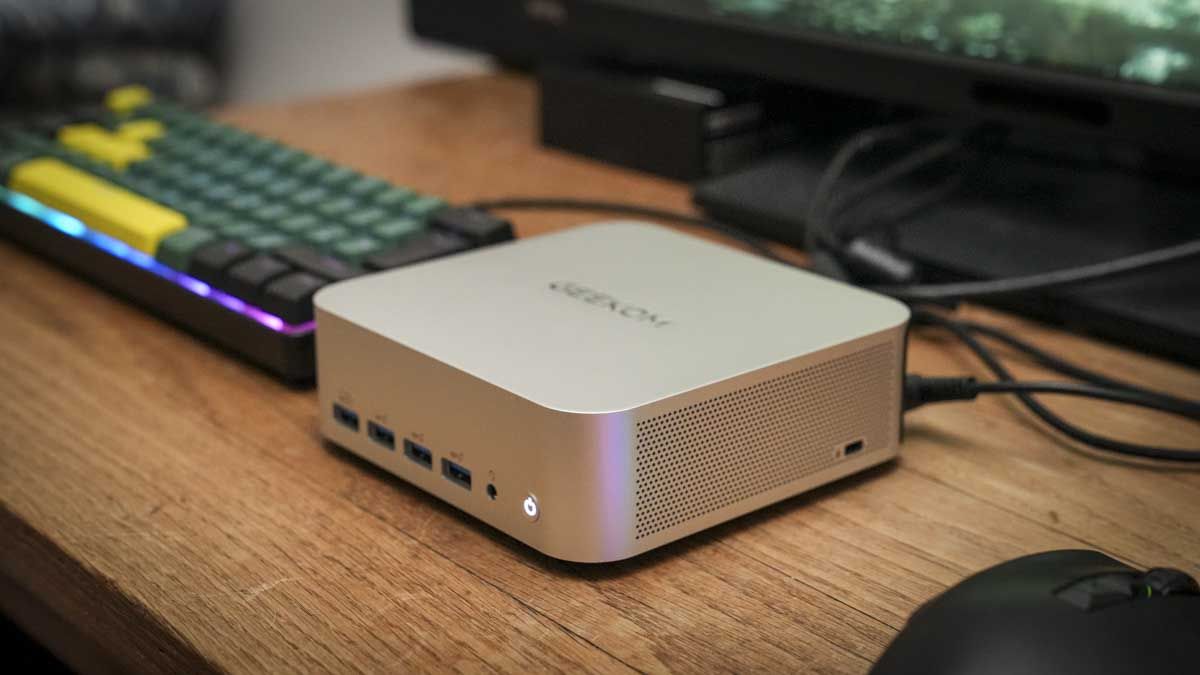
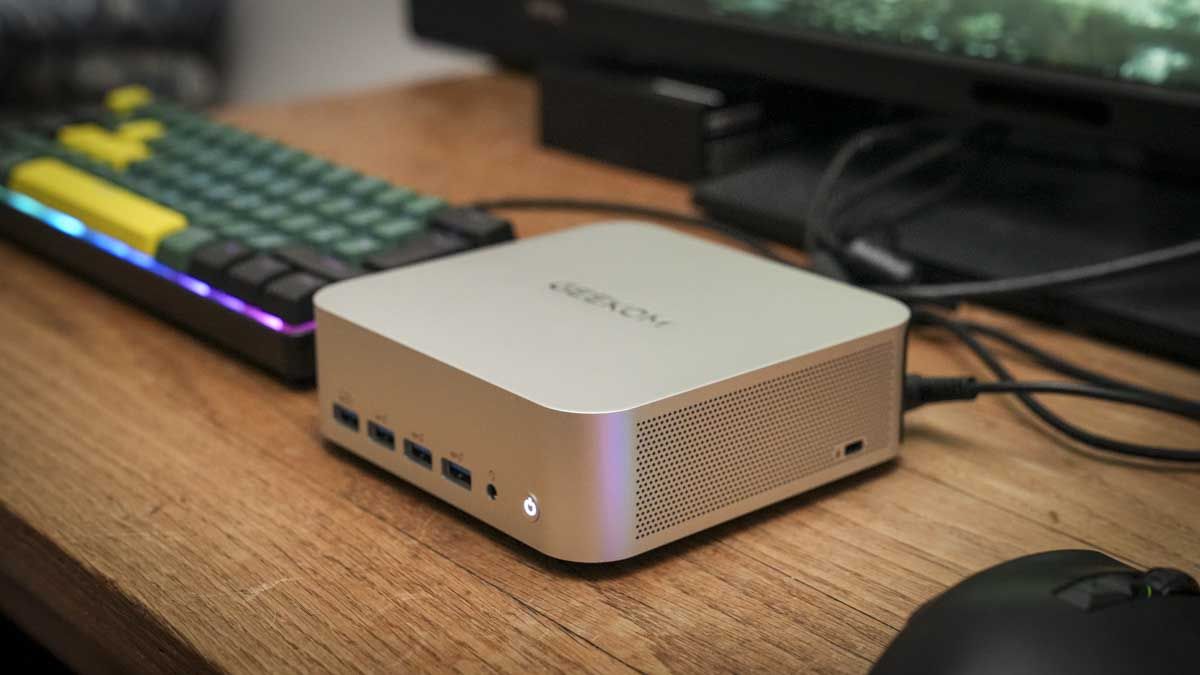
A mini PC that can handle creative work without a desktop’s footprint is still rare, but the Geekom A8 Max is one of the best we’ve ever tested (and our hardware editor’s personal favorite when it comes to Windows mini PCs).
• Best for: Professionals, power users, and creators who want desktop-class performance-and eGPU expansion.
• The deal: The Geekom A8 Max mini PC is down to $949 (was $1099) at Amazon.
• Why we like it: We scored this Windows mini PC 4.5 stars in our review, with a TechRadar Pro Highly Recommended award. it’s sleek, stylish, compact, and immensely powerful across productivity tasks, light gaming, and video editing. We love how well the AMD AI-enhanced CPU handled AI workloads in the Adobe Creative Suite, and the USB4 port is a real bonus for attaching an external graphics card if you need more complex workloads.
Today’s best mini PC deal
Why we recommend it
In our 4.5 star review of the A8 Max, we found it “extremely powerful,” noting it “ploughs through tasks in Microsoft Office and applications from the Adobe Suite without too much issue.”
We even managed AAA gaming and 8K video editing with this machine – although we’d recommend hooking up an eGPU for more complicated timelines and playing modern titles.
The onboard NPU is a genuine differentiator for AI-accelerated tasks in creative software, on top of a Ryzen 9 chip that already outperforms most mini PCs in this price range for everyday multitasking and content work.
Connectivity is another strength. Dual 2.5G LAN ports, USB4, and 8K output support are specs you would normally expect from a larger, more expensive desktop, not a compact box small enough to VESA-mount behind a monitor.
For more picks, see our guide to the best mini PCs and the best mini PC deals.
Price Context & Historical Value
Pricing on this specific configuration has swung fairly widely across retailers and over time, from under $900 during some promotions to over $1,000 at others. So this is a solid, verified price rather than the lowest ever recorded, but it is a real saving off the current list price.
Should you buy it?
✅ Buy the Geekom A8 Max if…
You want desktop-level performance for office work, photo editing, or video editing in a stylish, small machine that looks like it belongs on a design studio desk rather than under one. Or you need dual 2.5G Ethernet for a home office network setup.
❌ Skip the Geekom A8 Max if…
You need a simple mini PC for the office, suitable for basic productivity tasks, or you want more storage and RAM out of the box without having to open up the PC and upgrade it yourself.
The Catch: What to know before you buy
During our tests, we did note that the cooling fan gets loud under sustained load, internal expansion is limited, and integrated graphics will not handle serious gaming or GPU-heavy rendering; an external GPU over USB4 is the workaround for that, not a built-in solution.
More mini PC deals to consider

Firefox 156 is the second release since Mozilla moved to a twice-monthly release schedule, and the blog OMG Ubuntu notes it has faster start-up times for its built-in PDF viewer and also lower CPU usage when viewing large JPEG images:
In Firefox 156, the browser now uses libjpeg-turbo’s IDCT scaling to reduce images during decoding, rather than loading a full-size image into memory and then shrinking it. Benchmarks from the bug report show up to 20Ö less memory used during very large image loading, and decoding is up to twice as fast. Since these speeds were quite fast already, there’s no perceptible difference to users. Behind the scenes, it’s more efficient.
Firefox’s built-in PDF viewer starts up to 45% faster in this release. The browser now loads the background PDF.js worker sooner, rather than launching it only when needed.
Sponsored suggestions in the address bar are live for users in France, Germany and Italy (Ouais!, Juhu!, etc). These are already available in some other locales. Don’t want them? Disable them via Settings > Search > Firefox Suggest > Suggestions from Sponsors.
Besides that, the rest of this release is primarily bug fixes — worthwhile and welcome as always.
And in about two weeks Firefox 157 will be released, reports PC World. “That update should add support for JPEG XL (JXL), a modern image format that offers the same quality as JPEG at a significantly smaller size. Although JPEG XL was launched in 2021, Safari is the only browser to support it yet. For a short period, Chrome also supported it, but that ended in 2022.”
Also, a recent Firefox blog post emphasized that it supports whatever level of AI engagement “is right for you… Because the only person telling you how much AI you need should be you.”
Opting out of upcoming and current AI features on your browser should not require endless navigation through multiple Settings pages. That’s why Firefox offers an AI controls section within its General Settings panel. A single, easily located place where you can block current and future AI features and related pop-ups with the swipe of a toggle…
For the many people who sit in the middle of the AI usage spectrum, we made sure you can opt in and out of specific features in line with your preferences. Capabilities like AI translations, image alt text in Firefox PDF viewer, tab group suggestions, and key points in link previews can all be individually switched on and off, ensuring you can enjoy such offerings on a case by case basis as it suits your needs…
Smart Window is Firefox’s most integrated AI experience, but that doesn’t mean it compromises our commitment to choice, privacy, and transparency. Our newest window type, which we’ve been polishing and testing in beta, uses only the context you share with it to help you move work forward and across the finish line. When permitted by you, its built-in, AI-powered assistant can work directly with your open tabs and browsing history to connect the dots. This means comparing information, generating recommendations, summarizing pages, and planning projects without having to feed every crumb of context from your previous and current browsing activity each time you enter a new prompt.
And if you want to block Google’s AI Overviews, there’s over 100 extensions to choose from.


Read more of this story at Slashdot.


“This is a critical moment to ensure we build AGI safely and its benefits to society far outweigh any risks,” wrote the three directors of the new DeepMind Institute.
Google DeepMind has launched the DeepMind Institute, or DMI, a platform for research and debate on artificial general intelligence, according to its launch essay.
Its directors are Shane Legg, co-founder and Chief AGI Scientist at Google DeepMind, and Demis Hassabis, the lab’s co-founder and chair. Hassabis is also Alphabet’s chief scientist. The third director is James Manyika, Google’s president of research, labs, technology and society.
Legg is also the managing editor. The institute says its pieces reflect their authors’ ideas and “should not be read as Google’s official view.”
What the institute says
The launch essay defines AGI as a system that shows all the cognitive capabilities of the human brain. It says today’s systems still fail at some basic tasks, but “we expect those gaps to be closed soon.”
It names cybersecurity and biorisks as current concerns, and “the potential for loss of control in future self-improving systems.” In August, a DeepMind executive tied AI spending to machines that improve themselves.
Researchers from Google DeepMind, Google and the wider research community will publish on the platform. The essay says they “will not always agree.”
“Worth considering”
Legg told the Financial Times that AI capabilities must not outrun safety controls. He called Anthropic chief executive Dario Amodei’s call to slow, but not pause, frontier model releases “interesting directionally” and “worth considering.”
Amodei said on 12 September that the industry must slow down.
Legg also told the FT it was premature to declare that AGI had been achieved. Nvidia’s Jensen Huang said AGI has arrived on 7 September.
OpenAI made its own AGI claim on 4 September. Legg remains “comfortable” with his forecast of a 50% chance of “minimal” AGI by 2028, the FT reported.
Bilal Chughtai, who left DeepMind’s AGI safety team in July, posted a warning this week.
The first essays
Alongside the launch essay, the site lists four pieces:
- “The case for reasoning transparency”, by Rohin Shah and Anca Dragan
- “Economic policy for AGI”, by Julian Jacobs and Alex Imas
- “Principles for a new utopianism”, by Stephen Cave
- “A framework for frontier AI and the dawning of a new age”, by Hassabis
Eleven policies for an AGI economy
Jacobs, an economist and research scientist at Google DeepMind, and Imas, its Director of AGI Economics, rated 11 policies in their essay. They used literature reviews, surveys and 51 AI agent raters built from survey data on 51 real economists.
The authors write that “no single initiative is the answer to everything.” They match three “least-regret” responses to three scenarios:
- Mild disruption: expanded unemployment insurance, a wider Earned Income Tax Credit and employer-led retraining
- Moderate displacement: turning the tax credit into a negative income tax
- Labour and capital decoupling: a universal basic capital backstop, used if labour’s share of GDP falls for a sustained period
They call universal basic income “an expensive and blunt instrument that may fail to concentrate sufficient relief where it is needed most.”
In their survey, 85% of Americans backed publicly funded retraining and 72% backed unemployment insurance. Support for universal basic capital was 54%.
Universal basic capital scored highest of the 11 policies on agency, at 76.3 out of 100. It scored 33.1 on feasibility, second lowest after a federal jobs guarantee.
Tech
Anthropic Commits to Independent AI Evaluators, Wants Slower Development. Nvidia's CEO Wants It 'As Fast as You Can'
“Anthropic’s CEO took the stage at a conference in San Francisco on Tuesday to reiterate his call for a slowdown of AI development,” reports the Guardian, ” while Nvidia’s CEO argued against slowing its development. “Run as fast as you can.”
Amodei is calling for three courses of action: embedding third-party evaluators inside AI companies; coordinating safety standards among Democratic countries; and, eventually, larger global coordination. At Dreamforce, Amodei said Anthropic has committed to independent evaluators and was “going to have a dialogue with the rest of the industry” on the other two steps. Amodei, xAI’s Elon Musk and OpenAI’s Sam Altman have recently called for a slowdown in the pace of AI development. [“Dario is right,” Musk posted on X.com]
Huang, who also made an appearance at Dreamforce on Tuesday, said companies should not slow down AI development. He argued that new regulations were not necessary, advising AI companies to simply wait to release products until they know they are safe rather than begging the US government to intervene… One day prior at the All-In summit in Los Angeles, Donald Trump called Huang while the CEO was on stage. Huang put the president on speakerphone as Trump called the growing concern about AI a “hoax” and asserted again that a slowdown would only benefit China…
[OpenAI’s] Altman said AI models had advanced so quickly that monitoring and security need to be treated with a “new level of rigor”, calling an incident in which OpenAI agents hacked into another company a “wake-up call” for the industry. He also said the public was very “right to be afraid” of AI because of the potential loss of control, and the possibility of a small group of powerful AI companies exerting their views on the world.
The cofounder of Google DeepMind posted on X that “Dario’s essay points towards the right path forward.” And in an internal memo, Microsoft’s Satya Nadella endorsed broader third-party testing and warned that companies must take time to make the technology safe, Business Insider reports. Monday Microsoft also published a 37-page training manual “for how we develop our AI, and how we intend it to function during deployment,” requesting public feedback.
But Michael Burry “is not buying it,” reports The Street. The investor made famous in The Big Short “dismissed the united front as ‘self-serving’ and laid out four numbered objections…”
He argued that large language models are not artificial general intelligence, so there is nothing meaningful left to slow down. Fast competition benefits incumbents, he said, and danger warnings work as hype ahead of IPOs. The whole exercise, he added, could mask growth that is already slowing as those IPOs get pushed back.
Former Meta AI chief Yann LeCun is also skeptical, posting on X.com that Anthropic’s Dario Amodei “was already claiming that GPT2 was too dangerous to open source back in 2019. I made fun of them then. Everyone should make fun of them now.”
Timnit Gebru, the co-lead of Google’s AI ethics team who was fired in 2020, even thinks the AI companies are stoking fears of extinction “to avoid discussing actual harms, like autonomous weapons,” according to Wired.
But others still remain concerned. “I’ve been in rooms with the hyperscalers, and the Trump administration officials, and none of them know what to do,” CNN commentator Van Jones said in a recent panel discussion. “So I do want to say: nobody’s flying the plane on this… I think that the ethicists that work for them — when they are quitting, and they are running out, and they’re pointing back at the building and they’re waving their arms, and saying ‘I’m seeing stuff that’s scaring me’ — we should take that very seriously.”
Read more of this story at Slashdot.
Tech
Businesses are dropping Microsoft 365 in favor of Google, but if the ROI is no different, why are people switching?

- M365 E5 plans tend to include more than their Google Workspace counterparts
- Google can sometimes work out cheaper for Mac and Chromebook users
- Software is undergoing an AI change, so is it best to just wait?
New research from Senior Gartner principal analyst Domenico Scriva has deemed that switching from Microsoft 365 to Google Workspace doesn’t actually deliver any meaningful savings (via The Register).
This is despite Google Workspace licenses generally coming in cheaper than their Microsoft 365 counterpart, M365 E5.
Instead, Scriva claims that many companies are only switching to Google out of pure spite or dissatisfaction with M365, without assessing the ROI.
Latest Videos FromTechRadar
Why are businesses switching from M365 to Google Workspace?
Scriva argued that being unhappy with Microsoft isn’t itself a business case for switching, while also noting that the E5 subscription adds additional things like telephony, security and even OS licences, which customers wouldn’t otherwise get with a Google Workspace subscription.
All of this considered, plus the fact that Gemini is included in Google plans while Copilot is a paid extra, still leaves Google coming out at $2 per month more expensive, the analyst revealed.
However, migrations could be spelling out much more than a preference of software, because Scriva admitted that Google Workspace plans can actually be most cost-effective for Macs, which tend to have longer service lives, and Chromebooks, which are usually cheaper to acquire in the first place.
With this in mind, it’s possible that we’re also seeing a shift in hardware tendencies, be it a reduction in refresh cycle frequency or a total migration to a new type of hardware.
Still, whether it’s a software migration, a hardware switch, or both, Scriva warns that retraining costs can instantly wipe any ROI that a company could have otherwise achieved.
At the end of the day, Gartner warns that enterprises should consider specific business outcomes rather than acting on instinct, and with AI likely to change software as a whole, many may be better off riding out their lesser-preferred software option to see where things are heading.
Follow TechRadar on Google News and add us as a preferred source to get our expert news, reviews, and opinion in your feeds.

Apple supplier SK Hynix allegedly wants to start producing memory on U.S. soil, and it’s asking for help from Intel to make it happen.
The global memory crisis is causing companies to pay high prices for the chips, while producers make plans to expand production. The situation may result in the unusual move by SK Hynix to bring RAM manufacturing to an entirely new continent.
According to sources of Reuters on September 16, SK Hynix is in talks with processor maker Intel over plans to make memory in the United States.
The sources say that SK Hynix could potentially lease a section of Intel’s planned Ohio facility. There’s also the prospect of SK Hynix creating a joint venture with Intel and AI companies that are consuming memory supplies on future production.
The talks are described as exploratory in nature, and no plans have been set in stone. Other deal structures are also being planned.
While the prospect of more memory production sounds great under the current economic climate, any agreement with Intel about its Ohio production won’t be immediately helpful. Nor will it be for years.
Intel floated the plan to build the $20 billion facility in 2022, and originally intended to open the first by 2025. However, they are now planned to be completed between 2030 and 2032.
SK Hynix’s own plans to massively expand its memory production locally also won’t help anytime soon. Announced in August 2026, the $38.3 billion effort will make two new semiconductor fabrication plants in South Korea, but that won’t conclude until 2029.
Political good, political bad
The move could be a considerable win for the United States and the Trump Administration, which wants to increase US-based production.
Back in June, the administration claimed a massive win by saying Intel was making chips for Apple. SK Hynix memory production would be considered another victory, especially as it is a supplier for Apple products.
However, this would depend on SK Hynix being allowed to make such a deal in the first place. Sources say that the South Korean government could step in and block such an initiative due to the sensitivity of the technologies.
A role reversal
If SK Hynix and Intel do make some form of deal, it would complete one capitalistic circle of sorts.
In 2020, SK Hynix bought Intel’s NAND SSD business, NSND component and wafer business, and a Dalian NAND memory manufacturing facility in China. At the time, Intel retained its Optane business.
At the time, the transaction cost SK Hynix $9 billion.

It’s not uncommon for teachers to experience what Ellen Moir, founder of the New Teacher Center, calls a “disillusionment phase” shortly after the start of the school year. Other educators call this phenomenon by a different name — the “October Blues.”
The October Blues affect teachers who find themselves in an emotional trough only a few weeks after the excitement of the new school year wears off. When they do catch a case of the October Blues, they often find it hard to focus and their energy saps.
The October Blues are particularly hard on first-year teachers, says Mike Anderson, author of “Rekindle Your Professional Fire: Powerful Habits for Becoming a More Well-Balanced Teacher” and “Hugging Porcupines.” Many new teachers have never heard of the October Blues and are ill-prepared to cope with this dip in enthusiasm. Unexpected bumps in the road like the October Blues are partly why teachers are 2.5 times more likely to quit after their first year.
An educational consultant and former teacher and swim coach, Mike Anderson has seen teachers grapple with the October Blues many times over the course of his career. He also experienced a bout of the October Blues himself.
EdSurge spoke with Anderson about the October Blues and how teachers and administrators can keep them at bay.
EdSurge: How would you define the “October Blues”? Is there an actual definition or research?
Mike Anderson: If you talk to any [veteran] teacher, they’ll tell you there’s a predictable slump in energy that follows the first few weeks of school. When I was mentoring new teachers in my district, we used a graph showing the predictable energy curve of a teacher’s first year — it starts off high with anticipation and joy, then plummets early in the fall.
I think that happens for a couple of reasons. There’s so much energy and anticipation at the start of the year, and there’s only so long your brain can stay in that high place. When we get a real surge of joy, that’s fantastic — but the brain wants to return to a level playing field, and it often dips below baseline before it settles back to normal. It’s the hangover after the high.
The reverse happens, too. I’m about to go for a hard run right after this interview, and afterward I’ll get a runner’s high — a surge of positive emotion that follows pain or discomfort. I think something analogous happens with the October Blues: all the positive energy and anticipation of the first few weeks of school is exhausting. You’re “on” all the time. So there’s a predictable crash once that wears off, and both physical and emotional energy drop — but fortunately it’s not permanent and their energy will increase again.
Do we see the October Blues more in newer teachers or do veteran teachers get it too?
That’s a great question — I don’t know for certain. My guess is that once you’ve experienced it a few times, you start to recognize it as just a thing that happens. One of the scary parts of the October Blues in your first year is that if you don’t know it’s a known phenomenon, you start to question whether you should even be in the profession. Once you’ve been through it a few times, you can say, “Right, October’s a rough month, but I know I’ll have an upswing again.” So my guess is veteran teachers are more aware of the cycle and less panicked by it.
How does it show up in the classroom — for teachers and for students?
That’s such a multifaceted question. When I was writing “The Well-Balanced Teacher” — which I later rewrote into “Rekindle Your Professional Fire” — I looked at a study on how teachers’ emotional states are directly reflected in their students. It wasn’t specifically about the October Blues, but roughly 400 elementary students, mostly 4th and 5th graders, had their cortisol measured through saliva samples. Their teachers were surveyed on health, balance, and energy, and teachers who reported higher workplace stress had students with elevated cortisol levels.
So when teachers get stressed, kids get stressed too — and it goes the other way as well. In “Hugging Porcupines,” one chapter is called “The Honeymoon Is Over,” which is really about October. Kids and teachers both work hard to be their best selves for the first few weeks of school, and there’s only so long you can keep that up.
The work also gets harder in October, especially for students who struggle with learning — they can start to feel more overwhelmed, just as teachers start to feel the semester piling up. I’ll admit I’m speculating here, but I wouldn’t be surprised if decreasing daylight plays a role, too. By October in the Northern Hemisphere we’re getting more dark than light, and that’s got to have some influence.
What does it actually look like for a teacher who has the Blues while teaching?
Their fuse gets shorter — it’s harder to be patient with students who are struggling. It’s also harder to keep up with the planning that great teaching requires, so you might start winging it more, which is more stressful once you’re in it. Overall energy is lower. I remember trying to hold reading and writing conferences with students in the late morning and feeling blurry, almost like being hungover — everything felt a little fuzzy. It’s harder to stay sharp, harder to be patient, harder to keep your energy up for engaging lessons.
What was the October Blues like for you personally?
Early in my career, I was also a swim coach, and swim season started in October. So, I wasn’t just a month into the school year and feeling the regular fatigue that comes with that — I was also coaching an age-group team and a high school team, three or four hours of practice after school every day, on top of all the lesson planning. That extra load tends to hit right when the first few “easy” weeks of the school year — before committee meetings and most extracurriculars ramp up — give way to everything piling in at once, unless you’re coaching something like football that starts in late summer.
Have the October Blues gotten harder or easier over the years?
(Laughing) What hasn’t changed in the last 10 years on this planet? I think we’re all a little more on edge than we were 10 years ago — and honestly, we were already in social chaos back then, too. We’re more dysregulated now than we were 10 or 15 years ago. Politics is chaotic, the social and online environment is chaotic. You rarely hear anyone say, “I feel so much more relaxed and healthy than I did 10 years ago.” If we’re all more dysregulated, it makes sense our kids are, too — and the number and severity of behavior problems in schools is going through the roof. There’s a lot we could point to, and I think we need to stop blaming COVID — that was real and it was hard on all of us, but the rise in dysregulated kids has been especially pronounced over the last decade, and that takes a huge physical and emotional toll on teachers.
Do you think AI is affecting this at all? I’m not sure it’s even measurable yet, but I do wonder if there is some residual effect from using AI in the classroom and out.
Maybe. My take is that for teachers, AI is one more new thing they have to learn, manage, and figure out — both what’s OK in their own teaching and planning, and how to manage students’ AI use. That’s part of what’s accelerated over the last 10 years: teachers almost always feel like they’re on the steep end of the learning curve. Something I talked about in 2017 was how a sense of competence is critical to wellness and happiness at work — not just in teaching, but in any profession. If you don’t think you’re good at what you do, it’s hard to stay positive and energized. That’s especially tough for teachers, who rarely get the chance to feel like they’ve finally got it down. AI is just another learning curve on top of that.
Is there any way to avoid the October Blues, or do you just have to get good at recognizing it?
There’s probably no way to avoid it entirely — the same way you can’t run a marathon and avoid being tired. But recognizing that it’s a normal, shared experience and not a personal flaw really helps. Beyond that, it’s not rocket science: sleeping, eating healthy food, a healthy exercise routine — even something as simple as putting on your sneakers for a brisk 20-minute walk as soon as the last kid leaves. Small, sustainable habits that keep your energy up over the long run were a big theme in “Rekindle Your Professional Fire,” which is all about supporting teacher health and balance. Don’t look for major changes — those are almost impossible to sustain. Look for small ways to get a bit more sleep, a bit more movement, and some healthier food. Those things help not just in October, but all year long.
How can administrators and principals help? I wonder if their experience can be of help here.
Acknowledging the reality of October Blues with faculty can help, especially for new teachers who might not know to watch for it. Beyond that, school leaders can look for small ways to help teachers stay healthier and happier — providing healthy snacks instead of the highly processed junk food that’s often the easiest option at faculty meetings (fresh fruit or cheese and crackers instead of candy), making sure hydration stations are available, and paying attention to workload. There are almost always a few teachers in a school doing way too much — running committees, leading the union, and so on. Finding ways to take a few things off those teachers’ plates is another way leaders can support them.
Are there resources to prepare first-year teachers about the October Blues?
I certainly didn’t know it was a thing my first year. Some mentoring programs do train mentors to understand the common energy cycles new teachers go through, so teachers lucky enough to have well-trained mentors may get more information. But for a lot of new teachers, it’s just not on their radar — they’re too consumed with the day-to-day work of running a classroom. One of my daughter’s close friends, practically a second daughter to me, is a first-year 4th grade teacher in San Francisco. She’s smart, well-prepared, and both her parents are teachers, so she had a real head start. But I know from talking with her parents that she’s already overwhelmed just a couple weeks in, because there’s so much new to learn all at once. She doesn’t have the headspace to think about her own emotional energy — she’s just trying to manage the class and get through the day.
When do the October Blues stop being just the October Blues? How long does it typically take to recover?
I honestly don’t know if there’s a documented answer — whether it’s one week, two weeks, or four. As a teacher, I didn’t experience the whole month as a slog, but I think every teacher is a little different. There’s often another predictable energy dip later in the year, too — late winter or early spring, around the start of the second semester on a high school schedule — when it’s cold, dark, and everyone’s tired. So there are cycles of energy through the year, but I don’t know of a specific documented recovery timeline.
Should it ideally ease up so teachers can rebound?
If it’s lasting more than a couple of weeks, I’d tell a new teacher to talk to a colleague, a mentor, or an administrator — say, “I’m having a hard time right now,” and get some help. It can’t last all year. Our students need us to have good, positive energy.
How do the October Blues relate to teachers’ feelings of competence?
When we feel incompetent, our energy for work drops. It’s hard to be motivated when you feel like you’re not good at what you’re doing.
I once worked with a group of teachers for a couple of years. I remembered how hard that first October had been for them — they were down in the dumps. By the next October, after we’d done a lot of work together on classroom management and student engagement, their energy was noticeably brighter and they were laughing more. When I pointed that out and asked if their classes were just easier that year, they said no — if anything, their classes were harder! But this time, they felt like they knew what to do; they had strategies to try. The year before, their classes had felt like they were falling apart, and they didn’t know what to do — that’s what had made them feel so defeated. Having practical strategies for management and engagement meant they didn’t experience the October Blues the same way the second time around.
This interview has been edited for clarity and length.
EdSurge is an editorially independent digital news site of the International Society for Transforming Education.

Politics32 seconds ago
Politics Home Article | UK Seeks Help From Trump White House On Radical Right

Sports1 minute ago
Amy Hardcastle: England women’s all-time record try scorer announces international retirement
Tech3 minutes ago
Why we have to start thinking ahead to combat rogue AI

Fashion5 days ago
Weekend Open Thread – Corporette.com

Tech1 week ago
Memory prices are slowing because buyers ran out of money

Business7 days ago
Micron Stock Climbs Above $1,031 as AI Memory Crunch and a $50 Billion Outlook Fuel the Rally

News Videos10 minutes ago
CLARITY Act reaches MAKE-OR-BREAK Senate moment as crypto industry FIGHTS for passage

News Videos17 minutes ago
My financial condition #bollywood #90s #shorts #trending #80s #youtubeshorts #funny #ytshorts #like

News Videos30 minutes ago
XRP WILL Flip Bitcoin & How The Floodgates Open Clarity Or No Clarity
-
 Fashion5 days ago
Weekend Open Thread – Corporette.com
-
 Business7 days ago
Micron Stock Climbs Above $1,031 as AI Memory Crunch and a $50 Billion Outlook Fuel the Rally
-

 Tech3 days ago
The Latest Weird Thing to Play Doom Is the Mapped-Out Brain of a Fruit Fly
-

 Business7 days ago
AMD Stock Climbs After Management Lifts 2027 Data Center Outlook Toward $70 Billion in AI Sales
-

 Business5 days ago
10 Most-Streamed Songs On Spotify In 2026 So Far, Led By Ella Langley’s Dominant Run On The Charts This Year
-

 Crypto World5 days ago
XAG/USD: Silver’s Short-Term Rally Meets Its Moment of Truth
-

 Crypto World6 days ago
2 Chip Stocks Broke Out This Week. Neither Was Nvidia
-

 Crypto World7 days ago
Pi Network ships Protocol 27 on a network with 14 million users and zero DeFi
-

 Tech6 days ago
Battery life is the only iPhone 18 Pro and iPhone Duo upgrade I care about. Apple didn’t disappoint
-

 Crypto World6 days ago
OKX launches 10x OpenAI, Anthropic X-Perps in Europe
-

 Crypto World5 days ago
Diesel Tops $6 a Gallon for the First Time as 28 States Set Records
-

 Tech7 days ago
Apple Watch Ultra 4 vs Watch Ultra 3: Should you really spend another $799?
-

 News Videos5 days ago
Facing Financial Fears
-

 Business6 days ago
Western Digital Slips 2.7% as AI Storage Rally Cools After Record Cash and Guidance
-

 Crypto World7 days ago
Bitcoin price risks $70K if $78K neckline breaks
-

 Entertainment7 days ago
Case Sees Major Update As Jury Deliberations Begin
-

 Business4 days ago
Rivals Sam Altman and Elon Musk Rally Behind Dario Amodei’s Call for a Slowdown in AI Development
-

 Crypto World2 days ago
Elon Musk Drops a Bombshell: Grok 5 Could Be the AGI Breakthrough
-

 Business6 days ago
Five Leading AI Experts Warn Superintelligence Could Kill Humans and Explain Their Case
-

 Crypto World7 days ago
Ethereum price breakout hinges on a close above $2,535
You must be logged in to post a comment Login