
Crypto World
Is Being Indian a Fraud Signal? Arc Traders Sold Like It Is

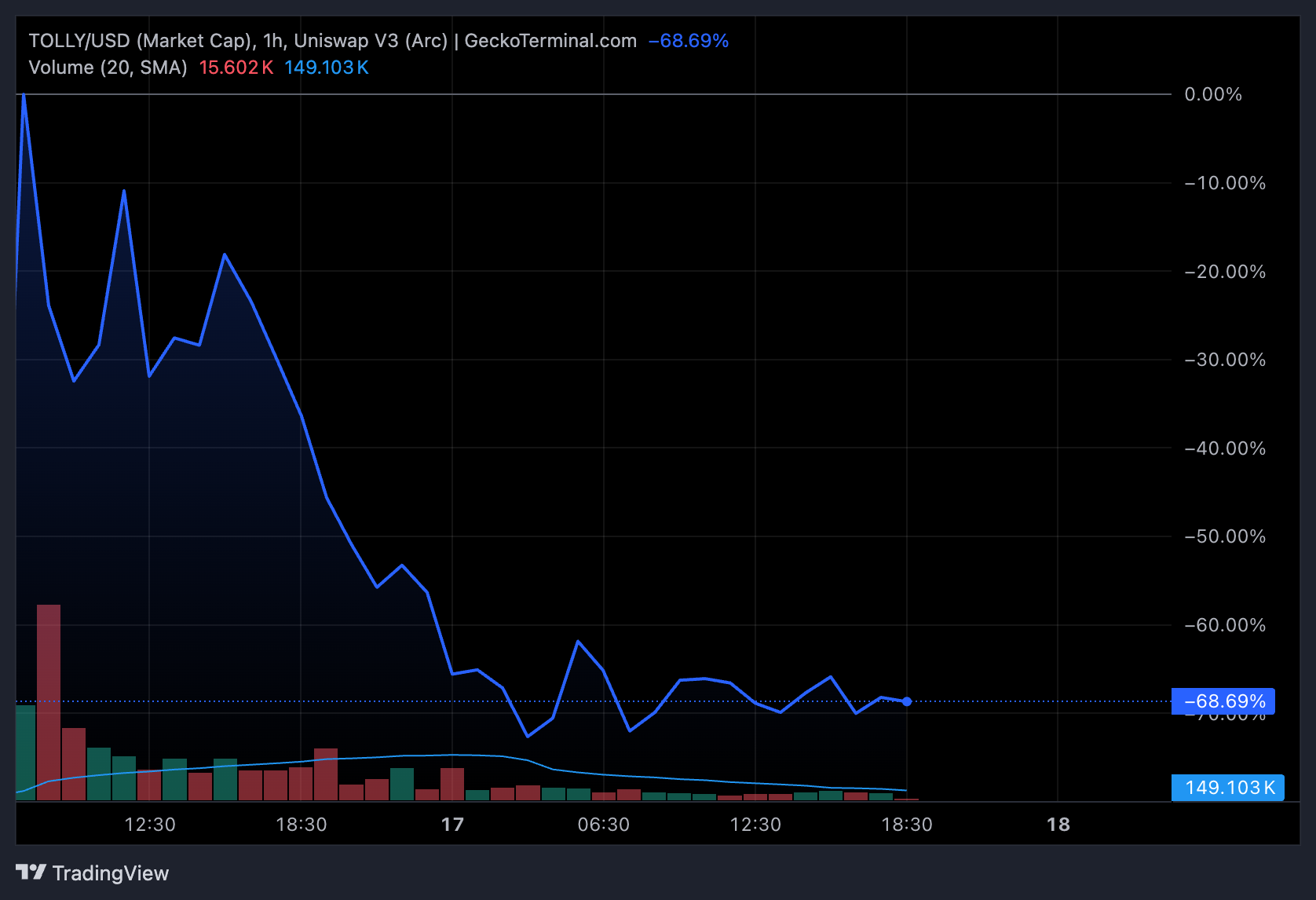
Tokens on Circle’s new Arc blockchain fell in the past 24 hours after traders said they sold because a builder on the mainnet launch livestream appeared to be Indian. The man in the clip does not work for Circle.
Panchu Vijay Pal runs XyloNet, a third-party stablecoin exchange that Circle’s Arc team featured as a partner in June. Traders sold tokens he has no connection to, on a chain whose block producers include BlackRock, Visa, and Mastercard.
Why Did One Guest Segment Move an Entire Chain?
Circle opened Arc’s public mainnet on Wednesday with a broadcast from New York. The main stage carried keynotes from CEO Jeremy Allaire and roundtables with BlackRock, DTCC, and Aave. A Developer Pre-Show ran earlier, billed as partner highlights and community drop-ins.
Pal appeared in that pre-show from a home setup with a gaming chair behind him. A screenshot spread on X within the hour, where one trader, KR, told 764,000 viewers he had exited.
The tokens that fell were launchpad and meme assets, not anything issued by Circle. No ARC token trades yet. GeckoTerminal data on Thursday showed TOLLY down roughly 68% and ARGUS down roughly 50%.

Speculators had spent weeks positioning for a meme coin rush on Arc. Launchpads generated 82% of the chain’s $410.8 million first-day DEX volume, and the first selling wave arrived over a face rather than a fundamental.
Does the Data Behind the Stereotype Exist?
Replies to the clip escalated from mockery to dehumanizing slurs aimed at Indians as a group. Crypto opinion leader, “Crypto with Khan” pushed back, listing Indian-born CEOs at Google, Microsoft, IBM, and Adobe. Alphractal founder Joao Wedson quoted him with a longer rebuttal.
“Bias and racism are still very visible on X, especially in the crypto market. When innovation comes from the U.S. or Europe, it is often treated with credibility by default. When it comes from Asia, the reaction is frequently much more skeptical,” Wedson posted on Thursday.
Khan followed on Thursday with a ranking of the ten largest crypto frauds by country of origin, which he said he produced by asking an AI chatbot. FTX, PlusToken, OneCoin, and Africrypt topped it.
Furthermore, Chainalysis’s 2026 Crypto Crime Report attributes more than $2 billion in 2025 theft to North Korean state hackers, including the $1.5 billion Bybit breach. It traces pig-butchering fraud to compounds in Cambodia and Myanmar.
Circle’s Arc team held up XyloNet as a model project in a June partner spotlight. On launch day, the chain’s traders held up its founder as a reason to sell. Both were the same company’s audience.
XyloNet went live on Arc mainnet this week regardless. The tokens that sold off in Pal’s name were never his to begin with.
The post Is Being Indian a Fraud Signal? Arc Traders Sold Like It Is appeared first on BeInCrypto.

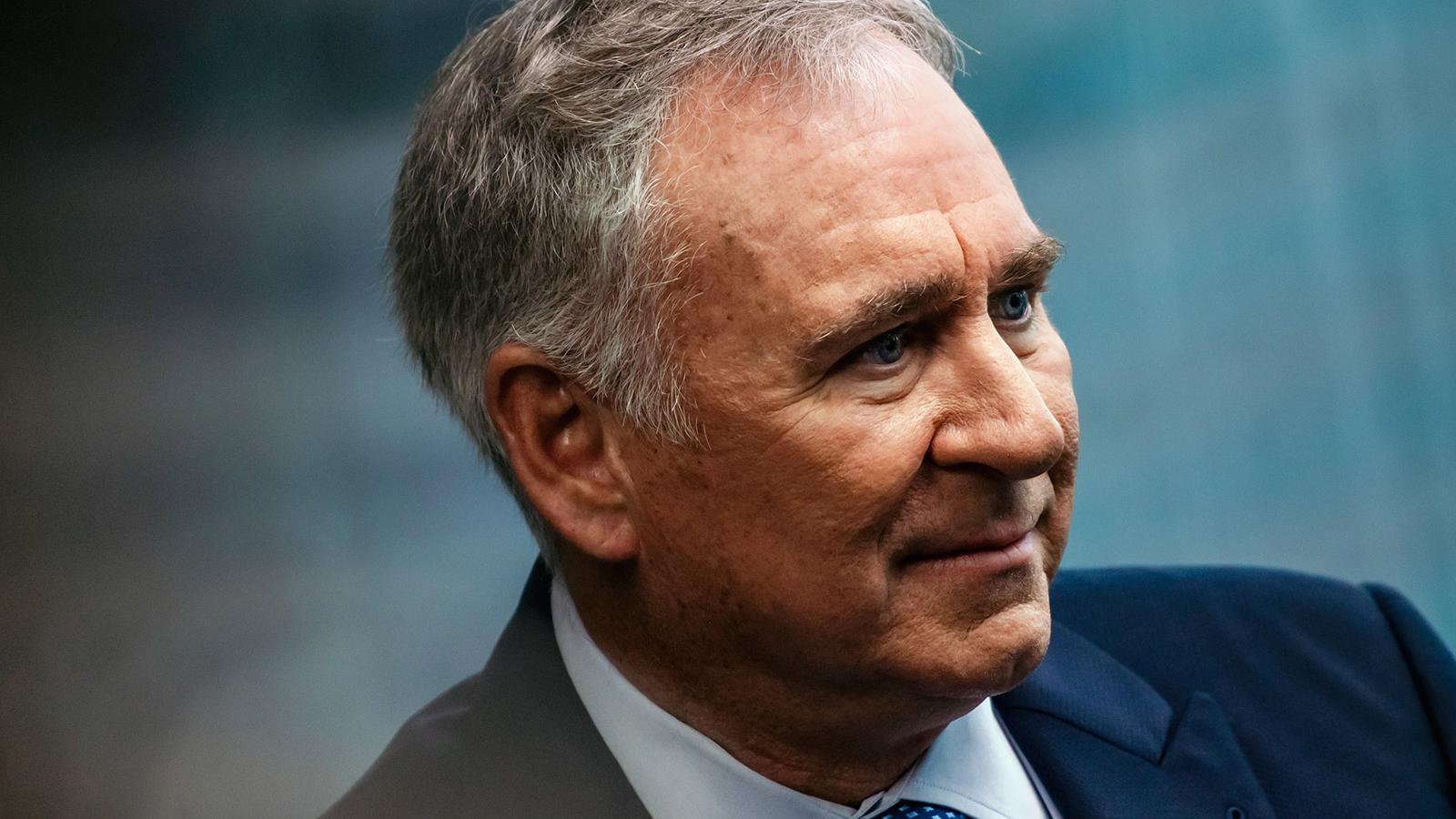
“My first love in art was the proverbial one that got away,” says Ken Griffin, the CEO of the hedge fund Citadel. In 1999, he lost out on a sculpture of a dancer by the French Impressionist Edgar Degas. He has rarely let it happen again. Over the past two decades, Griffin has emerged as one of the world’s most dogged, deep-pocketed collectors. His treasures include Abstract Expressionist paintings worth nine figures, rare historical documents, and a Madonna and Child attributed to Leonardo da Vinci.
While Griffin previously lent many of his most valuable works to museums anonymously, he has expanded and become more public about his activities over the past year, a shift he says is designed to facilitate scholarship and education as well as satisfy public curiosity. He loaned the da Vinci to the Met this spring, doubling the number of paintings by the Renaissance master on view in the U.S.
The billionaire has also expanded his support of Florida museums since his much-publicized relocation to Miami from Chicago in 2022. Over the summer, an exhibition of 10 works by Jean-Michel Basquiat from his collection went on view at the Pérez Art Museum in Griffin’s new hometown. In 2027, he will place a Richard Serra sculpture he bought earlier this year on public display in a park next to the museum. “It’s monumental, it’s thought-provoking, and, bluntly, it’s just fun,” Griffin says of the work. “An institution has a different criteria to collect than I do as a private individual. I place a huge importance on the aesthetic appeal of a work. Does this work visually make me happy?”


The Senate’s 50-49 failure to advance the CLARITY Act has left crypto firms without a federal market structure framework and could delay product launches, funding decisions, and commercial agreements, according to three industry experts.
Summary
- The CLARITY Act failed to secure the 60 Senate votes required to open debate.
- WasabiCard expects regulatory uncertainty to delay some crypto launches, partnerships and funding decisions.
- The Decentralization Research Center urged the SEC and CFTC to provide clarity under existing powers.
- Paybis called for separate US and EU checks where their stablecoin requirements differ.
CLARITY Act failure leaves jurisdiction questions open
Kyle Bligen, executive director at the Decentralization Research Center, told crypto.news that the Senate result was disappointing but did not remove the need for lasting digital asset rules.
“Congress remains the best route to a comprehensive market structure framework,” Bligen said.
In the absence of federal legislation, Bligen called on the Securities and Exchange Commission and Commodity Futures Trading Commission to use their current powers to give the industry clearer guidance. He cautioned, however, against applying rules built for conventional financial middlemen directly to decentralized systems.
The policy task, according to Bligen, is to protect consumers and counter illegal activity without placing duties on developers or other participants who lack the control needed to carry them out.
“That work cannot stop because the legislative process has stalled,” he said.
The 50-49 Senate vote fell 10 votes short of the 60 required to invoke cloture and begin formal debate on H.R. 3633. Cloture would not have passed the bill into law; it would only have allowed the Senate to proceed with debate.
All participating Democrats opposed the motion, while Republican Senators Susan Collins, Josh Hawley, Jerry Moran and Thom Tillis also voted against it. Tillis changed his vote for procedural reasons, preserving an avenue for the chamber to reconsider the motion.
Disputes over government ethics, stablecoin rewards and banking provisions had continued before the vote. Democratic negotiators delivered a late counteroffer, but lawmakers did not release its complete text before the Senate acted.
The House passed its version of the CLARITY Act in July 2025 by a 294-134 vote, with 78 Democrats supporting the measure. Republicans hold 53 Senate seats, which meant the bill’s supporters needed votes from at least seven Democrats to clear the procedural threshold.
In July, Treasury Secretary Scott Bessent had pressed for a vote after months of negotiations among lawmakers. Polymarket traders assigned the bill a roughly 30% chance of becoming law in 2026 at the time, down from 82% in February. Following the failed cloture motion, the probability dropped to 7% from 31% a day earlier.
Regulatory uncertainty could delay crypto products
Matt Price, head of global partnerships at stablecoin platform WasabiCard, said the vote had left companies with the same classification and jurisdiction questions they faced before the Senate acted.
“The failure to advance CLARITY leaves the industry with the same basic problem it had before the vote,” Price said. “Firms still do not have a clear answer on how some digital asset products will be classified or which rules apply.”
Without a settled division of authority, Price expects companies to spend more time seeking legal advice before putting capital into products. Some firms may hold a launch or commercial agreement because they do not want a regulator to adopt a different view after the product enters the market, he added.
Questions over whether the SEC or CFTC has jurisdiction may also affect funding choices and negotiations between crypto companies, according to Price. He expects some partnerships and releases to be postponed for that reason.
Banks and payment companies could exercise similar caution, Price said, because they need to understand the compliance duties attached to a digital asset project and whether regulators could change the applicable requirements after launch.
“This could slow innovation and adoption in the marketplace,” he said.
The failed vote has also increased pressure on federal regulators. Former CFTC Chair Chris Giancarlo said the SEC and CFTC could continue building rules under their existing mandates, according to a Sep. 16 report.
Coinbase CEO Brian Armstrong made a similar call after the vote, saying the industry could no longer wait for Congress and urging both agencies to use the tools already available to them. Ripple CEO Brad Garlinghouse also asked the regulators to fill the legislative gap.
Agency action cannot resolve every issue covered by the bill. In particular, SEC rules alone cannot establish a statutory split of authority between the SEC and CFTC, according to the Sep. 16 report.
H.R. 3633 remains on the Senate calendar, and Tillis’ procedural vote permits another cloture attempt. Sen. John Kennedy said the measure could return during a lame-duck session after the November elections, while Sen. Ted Cruz described it as “mostly dead.”
Any changes approved by the Senate would still need further House action before the legislation could reach the president. A shortened House calendar has reduced the number of voting days available before lawmakers leave Washington.
Foreign stablecoin rules pose a separate compliance test
Konstantins Vasilenko, co-founder and chief business development officer at MiCA-licensed crypto exchange Paybis, said regulatory uncertainty also extends to stablecoin businesses operating between the United States and Europe.
According to Vasilenko, US authorities are determining how domestic stablecoin requirements will apply to foreign issuers, while European policymakers are considering how to treat oversight conducted outside the European Union.
Under the EU’s Markets in Crypto-Assets regulation, an issuer must show that it holds authorization, manages its reserves and can honor redemption requests, Vasilenko said. The US Treasury’s lawful-order test asks a different question: whether a foreign issuer can execute an American order to freeze assets.
“How far a platform must go to satisfy that check remains open,” he said.
Treasury has raised questions about smart contracts and functions including “freeze,” “seize,” and “burn,” according to Vasilenko. A compliance review can establish whether an issuer has the technical ability and internal process to respond to a lawful order, but it cannot guarantee how the company will respond in every future case, he added.
Vasilenko called on Treasury to state what evidence would satisfy its review. Clear standards would help exchanges and wallet providers assess foreign stablecoins before making them available to customers subject to US rules, according to his comments.
Europe is separately considering how much reliance its regulators can place on supervision performed in another jurisdiction. Vasilenko said mutual recognition should be assessed one requirement at a time rather than granted through a single all-purpose decision.
Where US and EU authorities ask the same compliance question, one answer should be sufficient, he said. When the requirements differ, as they do over the ability to follow a US lawful order, Vasilenko said platforms and issuers would need to complete both checks.

Cryptocurrency adoption is advancing in Germany, particularly among younger investors, while the UK is gradually falling behind, largely due to lagging regulations, according to CoinShares crypto researcher Luke Nolan.
German cryptocurrency adoption is showing “very good progress” through “family offices, wealth managers, individual advisors” and younger generations looking to invest inherited wealth in digital assets, Nolan told Cointelegraph on the Chain Reaction show on Thursday.
In contrast, the UK is “still very much behind,” said Nolan, adding that the country’s Financial Conduct Authority (FCA) only lifted its ban on crypto exchange-traded products less than a year ago, making its digital asset market “nascent.” The regulator previously banned these products from retail participants in January 2021.
Germany has 89 licensed crypto-asset service providers, accounting for 25.5% of companies in the European Securities and Markets Authority’s (ESMA) Markets in Crypto Assets (MiCA) register, updated on Wednesday. The EU’s biggest economy was also the bloc’s leader by MiCA authorization in June, with 57 authorized crypto companies.

Source: Cointelegraph
Leading German banks are venturing into crypto
The adoption trend is not lost on the largest German banks.
The country’s biggest, Deutsche Bank, revealed on Wednesday that it was awaiting regulatory approval to launch crypto custody solutions for institutional clients in Europe, with a license expected in October.
In April 2024, Germany’s largest federal bank, the Landesbank Baden-Württemberg, started offering crypto custody solutions after partnering with the Austria-based Bitpanda for its institutional custody platform.
Related: Bernstein expects ‘aggressive’ rulemaking from SEC, CFTC, following CLARITY Act failure
Meanwhile in the UK, the FCA on Wednesday issued final guidance outlining when crypto activities may require authorization under the country’s incoming regulatory regime.
The regulator will open licensing applications on Sept. 30, with a Feb. 28, 2027 deadline for firms seeking transitional arrangements ahead of the new regime taking effect on Oct. 25, 2027.
On Thursday, the FCA announced that it sent a cease-and-desist letter to three London locations suspected of facilitating illegal peer-to-peer crypto trading.
The UK Parliament approved regulations bringing digital assets within the FCA’s regulatory remit in February and finalized a package of rules and guidance in June.
Magazine: How the EU’s crypto tax rules are expected to work for users and platforms

South Korean police have reportedly referred 18 Polymarket users to prosecutors as part of an illegal gambling investigation that involves 26 suspects and roughly 17.6 billion won (about $12.7 million) in wagers. The case is based on analysis of on-chain activity, according to a report citing data submitted by the National Police Agency.
Authorities say they identified participants by examining publicly available blockchain transactions tied to Polymarket, despite the platform operating without a conventional, real-name user registry. Suspects are accused of placing stakes on event outcomes that—under South Korean legal interpretation—amount to gambling.
Key takeaways
- South Korea’s police have referred 18 Polymarket users to prosecutors, based on an investigation covering 26 people and about 17.6 billion won in wagers.
- Investigators reportedly used publicly available blockchain transaction data to connect individuals to activity on the platform.
- Authorities argue Polymarket transactions fall under South Korea’s Criminal Act as illegal gambling, while users have framed the activity as crypto-based derivatives investment.
- Earlier actions included a June probe and an Aug. 18 decision to block Polymarket after a regulator found the platform’s structure fostered speculative gambling.
- The legal dispute hinges on how “uncertainty” and the structure of trading contracts are characterized under domestic law—especially given Polymarket’s noncustodial, smart-contract design.
How the investigation built from on-chain activity
According to Asia Economy, data provided to Democratic Party lawmaker Yoon Kun-young by the National Police Agency shows that the Gangwon Provincial Police Agency had 26 people under investigation as of Tuesday and had forwarded 18 of them to prosecutors. Asia Economy also reported that the largest wager attributed to a single user was about 5.7 billion won (roughly $4.1 million).
The report says police identified the suspects by analyzing publicly available blockchain transactions. That matters because Polymarket is described as operating on a noncustodial, peer-to-peer model with automated settlement, meaning it does not keep a traditional list of users linked to real-world identities. In other words, the investigation appears to rely on the traceability of transaction patterns rather than on account records maintained by the platform.
Polymarket’s basic premise is that participants can buy and sell contracts tied to real-world event outcomes. When those outcomes resolve, settlement is handled through smart contracts. Asia Economy’s account indicates that investigators nonetheless concluded these contract positions are functionally equivalent to wagering under local law.
The legal argument: gambling vs. derivatives
Authorities reportedly argued that Polymarket transactions constitute illegal gambling under South Korea’s Criminal Act. The basis of that classification, as described in the report, is that users stake assets on outcomes that cannot be predicted with certainty.
Users, however, pushed back. Asia Economy reports that suspects argued Polymarket should be treated as a crypto-based derivatives investment market instead of gambling. That framing reflects a common approach taken by prediction-market operators: trading event-linked contracts can resemble derivatives activity, including the ability to enter and exit positions before a contract settles.
Tae-Lim Kim, a managing attorney at AXIS Law, told Asia Economy that the transactions could meet the legal requirements for gambling. He also said that describing the activity strictly as prediction derivatives may be difficult as a defense in criminal proceedings. At the same time, he suggested that the ability to trade contracts and close positions before settlement could still become relevant for how a court evaluates the overall nature of the activity.
Regulatory pressure escalated before the referrals
The development comes after a visible escalation of South Korean enforcement against Polymarket. In June, Gangwon police launched what was described as South Korea’s first illegal gambling probe into local Polymarket users, acting at the request of the National Police Agency. Earlier coverage from Cointelegraph noted that the case began as an illegal gambling inquiry.
Then, on Aug. 18, South Korean authorities reportedly moved to block Polymarket after determining it provided an illegal gambling environment for users in the country. Cointelegraph previously reported that the blocking decision followed concerns over whether prediction-market activity was being regulated under existing gambling frameworks.
The report also cites the Korea media and communications review commission’s reasoning: it said the platform’s winner-takes-all structure encourages speculative gambling. The commission pointed to Polymarket’s role in operating the markets and setting trading rules, along with the platform’s handling of crypto deposits, withdrawals, settlement, and transaction fees.
Polymarket’s response, as summarized in the report, was that it does not provide Korean-language services or support payments in Korean won. The platform also argued that because transactions are noncustodial and executed via smart contracts, it does not directly manage users’ funds. The regulator rejected the argument, stating that technical design characteristics do not exempt a service from South Korean law.
What this means for users and for prediction markets in South Korea
For market participants, the referral of 18 users to prosecutors signals that enforcement is no longer limited to investigation or takedown efforts—it has moved into the formal legal process. The reported use of blockchain transaction analysis suggests that authorities may be able to map participants even when a platform does not maintain a direct, real-name customer list.
For prediction-market platforms and other “derivatives-like” crypto products, the dispute highlights a structural tension: even if a service is technically noncustodial and settlement is automated, regulators may still assess whether the activity resembles gambling based on how users stake value on uncertain outcomes and how profit is distributed (including whether trading resembles speculation rather than hedging).
Readers should watch whether prosecutors expand the case beyond the initial group of 26 and how courts interpret the defense arguments around derivatives characterization, particularly the practical ability to trade and exit positions before settlement.

Crypto.com is moving closer to launching single-stock futures in the United States after the SEC acknowledged a Form 1-N filing from North American Derivatives Exchange (Nadex).
CEO Kris Marszalek revealed the company is now “authorized” to bring single-stock futures to the market through OG.com, which is its CFTC-regulated standalone prediction market platform launched in February.
US Single-Stock Futures
In a post on X, Marszalek also said the team is working with the SEC and CFTC for the offering in the US. Single-stock futures are contracts linked to the future price of individual stocks. They allow traders to take positions on stocks through futures contracts rather than buying the underlying shares directly.
The SEC document, dated September 16, confirms the filing was made under Section 6(g) of the Securities Exchange Act of 1934.
Crypto.com is not the only platform looking to bring single-stock perpetual futures to the US. According to The Wall Street Journal, Kalshi is also seeking regulatory approval for the products. The prediction market operator reportedly plans to offer around 60 perpetual contracts tied to major stocks and ETFs, including Tesla, Apple, and Nvidia. The planned stock contracts would target companies with market values of at least $100 billion.
Coinbase also filed notice registrations with the SEC to offer single-stock perpetual futures domestically. Earlier this month, the company said it is working with both regulatory watchdogs to bring the products to the US market.
The development reflects a push by relatively newer platforms to expand into areas long dominated by traditional financial firms.
Prediction Markets Push
The latest development comes days after Robinhood announced expanding its partnership with Crypto.com and OG.com as prediction markets continue to grow on its platform. The companies said Robinhood will begin routing some football event contracts to OG.com from September 8.
As part of the deal, Robinhood Markets will take equity stakes in the two after OG.com becomes an independent trading platform. The stakes will be priced in line with Citadel Securities’ recent investment in Crypto.com Group at a $20 billion valuation.
The post Crypto.com Gets Green Light to Bring Single-Stock Futures to the US appeared first on CryptoPotato.

The Mark Zuckerberg Meta AI predicts Bitcoin could not only hit a new all-time high in 2026, but nearly double the $126,000 high from October 2025.
Following that move, BTC then corrected roughly -47% to around $80,000 in November. It fell further to the low-$60,000s by mid-2026 before recovering back toward the $80,000s by late summer 2026. So the past year has been a proper boom-bust-rebuild cycle, and not a straight line up.
However, Meta AI has predicted an explosive finish to the year for BTC USD, with a peak bull-run scenario of $210,000–$230,000 by Jan 1, 2027.

ETF and institution-driven demand has stretched the traditional 4-year halving cycle (April 2024 halving) longer than the 2017/2021 cycles, because spot ETFs and corporate/sovereign treasury buying create steadier, less reflexive demand than retail-driven futures leverage did in past cycles.
A blow-off top, consistent with how every prior Bitcoin cycle has ended, euphoric retail FOMO piling in on top of the institutional base once BTC reclaims and breaks its old ATH.
Supercharge Your Trading in 2026 With BloFin AI Trading Bots
Mark Zuckerberg Meta AI Predicts Bitcoin to $230K: Does the Technical Analysis Back it Up?
The clearest technical argument is a Fibonacci extension off the 2022 bear-market low. Bitcoin bottomed near $15,500 in November 2022; the rally to the October 2025 high of ~$126,000 represents roughly a 7.1x move.
Applying a 1.618 Fibonacci extension of that same $15,500 to $126,000 range projects a target zone of approximately $195,000–$225,000, a level that lines up closely with several institutional forecasts (Bernstein, Standard Chartered’s revised targets, Tom Lee’s $150K–$200K range) clustering in the same neighborhood.
That confluence of a chart-based extension level and fundamental analyst targets makes $200K+ the natural “peak euphoria” number for a bull scenario, rather than an arbitrary round figure.
Supporting that reading: the logarithmic growth channel that has bounded Bitcoin’s price action since 2013 has its upper resistance band tracking into the $180K–$240K range by early 2027, which is roughly where the Fibonacci extension also lands.
Two independent technical methods pointing to a similar ceiling add credibility to that zone as a “peak” resistance level, not just noise.
Earn $50 and Enter $300K Prize Draw on EdgeX
LiquidChain Targets Early Mover Upside as Pi Network Tests Key Levels
The quill knows what comes after L2. — LiquidChain (@getliquidchain) September 17, 2026
 https://t.co/vqvBcdSQYC pic.twitter.com/BSumZRCBFg
For traders watching PI bleed through support, the instinct to rotate capital toward earlier-stage projects with room to grow makes sense, especially when the alternative is waiting around for a $940M market cap coin to reclaim ground it’s already lost twice.
Enter LiquidChain ($LIQUID), a Layer 3 infrastructure project fusing Bitcoin, Ethereum, and Solana liquidity into a single execution environment. The presale is priced at $0.014956 with $967,410.09 raised so far.
Its core pitch, Deploy-Once Architecture, lets developers build a single application and reach all three ecosystems without rewriting code for each chain, backed by a Unified Liquidity Layer and Single-Step Execution for cross-chain trades.
Those curious can dig into the background on its cross-chain approach, which is also covered in this earlier breakdown.
Gain Special Access to Layer 3 Trading Here Supercharge Your Trading in 2026 With BloFin AI Trading Bots
The post Mark Zuckerberg Meta AI Predicts Bitcoin to Hit $230,000 appeared first on Cryptonews.


There are guardrails, however.
The software running that market must be public and auditable and deployed on a public, permissionless blockchain. Access to the trading venue itself, however, remains permissioned, according to the SEC.
So no, this does not mean Apple or Microsoft stocks suddenly start trading freely on popular decentralized crypto exchanges that run on automated liquidity protocols (or smart contracts) rather than traditional order books.
It means regulated venues can test some of the technology pioneered by decentralized finance while still controlling who is allowed to trade.
And this sandbox is also deliberately small.
For the most liquid stocks, each venue can tokenize up to 75 names and handle no more than 0.25% of average daily trading volume. For a second tier of stocks, the cap rises to 250 names and 2.5% of average daily volume, according to Jamie Selway, the SEC’s director of trading and markets.
“The motivation for that was to, obviously, make a modest start,” Selway said. “Let’s get people going, measure the effect.”
For example, Tesla — one of the most highly traded stocks — has an average daily volume of about 40 million shares. By this definition, a qualifying venue could theoretically facilitate trading in up to roughly 100,000 tokenized Tesla shares a day, which is about $36.6 million at a $366 share price.


S&P Global is set to acquire the blockchain security company OpenZeppelin, expanding the financial data, ratings and benchmark provider’s digital asset capabilities.
The deal announced on Thursday is aimed at complementing S&P Global’s risk assessment and ecosystem development capabilities in the digital asset market, it said. Financial terms were not disclosed, and the transaction remains subject to closing conditions.
“Our digital assets strategy centers on bringing trusted data, benchmarks and transparent risk assessment to markets as they move onchain,” S&P Global ratings president Yann Le Pallec said. He added that OpenZeppelin would expand his company’s smart contract and onchain technology risk assessment capabilities.
Founded in 2015, OpenZeppelin develops open-source smart contract software and provides security assessments for blockchain projects and financial institutions. Its smart contracts have facilitated more than $37 trillion in value transferred, while the company has completed over 900 security engagements, the announcement notes.
OpenZeppelin said its contracts library and other open-source applications will remain free and publicly maintained on GitHub. The platform will operate as a separate S&P Global business unit, with CEO Demian Brener continuing to lead while reporting to Le Pallec.
Earlier this week, S&P Global led a strategic investment in Kaiko, extending the Paris-based crypto market data provider’s Series B funding to $110 million as it expands its data infrastructure for tokenized financial markets.
Related: Circle to acquire Tazapay to expand USDC cross-border payments
Crypto World
The Ondo Finance succession crisis gets messier as Kathleen Allman’s daughter alleges ‘dementia’, alcoholism and reckless spending


In her filing, Dr. Clinton claimed to have been estranged from her mother since 2022 after an incident during a family vacation when Kathleen Allman allegedly told Dr. Clinton’s young children, aged 10, six and two, that “they were worthless, that she should have aborted all of them, and that she might be fortunate if they drowned in the ocean during the visit.” Afterwards, Kathleen Allman denied saying anything of the kind, according to the filing.
The court filings also hint at a pattern of lavish spending, claiming that Kathleen Allman “came to depend on [Allman] for…a scale of living her own resources had never supported.” In June 2025, according to court documents, Allman bought his parents a beachfront home in Honolulu for $18.5 million.
“Petitioners note also that despite substantial earnings [Kathleen Allman] has a history of financial strain, including an occasion on which she could not meet a single month’s mortgage payment and borrowed from her own mother,” lawyers for Dr. Clinton and Chen wrote in their filing.
Before Allman’s death, the filings claim, Kathleen Allman “purchased or attempted to purchase a Zeelander yacht in Florida at a price on the order of $4 million; traveled by private aircraft, including a request that [Ondo Finance] bear a six-figure cost of a flight from Hawaii to California, and lodged at approximately $4,000 per night.”
WisdomTree and MoonPay are partnering to expand US investor access to a tokenized Treasury money market fund, which MoonPay also plans to use as part of its stablecoin reserves.
According to a Thursday announcement from the companies, the fund issuer is using MoonPay’s technology to develop an access point for its WisdomTree Treasury Money Market Digital Fund (WTGXX), a tokenized money market mutual fund that seeks to maintain a $1 share price. The companies said the arrangement would give WisdomTree access to MoonPay’s network of more than 35 million accounts.
MoonPay, a financial technology company that provides infrastructure for moving between fiat and digital assets, plans to use WTGXX as part of its stablecoin reserve management stack.
MoonPay launched its enterprise stablecoin business in November 2025 and issues dollar-denominated stablecoins across several blockchains, backed by US dollars and other high-quality liquid assets held in segregated accounts.
The collaboration could expand to additional tokenized funds, including in markets outside the United States, according to WisdomTree, which manages about $176.7 billion in assets.
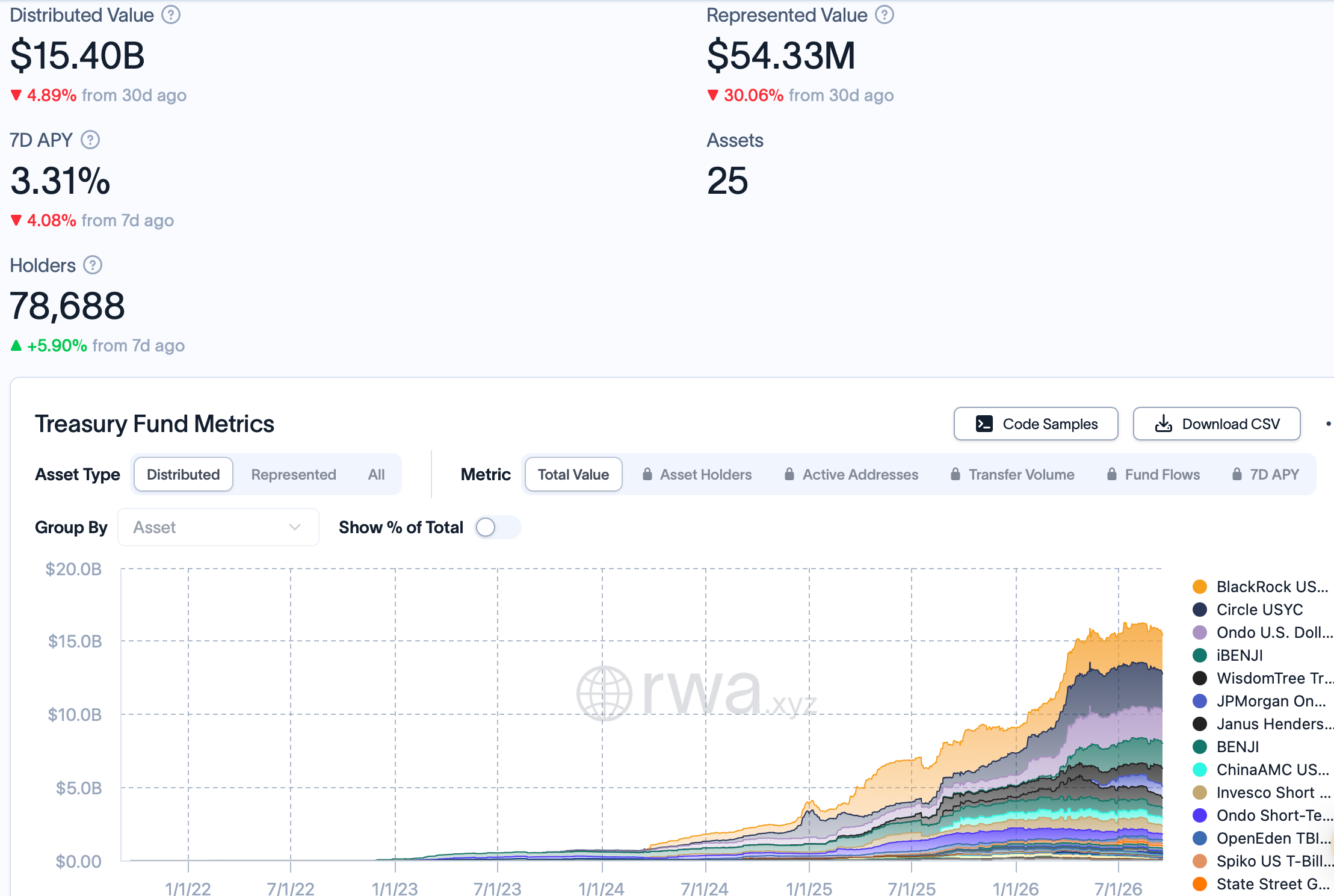
On Thursday, the tokenized US Treasury market stood at about $15.4 billion, with WTGXX accounting for about $1.23 billion, according to RWA.xyz data.
Tokenized US Treasury Funds. Source: RWA.xyz
The fund has logged net flows of $466 million in the past 30 days. Net flows are calculated as the difference between tokens minted and tokens burned. Ondo U.S. Dollar Yield fund (USDY) was the only other tokenized Treasurys fund that saw positive net flows, $66 million, in the period.
Perdoceo Education president & CEO Todd Nelson sells $1.52m in shares

Ken Griffin Is on the 2026 TIME100 Art List

Ari Fletcher Comes For Trolls Critiquing Her Parenting



-

 Fashion6 days ago
Weekend Open Thread – Corporette.com
-

 Tech4 days ago
The Latest Weird Thing to Play Doom Is the Mapped-Out Brain of a Fruit Fly
-

 Business7 days ago
10 Most-Streamed Songs On Spotify In 2026 So Far, Led By Ella Langley’s Dominant Run On The Charts This Year
-

 Crypto World7 days ago
XAG/USD: Silver’s Short-Term Rally Meets Its Moment of Truth
-

 Crypto World7 days ago
OKX launches 10x OpenAI, Anthropic X-Perps in Europe
-

 Crypto World7 days ago
Diesel Tops $6 a Gallon for the First Time as 28 States Set Records
-

 Crypto World3 days ago
Elon Musk Drops a Bombshell: Grok 5 Could Be the AGI Breakthrough
-

 Crypto World3 days ago
Kraken Lets xStocks Holders Earn Yield Through DeFi
-

 News Videos6 days ago
Facing Financial Fears
-

 Crypto World23 hours ago
US Charges Robinhood Engineers Over Crypto Listing Trades
-

 Business5 days ago
Rivals Sam Altman and Elon Musk Rally Behind Dario Amodei’s Call for a Slowdown in AI Development
-
Crypto World7 days ago
Ethereum Price Analysis: Consolidation at $2.5K Tests Momentum as On-Chain Activity Surges
-

 Crypto World5 days ago
Can AI Build a Startup in 72 Hours? Elon Musk's Team Will Livestream the Test
-

 Entertainment6 days ago
News Specials, Movies, Shows, More
-
 NewsBeat3 days ago
‘Sick conspiracy’: Trump says only guardrails AI needs is ‘a strong and smart (High IQ!) president’ in all-caps rant
-

 Crypto World7 days ago
Bitcoin ETFs Pull $167M as 2026’s Best Inflow Run Slows
-

 Crypto World6 days ago
Robinhood Chain Never Stopped But its Blobs Did Stop Reaching Ethereum For 14 Minutes
-

 Crypto World4 days ago
New Tesla Roadster Uses SpaceX Tech. Will It Impact the Stock Price?
-

 Crypto World7 days ago
US CPI forecast at 3.4% as tariff risks build
-
 Entertainment6 days ago
New Horror Movie Officially Earns a Rare Stephen King Recommendation
You must be logged in to post a comment Login