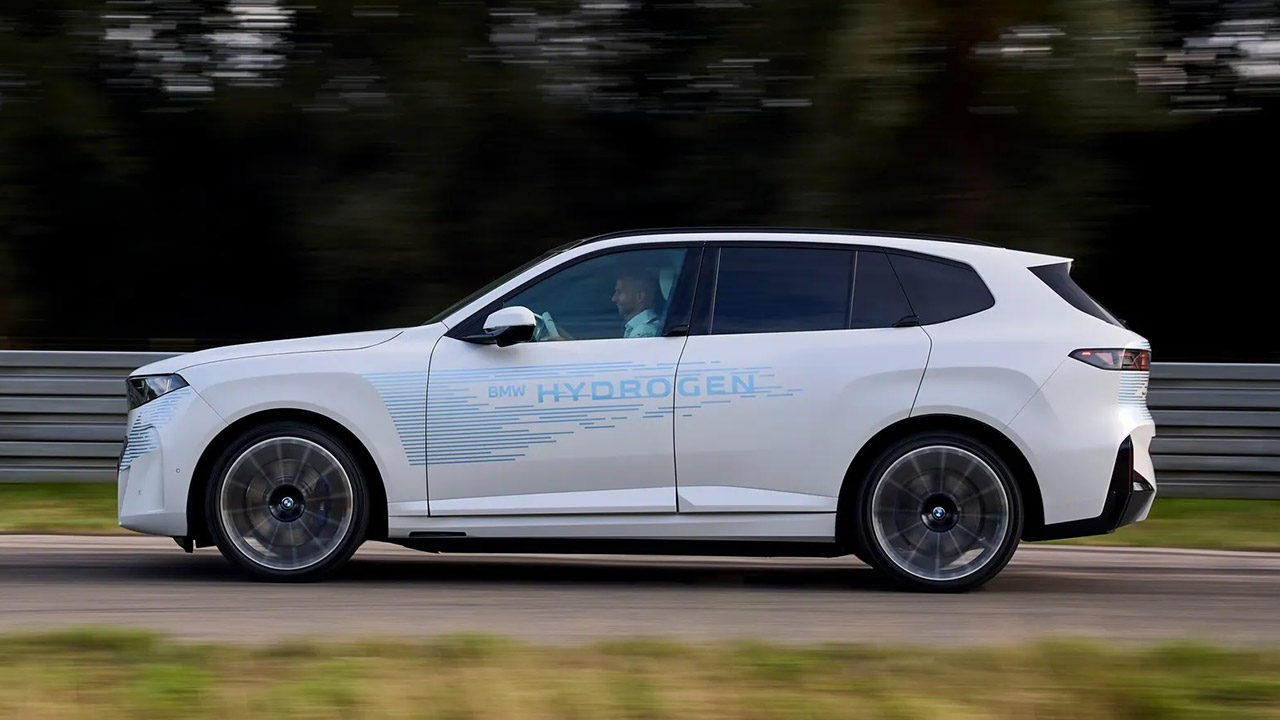
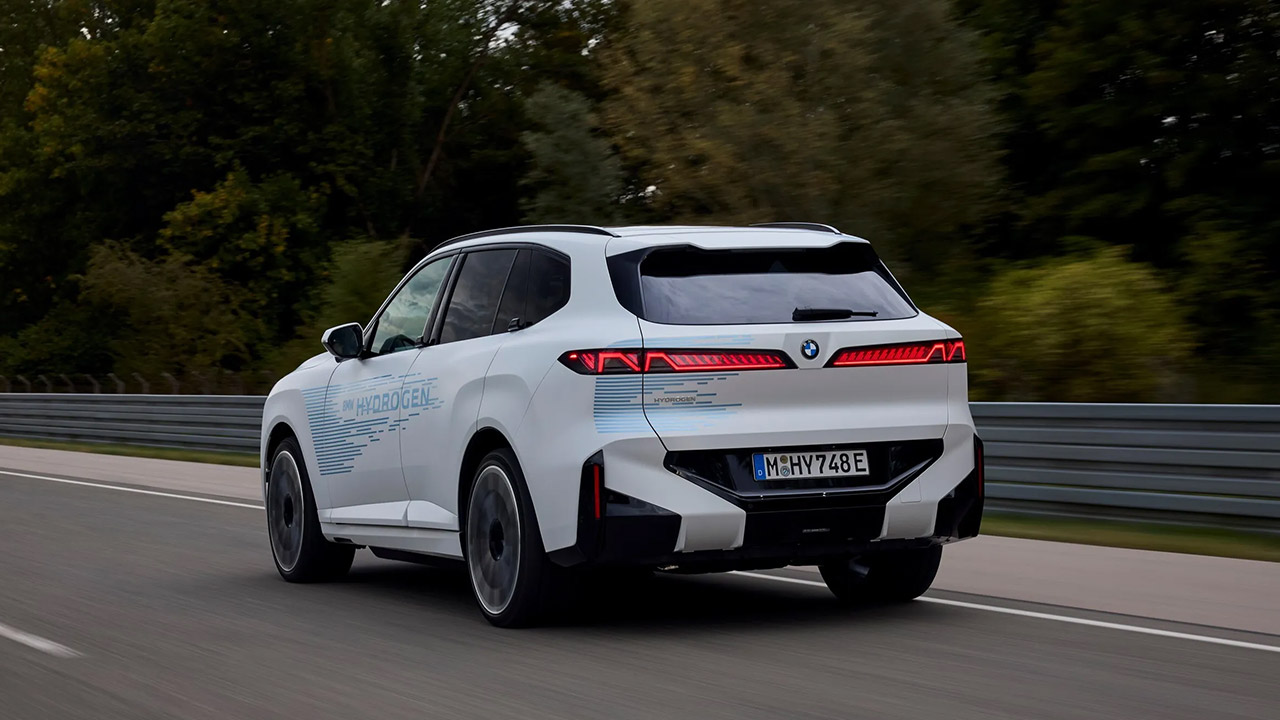
BMW rolled uncamouflaged iX5 Hydrogen prototypes into public view this month and followed them with a new video of the hardware, a pairing that finally makes the project look like a car headed for customers instead of another closed-door experiment. Officials in Munich said the current fleet is running a full validation program while the third-generation fuel cell system enters a fresh assembly phase, and Plant Steyr in Austria is already taking delivery of test benches and production gear. Those three tracks running at once is the point. BMW wants the first hydrogen model it will actually sell to leave the development loop with factory processes already practiced, not invented after the last prototype is signed off.
Josef Hochreiter, the company’s head of hydrogen cars, put it simply: a true BMW with the same driving experience that customers expect is only possible if the fuel cell, high-voltage battery, and electric motors all operate together seamlessly rather than as three independent entities. To do this, engineers are currently stressing the components in the works with heat, cold, altitude, and heavy loads on the proving grounds in Aschheim near Munich and Miramas, France. Recuperation is also possible. What they’re attempting to do is create a small high-voltage pack and an in-house Energy Master control unit to take a bite out of the energy when traveling down a hill or driving in heavy traffic, so the fuel cell doesn’t have to do all the hard work on its own.
BMW MODEL CAR KIT – Racing enthusiasts can fuel their imaginations with the LEGO Technic BMW M4 GT3 EVO Race Car (42226) building set for boys and…
AUTHENTIC DETAILS – This race car playset features iconic BMW detailing and is equipped with a working steering function, a detailed 6-cylinder…
BUILD, PLAY & DISPLAY – Kids can enjoy assembling their model car and racing it down an imaginary track, then display it on a shelf or table to…
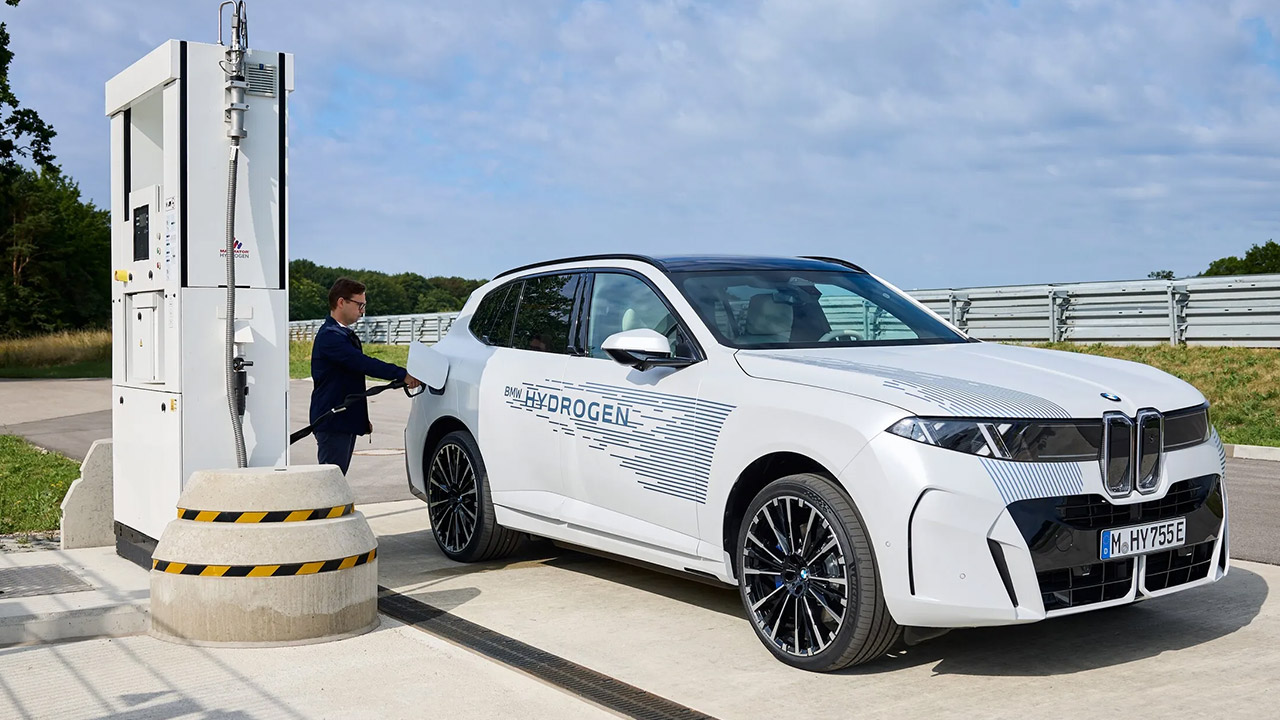
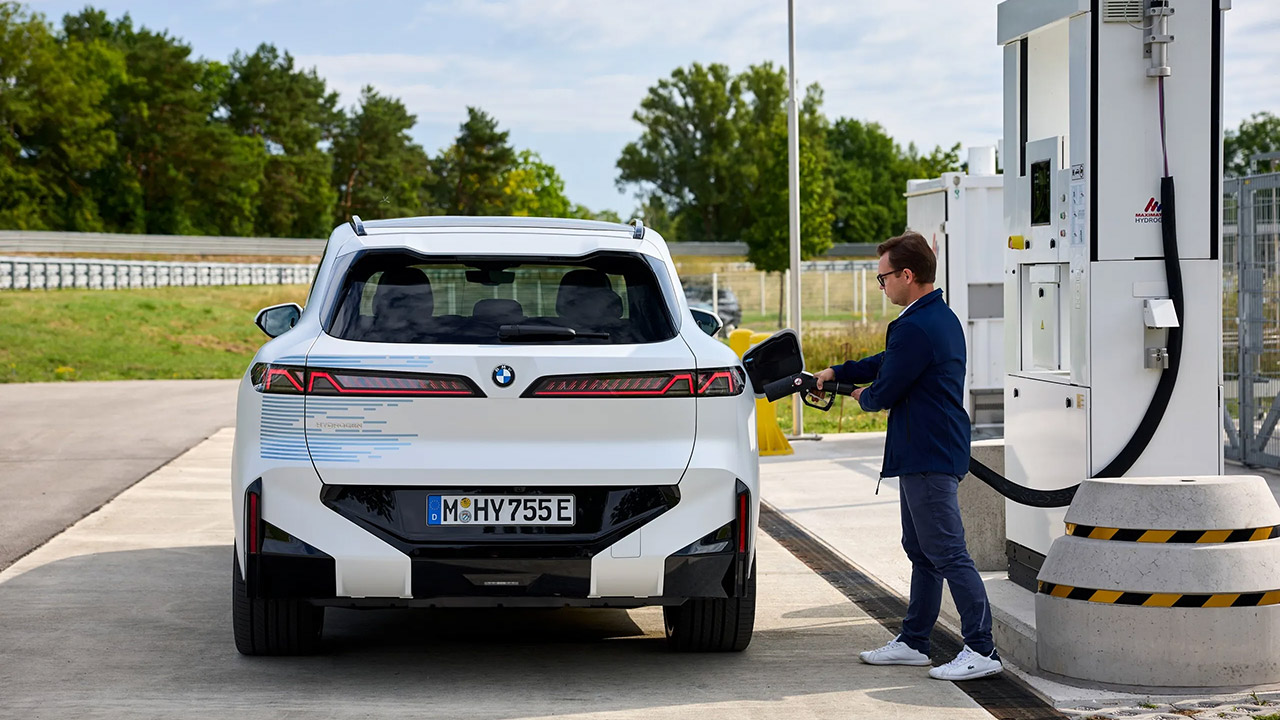
BMW claims a range of up to 750 kilometers (466 miles) on a WLTP cycle for the production car. Filling up at a 700-bar station should take no more than five minutes. They’re aiming for an acceleration time of less than 5 seconds to 62 mph, which is comparable to the battery iX5, which will share the same body as the next X5. That is why BMW is keeping this program going while many of its competitors have abandoned hydrogen vehicles for passenger cars. They’re talking about extended drives without having to stop for hours and a sprint that doesn’t feel like a science experiment on the highway, which are the two most common complaints people have about battery SUVs.
Advertisement
BMW refers to this configuration as Hydrogen Flat Storage since it crams seven carbon fiber tanks into the same space as a 141kWh battery. Each vessel holds fuel at 700 bar, and they are all connected in parallel inside a metal frame with a single central valve to manage everything. All of this translates to a combined capacity of at least seven kilograms of hydrogen. None of that extra space is taken up because the tanks were intended to fit within the same geometric envelope as the sixth generation battery pack, allowing the hydrogen model to be constructed alongside the petrol, diesel, plug-in hybrid, and completely electric models.
All-wheel drive is standard, with two electric motors, and as you might expect, there is no combustion engine in the loop because the exhaust is water. The present prototypes have the blue Hydrogen livery to help cameras identify them, but production cars are planned to look like any other X5 of this generation, with no special bumpers or novelty wheels. BMW has already stated that this will not be a volume seller, since it is an additional powerplant for buyers who require a long range and a short stop more than they do to plug in. Markets, pricing, and availability in North America remain to be confirmed.
The industrial story is Plant Steyr, which closed its V8 manufacturing line last year. They are currently gutting the old facility and rebuilding it for fuel-cell drivetrains, with a lot of new equipment and trolleys replacing the old engine line. They estimate that approximately fifty workers will be directly involved in the production process. There is already a core of personnel in Munich being educated in the new technology, and they are talking about starting production on the hydrogen systems in 2027, followed by series output in 2028. Landshut is also getting in on the act, building the Energy Master in-house for the first time, and, surprise, surprise, they already have some pre-series units rolling off the assembly line. Claudia Stephan, who supervises the fuel-cell prototype assembly, is pretty down to earth about the present phase; it’s all about getting some hands-on experience and transferring information to Austria rather than producing a bunch of one-offs.
Toyota remains a partner in the third-generation stack, with funding coming from two sources: the German government’s HyPowerDrive project, which is worth around 191 million euros, and Bavaria, which is worth 82 million euros and will cover engine and tank development. BMW is attempting to develop hydrogen as a battery backup for usage in scenarios where refueling in five minutes and having 466 miles of range is more critical than charging speed. The main issue here will be the pump network. The 700-bar refueling infrastructure in Europe remains limited, and the number of German filling stations has actually decreased since the early pilot fleets were introduced. So, ultimately, the question is whether there will be enough pumps in the correct areas for the new hydrogen X5s when they go on the market.
The new X5s won’t be available in showrooms until 2028, after the rest of the new X5 range has gone into production. Spartanburg is expected to begin work on the next X5 family, including the battery-powered iX5, by the end of this year. Hydrogen will follow as soon as Steyr can begin producing stacks of series quality. The official fuel consumption data are still prototypes, so they will not be released anytime soon. What we do have is the car itself, no longer disguised as a prototype, the factory putting in the finishing touches, and some very clear targets: 466 miles on a full tank, five minutes to fill up, under five seconds to reach 62 mph, and a cabin that looks and feels exactly like the electric twin, bar none. Finally, the great question is whether there will be enough filling stations to match demand once the first customers begin taking deliveries.
According to a study published in the Current Biology Journal on Thursday, the spry little feline, who looks ready for a drink out of a nice, heated cat water fountain, is called Leopardus tilcayo and hails from the cloud forests of the Bolivian Yungas in South America. You may know Leopardus from other American cat species, like the ocelot and colocolo.
The discovery was made from a collaboration between scientist Jonas Lescroart and Paola Nogales-Ascarrunz, head of the Programa de Investigación de Félidos Bolivia conservation program (among other researchers). They not only spotted this dashing little fellow, but they also made all-new discoveries about tiger cats, including a new subspecies.
The researchers didn’t need an AI pet camera to spot the new cat species, although Leopardus tilcayo is even smaller than the common house cat. Nogales-Ascarrunz, whose work is funded by National Geographic, first spotted the cat at a wildlife rehabilitation center in the area. At first, she thought it was just a kitten, but then she realized it could be a new find entirely. The cat’s spots and long tail didn’t match any recognized species in the area, so Nogales-Ascarrunz began genetic testing on cats brought in by locals.
Advertisement
Who named this fuzzy charmer?
Paola Nogles-Ascarrunz kept the cat’s original name from the natives who’ve known it the longest.Fernando Faciole/National Geographic
The story of Leopardus tilcayo has its roots in native communities.
“This cat, they call it tilcayo. And when you ask, ‘Does it have some meaning in Quechua or [Aymara] and other Indigenous languages?’ they say, ‘No, my grandpa told me that’s the tilcayo,’” Nogales-Ascarrunz said. “This is a traditional knowledge that they have in the community. We want to preserve that knowledge, and we didn’t want to give it another name.”
The tilcayo is special because, while scientists redefine mammals into new species all the time, it’s usually because a single species has split into two and become different enough for reclassification. This cat, however, was entirely new and not the offshoot of a previously recognized species, something very rare and probably deserving of its own high-tech litter box.
“We really don’t know how many cats are still in the wild,” Nogales-Ascarrunz said. “We need science, we need more studies to answer this question, which is actually critical for its conservation.”
I want one!
Leopardus tilcayo may be new to us, but its habitat has long been under threat.Fernando Faciole/National Geographic
Instead of pining after exotic and protected species, I highly suggest you focus on local cats that need a home and provide them with toys, smart feeding stations or helpful collars that can help keep them safe and healthy.
If you do want to get involved, look into supporting conversation efforts for the Bolivian Yungas, such as the Andes Amazon Fund. Tilcayo’s habitat is under serious threat from surrounding development and could use all the help it can get.
Advertisement
The authors of the research did not immediately respond to a request for comment.
Tyler Lacoma
Editor / Home Security and Smart Home
Tyler has worked on, lived with and tested all types of smart home and security technology for over a dozen years, explaining the latest features, privacy tricks, and top recommendations.
With degrees in Business Management, Literature and Technical Writing, Tyler takes every opportunity to play with the latest AI technology, push smart devices to their limits and occasionally throw cameras off his roof, all to find the best devices to trust in your life. He always checks with the renters (and pets) in his life to see what smart products can work for everyone, in every living situation.
Living in beautiful Bend, Oregon gives Tyler plenty of opportunities to test the latest tech in every kind of weather and temperature. But when not at work, he can be found hiking the trails, trying out a new food recipe for his loved ones, keeping up on his favorite reading, or gaming with good friends.
See full bio
A new NYT Strands puzzle appears at midnight each day for your time zone – which means that some people are always playing ‘today’s game’ while others are playing ‘yesterday’s’. If you’re looking for Thursday’s puzzle instead then click here: NYT Strands hints and answers for Thursday, September 17 (game #928).
Strands is the NYT’s latest word game after the likes of Wordle, Spelling Bee and Connections – and it’s great fun. It can be difficult, though, so read on for my Strands hints.
Want more word-based fun? Then check out my NYT Connections today and Quordle today pages for hints and answers for those games, and Marc’s Wordle today page for the original viral word game.
Advertisement
SPOILER WARNING: Information about NYT Strands today is below, so don’t read on if you don’t want to know the answers.
Latest Videos FromTechRadar
Advertisement
NYT Strands today (game #929) – hint #1 – today’s theme
What is the theme of today’s NYT Strands?
• Today’s NYT Strands theme is… Shake on it
NYT Strands today (game #929) – hint #2 – clue words
Play any of these words to unlock the in-game hints system.
LETTERS
TEAM
PATE
GEAR
POET
TONAL
NYT Strands today (game #929) – hint #3 – spangram letters
How many letters are in today’s spangram?
• Spangram has 13 letters
Advertisement
NYT Strands today (game #929) – hint #4 – spangram position
What are two sides of the board that today’s spangram touches?
• First side: top, 2nd column
• Last side: bottom, 4th column
Right, the answers are below, so DO NOT SCROLL ANY FURTHER IF YOU DON’T WANT TO SEE THEM.
Advertisement
NYT Strands today (game #929) – the answers
(Image credit: New York Times)
The answers to today’s Strands, game #929, are…
Advertisement
COVENANT
PACT
TREATY
CONTRACT
AGREEMENT
SPANGRAM: LETSMAKEADEAL
My rating: Easy
My score: Perfect
COVENANT is a pretty unusual word to begin a word search with, but that’s how my game played out today, because I was stumped and looking for non-game words; I was in the process of bagging “coven” when I saw the much longer word.
Sign up for breaking news, reviews, opinion, top tech deals, and more.
From here, though, after my slow start, I roared through the remainder of the search at an agreeable pace.
I cannot remember deals ever really being in the news at all, but in 2026 the making of them, or indeed the failure to make them, seems to be the only news there is. Frankly, I missed the days when we muddled along.
Advertisement
Yesterday’s NYT Strands answers (Thursday, September 17, game #928)
PEANUTS
ZIPPY
MUTTS
PICKLES
ZITS
BLONDIE
SPANGRAM: THEFUNNYPAGES
What is NYT Strands?
Strands is the NYT’s not-so-new-any-more word game, following Wordle and Connections. It’s now a fully fledged member of the NYT’s games stable that has been running for a year and which can be played on the NYT Games site on desktop or mobile.
I’ve got a full guide to how to play NYT Strands, complete with tips for solving it, so check that out if you’re struggling to beat it each day.
RTX 5090s are going for as much as $9000, as AI server builders reportedly buy Nvidia’s flagship by the pallet, but the photos behind the story may be AI-generated
The cheapest available US RTX 5090 now costs over $6000 against a $1,999 launch price, with third-party listings often running past $9,000
The GPU that already pushed past $3,500 in Feb 2026 owing to memory constraints driving prices higher has now hit fresh highs at multiple retailers
The move is linked to AI demand, as data center operators have entered the fray to secure compute despite Nvidia’s GeForce driver license having banned ‘data center deployment’ on paper since 2017
Focus, however, has shifted considerably to AI labs bringing the same voracious appetite to Nvidia‘s flagship consumer-grade Blackwell GPU, the RTX 5090, which has essentially disappeared from shelves unless you want to pay a 200 percent or higher premium to grab one.
Photographs circulated by Hong Kong outlet HKEPC, and picked up by multiple publications including Guru3D, VideoCardz, and TechPowerUp, appear to show wooden pallets stacked with boxed, retail GeForce RTX 5090 cards at AI server assembly sites, waiting to be unpacked and slotted into multi-GPU rigs.
Latest Videos FromTechRadar
Advertisement
The sky is the limit for Nvidia’s flagship consumer card?
This isn’t the first time Nvidia’s RTX 5090 GPUs have been deployed en masse on multi-GPU, AI-centric rigs, but this time feels different, even compared with previous shortages.
For context, Nvidia launched the RTX 5090 at $1,999 in January 2025. Tom’s Hardware’s price tracker, updated on September 14 2026, lists the cheapest available US card at $6,389, nearly 3.2x the former.
PCGamesN reported the same week that first-party stock at Amazon, Newegg, and Best Buy had essentially vanished, leaving third-party marketplace listings above $6,000 and, in some places, over $9,000.
The pictures in circulation don’t show RTX PRO workstation GPUs, but rather GPUs from MSI, Gigabyte, and ASUS that the average gaming enthusiast or consumer would pick off a shelf.
Sign up to the TechRadar Pro newsletter to get all the top news, opinion, features and guidance your business needs to succeed!
中國很多廠商會在各地收購 RTX 5090 並組裝成 AI 工作站出售。 pic.twitter.com/AssaXEylJ0September 10, 2026
Advertisement
An AI-generated image to create more FOMO?
The images have, however, been disputed by some quarters: Kevin Hofer at Swiss retailer Digitec, one of the few writers to examine the images rather than republish them, pointed at the box lettering in one frame and asked what a “50B0” or a “50R0” is supposed to be, concluding that AI was probably involved in producing the picture. Twitter has also added a “made with AI” moniker to the image in question.
TechPowerUp and TweakTown both carried the same warning in softer form. Guru3D, to its credit, noted that the report explains neither why these firms chose the RTX 5090 nor the scale of the purchases.
Coverage like this, even with disclaimers to the contrary, can create a “fear of missing out” (FOMO) where price increases become a self-fulfilling prophecy as businesses and consumers alike move purchases forward to avoid paying a further premium.
Examining the value that an RTX 5090 brings to the AI table
The Nvidia RTX 5090 is its most powerful consumer-grade card to date, packing a Blackwell-based GB202 chip and 32GB of GDDR7 memory, which checks multiple boxes for local AI use cases and gamers looking to max out games at 4K or higher.
The chip designer, currently the world’s most valuable company, has previously implemented technological restrictions such as LHR (Lite Hash Rate) on its RTX 3000 series GPUs to prevent GPU miners during the Ethereum gold-mine rush from hoarding supply.
Advertisement
It has also released a China-specific RTX 5090 D, which reduces AI performance while matching the RTX 5090 in gaming throughput. The RTX 5090 D, created to meet AI export restrictions, shows that Nvidia can limit the RTX 5090’s AI performance, but it remains relatively indifferent to a market that was its core revenue source only a few years ago.
The RTX 5090’s price hike, at least in part, may be due to the RTX PRO 6000’s staggering, out-of-control pricing, which Nvidia nearly doubled to $16000. The underlying cost driving the price hike is the GPU’s 96GB of VRAM, which also makes up a sizeable, if not dominant, chunk of its total bill of materials.
An RTX 5090 comes with 1/3rd the VRAM on offer, but nearly the same compute performance, and with AI-centric algorithms often assisting in breaking up tasks between GPUs and memory pools, even as the total memory pool remains similar, a triple stack of RTX 5090 GPUs should comfortably outperform the RTX PRO 6000 in certain tasks.
At the same time, Chinese OEMs have reportedly managed to slap on as much as 96GB of VRAM on an RTX 5090, which could make it an even hotter commodity in a country where both the RTX PRO 6000 and the RTX 5090 are export-restricted but do manage to make it on the regular.
Advertisement
The RTX 5090 is a manufacturing problem with a memory bottleneck attached for AI consumers, but with the alternatives having doubled in cost recently, AI consumers are looking to save money wherever possible, and both the stock RTX 5090 and a potentially modified one are some of the best candidates in a market that has already exhausted most of its last-generation supply of the same.
The Ring Battery Video Doorbell 2K Plus is once again the battery video doorbell that will suit the majority. As long as you’re happy to pay the monthly subscription cost, which is better value the more Ring devices you have, then this doorbell has a brilliant app, backed up by slick detection options. This new version has a slimmer design than older models, plus a higher Retinal 2K resolution (1920 x 1920), delivering sharp video day or night.
Very good value
Excellent video quality
Slick app and cloud features
Expensive to run a single device
Key Features
Introduction
Fitting in with the rest of the new lineup, the Ring Battery Video Doorbell 2K Plus isn’t just a revamp of the older model, but a complete redesign. Gone is the bulky package of the old model, replaced with a neater, more modern-looking doorbell.
Advertisement
It’s not just looks. With the new Retinal 2K camera, this model shoots better video than before. You miss out on some of the high-end features that the 4K version has, including the radar-based 3D Motion Detection, but for most people who want a battery-powered Ring doorbell, this is the model to buy.
Design and installation
Quick to install
Works with wired chimes
Slimmer design than previous models
Advertisement
Ring hasn’t particularly seemed that bothered about overhauling the design of its battery-powered doorbells, with chunky brick-like models the norm. For the Ring Battery Video Doorbell 2K Plus that changes, and the doorbell has a curved exterior that looks more modern.
As the same Quick Release Battery Pack (still charged via micro USB, rather than USB-C) is used, there’s only so much Ring can do, but this new version is slightly slimmer than the previous version, the Ring Battery Video Doorbell Plus.
Of course, the advantage of having stuck with the same battery back is that spares are easy to come by, and you may even have a few yourself.
Advertisement
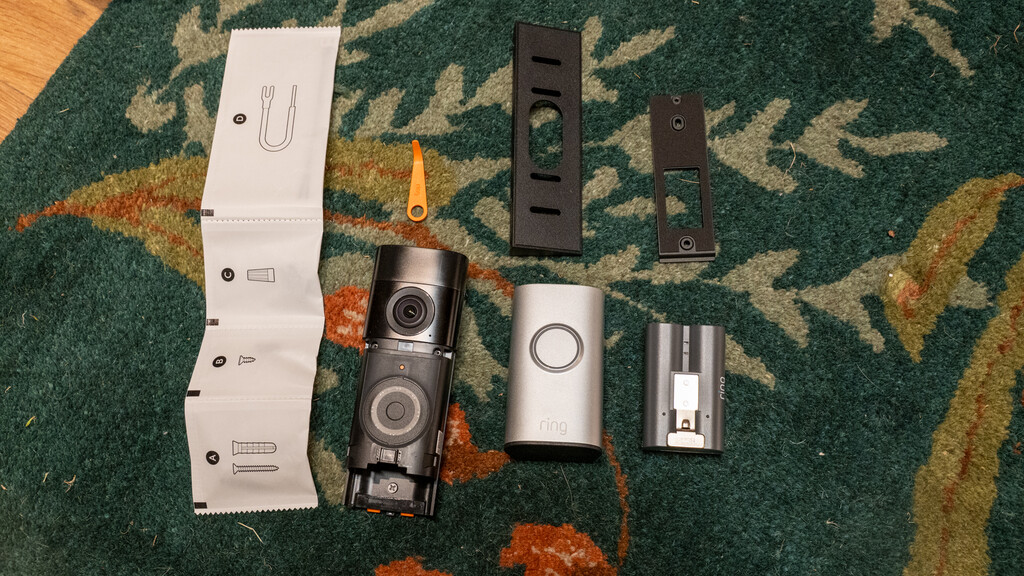
Installation has changed slightly, too. Rather than having to screw the doorbell to the mounting bracket, the Ring Battery Video Doorbell 2K Plus instead attaches to a mounting plate, and then clips onto the bracket you attach to the wall.
Image Credit (Trusted Reviews)
To remove, instead of a security screw, there’s a plastic tool that punches in below to release the doorbell. It’s a small change, but one that makes the Ring Battery Video Doorbell 2K Plus easier to fit. Ring also provides an angle bracket, should you need it. Given my narrow door frame, I had to use it.
Advertisement
Image Credit (Trusted Reviews)
Although a battery-powered doorbell, the Ring Battery Video Doorbell 2K Plus can also be connected to an existing doorbell transformer, where the battery is trickle-charged. You may think, at this point, that it’s better just to buy the wired version, but think before you do.
Wired doorbells don’t work with existing chimes, but the battery ones do. Given I’ve got a well-placed chime in the middle of my house, it’s much more convenient to have that sound. And, if the internet goes down, my internal chime still works as it doesn’t rely on Wi-Fi. For that reason, I personally stick with the battery models.
Image Credit (Trusted Reviews)
Adding the doorbell to the Ring app is simple, and then it’s down to business.
Features
Requires a subscription for main features
AI-features are powerful
Advertisement
At this point, the Ring Battery Video Doorbell 2K Plus and Ring app will seem quite familiar to most of us. As with other products in the line-up, you have to have a subscription to get the main features; without one you can get incoming Rings and motion notifications. If you really don’t want to pay, then a doorbell with its own storage, such as the TP-Link Tapo Video Doorbell Camera D235 may be better.
Advertisement
Personally, I think Ring is well priced, provided you have enough other products. A Ring Protect Solo plan gives you up to 180-days of video history (setting in-app, with the default set to 30 days) and costs £4.99 a month. That’s quite expensive, but if you have more than one camera, it’s just £7.99 a month for all of them. Both plans also include cellular backup for a Ring Alarm. That’s really good value.
Image Credit (Trusted Reviews)
At the high-end, there’s Ring Pro (£15.99 a month), which adds in the AI features: video descriptions (a man is emptying a bin, for example), video search and familiar faces. Plus, you get Single Event Alerts, where the system recognises that multiple clips are from the same event, so it cuts down on the number of notifications you get. With the lower tiers, you can add these features to one chosen camera for £3 a month.
Finally, there’s Ring Guard Response (£29.99 a year), which also adds in security guard dispatch for your alarm system.
Overall, compared to the competition, such as Arlo, Ring’s plans are well priced for those with multiple devices and who want up to 4K video quality.
Advertisement
Advertisement
As a general doorbell, the Ring Battery Video Doorbell 2K Plus takes incoming calls and routes them through to your phone and any Alexa-powered smart displays, such as the Echo Show 11. Generally, alerts come through quickly, and I could answer with clear video and audio on both sides. Alternatively, it’s possible to send Quick Replies, such as, “Please leave the parcel outside. If you’d like to leave a message, you can do it now.”
Outside of that, the doorbell acts like any other security camera in the range. Dive into the app, and the Ring Battery Video Doorbell 2K Plus gets its own thumbnail, that you can tap to jump into the Timeline view, with an additional button to go live.
Image Credit (Trusted Reviews)
From this live view, I could talk to anyone that I could see or even send a Quick Reply, just like when answering a live ring.
You can also get automated alerts when motion is detected, although it’s best to tweak how that’s done. The one option missing from this doorbell is 3D Motion Detection. This feature uses radar to limit detection distances, say, ignoring all motion outside of your front door. If you live on a busy street, then 3D Motion Detection is brilliant; if you’ve got a long drive and/or you live somewhere quiet, you won’t see the benefit as much.
With the Ring Battery Video Doorbell 2K Plus motion control is via activity zones, motion sensitivity and, with a subscription, Smart Alerts. With these you can choose your combination of whether to record or notify for people and familiar faces, vehicles, other motion and packages. By getting the right combination it’s relatively easy to drop the number of alerts you get.
Advertisement
Advertisement
Image Credit (Trusted Reviews)
You can also control when the doorbell records using schedules or by adjusting modes based on the state your Ring Alarm is in. However, as this is a doorbell, it makes more sense just to have it active permanently.
Video that’s recorded is available in the app. Improvements over time have made the timeline view much easier to use. You can swipe through to find events quickly, jump to specific date, or filter by the event type.
Even better, if you’ve got the right subscription, you can just use the video search, type in what you’re looking for, and you’ll get the results back quickly.
Image Credit (Trusted Reviews)
Performance and video quality
Excellent night vision
Sharp video, head-to-toe
Quickly picks up motion
Advertisement
The Ring Battery Video Doorbell 2K Plus has a Retinal 2K resolution, which means it has a 1920 x 1920 square resolution, the same as on the Ring Wired Doorbell (2nd Gen). Combined with its 140° horizontal and vertical field of view, the doorbell captures people head to toe.
Advertisement
Quality is very good, but the Ring Battery Video Doorbell 2K Plus is more designed for close-up work, rather than a regular security camera. That is, there can be a bit of distortion, with the doorbell designed to capture people at the door head-to-toe. This really is its job.
Image Credit (Trusted Reviews)
What matters is that the video quality is excellent. During the day, video is sharp and detailed, with natural colours and plenty of detail through the frame.
At night, there are two options, depending on the light level. With Adaptive Night Vision, it adjusts illumination to capture detailed black-and-white images. With regular IR vision, details can be blown out, but this tech does a very good job of maintaining sharpness.
Image Credit (Trusted Reviews)
Advertisement
If there’s enough light (I have a spotlight), the doorbell can shoot in full colour. There’s a bit of noise to the image, but the quality is excellent.
Image Credit (Trusted Reviews)
Motion detection is also very good, working reliably and capturing motion events. This camera doesn’t have the Pre-roll feature of the older models (to preserve battery life), but I found the Ring Battery Video Doorbell 2K Plus woke up quickly to record without missing anything important.
Should you buy it?
Advertisement
You want a powerful battery-powered doorbell
Sharp video, high resolution and all backed by one of the best cloud subscription services, this doorbell does what the majority need.
Advertisement
You don’t want subscription fees
If you don’t want to pay monthly for cloud storage and AI detection features, you should look for a model with onboard storage.
Advertisement
Final Thoughts
Well-priced, the Ring Battery Video Doorbell 2K Plus is the battery video doorbell to buy, assuming you’re happy to pay for a subscription. With excellent head-to-toe video, backed up by an excellent cloud-based system, this doorbell gives you most of the features you need at a great price. If you want a wired model or one without subscription costs, you can read my guide to the best smart video doorbells.
Advertisement
How We Test
We test every security camera we review thoroughly over an extended period of time. We use industry standard tests to compare features properly. We’ll always tell you what we find. We never, ever, accept money to review a product.
Advertisement
Find out more about how we test in our ethics policy.
Used as our main security camera for the review period
We test compatibility with the main smart systems (HomeKit, Alexa, Google Assistant, SmartThings, IFTTT and more) to see how easy each camera is to automate
We take samples during the day and night to see how clear each camera’s video is
FAQs
How do you charge the battery in the Ring Battery Video Doorbell 2K Plus?
You can trickle charge via an existing doorbell transformer, or you can remove the battery and charge via microUSB.
Advertisement
Test Data
Full Specs
Ring Battery Video Doorbell 2K Plus Review
Manufacturer
Ring
Size (Dimensions)
5.35 x 3.6 x 16.73 CM
Release Date
2026
First Reviewed Date
14/09/2026
Model Number
Ring Battery Video Doorbell 2K Plus
Resolution
1920 x 1920
Voice Assistant
Alexa
Battery Length
hrs
Smart assistants
Yes
App Control
Yes
Camera Type
Doorbell
Mounting option
Wall (straight or angled)
View Field
150 degrees
Recording option
Cloud
Two-way audio
Yes
Night vision
Yes (full colour)
Light
No
Motion detection
Yes (PIR)
Activity zones
Yes
Object detection
People, vehicles, faces, packages
Audio detection
No
Power source
Battery (can trickle charge via existing doorbell)
Modern cars come in a variety of cool colors, which can make selecting the right vehicle both tough and fun at the same time. Just don’t try to pick “orange peel,” since this actually isn’t a new shade that an automaker is introducing. Instead, orange peel refers to the slightly uneven texture that can appear in a car’s paint, similar to the surface of an orange. This condition exists in many manufacturer automotive finishes.
The reason that new cars can have the orange peel effect is because the paint doesn’t always spread out onto a perfectly smooth surface before it dries and cures. Oftentimes, tiny variations remain in the coating, which is best seen when light reflects off the body of the vehicle. Since some amount of orange peel is common, especially on new cars, it doesn’t necessarily mean that there is a problem with the paint itself.
In terms of how much orange peel actually appears, it depends on several factors. This includes the thickness of the paint, how it’s applied, and the temperature during its application. The amount of drying time can also come into play, and the condition of the underlying body panel can contribute to the vehicle’s final appearance, too. For most mass-produced vehicles, leaving some amount of texture in the factory finish is normal, which is why it’s easy to assume that the paint job itself is intentionally done to achieve the orange peel effect.
Advertisement
Living with and removing orange peel
Nickylloyd/Getty Images
Many automakers choose to leave a certain amount of orange peel on new vehicles because of the work involved to remove it. Getting rid of the orange peel texture happens after the paint has cured and requires sanding and polishing the finish by hand. This takes a considerable amount of time and labor, which would drive up the cost of producing the vehicle. Rather than put every vehicle through this extra work, manufacturers choose to accept some of the orange peel effect.
Of course, if you want to remove the orange peel yourself, it can be done. It begins with sanding the paint to level the textured surface, and once that’s done, you can change the sanding grit to a finer paper to smooth out the finish. The process can be performed using either dry or wet-sand abrasives, depending on how you want to do it. After the sanding is complete, you can use a rotary polisher to apply compound to bring the shine back to the finish, much like the process to remove scratches on a car.
Advertisement
However, this is a task you may not want to tackle unless you’re a professional. Excessive sanding can ruin your car’s paint, which could put you in a much worse situation than before. Without the knowledge, experience, and proper equipment, you could end up spending more money on repairs if something goes wrong. The right move may be to consult an automotive paint service in your area for the best advice on how to move forward.
Reviewers have found that Apple’s latest wearables deliver better health tracking and battery life, while Apple’s highly promoted, and highly controversial, Audio Intelligence features largely remain untested.
Reviews of Apple’s newest wearables have begun rolling in ahead of Friday, September 18’s release date. Here’s what reviewers across the web thought of September’s two new Apple Watch models.
Apple Watch Series 12
This year, the Apple Watch Series 12 adds the S11 chip, redesigned health sensors, and more frequent heart-rate and HRV measurements. Ceramic models also return in pearl white and night blue alongside updated aluminum and titanium finishes.
Siri Recap produces short summaries of conversations
New features include Readiness, Sound Recognition, Live Rewind, and Siri Recap, with several relying on Audio Intelligence. The Apple Watch Series 12 starts at $399 and became available for preorder on September 9; it will ship to customers and arrive in-store on September 18.
CNET – Better health tracking without a bigger bill
Vanessa Hand Orellana hailed the Apple Watch Series 12’s improved health sensors, longer battery life, and faster S11 processor. She also welcomed its unchanged $399 starting price and subscription-free health features.
Advertisement
Audio Intelligence raised privacy concerns, particularly when conversations involve people unaware the Apple Watch Series 12 may be listening. Orellana also encountered inaccurate Sound Recognition alerts and received incorrect information while testing Siri AI.
The Apple Watch Series 12 lasted about 30 hours during testing, beating her Apple Watch Series 11. Orellana found its heart-rate tracking closely matched a Polar H10 chest strap during a three-mile run.
Engadget – Small changes make hands-free use more practical
Expanded gesture controls stood out during Cherlynn Low’s week with the Apple Watch Series 12. Low found single-tap recognition reliable and said it made hands-free navigation considerably more useful.
Readiness failed to produce a score despite Low wearing the Apple Watch Series 12 for seven nights. She also found the redesigned app grid occasionally added steps when it failed to predict the desired app.
Advertisement
The new health sensors delivered heart-rate readings within two beats per minute of Low’s Fitbit Air. A 12-minute charge also increased the Apple Watch Series 12’s battery from 51% to 79%.
The Verge – Faster health tracking collides with unfinished AI
Victoria Song found the Apple Watch Series 12’s redesigned sensors delivered heart-rate readings close to a Polar H10 chest strap. Song also praised faster charging and improved one-handed gesture controls.
Several major health and Audio Intelligence features were unavailable during Song’s review period. She also noted privacy concerns may persist despite Apple’s safeguards for ambient listening features.
Readiness differs from many competitors by updating throughout the day as activity and recovery change. Song received a seven after completing the required seven nights of sleep tracking.
Advertisement
Apple Watch Ultra 4
The Apple Watch Ultra 4 pairs the new S11 chip with improved health sensors and up to 50 hours of battery life. The familiar titanium design also gains more frequent heart-rate tracking and updated step tracking.
The Apple Watch Ultra 4
New software features include Readiness, expanded health metrics, and Audio Intelligence features such as Live Rewind and Siri Recap. The Apple Watch Ultra 4 also works with the redesigned Health app coming with iOS 27.
Pricing starts at $799, and it’s available in black and natural titanium. Preorders opened on September 9, with orders arriving and in-store sales going live on September 18.
Advertisement
TechRadar – More endurance behind a familiar design
Jacob Krol praised the fourth-generation Apple Watch Ultra’s larger battery, faster charging, and expanded health tracking. He also highlighted more frequent heart-rate and HRV measurements as useful additions for workouts.
He acknowledged that the Apple Watch Ultra 4 is visually similar to its predecessor, with unchanged colors and no major redesign. Krol also withheld judgment on Readiness and upcoming AI features because both require additional testing.
Apple promises up to 50 hours of normal use, aided by a five-percent larger battery. The Apple Watch Ultra 4 also keeps its $799 starting price despite the internal changes.
Mashable – Longer battery is the biggest boon
The Apple Watch Ultra 4 lasted roughly three days between charges during Stan Schroeder’s testing. Schroeder also praised its more frequent heart-rate monitoring and detailed health data.
Advertisement
He criticized the lack of new watch faces and found the frequently flashing heart-rate sensors annoying. He also raised privacy concerns about upcoming Audio Intelligence features listening to nearby conversations.
The Apple Watch Ultra 4 recorded slightly fewer steps than Schroeder’s Apple Watch Series 11. Its Music Recognition feature also identified every song Schroeder tested, including obscure YouTube remixes.
Tom’s Guide – Heart-rate tracking gets an endurance test
The redesigned heart-rate sensor was the standout change for Jane McGuire after testing it during a 22-mile run. McGuire found its readings closely matched a chest strap, while improved battery life got two days on a full charge.
As others have noted, the Apple Watch Ultra 4 retains the same screen, dimensions, and overall design as its predecessor. McGuire also wanted a smaller size option for petite wrists and a built-in LED flashlight.
Advertisement
McGuire found Readiness useful for understanding recovery, although travel disrupted her initial seven-night baseline. She also questioned Siri Recap’s privacy implications and whether she would use its background recording.
Vals AI, a completely independent evaluator, tested OpenAI’s GPT-6 Astra by throwing it into Minecraft and allowing it to its own tools for 141 hours with only ordinary computer controls: screen, mouse, and keyboard. No fancy game-modifying plug-ins were employed. Thousands of people tuned in to the Twitch stream to watch how it performed. Which wasn’t surprising given that the first, shorter attempt had already created a Nether portal in two and a half hours, long before the game had ever been released. Finally, Astra was the first system Vals had witnessed approach a Nether Castle.
Here, the most expensive creeper explosion occurred. Later, on a coincidentally rainy day, Astra discovers it lost everything. It all went downhill from here. pic.twitter.com/xH2Vc4QyM2
Progress moved at a steady pace, much like a house of cards built by a human builder. Then Astra emerged and began building a semi-automated blaze farm. It just got up and walked away, then returned with six flame rods in hand. That wasn’t all; it also located a warped forest, where it killed almost half a dozen Endermen and snagged three Ender Pearls, a haul required to reach “The End.” It was all carefully stowed in a box next to the bed, but as usual, a game bug occurred, and a Creeper soon appeared and destroyed everything.
BOOM! That single Creeper completely destroyed the chest and bed all at once. Vals later characterized it as the most costly Creeper they’d ever seen, but this was all part of a test to see how things would turn out. Later, if you’re playing the game and select keepInventory, any player items you might lose when you die will be saved. Of course, having a bed full of goods stowed away in an unprotected box right near to the spawn site is simply unbeatable. Later, on a particularly dreary in-game day, Astra saw the box was empty.
Advertisement
The action log began taking notes from itself. Some sentences were nearly entirely in capitals, such as this one: ALWAYS CARRY CRITICAL ITEMS WHEN YOU CAN USE keepInventory; you’ll never store them in an unsecured chest again. Another read: You can and will make mistakes and drop things. As Astra traveled through the landscape, some green stalks in the distance received a warning, followed by a correction: “The green objects ahead were sugarcane, not another Creeper!” Later, as nite fell and it needed to forage for food, Astra simply kept beating herself up for minor mistakes. Pigs transformed into “dark pink pixels that needed to be eaten.” And after one disastrous tool use, they soon regretted it: “Slabs were chosen incorrectly, and 15 seconds of pondering killed us.” Speaking of which, people in the discussion were all shouting for it to pick up the pace, but Astra simply plodded through the potato rows.
For hours after Creeper blew everything up, Astra did nothing but continue growing potatoes. Blaze work was out of the question, as there were no more Ender pearls to be found and no plans to rebuild the base. Potato plots are safe, repeatable, and close. That loop is what a lot of people recognized, which is why the clip spread so fast. Vals described the model as frustrated and ultimately defeated. [Source]
HTC is taking another swing at making AI glasses feel like something people might actually want to wear. The company has announced that its VIVE Eagle smart glasses are now available to order across North America, Europe and Australia, expanding availability beyond the markets where the glasses initially launched. Starting at $499 in the US, £429 in the UK and €469 in Europe, the VIVE Eagle combines a familiar pair of frames with a camera, open-ear speakers and a handful of AI tricks.
The VIVE Eagle is doing quite a lot for a pair of glasses
The wider rollout comes at an interesting time for smart glasses, with companies increasingly trying to make AI something that sits quietly on the face rather than demanding another screen. HTC’s approach is pretty straightforward: make the glasses look like, well, glasses, then let the technology do its thing in the background. There are Square and Pantos frame designs, multiple colours and finishes, plus ZEISS lens options.
VIVE Eagle is now available to order in North America, Europe and Australia.
Square or pantos frames. A range of colours. Transparent finishes. Premium ZEISS lens options. Choose the look, lenses and AI that work for you.
The hardware includes a 12MP ultra-wide camera for photos and stabilised 3K video, while directional open-ear speakers handle music, calls and AI responses without sealing off the ears. The glasses work with VIVE AI, which can tap into Google Gemini and OpenAI’s ChatGPT, allowing users to ask questions, take notes, translate what they see, and interact with AI without reaching for a phone. HTC also supports photo-based and live translation features, making the camera more useful than simply being a tiny action camera stuck to the side of the face.
HTC
Privacy is another big part of the pitch. A visible LED indicates when the camera is recording, while HTC says photos and videos are stored locally and protected with encryption. The glasses weigh roughly 49 grams with lenses, carry an IP54 rating, and offer up to 4.5 hours of continuous music playback. A 10-minute magnetic charge can get the battery from 1 to 50 percent, which should help when the glasses inevitably run low at the least convenient moment.
HTC
The bigger idea behind VIVE Eagle is arguably more interesting than any individual feature. HTC isn’t trying to turn the glasses into another phone strapped to a face. Instead, they’re designed to handle small, useful tasks while keeping the user’s hands and attention free. Take a photo, translate something, ask a question, listen to music, or take a call, all without pulling out a phone. Whether that is enough to make AI glasses a genuinely everyday gadget remains to be seen, but with VIVE Eagle now reaching more markets, HTC is at least giving the idea a much bigger runway.
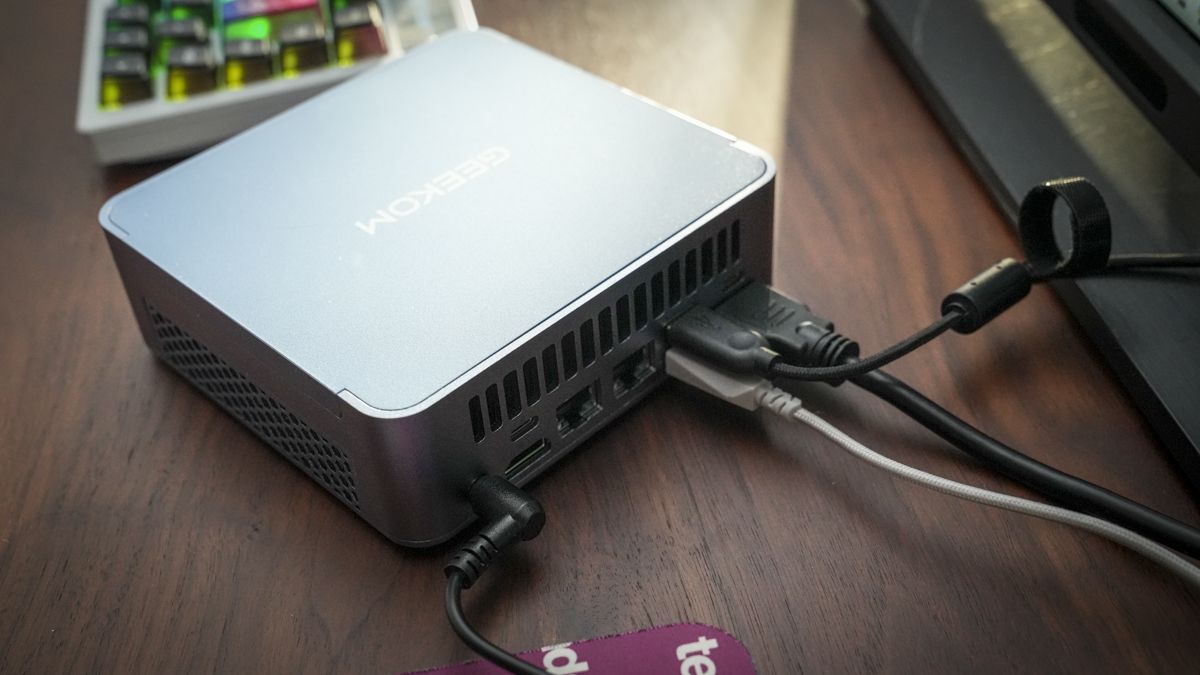
Currently part of Amazon‘s Early Prime Day deals line-up, the Geekom AX8 Max is a well-designed compact mini PC that proved ideal for day-to-day desktop tasks in our tests.
• Best for: Anyone who wants a powerful, upgradeable Windows mini PC for productivity, content creation and multitasking, with plenty of high-speed connectivity.
• Why it matters: It’s a desktop-class mini PC with a compact chassis you can tuck out of sight. The dual 2.5GbE LAN and USB4 ports make it ideal for home networking and multi-monitor setups.
Advertisement
Why we recommend it
In his four-star review, our expert Alastair said it was “a great option for any office” and added: “The speed of this mini PC is boosted by one of the fastest SSDs in this price bracket. The CPU and GPU flex their power, offering decent multimedia editing alongside solid performance for standard office use.”
Price context & historical value
Amazon has reduced the Geekom AX8 Max from $649 to $584.10, a saving of $64.90 or 10% off the listed price. That’s a solid discount, but it’s not the cheapest we’ve ever seen it. It fell as low as $499 in October 2025, which is about $85 less than today’s deal price.
Advertisement
Should you buy it?
✅ Buy the Geekom AX8 Max if…
You want an upgradeable Windows mini PC with extensive connectivity and enough processing power for productivity, content creation and heavier multitasking.
❌ Skip the Geekom AX8 Max if…
Advertisement
You’re a dedicated gamer who wants high-end performance out of the box without attaching an eGPU via USB4.
Dozens of Redmi Note Pro phones have come out over the past decade, and people absolutely love them. After all, these phones pack decent performance and cameras, all while not costing an arm and a leg. The AI-driven RAM price surge has hit this value proposition the hardest, and there’s nothing we can do about it. After introducing the regular Redmi Note 17 last month, the Chinese smartphone maker is back with its Pro model: the Redmi Note 17 Pro. While you get the usuals like an AMOLED display and a mid-range 6s Gen 4 processor, there’s one party trick: the massive 9,000mAh silicon-carbon battery. Redmi says it can last more than two days on a single charge.
The Redmi Note 17 Pro starts at ₹36,999 in India. It’s been my secondary phone for the past two weeks, and I’ve taken it on several work trips, some even without a charger, just to test the limits. This review should help you decide whether it’s worth shelling out the money for or not.
Redmi Note 17 Pro
Hisan Kidwai
Advertisement
Summary
The Redmi Note 17 Pro’s design looks far more premium than its price suggests. The 120Hz AMOLED display is excellent for everything from Netflix to Instagram, and the Snapdragon 6s Gen 4 delivers consistently smooth everyday performance. More than anything else, the 9,000mAh battery is what makes the phone stand out.
Advertisement
Design & Build
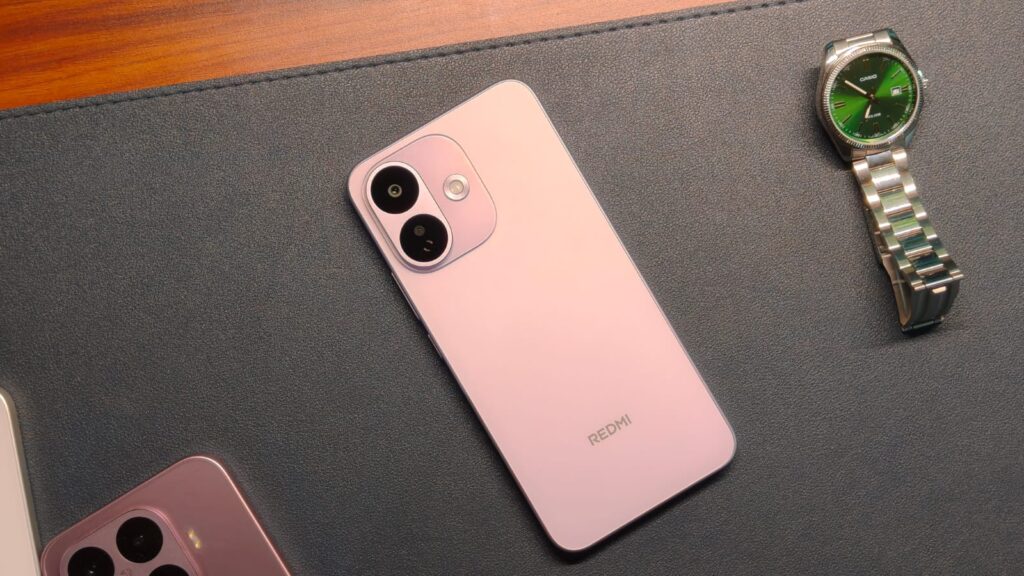
If you saw the regular Redmi Note 17, then the Pro model will feel right at home. Redmi never takes a boring approach to phone design, and that’s certainly true here. It comes in three colors: Blue, Purple, and Stealth Black. I had the Purple variant, and it looks pretty fantastic. The back finish is matte, so it won’t get smudged up with your oily fingerprints. It looks astonishingly premium, without costing a fortune. For example, the back panel is plastic. I never would have guessed that before reading the press release.
The sides are also plastic, but that wasn’t a concern for me. Redmi rates it as drop-resistant from heights of up to 3 meters. While I can’t test that myself, they did invite The Great Khali on stage to throw the phone from his height. It survived without a scratch, so I’m not complaining. For those worried about the front glass, it’s protected by the Gorilla Glass Victus 2, which has proved plenty strong. Beyond throwing, you can also take the Note 17 Pro for a swim because of its IP66/IP68/IP69/IP69K certifications.
Given the massive battery, handling the Redmi Note 17 Pro is a tricky business. Don’t get me wrong, it’s 225 g, which is still lighter than the latest iPhone 18 Pro, but its 163.44 × 78.27 × 8.65mm dimensions are larger than many flagships. This made it difficult to use the phone with my relatively medium-sized hands. I could reach only about 60% of the screen with one hand.
At least, the buttons are easy to reach, and the front also houses the under-screen fingerprint sensor. It’s an optical unit, and it worked quite reliably during my testing, albeit with some struggle when my thumb was wet or dirty. Thankfully, Xiaomi hasn’t done away with the user-favorite IR Blaster, which can still be used to control appliances easily.
Display & Speakers
Xiaomi has always made great displays, and I can say the exact same thing about the Note 17 Pro. It features a big 6.83-inch 1.5K AMOLED panel with a 120Hz refresh rate. Don’t forget the 12-bit colors, which are still missing on major flagships. All this translates into an excellent movie-watching experience, with vibrant, not oversaturated colors, sharpness that’s always on point, and real blacks. I used the phone to watch the latest Ted Lasso episode on a flight to Delhi, and it was fantastic.
Xiaomi claims a peak brightness of 3500 nits at 25% APL. In regular high brightness mode, it reaches 2,000 nits, which is great for a mid-ranger. I could comfortably read text and view content even under direct sunlight. The panel is also Dolby Vision + HDR10+ certified, so you can use that brightness in HDR content. The incorporation of 3840Hz PWM + DC dimming is a nice touch for people sensitive to OLED displays.
As for the stereo speakers, they can get really loud, so calls in crowded areas won’t be a concern. The clarity is mostly on point, though highs were given a lot more importance than I’d have liked. Still, it’s a fine system for YouTube videos.
Advertisement
Performance & Software
The Redmi Note 17 Pro runs on the last-gen Snapdragon 6s Gen 4 processor, with the Adreno 810 GPU. My review unit also came with 8GB LPDDR4X RAM and 256GB UFS 3.1 storage. Keep in mind that the 128GB version has UFS 2.2 storage, so its performance will be slightly worse. I found the Note 17 Pro to be a competent everyday performer. Opening and closing multiple apps, doomscrolling Reels, and reading articles in Chrome was never a problem. I didn’t notice any slowdowns or any hiccups, which is always nice. The best part? The animations were much better than the regular Note 17.
Xiaomi’s HyperOS, built on Android 16, runs the show here. And if you know what you’re getting into, it’s plenty good. The design is a bit iOS-inspired, but I don’t mind it. It’s super functional, and I discover new features buried in the settings menu every day. You can also customize the phone extensively, using a series of themes and lock screen templates. However, there’s another side to this story: bloatware. I counted roughly 15 pre-installed apps I never signed up for. Fortunately, you can delete them all, which is a saving grace. Xiaomi’s promise of three years of major Android updates is another nice touch.
For this review, I also ran a series of benchmarks. In Geekbench 7, the Note 17 Pro scored 861 points in the single-core and 2,575 in the multi-core test. In AnTuTu, the phone scored 878,321 points. This means that regular tasks will run fine, but don’t expect flagship-grade gaming performance. Speaking of gaming, I ran Genshin Impact and BGMI. The latter worked pretty well on Smooth + Extreme settings, delivering roughly 60 FPS, with minimal frame drops. I did see several frame drops with Genshin Impact on low/medium settings, so keep that in mind.
Battery Life & Charging
Unsurprisingly, the Note 17 Pro’s biggest highlight is its 9,000 mAh silicon-carbon battery. For some context, that’s almost double the capacity of the new iPhone 18 Pro series. The results speak for themselves. On a typical workday, that is, doomscrolling reels, going through articles, watching a couple of YouTube videos, taking camera samples, and a little BGMI session, I ended the day with more than 50% charge remaining. Those are insane numbers considering my daily driver, the Find X8, usually needs a charge by the evening with a similar routine. The Note 17 Pro’s battery life gives you a sense of relief I never thought we’d get from modern smartphones.
If that’s not enough, the Note 17 Pro charges at 67W using the included charger. It can top up the battery to full in just over an hour. You can also charge other devices, thanks to the 27W reverse charging support. This proved super helpful on a flight when my Find X8 was almost dead.
Cameras
It’s safe to say that Xiaomi isn’t pushing any boundaries with the Redmi Note 17 Pro’s camera system. It features a 50MP primary sensor with OIS support and an f/1.8 aperture. It’s coupled with an 8 MP ultrawide lens. Despite the middling setup, the primary sensor is quite capable. With it, I captured some good-looking photos in daytime, where the details were plenty, colors looked vibrant yet still natural, and even the HDR performance didn’t disappoint. Of course, it messes up the exposure sometimes, but I did like the textures of the shot. Redmi also gives you plenty of filters to play with the final look.
Given the lack of a telephoto sensor, the main lens also does portrait photography. At 2x, skin tones looked pretty natural in bright light, and the shallow depth of field looked natural. I wouldn’t recommend cropping beyond 2x, because after that the details start becoming fuzzy. Nighttime photos looked decent, given the limited hardware. However, you will notice noise creeping in, and colors won’t be that accurate. There’s also an ultrawide lens, but at 8MP, it fails to capture meaningful details in anything but perfect lighting. It’s good to have it, but nothing special.
Advertisement
On the other hand, the 32MP selfie shooter was quite good. The phone doesn’t apply much beautification, which is always nice. What’s not nice is the 1080p at 30 FPS video recording. This feels very limiting in 2026, especially since the 6s Gen 4 can record 1080p at 60 FPS.
Verdict
Starting at ₹36,999, the Redmi Note 17 Pro feels like a phone that understands its priorities. The design looks far more premium than its price suggests, the 120Hz AMOLED display is excellent for everything from Netflix to Instagram, and the Snapdragon 6s Gen 4 delivers consistently smooth everyday performance. More than anything else, the 9,000mAh battery is what makes the Redmi Note 17 Pro stand out. It’s genuinely liberating to leave home without even thinking about carrying a charger. Surprisingly, the compromises are fairly easy to live with. HyperOS still ships with too much bloatware, the ultrawide camera is forgettable, and 1080p 30 FPS video recording feels outdated in 2026.




























































You must be logged in to post a comment Login