
Crypto World
WisdomTree plans MoonPay access for WTGXX



WisdomTree and MoonPay have announced a Sept. 17 collaboration to build another U.S. access route to the WTGXX tokenized Treasury money market fund while MoonPay plans to use the fund in its stablecoin reserve management.
Summary
- WisdomTree plans MoonPay access to WTGXX for eligible U.S. investors through its regulated broker-dealer network.
- MoonPay plans to use WTGXX as part of its stablecoin reserve management under the collaboration.
- WTGXX invests in cash, short-term Treasuries, Treasury-backed repos, and registered government money market funds exclusively.
- MoonPay says its network includes more than 35 million accounts and over 1,700 partner businesses.
- WisdomTree has already enabled 24/7 trading and instant settlement for WTGXX within U.S. regulatory rules.
WisdomTree said the planned connection will use MoonPay’s blockchain technology and distribution network, which the companies said reaches more than 35 million accounts and over 1,700 partners. MoonPay has not identified a stablecoin that will hold WTGXX reserves, disclosed an allocation amount or given a date when the investor access point will become available.
MoonPay access to WTGXX remains under development
The arrangement is designed to give eligible U.S. investors another route into WTGXX outside WisdomTree’s existing direct channels. Transactions in the regulated fund will still involve WisdomTree Securities, Inc., the broker-dealer that distributes WTGXX.
MoonPay will supply technology and access to its customer network, but WisdomTree states that MoonPay is not acting as a broker-dealer or investment adviser for WTGXX. The distinction keeps the securities activity tied to WisdomTree’s regulated distribution structure.
No launch date appears in the announcement. WisdomTree describes the MoonPay access point as something it “is building,” while the technology is “expected to support” access once the planned integration is ready. Those statements describe future work and do not confirm that retail investors can buy WTGXX through MoonPay today.
Jonathan Steinberg, WisdomTree’s founder and CEO, said the companies want to create another path for eligible U.S. investors to move assets into the fund.
“Working with MoonPay as an access point can give eligible U.S. investors another path to deploy their assets into WTGXX,” Steinberg said. The wording describes the intended product structure, not a completed rollout.
MoonPay says its U.S. regulatory footprint includes a New York BitLicense, a New York Limited Purpose Trust Charter and money transmitter licenses. Its corporate description lists operations across fiat payments, crypto trading, commerce and stablecoin infrastructure.
WTGXX was reworked for stablecoin reserve eligibility
WTGXX is an open-end money market mutual fund registered under the Investment Company Act of 1940. Its investment objective is to generate current income while preserving capital and liquidity and maintaining a stable $1.00 net asset value per share.
The latest SEC-filed prospectus requires the fund to keep at least 99.5% of total assets in government securities, cash and fully collateralized repurchase agreements. Under normal conditions, WTGXX invests exclusively in U.S. dollar cash, short-term Treasury securities, overnight Treasury-backed repos and registered government money market funds.
WisdomTree changed the product’s name and investment policy in November 2025 specifically to address stablecoin reserve use. An SEC-filed notice said the changes were intended to make the fund an eligible investment option for payment stablecoin issuers seeking to comply with the GENIUS Act and related rules.
The current prospectus carries the same language. It says WTGXX invests in a manner intended to satisfy the types of eligible reserve assets permitted for payment stablecoin issuers under the GENIUS Act. That does not mean every stablecoin issuer can automatically use the fund without considering its own regulatory requirements.
At June 30, WTGXX held 80.9% of net assets in U.S. government obligations and 19.3% in repurchase agreements. Treasury bills accounted for 64.1%, while a floating-rate Treasury note represented 16.8%. Its holdings included overnight repos with institutions such as Deutsche Bank.
The fund charges a 0.25% annual expense ratio. Its fiscal-year return through June 30 was 3.75%, compared with 3.90% for the ICE U.S. 1-Month Treasury Bill Index. Past returns do not establish what future WTGXX investors will earn.
WisdomTree already offers WTGXX around-the-clock liquidity
Before the MoonPay agreement, WisdomTree had expanded how investors could move in and out of WTGXX.
In February, the company launched 24/7 secondary trading and instant settlement for WTGXX after receiving SEC exemptive relief. WisdomTree Securities acts as principal in that structure, with eligible transactions settling against USDC outside conventional securities-market hours.
By June, WisdomTree had reduced secondary-market redemption commissions for its Instant Liquidity service to zero basis points. The service operates through WisdomTree Connect and allows qualifying investors to access WTGXX liquidity around the clock.
WTGXX has entered other treasury and blockchain workflows during 2026. WisdomTree reported that Plume and Toku used the fund in a payroll pilot, LotusUSD referenced it within a reserve framework, and Stable Sea made it available for corporate treasury use.
As earlier corporate cash coverage reported, Stable Sea expanded its WisdomTree offering in August to include two more digital funds alongside WTGXX. Eligible businesses place orders through WisdomTree Securities while using Stable Sea’s interface.
The SEC has independently classified WTGXX among the money market funds it identifies as tokenized. The regulator’s April statistics included WTGXX alongside products from Franklin Templeton, Fidelity, Dreyfus and M3Sixty whose ownership records are maintained at least partly through crypto networks.
WTGXX still carries ordinary money market and technology risks. WisdomTree warns that investors can lose money, the $1 share value is not guaranteed, and the fund is neither a bank account nor FDIC-insured. The prospectus separately notes risks connected with blockchain technology, including theft, inaccessibility and regulatory changes.
MoonPay has already connected another tokenized fund
The WisdomTree agreement is not MoonPay’s first connection to a regulated tokenized money market product.
In June, Franklin Templeton connected its BENJI fund with MoonPay Trade for institutional users. As prior MoonPay fund coverage reported, that arrangement allows eligible institutions to exchange stablecoins such as USDC and USDT for tokenized fund shares through MoonPay’s onchain trading infrastructure.
MoonPay Trade was introduced in May as an institutional platform covering tokenized assets, stablecoin liquidity and decentralized finance connections. Earlier institutional platform coverage reported that the service supports functions including tokenized fund subscriptions, collateral transfers and onchain lending.
The WisdomTree collaboration differs in its stated distribution plan because the companies are targeting eligible individual investors in the U.S. through WisdomTree’s broker-dealer structure. MoonPay’s role in WTGXX stablecoin reserve management creates a second part of the relationship beyond investor access.
WisdomTree has described the deal as a possible base for future work covering other tokenized funds and international markets. Caroline D. Pham, CEO of MoonPay Institutional, said the relationship shows how blockchain infrastructure can be used with regulated U.S. investment products.
The companies have not named any additional fund, country or launch schedule for that potential work. Their Sept. 17 announcement similarly does not specify which MoonPay-issued or supported stablecoin would use WTGXX, how much of its reserves could be allocated to the fund, or when those reserve purchases would begin.





Cointelegraph is committed to providing independent, high-quality journalism across the crypto, blockchain, AI, and fintech industries.
All news, reviews, and analyses are produced with full journalistic independence and integrity. For more details on our standards and processes, please read our Editorial Policy.
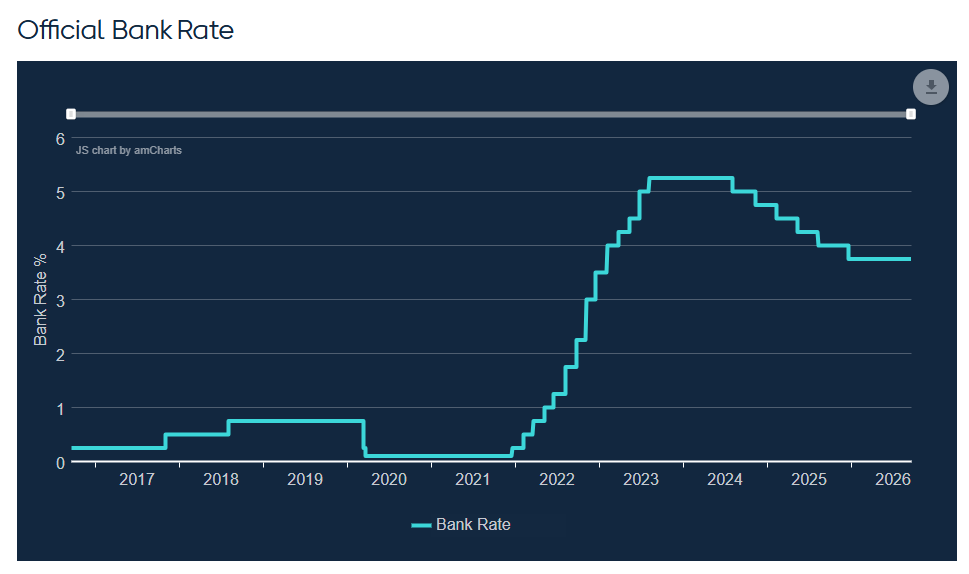
The Bank of England (BoE) is holding its rate at 3.75%, even as UK inflation climbs and the US hikes. That divergence comes down to where the inflation is coming from.
The BoE’s Monetary Policy Committee (MPC) voted six to three to hold, with three members wanting an immediate hike. A day earlier, the Federal Reserve raised US rates to 4%.
Why the Fed Hiked and the BoE Didn’t
The Federal Reserve raised its benchmark rate a quarter point to a range of 3.75% to 4% on September 16. It was the first US rate hike since 2023, coming a day before the BoE’s own decision.

Both central banks are responding to the same shock. Energy prices have surged since the Middle East conflict disrupted supply. Brent crude has climbed above $100 a barrel, lifting UK inflation to 3.1% in August, up from 2.9% in July.
Governor Andrew Bailey argues rates cannot fix an oil-driven price shock directly. He also sees little evidence that higher energy costs are spreading into wages. The Fed, facing a stronger labor market and its own inflation concerns, chose to act instead of waiting.
Economists at Dutch bank ING say the UK carries less wage-spiral risk now than in 2022. That gives the BoE more room to wait before raising rates.
Why Households Are Already Feeling It
UK households are not waiting for a formal hike to feel the cost. The average five-year mortgage rate has climbed to 5.87%, its highest level since November 2023. Lenders are already pricing in the chance of tighter policy ahead.
That leaves the BoE balancing two risks. Moving too fast could squeeze an already fragile economy. Waiting too long risks letting the energy shock harden into a lasting wage-price spiral.
Three policymakers already want a hike, and the Fed just moved the opposite way. If energy prices stay elevated, 3.75% may not be the final stop this year.
The post Why Is the BoE Holding Rates While the US Fed Hikes? appeared first on BeInCrypto.
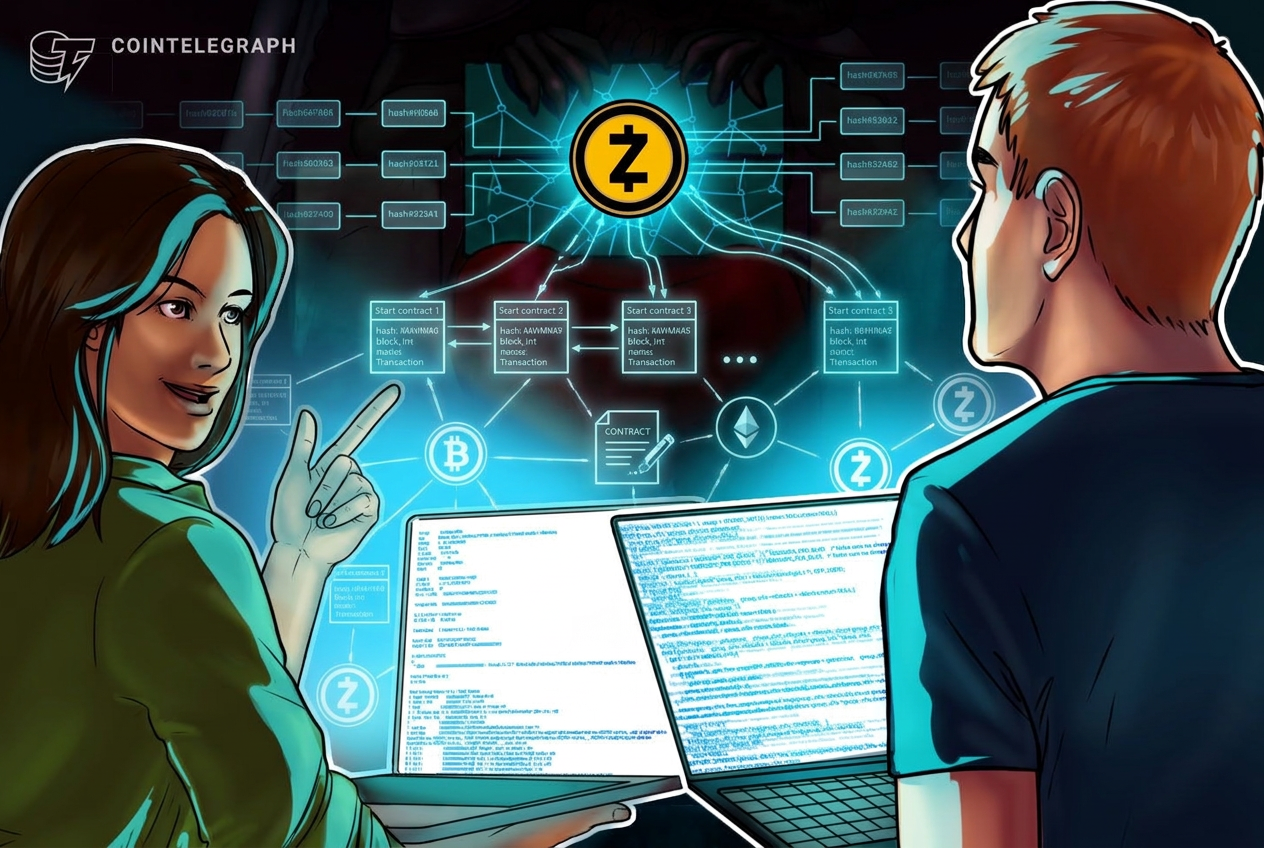
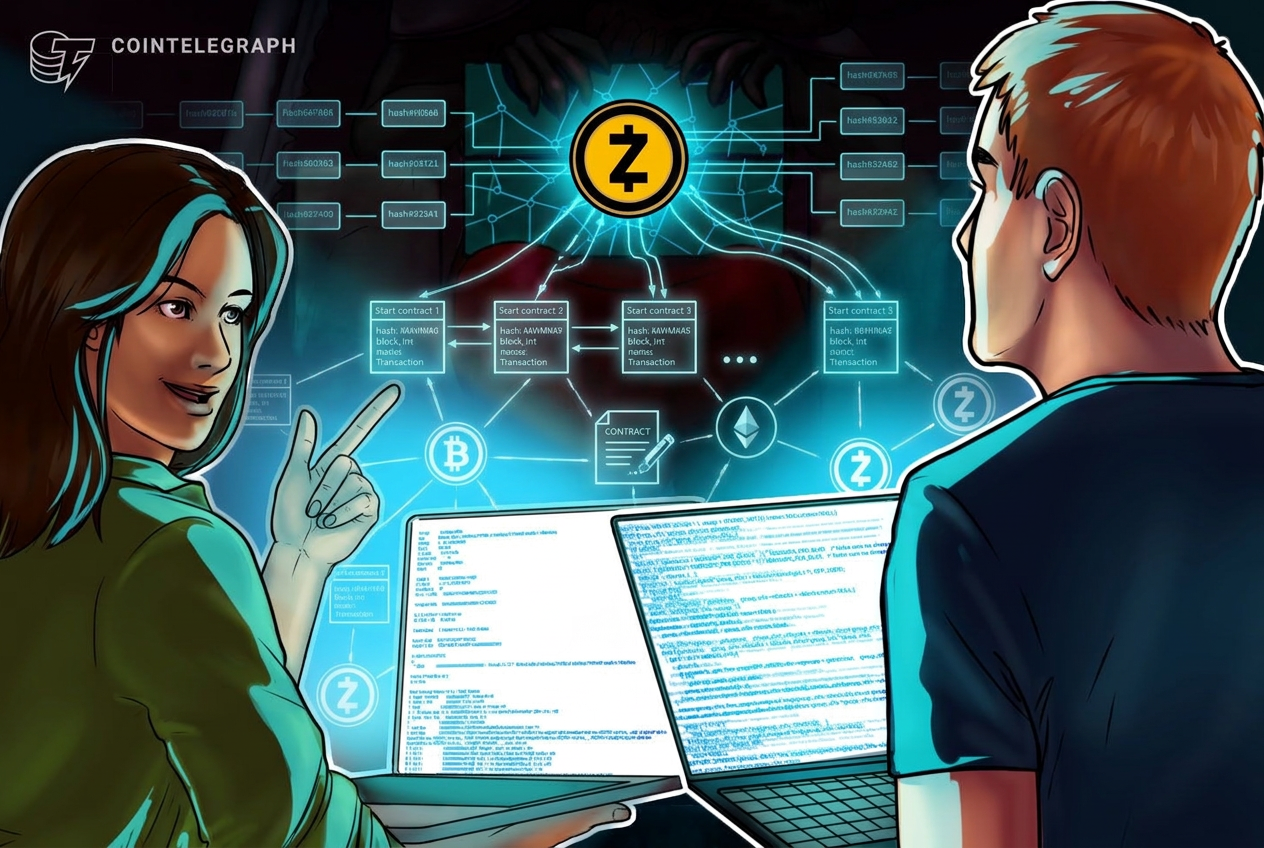
NU7 will cut Zcash block times to 25 seconds and preserve its halving schedule, with testnet activation planned for Oct. 6.


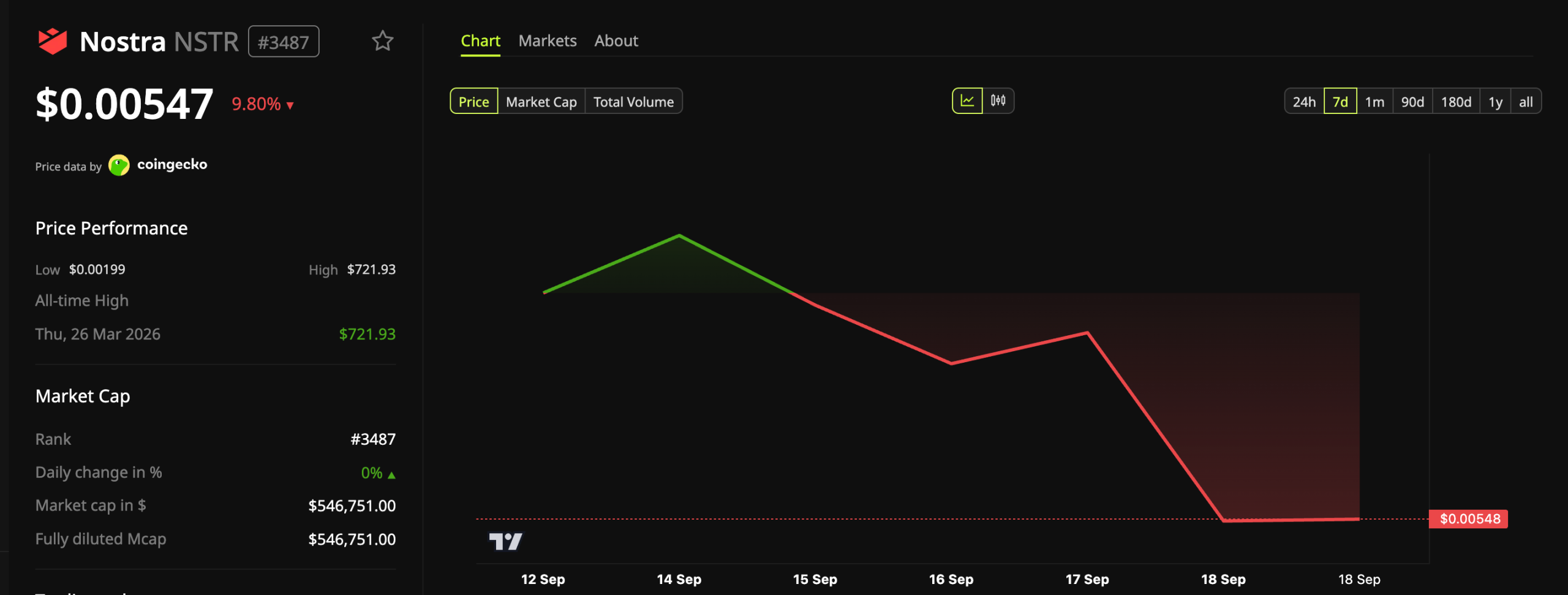
Starknet lending protocol Nostra paused its money market on Thursday after a manipulated price oracle let one account borrow roughly $3.5 million against NSTR collateral.
Lending, borrowing, withdrawals, and liquidations remain unavailable while the team reconciles each asset. Recovery prospects remain unclear for now.
Nostra Halts Money Market in September’s Latest Oracle Exploit
Nostra (NSTR) carries a market value of $546,751, according to BeInCrypto Markets data. A token that small needs little capital to move.
Follow us on X to get the latest news as it happens

The account pledged NSTR and drew Ethereum (ETH), Starknet (STRK), USDC, USDT, Wrapped Bitcoin (WBTC), and DAIv1. The haul exceeded the collateral token’s entire market value by roughly six times.
Security firm PeckShield reported that the account bridged $1.92 million to Ethereum. That transfer included 234.57 ETH and 1.3 million DAI.
Deposits collapsed afterward. Total value locked in the protocol fell from about $4 million on September 16 to roughly $710,632 at press time per DefiLlama.
Starknet’s Second Oracle Failure in Two Weeks
Nostra is not the only Starknet protocol hit this month. On September 4, an incorrect price from Pragma’s publishing pipeline was published across several Starknet feeds.
This triggered 47 liquidations across 42 borrower wallets on money market Vesu. Pragma reported 95% asset recovery in a September 13 update.
However, the two incidents differ in cause. Pragma’s case came from a publishing fault, while Nostra faced deliberate manipulation of a collateral price.
Meanwhile, Nostra is still counting the damage.
“We are reconciling the impact on each asset and tracing the funds. The final loss and potential recoveries are not yet known,” Nostra said.
The team also warned users about impersonators. Nostra said it will never send direct messages or ask holders to connect a wallet during recovery.
September has been costly for the sector. DefiLlama had logged more than $326 million in crypto losses this month before the Nostra incident. Most of that stems from the $320 million Liquid Network incident.
The pattern has held all year. PeckShield counted 50 hacks in August, the highest monthly tally of 2026, even as losses dropped 49.5% to $136.3 million. Nostra fits that shape of frequent, smaller thefts.
Subscribe to our YouTube channel to watch leaders and journalists provide expert insights
The post Nostra Joins a September That Has Already Cost Crypto Over $326 Million appeared first on BeInCrypto.
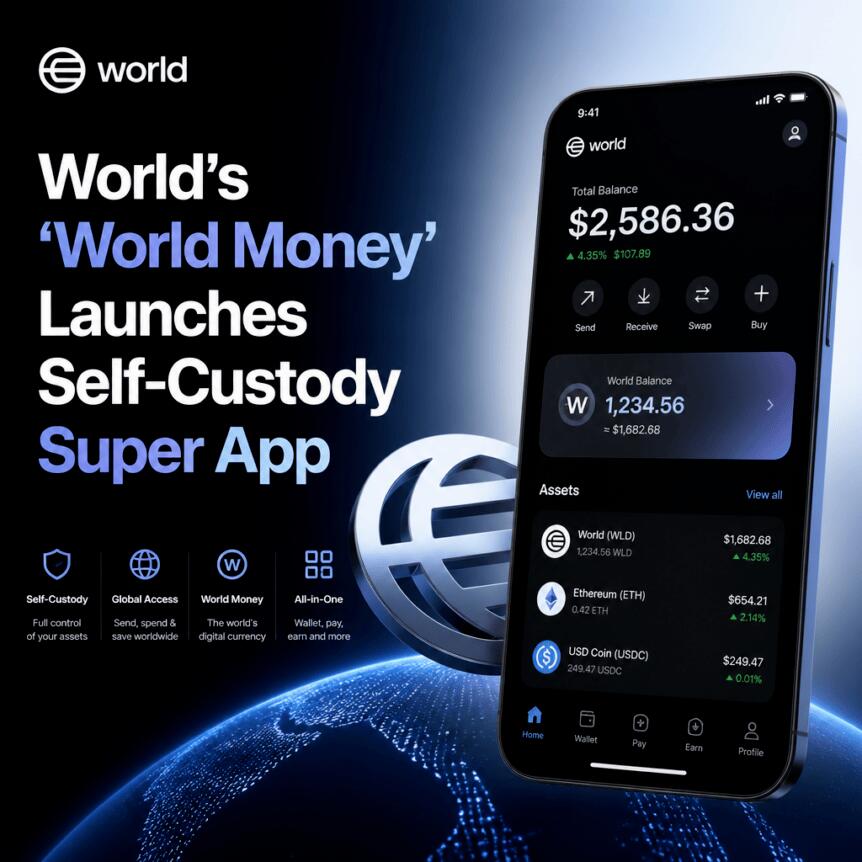
World has launched World Money, a new self-custody financial “super app” designed to bring stablecoin payments and digital-asset features into one place. The rollout began Thursday across more than 150 countries, though specific capabilities are expected to vary by region, according to World.
The new app supports sending supported digital assets—including stablecoins—to recipients using a World username. It also allows users to deposit eligible assets to earn rewards and to buy and sell digital assets through exchange integrations. World further says the experience is built around its identity layer while giving users direct control of their funds.
Key takeaways
- World Money rolls out in over 150 countries, with feature availability dependent on location.
- Users can send supported assets (including stablecoins) via World usernames, not just blockchain addresses.
- The app adds third-party “Mini Apps” such as Kalshi, Credit and Morpho.
- A partnership with Stripe enables top-ups and stablecoin purchases with Apple Pay for users in the US.
- World splits its identity and financial functions across two apps: World ID App and World Money.
What World Money includes at launch
World positions World Money as a self-custody super app that combines multiple financial functions: transfers, trading access, and rewards on certain deposits. The company says users can send supported digital assets to a recipient’s World username, with stablecoins among the assets initially covered.
In addition to peer-to-peer transfers, World Money includes a rewards component. Users can deposit eligible assets to earn rewards, a feature that continues the direction World App previously took with earning opportunities tied to blockchain assets.
For trading, World Money provides buy-and-sell functionality through exchange integrations, giving users a way to switch between supported digital assets without leaving the app environment.
“Mini Apps” and payments onboarding through Stripe
One of the most visible expansions is World Money’s support for third-party mini applications. World says users can access Mini Apps including Kalshi, Credit and Morpho. This approach mirrors the super-app idea of bundling specialized services into a single interface, while relying on external platforms for specific product functions.
World also highlighted a payments onboarding partnership. According to the company, integration with Stripe allows users to fund their accounts and buy stablecoins with Apple Pay, starting with users in the United States. That matters for adoption because fiat-to-stablecoin entry points remain one of the biggest friction points for users who do not already hold crypto.
World did not describe whether Apple Pay support will expand beyond the US as part of this initial rollout, so users outside the US should expect different funding options depending on local availability.
How World is reorganizing its product stack
The launch is also a structural change. World says that with World Money, its identity and financial services are now separated into two dedicated apps: World ID App for identity verification and credentials, and World Money for the wallet, payments and other financial features.
Existing users of World App and World ID App can reportedly use their existing accounts for World Money, which should reduce the migration burden for current customers and limit the risk of fragmenting user identities and balances across platforms.
World Money is operated by Tools for Humanity, the company co-founded by Sam Altman and Alex Blania that builds technology for the World network. Tools for Humanity’s involvement aligns with World’s broader push to connect identity to financial actions rather than treating payments as a standalone feature.
From World App to a two-app super app model
World’s move comes after more than a year of incremental expansion of World App. World App originally launched in May 2023, bringing together World ID with a crypto wallet, stablecoin transfers and token trading.
In October 2024, World introduced World App 3.0, describing it as a “super app for humans” and adding third-party Mini Apps plus a Vault feature for earning on assets. That indicates World has been testing the combination of identity, custody tooling and app-level distribution of third-party services before splitting the experience into two apps.
Later, World also experimented with traditional banking rails. In November 2025, it piloted virtual bank accounts in the US, and then expanded the idea a month later. World says those accounts can support paychecks and bank deposits that are converted into USDC, illustrating an intent to reduce the steps between payroll and stablecoin holdings.
With World Money now separated from the identity layer, the ecosystem looks to be evolving from a single “do everything” client into a clearer division: credentials and verification in one app, and financial activity in another.
Why the split and rollout matter for users
For everyday users, the most practical change is likely the user experience: sending assets through a World username, accessing third-party services through Mini Apps, and using mainstream payment rails like Apple Pay via Stripe. Those elements can make crypto interaction feel less like dealing with addresses and more like using familiar app flows—especially when the stablecoin payment layer is integrated directly into the wallet experience.
For investors and builders, the strategic question is whether World can maintain trust and usability while expanding self-custody financial features across geographies. The company’s decision to run identity and financial services through separate apps may help scale compliance, product development and onboarding workflows without forcing users to navigate unrelated functionality in a single interface.
As World Money becomes available in more countries, the next watch item is how quickly Stripe-based onboarding expands beyond the US and how feature availability differs by region. Users should also pay attention to which assets are considered eligible for rewards and how the lineup of Mini Apps evolves after launch.
CNBC’s Jim Cramer compared stock sector performance across the last three Federal Reserve rate-hike cycles, highlighting how the winners have shifted over time.
The comparison comes after the Fed raised rates in September 2026 for the first time since 2023, citing persistent inflation, a resilient labor market, and oil prices pushed higher by the Middle East conflict.
How Sectors Performed After the First Hike
Cramer, host of Mad Money, examined three stretches within the Fed’s December 2015 to December 2018 tightening cycle. In the three months after that first hike, defensive sectors led the market.
Utilities, consumer staples, and real estate ranked among the strongest performers, Cramer said. Communication services technically topped the group, though Cramer called that figure misleading.
The sector did not exist under that name until late 2018, so the result actually reflects its predecessor, telecommunications, which investors treated as a safety trade at the time.
The Cycle’s Middle and Final Stretch
Looking at the roughly one year between the Fed’s first and second hikes, the picture flipped. Energy topped the list, and materials also performed well, while healthcare, real estate, and staples ranked among the worst performers.
Financials and industrials were also among the best performers in that stretch, Cramer said, since inflation stayed tame and recession fears were minimal at the time.
Over the full three-year period, information technology became the dominant sector. Consumer discretionary and financials also outperformed, echoing a similar cyclicals and financials rally strategists are floating today, while communication services, staples, energy, and materials slid toward the bottom as the Fed grew more aggressive.
“Of course, every tightening cycle is different.”
Cramer, CNBC’s Mad Money
Cramer said the current cycle carries a twist the 2015 to 2018 period did not have. War-driven oil prices, rather than broad economic demand, are adding pressure behind the Fed’s latest rate hike.
He added that further tightening could stall if oil slides back toward $80 a barrel, easing that pressure.
Whether defensive sectors repeat their early lead from a decade ago may depend on how quickly that geopolitical shock fades.
The post Jim Cramer Ranks Winning and Losing Stock Sectors During Fed Rate Hikes appeared first on BeInCrypto.

Thelma Golden has arguably done more than anyone else to promote Black artists in the U.S. For over two decades, the director and chief curator of the Studio Museum in Harlem, founded in 1968, has forged the institution into a leading incubator and showcase for artists of African descent. And in November 2025, she made a permanent mark on New York City’s cultural landscape when the Studio Museum opened its $160 million new building on 125th Street. The 82,000-sq.-ft. facility, which looks like a charcoal-colored Jenga tower, doubled space for exhibitions and created classrooms, artist studios, and meeting spaces for community organizations. Golden started her career in the 1980s as a curator at the Whitney Museum of American Art, where she organized powerful exhibitions about Black masculinity and conceptual art that divided critics, but made her name as a fearless curator. Now, she’s focused on ensuring a long-term future for the institution she’s shaped. Alongside raising money for the new building and attracting patrons including Beyoncé, Golden created a $52 million endowment, ensuring the Studio Museum’s 9,000-work collection will be cared for well into the future.



Hackers demand $3m ransom from Revolut after data breach

Lindsay Clancy holdout juror breaks silence: Why he voted GUILTY… and how the others tried to sway him
Exclusive-ECB’s Vujcic cools oil-fuelled bets on rate hikes



-

 Fashion7 days ago
Weekend Open Thread – Corporette.com
-

 Tech5 days ago
The Latest Weird Thing to Play Doom Is the Mapped-Out Brain of a Fruit Fly
-

 Business7 days ago
10 Most-Streamed Songs On Spotify In 2026 So Far, Led By Ella Langley’s Dominant Run On The Charts This Year
-

 Crypto World7 days ago
XAG/USD: Silver’s Short-Term Rally Meets Its Moment of Truth
-

 Crypto World7 days ago
Diesel Tops $6 a Gallon for the First Time as 28 States Set Records
-

 Crypto World3 days ago
Kraken Lets xStocks Holders Earn Yield Through DeFi
-

 Crypto World4 days ago
Elon Musk Drops a Bombshell: Grok 5 Could Be the AGI Breakthrough
-

 Crypto World1 day ago
US Charges Robinhood Engineers Over Crypto Listing Trades
-

 News Videos7 days ago
Facing Financial Fears
-

 Crypto World6 days ago
Can AI Build a Startup in 72 Hours? Elon Musk's Team Will Livestream the Test
-

 Entertainment6 days ago
News Specials, Movies, Shows, More
-

 Business5 days ago
Rivals Sam Altman and Elon Musk Rally Behind Dario Amodei’s Call for a Slowdown in AI Development
-
 NewsBeat4 days ago
‘Sick conspiracy’: Trump says only guardrails AI needs is ‘a strong and smart (High IQ!) president’ in all-caps rant
-
 Crypto World5 days ago
New Tesla Roadster Uses SpaceX Tech. Will It Impact the Stock Price?
-

 Crypto World6 days ago
Robinhood Chain Never Stopped But its Blobs Did Stop Reaching Ethereum For 14 Minutes
-

 Crypto World2 days ago
What Is the Status of the U.S.-Iran Peace Talks? Here's What Both Sides Are Saying
-
 Entertainment6 days ago
New Horror Movie Officially Earns a Rare Stephen King Recommendation
-

 Business6 days ago
Marvell: Most Potent Setup Of The AI Factory Decade
-
 Crypto World4 days ago
3 Token Unlocks to Watch in the Third Week of September 2026
-

 Crypto World3 days ago
DOJ Seeks to Seize $61M in Iran Oil Funds From Binance Accounts It Vouched For
You must be logged in to post a comment Login