
Crypto World
Buffett stepping down as Berkshire chairman


Warren Buffett sits down with CNBC from Omaha, Nebraska on June 14th, 2026.
David A. Grogan | CNBC
Warren Buffett is stepping down as chairman of Berkshire Hathaway, the sprawling conglomerate worth $1 trillion that he has led since 1965. The 96-year-old legendary investor announced the move in a letter to shareholders Friday.
Buffett will become chairman emeritus, effective immediately, while remaining a director on the board, the company said in a separate announcement. His son, Howard Buffett, will replace him as chairman as dictated by a long-standing succession plan, Berkshire said. Susan Decker will continue as lead independent director.
“Father Time always wins,” wrote Buffett. “He has, however, been generous with me. He has given me the opportunity to see Berkshire reach a point where I am more confident than ever about what lies ahead.”
His decision comes a little more than nine months after Greg Abel, 64, took over as CEO while Buffett retained the chairmanship. Buffett first announced his exit as CEO at Berkshire’s annual meeting in May 2025, shocking the crowd of thousands at the time despite his advanced age.
“The culture Warren built and the values he championed will remain at the heart of Berkshire, and Howard will be their guardian,” said Abel in the company release.
“Greg runs the company; Howard will guard its culture and values – both worth more than anything on our balance sheet,” wrote Buffett. “Think of Howard as a policy the shareholders own and hope never to claim against.”
Buffett’s legacy in building the Omaha, Nebraska-based Berkshire is unapparelled in corporate America, taking over a failed New England textiles mill at the tender age of 34 and transforming it over the next six decades into a financial and industrial juggernaut with $44.5 billion in operating earnings last year and nearly 400,000 employees. Berkshire under Buffett’s tenure posted a 19.7% compounded annual return to shareholders, nearly double the return of the S&P 500.
Active chairman
As chairman this year, Buffett remained active within the company. Abel told CNBC in March that Buffett was still coming into the Omaha office every day and the CEO still frequently consulted with him.
In May, Buffett attended the company’s celebrated annual meeting, making some brief remarks from his seat and giving an interview with CNBC’s Becky Quick. It was the first “Woodstock for Capitalists” — as the meeting came to be known — not presided over by Buffett, but instead by Abel.

Berkshire Hathaway, long term
In July, Buffett revealed to CNBC’s that he was the driving force behind Berkshire’s recent big investment in Alphabet. The Google parent is now Berkshire’s third biggest stock holding behind Apple and American Express after a $10 billion private stock purchase in June.
In that same interview, Buffett noted that he had broken his leg a few weeks ago but was recovering.

Buffett acknowledged his growing limitations because of his age as he was getting ready to hand the reins over to Abel last year. In a Thanksgiving letter to shareholders, he wrote, “To my surprise, I generally feel good. Though I move slowly and read with increasing difficulty, I am at the office five days a week.”
In the Friday letter, Buffett joked about it.
“Recently, I celebrated my 96th birthday with family and friends, including one of my great-grandchildren, who had just turned one. He’s moving a bit faster than I am these days,” he wrote.
Berkshire’s 2026 underperformance
Berkshire shares have struggled this year and Buffett’s exit as chairman raises the stakes for Abel further to perform. The stock is up just 1% in 2026 as the S&P 500 has rallied more than 11%. Rising oil prices and investors’ preference for higher growth parts of the market are partly to blame, but shareholders are also waiting to see whether the new CEO can be as adept as Buffett in deploying the firm’s sizable capital.
For now, investors would likely be happy with Abel using some more of the company’s $365.5 billion cash hoard to buy back more Berkshire shares. He has begun to do just that, stepping up repurchases to $4.5 billion in the second quarter.
Berkshire’s largest shareholder praised the job done by Abel so far in his Friday letter: “My expectations for him were sky high from the start, and he has exceeded them.”
“The company is in excellent hands, and I look forward to remaining a shareholder alongside you,” Buffett said in closing.
When reached for comment by CNBC, Abel said: “Warren described in his letter today how his role at Berkshire has been ‘the best job in the world.’ He gave me an extraordinary responsibility – the best job in American business – and then the latitude to lead in a manner consistent with Berkshire’s culture and values. I look forward to continuing to work alongside Warren, with Howard serving as Chairman and Sue as Lead Independent Director, and I am grateful for that opportunity.”




Kevin O’Leary has returned to buying new cryptocurrency positions for the next market cycle while watching for a major stock exchange to adopt blockchain infrastructure, a development he expects could influence which network gains institutional traction.
Summary
- Kevin O’Leary is buying new crypto positions as he prepares for the next market cycle and looks for networks gaining institutional adoption.
- O’Leary said the first major stock exchange to adopt a blockchain could become a watershed moment for the crypto industry.
- O’Leary does not expect the CLARITY Act to pass before the midterms but believes digital asset tax policy will keep regulation on the agenda.
- O’Leary sees Bitcoin potentially accounting for 1% to 3% of institutional alternative asset allocations.
According to comments made to The Block at the Avalanche Summit in New York, the O’Leary Ventures chairman said he is placing new bets as he tries to identify which blockchain could gain widespread use and where that adoption will emerge.
“I’m back in the saddle buying new positions, putting my bets on for this next cycle,” O’Leary said.
His investment approach is focused less on picking individual crypto assets in isolation and more on determining which underlying network could become a standard for a major industry. Conversations with executives have yet to produce a clear answer, he said, because companies across different sectors are considering different blockchains.
O’Leary said he can speak directly with chief executives about the networks their companies are evaluating, but “none of them are saying the same thing.”
O’Leary sees exchange adoption as a watershed moment
A major stock exchange could provide one of the clearest signals, according to O’Leary, who described the first exchange to adopt a blockchain as a potential “watershed moment” for the crypto industry.
Once an exchange settles on a network, companies and financial institutions that interact with the venue could have an incentive to work with infrastructure that meets the same technical and compliance requirements. O’Leary presented that scenario as one possible route through which a particular blockchain could gain wider use.
Traditional exchanges are already moving parts of their infrastructure onchain. The New York Stock Exchange has been developing onchain settlement infrastructure for tokenized securities, with NYSE President Lynn Martin saying in August that work was continuing on a dedicated digital trading platform.
Intercontinental Exchange, NYSE’s parent company, later agreed to invest in tZERO and license its blockchain patents as the companies work on tokenized securities infrastructure. The planned platform is designed to support round the clock trading and immediate blockchain settlement, though regulatory approvals are still required.
Nasdaq has taken a separate route. Earlier in September, Nasdaq Ventures agreed to invest $100 million in Kraken parent Payward at a $21 billion valuation as the companies expanded their work on tokenized equities and settlement. Nasdaq and Payward expect Nasdaq Equity Tokens to launch in the second quarter of 2027.
Regulators have been preparing for more securities activity to move onchain as well. The Securities and Exchange Commission recently granted tokenized securities venues five years of conditional relief to trade eligible tokenized U.S. stocks through permissioned automated market makers and liquidity pools. Eligible tokens must provide holders with the same rights and privileges as conventional shares under the five year exemption.
Crypto regulation remains on O’Leary’s agenda
O’Leary expects U.S. lawmakers to return to crypto market structure legislation despite the latest setback for the CLARITY Act.
The Senate failed to advance the bill this week after a cloture motion fell short of the 60 votes needed to begin formal debate. Crypto.news previously reported that the procedural vote failed after receiving 50 votes to 49.
O’Leary said he does not expect the legislation to pass before the midterm elections, but argued that work on digital asset taxation makes continued regulatory action likely.
“If you’re going to provide a tax policy on this asset, you want more regulation, not less,” he said.
His comments came as Congress made progress on a separate digital asset tax package. The House Ways and Means Committee advanced the Digital Asset Tax Certainty Act in a 38 to 5 vote on Sept. 16, moving the proposal toward possible consideration by the full House.
The crypto tax legislation includes an exception for qualifying blockchain network and transaction fees of up to $10, alongside proposed rules covering wash sales, stablecoins, crypto lending, mining, staking and broker reporting.
Seven Senate Democrats who opposed the CLARITY Act cloture motion have since indicated that negotiations are not over. Their effort leaves open the possibility of further talks, though the failed procedural vote has kept the bill from entering formal Senate debate.
O’Leary’s current position differs from the timeline he gave earlier in 2026. In January, he expressed hope that U.S. crypto market structure legislation could clear Congress before the midterms. By June, he was arguing that legislation could become an important catalyst for institutional participation, particularly among pension funds and sovereign wealth funds.
Bitcoin allocation could reach 1% to 3%
For Bitcoin, O’Leary framed potential institutional exposure against allocations already made to another alternative asset, gold.
He said Bitcoin could eventually account for between 1% and 3% of alternative asset allocations, using institutional gold holdings as a comparison. His upper range is consistent with comments he made earlier this year when discussing how much Bitcoin large investors may be willing to hold.
In February, O’Leary said some institutions were reluctant to move beyond roughly 3% Bitcoin exposure because of concerns surrounding quantum computing and the network’s long term security. Developers have been discussing proposals intended to reduce Bitcoin’s exposure to future quantum attacks, while the risk has become part of the institutional debate around allocation limits.
O’Leary remains focused on investments outside digital assets as well, particularly the infrastructure needed to support artificial intelligence.
Instead of concentrating his AI investments on individual models, he said he is investing in the power infrastructure required to run them. Projects cited by O’Leary include investments in Norway, Finland, Alberta and Utah, along with exposure to uranium as demand for electricity from data centers grows.
Crypto-focused venture capital firm Dragonfly’s managing partner, Haseeb Qureshi, proposed winding down the Zcash developer fund after it expires under current rules in 2028.
“I’m of the opinion that this should be the final Dev Fund,” wrote Qureshi in a Friday X post, arguing that the fund is large enough to fund remaining work on Zcash and that it risks being “politicized” as it approaches $100 million in value.
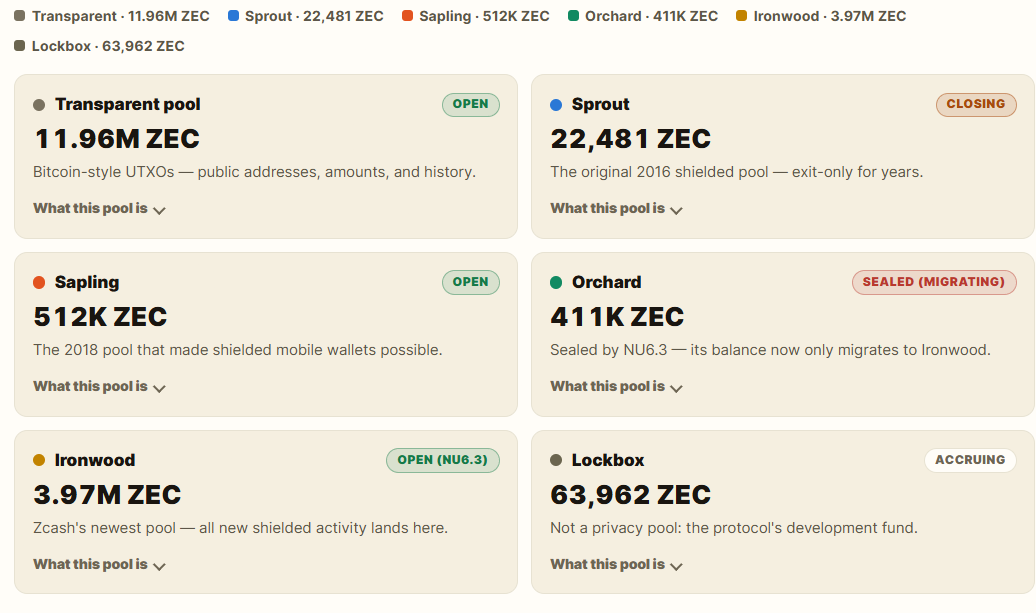
The Zcash development fund held 63,962 Zcash (ZEC) tokens at press time, worth about $95 million, according to ZecStats.
The remarks follow a broader industry debate that stemmed from the fund’s increasing value, following the ZEC token’s rally. Others argued that Zcash should maintain its development fund. Paradigm founder Matt Huang argued in a Wednesday X post that the fund is particularly important “in this age of AI cyber capabilities” and rapid quantum progress.
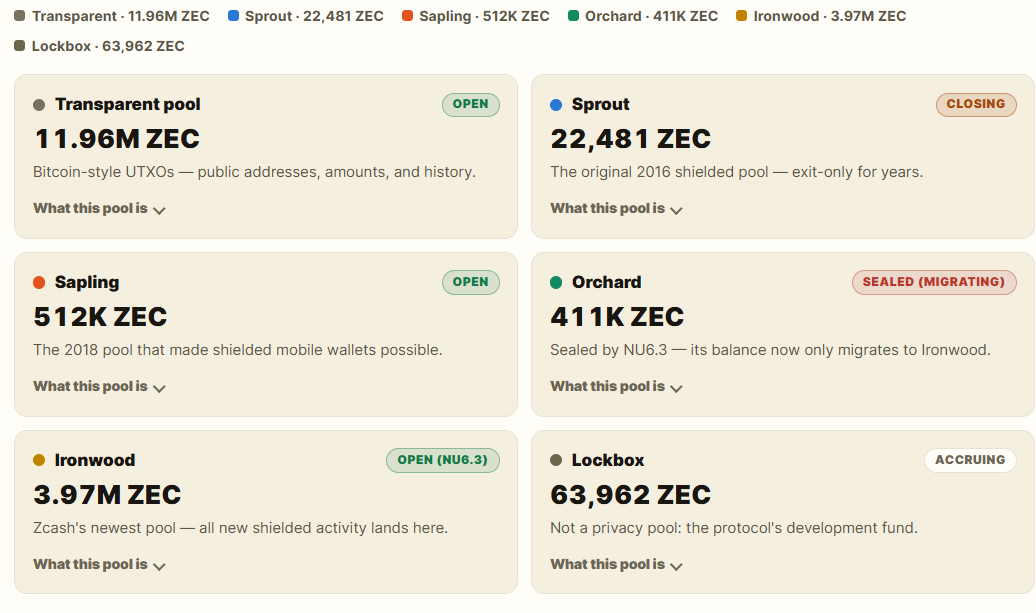
Zcash pools, including the dev fund, also known as the lockbox. Source: ZecStats
The ZEC development fund is a protocol development fund that accrues 0.1875 ZEC tokens per block, representing 12% of the block subsidy under the NU6 upgrade. Its balance sits outside circulation until governance disbursement.
Related: Zcash holders back 25-second blocks, vote to keep ZEC halving schedule
Industry split over who should control the ZEC development fund?
Industry watchers are also debating who should control the development fund. Dragonfly’s Haseeb said that the fund’s control shouldn’t move toward “pure token holder voting,” but showed support for a partial model, under which token holders would elect temporary councils.
Huang agreed with this view, adding that pure token holder governance may introduce “unpredictability that could limit long-term trust as a monetary asset” and proposed a hybrid model combining additional forms of governance.
Maxime Desalle, investment analyst at Winklevoss Capital, suggested that the Zcash community “completely get rid” of the development fund, which would solve all the governance disputes surrounding it, writing in a Thursday X post.
In a previous post on Sept. 9, Desalle argued that the fund may hurt the security of Zcash while recreating the dependencies and bureaucracies that many welfare states suffer from.
In a Sept. 1 X post, Zcash founder Zooko Wilcox said that the Zcash Community Grants Committee was among the main reasons that Zcash “has survived and grown to where it is today.” On Sept. 14, Wilcox clarified that the committee only accounts for 40% of the development fund.
Magazine: The legal battle over who can claim DeFi’s stolen millions
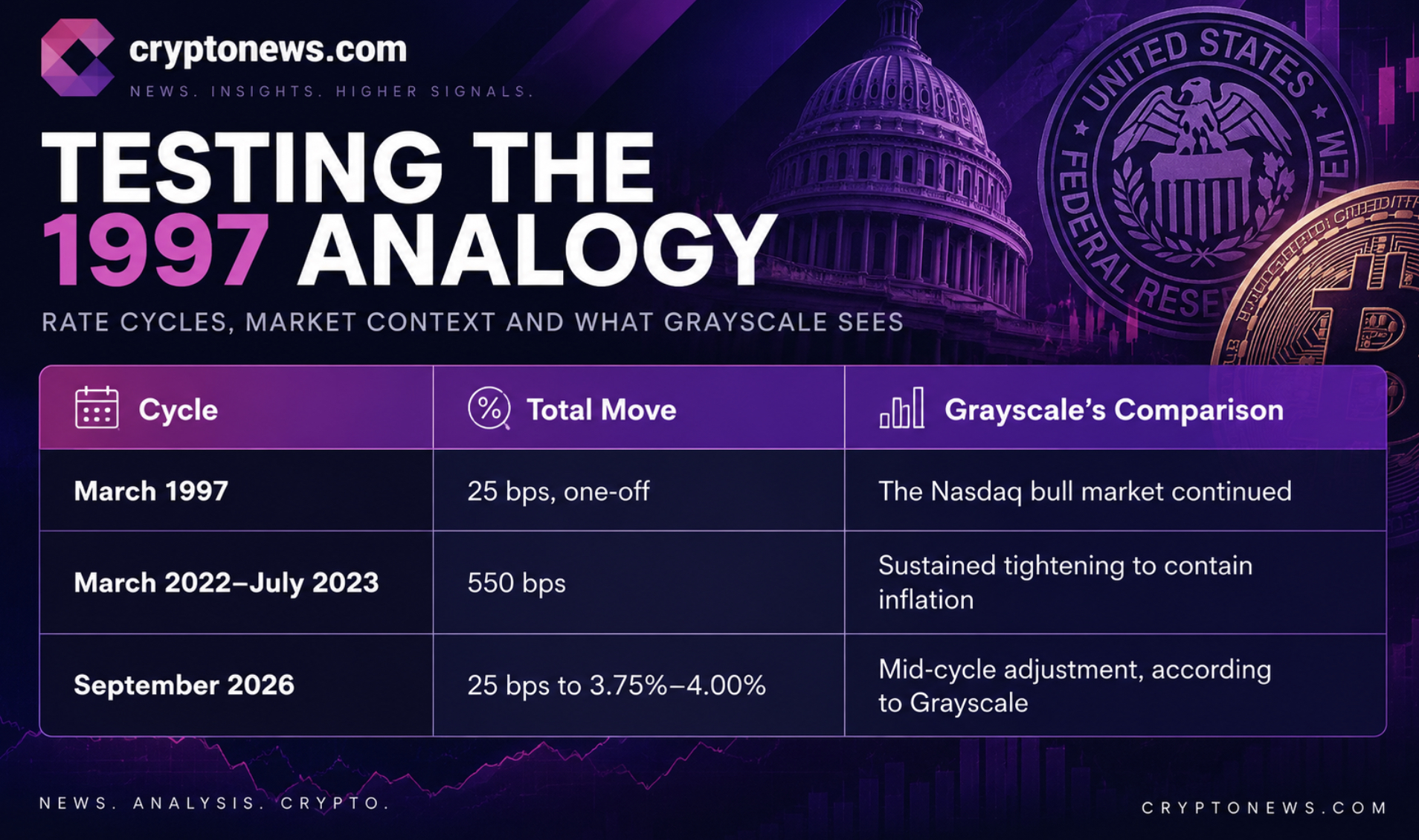
The Federal Reserve raised its benchmark interest rate by 25 basis points to a target range of 3.75%–4.00%, and Grayscale Research says the move is unlikely to drive major changes in Bitcoin price and the crypto markets. Grayscale’s central question is whether the increase is an isolated adjustment or the start of a broader tightening cycle.
Grayscale’s argument rests on a policy gap. The firm characterizes the latest increase as a mid-cycle adjustment rather than a cyclical change in official policy. In its view, the difference is not simply the size of a single rate move, but the scale and duration of the policy path that follows it.
Grayscale contrasts the decision with the Fed’s campaign from March 2022 through July 2023. During that period, the Fed raised the federal funds rate by 550 basis points to contain inflation. Grayscale says that sustained tightening probably weighed on Bitcoin and other digital assets during the last bear market.
The latest move is smaller in scale, and Grayscale expects one or two additional rate hikes in 2026. The firm’s assessment is therefore focused on whether those increases remain limited rather than whether rates rise at all. A short sequence of adjustments and a sustained tightening campaign can have different implications for capital allocation.
Earn $50 and Enter $300K Prize Draw on EdgeX
Testing the 1997 Analogy
Zach Pandl, Grayscale’s head of research, describes the latest decision as a mid-cycle adjustment rather than a cyclical policy shift. Grayscale also says it doubts that the one or two rate hikes expected for 2026 will lead to much change in capital allocation.
Grayscale’s key takeaway is that the 25-basis-point hike, together with a potential second increase this year, is unlikely to drive major shifts in digital-asset markets in the firm’s view. The qualification is important: the analysis presents a view on the likely policy pattern and market response, not a guarantee about crypto prices.
Grayscale’s historical reference point is March 1997, when the Greenspan Fed made what the firm describes as an analogous one-off hike, and the Nasdaq bull market continued. The comparison supports Grayscale’s view that a limited rate adjustment need not have the same market effect as a prolonged effort to reset borrowing costs and financial conditions.

The 1997 parallel does not establish that Bitcoin is insulated from interest rates. Instead, it illustrates Grayscale’s distinction between an isolated move and a longer tightening sequence. If policy were to develop into a sustained series of hikes, the 2022–2023 period would provide a more relevant comparison under the firm’s framework.
Contemporaneous reporting described a limited immediate reaction from Bitcoin and other major crypto assets after the Fed’s decision. That response is consistent with Grayscale’s view that the rate increase itself was not a major market disruption, while leaving open the larger question of how markets respond to future policy signals.
Discover: The Best Token Presales
Where Higher Rates Actually Bite Bitcoin Price?
Grayscale does not argue that higher rates leave crypto unaffected. Rather, it says the impact can differ across the digital-asset ecosystem. The firm points to stablecoin issuers such as Circle and Tether, which it says earn higher revenues when cash interest rates rise.
Grayscale also says higher rates on tokenized bonds and money-market funds could drive flows into onchain capital. Its broader point is that crypto is diverse: higher rates can affect particular assets and businesses differently, much as rate-sensitive sectors can diverge in traditional finance. Under that view, Bitcoin and other parts of the digital-asset market need not respond to rate changes in the same way.

Bitcoin current price action also gives the 1997 comparison some relevance, particularly if investors are watching for another sharp volatility phase. BTC has struggled to sustain upside momentum, leaving the market vulnerable to further selling if key support levels fail.
Still, the analogy should be treated cautiously, since Bitcoin’s market structure and investor base differ significantly from those of traditional markets in 1997.
For now, Bitcoin’s ability to hold its major support zones will be important for determining whether the market can stabilize. A recovery above recent resistance would weaken the bearish interpretation, while another breakdown could reinforce comparisons with previous periods of broader market stress.
Trade Bitcoin on Bybit and Get a Chance to Win Our $1,000 USDT Airdrop
The post Grayscale Sees Limited Bitcoin Impact From 25-Basis-Point Hike appeared first on Cryptonews.
Crypto World
XRP on the brink of a golden cross as focus switches to away from bitcoin (BTC): Crypto Daily
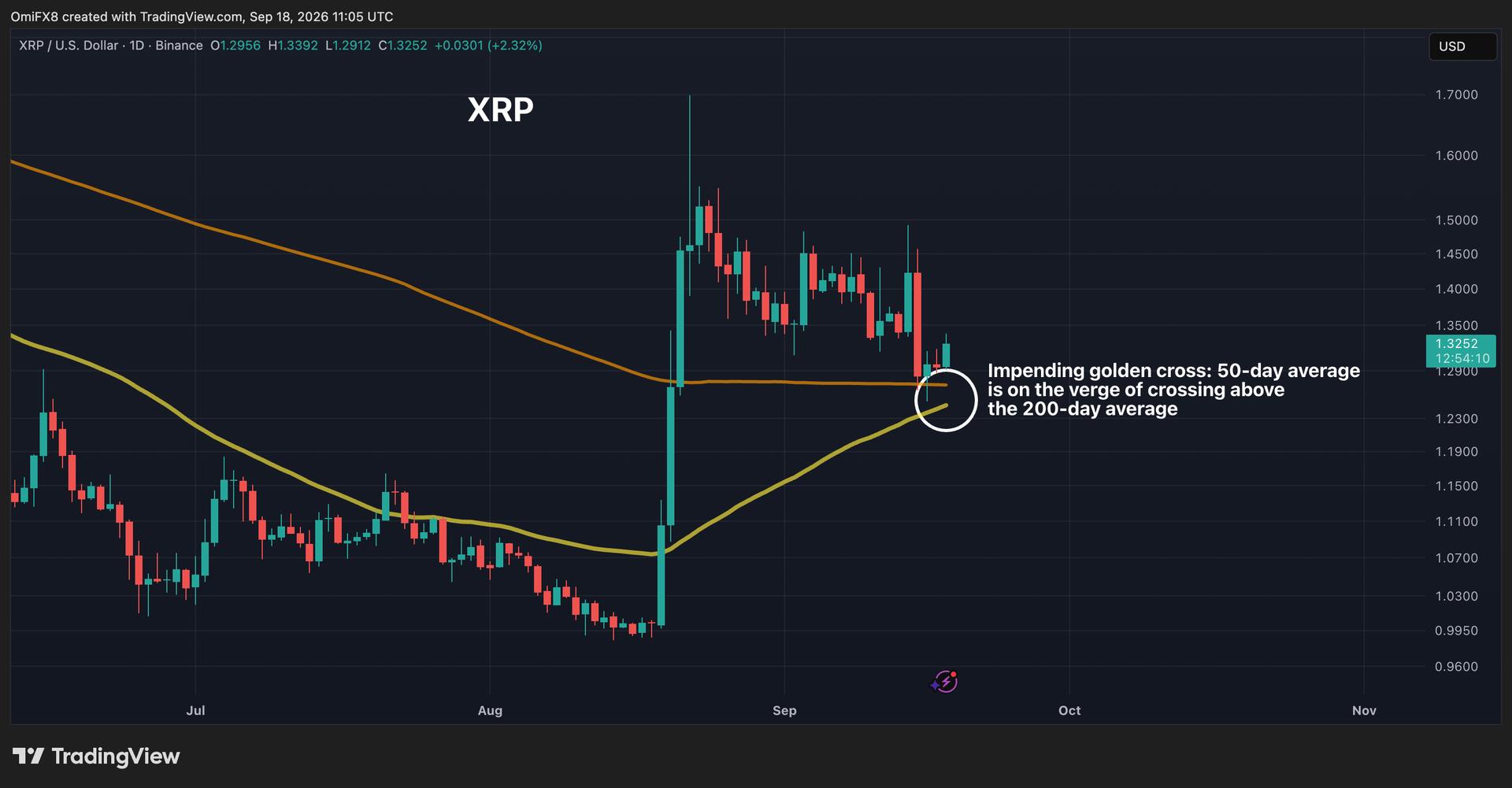
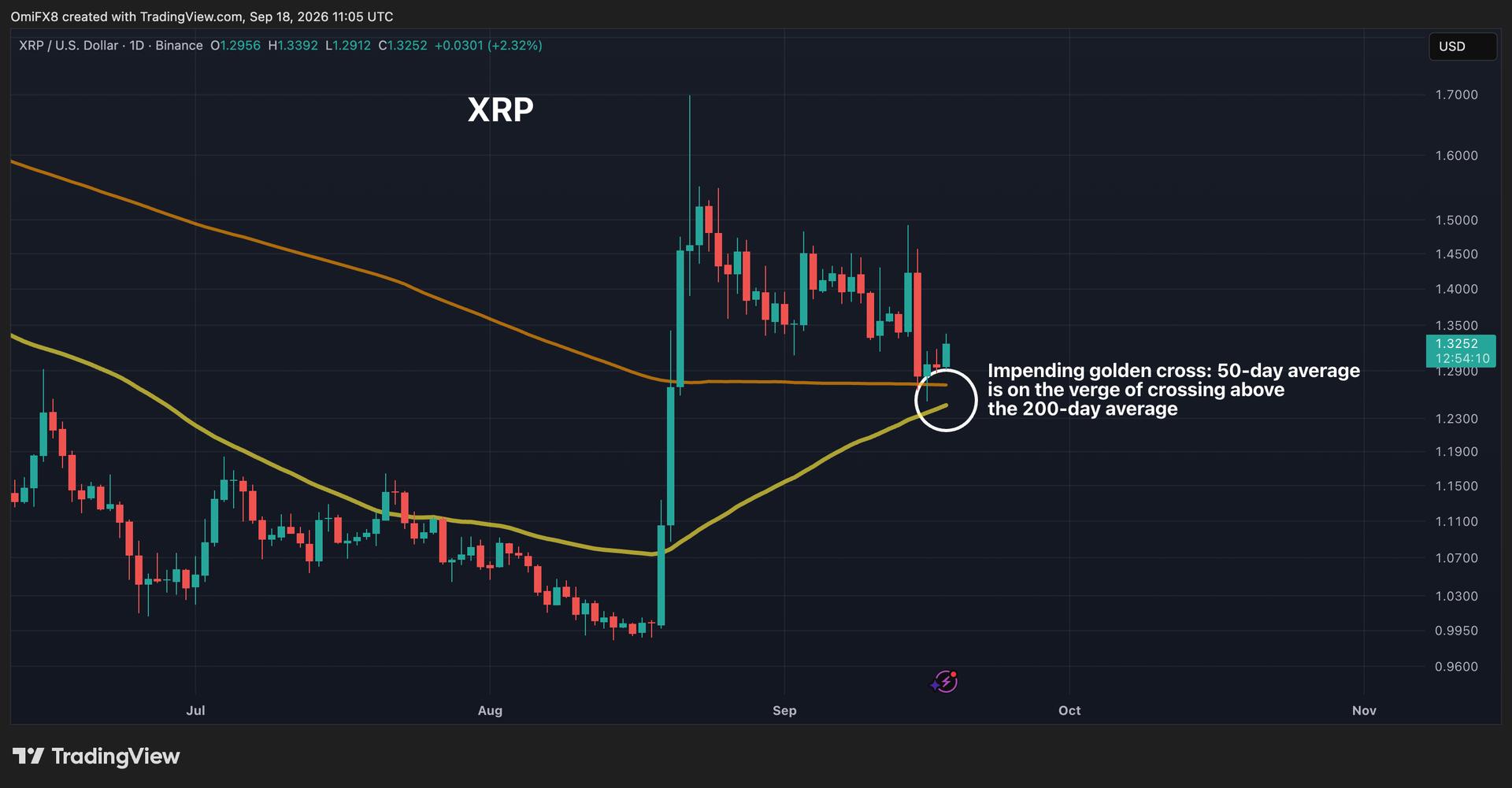
That said, many of those golden crosses did produce impressive three-month gains (check Today’s Signal). Five of the 10 crosses that survived long enough to reach the three-month mark posted gains ranging from 85% to more than 1,000%, including a 1,009.6% run following the April 2017 cross and a 135% gain after the February 2021 cross.
Right now, XRP’s 50-day average sits about 2% below its 200-day average, the closest since its last golden cross in August 2024.
Meanwhile, analysts are optimistic about bitcoin’s price prospects, given the cryptocurrency has weathered this week’s storm, marked by the Clarity Act setback and a Federal Reserve rate increase. The cryptocurrency is trading near $78,000, roughly unchanged from a week ago.
But its dominance rate, or share of total crypto market cap, has dropped to a one-month low of under 59%. That implies a rotation into altcoins and many of them, such as UNI, NEAR and ARB have surged by nearly 30% in 24 hours.
“Altcoins have accelerated sharply while the majors lag. Markets hope for SEC and CFTC crypto adoption, plus passage of the Bitcoin Reserve Bill,” Alex Kuptsikevich, the chief market analyst at The FxPro, said in an email.
“It appears that traders are cautiously shifting their focus towards altcoins, although neither the altcoin season index nor market sentiment has yet reached high levels,” he said. Stay alert!
VanEck’s head of digital assets research, Matthew Sigel, expects Bitcoin (BTC) to hit $100,000 by next year, arguing that government debt burdens are propping up the asset.
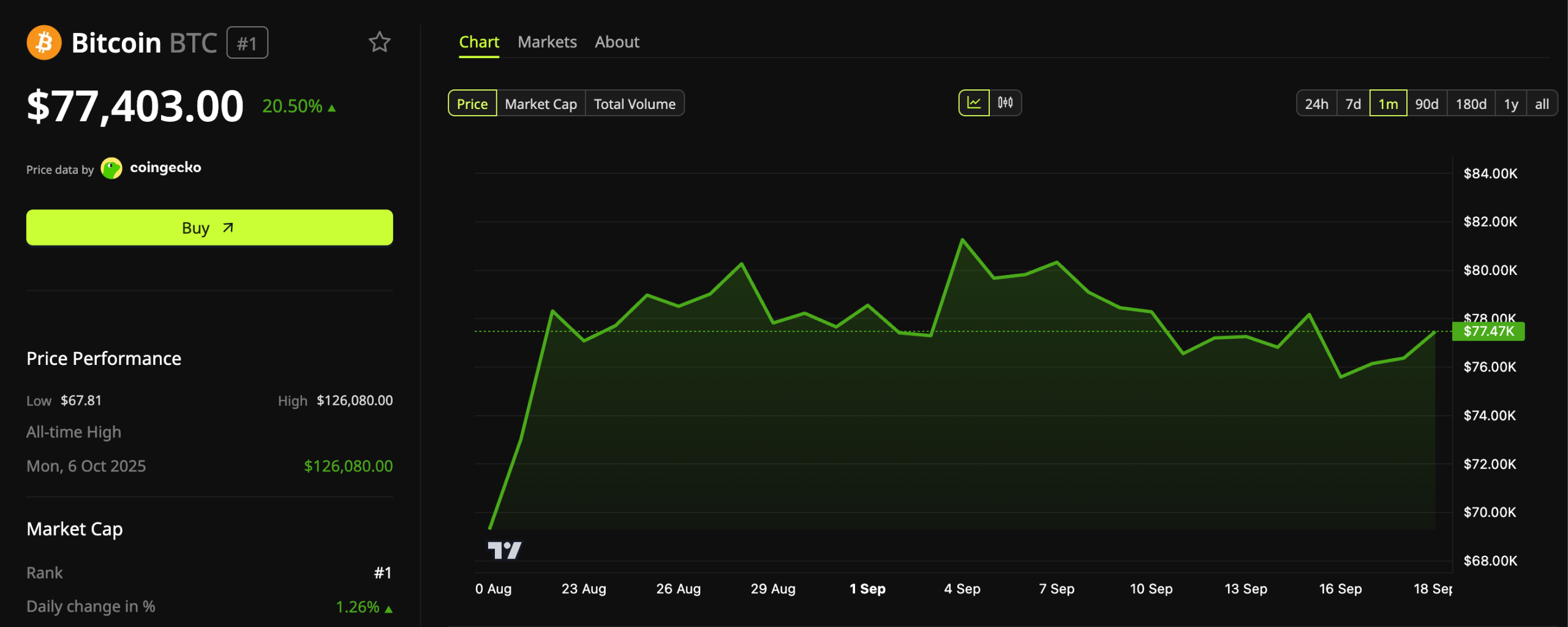
Sigel delivered the forecast on CNBC’s Squawk Box Asia on Friday, with Bitcoin trading near $77,400 in a week that hit crypto from three directions at once.
Bitcoin Holds Its Ground Through a Punishing Policy Week
Bitcoin changed hands at $77,403 on Friday, up 1.26% on the day and more than 20% over the past month, according to BeInCrypto Markets data.
The asset still sits roughly 39% below its record of over $126,000 set on October 6, 2025.

Follow us on X to get the latest news as it happens
That monthly gain arrived despite a rough stretch for risk assets. The Federal Reserve raised its benchmark rate 25 basis points to a target range of 3.75% to 4% on Wednesday, its first increase since 2023. The Bank of Japan followed on Friday, lifting its policy rate to 1.25%, the highest level since 1995.
Crypto also lost its biggest legislative prize. The Senate rejected cloture on the Clarity Act by a 49-50 vote on Tuesday, stranding the market-structure bill. Bitcoin’s price held through the Fed and Senate decisions, but the on-chain picture weakened.
The Argument Behind Sigel’s $100,000 Bitcoin Call
Sigel argued that over-indebted governments explain why Bitcoin keeps hanging in. He noted that volatility has fallen by half compared with four years ago, marking a break from the last cycle.
He also pointed to traders paying up for puts over calls and to the Treasury bond buyback program, which triggered heavy short covering. According to him, it reminded people that the calendar is “very much in your favor if you’re a bitcoin bull.”
“Very unlikely that policymakers are going to address this unsustainable fiscal dynamic, and then as and if liquidity eases, you know that would be a turbocharge for Bitcoin,” he said.
Conversations with advisors and sovereign wealth funds show institutional clients are all buying, Sigel said.
The $100,000 call is not new. Sigel floated that level in April and repeated it in August, alongside a $500,000 target for 2029. In May, he laid out a longer-term case for $1 million within the next several years.
From Friday’s price, Bitcoin needs a 29% gain to reach $100,000. The 2029 target requires roughly 546%, while $1 million sits about 1,192% away.
Subscribe to our YouTube channel to watch leaders and journalists provide expert insights
The post Bitcoin to $100,000 Next Year? VanEck Reveals What Gets It There appeared first on BeInCrypto.

Silver (SI=F) December futures opened at $65.76 per ounce on Friday, September 18, 2026, down 0.5% from Thursday’s close but more than $2 higher than yesterday’s opening price. Silver prices surged this morning, reaching $67.47 as of 7:05 a.m. ET.
Until today, silver prices bounced around the $63 to $64 range, but broke out of those bookends by a wide margin this morning. Today’s opening price set the highest opening price of the week, and silver is surging this morning, hitting a high of $67.89.
The Fed’s decision to raise rates for the first time in three years, combined with the ongoing restoration of Saudi Arabia’s key East-West pipeline, has prompted inflation concerns to fade among investors.
And oil prices are responding as well. Wednesday morning, Brent crude (BZ=F) prices were over $107 a barrel. Yesterday at this time, prices were at over $99 a barrel, and this morning, they’re $98.51 as of 7:05 a.m. ET.
Current price of silver
The opening price of silver futures on Friday, September 18, 2026, was 0.5% lower compared to Thursday’s closing price. Here’s how today’s opening silver price has changed versus last week, month, and year:
-
One week ago: +3.9%
-
One month ago: -0.8%
-
One year ago: +57.7%
For context, silver’s year-over-year growth was 173.3% on May 14.
24/7 silver price tracking: Don’t forget you can monitor the current price of silver on Yahoo Finance 24 hours a day, seven days a week.
Want to learn more about the current top-performing companies in the silver industry? Explore a list of the top-performing companies using the Yahoo Finance Screener. You can create your own screeners with over 150 different screening criteria.
Investing in silver? Here’s how to avoid taxes.
Do you have to pay taxes on silver? Yes. Silver is a capital asset, so when you sell it for more than you paid, the gain is taxable and reported on Schedule D of your federal return.
Many investors assume holding silver for more than a year qualifies them for the same long-term capital gains rates as stocks (0%, 15% or 20%).
Spoiler: It doesn’t.
The 28% collectible tax trap
The IRS classifies physical precious metals — including bars, rounds, and coins — as collectibles. That classification changes the tax math in a big way.
Short-term gains
If you hold silver for one year or less, your profit is taxed as ordinary income. Depending on your tax bracket, that could go as high as 37%.
Long-term gains
If you hold silver for more than one year, your gain is taxed at your ordinary income rate — but no more than 28%.
Here’s what that looks like in real life:
-
If you’re in the 10%, 12%, 22% or 24% bracket, your silver gain is taxed at that same rate.
-
If you’re in the 32%, 35% or 37% bracket, you’re capped at 28%.
So if you’re a middle-income earner accustomed to paying 15% on stock gains, silver can cost you more, maybe 22% or 24%, depending on your adjusted gross income.
If you’re in the top brackets, the 28% cap is technically a discount versus 35% or 37% — but it’s still higher than the 20% max long-term capital gains rate on stocks.
That difference adds up quickly when you’re talking five- or six-figure gains.
Learn more: How to avoid taxes when investing in silver
Price of silver chart
Whether you’re tracking the price of silver since last month or last year, the price-of-silver chart below shows the precious metal’s value journey so far this year.
More silver coverage from the Yahoo Finance team:
Bitcoin (BTC) is showing strong signs that its latest long-term floor is already in, according to a classic trading indicator.
Key points:
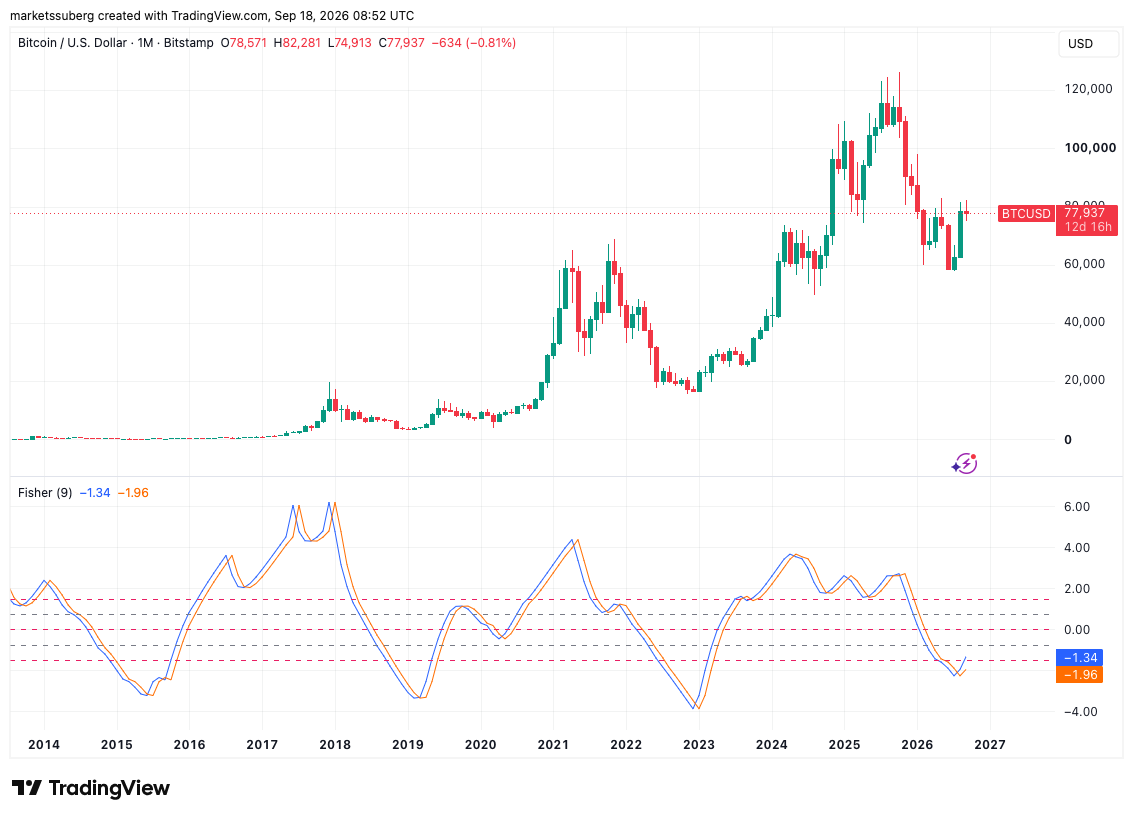
- In August, the Fisher Transform indicator delivered a monthly bullish crossover for only the fourth time in Bitcoin’s history, according to Willy Woo.
- Previous monthly crossovers accompanied the end of Bitcoin bear markets, including in late 2022, when the Fisher Transform Indicator hit -3.83.
- A bullish divergence continued on weekly time frames, echoing the closing stages of the 2022 BTC price downtrend.
Analyst sees evidence of clean BTC price reversal
In an X thread on Friday, analyst Willy Woo flagged key readings from the Fisher Transform indicator, a price trend analysis tool created in 2002.
The indicator smooths an asset’s price action to create a readable trend-strength chart. Market prices tend to spend more time around extreme values than ordinary statistical data. The Fisher transform corrects this by applying a log-based transform.
The indicator is formed of two trend lines, the Fisher line and the trigger line, that fluctuate on a scale with zero at its center. The trigger line is derived from the Fisher line, plotted with a delay of one period.
Woo shows that for Bitcoin, a sharp upward reversal in Fisher, where its two trend lines cross over one another, has corresponded to bear-market bottoms when viewed on monthly time frames.
“BTC bottoms: 3 for 3 without fake out. Latest cross is the 4th on record,” he commented.
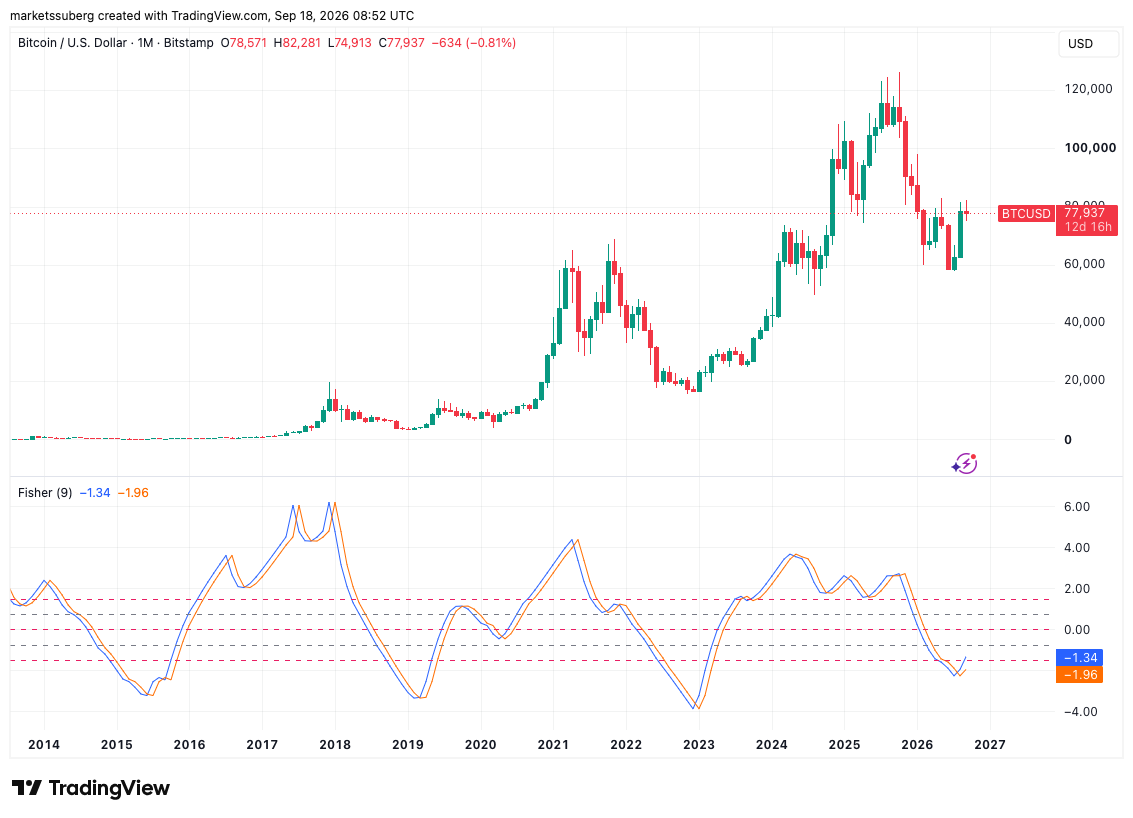
BTC/USD one-month chart with Fisher Transform data. Source: Cointelegraph/TradingView
The cross in question occurred during July at -2.26, and if it continues to play out, history suggests that BTC/USD will embark on a new macro uptrend. Woo, however, notes that price could still consolidate and continue lower, referencing a corresponding phenomenon during bull markets where Fisher delivered a bearish crossover, only to offer a fresh bullish one later.
This, he argues, is due to the presence of speculative traders during long-term BTC price uptrends, who influence market momentum because they are sensitive to short-term price moves. By contrast, during bear-market bottom phases, such traders are mostly absent, boosting the reliability of Fisher bottom signals.
“When price falls to a point where investors find value, buy-pressure fires back up but we are devoid of speculators. Price reverses more cleanly without the choppy fake outs seen in tops. Hence bottoms are easier to define. This is seen in many signals, also seen in the Fisher Transform here,” he added.
Fisher bullish divergence tracks 2022 bear market
The weekly chart shows another Fisher bull structure in process throughout 2026. Here, the indicator hit its swing low of -2.85 at the end of December last year, with BTC/USD still at around $90,000.
Related: Bitcoin treasuries buy just 5.9K BTC in three months as paper losses linger
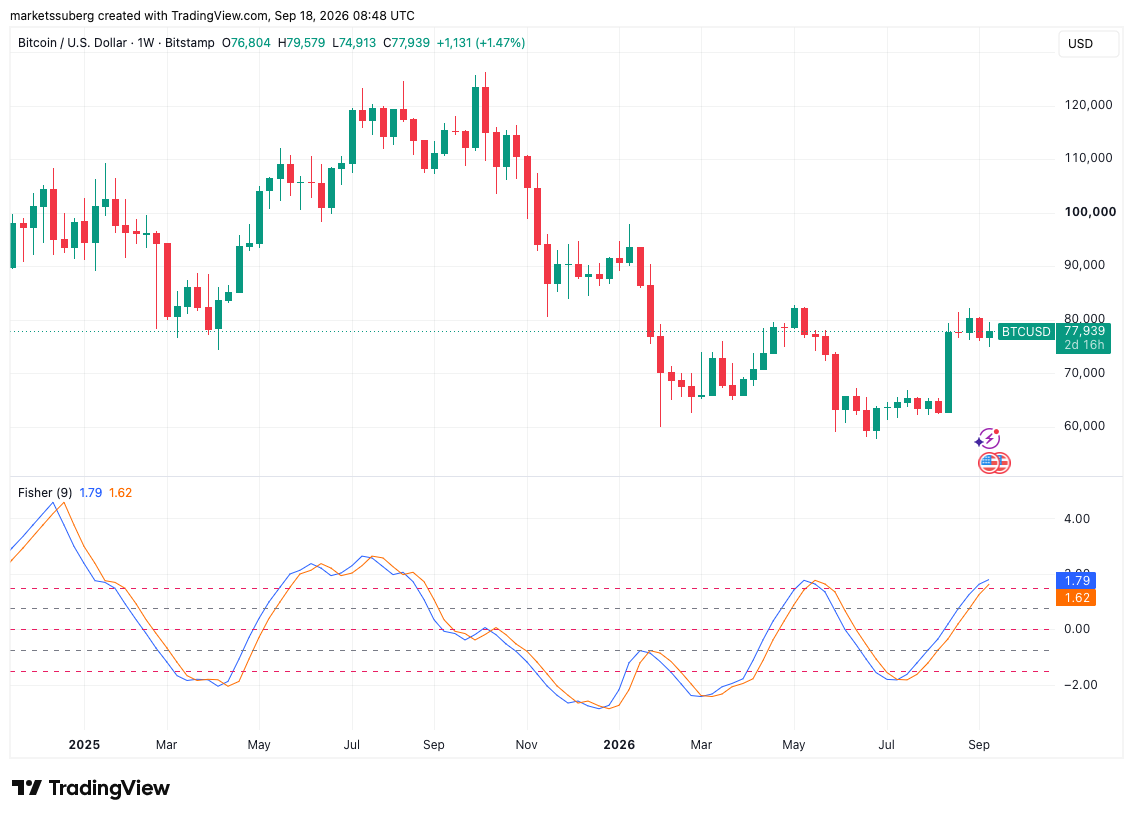
BTC/USD one-week chart with Fisher Transform data. Source: Cointelegraph/TradingView
Since then, Fisher has delivered a succession of higher lows while price itself sees lower lows, creating a bullish divergence. The same pattern emerged in 2022, with a bullish divergence in Fisher accompanying the final six months of Bitcoin’s previous bear market.
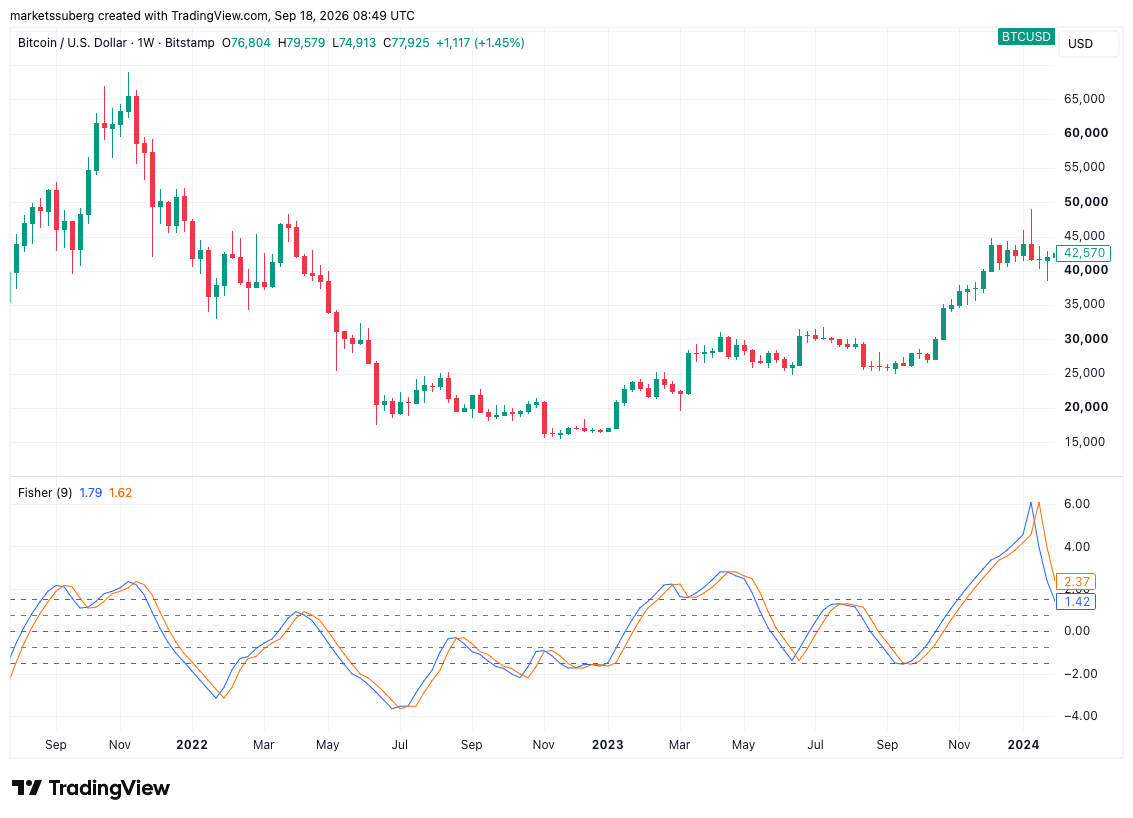
BTC/USD one-week chart with Fisher Transform data. Source: Cointelegraph/TradingView
Despite various onchain metrics triggering bear-market reversal signals in recent months, doubts remain over whether Bitcoin’s 21-month lows near $57,000 on July 1 really marked a new cycle bottom.
Last week, Woo himself noted a lack of typical buyer interest at these lows, with bid-side activity suggesting that only a handful of large-volume investors were accumulating at the time.

The team behind the popular project has released another major KYC and Mainnet migration update, clearing hundreds of thousands of previously stuck Pioneers while introducing new verification methods, including something called a palm-print trial.
The update focuses primarily on so-called “corner cases” that prevented otherwise eligible users from completing KYC or accessing their migrated balances. The largest immediate change affects accounts previously flagged as possible duplicates.
900,000+ Users to Be Unblocked?
The blog post on the project’s official site reads that after additional evaluation, the team had determined that over 417,000 users were caught in the duplicated-account review, but in reality, their accounts did not fall into that category. They can now move forward with KYC, although they must still satisfy all other applicable verification requirements.
Another fix targets an additional 497,000 users whose Mainnet balances became inaccessible because of an issue involving the Fast-Track wallets. Some received their Mainnet wallet through the project’s Fast-Track process and later used it as the destination for migration. However, these wallets sometimes lacked enough Pi tokens to cover the gas fee required to claim the migrated balance because they were created through a different route than the standard KYC process.
The Core Team noted that these issues will be addressed with an update scheduled for deployment within the next week or so. It will unblock those users and prevent the same problem from affecting similar accounts in the future. In total, the fixes should help approximately 914,000 users.
Palm-Print Verification Tested
The second major announcement in the most recent statement involves expansion plans for Pi Network’s identity-verification tools. For a trial that lasts a month, some users will be asked to complete multiple liveness checks, and the team will offer them palm-print capture as an additional authentication method.
Pi Network’s team said palm prints provide another way to verify that users are genuine humans while offering a degree of privacy because the method does not require displaying a face. As with most other Pi Network updates, more on the recent ones can be found in our dedicated article, the feature will be rolled out gradually.
Other changes include improved machine-learning-based resource management to reduce KYC processing errors, broader liveness-check compatibility for older or lower-spec smartphones, and new resubmission options for some users affected by earlier Yoti verification issues or unsupported IDs from Indonesia.
The post Huge Pi Network Update Affects Over 900,000 Pioneers: Details appeared first on CryptoPotato.

Gold (GC=F) December futures opened at $4,381.60 per troy ounce on Friday, September 18, 2026, down 0.4% from Thursday’s closing price. Gold is moving upward this morning at $4,421.40 per troy ounce as of 6:46 a.m. ET.
Gold prices have held in the $4,300 range since last Friday, but this morning they broke above $4,400, hitting a weekly high of $4,439.80.
The Fed’s decision to raise rates for the first time in three years, combined with the ongoing restoration of Saudi Arabia’s key East-West pipeline, has prompted inflation concerns to fade among investors.
Oil prices continue to move lower as a result. On Wednesday at this time, Brent crude (BZ=F)prices were over $107 a barrel. Yesterday morning, prices were at over $99 a barrel, and this morning, they’re $98.46 as of 6:39 a.m. ET.
Current price of gold
The opening price of gold futures on Friday, September 18, 2026, was down 0.4% from Thursday’s closing price. Here’s a look at how the opening gold price has changed versus last week, month, and year:
-
One week ago: +0.5%
-
One month ago: -2.1%
-
One year ago: +18.7%
For context, the one-year gain for gold was 95.6% on Jan. 29.
24/7 gold price tracking: Don’t forget you can monitor the current price of gold on Yahoo Finance 24 hours a day, seven days a week.
Want to learn more about the current top-performing companies in the gold industry? Explore a list of the top-performing companies in the gold industry using the Yahoo Finance Screener. You can create your own screeners with over 150 different screening criteria.
How much gold should you own?
A gold investment can add stability and inflation protection to your portfolio. But it can also dilute your gains when stock prices are rising quickly. Finding the right balance between gold’s diversification benefits and profiting from growth potential in other assets can be challenging.
Even the experts are divided on how to achieve the correct balance. Below, five experts explain their recommended gold allocations, which range from 0% to 20%.
Learn more: How to invest in gold in 4 steps
No gold: Trade-off is too high
Robert R. Johnson, professor at Creighton University’s Heider College of Business, does not advocate gold investing. In his words, “while having a small position in precious metals may dampen portfolio volatility in the short-run, the tradeoff between slightly dampened volatility and the lost long-term return is certainly not a prudent one, particularly for Gen Z/millennials with long investing time horizons.”
2% to 5% allocation, depending on the situation
Brett Elliott, director of content and SEO at American Precious Metals Exchange (APMEX), recommends setting an allocation that aligns with your investing goals.
Growth-oriented investors may be comfortable with an allocation of 10% or 15%, according to Elliott. But income investors will prefer a smaller position, because gold provides no yield. A 2% to 5% gold allocation can provide some resiliency without an excessive drag on income potential.
Learn more: Who decides what gold is worth? How gold prices are determined.
5% to 8% gold allocation
Blake McLaughlin, executive vice president at Axcap Ventures, said historical data support a gold allocation of 5% to 8%. “Gold may not offer the outsized return potential of private investments, but the metal holds a set of attributes that are increasingly hard to ignore,” according to McLaughlin. Those attributes include the metal’s resilience amid economic uncertainty and geopolitical unrest.
5% to 15% gold allocation
Thomas Winmill, portfolio manager at Midas Funds, believes most investors will benefit from a long-term gold allocation of 5% to 15%. Winmill specifically advocates investing in gold mining companies through a mutual fund.
Your risk tolerance and current mix of financial versus hard assets can guide you to an appropriate allocation, according to Winmill.
-
Risk tolerance: Keep your allocation percentage low if you tend to panic in volatile cycles.
-
Financial vs. hard assets: Financial assets are stocks and bonds. Hard assets include tangible items like real estate, gold, collectibles, classic cars, and equipment. If you have no home equity and your wealth is primarily in financial assets, you can set your gold allocation higher. Or, if your home is paid for and more valuable than your stock portfolio, gold investing may not be necessary.
Learn more: Thinking of buying gold? Here’s what investors should watch for.
20% gold allocation
Vince Stanzione, CEO and founder at First Information, recommends a 20% gold allocation, specifically in physical gold or a gold ETF. Stanzione argues for a higher exposure to gold as a wealth protection strategy. As he says, “gold keeps with inflation and gold retains its purchasing power,” while paper currencies are devaluing around the world.
Learn more: Gold IRA: Benefits, risks, and how it differs from a traditional IRA
Price of gold chart
Whether you’re tracking the price of gold since last month or last year, the price-of-gold chart below shows the precious metal’s change in value so far this year.
This Friday, we examine Ethereum, Ripple, Cardano, Binance Coin, and Hyperliquid in greater detail.
Ethereum (ETH)
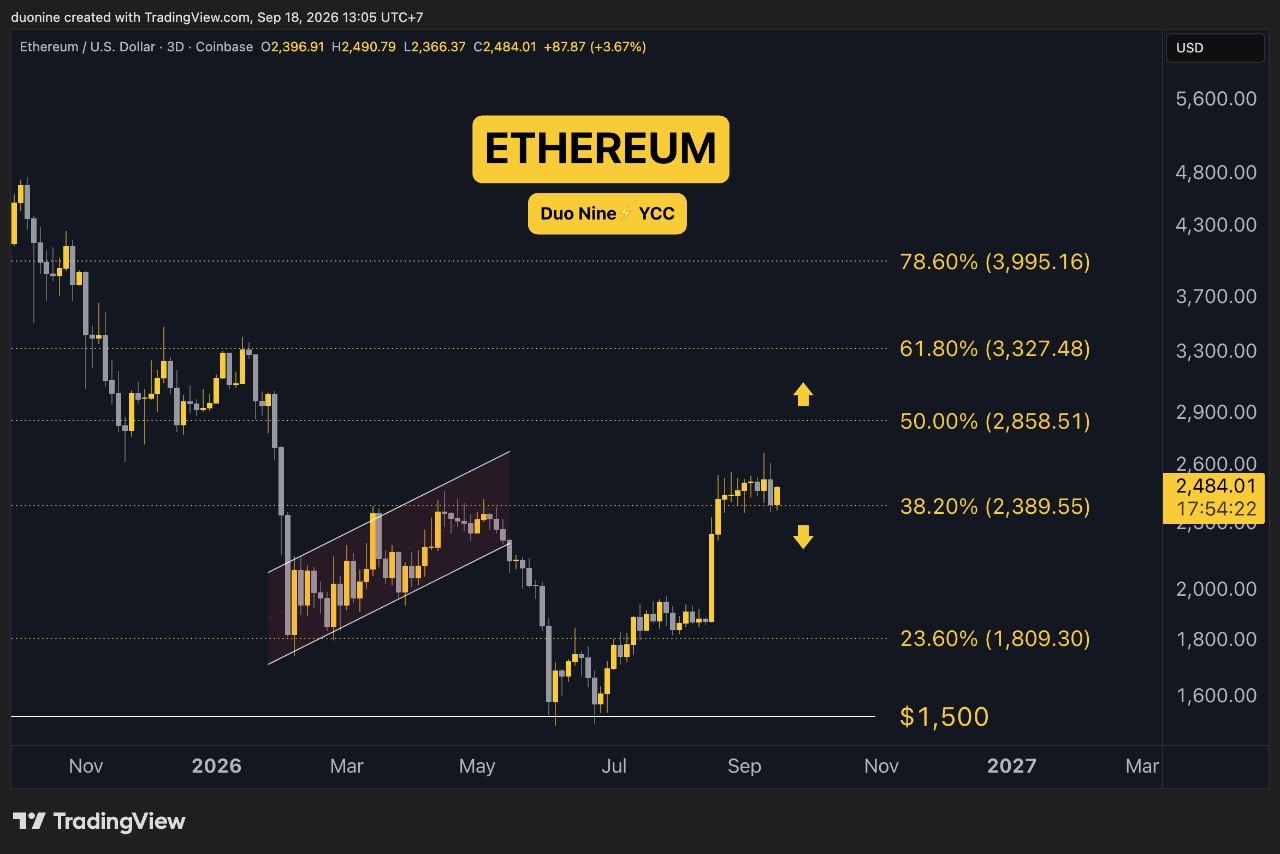
This week, Ethereum is up 2% after buyers defended support at $2,400. As long as this key level holds, the price has a good chance to make higher highs in the near term.
Previously, sellers returned at $2,500 and pushed ETH into a pullback, which appears to be ending at the time of this post. Another test of this level could lead to a breakout and a renewed rally, as long as the buy volume supports it.
Looking ahead, Ethereum remains in an uptrend with clear higher lows. This places bulls at an advantage, which they can capitalize on by breaking above $2,500. That would also allow ETH to expand all the way to $2,800 before sellers make their presence known again.
Ripple (XRP)
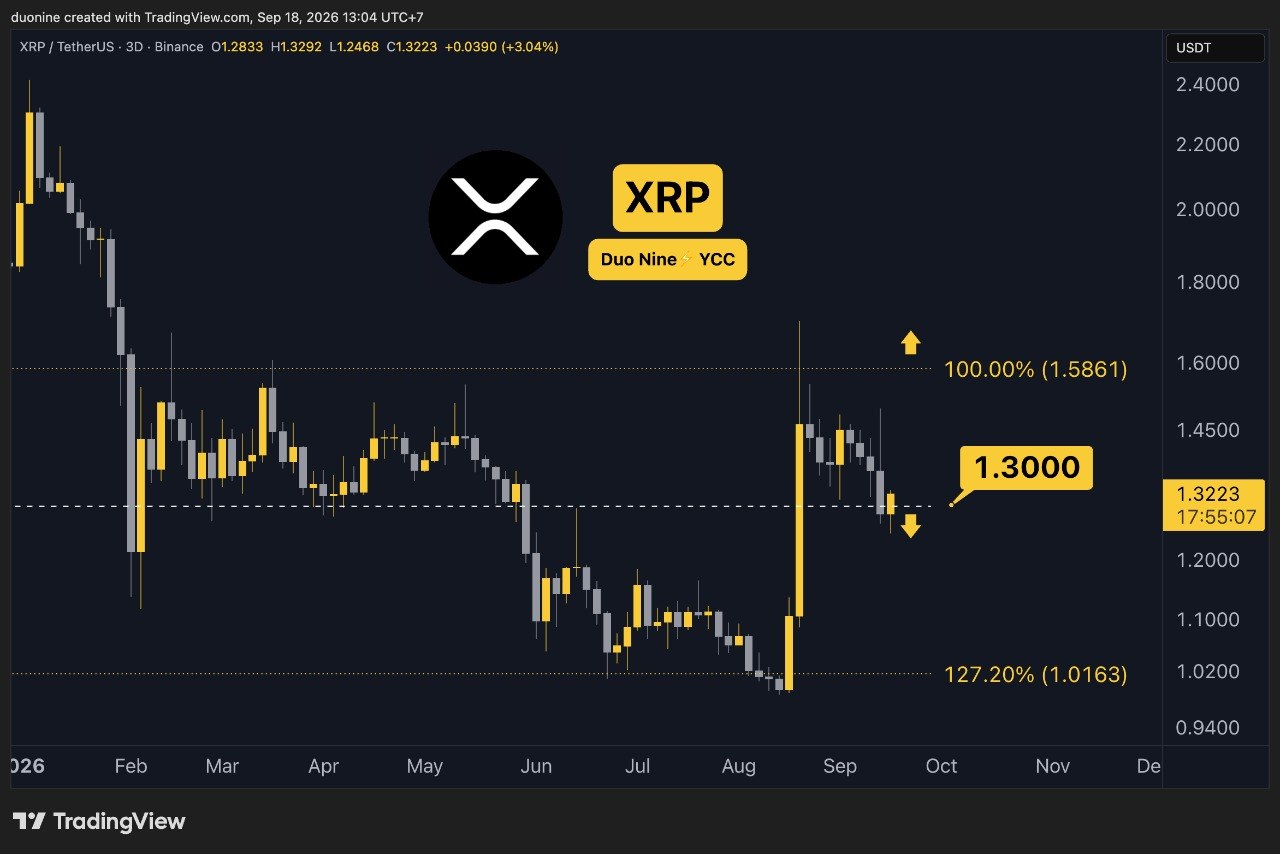
XRP also closed the week in green, albeit with a modest 1% gain. Still, this allowed buyers to push it above the support at $1.3, which was momentarily lost. This recovery is a positive sign and could encourage further gains in the near future.
The recent correction was also somewhat expected considering that this cryptocurrency rallied to $1.6 in less than a week. Forming a strong base around $1.3 is also critical if XRP wants to break $1.6.
Looking ahead, XRP is forming a clear bullish pattern with higher highs and lows. If the current resistance breaks, then $2 becomes the next major target and will likely act as a magnet for buyers.
Cardano (ADA)
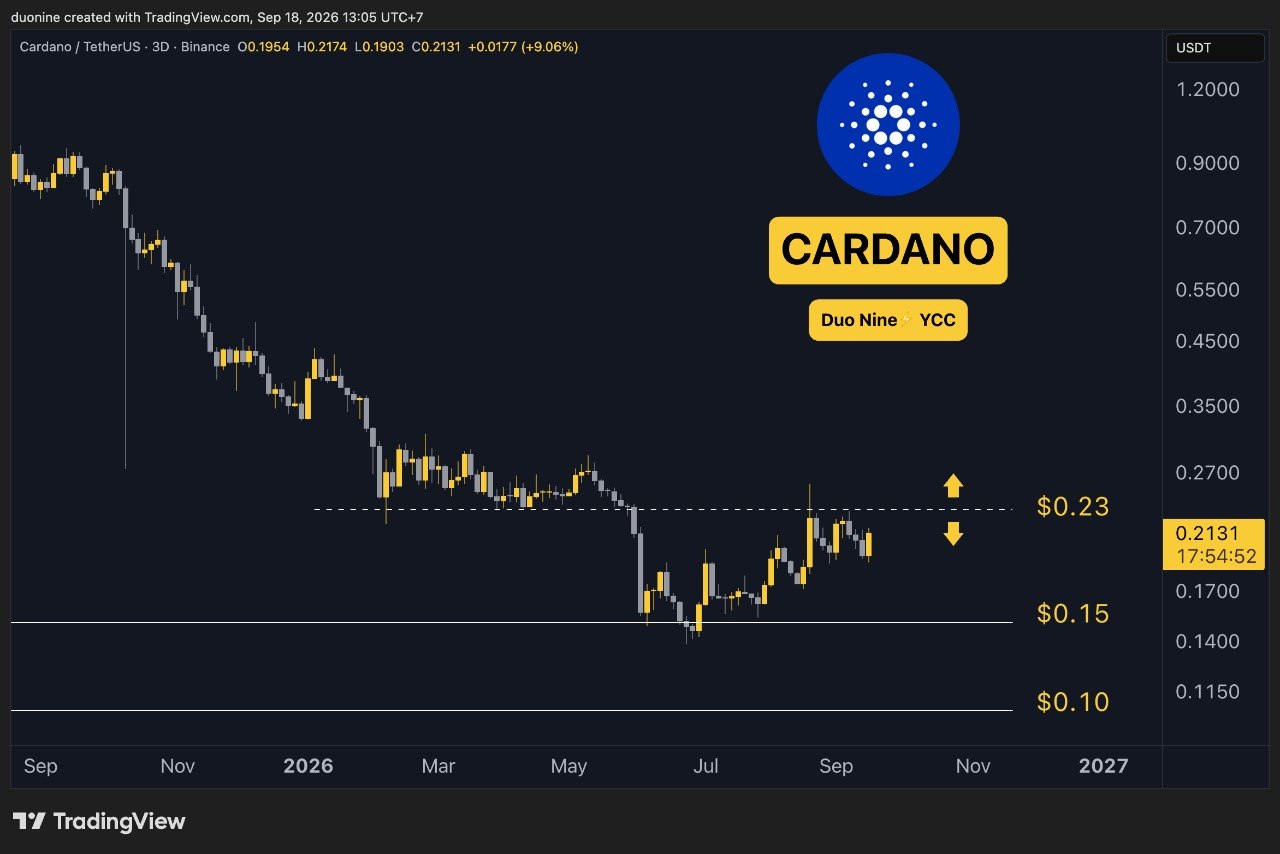
ADA had a good week with an 8% rally that saw the price reverse the recent losses and return on the offensive, with the $0.23 resistance as its major target. Should $0.23 break on a renewed push, this cryptocurrency will aim for $0.30 next.
The current support is just under $0.20 and held well in the recent test. This allowed Cardano to attract new buyers, who are currently dominating the chart. The question is if sellers will return again at $0.23.
Looking ahead, ADA needs to break the current resistance to confirm its bottom under $0.15 and allow the price to expand quickly toward $0.30 and beyond. For that to happen, buyers will have to bring stronger volume.
Binance Coin (BNB)
Binance Coin closed 4% higher after buyers managed to re-confirm the support at $690. This returned confidence in the price action, which is now aiming to make a higher high and, hopefully, aim for $900 next.
This also suggests that the drop under $580 in July was a bearish trap and local low. That’s because, since then, the price has been going up only, despite any pullbacks, which are normal.
Looking ahead, it is likely that BNB will continue its rally and revisit the price levels from early 2026 at around $900. That’s where buyers and sellers will become very active, and the winner will decide how this cryptocurrency closes the year.
Source: TradingView

Hype (HYPE)
This week, Hyperliquid concluded its correction and pumped by 11%, making it the best performer on our list. While the price did not make a new record, it’s very close to doing so and may soon move beyond $90, if this momentum persists.
Hopefully, buyers will turn $85 into a key support. That would allow the price to expand further and eventually aim for $100, which is a key psychological level that everyone is waiting for.
Looking ahead, HYPE’s rally has a good chance to continue, but it is likely to face difficulties as soon as it approaches a three-digit valuation. That’s because sellers could return there to book profits just as another record price is made.

The post Crypto Price Analysis Sep-18: ETH, XRP, ADA, BNB, and HYPE appeared first on CryptoPotato.

Portland startup Antfly raises $2M to streamline data infrastructure for AI agents

Pictured: ‘Caring and kind’ man killed on Tube station platform while on his way home from Notting Hill Carnival – as family pay tribute

Beauty, health and wellness are converging into one retail category



-

 Fashion7 days ago
Weekend Open Thread – Corporette.com
-

 Tech5 days ago
The Latest Weird Thing to Play Doom Is the Mapped-Out Brain of a Fruit Fly
-

 Crypto World3 days ago
Kraken Lets xStocks Holders Earn Yield Through DeFi
-

 Crypto World2 days ago
US Charges Robinhood Engineers Over Crypto Listing Trades
-

 Crypto World6 days ago
Can AI Build a Startup in 72 Hours? Elon Musk's Team Will Livestream the Test
-

 News Videos7 days ago
Facing Financial Fears
-

 Crypto World4 days ago
Elon Musk Drops a Bombshell: Grok 5 Could Be the AGI Breakthrough
-

 Entertainment7 days ago
News Specials, Movies, Shows, More
-

 Business5 days ago
Rivals Sam Altman and Elon Musk Rally Behind Dario Amodei’s Call for a Slowdown in AI Development
-
 NewsBeat4 days ago
‘Sick conspiracy’: Trump says only guardrails AI needs is ‘a strong and smart (High IQ!) president’ in all-caps rant
-
 Crypto World5 days ago
New Tesla Roadster Uses SpaceX Tech. Will It Impact the Stock Price?
-

 Crypto World6 days ago
Robinhood Chain Never Stopped But its Blobs Did Stop Reaching Ethereum For 14 Minutes
-

 Crypto World2 days ago
What Is the Status of the U.S.-Iran Peace Talks? Here's What Both Sides Are Saying
-
 Entertainment7 days ago
New Horror Movie Officially Earns a Rare Stephen King Recommendation
-

 Crypto World3 days ago
NVIDIA Analysis: Attempted Rising Wedge Breakout Amid Pressure on the AI Sector
-

 Business6 days ago
Marvell: Most Potent Setup Of The AI Factory Decade
-

 Crypto World4 days ago
DOJ Seeks to Seize $61M in Iran Oil Funds From Binance Accounts It Vouched For
-
 Crypto World4 days ago
3 Token Unlocks to Watch in the Third Week of September 2026
-

 Crypto World6 days ago
Bitcoin ETFs lose $462.7M as Ethereum funds gain $196.9M
-

 Crypto World4 days ago
Revolut Attackers Warn of Ongoing Daily Customer Data Leaks
You must be logged in to post a comment Login