
Crypto World
What next as bitcoin weathers Fed hike and Clarity Act setback?

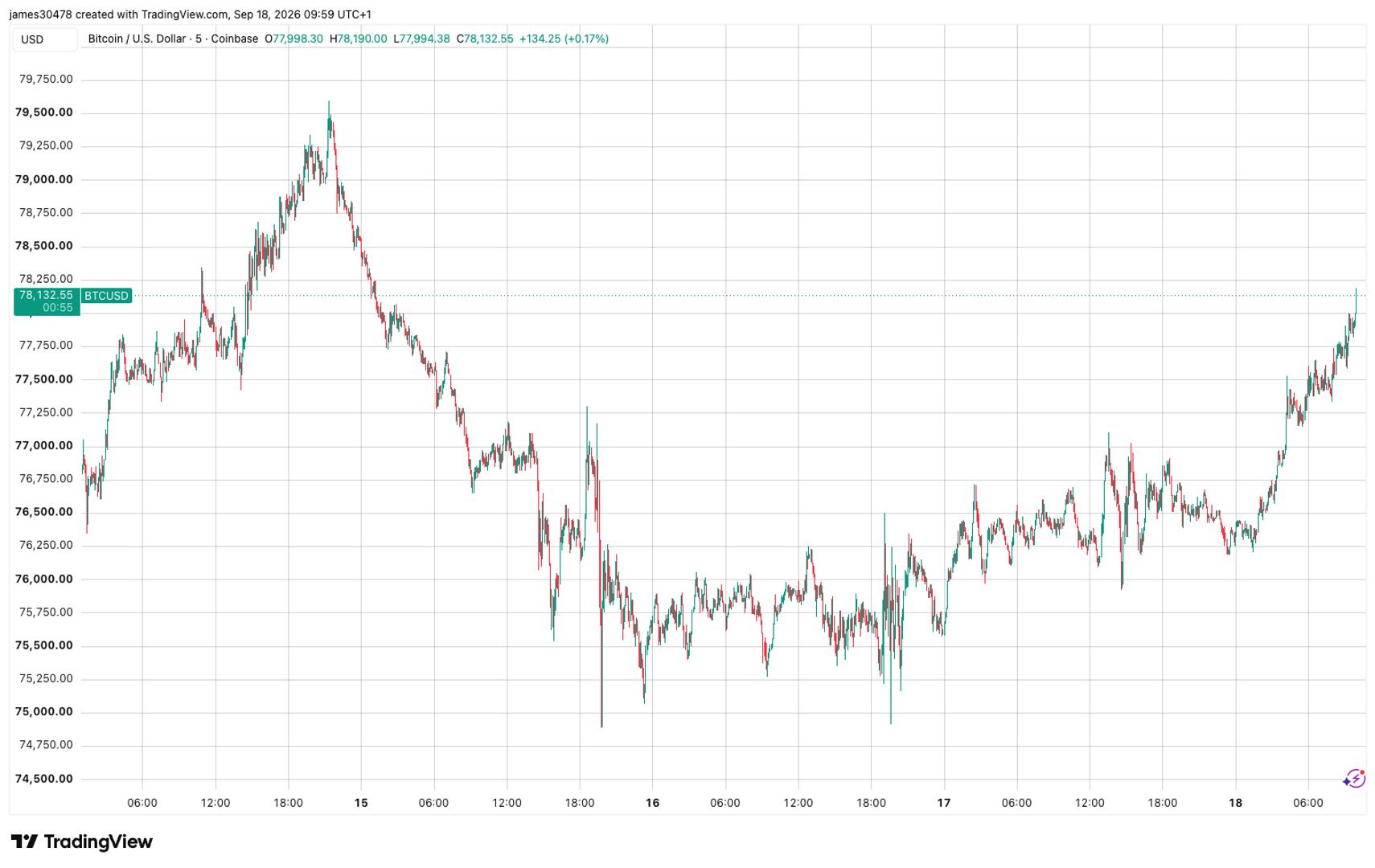
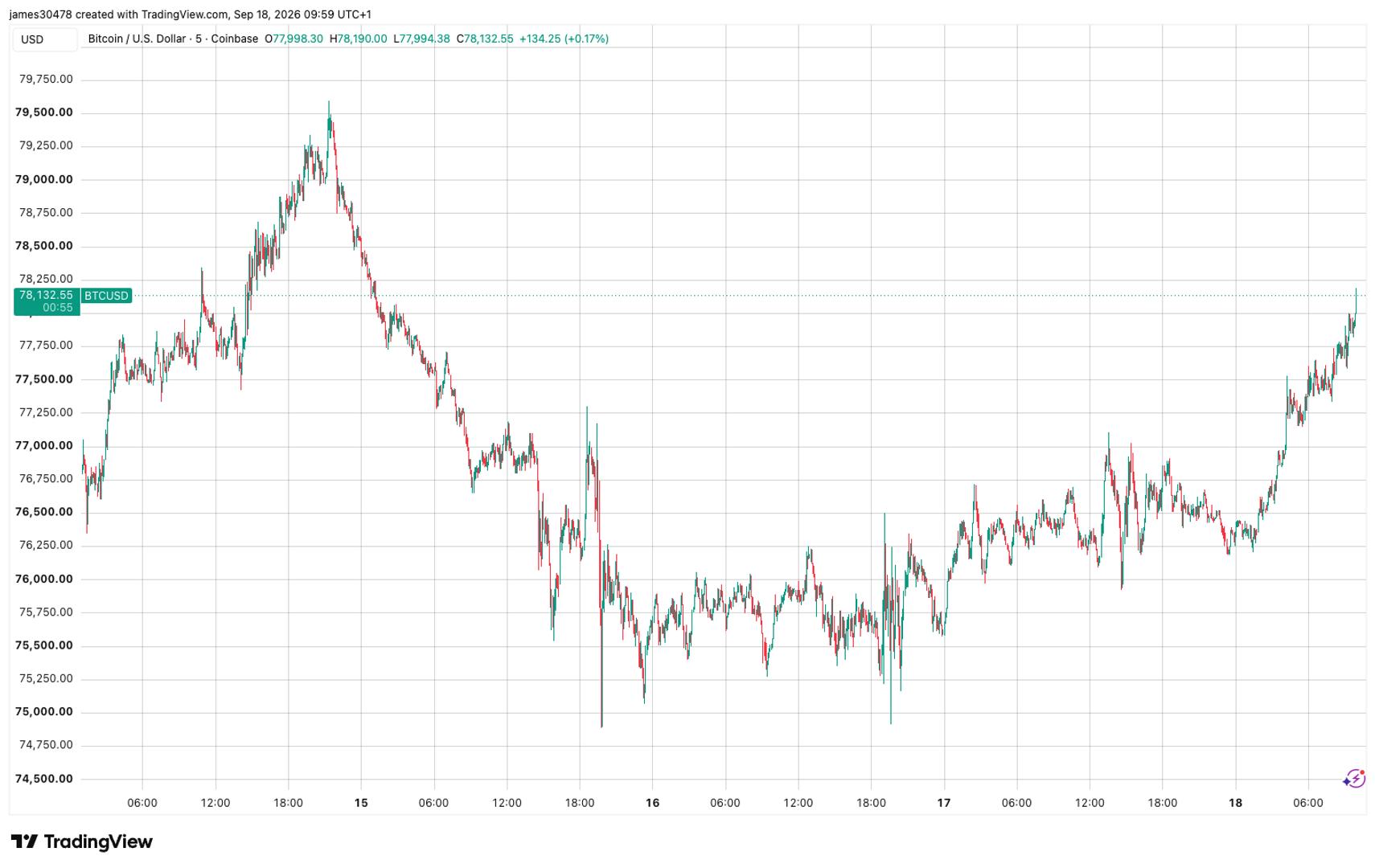
If that’s not enough, the Dollar Index, which measures the dollar against a basket of major currencies, has topped 100, hitting its highest level in over a month. Sustained dollar strength can tighten financial conditions and weigh on risk assets, including bitcoin. Further, the Bank of Japan lifted its benchmark borrowing cost to a 31-year high.
Explaining bitcoin’s resilience to these factors, Sygnum Bank said rising interest rates and bond yields are not always bearish.
“It’s not a one-way street. You see yields rising, and at the same time Bitcoin and gold outperforming. If rising rates are an indication of debasement risk and sovereign counterparty risk, then for store of value assets that is actually a positive driver,” Fabian Dori, chief investment officer at Sygnum, said in an email.
What next?
For bitcoin, the takeaway is its resilience, above $77,000, despite legislative setbacks, rising oil prices, tighter monetary policy and a stronger dollar. In other words, the path of least resistance appears to be higher.
“If the market has been this resilient when the news flow has been challenging, even a modest improvement in macro, geopolitical or regulatory conditions could provide the catalyst for the next major leg higher,” Joel Kruger, Markets Strategist at LMAX Group, said.


The team behind the popular project has released another major KYC and Mainnet migration update, clearing hundreds of thousands of previously stuck Pioneers while introducing new verification methods, including something called a palm-print trial.
The update focuses primarily on so-called “corner cases” that prevented otherwise eligible users from completing KYC or accessing their migrated balances. The largest immediate change affects accounts previously flagged as possible duplicates.
900,000+ Users to Be Unblocked?
The blog post on the project’s official site reads that after additional evaluation, the team had determined that over 417,000 users were caught in the duplicated-account review, but in reality, their accounts did not fall into that category. They can now move forward with KYC, although they must still satisfy all other applicable verification requirements.
Another fix targets an additional 497,000 users whose Mainnet balances became inaccessible because of an issue involving the Fast-Track wallets. Some received their Mainnet wallet through the project’s Fast-Track process and later used it as the destination for migration. However, these wallets sometimes lacked enough Pi tokens to cover the gas fee required to claim the migrated balance because they were created through a different route than the standard KYC process.
The Core Team noted that these issues will be addressed with an update scheduled for deployment within the next week or so. It will unblock those users and prevent the same problem from affecting similar accounts in the future. In total, the fixes should help approximately 914,000 users.
Palm-Print Verification Tested
The second major announcement in the most recent statement involves expansion plans for Pi Network’s identity-verification tools. For a trial that lasts a month, some users will be asked to complete multiple liveness checks, and the team will offer them palm-print capture as an additional authentication method.
Pi Network’s team said palm prints provide another way to verify that users are genuine humans while offering a degree of privacy because the method does not require displaying a face. As with most other Pi Network updates, more on the recent ones can be found in our dedicated article, the feature will be rolled out gradually.
Other changes include improved machine-learning-based resource management to reduce KYC processing errors, broader liveness-check compatibility for older or lower-spec smartphones, and new resubmission options for some users affected by earlier Yoti verification issues or unsupported IDs from Indonesia.
The post Huge Pi Network Update Affects Over 900,000 Pioneers: Details appeared first on CryptoPotato.

Gold (GC=F) December futures opened at $4,381.60 per troy ounce on Friday, September 18, 2026, down 0.4% from Thursday’s closing price. Gold is moving upward this morning at $4,421.40 per troy ounce as of 6:46 a.m. ET.
Gold prices have held in the $4,300 range since last Friday, but this morning they broke above $4,400, hitting a weekly high of $4,439.80.
The Fed’s decision to raise rates for the first time in three years, combined with the ongoing restoration of Saudi Arabia’s key East-West pipeline, has prompted inflation concerns to fade among investors.
Oil prices continue to move lower as a result. On Wednesday at this time, Brent crude (BZ=F)prices were over $107 a barrel. Yesterday morning, prices were at over $99 a barrel, and this morning, they’re $98.46 as of 6:39 a.m. ET.
Current price of gold
The opening price of gold futures on Friday, September 18, 2026, was down 0.4% from Thursday’s closing price. Here’s a look at how the opening gold price has changed versus last week, month, and year:
-
One week ago: +0.5%
-
One month ago: -2.1%
-
One year ago: +18.7%
For context, the one-year gain for gold was 95.6% on Jan. 29.
24/7 gold price tracking: Don’t forget you can monitor the current price of gold on Yahoo Finance 24 hours a day, seven days a week.
Want to learn more about the current top-performing companies in the gold industry? Explore a list of the top-performing companies in the gold industry using the Yahoo Finance Screener. You can create your own screeners with over 150 different screening criteria.
How much gold should you own?
A gold investment can add stability and inflation protection to your portfolio. But it can also dilute your gains when stock prices are rising quickly. Finding the right balance between gold’s diversification benefits and profiting from growth potential in other assets can be challenging.
Even the experts are divided on how to achieve the correct balance. Below, five experts explain their recommended gold allocations, which range from 0% to 20%.
Learn more: How to invest in gold in 4 steps
No gold: Trade-off is too high
Robert R. Johnson, professor at Creighton University’s Heider College of Business, does not advocate gold investing. In his words, “while having a small position in precious metals may dampen portfolio volatility in the short-run, the tradeoff between slightly dampened volatility and the lost long-term return is certainly not a prudent one, particularly for Gen Z/millennials with long investing time horizons.”
2% to 5% allocation, depending on the situation
Brett Elliott, director of content and SEO at American Precious Metals Exchange (APMEX), recommends setting an allocation that aligns with your investing goals.
Growth-oriented investors may be comfortable with an allocation of 10% or 15%, according to Elliott. But income investors will prefer a smaller position, because gold provides no yield. A 2% to 5% gold allocation can provide some resiliency without an excessive drag on income potential.
Learn more: Who decides what gold is worth? How gold prices are determined.
5% to 8% gold allocation
Blake McLaughlin, executive vice president at Axcap Ventures, said historical data support a gold allocation of 5% to 8%. “Gold may not offer the outsized return potential of private investments, but the metal holds a set of attributes that are increasingly hard to ignore,” according to McLaughlin. Those attributes include the metal’s resilience amid economic uncertainty and geopolitical unrest.
5% to 15% gold allocation
Thomas Winmill, portfolio manager at Midas Funds, believes most investors will benefit from a long-term gold allocation of 5% to 15%. Winmill specifically advocates investing in gold mining companies through a mutual fund.
Your risk tolerance and current mix of financial versus hard assets can guide you to an appropriate allocation, according to Winmill.
-
Risk tolerance: Keep your allocation percentage low if you tend to panic in volatile cycles.
-
Financial vs. hard assets: Financial assets are stocks and bonds. Hard assets include tangible items like real estate, gold, collectibles, classic cars, and equipment. If you have no home equity and your wealth is primarily in financial assets, you can set your gold allocation higher. Or, if your home is paid for and more valuable than your stock portfolio, gold investing may not be necessary.
Learn more: Thinking of buying gold? Here’s what investors should watch for.
20% gold allocation
Vince Stanzione, CEO and founder at First Information, recommends a 20% gold allocation, specifically in physical gold or a gold ETF. Stanzione argues for a higher exposure to gold as a wealth protection strategy. As he says, “gold keeps with inflation and gold retains its purchasing power,” while paper currencies are devaluing around the world.
Learn more: Gold IRA: Benefits, risks, and how it differs from a traditional IRA
Price of gold chart
Whether you’re tracking the price of gold since last month or last year, the price-of-gold chart below shows the precious metal’s change in value so far this year.
This Friday, we examine Ethereum, Ripple, Cardano, Binance Coin, and Hyperliquid in greater detail.
Ethereum (ETH)
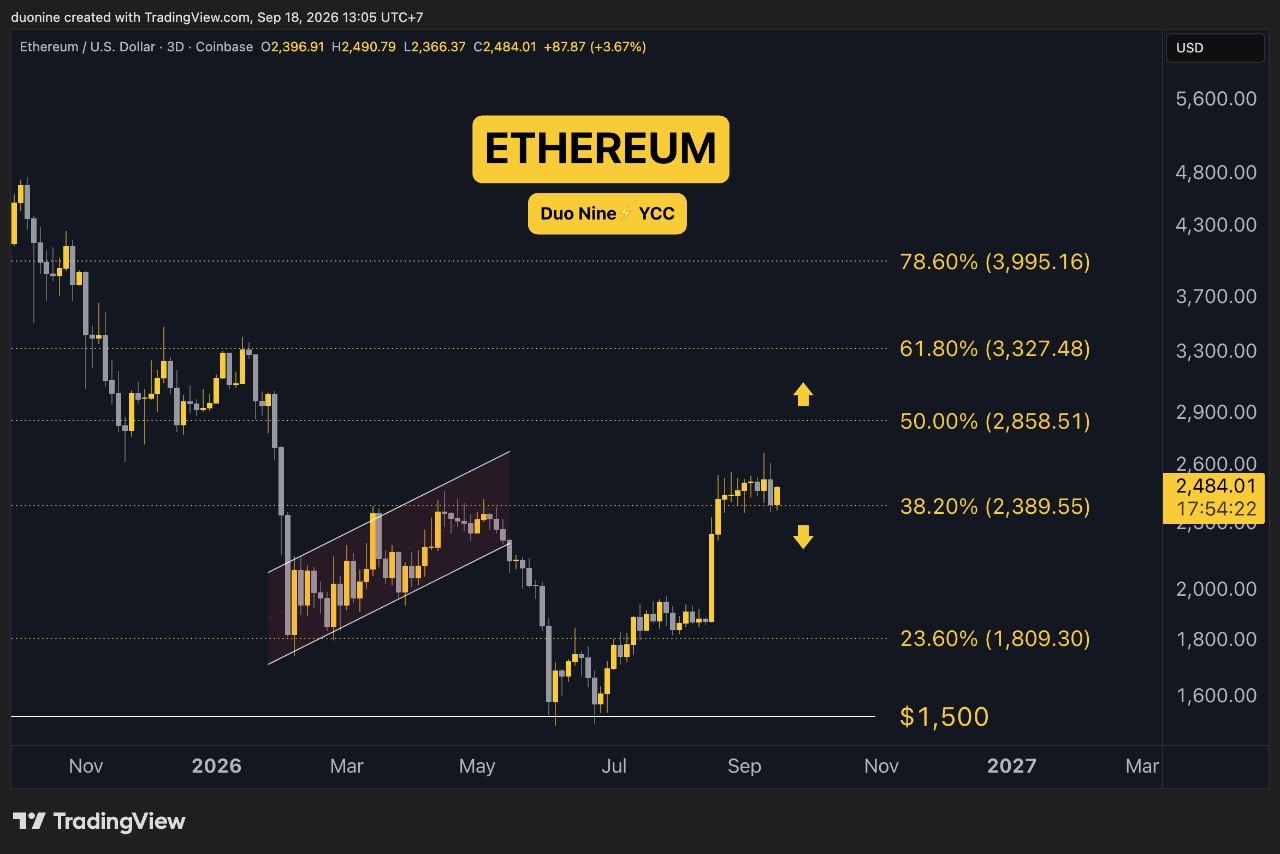
This week, Ethereum is up 2% after buyers defended support at $2,400. As long as this key level holds, the price has a good chance to make higher highs in the near term.
Previously, sellers returned at $2,500 and pushed ETH into a pullback, which appears to be ending at the time of this post. Another test of this level could lead to a breakout and a renewed rally, as long as the buy volume supports it.
Looking ahead, Ethereum remains in an uptrend with clear higher lows. This places bulls at an advantage, which they can capitalize on by breaking above $2,500. That would also allow ETH to expand all the way to $2,800 before sellers make their presence known again.
Ripple (XRP)
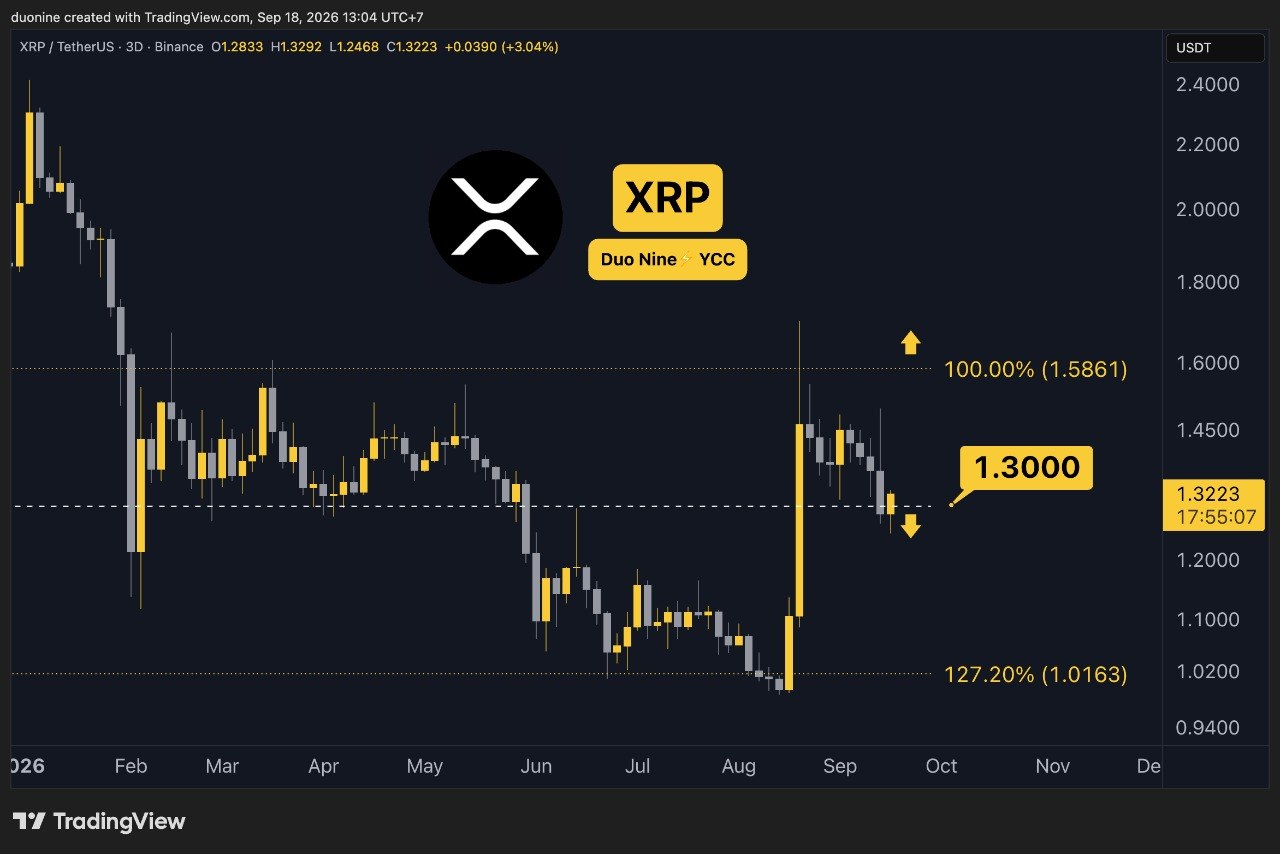
XRP also closed the week in green, albeit with a modest 1% gain. Still, this allowed buyers to push it above the support at $1.3, which was momentarily lost. This recovery is a positive sign and could encourage further gains in the near future.
The recent correction was also somewhat expected considering that this cryptocurrency rallied to $1.6 in less than a week. Forming a strong base around $1.3 is also critical if XRP wants to break $1.6.
Looking ahead, XRP is forming a clear bullish pattern with higher highs and lows. If the current resistance breaks, then $2 becomes the next major target and will likely act as a magnet for buyers.
Cardano (ADA)
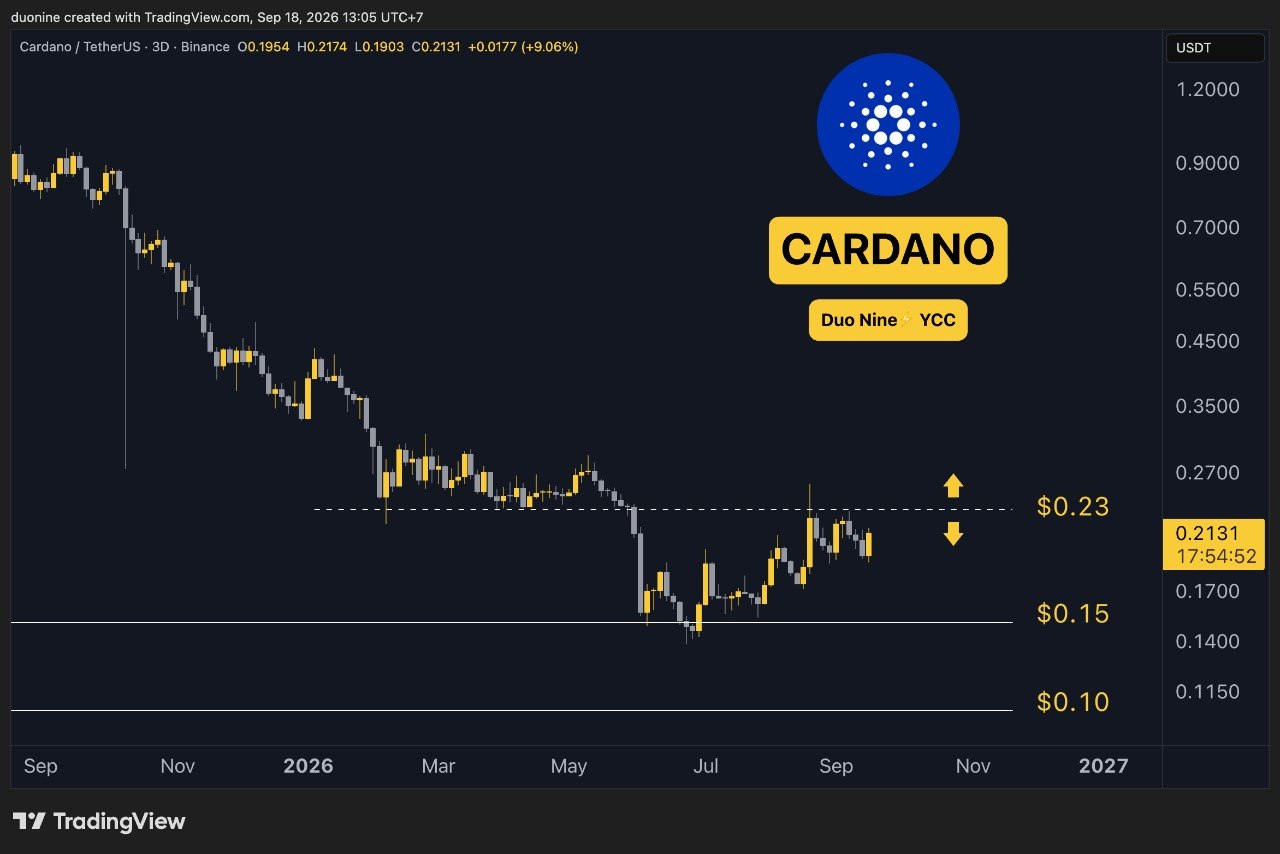
ADA had a good week with an 8% rally that saw the price reverse the recent losses and return on the offensive, with the $0.23 resistance as its major target. Should $0.23 break on a renewed push, this cryptocurrency will aim for $0.30 next.
The current support is just under $0.20 and held well in the recent test. This allowed Cardano to attract new buyers, who are currently dominating the chart. The question is if sellers will return again at $0.23.
Looking ahead, ADA needs to break the current resistance to confirm its bottom under $0.15 and allow the price to expand quickly toward $0.30 and beyond. For that to happen, buyers will have to bring stronger volume.
Binance Coin (BNB)
Binance Coin closed 4% higher after buyers managed to re-confirm the support at $690. This returned confidence in the price action, which is now aiming to make a higher high and, hopefully, aim for $900 next.
This also suggests that the drop under $580 in July was a bearish trap and local low. That’s because, since then, the price has been going up only, despite any pullbacks, which are normal.
Looking ahead, it is likely that BNB will continue its rally and revisit the price levels from early 2026 at around $900. That’s where buyers and sellers will become very active, and the winner will decide how this cryptocurrency closes the year.
Source: TradingView

Hype (HYPE)
This week, Hyperliquid concluded its correction and pumped by 11%, making it the best performer on our list. While the price did not make a new record, it’s very close to doing so and may soon move beyond $90, if this momentum persists.
Hopefully, buyers will turn $85 into a key support. That would allow the price to expand further and eventually aim for $100, which is a key psychological level that everyone is waiting for.
Looking ahead, HYPE’s rally has a good chance to continue, but it is likely to face difficulties as soon as it approaches a three-digit valuation. That’s because sellers could return there to book profits just as another record price is made.

The post Crypto Price Analysis Sep-18: ETH, XRP, ADA, BNB, and HYPE appeared first on CryptoPotato.
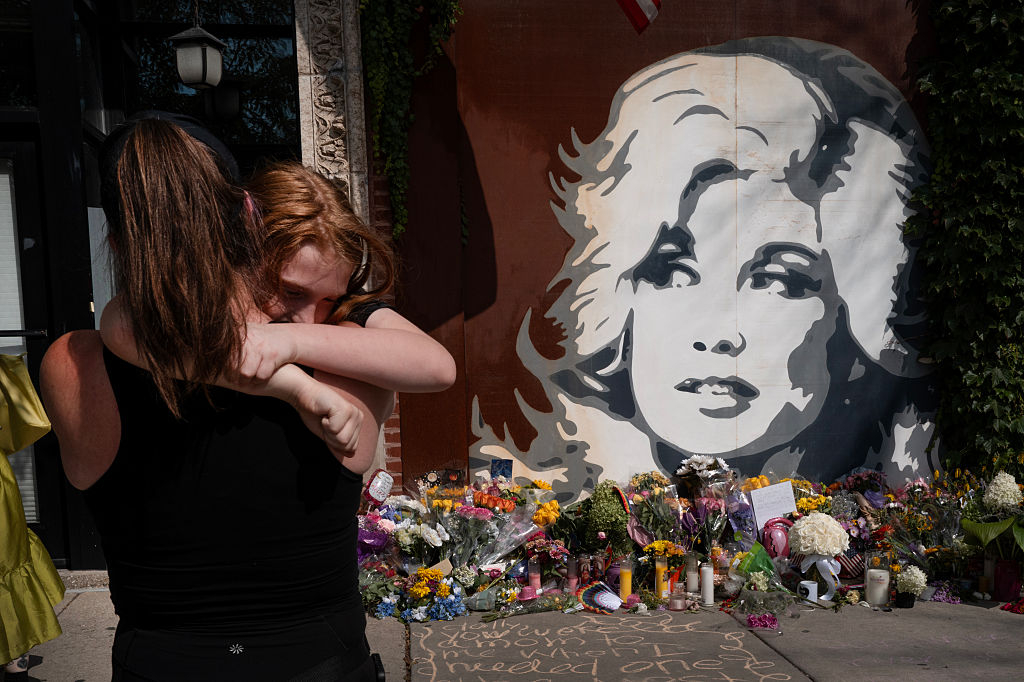
Recently, the world has collectively mourned the unexpected losses of several well-known public figures, from Dolly Parton and Gloria Steinem to Bob Mackie and Tim Curry. Their deaths have hit fans, followers, and industry colleagues hard, and their tributes are going viral online.
Although these celebrities primarily appear to us on screen or on stage, many people feel as though they know them personally because of the meaningful impact they’ve had on their lives. These are known as parasocial relationships or “nonreciprocal social-emotional connections” with public figures and celebrities, per the journal of Current Opinion in Psychology.
When a public figure or celebrity dies, we grieve collectively. According to Gina Moffa, grief therapist and author of the book, Moving on Doesn’t Mean Letting Go, this happens when a large group of people mourns at the same time. “This can be felt even if they never knew the person or community, or weren’t directly affected by the event,” says Moffa. And it isn’t limited to the passing of public figures and celebrities. Many people also experienced shared loss after 9/11, Sandy Hook, COVID-19, and the Nepal floods.
In this current cultural moment, we’re seeing collective grief intersect with a psychological phenomenon called parasocial grief. According to psychotherapist and NYU adjunct professor Olivia Verhulst, this can occur when there’s a one-sided sense of familiarity with a public figure after they die. “Relationships don’t need to be reciprocal for feelings to be real,” Verhulst says. “Loss brings up a lot for all of us no matter what form it takes, whether it’s shock, disbelief, or confrontation with our own mortality.”
A small study in 2025 from the journal Acta Psychologica found that parasocial grief can negatively impact mental health and can lead to unhealthy coping mechanisms like substance use.
In comparison with individual grief, shared bereavement is more diffuse. “It doesn’t have the built-in rituals we rely on, like experiences of a funeral and traditional closure,” Moffa explains. Therefore, when celebrities or public figures die, it’s now common practice to post online and engage in comments sections with other grievers. In this way, the comment sections become public memorials.
After Steinem’s passing, people expressed their gratitude and heartbreak by leaving flowers and cards outside her home. When Parton died, fans held up their iPhones with the flashlight on during Harry Styles concert at Madison Square Garden while her song, “I Will Always Love You,” played. Both of these in-person tributes circulated on social media and were widely shared.
Verhulst argues that the most significant difference in mutual sorrow is its “being witnessed” and it can offer more validation than individualized grief. “Given that human beings are fundamentally wired for connection, this broader sense of communal loss can feel comforting in many ways,” she says.
Shared bereavement isn’t a new idea; it dates back for centuries. Some of the most visible representations in recent decades have been the outpouring of support after the deaths of President John F. Kennedy, the Rev. Dr. Martin Luther King Jr., and Princess Diana. At her funeral, there were an estimated one million people in-person and roughly 2.5 billion viewers who watched it on television.
Society often pushes individual grievers to move on from their losses, rushing them to heal before they’re ready, which can lead to more people struggling alone. But in our current culture, shared bereavement has become more widely accepted. “Social media has become a kind of ‘modern funeral,’ a space where people can come together online, without the barriers of physical geography getting in the way,” Moffa says. “For a lot of people, it’s become the primary place mourning happens now.”
Research has found grieving together is more beneficial than doing it without help. A meta-review from 2022 in the journal Frontiers in Psychology discusses the theory of collective effervescence, a phrase coined by sociologist Émilie Durkheim, as it relates to mourning practices, public memorials, and communal storytelling after the loss of a public figure. This “intense state of shared emotional activation and sense of unity” can help people feel connected in the long term to others who understand their pain.
“When Steinem and Parton passed within days of each other, comment sections turned into genuine gathering places, telling each other how these women shaped their lives. It made the feeling less isolating and more like something they were carrying alongside a whole community instead of alone,” Moffa says.
Working with a therapist, especially for cognitive behavioral therapy, can also be effective. Treatment can give people a safe space to talk about discomfort and divulge feelings of loss over someone they didn’t know personally, with validation and without shame. It can provide more insight into a person’s emotional state, to see if there’s any unresolved or prolonged grief.
Integration is another useful method. Moffa suggests creating a small ritual in honor of that person, like playing their music, reading their books, or rewatching a favorite video clip. Then, write down what that person meant to you, rather than what they meant to the world, and talk about it with someone. “This can provide validation and connection, instead of having to carry it alone,” she adds. In fact, a recent study from the Death Studies journal in 2026 found sharing emotions, ceremonies, and rituals offer “sense making, solidarity and healing” in shared mourning.
While these are effective ways to navigate the pain, they aren’t the only ones. It’s key to adapt them to meet your needs and determine what works for you.
Verhulst noted there’s an outdated idea that grief occurs in fixed stages which is somehow linear. But, she says, there are truly no universal stages to heal from loss and no right way to grieve.
Sometimes, the best way to mourn is together.
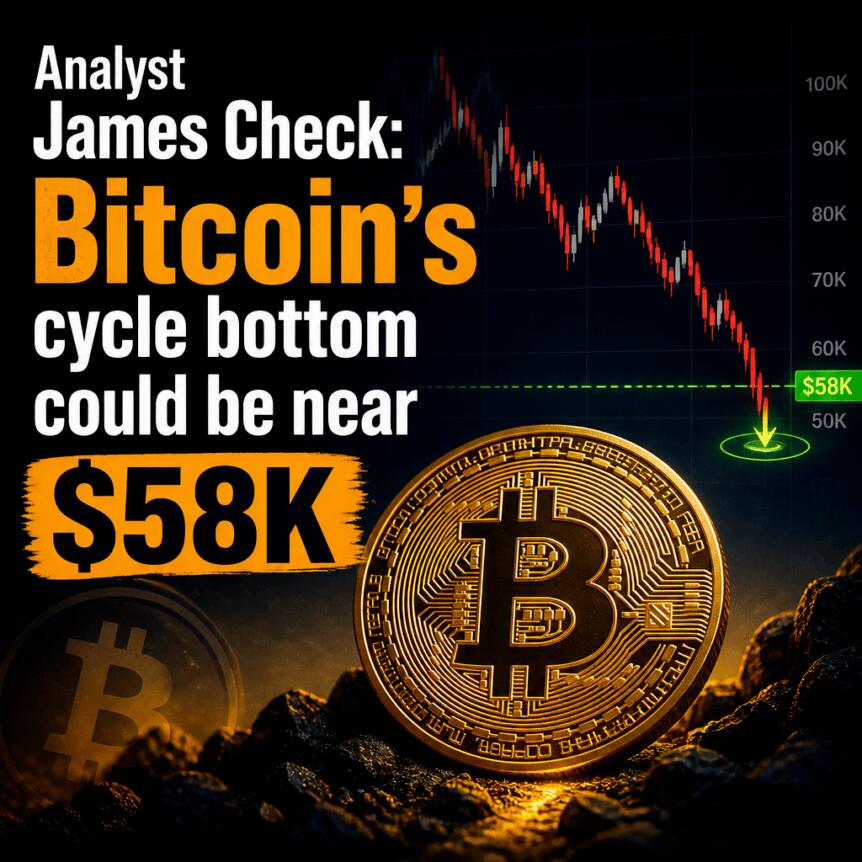
Bitcoin’s next major drawdown narrative is coming into question as on-chain and holder-behavior analysis suggest the market may have already absorbed much of its selling pressure. James Check, founder and lead analyst at Checkonchain, argued that Bitcoin likely formed its cycle bottom after two capitulation-style events rather than waiting for a late-2026 timing window tied to the so-called four-year cycle.
At the time of writing, Bitcoin was trading around $77,400, following a peak of just over $126,000 in October 2025—about 39% below that high. Check’s view challenges expectations that another low is due in October 2026, including earlier calls from analysts who referenced cycle-duration patterns and the US midterm-election calendar.
Key takeaways
- Checkonchain founder James Check said Bitcoin showed “price-pain” and “time-pain” capitulation behavior around the February and June–July drawdowns.
- He argued the market’s cost-basis concentration and holder profitability dynamics indicate selling pressure may have been largely processed earlier than anticipated.
- Check cautioned traders against anchoring decisions to calendar-based four-year cycle timing without accompanying evidence of exhaustion.
- Grayscale research head Zach Pandl similarly suggested a potential bottom near $58,000 at the end of June, citing a relatively contained decline and reduced “bad-news” downside.
- On-chain signals are still mixed: some metrics point to muted dip-buying, while others show short-term holders staying profitable for an extended period.
Capitulation signals appear earlier than cycle-timing calls
In an interview on Cointelegraph’s Proof of Thesis, James Check described Bitcoin’s February slide toward roughly $60,000 as a “price-pain capitulation.” In his framing, the move reflected investors who bought near prior highs exiting at substantial losses after prices broke down.
Check then identified a second phase of “time-pain capitulation” around approximately $58,000 in June and July. He linked this leg to months of sideways trading that eroded confidence among holders, eventually pushing additional participants to sell rather than wait indefinitely for a rebound.
Importantly, Check argued that the difference between a range like $58,000 and $60,000 is less meaningful than the elapsed time between those levels. He emphasized that the “actual difference” was the six-month separation—suggesting the market experienced a deeper psychological and behavioral reset earlier than many timing models imply.
That view stands in tension with expectations some traders hold regarding an October low based on recurring four-year cycle patterns. Earlier, analyst Benjamin Cowen had pointed to cycle-duration information and the US midterm-election calendar as reasons to anticipate a fourth-quarter bottoming window. Check’s framework effectively says the market may already have completed much of the required capitulation process months before a calendar-driven trough would arrive.
Cost basis and holder behavior: why “selling pressure” may be absorbed
Check claimed that roughly $300 billion in Bitcoin cost basis sat concentrated between $58,000 and $70,000. According to him, around 4 million BTC subsequently moved from unrealized losses into profit during the recovery—an important behavioral milestone because it can alter how investors act.
He also suggested that long-term holders now control about 80% of Bitcoin wealth. In Check’s view, that distribution matters: long-term investors are more likely to wait for substantially higher prices rather than sell after a short-term rebound, which can change the market’s ability to sustain new lows.
Put simply, Check’s argument is that capitulation is not just a price print—it’s a transition in profitability and incentives. When enough coins move from loss to profit and the holder base becomes more stable, the conditions that typically drive further waterfall selling may ease.
Why traders shouldn’t treat the four-year cycle as a rule
Check’s critique went beyond one forecast. He said that anchoring decisions to the four-year cycle is a mistake because there is no mechanical reason for it to repeat.
“Ask, ‘Well, now what do I do?’ long before your compass breaks,” Check said, comparing cycle reliance to a broken clock that is only correct by coincidence. In his view, that mindset encourages traders to look for dates rather than confirm whether capitulation and exhaustion are actually present.
Instead, Check argued traders should evaluate metrics like cost basis distribution, unrealized and realized losses, holder profitability, and whether experienced investors are accumulating or distributing. Calendar dates should only provide context after market evidence indicates exhaustion. “Look for the evidence, not the calendar,” he added.
Grayscale’s Zach Pandl sees a June $58,000 bottom—though data is mixed
Check’s stance aligns with a separate analysis from Grayscale head of research Zach Pandl, who also discussed Bitcoin’s downside trajectory in a recent interview on Cointelegraph’s Trade Secrets. Pandl said he was willing to “stick [his] neck out” and guess that prices bottomed near $58,000 at the end of June.
In his assessment, this bear-market move produced less despair than previous Bitcoin drawdowns, partly because it followed a bull market with less euphoria. Pandl suggested that combination could translate into a more contained decline compared with earlier cycles.
He also pointed to a market behavior test: whether Bitcoin keeps falling after bad news. “When price in an asset class, whether it’s crypto or anything else, stops going down on bad news, that’s usually a sign that it’s oversold,” Pandl said—framing a potential turning point in terms of downside momentum rather than a specific calendar date.
On-chain indicators don’t all agree
Despite the $58,000 bottom thesis, on-chain evidence remains inconsistent across datasets. HODL Waves data showed Bitcoin supply held for one to seven days rose only from 1.97% on July 1 to 2.35% on July 5. Analyst Willy Woo interpreted that as an unusually muted response from dip-buyers, implying limited enthusiasm from short-term participants during that period.
Other analytics point in the opposite direction. CryptoQuant data, as reported by Cointelegraph, showed short-term holders remained partially profitable for 30 consecutive days—described as the longest such stretch in 2026 at the time—alongside a pattern that CryptoQuant said has historically characterized Bitcoin recoveries.
Taken together, the mixed signals suggest that while selling pressure may have eased and profitability dynamics may have improved, participation from new short-term buyers was not uniformly aggressive. That can matter for how quickly liquidity returns and whether any rally can broaden beyond the same cohort of holders.
For investors and traders, the near-term question is less about which date a model prefers and more about whether on-chain profitability transitions continue and whether short-term demand strengthens without relying on calendar coincidences. Monitoring holder cost-basis shifts alongside realized-loss behavior may help clarify whether the market’s “capitulation” phase is truly behind it—or whether another wave of distribution is still possible.

XRP price trades at $1.32, clawing back ground after a brutal two-week stretch that saw it shed its value and prediction from the late-August peak. But the number that matters right now isn’t the price, it’s the RSI. One analyst just flagged a momentum reading so extreme that it hasn’t been seen since the depths of the Covid crash.
XRP’s two-week RSI ratio has dropped to roughly 33.5, the lowest reading in the token’s history, lower than 2018, lower than the Covid crash, lower than the 2022 bear market. “Sentiment has been destroyed, momentum has been washed out to a historical extreme, and the asset is being treated as if the story is already over,” an analyst wrote. The implication: pain is already priced in while structure remains intact.
The tape backs up the “washed-out” narrative. The CLARITY Act’s Senate failure knocked XRP down roughly 11%, and macro catalysts now sit squarely in the price-action driver’s seat.
Discover: The Best Token Presales
XRP Price Prediction: Can Ripple Hit $1.45 This Week?
At $1.32, XRP sits comfortably inside the $1.30–$1.34 zone that’s acted as support since the mid-September selloff. Intraday range has run between $1.28 and $1.33, a tight band that suggests consolidation in either direction. Volume hasn’t spiked to confirm a breakout yet, this still reads as a coiling pattern.

- Bull case: A reclaim above $1.34 with volume follow-through opens the door to $1.39–$1.45, levels tied to post-escrow ETF inflow strength.
- Base case: continued chop between $1.30 and $1.40 while the market digests Fed and Senate headlines.
- Bear case: a breakdown below $1.28 invalidates the oversold-bounce thesis and reopens the path toward the $1.26 CLARITY-vote low.
Watch the liquidity and open interest data closely — leverage resets often precede the real move, not the headline.
Trade XRP on Bybit and Get a Chance to Win Our $1,000 USDT Airdrop
Maxi Doge Targets Early Mover Upside as XRP Tests Key Levels
An RSI reading this extreme validates patient XRP holders, and the asymmetry argument has data behind it now. But here’s the catch: even a clean move to $1.45 is roughly a 9% gain from current levels. Respectable, not life-changing.
For traders chasing the kind of asymmetric setup we describe, capital is increasingly rotating toward earlier-stage plays where the ceiling isn’t capped by a multi-billion-dollar market cap.
That’s where Maxi Doge ($MAXI) enters the conversation. It’s a meme token built around a 240-lb canine mascot channeling “1000x leverage” trading energy, gym-bro humor wrapped around a genuine trading community.
The presale has raised $4.8 million at a current price of $0.0002839, with dynamic APY staking live for early participants. Standout features include holder-only trading competitions with leaderboard rewards and a dedicated Maxi Fund treasury for liquidity and partnerships.
Research Maxi Doge before allocating.
Earn $50 and Enter $300K Prize Draw on EdgeX
The post XRP Price Prediction: Ripple Prints Most Bullish RSI Ratio Since Covid appeared first on Cryptonews.

Warren Buffett sits down with CNBC from Omaha, Nebraska on June 14th, 2026.
David A. Grogan | CNBC
Warren Buffett is stepping down as chairman of Berkshire Hathaway, the sprawling conglomerate worth $1 trillion that he has led since 1965. The 96-year-old legendary investor announced the move in a letter to shareholders Friday.
Buffett will become chairman emeritus, effective immediately, while remaining a director on the board, the company said in a separate announcement. His son, Howard Buffett, will replace him as chairman as dictated by a long-standing succession plan, Berkshire said. Susan Decker will continue as lead independent director.
“Father Time always wins,” wrote Buffett. “He has, however, been generous with me. He has given me the opportunity to see Berkshire reach a point where I am more confident than ever about what lies ahead.”
His decision comes a little more than nine months after Greg Abel, 64, took over as CEO while Buffett retained the chairmanship. Buffett first announced his exit as CEO at Berkshire’s annual meeting in May 2025, shocking the crowd of thousands at the time despite his advanced age.
“The culture Warren built and the values he championed will remain at the heart of Berkshire, and Howard will be their guardian,” said Abel in the company release.
“Greg runs the company; Howard will guard its culture and values – both worth more than anything on our balance sheet,” wrote Buffett. “Think of Howard as a policy the shareholders own and hope never to claim against.”
Buffett’s legacy in building the Omaha, Nebraska-based Berkshire is unapparelled in corporate America, taking over a failed New England textiles mill at the tender age of 34 and transforming it over the next six decades into a financial and industrial juggernaut with $44.5 billion in operating earnings last year and nearly 400,000 employees. Berkshire under Buffett’s tenure posted a 19.7% compounded annual return to shareholders, nearly double the return of the S&P 500.
Active chairman
As chairman this year, Buffett remained active within the company. Abel told CNBC in March that Buffett was still coming into the Omaha office every day and the CEO still frequently consulted with him.
In May, Buffett attended the company’s celebrated annual meeting, making some brief remarks from his seat and giving an interview with CNBC’s Becky Quick. It was the first “Woodstock for Capitalists” — as the meeting came to be known — not presided over by Buffett, but instead by Abel.

Berkshire Hathaway, long term
In July, Buffett revealed to CNBC’s that he was the driving force behind Berkshire’s recent big investment in Alphabet. The Google parent is now Berkshire’s third biggest stock holding behind Apple and American Express after a $10 billion private stock purchase in June.
In that same interview, Buffett noted that he had broken his leg a few weeks ago but was recovering.

Buffett acknowledged his growing limitations because of his age as he was getting ready to hand the reins over to Abel last year. In a Thanksgiving letter to shareholders, he wrote, “To my surprise, I generally feel good. Though I move slowly and read with increasing difficulty, I am at the office five days a week.”
In the Friday letter, Buffett joked about it.
“Recently, I celebrated my 96th birthday with family and friends, including one of my great-grandchildren, who had just turned one. He’s moving a bit faster than I am these days,” he wrote.
Berkshire’s 2026 underperformance
Berkshire shares have struggled this year and Buffett’s exit as chairman raises the stakes for Abel further to perform. The stock is up just 1% in 2026 as the S&P 500 has rallied more than 11%. Rising oil prices and investors’ preference for higher growth parts of the market are partly to blame, but shareholders are also waiting to see whether the new CEO can be as adept as Buffett in deploying the firm’s sizable capital.
For now, investors would likely be happy with Abel using some more of the company’s $365.5 billion cash hoard to buy back more Berkshire shares. He has begun to do just that, stepping up repurchases to $4.5 billion in the second quarter.
Berkshire’s largest shareholder praised the job done by Abel so far in his Friday letter: “My expectations for him were sky high from the start, and he has exceeded them.”
“The company is in excellent hands, and I look forward to remaining a shareholder alongside you,” Buffett said in closing.
When reached for comment by CNBC, Abel said: “Warren described in his letter today how his role at Berkshire has been ‘the best job in the world.’ He gave me an extraordinary responsibility – the best job in American business – and then the latitude to lead in a manner consistent with Berkshire’s culture and values. I look forward to continuing to work alongside Warren, with Howard serving as Chairman and Sue as Lead Independent Director, and I am grateful for that opportunity.”


A Zcash trader who once won 26 trades in a row is now sitting on a $7.66 million unrealized loss after taking a heavily leveraged short position in ZEC as the privacy coin continued its rally.
The trade shows just how quickly gains from a strong run of successful positions can disappear when someone gets caught on the wrong side of a fast-moving market.
ZEC Rally Leaves Short Trader $7.66M Underwater
Lookonchain reported on September 18 that the trader had recorded an 89% win rate across 47 trades and made more than $9 million before the ZEC short erased those gains.
The current position is a 12,285 ZEC short worth around $18.3 million, with the trader facing liquidation if ZEC reaches about $1,551.
The position dashboard shows just under $1.8 million in account equity against the $18.3 million in total position value, with leverage at 10.82x. The trader has no free margin available, while the unrealized loss stands at $7.66 million. They opened their position at an average price of $867, compared with a mark price near $1,486.
The scale of the bet is notable when compared with the trader’s earlier results, which included profits of roughly $1.9 million on a Bitcoin long and $1.8 million on an Ethereum long, along with several profitable SOL and ZEC positions.
Yesterday, another well-known trader, Garret Jin, faced a paper loss above $26 million on a much larger short worth about $51.5 million, when Zcash touched a fresh 10-year high near $1,400 before pulling back to around $1,330.
ZEC Keeps Climbing
ZEC has since pushed higher again, trading a few dollars short of $1,500 at the time of writing, per CoinGecko data, up more than 10% over 24 hours and 39% in seven days.
The token has also jumped about 200% over 30 days and more than 2,800% in the last year. Some of that momentum traces back to a governance vote that cut Zcash’s block-target spacing from 75 seconds down to 25, and a handful of analysts at the time argued the coin was nowhere near done climbing.
Lookonchain also flagged newly created wallets pulling tens of millions of dollars worth of ZEC off exchanges in the past day or two, activity that tends to tighten supply rather than add to it.
Meanwhile, across the market, approximately $32.7 million in ZEC positions were liquidated over the past 24 hours, and shorts accounted for the overwhelming majority of it, at $27.17 million.
The post Zcash Short Trader Faces $7.66M Paper Loss as ZEC Nears $1,500 appeared first on CryptoPotato.

Ethereum price is trading at just under the $2,500 resistance, as attention and prediction shift squarely to the network’s next major overhaul. The bigger story isn’t the daily candle; it’s what’s coming down the pipe in October and whether the market has already priced it in.
Developers cleared a key rehearsal for the Glamsterdam upgrade this week, with test blocks continuing to finalize under new block-building rules ahead of a proposed October 6 deployment on the Sepolia public testnet.
Nethermind’s client processed 570.7 billion gas across 2,302 tests in three minutes and 15 seconds, or 2.9 billion gas per second, while validating block-level access lists that let nodes pre-fetch data instead of processing everything sequentially. The testnet’s gas limit jumped from 60 million to 200 million about an hour after going live, a nearly 3.3x increase in per-block capacity.
That’s not a cosmetic tweak. Higher gas ceilings mean fewer fee spikes during high-demand periods, think token launches or DeFi liquidation cascades, assuming node operators can keep pace with heavier blocks. The market’s reaction so far has been measured optimism rather than euphoria, which sets up an interesting technical picture worth unpacking.
Earn $50 and Enter $300K Prize Draw on EdgeX
Ethereum Price Prediction: Can ETH Hit $2,800 This Week?
ETH’s move to $2,495 keeps it inside a consolidation band that’s held since early September, with recent daily closes clustered between $2,446 and $2,488. Volume has been unremarkable with no sign of capitulation or blow-off buying, just grinding accumulation.
Daily moving averages remain stacked bullish (20 > 50 > 200), which technically favors continuation, but price has struggled to clear the $2,493–$2,508 resistance shelf on a closing basis.

Holders want a clean break above $2,508, which opens the door to $2,550, then the $2,723–$2,822 supply zone that would validate the broader $2,800 target analysts have floated. A continued chop could happen between $2,440 and $2,508 while the market waits for concrete Glamsterdam mainnet dates.
However, a loss of the $2,378–$2,403 support band would invalidate the near-term structure and open a path toward $2,300.For a deeper breakdown of these levels, see this Ethereum price prediction covering bullish breakout scenarios.
Trade Ethereum on Bybit and Get a Chance to Win Our $1,000 USDT Airdrop
LiquidChain Targets Early Mover Upside as Ethereum Tests Key Levels
Holding ETH through this consolidation isn’t unreasonable, the fundamentals case for Glamsterdam is real, and a 3.3x gas limit increase is the kind of capacity unlock that tends to matter over quarters, not days.But here’s the uncomfortable math: at Ethereum’s size, even a successful upgrade cycle likely means percentage gains in the double digits, not the multiples that reset a portfolio.
That ceiling is exactly why traders comfortable with higher risk keep one eye on earlier-stage infrastructure plays. This analysis on ETH supply dynamics and breakout conditions offers useful context for what a post-upgrade rally might actually look like in practice.
The quill knows what comes after L2. — LiquidChain (@getliquidchain) September 17, 2026
 https://t.co/vqvBcdSQYC pic.twitter.com/BSumZRCBFg
LiquidChain ($LIQUID) is a Layer 3 infrastructure project built to fuse Bitcoin, Ethereum, and Solana liquidity into one execution environment. It is a “deploy-once” architecture that lets developers build against a single layer and reach all three ecosystems without bridging headaches.
The presale is priced at $0.014956 with $960K raised so far. Its Unified Liquidity Layer and Single-Step Execution model target the exact fragmentation problem that’s slowed cross-chain DeFi adoption for years.
Research LiquidChain before the presale ends.
Discover: The Best Token Presales
The post Ethereum Price Prediction: What to Expect From the Glamsterdam Upgrade? appeared first on Cryptonews.
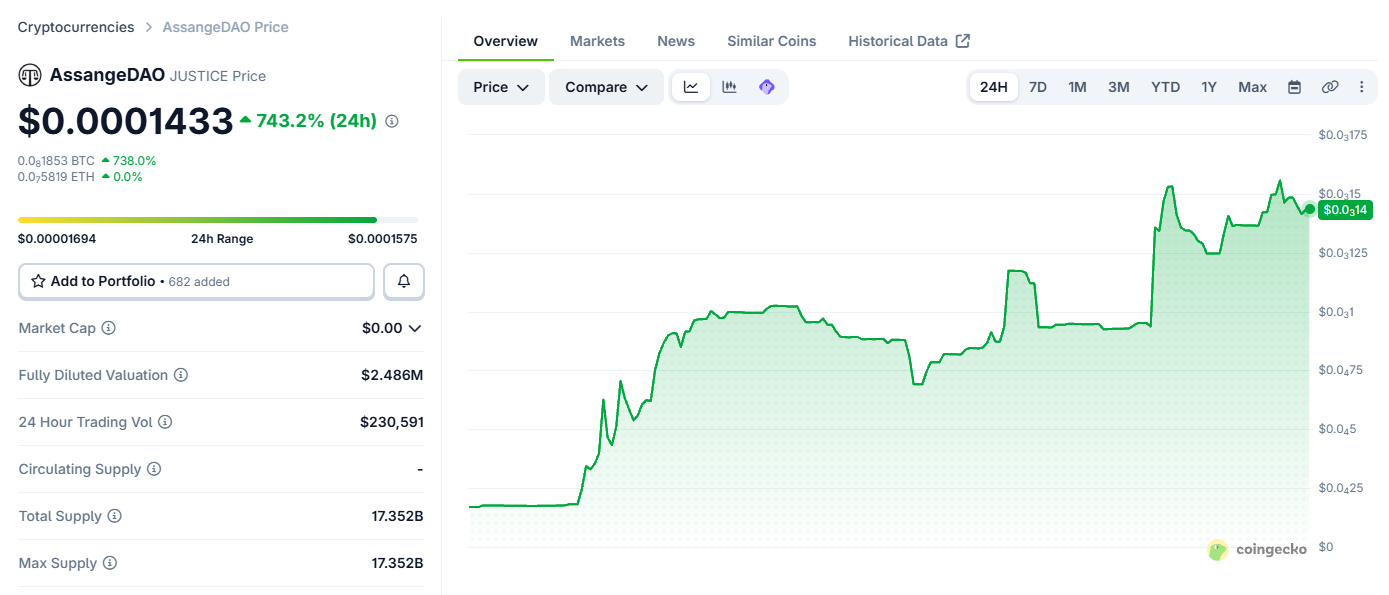
WikiLeaks founder Julian Assange returned to X with a two-word post saying he is back. AssangeDAO (JUSTICE), the Ethereum token minted to fund his defense, then spiked 743% in 24 hours.
Most coverage called the gap a two-year absence. Assange corrected that himself, saying his last personal post came in 2018.
AssangeDAO Token Spikes on a Two-Word Post
His defense campaign ran the account as @DefendAssange in the meantime. The silence therefore lasted eight years, not two. Assange has kept a low profile in Sydney since a 2024 plea deal freed him.

The volume jump tells the story better than the price. JUSTICE averaged under $800 in daily turnover over the past month. That figure reached roughly $231,000 during the surge. Liquidity stays thin in absolute terms, though.
Most of the trading ran through a single Uniswap pool, and the fully diluted valuation sits near $2.5 million. The AssangeDAO token also trades about 95% below its February 2022 record.
Traders have chased attention spikes like this before. A viral meme coin rally in August lifted one token 10,000%. BASECAT climbed more than 2,000% in a single day. Both moves faded quickly.
AssangeDAO launched in February 2022 to fund Assange’s legal defense. Supporters pooled 16,593 ETH, worth about $53 million then. They bought an NFT from the artist Pak. The Wau Holland Foundation later spent the proceeds on legal costs.
Bitcoin Kept WikiLeaks Alive After the Banking Blockade
Visa, Mastercard and PayPal cut WikiLeaks off in December 2010. The site therefore started accepting Bitcoin in June 2011. That move became an early test of censorship-resistant money.
Satoshi Nakamoto opposed it at the time.
“It would have been nice to get this attention in any other context. WikiLeaks has kicked the hornet’s nest, and the swarm is headed towards us,” Satoshi Nakamoto, bitcointalk post.
Assange later credited those donations with keeping WikiLeaks funded. He claimed returns close to 50,000%. In 2024, an anonymous donor sent 8 BTC to clear his roughly $500,000 charter-flight debt.
That pattern has since repeated elsewhere. Crypto donations reached Venezuela within days of its June earthquakes.
JUSTICE therefore appears to trade on that history rather than on any fresh project development.
The post WikiLeaks Founder Says “I'm Back.” A Token Most People Forgot Existed Jumps 743% appeared first on BeInCrypto.

The Inbetweeners FIRST LOOK: Jay, Will, Simon and Neil are back as filming for the third film begins with mystery wedding to stunning blonde – while Emily Atack ‘refuses to return amid feud’
CoreWeave prices $3.7 billion convertible notes offering
Huge Pi Network Update Affects Over 900,000 Pioneers: Details

Weekend Open Thread – Corporette.com

Memory prices are slowing because buyers ran out of money

Micron Stock Climbs Above $1,031 as AI Memory Crunch and a $50 Billion Outlook Fuel the Rally

The Looming Collapse Of Michael Saylor’s Bitcoin Empire (i’m sorry)

Ripple XRP: All Eyes On Sept 15th, But The Real Decision Already Happened WOW!! (NO ONE IS READY)

Think before using credit #smartpending #credicard #short #finance
-
 Fashion7 days ago
Weekend Open Thread – Corporette.com
-

 Tech5 days ago
The Latest Weird Thing to Play Doom Is the Mapped-Out Brain of a Fruit Fly
-

 Crypto World3 days ago
Kraken Lets xStocks Holders Earn Yield Through DeFi
-

 Crypto World1 day ago
US Charges Robinhood Engineers Over Crypto Listing Trades
-

 Crypto World6 days ago
Can AI Build a Startup in 72 Hours? Elon Musk's Team Will Livestream the Test
-

 News Videos7 days ago
Facing Financial Fears
-

 Crypto World4 days ago
Elon Musk Drops a Bombshell: Grok 5 Could Be the AGI Breakthrough
-

 Entertainment7 days ago
News Specials, Movies, Shows, More
-

 Business5 days ago
Rivals Sam Altman and Elon Musk Rally Behind Dario Amodei’s Call for a Slowdown in AI Development
-
 NewsBeat4 days ago
‘Sick conspiracy’: Trump says only guardrails AI needs is ‘a strong and smart (High IQ!) president’ in all-caps rant
-
 Crypto World5 days ago
New Tesla Roadster Uses SpaceX Tech. Will It Impact the Stock Price?
-

 Crypto World6 days ago
Robinhood Chain Never Stopped But its Blobs Did Stop Reaching Ethereum For 14 Minutes
-

 Crypto World2 days ago
What Is the Status of the U.S.-Iran Peace Talks? Here's What Both Sides Are Saying
-
 Entertainment6 days ago
New Horror Movie Officially Earns a Rare Stephen King Recommendation
-

 Crypto World3 days ago
NVIDIA Analysis: Attempted Rising Wedge Breakout Amid Pressure on the AI Sector
-

 Business6 days ago
Marvell: Most Potent Setup Of The AI Factory Decade
-

 Crypto World3 days ago
DOJ Seeks to Seize $61M in Iran Oil Funds From Binance Accounts It Vouched For
-
 Crypto World4 days ago
3 Token Unlocks to Watch in the Third Week of September 2026
-

 Crypto World6 days ago
Bitcoin ETFs lose $462.7M as Ethereum funds gain $196.9M
-

 Crypto World3 days ago
Revolut Attackers Warn of Ongoing Daily Customer Data Leaks
You must be logged in to post a comment Login