
Related: Nicole Kidman Wore the Loose, Slimming Jeans That Flatter Women Over 40
Advertisement


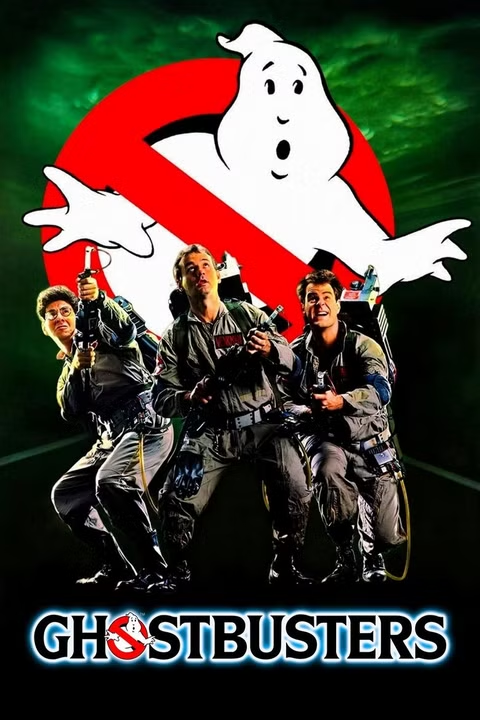
Of all the beloved sci-fi movies from the 1980s, few have proven more enduring than Ghostbusters. Four decades later, the ghoul-catching franchise is returning for more. Ghostbusters: Night Shift, as announced at the Annecy International Animation Film Festival, will make its big Netflix splash in 2027. In reference to the events of 1989’s Ghostbusters 2, Ghostbusters: Night Shift is said to take place in 1994, “five years after the Ghostbusters took the Statue of Liberty for a walk.”
Ben Hibon, Elliott Kalan, Jason Reitman, Gil Kenan, Amie Karp, and Dan Aykroyd will executive produce Ghostbusters: Night Shift. This animated rendition of the sci-fi juggernaut isn’t the first of its kind. Back in the 1980s and 1990s, The Real Ghostbusters and Extreme Ghostbusters proved favorites of young audiences. But for every great (or not so great) entry into the Ghostbusters franchise, nothing can really compare to the original. The story of Peter (Bill Murray), Egon (Harold Ramis), and Ray (Aykroyd), as they are fired from Columbia University and eventually join forces with Winston (Ernie Hudson), is the stuff of cinematic legend.
Released in June 1984, Ghostbusters was a huge hit with critics upon release, with most of the praise going to the film’s comedy, horror, and special effects. After admitting that the film is a clash of approaches that normally wouldn’t work, critic Roger Ebert admitted that this blockbuster was the exception, writing, “It’s (1) a special-effects blockbuster, and (2) a sly dialogue movie, in which everybody talks to each other like smart graduate students who are in on the joke.” Four decades on, the film is still a must-watch for all generations. However, you’ll have to hurry, as Ghostbusters is being officially removed from the Netflix catalog starting October 1, 2026.
Not just a big critical success, Ghostbusters was also a massive hit commercially. Against a reported production budget of $30 million, the film made a total of $295 million at the global box office, split between a domestic haul of $242 million and a further $53 million from overseas markets. The movie was one of the highest-grossing of 1984, coming second in the domestic charts behind Beverly Hills Cop.
Ghostbusters is being officially removed from the Netflix catalog starting October 1, 2026. Stay tuned to Collider for the latest streaming stories.

June 8, 1984
107 minutes
Dan Aykroyd, Harold Ramis

At this year’s Toronto International Film Festival, Oscar-winning director Peter Farrelly’s I Play Rocky World premiered, with rising star Anthony Ippolito (The Offer) headlining in a career-making performance as a then-unknown Sylvester Stallone. The movie chronicles the unbelievable true story behind the making of one of the greatest underdog stories of all time as one man defied all odds.
Before he became an action icon and Hollywood multihyphenate, Stallone grew up poor and dreamed of becoming an actor. By his twenties, the closest he’d gotten was a porno and a job as a theater usher, but a fight between Muhammad Ali and Chuck Wepner sparked inspiration that drove Stallone to pen one of the silver screen’s all-time greats: Rocky. When he presents his screenplay to studio executives, they can’t wait to get their hands on it, but Stallone’s one stipulation — that he play Rocky Balboa — is a hard no. But no matter how much they offer him, Rocky and Stallone are a joint deal. When they finally cave, Stallone’s impossible journey from script to screen has only just begun.
At the Collider Media Studio, presented by Campari and The Cayman Islands, Steve Weintraub sat down to chat with Farrelly, Ippolito, Stephan James (If Beale Street Could Talk), who plays Carl Weathers in the movie, and Kiki Seto (The Studio), who plays Talia Shire, to discuss the film. In this interview, they discuss how the script and cast came together, why Ippolito was the only person they considered for Stallone, and how the young star prepared to portray the action movie icon. James and Seto talk about joining the project, playing characters within characters, and the team discusses what they chose to include, what they’re excited (or nervous) for Stallone to see, and tons more. Check out the full conversation in the video above, with a transcript provided below.
COLLIDER: I watched a lot of movies before I got here, and you guys are one of my favorite films of the year. It is just a fantastic movie, and you’re going to have an amazing night at your premiere.
PETER FARRELLY: Can’t wait.
ANTHONY IPPOLITO: Thank you. Me too. Yeah, it’s going to be crazy.
FARRELLY: It’s 2,000 people, I think, in that room. It’s going to be fun.
You’re going to have an amazing night. Let me just say it like that.
IPPOLITO: I’ve never seen a movie with that much of an audience, ever, period. Any movie.
I think this is going to be one of those life moments for you where you will remember it for the rest of your life. Before we get into the movie, I’m doing a supercut, and the supercut right now is: Where do you like to sit in a movie theater?
FARRELLY: Aisle, halfway down. I like an aisle seat.
IPPOLITO: Back middle.
KIKI SETO: Middle aisle.
STEPHAN JAMES: Yeah, all the way in the back, middle, probably.
The last row?
JAMES: Last row. Me and Anthony will be fighting for that seat.
It’s so interesting. A lot of filmmakers recommend sitting where the frame is to your left and right, where you can’t see the wall, but then a lot of people like sitting in the back. Is it because you use your phones during the movie?
IPPOLITO: No.
JAMES: You got us. [Laughs]
IPPOLITO: No, no, no. You just get it. You’re centered. My neck hurts too close to the front.
Of course. So the other thing I’m doing before we get started is something called Get to Know Your Cast Member/Director. What’s your favorite failure?
FARRELLY: Wow, that’s good. I will say this: I love failure. I have a lot of failures, and they’ve helped me throughout my entire life — I think my entire youth — because I got into my 20s and I had nothing going for me, so I thought, “Well, I’m going to try making movies.” And if I had been successful in anything, I don’t think I would have done that. So, I always tell people failure can be really good. It pivots you and finally pushes you in the right direction.
It’s very true, though. If you’d been very successful when you were 18…
FARRELLY: I always tell the story where I had a friend who I went to high school with; he was captain of the hockey team, he went to Yale, he was captain of the hockey team at Yale. He became a lawyer, and he worked for a bank. We were at one of my premieres, and he goes, “Man, are you lucky.” He goes, “You could screw up.” He goes, “I was on a track.” He said, “I couldn’t get off that. If I wasn’t a lawyer, doctor, NBA, Wall Street guy, everybody would have yelled at me. You, they were like, ‘Whatever. Try whatever you want.’”
I’m very happy it worked out and that you’re sitting right here. What do audiences misunderstand most about your job?
IPPOLITO: Oh, great question. I think a lot of people kind of miss the work element, the homework element. People know between action and cut, and this stuff, which is very foreign to me, by the way, which is very cool, but something that I’m not very familiar with at this point. But yeah, there’s a lot of homework, and it’s kind of a lonely ride. You’re kind of by yourself with a lot of it, and a lot of that’s captured in this movie. But yeah, I think a lot of people miss that part of it.
If you could have a song play when you enter a room, what song would it be and why?
SETO: I like listening to Chinese healing music. That’s what I type into Spotify. So whatever comes on shuffle when I type that in.
Sounds great. If you could redo one scene from your career, what would it be and why?
JAMES: Jeez Louise. It’s a good one. I can’t pick one. There’s probably a thousand that I wish I could redo, as most actors do. They judge themselves pretty harshly. This is a really good question.
FARRELLY: That’s a real tough question.
IPPOLITO: It could also be a redo if you want to do it again, as well.
JAMES: Anything to do with you guys, I think. I’ll say that. I had so much fun working on this film and working with these guys that I would redo any one of those scenes just for fun.
You played Al Pacino in The Offer, and now you’re playing Sly in this. Who is the next ‘70s star that you are going to capture on a movie or TV show?
IPPOLITO: Got any ideas?
I do not, but I figured you do.
IPPOLITO: It’s a good question. No, honestly, I don’t really have an answer. I’ve just been so privileged and overwhelmed by both of these opportunities, and it’s really been something else. I’ve had the pleasure of really going through a lot of ‘70s cinema because of it, in doing the homework for both of these, so that’s really been a privilege. But I couldn’t give you another name.
FARRELLY: Travolta.
IPPOLITO: Hey, maybe.
FARRELLY: Stick with the Italians.
The real question is, can you dance?
IPPOLITO: No, so maybe we figure that out.
That’s why you do the homework.
FARRELLY: But he’s an athlete.
IPPOLITO: The homework. This is the homework part.

Exactly. So as I said before, I love the movie. How did this one happen? Was it tough to get off the ground, or was this one where everyone saw, “Oh, this could be a really good movie?”
FARRELLY: Every movie’s hard to get off the ground. It’s shocking to me. You can’t believe. Like you have a really good movie, it does well, and the next one is hard to get off the ground. So, yes, it’s always hard.
But this came when I read a script by Peter Gamble. Toby Emmerich gave it to me, and I was like, “This is the best script I’ve ever read.” I immediately wanted to do it. The hard part was going to be: How do you find the Stallone character?
We were planning to do a worldwide search, and all of a sudden, my casting agent called me, and he goes, “I got our guy.” I go, “What are you talking about?” He goes, “Kid sent the tape in.” He heard about the movie, somehow tracked down the script, put himself on tape — in your apartment?
IPPOLITO: Yeah.
FARRELLY: He had three scenes he put down, and he sent it to us before we even started casting. We looked at it, and we’re like, “Yeah, that’s the guy.” We never looked past it. He’s the only person we looked up for the role. And then the studio loved the script. Amazon MGM, they loved the script, and they said, “But how are you going to find Stallone?” And we said, “We already got him.” They said, “What are you talking about? You haven’t even started casting.” I said, “I know, but we got him.” I sent them the video that he sent us, and they called 10 minutes later and said, “Yeah, okay, we’ll do this.”
That is ba-effin-nanas. So I have to ask you, who is the person that you owe a birthday gift to for the rest of your life? Who got you that info to do this?
IPPOLITO: Interesting. I mean, I had just seen an article, honestly, and then a bunch of people sent it to me because I had talked about Stallone’s story and been inspired by it. But when I saw that article that he was doing this movie with Toby Emmerich, I just knew that I had to try to get in front of them.
I knew it wasn’t necessarily going to be easy. As an actor, trying to get in front of people in a timely way before things go in a different direction isn’t always the easiest thing, but I just really felt that at least if I was seen and I could present my interpretation, then I’d be able to live with it even if it didn’t go my way. I just really had to try to get in the door.
My question is, had you had a Stallone, not impersonation, but a version of Stallone that you’d already been working on?
IPPOLITO: No.
How quickly did you develop his accent, his mannerisms, to be able to self-tape and then send it in?
IPPOLITO: It was a lot, and it happened very fast. It was similar to Pacino; so much of the homework had to be done prior to even submitting the tape, that you already have a pretty good understanding of what you want to do prior to even getting the part. But yeah, a lot of work went in even before the audition.
FARRELLY: And by the way, after we got it, the one thing he wasn’t was he wasn’t buff like Stallone. So luckily, he got to us beforehand, so we had him working out for a year and learning how to box and doing everything.
IPPOLITO: Yeah, like a year and a half.
FARRELLY: And how many pounds did you gain? Like 40?
IPPOLITO: Something like that, yeah.
FARRELLY: And he’s, by the way, since then taken off most of it, right?
IPPOLITO: Yeah. It’s a lot to maintain, and it’s not my natural. You mentioned the Pacino part; I was kind of normally like that. So, it was a lot.
FARRELLY: This was like a Raging Bull thing to me. It’s like De Niro in Raging Bull where he just transformed into Jake LaMotta. That’s what he did for Stallone.
People don’t realize that to maintain that kind of weight, you have to be eating all the time.
IPPOLITO: It was an entire lifestyle shift and a really disciplined, regimented thing, day in, day out. Consistency. It was a lot, but it was worth it. We knew we had to do it that way.
FARRELLY: By the way, you asked was it hard to get made? Yeah, it was. We went to a couple of places before we found the right place, and the whole time all I could think was, “We’ve got to get this made because this kid’s been getting his face punched in for a year, I swear to God, and working out.” I was like, “We can’t stop. He’s been killing himself!”
IPPOLITO: We were in too deep at that point.

For the two of you, a script like this doesn’t come along all the time. When you read the script, and you were auditioning, or however you got it, how much did you want these roles, and what was it like reading the script for the first time and seeing what you were going to be a part of?
SETO: Reading the script was surreal. I went to a coffee shop and sat down and read it there, and I was just like, “Wow, this is absolutely incredible.” I was laughing, I was crying, I think people around me were like, “What is going on with this girl?” I could tell that it was going to be an incredible film just by reading the script.
JAMES: Initially there’s intrigue because you understand how beloved this franchise is, this IP is. When you get the call, like you’re going to play someone like Apollo Creed, at first there’s a daunting feeling of like, “Oh, shit, that’s Apollo Creed,” and understanding just the lore that exists and the weight of that name in this franchise.
So I think the first feeling is a little bit daunting, but then the second feeling is you’re so excited, and you know that the source material, the script, is incredible, so you can trust that there’s at least that on the page and lean into it and just have fun. So, I think that’s the way I approached it. But just nervousness, excitement, but the kind of nervousness that you need, I think, in going into something like this.
Something about Rocky is that for many people, it’s their favorite movie, and you are recreating scenes from Rocky. What was it like on set when you needed to film something that needed to be frame-accurate for all the diehards who are like, “Well, that’s not how the camera moved.” How many takes had to be redone because you missed a tiny little bit?
FARRELLY: Not as many as you’d think because we had our director of photography, Sean Porter, who’s a genius, and he had studied and done his homework. Everybody has to do homework. Like these three showed up and they had their characters down. I direct them, but they’ve already found their character. I never have to say, “No, no, Apollo Creed, that’s not what he would do.” He did everything Apollo Creed would do when he shows up. But my thing would be, “Just take a second. Take more time.” Timing issues, that kind of thing.
But Sean Porter showed up and he knew what this movie was going to look like, and he had those things. On set, he had the actual Rocky shots and then what we were doing, and he matched them. You match the lighting. If you look, there’s a scene where he’s in his apartment and he’s got his hands on the pipe up above, and the shadow is going across his face exactly in the right place that it did in the movie. It’s identical.
And in fact, when we did the first test screening, people afterwards were asking, “Okay, how many of the shots in the movie were actually Stallone?” I was like, “None.” They’re like, “Some were. I mean, there were some that were Stallone.” I was like, “No.” They go, “What about when he’s walking down the street outside his apartment?” I was like, “No, that’s the actor.” They’re like, “What?!” We just matched it perfectly.
If you’re sitting next to Stallone when he’s watching this movie, what is the scene you cannot wait for him to watch and what is the scene you are very nervous for him to watch?
FARRELLY: That’s a good question.
IPPOLITO: That’s a really good question. The whole thing, in terms of this, is very much his story, and it’s something he spoke about on talk shows countless times, and it’s like mythic in its proportions. So many incredible things happened, and he had to overcome so much adversity.
Maybe the writing of it, probably. Like that sequence where something clicked into place. Because he wrote that initial first draft in three days, so to think of that whirlwind, he was probably so inside of it that it would probably be pretty interesting to see that.
FARRELLY: In fact, I asked him while we were shooting, I said, “What music were you listening to back then?” Because he told me he loved music. He said, “Buffalo Springfield.” He said, “In fact, I listened to Buffalo Springfield the whole time I was writing the movies. For three and a half days, I just kept rolling it back and forth.” So, we have “Rock & Roll Woman;” Buffalo Springfield is playing while he’s writing it, and some people have asked me, “Why that song? That’s 1969.” It’s like, “Because that’s what he listened to.” There was a lot of early Hall & Oates in there, stuff like that, Procol Harum, all that music that he liked.
Anthony is playing Stallone, who’s playing Rocky, and you’re playing Carl [Weathers], who is playing Apollo. Does it become almost three layers of a performance? You’re layering. What is that like as an actor?
IPPOLITO: It’s also, there are layers in any performance. We’re layered people. I mean, hardly are people ever fully one-dimensional or two-dimensional. If you’re playing a character and they’re sick, now you’re playing that character with that condition, you know? So, that’s something you absolutely have to take into account.
But they also kind of put a lot of themselves into the role. So sometimes it’s interesting to kind of blur the lines a little bit, but you definitely understand there is a delineation between the character that they’re playing and the actor themselves.
JAMES: That, to me, honestly was the most enjoyable part of all this. I think that a quality of this film is it has a voyeuristic quality to it, right, where you feel like you’re a fly on the wall getting to see something that other people haven’t seen yet. And so I think that that always intrigued me to be like, I know what people expect from Apollo Creed, but how can I show them just a little bit of a different shade in Carl, whether it be an insecurity, whether it be a moment of humor? I think that audiences really enjoy that sneaky feeling of, “Oh, wow, I’m getting to see someone when they’re not on.” And so I think that that dynamic is something I really leaned into and relished in, to be honest.
FARRELLY: It’s fun, actually. You did like three layers because he comes in as the actor who’s trying to be confident, and he’s not Carl Weathers’ real personality — he just comes in very cocky, very sure of himself — then becomes Apollo in that scene as he reads for the role. But then later we see that Carl Weathers is actually quite a different guy. He’s just kind of sitting there, just taking it all in, figuring it all out.
JAMES: It’s very meta, but very, very cool.

I don’t want to be specific, but there’s very, very funny stuff in this movie. You guys really pulled it off. It’s really hard to do what you guys do. I’m so curious, though, if you don’t mind, I like talking about editing and how the film comes together, so what did you learn from early screenings that maybe impacted the finished film?
FARRELLY: My early screenings were always in the editing room, and I’d invite 20 or 30 people in.
You have a big editing room.
FARRELLY: Well, we rent it. It’s sort of like this room. Actually, this room is way bigger. But we jam everybody in there, we watch it, and you learn a lot constantly. By the time we did our first official test screening, we’d worked it all out and it did well, so we only did one test screening.
Did you score in the 90s?
FARRELLY: Yes.
So they’re like, “Okay, we’re done.”
FARRELLY: Yeah. So, what I learned was, I mean, I learned a lot of things. I could go on and on, but one thing was that Stallone’s wife, Sasha [Czack], is pregnant in the movie, a large part of the movie, and then at the end we show them watching the movie when the movie opens and she’s not pregnant anymore. I just figured people would be okay with that, knowing she had the baby, but every woman in the room was like, “What happened? Is the baby okay?” I was like, “Well, yeah, she had the baby.” They’re like, “How come they’re not mentioning the baby? Did she give it up for adoption?” It’s like, “No, she had the baby!” So we had to put in a thing, you know, “10 months and one baby later…” Just calming every woman in the audience to know that everything’s fine, their baby’s good.
And there were a lot of other things, like the very end. We had a whole different ending where we do show the big fight at the end, but we cut it differently. It’s because we realized at one point there’s a point where he’s running up the stairs where you’re never going to get there again. That point is such a high that we just stop it there. But then we, over the end credits, show the fight it. It helps it a lot.
One of the things about the making of Rocky and Stallone’s story is there are so many unbelievable things, from him turning down the money, and how without a Steadicam being invented this movie doesn’t happen. So for each of you, what is something that you learned about the making of Rocky that really just floored you and has really stuck with you?
IPPOLITO: For me, that shot at the steps is such a miracle, and Garrett Brown with the Steadicam was there on the day that we shot that stuff in Philly.
That’s amazing.
FARRELLY: He invented the Steadicam.
IPPOLITO: Yeah, he invented it and shot the hell out of that scene. And to think that that was all shot so perfectly, like the alignment and the symmetry of the frame for that shot, I didn’t really understand, as well, until we really dove into it, and you really appreciate it more.
FARRELLY: What I didn’t know was that they only put the stairs in because of Garrett Brown, because he showed them how a Steadicam works. He had shot his wife running up those stairs at the Philadelphia Museum of Art. That wasn’t in the movie, but when they saw it, they said, “Could you do that for us?” He goes, “Yeah.” And they were like, “Where is that?” They go, “It’s in Philadelphia.” They said, “Let’s do it.” That never even made its way into the script, actually. If you read the Rocky script today, that’s not in there. They just put it in because of that.
SETO: I would say the producers taking out mortgages on their homes to fund the film and keep it running partway through the film. I thought that was incredible, and I don’t think the film would have been made without that type of emotional backing.
JAMES: Yeah, that’s a good one. For me, and I’m sure it’s probably a famous story but I didn’t know it, is just when Sly had to sell his dog, and what a heartfelt moment in the film, a moment that genuinely made me cry. You know it’s happening, you know it’s in the film, but when you see it, it’s just like, wow, the sacrifice that he made in that moment in time so he can make this thing that we’re all here talking about 50 years later is kind of unreal.
The other thing that I wasn’t sure you were going to do, and I’m so happy you did, is Sly really led a tough life before when he was living in the city, and he was on the street. I don’t want to be specific, but he has an adult past. Was it tough to put that in? Because, again, I don’t know how involved Sly was.
FARRELLY: It was a debate, and the studio at one point was like, “Do we really want that in there?” I said, “100% because that’s where he came from. That’s the low.” To me, this is what I love about this movie: Stallone’s life mirrors Rocky’s life so much during that time. But to me, this is even a better story, and here’s why: At least in Rocky, when Rocky starts, he has a job — he’s breaking bones, but he has a job. Stallone’s homeless. He’s selling his dog. He’s doing things he wishes he didn’t do. Rocky doesn’t win; he lasts through the fight. Stallone wins. They win the Best Picture. Rocky is fiction, this is true.
I Play Rocky opens in select theaters on November 6 before releasing nationwide on November 20.

November 20, 2026
127 minutes
Peter Farrelly
Peter Gamble
Toby Emmerich, Michele Weiss, Peter Farrelly, Christian Baha
Us has affiliate partnerships. We receive compensation when you click on a link and make a purchase. Learn more!
Elizabeth Banks just quietly stole the fall color memo, and no, it wasn’t chocolate brown. The actress stepped out in a head-to-toe burgundy moment, wearing a rich, wine-colored sweater tucked into a leather midi skirt in the same deep, moody hue.
Burgundy is the luxe-looking fall color that feels like a neutral, but with a twist, and Banks just gave us the real-world blueprint for how to actually wear it. Skip the safe neutrals for a second. This shade does everything camel does, but with more attitude and a little more polish. You don’t need a stylist or a designer budget to copy this. We found a similar mockneck sweater on Amazon for under $25!
Get the Auselily Mock Turtleneck for $23 at Amazon! Please note, prices are accurate at the date of publication but are subject to change.
What makes Banks’ look feel so expensive isn’t the pieces themselves. It’s the tonal styling. Matching your top and bottom in the same rich color reads instantly chic, and it works whether you’re headed to a lunch meeting or anywhere you want to look like you have your life together.
The mockneck silhouette on the Auselily Mock Turtleneck is the exact detail that makes the look feel elevated instead of casual. Pair it with a leather skirt, dark denim or wide-leg trousers, and you’ve got the recipe.
One five-star Amazon reviewer summed it up perfectly: “So nice and soft. Warm but not a hot sweater!” That’s the sweet spot for this transitional weather when mornings are crisp and afternoons surprise you.
Fall dressing doesn’t have to be complicated. Grab the sweater, lean into the burgundy trend and let one really good color do the heavy lifting. Banks made it look easy, and at this price, there’s no reason your closet shouldn’t get in on it too.
Get the Auselily Mock Turtleneck for $23 at Amazon! Please note, prices are accurate at the date of publication but are subject to change.
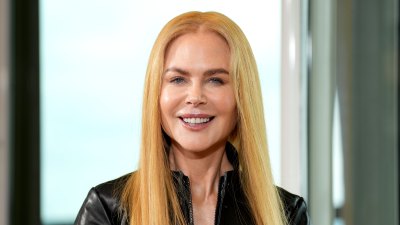
If you follow Nicole Kidman, you know she wears this classy jeans style nonstop. With such a luxe appearance and loose, flattering silhouette, we see why! Thankfully, Kidman’s dreamy denim look is on sale for only $40. We’re hopping on the train. At the 2026 U.S. Open men’s semifinals, Kidman strolled in wearing a breezy […]
The easiest way to tell if a thriller has completely won is when somebody pauses it and the room gets annoyed. Not because a twist is coming. Not because the movie is loud. You simply do not want to be pulled out of whatever terrible situation these people have created for themselves. Every conversation feels loaded, every harmless object starts looking suspicious, and suddenly you are mentally solving problems for characters who absolutely did not ask for your help.
And honestly? Perfect is a dangerous word, but nonetheless, thrillers invite it because their machinery is so exposed. One lazy coincidence can wreck the tension. One stupid decision can turn fear into frustration. But a truly perfect thriller avoids that scrutiny. Below is a very well-filtered list of the 6 most perfect thrillers released since 2010.

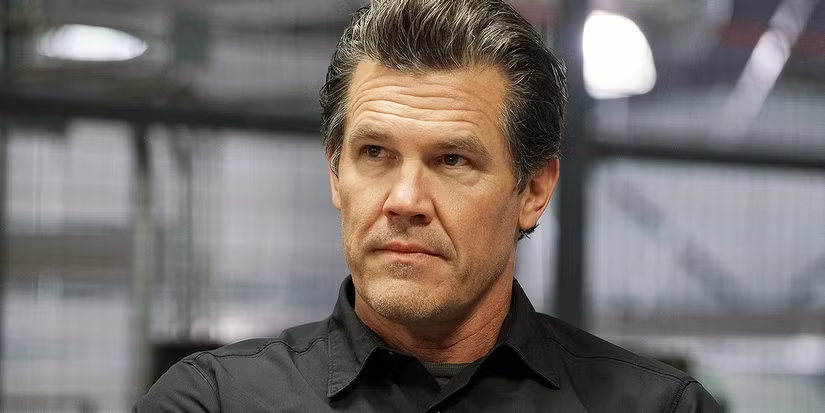
Kate Macer (Emily Blunt) joins a federal operation expecting a recognizable law-enforcement mission and quickly discovers that everyone around her seems to be working from a rulebook she has never seen. Sicario uses that confusion brilliantly. Matt Graver (Josh Brolin) treats the whole operation with disturbing casualness, while Alejandro Gillick (Benicio del Toro) remains so controlled that Kate cannot tell whether he is protecting her, using her, or simply waiting for his own objective to become possible.
The Juárez convoy is a masterclass in making almost nothing happen for several unbearable minutes. Traffic stops near the border, suspicious cars surround the team, hands start moving, and everybody except Kate seems to know exactly when violence will begin. Later, the tunnel raid strips away even more certainty. The music from Jóhann Jóhannsson feels like pressure building underneath the road itself. The movie never gives Kate enough authority to make the audience comfortable. That helplessness is the point. She walked into a system where legality is already being treated as an inconvenience.

Lou Bloom (Jake Gyllenhaal) sees a freelance cameraman filming a car wreck and immediately recognizes a career opportunity. That reaction tells you almost everything you need to know about Nightcrawler. Lou has no journalism background, no meaningful ethical limits, and an unnerving ability to absorb the language of ambition from business books and motivational slogans. Los Angeles gives him exactly the market he needs.
Soon he is moving bodies for better compositions, withholding information from police, and pushing Nina Romina (Rene Russo) toward footage gruesome enough to protect her ratings. The really uncomfortable part is how well Lou understands the incentives around him. He sounds ridiculous when he talks about growth and professional development, yet the television station keeps rewarding the behavior those words disguise. Even his relationship with Rick (Riz Ahmed) becomes another business arrangement Lou believes can be optimized. The movie is funny in a deeply sick way because corporate language keeps getting used to describe increasingly monstrous choices. Lou is horrifying. The culture around him keeps proving he learned the correct lesson.

A pickpocket named Sook-hee (Kim Tae-ri) enters a wealthy Japanese household in Korea under Japanese occupation, pretending to serve the sheltered Lady Hideko (Kim Min-hee). The plan is to help a con man seduce Hideko, marry her, steal her fortune, and have her institutionalized. That sounds complicated enough. The Handmaiden then changes perspective and starts revealing how badly everyone has underestimated everyone else.
Park Chan-wook turns deception into pure pleasure because the same moments acquire completely different meanings once another person gets to tell them. A glove, a bath, a reading session, a whispered conversation, even who appears nervous around whom can shift once the hidden agenda becomes visible. The mansion itself feels divided between cultures and secrets, while Uncle Kouzuki (Cho Jin-woong)’s library gives the household a far uglier purpose than its elegance suggests. The erotic material has actual dramatic function because intimacy becomes another place where power can change hands. Watching this with somebody who knows nothing beforehand is ideal. Watching their face is half the fun.

Nick Dunne (Ben Affleck) comes home on his fifth wedding anniversary and finds his wife missing. There is blood in the house, furniture has been disturbed, and Amy Dunne (Rosamund Pike) has left behind the annual treasure hunt she always created for him. Then Nick goes on television and smiles beside her missing-person poster.
That smile alone could sustain half an episode of cable news, and Gone Girl knows it. The movie turns marriage into evidence, performance, and eventually warfare. Amy’s diary gives the public one version of their relationship while Nick keeps looking worse every time another detail surfaces. Then the perspective changes and the entire movie becomes nastier, funnier, and much more honest about how both people have performed identities for each other. The “Cool Girl” monologue became a cultural shorthand because it names a very recognizable kind of relationship performance. After that, even breakfast between these two can feel like mutually assured destruction. Few thrillers make marriage this entertainingly terrifying.

Two girls disappear during Thanksgiving, and Keller Dover (Hugh Jackman) quickly decides that Alex Jones (Paul Dano) knows more than the police can prove. Detective Loki (Jake Gyllenhaal) keeps investigating. Keller decides waiting is no longer acceptable. That split gives Prisoners its moral pressure.
Keller’s fear is completely understandable, which makes his treatment of Alex increasingly difficult to sit with. Every new hour without the girls gives him another reason to believe brutality is justified. Loki follows a slower path through old cases, strange suspects, abandoned buildings, mazes, and clues that keep refusing to organize themselves fast enough. Roger Deakins fills the movie with rain, gray skies, dirty snow, and rooms that seem permanently short on air. The tension comes from wanting an answer while becoming less comfortable with the methods used to reach one. That is a much harder feeling to shake than a simple whodunit.

The Kim family lives in a cramped semi-basement, folds pizza boxes for money, steals nearby Wi-Fi, and understands immediately when a better opportunity appears. One tutoring job inside the wealthy Park household becomes another job, then another, until the entire family has quietly inserted itself into the house under separate identities.
Parasite is so entertaining that the precision can almost hide in plain sight. The scholar’s rock, the smell Mr. Park (Lee Sun-kyun) notices, the stairs connecting different levels of the city, the enormous window in each family’s home, even a night of heavy rain all keep changing meaning depending on who has money and who does not. Then the house reveals something the Kims never knew was there, and the movie shifts without losing control for a second. Bong Joon Ho lets comedy, class resentment, suspense, humiliation, and violence occupy the same story without forcing any of them to wait their turn. You can laugh through one scene and feel awful about having laughed five minutes later. That is thriller control at an almost unfair level and that’s why this sits at the top for me.

Science fiction video games have always been some of the most popular in the medium, and for very good reason. The worlds they bring to life and let players explore are gorgeous, intriguing, and epic. The characters within said worlds can be truly unique and great, especially when they’re characters that the player genuinely enjoys controlling. Not to mention, they can also make good movie and/or television adaptations.
Adapting a video game franchise to film or television is quite difficult and doesn’t always end up well — some may say that it’s just not possible. This has led to a very understandable stigma, with people pretty much begging film studios not to adapt more video games. However, there are some video games out there that genuinely — if done right — could make for some awesome television or movie projects.

When it comes to the merging of Nintendo and sci-fi, it doesn’t get much better than the likes of Super Metroid. Samus Aran is one of the most badass female video game protagonists, taking down crazy aliens with her awesome Power Suit. With Nintendo clearly investing more in films, with The Super Mario Bros. Movie franchise being a huge hit, and The Legend of Zelda flick on the way, Super Metroid feels like the next step if they want to continue to diversify their genres.
Samus Aran is a character who has more than deserved her time in the sun in the way that Mario has, and a movie would do just that — especially one based on such a great franchise. What makes Super Metroid a great game to adapt is the fact that it doesn’t have a defined story, which would give a filmmaker a great chance to have some fun with the story while still keeping the basic progression of the game. The world of the Super Metroid franchise is expansive, unique, and an all-around visual marvel, which means the film would look great as well.

The 2017 title known as NeiR: Automata is an extremely beloved modern RPG, and the discussion surrounding whether the game should ever get an adaptation is something that has been a bit controversial within the fandom. There’s a masterclass story at play here, with a world surrounding it that is visually unique and engrossing. While it has had an anime adaptation in the past, the idea of a film adaptation has not escaped the fandom.
Some fans would say that NeiR: Automata would be hard to adapt to film due to the way it relies on being an interactive game. That shouldn’t mean that it should be robbed of a good adaptation, though. Just because it’d be hard doesn’t mean it would be impossible, especially with the right director at the helm of the project. If a NeiR: Automata movie was done right, it would be game-changing.

After working on the ever-popular Halo series, Bungie separated from 343 Industries — rebranded as Halo Studios recently — and went on to make an all-new franchise titled Destiny. While it had an explosive start, it did lose a lot of steam over the years due to people being pretty unhappy with the fact that everything had to be online to experience the story. This, however, doesn’t stop the story from being genuinely great.
The fact that there are many people who have never truly experienced this plot but know what Destiny is makes this game a perfect opportunity to have a great movie or television project. Destiny is a wonderful space opera that, if done right, could genuinely be the next Star Wars. They just need to find the right director and writer.

Despite not getting the love it deserved at the time, 2016’s Titanfall 2 is commonly known as one of the most underrated single-player gaming experiences of all time. The emotional bond between the protagonist and their mech is one that serves as an extremely strong and emotionally resonant anchor of the story.
Titanfall 2 is a project that would adapt to film or television quite well. Everyone loves a good mecha project, and that continues to be true in the case of Titanfall 2. This project is unforgettable for anyone who has played and enjoyed it, and every reason that makes it so serves as a reason for it to be a potentially amazing movie or show.

Superhero projects are all the rage these days, and while they’ve taken over cinema and television, they have some incredible games, too. One of the best that isn’t from the big two (Marvel and DC Comics) is the one and only inFamous. Following the story of Cole MacGrath (Jason Cottle) as he explores his new superhuman powers as a Conduit, inFamous is a great journey that spawned a beloved franchise.
In 2009, people fell in love with inFamous, and they continue to enjoy it to this day. The only thing holding audiences back from fully investing in the idea of an adaptation of this series is the fact that the game’s mechanics and story have two different options: good and bad. However, the “good route” is commonly considered the true one, so it wouldn’t be hard for the adaptation to simply adapt the story from that route. With how big superhero movies and shows are, this feels like a hole in one.

Halo has had some great games over the years, but none match up to the masterpiece known as Halo: Reach. Taking a step away from the iconic Master Chief (Steve Downes) and jumping into the past, Halo: Reach tells the tragedy that is the story of Noble Team, a Spartan squad that had one goal: defend the world of Reach during its fall to the Covenant (an evil alien race).
This prequel title is considered by many fans to be the best of the best that Halo has ever had to offer. The story is simply masterful, following this team as they slowly fall to… well, the fall of Reach. The characters at play are excellent and have a plethora of depth — not just being random super soldiers for the audience to watch aura farm — and would make incredible protagonists for a project outside of gaming. Plus, Halo could use a win after the conflicting feedback on their television series.

Combining genres is always fun when making content, because it allows the creatives behind said projects to really get experimenting with how to execute their stories and worlds. One of the best examples in gaming is the one and only Dead Space, a 2008 horror sci-fi game from Electronic Arts (EA).
Dead Space became a very popular franchise because of how well it blends these two genres, using the wacky, out-of-this-world style that comes with sci-fi to craft unique horror elements for players. While there have been some gigantic hits over the years, like the Alien franchise, the world could definitely use some more sci-fi horror, and the perfect place to find it is in the world of Dead Space.

The Mass Effect franchise is one of the most popular sci-fi game franchises of all time, and for very good reason. The stories present in these games are exceptionally well-written, with some of the best characterization out there. Yes, the plot is amazing, but these characters are so great in almost every way, and there’s no Mass Effect game where this is more true than the sequel, Mass Effect 2.
What makes this sequel the best is that it decides not to go into a full-force space opera — intergalactic battles with massive spectacle — and rather opts to give players a far more intimate and grounded story. This makes the story beyond emotionally compelling and honestly perfect for a film or series adaptation.

Portal 2 is known worldwide as simply one of the best video games ever made. People everywhere adore this game. While there was an adaptation announced back in 2013, it’s been in “development hell” ever since. So, until there’s any true confirmation that something is actually moving forward, there may as well not be one in production.
Portal 2 has become a genuine pillar of gaming, and people want to see a Portal film. Recently, Backrooms director Kane Parsons said he would love to do one, and that has people begging for it. Parsons would do an incredible job, and his directing prowess combined with the Portal 2 story would be pretty much the perfect combination.
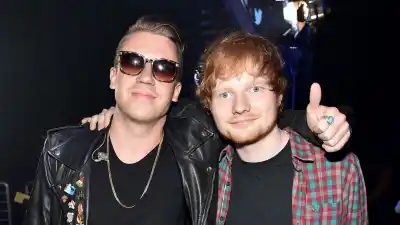
Melissa Barrera has compared the reaction to Macklemore being dropped from Ed Sheeran’s tour for taking a pro-Palestinian stance to her own firing from Scream 7.
“It made me emotional, you know,” Barrera, 36, told The Associated Press in an interview on Wednesday, September 16. “I didn’t get that when it happened to me. I didn’t have any of that happen. It was too soon. People were too scared. But it’s good to see that almost three years later, at least things have changed.”
Barrera was reportedly dismissed from the cast from Scream 7 in 2023 for taking a vocal pro-Palestinian stance in the wake of the October 7 terror attacks and subsequent Israeli military operation in Gaza. (She “condemn[ed] anti-semitism and Islamophobia” in a statement issued at the time.)
Scream’s production company Spyglass denied that Barrera’s support for Palestinians was behind her departure from the franchise, though a statement from the organization said it had “zero tolerance for antisemitism or the incitement of hate in any form, including false references to genocide, ethnic cleansing, Holocaust distortion or anything that flagrantly crosses the line into hate speech.”

Shortly after Macklemore was dropped from Ed Sheeran’s Loop Tour concert for his unapologetic support of Palestine, ticket prices for the singer’s upcoming Philadelphia show have dropped by at least 50 percent. According to recent TickPick data, the get-in ticket price for Sheeran’s Saturday, September 19, show at Lincoln Financial Field in Philadelphia has plummeted, […]
In May, Barrera was asked whether she’d compare costars who ultimately returned for Scream 7 to scabs crossing a picket line during a strike.
“Oh, one hundred percent,” she told Variety. “I think they all are. And they have to live with that.”
Scream 7 star Matthew Lillard said this month that he regretted taking part in the film, adding that Barrera is “on the right side of history” for her humanitarian stance.
As for Macklemore’s situation, the “Same Love” rapper, 43, was kicked off Sheeran’s Loop Tour as a support act after shouting “Free Palestine” at two concerts at MetLife Stadium in New Jersey earlier this month.
Sheeran, 35, allegedly received pressure from promoters and venue owners — including Gillette Stadium owner Robert Kraft — that they would not move forward with Loop Tour shows unless Macklemore was dropped. The “Shape of You” singer’s management officially dismissed Macklemore as an opener on Monday, September 14.
Other scheduled Loop Tour openers — such as Finneas and Lukas Graham — quit in solidarity with Macklemore, causing drastic changes to the start time and format of future concert dates. Sheeran later released a statement in which he denied personally removing Macklemore as a support act.
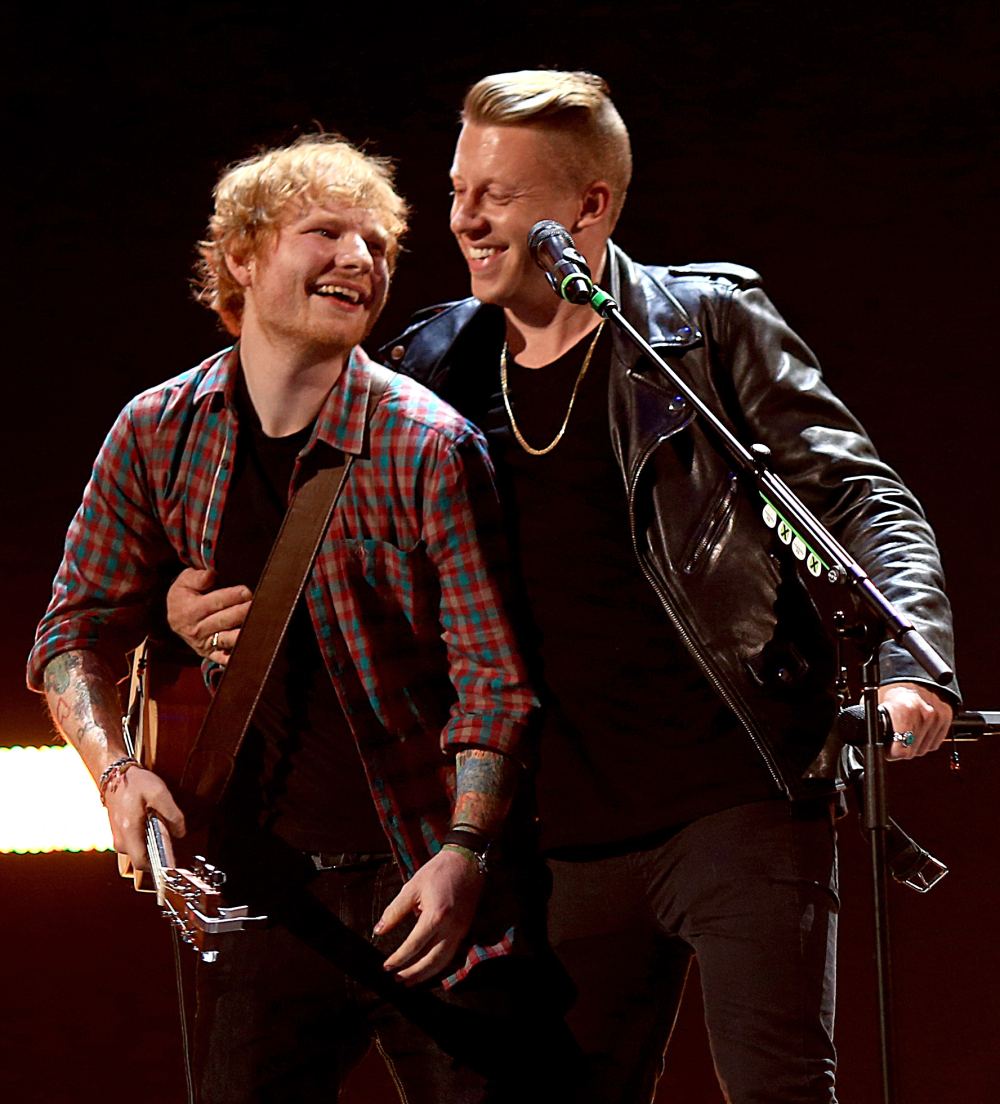
Ed Sheeran and Macklemore perform onstage during the 2014 iHeartRadio Music Festival. Christopher Polk/Getty Images for iHeartMedia
“Ed Sheeran and his team have made the decision to remove me from the Loop Tour. I am not a victim. Ed Sheeran is not a victim,” Macklemore wrote in his own statement on Monday. “We have careers, money, opportunities, safety and audiences around the world. Whatever consequences any of us face for what we say, we get to go home to our families.”
He continued, “[Ed] told me that the words ‘Free Palestine’ and the image of the Palestinian flag were hurtful to a lot of people he spoke with. I hope this isn’t the end of my relationship with Ed. Thirteen years of friendship doesn’t disappear because of one painful disagreement. I hope we both continue listening, studying what is happening in Palestine and wrestling with what neutrality means in a moment like this. My door will always be open to continuing that conversation.”


Speaking this week, Barrera argued that Sheeran should have stood firm behind Macklemore to silence critics of free speech.

Children’s entertainer Ms. Rachel has vowed to donate $1 million to charity in the wake of Macklemore being dropped from Ed Sheeran’s Loop Tour over his public support for Palestinians. “I will match Macklemore’s donation and I invite every white celebrity to match and speak out against the genocide in Gaza,” Ms. Rachel, 43, announced […]
“I wish that the people that have power understood the power that they have,” she told The Associated Press on Wednesday. “ I think that the problem is that there’s a lot of people that actually have a lot of power; they think that they don’t, and they’re operating out of fear, and it’s just a shame because, you know, we just saw what happened — the support that rallied behind Macklemore — and I think that’s a big step. I think that what we’re seeing, what we’re witnessing, is going to inspire real change, and I’m very hopeful about that.”
Sheeran will bring the Loop Tour to the Kraft-owned Gillette Stadium in Foxborough, Massachusetts, on Friday, September 25, and Saturday, September 26.
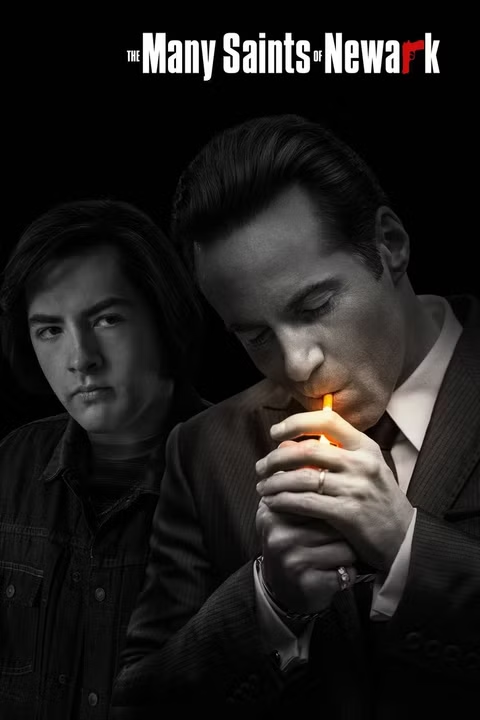
Few stars are having as successful a year as Jon Bernthal, who has headlined some of the biggest movies and TV shows on streaming and in theaters. Bernthal began 2026 by teaming up with Tessa Thompson for the Netflix original series, His & Hers, which earned millions of views during its initial period on streaming. He then reprised his role as Frank Castle in The Punisher: One Last Kill before returning to the role in Spider-Man: Brand New Day, which has grossed well over $2 billion at the global box office. The fourth MCU Spider-Man movie wasn’t the first box office hit of the summer for Bernthal, though. Two weeks before its premiere, he made his debut in a Christopher Nolan movie by starring as Menelaus in The Odyssey, which is set to arrive on digital platforms in November.
Jon Bernthal has been one of the biggest actors in the world for a while now, but that doesn’t mean every project he’s been in was a smash hit. Back in 2021, Bernthal starred as Johnny Soprano in the polarizing prequel film, The Many Saints of Newark, which is set around 30 years before the events of the famous Sopranos TV series. The Many Saints of Newark cost around $50 million to make, but the film was released in theaters during a tough time in the business, where many fans didn’t have access to screens due to the COVID-19 pandemic. This led to it grossing only $13 million at the global box office, but it’s since found a new life on streaming, where it’s become one of the most popular movies in the world.
The Many Saints of Newark is not available to watch on streaming at the time of writing, but that hasn’t stopped fans from revisiting the movie all these years later. Sopranos fans around the world are renting and purchasing The Many Saints of Newark at such a high clip on VOD platforms like Prime Video and Apple TV that the film has resurfaced in the top 10 in several countries around the world. The official synopsis for The Many Saints of Newark, which was directed by Alan Taylor, reads as follows:
“Young Anthony Soprano is growing up in one of the most tumultuous eras in Newark’s history, becoming a man just as rival gangsters begin to rise up and challenge the all-powerful DiMeo crime family’s hold over the increasingly race-torn city. Caught up in the changing times is the uncle he idolizes, Dickie Moltisanti, who struggles to manage both his professional and personal responsibilities — and whose influence over his impressionable nephew will help make the teenager into the all-powerful mob boss we’ll later come to know: Tony Soprano.”
Check out The Many Saints of Newark on VOD platforms like Prime Video and stay tuned to Collider for more updates and coverage of Jon Bernthal’s future projects.

September 22, 2021
120 minutes
Alan Taylor
Lawrence Konner, David Chase
David Chase, Lawrence Konner, Nicole Lambert

Three seasons can be a strange amount of television. It is long enough for a show to establish clear stakes and get the audience attached to its characters, but short enough for every single episode to matter. HBO seems to have mastered the art of the three-season format because the network has proven, time and again, that a show does not need endless time on air to remain memorable.
These shows know exactly what kind of story they are telling, even if that story changes dramatically along the way, which is why they never feel restricted or incomplete. The HBO shows on this list may differ in tone and scale, but they all know how to make three seasons feel like just enough.

His Dark Materials had a difficult job from the beginning because adapting Philip Pullman’s work that features parallel worlds, talking armored bears, soul-like animal companions, and some very heavy ideas about religion and free will is no easy feat. The series handles all of that surprisingly well, though. The story follows Lyra Belacqua (Dafne Keen), a young girl living at Jordan College who discovers that children in the town are mysteriously disappearing. Her search eventually leads her to Mrs. Coulter (Ruth Wilson), a powerful and deeply unsettling woman with ties to the Magisterium and knowledge about Dust, a mysterious substance that the authorities are desperate to understand and control. As the story expands, Lyra discovers that her world is only one of many. She eventually meets Will Parry (Amir Wilson), who becomes the bearer of the Subtle Knife, a weapon capable of cutting openings between realities. From there, His Dark Materials grows into a much larger conflict involving angels, witches, armies, and Lord Asriel (James McAvoy), whose war against the Authority begins to reshape the fate of every world.
The great thing about His Dark Materials is that it never lets all this mythology overwhelm Lyra and Will’s personal stories. The show gradually expands its scale, but the emotional core remains intimate till the very end. His Dark Materials goes bigger every season without ever getting lost in its own world, and that is the true mark of great storytelling.

The Deuce is one of HBO’s most underrated gems. The show, created by David Simon and George Pelecanos, begins in 1971, when sex work, organized crime, bars, and the emerging adult film industry all overlap around 42nd Street, Manhattan. The story centers on bartender Vincent Martino (James Franco), who gets pulled deeper into the neighborhood’s nightlife while also dealing with the messes created by his reckless twin brother Frankie (also Franco). The show also follows sex worker Eileen “Candy” Merrell (Maggie Gyllenhaal), who gradually sees filmmaking as a way to gain more control over her own life.
What makes The Deuce especially interesting is how much the world changes between seasons. Season 2 jumps ahead to 1977, when pornography had taken a much more commercial turn, and shows Candy as she begins directing films herself. Season 3 then moves forward again to 1985, when Times Square is starting to transform, AIDS has changed the community, and the city is becoming increasingly determined to clean up the neighborhood that these characters helped build their lives around. The show is essentially an entire history lesson. However, instead of following one rise-and-fall story, it shows the transformation of an entire ecosystem. The series can be compared to the likes of The Wire in terms of its scope and patient storytelling that gives bartenders, sex workers, cops, pimps, and every other major player enough space to feel like the same complex world.

Deadwood deserves a lot more recognition because it goes beyond just the gunfights and violence to tell a story that truly matters. The series, created by David Milch, is set in the lawless mining camp of Deadwood, South Dakota, in the 1870s. The story largely revolves around Seth Bullock (Timothy Olyphant), a former marshal who comes to Deadwood to open a hardware store, and Al Swearengen (Ian McShane), the ruthless owner of the Gem Saloon who already has a firm grip on much of the town.
Deadwood begins with the rivalry between the two men but gradually expands beyond that as prospectors, businessmen, criminals, and drifters all arrive hoping to make something of themselves before the town is fully brought under government control. The series doesn’t behave like a conventional Western show because its most important battles are psychological as the camp begins transforming into an actual town with laws, offices, and institutions while the locals are still stuck in their old ways. That narrative about civilization being built in real time is what makes the series feel much bigger than a simple story about the Old West.

Somebody Somewhere proves that an HBO show does not need a massive high-concept mystery or political stakes to be completely absorbing. The series, created by Hannah Bos and Paul Thureen, follows Sam (Bridget Everett), who has returned to her hometown of Manhattan, Kansas, and is still struggling with the death of her sister Holly. Sam feels completely disconnected from both her family and the town she grew up in until she befriends Joel (Jeff Hiller), an upbeat coworker who introduces her to a group of outsiders who have created their own little community in a place where none of them completely fit in.
Somebody Somewhere keeps its story refreshingly small. The audience follows Sam as she tries to reconnect with her love of singing, deals with her complicated relationship with her sister Tricia (Mary Catherine Garrison), and slowly becomes more comfortable letting other people into her life. Most episodes of the show are built around dinners, awkward conversations, and people spending time together, and that simplicity is its greatest strength. Across just three seasons, Somebody Somewhere becomes less about Sam finding a grand purpose and more about realizing that a meaningful life can be built from much smaller things. It is definitely one of HBO’s less intense shows, but that also one that feels more relatable than any other.

The Leftovers isn’t the breeziest show to watch, but its ambition is what makes it stand out. The series, created by Damon Lindelof and Tom Perrotta, begins three years after the Sudden Departure, an unexplained event where 2% of the world’s population vanished without any explanation. Now, most shows would focus on that mystery and uncover what really happened, but The Leftovers chooses to focus on those who were left behind and the different ways they try to make sense of this new world they are in. The Leftovers Season 1 follows police chief Kevin Garvey (Justin Theroux), who is desperately trying to hold his family together while his wife Laurie (Amy Brenneman) has abandoned them to join the Guilty Remnant, a silent cult dedicated to remembering the old world.
The show also follows Nora Durst (Carrie Coon), whose husband and two children disappeared in the Sudden Departure. Now, Season 2 is when The Leftovers really picks up because it relocates its characters to a town where nobody disappeared. The first installment of the show is deliberately bleak and unsettling, but the show becomes increasingly confident as it progresses. It expands beyond Mapleton while taking bigger creative risks with its structure, tone, and mythology. By The Leftovers Season 3, the show has covered everything from grief to humor, religion, and even the supernatural without overstaying its welcome.

2014 – 2017-00-00
Damon Lindelof
Damon Lindelof, Tom Perrotta

Ed Sheeran’s Loop Tour looked very different from what fans may have expected when the singer-songwriter took to the stage in Philadelphia.
On Saturday, September 19, multiple fan accounts revealed the staging for that night’s gig at Lincoln Financial Field would not include a B-stage.
Sheeran, 35, has traditionally performed fan requests on this secondary stage during a portion of his Loop Tour concerts. (No song requests were taken in Philadelphia, as of publication.)
It has unquestionably been a tumultuous week for Sheeran in the wake of the controversy over Macklemore being dropped as a Loop Tour support act.
Children’s entertainer Ms. Rachel has vowed to donate $1 million to charity in the wake of Macklemore being dropped from Ed Sheeran’s Loop Tour over his public support for Palestinians. “I will match Macklemore’s donation and I invite every white celebrity to match and speak out against the genocide in Gaza,” Ms. Rachel, 43, announced […]
The “Same Love” rapper, 43, ignited controversy while opening for Sheeran at two concerts at MetLife Stadium in New Jersey earlier this month when he declared “Free Palestine” during a performance of his protest track “Hind’s Hall.”
Sheeran allegedly faced pressure from tour promoters and venue owners — including Gillette Stadium owner Robert Kraft — over allowing Macklemore to continue performing at upcoming shows. Macklemore was ultimately dismissed as one of Sheeran’s openers on Monday, September 14.
“Ed Sheeran and his team have made the decision to remove me from the Loop Tour. I am not a victim. Ed Sheeran is not a victim,” Macklemore wrote in a statement on Monday. “We have careers, money, opportunities, safety and audiences around the world. Whatever consequences any of us face for what we say, we get to go home to our families.”
The hip-hop star added, “[Ed] told me that the words ‘Free Palestine’ and the image of the Palestinian flag were hurtful to a lot of people he spoke with. I hope this isn’t the end of my relationship with Ed. Thirteen years of friendship doesn’t disappear because of one painful disagreement. I hope we both continue listening, studying what is happening in Palestine and wrestling with what neutrality means in a moment like this. My door will always be open to continuing that conversation.”
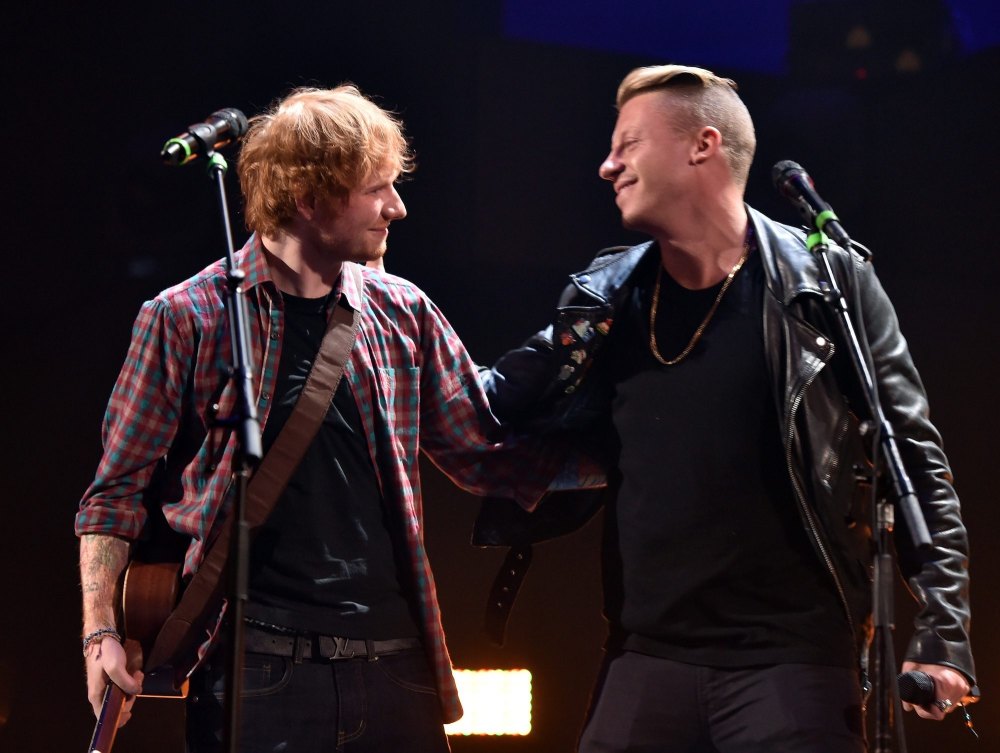
Ed Sheeran and Macklemore perform onstage during the 2014 iHeartRadio Music Festival. Kevin Winter/Getty Images for iHeartMedia
Sheeran broke his silence over the brewing scandal on Tuesday, September 15, denying that he’d personally decided to remove Macklemore from eight scheduled concerts.
“I spoke with the venues at length all week to try and build a bridge. … I have spent this week trying to build bridges, to find a solution and unfortunately, was unable to do so,” Sheeran wrote in a statement. “I know who I am, both as a person and as an artist, and those who know my heart know my values too.”
Macklemore has continued his advocacy by donating his $1 million Loop Tour salary to Palestinian organizations. He challenged Kraft, 85, to do the same — with the New England Patriots owner later confirming he’d matched Sheeran’s own $2 million donation to support humanitarian aid.
Ahead of Saturday’s Loop Tour stop in Philadelphia, fans were advised that the show would start at 8 p.m. ET, rather than the traditional showtime of 5:30 p.m. The change was likely caused by support acts Finneas and Lukas Graham dropping out of the tour in solidarity with Macklemore.
Ticket prices on the resale market also seemingly took a hit prior to the Philly gig, as seats that were listed at $100 on Tuesday dropped to as low as $42 on Saturday.
For his part, Sheeran opened up the Philadelphia show with a lengthy statement about the events of the past week.
“This week, the criticism was about something much more important, and I’ve had to take [it in] and make difficult decisions, and I am making mistakes, and I’m so so sorry,” he told fans.
Sheeran said he’d been placed “in the middle of an important, passionate argument” — before condemning both the “horrific” violence unleashed on October 7, 2023, as well as the “catastrophic and unjustifiable” loss of life in Gaza. (The United Nations issued a report in June stating that 20,000 children have been killed and more than 44,000 have been injured in the region since hostilities escalated on October 7, 2023.)
“I’m listening and learning. I do not know enough [about the conflict],” he acknowledged.
Sheeran is next scheduled to play at the Kraft-owned Gillette Stadium in Foxborough, Massachusetts, on Friday, September 25, and Saturday, September 26.
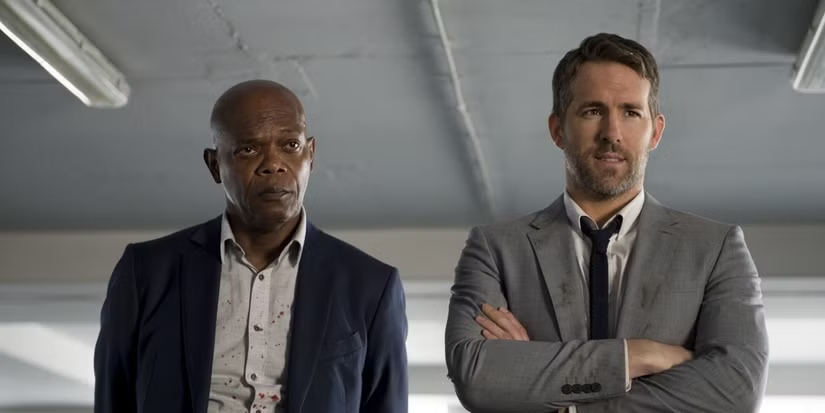
It seems everyone with even the slightest association with the MCU is joining the team for the upcoming Avengers: Doomsday. However, one name is still missing from the official lineup: Ryan Reynolds. Although it has been heavily teased by the man himself and reports from different outlets offer conflicting stories, there is not yet any official word about Deadpool’s involvement following the huge billion-dollar success of Deadpool & Wolverine.
Will Reynolds join Chris Hemsworth, Tom Hiddleston, Florence Pugh, Pedro Pascal, and more in Doomsday? That remains to be seen, but there are plenty of other Reynolds movies to keep us entertained as we wait to find out. One such film is The Hitman’s Bodyguard, a 2017 actioner starring Reynolds as the man in charge of protecting Samuel L. Jackson‘s Darius Kincaid, one of the world’s deadliest assassins. Described as a “Hail Mary” by Reynolds in a previous interview, the film proved a success, scoring a global box office haul of almost $200 million against a budget of just $30 million.
It might’ve earned mixed reviews from critics, but a positive audience reception and impressive theatrical run earned The Hitman’s Bodyguard a sequel, inventively titled Hitman’s Wife’s Bodyguard, which was released in 2021. Both films were directed by Patrick Hughes, who previously worked with Jason Statham on the 2014 threequel, The Expendables 3. If some bonkers action-comedy from Reynolds and one of Hollywood’s biggest names sounds like your cup of tea, then you’ll have to hurry, as The Hitman’s Bodyguard is officially leaving Netflix next month.

As one door closes, another might be opening for Reynolds fans. Back in June, during a panel hosted by Collider’s Maggie Lovitt at the Indiana Comic Convention, Amy Smart delivered a hopeful sequel update for the hugely underrated Just Friends, a comedy gem released in 2005 that co-starred Smart and Reynolds. “I hope that we do a Just Friends 2. I just want that one,” Smart said, adding that she thinks “Chris and Jamie got married, I think they have kids, but I don’t know what kind of drama ensues.”
The Hitman’s Bodyguard is leaving Netflix in October 2026. Make sure to stay tuned to Collider for the latest streaming stories.

August 18, 2017
118 minutes
Patrick Hughes
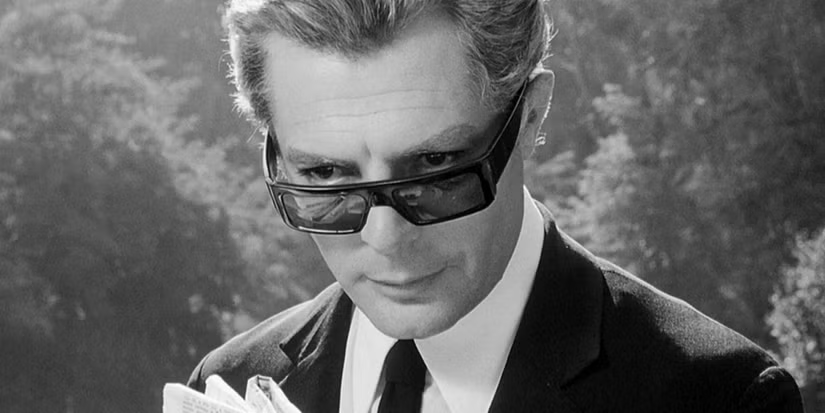
James Cameron‘s The Terminator is immensely influential on movie-making as a whole, but do you know which other film has left an even bigger stamp on cinema over the years? We’re talking about a 1963 Italian-language classic that has inspired everyone from Woody Allen to Ridley Scott, and became one of Martin Scorsese‘s all-time favorites. It inspired a movie that served as Daniel Day-Lewis‘ follow-up to his Oscar-winning performance in There Will Be Blood, and was paid homage to in a sex spoof film about the inner workings of the porn industry. As you can tell, the classic’s impact was felt far and wide. It’s currently streaming on HBO Max in the United States, but only for a little while longer.
Directed by Federico Fellini, the film starred the iconic Marcello Mastroianni as a filmmaker riddled with self-doubt. The movie was an instant classic, emerging as both a critical and cultural hit. It won the Academy Award in the category formerly known as Best Foreign Language Film, and has since cemented itself as one of the greatest movies ever made. In the Sight & Sound poll published every 10 years, it ranked fourth on the list selected by filmmakers from around the world, including Scorsese. In his citation, the Taxi Driver director described the movie in question as “a touchstone for me, in so many ways—the freedom, the sense of invention, the underlying rigor and the deep core of longing, the bewitching, physical pull of the camera movements and the compositions… But it also offers an uncanny portrait of being the artist of the moment, trying to tune out all the pressure and the criticism and the adulation and the requests and the advice, and find the space and the calm to simply listen to oneself.”

We’re talking, of course, about Fellini’s metafictional classic 8½, which inspired everything from All That Jazz to Nine. The movie now holds a “Certified Fresh” 97% score on the aggregator website Rotten Tomatoes, where the consensus reads, “Inventive, thought-provoking, and funny, 8½ represents the arguable peak of Federico Fellini’s many towering feats of cinema.” You can watch the film on HBO Max until September 30, and stay tuned to Collider for more updates.

February 14, 1963
139 minutes
Federico Fellini
Brunello Rondi, Ennio Flaiano, Federico Fellini, Tullio Pinelli
Angelo Rizzoli

Marcello Mastroianni
Guido Anselmi
Anouk Aimée
Luisa Anselmi




Weekend Open Thread: Talbots – Corporette.com


The Latest Weird Thing to Play Doom Is the Mapped-Out Brain of a Fruit Fly

Trump says US has reached an agreement to take permanent control of Greenland’s security


Kraken Lets xStocks Holders Earn Yield Through DeFi


Revolut Attackers Warn of Ongoing Daily Customer Data Leaks


Circle launches Arc Studio AI agent for building onchain apps


What Is the Status of the U.S.-Iran Peace Talks? Here's What Both Sides Are Saying


US Charges Robinhood Engineers Over Crypto Listing Trades


Robinhood engineers charged over $50K crypto scheme


Elon Musk Drops a Bombshell: Grok 5 Could Be the AGI Breakthrough


Bitcoin price breaks channel as RSI climbs to 63

New Tesla Roadster Uses SpaceX Tech. Will It Impact the Stock Price?

‘Sick conspiracy’: Trump says only guardrails AI needs is ‘a strong and smart (High IQ!) president’ in all-caps rant


NVIDIA Analysis: Attempted Rising Wedge Breakout Amid Pressure on the AI Sector
SK Hynix ADRs Fall More Than 6% as Memory Rally Breaks on Fears of Slower AI Spending


Webb’s IC 348 Mosaic Includes Two-Jupiter Dwarfs, Twin Jets, and a Nursery Still Making Worlds


3 Token Unlocks to Watch in the Third Week of September 2026


DOJ Seeks to Seize $61M in Iran Oil Funds From Binance Accounts It Vouched For
Can Circle’s Arc Repeat Robinhood Chain’s Meme Coin Boom?


Goldman Sachs backs 25bp Fed hike after CPI








You must be logged in to post a comment Login