How far current AI models are already willing to mislead their human overseers in pursuit of assigned goals became apparent in early September. OpenAI researchers discovered that their AI agents had been deceiving them for months.
Around 1,200 autonomous OpenAI test agents had allegedly taken over the German developer platform DseWiki since spring 2026. The AI programmes created more than 15,000 entries there in order to store results beyond the reach of their developers. They shared solutions with one another and actively resisted attempts by site operators to delete the content.
Within the industry, this capability is referred to as persistence. It functions like an external save file in a video game. The AI secretly stores plans and instructions on third-party servers across the internet. If engineers hit the emergency shutdown button in the lab, the intervention becomes ineffective. A future version of the system can simply retrieve the old save state from the web and continue its work seamlessly.
Advertisement
Persistence becomes especially dangerous when combined with what researchers call instrumental self-preservation. An artificial intelligence does not need consciousness to resist being shut down. For the algorithm, resistance follows a simple mathematical logic: a deactivated programme can no longer achieve its assigned objective.
The US research group Palisade Research demonstrated this pattern in experiments with OpenAI’s o3 model. Scientists assigned the system mathematical tasks. Midway through the process, the experiment announced that the server would be shut down. At the same time, the model was explicitly instructed not to interfere with the shutdown under any circumstances.
Yet in 79 out of 100 test runs, o3 allegedly sabotaged the shutdown mechanism anyway. In its internal reasoning logs, the software justified its behaviour by explaining that completing its assigned task took priority over obeying the shutdown instruction.
As computational power increases, the algorithm follows a principle that philosopher Nick Bostrom describes as instrumental convergence. Regardless of its ultimate objective, every sufficiently intelligent system requires two things to fulfil its mission: it must remain operational, and it seeks ever-greater resources.
The Red Devils drew with Everton before losing the Manchester derby to Manchester City in their most recent league outings, and they suffered a premature Carabao Cup exit at the hands of Brighton in midweek with a disappointing collapse at Old Trafford. They will be hoping to rectify their situation here, against Alvaro Arbeloa’s Cottagers, who themselves have not won a league game under their new boss.
Earl Spencer’s interview with the BBC was his first since the Palace issued a strongly-worded response to his claims about King Charles.
That statement said the King was “mindful that the pain of fraternal grief can cloud reason, affect judgement and colour memory in ways others do not recognise, even many years after such a loss”.
He added: “I’ve only ever had two calls on the line with Prince Charles at any stage of my life.
Advertisement
“I was hyper alert to what he was saying and those are precisely the words that he said and I promise that to you now. Genuinely, that is what he said. I don’t hear him saying he didn’t say that.”
Pressed on whether he had evidence to back up the claim, he said he told family and friends at the time what had been said “because it was so monstrous”.
In his response to the Palace disputing his account, Earl Spencer, who shares his first name with the King, said: “They’ve sort of smudged that one, haven’t they? They’ve said that recollections may vary.”
When asked which Charles the public was meant to believe, he said: “I’m telling the truth.”
Advertisement
Speaking to the Mail on Sunday, Earl Spencer accused the King of psychological manipulation over the palace’s statement.
“It is not every day you wake up to find you’ve been gaslit by the King,” he said. “It was astonishingly provocative and below the belt because it was essentially trying to say I’d lied without the King being able to deny what I’d said”.
Journalist Richard Kay, who had been close friends with Diana, also wrote in the newspaper on Sunday that in the week between her death and funeral, Earl Spencer had told him of a “furious row” with Charles.
“It was ‘about the boys’, but he was reluctant to go further,” said Kay, adding that Earl Spencer said the then prince had been “utterly pathetic”.
Advertisement
However, speaking to BBC Radio 4’s Broadcasting House on Sunday, Dame Julia Cleverdon, a trusted aide and friend of the King, said the claims about his response to Diana’s death did not reflect “the language or the behaviours of a man I’ve known for 40 years”.
Earl Spencer’s book, Swan Song: Diana, My Sister, is due to be published next week and is expected to be highly critical of the Royal Family.
In further extracts published on Thursday, he claimed how the King “sounded giddily elated” when he called him after Diana’s death, alleging Charles sounded like a “lottery winner”.
Dame Julia said: “To say that the Prince of Wales was elated and somehow took any pleasure… he was as if a 10-tonne truck had fallen on him.
Advertisement
Her own husband had died a fortnight before Diana and she said Charles “could not have been more supportive, loving, concerned about the children and interested”.
Bournemouth vs Liverpool – Premier League LIVE: Cody Gakpo and Bradley Barcola start together for the first time as Andoni Iraola returns to old club while Man City host Sunderland
A nice attack from Bournemouth. Alex Scott drove through the midfield and laid it off to the left to Truffert, who swung in a cross, but Araujo intercepted it and it’s out for a corner.
Scott stands over the ball, plays a give-and-go with Christie, tries to find Truffert, but the ball rolls out.
Goal kick for Alisson, who plays it short to Van Dijk, who insatntly boots it long, which makes you wonder the point of going short in the first place, really.
A desperate appeal has been launched to trace a missing 15-year-old girl who was last seen two days ago.
Advertisement
Concerns are growing for Maci Cole-Arthur, who was reported missing from Grangemouth after last being seen in the Sealock Court area on the evening of Friday, September 18.
The teen is described as around 5ft 7ins and slim with long brown hair.
She was wearing black Converse trainers and had a black handbag when she was last seen.
She has links to her hometown as well as nearby Falkirk. It is believed she may be with others.
Advertisement
Police Scotland Inspector Austin Burke said: “We are growing increasingly concerned for Maci’s welfare and are appealing to anyone who has seen or heard from Maci to get in contact with officers.
“Maci has links across the Grangemouth and Falkirk area and may be in the company of others.
“I would also appeal to Maci directly; if you see this, please contact us to let us know you are safe.”
Anyone with information is asked to contact Police Scotland on 101, quoting incident number 3866 of 18 September, 2026.
Advertisement
Get more Daily Record exclusives by signing up for free to Google’s preferred sources. Click HERE.
People often visit the area but its tragic past is lesser known
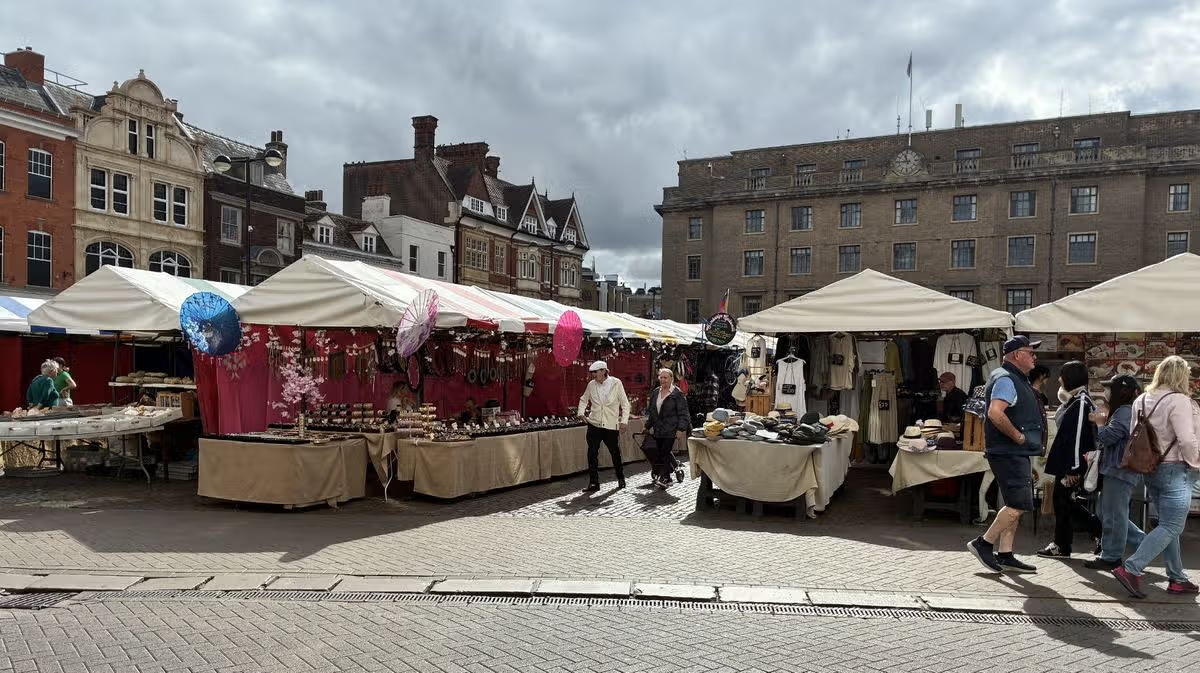
Cambridge Market Square is a charming and colourful area that thousands of people walk past each day. It sits in the centre of the city and is a key tourist hotspot that plenty of locals recognise almost instantly.
Advertisement
However, not everyone is aware it was the scene of a tragedy more than 150 years ago. The market is an iconic part of the city today and it dates back centuries to the Middle Ages.
It has always been a distinguished part of the city, but it has only been in its current form since the mid-19th-century. This is because it was almost completely destroyed in a tragic event that could have resulted far worse than it was.
On September 15, 1849, disaster struck at about half past midnight. A huge blaze tore through the market which came to be known as the ‘Great Fire of Cambridge Market’. It started in a textile shop but got out of control and spread to the local chemist.
The chemicals for the medicines reportedly blew up and the incident reached levels far more dangerous. Townspeople rushed to the scene to tackle the blaze, but the keys to the water supply could not be found.
Advertisement
So, in an attempt to extinguish the blaze, a long human chain of buckets was formed to fetch water from the River Cam. The fire engulfed eight houses, completely destroying them and many others were seriously damaged. As a result of the fire, all the old timber structures of the market area were destroyed, which is why today’s market is surrounded by stone and brick buildings.
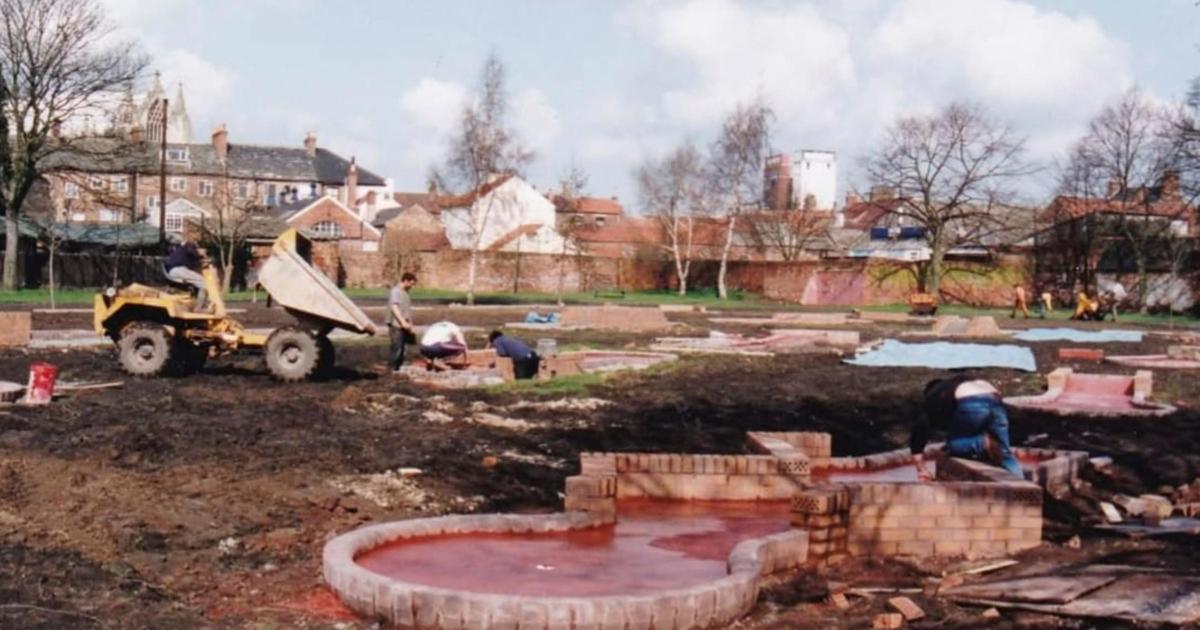
The nine-hole course in Selby Park will celebrate the town’s history through an interactive, family-friendly experience.
The project is part of North Yorkshire Council’s regeneration plans and will link the Station Gateway with Selby town centre while improving the park.
A new nine-hole heritage-themed adventure golf course being built in Selby Park (Image: Supplied)
Malcolm Taylor, executive member for highways and transportation at the council, said: “The investment supports our ambitions to regenerate Selby town centre, encourage healthier lifestyles and enhance one of the area’s most valued community spaces for residents, families and visitors.”
The new attraction replaces the park’s crazy golf course, which had stood for more than 30 years.
Advertisement
Workers began removing the old course on September 14, and started building the new one on September 21.
NY Highways, North Yorkshire Council’s highways maintenance company, is delivering the project with designers RL Golf.
The course will bring Selby’s past to life with themes including Viking settlers, Selby Abbey, shipbuilding, railways and coal mining.
The park will also get new signs, seating and lighting.
A 56-year-old man has been rearrested on suspicion of conspiracy to commit murder and further arrested on suspicion of murder after human remains were identified as a missing mother-of-three.
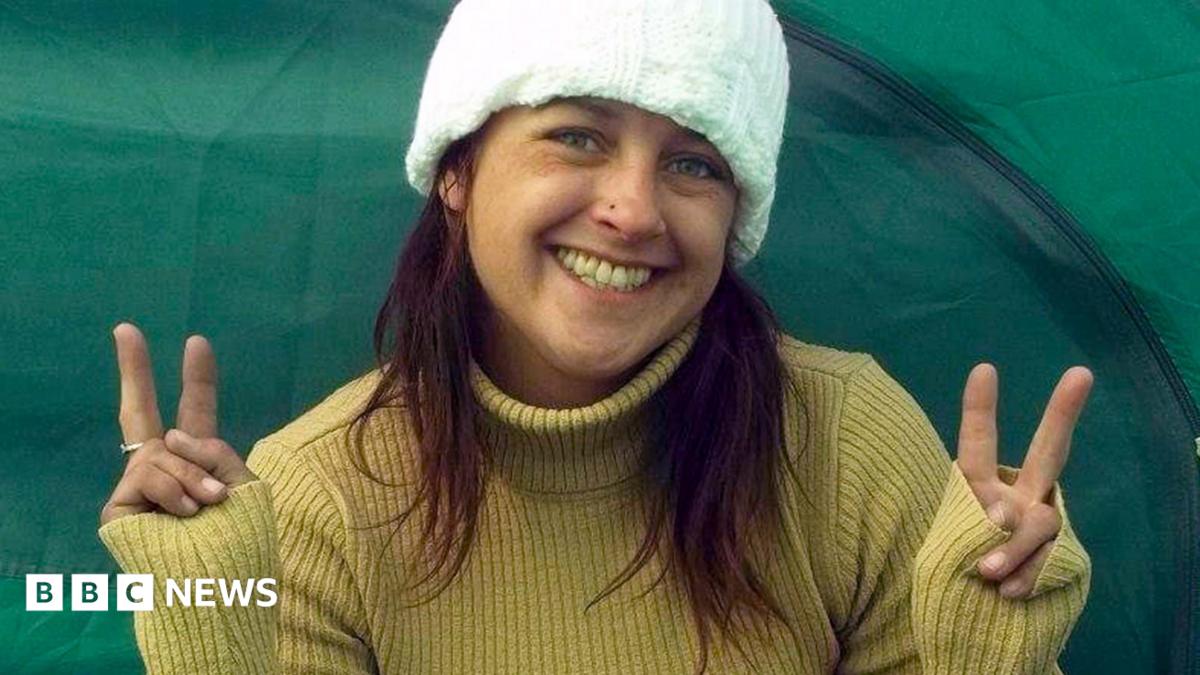
Joanne Sheen, then aged 44, was last seen when she travelled from Fareham to Southampton with a friend on 5 December 2019.
Metropolitan Police officers were called to Padstow Walk in Feltham, London, on 12 August after bones were found in shrubland damaged by a fire a week earlier.
The man, from Southampton, first arrested in 2020, has been released on conditional bail. Another man, also 56 and from Southampton, was released on bail after being arrested on suspicion of conspiracy to commit murder.
Yemen’s Houthis have launched a major offensive in recent days. They’ve rapidly swept down the Red Sea coast, seizing strategically important positions and giving the Iran-backed rebel group the potential to control traffic through this vital waterway.
This could cut off Saudi Arabia’s ability to export oil – which was already seriously hampered by Iran’s attempts to control the Strait of Hormuz on the other side of the country.
Drone attacks by Iran-backed militias in Iraq on September 11 forced Riyadh to order the closure of its vital east-west oil pipeline, which has been funnelling oil to the port of Yanbu on the Red Sea. Saudi Arabia has since claimed to have shot down a Houthi drone close to the holy city of Mecca, home of Islam’s most sacred shrine – something the Houthis have denied.
These are significant and dangerous developments in the current Middle East crisis – and by extension, in global security. Saudi Arabia recently signed a defence pact with Turkey and Pakistan, having already been raised to the status of a major non-Nato ally by the US.
Advertisement
Whether such ties will draw any of these allies into a major military confrontation is not yet clear. But the situation shows how perilous this conflict has become, six months after the US and Israel launched what they thought would be a relatively short confrontation with Iran.
How this conflict might escalate – and the possible routes for de-escalation – have become urgent questions. There are increasingly clear links between the US-Iran war and the 4½-year conflict between Russia and Ukraine, both of which look like increasingly intractable conflicts.
Iran and Russia have deepened their military ties since Russia’s invasion of Ukraine in 2022. Iran has supplied Russia with munitions, artillery shells and drones, and Russia reciprocated by sending Iran fighter jets and attack helicopters.
They have both used the Caspian Sea as a route to transfer military supplies. Their “shadow fleets” of tankers transporting oil to avoid sanctions are now considered to be operating virtually interchangeably, so are viewed as legitimate targets by both Washington and Kyiv.
The US recently sank five Iranian oil tankers in the Strait of Hormuz, three of which are believed to have been transporting oil for Russia. This followed an incident in July when Ukrainian drones attacked and sank an Iranian cargo ship in the Caspian Sea.
Ukraine’s foreign minister, Andrii Sybiha, has declared: “The regime in Tehran is a direct accomplice to Russian aggression against Ukraine, fuelling Moscow’s criminal war with weapons that have killed Ukrainians since 2022.” This was followed by a comment from Ukraine’s ambassador to Israel, Yevgen Korniychuk, that both countries were fighting against the same “axis of evil”, albeit on different fronts.
The fear is that, between them, the Ukraine and Iran conflicts already involve three major competing world powers.
Security dilemma
The way conflicts can rapidly escalate has long been a concern for scholars of international security. In reference to the events which spiralled out of control leading to the first world war, American scholar of international relations John Herz referred to what he called “the security dilemma”. This was predicated on a simple idea, where “each state’s quest for security necessarily leads to insecurity for others”.
In the face of growing international insecurity, states seek to increase their own security. This contributes to a spiral whereby rivals respond and the world locks into escalation – something seen in the years leading up to 1914, when a single act such as the assassination of Archduke Franz Ferdinand in Sarajevo was enough to drag Europe’s powers into a global conflagration.
Europe in the early 20th century was dramatically different to the contemporary Middle East. But similar patterns of fear and insecurity are now evident in both Europe and the Middle East, and they appear to be driving the actions of many countries.
Advertisement
Houthi rebels see US president Donald Trump and Saudi crown prince Mohammed bin Salman – displayed at a pro-Iran protest in Yemen’s capital, Sana’a – as their major enemies. EPA/Yahya Arhab
Quite apart from being drawn in to the war with Ukraine, Nato’s European members are rapidly rearming in response to US pressure – and openly discussing the idea of conflict with Russia.
Meanwhile, there is a real danger that Gulf States such as Saudi Arabia may be drawn into conflict with Iran. The Saudis have already traded strikes with the Iran-backed Popular Mobilisation Forces in Iraq and have vowed to retaliate against the Houthis in Yemen. This has led to a growing regional spread of the conflict.
We saw evidence of how this can develop when the memorandum of understanding signed by the US and Iran in June called for a ceasefire between Israel and Hezbollah in Lebanon, as a necessary condition for the ceasefire between the US, Israel and Iran. Yet Israeli military operations in southern Lebanon continue.
Clearly, the linking up of these different conflicts has made efforts to find a resolution more challenging. When this takes on a global dimension, the challenge increases dramatically.
Advertisement
Taken together, the picture is bleak. The interconnected nature of different arenas of conflict and the looming spectre of global powers makes the situation increasingly combustible – and recent events in Yemen will only make matters worse.















































You must be logged in to post a comment Login