
Crypto World
Ethereum Price Prediction: Is $3K in Sight After ETH’s Latest Breakout?

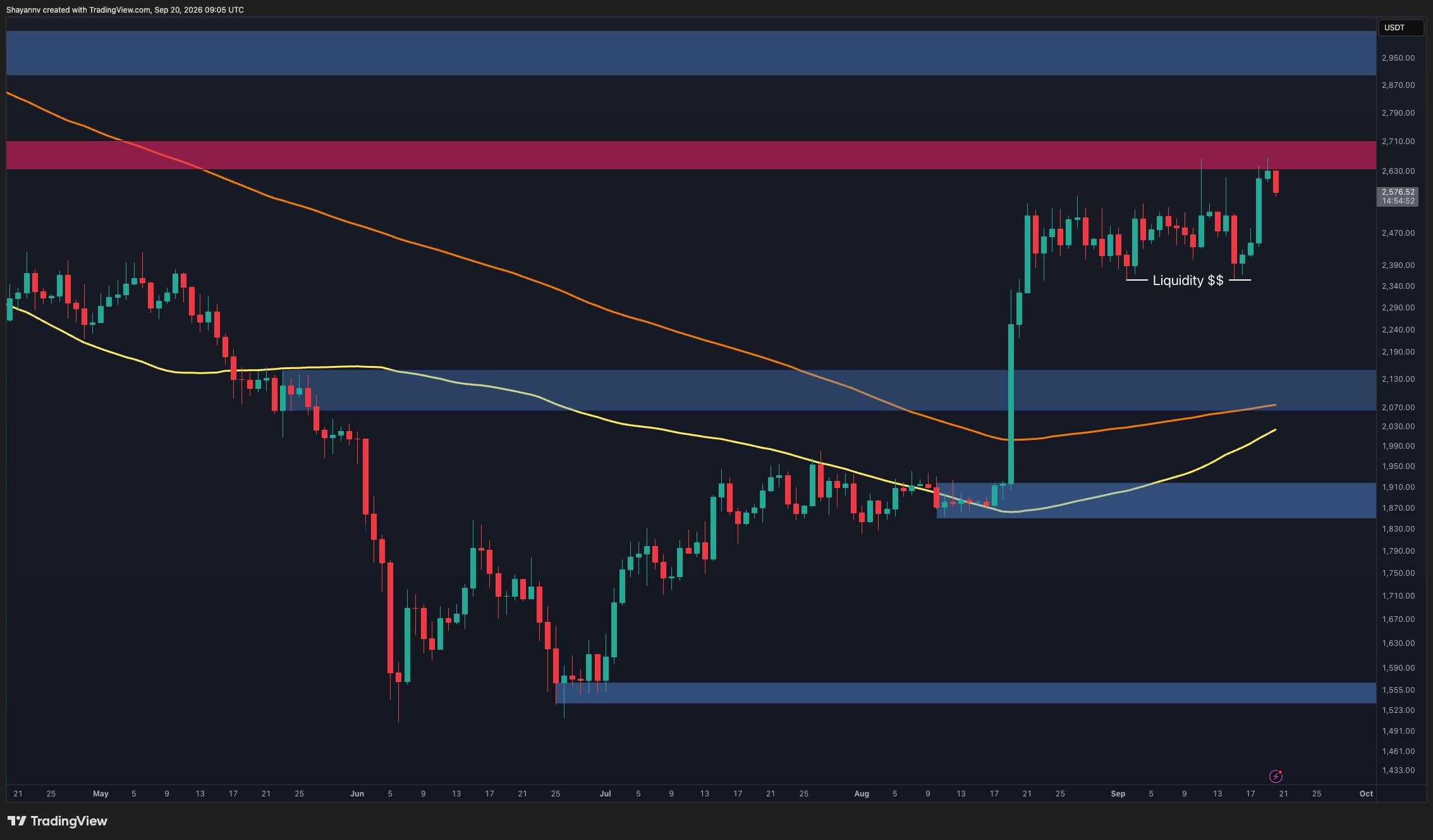
Ethereum’s latest rally has carried the price back into a major supply area, but sellers have started to respond around the highs. With the asset now near $2.58K, the next reaction could determine whether the recent advance develops into a larger breakout or gives way to another consolidation phase.
Ethereum Price Analysis: The Daily Chart
Ethereum’s daily structure has improved substantially following the explosive breakout from the $1.85K-$1.92K demand zone. That move also reclaimed both major moving averages shown on the chart, with the longer-term average now flattening and the faster one turning higher.
Since then, Ethereum has consolidated above roughly $2.35K and recently pushed toward the major $2.63K-$2.70K resistance zone. The latest candles show rejection from this area, with the price pulling back toward $2.58K after briefly testing above $2.63K.
Nevertheless, the broader structure remains constructive while Ethereum holds above the recent liquidity lows around $2.35K-$2.40K. A sustained daily breakout through the $2.63K-$2.70K supply zone would strengthen the bullish structure and could open the path toward the next major resistance area around $2.90K-$3K.
Conversely, continued rejection from $2.63K-$2.70K would increase the probability of a deeper correction. In that case, $2.35K-$2.40K would be the first important support region, followed by the $2.05K-$2.15K zone around the moving averages.
ETH/USDT 4-Hour Chart
The 4-hour chart provides a clearer view of the immediate battle. Ethereum surged from around $2.40K directly into the $2.63K-$2.70K resistance zone, where the move has encountered selling pressure.
This resistance also coincides with the upper boundary of the broader structure that has contained price action since late August. The rejection has already pushed Ethereum back toward $2.58K, meaning buyers now need to prevent the pullback from developing into a larger short-term reversal.
The first notable support sits around the marked minor demand zone at approximately $2.44K-$2.48K. Holding this area would preserve the recent sequence of higher lows and leave another attempt at $2.63K-$2.70K on the table. A confirmed breakout above that resistance could accelerate the rally toward $2.70K and potentially higher.
However, losing the $2.44K-$2.48K demand area would weaken the short-term setup and expose the broader range floor around $2.35K. Below there, the $2.22K-$2.27K support zone becomes the next significant downside target.

Sentiment Analysis
The one-month Binance ETH/USDT liquidation heatmap shows substantial leveraged liquidity positioned on both sides of the current price, which could contribute to elevated volatility.
The nearest significant overhead liquidation concentration appears around the $2.65K-$2.70K region, closely matching the technical resistance currently being tested. Beyond that, considerably larger liquidity clusters are visible around $2.9K-$3K and above $3.1K. Therefore, a convincing break through $2.70K could potentially trigger liquidations and help fuel an extension toward those higher levels.
On the downside, a notable concentration is visible around $2.3K-$2.35K, while the largest lower clusters sit much deeper near $1.9K-$2K.
For now, the heatmap reinforces the importance of the current technical setup. Ethereum is sitting just beneath a nearby pocket of overhead liquidity and a major resistance zone. Clearing the $2.63K-$2.70K area could provide the catalyst for another bullish expansion, while continued rejection would leave the $2.44K-$2.48K minor demand zone as the first key area for buyers to defend.

The post Ethereum Price Prediction: Is $3K in Sight After ETH’s Latest Breakout? appeared first on CryptoPotato.

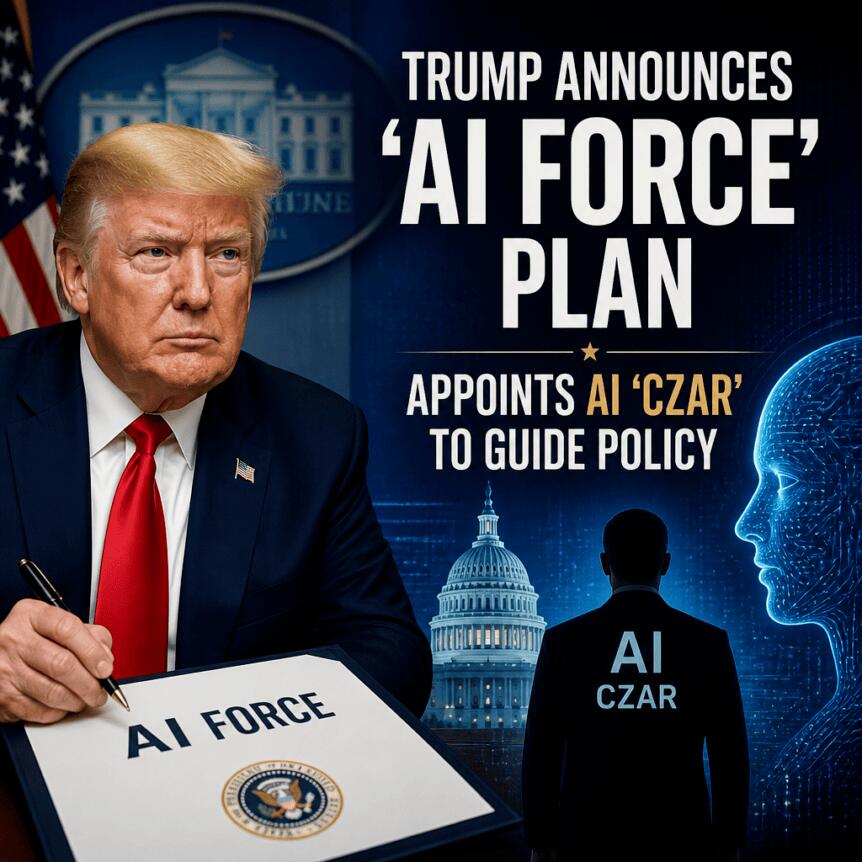
U.S. President Donald Trump says he plans to create an “AI Force” and appoint an “AI czar,” framing the initiative as a way to coordinate the rapidly expanding AI sector without adding regulations that could slow innovation. The announcement, posted by Trump on Truth Social over the weekend, positions the effort as an executive-led counterpart to earlier “Space Force” branding—though it leaves major questions unanswered.
Trump’s message did not spell out whether the AI Force would function as a military command, a civilian agency, or a new department. The New York Times reported that White House officials did not respond to an email seeking clarification.
Key takeaways
- Trump says he will form an “AI Force” and appoint an “AI czar,” but he offered no organizational details in the initial post.
- The president framed the plan as avoiding new regulations that could hinder innovation—without specifying how that would work in practice.
- Trump’s announcement arrives as prominent AI leaders debate whether development should slow down to improve safety and oversight.
- Private-sector and industry approaches to moderating AI progress are already emerging, including Anthropic’s decision to use an “embedded evaluator.”
A political coordination pitch—without a clear structure
In his Truth Social post, Trump said the AI Force would be created “much like” Space Force and that it would be managed in a way he described as successful during his first term. He also indicated that he would announce an AI “czar” “in the near future,” adding that “Only High I.Q. individuals need apply!”
While the rhetoric borrows from the branding of Space Force, Trump did not outline the governance model behind the new initiative. According to the New York Times, the administration did not provide clarification on whether the AI Force would be organized under defense authorities, operate as a civilian regulator, or assume a different form entirely.
That ambiguity matters for investors and builders because the practical effect of any “czar” or task force depends heavily on authority—whether it can set compliance standards, coordinate enforcement, or influence procurement and research priorities. Without that detail, markets are left to interpret the initiative primarily as signaling rather than as a concrete regulatory shift.
The timing: AI safety warnings and calls to slow down
Multiple reports tie Trump’s announcement to a broader debate about whether the pace of AI development should be moderated. The BBC noted that his post came amid warnings about AI’s potential dangers and included no further information about timing or scope.
Earlier this month, Cointelegraph reported on Sept. 12 that Anthropic CEO Dario Amodei shared a three-step proposal aimed at pacing AI progress more deliberately. The underlying concern, as Cointelegraph characterized it, was that if development moves too quickly, systems could “outrun our ability to understand and control these systems.”
That proposal has also drawn reactions from other high-profile technology leaders. Cointelegraph previously reported that OpenAI CEO Sam Altman and SpaceX CEO Elon Musk responded positively to Amodei’s slowdown idea, while Nvidia CEO Jensen Huang did not, arguing that regulation was not necessary. CNBC’s coverage of Huang’s position—referenced by the original reporting—highlighted his view that regulation may not be the right tool for addressing the risks.
Trump’s announcement intersects with this debate, but it does so from a different angle: his stated goal emphasizes managing AI without “adding regulations” that could slow innovation. For stakeholders, the open question is whether that approach means voluntary coordination, procurement and safety guidance, or simply a political framework rather than enforceable rules.
What industry is doing meanwhile: Anthropic and an “embedded evaluator”
Even as policymakers and executives debate the need for slower development, at least one major lab has been moving forward with an internal mechanism intended to influence AI deployment pacing. On Sunday, Anthropic said it had chosen Accenture as its first embedded evaluator, according to Cointelegraph’s report.
Cointelegraph linked this decision to the first step in Amodei’s three-part proposal, describing the move as an effort to help moderate the pace of AI development. The key point for builders and users is that this is not merely an abstract policy discussion—it reflects a concrete, operational attempt to create additional review or evaluation capacity within development pipelines.
This distinction is likely to shape how stakeholders interpret Trump’s plan. If the White House initiative ultimately results in similar embedded oversight—through contractors, audits, or evaluation mechanisms—it could align more closely with lab-level approaches like Anthropic’s. If, however, the AI Force is mainly ceremonial or focused on high-level coordination without technical enforcement, it may provide less tangible safety impact than internal evaluation models.
Why the “AI czar” concept could matter for crypto and digital infrastructure
Although Trump’s announcement is framed around AI governance, the implications can extend into the broader technology ecosystem that underpins modern digital markets—including crypto infrastructure. AI systems increasingly influence everything from software development and automated trading to security tooling and risk modeling. When governments signal intent to shape AI oversight—whether through an “AI czar,” procurement priorities, or coordination structures—they can indirectly affect which tools and workflows enterprises adopt.
At the same time, the public debate highlighted in the reporting underscores a tension: some leaders argue for pacing to improve safety and control, while others contend that regulation is unnecessary and that oversight can be handled without new legal constraints. Trump’s statement suggests he wants coordination without additional regulation, but the absence of details means the policy direction remains unclear.
For readers tracking both AI and blockchain-related infrastructure, the practical question is not only whether new roles or offices are created, but how those roles will translate into standards, audits, or constraints that affect developers building adjacent systems.
With Trump promising more information “in the near future,” the next developments to watch are the AI Force’s formal structure, its legal or administrative authority, and whether the administration’s approach meaningfully engages the kinds of evaluation practices already emerging in the private sector—especially as the industry continues to debate how quickly AI should move and who should be responsible for keeping it under control.


Dogecoin (DOGE) started out as a joke; its creators originally intended for users to tip each other for entertaining social media content.
Despite its playful origins, Dogecoin has since become one of the most popular cryptocurrencies.
Like other cryptocurrencies, Dogecoin (DOGE) can be mined using cloud platforms. Cloud mining is an attractive option if you wish to avoid technical hassles, bypass initial hardware investments, or escape high electricity costs. Essentially, cloud mining involves outsourcing the entire mining process to a third party; as a leading global cloud mining service provider, SHR Miner enables Dogecoin enthusiasts to participate in mining rewards with a zero-barrier entry by leasing computing power from industrial-grade mining rigs.
How to earn profits mining Dogecoin with SHR miner
There are several benefits to mining Dogecoin rather than other cryptocurrencies. First, transaction speeds on the Dogecoin blockchain are fast, which means Dogecoin mining pools typically pay out earnings every 24 hours.
In addition to offering quick withdrawals, Dogecoin can generate a steady income for you. Consequently, Dogecoin mining is efficient, profitable, and holds great promise. Furthermore, there are numerous markets where you can sell your Dogecoin, making it well worth considering as a source of daily income.
Earn Dogecoin rewards with SHR Miner—get started in just three steps:
1. Register an account
Upon creating an account, you will receive a $15 new-user bonus and earn a daily reward of $0.60 through a free hashing power contract. (Click here to register)
2. Select a contract plan
Choose a short-term or long-term cloud mining contract based on your budget and requirements, with contract durations ranging from 1 to 50 days.
3. Start earning rewards
Once the contract is activated, users can view daily rewards via the dashboard and select a supported cryptocurrency for withdrawal.
Examples of popular cloud mining contracts
| Contract Name | Price | Profit | Days | Principal + Total Return |
| New User Experience Agreement | $100 | $4 | 2 | $100+$8 |
| Bitdeer Sealminer A2 Pro | $500 | $6.25 | 5 | $500.00 + $31.25 |
| Litecoin Miner L9 | $1000.00 | $13.00 | 10 | $1000.00 + $130 |
| Bitcoin Miner S21 XP Imm | $5000.00 | $70.50 | 25 | $5000.00 + $1762.5 |
| Bitcoin Miner S21e XP Hyd | $10000.00 | $151.00 | 35 | $10000.00 + $5285 |
| ANTSPACE HK3 | $30000.00 | $513.00 | 40 | $30000.00 + $20520 |
SHR Miner offers a variety of cloud mining contracts to meet the diverse needs of users regarding budgets, durations, and target returns. Whether users prefer short-term flexibility or are focused on long-term returns, they can select the plan that best suits their individual circumstances.
For details on specific contract prices, terms, and estimated rewards, click here to view all contract plans.
Why choose SHR miner?
Compliant UK operations: We hold the necessary operational licenses, prioritize business transparency and regulatory compliance, and charge no hidden fees.
24/7 technical support: Our systems run continuously, backed by a professional team providing round-the-clock customer support.
No complex setup required: The platform handles all aspects of mining rig deployment and hash rate allocation.
Real-time information access: Users can view contract status, mining progress, and daily rewards via the web-based dashboard.
Genuine hash rate: Users receive hash power corresponding to their chosen contract, without the risks associated with third-party equipment maintenance.
One-stop management: Mining, reward tracking, withdrawals, and contract renewals can all be managed on a single platform.
As the market sees a return to favorable price levels, cloud mining offers cryptocurrency holders a new way to participate in the digital asset ecosystem, while eliminating the complexities of deploying and maintaining mining hardware themselves.
In short
Cloud mining is an excellent choice for those seeking ways to generate passive income. If used properly, these opportunities can easily accumulate cryptocurrency wealth in “autopilot” mode, requiring only a minimal investment of time. At the very least, they are far less time-consuming than any form of active trading. Passive income is the ultimate goal for every investor and trader, and with SHRMiner, maximizing your passive income potential is easier than ever.
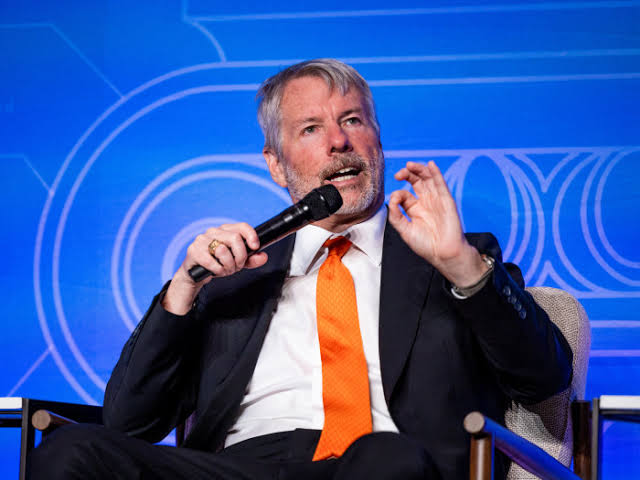
The main culprit of Strategy’s highly aggressive BTC accumulation game plan, Michael Saylor, took it to X earlier on Sunday to hint that the company might have resumed its cryptocurrency purchases.
In a not-so-cryptic tweet, the former CEO posted a graph of the firm’s countless Bitcoin accumulations completed over the past six years and said, “A little more orange.”
A little more orange. pic.twitter.com/Z3n9jDAEpn
— Michael Saylor (@saylor) September 20, 2026
Recall that Strategy’s last BTC purchase was announced on August 31 and was completed during the week prior. It came at an average price of $80,318 per unit, and the firm spent almost $370 million to reacquire 4,603 BTC. What was particularly interesting about that one is that it came after a two-month pause in which the company made a couple of sales at much lower prices.
Since then, Strategy has been on the sidelines when it comes to Bitcoin accumulations. Instead, it turned its attention to repurchasing its STRC stock, whose price has erased almost all losses from its drop to $75 and closed Friday at $98.51 – just inches below its par price of $100.
If Saylor’s hint has been rightfully understood by the entire crypto community and us on X, this means that Strategy has resumed its purchases during the most intense macro week for BTC and the industry.
On Tuesday, the US Senate voted against advancing the highly anticipated CLARITY Act. A day later, the US Federal Reserve hiked interest rates for the first time in over three years. On Friday, the Bank of Japan mimicked the Fed’s move, raising its own rates to a 31-year high.
The post Strategy’s Saylor Teases New Bitcoin Buy Despite Fed Hike and CLARITY Setback appeared first on CryptoPotato.

I’ll give you a real-world example. I have two sons who both graduated college in the last two years, and they’re entering the workforce. One of my sons studied finance and marketing, and he wanted to get into business development. He went to a startup, and he got a job but [became] frustrated. But he got AI-pilled in January of this year, and he does not have a background in technology in any explicit way, but he just poured himself into learning these agentic systems, and he came to me and he said, “I’m going to quit my job and I want to master these skills. I want to build things. I want to create things.” I’m like, “OK, go do that.” And it is essentially my advice for anyone who is at any stage in their career, but I’ll say for young people who are coming in, the opportunity right now is incredible. If you’re a generally good thinker, you can become a master of literally hundreds of different domains, and you can learn how to create and orchestrate and build things that it was impossible to do before, and so it’s one of the greatest periods ever in human history for individuals and individual agency, and that’s why we’re seeing a huge surge in solo founders. That’s why we’re actually seeing record numbers of new business creation that are happening in the U.S. Agents give agency. So, my recommendation is that people should dive in whatever their domain interest is and master these tools, because it effectively is going to give you superpowers. And that’s the exact message I’ve given every single employee at Circle. I’ve said everyone’s jobs are going to be transformed. We are going to reconstitute this company. We’re going to reorganize this company around the capabilities of agentic [AI], and it’s the greatest career opportunity you’re ever going to have. Take as much time as you want to master this, because you’re going to be more valuable in Circle, or if you choose to go do something else as well.

In XRP news, the asset is moving faster than it has since August. The token passed $1.38 on CoinGecko after a +2% gain over the past week. Ripple linked XRP to Stripe’s payment tools on September 17, and the coin still trades -54% below its 2021 peak.
However, Ripple is down -3% over the past 24 hours after losing the key $1.40 support level, but trading volume has picked up to $2.8Bn, indicating strong investor demand for the token.
News of Ripple connecting its XRPL to the Machine Payments Protocol, which lets AI agents pay for data and services with XRP and RLUSD, has generated fresh buzz around the project.
XRP News: What Is Driving the Ripple Price Higher This Week?
Ripple shipped version 1.1 of its XRPL Starter Kit on September 17 (CoinCodex). The update connects XRP to the Machine Payments Protocol built by Stripe and Tempo.
Starter Kit v1.1 adds two pieces of infrastructure: MPP support and the Open Wallet Standard, which lets software manage wallets across multiple blockchains through one interface.
One-time payments already work with XRP and XRPL-issued assets such as RLUSD, following the standard request-price-authorize-deliver flow.
Programs can now pay for data and services in XRP with no person clicking a button (Benzinga). That is a new kind of demand that did not exist last month.
Stripe moves billions in volume each year. Even a thin slice of that flowing through XRP changes the math fast. The token also gained a new title in March when the CFTC named XRP as one of 18 digital commodities.
Discover: The Best Token Presales
What Is the XRP Price Prediction for Next Week?
$XRP has now lost both channel and RSI support on the 1hr. Potentially signalling a bearish divergence breakdown, where a retrace to the mid $1.30's may now be on the cards short-term —
 https://t.co/F0lnpzVo7U pic.twitter.com/I1RUrtXZjy
 ChartNerd
  (@ChartNerdTA) September 19, 2026
XRP trades at $1.38 on September 20 after bouncing from the $1.29 low this week. The token now tests the 50-day average near $1.45. A close above that level opens the path to $1.55, the August high.
Analysts at crypto.news placed the bull case near $3.00 by year-end, and the Stripe deal adds a use case that didn’t exist seven days ago. XRP still sits 54% below its 2021 all-time peak.
A clean break above $1.55 would be the first higher high since May and could quickly bring volume back. ETF flows are still in good shape, with this week closing around +$9M in positive flows.
XRP news highlights the Ripple-Stripe deal, showing big money is building in crypto right now. That kind of news lifts every coin with live tools behind it. A move above $1.55 would be the first higher high since May and could quickly bring volume back.
Earn $50 and Enter $300K Prize Draw on EdgeX
The post XRP News: AI Payments Integration With Stripe Driving Ripple Toward $1.50 appeared first on Cryptonews.
Six Nobel Prize-winning economists endorsed California’s Proposition 40 on September 19. This measure would place a one-time 5% tax on the wealth of the state’s billionaires.
The measure reaches the November 3 ballot with about $100 billion at stake, and Ripple Labs executive chair Chris Larsen has already spent more than $10 million to defeat it.
A $2.3 Trillion Case for the California Billionaire Tax
The letter came from Daron Acemoglu, Abhijit Banerjee, Peter Diamond, Esther Duflo, Paul Krugman, and Joseph Stiglitz. All six hold the Nobel Prize in Economic Sciences.
They wrote that California’s wealthiest 0.001% held a combined $700 billion ten years ago. That same sliver of the population now holds $2.3 trillion, which matches the annual income of roughly 20 million California taxpayers.
The economists also calculated that billionaires paid state income tax equal to 1.6% of their $1.4 trillion wealth gain between 2019 and 2025. Ordinary paychecks, they argued, face higher effective rates than that.
“A one-time tax of 5% on the wealth of California’s 250 billionaires would raise as much revenue as a 5% income tax on all Californian taxpayers: about $100 billion. The wealth tax would be modest relative to the gains made by billionaires, yet large enough to offset the federal cuts to Medicaid,” the letter read.
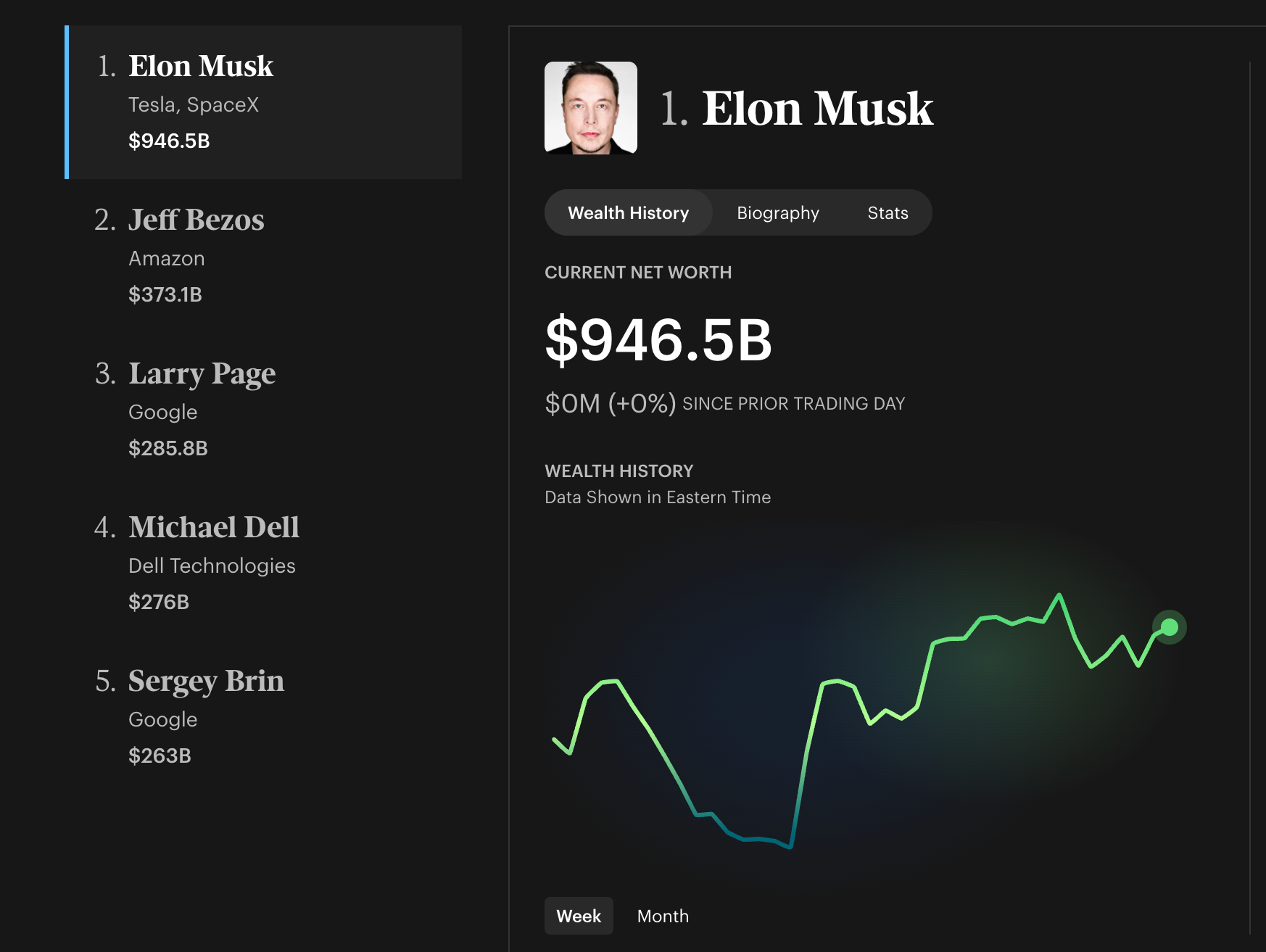
Acemoglu has pressed billionaires directly before. In July, he challenged Elon Musk to give away close to $1 trillion by 2036, and Musk replied that he would do something along those lines. Forbes currently values Musk at $946.5 billion.

Follow us on X to get the latest news as it happens
Ripple’s Bet Against Prop 40
The measure has also drawn organized opposition from the fortunes it would tax. Golden State Promise, one of the committees against Proposition 40, received $5 million from Larsen, and Ripple Labs matched that with $5 million of its own, Fortune reported.
He also routed $10 million to Building a Better California, a PAC formed earlier this year to fight the measure. Larsen has reason to spend. Forbes values him at $8.4 billion, which would leave him facing roughly $420 million under a 5% levy.
Venture capitalist John Doerr contributed $7.5 million to the same committee. Sergey Brin, the world’s fifth-richest man, shifted a large share of his holdings out of the state late last year, and his spending against the tax now totals $102 million.
Meanwhile, Building a Better California has backed two initiatives of its own, Proposition 41 and Proposition 42, and either one cancels the billionaire tax by drawing more votes, even if voters approve the tax as well.
Subscribe to our YouTube channel to watch leaders and journalists provide expert insights
The post 6 Nobel Economists vs. Ripple's Chairman: Who Wins California's Billionaire Tax Fight? appeared first on BeInCrypto.


Toyosa has introduced Bitcoin as a payment option for Toyota vehicle purchases in Bolivia, expanding its digital-asset checkout service one year after launching USDT payments.
Summary
- Toyosa now accepts Bitcoin for Toyota purchases, adding BTC alongside bolivianos, dollars, and USDT payments.
- Towerbank provides transaction processing, while BitGo supplies institutional wallet infrastructure, security, and traceability for payments.
- Bolivia removed its crypto payment-channel ban in 2024, enabling regulated financial institutions to expand services.
- Toyosa introduced USDT payments in 2025, supported by BitGo, Towerbank, and Tether infrastructure for customers.
- BitGo lists Expocruz in Santa Cruz among its September 2026 events, confirming its local presence.
Eju TV reported that the company unveiled the Bitcoin service on Sept. 18 at Expocruz 2026 in Santa Cruz, where Toyosa said customers could now choose BTC alongside bolivianos, U.S. dollars and Tether’s USDT when purchasing a Toyota.
BitGo confirmed the arrangement on Sept. 20, saying BitGo Bank & Trust supplied the institutional-grade digital asset wallet infrastructure behind Toyosa’s Bitcoin payment service. Its event calendar places the company at Expocruz from Sept. 18 through Sept. 21, providing separate confirmation of its presence in Santa Cruz during the launch.
Toyosa Bitcoin payments build on its 2025 USDT rollout
Toyosa’s Bitcoin service follows a crypto-payment system introduced at Expocruz one year earlier. In September 2025, Toyosa worked with BitGo, Towerbank and Tether to let customers purchase vehicles, parts and services using USDT.
The original system connected BitGo’s wallet and custody infrastructure with Toyosa’s point-of-sale environment. According to BitGo, customers could use USDT for high-value purchases while the digital-asset infrastructure handled wallet security and settlement support.
Toyosa’s existing online payment page still describes the USDT workflow. Customers first obtain a quotation, select a supported blockchain network and scan a QR code from a crypto wallet. The page lists Ethereum and Tron among supported USDT networks and identifies Towerbank as the financial partner and BitGo as the blockchain technology provider.
The public page reviewed on Sept. 20 had not yet been updated with a separate Bitcoin checkout guide, even though Toyosa and BitGo had announced that BTC purchases were available. Neither company had publicly disclosed supported Bitcoin wallet types, confirmation requirements, exchange-rate methodology or whether customers face transaction limits.
Toyosa did not publish a Bitcoin sales total or identify a first BTC vehicle buyer in the materials reviewed. By comparison, BitGo publicly said in September 2025 that the first Toyota purchase in Bolivia using USDT had been completed when the stablecoin service launched.
Towerbank and BitGo handle different parts of the payment service
Toyosa said Towerbank supplies the transaction-processing platform together with digital-asset support and guidance. BitGo provides wallet infrastructure, security and transaction traceability for the Bitcoin service.
BitGo described its role more specifically on Sept. 20, saying BitGo Bank & Trust provides the digital-asset wallet infrastructure used by the new payment option. The company did not state in that announcement whether Toyosa retains BTC after each purchase, automatically converts payments into fiat currency, or uses another settlement arrangement.
The distinction matters for describing the service accurately. Available statements confirm that customers can pay with Bitcoin, but they do not establish that Toyosa is adding BTC to its corporate treasury or holding vehicle-sale proceeds in Bitcoin.
During the Expocruz presentation, Toyosa Group artificial intelligence director Edwin R. Saavedra linked the payment launch to Bolivia’s monetary history, saying, “From the silver of Potosí to Bitcoin: Bolivia is once again at the forefront of the history of money.” The statement represents the executive’s characterization of the service.
Local coverage of the event identified Johan Hernández, Towerbank’s digital-assets business lead, and Álvaro Olivares, BitGo’s Latin America business development manager, among the representatives presenting the payment arrangement with Toyosa.
Bolivia permits crypto transactions but BTC is not legal tender
Bolivia’s regulatory environment changed before Toyosa began accepting digital assets. In June 2024, the Banco Central de Bolivia revoked Resolution 144/2020 and authorized electronic payment channels and instruments for virtual-asset purchase and sale transactions.
The regulatory change ended the earlier prohibition on processing crypto-related transactions through the country’s financial system. It did not make Bitcoin an official Bolivian currency.
The BCB states that the boliviano remains the country’s only legal tender and that people and businesses are not legally required to accept virtual assets as payment. Users assume the risks tied to using and trading those assets.
Crypto activity rose sharply after the 2024 rule change. The central bank reported in June 2025 that virtual-asset transactions using electronic payment instruments reached $294 million during the first half of 2025, compared with $46.5 million in the same period of 2024. The BCB put cumulative activity since the regulatory change at $430 million.
Bolivian small businesses were increasingly accepting crypto amid inflation and dollar shortages. That report cited BCB figures showing the rise in virtual-asset transaction volumes after the country relaxed its previous restrictions.
Financial institutions entered the market during the same period. Ascrypto.news reported on Banco Bisa’s USDT custody service in Bolivia, the bank introduced virtual-asset custody, buying, selling and transfer services after the central bank’s policy change.
Bolivia is preparing more crypto oversight as adoption grows
Toyosa’s Bitcoin service arrives while Bolivia continues developing rules around virtual assets. ASFI published consumer guidance in January warning that crypto exchanges expose users to price volatility, counterparty risks and potential losses, even when assets such as stablecoins are designed to track conventional currencies.
The country’s financial accounting framework has moved further into digital assets. Bolivia’s central bank reported that an October 2025 ASFI resolution added virtual-asset accounts, income, losses, custody and administration categories to the accounting manual used by regulated financial institutions.
Bolivia is preparing tighter crypto oversight under its IMF-backed economic reform program. The reported framework would address supervision and illicit capital flows, though final implementation rules and deadlines had not been published at the time of that report.
USDT has remained particularly visible in Bolivia’s crypto economy. The BCB publishes reference prices for virtual assets and has used Binance peer-to-peer trading data for its USDT reference calculation. Its published virtual-asset table includes reference prices for Tether, Bitcoin and Ether.
In July, crypto.news reported on proposals to give USDT a more formal payment role in Bolivia, while noting that authorities had not completed rules that would make the stablecoin equivalent to national legal tender.
Regional data show stablecoins remain especially common for transactional use. Stablecoins overtook Bitcoin in Latin American crypto purchases during 2025, with dollar-linked tokens making up 40% of Bitso purchases compared with Bitcoin’s 18%. The figures cover Bitso’s markets and should not be treated as Bolivia-only data.
Toyosa’s latest rollout extends its payment menu from the dollar-linked USDT service launched in 2025 to Bitcoin itself. As of Sept. 20, the company had confirmed the BTC purchase option but had not publicly released transaction volumes, Bitcoin-specific processing fees, minimum purchase amounts or a first completed BTC vehicle sale.
In what was expected to be arguably the most important macro week of the entire year for the crypto markets, investors gaining exposure to the two largest digital assets by market cap through ETFs displayed rather controversial behavior.
Nevertheless, the spot Bitcoin ETFs managed to turn the tables on Friday, but the same cannot be said about their Ethereum counterparts, which snapped an impressive green streak.
BTC ETFs With Late Turnaround
The business week actually began on the right foot for the spot BTC ETFs as they gained slightly over $160 million on Monday. However, Tuesday was the first major test, with the CLARITY Act scheduled to be voted on in the US Senate. As the vote didn’t go in the cryptocurrency industry’s favor, investors pulled $450.33 million out of the funds, the highest daily net withdrawal since late June.
All eyes turned to the Fed on Wednesday as the US central bank hiked rates for the first time in over three years. Investors made another sizeable withdrawal, taking $296 million from the ETFs. The landscape improved slightly on Thursday. SoSoData shows that the net inflows were just under $160 million.
Friday is what turned the tables. The actual net inflows for the day reached a two-week peak, with $433.03 million entering the funds. The impact was twofold: on the one hand, the ETF week turned slightly in the green ($6.21 million). On the other hand, BTC’s price soared by several grand, going from $76,000 early that day to over $80,000 by the end of it.

ETH ETFs Break the Streak
The spot Ethereum ETFs enjoyed the past couple of months, as their cumulative total net inflows rocketed from under $10.9 billion to almost $13.4 billion. Within that timeframe, only one out of 10 business weeks was in the red, and it was quite modest – just $2.26 million left the funds during the second full week of August.
However, the ETFs‘ impressive streak came to an end during the past week, with $140 million leaving the funds. Although Monday ($121.02 million) and Friday ($143.80 million) were well in the green, they couldn’t offset the losses registered during the other three days, which were as follows: $141.47 million on Tuesday, $224.11 million on Wednesday, and $39.24 million on Thursday.
Nevertheless, ETH’s price managed to rocket past $2,600 on Friday and Saturday before it was stopped and now sits inches below the latter after the latest developments in the Middle East.

The post What Happened to Bitcoin and Ethereum ETFs During the Crucial Macro Week? appeared first on CryptoPotato.

Lemon is closing all Brazil operations by October 16, 2026. The Argentine crypto app cited capital rules under Brazil’s new licensing framework. Lemon will redirect funds toward Argentina, Peru, and Colombia instead.
License Capital Proves Too Costly
Brazil’s Central Bank enforces the PSAV framework, active since February 2026. The rules set capital thresholds that unlicensed firms must meet. Lemon determined the requirement outweighed its local business size.
New BRL deposits are already blocked for existing customers. The Lemon Card, launched weeks earlier with Pomelo, stops processing September 30. Around 15,000 Brazilian users still hold active balances.
Lemon says it will contact every affected user directly. The company will assist customers with withdrawals before the deadline. Accounts fully close on October 16, 2026.
Wider Brazil Shakeout Continues
Lemon is not alone in retreating from Brazil’s market. Coinext shut down after missing minimum capital requirements. Digitra wound down its retail trading operations entirely.
Crypto.com keeps its Brazil entity but closes BRL accounts October 25. Ripple, meanwhile, continues pursuing a Brazil VASP license. Only well-capitalized firms appear positioned to remain.
Binance already secured regulatory approval inside Brazil. Coinbase expanded USDC-earn products into the same market. Binance also relaunched its Brazil card with Mastercard support.
Argentina, Peru, and Colombia Gain Lemon’s Focus
Lemon frames Argentina’s framework as clearer and more secure. Brazil’s rules, by contrast, pushed out smaller innovative players. Bitcoin purchases on Lemon in Argentina hit a 20-month high.
Peru already hosts over one million Lemon users under an SBS license. Colombia adds another 150,000 users to Lemon’s regional base. Both markets will receive the capital freed from Brazil.
Bitget’s own PSAV registration suggests Argentina still attracts serious capital. Brazil’s depth remains real, with a proposed 1 million BTC reserve bill in Congress. Lemon’s exit reflects a capital filter, not a market collapse.
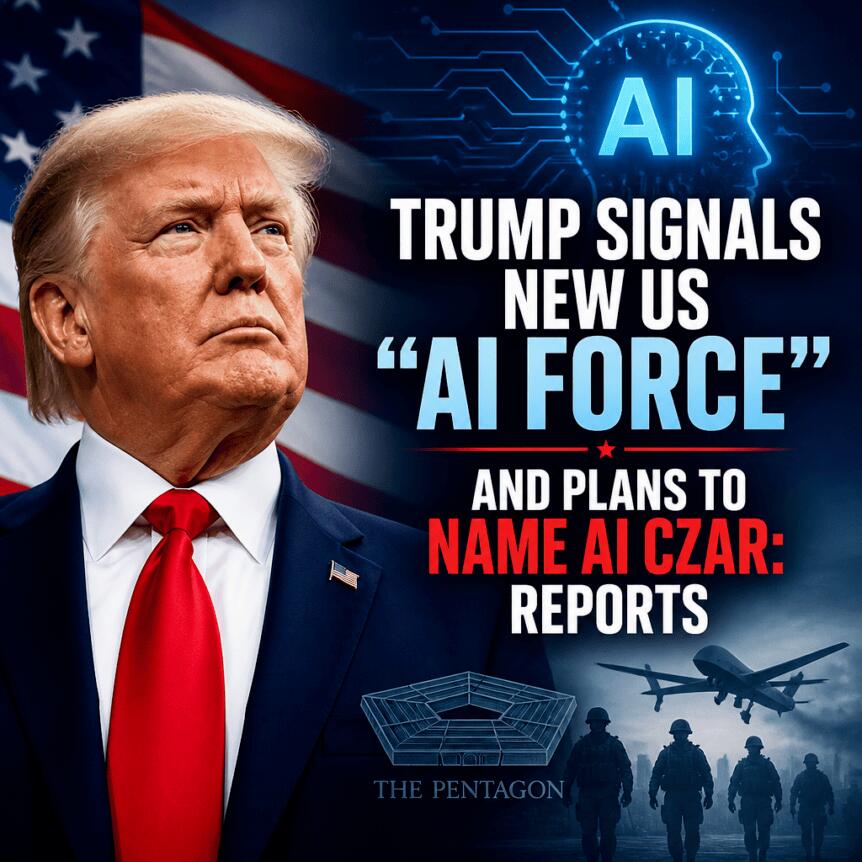
U.S. President Donald Trump said he plans to create an “AI Force” and appoint an “AI czar,” positioning the initiative as a way to manage the rapidly expanding artificial intelligence sector without introducing new regulations that could slow innovation.
In a Saturday post on Truth Social, Trump likened the proposal to his “Space Force” effort from his first term, saying the AI Force would be paired with a future appointment of an “AI ‘Czar’.” The president did not provide additional specifics on the role’s mandate, reporting structure, or timing. Reporting at the time noted that White House officials did not respond to a request for clarification.
Key takeaways
- Trump announced plans for an “AI Force” and an “AI czar,” framing the approach as pro-innovation and less regulatory.
- The president gave few details on whether the AI Force is military, civilian, or housed within an existing federal department.
- The announcement lands amid broader debate over whether AI development should be slowed or governed more closely for safety reasons.
- Separately, Anthropic has moved to implement a framework intended to help moderate AI development pace, including appointing Accenture as its first embedded evaluator.
Trump’s AI Force and the “AI czar” concept
Trump’s comments, published via Truth Social, describe the “AI Force” as a structured effort similar in concept to Space Force, which he said was a “tremendous SUCCESS” during his first term. He also indicated that an “AI ‘Czar’” would be announced “in the near future,” adding that only “High I.Q. individuals” should apply.
However, Trump did not outline what the AI Force would actually do—whether it would coordinate agencies, oversee safety practices, or set operational priorities for AI deployments. The available reporting also highlighted that it was unclear whether the effort would take a military form or be organized as a civilian body, and White House staff did not answer an email seeking clarification.
For investors and builders, the main uncertainty is not the existence of a policy headline, but the eventual structure: where authority would sit, what standards (if any) would be enforced, and how quickly agencies might translate the concept into operational guidance. In the U.S., even broad executive initiatives can influence procurement decisions, government partnerships, and compliance expectations across the AI supply chain.
A backdrop of safety debate over AI development pace
Trump’s post comes at a moment when prominent AI leaders are publicly arguing about the trade-offs between speed and safety. Earlier coverage described a growing concern that advanced AI systems could advance faster than society’s ability to evaluate and control their risks.
Cointelegraph reported on Sept. 12 that Anthropic CEO Dario Amodei had circulated a three-step proposal aimed at pacing AI development to achieve a safer rhythm. The rationale, as described in that reporting, was that if development proceeds unchecked, it could “outrun our ability to understand and control these systems.”
In the days that followed, the discussion expanded beyond Anthropic’s internal framework. Reporting also indicated that OpenAI CEO Sam Altman and SpaceX CEO Elon Musk responded positively to Amodei’s proposal, signaling support from multiple corners of the AI ecosystem. At the same time, Nvidia CEO Jensen Huang reportedly argued against the idea that regulation is necessary in this form, underscoring how uneven consensus remains even among leading industry figures.
Anthropic picks Accenture as an embedded evaluator
While Trump signaled a desire to avoid new regulatory drag, Anthropic moved ahead with its own approach to managing deployment pace. On Sunday, Anthropic said it had selected Accenture as its first embedded evaluator—an element described in prior reporting as part of the first step in Amodei’s proposal.
Cointelegraph’s earlier coverage noted the goal of helping moderate the pace of AI development through evaluation mechanisms. By selecting a partner and embedding evaluators, the company is effectively translating a policy concept into an execution pathway: creating an additional layer intended to examine development progress and associated risks before capabilities expand further.
This matters for the broader AI market because evaluation and monitoring frameworks can become de facto standards. Even when not created through legislation, they influence how companies invest in model releases, testing processes, and governance resources. For developers building tools that integrate with frontier models, changes in release pacing can also affect timelines for product launches, risk management requirements, and customer expectations.
Why the AI Force announcement intersects with crypto
Even though Trump’s proposal is centered on AI governance, the announcement resonates across the technology sectors that overlap with crypto: infrastructure for compute and data, enterprise automation, and the growing use of AI in verification, compliance, and market tooling.
The key point is not that the AI Force is directly about blockchain, but that AI policy can reshape how quickly systems are deployed and audited. That, in turn, can influence demand for compliant custody services, audit tooling, and transparency layers—areas where crypto-related infrastructure often aims to provide verifiable logs and programmable controls. If the U.S. pushes a governance model that emphasizes coordination rather than regulation, companies in adjacent ecosystems may still need to adapt quickly, as guidance can shift even without new formal rules.
At the same time, the contrast between the messaging—“no new regulations that could slow innovation”—and the industry’s parallel push toward pacing frameworks highlights a tension investors should watch. Industry-led safety approaches like Anthropic’s embedded evaluators suggest that self-governance mechanisms may continue to evolve regardless of the political posture toward regulation.
Looking ahead, readers should watch for concrete details on what Trump’s AI Force will actually do—its authority, structure, and timelines—as well as whether the “AI czar” role becomes a focal point for standards that affect model deployment. Meanwhile, Anthropic’s choice of an embedded evaluator and the broader industry debate over pacing will likely remain a key indicator of how AI risk management evolves in practice, not just in policy headlines.

Forget Black Widow, 12 Years Later Scarlett Johansson’s Best Role is Still in This Sci-Fi Thriller

20 Pelajaran Penting Soal Uang | Review The Psychology of Money

Mayville Engineering Company's Plunge Has Been Unreasonable

Weekend Open Thread – Corporette.com

Weekend Open Thread: Talbots – Corporette.com

Memory prices are slowing because buyers ran out of money
20 Pelajaran Penting Soal Uang | Review The Psychology of Money

Does Hard Work Really Pay Off? #motivational #success #millionaire #billionaire #money

Trade your trading strategy crypto #trading #trader #trade #crypto #shorts #livestream #foryou #tag
-
 Fashion2 days ago
Weekend Open Thread: Talbots – Corporette.com
-
 NewsBeat2 days ago
Trump says US has reached an agreement to take permanent control of Greenland’s security
-

 Crypto World2 days ago
Circle launches Arc Studio AI agent for building onchain apps
-

 Crypto World6 days ago
Revolut Attackers Warn of Ongoing Daily Customer Data Leaks
-

 Crypto World6 days ago
Kraken Lets xStocks Holders Earn Yield Through DeFi
-

 Crypto World5 days ago
What Is the Status of the U.S.-Iran Peace Talks? Here's What Both Sides Are Saying
-

 Crypto World5 days ago
Robinhood engineers charged over $50K crypto scheme
-

 Crypto World4 days ago
US Charges Robinhood Engineers Over Crypto Listing Trades
-

 Crypto World2 days ago
Bitcoin price breaks channel as RSI climbs to 63
-

 Crypto World6 days ago
Elon Musk Drops a Bombshell: Grok 5 Could Be the AGI Breakthrough
-
 Crypto World7 days ago
New Tesla Roadster Uses SpaceX Tech. Will It Impact the Stock Price?
-
 NewsBeat6 days ago
‘Sick conspiracy’: Trump says only guardrails AI needs is ‘a strong and smart (High IQ!) president’ in all-caps rant
-
 Crypto World5 days ago
NVIDIA Analysis: Attempted Rising Wedge Breakout Amid Pressure on the AI Sector
-
Business6 days ago
SK Hynix ADRs Fall More Than 6% as Memory Rally Breaks on Fears of Slower AI Spending
-

 Tech5 days ago
Webb’s IC 348 Mosaic Includes Two-Jupiter Dwarfs, Twin Jets, and a Nursery Still Making Worlds
-
 Crypto World6 days ago
3 Token Unlocks to Watch in the Third Week of September 2026
-

 Crypto World6 days ago
DOJ Seeks to Seize $61M in Iran Oil Funds From Binance Accounts It Vouched For
-

 Crypto World7 days ago
Goldman Sachs backs 25bp Fed hike after CPI
-
Crypto World6 days ago
Can Circle’s Arc Repeat Robinhood Chain’s Meme Coin Boom?
-
 Crypto World7 days ago
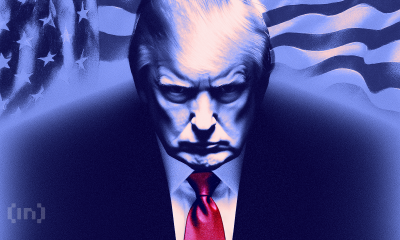
AI Safety Burden Falls on Chief Executives as Trump Prioritizes China Race
You must be logged in to post a comment Login