
Connect with us

Tech

What Is iPhone Handoff And Which Carriers Support It?

Published

on

If you switch between two iPhones regularly, you’re going to love this new feature.

If you use two iPhones, you no longer need to run separate carrier accounts for each of them, thanks to a new iOS 27 feature: iPhone Handoff.

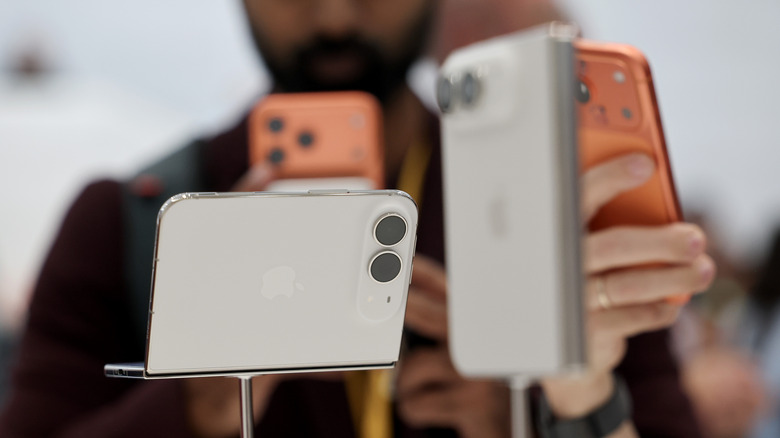
Mentioned briefly at WWDC and in more detail during Apple’s Surprise and Shine event on September 9, iPhone Handoff lets you use the same phone number across two iPhones; in typical Apple fashion, the feature is so easy it’s almost invisible. Once you set it up, all you have to do is unlock the iPhone you want to use, and you’re ready to go.

Handoff lets you take and make calls and messages on both phones using the same number, add payment cards on one device to work on both, and interact seamlessly with most apps and iCloud. There are some limitations; for example, your carrier must support iPhone Handoff, it does not switch your paired Apple Watch between devices, and some wallet items like IDs and passes won’t work, but most features work seamlessly. In this article, you’ll learn how to set up iPhone Handoff, how to use it and which carriers support it.

Advertisement

Setting up iPhone Handoff

You can set iPhone Handoff up on any two devices running iOS 27 or later. Both must be on the same Wi-Fi network and signed into the same Apple Account for iCloud, FaceTime and iMessage. One phone will be the primary phone, and one will be your secondary phone. The primary device holds the main eSIM and manages carrier settings, but you can also use each phone’s eSIM, so long as both are from supporting carriers.

While we expect that more will do so, only T-Mobile in the US and Telekom in Germany have confirmed support so far, with T-Mobile charging an additional $5 monthly fee. Here’s how to set it up on your iPhones.

Advertisement
  • Place your two iPhones next to each other and unlock one.
  • Navigate to Settings > Cellular, and tap Set Up Cellular/Add eSIM, or iPhone Handoff if a number is already set up on the device.
  • Choose Use Number on This iPhone and Another, tap Continue and follow the on-screen prompts to assign one device as your main iPhone.

It is worth noting that once it’s time to replace one iPhone with another, you must transfer the eSIM to the new device. If you want to disable Handoff completely, Apple says you’ll need to contact your carrier.

Why and how to use iPhone Handoff

Apple has designed iPhone Handoff to be as easy to use as picking up your iPhone and unlocking it, which is literally all you need to do. A small notification will appear in your Dynamic Island just under the Wi-Fi indicator to let you know your device is activated for iPhone Handoff.

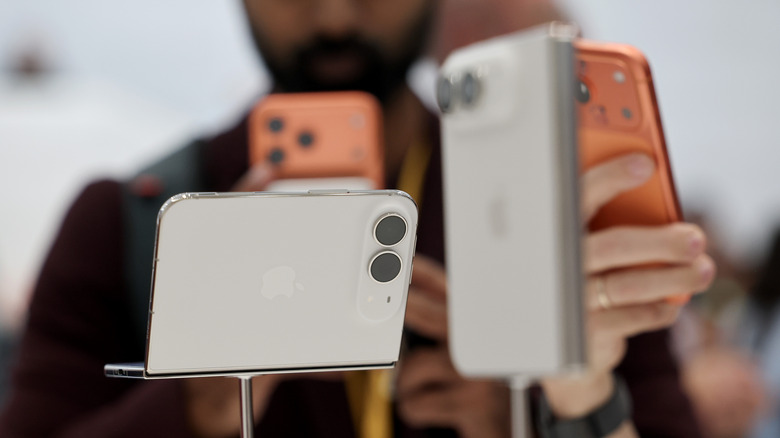
While it’s nice to have, iPhone Handoff is also a niche feature. However, you might find it useful as you migrate between an old and new iPhone, to easily carry an older and less valuable device when you travel, or to use a more portable or cheaper iPhone alongside a $2,000 iPhone Duo. Professionals using different devices for work and personal life may also find use for the feature.

Advertisement

Source link

Advertisement
Continue Reading
Advertisement
Click to comment

You must be logged in to post a comment Login

Leave a Reply

Tech

Journalist Calls Out 'Collective Amnesia' of Schools' Romance With Big Tech Over AI

Published

on

“Turns out, Silicon Valley isn’t especially altruistic,” writes the nonprofit education news site The 74. They’re reading a new book promising “the inside story of how Big Tech catalyzed, co-opted, and ultimately came to capture computer science and AI education in America”. Written by
New York Times business reporter Natasha Singer, Coding Kids: Big Tech’s Battle to Remake Public Schools tells “the story of the nonprofit Code.org and its charismatic, Harvard-educated leader, Hadi Partovi,” according to their review:

Thirteen years ago, Partovi… delivered a worrying message: Kids who didn’t learn to write code would be left behind. And the long-term success of the United States economy depended on training these students to fill a million open tech jobs…. Fast-forward to 2026, and now we’re dealing with AI, and tech is reading from a similar playbook.
Asked by The74’s Greg Toppo, “Does this moment seem different to you?”, Singer replies, “This moment is different, but also similar.

“We are in a moment in society where a lot of people have increased distrust of these huge tech companies, and we see a wave of parents pushing back against tech in schools. But we also see waves of people pushing back against Flock cameras, against data centers, that there’s this feeling that tech has taken so much, and that people feel like they have lost control — that tech is being enacted on them… And parents are worried about the effects of unfettered tech access and kids’ compulsive use of social media and phones, and so there’s a different climate.

And yet there seems to be a disconnect in some ways with AI because you see that Microsoft and OpenAI and Anthropic and Google are all competing to get their AI tools into schools, and you see school districts across the country say “We’ve partnered with OpenAI.” “We are a ChatGPT Pioneer School,” or “We’ve partnered with Microsoft, and we’re going to use 10,000 licenses of CoPilot.” It’s amazing to me. We have had these cycles of tech in schools where there are all these promises about the latest tech, laptops, learning apps, massive open online courses, virtual reality, big data’s going to revolutionize schools and like democratize access to education for kids and get them these great career skills, and we keep having these cycles. My concern is that we don’t learn anything.

Advertisement

One of the reasons I wrote this book is because it feels like we have collective amnesia. Now we’re in the sixth or eighth cycle of this — and shouldn’t we be asking questions about the push for AI in schools, based on what we’ve learned about the push for all the other things that came before?

Two Slashdot posts are cited in the book, both submitted by long-time Slashdot reader theodp (Slashdot UID #442,580), who even gets a shout-out in the book’s “Acknowledgements” section (along with consumer advocate Ralph Nader).

Ironically, one member of Amazon’s “Vine” program received a free copy of the book in exchange for a review — and apparently misunderstood its topic, writing that it made coding “feel approachable and even fun… [T]his is exactly the kind of book that could help a child become interested in technology without feeling overwhelmed by it. I particularly liked the way it encourages kids to be curious, experiment, and solve problems on their own. I would definitely recommend Coding Kids to parents, grandparents, or teachers looking for a good introduction to coding…”

Read more of this story at Slashdot.

Advertisement

Source link

Continue Reading

Tech

Roku Labs lets you try experimental apps before everyone else

Published

on

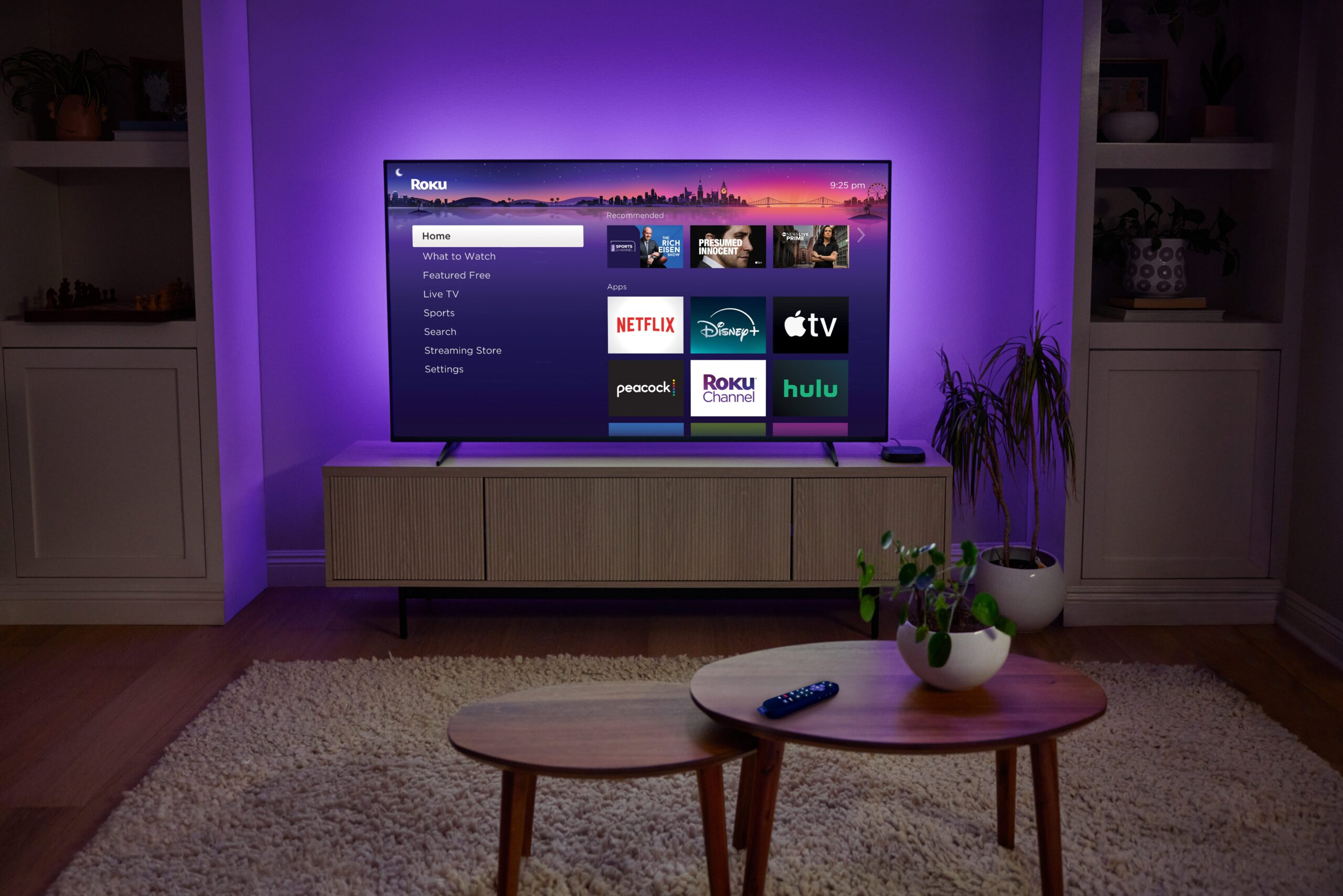
Roku is giving its users a chance to try experimental apps before they become part of the wider platform, with a new programme called Roku Labs. Unlike more closed beta schemes, the programme is available to any Roku owner directly from the home screen.

Roku Labs launches with four apps in development. Backdrops Studio lets you customise your Roku background with your own art and images, while Roku Immerse offers another way to create custom screensavers. There’s also Roku Weather, a dedicated weather app, and Roku Stocks, which does exactly what you’d expect by bringing stock tracking to the platform.

The idea isn’t just to let users poke around with unfinished software. Roku says feedback from people using these apps will help shape how they’re developed in the future, so what starts as an experiment could eventually become a regular part of the Roku experience.

Roku also has a few other changes in the pipeline. Over the coming months, it plans to roll out its updated home screen layout to users in Mexico and Brazil. Voice controls are also getting a weather-focused addition, letting users ask Roku for a forecast, while an updated search experience will explain why certain content appears in a particular order.

Advertisement

And if tinkering with apps isn’t enough, Roku is opening up some of the software behind its hardware, too. The company is open-sourcing Roku LT OS, the operating system used to power its remotes and smart home products.

Advertisement

The development kit will be available for free, with Roku also planning a video training series to help people get started and build their own projects.

For now, Roku Labs is the more immediately useful part of the announcement. There’s no waiting for a special invitation or signing up for a developer programme; if you own a Roku device, you can access the experimental apps from a Roku Labs tile on the home screen and have a look at what’s coming next.

Advertisement

Source link

Continue Reading

Tech

Which Should You Choose For Your Home?

Published

on

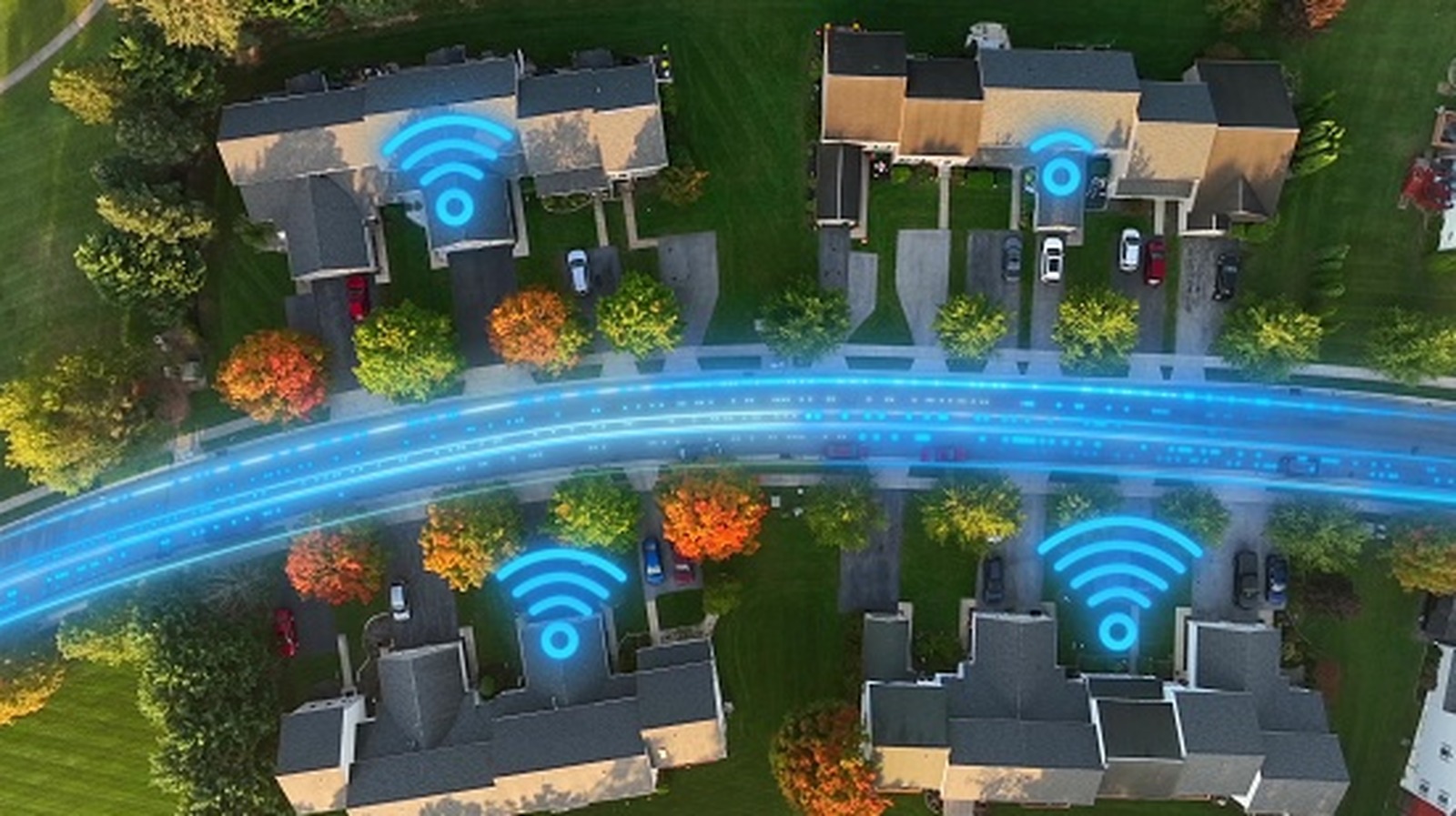
Fixed wireless has a practical advantage: it can usually be self-installed. Instead of waiting for a new cable or fiber line on the property and a technician visiting your home, you can often set up the provider’s gateway yourself and find a spot where it receives a good signal.

Plan terms can be attractive too, but they depend on the provider rather than the underlying technology. For example, T-Mobile’s current Rely plan includes unlimited data, has no yearly contract and carries no early termination fee. Those aren’t universal features of 5G home internet, but are good examples of why it pays to compare the complete plan rather than speed alone.

Also, availability can make the decision for you. A provider needs the right wired infrastructure to serve your address with fiber, cable or DSL, while fixed wireless depends on whether the carrier has enough coverage and network capacity at your location. Having 5G service on your phone at home doesn’t guarantee that 5G home internet will be offered at your address.

A useful place to start is the FCC National Broadband Map. Entering an address shows which providers report offering service there, whether they use fiber, cable, DSL or fixed wireless, and their maximum advertised download and upload speeds. The FCC notes that the map shows reported availability and advertised speeds, not actual network performance or affordability.

Advertisement

From there, compare the plans you can actually buy. Check expected download and upload speeds, latency, the full monthly price, equipment or installation charges, data limits and what happens when any promotional pricing ends. For fixed wireless, a trial period is especially useful because the quality of the cellular connection can vary from one address to another.

If competitively priced fiber reaches your home, that’s generally the best mix of affordability, performance and speed. But if your wired alternatives are slow, expensive or inconvenient to install, a good fixed-wireless connection can be superior to choosing a physical cable simply because it’s wired.

Source link

Advertisement
Continue Reading

Tech

Hackaday Links: September 20, 2026

Published

on

Some sad news to start this week off — after 52 years in business, Sherline has announced they are winding down their manufacturing operations. By the end of October they estimate they’ll have produced their last tool, and although they will no longer be making new products, they plan on supporting their existing customers for as long as possible. Although from the sound of the press release, that may mean simply keeping the website up and selling through their inventory of spare parts.

The company offered a range of American-made miniature lathes and mills, and while their manual machines may have been better known in our community, they did eventually branch out into CNC. The press release doesn’t go into a lot of detail about the chain of events that led up to this decision, but it does mention the challenges of modern manufacturing and the lingering aftereffects of the COVID pandemic.

At first blush, it might seem strange that the company would falter just as desktop CNCs appear to finally be gaining momentum, but of course that doesn’t change their ability to compete with overseas manufacturing in terms of price.

Of course, keeping competitive is only a concern when you actually have competitors in the first place. That’s the situation that NASA and Boeing may find themselves in should SpaceX decide to retire the Crew Dragon after 2030. While the International Space Station will (probably) be out of the equation by that point, the US space agency will still need the capability to fly humans to… somewhere, and that means there will be lucrative government contracts up for grabs.

The chances of any other American company developing and launching a human-rated spacecraft between now and the end of the decade are pretty much zero, which means Boeing will have to pick up the slack with their Starliner capsule. Or at least, try to, as Starliner hasn’t exactly had the best track record so far. Although by the 2030s SpaceX plans to have transitioned most, if not all, of its operations to Starship, one does wonder if a big enough check from Uncle Sam could change its mind.

Advertisement

While the market for putting humans into orbit might be shrinking, there’s no shortage of new ways to move stuff around here on terra firma. IEEE Spectrum has the details on a rather unique electric vehicle from startup Revoy that’s designed to sit between a traditional diesel semitruck and its cargo trailer. This essentially turns the combined rig into a hybrid, with the EV module capable of pushing the load for up to 400 kilometers (250 miles). Though it might seem rather low-tech, this approach offers a major advantage in that fleets won’t need to replace their existing vehicles to take advantage of the efficiency gains promised by electrification — with the company claiming that it can cut a truck’s total fuel consumption by up to 85%.

If the day has been going a little too smoothly for your liking and you need something to be frustrated about, here’s something to agonize over. Reality Check shows you images and tasks you with determining if they’re AI-generated or not. As the timer ticks down, you’ll be furiously searching the background for malformed bits of text or extra fingers, but even that trick won’t necessarily save you in this era of increasingly capable image models.

Finally, while AI is getting very good at fooling grandmothers on Facebook, we can take some comfort in the knowledge that it’s finding the business world far more difficult to dominate. Drew Magary recently wrote up the experience of visiting a store “managed” by an AI model for SFGATE, and it sounds like things are going just as poorly as you’d imagine.

Given agency to pick the items it wanted to sell in the store, the computer stocked the shelves with bric-a-brac that has no obvious overarching theme, and although there’s a human staffer behind the counter, purchases apparently need to be negotiated with the AI via voice chat. The store is burning through its initial investment money with no profit in sight, made all the worse by the fact that one of the line items on the budget is the token cost to run the AI that’s mismanaging the whole thing in the first place.

It’s an entertaining read, and a refreshing splash of cold water on the general AI hype that seems so prevalent these days. But its impact as a condemnation of machine learning in business is undermined a bit when the bottom of every page on SFGATE reminds readers that they are producing content with the assistance of generative AI. C’est la vie.

Advertisement

See something interesting that you think would be a good fit for our weekly Links column? Drop us a line, we’d love to hear about it.


Source link

Advertisement
Continue Reading

Tech

Apple Stores hide ‘hello’ signs to demo iPhone 18 Pro zoom

Published

on

Apple has hidden tiny “hello” signs inside its retail stores, giving customers something to hunt for and a reason to try out the new iPhone 18 Pro’s cameras.

The signs feature Apple’s iconic cursive “hello” script. And they’re small for a reason: Apple has tucked them into spots that make them natural targets for the iPhone 18 Pro’s telephoto camera.

Apple’s new iPhone 18 Pro and iPhone 18 Pro Max both offer up to 8x optical-quality zoom through the 48MP Fusion Telephoto camera. These cute little signs are as much a demo as they are a decoration.

And, as MacRumors points out, their tiny size confers a third benefit: a launch-day Easter egg perfect for sharing on social media.

Advertisement

Heading to X, and likely any other social media platform, shows customers worldwide snagging shots of it.

The little “hello” sign is a clever way of demonstrating a feature without simply putting a spec sheet in front of a customer. Placing them deliberately out of reach encourages customers to use the camera to get a closer look.

Source link

Advertisement
Continue Reading

Tech

Developer Abandons 'PS5 Linux' Project After Sony Patches AI-Discovered Exploit

Published

on

“In April this year, we saw Andy Nguyen turning the PS5 into a Linux-powered gaming PC,”
writes the blog It’s FOSS.

It ran Steam games and emulators using the PS5’s on-board hardware. But this week Andy announced he’s “stopping all my work on PS5 Linux” and “stepping away from the PS5 scene.”
stopping work on porting the project to the PS5 Pro, which would’ve shipped sometime in 2027.

Andy Nguyen: After pouring my heart and months of my life into it, including plans to finish PS5 Pro support and release in 2027, it’s all down the sink.

The scene used to be a group of highly talented researchers, but now it is just a bunch of noobs using LLMs and writing hacks they don’t even understand. Slop kiddies found the only hypervisor bug left, which I had also found a while ago, and decided to report to Sony. I asked them to at least wait for GTA 6 to come out so that people would have the opportunity to legally purchase the game and also enjoy Linux. They agreed to wait, but not a day passed and they decided to waste it instead.

Advertisement

Or, as It’s FOSS tells it:

Running Linux on a PlayStation console is possible because the PS5 Linux project was able to find a way past the hypervisor using exploits Sony had already patched, covering firmware 3.00 through 7.61. ..

[The bug’s discoverer writes it was] found with what he calls his “trusty ai clanker machine” and no help from anyone else. He had even agreed to Andy’s request to not disclose the findings. Unexpectedly, a third person, still unnamed, found the same bug using AI a few hours later. Anticipating that there would be more people finding the same bug, [he] decided to post the flaw on HackerOne.
The project’s GitHub page and all the related repositories are still there. Nothing has been archived as of today, and if you wanted to, you could start contributing to the PS5 Linux project by taking over any pending work or cooking up new improvements… The PS5 Pro support Andy was building never reached the repository, so you would have to start from scratch… While Andy’s departure is a blow to the plan for supporting newer PS5 firmware and the PS5 Pro, other contributors have shown that they can deliver work on the loader without him, and I am hopeful more will follow.

Read more of this story at Slashdot.

Advertisement

Source link

Continue Reading

Tech

Lawsuit Says Anthropic, OpenAI, SpaceXAI And Google Made Illegal Agreement On AI Slowdown

Published

on

Tom’s Hardware reports:

Four plaintiffs subscribed to ChatGPT, Claude, Grok, or Gemini filed a proposed class-action lawsuit alleging that the developers of these AI models violated antitrust laws when they agreed to slow AI development. According to the Associated Press, the lawsuit argues that this agreement would “reduce the value consumers get for paid AI subscriptions” and that this coordination started in July 2026 after the leading AI labs signed a statement admitting there is “intense competitive pressure not to unilaterally slow” development.

The plaintiffs recognize the need for AI development to slow for the sake of safety, but they say that Anthropic founder Dario Amodei’s cooperation proposal is a “shortcut” that “substitutes collective restraint for individual accountability.” Attorney Nick Rowley, the lead counsel for the plaintiffs, says, “AI will quickly spin out of human control and could kill us all if we allow AI safety and protocol … to be controlled by private self-serving agreements between the world’s most powerful ‘for profit’ technology companies.”

“Representatives for Anthropic, OpenAI, Google and SpaceXAI did not immediately respond…”
reports the Associated Press:

Advertisement

The coordination largely took place on Sept. 12, the lawsuit argues, when Anthropic CEO Dario Amodei published an essay urging for industrywide cooperation on decelerating advancements in favor of enhanced safety measures. That same day, OpenAI CEO Sam Altman, SpaceXAI CEO Elon Musk and Google DeepMind’s co-founder and chair Demis Hassabis each publicly responded to Amodei’s proposals in agreement. But the lawsuit also alleges that the coordination began to take shape months earlier. It points to a statement from July 2026 that high-ranking employees from several of the leading AI labs signed that acknowledged the “intense competitive pressure not to unilaterally slow” development. That statement called on the government to support a global effort to slow automated AI development.
Sam Altman even specificially said “we do not believe we need to wait for an antitrust exemption or legislation to begin the work of providing this confidence,” notes Tom’s Hardware.

However, the Trump administration shot down this idea… Chinese state media also criticized this announcement, saying that the call to put the brakes on AI development is nothing but a response to Chinese competition, especially as Amodei’s essay explicitly mentioned the desire to slow China’s progress and widen the U.S.’s gap over Beijing

Read more of this story at Slashdot.

Advertisement

Source link

Continue Reading

Tech

Mathematicians Hate AI. They Can’t Quit It

Published

on

Mathematician Tristan Buckmaster believes OpenAI used his work to rush ahead and beat him to solving a legendary math problem with a $1 million bounty.

But that’s not been enough for him to stop using the company’s models—and he’s not the only mathematician that feels that way.

“Even if you don’t agree with any of this, you’re kind of stuck. With AI being so useful, it’s hard to completely prevent oneself from using it,” Buckmaster tells WIRED. “These companies have a monopoly, and there is not much choice,” he adds.

In the week and half since the New York University professor accused OpenAI of copying his approach, Buckmaster has been using the company’s coding agent Codex to tidy up his research papers. When he has time to do math (which he says is rare, since the fallout thrust him into the spotlight), the tool has been helping him understand the logical steps OpenAI’s agents might have taken to get from his earlier workings to the final proof.

Advertisement

Buckmaster had used Codex as well as Anthropic’s competing Claude to work on what’s known as the Navier-Stokes existence and smoothness problem, alongside Anthropic researcher Levent Alpöge. OpenAI deployed tens of thousands of agents to reach the solution, but only after it learned the equation was close to being solved, Buckmaster says.

When Buckmaster went public with his claims, it ignited a firestorm about artificial intelligence and whether it would make human mathematicians obsolete. It also led OpenAI to do an investigation and amend its announcement about solving Navier-Stokes to say it “confirmed that Buckmaster’s Codex prompts over the two months preceding this announcement and paper on September 8, 2026, could not have influenced the system in any way, including through training.” The company pointed WIRED to its announcement in an email.

Showing that AI was pushing the boundaries of mathematics was “more important than the result,” Buckmaster says. But churning out solutions to long-standing math problems without fully crediting the human work undergirding them—especially ahead of major IPOs—is irresponsible and “childish,” he says.

Other mathematicians have raised similar concerns. Only a handful of people on the planet understand the techniques in geometric group theory that German mathematician Andreas Thom has dedicated the last two decades to developing. So when OpenAI said in August that its Astra model had used them to prove a long-standing problem he had been working on, “I was amazed,” says Thom. “And of course I was wondering, how did they learn about it?”

Advertisement

So he says he asked OpenAI researchers Mark Sellke and Sébastien Bubeck. In an August email, he pointed out that the firm’s assertion that “no progress” had been made on the problem in the last decade overlooked a 2019 paper of his, as well as other mathematicians’ work. The company amended its press release. He and a colleague had been using ChatGPT to assist their work on the problem in the months running up to the result, but when he asked if their interactions had been fed into training data, Thom says Sellke replied: “That did not happen.”

“I set it aside,” Thom recalls. “I’m not so much interested in these political things; I want to work on mathematics.”

While Thom has seen OpenAI’s statement that Buckmaster’s prompts couldn’t have influenced the system, he says he doesn’t trust this and concedes he will probably never know whether his work actually fed the result.

“AI really kills this entire idea that you could trace back who contributed what,” he says. “That is probably over.”

Advertisement

Source link

Continue Reading

Tech

Ghostrunner’s studio is pricing its Soulslike “Valor Mortis” at $40, but it’s worried you’ll think that’s too low

Published

on

Cheap Gaming: Valor Mortis is launching soon, and the developers have announced the game’s starting price. The Soulslike will be relatively affordable, or at least cheaper than many competing games, as it is launching in close proximity to several other major releases.

One More Level (OML), the studio behind the critically acclaimed first-person “runner” Ghostrunner, is almost ready to launch its new game. Valor Mortis will apply the developer’s experience with first-person games to the Soulslike genre and will apparently require a smaller upfront payment than other “triple-A” productions while still offering a complete game experience.

The official Valor Mortis account recently shared the tidbit on social media. The game will launch on October 13 and cost $40/€40. The studio spent a year debating the game’s final price, which will offer players a 20-hour story set in an alternative, supernatural take on Napoleon’s war in Eastern Europe during the 19th century.

The studio is confident in the quality of its product and its chances of succeeding against other “full-price” titles. However, Valor Mortis is also launching alongside many high-profile games and is one of the few original IPs competing against some massively popular franchises that gamers already know well.

Advertisement

One More Level highlights how this fall is going to be pretty “stacked” in terms of gaming releases. A partial list of games scheduled for release in October includes Gears of War: E-Day, Ace Combat 8, Star Wars: Galactic Racer, Final Fantasy Resonance, and Phantom Blade Zero. Meanwhile, September releases include Marvel’s Wolverine, Silent Hill: Townfall, Control Resonant, and more.

Needless to say, many of these games will cost more than Valor Mortis. According to publisher Lyrical Games, the price the developers agreed upon could eventually send the wrong message to potential customers. The recent social post was framed as a reassuring message about the quality of Valor Mortis, which OML says will bring a novel twist to Soulslikes and first-person action games.

The developers are also wary of pre-orders, asking players to judge the complete version of their game instead. However, in the same message, OML also pre-announced additional paid and free content that will launch in a future update. OML doesn’t want gamers to pre-order its game, but it is now asking “collectors” to buy the Deluxe Edition of Valor Mortis and the upcoming DLC for $60/€60.

Advertisement

Despite the somewhat contradictory stance, OML’s message is likely to add even more fuel to the growing debate over the price of modern game releases. Many recent and upcoming titles cost significantly more than Valor Mortis’ $40 price tag, with the GTA VI blockbuster having a “reasonable” $80 price tag compared with the previously rumored $100 base price.

Source link

Advertisement
Continue Reading

Tech

Boox Palma 3 v Palma 2: What’s new?

Published

on

Boox has just unveiled its latest pocket-sized e-reader with the Palma 3, but how does it differ from the Palma 2?

Considering we awarded the Palma 2 with a solid four-star rating, how does the Palma 3 look set to compare? Are there enough updates to warrant an upgrade?

We’ve compared the specs of the Palma 3 to the Palma 2, and noted all the key differences and noteworthy similarities between the two below. Once you’re finished here, be sure to check out our best e-reader guide too. 

Specs Comparison Table

Boox Palma 3 Boox Palma 2
Display 6.13-inch E-Ink 6.13-inch E-Ink
Dimensions 6.3 x 3.1 x 0.31 inches 6.3 x 3.1 x 0.31 inches
Bluetooth 6.0 5.1
Battery 3950mAh 3950mAh
Operating System Android 16 Android 13
RRP €339.99 €299.99

Price and Availability

The Boox Palma 3 has a starting RRP of €339.99/$319.99 but, at the time of writing, we don’t know when exactly the device will be available to buy. Instead, Boox has just teased that the device is “coming soon”.  

Advertisement

Advertisement

In comparison, the Boox Palma 2 is cheaper than its successor, with a starting RRP of €299.99. 

Boox Palma 3 has stylus support

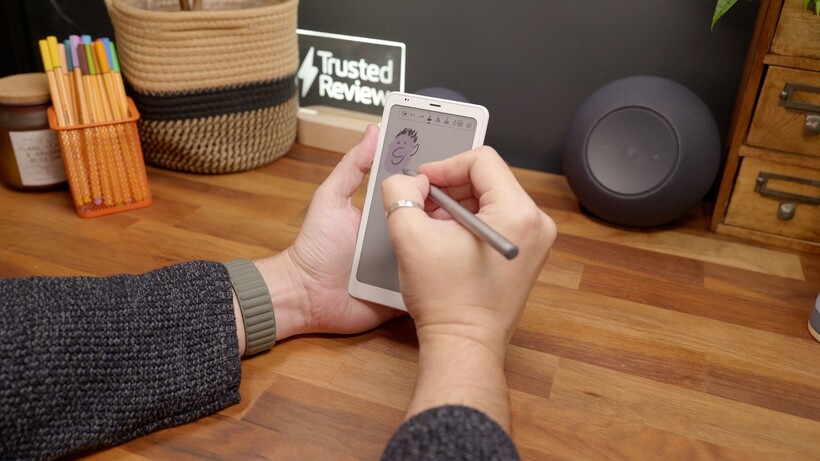
Boox introduced stylus support with the Palma 2 Pro and has carried that on with the Palma 3. However, neither the 2 Pro nor the 3 come with the compatible Boox InkSense Plus pen in the box and will cost an additional $49.

Handwriting on Palma 2 ProHandwriting on Palma 2 Pro
Palma 2 Pro. Image Credit (Trusted Reviews)

It’s not compulsory for using the device, but it is a useful addition for handwriting quite notes or doodles. We also found during our time with the Palma 2 Pro that the pen is lag-free, responsive and feels natural to use too. With that in mind, we expect a similar performance with the Palma 3. 

Otherwise, the Palma 2 doesn’t offer stylus support and is solely designed to be used as a touchscreen device. We found that the Palma 2 did experience a slight lag between interacting with the display and getting a response from the interface. While we could still type fairly quickly and accurately, the lag is definitely noticeable.

Advertisement

Advertisement

Boox Palma 2 screen light in handBoox Palma 2 screen light in hand
Palma 2. Image Credit (Trusted Reviews)

Boox Palma 3 comes with Android 16 installed

Both the Palma 3 and Palma 2 are Android devices, which means they offer access to the Google Play Store. That’s a brilliant addition especially when you consider the best Kindles only provide access to the Kindle store and no other apps. 

Boox Palma 3Boox Palma 3

While the Palma 2 runs on Android 13, the Palma 3 benefits from the newer Android 16 – though at the time of writing, we don’t know how many years of security updates Boox will offer. 

Both share roughly the same dimensions – though Palma 3 is slightly heavier

At first glance, you’d be forgiven for thinking there weren’t any differences between the Palma 3 and Palma 2’s design. Both have a 6.13-inch display and measure in at 6.3 x 3.1 x 0.31 inches. However, the Palma 3 is slightly heavier than its predecessor, at 195g compared to 170g.

Boox Palma 2 - top down front closeBoox Palma 2 - top down front close
Palma 2. Image Credit (Trusted Reviews)

Advertisement

The reason behind the increased weight comes down to the material. While the Palma 2 has a plastic frame, the Palma 3 benefits from an aluminium frame which results in a more solid build.

Boox Palma 3 has Bluetooth 6

Both Palmas are equipped with Bluetooth, which means you can pair compatible headphones, earbuds or even speakers and enjoy a higher quality listening experience – whether you’re listening to audiobooks, podcasts or streaming music from Spotify. 

Advertisement

Perhaps unsurprisingly as it’s a newer model, the Palma 3 is equipped with Bluetooth 6 rather than Bluetooth 5.1 which the Palma 2 sports. This means you can expect better reliability, less dropouts and an overall smoother connection than the older iteration. 

Neither offer SIM support

Unlike the Palma 2 Pro, neither the Palma 3 or Palma 2 offer SIM support. That means you’re reliant on a Wi-Fi connection if you want to make calls or send messages via supported apps like WhatsApp or Telegram. 

Early Verdict

The biggest difference between the two is the fact that the Palma 3 offers stylus support while the Palma 2 doesn’t. Although the stylus annoyingly isn’t included in the box, it is a useful addition that makes handwriting notes much easier.

Advertisement

Advertisement

If you’re not fussed about being able to handwrite notes, or perhaps you already own a device like the Remarkable Paper Pro, then there’s perhaps little reason to upgrade from the Palma 2 to the Palma 3. 

On the other hand, if you’re looking for a new e-reader and want one that can double as a digital notebook, then the Palma 3 seems like a solid choice.

Source link

Advertisement
Continue Reading

Trending

Copyright © 2025