

Connect with us

NewsBeat

Why A1(M) Scotch Corner is road destination but has no population

Published

on

Why A1(M) Scotch Corner is road destination but has no population

For generations, motorists travelling between Yorkshire, the North East, Cumbria and Scotland have known the name Scotch Corner.

It appears on maps, names Junction 53 of the A1(M), has a hotel and services, and has long guided drivers.

But there is an unusual catch; Scotch Corner is not a town or village at all.

The name primarily belongs to the famous road junction where the A1(M) meets the A66 near Richmond.

Advertisement

Motorway Services Online calls Scotch Corner an unusual historic waypoint treated as a major destination despite having no permanent population.

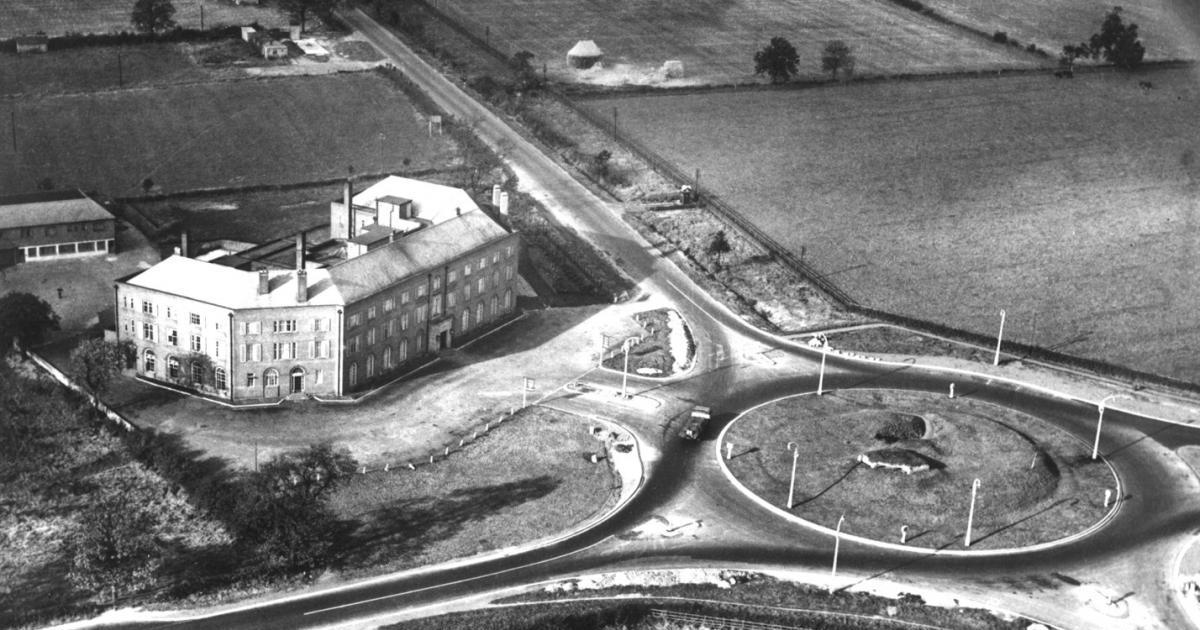
Scotch Corner (Image: ARCHIVE)

Official local statistics underline the oddity.

Former Richmondshire Council studies grouped Scotch Corner with nearby Middleton Tyas rather than listing it as a separate settlement.

A 2017 settlement study listed “Middleton Tyas (including Scotch Corner)” instead of treating Scotch Corner as a separate community.

Advertisement

Yet the Government uses Scotch Corner to show how Britain’s major road destinations are chosen.

The Department for Transport designates primary destinations: places shown on signs to guide drivers along major roads.

Most are towns or cities.

But population is not the only factor.

Advertisement

Government guidance says a location can also qualify as an important node — a place many motorists pass through on the way elsewhere.

The Department for Transport’s example is Scotch Corner.

That explains why the name became so important.

Scotch Corner is not famous for its residents.

Advertisement

A Scotch Corner sign (Image: Stuart Boulton/NORTHERN ECHO)

It is famous because generations of drivers have had to choose which way to go there.

Drivers heading north from southern England reached a point where routes to different parts of Scotland split.

Today the A1(M) continues north towards the North East and eastern Scotland, while the A66 heads west across the Pennines towards Cumbria and the M6.

National Highways describes the A66 as the key east-west route between the M6 at Penrith and the A1 at Scotch Corner.

Advertisement

Its importance as a road name is nothing new.

A 1963 Government traffic-signs report cited Scotch Corner as a nationally known junction, alongside other recognised junction names around Britain.

That reputation has made the junction behave like a place.

It has a nationwide name, a hotel, a service area, bus links and a postcode for the surrounding facilities.

Advertisement

But the actual populated village nearby is Middleton Tyas, around a mile away.

Ordnance Survey guidance says primary destinations can appear equally prominent on maps regardless of size, citing Scotch Corner as an example beside much larger towns.

Scotch Corner became important for the traffic passing through it, not the people or buildings within it.

Millions of journeys have made the name familiar to people who have never stopped there.

Advertisement

For most motorists, it is a destination they pass through rather than reach.

That makes Scotch Corner one of Britain’s strangest road names: it is known nationwide not for its residents, but for people travelling elsewhere.

Source link

Advertisement
Continue Reading
Advertisement
Click to comment

You must be logged in to post a comment Login

Leave a Reply

NewsBeat

World War Two grenades blown up after being found in Blyth field

Published

on

World War Two grenades blown up after being found in Blyth field

Police and army bomb disposal experts were called to the South Newsham area of Blyth on Sunday (September 20) morning after two suspected grenades were uncovered in farmland.

The devices were found by members of metal detecting group True North Detecting, with emergency services called to the scene shortly after 10am.

Northumbria Police officers attended alongside an Explosive Ordnance Disposal team, with the objects later confirmed to be World War Two hand grenades.

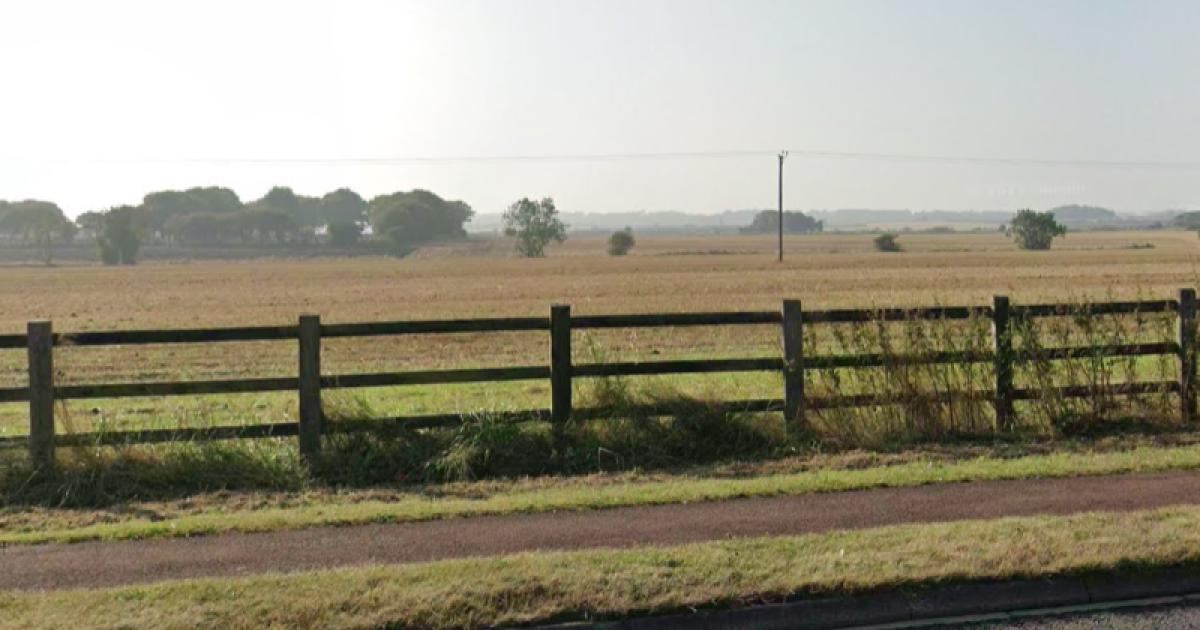
A field at the side of South Newsham Road, Blyth (Image: GOOGLE)

A controlled detonation was carried out at around 2pm, and police said there was no risk to the wider public.

Advertisement

A Northumbria Police spokesperson said: “Shortly after 10am today (Sunday), we received a report from a member of the public who was using a metal detector in a field in the South Newsham area of Blyth.

“It was reported that two metal objects had been located, both believed to be grenades.

“Officers attended the scene alongside the Explosive Ordnance Disposal (EOD) team.

“The items were identified as World War Two hand grenades.

Advertisement

“The devices were safely disposed of by the EOD team through a controlled detonation.

“There was no risk to the wider public.”

The Ministry of Defence (MoD) also confirmed that the devices were Mills grenades.

An Army Explosive Ordnance Disposal team from 521 Squadron responded to the incident.

Advertisement

The squadron is a specialist unit of the 11 Explosive Ordnance Disposal and Search Regiment RLC within the British Army’s Royal Logistic Corps.

An EOD operator identified the grenades before they were safely disposed of by demolition.

Source link

Advertisement
Continue Reading

NewsBeat

Cambridge school says phone ban is ‘creating a sanctuary not a prison’

Published

on

Cambridgeshire Live

Teachers claim there is a ‘notable increase in the concentration they are seeing in class’ since the restrictions were introduced

A secondary school which banned phones says it has facilitated “students having a childhood” and seen a “notable increase in the concentration” of students. Pupils at The Netherhall School in Cambridge have been unable to use their mobile phones at school since December last year following a trial with a group of students.

Advertisement

Netherhall’s 1,000 main school pupils queue up each morning to put their phones into lockable pouches and can’t access them until the school day has finished. Principal Chris Tooley, 58, said that since the restriction was introduced, every child enters school being greeted in the morning and entertaining conversations creating a “moment of warmth, not a moment of scrutiny”.

The school invested £15,000 into the pouches which cost £15 each when bought in bulk or £25 individually. Principal Tooley, said the money was “100 per cent” worth it, adding teachers say there’s a “notable increase in the concentration they are seeing in class” and that there was “a significant uptick in participation in clubs and sporting activities.”

“We are facilitating students having a childhood, and being physically active, and learning the art of conversation – rather than the art of texting,” he added. This ban was introduced prior to the UK government’s announcement to ban social media for children under 16, with the rules scheduled to take effect in spring 2027.

Principal Tooley said that an opportunity had risen for the school to implement the changes in an “economically viable way” to “protect children”. He said that prior to the changes, the school asked students to have their phones switched off and out of sight during school hours but he said it was “impossible to police”.

Advertisement

”We were very conscious of most of the behavioural incidents we had, the breakdown in relationships were linked to social media. So the opportunity of protecting students from that was a no-brainer really to be able to put that in place when we could.”

Explaining what convinced the school to implement these changes, Principal Tooley, said: “One of the students who took part in the trial, they came in the morning and put their phone in the pouch. At the end of the day, we asked them to take it out of the pouch with us there.

“They did that, and of course, what happened is as soon as it connected to the mobile network, you had this arrival of notifications that otherwise would have arrived during the school day, and would have been that background ticking of knowing there’s that little red button that’s appeared, that tells you there’s a notification. There were 1,285 notifications that had arrived at this child’s phone during the school day, plus 22 missed calls.”

Advertisement

The 58-year-old asked the student whether they were planning to read through all the notifications, to which they reportedly replied “no, because most of it’s rubbish anyway”. The principal said that was a “really compelling argument” to go forward with the phone ban.

In another instance, he said a student evidenced how much screen time had been used between 3pm (after school) and the following morning at 8.30am. According to Principal Tooley, the student’s screen usage reached 12.5 hours over the 17.5 hour period as the student had been ‘doom scrolling’ on social media until the early hours of the morning.

The principal for the Cambridge school said “we are creating a sanctuary, we’re not creating a prison”, adding “we’re giving freedom, we’re not putting you in captivity”. The school offers various social, sporting and artistic activities to create a “proper childhood”.

The children take the pouches home with them and the school encourages parents to lock the phone back in the pouch at night time to prevent children losing out on sleep. “At the moment, it’s not what time does your child go to bed? It is, what time does the phone go to bed?”

Advertisement

Children who try to get around the rules sit through a research project explaining the dangers of social media to help them understand the reasoning behind the ban.

Principal Tooley added: “They can come into school and know nobody’s going to be filming them, nobody’s going to be taking a photograph of them, nobody’s going to be sending them unpleasant texts.

“They can be safe when they enter the school gates, that they’re in a zone whereby those sorts of things aren’t going to be happening, they’re not going to be seeing an image themselves later in the evening in the classroom. taken by somebody else there.”

In total, the school has 1,300 pupils including sixth form students but the rules do not apply to those students.

Advertisement

Source link

Continue Reading

NewsBeat

‘They should rename it HMO street’: Frustrated residents accuse ‘greedy’ landlords of ruining their road by converting their properties into shared homes

Published

on

Residents on Princes Street in Mansfield, Nottinghamshire, say their neighbourhood is being overwhelmed by the growing number of HMOs and converted flats

Fed-up residents have said their once close-knit road should be renamed ‘HMO Street’ – as they accused ‘greedy’ landlords of turning more than a third of homes into shared properties. 

Locals living on Princes Street in Mansfield, Nottingham, claim the boom in houses in multiple occupation (HMO) has brought parking chaos, overflowing bins and a revolving door of strangers.

In a stretch of just 42 properties, at least 15 are now HMOs or houses converted into flats, with even more applications in the pipeline.

The latest row erupted after Mansfield District Council approved plans to expand an existing six-bedroom HMO into a ten-person property. Another application was lodged in August to convert number 5 into a six-person HMO despite local objections.

Advertisement

Retired computer programmer Martin Radcliffe, 62, who has lived on the street since 1990, said the spread of HMOs was ‘killing the community’.

He said: ‘My guess is that every house that’s had a for sale sign up on my side of the street has been converted into an HMO, bar one, in the last five years.

‘It’s because they’re cheap. One on the street sold for about £132,000 and these are big houses with 15 sq ft rooms.

‘What they’ve done is through permitted development, gutted the house completely and then they’ve put six bedrooms in. Two in the loft, two on the first floor, one at the front, then a common lounge and a kitchen out the back, but there’s no parking.

Advertisement

Residents on Princes Street in Mansfield, Nottinghamshire, say their neighbourhood is being overwhelmed by the growing number of HMOs and converted flats

Of around 42 properties, residents estimate that at least 15 are now HMOs or divided into flats, with further applications being submitted

Of around 42 properties, residents estimate that at least 15 are now HMOs or divided into flats, with further applications being submitted

‘If you get in after 5pm you’re lucky if you can find a parking space anywhere on the street.

Advertisement

‘Everybody is on the street, with these HMOs you’ve got more cars coming in and they park in the way and it gets absolutely ridiculous.’

Grandad-of-one Martin said former family homes are now housing far more tenants.

He added: ‘There’s at least 20 people in these houses that used to be family homes.

‘The one next to me has a planning application to become a ten-person, six bedrooms but for ten people.

Advertisement

‘If you say that £100 a week is reasonable per person, that’s £1,000 a week the landlord will be coining in. This place could generate £50,000 a year.

‘If you let the whole house, a property like this goes for £680 to £900 for a family normally so turning them into HMOs is a big money maker.’

Despite his concerns, Martin stressed the issue was not the tenants themselves.

He said: ‘They’re just normal people that come and go.

Advertisement

‘It could be that these are doctors or nurses staying for six months and then leaving.

‘Apparently these places are aimed at young professionals who live here for a few months and then go.

Residents have said the increase has caused severe parking problems, with some residents unable to use their own driveways. Pictured is homeowner Martin Radcliffe

Residents have said the increase has caused severe parking problems, with some residents unable to use their own driveways. Pictured is homeowner Martin Radcliffe

Residents have complained of a perceived loss of the area's long-standing community feel, as tenants frequently move in and out. Pictured is homeowner Lonel Tolan

Residents have complained of a perceived loss of the area’s long-standing community feel, as tenants frequently move in and out. Pictured is homeowner Lonel Tolan

Advertisement

‘I have no idea who they are, they’re quiet and they don’t have rowdy parties.

‘The biggest negative for us is the parking.

‘HMOs seem to be breaking down the community because no one knows who you’re living next door to anymore.’

Princes Street is 1.7 miles from Kings Mill Hospital, leading some residents to believe many tenants work for the NHS.

Advertisement

Lorry driver Lonel Tolan, 35, said the situation had become so bad he sometimes could not even use his own driveway.

The father-of-two said: ‘The parking is hell. We had to leave our car on a different street last night because there was no room on the street. 

‘Sometimes it’s impossible to park on your own drive. Most of them have cars.

‘It’s been in the last year that it’s happened, they just appear. We have nice people on our side, but when we see another stranger move in, it’s not good. 

Advertisement

‘Someone reversed a car into one neighbour’s wall, trying to spin around.’

Neighbour Marius Oprea, 47, warned the problem could get worse unless the council tightens planning rules.

He said: ‘It is a problem and it will be in the future. If the council keeps giving them permission it will be a problem.

‘There’s one property that will have ten people in it. There’s too many cars, sometimes they block our drives. They leave rubbish on the street. 

Advertisement

‘I remember one morning an ambulance came and it couldn’t turn because the street is too crowded.

‘I fear that within a few years every single terrace house on the street will be a HMO.’

Residents are now calling for limits on the number of HMOs allowed on individual roads.

Residents say the issue is primarily the number and concentration of HMOs, rather than the tenants themselves

Residents say the issue is primarily the number and concentration of HMOs, rather than the tenants themselves

Advertisement

One woman branded Princes Street ‘HMO Street’ and said: ‘It’s getting to the point where it can go on for too long and there’s no turning back.

‘It might as well be renamed HMO Street with greedy landlords raking in money at the expense of communities.

‘It’s a big problem and the only way to sort it is limiting how many HMOs are on each road to preserve the communities living there.

‘I have no problems with the people living in HMOs. A lot of them wear NHS lanyards so clearly work at the hospital. But it just needs to be regulated better.’

Advertisement

Another local, Chantelle, blamed ‘money-grabbing’ landlords for the explosion in HMOs.

The mother-of-three said: ‘These lovely old houses just keep getting sold and turned into HMOs.

‘It takes the mick as the parking is ridiculous as it is without adding more people in. It’s not right I don’t think, it’s money grabbers.

‘One neighbour who lives next door to them is having rats because their bins keep overflowing.’

Advertisement

The road also has at least six flats converted from houses, while planning records show approved HMOs at numbers 13 and 49 could accommodate 16 people between them.

Plans have also been approved to convert 125 Princes Street into 12 assisted living dwellings with staff and a communal space.

Landlords must apply for a HMO licence for properties occupied by five or more people from two or more households.

A council spokesman said there are three licensed HMOs on Princes Street with another three currently going through the licensing process.

Advertisement

They added that any other HMOs on Princes Street ‘do not meet the threshold’ for requiring a licence. 

A spokesman said: ‘We understand residents’ concerns.

‘The council is currently reviewing HMO numbers, distribution and trends across Mansfield as part of our ongoing assessment of housing needs and local communities.

‘We also currently operate a statutory HMO licensing scheme as well as a selective licensing scheme across five areas of the district to ensure privately rented properties are safe and managed well.’

Advertisement

Source link

Continue Reading

NewsBeat

Revealed: The British towns with fewest jobs for young people as more than 1million left unemployed or out of education

Published

on

Rotherham (pictured) was revealed to have the fewest job opportunities for young people anywhere in the country

Rotherham is the worst place to be a young person looking for a job, according to a new survey of UK vacancies.

With just 46 opportunities per 1,000 young people, the town’s bleak outlook demonstrates one of the reasons a million British young people are currently not in education, employment or training (NEET).

A new report from the Institute for Public Policy Research (IPPR) suggests young people face a stark postcode lottery.

It also identifies some of the factors that have left young people three times as likely to be unemployed as the wider workforce – including the struggles of certain sectors and older people working for longer.

Advertisement

The findings come as former minister Alan Milburn is preparing a government-backed report into the issue, that will include recommendations for getting more youngsters working. 

Analysis showed that nine out of the ten places with the most vacancies are in the south of England, while four of the worst areas are in the Midlands.

Those areas with the highest number of opportunities have roughly six times more vacancies per young person than those with the least.

Second-worst for opportunities is East Renfrewshire, just south of Glasgow, then Broxtowe in Nottinghamshire and Newcastle-under-Lyme in Staffordshire, followed by South Staffordshire and Ceredigion in west Wales.

Advertisement

Advertisement

Rotherham (pictured) was revealed to have the fewest job opportunities for young people anywhere in the country 

Cities well below the national average of 109 vacancies per 1,000 young people include Sheffield, with just 60, Coventry with 62, and Newcastle and Birmingham – both with 65. 

Meanwhile, the Cotswolds has the most relative opportunities, with 288 per 1,000, followed by Woking in Surrey and Gloucester – right next to the Cotswolds. 

The IPPR suggested that slowing hospitality, leisure and retail sectors may be responsible for the high NEET figures, because they typically hire lots of younger people – often giving employees their first job.

Advertisement

It specifically cited Labour’s increase to minimum wage and employer national insurance as making it more expensive to employ people, hence many businesses in the above sectors have cut back. 

Another suggestion was that older people are staying in work for longer, beyond the state pension age, meaning less space is being opened up to be filled by younger workers.

Finally, they said Artificial Intelligence (AI) may already be having an effect on employment statistics by wearing away the ‘first rung’ of the job ladder, by performing menial tasks much more cheaply than young workers.

The report also offered up some solutions, and called for the government and the Milburn Review to act on them.

Advertisement

Its authors want to see jobs funded by a ‘Work Start’ programme specifically targeting areas with too few opportunities.

They also want a reform of the apprenticeship system, which they say has been ‘majorly failing’ to lift young people out of NEET.

Finally, they want ministers to stop Universal Credit (UC) for young people, and instead provide a new youth allowance. The report points out the current Jobcentre Plus system is organised around those receiving UC, yet around half of young people who are NEET do not receive it.

Lord David Blunkett, former secretary of state for education and employment, said: ‘Young people have an immense amount to give. 

Advertisement

‘With national ambition, local leadership and the willingness to invest, we can ensure that birthplace does not determine a young person’s future.’

Lord Jim Knight, former minister for employment and minister for schools, said: ‘IPPR’s report dispels the myth that nearly a million young people are out of work because they lack aspiration. Young people in Rotherham are not six times less talented than those in the Cotswolds; they face six times fewer suitable vacancies.’

There were 981,000 NEETs in the April to June this year, according to the latest estimate from the Office for National Statistics (ONS), after peaking at over a million in the first quarter.

Concerningly, around two-thirds of the recent increase has been generated by those who are no longer looking for work.

Advertisement

The recent figure is up 30,000 from when Labour took power – which has been interpreted as evidence its decision to impose employer National Insurance hikes and steep minimum wage rises is backfiring. 

Business groups say the introduction of a raft of new workers’ rights over the coming months will further deter them from hiring.

Prime Minister Andy Burnham has vowed to make the youth unemployment crisis a ‘top priority’ and said it ‘has been ignored for too long’.

Former Labour cabinet minister Alan Milburn is preparing a government-backed report into the issue. He said: ‘Nearly one million young lives on hold is a scar on this country.

Advertisement

But he signalled last week that the plan will not save any money before the end of the decade.

On a visit to the Netherlands, where the NEET rate is a quarter of the UK’s, he said it would not be possible to get to their level ‘in two or three years’. 

‘It just can’t,’ he added, when asked if the cuts would help balance the budget by 2030.

He also floated an idea likely to win support from devolution-supporter Andy Burnham – allowing regional mayors to keep and reinvest money saved from the welfare bill locally where they have helped to get people back into work.

Advertisement

‘If we’re going to put in more support for young people… of course we’re going to have to invest behind that. That absolutely has to happen,’ he told the Financial Times.

Joining Mr Milburn in the Netherlands was Gareth Southgate, who added to warnings about the snowballing consequences of unemployment for young people.

He said that avoiding the office was damaging for young people because they miss out on opportunities to learn from colleagues or receive support when they face difficulties.

Delivering his interim report earlier this year, Mr Milburn said young people were being ‘abandoned’ to a life on welfare. 

Advertisement

He said the system currently presents a ‘perverse choice’, with young people incentivised to take health benefits because they can offer ‘higher income, less hassle and lower risk’ than work.

Source link

Continue Reading

NewsBeat

Lindsay Clancy lone holdout juror shares heartwarming photo with his newborn daughter as fundraiser rakes in a small fortune

Published

on

Michael Desronvil, 48, was seen holding his newborn daughter in a photo shared on the GiveSendGo that raised over $360,900 for the holdout juror in Lindsay Clancy's trial

The lone juror, who refused to find Lindsay Clancy not guilty of murder in the trial that captured the nation, shared a heartwarming photo of his newborn daughter amid an ever-growing fundraiser for him.

Michael Desronvil, 48, was seen holding his newborn daughter in a photo shared by his attorney, Edward Paltzik, after the juror was subjected to alleged death threats and doxing for his role in Clancy’s trial. 

Desronvil had refused to agree with the 11 other jurors on the case that Clancy, 36, was not guilty of murdering her children due to insanity, leading to a mistrial in the notorious case. 

Clancy, a former labor and delivery nurse, was facing the courtroom after she was accused of killing her three young children at the family’s home in Duxbury, Massachusetts, in 2023. 

Advertisement

Her defense centered heavily on her mental state at the time of the killings. Clancy did not deny that she killed her three children, but argued she should be found not guilty by reason of insanity as she was suffering from postpartum psychosis at the time.

Cora, five; Dawson, three; and Callan, eight months, were found strangled to death at their home in Duxbury, Massachusetts on January 24, 2023.  

Yet, after a mistrial was declared when jurors failed to reach a unanimous decision, other members of the jury publicly described an extraordinary breakdown inside the deliberation room.

They said 11 jurors favored acquitting Clancy, while the lone holdout refused to join them.

Advertisement

Michael Desronvil, 48, was seen holding his newborn daughter in a photo shared on the GiveSendGo that raised over $360,900 for the holdout juror in Lindsay Clancy’s trial

Desronvil had refused to agree with the 11 other jurors on the case that Clancy, 36, was not guilty of murdering her children due to insanity , leading to a mistrial in the notorious case

The father, seen in a photo shared by his lawyer Paltzik on X, had a fundraiser launched 'if they come for him, and they will' to cover 'security, lawyers and lost work'

The father, seen in a photo shared by his lawyer Paltzik on X, had a fundraiser launched ‘if they come for him, and they will’ to cover ‘security, lawyers and lost work’

Advertisement

Several jurors subsequently accused him of refusing to meaningfully engage with their arguments, with some describing him as ‘arrogant.’

One juror called his behavior ‘shocking.’

Fellow juror Paula Devlin, 65, told the Daily Mail that the holdout juror made ‘no sense’ when pressed on his reasons for his vote and was ‘quiet’ for most of the week-long deliberations.

He was more focused on policing the tenor of the group’s discussions than offering explanations for his conviction that Clancy was guilty, she said.

Advertisement

‘The main thing he focused on is sometimes we would all want to talk at once, and that was very upsetting to him.

‘He would get upset and say, ”Listen to what she’s saying, listen to what he’s saying, be respectful’.”

‘We were trying to say to him, that sometimes somebody says something and they get lost in their thought or they can’t find the right word, and somebody else puts that word in there for them or finishes their thought, that’s how normal conversation works.

‘But when that would happen, he would get upset and just take all this time lecturing us about not being respectful.’

Advertisement
Cora, five; Dawson, three; and Callan, eight months, were found strangled to death at their home in Duxbury, Massachusetts on January 24, 2023

Cora, five; Dawson, three; and Callan, eight months, were found strangled to death at their home in Duxbury, Massachusetts on January 24, 2023 

Fellow juror Paula Devlin, 65, told the Daily Mail that the holdout juror made 'no sense' when pressed on his reasons for his vote and was 'quiet' for most of the week-long deliberations

Fellow juror Paula Devlin, 65, told the Daily Mail that the holdout juror made ‘no sense’ when pressed on his reasons for his vote and was ‘quiet’ for most of the week-long deliberations

Devlin also claimed the holdout was a married man and rarely fraternized with the group during the trial, instead preferring to speak to his wife or watch videos on his phone.

Devlin said the 11 jurors who decided Clancy was not guilty of murder or manslaughter in the deaths of her kids felt ‘defeat’ and ‘anger’ when the mistrial was declared.

Advertisement

She told the Daily Mail: ‘I don’t want to bash anybody, even that person.

‘They did whatever they did for their reasons, and we will never know, and we will never understand.

‘That’s what hurts so much.’

Three other women who served as jurors also spoke out earlier this week.

Advertisement

‘We weren’t trying to figure out if she murdered the children, she did and she’s admitting to that. We’re trying to figure out: Did she know right from wrong at that time?’ jury foreperson Roni Carlson recounted to NBC Boston.

‘And with everybody saying she loved her children so much and everything proved she loved her children, from her journals to her mother-in-law, everything proved that she loved her children,’ Carlson continued. ‘So she had to have snapped.’

Clancy did not deny that she killed her three children, but argued she should be found not guilty by reason of insanity as she was suffering from postpartum psychosis at the time

Clancy did not deny that she killed her three children, but argued she should be found not guilty by reason of insanity as she was suffering from postpartum psychosis at the time

‘He had reasonable doubt. He admitted he had reasonable doubt,’ Carlson said.

Advertisement

‘I started filling out the forms, I was so excited. There were three forms I had to fill out, and then he said, ‘But I’m still not going to say she’s not guilty.”

The father from a Haitian immigrant family had a fundraiser launched ‘if they come for him, and they will’ to cover ‘security, lawyers and lost work,’ the GiveSendGo page said. 

After Desronvil was identified as the holdout juror he explained in a statement that ‘based on all the physical evidence, key witnesses and what the prosecution presented, I thought it was enough proof that [Clancy] knew exactly what she was doing.’

He doubled-down, emphasizing that he ‘didn’t have any doubts’ about Clancy’s guilt. 

Advertisement

The fundraiser garnered a flurry of donations in wake of the jurors identity surfacing publicly and reached over $361,970 as of Sunday evening. 

Desronvil received ‘death threats, doxxing and harassment’ following the trial’s collapse and reportedly had to leave his home, opting to stay at an ‘undisclosed secure location’ in New England, according to his attorney. 

In a statement on X, Paltzik said: ‘Michael will be making a personal statement in the near future, in his own words. But in the meantime, this is only me talking. I want to thank everyone who has sent me emails, texts, and voice messages over the last few days intended to support Michael. 

Desronvil received 'death threats, doxxing and harassment' following the trial's collapse and reportedly had to leave his home, opting to stay at an 'undisclosed secure location' in New England, according to his attorney

Desronvil received ‘death threats, doxxing and harassment’ following the trial’s collapse and reportedly had to leave his home, opting to stay at an ‘undisclosed secure location’ in New England, according to his attorney

Advertisement

‘Thank you for being caring and nice people. I apologize profusely that I cannot respond to all of them right now but I wanted to say we really appreciate and notice every message, and it all matters a great deal. 

Every individual message that was sent matters a lot to us. I also want to say that if you disagree with us about anything that we say, that’s your right. In fact, I’d be concerned if every single person agreed with every single thing we say. This country was built on intelligent debate in the public square. 

‘That’s the same reason we support the good faith right of an individual juror to follow the evidence and the law to wherever they take him or her, free from fear of reprisal.’

Since the juror was pulled into the controversial case, it was revealed that the recently new father had previously faced domestic violence allegations and had an active restraining order against him, court records and police reports showed. 

Advertisement

NBC10 Boston revealed how he was allegedly charged with assault in September 2021 following an incident involving his then-wife. 

A police report obtained by the station said the man’s 13-year-old nephew called 911 and alleged his uncle had grabbed his wife around the throat before throwing her into a dresser.

The man’s mother was allegedly screaming, ‘You’re evil!’ as officers arrested him, according to the report cited by NBC10.

The criminal charge was ultimately dismissed, and the couple later divorced.

Advertisement

His ex-wife told the station that she had not wanted to testify because she feared she could lose custody of her daughter. But the juror allegedly became embroiled in another family confrontation years later.

Last year, the same nephew who had called police during the 2021 episode obtained a restraining order against his uncle, according to NBC10.

In an affidavit, the teenager accused his uncle of knocking him to the ground and repeatedly punching him in the face.

The nephew claimed his uncle told him: ‘You ruined my f***ing life,’ in an apparent reference to his earlier decision to call police.

Advertisement

‘You’ve had this coming your way for a long time,’ the juror allegedly added, according to the affidavit quoted by NBC10.

The restraining order was still active when the man was chosen to sit on the Clancy jury and throughout the weeks of evidence in the explosive case, the station reported. 

Family members contacted by NBC10 said they had been estranged from him since the alleged confrontation with his nephew and claimed they had no idea he had been serving on the Clancy jury.

One relative went further, describing him to the station as a ‘narcissist’ and saying she did not believe he should have been allowed to serve on such a consequential case.

Advertisement

The Daily Mail reached out to Paltzik and Clancy’s lawyer Kevin Reddington for comment. 

Source link

Continue Reading

NewsBeat

Ripon Grammar School clock restored after decades of silence

Published

on

Ripon Grammar School clock restored after decades of silence

Caretaker Matthew Buller spent 140 hours restoring Ripon Grammar School’s 1889 clock after starting the project in November 2025.

He said: “It was relief, excitement and overwhelming joy.

“I was ecstatic at the results.

Caretaker Matthew Buller spent around 140 hours restoring Ripon Grammar School’s 1889 clock mechanism to full working order (Image: Supplied)

“To look back from where the project started, to where it is now is very rewarding – but I would be lying if I said I didn’t miss my free time at the weekends.”

Advertisement

His efforts have been widely praised by students and the wider community.

Sixth-former William Renton said: “It was amazing when the bells rang in front of me for the first time and I immediately knew that all of Matthew’s hard work had paid off.

Caretaker Matthew Buller spent around 140 hours restoring Ripon Grammar School’s 1889 clock mechanism to full working order (Image: Supplied)

“The clocktower is such a central and integral part of the Ripon Grammar grounds and it chiming again (with the correct time!) really brings a great sense of community to the school.

“Congratulations once again to Matthew – it’s truly amazing what he’s done.”

Advertisement

Student Iona O’Hare said: “The clocktower is iconic. Hearing it chime for the first time was incredibly moving and momentous.”

Ripon residents have also praised the clock, nicknamed “Clotherholme’s Big Ben” by some.

Caretaker Matthew Buller spent around 140 hours restoring Ripon Grammar School’s 1889 clock mechanism to full working order (Image: Supplied)

One member of the public wrote to Mr Buller, saying: “On behalf of all the folk who drive past the school, thank you.”

The restoration has also featured in newspapers and other media.

Advertisement

A TV production company has been documenting the project and is expected to release more details.

The historic clocktower at Ripon Grammar School in Ripon is chiming again (Image: Supplied)

Mr Buller joined Ripon Grammar School in October 2025 and took on the restoration as a “labour of love”, soon discovering its scale.

He said: “It’s immense the amount of time required when it comes to cleaning every single tooth on all the gears – thousands of them.

“The gears are only about 30 per cent of the total work.

Advertisement

“I ambitiously thought it would take a couple of hours to clean everything up.

“I then booked off two weeks of holiday for the other six days it took.”

Buller dismantled, cleaned and restored the mechanism and pulley system.

He submerged the brass components in ammonia before polishing them with fine steel wool.

Advertisement

Scaffolding was erected so the bells could be removed, cleaned and repaired.

A new 5mm steel cable now supports the 368kg of weights that power the clock.

During the restoration, Mr Buller found signs of earlier repairs, including three replacement gear teeth and a bespoke bracket for a damaged cast-iron barrel.

Buller now winds the clock daily but plans to switch to a six-day cycle.

Advertisement

Maintenance will include oiling key parts every six months and checking the wire, bell straps, pulleys and hooks.

W Potts & Sons of Leeds built the clock, which was designed by Sir Edmund Beckett, also known as Lord Grimthorpe, the man behind Big Ben’s mechanism.

The clock is believed to have last worked reliably 40 to 50 years ago.

Headmaster Jonathan Webb said: “Matthew has put an enormous amount of his personal time and expertise into this project.

Advertisement

“His extraordinary dedication has brought more than an old clock back to life.

“He has restored a living piece of RGS history and, with the clock and bells now working again, reconnected generations of our school community with a landmark that has been part of Ripon’s story for almost 140 years.”

A public appeal raised more than £2,100, beating its £1,500 target.

The extra money will fund a weight chute, sand cushion, lighting and ongoing maintenance.

Advertisement

Source link

Continue Reading

NewsBeat

Russians flee in fear after Ukraine attack on Moscow despite Vladimir Putin’s election win

Published

on

Daily Mirror

Russians are reportedly fleeing from the country amid fears growing of military mobilisation and departure restrictions following the ‘unprecedented attack’ from Ukraine

Russian residents are fleeing the country in numbers following Ukraine’s “unprecedented attack” on Moscow.

Advertisement

On Sunday, hundreds of drones targeted Moscow and its surrounding region as Russia entered the final day of its parliamentary elections.

Following the incident, Putin has now vowed to “intensify” its strikes on Kyiv.

The Russian defence ministry said: “In response to the Kyiv regime’s attacks on civilian targets within Russia, the Russian army will continue and intensify its high-accuracy strikes against military targets in Kyiv.”

As the Kremlin’s military operation is expected to step up, Russian residents are fleeing the country due to concerns that departure restrictions could be implemented.

Residents reportedly fear that restrictions could be put in place if new military mobilisations occur, according to the anti-war project Ark.

Since July there has been a huge surge in requests for emergency emigration assistance from Russia, according to Euronews.com.

The search terms “how to leave” and “mobilisation” are at their highest since 2023.

Advertisement

Human rights activist and co-ordinator of the Ark project Jan Slovitsky, who is currently assisting arrivals in the Armenian capital of Yerevan, said Russians have learnt from the past.

He explained: “Since mid-July a wave of panic has been rising in Russia, linked to the risk of mobilisation, fuel shortages and lack of internet access.

“People are leaving in advance because they have seen what happened during previous waves. And Armenia is facing a migration crisis, if we are not already in the thick of it.”

Documents also show that an electronic summons register now automatically triggers an exit ban, news.com.au report.

Advertisement

However, Putin has insisted that mobilisation rumours as “utter nonsense”.

Ukraine ‘s attack on Sunday has been described as the “largest-ever attack by enemy drones”, with the capital’s Mayor Sergei Sobyanin accusing Ukraine of attempting to interfere with the three-day election that is set to strengthen Putin’s 26-year rule over Russia.

The strike came after European intelligence warnings that Russia was preparing to escalate its war against Ukraine and ‘burn Europe’, targeting NATO countries who support Ukraine.

European leaders have been warning the Kremlin’s war against the West is about to intensify, hence adding to Russian residents concerns that military mobilisations will occur.

Advertisement

Source link

Continue Reading

NewsBeat

Haiti extradites 18 suspects in assassination of president to US

Published

on

Police drive past a wall painted with the image of killed Haitian President Jovenel Moise

Eighteen people have been flown from Haiti to the US state of Florida to stand trial for their alleged involvement in the assassination of Haitian President Jovenel Moise five years ago.

Moise was shot dead at his home in the capital, Port-au-Prince, in July 2021, allegedly by a group of mainly Colombian mercenaries.

Previous Haitian investigations into the assassination have stalled due to widespread gang control and lawlessness in the country.

The extradition was “the next major phase in our pursuit of accountability” over the presidential assassination, US Attorney for the Southern District of Florida, Jason Reding Quiñones, said in a post on X.

Advertisement

“Five years later, we are still bringing defendants before American courts, and we are not finished,” Quiñones said on X.

He said that 30 suspects had been indicted over the killing so far.

US prosecutors allege that the planning and financing of Moise’s killing was orchestrated from Florida, as well as the Dominican Republic and Haiti itself.

Given the dire state of the justice system in Haiti, the onus has been on US prosecutors to bring the detainees to Florida to try the cases there.

Advertisement

When gunmen strode into Moise’s residence and murdered him in his bedroom, it shook the Caribbean nation to its core.

It shocked many Haitians that the 53-year-old president was assassinated with such apparent ease.

Those extradited on Sunday included a group of 17 Colombian ex-soldiers and a senior member of the then-Haitian Government, Joseph Badio, who worked in an anti-corruption unit at the country’s justice ministry.

A Miami-based security firm is accused of playing a key role in the hiring of the Colombian ex-soldiers.

Advertisement

“Today’s multi-location and international arrests underscore the FBI’s continued commitment to bringing all participants in this plot to justice,” FBI special agent Brett Skiles said on X.

Several men allegedly connected to the murder were killed by police at the time. Four people were convicted in a Miami court in May for their part in the conspiracy, which prosecutors have long said was planned and financed in Miami, as well as the Dominican Republic.

The men, whose charges included conspiracy to kill or kidnap Moise and conspiracy to provide material support over the killing, face possible sentences of life in prison.

The Colombian former soldiers have claimed they were mercenaries who had been convinced they were taking part in a coup but that they had been unaware of the intention to murder Moise.

Advertisement

Haiti has been engulfed in a wave of gang violence since the assassination of Moise.

At least 1,408 people were killed and 656 injured from April through to June this year, according to the UN Integrated Office in Haiti.

The country is preparing to hold its first presidential and legislative election since 2016 on December 13 – if the security situation allows.

Source link

Advertisement
Continue Reading

NewsBeat

Ecstatic Taylor Swift points at her $1 million ring as husband Travis Kelce scores touchdown for the Chiefs against the Colts

Published

on

Ecstatic Taylor Swift points at her $1 million ring as husband Travis Kelce scores touchdown for the Chiefs against the Colts

Advertisement

Taylor Swift was seen pointing at her wedding ring as she celebrated Travis Kelce’s touchdown against the Indianapolis Colts on Sunday night.

‘That’s my husband!’ screamed the pop superstar, who was at Arrowhead Stadium alongside her parents – Scott and Andrea Swift – and her mother-in-law Donna Kelce. 

Kelce was back in NFL action as the Kansas City Chiefs looked to build on Monday night’s season-opening win over the Denver Broncos. 

Swift skipped the Emmy Awards to be in the stands – alongside Hollywood legend Tom Cruise – on Week 1 and the singer-songwriter was back among the crowd when the Colts visited Kansas City.

Advertisement

During the first quarter, Kelce caught a pass from quarterback Patrick Mahomes to score the Chiefs’ first touchdown of the night and cameras caught Swift celebrating in her luxury suite by pointing to her ring. Reports claim it cost the tight end up to $1 million. 

She and Kelce tied the knot back in July at an extravagant ceremony at Madison Square Garden, renting the world’s most famous arena out for 1,000 of their nearest and dearest – as well as many A-listers from the world of music and film. 

Taylor Swift pointed at her $1 million ring as she celebrated Travis Kelce’s touchdown

Advertisement

The singer-songwriter was back among the crowd when the Colts visited Kansas City

Kelce scored the Chiefs' opening touchdown in Sunday night's showdown at Arrowhead

Kelce scored the Chiefs’ opening touchdown in Sunday night’s showdown at Arrowhead 

The pop superstar was at Arrowhead alongside her parents and mother-in-law Donna Kelce

The pop superstar was at Arrowhead alongside her parents and mother-in-law Donna Kelce

This game comes after a new photo emerged of Kelce and his now-wife Taylor Swift

This game comes after a new photo emerged of Kelce and his now-wife Taylor Swift

Advertisement

Against the Colts, meanwhile, Kelce had nine catches for 101 yards and a touchdown as the Chiefs secured a 33-30 overtime win.

On Saturday night, both Swift and Kelce headed out to celebrate Mahomes‘ 31st birthday at 1587 Prime – the steakhouse opened by the quarterback and tight end last year.

But less than 24 hours later, it was back to the day job for Kelce, who was seen arriving at Arrowhead Stadium in an eye-catching outfit.

The 36-year-old – who has been flirting with retirement over recent seasons – wore a Louis Vuitton jacket with a black-and-blue pattern as well as an ‘LV’ logo over his chest. 

Advertisement

Earlier this week, however, the NFL legend was named as one of the victims in a huge Ponzi scheme that saw a man scam more than $35 million from oblivious investors.

The Kansas City Chiefs tight end was named in federal court on Tuesday as one of the people who lost money in the scheme, which has led to Siddharth Jawahar being sentenced to 11 years in prison.

As revealed in a press release by the US Attorney’s office, Jawahar – an illegal immigrant – ran Swiftarc Capital LLC and was found to have funneled nearly all of his clients’ money into one investment: Philip Morris Pakistan.

Federal prosecutors claim that when that investment didn’t work out, Jawahar lied to Kelce and the other victims about how their money was performing, while also using new investor cash to pay earlier clients in a massive Ponzi scheme.

Advertisement

What’s more, the court heard that Jawahar, 38, used Kelce’s cash to live the high life, only investing around $10 million of the $35 million he was given by the various investors, and splashing out on private jets, luxury hotel rooms and restaurants.

It has not yet been revealed exactly how much Kelce lost in the scam, and prosecutors made clear that he is a victim and not accused of any wrongdoing.

Advertisement

Source link

Continue Reading

NewsBeat

Young people are not snowflakes, head of mental health review says

Published

on

A young girl with a ponytail staring out of a window, seen from behind

Accusations that the young are a snowflake generation are wrong, the head of an independent review into mental health, ADHD and autism has told the BBC.

In an exclusive interview, Prof Peter Fonagy says there has been a real rise in mental distress among children and young people, with anxiety, depression, self-harm and eating disorders the most common.

He says it is “harder to be young” now given the economic and employment uncertainty they face coupled with the challenges presented by social media.

The review was ordered nine months ago by Wes Streeting after the then-health secretary claimed in an interview that young people were over-diagnosed and “written off”.

Advertisement

It is likely to feed into government policies on everything from NHS services and benefits to support for young people not in education, employment or training.

Fonagy says he chose to speak to the BBC ahead of the publication, which is expected later this week, because he was concerned the debate around ADHD and autism would “obscure” the wider issue of mental health.

Some have argued greater awareness and misattributing normal life stresses to mental illness are factors in the increase in cases.

Fonagy told the BBC his personal battle with mental health when he was young was a driving factor in his desire to help young people.

Advertisement

He experienced suicidal thoughts as a teenager after moving to London from Hungary without his parents. But he says he was fortunate to get therapy from a local service that “saved his life”.

“It’s harder to be young now,” says Fonagy, 74, adding his review “dismisses the idea of a snowflake generation”.

“I’m in awe of the way they have adjusted to an environment that is far more difficult than I ever had to face.”

He says economic and employment uncertainty as well as the pressures of social media have created a “very toxic” environment for young people.

Advertisement

“They are a generation that has real serious challenges that I would not wish to have had when I was their age.

“Adults have let them down. We’re the first generation that probably collectively feels we had a better life than our children will have.

“So, to the person who says it’s a snowflake generation, just try living 24 hours as a 16-year-old.”

Source link

Advertisement
Continue Reading

Trending

Copyright © 2025