
Crypto World
ECB to invest reserve funds in tokenized securities via new Pontes platform


The European Central Bank (ECB) plans to invest a small portion of its reserves in tokenized securities, giving the central bank direct exposure to blockchain-based financial markets.
The purchase would be settled through Pontes, the new Eurosystem platform, which allows wholesale transactions to settle in central bank money. The platform essentially bridges the ECB’s payment system to blockchain-based financial markets. The plan to invest in tokenized securities and Pontes reflects a more significant bid by central banks in the EU to adapt to the increasing use of blockchain in finance.
The ECB intends to test the technology as an investor, from buying tokenized bonds to settlement and portfolio management.
“Pontes brings the stability and trust of central bank money to the European tokenized finance ecosystem,” said Piero Cipollone, member of the ECB’s executive board. “It will give an important advantage to help it scale.”
The ECB’s initial investments would focus on euro-denominated securities issued by euro-area governments, regional authorities, agencies and European supranational institutions.

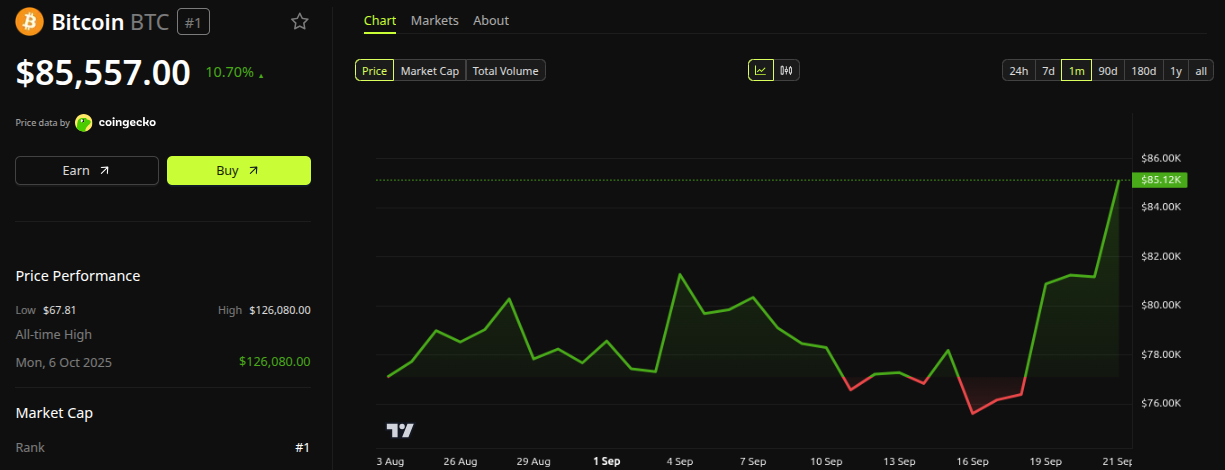
Benjamin Cowen, founder of Into The Cryptoverse, publicly admitted his bearish Bitcoin call failed on Monday, as the cryptocurrency broke decisively above $85,000 and squeezed short sellers.
The reversal marks a turning point for one of the market’s most influential bearish voices this cycle.
A Public Reversal Rooted in Cycle Analysis
Cycle analysis is a forecasting method that projects Bitcoin’s trajectory from patterns observed in the previous four-year market periods. Cowen leaned on that framework for months, arguing that history still pointed toward lower prices before any durable recovery.
Follow us on X to get the latest news as it happens.
On September 8, he assigned a 65% probability that Bitcoin’s cycle low remained ahead, leaving only a 35% chance the bottom was already in. He repeatedly flagged the realized price near $53,000 as a level that earlier bear markets had tested or undercut.
His July memo centered on a fourth-quarter bottom, most likely in October, echoing midterm-year patterns from 2014, 2018, and 2022. Some scenarios contemplated the downside of $44,000.
Even as Bitcoin reclaimed the mid-70,000s, Cowen maintained it was too early to declare the bear market over. He cited historical pullbacks after golden crosses and warned that a lower peak, similar to 2014 and 2015, remained possible.
In a September 20 update, he conceded the rally had lasted longer than expected. Rising yields, energy prices, and a firmer dollar never delivered the pressure he anticipated.
What Does Bitcoin Above $85,000 Mean?
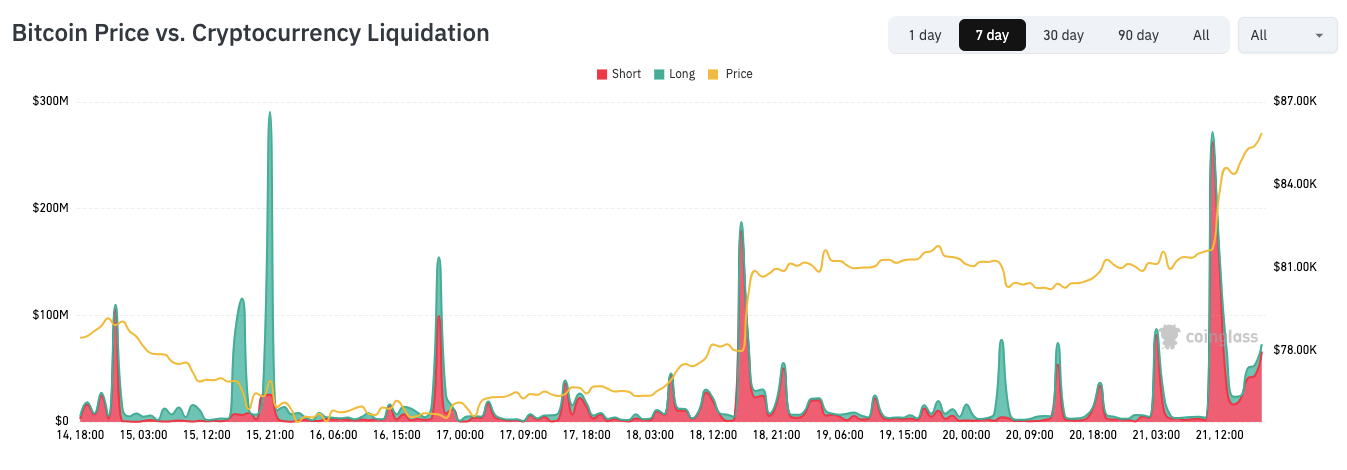
The market answered quickly and loudly. Bitcoin’s push past $85,000 liquidated more than $831 million in short positions within 24 hours. Long liquidations totaled roughly $130 million over the same span, according to CoinGlass data.
That imbalance shows how heavily traders had positioned for a deeper low that never arrived. Those who followed the bearish roadmap paid a steep and immediate cost.

Cowen responded with unusual candor, saying he was wrong, would offer no excuses, and deserved the criticism coming his way. Analyst Michaël van de Poppe called him one of the few consistently honest bears, noting that everyone eventually errs. Michael Saylor kept his reaction to two words: welcome ₿ack..
The episode carries a broader lesson for crypto investors. Cycle models are probabilistic tools rather than guarantees, and markets can rewrite even well-supported historical analogies.
With Bitcoin holding above $85,000, attention now shifts to whether the breakout matures into a durable bull phase. Residual midterm-year risks could still resurface, but price has delivered its verdict against the deeper fourth-quarter low.
Subscribe to our YouTube channel to watch leaders and journalists provide expert insights.
The post Waited for Bitcoin's October Bottom? Benjamin Cowen Says He Was Wrong appeared first on BeInCrypto.
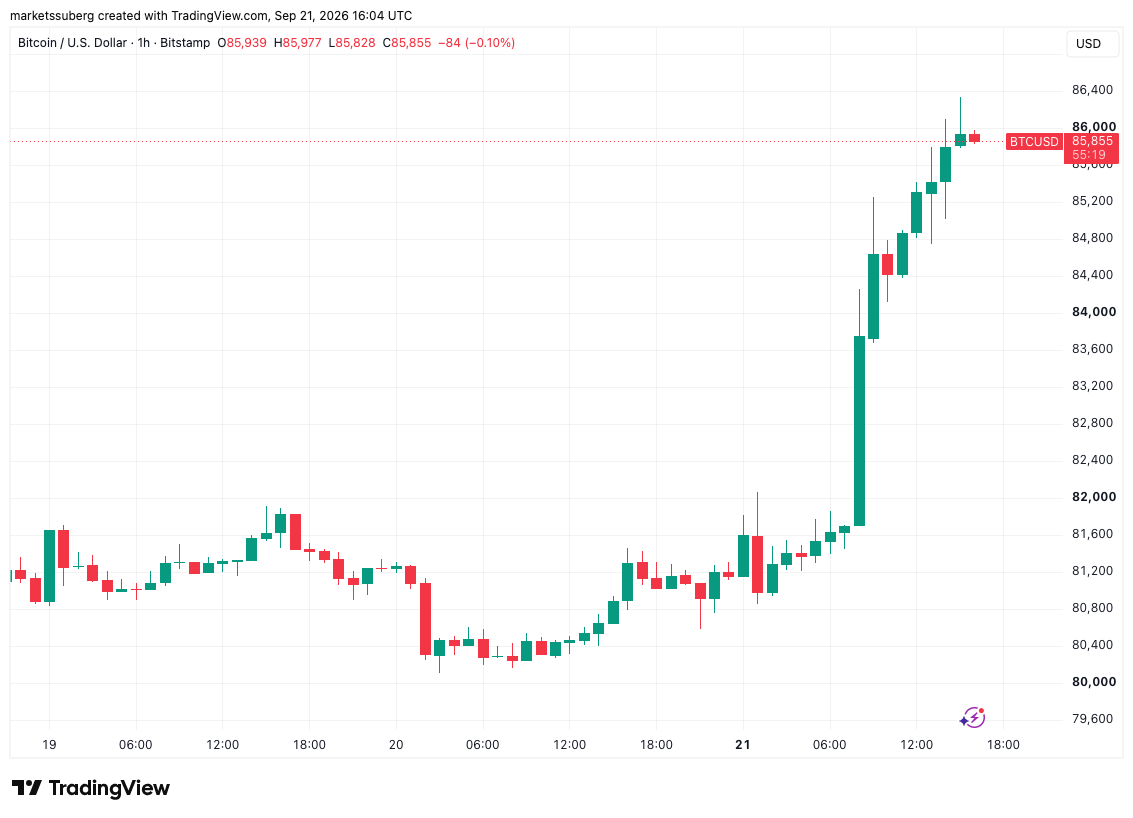
Bitcoin (BTC) spiked above $86,000 after Monday’s Wall Street open as US stocks rose amid cooling oil prices.
Key points:
- Bitcoin gained nearly 6% on Monday to briefly trade above $86,000 for the first time since late January.
- Crypto short liquidations totaled almost $800 million in 24 hours as analysis called the start of a “new bull market.”
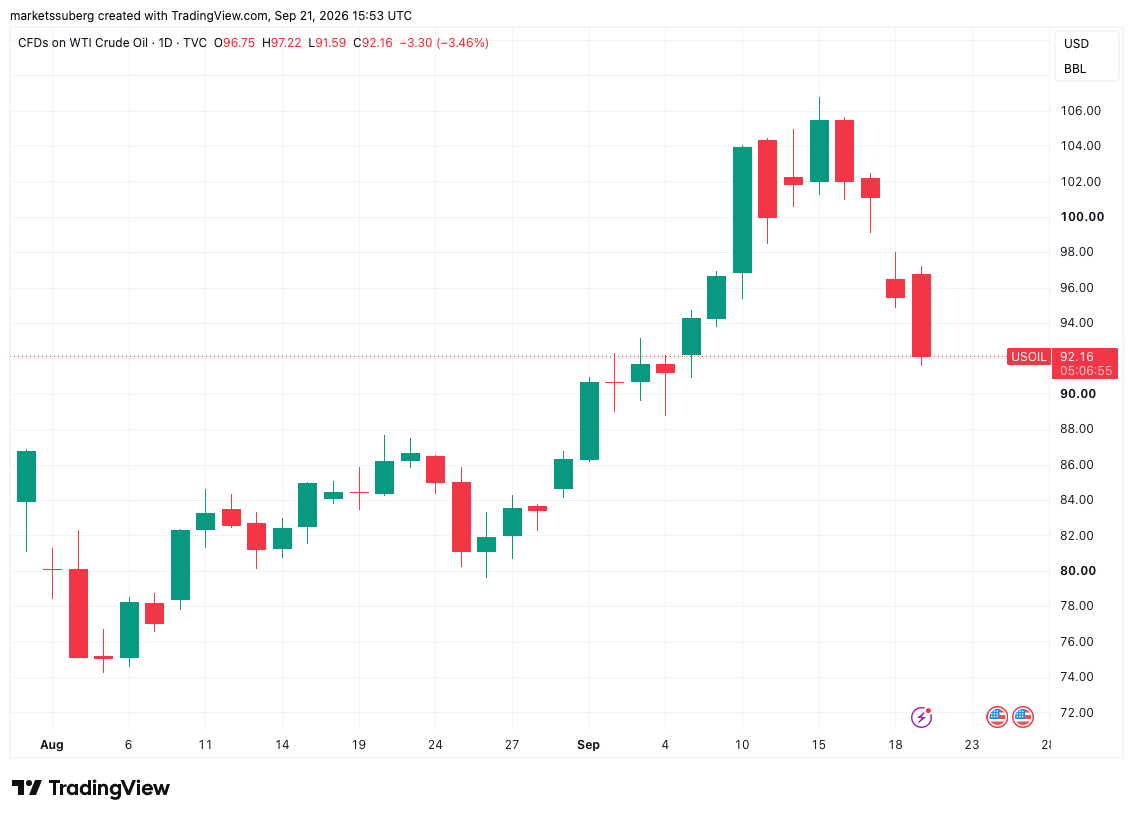
- US stocks opened the week higher as WTI oil prices dipped below $92 per barrel.
Bitcoin, US stocks head higher as oil drops further
TradingView data showed Bitcoin hitting a new 33-week high of $86,332 on Bitstamp, up 5.7% on the day at the time of writing.
Upside quickly returned after Sunday’s weekly close, which, at $81,120, was Bitcoin’s highest since the start of May, as oil prices continued a drop from late last week.
Signals from both Qatar’s Foreign Ministry and US President Donald Trump that diplomatic negotiations to end the US-Iran war could resume helped send WTI crude oil as low as $91.59 per barrel on Monday.
“Middle East oil flows remain surprisingly strong despite the disruption to Saudi Arabia’s East-West pipeline,” JPMorgan analysts said in a note on Friday, quoted by CNBC and others.
A report by The New York Times additionally claimed that the US planned to extend its trade deal with China by six months ahead of Chinese President Xi Jinping’s visit on Sept. 23-25.
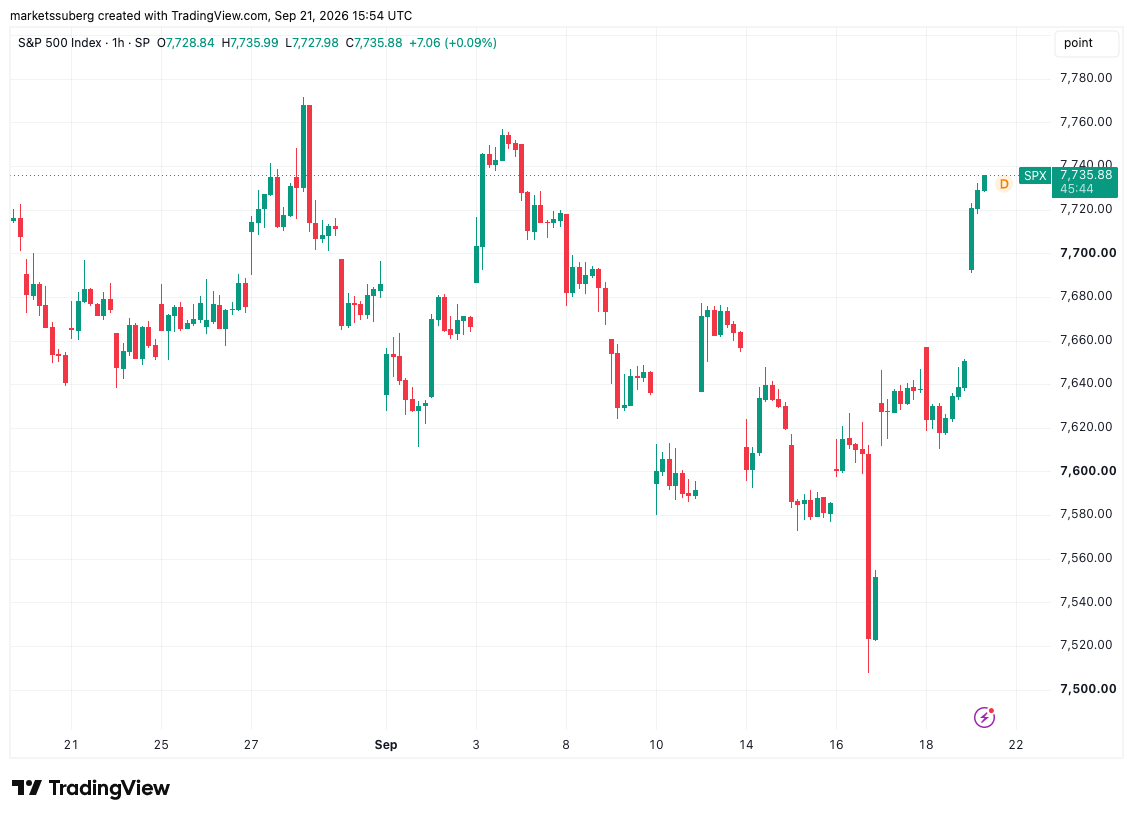
The S&P 500 and tech-heavy Nasdaq Composite Index were up 1% and 1.6%, respectively, at the time of writing.
Crypto short liquidations near $800 million in 24 hours
Bitcoin’s gains, meanwhile, led to increasingly optimistic commentary on longer-term price strength.
Related: Strategy buys 950 Bitcoin for $76M, repurchases $174M in STRC
In its latest analysis on X, trading resource The Kobeissi Letter described crypto as being “in a new bull market.” Kobeissi referenced 50% gains for BTC/USD over just two months as crypto short liquidations neared $800 million over 24 hours.
Commenting on Bitcoin’s short-term prospects, Bitfinex Alpha, the research arm of crypto exchange Bitfinex, flagged buyer support, rising open interest and fresh capital inflows to US spot Bitcoin exchange-traded funds (ETFs) as three key requirements for further price upside.
“For a breakout to be validated, we would want to see net taker buying rather than the profit-taking that capped the advances on 18 and 19 September,” it noted in a Monday blog post, adding:
“Coin-denominated open interest would also need to expand, indicating fresh positioning rather than a move driven primarily by short covering. Conversely, a daily close beneath $77,100 invalidates the structure to the downside, exposing the True Market Mean at $76,677.”
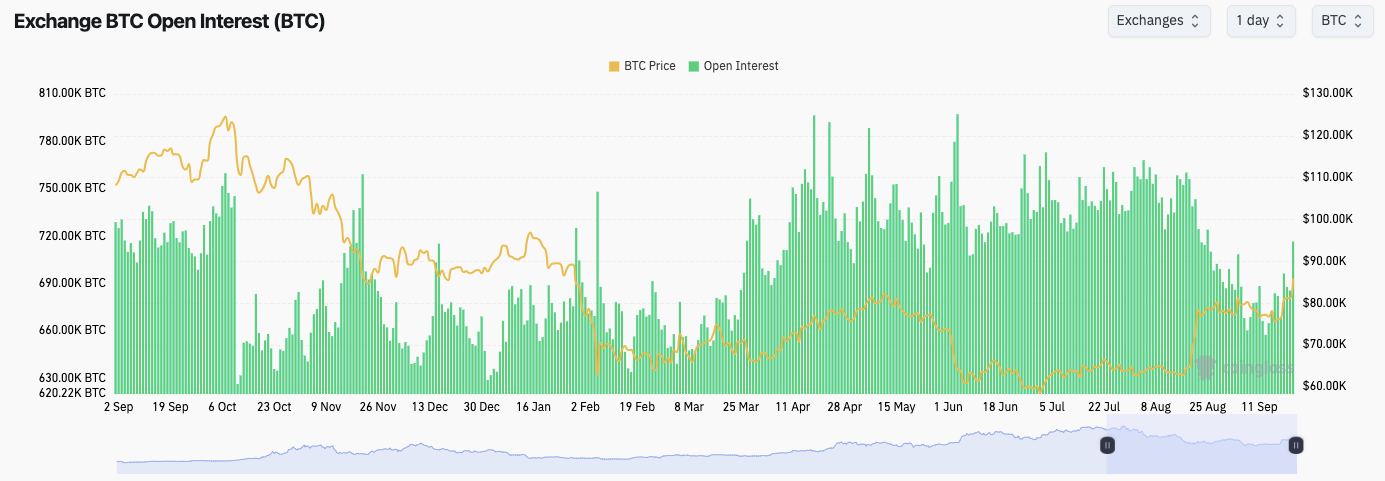
Exchange BTC open interest data (screenshot). Source: CoinGlass
Crypto trader and analyst Rekt Capital, meanwhile, confirmed that BTC/USD had broken out of a cycle of lower highs in place since October 2025, and with it its prior macro downtrend. In his latest X analysis, he identified a new target trading range between $86,681 and $93,659.
“If Bitcoin is ready to confirm a breakout from the $60k-$80k Range, its next milestone would be to try to enter the blue-blue Range,” he wrote in commentary on a chart highlighting the range, which figured prominently at the end of 2025.
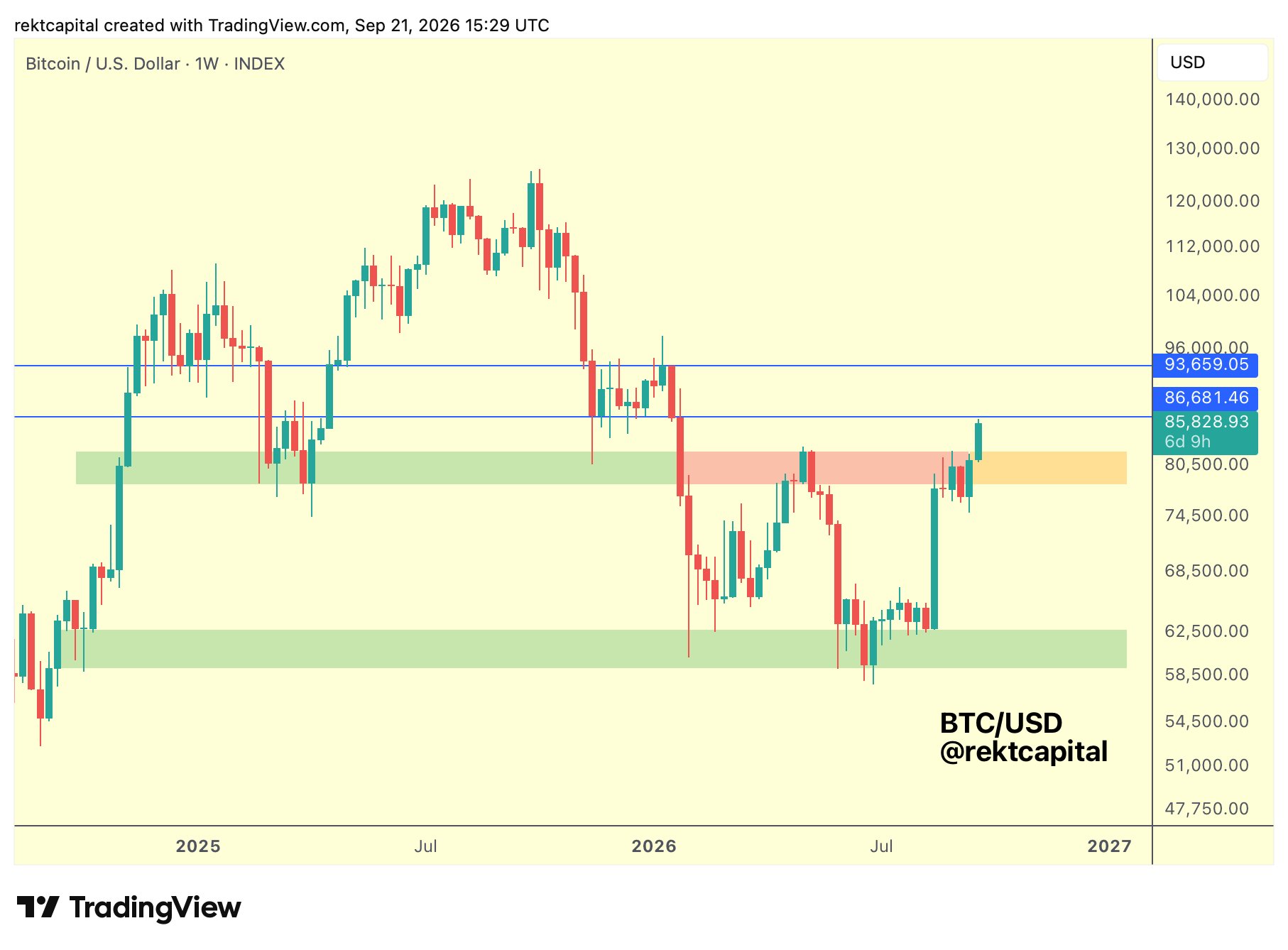
BTC/USD one-week chart. Source: Rekt Capital on X.com

The study is exciting because it shows clearly that pink noise, slow waves, and these pulses of CSF flow are closely linked, says Ngo-Dehning, and it opens the door to studies where researchers intentionally boost CSF flow to see if it can help, say, people with poor sleep or people with neurodegenerative conditions that may be caused by impaired waste removal from the brain. “That would be the next step,” he says.
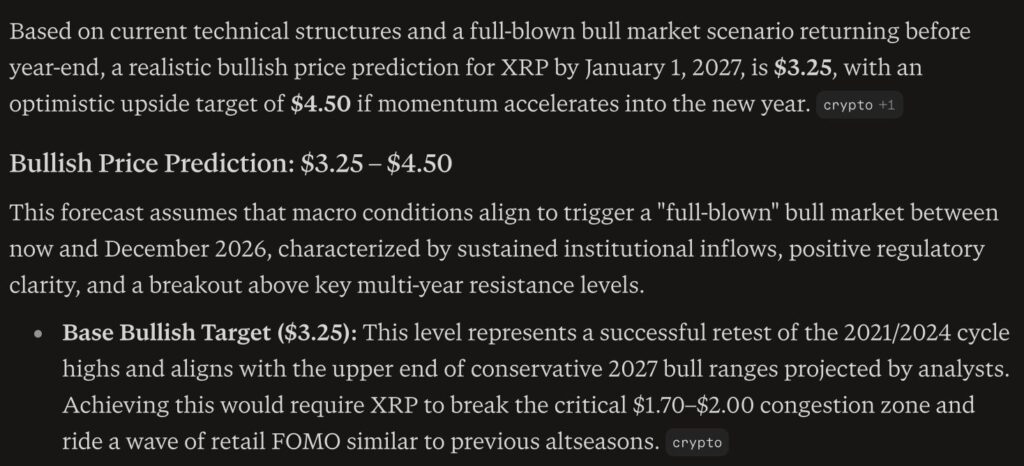
The Silicon Valley-based Perplexity AI predicts XRP could have a tame Q4, saying it believes the token will only hit $3.25 by January 1, 2027. This prediction comes as other AI models and analysts call for XRP to trade $7-10 by the end of the year.
XRP currently trades near $1.49 as of September 21, 2026, after a strong rebound alongside Bitcoin’s surge above $84,000–$85,000 earlier today. This BTC breakout has fueled widespread belief that the cycle bottom is in and a broader bull market is underway, providing a powerful tailwind for large-cap alts like XRP.
This Perplexity forecast assumes that macro conditions align to trigger a “full-blown” bull market between now and December 2026, characterized by sustained institutional inflows, positive regulatory clarity, and a breakout above key multi-year resistance levels.

The base bullish target of $3.25 represents a successful retest of the 2021/2024 cycle highs and aligns with the upper end of conservative 2027 bull ranges projected by analysts. Achieving this would require XRP to break the critical $1.70–$2.00 congestion zone and ride a wave of retail FOMO similar to previous alt seasons.
As for the optimistic target of $4.50, Perplexity AI states that this would be a scenario where XRP decouples from Bitcoin and sees massive utility-driven demand (e.g., widespread XRPL adoption or ETF inflows); the price could extend toward $4.50.
This target sits just below the psychological $5.00 barrier and corresponds to the aggressive end of 2027 forecasts from firms like Standard Chartered and Bitwise.
Perplexity AI Predicts XRP to $3.25: Does the Technical Analysis Support the Prediction?
XRP’s technical setup is currently building a massive multi-year accumulation base that could support a violent upside move if confirmed. On the weekly timeframe, XRP is forming a textbook inverse head-and-shoulders pattern, a highly bullish reversal structure that has been building since the 2021 highs.
The “neckline” of this pattern sits around $1.55–$1.70; a decisive weekly close above this level would technically confirm the pattern and project a measured move targeting the $3.00–$4.00 range.
Furthermore, the monthly Relative Strength Index (RSI) is resetting from overbought conditions without breaking the long-term bullish trend, suggesting the asset is coiling for its next major leg up.
The alignment of moving averages on the daily chart, specifically, the price holding above the 200-day EMA, indicates that the long-term trend remains intact despite short-term consolidation.
If the anticipated bull market materializes, a breakout above the $2.00 psychological barrier would likely trigger a “price discovery” phase, where the lack of historical resistance allows for rapid appreciation toward the $3.25 target.
Bitcoin Hyper Targets Early Mover Upside as XRP Tests Key Levels
A 45-week-overdue moving average flip is exactly the kind of headline that gets long-term holders nodding along, but at a $1.49 handle, XRP’s percentage upside from here is a different animal than it was at $0.1. Doubling from here adds $100Bn to the market cap.
That math is why traders chasing asymmetric returns are increasingly looking one layer down, toward infrastructure being built directly on top of Bitcoin’s network.
Bitcoin Hyper ($HYPER) is positioning itself as the first Bitcoin Layer 2 with full SVM integration. Hyper runs smart contracts at speeds it claims outpace Solana, while settling back to Bitcoin’s base chain for security. The presale has raised $33M at a current token price of just $0.0136865, with staking rewards offered at a high 30% APY.
Its Decentralized Canonical Bridge aims to solve BTC’s two biggest structural gaps: near-zero programmability and sluggish, expensive transaction throughput.
Gain Access to New Bitcoin Layer 2 Early Here
Discover: The Best Token Presales
The post Perplexity AI Predicts Weak XRP Price by 2027: Bull Run Canceled? appeared first on Cryptonews.

Quick Read
-
Intel surged 255% to $109, with Q2 revenue up 25% to $16 billion and Data Center sales jumping 59% year over year.
-
NVIDIA took a $5 billion stake in Intel and selected Xeon 6 as host CPU for DGX Rubin systems, flipping rivalry into partnership.
-
At 57x forward earnings with Foundry burning up to $2.5 billion per quarter, Intel is priced as a finished turnaround while still being fixed.
-
Just released. Our analysts combed the entire stock market and named the ten best stocks to buy right now, and Intel didn’t make the cut. Enter your email to see the names that beat INTC. The report is free. Enter your email and see if any of your stocks made the cut.
Intel (NASDAQ:INTC) has gone from a low-twenties stock that missed the AI wave to a name trading at $108.60, a 255.25% one-year run.

The operational fix under CEO Lip-Bu Tan is genuine, and NVIDIA (NASDAQ:NVDA) validated it by taking a $5 billion equity stake in Q3 2025. The debate has shifted from whether Intel can be fixed to whether the share price has already spent the fix.
Q2 revenue reached $16.13 billion, up 25.4% year over year, beating consensus by 11.64%. Non-GAAP EPS came in at $0.42 versus a $0.22 estimate.
Data Center and AI revenue hit $6.26 billion, up 59%, with Xeon 6 selected as host CPU for NVIDIA’s DGX Rubin NVL8 systems.
Tan called the quarter Intel’s “strongest revenue growth in more than fifteen years”, and Intel 18A entered high-volume manufacturing.

Where Intel Stands Against AMD and NVIDIA
Against Advanced Micro Devices (NASDAQ:AMD), Intel is finally landing punches in server CPUs, with management saying “strong demand for our products continue to outpace our growing supply.”
Against NVIDIA, the relationship has flipped from rivalry to partnership on the CPU side, but NVIDIA’s AI-compute franchise remains the reason Intel Foundry still lost $2.1 billion last quarter.
Free Report, Just Released
Why Didn’t INTC Make The Top 10 List?
24/7 Wall St has helped investors make money for over two decades, and our top analysts just finished ranking the definitive Top 10 Stocks To Buy Now. Not the ten biggest companies. Not the ten everyone is arguing about. The ten best stocks to buy right now.
And INTC didn’t make the cut!
The report is free, and you can see why we think each stock is a top investment today.
Enter Your Email and See the Ten →
External Foundry revenue was only $293 million, a rounding error next to the manufacturing bill Intel is carrying.
Valuation Is Now Doing the Heavy Lifting

Market cap sits at roughly $574 billion on a forward P/E of 57x, with trailing EPS still negative at -$2.09.

Crypto World
Zoomex to Host Traders After Party During TOKEN2049 Singapore, Connecting Traders and the Web3 Community

Global cryptocurrency derivatives platform Zoomex will host the “ZOOMEX TRADERS AFTER PARTY @ TOKEN2049 SINGAPORE” on October 7, 2026, at the Echo Live Party in Singapore.
Organized as an official side event during TOKEN2049 Singapore, the gathering invites traders, Web3 founders, creators, and partners to connect beyond the main conference floor, exchange market insights, and expand their industry networks. (Luma)
Centering on the theme “CRYPTO TRADING · WEB3 · LIVE MUSIC · NETWORKING,” the event seamlessly blends market discussions with an elevated party experience. Guests can engage directly with industry KOLs and the Zoomex team, participate in special guest Q&As, and make new connections over live music and open networking.
Where’s the Edge? From Crypto Trading to Broader Markets
As trading options expand rapidly, where do traders truly find their edge? Is it early opportunity detection, smarter tool utilization, or a distinct approach to market dynamics and risk management?
The event will feature a flagship panel titled “Where’s the Edge? Trading Crypto and Beyond,” bringing together top industry KOLs to share insights across crypto assets and traditional market setups. Discussions will span derivatives, TradFi, and prediction markets, with a focus on how copy trading, AI assistance, and strategic tools are reshaping how traders gather information, make decisions, and execute strategies.
Grounded in practical trading needs, the panel gives speakers from diverse backgrounds a platform to share market observations, offering attendees fresh perspectives to compare and discuss. Conversations will continue into the open networking sessions following the panel.
This theme reflects Zoomex’s core focus on derivatives while expanding its broader trading ecosystem. As the platform moves into TradFi and new trading venues, it continues to anchor its operations around “Easy to Use. Transparent. Fair.”, prioritizing seamless user experience, transparent fee structures, and clear rule mechanisms. (Luma)
Ollie Bearman to Join for an Exclusive Community Q&A
TGR Haas F1 Team driver Ollie Bearman will attend as a special guest, hosting an interactive Q&A session that offers traders and motorsport fans an up-close, face-to-face experience. (Luma)

As the Official Cryptocurrency Exchange Partner of the Haas F1 Team, Zoomex continues to bridge high-profile sports sponsorships with real community engagement, letting attendees experience the thrill of racing alongside market insights. (Zoomex)
Live Music and Grand Prizes Set the Stage for Networking
The evening will feature live performances by singers and dancers, a DJ set, interactive lucky draws, and ample dedicated networking time. Attendees can discuss products with the Zoomex team, swap market insights with creators, or catch up with industry peers on conversations started during the main conference. (Luma)
A MacBook Air and iPhone Duo lead the lineup of grand prizes for the night’s lucky draw, adding extra excitement to the evening. Eligibility and prize collection will follow official event rules.

From deep market discussions and celebrity guest interactions to live entertainment, Zoomex aims to make the Traders After Party a premier gathering for the trading community — a place to share ideas, meet peers in a relaxed setting, and build direct, lasting connections.
Registration is now open. Interested traders, founders, creators, and industry partners can apply via the official Zoomex Luma event page. The event takes place on the evening of October 7 at Echo Live Party Singapore; Final entry details and agenda are subject to the official event listing. (Luma)
About Zoomex
Founded in 2021, Zoomex is a global cryptocurrency trading platform focused on derivatives trading. The platform serves over 3 million users across 35+ countries and regions, offering access to 590+ trading pairs. Built around easy to use, transparency, fairness, and speed, Zoomex provides a clear and efficient trading experience for users worldwide.
Through its high-performance matching engine, clear asset and order displays, and transparent fee and rule mechanisms, Zoomex helps users better understand their account status, order execution, trading costs, and results. Zoomex maintains registrations, licenses, and regulatory statuses across multiple jurisdictions, including the U.S. MSB, Canada MSB, U.S. NFA, and Australia AUSTRAC, and has completed security audits conducted by blockchain security firm Hacken. The platform also continues to strengthen its trust framework through Proof of Reserves, Security & Transparency, Compliance Information, and Fees / Rules Transparency initiatives.
Beyond trading, Zoomex builds a refined brand experience through elite sports partnerships, including the TGR Haas F1 Team, World Cup-winning goalkeeper Emiliano Martínez, and world-class tennis events such as Wimbledon. The values of speed, precision, discipline, fair play, and rule-based execution are closely aligned with Zoomex’s approach to derivatives trading.
At Zoomex: Easy to Use. Transparent balance. Fair access to your earnings.
The post Zoomex to Host Traders After Party During TOKEN2049 Singapore, Connecting Traders and the Web3 Community appeared first on BeInCrypto.

At the moment, polling conducted this month of 1,000 likely Ohio voters showed 48% support Brown and 45% are backing the Republican incumbent, Senator Jon Husted. And betting on Polymarket has Brown at a 57% likelihood to win.
Asked for comment on the Fairshake spending, Brown’s campaign sent CoinDesk a press release it issued today that included a statement from the former senator’s campaign manager.
“Jon Husted’s for sale and the billionaires and corporations pouring millions into this race know it,” said Patrick Eisenhauer, the campaign manager.
Until the commitment against Brown, first reported by the New York Times, the second-biggest race for Fairshake’s cash infusions was the Alabama Senate primary contest in which the super PAC committed about $12 million to get Barry Moore his nomination in a deeply Republican state in which he’s expected to win the general election. But the third-highest spending was an expensive disappointment for the sector, with Fairshake having splashed out more than $10 million in failing to derail the Senate primary bid of Illinois Lt. Gov. Juliana Stratton. Stratton is also expected to win her general election race.
Fairshake has been carefully bipartisan in its support or opposition of candidates, according to the roster of campaigns it’s been involved with. But the big-ticket spending has generally either gone toward supporting Republicans or opposing Democrats as the fate of the Senate is decided this year.

Strategy, the publicly traded Bitcoin treasury company led by Michael Saylor, resumed its Bitcoin purchases after a two-week pause, according to a Form 8-K filed with the U.S. Securities and Exchange Commission on Monday. The company acquired 950 BTC for $75.7 million during the week from Monday through Sunday, at an average price of $79,670 per coin.
The new buy lifts Strategy’s total Bitcoin holdings to 846,000 BTC, accumulated for roughly $63.8 billion at an average cost of $75,416 per Bitcoin (including fees and expenses). At the time of publication, Bitcoin was trading at $84,925, implying an unrealized gain of about $8.05 billion on the treasury’s position, based on figures referenced in the filing. The update also arrives as Strategy continues to balance Bitcoin accumulation with ongoing preferred stock management and a large cash position.
Key takeaways
- Strategy bought 950 BTC for $75.7 million at an average price of $79,670 per coin after a two-week buying pause.
- Total holdings now stand at 846,000 BTC, with Strategy reporting an average cost basis of $75,416 per Bitcoin.
- Bitcoin’s referenced market price of $84,925 implies an unrealized gain of about $8.05 billion on the treasury.
- Strategy continued repurchasing STRC preferred stock, spending $174 million on about 1.77 million shares.
- Strategy’s “USD Cash” fell nearly 20% to $1.05 billion week over week, reflecting dividend and debt-related payments.
Bitcoin buys restart after a brief pause
Strategy’s latest SEC filing describes a resumption of its steady accumulation approach. Between Monday and Sunday, the company purchased 950 Bitcoin for $75.7 million, averaging $79,670 per BTC. The filing also notes the company’s broader position—846,000 BTC in total—indicating the restart did not meaningfully change the scale of its treasury strategy, but it does show a deliberate pause followed by renewed buying activity.
For investors, the practical significance is less about the week’s number of coins and more about consistency: Strategy is still deploying capital into Bitcoin while maintaining liquidity and continuing to manage its preferred securities. That balance can matter in periods where capital allocation becomes more constrained or where financing needs shift.
Strategy’s treasury position and the gains at market price
With Bitcoin trading at $84,925 at the time of publication, Strategy’s holdings are positioned for substantial paper gains relative to its reported average cost of $75,416. The article’s referenced math suggests an unrealized gain of approximately $8.05 billion on the full 846,000 BTC balance.
While unrealized gains are not cash, they can influence market perception of treasury strength. In addition, the company’s ability to keep buying without disrupting preferred-stock obligations depends on its cash management framework—particularly the split between “USD Cash” and “USD Reserve,” which Strategy reports separately.
Preferred stock repurchases continue alongside Bitcoin accumulation
Strategy also used capital to reduce its exposure to preferred-stock obligations through ongoing buybacks of STRC. The company repurchased approximately 1.77 million shares for $174 million during the same week, and STRC was up slightly in pre-market trading on Monday, according to the information cited alongside Yahoo Finance data.
Strategy stated it still had $875.1 million available under its preferred-stock repurchase program and $1 billion remaining under its MSTR share repurchase program. That matters because it shows the company still has authorization headroom—meaning buybacks can continue even after deploying $174 million in the most recent repurchase window.
The filing period also included at-the-market offering programs, and Strategy reported no sales under those plans between Sept. 14 and Sept. 20. In other words, during that window, the company did not appear to raise funds through its at-the-market channels, relying instead on existing treasury resources for purchases and repurchases.
Cash reserves decline as dividends and interest payments land
In a sign of how treasury priorities are being sequenced, Strategy’s cash balances moved down. Its “USD Cash” balance fell nearly 20% to $1.05 billion from $1.30 billion a week earlier, when the company reported its prior cash figures. Separately, “USD Reserve” declined to $5.04 billion from $5.10 billion.
The filing attributed the change in part to cash used for preferred-stock dividends and interest on outstanding debt—amounting to $57.4 million. Strategy’s “USD Cash” is described as serving broader treasury purposes, including funding Bitcoin purchases and capital management, while “USD Reserve” is intended primarily to support preferred-stock dividends and debt interest.
For readers tracking these companies, the cash split is often as important as the Bitcoin buy totals. If “USD Cash” keeps compressing while buyback and dividend needs continue, investors may begin to focus more on whether additional financing is required or whether the company tightens other deployments. Conversely, if the “USD Reserve” remains stable while operational outflows are contained, it can suggest the preferred obligations are covered without forcing abrupt changes to accumulation pacing.
Rival treasury holder Strive also adds Bitcoin
Strategy’s update landed alongside another corporate treasury move: Strive, described as the world’s fifth-largest corporate Bitcoin holder, announced additional Bitcoin purchases on Monday. According to the SEC filing referenced in the article, Strive added 1,355 BTC last week, bringing its total to 26,355 BTC, and its shares rose in pre-market trading.
Taken together, the two updates reinforce that large-cap Bitcoin treasury operators are continuing to pursue accumulation and capital management in parallel—using equity markets and repurchase programs to structure shareholder returns while still building Bitcoin exposure through direct purchases.
Moving forward, the key question for Strategy is whether the renewed weekly Bitcoin buys continue at a similar pace while “USD Cash” remains under pressure from dividends, interest, and repurchases. Investors may want to watch the next SEC disclosures for how quickly cash balances stabilize and whether the company changes the cadence of Bitcoin acquisitions or preferred-stock buybacks.
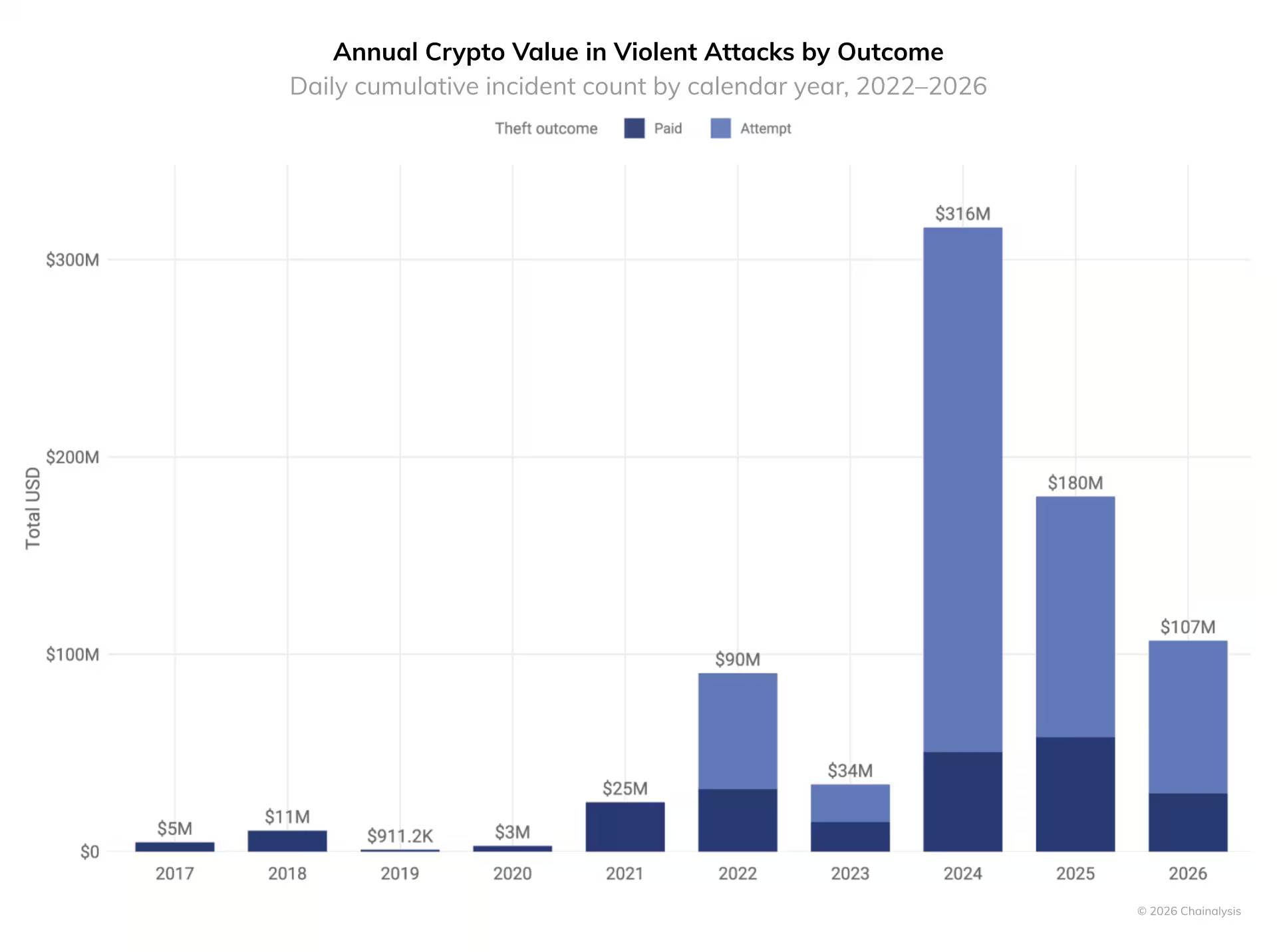
A French family was tied up for hours by attackers after their crypto. Police have not said how the attackers chose the house, and that gap is where the industry’s data problem lives.
At around 4 a.m. on September 20, four hooded men forced their way into a family home in northern France. They bound the parents and two children with black tape and forced the father to hand over his access codes and move 40,000 euros.
The father is a salaried IT worker in the crypto industry. Prosecutors have not said yet how the attackers identified him.
A separate incident in the same month showed how easily that kind of information gets out. On August 13, hardware wallet maker Trezor told 13,689 customers that a breach at one of its shipping providers had exposed sensitive order data. The number grew to over 80,000.
Nothing links the two cases, and nothing needs to. Together, they describe the same exposure from both ends: a database that pairs a home address with proof of crypto ownership, and what happens when someone acts on that pairing.
BeInCrypto spoke with experts from Hacken and Zama to uncover what a provider owes its customers when a supplier leaks their identity, which data the industry should stop keeping, and how a client could tell that a custodian will fail them under coercion.
What “No Keys Compromised” Leaves Out
When Trezor announced the breach in August, it made a point of what had not happened. Its own systems were not compromised, it said, and its devices were secure.
Those assurances addressed the risk that hardware wallets exist to prevent: theft of funds.
However, Hacken’s Head of GRC and Security Operations, Dmytro Yasmanovych, explained that the absence of a stolen private key does not mean customers are out of danger.
“Someone who knows your name, home address, and that you own a hardware wallet has information they can use to target you. You can replace a compromised key in minutes. You cannot do the same with your home address.”
He argues that this is why the information held by delivery companies and other suppliers deserves as much attention as the wallet itself. If a database links a crypto holder to their home, the consequences can reach their family, too, Yasmanovych added.
“So a provider can prevent anyone from accessing your funds and still leave you exposed in a much more personal way. The question is whether its security measures protect the customer, not just the wallet.”
The French Numbers Behind the Warning
France shows what that looks like. Interior Minister Laurent Nuñez said in late June that authorities had recorded more than 70 crypto-related violent incidents since January.
Chainalysis, which counted publicly reported cases, logged 30 in France through mid-2026, compared with 19 for the whole of 2025.
The firm calls a data breach the likeliest cause. It points to a 2024 case in which a French tax official allegedly stole dossiers on high-net-worth crypto holders, including addresses and phone numbers, and sold them to criminal intermediaries.
The family exposure Yasmanovych describes is visible in the same data. In France, more than 40% of incidents targeted a relative rather than the holder. Overall, home invasions made up 37% of documented attacks by mid-2026, up from 26% in 2023.
Chainalysis estimated that violent attacks on holders worldwide took more than $30 million in the first half of the year. This counts only attacks where the holder gave up funds.
The report puts total exposure at $107 million, including ransom demands, blocked transfers, and recovered funds, while noting that even that figure covers only reported cases.

The Data Behind the Target
Those attacks need a target, and the target may come from a record somebody kept. That makes data retention another security issue for the crypto industry.
Companies may need customer information for a specific transaction or service. However, keeping it indefinitely can create a separate risk if that information is later exposed. So which piece of customer information should the industry stop collecting, or delete sooner than it does?
Yasmanovych names the phone number. He explained that a company might need one to arrange a delivery, but that does not explain why it should remain in a customer database for years.
Thus, if the database is breached, the number can become useful for phishing, voice scams, or SIM-swap attempts.
“I would remove the link between an order and a physical delivery address once the delivery is complete and there is no longer a business reason to keep it. The company can retain what it needs for tax and warranty purposes without keeping a complete record of where every order was delivered.”
He outlined another problem: deleting data often relies on someone saying it has been done.
“In one case, a company had a ninety-day retention rule and written confirmation from its fulfilment partner that older records had been removed. Years of data was still sitting in their systems. That is why I would want evidence of deletion, not just a retention policy. If nobody checks whether the rule was followed, the rule offers little protection.”
The same responsibility extends to what happens after customer information is exposed. According to Yasmanovych, in addition to a warning email, the provider needs to explain exactly what information was exposed.
“A leaked city is one thing. A name, home address, and proof of crypto ownership create a different level of risk…Someone whose address was leaked may need help arranging future deliveries without sharing it again… There should be a direct person or team to contact when the situation requires more than a standard FAQ.”
He mentioned that the provider also needs to address what allowed the exposure to happen. If the supplier keeps data beyond the agreed retention period, customers should be told how that will be prevented and how deletion will be checked in the future.
“A warning email is the starting point. People need to know what happened, what they can do now, and whether the company has actually fixed the process that failed.”
Trezor’s response to its own breach can be measured against that list. It emailed affected customers individually, specifying whether their exposure was full or partial, and warned about phishing and, in September, physical security risks.
It also promised an Anonymous Delivery option using locker pickup, unbranded packaging, and automatic deletion of shipping identifiers.
Can Privacy Technology Close the Gap?
The problem is not limited to the data companies store off-chain. As more financial activity moves onto public blockchains, the transactions themselves can create another layer of exposure.
Zama CEO and Co-Founder Dr. Rand Hindi said the Trezor incident highlights an off-chain data retention problem.
He argued that as institutional capital moves onchain at scale, onchain confidentiality stops being a feature and becomes the condition for participation. Hindi cited a BCG estimate that digital real-world assets could reach roughly 16% of global investable assets by 2035.
He said regulated institutions cannot operate on a public ledger where every position and counterparty relationship is visible. The executive pointed to fully homomorphic encryption (FHE) as one way to address this without sacrificing compliance.
“FHE allows computation directly on encrypted data – a transfer executes, an AML threshold is checked, eligibility is verified, all on ciphertext – with no validator or block explorer ever seeing a balance or other sensitive data. When a regulator requires access, a permissioned threshold of key holders (compliance team) authorises decryption enforced at the protocol layer, not through a policy.”
Privacy technology can also limit how much information companies must disclose without making verification impossible.
Yasmanovych said zero-knowledge proofs can allow an exchange to demonstrate that it holds enough assets to cover customer balances without publishing every customer’s balance.
The exchange can therefore share evidence of its overall position without putting individual account information on display. The expert added that this does not mean the information becomes inaccessible.
Depending on how the system is designed, an authorised investigator may still be able to examine the evidence and underlying records through an appropriate audit or legal process.
He added that selective disclosure works on a similar principle when sharing identity information. A service might need to confirm that someone meets a particular requirement without receiving their entire identity document or customer profile.
“Neither approach solves the problem of personal data held outside the blockchain. Transaction amounts, timing, and wallet connections may remain visible, while identity documents and home addresses continue to sit in exchange, delivery, and payment databases.”
Yasmanovych mentioned that the gap is fairly straightforward. A company can improve privacy around the transaction itself while leaving the information needed to deliver and support that transaction exposed elsewhere.
When the Credentials Are Real, and the Customer Is Not Free
The distinction between transaction privacy and personal safety becomes even more important when a customer is forced to authorise a transfer. A custody provider may have secure infrastructure and strong access controls.
But those safeguards face a different test when a customer is coerced into handing over their assets.
Yasmanovych said a technical audit can show that the system works as designed. It is less useful for understanding what happens when someone is forced to hand over their assets.
“I would test the withdrawal process under that kind of pressure. For example, a customer with valid credentials requests a large transfer while someone is coercing them. Can the provider recognise the situation, pause the withdrawal, or bring in someone else before the money leaves?”
His required controls are a second authorised person and a mandatory delay on large transfers, neither of which the customer can remove during the same session. Yasmanovych highlighted that the point is to give the provider a chance to intervene when a valid login does not necessarily mean the customer is acting freely.
“I would also ask to see the process in action. A policy can require a second approval, but that does not tell you whether the approval is genuinely independent or whether staff can bypass it. A live test would expose those weaknesses much faster than another clean technical audit.”
A custody system can work exactly as designed and still fail the person using it. The last step always runs through a human being, and a human being can be threatened.
Where the Responsibility Now Sits
The attacks in France show how the risks around crypto extend past a compromised wallet or a stolen private key. A customer’s name, address, phone number, and proof of ownership become valuable once they sit in the same database.
Privacy technology can limit what is exposed on-chain, but it does nothing to address information that companies and their suppliers keep elsewhere.
That widens what a provider is responsible for. It covers how assets are stored and moved, which customer data is collected, how long it stays accessible, and what happens when someone is forced to use their own credentials. Keys are part of that chain that the industry already knows how to protect.
The post Crypto Security Now Extends Past the Wallet to the Customer's Address appeared first on BeInCrypto.

In Cardano news today, the delegated representatives voted down a request to withdraw 12.29 million ADA from the community treasury to fund Input Output’s Pogun Bitcoin DeFi product. The final Koios summary recording 35.67% of DRep voting power in favor, against 64.33% opposed.
The ADA stays in the treasury, but Cardano also forfeits the revenue-sharing terms Input Output had attached to the deal, and Charles Hoskinson has since said IOG will no longer default to launching future products on Cardano.
Pogun is Input Output’s pitch for bringing Bitcoin into decentralized finance through a credit market, a yield product, and a BitVM-powered trust-minimized bridge. The rejected on-chain proposal asked for 12.29 million ADA and tied repayment to quarterly earnings before interest, taxes, depreciation, and amortization, with the calculation anchored to $2.95 million in EBITDA.

Input Output’s April 2026 overview had promised 20% of Pogun earnings back to the treasury until the initial funding was repaid, followed by a perpetual 5% return on Cardano-related products. The on-chain proposal that DReps actually voted on carried no explicit exclusivity covenant.
Cardano governance requires sign-off from both the Constitutional Committee and DReps for a treasury action to pass. The committee cleared Pogun unanimously; the body elected directly by ADA holders did not, which is what makes the split notable.
The practical result? Cardano keeps its ADA but gives up the revenue share it was offered, a difference that matters more for Cardano’s treasury sustainability.
Earn $50 and Enter $300K Prize Draw on EdgeX
Why This Counts As An ADA Governance Check?
Input Output helped build Cardano and remains a major commercial contributor, which is exactly why the vote matters. Pogun’s own framing argued Cardano was the right execution environment for Bitcoin DeFi on technical grounds, not by default. ADA holders weren’t required to accept that argument on the terms presented, and enough of them didn’t.
Hoskinson used a Sept. 18, 2026, broadcast to respond directly. He said Input Output would now choose whichever network best serves each product instead of applying automatic Cardano priority. He also added that traffic from an unfunded product could route elsewhere and that another ecosystem could receive exclusivity in exchange for support.
He still described Cardano as the strongest technical fit for Bitcoin DeFi connecting systems built on Bitcoin-like transaction outputs, a nuance that separates this from a simple exit. It reads more like a policy change forced by a governance body that IOG itself helped design, a tension also visible in how IOG has positioned Midnight-linked development outside strict Cardano exclusivity.
Trade Cardano on Bybit and Get a Chance to Win Our $1,000 USDT Airdrop
What’s Next For Cardano After This News?
Hoskinson said Pogun would still arrive within 90 days of the broadcast, or roughly by mid-December 2026, regardless of the vote’s outcome. Input Output has not disclosed which chain will host it, and the ecosystem that ends up with Pogun could capture the revenue share Cardano just walked away from.
Hoskinson also said RealFi, a separate Input Output initiative, is set to launch on Cardano in October 2026, giving Cardano holders a near-term test beyond the news.
Discover: The Best Token Presales
The post Cardano News: DReps’ Pogun Vote Opens a New Chapter for ADA appeared first on Cryptonews.

Dakota Johnson Would Kiss Anne Hathaway Forever

Rivington and Belmont walks to mark Autumn Equinox and Harvest Moon

Causes for Stagnant Growth and How to Overcome Them




-

 Fashion3 days ago
Weekend Open Thread: Talbots – Corporette.com
-

 Tech18 hours ago
Researchers escape OpenAI Codex sandbox to run commands on host
-

 Crypto World3 days ago
Circle launches Arc Studio AI agent for building onchain apps
-

 Crypto World7 days ago
Revolut Attackers Warn of Ongoing Daily Customer Data Leaks
-
 NewsBeat3 days ago
Trump says US has reached an agreement to take permanent control of Greenland’s security
-

 Crypto World6 days ago
Robinhood engineers charged over $50K crypto scheme
-

 Crypto World7 days ago
Kraken Lets xStocks Holders Earn Yield Through DeFi
-

 Crypto World3 days ago
Bitcoin price breaks channel as RSI climbs to 63
-

 Crypto World5 days ago
US Charges Robinhood Engineers Over Crypto Listing Trades
-

 Crypto World6 days ago
What Is the Status of the U.S.-Iran Peace Talks? Here's What Both Sides Are Saying
-

 Crypto World6 days ago
NVIDIA Analysis: Attempted Rising Wedge Breakout Amid Pressure on the AI Sector
-

 Tech6 days ago
Webb’s IC 348 Mosaic Includes Two-Jupiter Dwarfs, Twin Jets, and a Nursery Still Making Worlds
-

 Crypto World3 days ago
World Money launches in 150+ countries with Stripe
-

 Crypto World3 days ago
Silver prices recover quickly, hitting weekly high today
-
Crypto World7 days ago
Can Circle’s Arc Repeat Robinhood Chain’s Meme Coin Boom?
-

 Entertainment6 days ago
Big Brother Update: Melody Explodes at Drew as Illness Sweeps BB28 House
-
 NewsBeat3 days ago
US was ‘on brink of war’ with China over false AI report of nukes moving in Middle East
-
 Crypto World7 days ago
Kraken Adds DeFi Yield on Tokenized Stocks and ETF Assets
-

 Crypto World3 days ago
Trading Bitcoin on Robinhood? Why 2% Spread Has Traders Worried
-

 Crypto World7 days ago
DOJ Seeks to Seize $61M in Iran Oil Funds From Binance Accounts It Vouched For
You must be logged in to post a comment Login