
Tech
5 days left to save up to $200 on your Disrupt 2026 ticket

With five days left to save up to $200 on your TechCrunch Disrupt 2026 pass, each day we will list a reason why you should join 10,000+ founders, investors, and operators at San Francisco’s Moscone West on October 13-15.
Grab your ticket savings before prices go up on September 25 at 11:59 p.m. PT. Plus, get a second of the same ticket type at 50% off. Register now.

Reason No. 1: Discovery
Part of the value of Disrupt has always been finding breakouts early. The startup you haven’t heard of yet. The technology moving from experiment to real product. The founder attacking a problem in a way you hadn’t considered. Or an emerging category that suddenly looks much bigger once you see several companies building around it.
Startup Battlefield 200 puts 200 TechCrunch-selected early-stage companies in one place, giving you three days to see what a new generation of founders thinks is worth building, and what investors are looking to add to their portfolio.
See where investors are placing their bets
Early-stage startups can be useful signals. Look across enough of them, and you start to see where founders are finding opportunity, which technologies are becoming accessible, which old problems are being attacked in new ways, and where completely new markets might be taking shape.
At Disrupt, all 200 Startup Battlefield startups exhibit, so you can go beyond the company description. Meet the founders. See the product. Ask why they’re building it. Find out who they’re building it for. Understand what they think the rest of the market is missing.
For investors, that can mean new deal flow and emerging categories to watch. For founders, it’s a chance to see what other early-stage teams are building and how they’re approaching the market. For operators and tech leaders, it can mean discovering a future supplier, partner, or solution before it reaches the wider market.
Sometimes discovery is about finding a company. Sometimes it’s about spotting the pattern behind several of them.
Watch 20 startups put their ideas to the test on the global stage
From the top 200 companies, 20 will take the Disrupt Stage to pitch live in front of leading investors and the TechCrunch community. One will ultimately take home the Disrupt Cup and $100,000 in equity-free funding. Explore all the Startup Battlefield onstage sessions on the Disrupt agenda.

But the value of watching goes beyond who wins — you get to see emerging companies explain why their problem matters, why their approach is different, and why they believe they can build something much bigger. Then you hear the questions investors ask in return.
For anyone building, backing, or evaluating startups, it’s a fast way to understand what turns an interesting idea into a company people want to pay attention to.
Don’t miss this intense pitch competition and the opportunity to see who’s making waves next in the tech industry. Register now to save up to $200, and bring your colleague, co-founder, or partner with you at 50% off their ticket.
Discover them before anyone else does
Startup Battlefield alumni include companies that went on to become familiar names across the technology industry, including Dropbox, Discord, Cloudflare, Fitbit, Mint, and Trello, with a collective total fundraising of $32 billion since this program started.
Nobody knows which members of the 2026 class will follow that path. Discovery is most valuable before the answer is obvious.

Meet these 200 hand-picked startups. Talk to companies outside your usual sector. Watch the finalists pitch on the Disrupt Stage. Look for the technologies, business models, and problems that keep appearing.
You might find your next investment, partner, or product. You might spot an emerging market before it reaches your everyday feed. Or you might simply find one startup that changes how you think about what comes next.
5 days left to save up to $200 on your Disrupt pass
Current TechCrunch Disrupt 2026 ticket savings end September 25 at 11:59 p.m. PT. Register now to save up to $200 on your pass and save 50% on a second pass. Or bring a group of four or more to save up to 30%.
Five days to save. A multitude of reasons to join 10,000+ tech leaders in San Francisco. Learn more about all of Disrupt’s activations and the reason it’s been the startup epicenter for at least 15 years. Grab your ticket before prices go up.

When you purchase through links in our articles, we may earn a small commission. This doesn’t affect our editorial independence.

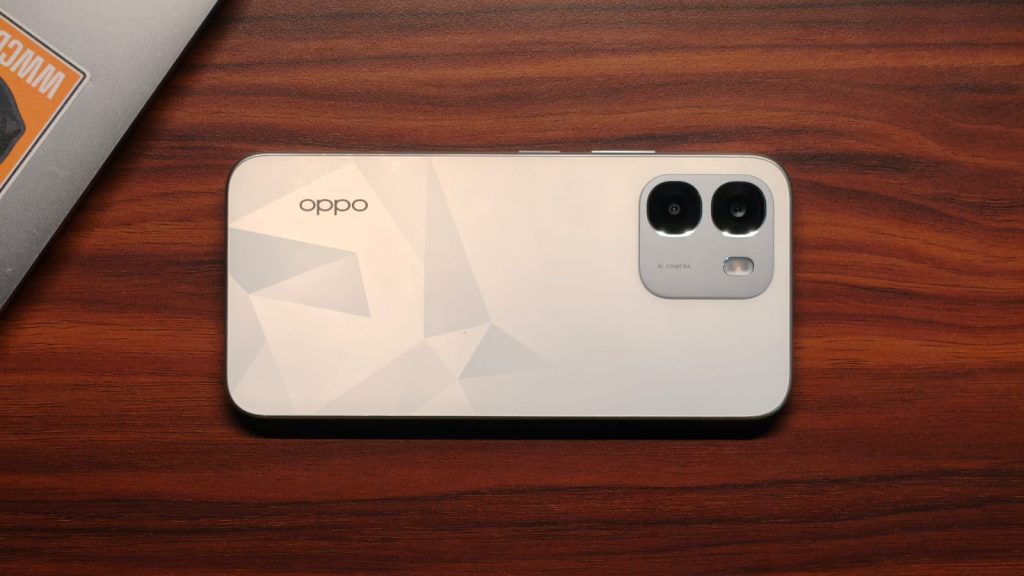
OPPO has teased the K14 Plus 5G for an upcoming launch in India. The phone will be the latest addition to the company’s K14 series, following the K14 Lite, K14, and K14x. So far, OPPO has shared only a teaser image, with no word on the phone’s processor, display, cameras, or battery. The teaser does point to smooth performance and everyday use, though. Here’s what we know about the K14 Plus and what to expect from it.
What the Teaser Reveals
OPPO has shown a teaser of its K14 Plus 5G handset for the Indian market. So far, OPPO has released only side-view images of the new phone. These include images of the power and volume buttons on the side. The teaser also hints at the colors the phone will be available in: orange and dark grey or black. OPPO has said the new phone will focus on performance and usability. However, the teaser does not reveal the hardware that will power the phone. The company has not confirmed its processor, display, or camera setup.
OPPO has not shared details on the processor, screen, cameras, RAM, storage, or battery. The “Plus” in the phone’s name might mean a bigger screen or battery, but it is still unclear.
OPPO K14 Plus 5G Price and Position in the Lineup

It is also unclear where the OPPO K14 Plus sits in the K14 series. As of now, OPPO K14 Lite and K14x are positioned in the below-Rs 20,000 range. Meanwhile, the base variant of the OPPO K14 starts at Rs 25,999 in India. Based on this, the K14 Plus may cost more. It may land in the Rs 30,000 range. This is only an estimate, not the final price. The K14 Plus could help OPPO expand its options in the budget-to-mid-range segment. Its final position will depend on the specifications and features OPPO announces. Buyers should wait for the official price and full specifications before choosing the K14 Plus.


“I was hearing from people in the campaign world that there’s this new strategy of paying political influencers to post content,” said Marc Berman, the California assemblyman. “Some were good about disclosure and others were a bit fast and loose.”
His bill is now law. Gavin Newsom signed AB 1130 on Saturday. In California, paid political posts that hide the payment now carry a $5,000 fine each.
The state has required those disclosures since 2023. Until now it could not punish anyone for skipping them. AB 1130 changes that. It hands the Fair Political Practices Commission the power to impose administrative, civil or criminal penalties. The commission can also refer a violation to law enforcement as a potential misdemeanour.
Ken Bensinger reported the law for the New York Times. He wrote on X that a wilful violation could carry up to a year in prison.
What the law actually covers
The scope is narrower than “influencers must disclose”. The Governor’s office describes AB 1130 as covering a person paid by a campaign committee to post online political content. The content must support or oppose a candidate or a measure. The penalty applies when that person leaves out the required disclaimer saying they were paid. Payment from a campaign committee is the trigger. An unpaid creator posting their own opinions sits outside it.
That distinction matters because of how the money now moves. Politicians and advocacy groups are paying creators to reach younger audiences, the Times reported. No federal rule requires anyone to disclose those payments.
The campaign that prompted it
Berman introduced the bill after the Times reported in May on money reaching influencers during California’s contested primary for governor. Politicians were funnelling it quietly, the paper found.
Tom Steyer, the billionaire Democrat, paid dozens of creators to post favourably about his campaign, Bensinger reported. Those posts ran on TikTok, YouTube, Instagram and Reddit. Many carried no written disclosure at first.
Multiple complaints followed to the Fair Political Practices Commission against the Steyer campaign. Somebody also filed at least one against Xavier Becerra, his main rival, who went on to win the primary.
The commission opened an investigation into Steyer’s campaign in May and closed it this week. Steyer had properly notified the influencers of their obligations, it found, and “then reminded the influencers when posts were discovered without the disclaimer”. A second investigation into the campaign is still open.
Becerra faces Steve Hilton, a Republican, in November.
One of thirteen
AB 1130 arrived inside a package of 13 bills on elections and social media. Newsom signed them at the Democracy Center in Los Angeles, and framed the package as a defence against federal interference.
“Donald Trump won’t stop until he can exert dictatorial control over your free vote and disenfranchise millions of people this November,” he said in a statement. “California will stop him at every opportunity.”
Two other bills in the package matter for anyone building or hosting synthetic media.
AB 686, also Berman’s, extends the sunset on California’s deepfake rule. The old date was 1 January 2027, and the new one is 1 January 2031. That rule bars distributing materially deceptive audio or visual media with actual malice, where the intent is to injure a candidate’s reputation or deceive a voter. Media carrying a disclosure that it has been manipulated is exempt. The rule was due to lapse before the 2028 presidential cycle. It now runs past it.
AB 502 amends the rules on knowingly distributing election communications that contain materially deceptive content.
A third, AB 2281, requires the Secretary of State to assess whether California needs to replace election cybersecurity resources the federal government previously supplied.
The rest of the package is ballot security rather than platform policy. Several bills create felonies for seizing ballots, election records or certified voting technology before results are certified.
California keeps legislating at the platform layer
The state has built a stack of these rules over several years, and the enforcement body is usually the same one.
In 2024 Newsom signed AB 2655. It requires large online platforms to remove or label deceptive digitally altered election content during set periods, and to provide reporting mechanisms. He signed AB 2355 the same year. That one requires electoral advertisements built with AI-generated or substantially altered content to carry a disclosure, and the Fair Political Practices Commission enforces it.
Eleven days before this package, he signed a separate set of child safety bills covering algorithmic feeds for under-16s.
The disclosure question is not confined to campaigns either. A watchdog reported last month that Meta had used paid influencers to push back on teen social media bans. YouTube has separately been carrying AI slop channels that produce political misinformation.
Who else is doing this
Texas already mandates disclosure of paid political content online. Lawmakers in Congress and in other states, including New York, are considering similar rules, according to the Times.
Elsewhere the pattern runs further along. Brazil’s electoral court set rules on AI in elections last year. Meta’s own Oversight Board has been ruling on election deepfakes in Europe.
California’s version lands six weeks before Americans vote. The Fair Political Practices Commission now has a penalty it can apply, and the primary that produced the complaints has already been decided.

Meta’s latest AI app, Muse, could be the social giant’s next major hit, new data suggests. According to just- released estimates from market intelligence provider Apptopia, Muse’s app on mobile devices has been downloaded more times during its first 12 days on the market than ChatGPT was in the 12 days after its debut. (This data compares the U.S. and Canada markets only.)
Muse also has more daily active users than ChatGPT had at the time, the firm found.
Until now, it had been difficult to make an exact apples-to-apples comparison between these two apps, given that they had pursued different launch strategies. When ChatGPT arrived on mobile, it was made available globally, but only on iOS. Muse, meanwhile, is available across both Apple’s App Store and Google Play, but only in the U.S. and Canada.
To better align the numbers for comparison, Apptopia looked only at the iOS data for the U.S. and Canada for both apps during the first 12 days of their respective launches. In this subset of the data, Muse has now seen 1.8 million downloads to ChatGPT’s 1.3 million.
Overall, Muse has seen 2.8 million total installs globally in its first 12 days, the firm also said. Its growth hasn’t yet stagnated, either; Muse has moved up from its original position as No. 2 overall on the U.S. App Store immediately after its launch to now No. 1, as Business Insider reported on Friday. That jump put the app higher than ChatGPT, the outlet noted. Another firm, Appfigures, said at the time that Muse had then crossed 1 million downloads.

In addition, Apptopia’s data indicates that Muse’s U.S. daily active users are now higher than they were for ChatGPT at the same point after its launch. When comparing just the U.S. mobile app daily active users, Muse comes in higher with 642,000 daily users compared with 231,000 for ChatGPT at the time.
To be fair to the fact that Muse is available across both iOS and Android, while ChatGPT launched on iOS only, Apptopia narrowed the comparison to iOS alone. Yet, even here, Muse is coming in higher, with 359,000 daily active users on iOS, still above ChatGPT’s figures from that time period.
Apptopia can only provide third-party estimates about an app’s downloads and active users; it doesn’t have direct access to Meta’s internal figures. But even if these numbers are only correct from a general “ballpark” perspective, they indicate that Muse could have a shot at becoming Meta’s newest top app.
Meta already perfected its cross-promotion strategy when it launched Instagram’s Threads, which now has 500+ million users, thanks to heavy marketing and integrations in Meta’s largest apps, including Instagram and Facebook. Muse is likely to get a similar push, given that the AI app can connect with both of those platforms. It also works inside WhatsApp, so that could give it another boost.
While Apptopia doesn’t have visibility into Meta’s cross-promotion efforts or ads directly, it did note that over 95% of Muse’s users are also Facebook users and 63% are Instagram users.
Meta, which has been asked for comment, has not yet shared public figures related to Muse’s early adoption.
Correction: An earlier version of this article referenced the analytics firm Appfigures as a source for data from Apptopia. This has been fixed.
When you purchase through links in our articles, we may earn a small commission. This doesn’t affect our editorial independence.


Nvidia is buying a further $1.5B of SB Energy shares at 90% of the price of the data centre developer’s coming US listing, taking its total backing to $3B. SB Energy has 8.8 gigawatts in contract or under construction in Texas and Ohio, while its parent’s European capacity is not due before 2031.
Nvidia is buying a further $1.5B of shares in SB Energy at 90% of the price of the SoftBank-owned developer’s coming US listing, Bloomberg reported, citing a regulatory filing on Monday. That takes its total backing to $3B.
The discount is the interesting part.
The chipmaker is taking new N class nonvoting shares in a private placement, which buys the economics and not the votes. It is also the supplier whose processors create the demand SB Energy is listing on. Nvidia bought into three land and power companies in August alone, as its liquid-cooled Rubin chips push rack density from roughly 250kW to 600kW.
SB Energy has the sites.
It holds 8.8 gigawatts of data centre capacity in contract or under construction, including projects in Texas and Ohio. OpenAI, which is planning a listing of its own, is also an investor. SB Energy is targeting $5B to $7B of proceeds.
It paid to get that tenant.
SB Energy gave OpenAI warrants worth $5.5B to anchor a 20-year lease on a 10 gigawatt campus in southern Ohio, due to run in 2028. The warrants were issued in January at $3.6B and had gained about $1.9B by June.
Europe gets the other half of the same group.
SoftBank has promised up to EUR 75B for 5 gigawatts of AI data centres in France, starting in Hauts-de-France at Dunkirk, Bosquel and Bouchain. The first phase is 3.1 gigawatts by 2031, and it sits in a separate vehicle from the one listing in New York. Schneider Electric is the strategic partner at Dunkirk, on a grid that is roughly 70% nuclear.
That is three years behind Ohio.
No European power developer is being financed this way. Nvidia is not buying discounted pre-listing stock in one, and no campus on this continent has a tenant paying its rent in warrants.
These economics have already failed here once.
OpenAI paused Stargate UK in April, a project it had announced with Nvidia and Nscale for northeast England, citing British industrial electricity prices more than four times those in the United States and uncertainty over copyright law. It said it would proceed when regulation and the cost of energy allow long-term infrastructure investment. Neither has changed since.

from the railgun-architecture dept
Satire is dead. But it’s been dead since the first Trump administration, back when people were “owning the libs” with a combination of horse dewormers and willfully contracting COVID. Bleach consumption was discussed. It was a whole thing.
Not enough of those people died, apparently. We somehow got a second season of Trump and at this point, it looks like farce may finally have been killed off.
In addition to forming a white Christian nationalist death cult, Trump really wants history to remember him as one of the most self-aggrandizing people to ever serve as President of the United States. He would rather raze the Kennedy Center to the ground than have it continue without his name splashed all over it. He has literally gilded the lily all over DC, sending out his Parks and Rec folks to splash a bunch of gold paint over a bunch of monuments and statues.
In addition to constructing a hideous ballroom apparently inspired by the 1921 July 4th Ball held at the Overlook Hotel, Trump has held a military parade in his own honor and turned the 250th birthday of America into an MMA/White House crossover filled with mandatory attendees.
He also wants his own Arc de Triomphe. But while the French version celebrates the country’s military victories (both of them!) and is generally representative of national pride, Trump’s version would be all about Trump.
The problems are several. First, it’s the subject of litigation. Second, even his own National Park Service has pointed out that it would have an “adverse effect” on nearby historical monuments, including the Arlington National Cemetery and the Lincoln Memorial (the one with the misbehaving pool). Trump’s own FAA expressed some concerns about the proposed arch’s interference with flight paths but ultimately did the let’s-give-Trump-what-he-wants thing and suggested the only alteration be some sort of a warning light on top for planes… perhaps some sort of “eternal flame.” [Vomits involuntarily.]
Trump is struggling to justify building a gaudy piece of white-and-gold bullshit as a paean to his superior mediocrity. So, he’s doing what he always does in situations like these: fire up Truth Social to deliver rants/statements that look like they were composed by someone on a cocaine-and-151 bender.

If you can’t read/see the embed… oh man. You’re in for a treat. I’m just going to post the whole thing here because any cherry-picking of the best/worst parts might lead some people to believe that I’m just making this shit up.
Buckle up, buttercups:
At the strong request of the United States Military, and for National Security purposes, I have agreed to convert the magnificent Triumphal Arch, planned since the Civil War Era many years ago, at the Receptive Circle adjoining the Arlington Memorial Bridge, into a top grade Military Complex/Triumphal Arch, to house, store, and have the rapid ability to use large numbers of drones, plus Snipers, on both the roof and plaza areas, and additionally have and hold large quantities of sniper ammunition in storage. There will be no facility like this anywhere in the World. Out of the 59 top cities and Capitals, Washington, D.C., IS THE ONLY ONE IN THE WORLD THAT DOES NOT HAVE A TRIUMPHAL ARCH, but it will now and, by far, the greatest of them all! Thank you for your attention to this matter. President DONALD J. TRUMP
You’re seeing this too, right? It’s not just me who may or may not be on a cocaine-and-151 bender? This is a guy who thinks everyone respects him just out there on main claiming the “United States Military” has requested he turn his ego stroke of a monument into some sort of immobile war machine.
This sounds like it was written by a seven-year-old to explain the massive amount of hand-drawn violence currently covering the notebook paper he was supposed to be using to show his work during math class. I cannot imagine any healthy adult actually claiming a “triumphal arch” can — or even should! — house “large numbers of drones, plus Snipers… and… large quantities of sniper ammunition.”
Are we supposed to believe the “roof” of the monument will just be launching pads for drones — drones, I might add, that will be launched directly into the flight paths of descending commercial flights arriving at Dulles? Are the snipers just going to live there? Will the two towers of the arc act like extended clips for sniper ammo? Will it just be 250+ feet of belt-fed ammo accessed directly through “Freedom Slits” or whatever the fuck?
And what even is a “top grade Military Complex” in the context of self-gratifying embarrassment of a monument? And if it is actually going to be all of these things, why are we telling everyfuckingbody that we’re building a drones-and-bullets centerpiece in Washington, DC? Won’t that just make it one of the first targets in any invasion/terrorist attack/rummaging for pawnable goods after its erection? Speaking of erections, why can’t we have a president who gets off to normal things, like Marilyn Monroe? Or being cucked by Lorena Hickok?
All I can see now is some sort of drone-encircled, twin-towered .50 cal with Trump branding and a bunch of pissed off guys dressed like Solid Snake doomscrolling social media 250 feet above the ground. If for no other reason than Trump’s own Truth Social post, this abomination should never be constructed. But if we’re going to get blighted by the blightiest of self-declared urbanites, we may as well make it something everyone in the world will instinctively want to destroy.
Filed Under: asshat, autocrat, donald trump, pew pew pew, triumphal arch, trump administration, washington dc
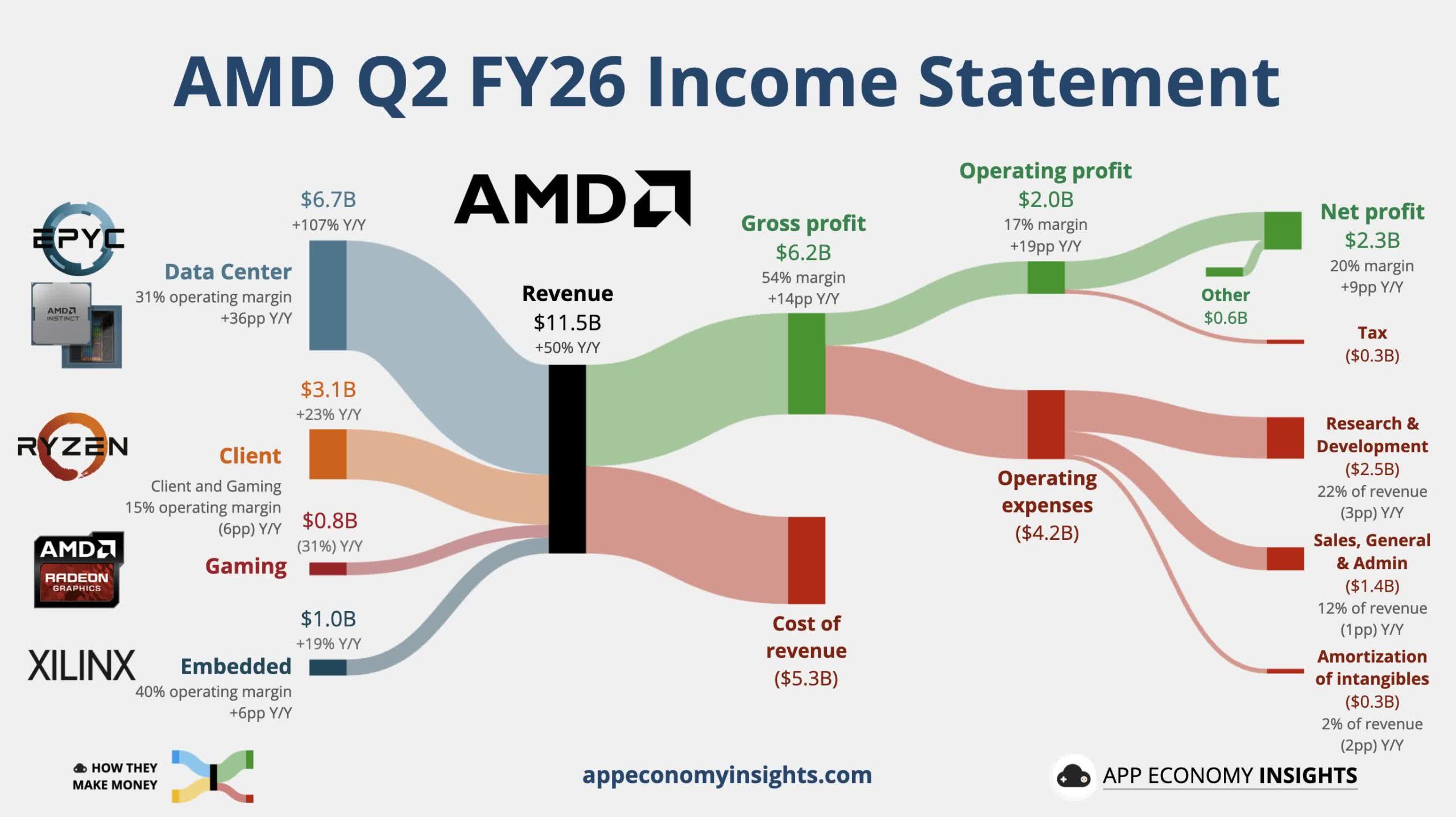
In a nutshell: AMD has become only the fourth US chipmaker to reach a $1 trillion valuation, following in the footsteps of Broadcom, Micron, and Nvidia. AMD’s stock entered 2026 at a price of $223.47 and would dip below the $200 mark a few times before climbing in April. As of writing, shares are trading at $607.24 – a healthy return for anyone that bought in early this year.
Nvidia eclipsed the $1 trillion valuation mark in May 2023, and has not looked back since. The company has continued to tack on value driven largely by the AI boom. Currently, the chipmaker has an incredible market cap of roughly $5.48 trillion, making it the most valuable company in the world by a sizable margin.
Apple, for comparison, is worth around $4.94 trillion. Google ranks third with a market cap of $4.29 trillion. Microsoft, another major player in the tech space, is worth $3.69 trillion as of today.
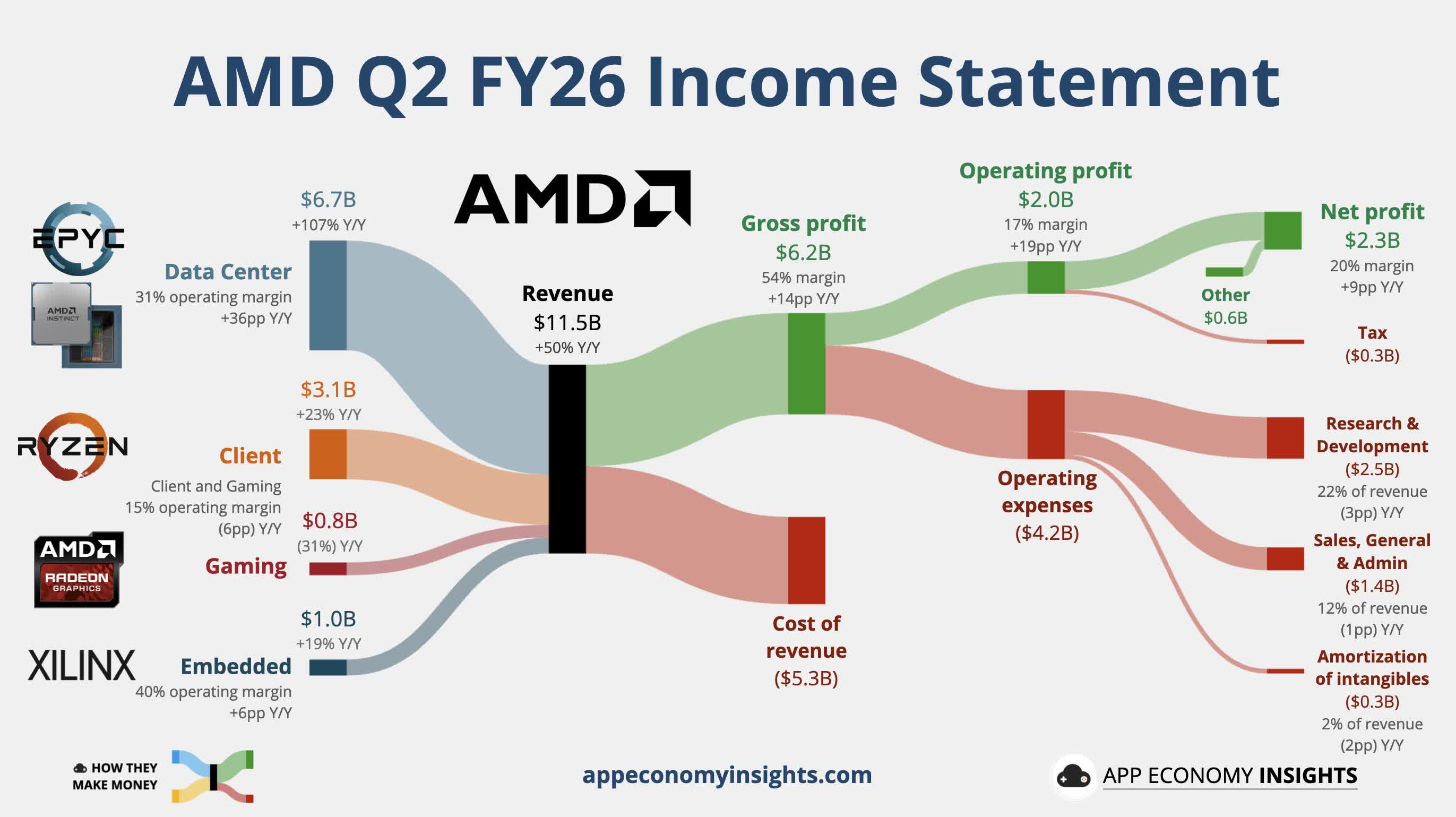
Credit: App Economy Insights
AMD is not the only chipmaker to start the week strong. Shares in Intel are trading up more than 12% on the day, and Qualcomm’s stock is up nearly 8.3%. Broadcom is having a slower day, up just 1.22% as of this writing.
Intel, often considered AMD’s primary rival due to their long history in the CPU industry, is also having a stellar 2026. Share values are up 208% year to date, but the company’s market cap sits at just $643.5 billion – far behind AMD’s.
Last month, AMD CEO Lisa Su said the company expects to double data center sales in 2027. That was welcome news considering the stock’s dip in July and August.
Like others, AMD is benefiting from the ongoing AI boom. At some point, however, the demand for AI hardware will cool. Fortunately for AMD, the company has other divisions to lean on when the time comes. For others that are putting all of their eggs in the AI basket, the outcome could be far more catastrophic.

“We have identified a single component issue affecting a small number of early batches,” Thomas says. “We have isolated those batches and are supporting affected customers.”
Thomas confirmed that Dyson would not answer questions on where—if anywhere—the Dyson CameraJet was still on sale worldwide. Nor would Dyson confirm when it stopped shipments of the product. Thomas also confirmed that Dyson refuses to detail what the faulty “single component” is, what problem it’s causing for the CameraJet, or how many units have been affected globally. Dyson also refused to comment on why it had not issued a formal recall of these faulty early batches of the $500 device.
Dyson Reddit forums have lit up, with names such as “ScameraJet” being bandied around, along with one disgruntled buyer commenting: “Bought two of these and both of them have stopped working. Since I bought it in the UK and wasn’t planning to return it and have thrown the packaging away, I can’t even return them. Disappointed that they scammed so good. Unbelievable that it lasted just two weeks.”
Kyle Wiens, CEO of the repair company iFixit, feels the problem may well be leaking.
“This sounds like a waterproofing issue. Making products at scale with the tolerances required to waterproof are hard,” he says. “My guess without getting a chance to look at a failed unit is that we either have a tolerance issue where some parts aren’t mating perfectly, or a failure in the adhesive curing process, either during manufacturing or in shipping.”
Wiens says this adhesive-curing failure can happen in such a way that a product can pass factory testing fine, but then heat or humidity (or both) during shipping causes a problem.
Adam Toner, founder and technical director of Ripcord Designs, a UK-based electronic design consultancy that has worked with multinational companies including Formula One Management and Panasonic, also thinks water is the CameraJet’s problem.
“On a product like this, there just should never be any water ingress into the internals,” he says. “I don’t have one in front of me, but I’ve seen a few videos and people explaining how you change the battery. Once you pull the battery off—which is where people say they’re seeing water—it looks like there is probably access from that battery compartment into all of the internals of the device.”
The CameraJet not charging, overheating, or failing to start—all of that can be explained by water getting into the device, Toner says. He suspects the problem could be as benign as a faulty gasket or O-ring.
If water getting in does turn out to be an issue for the CameraJet, as these experts suggest, this begs the obvious question: How on earth has Dyson managed to spend six years developing a teched-up toothbrush, designed to be dunked in water every use, and that carries liquid around in it, yet fail to make it waterproof?
Wiens believes the CameraJet chaos could force a well-overdue rethink for Dyson.
“Clearly they didn’t plan for this to happen,” he says. “They should take this opportunity to invest in repairability. Making products easier to fix also makes them easier to rework when manufacturing defects occur. Dyson is way behind the industry on making repair parts and information available for their products. This should be a wake-up call for them to step up.”
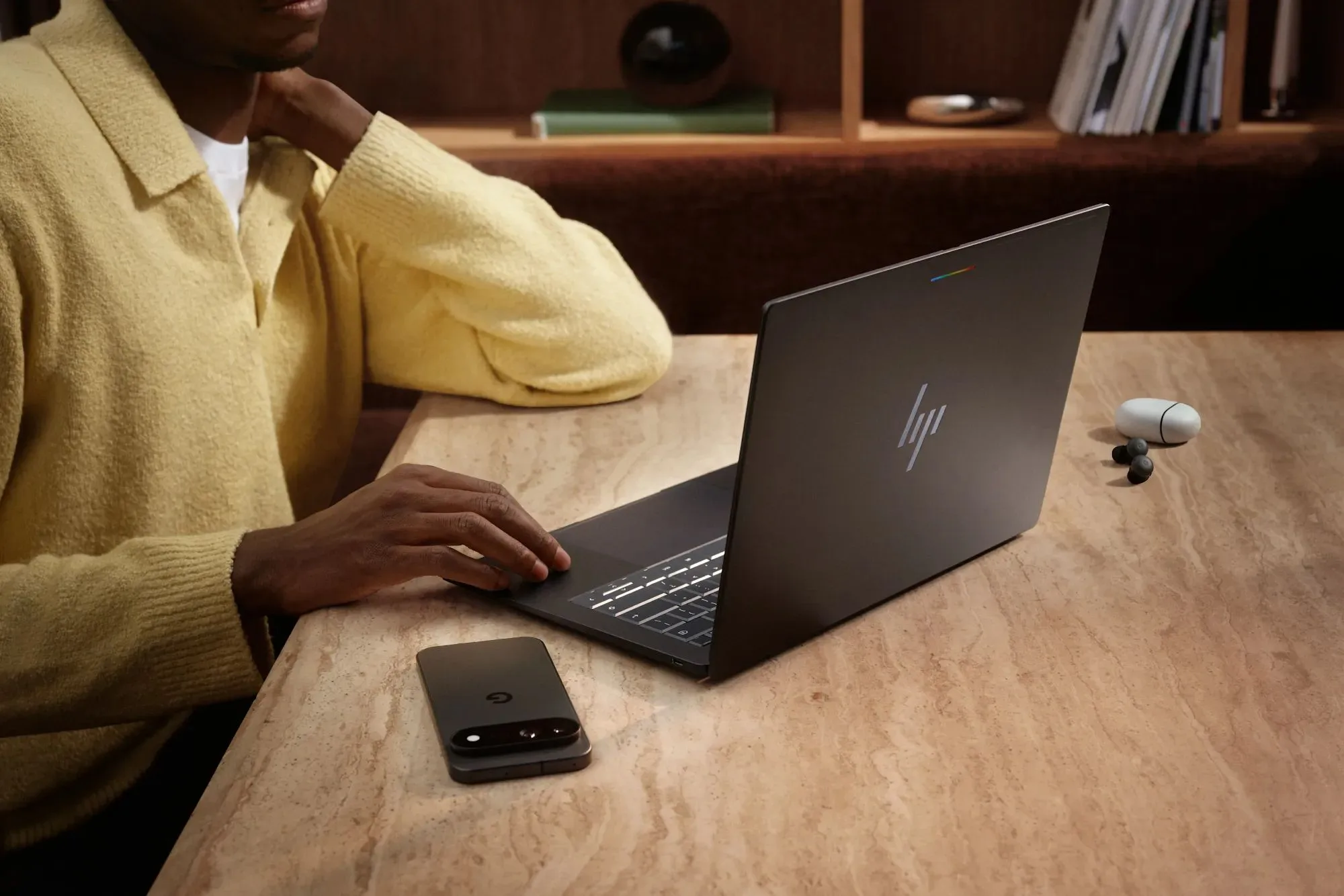
I’ve used Android phones alongside laptops for years, and there’s always this gap that you feel every time. Things really aren’t as bad as they used to be, but an iPhone-Mac level integration it is most definitely not. My phone knows practically everything about me. From all my routine apps, photos, messages, to even some important docs, it practically has my entire digital life.
Unfortunately, it doesn’t carry over painlessly to my laptop. It has its own set of apps and tools there, but the two often behave like they were just connected five minutes ago. While there are ways to work around this, they aren’t fun. Chromebooks have Phone Hub and Android apps, with Windows offering deep phone integration and even Quick Share support now. And still, the experience can’t replicate the feel of a MacBook with an iPhone beside it.
This is where the Googlebook comes in. Google just opened preorders for its new laptop platform this week, with machines from Acer, Asus, Dell, HP, and Lenovo starting at $899 and arriving in stores from October 4. Googlebooks are built on the Android technology stack, paired with the desktop foundations Google developed through ChromeOS.
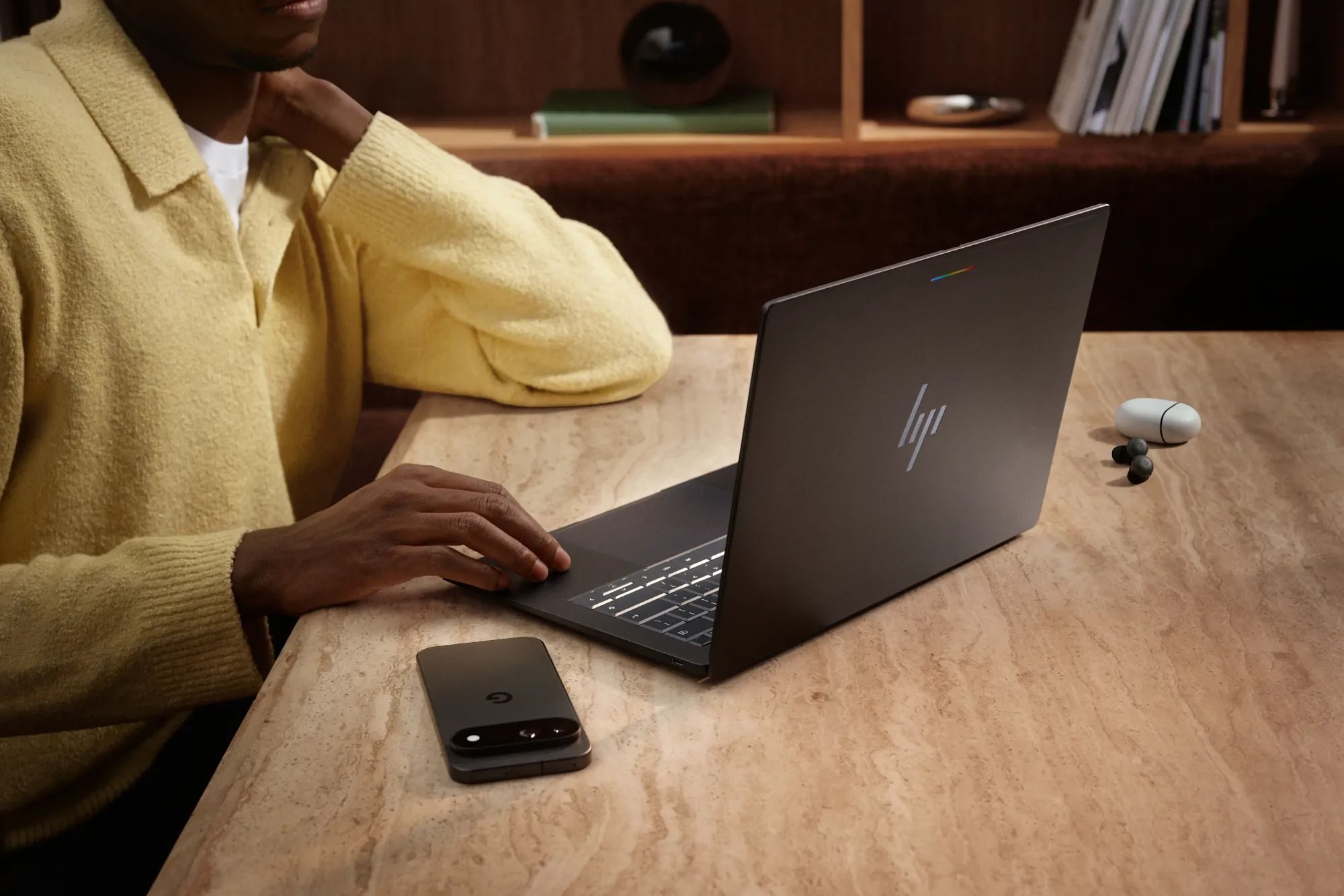
Android has been building an ecosystem around a hole
Look at everything Android already touches, and it’s shocking that notebooks aren’t one of them. You get phones, tablets, wearables, TVs, and even gadgets for cars with Android Auto. The laptop was a gap that was always left wide open. Chromebooks technically filled that position, but ChromeOS was born from a completely different philosophy. Android apps eventually arrived, yet for years they existed as another compatibility layer inside an operating system built around the browser.
Now, Google’s latest platform shares Android’s foundation while bringing over the windowing, browser, and desktop infrastructure it spent years developing for ChromeOS. Android applications can run directly from Google Play, while users also get desktop Chrome with extensions and a full Linux environment.
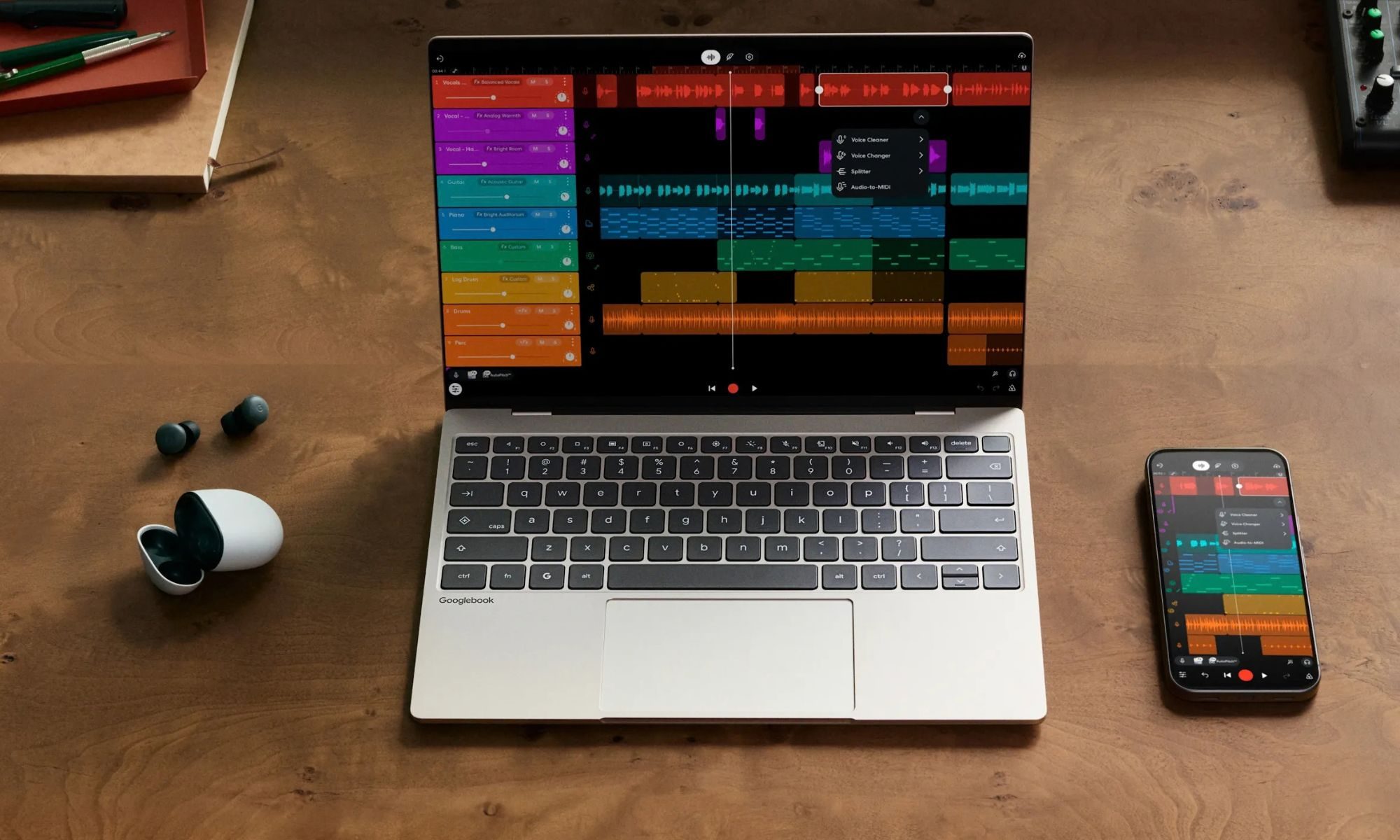
The 3 features we’re all looking forward to
Can’t have an entirely new (sort of) platform without having some exclusives to show for it. Leaving aside the OS itself, Google has made three core features that change the way you interact with a laptop. Magic Pointer is the one that was talked about the most. Just shake the cursor and ask Gemini about whatever is on the screen. Rambler, on the other hand, isn’t exclusive to Googlebooks and can be found on smartphones. But on the PC platform, this is the only place you’ll find it.
Lastly, there is the Continue On and Cast My Apps, which I’ve bundled together since they feel like an extension of one another. The former lets you begin a supported task on your Android phone and resume it from the Googlebook taskbar, while the latter streams an app running on your phone into a desktop window, which allows you to interact with it without installing another copy of it on your laptop.

Another cool new addition is the Files app that can browse files and photos stored on your phone as if it’s a part of the laptop. It may sound basic, but it previously required a dedicated connection for this. The implementation could work wonders, at least for me. I take a screenshot on my phone for an article, and just expect it to simply be there when I open the file picker on my laptop.
Apple figured this out years ago
This is the part Android has been chasing for a very long time. Apple’s Continuity system already lets an iPhone and Mac hand off supported tasks, clipboard, and much more. For an average user in the Apple ecosystem, most of these features just blend into normal use. They are so well integrated into the OS that it just becomes natural.
Handoff is probably the best example. Start something in a supported app on an iPhone, and the corresponding icon appears on the Mac, ready to continue from where you stopped. Googlebook’s Continue On is just the same deal repackaged for Android users, and yes, I’m happy it’s finally here. Apple users can gloat on this one.

I’m glad that Google is sticking with Android more than Gemini
The company calls Googlebook a laptop designed for Gemini Intelligence. So it’s no surprise that Google has built Gemini deep into the cursor, writing tools, and other stuff. AI is the big story for every platform. Now, it has a computer to stretch its legs. Even then, Gemini wasn’t why Android needed Googlebook, as the real star is a computer that is part phone.
For phones on Android 17 or newer, Google is offering deeper phone integration, though access will likely kick off with newer devices. If that works reliably across Pixels, Galaxys, Motorolas, Xiaomis, and the rest of Android, Google is sitting on a gold mine.

Don’t celebrate too early. Google could still mess this up
Googlebook starts at $899, so this isn’t a spiritual successor to Chromebook, at least not with the pricing. Still, we are being promised 16GB of RAM and 512GB of storage, with Intel Core Ultra and Snapdragon X Elite options, along with touch displays reaching 2.8K OLED, and premium materials across the lineup.
Google says Photoshop, Lightroom, CapCut, Microsoft 365, Android apps, desktop Chrome, and Linux tools are supported. But it remains to be seen just how solid it feels in real-world use. Native Android apps also need to actually make use of a laptop-sized screen. Hardware can be premium, but I’m still cautiously optimistic.


A car is a crucial asset for every family. It comes in handy for school runs, grocery trips, road trips, and everything in between. That makes a family car’s long-term reliability an important factor to consider when shopping for a new model, especially now, when new car prices have been steadily rising over the past few years. And it’s not just new cars; used car prices have been rising too.
That said, nobody wants a family car that will spend more time in the repair shop than in the driveway (or on the road running the usual family-related errands). But how can you tell whether a car is built to last and will be able to serve your family for years, with thousands of miles under its belt? You can consider family vehicles most likely to last at least 200k miles, or even more.
While not every vehicle is guaranteed to reach the 200,000-mile mark, some family vehicles have a much better track record of getting there as long as you take good care of them. If you’re shopping for a car that can haul your entire family from one point to another and are looking for a model that’s tough enough to hit 200k miles, or even more, there are several options to choose from. These five family cars stand out as some of the best candidates that can reach 200,000 miles or more when properly maintained, according to data from iSeeCars and Consumer Reports.
Toyota Sequoia
The Toyota Sequoia is a three-row family SUV that can haul up to seven or eight people. According to data from iSeeCars, which analyzed over 402 million cars, this SUV is one of the best long-term choices, with about 36.4% of this model reaching 250,000 miles. That makes it a pretty solid option for parents looking for a vehicle that can make it to at least 200,000 miles. The 2026 model year of the Toyota Sequoia is powered by a hybrid twin-turbo V6 engine mated to a 10-speed automatic transmission, producing up to 437 horsepower and 583 lb-ft of torque.
This SUV has combined EPA-rated figures ranging between 20 and 22 mpg, depending on the trim. Speaking of trims, the Toyota Sequoia is available in six trims, starting with the SR5. Other trim levels include Limited, Platinum, TRD Pro, Capstone, and 1794 Edition, inspired by Texas history. The base trim starts at an MSRP of $67,920, which includes $2,195 in destination and handling fees.
The high-end Capstone trim starts at $88,330. The Sequoia offers a rear-wheel drivetrain as standard on all trims except the TRD Pro grade, which includes 4WD targeted at serious off-roaders. If you have a caravan to tow for a more comfortable weekend getaway with your family, the 2026 Toyota Sequoia has a maximum towing capacity of 9,500 pounds.
Toyota 4Runner
Japanese car maker Toyota is known for making some of the most reliable vehicles. As such, it’s not surprising to see yet another model from the company’s lineup that is highly likely to reach 200,000 miles or more. From its analysis, iSeeCars reveals that 26.8% of Toyota 4Runners reach the 250,000-mile mark. The Toyota 4Runner has been featured among the most reliable Toyota models ever built, and it also appears on Consumer Reports’ list of vehicles that have been proven to get to 200,000 miles.
The 4Runner is a capable family SUV that can carry up to five people. The 2026 variant of the 4Runner offers two powertrains, a hybrid and a non-hybrid. The gas variant uses a 2.4-liter turbocharged four-cylinder engine, paired with an eight-speed automatic gearbox, producing 278 hp and 317 lb-ft of torque. That same engine is used in the hybrid variants, but due to electric motors, it produces a maximum of 326 hp and 465 lb-ft of torque.
Toyota offers RWD or part-time 4WD on lower trims, but for those who need off-road capability or want to plow through tricky icy roads with confidence, trims like the TRD Off-Road Premium i-FORCE MAX and Limited i-FORCE MAX come with 4WD standard. The 2026 Toyota 4Runner starts at a sticker price of $43,865. You can choose from 12 trims if you need a 2026 Toyota 4Runner.
Honda CR-V
The CR-V has been one of Honda’s most successful nameplates. For families, the CR-V is a top choice and, with proper care, it can serve you for a long time. Both Consumer Reports and iSeeCars say the Honda CR-V is likely to last 200,000 miles or more. iSeeCars says about 13.9% of CR-Vs reach 250,000 miles, and Consumer Reports has named the model its top pick among cars that can hit the 200,000-mile mark. The Honda CR-V is a compact SUV that accommodates five people and offers ample cargo space for carrying your family’s belongings.
For the 2026 model year, the company is still offering hybrid and non-hybrid versions. The non-hybrid uses a 1.5-liter turbocharged four-cylinder engine as standard, producing 190 hp and 179 lb-ft of torque, paired with a continuously variable transmission (CVT), and has a combined EPA-estimated rating of 29-30 mpg. The hybrid CR-V comes with a slightly more powerful 2.0-liter four-cylinder alongside two electric motors, producing a total of 204 hp and 247 lb-ft of torque. The hybrid is more efficient, with 35 to 40 mpg combined under EPA testing standards.
You can pick between front- and all-wheel drive regardless of the variant, and the towing capacity varies depending on the engine. The 2026 Honda CR-V has a starting MSRP of $32,470 and tops out at $44,100, including a $1,550 destination charge and no extra options.
Toyota Highlander
This is yet another family car that can last for a long time. iSeeCars’ analysis found the Highlander to be a solid vehicle that can hit 250,000 miles. According to the site’s findings, 17.5% of its gas variants can hit 250,000 miles. The hybrid Highlanders are even better, as iSeeCars’ analysis found 25.9% of them able to hit the same milestone. Similarly, Consumer Reports’ member survey has also identified the Highlander as a good option for the long haul. Every car model has its issues, and the Toyota Highlander isn’t an exception.
So as long as you watch out for the common Toyota Highlander problems and follow the manufacturer’s maintenance schedule, it’ll serve you and your family for quite some time. If you need a new Highlander, the 2026 model starts at an MSRP of $47,865, including a $1,595 destination charge, and offers seven trim levels to choose from. It offers gas and hybrid engine options. The hybrid variant uses a 2.5-liter four-cylinder powertrain alongside three electric motors, producing 243 hp total, while the gas model uses a turbocharged 2.4-liter four-cylinder making up to 265 hp.
The gas variant uses an eight-speed automatic transmission, while the hybrid uses an electronically controlled continuously variable transmission (eCVT). As a three-row mid-size SUV, the Highlander can seat up to seven people. With the 2026 model year, Toyota offers AWD on all grades. EPA-rated fuel economy for the gas Highlander ranges from 21 to 28 mpg, while the more efficient hybrid powertrain reaches 35 mpg.
Toyota Camry
The final model on our list is the Toyota Camry. It’s a family-friendly four-door sedan that both Consumer Reports and iSeeCars say is likely to hit 200,000 miles. iSeeCars’ analysis of over 400 million cars found that 13.5% of Camrys hit the 250,000-mile mark. Additionally, Consumer Reports’ member survey ranked the Camry as the top model likely to reach 200,000 miles, tying with the aforementioned Honda CR-V.
As a sedan, the Camry is the cheapest model on this list, with a starting sticker price of $30,895, including a $1,295 destination charge. The Camry comes with a hybrid engine, helping it deliver excellent fuel economy. Per EPA estimates, you can expect combined fuel economy of up to 51 mpg, depending on the trim. There are two powertrains to pick from. You can choose a 2.5-liter four-cylinder with two electric motors producing 225 hp that sends power to the front wheels, or a similar engine with three motors sending power to all four wheels and increasing output to 232 hp.
The Camry can accommodate up to five people, and Car and Driver praised the model for having enough space for adults in both the front and back seats. The team found the Camry can carry up to seven carry-on suitcases and up to 19 with the rear seats folded, so don’t overlook it just because it’s not an SUV or a crossover.
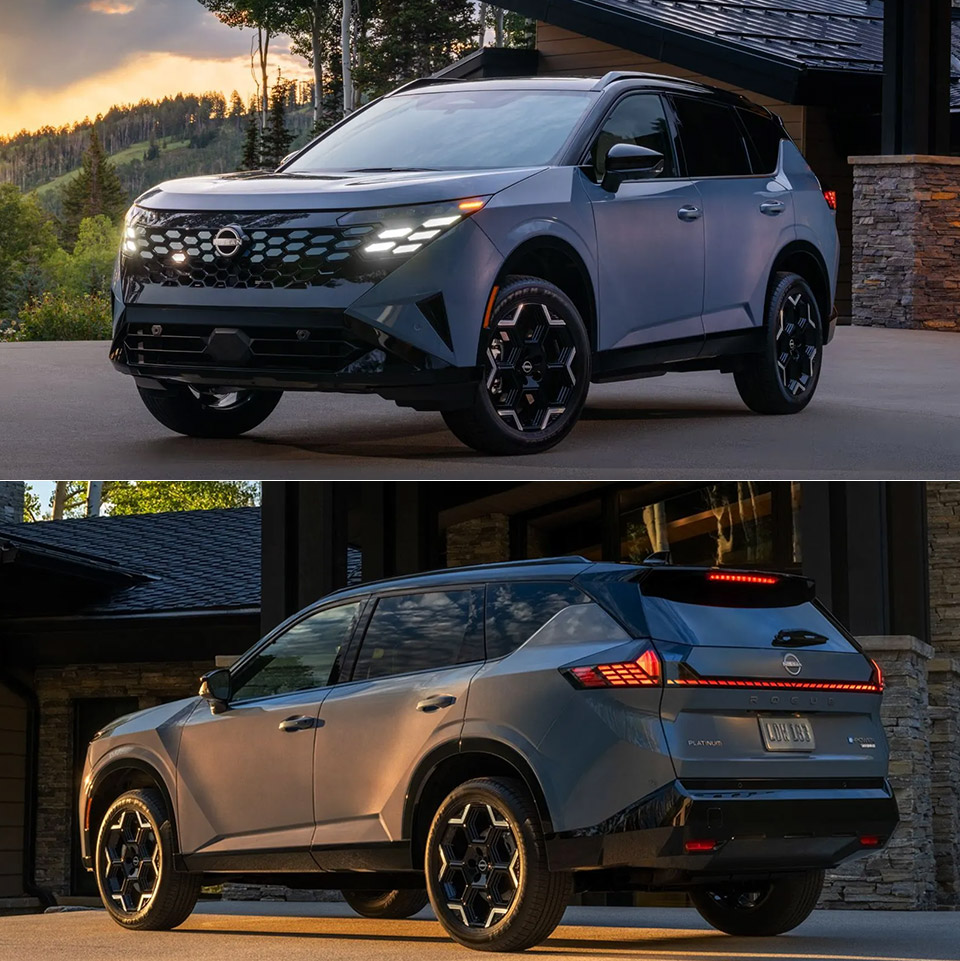
Nissan spent years selling e-POWER overseas before it finally landed on a U.S. compact SUV, and the 2027 Rogue Hybrid is the first American application of that third-generation series setup. Dual electric motors do all the driving. A turbocharged 1.5-liter three-cylinder engine never turns the wheels. It only feeds a 1.67-kilowatt-hour lithium-ion pack and a generator so you refill at a regular pump and skip any charging cable. Combined output is 225 horsepower, with a 202-horse front motor and a 134-horse rear motor giving the crossover standard all-wheel drive and instant pull from a stop.
Drivers who have seen the prototypes claim the response is much closer to a Leaf than a normal hybrid. Without a transmission, acceleration is smooth and linear, and the engine may run quietly while the battery is fully charged. Nissan claims 40mpg in the city, 36mpg on the highway, and 38mpg combined in their internal testing for the mid-range SR, which puts it right in line with a Honda CR-V Hybrid and only a few miles per gallon behind a Toyota RAV4 Hybrid 4WD. With a 14-gallon tank and a towing capacity of 1,500 pounds, it sounds more like a family automobile than a work truck, which is unlikely to accomplish much heavy lifting.
Sale

LEGO Technic 2 Fast 2 Furious Nissan Skyline GT-R (R34) Car – DIY Kit and Building Set for Adults…
- BUILD AN ICONIC CAR – Adults can relive their favorite movie moments with the LEGO Technic 2 Fast 2 Furious Nissan Skyline GT-R (R34), a detailed…
- CAR MODEL KIT FOR ADULTS – Fans of model car kits and building blocks will enjoy discovering details as they build, like functioning steering, a…
- GROUNDBREAKING DRIFT FUNCTION – The first-ever LEGO Technic drift mechanism raises the car so builders can recreate the movie’s most impressive…
The cabin is far quieter than the old gas Rogue, and in some intense mountain driving, even quieter than a modern RAV4. Front headroom is 40.9 inches without a sunroof (which Nissan claims puts it ahead of the competition in the hybrid class), and front legroom is 41.5 inches. The rear doors swing back 90 degrees on their hinges, there are 5 LATCH hooks for a child seat in the middle, and cargo space is 31.1 cubic feet behind the second row or 65.9 if the seats are folded down. The old climate and volume controls remain on the dashboard rather than disappearing into a screen.
The standard gear already includes wireless Apple CarPlay and Android Auto on a 12.3-inch touchscreen, as well as a world-first magnetic wireless phone charging. SR variants with the tech pack and up to the Platinum have a 14.3-inch display with Google and Gemini, and as if that wasn’t enough, the Platinum also gets a 10-speaker Bose system and a second wireless pad for charging another phone. Nissan’s e-Pedal keeps the SUV rolling gently into a stop with a single pedal, and the Smooth Stop technology ensures there’s no jerking forward in traffic as you come to a halt. The improved ProPILOT Assist now allows for automatic lane changes and hands-off assistance in slow traffic congestion.
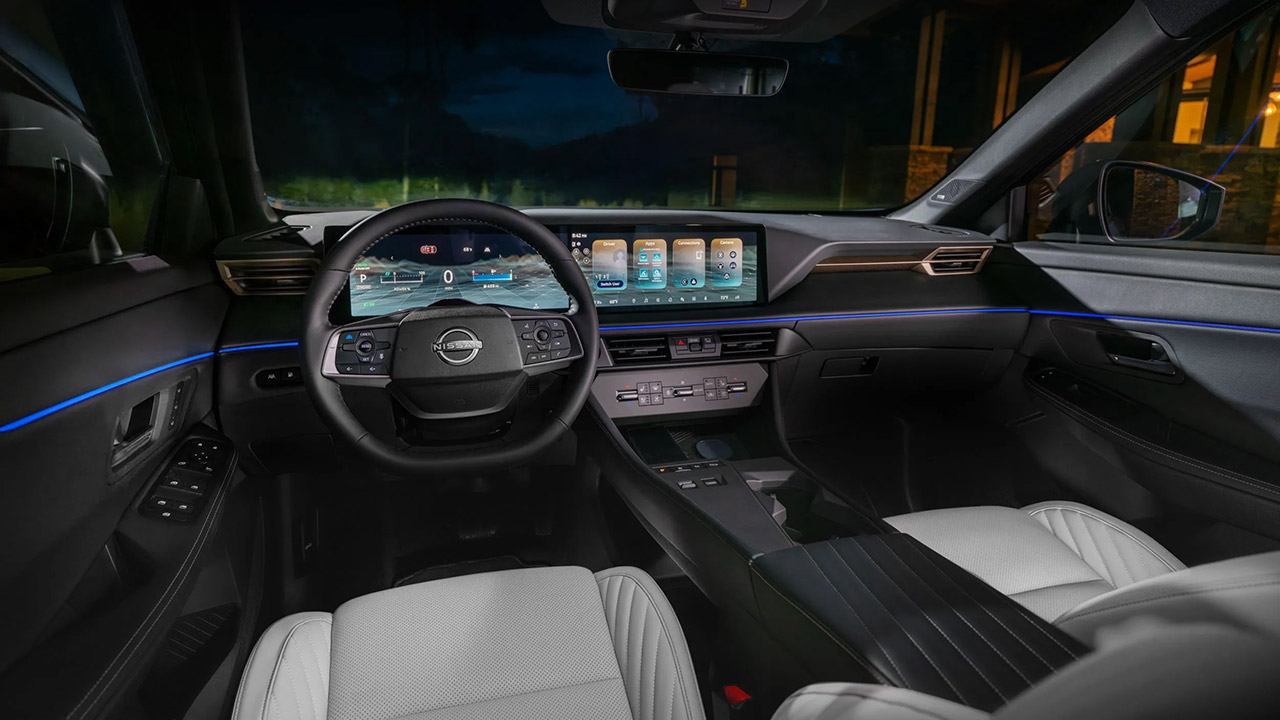
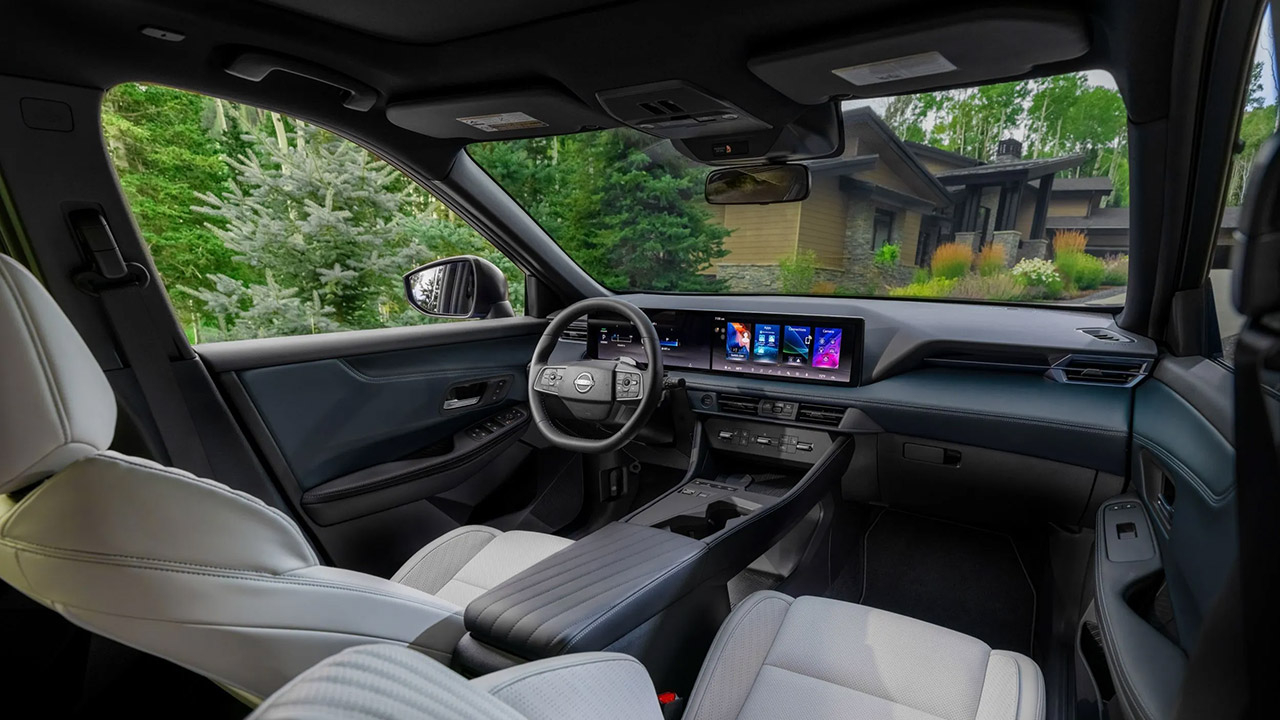
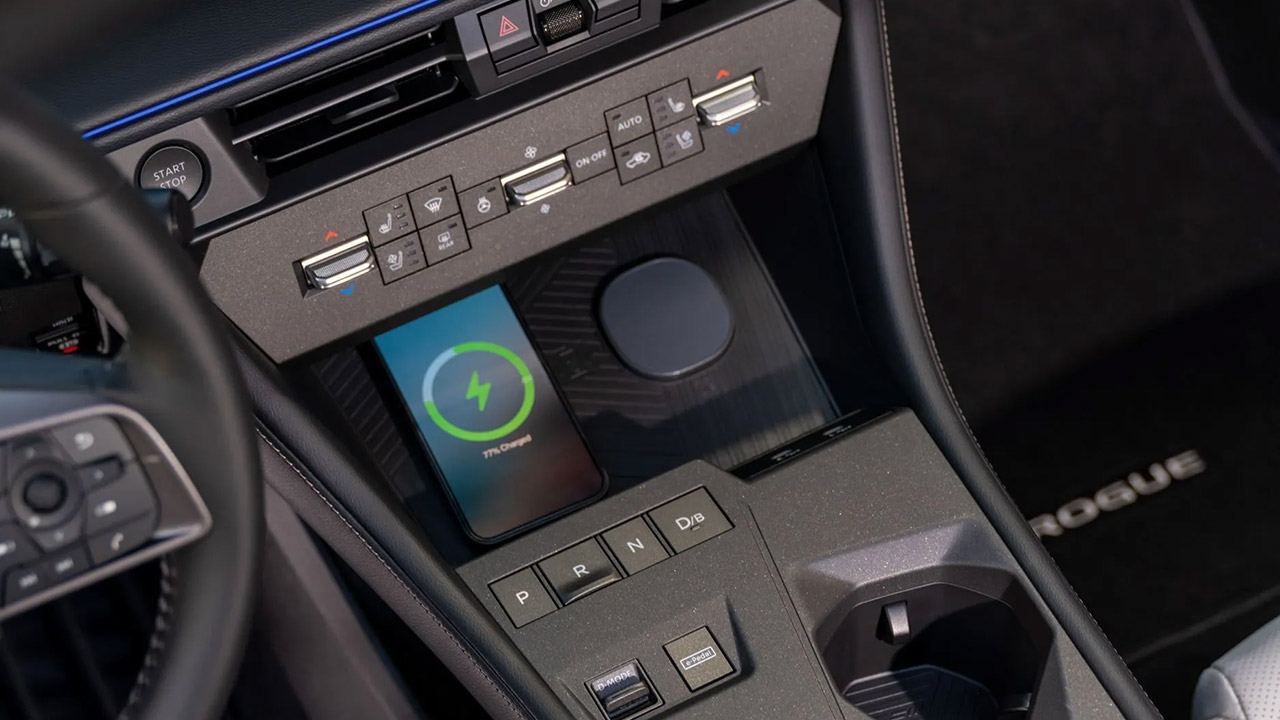
The SV all-wheel-drive model starts at $35,490 before a $1,575 destination charge, for an all-in price of $37,065. There’s also the SV Premium package, a basic SR, an SR with the tech pack, and a Platinum model, all priced at $43,490 before destination. The well-equipped SR Technology package will be available for $41,490 in the fall of 2026, with the rest of the range following in early 2027. The first cars will be exported from Japan before moving to Smyrna, Tennessee in 2027, which could assist improve US manufacturing without the need to create a brand new plant.
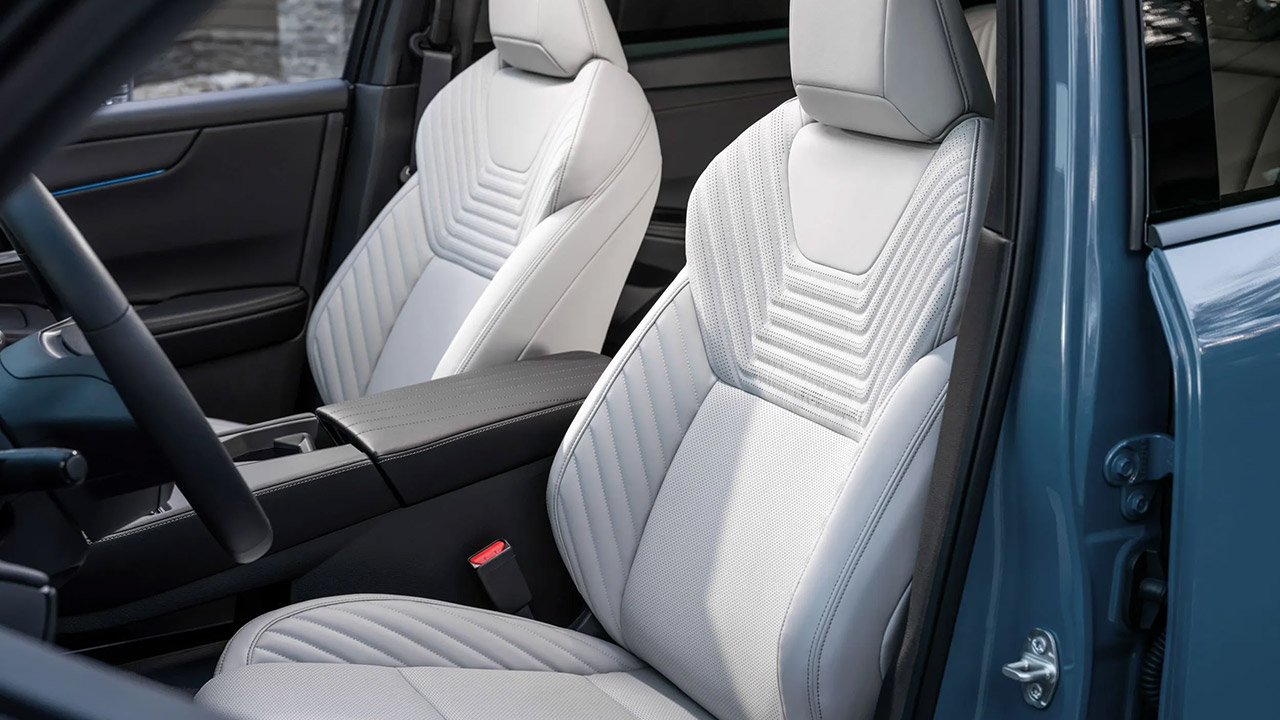

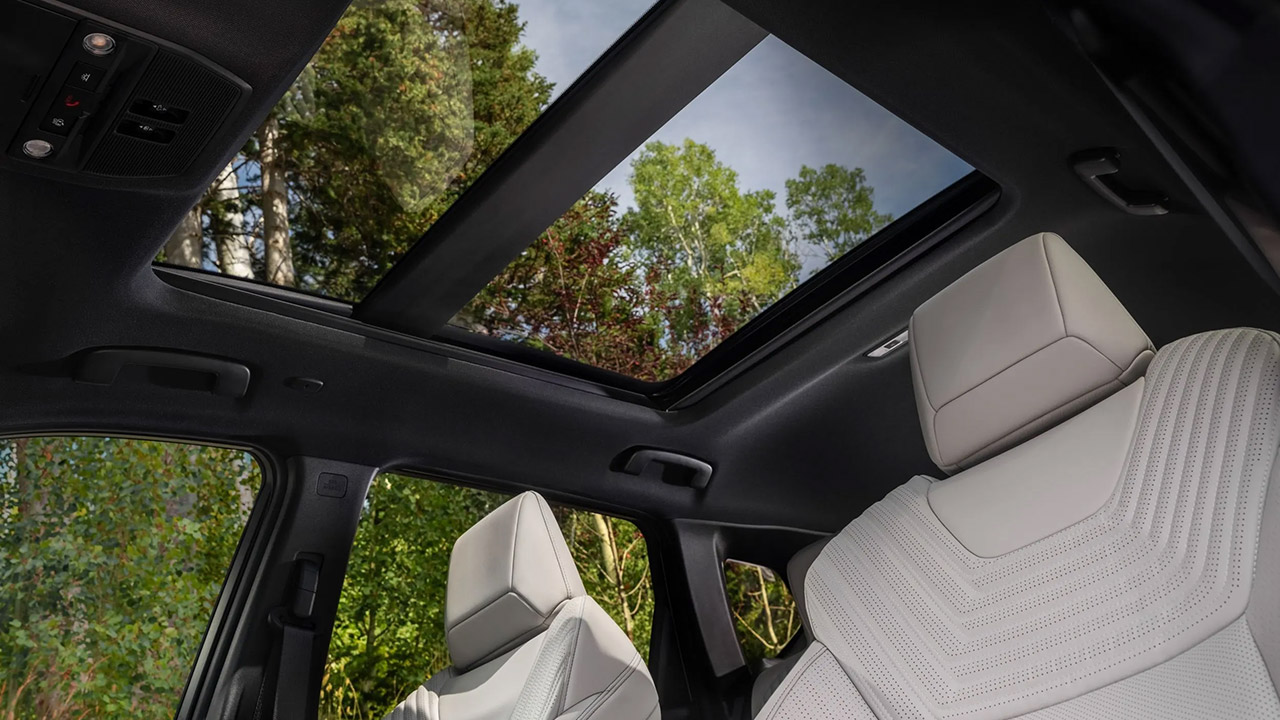
The exterior design is more aggressive than the previous Rogue, with a narrower grille and lighting that wraps around the headlamps, as well as an optional full-width taillamp. The curb weight for the lightest SV model is 4,065 pounds, which is approximately 400 pounds more than the previous gas-powered AWD Rogue with an 183.1-inch body and a 106.5-inch wheelbase. Ground clearance ranges from 8.4 to 8.5 inches, depending on the trim level. There are eight color options available, five of which have a black roof, including a few new ones such as Horizon Blue Pearl Metallic.
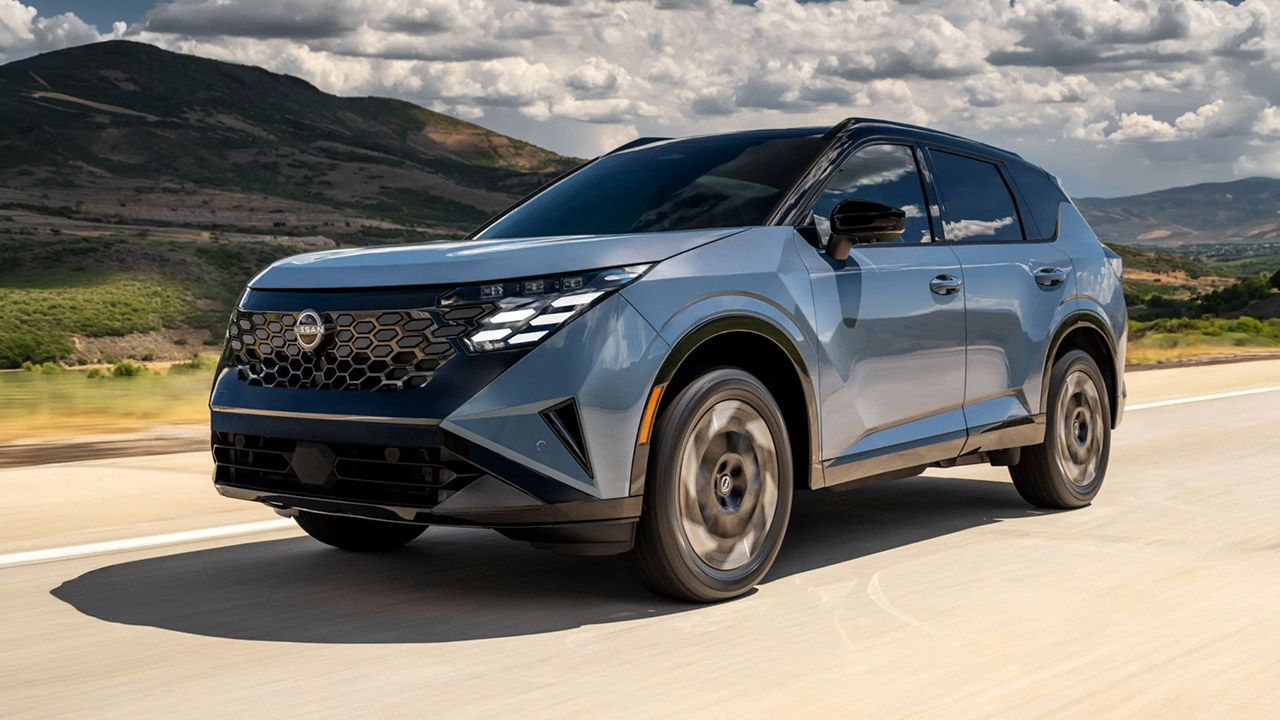
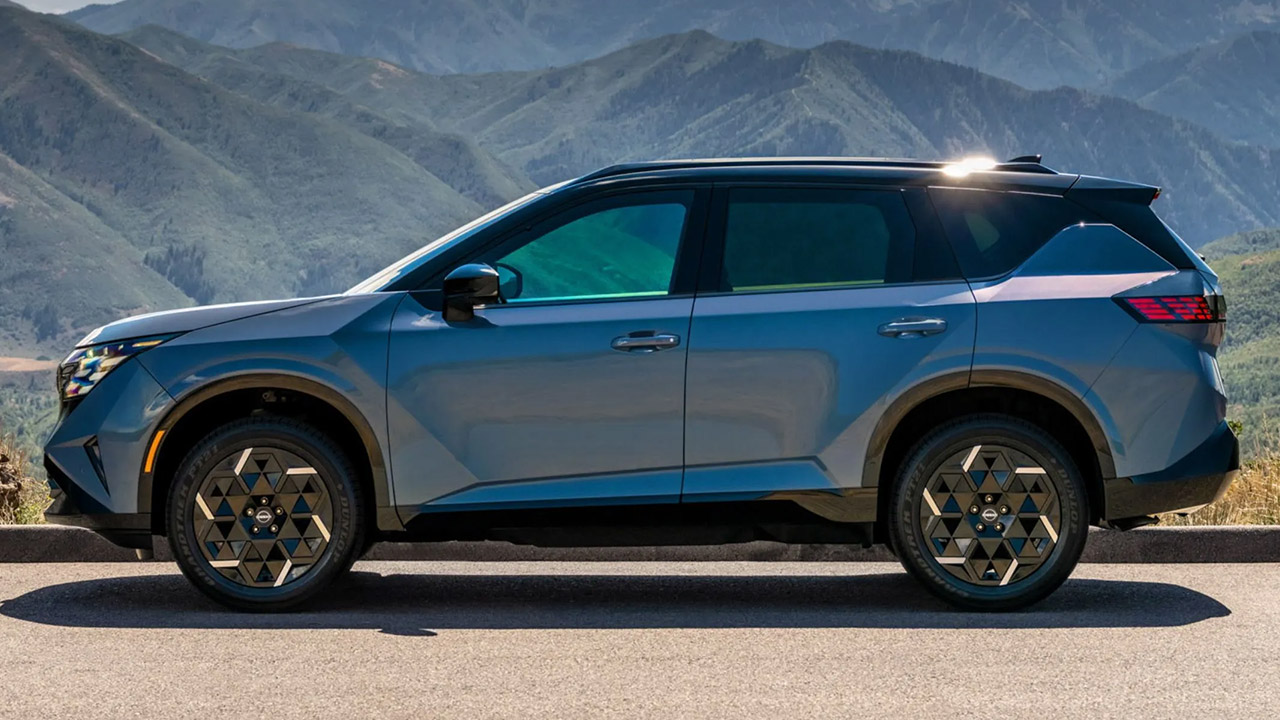
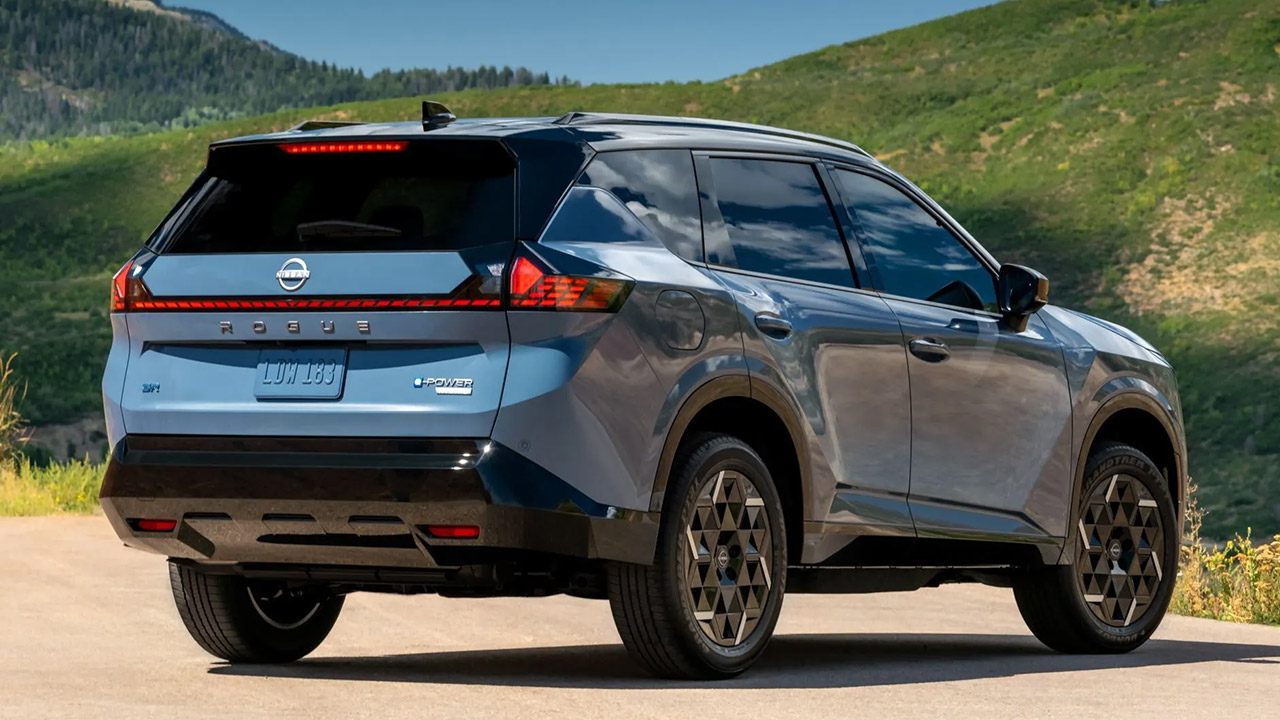
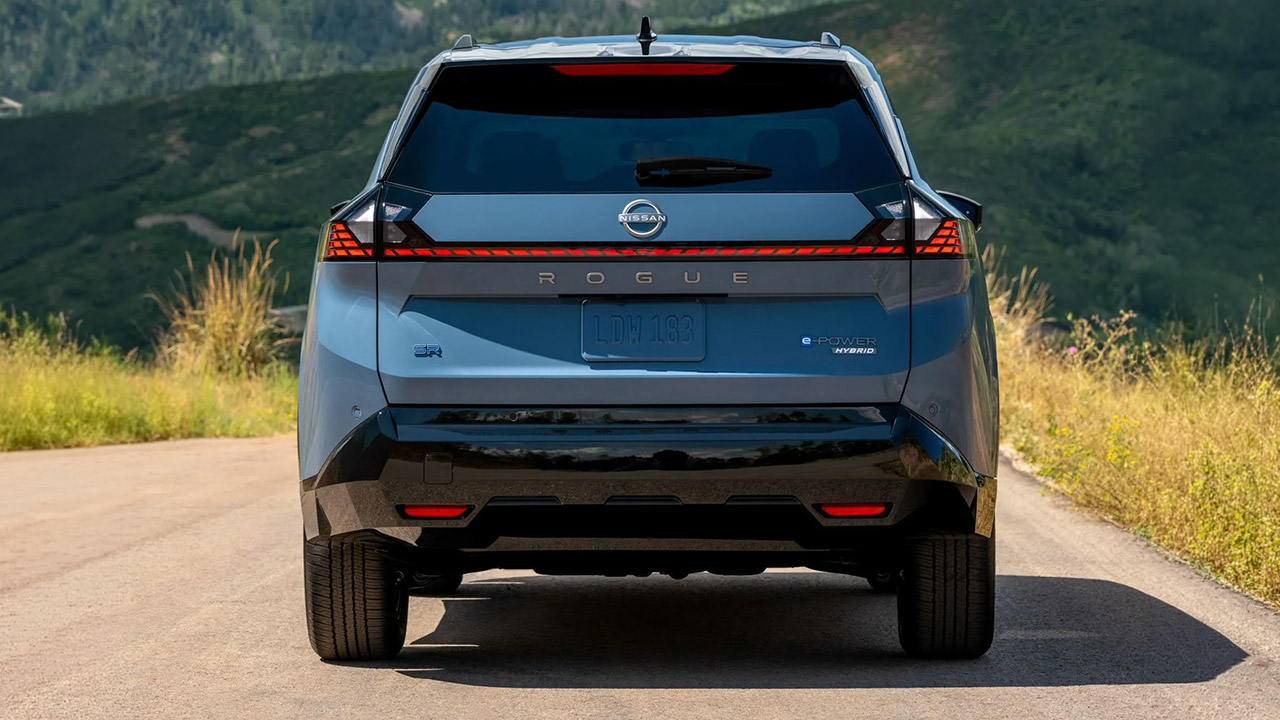
Christian Meunier, chairman of Nissan Americas, called hybrids the powertrain more U.S. buyers now want and framed this launch as a way to pull in shoppers who had stopped looking at the brand. e-POWER has already moved nearly two million vehicles worldwide across three generations. American buyers now get the dual-motor version tuned for local speeds and roads, with a 148-horse generator engine that Nissan says reaches 42 percent thermal efficiency when it is making electricity rather than turning tires. If the quiet cabin and one-pedal manners hold up once EPA numbers and real winter testing arrive, Nissan finally has a compact hybrid that feels distinct from the RAV4 and CR-V crowd instead of arriving late to the same formula.

‘Glum-faced’ Man Utd forward labelled Michael Carrick’s weak link by former teammate

OPPO K14 Plus 5G Teased for India Launch: What to Expect

OBUNA BOLILA KANALGA #dj #money #qashqirlarmakonipistirma #love #shayxrahmatullohtermiziy #rek




-

 Fashion3 days ago
Weekend Open Thread: Talbots – Corporette.com
-

 Tech1 day ago
Researchers escape OpenAI Codex sandbox to run commands on host
-

 Crypto World7 days ago
Revolut Attackers Warn of Ongoing Daily Customer Data Leaks
-

 Crypto World3 days ago
Circle launches Arc Studio AI agent for building onchain apps
-

 Crypto World6 days ago
Robinhood engineers charged over $50K crypto scheme
-

 Crypto World7 days ago
Kraken Lets xStocks Holders Earn Yield Through DeFi
-
 NewsBeat3 days ago
Trump says US has reached an agreement to take permanent control of Greenland’s security
-

 Crypto World3 days ago
Bitcoin price breaks channel as RSI climbs to 63
-

 Crypto World5 days ago
US Charges Robinhood Engineers Over Crypto Listing Trades
-

 Crypto World6 days ago
What Is the Status of the U.S.-Iran Peace Talks? Here's What Both Sides Are Saying
-

 Crypto World24 hours ago
Who Needs CLARITY Anyway? ARB Could See 70X Increase: Hodler’s Digest
-

 Crypto World7 days ago
NVIDIA Analysis: Attempted Rising Wedge Breakout Amid Pressure on the AI Sector
-

 Tech6 days ago
Webb’s IC 348 Mosaic Includes Two-Jupiter Dwarfs, Twin Jets, and a Nursery Still Making Worlds
-

 Crypto World3 days ago
Trading Bitcoin on Robinhood? Why 2% Spread Has Traders Worried
-

 Crypto World3 days ago
World Money launches in 150+ countries with Stripe
-

 Crypto World4 days ago
Silver prices recover quickly, hitting weekly high today
-

 Entertainment6 days ago
Big Brother Update: Melody Explodes at Drew as Illness Sweeps BB28 House
-
 NewsBeat3 days ago
US was ‘on brink of war’ with China over false AI report of nukes moving in Middle East
-

 Crypto World7 days ago
DOJ Seeks to Seize $61M in Iran Oil Funds From Binance Accounts It Vouched For
-

 Crypto World4 days ago
Mortgage and refinance interest rates today, Thursday, September 17, 2026
You must be logged in to post a comment Login