
Business
Simply Good Foods: Too Tasty To Ignore, Even With Its Problems (NASDAQ:SMPL)



Daniel is an avid and active professional investor.
He runs Crude Value Insights, a value-oriented newsletter aimed at analyzing the cash flows and assessing the value of companies in the oil and gas space. His primary focus is on finding businesses that are trading at a significant discount to their intrinsic value by employing a combination of Benjamin Graham’s investment philosophy and a contrarian approach to the market and the securities therein. Learn more.
Analyst’s Disclosure: I/we have no stock, option or similar derivative position in any of the companies mentioned, and no plans to initiate any such positions within the next 72 hours. I wrote this article myself, and it expresses my own opinions. I am not receiving compensation for it (other than from Seeking Alpha). I have no business relationship with any company whose stock is mentioned in this article.
Seeking Alpha’s Disclosure: Past performance is no guarantee of future results. No recommendation or advice is being given as to whether any investment is suitable for a particular investor. Any views or opinions expressed above may not reflect those of Seeking Alpha as a whole. Seeking Alpha is not a licensed securities dealer, broker or US investment adviser or investment bank. Our analysts are third party authors that include both professional investors and individual investors who may not be licensed or certified by any institute or regulatory body.


Blue Owl Technology Finance: Management Says Coverage Arrives By Mid-2027

ClearBridge Appreciation Fund Q2 2026 Commentary

Blue Owl Capital: The Disconnect I Saw In May Is Now Wider

Janus Henderson Investors exists to help clients achieve their long-term financial goals. Formed in 2017 from the merger between Janus Capital Group and Henderson Global Investors, we are committed to adding value through active management. For us, active is more than our investment approach – it is the way we translate ideas into action, how we communicate our views and the partnerships we build in order to create the best outcomes for clients. While our investment managers have the flexibility to follow approaches best suited to their areas of expertise, overall our people come together as a team. This is reflected in our Knowledge. Shared ethos, which informs the dialogue across the business and drives our commitment to empowering clients to make better investment and business decisions.www.janushenderson.com
Business
$50B Retail Giant Dollarama Targets Australian Accessory Distributors with Direct Global Sourcing Model Across 410-Store Network


SYDNEY, Australia — Dollarama Australia Accessory Distributors Direct Global Sourcing disruption is taking center stage across the national retail landscape, as the $50 billion Canadian discount powerhouse accelerates the integration of its global supply chain into its newly acquired 410-store Australian footprint.
Following its acquisition of The Reject Shop, Dollarama is systematically replacing local wholesale supply arrangements with direct global factory procurement. The aggressive transition poses a immediate threat to traditional Australian accessory distributors that supply high-margin consumer electronics, tech cables, home entertainment attachments, and general merchandise. By deploying its proven low-cost merchandise model, Dollarama aims to bypass middleman markups, offering low-ticket retail items at aggressive shelf prices while maintaining industry-leading gross margins.
Retail analysts warn that Dollarama’s entrance marks a structural shift that will compress margins for domestic distributors and established value chains like Kmart, Big W, Officeworks, and Bunnings.
Direct Sourcing Machine Disrupts Local Wholesale Channels
Dollarama’s core strategic advantage lies in its extensive direct-to-factory sourcing infrastructure, eliminating regional intermediaries.
In traditional Australian retail, consumer tech accessories—such as HDMI cables, phone chargers, audio adapters, and computer peripherals—are imported and distributed by third-party wholesale vendors. These local distributors rely on healthy gross margins to cover domestic warehousing, marketing, and logistics. Dollarama’s global procurement engine, however, bypasses local distributors entirely, purchasing directly from overseas manufacturers in massive volume. By stocking converted Australian stores with its proprietary import stock, Dollarama undercuts conventional retail price points while capturing full category profitability.
Domestic distributors facing sudden contract terminations are forced to evaluate alternative sales channels or risk structural revenue declines.
- Middleman Bypass: Eliminates third-party Australian importers to capture full wholesale-to-retail margin spreads.
- High-Margin Tech Focus: Leverages low-cost tech accessories, cables, and chargers that deliver superior profit margins compared to big-ticket hardware.
- Direct Import Scaling: Progressively converts legacy Reject Shop stock to Dollarama’s global private-label inventory across 410 locations.
- No Loss-Leader Dependence: Operates without promotional loss leaders, ensuring every individual product category generates positive unit economics.
Direct supply chain integration gives international discount giants an insurmountable cost advantage over traditional wholesale networks.
Extraordinary Retail Economics and Financial Power
Dollarama’s entry into Australia is backed by exceptional corporate profitability and strong balance sheet liquidity.
Unlike struggling foreign retail entrants that rely on speculative debt to finance international expansion, Dollarama operates an ultra-efficient retail model. In recent financial disclosures, the Montreal-headquartered retailer reported global quarterly revenue exceeding C2 billion, achieving a group EBITDA margin of 32.2% and Canadian g[span_9](start_span)ross margins of 45.7%. Generating nearly C35 in EBITDA for every C$100 in sales, Dollarama possesses the financial strength to absorb multi-year restructuring costs associated with converting The Reject Shop network while aggressively undercutting competitors on price.
The retailer’s capital strength enables sustained long-term pressure on domestic competitors attempting to defend market share.
Robust gross margins provide the financial flexibility required to execute rapid nationwide store conversions and price cuts.
Broader Competitive Impact on Australian Big-Box Retailers
The injection of Dollarama’s global supply chain creates competitive friction across multiple retail categories.
Established Australian retailers—including Kmart, Big W, Target, Officeworks, Bunnings, and Aldi—have long relied on high-margin accessory sales to subsidize lower-margin staple categories. As Dollarama rolls out $5, $10, and $15 high-frequency consumer electronics and kitchenware accessories across its 410 Australian stores, budget-conscious consumers are presented with immediate price alternatives. Industry analysts note that Australian retailers attempting to boost profitability through expanded private-label offerings will face intense competition from Dollarama’s established global private-label pipeline.
The arrival of a true global value specialist escalates competition in an already tightening Australian consumer environment.
Retailers operating on domestic supply chains face urgent pressure to optimize procurement costs to maintain shelf competitiveness.
Future Roadmap: Store Conversions and Expansion Targets
Dollarama’s long-term plan for the Australian market involves extensive network renovation and brand conversion.
Having acquired The Reject Shop’s infrastructure, local management, and distribution centers, Dollarama is systematically converting legacy store layouts into its optimized Canadian format. Initial store conversions have already demonstrated sales lifts, prompting management to target a long-term Australian network expansion toward 700 stores over the next decade. As store conversions accelerate, local accessory distributors will see their total addressable market contract, signaling a permanent realignment of Australia’s value-retail supply chain.
Dollarama’s aggressive growth trajectory will reshape Australia’s discount retail landscape for the next decade.
The execution of its global supply model sets a new operational baseline for value retailing across Australia.

Asia energy stocks slip as oil clocks protracted losses

MSCI Inc.’s gauge of Asian shares climbed 0.5%, with memory chipmakers Samsung Electronics Co. and SK Hynix Inc. the top contributors to gains. South Korea’s benchmark Kospi Index jumped more than 2%. Contracts for US benchmarks edged higher after the S&P 500 and Nasdaq 100 posted their best days since early August.
An index of US semiconductor stocks rallied over 4% on Monday as early signs of success for Meta’s AI agent revived enthusiasm for the sector. Meta surged 11%, Advanced Micro Devices Inc. topped $1 trillion in market value and the Nasdaq 100 jumped 2.8%.
Read more: US stocks: US market ends sharply higher as AI optimism reignites and Treasury yields retreat
Brent oil was steady around $100 a barrel after closing 3.4% lower on Monday as Middle East supply concerns eased and traders tracked an apparent uptick in efforts to end the US-Iran war.

“The most meaningful catalyst appears to be the release of Meta’s new AI chatbot, which has been met with strong demand and resurfaced optimism about the growth outlook for the so-called AI trade,” said Kyle Rodda, a senior analyst at Capital.com. “Signs of strong AI demand should improve sentiment throughout the AI ecosystem, especially chips, which ought to filter through to pockets of the Asian tech sector.”
Investors are also gearing up for this week’s summit between US President Donald Trump and Chinese President Xi Jinping, with officials offering upbeat assessments ahead of talks expected to cover AI, trade and investment.US Treasury Secretary Scott Bessent described weekend meetings with China’s top trade negotiator Li Chenggang as “very successful.”
“All eyes will be on the Trump-Xi meeting in Washington on Thursday, with trade, AI and geopolitics seen dominating the agenda,” Roman Ziruk, lead FX strategist at Ebury, wrote in a note. “Given increasing geopolitical uncertainty worldwide, keeping the world’s two dominant economies on speaking terms has rarely mattered more.”
Developments in the Middle East remained firmly in focus as traders assessed whether diplomacy and increased Saudi exports could extend oil’s retreat. Satellite data showed Saudi Arabia’s observed oil loadings from inside the Persian Gulf jumped over the weekend, with the highest number of ships seen at the nation’s main Persian Gulf port since June.
Trump told Fox News he would “probably” be open to meeting his Iranian counterpart, Masoud Pezeshkian, on the sidelines of the UN General Assembly in New York this week. His administration has also proposed investing $5 billion in a new fund to help Middle East countries rebuild energy infrastructure damaged in the Iran war, the Wall Street Journal reported.
Meanwhile, Federal Reserve Bank of Chicago President Austan Goolsbee warned that the central bank cannot ignore repeated and persistent supply shocks and may need to respond even at the cost of economic hardship.
“Supply shocks have come more frequently, hit harder and lasted longer,” Goolsbee said Monday at an event in London. “And once supply shocks to inflation become persistent, some of the logic behind ‘looking through’ no longer holds.”

Hang Seng overbought under 25,343 resistance: Live levels
Business
Sydney Fintech OpenDebt Raises $2M Seed Round to Roll Out Autonomous AI Voice Agents Across Australia’s $1.5B Debt Recovery Market

SYDNEY, Australia — Sydney Fintech OpenDebt Raises Seed Round Debt Recovery platform expansion plans after securing $2 million in seed funding to deploy autonomous artificial intelligence voice agents across Australia’s $1.5 billion debt recovery sector.
The seed financing round was led by prominent Australian early-stage venture capital firms and angel investors specializing in financial technology and enterprise automation. OpenDebt’s platform combines natural language processing, real-time sentiment analysis, and strict regulatory compliance architecture to automate early-stage debt recovery conversations for commercial lenders, buy-now-pay-later (BNPL) providers, utilities, and specialized collection agencies. By replacing rigid interactive voice response (IVR) menus and high-turnover human call centers with conversational AI, the Sydney-based startup aims to drastically cut operational recovery costs while improving contact rates and consumer payment outcomes.
Industry analysts note that bringing generative voice AI into debt collection addresses severe labor shortages and escalating compliance burdens across Australia’s credit ecosystem.
Addressing Escalating Delinquencies and High Call Center Costs
The deployment of autonomous voice agents comes as Australian lenders navigate elevated consumer credit stress and rising loan delinquencies.
Traditional collections operations rely heavily on manual outbound call centers, where human agents face high burnout rates, high turnover, and steep training costs. Furthermore, strict regulatory constraints enforced by the Australian Securities and Investments Commission (ASIC) and the Australian Competition and Consumer Commission (ACCC) limit contact frequency and prescribe exact disclosure requirements, making manual compliance monitoring complex and costly. OpenDebt’s platform automates high-volume outbound reminders and inbound balance inquiries, allowing human collection teams to divert their focus toward complex disputes and high-value hardship cases.
Automating repetitive customer outreach helps financial institutions reduce cost-to-collect ratios while maintaining consistent contact schedules.
- Autonomous Call Management: AI agents place outbound reminders, verify consumer identity, and negotiate structured payment plans without human intervention.
- Real-Time Compliance Rails: Built-in guardrails ensure strict adherence to ASIC and ACCC collection guidelines, preventing prohibited language and illegal call timing.
- Dynamic Sentiment Tracking: Natural language processing models detect consumer distress or hesitation, adjusting conversational tone or transferring calls to human agents.
- Seamless System Syncing: Integrates directly into enterprise core banking systems, CRMs, and payment gateways to log outcomes instantly.
Modernizing debt outreach infrastructure gives credit providers a scalable operational buffer against economic volatility.
Proprietary Conversational Architecture and Empathy-Driven AI
OpenDebt’s core product differentiator centers on its proprietary voice engine designed specifically for complex financial conversations.
Unlike standard off-the-shelf voice bots that rely on rigid decision trees, OpenDebt’s conversational AI interprets contextual nuance, colloquialisms, and speech pauses. During an interaction, the AI agent identifies the account holder, outlines outstanding obligations clearly, and evaluates repayment capabilities in real time. If a customer expresses financial strain, the AI agent dynamically offers tailored installment plans or hardship relief options pre-approved by the creditor. If the conversation crosses predetermined friction parameters, the platform executes a smooth handoff to a specialized human case manager alongside a complete call transcript and sentiment summary.
Combining natural conversational flow with empathetic negotiation mechanics drives higher resolution rates compared to legacy text or email notices.
Empathy-driven AI architecture helps financial brands preserve long-term customer relationships during difficult credit recovery cycles.
Navigating Australia’s $1.5 Billion Recovery Market and Regulatory Oversight
The commercial expansion targets a sizable Australian market undergoing rapid digital modernization.
Australia’s debt collection industry processes over $1.5 billion in annual recovery revenue, serving major retail banks, non-bank lenders, telecom providers, and municipal utilities. However, heightened scrutiny from the Australian Financial Complaints Authority (AFCA) has forced credit providers to demand full auditability over all customer interactions. OpenDebt addresses these regulatory requirements by generating real-time text transcripts, sentiment heatmaps, and compliance certificates for every completed call, giving internal risk officers complete visibility into collection activities.
Providing complete interaction transparency enables financial institutions to adopt automated voice technology without expanding legal exposure.
Stringent regulatory compliance frameworks remain a core competitive requirement for technology vendors entering the Australian financial sector.
Growth Roadmap and Commercial Scaling Strategy
OpenDebt plans to utilize the $2 million seed injection to expand its Sydney-based engineering team and accelerate enterprise deployments.
The capital will fund advanced development of localized Australian accent models, expanded CRM integrations, and automated digital payment settlement features. The company is executing early commercial pilots with mid-tier Australian fintech lenders and credit unions, with broader enterprise rollouts scheduled across commercial utility providers and third-party recovery agencies over the coming quarters. Looking further ahead, OpenDebt’s executive leadership aims to leverage its localized technology stack to expand into neighboring regional markets, including New Zealand and Southeast Asia.
The successful deployment of autonomous voice AI signals a major technological shift across Australia’s credit management landscape.
Continued innovation in compliant conversational AI promises to redefine operational benchmarks for enterprise debt collection.
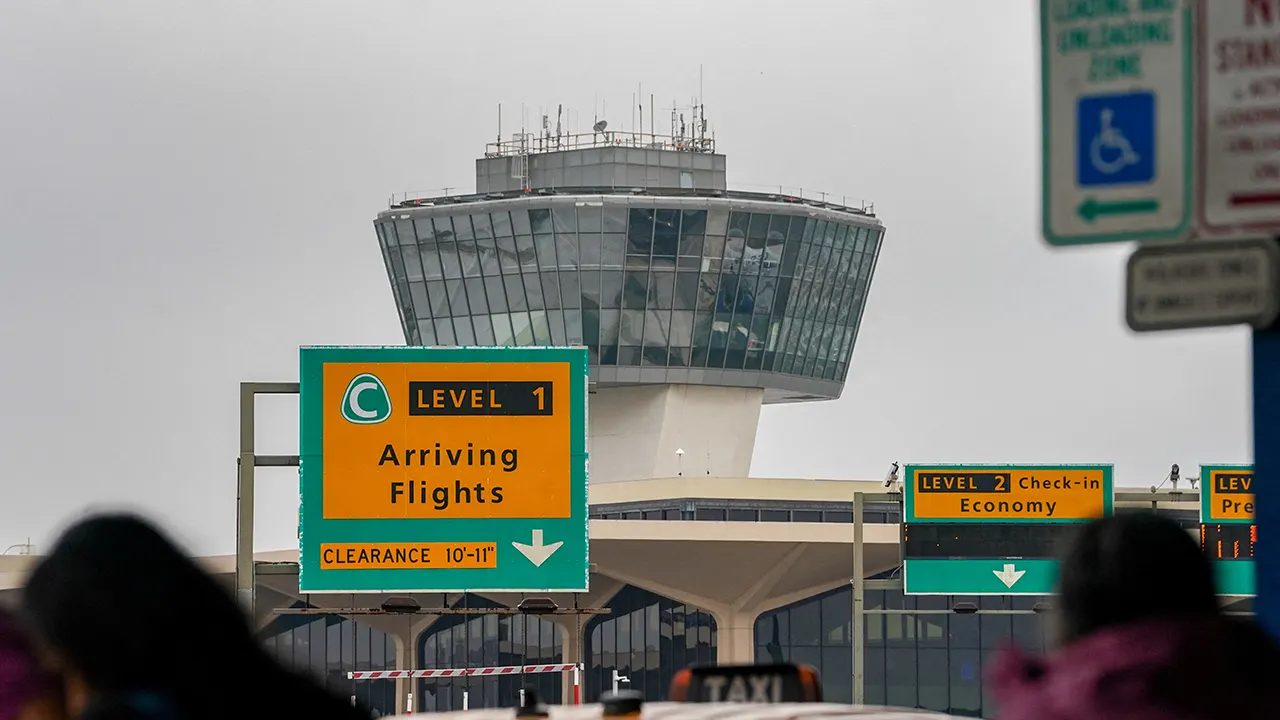
Rich Davis, International SOS senior security advisor and former United Airlines chief security officer, explains how one telecommunications outage in the Northeast created ripple effects across airline networks.
A severed fiber-optic cable in New Jersey disrupted air travel across parts of the Northeast on Monday, showing how a single infrastructure problem can quickly ripple through the nation’s airline system.
Rich Davis, senior security advisor at International SOS and former chief security officer at United Airlines, told FOX Business that even a localized outage can quickly disrupt flights far beyond where it begins because airline networks are tightly interconnected.
“It’s like a spider web of activity that’s happening and everybody is impacted, especially connecting passengers versus nonstop,” Davis said. “… Something that is only happening in that Northeast corridor, it still impacts all of the connecting hubs.”
Passengers with connecting itineraries often feel the biggest impact because disruptions at one major hub can quickly spread throughout the airline network, Davis said.
FAA GROUNDS FLIGHTS AT MAJOR NORTHEAST AIRPORTS AFTER FIBER LINE CUT
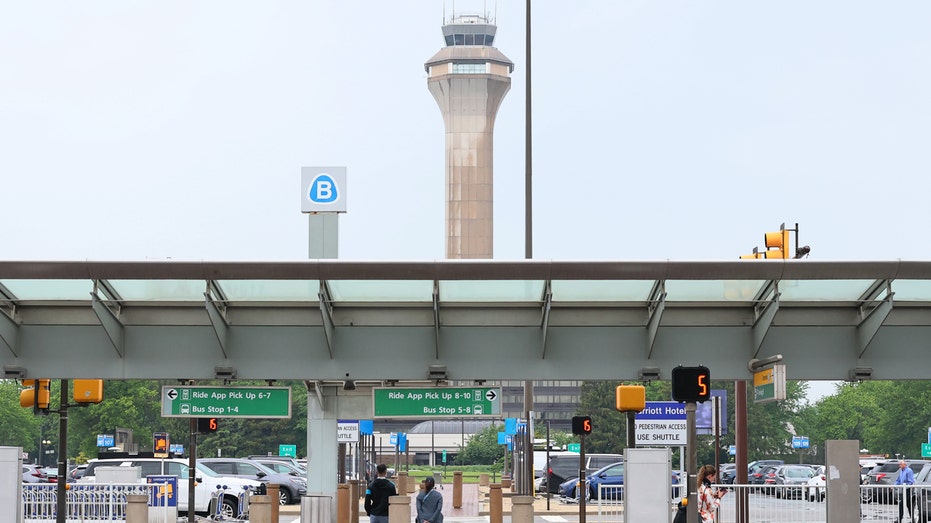
A severed fiber-optic cable in New Jersey prompted ground stops at major airports across New York, New Jersey and Philadelphia. (Michael M. Santiago/Getty Images)
The disruption began around 9:45 a.m. after a fiber-optic line in New Jersey was accidentally cut, causing a telecommunications outage and prompting ground stops at major airports in New York, New Jersey and Philadelphia, according to Reuters.
By Monday evening, Transportation Secretary Sean Duffy said the telecommunications lines had been repaired and airport operations across the Northeast were resuming, though travelers should continue to expect delays.
The outage contributed to roughly 7,000 flight delays and cancellations, including about 1,400 at New York City’s three major airports, Reuters reported, citing FlightAware.
Davis said airlines classify events like Monday’s outage as “irregular operations” — unexpected disruptions such as severe weather or equipment failures that can quickly throw carefully coordinated flight schedules off balance.
MAJOR AIRLINES CUT FLIGHTS AS HIGHER JET FUEL PRICES HIT CARRIERS

The outage contributed to roughly 7,000 flight delays and cancellations, including about 1,400 involving the three major New York-area airports. (Elijah Nouvelage/AFP via Getty Images)
Even after the original problem is fixed, airlines must reposition aircraft, pilots, flight attendants and passengers throughout their networks, creating a cascade of additional delays.
“There’s always a downhill trickle of subsequent delays, diversions, cancelations,” Davis said. “It’s basically a fact of life.”
Even so, Davis noted that airlines and airports have extensive experience managing these disruptions.
“Having said all of that, the airlines and the airports are so experienced in handling irregular operations, they do their best within their controls to minimize the effect on passengers,” Davis said.
Despite the widespread disruptions, Davis stressed that airlines never compromise safety in an effort to restore schedules.
AVELO CEO WARNS AIRFARES MAY RISE AS FUEL PRICES HIT ‘UNCOMFORTABLY HIGH’ LEVELS
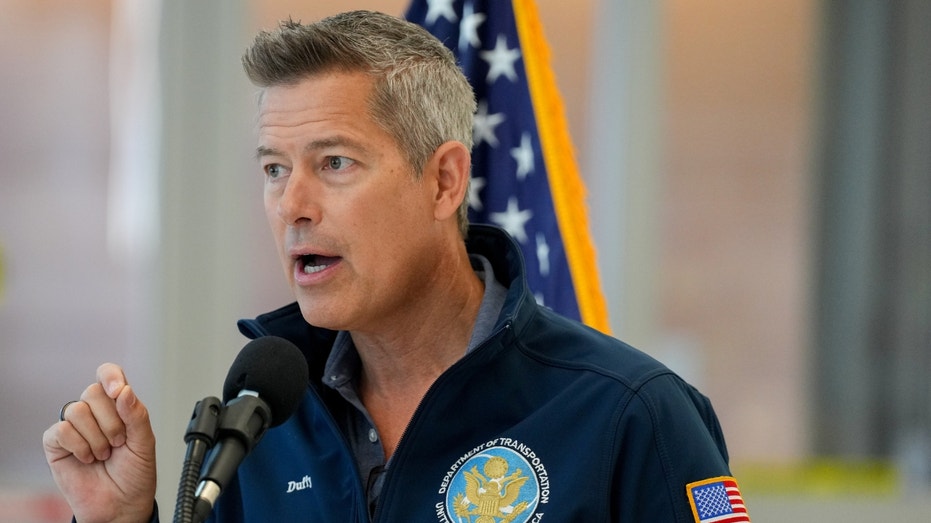
Transportation Secretary Sean Duffy said Monday evening that the telecommunications lines had been repaired and airport operations across the Northeast were resuming. (Adam Gray/Bloomberg via Getty Images)
GET FOX BUSINESS ON THE GO BY CLICKING HERE
“The number one priority every time, all of the time, is the safety of the passengers and the airline employees themselves,” he said. “That’s [the] number one priority. No shortcuts, no risks — follow the playbooks. Safety is more important than anything.”
Reuters contributed to this report.

What Are The Springs On Motorcycle Exhausts For?

Bolton campaigners back hospice funding petition push

General Hospital 2-Week Spoilers Sept 21-Oct 2: Anna PUSHES BACK & Valentin FLIPS!




-

 Fashion3 days ago
Weekend Open Thread: Talbots – Corporette.com
-

 Tech1 day ago
Researchers escape OpenAI Codex sandbox to run commands on host
-

 Crypto World6 days ago
Robinhood engineers charged over $50K crypto scheme
-

 Crypto World3 days ago
Circle launches Arc Studio AI agent for building onchain apps
-
 NewsBeat3 days ago
Trump says US has reached an agreement to take permanent control of Greenland’s security
-

 Crypto World3 days ago
Bitcoin price breaks channel as RSI climbs to 63
-

 Crypto World5 days ago
US Charges Robinhood Engineers Over Crypto Listing Trades
-

 Crypto World6 days ago
What Is the Status of the U.S.-Iran Peace Talks? Here's What Both Sides Are Saying
-

 Crypto World1 day ago
Who Needs CLARITY Anyway? ARB Could See 70X Increase: Hodler’s Digest
-

 Crypto World3 days ago
Trading Bitcoin on Robinhood? Why 2% Spread Has Traders Worried
-

 Crypto World7 days ago
NVIDIA Analysis: Attempted Rising Wedge Breakout Amid Pressure on the AI Sector
-

 Tech6 days ago
Webb’s IC 348 Mosaic Includes Two-Jupiter Dwarfs, Twin Jets, and a Nursery Still Making Worlds
-

 Crypto World3 days ago
World Money launches in 150+ countries with Stripe
-

 Crypto World4 days ago
Silver prices recover quickly, hitting weekly high today
-

 Entertainment6 days ago
Big Brother Update: Melody Explodes at Drew as Illness Sweeps BB28 House
-
 NewsBeat3 days ago
US was ‘on brink of war’ with China over false AI report of nukes moving in Middle East
-

 Crypto World4 days ago
Mortgage and refinance interest rates today, Thursday, September 17, 2026
-

 Crypto World19 hours ago
Bitcoin price holds above $81K as key catalysts line up
-

 Business6 days ago
Federal Reserve expected to hike interest rates 25 basis points at FOMC meeting
-

 Tech4 days ago
GPT-6 Astra Reached the Nether in Minecraft, Lost Its Stash to a Creeper, and Farmed Potatoes for Hours
You must be logged in to post a comment Login