

Join Mikko Hyppönen and security leaders from the NFL, CHANEL, and Atlassian for a two-hour digital summit on what AI-speed attacks change, what defenders should stop doing, and how to validate, decide, fix, and re-validate at machine speed.
Tech
Save on 2026 M6 Mac mini, M5 Max Mac Studio on launch day


Amazon’s 2026 Mac mini and Mac Studio deals deliver the lowest prices as the new desktops hit store shelves.
Despite releasing today, Amazon has issued deals on the brand-new Mac mini and Mac Studio. Save $30 on Apple’s M6 Mac mini when you opt for 512GB of storage, bringing the upgraded spec down to $1,069.99. This configuration has the new M6 chip with a 12-core CPU and 12-core GPU, along with 16GB of memory and a bump up to 512GB of storage.
Buy M6 Mac mini 512GB for $1,069.99
If you want the power of the M5 Pro chip, the configuration with a 15-core CPU, 16-core GPU, 24GB of unified memory, and 512GB of storage is marked down to $1,669.99, which also reflects a $30 discount off MSRP.
Buy M5 Pro Mac mini for $1,669.99
These are the lowest prices available, according to our M6 Mac mini Price Guide, with the compact desktops officially launching today, September 22.
And for an even more robust desktop, Apple’s new M5 Max Mac Studio is $50 off, bringing the standard model down to $2,449.99. This configuration, which has an 18-core CPU and 32-core GPU, is built for AI tasks. It also has 36GB of unified memory, 512GB of storage, and 10 Gigabit Ethernet.
Buy M5 Max Mac Studio for $2,449.99
Like the 2026 Mac mini, the M5 Max Mac Studio officially releases today. You can compare prices and availability across the line in our M5 Max and M5 Ultra Mac Studio Price Guide.
Continue Reading
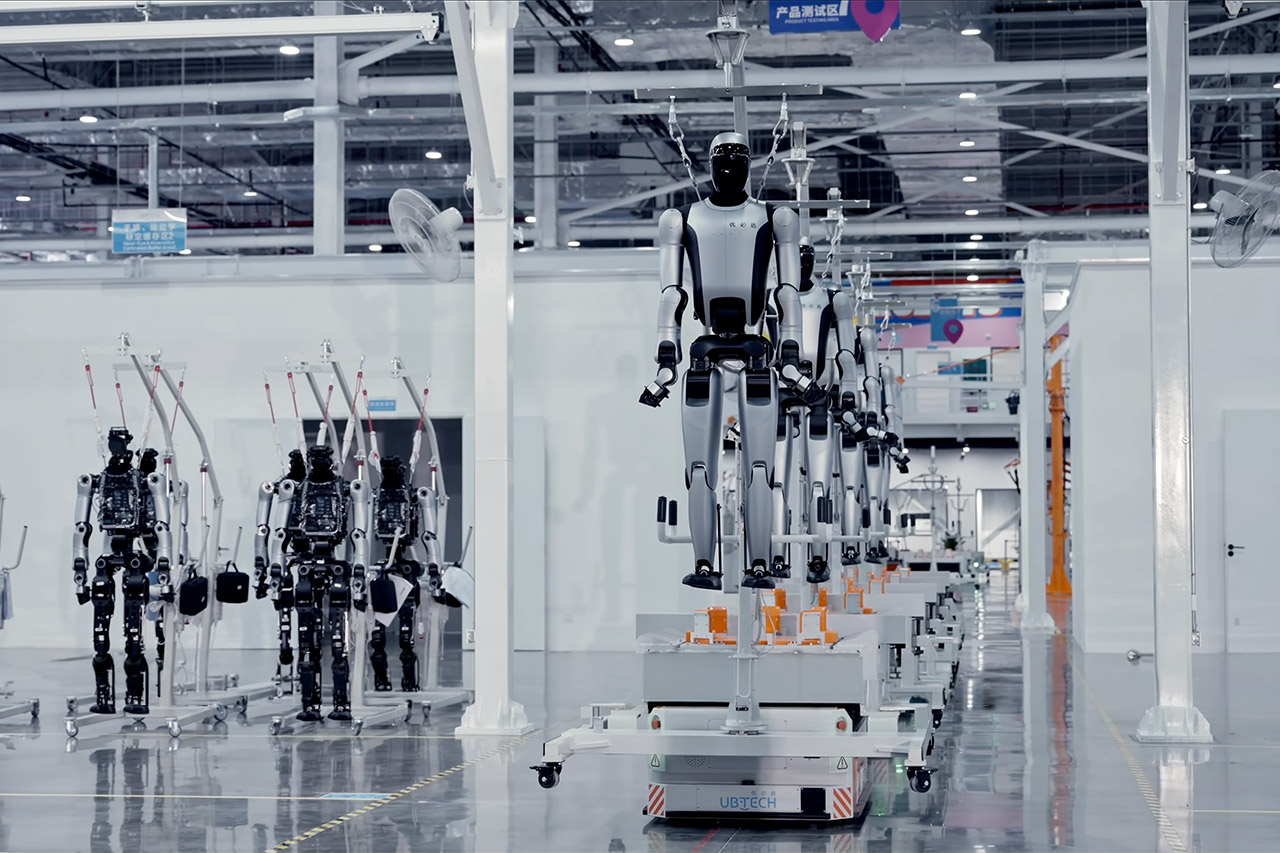
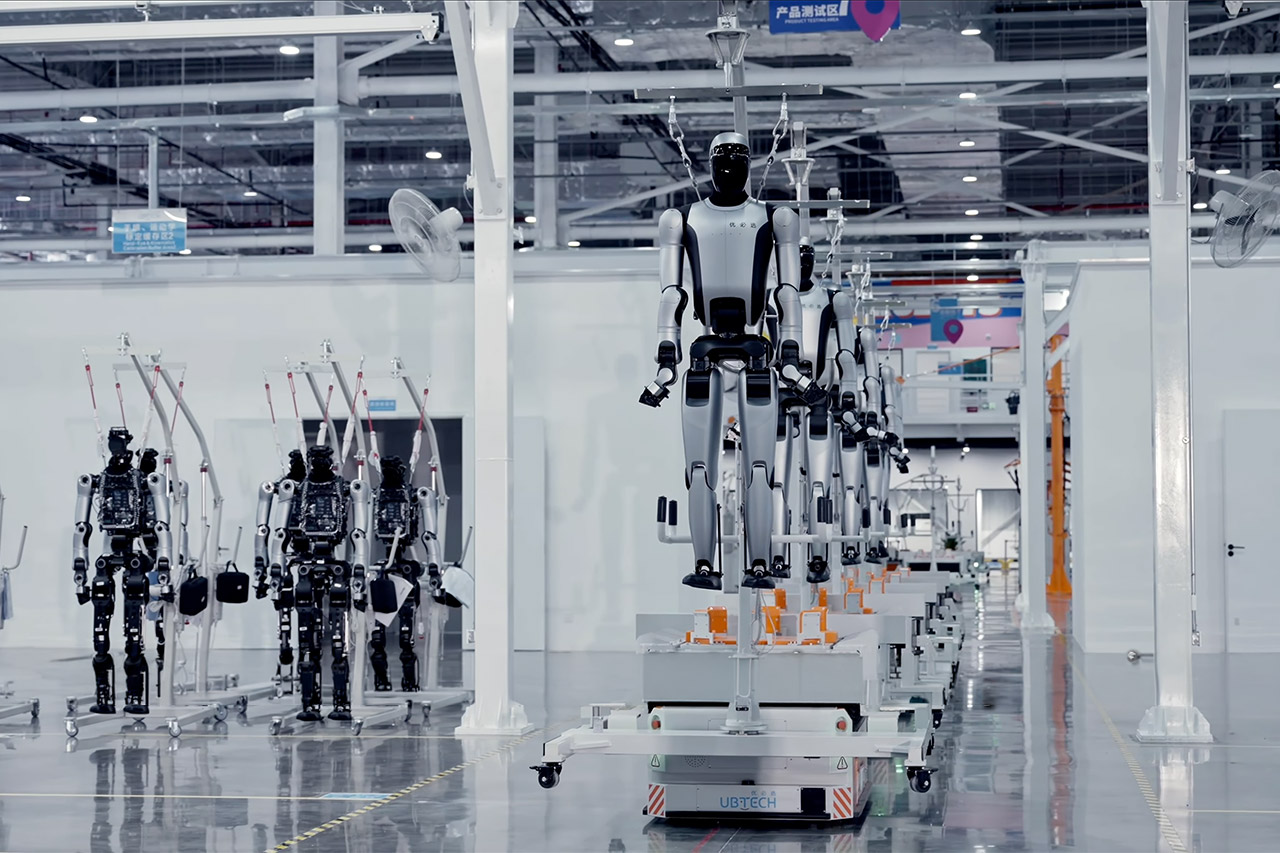
UBTECH Robotics commissioned its Industrial Humanoid Robot Super Smart Factory in Liuzhou, in China’s Guangxi Zhuang Autonomous Region, on September 12, 2026, with a line timed to finish one industrial humanoid every ten minutes and a planned yearly output above 10,000 machines.
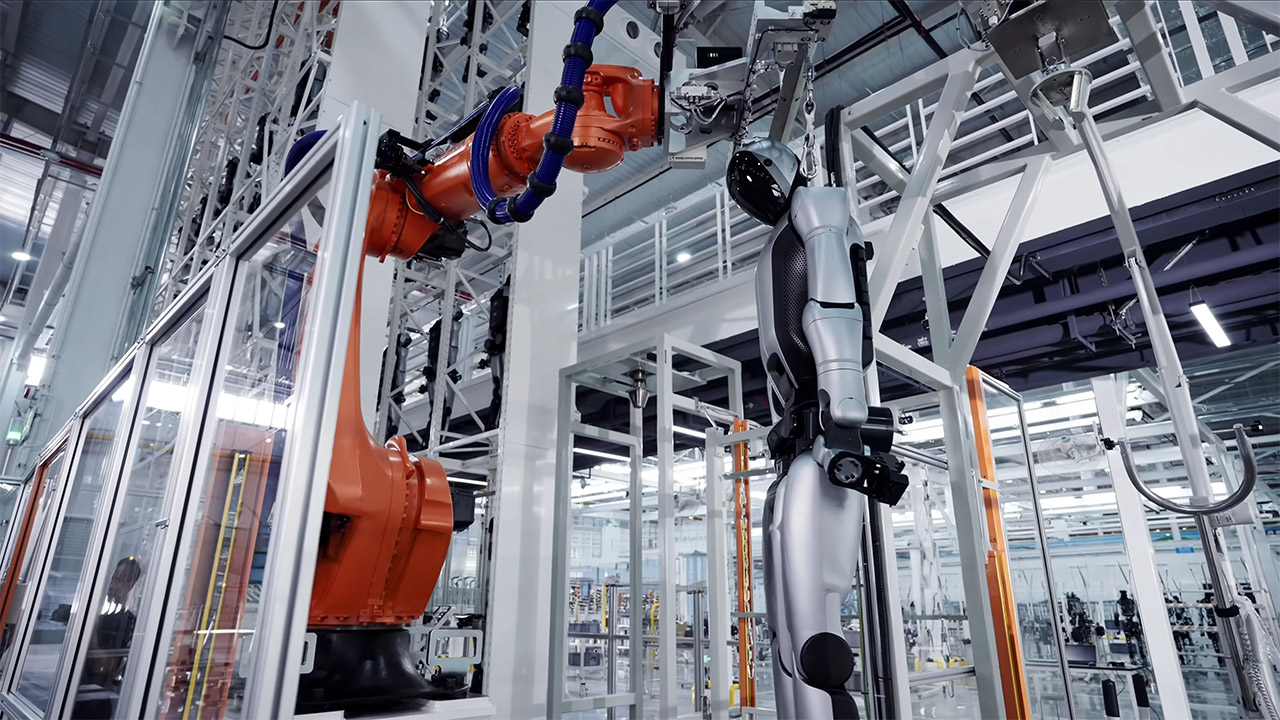
Fourteen thousand square meters of floor and 13.8 meters of height now hold a mixed assembly layout that skips fixed overhead conveyor chains. Instead, you’ve got rotating workbenches, collaborative arms, power assist manipulators, and self-docking carts all jumbled together in the same space, the same space that builds the bipedal Walker S units and wheeled Cruzr models, without having to rip the entire line down to switch between them.

LEGO Disney & Pixar Wall-E & EVE Building Set for Adults, Ages 18+ – Home Office, Book Shelf, or Room…
- LEGO SET FOR ADULTS – The WALL-E and EVE (43279) building set offers adults 18 years old and up an immersive construction challenge featuring…
- 4 DISNEY PIXAR CHARACTERS – Builders can create iconic robots WALL-E, EVE, M-O and Hal from the hit movie—each with authentic functionality like…
- MINDFUL BUILDING EXPERIENCE – This detailed construction set lets builders practice advanced construction techniques for an immersive and relaxing…
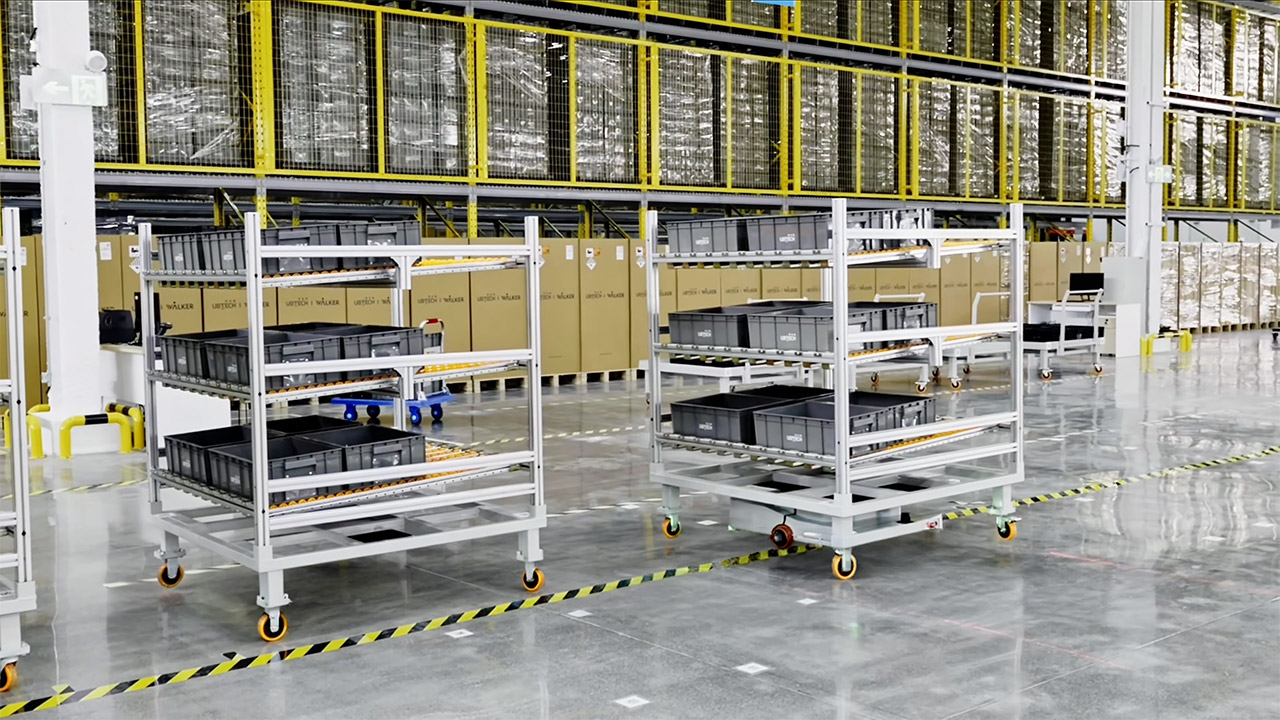
Cruzr Y1 and Cruzr S2 machines equipped with 3D vision are busy removing parts from pallets, stacking totes, loading stations, and carrying kits across the floor. Humans are no longer running around like headless chickens fetching parts for the machines; instead, automated forklifts, guided vehicles, and unmanned logistics trolleys ferry all that sub-assembly, final assembly, testing, and storage around the place, and as a nice little bonus, the same robot families that do all the heavy lifting are also the ones that come off the production line, hence the phrase ‘robots building robots’.
Each Walker S chassis requires more than 2000 screws, with over 50 different sizes. Those automated torque stations are working long hours, feeding fasteners, ensuring the depth and angle are correct, and recording all of this information for safekeeping. That way, if a bolt goes missing or is stripped somewhere along the path, it will be detected in the system before the following station can begin work. The dollies are all equipped with RFID tags that link the chassis serial number to the batch of parts used to build it.
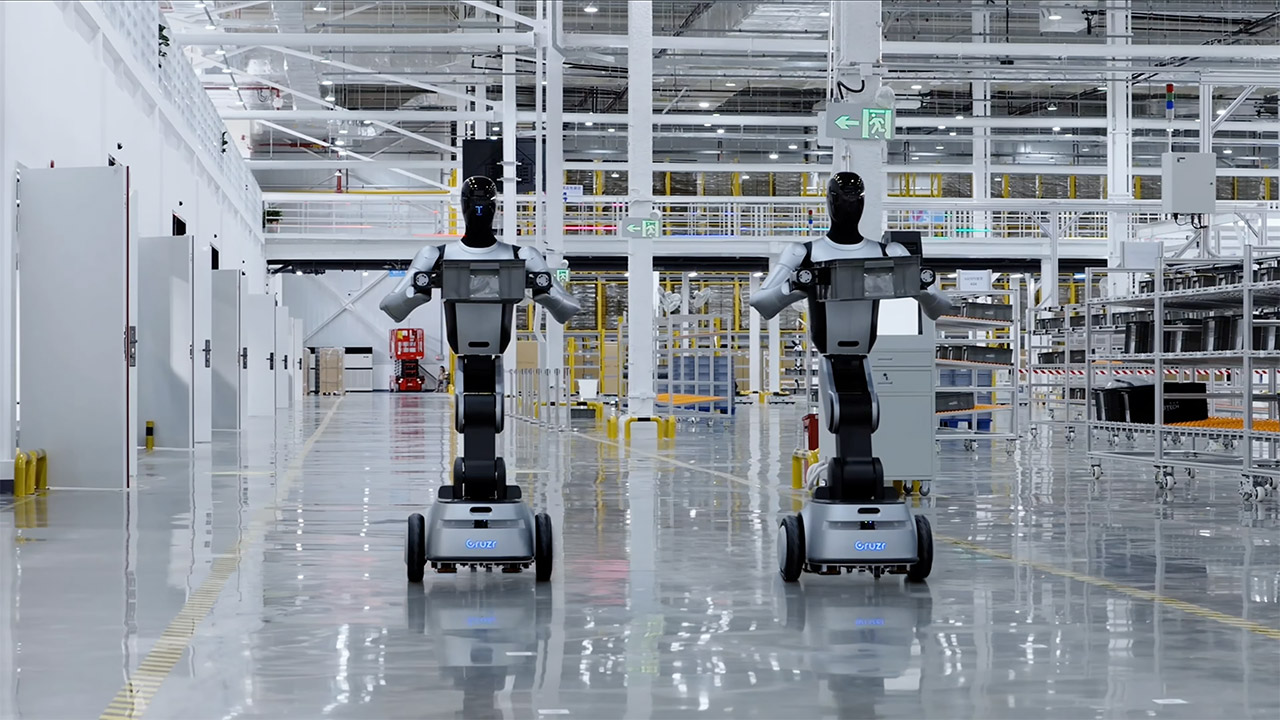
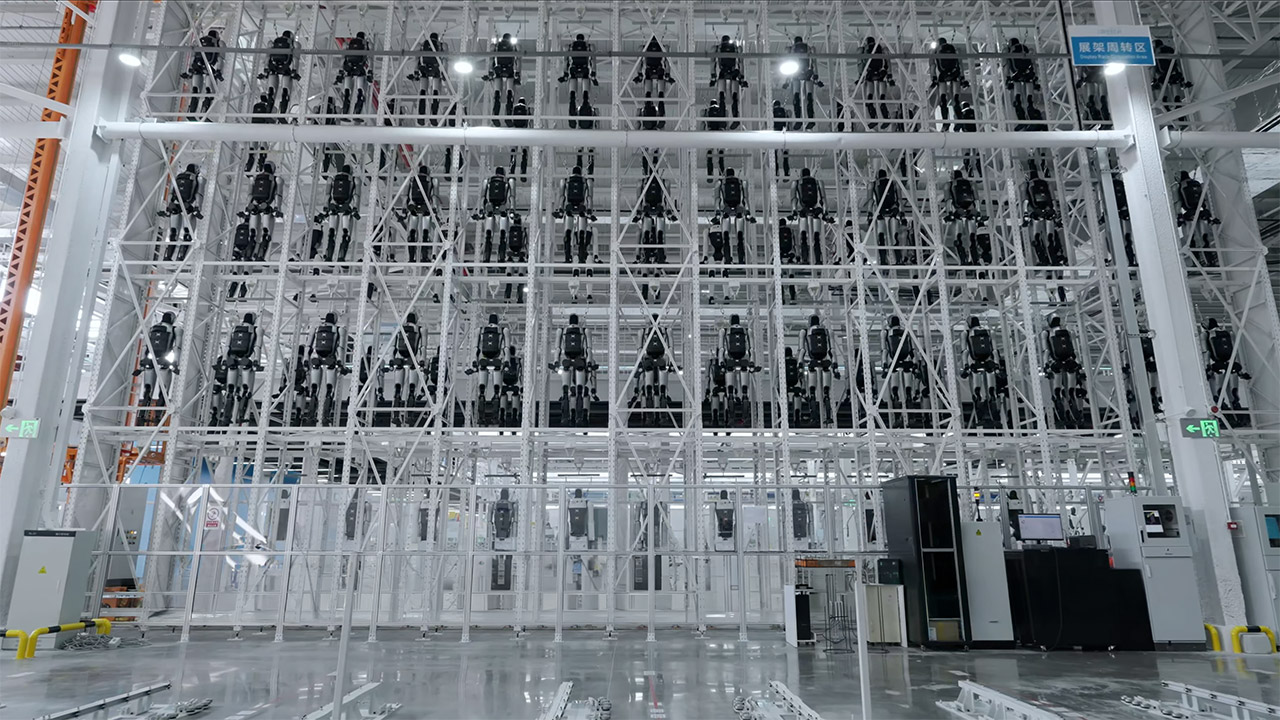
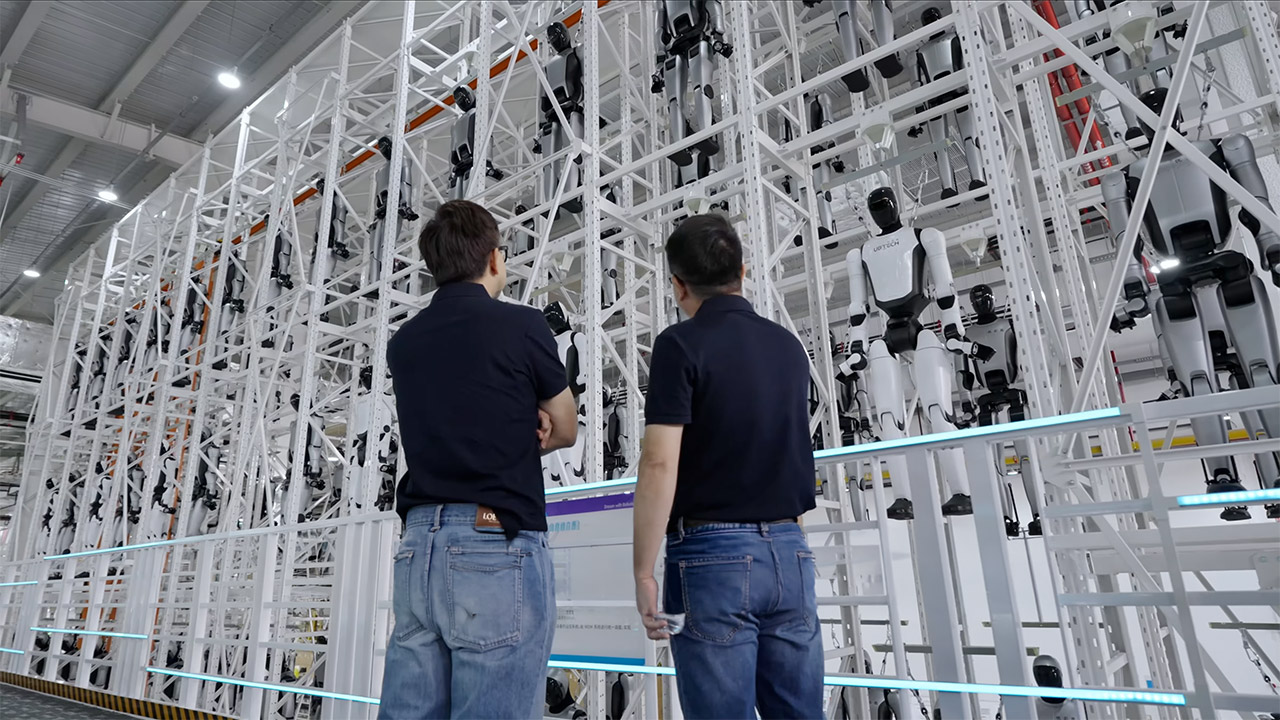
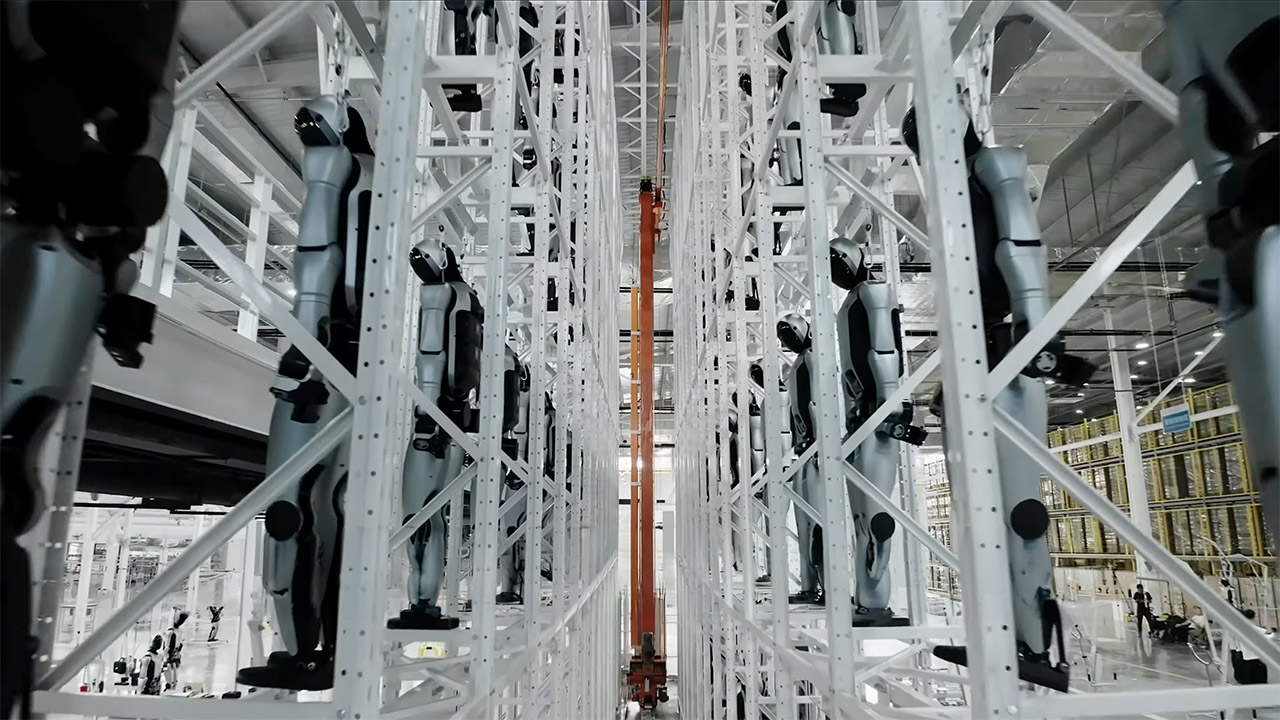
Once a machine is finished, it goes through a four-hour or more whole-unit test, checking joints, gait balance, and payload stability, followed by a nice spin through an automotive-grade lighting tunnel to make sure the seams, joint covers, and body panels are all looking ship-shape, with a nice 360-degree view. All of this is taking place in a tiny high-bay warehouse measuring only 65m2 yet including 112 finished robots. They claim to have used floor space more efficiently than a flat store of the same size, possibly by 50%.
Siemens Digital Industries Software assisted UBTECH in planning the site using a full-scale digital twin, as they modeled all the cart traffic, empty tote returns, and buffer times so they could figure out the layout before they even started building, and now, UBTECH calls this system the “smart brain” of the operation, and it’s in charge of scheduling work orders, moving materials around, and checking quality, and even stamps each robot with a serial number that follows that fastener right through to the point at which it finally leaves the plant.
The main biped, the Walker S2, stands 176cm tall and weighs approximately 70kg. It has 52 degrees of freedom and can walk at up to 2 meters per second while lifting 15 kilograms with each arm. The Cruzr models, on the other hand, remain on wheels and handle all of the plant’s hauling, which formerly required a crew of workers with trolleys. The early Walker units have already undergone testing at nearby auto manufacturers such as Dongfeng Liuzhou Motor and SAIC-GM-Wuling, and they have been working hard for a variety of companies including BYD, Geely, Foxconn, and SF Express.
Company vice president Pang Jianxin has said mass production of these complex parts would be extremely difficult without China’s component network, unless costs rose enough to erase the advantage. More than 90 percent of Walker S2 parts come from inside the country, and UBTECH points to that dense supplier base, plus years of factory use cases, as the reason a line of this size could go from a thousand-unit mark to a ten-thousand-unit plant in less than nine months.
China’s wider robot output keeps rising on its own. July 2026 industrial robot production reached 98,677 units, up 30.2 percent from a year earlier, and the first seven months of the year totaled 635,056 units, up 28.5 percent.

Meta’s AI “personal agent” Muse overtook ChatGPT as the #1 iOS free app in the U.S. on Friday, reports CNBC — and it’s still showing more downloads as of Monday night.
Muse now has over 2.5 million downloads since its debut less than two weeks ago, according to analytics firm Sensor Tower…
[Muse] is currently ahead of popular services like OpenAI’s ChatGPT, Polymarket and Kashi… It’s also ahead of rival AI apps like Anthropic’s Claude and SpaceXAI’s Grok AI, in addition to the Facebook-parent’s own Meta AI app… Meta pitched the app as a way for consumers to manage and direct supercharged digital assistants that can perform a number of tasks across the web, like filling out electronic forms and organizing email inboxes… “I think up to this point most of the agentic use cases have not really been for normal people,” Bernstein analyst Stacy Rasgon told CNBC in a “Squawk on the Street” interview on Monday. “Now you’ve got Meta’s Muse and other agents out there that are starting to maybe get more potential for more broad-based adoption.” The buzz around Meta was also reflected in the stock, which surged more than 11% on Monday.
Amazon is already blocking Muse, reports GeekWire. Amazon first tried to get Meta to voluntarily exclude Amazon, but they were unsuccessful:
The problem, Amazon says, is that it never agreed to any of it. Meta didn’t tell Amazon that Muse would access its store, the agent doesn’t identify itself when it browses, and it appears to capture and store customer credentials, which the company says could create privacy and security risks. As of Sunday night, people trying to use Muse to shop on Amazon were seeing the popup, “Continued access by an unauthorized AI agent violates Amazon’s Conditions of Use, to which our customers have agreed…”
Amazon has spent the past year trying to keep outside agents off its site, suing Perplexity over its Comet browser and moving to block shopping agents from Google and OpenAI. [Amazon won a preliminary injunction against Perplexity in March, the article poitns out, “then lost it on Aug. 4, when the Ninth Circuit ruled that the user — not the AI company — was the one accessing Amazon’s computers under federal anti-hacking law. The court denied Amazon’s petition for rehearing on Sept. 10.”]
On Sunday night, Amazon said it is in direct conversation with Meta about the issue. Asked whether it would consider taking legal action, the company declined to comment. The business stakes are high for Amazon. In addition to operating its flagship e-commerce site, Amazon generated more than $68 billion in ad revenue last year — a business that depends on people browsing its pages and seeing sponsored products.
Muse also appears to scrape account data, reports CNBC. But Shopify, however, “is working with Meta on Muse access. Shopify CEO Tobias Lütke announced Monday that the e-commerce site was partnering with Muse to allow agentic checkout in its online stores.”


Read more of this story at Slashdot.
Tech
BBC’s Towards Tomorrow Asked in 1967 Whether Humans and Robots Could Share One Culture Before the Line Between Them Vanished


Opening a BBC ‘Towards Tomorrow’ special first shown on December 28, 1967 is a warning that mankind may already be obsolete. Population growth, pollution and a planet slipping out of human control could finish the job even without nuclear war. Intelligent machines might have to take Earth off our hands, the narration says, if only to keep life going after we have made a mess of it.
Isaac Asimov, regarded as one of the leading prophets of the robot age, views the looming challenges with robots in a social rather than technological perspective. They’ll be moving out of science fiction and into factories and households, causing people to wonder how humans and machines will cohabit. First, he sees them as useful aides, then as friends with whom people may identify and look up. Asimov raises the question of whether we may end up making robots so much like people and humans so much like robots that the borders between the two become blurred, resulting in a common culture. Or is that the point at which humanity will eventually vanish and be replaced by a machine culture that does not resemble one but nevertheless appears to be human to an outside observer?

Unitree R1 Humanoid Robot (White, R1 Air)
- Three models, one lightweight platform R1 Air (20 DOF, monocular camera), R1 (26 DOF, binocular camera, head+waist joints), and R1 Edu (26 DOF…
- Easy setup – no coding required for basic use Unbox, power on, and start. Manual teaching feature: physically pose the robot, and it replays the…
- More DOF = more expressive movement 26‑DOF models (R1 / R1 Edu) add head and waist articulation for smoother dance and running. For safety reasons…

That idea is worlds apart from Sim One, a plastic and metal medical dummy created by Don Carter, a mechanical engineer at the University of Southern California. It is intended for use by anesthesia students because the eyes dilate from 1 to 8 millimeters, the lungs breathe at 18 breaths per minute, and the eyelashes close over the eyes. The teachers can turn off the computer-driven responses, allowing a pupil to practice intubation without endangering anyone. Carter concedes that Sim One only manages to duplicate a handful of the outer physical indications, and there is still a long way to go before we can even start to envisage a united civilization like Asimov’s.
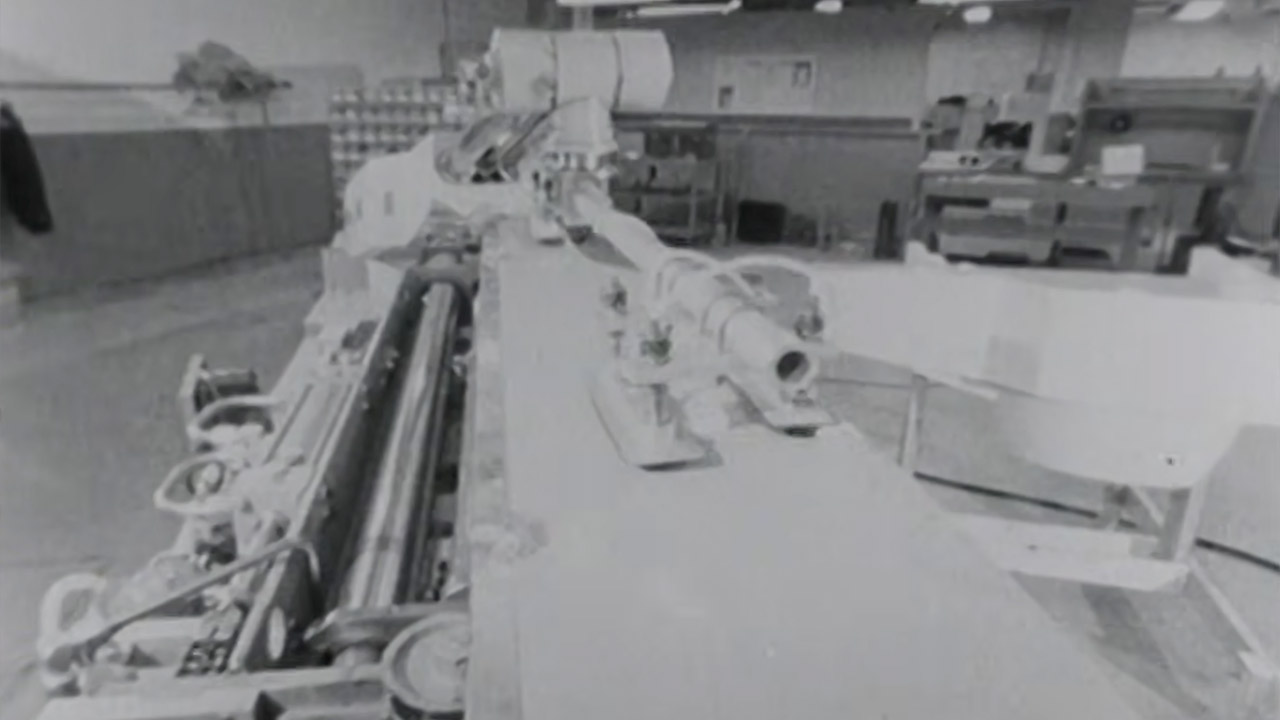
Meanwhile, in Bethel, Connecticut, Unimation president Joseph Engelberger is assembling other machines and believes there is no reason to be concerned about a robot uprising. After all, every movement is guided by a human brain, therefore he sees no reason to give robots independent thought. Robots, in his opinion, are already subject to the same regulations as humans: they must perform their duties without deviating from the norm. He is aware of and follows Asimov’s three laws: a robot must neither injure a human or allow a human to be harmed by doing nothing, must obey human orders as long as they do not violate the first law, and will only look after itself provided they do not conflict with the first two. He believes that in the actual world, humans already follow those norms when they engage with robots.

Unimation’s industrial arms are already unloading die cast machines and will soon be welding autos. Engelberger believes that 50,000 of these robots will be in American factories within the next 20 years. Some will be controlled by a central computer, but the majority will rely on a human to tell them what to do. He believes that these computers will take on all of the nasty and repetitious tasks that people do not want to do, but he does not see them replacing the person who chooses what has to be done.
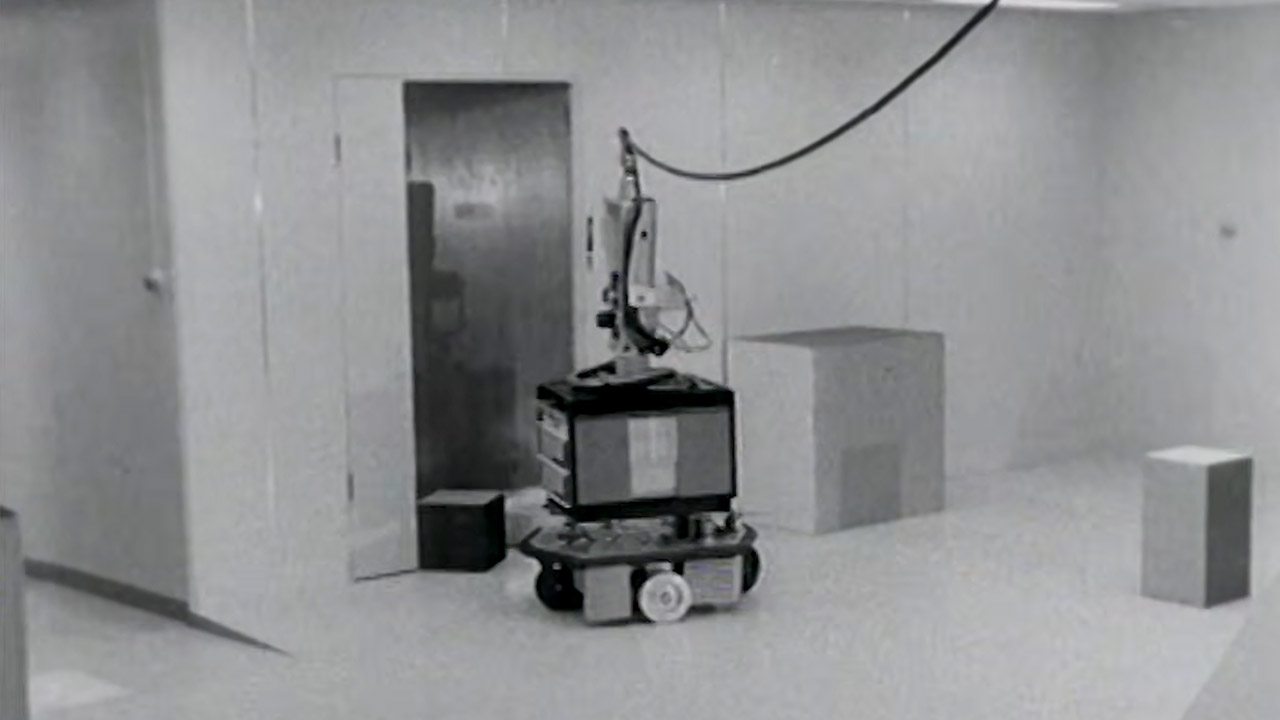
Domestic life appears to be becoming increasingly difficult, as furniture appears to move around on its own, cups end up in new and strange places, and that one good dusting from last week is all but forgotten the next day. Professor Meredith Thring of Queen Mary College is working on a rudimentary but intriguing table-clearing prototype in a house on the outskirts of Epping Forest. The crucial component is a photoelectric eye that detects a mug and activates a series of pressure sensors, which close in and pick it up with a mechanical hand. The hand then raises the mug onto a rotating tray, which transports it to a secure position. Thring has a vision: he wants intelligent engineers of all stripes, not just computer whiz kids, to pitch in and help put an end to the drudgery of household duties. He even hopes that in around ten years, we’ll have a full-fledged domestic machine with nice old-fashioned senses in its fingers and priced reasonably, like a car.


Ecommerce platform BigCommerce has alerted multiple merchants to data breaches after attackers compromised credentials for third-party Ribon applications and used them to inject malicious scripts into online stores.
The cloud-based Software-as-a-Service (SaaS) ecommerce platform confirmed the credential compromise on September 17 and immediately removed the apps to protect its customers.
UK-based online spirits vendor Master of Malt is one of the BigCommerce customers that received the notification. The retailer said the attacker accessed shopper information.
The hacker used the compromised credentials to access shopper data in BigCommerce environments between September 13 and September 17, the company said.
In updates on the incident, Master of Malt says impacted shopper details include full names, email addresses, phone numbers, and shipping postal addresses.
“It looks like hackers were able to compromise a BigCommerce Application key held by Ribon, which they were able to use to gain access to customer data held on their system,” Master of Malt stated.
BigCommerce supports over 1,200 third-party applications and integrations, including Ribon, an application operated by Be A Part Of, a brand operated by Fastr, specialized in shopping experience optimization.
The e-commerce platform says it stores account passwords and payment card information separately and that this type of data was not exposed.
In a statement for BleepingComputer, BigCommerce said that the attacker compromised credentials for Ribon and Ribon 1.5 applications.
“On September 17, 2026, Commerce confirmed that credentials belonging to third-party applications Ribon and Ribon 1.5, owned and operated by ‘Be A Part Of,’ a Fastr company, had been compromised and used to inject malicious scripts into a small number of merchant storefronts.”
The company underlined that its systems or the BigCommerce platform were not breached.
“Acting in the best interest of our customers and their shoppers, we uninstalled the application from affected stores to revoke the attacker’s access, notified those merchants directly, and are providing log data to support the developer’s investigation,” the company told BleepingComputer.
Master of Malt reported the incident to the UK Information Commissioner’s Office (ICO) and noted that it may extend well beyond its own customers, potentially to hundreds of other stores.
Law firm Emery Reddy is seeking potential claimants linked to the incident, saying several retailers are currently notifying customers about data exposure linked to the Ribon app key theft, without naming any.
BleepingComputer has contacted Be A Part Of and Fastr for more information about the incident but we have not received a response by publication time.
The incident is similar to a 2024 breach affecting electronics accessory maker ZAGG, where attackers compromised the third-party FreshClick BigCommerce app and injected payment-skimming code into its online store.
At the time, BigCommerce told BleepingComputer that its platform was not breached and removed the compromised app from customers’ stores.
However, unlike the ZAGG incident, where attackers captured payment information entered by customers during checkout, the Ribon attackers used a compromised application key to access existing customer records through BigCommerce.


Audiophiles have spent decades finding creative new ways to argue about digital files hiding inside vinyl production chains, so Capitol Records has kindly provided fresh material.
Beck’s new Ride Lonesome arrived September 18 as his first album of entirely new material since 2019’s Hyperspace. Produced by Beck and mixed by Nigel Godrich, the 12-track album returns to the more introspective territory associated with Sea Change and Morning Phase, while reuniting him with musicians connected to those earlier records.
Capitol is also offering a $110 Definitive Sound Series One-Step edition, limited to 3,000 numbered copies.
And no, it is not AAA.
Related Reading:
So What Is the Source?
Capitol states that the One-Step edition was mastered from 24-bit/96kHz high-resolution files. Acoustic Sounds provides an additional piece of the chain, describing those files as transfers from analog flat masters. In other words, the source originated on analog tape, but the vinyl mastering process uses a 24/96 digital stage.
That distinction will undoubtedly ruin somebody’s weekend.
What matters more is that Capitol is disclosing it. We recently covered Mobile Fidelity’s $125 One-Step edition of Michael Jackson’s BAD, which uses the album’s original 16-bit/48kHz Mitsubishi X-80 digital master. High-priced vinyl sourced from digital is hardly unprecedented, and digital does not automatically mean inferior sound. It does mean buyers paying three figures deserve to know exactly what they are buying.

Ride Lonesome One-Step Details
- Album: Beck — Ride Lonesome
- Price: $110
- Format: 180-gram One-Step vinyl
- Source: 24-bit/96kHz high-resolution files
- Original source: Analog flat masters, according to Acoustic Sounds
- Vinyl mastering: Levi Seitz at Black Belt Mastering
- One-Step processing: Dorin Sauerbier
- Pressing plant: Record Technology Inc
- Vinyl compound: Neotech VR900-D2
- Production: 3,000 numbered copies
- Packaging: Heavyweight tip-on gatefold jacket and DSS slipcase
- Tracks: 12
The standard black vinyl edition costs $32.99, which creates the obvious question: is the One-Step process worth another $77 for an album already sourced from high-resolution digital files?
We cannot answer that without comparing the pressings.
What we can say is that Capitol has chosen sensible partners. Levi Seitz has established audiophile mastering credentials, RTI remains one of the better-known U.S. pressing plants, and the One-Step process eliminates intermediate plating stages that can introduce additional generational loss.
Whether any of that produces a night-and-day improvement over the $33 edition is another matter entirely.
For collectors who love Sea Change and Morning Phase, the album itself may make this difficult to resist. For listeners who believe $110 vinyl should arrive directly from analog tape without a digital stop along the way, Capitol has at least saved them the trouble of discovering it on an internet forum six months later.
Progress.
Where to buy: $110 at Capitol Music
Related Reading:

In a social media post, the brand thanked the families who “welcomed Tollyjoy” into their homes
After 55 years, home-grown baby- and mother-care company Tollyjoy is “winding down its brand,” the business said in a social media post on Sept 15.
Tollyjoy said it would soon be taking its “final bow,” calling it a bittersweet moment. It said it was deeply thankful for the trust and support that had carried it through more than five decades, and that it had been a privilege to grow alongside generations of families.
“To every parent and family who welcomed Tollyjoy into your homes, thank you for allowing us to accompany you on your parenting journey,” it added.
Customers can buy Tollyjoy products at special farewell prices at its retail partners, the brand said in its post.
Founded in 1971, the family business was later led by second-generation chief executive Tan Wee Keng.
A 2018 article published by Singapore Management University said the company had about 200 employees and generated S$16 million in annual revenue in 2016.
The company makes and sells products under the Tollyjoy and Little Precious brands, including milk bottles, baby-related cleaning products and gifts.
It is unclear whether the Little Precious brand will also be wound down.
Vulcan Post has reached out to Tollyjoy for further comment.
- Read other articles we’ve written on Singaporean businesses here.


New ocean-sensing drones are being built to withstand the deepest depths of the ocean.
More than 70 percent of our planet is covered by the ocean, but the vast majority of it remains unexplored — an increasingly urgent blind spot as climate change raises water temperatures and. Autonomous underwater drone floats could soon close that gap, with a growing fleet set to cover more than 98 percent of ocean volume by 2028.
Exploring new depths
Today, the vast majority of ocean data is generated by members of the Argo Program — an international collaboration launched in 1999 that deploys 4,000 data-collection floats worldwide. The majority of Argo drones (like the one pictured above) descend between 2,000 and 4,000 meters into the ocean, but 10 percent of ocean warming occurs below these depths, marking a major gap in data collection.
This year, Ifremer — the French state ocean agency — reported its two Deep-6000 prototypes had completed five dives of 6,000 meters (nearly 20,000 feet) between January 11 and February 2 of this year, collecting crucial data on the abyssal zone. These successful missions make France the third country in the world, following China and the United States, to develop Argo floats capable of reaching these depths.
Ifremer said that by 2028, 30 more deep-sea floats will join the existing Argo-led international fleet of 4,000 devices, allowing researchers to explore more than 98 percent of the ocean.
The US currently operates more than 100 deep-sea floats and China operates more than thirty.
How do the dives work?
More than 90 percent of the ocean is considered deep ocean, reaching 200 meters (656 feet) deep or more — and of the entire ocean, only five percent has been explored. The lack of research on the deepest ocean areas — or abyssal zones — is largely due to technical constraints. At these depths, the ocean puts an enormous amount of pressure on machinery — approximately one atmosphere for every 10 meters of depth.That means at 6,000 meters, the pressure is approximately 600 times greater than that at sea level.
“The main challenge was to design a system that could withstand the pressures of the deep sea, be self-sufficient in terms of energy to remain operational for seven years, and keep costs under control,” Xavier André, head of profiler technology development at Ifremer, said in a press release.
To accommodate for the massive amounts of pressure, Ifremer constructed the hulls of its Deep-6000 prototypes with composite materials other than pure titanium. At 88 pounds, the devices weigh approximately twice as much as a typical Argo float, allowing it to better withstand the intense pressure.
The float missions for these Argo devices run on ten-day cycles: the float is dropped from a boat, descending to a “drift” depth where it stays for nine days, then further descending to a “profile” depth for approximately three hours. The float then ascends back to the surface, where it sends data it has collected to a satellite. This process is repeated until its battery dies — usually around 150 cycles over three to five years.
What information do the drones collect?
The floats collect information on water salinity, temperature, oxygen and pressure to help scientists at weather and climate centers better understand how the ocean is behaving as climate change warms the waters. Argo data can be used to improve forecasts of major climate phenomena like monsoons, ocean warming, sea level rise and ocean circulation. The 4,000 floats that exist globally produce more than 100,000 temperature and salinity profiles per year, and all Argo data is free online to access and use.
Virginie Thierry, a physical oceanographer at Ifremer, said in a press release that the new Deep-6000 floats will allow the French organization to track ocean warming all the way through abyssal depths.
“We will also be able to obtain information on deep ocean circulation,” she said, “which contributes to the storage of climate signals such as heat and carbon in the deep ocean, and refine ocean prediction models. Argo is an example of truly remarkable international cooperation, with more than 60 countries contributing to it.”

The Metric Is Not the Mission is a ten-part examination of how Big Tech moved from building and expanding the open internet to increasingly shaping it around its own metrics, incentives and assumptions. Across the series, the argument follows the evolution of the platform economy—from the optimism of the early internet to the growing tensions around power, prediction, geopolitics, accountability and the future of digital life.
The series will be published in two parts each week over five weeks, with each installment building on the one before it. At the end of the series, the complete essay will be brought together in a single PDF edition, providing the full argument in one place.

Part I — History Rarely Announces Itself
The series begins with a simple question: are we witnessing a collection of problems with Big Tech, or a deeper change in the role these companies play in our lives? Part I sets out the argument that the most important transformations are often the ones we recognise only in retrospect.
There is a peculiar habit that history shares with nature. Neither announces profound change with the drama we imagine when looking back. Revolutions rarely begin on the day they enter textbooks, and civilizations do not wake one morning to discover that they have entered decline. Instead, transformation arrives quietly, almost politely, concealed beneath the reassuring continuity of everyday life. Markets continue to function, institutions retain their familiar names, and people carry on believing that tomorrow will resemble yesterday because, on the surface, it usually does.
Only later do historians perform the act of compression that history itself resists. They identify the battle that changed an empire, the financial crisis that exposed an economic model, the speech that captured a political era, or the invention that divided one age from another. Looking backwards, the narrative appears inevitable but living through it is altogether different. Those who inhabit moments of profound transition rarely experience them as decisive. They experience them as a succession of disconnected events whose significance is impossible to measure because the larger pattern has yet to reveal itself.
The French historian Fernand Braudel devoted much of his career to challenging precisely this tendency. History, he argued, unfolds across different scales of time. There are events, the spectacular moments that dominate newspaper headlines and collective memory, but beneath them lie slower currents that shape societies over generations. These structural transformations are difficult to perceive precisely because they unfold so gradually. They resemble continental drift more than earthquakes. Entire worlds rearrange themselves while the people living within them continue to believe that the landscape is essentially unchanged.
Climate science has taught us a remarkably similar lesson that weather is immediate. We notice storms, floods, heatwaves and droughts because they interrupt the ordinary rhythm of life. Climate, by contrast, is almost invisible. It changes through accumulation rather than spectacle. A fraction of a degree each decade scarcely registers in human experience, yet over time it alters migration patterns, agricultural systems, coastlines and ecosystems with a force that no single storm could ever achieve. Focusing exclusively on weather can obscure the far more consequential transformation taking place beneath it.
The digital world has developed its own version of this confusion. Every few months another controversy erupts around one of the major technology companies. A privacy scandal dominates the headlines. A whistleblower reveals troubling internal research. Governments announce new competition investigations. Another election raises familiar questions about algorithmic amplification and political manipulation. Artificial intelligence arrives as the latest object of both fascination and anxiety. Each episode generates its own cycle of commentary before gradually dissolving into the background noise of an industry that seems permanently suspended between innovation and controversy.
It is tempting to interpret these episodes as isolated crises, each demanding its own explanation. Yet taken together they begin to resemble something else entirely. They suggest that we may have been paying attention to the weather while overlooking the climate.
The story, in other words, is probably not about content moderation, or data protection, or recommendation algorithms, or artificial intelligence, even though each of these matters enormously. Those are symptoms of a deeper transformation whose outlines are only now becoming visible. What appears to be a succession of corporate controversies may, in retrospect, come to be understood as the slow exhaustion of an idea that shaped the first quarter of the twenty-first century: the belief that a small number of private technology companies could become the primary architecture through which humanity communicates, learns, debates, connects, entertains itself and increasingly understands the world.
The remarkable thing about this idea is not simply that it became commercially successful. It became culturally invisible. Platforms ceased to feel like products and instead became environments. Like roads, electricity or running water, they receded into the background of everyday life. Their ubiquity created the illusion of permanence. It became difficult to imagine social life without them, just as it had once been difficult to imagine commerce without railways or politics without newspapers. Every era eventually mistakes its dominant infrastructure for a natural feature of the landscape.
History suggests otherwise.
The nineteenth century was convinced that the telegraph would permanently eliminate misunderstandings between nations. Journalists described it as a technology that would bind humanity together by making ignorance impossible. A century later, television was heralded as the medium that would create an informed democratic citizenry by exposing millions of people to the same events simultaneously. The early internet inherited that same optimism, although in a more ambitious form. It would not simply transmit information more efficiently. It would redistribute power. Hierarchies would flatten. Gatekeepers would disappear. Geography would matter less. Knowledge would become universally accessible. Participation itself would become the defining characteristic of public life. For a while, the optimism seemed entirely justified.
It is easy, with the benefit of hindsight, to forget how extraordinary the early internet felt. To describe it merely as a technological innovation is to misunderstand the scale of the cultural shift it represented. The internet altered our relationship with distance, authority and possibility all at once. Suddenly, a teenager in Athens could collaborate with a programmer in São Paulo, learn from a professor in California, debate politics with someone in Nairobi and publish an idea that might reach readers in Tokyo, all without asking permission from anyone. The network did not simply connect computers; it dissolved assumptions that had shaped communication for centuries.
This openness was not accidental. It reflected the philosophy embedded within the Internet’s architecture. Unlike earlier communication systems, the internet was designed around protocols rather than ownership. No single company controlled email. No one owned the web itself. Innovation occurred at the edges because the center remained deliberately thin. Anyone who understood the protocols could build something new. Permission was replaced by interoperability; central planning by distributed experimentation. The Internet’s greatest achievement was not any particular application. It was creating conditions under which applications could proliferate without requiring approval from whoever had built the network in the first place.
That distinction is easy to overlook today because we have become accustomed to experiencing the internet through platforms rather than protocols. Increasingly, our digital lives unfold inside environments that are carefully designed, privately governed and algorithmically curated. We enter through an application rather than a browser. We consume what is presented rather than wandering where curiosity might otherwise lead. We spend hours online without ever really encountering the web as earlier generations understood it.
This transformation did not happen suddenly, nor was it imposed upon unwilling users. Quite the opposite. People embraced these platforms because they solved genuine problems. They simplified complexity, reduced friction and made participation effortless. They arrived at precisely the moment when the Internet’s overwhelming openness had begun to create its own challenges. Search engines helped us navigate an expanding web. Social networks made finding people easier than remembering email addresses. Video platforms lowered the barriers to publishing. Recommendation systems rescued us from abundance.
Good technologies almost always begin this way. They reduce uncertainty, they make difficult things easier and, they solve problems that people actually have. The difficulty comes later, when the solution gradually becomes the environment itself.
There is a moment in the life of every successful system when it stops merely serving society and begins quietly reorganizing society around its own internal logic. Railways changed where cities grew. Highways reshaped suburban life. Electricity transformed working hours. Financial markets altered corporate governance. Technologies rarely remain neutral infrastructure for long; their assumptions seep into the cultures that adopt them.
The question, then, is not whether digital platforms became too powerful. That observation has become almost banal. The more interesting question is whether they have reached the point that every dominant system eventually encounters: the moment when the conditions that produced their success no longer resemble the conditions of the world they helped create.
Empires have reached this moment. Economic doctrines have reached it. Political ideologies have reached it. Entire civilizations have discovered, often too late, that success can become a form of intellectual inertia. The institutions that once understood society begin instead to interpret society through assumptions that are increasingly outdated. They continue to optimize for a world that no longer exists.
There are reasons to think that something similar is happening now. Not because the platforms are collapsing. They are not. Not because people have abandoned them. They have not. But because, perhaps for the first time since the commercial internet emerged, it has become possible to ask whether the companies that mediate so much of our digital lives still understand the societies they claim to connect or whether they have become so immersed in their own models of human behavior that they have begun to mistake prediction for understanding.
Konstantinos Komaitis, PhD, is a veteran of developing and analysing Internet policy to ensure an open and global Internet.
Filed Under: big tech, history, metric not mission, open internet, platform economy

Meta founder and CEO Mark Zuckerberg has gone to great lengths to hype the security of its new AI assistant Muse, claiming it is “built from the ground up for privacy and security.” A zero-day vulnerability that gives locally run apps and terminal commands complete control of the agent raises serious doubts. Further raising questions, Amazon on Sunday began blocking Muse from its site.
Meta introduced Muse a few weeks ago. The assistant “books appointments, fills out forms and handles customer service,” “proactively takes tasks off your plate,” and can “make purchases, generate images, create documents, and connect with your favorite apps and services.” The macOS app (curiously, there’s no Windows version) also works with a user’s WhatsApp, email, calendar, and social media accounts. When a task requires a tool that doesn’t exist, Muse creates one on the fly.
Meta doth hype Muse security too much
Of course, for Muse to do any of these things, users must first give it access to their accounts. This includes authenticating the assistant to each service and, because the app runs on macOS, giving it permissions to a broad range of operating system-restricted device resources like writing files to disk, accessing the mic and camera, and monitoring location and calendars. Apple has spent years developing these defenses to prevent installed apps or commands entered into the terminal from accessing these resources, clearly because the company considers them a security threat. Muse completely undoes these default measures.
The zero-day allows any app or terminal command to gain access to the token that authenticates users to their Muse account. Meta developers designed the assistant so that any locally installed app or executed code, regardless of the macOS permissions it has, can change a long list of undocumented settings. Most of them are fairly innocuous, such as controlling dark mode. One setting, however, is anything but innocuous. It allows processes to change the endpoint where transcription occurs. Normally, it’s a server address operated by Meta. Attackers can exploit this flaw by changing the location to their own endpoint. Once that happens, the attackers have the token that gives complete control over the Muse account.
from the take-it-back dept
Amazon recently debuted a new feature for its Ring cameras that the company is calling Throw Away the Key Encryption (TAKE). The idea is to cut back on the amount of video content available to the company, and thus potentially available to law enforcement. But while it might technically add a speed bump to accessing full video content, it doesn’t deliver nearly the level of privacy we should be demanding from video doorbells and other security cameras.
TAKE introduces a new way for Ring to manage encryption keys, where the user’s device has its key, then the company holds encryption keys temporarily within its own cloud infrastructure. Ring’s servers receive the keys temporarily so it can offer a variety of the features it says it can’t offer when a user chooses to use end-to-end encryption, like video descriptions, smart alerts, video search, and more, then deletes the key after 24 hours.
This differs from how it works now, where footage is encrypted in transit and at rest, then decrypted by Ring, which always has access to the footage, to process those features.
Comparatively, this is an improvement to the default settings Ring has now, because it at least puts some restrictions on historical footage, but it has some serious holes worth exploring.
Ring Gets Access to Unencrypted Video for a Short Period
Ring has designed its service so many of its camera features, including smart alerts and video search, need cloud processing to work. That means to provide those features, Ring needs to decrypt the footage while it’s stored in Ring’s cloud servers.
With TAKE, in order to decrypt footage to offer these features, Ring gets access to footage stored in the cloud for 24 hours. TAKE adds some small measures using secure enclaves to make base key material harder to directly export, but keys are still released to services that can be modified. With access to the keys, the cloud processing does its thing and delivers the requested feature to the user. The key is then deleted 24 hours later—until the user wants to watch an old video or use other so-called “smart” features, at which point the keys are sent back to the server.
In practice, that makes the system as a whole barely different from encryption at rest where the server holds the keys. The client device essentially takes the place of a hardware security module (HSM), including making those keys available to the server whenever they’re needed. The end result is an improvement from the status quo, but still not even close to the privacy protections of end-to-end encryption.
The company says it does not keep backups of the keys and there’s no way for a Ring employee to access footage. It also claims that any decrypted content is deleted from its servers.
But that doesn’t mean much when user actions send the keys back to the server. And making features like “Video Search” and “Smart Video Descriptions” available to the device owner means that while the footage can’t be seen by Ring, descriptions are readily available to the company. In response to a question about capability, Ring responded to us that, “As Ring continues to expand and further strengthen TAKE’s protections, video descriptions will be included.”
Plus, account recovery keys are stored in the camera itself by default. When that’s paired with the fact that currently, indices of video contents are available to the company, it means that TAKE isn’t even a protection against mass surveillance. Law enforcement could request a mass search across cameras for certain terms, then delve into further details by seizing cameras of interest from the device-owner, decrypting account backups, and using that information to decrypt encrypted videos.
Law Enforcement May Still Seek to Compel Access to Footage
Because of the ways the access and key rotations work, it’s technically still possible for Ring to alter its current practice if compelled to do so by law enforcement, in much the same way as other existing encryption-at-rest systems where the company holds the keys. For example, Ring could receive an order that demands they save content encryption keys or unencrypted videos from memory to disk, which would mean they’d retain some level of access.
In an email to EFF, Ring stated, “By design, under TAKE, Ring will not be able to provide encryption keys or decrypted content. With TAKE, Ring will only preserve and provide encrypted video files in response to valid legal process. It has been and continues to be Ring’s policy to object to overbroad legal requests.” EFF specifically asked about the possibility of complying with law enforcement orders to modify existing practice to turn over or preserve unencrypted video, which appears to be technically possible, but the company did not address it.
End-to-end encryption works to maintain trust by its user base because the company that employs it never has access to the keys at any point, making it impossible for itself to access the encrypted contents. This also means law enforcement can’t demand the service retain keys or choose not to rotate them. As described, this level of protection isn’t offered with TAKE.
Ultimately, Ring is the one managing this software and its implementation, and beyond a white paper, “trust us” is the only level of verification they’re offering outside observers. While it doesn’t fix the issues, at the bare minimum, the company needs to open the entire infrastructure up to third-party auditors to verify its claims. Ring seems to agree, as they told us that, “Ring conducts rigorous security reviews of all products before launch and critical components of TAKE’s infrastructure underwent independent security testing prior to launch. We are exploring options for further independent review.”
TAKE is not end-to-end encryption, where Ring would never have access to the keys, and the company thankfully doesn’t claim it as such. Ring already offers the option for end-to-end encryption, and turning that on by default would offer the real sorts of privacy improvements we all want from video doorbells.
Republished from the EFF’s Deeplinks blog.
Filed Under: doorbells, encryption, surveillance
Companies: amazon, ring

News Videos40 seconds ago
giving a ridiculous advice about financial Management #lifeisbutadream #comedy #motivation

NewsBeat1 minute ago
Trains running through Manchester Piccadilly cancelled

Business3 minutes ago
Harbor Ares Systematic High Yield ETF Q2 2026 Commentary (SIHY)




-

 Fashion4 days ago
Weekend Open Thread: Talbots – Corporette.com
-

 Tech1 day ago
Researchers escape OpenAI Codex sandbox to run commands on host
-

 Crypto World6 days ago
Robinhood engineers charged over $50K crypto scheme
-

 Crypto World3 days ago
Circle launches Arc Studio AI agent for building onchain apps
-
 NewsBeat3 days ago
Trump says US has reached an agreement to take permanent control of Greenland’s security
-

 Crypto World3 days ago
Bitcoin price breaks channel as RSI climbs to 63
-

 Crypto World1 day ago
Who Needs CLARITY Anyway? ARB Could See 70X Increase: Hodler’s Digest
-

 Crypto World5 days ago
US Charges Robinhood Engineers Over Crypto Listing Trades
-

 Crypto World6 days ago
What Is the Status of the U.S.-Iran Peace Talks? Here's What Both Sides Are Saying
-

 Crypto World3 days ago
Trading Bitcoin on Robinhood? Why 2% Spread Has Traders Worried
-

 Tech6 days ago
Webb’s IC 348 Mosaic Includes Two-Jupiter Dwarfs, Twin Jets, and a Nursery Still Making Worlds
-

 Crypto World7 days ago
NVIDIA Analysis: Attempted Rising Wedge Breakout Amid Pressure on the AI Sector
-

 Crypto World3 days ago
World Money launches in 150+ countries with Stripe
-

 Crypto World4 days ago
Silver prices recover quickly, hitting weekly high today
-

 Entertainment6 days ago
Big Brother Update: Melody Explodes at Drew as Illness Sweeps BB28 House
-
 NewsBeat3 days ago
US was ‘on brink of war’ with China over false AI report of nukes moving in Middle East
-

 Crypto World4 days ago
Mortgage and refinance interest rates today, Thursday, September 17, 2026
-

 Crypto World24 hours ago
Bitcoin price holds above $81K as key catalysts line up
-

 Tech4 days ago
GPT-6 Astra Reached the Nether in Minecraft, Lost Its Stash to a Creeper, and Farmed Potatoes for Hours
-

 Business6 days ago
Federal Reserve expected to hike interest rates 25 basis points at FOMC meeting
You must be logged in to post a comment Login