














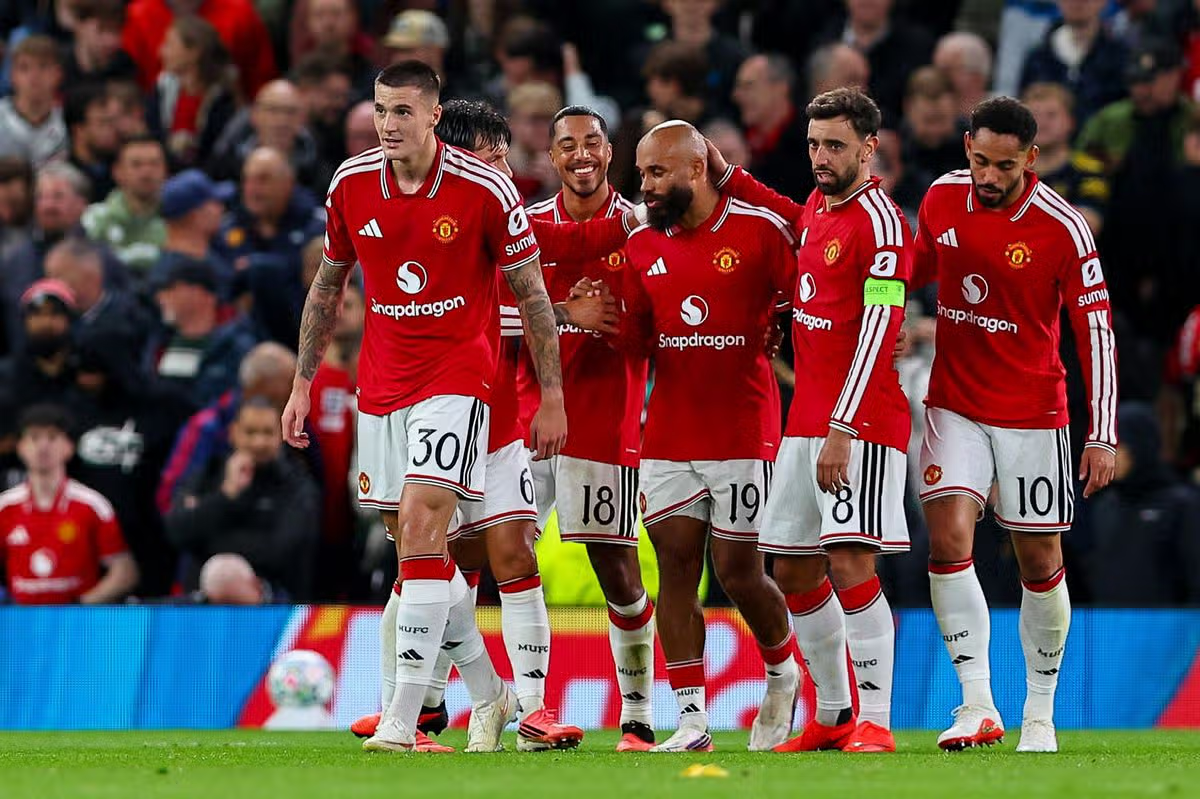
Man Utd are continuing to slash their wage bill but those savings are being eaten up by debt repayments.
Manchester United cut their cloth once again last season, with a wage bill that has now shrunk from a high of £384.1million in 2021/22 to £303million in 2025/26.
While a couple of rounds of cost-cutting redundancies have affected United’s annual salary costs, the reduction is primarily due to a more prudent approach to player pay.
The trend might change this season, with the 25% increase in many salaries for Champions League qualification present, while the exit of Casemiro was offset by the return of Marcus Rashford as the club’s highest earner, on a salary of more than £300,000-a-week.
That pay packet is why United began the summer looking to offload Rashford. Ineos are determined to slash costs and chief executive Omar Berrada has warned of more fiscal “discipline” to come.
In 2024/25, United had the fifth-highest wage bill at £313.1million. It’s not impossible that they dropped further down the league table last term.
Their wages-to-revenue ratio also continues to shrink. Staff salaries now account for just 45% of the club’s record £677.6million revenue. That is down from 50% last year and 55% the year before. The trend is obvious.
In 2024/25, the Premier League average was 65%. Manchester City won the league that season with a wage bill of £408.4million, around £95million higher than at Old Trafford. Their wages-to-revenue ratio was at 59%.
That season is the last for which full figures from every Premier League club were available. Only Tottenham (45%) were below United then but they have invested heavily in their squad this summer. It’s entirely possible that United now have the lowest wages-to-revenue ratio in the league.
Some would consider that good financial planning and the kind of cautious approach that will eventually see United start to turn more regular profits, which can then be reinvested into the playing squad.
The problem is that wages remain a much better barometer of where a team will finish in the league than anything else, including transfer fees. So if United are paying salaries that put them fifth, sixth or seventh in that category, then that is likely where they will finish.
What makes this particularly difficult for fans to stomach is that while the players’ collective pay continues to fall, debt continues to rise. The headline figures are up to nearly £690million in the latest accounts, partly as a result of refinancing bonds to buy land associated with the stadium.
Most gallingly, an interest repayment of £69.6million on that debt is a significant chunk of money to leave the business. It’s a full-back or a striker. Or enough to sign a couple of players on bigger salaries.
None of this really comes as a surprise. Twenty-one years of Glazer rule and debt piled high on the club were always going to take their toll eventually.
Now that approach sits alongside Sir Jim Ratcliffe’s maxim of maximising profits and driving financial discipline. United have no control over the size of those interest repayments, but they can control the wage bill and the transfer expenditure.
Berrada has insisted United are on the right track and their prudent approach will eventually pay off, but that looks hard to square with the financial figures, especially at a time when the club are determined to build a 100,000-seater stadium that a substantial number of matchgoers are against.
That project will only pile even more debt on the club, a process that has already begun with the £63.5million spent on land for the new stadium. That cash was raised from a refinanced loan earlier this summer.
It all adds up to a messy picture but the bottom line is that money spent on the actual football is unlikely to increase while the Glazers’ debt remains such a burden, and at a time when so much of Ratcliffe’s focus and ambition is on building a new stadium.









































You must be logged in to post a comment Login