
Business
American Fuel First: Trump's Diesel Export Ban And The European Fallout




Allient director Michael Winter sells $49,936 in stock for plan transfer

Taylor Swift announced Wednesday that she is releasing an expanded edition of her album “The Life of a Showgirl,” featuring four brand-new tracks, just one day after revealing a new single that had already generated significant buzz among fans.
The 14-time Grammy winner shared the news in a post on Instagram, unveiling the expanded edition, titled “The Life of a Showgirl: The Encore,” alongside an updated cover image showing her wearing a short, glitzy gold dress set against a stage-like background, with the new title overlaid in glittering gold lettering. The expanded release is set to arrive Friday, September 25, and is available for pre-order now.
Swift explained the origins of the new material by describing a celebratory trip taken with her longtime collaborators following the original album’s record-breaking debut. “About a year ago, you guys did a truly unfathomable thing. Something that completely blew my mind… You gave The Life of a Showgirl the biggest first week for an album in history,” Swift wrote in her caption alongside the new cover. “I took a trip to Sweden to celebrate with Max [Martin] and Shellback, my two collaborators on this album. Really we just wanted to reflect and take in how grateful we were for the moment we were in, but there was a studio there and we did what we do when we feel anything at all: We wrote more songs.”
The four new tracks on “The Encore” include “Patient Zero,” the single Swift announced Tuesday, alongside three additional songs titled “Pink Clouding,” “Babylon” and “Cleveland!” The final track’s title nods to the hometown of Swift’s husband, Kansas City Chiefs tight end Travis Kelce, who grew up in Cleveland Heights, Ohio.
Swift said the new songs were written with her fans specifically in mind, framing the expanded release as a direct response to the reception the original album received. “I hope you love them, because they were born out of pure gratitude for your exuberance for and celebration of the album we made,” she wrote to close her announcement.
The expanded edition follows closely on the heels of Swift’s announcement of “Patient Zero” on Tuesday, which itself came with its own promotional rollout. In that earlier post, Swift wrote, “I’ve been impatiently waiting to tell you that my brand new single ‘Patient Zero’ will be out on September 25 (!!!!!!!!!!!!) and it’s available to pre-order now on my website for 24 hours,” accompanying the caption with a photo of herself in a black turtleneck leaning against a wall. Alongside the single, Swift offered fans three collector’s edition CDs, standard, acoustic and piano versions, each featuring double-sided covers and available for a limited 24-hour window or while supplies lasted through her website, with two different images tied to the “Opalite” theme included with each CD.
Ahead of Tuesday’s single announcement, Swift had quietly updated her Instagram bio to read, “And, baby, that’s sh0w business f0r y0u,” using stylized zeroes in place of certain letters, while also launching a countdown clock on her website. Fans additionally noticed that Swift appeared to have influenced her own presence on Spotify, where different animations began appearing on the platform’s play and pause button depending on which of her albums a listener had selected.
The original version of “The Life of a Showgirl” was released in October 2025 and went on to post the largest first-week sales total for an album in history, according to Swift’s own account of the milestone in her Wednesday announcement.
Swift’s flurry of recent announcements comes just ahead of another major honor. She is set to receive the first-ever Artist Director Honors at the 2026 MTV Video Music Awards on September 27, a new award category described in a press release as recognizing “groundbreaking music artists whose work behind the camera has expanded the possibilities of music video and advanced the art of visual storytelling.”
The announcements also follow a widely discussed cameo appearance Swift made during the 2026 Emmy Awards broadcast on September 14, when she appeared in a pre-recorded sketch alongside host Mariska Hargitay and cast members from “Law & Order: Special Victims Unit,” a segment fans and commentators noted was packed with references and Easter eggs. During that appearance, Swift recited a cryptic string of words, “Saccharide. Aries. From the vineyard. North or south,” a moment that fueled fan speculation online in the days that followed, ahead of this week’s confirmed single and album announcements.
With “The Life of a Showgirl: The Encore” set for release Friday alongside the previously announced single “Patient Zero,” and Swift’s Artist Director Honors ceremony following just two days later at the MTV Video Music Awards, the pop star is entering an unusually concentrated stretch of major public moments, continuing a pattern of tightly sequenced announcements and surprises that has become a hallmark of how she rolls out new music to her fan base.
Business
LARRY KUDLOW: Getting rid of the IRGC and the Houthis is better than a Diesel price control ban


Price controls are always a bad idea. They create shortages, profit losses, and eventually much higher prices when the controls are finally lifted. So this administration idea of a diesel export ban, is a problem if it really goes through.
Think of it this way, President Trump would be taking some number of barrels per day of diesel fuel off the market. That’s what a ban is. I don’t know the exact numbers, but the American Petroleum Institute says that of the 8 million barrels of diesel fuel that is traded by sea, America supplies about 1.5 million barrels of diesel, that’s about 20 percent.
So an export ban would take a big chunk off the market. And that will jack up even higher international prices. Because it’s an internationally traded commodity. There’s really no way around it. Here’s another problem with the diesel export ban. Diesel comes from export production. You can’t just stop producing diesel. If you enforce this ban, presumably it would end drilling and production of oil, because diesel is a distillate of oil.
Fox News contributor Byron York and former National Security Council chief of staff Alex Gray discuss Bruce Blakeman closing in on Kathy Hochul in the New York gubernatorial race and President Donald Trump’s United Nations speech on ‘Kudlow.’
Yet that includes another distillate of oil which is gasoline. If you knock down crude oil runs, in order to clear the 1.5 million barrels of oil a day diesel surplus that we currently export, gasoline production would fall by roughly between 550,000 and 750,000 barrels of oil per day. Some oil companies think that would translate roughly to a 30 cent hike in the price of a gallon of gasoline, which is not what we want.
So in other words, cutting back diesel for export, means cutting back oil, which means cutting back gasoline, which means shortages of gasoline and higher gasoline prices. Not to speak of the world price of diesel going up. So it would be pretty self defeating. By the way the Northeast will feel the brunt of this, because the Northeast and East Coast import all manner of fuel from overseas. So they’d get slaughtered. Maybe all those climate change greenies deserve it.
Now as I understand it, Energy Secretary Chris Wright, Interior Secretary Doug Burgum, and Treasury Secretary Scott Bessent all oppose this diesel export ban. On the other hand, Vice President Vance and some Republican senators favor the ban. The president may be leaning toward it, but I hear the final decision has not yet been made.
Back to the economics of it, we need to increase the nation’s refining capacity everywhere. We need more crude oil, gasoline, diesel, jet fuel, all of it. The administration has tried hard to streamline permitting rules and regulations, which is the key, but these things take time.
Ret. Lt. Gen. Keith Kellogg discusses the state of the Russia-Ukraine war on ‘Kudlow.’
There may be 65 billion barrels of oil reserves in Venezuela, but lifting that is going to take time. Meanwhile, somehow I have a better solution to the diesel and oil price problem, and that is regime change in Iran, as the president hinted at in his historic United Nations speech yesterday.
And then, while we’re waiting for that, how about taking out the Houthis and reopening the Red Sea, that might get us another 2 million to 3 million barrels of oil coming to market. Getting rid of the Islamic Revolutionary Guard Corps is a lot better policy than price controls. Just saying.



AMC Entertainment prices $2 billion notes, $850 million loan
Business
Doctors Urge Early Flu Vaccination as 2026-2027 Season Approaches, Warning of Deadly Pneumonia Complications

HATTIESBURG, Miss. — Doctors are urging patients to get vaccinated against influenza before flu activity begins climbing this fall, warning that while most cases can be managed at home, the virus can create dangerous openings for life-threatening complications like pneumonia in more severe cases.
Dr. Samuel Twedt of the Hattiesburg Clinic said most patients can manage flu symptoms without needing to see a doctor, but stressed the importance of recognizing when symptoms cross into more serious territory. “Most cases of the flu can be pushed through with Tylenol, Motrin and aggressive fluids like water or Gatorade for electrolytes. But if you’re feeling very, very ill, having difficulty breathing or feeling very faint, I advise you to be seen,” Twedt said.
Twedt identified pneumonia as one of the most serious risks tied to influenza infection, explaining the underlying mechanism by which the flu virus can leave patients vulnerable to secondary bacterial infections. “The influenza virus can just wreak havoc on your immune system. It creates this huge immune cascade that weakens your immune system temporarily. Opportunistic bacteria like Mycoplasma, Streptococcus and Klebsiella, among a whole bunch of others, can use that opportunity to cause an infection. Because your immune system is already weakened, it can be very, very aggressive and life-threatening,” Twedt said. “Pneumonia is the most common cause of death from influenza.”
Twedt and other doctors are encouraging patients to get vaccinated before flu cases begin rising in their communities, rather than waiting until the virus is already circulating widely.
That guidance comes as the country heads into the 2026-2027 flu season following an unusually severe prior year. The 2025-2026 season was driven in large part by a highly mutated influenza A(H3N2) subclade known as subclade K, which some doctors and media outlets referred to as a “super flu.” Doctor visits for flu-like illness during that season reached the highest levels recorded in more than 25 years, according to data from the Centers for Disease Control and Prevention. In response, federal regulators updated all three virus components of this year’s seasonal flu vaccines, with the U.S. Food and Drug Administration recommending changes on March 13 specifically aimed at improving protection against the subclade K strain that circulated so widely the previous season.
Predicting exactly how severe the coming season will be remains difficult, according to public health experts. “The only thing that’s predictable about influenza is it’s unpredictable,” said Dr. Daniel Jernigan, a former CDC director and contributing scholar at the Johns Hopkins Bloomberg School of Public Health. Dr. Albert Ko, a professor of epidemiology at the Yale School of Public Health, described forecasting flu severity as “a delicate art,” noting that researchers often look to flu activity in the Southern Hemisphere, where winter and flu season arrive earlier in the calendar year, with Australia frequently viewed as an early indicator of what the U.S. might experience in the months that follow.
Despite that uncertainty, public health officials remain unified in emphasizing vaccination as the single most effective tool available for reducing serious flu outcomes. Infectious disease expert Dr. William Schaffner described the purpose of annual flu vaccination in blunt terms, saying it is “designed to keep you out of the hospital, out of the intensive care unit, and out of the cemetery.” Vaccination has demonstrated measurable impact in recent seasons: flu vaccines are estimated to have prevented roughly 240,000 hospitalizations during the 2024-2025 season alone, with that protective effect concentrated primarily among adults aged 65 and older.
Even so, vaccination rates have continued to decline in recent years, according to some public health experts tracking the trend. One expert, identified in reporting as Thacker, said flu vaccine uptake fell below 50% last year, the lowest level recorded in many years. “We were under 50% protection last year, and that was the lowest it has been in many years. Fewer and fewer people are taking the flu shot,” Thacker said, adding that limited access is not the primary barrier. “Believe me, there are tons of places to get the flu shot, so accessibility isn’t really the issue. It’s the issue of choosing not to get it.” Thacker also noted that 179 children died from the flu during the prior season, according to CDC data.
The CDC’s current guidance calls for annual flu vaccination for everyone 6 months of age and older, with most people advised to get vaccinated in September or October, though vaccination remains recommended throughout the season for as long as flu viruses continue circulating. Adults 65 and older are specifically advised to preferentially receive a high-dose, recombinant, or adjuvanted vaccine formulation when available, given their heightened risk for severe complications. Vaccination is considered especially important for people at higher risk of serious flu complications, including young children, pregnant women, adults over 65, and people with chronic conditions such as diabetes, heart disease, kidney disease or asthma, along with those who live with or care for individuals in those higher-risk groups.
For the 2024-2025 season, the CDC estimated a total burden of 51 million flu-related illnesses nationally, 23 million medical visits, 710,000 hospitalizations and 45,000 deaths, a season the agency classified as high severity based on its standard assessment criteria. With flu activity in the United States typically beginning to rise in October and peaking between December and February, doctors say the coming weeks represent the most important window for patients to get vaccinated before this season’s flu activity begins accelerating in earnest.
Check out what’s clicking on FoxBusiness.com.
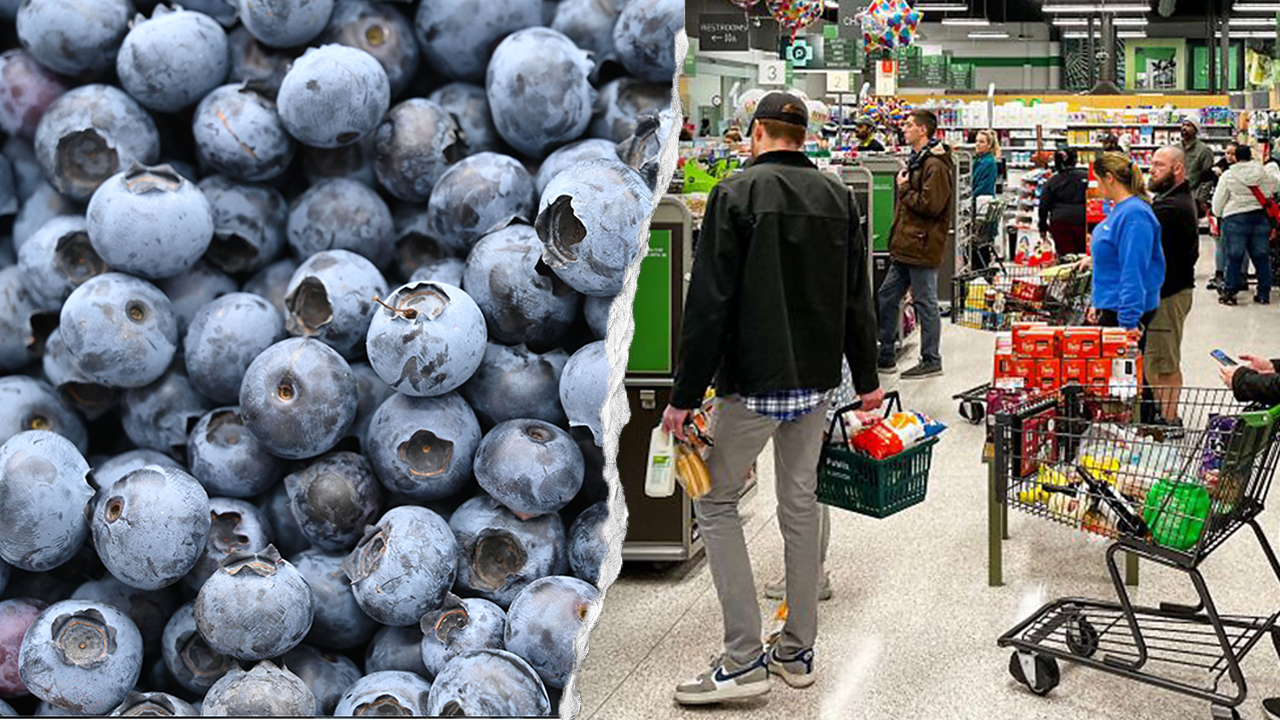
A Florida family is suing Publix and food distributor Quirch Foods, alleging contaminated frozen blueberries sold by the grocery chain caused the death of a woman and hospitalized her son.
The wrongful death lawsuit alleges Karla Mullins became sick after eating GreenWise Organic frozen blueberries purchased from a Publix store on Ulmerton Road in Largo. Her son ate the same product and was hospitalized after also becoming sick, according to the complaint.
Mullins died June 20, the lawsuit says. Her husband and son are seeking damages from Publix and Quirch Foods.
PUBLIX EXPANDS FROZEN BERRY RECALL AMID E COLI OUTBREAK THAT SICKENED 12

A package of Publix GreenWise Organic Whole Blueberries is shown. In July, Publix recalled its GreenWise Organic Whole Blueberries and Whole Mixed Berries over potential E. coli contamination. (FDA / Unknown)
“This family lost a treasured mother and wife because a product that was supposed to be safe was contaminated with a dangerous and deadly pathogen,” Morgan & Morgan said in a news release. “Karla Mullins should be alive today. We intend to hold Publix and Quirch Foods fully accountable for the role they played in putting this product on store shelves and into the hands of unsuspecting customers.”
The lawsuit accuses Publix, which sold the GreenWise-branded blueberries, and Quirch Foods, which it identifies as an intermediate distributor, of liability over what it describes as a defective and unreasonably dangerous product.
Representatives for Publix, Quirch Foods, and Morgan & Morgan did not immediately respond to FOX Business’ requests for comment.
JAGUAR LAND ROVER RECALLS 23,000 SUVS OVER RISK OF SUDDEN DRIVE POWER LOSS

Publix expanded the recall on blueberries on July 29. (Joe Raedle/Getty Images, File / Getty Images)
The lawsuit follows a recall of GreenWise Organic frozen blueberries tied to a multistate E. coli O145:H28 outbreak.
Chilean supplier Frutas y Hortalizas del Sur S.A. initially recalled one lot of GreenWise Organic frozen blueberries on July 3.
Publix expanded the recall on July 29 to cover all lots of GreenWise Organic Whole Blueberries and Whole Mixed Berries.

A package of Publix GreenWise Organic Whole Mixed Berries is shown. The retailer expanded its recall to all lots of the frozen berry products following a public health investigation into a multistate E. coli outbreak. (FDA / Unknown)
Federal health officials have linked the frozen berries to an outbreak of E. coli O145:H28, a Shiga toxin-producing strain that can cause severe stomach cramps, diarrhea and vomiting.
CLICK HERE TO GET FOX BUSINESS ON THE GO
The lawsuit was filed in Pinellas County Circuit Court.

If you’re trying to get noticed, you’re not just up against the shop two doors down. You’re up against every business within a five-mile radius doing the same search terms, the same Google Ads, the same “we’re different” messaging.
Here’s where to put your effort if you want your digital presence to actually pull its weight.
1. Get your local listings sorted before anything else
Before you touch a content calendar or a paid campaign, check that your Google Business Profile is complete, accurate and claimed.
Opening hours, address, phone number, category, photos. It sounds basic because it is, but a huge share of consumers now research a business online before ever walking through the door or picking up the phone, according to BrightLocal’s own consumer research. If your listing is wrong or thin, you’re losing people at the first hurdle, not the tenth.
2. Treat reviews as a running conversation, not a scoreboard
Reply to reviews, good and bad. A short, specific response to a two-star review does more for trust than ten five-star ones with no engagement behind them. Customers read how you handle criticism as a proxy for how you’ll handle them.
3. Build content around what people actually type into Google
Skip the generic “About Us” waffle and write pages that answer real questions your customers ask before they buy. A plumber in Hackney should have a page on emergency call-out costs, not a paragraph about company values. This is also where local search specialism earns its keep.
Agencies such as Maratopia, which works specifically on SEO strategy for London-based businesses, tend to focus on exactly this gap between generic web copy and the specific, high-intent phrases people search when they’re ready to spend money.
4. Make your site do the selling, not just the introducing
Your homepage isn’t a brochure. It should get someone to a decision within thirty seconds: what you do, who it’s for, how to get in touch.
If your bounce rate is high and you don’t know why, sit a stranger down in front of it and watch where they get stuck.
5. Don’t ignore mobile performance
Most local searches happen on a phone, often minutes before someone acts on them. A slow-loading site or a fiddly contact form costs you customers who’d otherwise have called within the hour.
6. Keep your business details identical everywhere
Directories, social profiles, your website footer. Inconsistent addresses or phone numbers confuse both customers and search engines, and in a market as saturated as London, that confusion is exactly the kind of small friction a competitor down the street won’t have.
Getting these six right doesn’t require a huge budget. It requires consistency, and a willingness to keep checking that what’s live online still matches how your business actually operates. London businesses that treat their digital presence as ongoing maintenance, rather than a project with an end date, tend to be the ones still winning new customers a year from now.
Business
Nearly 1 in 6 Kids on GLP-1 Weight-Loss Drugs Developed a Nutritional Deficiency Within a Year, Study Finds

Nearly one in six children and teenagers who started taking GLP-1 medications developed a new nutritional deficiency within a year, according to a study published last week, raising concerns that doctors may not be doing enough to monitor the nutritional health of young patients prescribed these increasingly popular drugs.
Researchers at Northwestern University’s Feinberg School of Medicine, along with collaborators at other institutions, examined medical claims data from a large database of real-world patients, identifying roughly 2,000 children between the ages of 10 and 17 who began taking a GLP-1 medication between 2017 and 2022 and had no preexisting nutritional deficiency noted in their medical records at the time. Within a year of starting the medication, about 17% of these children were diagnosed with either a nutritional deficiency or a related complication, such as anemia. Vitamin D deficiency was the most common diagnosis, identified in 12% of the children studied, followed by nutritional anemia at 1.55% and iron-deficiency anemia at 1.44%. The findings were published in the journal Childhood Obesity.
“Nutritional deficiencies are a meaningful and underrecognized risk among pediatric patients receiving GLP-1RA therapy,” the study’s authors wrote in their paper.
GLP-1 medications, including semaglutide, sold under the brand names Ozempic and Wegovy, and tirzepatide, sold as Mounjaro and Zepbound, have emerged in recent years as effective treatments for obesity and type 2 diabetes, including in pediatric patients. Childhood obesity remains a significant public health concern in the United States, with the Centers for Disease Control and Prevention’s most recent data showing approximately 22% of adolescents ages 12 to 19 classified as obese, along with 21% of children ages 6 to 11. Despite the drugs’ growing use among younger patients, researchers say considerable uncertainty remains about their long-term effects specifically in children.
The study’s design means its findings carry important limitations. Because the research was observational rather than a controlled clinical trial, the researchers cannot conclusively establish that GLP-1 use directly caused the nutritional deficiencies identified in the study, only that the two were associated within the studied population. The data also covers a period predating the more widespread adoption of GLP-1 medications for pediatric patients in more recent years, meaning current prescribing and monitoring practices may differ from those reflected in the dataset.
Even accounting for those limitations, the researchers noted that their findings align with a broader body of existing research. Intentional weight loss generally, regardless of the method used to achieve it, has previously been shown to increase a person’s risk of developing nutritional deficiencies. Other recent studies have similarly identified links between GLP-1 medication use and nutrition-related health problems, including rare but serious conditions tied to specific nutrient deficiencies.
While the study could not definitively explain why the children in the dataset developed these deficiencies, the researchers pointed to apparent gaps in the nutritional counseling many of the young patients received after starting their medication. According to the study, only about 5% of the children in the dataset received dietary counseling within the first 30 days after being prescribed a GLP-1 medication, and only a quarter received such counseling within six months of starting treatment.
Study author Justin Ryder, an associate professor of surgery and pediatrics at Northwestern University and a surgeon at the Ann & Robert H. Lurie Children’s Hospital of Chicago, said the findings point to a need for more proactive nutritional management rather than a reactive approach that waits until a deficiency has already developed. “We hope that our study findings bring much-needed recognition to the importance of proactive nutritional management when GLP-1s are prescribed to children, as opposed to waiting until a nutritional deficiency is diagnosed,” Ryder said in a statement released by the hospital. “Knowing the risks, we are in a much better position to prevent harm to children treated with GLP-1s during a pivotal period in their lives.”
The American Academy of Pediatrics began recommending GLP-1 therapy as a treatment option for childhood obesity in 2023. Those same recommendations emphasized the importance of pairing any pharmacological treatment with nutritional support for young patients, guidance that appears, according to the new study’s findings, to not always be consistently followed in real-world clinical practice.
The new findings add to a growing body of research examining both the benefits and potential risks associated with GLP-1 medications across different patient populations. Separate recent studies have identified other effects tied to the drugs, including associations between GLP-1 use and reduced rates of certain serious infections, as well as effects on respiratory conditions such as asthma and chronic obstructive pulmonary disease linked to the medications’ impact on obesity-related disease risk.
With GLP-1 prescriptions continuing to expand among pediatric patients treating obesity and type 2 diabetes, the study’s authors say their findings underscore the importance of consistent nutritional monitoring throughout a child’s course of treatment, rather than relying on providers to identify deficiencies only after symptoms or complications have already emerged. Given the observational nature of the current research, further studies, including those examining more recent prescribing patterns and monitoring practices, are likely needed to more precisely determine how significant a risk nutritional deficiencies pose to the growing population of children and teenagers using these medications.

The Property Council says the government should treat the supply of industrial land like housing by helping fund utility connections.

College wrestler, 19, named as hiker who fell to his death near 400ft waterfall in Yosemite
Allient director Michael Winter sells $49,936 in stock for plan transfer

Crude Oil Prices Pressured by Diplomatic Hopes in the Middle East

Weekend Open Thread – Corporette.com

Weekend Open Thread: Talbots – Corporette.com

Memory prices are slowing because buyers ran out of money

MONEY MONEY (Full Video): Yo Yo Honey Singh, Ajay Devgn, Jacqueline F, Riteish D | Bhushan K |RAID 2

Guess The Crypto Millionaire (ft. Brez)

This is why you need financial stability #finance #women #independence #careergrowth
-
 Fashion5 days ago
Weekend Open Thread: Talbots – Corporette.com
-

 Tech3 days ago
Researchers escape OpenAI Codex sandbox to run commands on host
-

 Crypto World5 days ago
Circle launches Arc Studio AI agent for building onchain apps
-

 Crypto World3 days ago
Who Needs CLARITY Anyway? ARB Could See 70X Increase: Hodler’s Digest
-
 NewsBeat5 days ago
Trump says US has reached an agreement to take permanent control of Greenland’s security
-

 Crypto World5 days ago
Trading Bitcoin on Robinhood? Why 2% Spread Has Traders Worried
-

 Crypto World24 hours ago
Goldman Sachs and Deutsche Bank Agree: The S&P 500 Rally Isn't Over
-

 Crypto World6 days ago
Mortgage and refinance interest rates today, Thursday, September 17, 2026
-

 Crypto World5 days ago
Bitcoin price breaks channel as RSI climbs to 63
-

 Crypto World7 days ago
US Charges Robinhood Engineers Over Crypto Listing Trades
-

 Tech2 days ago
Google’s $899 Googlebook is a bet that you’ll buy a new laptop for Gemini
-

 Business3 days ago
Analog Devices (ADI) Bets $1.35 Billion on Chips that Let Machines Think for Themselves
-

 Crypto World3 days ago
Coinbase, Robinhood, Circle Seen as Tokenized-Stock Winners
-

 Crypto World5 days ago
World Money launches in 150+ countries with Stripe
-

 Tech4 days ago
Trump suggests rebranding AI with a new name, says he’s also creating an AI Force
-

 Crypto World6 days ago
Silver prices recover quickly, hitting weekly high today
-

 Tech6 days ago
GPT-6 Astra Reached the Nether in Minecraft, Lost Its Stash to a Creeper, and Farmed Potatoes for Hours
-
 Business20 hours ago
Oil Price Today (September 23): Crude oil below $100 on hopes of US-Iran talks. What did Trump say?
-
 NewsBeat5 days ago
US was ‘on brink of war’ with China over false AI report of nukes moving in Middle East
-

 Crypto World2 days ago
Meta Jumps 11% As Muse Shines and Investors Show an Appetite for Advancing AI
You must be logged in to post a comment Login