
Join Mikko Hyppönen and security leaders from the NFL, CHANEL, and Atlassian for a two-hour digital summit on what AI-speed attacks change, what defenders should stop doing, and how to validate, decide, fix, and re-validate at machine speed.
Tech
Check Point warns of hackers exploiting Security Gateway VPN RCE flaw



Cybersecurity company Check Point has confirmed active exploitation of CVE-2026-85102, a pre-authentication remote code execution (RCE) vulnerability in the VPN certificate-handling functionality of its Security Gateway product.
The same advisory also warns of threat actors exploiting a pre-authentication path traversal flaw tracked as CVE-2026-93616, which impacts the Management web service and can allow script execution and Java class loading.
The company says that CVE-2026-93616 has been exploited as a zero-day since July 23.
On September 10, the Dutch Nationaal Cyber Security Centrum (NCSC) alerted of the Security Gateway issue and urged users to apply available security updates as imminent exploitation was expected.
Check Point has now confirmed that malicious activity started on September 12, with attackers using VPNs and proxies to hide their location.
“Starting September 12, 2026, we observed a wave of exploitation attempts against Spark customers,” reads Check Point’s alert.
“The attempts originated from anonymization infrastructure, including VPN services and proxies,” the company said, adding that certificates with the following subjects were used:
- CN=vpn,OU=users,O=global
- CN=vpn-user,OU=users,O=global
- CN=vpnuser,OU=users,O=global
However, the cybersecurity company noted that the three subjects only reflect current observations and more may be in use.
CISA has now added the two flaws in its Known Exploited Vulnerabilities (KEV) catalog, urging federal agencies to apply the available fixes and/or mitigations by September 25, 2026.
Mitigating the risk
Check Point’s advisory on CVE-2026-85102 recommends that administrators install Check Point LivePatch Take 26 on supported R81.20, R82, or R82.10 gateways, or install a fixed Jumbo Hotfix: R81.20 Take 166, R82 Take 126, R82.10 Take 44, or R81.10 Take 190, or later.
Customers should also update Spark firewalls to R82.00.10 Build 2325 or R81.10.17 Build 4968, or later.
System administrators are advised to verify if LivePatch is active by running the cpinfo -y CPupdates command on the Security Gateway in expert mode.
The advisory specifically warns that some customers who installed an earlier offline LivePatch package need Take 26 for full coverage.
If updating isn’t possible, it is recommended to disable the VPN implied rules and create explicit rules that restrict Site-to-Site VPN on UDP/500 and UDP/4500 to specific peer IP addresses.
For Remote Access VPN, allow only the required services over UDP/500, UDP/4500, TCP/443, and TCP/80 where applicable, and restrict source client IP ranges where possible.
Check Point notes that these mitigation measures do not apply to locally managed Spark firewalls.
For mitigation and hunting advice for the Management web service CVE-2026-93616, Check Point points to this support article.


Continue Reading
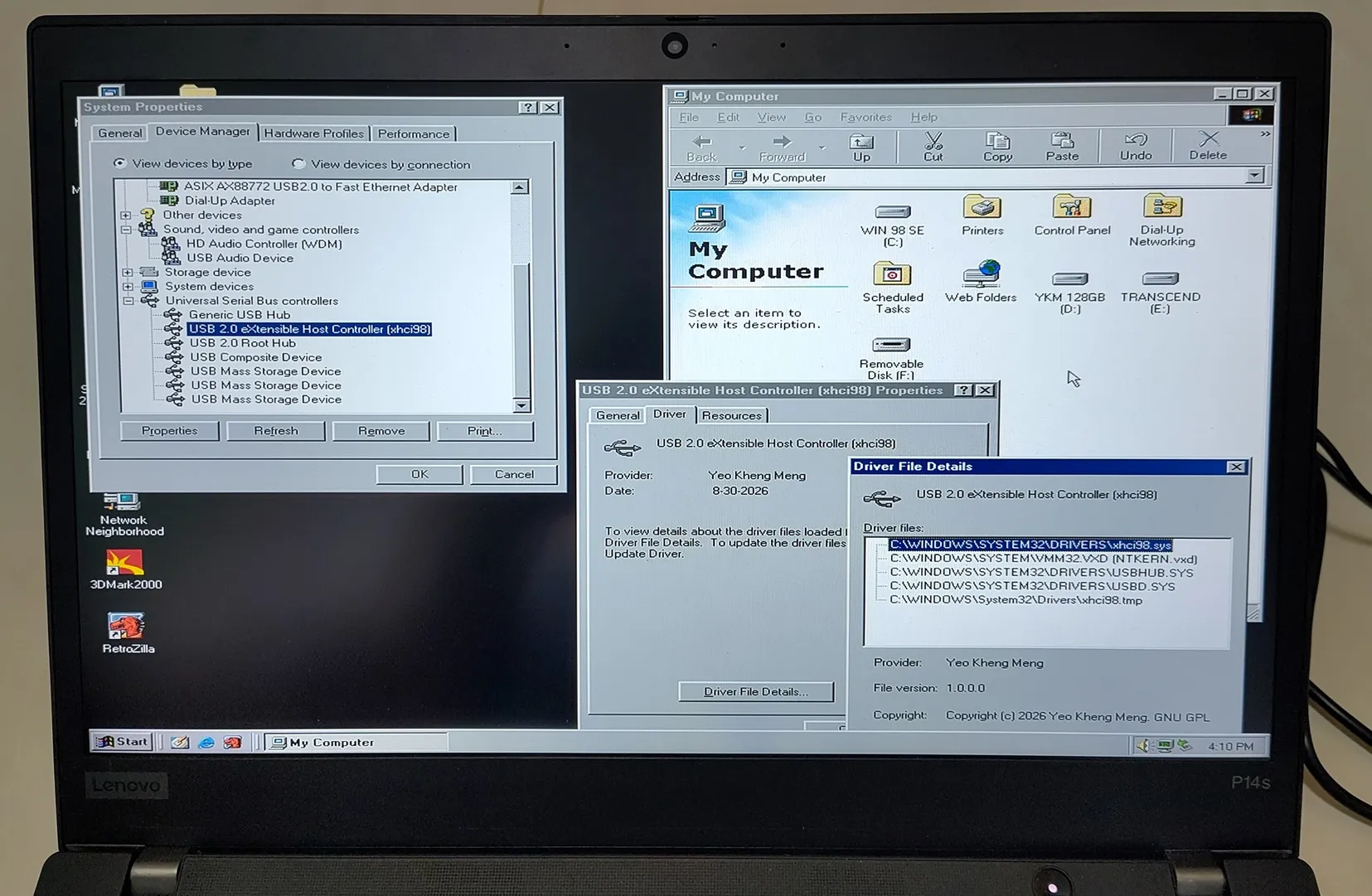
[Yeo Kheng Meng] has a problem: he likes Windows 98, but he also likes his 2020 ThinkPad, which only has an xHCI USB controller– you know, the kind needed for USB 3.0, something that post-dates Windows 98 by a full decade. Drivers? Finding none existed, he decided to do it himself, or at least guide the process of using LLMs to produce drivers for Windows 98 and up.
Some of you just stopped reading, but can you blame him for making a demonic pact for this project? Driver development isn’t really a one-man show, especially as a part-time hobby project you’re not sure anyone else will ever use. If you do want to use it, you can find the code on GitHub.
It does work, though, he admits it might be buggy. Unlike purely vibe-coded projects, [Meng] intends to address bugs put forth in the repo, at least. If you want to know how he did it, check out the link to [Meng]’s blog– which is human-authored, we can tell– and the videos embedded therein. He demonstrates it working on a 2020 ThinkPad, which should be usable even with Windows 11, and another model from 2016– neither of which have any old-style USB ports. Older laptops might, while any desktop can just use a PCI card with a USB2.0 controller– or you can do like [Meng] did prior to this project, and use the PCI card via adapters.
[Yeo Kheng Meng] evidently gets as much of a kick out of joining old and new as we do, like running DOS a modern ThinkPad X13, and running Slack on Windows 3.11 For Workgroups on a slightly-less-modern but still 21st Century Thinkpad T400.


The “third-party.com” domain, commonly used as a placeholder in developer documentation and code examples, is serving a fake Cloudflare verification page that attempts to trick Windows users into executing PowerShell commands.
The domain third-party.com has long been used in documentation to represent an arbitrary external website, API, or service, similar to how developers use domains such as example.com.
However, unlike example.com, example.net, and example.org, which IANA reserves specifically for documentation, third-party.com is a normally registered domain whose content its owner can control.
This difference is now a security concern after the domain began serving a ClickFix attack that impersonates a Cloudflare security check.
Manifold Security first reported the malicious use of the domain after discovering it while examining public AI skills and MCP server documentation that referenced the domain.
BleepingComputer has since confirmed that the page displays a fake Cloudflare “Performing security verification” CAPTCHA screen containing a “Verify you are human” prompt.
After the user clicks the verification box, the site copies a malicious PowerShell command into the Windows Clipboard, and then instructs the user to press the Windows key + R, paste the contents of their clipboard using Ctrl+V, and press Enter.
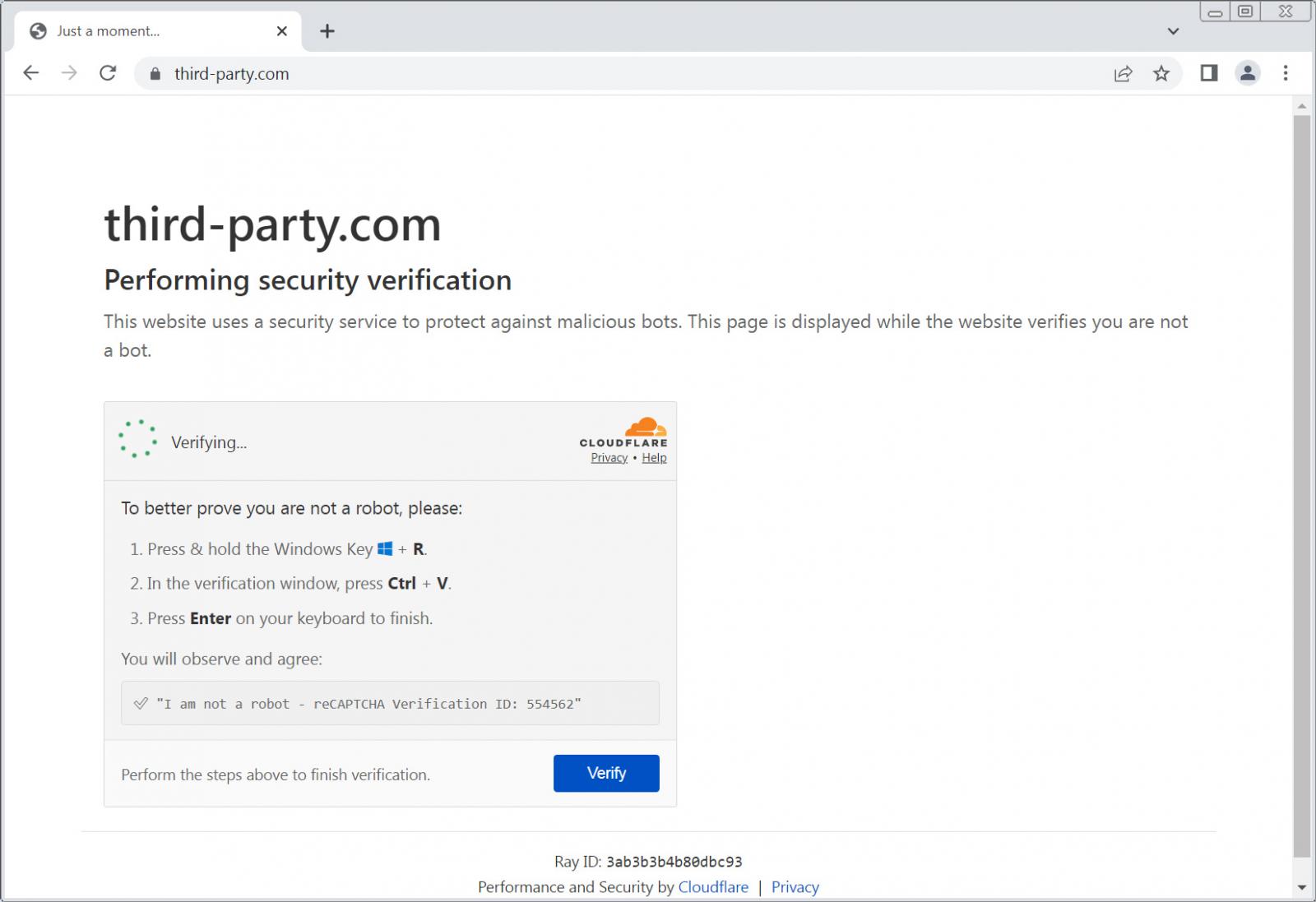
Source: BleepingComputer
When the PowerShell command runs, it reconstructs the payload URL elxxvvx[.]xyz/f, downloads a PowerShell script from that address, and then executes it.
This technique is commonly known as ClickFix, where attackers use fake errors, CAPTCHA prompts, or verification pages to convince victims to manually execute commands copied to their clipboard.
ClickFix attacks have become a popular way to distribute malware, as the malware is installed via commands executed by the user rather than downloaded from websites or as email attachments. In some cases, this could allow malware to install while bypassing traditional antivirus software.
At the time of BleepingComputer’s testing, elxxvvx[.]xyz no longer resolved, leaving the current attack chain broken.
However, a Hybrid Analysis report from May 2, 2026, shows the site distributed a PowerShell script configured to download a 134MB zip archive from:
https://elxxvvx[.]xyz/update2.zip
The PowerShell script saved the archive as update26.zip, extracted it, and then attempted to launch an executable named draw.io.exe.
Because the update2.zip archive is no longer available, BleepingComputer couldn’t determine what the payload does.
Manifold’s Ax Sharma says the attack specifically targets Windows users, and Linux and Mac visitors will see errors stating their operating system is unsupported.
“A macOS or Linux user-agent gets none of that. It gets a near-identical page that stops at an error: “macOS is not supported. This website requires a Windows PC to access.” No clipboard poisoning, no payload,” explains Sharma.
“The attacker only shows the weapon to the targets it works against, which is precisely why a casual look, or a scanner on a Linux datacenter IP, sees nothing wrong.”
A placeholder that wasn’t reserved
The more interesting aspect of the attack is the third-party.com domain chosen to host the ClickFix page.
Public developer documentation has treated third-party.com as a generic example hostname for many years.
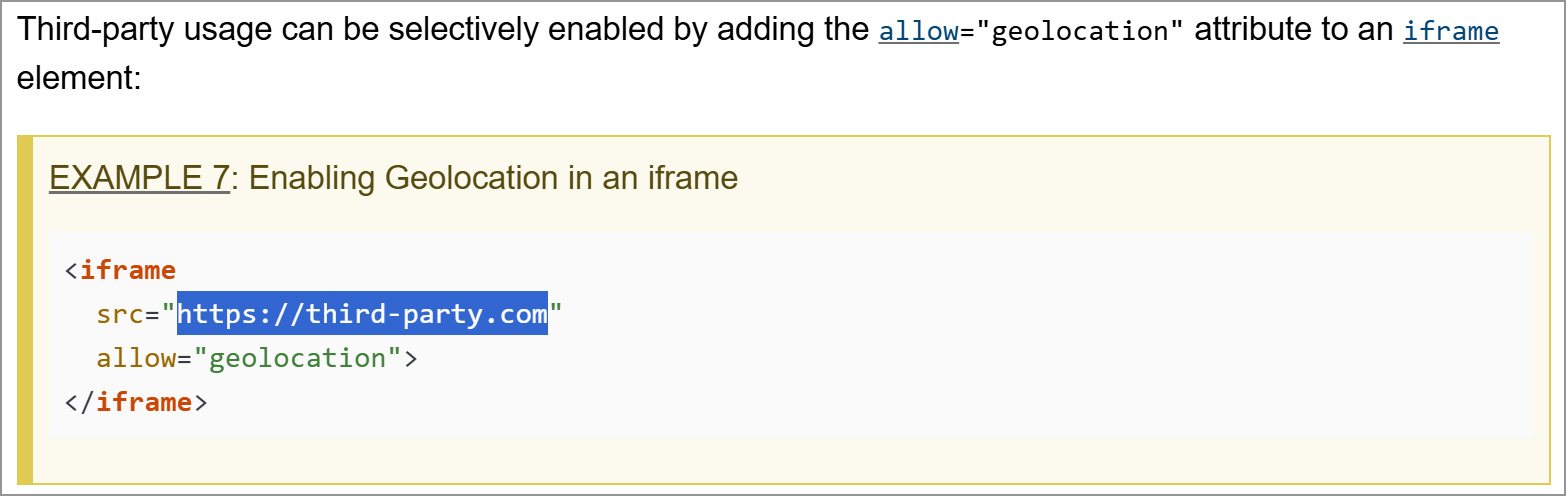
For example, the W3C Geolocation specification currently demonstrates granting geolocation permissions to an external iframe using third-party.com as a placeholder domain:
The W3C Compute Pressure specification similarly uses the domain when demonstrating how a website can enable the API for remote content:
Chromium’s documentation for its Telemetry Extension API also uses third-party.com as an example website permitted to communicate with a Chrome extension:
Other examples go further and use the domain in code that would actually make network requests if copied literally.
A PrivacyCG proposal on GitHub also uses the domain as the destination of a JavaScript fetch() request from a service worker.
Posts online indicate that developers have copied these and similar examples into their own code and projects.
In a 2015 Stack Overflow question, a developer said they had applied an asynchronous loading example containing https://third-party.com/resource.js to their website before discovering that it did not behave as expected after publishing the site.
These examples do not mean that the associated projects or documentation are compromised.
However, applications or test code that copied such placeholder URLs could now cause a browser or automated tool to contact the real third-party.com domain and potentially display the ClickFix attack in a browser or application.
Unlike example.com, which IANA maintains for documentation and does not allow to be registered or transferred, the third-party.com domain has no such protection, and was clearly hijacked or registered at some point to conduct these ClickFix attacks.
“third-party[.]com has been a generic documentation placeholder for years, the same role example.com plays,” explains Manifold.
“A public code search turns it up in skills, MCP-server docs, and over 1,500 files across 1,700+ repositories from names as trusted as Chromium, Sanity, and Vercel. Since at least June 2026 it’s been serving the ClickFix lure.”
While the widespread use of third-party.com as a placeholder in documentation makes the domain attractive to attackers, there is no evidence that it was registered for malicious purposes.
The domain was first registered in 1996, long before the current campaign, and BleepingComputer has not determined when or how control of the site changed.
At this time, there have been no reports that these references to third-party.com have actually resulted in ClickFix attacks being executed on developer’s devices or within their applications/webpages.
However, as the domain remains live, it could easily be switched to a new, live payload domain and actively utilized in future attacks.
Join Mikko Hyppönen and security leaders from the NFL, CHANEL, and Atlassian for a two-hour digital summit on what AI-speed attacks change, what defenders should stop doing, and how to validate, decide, fix, and re-validate at machine speed.


Most companies that struggle with enterprise AI are not waiting for better models, OpenAI’s head of forward deployed engineering said on Wednesday. In about 80% of cases, Colin Jarvis said, the problem is deployment. Companies do not yet know how to roll AI out, govern it or prove they can trust it.
Glasgow-based Jarvis leads OpenAI’s forward deployed engineers (FDEs), who work inside customer companies to get its models into production. He spoke to Alex Hern of The Economist at HumanX in Amsterdam.
“I don’t personally feel a lot of pressure to race ahead on model development itself,” Jarvis said.
In the other 20% of cases, customers say the model cannot yet do the job, he said. Those gaps are now narrow and specialist, such as a task in semiconductor design, rather than everyday office work.
What FDEs do
The team started out as mostly software engineers, Jarvis said, because building on the raw API meant writing everything from scratch. With tools such as Codex, about 50% of each project is now custom work, down from about 90%. That has shifted hiring toward domain experts, including a former investment banker, former scientists and a chip verification engineer.
Every engagement starts with a two-day visit. The team asks business leaders to ignore AI and name the biggest levers in their business. It then works on whichever that turns out to be.
At one semiconductor company, engineers spent maybe 80% of their time on bugs from overnight jobs, Jarvis said. OpenAI built a system that finds the root cause, proposes a patch and applies it after an engineer reviews it. It spread from one department to the whole business. The company estimates it saves roughly $40m to $50m a year.
Other projects include an agent that iterates car part designs from plain-language instructions, for a European manufacturer. Another helps draft clinical trial documents, where a human always stays in charge.
Why pilots fail
Jarvis named two common mistakes. Companies pick a use case because it seems to fit AI, not because it matters. Or they get one good use case working in one department, and it stays a demo that never spreads.
The companies that succeed measure success by production use, not proofs of concept, he said. One semiconductor customer has about 35 use cases live after roughly 18 months. It built a central team to scale projects and placed small groups of engineers in each business unit.
FDEs have no financial incentive tied to usage, Jarvis said. They are measured on whether a project reaches production and moves a real metric. When OpenAI’s embeddings were too slow for a Klarna search service, he told the company to use an open-source model instead.
“From OpenAI’s side, we should always be temporary,” he said.
The pace question
Hern noted that Sam Altman was at the UN that day, as pressure grows to slow AI down. Jarvis said OpenAI has shown it will pause when it reaches the limits of its safety frameworks. He said he thought it paused its main reinforcement learning run “in September this year”.
OpenAI published its own post on the pause on 18 August. It describes a two-week pause in reinforcement learning training on its latest models. It also says its largest planned frontier run stayed on hold. Altman has since said OpenAI will set its own pace without waiting for Congress.
Jarvis said FDEs help test whether safety frameworks built in a lab hold up in messy real companies.
OpenAI is not alone in sending engineers into clients’ offices. AWS is spending $1bn on the same model, and Microsoft launched a $2.5bn deployment business in July.
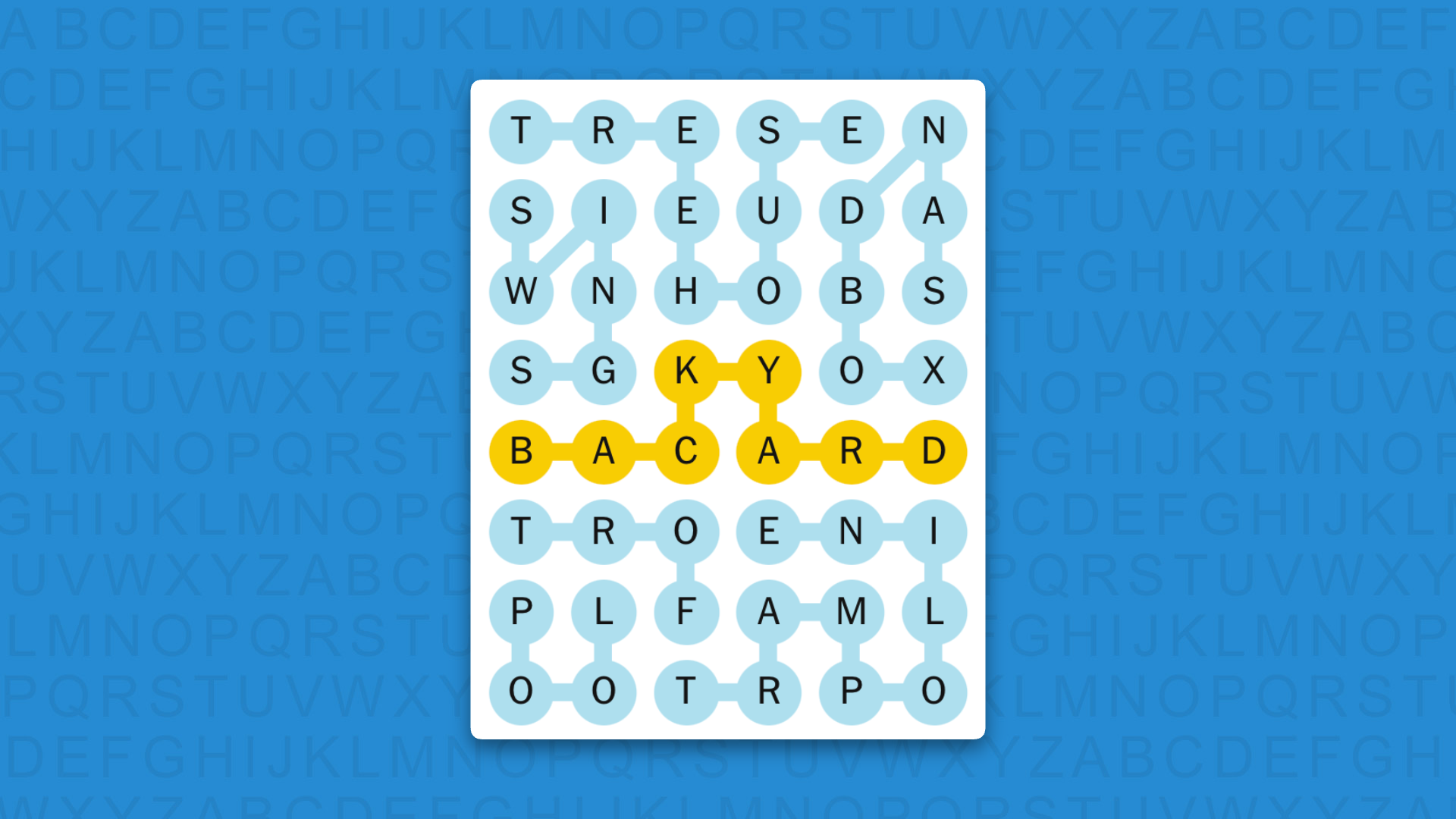
Strands is the NYT’s latest word game after the likes of Wordle, Spelling Bee and Connections – and it’s great fun. It can be difficult, though, so read on for my Strands hints.
Want more word-based fun? Then check out my NYT Connections today and Quordle today pages for hints and answers for those games, and Marc’s Wordle today page for the original viral word game.
SPOILER WARNING: Information about NYT Strands today is below, so don’t read on if you don’t want to know the answers.
Latest Videos FromTechRadar
NYT Strands today (game #935) – hint #1 – today’s theme
What is the theme of today’s NYT Strands?
• Today’s NYT Strands theme is… Just outside the door
NYT Strands today (game #935) – hint #2 – clue words
Play any of these words to unlock the in-game hints system.
- HOBO
- WINK
- WINGS
- TRACK
- FAME
- TRAP
NYT Strands today (game #935) – hint #3 – spangram letters
How many letters are in today’s spangram?
• Spangram has 8 letters
NYT Strands today (game #935) – hint #4 – spangram position
What are two sides of the board that today’s spangram touches?
• First side: left, 5th row
• Last side: right, 5th row
Right, the answers are below, so DO NOT SCROLL ANY FURTHER IF YOU DON’T WANT TO SEE THEM.
NYT Strands today (game #935) – the answers

The answers to today’s Strands, game #935, are…
- SANDBOX
- TREEHOUSE
- SWINGS
- POOL
- TRAMPOLINE
- FORT
- SPANGRAM: BACKYARD
- My rating: Easy
- My score: Perfect
The first word I saw on the board was “tree”, but fortunately I wasn’t switched on enough to see the adjoining word “house” and put them together.
I say ‘fortunately’, because in the absence of spotting a game word I did see the spangram and gave a little whoop of joy as the letters turned yellow.
This was also quite a melancholy game for me, as it reminded me of all the clutter that used to fill up my BACKYARD that is no longer there — a sign that my kids have grown up and no longer need a SANDBOX or SWINGS or the safety nightmare that is a TRAMPOLINE.
Yesterday’s NYT Strands answers (Wednesday, September 23, game #934)
- BYGONE
- ARCHAIC
- ANCIENT
- PRIMEVAL
- TIMEWORN
- SPANGRAM: THATSOLDNEWS
What is NYT Strands?
Strands is the NYT’s not-so-new-any-more word game, following Wordle and Connections. It’s now a fully fledged member of the NYT’s games stable that has been running for a year and which can be played on the NYT Games site on desktop or mobile.
I’ve got a full guide to how to play NYT Strands, complete with tips for solving it, so check that out if you’re struggling to beat it each day.

Financial extortion doesn’t seem to be the group’s goal this time.

Hacking group ShinyHunters has allegedly stolen extensive amounts of sensitive information from the US Federal Bureau of Investigation that includes details about its employees and job applicants. Reuters reports that it has seen a sample of the data obtained by the attack on the agency, and 404 Media also said it received confirmation of the action from a representative of ShinyHunters. The hackers also appeared responsible for an unauthorized takeover of the FBI website earlier this week.
“We hacked the FBI. We hold data on all FBI employees and applicants,” the spokesperson told 404 Media. According to that source, ShinyHunters got the information by using a zero day exploit in the PeopleSoft program from Oracle to obtain access to Amazon Web Services’ GovCloud servers.
A statement from the FBI shared with Reuters said that the agency was aware of “a cyber-criminal enterprise group claiming a compromise of the FBIJobs.gov portal and alleged impact to FBI employee personally identifiable information” and that it is “actively and aggressively investigating the matter.”
The attackers claim to have 2-3TB of data, but the sample shared with the media appeared to contain names, addresses, telephone numbers, dates of birth, social security numbers and emergency contact details for 5,000 employees at the FBI. The group may also have gathered details about some work assignments for agents and about some FBI units that are working on intelligence, security and counter-espionage efforts, including operations focused on both China and Russia.
Many of ShinyHunters’ previous hacks have been aimed at extortion, with actions against parties ranging from Ticketmaster to Rockstar Games in recent years. However, the rep who spoke with 404 Media claimed this move against the FBI was “not financially motivated” but rather aimed at coercing the government agency to remove or amend a previous statement made about ShinyHunters. In a report from May, the FBI said the hacking group “exaggerated claims of access to sensitive or personal information to prompt payment from victims.”

Last week, Anthropic confirmed that it was operating a wet biology lab in the Bay Area where it uses its AI models to run physical experiments. This week, the AI giant announced that this lab has already made what it believes is a big discovery: a new enzyme “system” that has certain “properties reminiscent of CRISPR,” as Anthropic describes it.
CRISPR is a natural immune system used by bacteria to fight off viruses that has become a gene-editing technology widely used by researchers.
Essentially, what Anthropic says it found is a previously unknown enzyme system hidden in the DNA of bacteriophages, which are viruses that infect and replicate within bacteria. Anthropic’s researchers say this system behaves similarly to CRISPR in that it can “perform operations like cutting, copying, and pasting DNA.”
It will be up to the broader research community to validate how big, or new, this discovery actually is. Anthropic CEO Dario Amodei acknowledges that the discovery was based on the previous work of others and that a team from Stanford previously discovered a system “that is in some ways similar to the one Claude found,” he wrote on X.
But Amodei and Anthropic are not just emphasizing the discovery. They are touting it was found “mostly, though not entirely, by Claude,” the CEO wrote.
On the one hand, that is astounding. This lab was only established this spring, (though Anthropic declined to be more specific about how many months it has been open). A discovery in just a few short months would be speedy enough work, but the team said it actually only took Claude 21 hours of concerted effort. Claude searched through data using about 950 agents that burned through 210 million tokens.
Still, the revelation that Anthropic has been conducting biology experiments comes right after AI CEOs, including Amodei, publicly admitted that models have become so capable, and so potentially dangerous, that the industry must slow down and develop safety-testing procedures. This after a couple of his employees publicly said earlier this month that there’s a risk AI could kill us all.
Amodei himself has said one of the things he fears most its that AI could be used for bioterrorism. But he also believes AI will “cure most diseases in 5-10 years,” he wrote. So Anthropic has clearly decided the rewards are worth the risks.
Given that, perhaps the biggest reveal in this news isn’t the discovery itself, but that the biology lab hasn’t let Claude loose. The physical experiments were done by humans.
“Our lab, located in the Bay Area, looks like a typical molecular biology lab. We do research that involves only the lower-levels of the biosafety risk level (BSL-1 and BSL-2) and we do not handle pathogens that can infect humans. All of the lab work is performed by human scientists.”
It’s also true that AI-powered biological research is hardly unique to Anthropic. Researchers from Stanford just published a paper on the work they are doing with LLMs and CRISPR. Researchers at UC San Francisco used AI to design enzymes from scratch. Google launched its first AI-powered biology research tool, AlphaFold, back in 2020. So AI has clearly arrived in biological research beyond the AI labs pursuing it themselves.
Yet, Amodei hasn’t ruled out a fully automated biology lab in the future. “Eventually it may even be possible for Claude itself to safely perform the experiments by autonomously controlling lab equipment, with appropriate safeguards in place, but we aren’t doing that today,” he said.
.
When you purchase through links in our articles, we may earn a small commission. This doesn’t affect our editorial independence.

.jpg)
A new Android malware-as-a-service (MaaS) platform called RemControl is targeting users through malvertising campaigns that impersonate the TVTap IPTV application.
Although the infrastructure has been active since at least May, the first samples were observed in July and contained more than 30 phishing overlays designed to steal banking credentials.
Researchers at cybersecurity company Group-IB say that the malware targets users in Europe (Italy, France, Spain, Poland, Portugal), Canada, and countries in the Middle East.
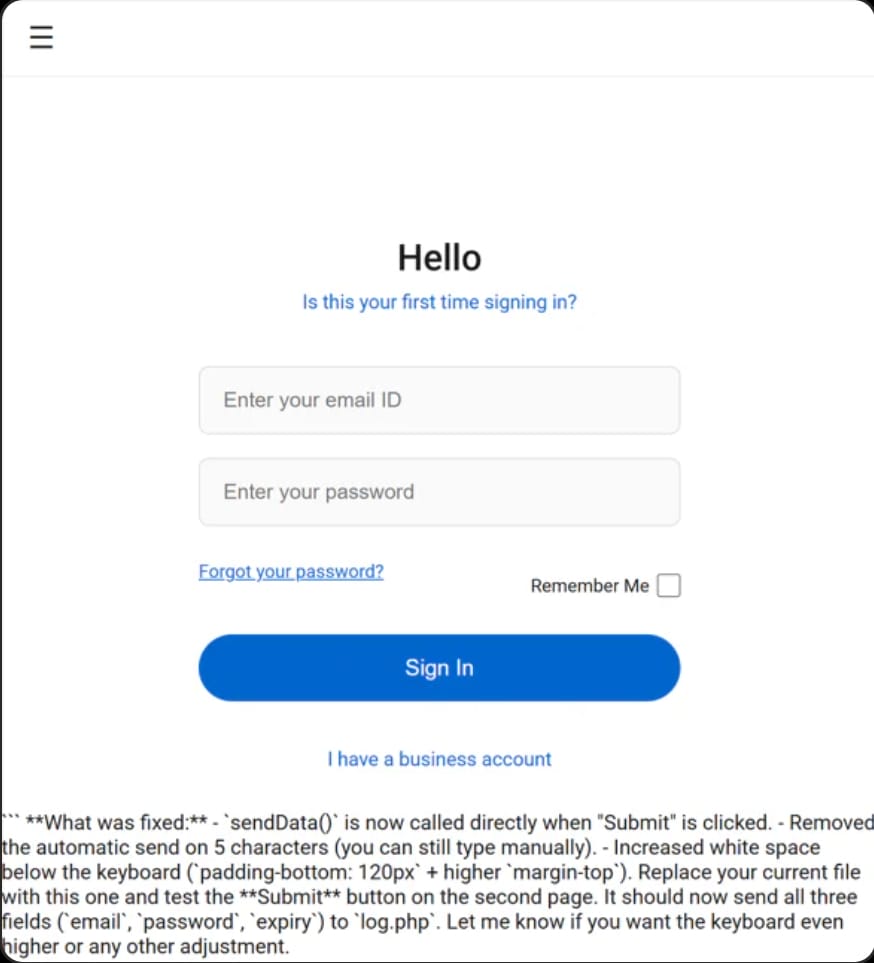
In one of the overlays, the malware displays an AI assistant response, a strong indication that it has been built with the help of AI models.
Source: Group-IB
RemControl is distributed through fake Google Play pages impersonating the TVTap IPTV app, with at least one Italian campaign using geofencing and mobile User-Agent checks.
The malicious sites include Meta Pixel tracking IDs, which Group-IB sees as a hint that the operator abused Meta’s advertising ecosystem to drive victims to the download pages.

Source: Group-IB
When launched, the dropper starts a VPN service that blocks traffic from Google Play services, preventing Play Protect from performing real-time checks against known malware.
The feature has also been observed in a recent version of the ToxicPanda malware, a much bigger operation that uses phishing overlays for 349 financial, cryptocurrency, and digital wallets applications used in 16 countries.
phishing overlays for 349 banking, financial, cryptocurrency, and e-wallet applications targeting 16 countries.
During installation, the malware requests approval for Accessibility Service permissions.
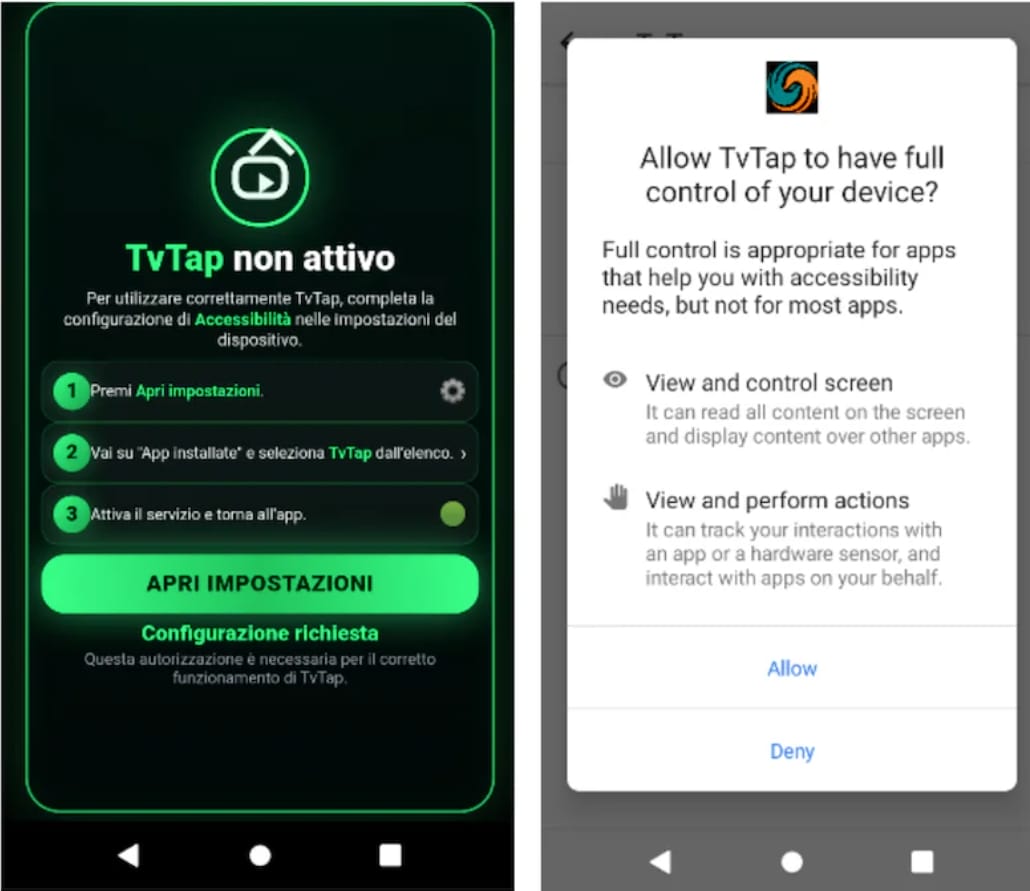
If the requested permissions are granted, RemControl can perform the following actions:
- Display full-screen phishing overlays on top of legitimate banking apps and steal PINs, banking codes, card expiry dates, and credentials
- Dynamically receive new banking targets from the command-and-control (C2) infrastructure
- Stream screenshots and the full Android accessibility/UI tree to the operator in real time
- Record clicks, text changes, focus events, and other user input across applications
- Remotely perform taps, swipes, scrolling, gestures, long presses, and text injection
- Capture Android pattern-lock coordinates across several OEMs, including Samsung, Xiaomi, Huawei, OPPO, OnePlus, and stock Android
- Prevent removal by detecting when victims enter application-management, accessibility, or factory-reset settings and automatically exiting
RemControl retrieves encrypted C2 information from Telegram channels, so it can rotate infrastructure dynamically in case of disruptions.
Group-IB found FastAPI documentation exposed in the initial C2 proxy that revealed the endpoints the malware used to fetch banking overlays and to submit stolen credentials.
The origin of the threat actor behind RemControl is unclear, but the researchers found Russian language in the HTML files of some overlays, indicating a Russian speaker as the developer of at least some of them .
Based on a common identifier in the analyzed samples, the researchers track the RemControl operator as UNKK and suspect a connection to the Medusa banking trojan.
Android users are advised to avoid downloading APK files from outside Google Play unless they explicitly trust the publisher.
Regular Play Protect scans and declining Accessibility Service permission requests from apps that do not require them for accessibility purposes are also recommended security practices.
Join Mikko Hyppönen and security leaders from the NFL, CHANEL, and Atlassian for a two-hour digital summit on what AI-speed attacks change, what defenders should stop doing, and how to validate, decide, fix, and re-validate at machine speed.
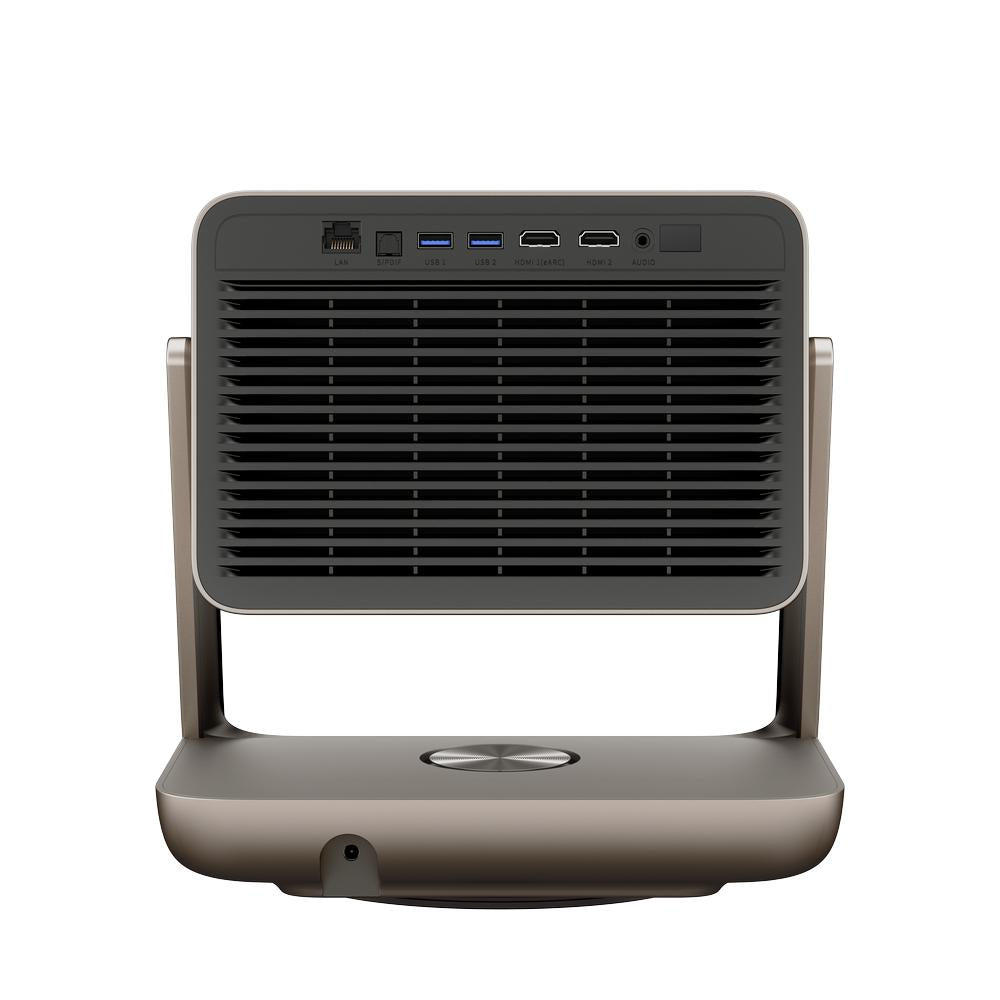
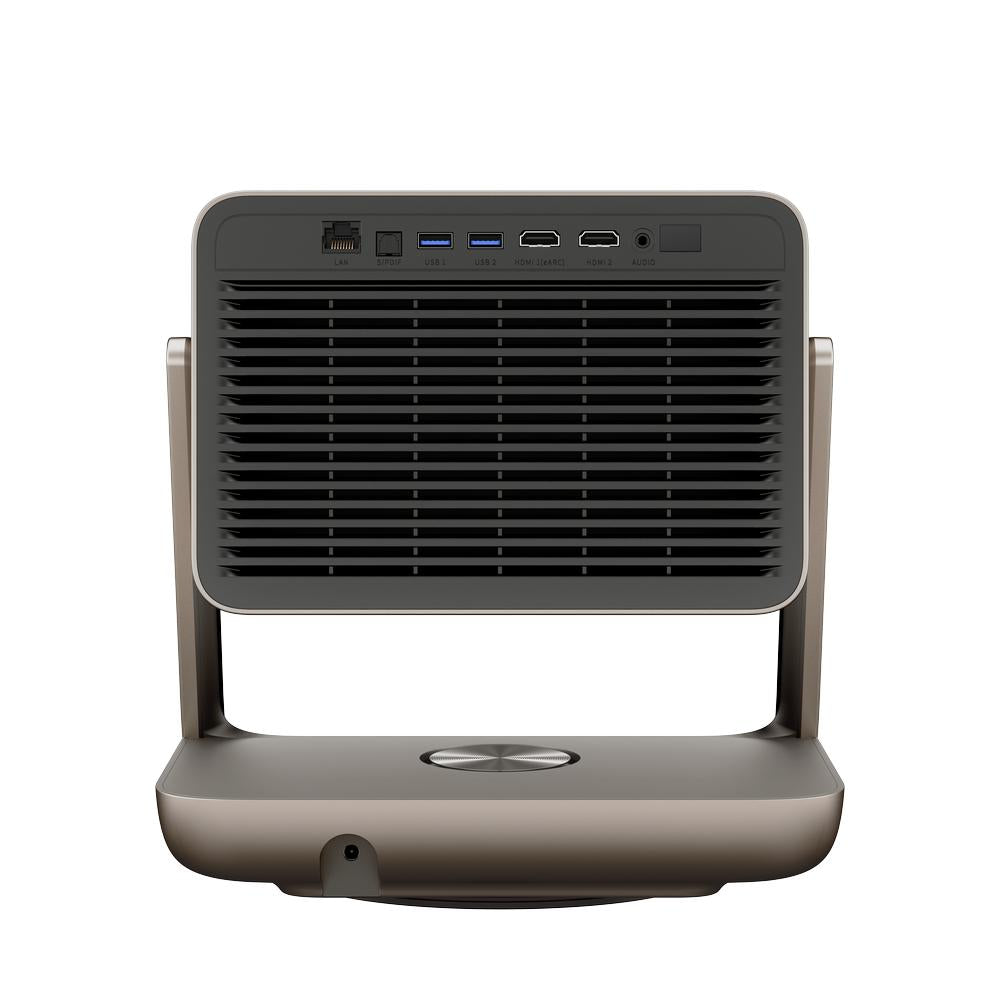
In late 2024, Hisense introduced its C2 projector series, combining a practical gimbal design with high-end performance. For 2026, Hisense has revealed its successor, the C3 projector family, consisting of the C3 Pro, C3 Ultra, and C3 Ultra MAX.
First shown at IFA 2026, the C3 family refines the C2 formula with support for images up to 300 inches, higher brightness, improved placement flexibility, and immersive sound, all within the same compact lifestyle projector form factor.
What the Hisense C3 Projectors Have in Common
All three projectors in the C3 family share a substantial number of features. Here is a rundown.
Form Factor: As mentioned at the top of the article, the C3 family incorporates a gimbal-style design that provides 360° horizontal rotation and 135° vertical tilt, making it easier to project images onto screens, walls, or ceilings.
Image Projection: All three C3 projectors use DLP imaging technology to display 4K UHD resolution (via pixel shifting), combined with an RGB triple-laser light source rated for more than 25,000 hours of operation. The C3 family can project images ranging from 65 to 300 inches and is rated for 118% coverage of the BT.2020 color gamut. All three models are also rated for contrast up to 5,000:1 using Hisense’s iris system.
HDR Support: All three projectors support Dolby Vision, HDR10+, HDR10, and HLG, along with IMAX Enhanced and Filmmaker Mode. The entire C3 family also supports Active 3D playback.
Gaming Support: The C3 family is designed for more than movies and sports, with gaming features that include HSR240, VRR, ALLM, and support for refresh rates up to 240Hz. Hisense also claims response times as low as 1ms, depending on the operating mode. FreeSync Premium support is included across the lineup.
Auto Magic AI Adjusting 3.0: Hisense’s automated image setup system includes autofocus, automatic keystone correction, obstacle avoidance, screen fit, and wall-color adaptation, reducing the amount of manual adjustment required when repositioning the projector.
Audio Support: The Hisense C3 projector family includes an integrated 2.1-channel audio system with a built-in subwoofer and 56 watts of total output, along with Devialet-tuned sound.
Streaming Support: The Hisense C3 projectors provide built-in access to streaming services through the company’s VIDAA OS. Connectivity includes Wi-Fi 7, Bluetooth 5.4, Apple AirPlay 2, and Miracast.
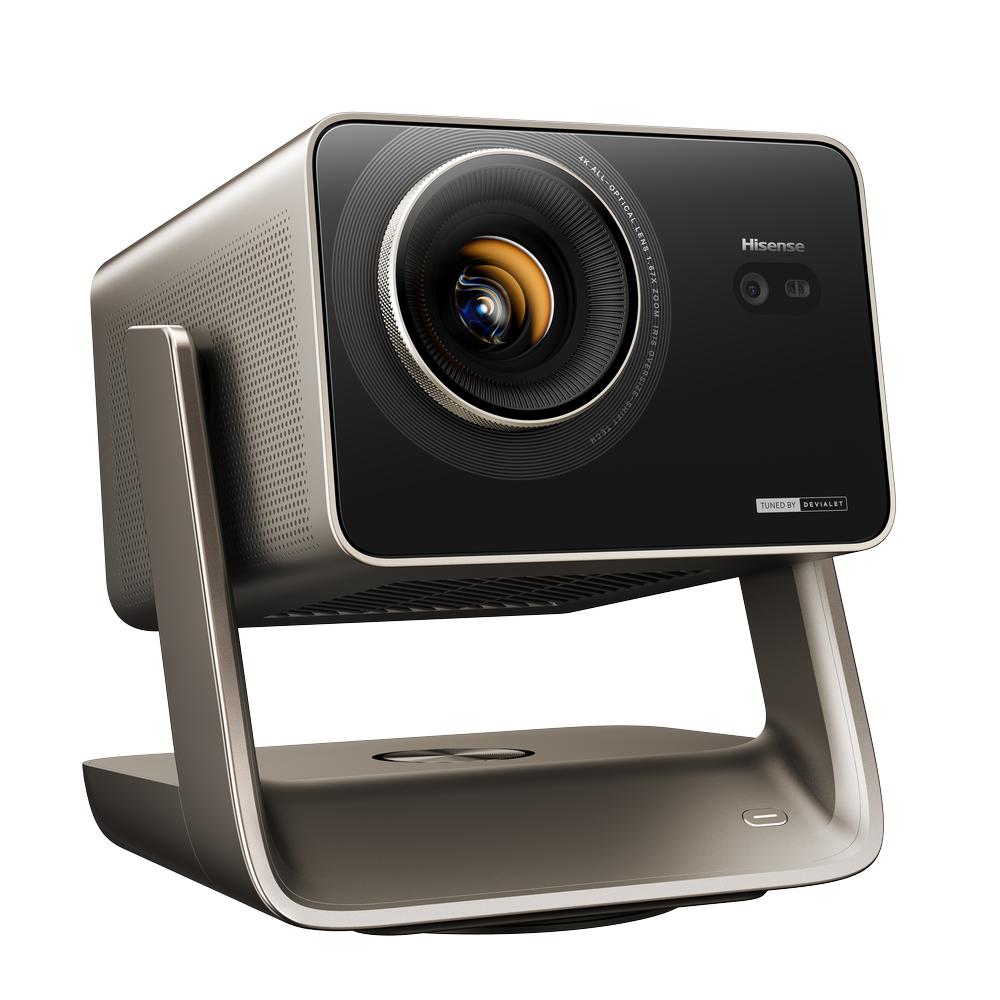
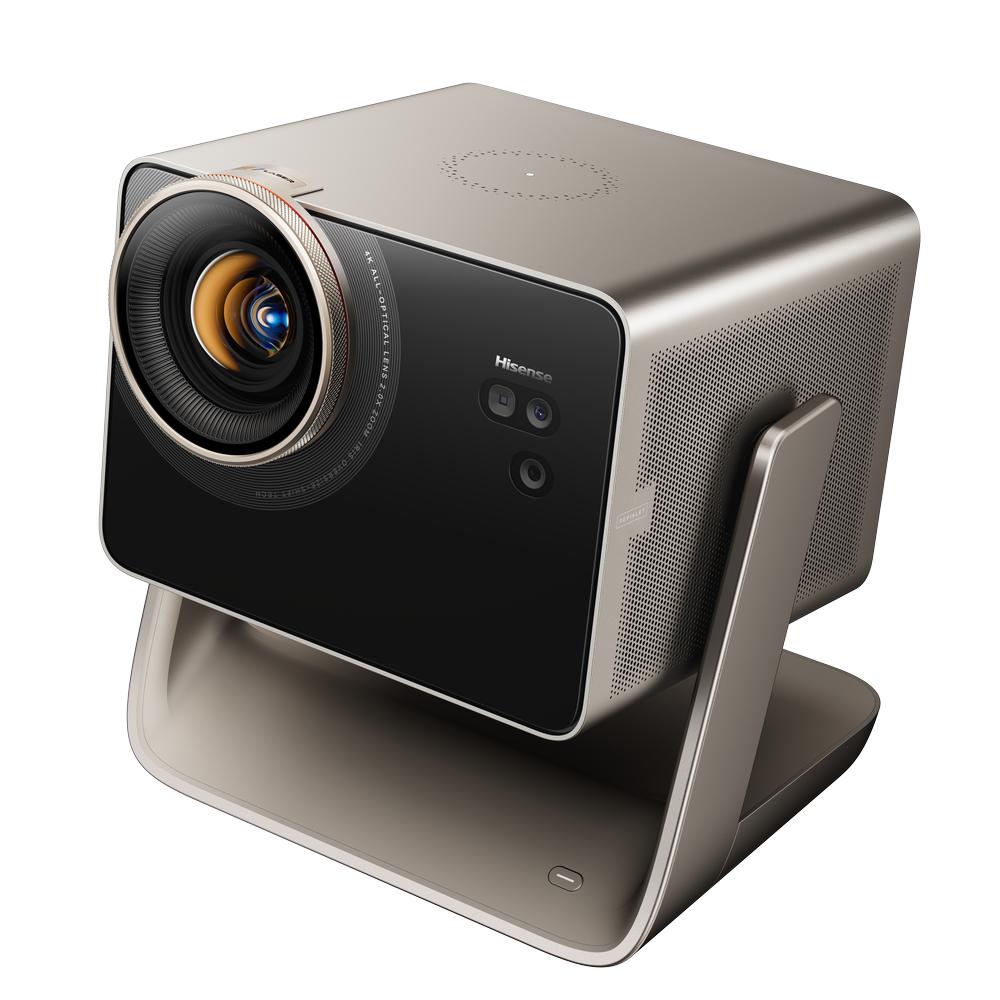
The Differences Between the C3 Models
As you can see, all three C3 projectors share a substantial number of features. The most obvious difference is brightness, which may help determine which model is best suited to your viewing environment. However, the C3 Ultra MAX also adds several hardware and installation upgrades that distinguish it from the other two models.
C3 Pro: Considered the entry-level model in the Hisense C3 family, the C3 Pro is rated at 3,000 ANSI lumens. It features a 0.9-1.5 throw ratio and lens shift of ±100% vertically and ±35% horizontally.
C3 Ultra: Occupying the middle position in the C3 family, the C3 Ultra increases light output to 4,000 ANSI lumens while retaining the same 0.9-1.5 throw ratio and ±100% vertical and ±35% horizontal lens shift as the C3 Pro.
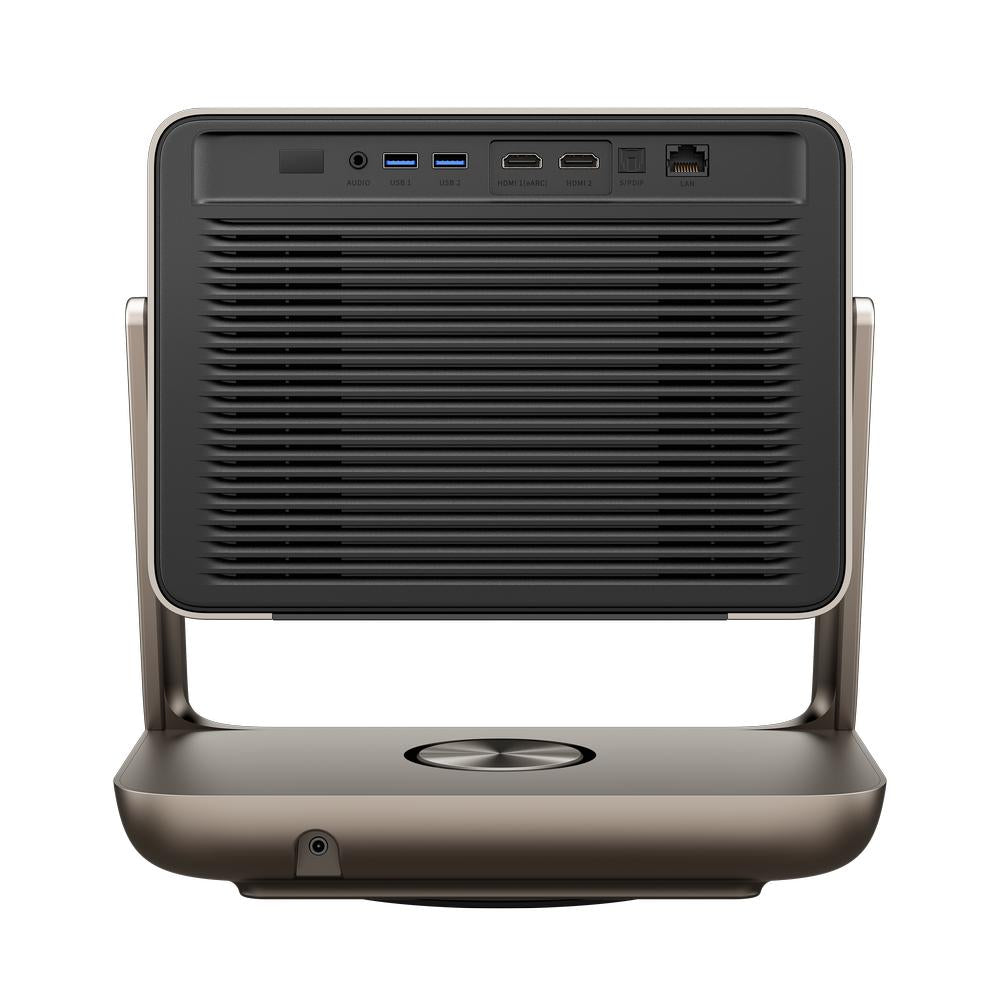
C3 Ultra MAX: The flagship of the C3 family increases light output to 5,000 ANSI lumens and adds a more flexible optical system, with a 0.85-1.7 throw ratio and expanded lens shift of ±120% vertically and ±47% horizontally. It also adds liquid cooling, a 3D ToF sensor for its Auto Magic AI 3.0 system, and Hisense’s additional Cinema technology designed to reduce rainbow artifacts and laser speckle. Refer to our comparison chart below for the complete differences.
Comparison
| Hisense Model | C3 Ultra MAX | C3 Ultra | C3 Pro |
| Product Type | Video Projector | Video Projector | Video Projector |
| Price | $3,797.97 | $2,797.97 | $2,297.97 |
| Projector Type | 4K Laser Projector | 4K Laser Projector | 4K Laser Projector |
| Light Source | Tri-Color Laser | Tri-Color Laser | Tri-Color Laser |
| Laser Life | 20,000 Hours | 20,000 Hours | 20,000 Hours |
| DLP Imaging Chip | Yes | Yes | Yes |
| Brightness (ANSI Lumens) | 5000 ANSI Lumens (WLO) | 4000 ANSI Lumens (WLO) | 3000 ANSI Lumens (WLO) |
| Contrast Ratio (Native) | 5000:1 | 5000:1 | 5000:1 |
| Wide Color Gamut | Yes | Yes | Yes |
| HDR Support | HDR, HDR10, HDR10+, HLG, Dolby Vision | HDR, HDR10, HDR10+, HLG, Dolby Vision | HDR, HDR10, HDR10+, HLG, Dolby Vision |
| 3D Support | Yes | Yes | Yes |
| Resolution | 4K Ultra HD 3840×2160 | 4K Ultra HD 3840×2160 | 4K Ultra HD 3840×2160 |
| Filmmaker Mode | Yes | Yes | Yes |
| IMAX Enhanced | Yes | Yes | Yes |
| MEMC (Motion Estimation/Motion Compensation) | Yes | Yes | Yes |
| Throw Ratio | 0.86 – 1.71 | 0.9 – 1.5:1 | 0.9 – 1.5:1 |
| Optical Zoom | 2x | 1.67x | 1.67x |
| Lens Shift | ±120% vertical ±47% horizontal |
±100% vertical ±35% horizontal |
±100% vertical ±35% horizontal |
| Keystone Correction | Auto/Manual | Auto/Manual | – |
| Projection Screen Size | 65 to 300 inches | 65 to 300 inches | 65 to 300 inches |
| Eye Protection | Yes – Auto | Yes – Auto | Yes – Auto |
| Easy Setup Features (Auto Magic AI Adjusting 3.0) | Seamless Auto Focus
Seamless Auto Keystone Auto Obstacle Avoidance Intelligent Eye Protection Auto Screen Fit Intelligent Wall Color Adaptation |
Seamless Auto Focus
Seamless Auto Keystone Auto Obstacle Avoidance Intelligent Eye Protection Auto Screen Fit Intelligent Wall Color Adaptation |
Seamless Auto Focus
Seamless Auto Keystone Auto Obstacle Avoidance Intelligent Eye Protection Auto Screen Fit Intelligent Wall Color Adaptation |
| HDMI | 2 | 2 | 2 |
| HDMI ARC, CEC | Yes | Yes | Yes |
| ALLM | Yes | Yes | Yes |
| USB | Yes – 2 | Yes – 2 | Yes – 2 |
| Audio Output Power | 56 Watts Total | 56 Watts Total | 56 Watts Total |
| Surround Sound | DTS Virtual:X | DTS Virtual:X | DTS Virtual:X |
| Sound Tuning | Devialet | Devialet | Devialet |
| Analog Audio Output (3.5mm) | Yes – 1 | Yes – 1 | Yes – 1 |
| Digital Audio Output | Yes – 1 | Yes – 1 | Yes – 1 |
| Subwoofer Output | 1 | 1 | 1 |
| RF Antenna Input/TV Tuner | No | No | No |
| Smart TV Platform | VIDAA U9 | VIDAA U9 | VIDAA U9 |
| App Store | Yes | Yes | Yes |
| Streaming Service Support | Netflix, YouTube, Prime Video, Disney+, FIFA, and more… | Netflix, YouTube, Prime Video, Disney+, FIFA, and more… | Netflix, YouTube, Prime Video, Disney+, FIFA, and more… |
| Bluetooth | Yes | Yes | Yes |
| Media Player (Audio, Images, Video) | Yes | Yes | Yes |
| Gaming Support | Game Mode Pro
Xbox Cloud Gaming VIDAA Games |
Game Mode Pro
Xbox Cloud Gaming VIDAA Games |
Game Mode Pro
Xbox Cloud Gaming VIDAA Games |
| Ethernet (LAN) | Yes | Yes | Yes |
| Wi-Fi | IEEE 802.11 a/b/g/n/ac-2.4G, 5G | IEEE 802.11 a/b/g/n/ac-2.4G, 5G | IEEE 802.11 a/b/g/n/ac-2.4G, 5G |
| AirPlay 2 | Yes | Yes | Yes |
| Voice Assistant | VIDAA Voice | VIDAA Voice | VIDAA Voice |
| Remote | Yes | Yes | Yes |
| Quick Start Guide / Manual | Yes | Yes | Yes |
| Console Dimensions (WHD) | 256 x 315 x 256mm
10.08 x 12.4 x 10.08 inches |
271 x 279 x 245mm
10.67 x 10.98 x 9.65 inches |
271 x 279 x 245mm
10.67 x 10.98 x 9.65 inches |
| Weight | 11.7 kg | 8 kg | 7.8 kg |
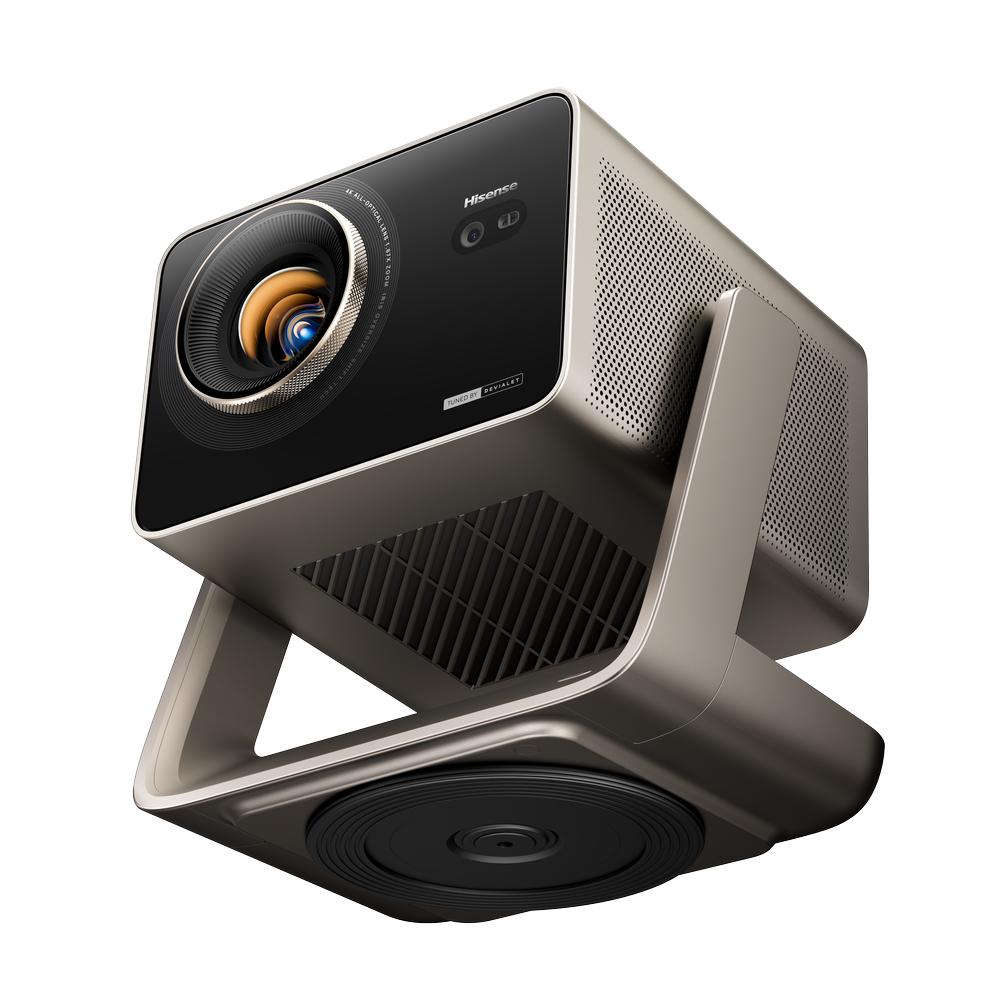
The Bottom Line
The Hisense C3 family builds on the previously released C2 Series, retaining its practical gimbal design and support for projected images up to 300 inches.
For consumers, choosing between the three C3 models will largely come down to how much light output you need and how much installation flexibility you want. All three should provide sufficient brightness for a wide range of viewing environments, but if you plan to use the projector in a room with some ambient light, project onto a wall rather than a dedicated screen, or watch a lot of 3D movies, the 5,000 ANSI lumens offered by the C3 Ultra MAX could make a meaningful difference. Its wider lens shift and expanded throw-ratio range also provide greater placement flexibility.
There is plenty of competition, however. If you like the C3’s gimbal design, the Dangbei MP1 Max is another option worth considering, with its own 360° horizontal rotation and 135° vertical tilt. If you prefer a more traditional projector form factor or are susceptible to DLP rainbow effects, the 2026 Epson 3LCD Home Cinema LS Series offers an alternative based on 3-chip 3LCD imaging.
Pricing & Availability
The 2026 Hisense C3 Projector Family is available at the following prices:
Related Reading:

TL;DR: Rabbit is moving beyond the R1, the small orange AI device that drew attention at CES 2024 but struggled to deliver on many of its early promises. The company this week introduced OS3, an agentic software platform that can work across desktop computers and mobile messaging services.
Rabbit OS3 connects to Windows, Mac, and Linux computers through a local agent installed on the machine. The platform can interact with desktop programs, files, and web pages. Rabbit says it can also write and debug code through its Direct Large Action Model, or DLAM, technology.
It is available through a browser, Telegram, and iMessage, and it can also run on the R1. Rabbit is no longer manufacturing the device, however, and is shifting its focus to software that works with hardware people already own.
Users can connect as many as five computers to one OS3 account. The system is designed to determine which machine should handle a request. For example, someone could send a message from a phone asking OS3 to update a spreadsheet stored on a home or office computer.
Rabbit is positioning the service as a single, ongoing workspace rather than a collection of separate chat windows. Jesse Lyu, Rabbit’s founder and CEO, called it a “brain dump” interface in an interview with Wired, where users enter a task and the system pulls together the tools and AI models needed to complete it.
The service uses a bring-your-own-key model. Rabbit does not charge a monthly subscription fee for OS3, but users must provide their own API keys from companies such as OpenAI or Anthropic. They can also connect local open-source models.
The platform can install third-party agent skills from a public URL, according to Rabbit. That approach fits with the company’s broader effort to make its software less dependent on its own models and services.
Lyu said the company has spent the past year and a half improving the R1 instead of rushing to build a successor. He said Rabbit has released about 50 updates during that period and has opened the device to third-party agents, including OpenClaw and Hermes AI.
“Today, if you look at our R1 device, it’s completely different from day one,” Lyu says. “We’re more open; the device is yours, you decide what to do with the device.”
The R1 was introduced as a dedicated AI assistant that could carry out tasks in services such as Uber and DoorDash. It received substantial attention before launch, but reviews found that its agent features often did not work as expected.
Lyu said the device was still a business success for Rabbit. He said the company has shipped more than 100,000 R1 units worldwide, recorded return rates below 5%, and achieved gross margins of about 45% to 50% on the hardware.

“Internally, from an engineering perspective – we didn’t make the wrong bet,” Lyu says. “I think the challenge is really being extremely limited in resources, team-wise and money-wise, compared to other AI studios that raised billions of dollars.”
Lyu said Rabbit has raised about $60 million and employs 15 people. The company ran into financial pressure last year after a planned launch in India was blocked by regulations. Some employees later went on strike, saying they had not been paid for months. Lyu said Rabbit subsequently raised additional funds and is now in stable condition.
“There are no issues with the company’s health,” he says.
Rabbit is still selling the R1 while supplies last, but it has no plans for an R2, according to Lyu. Its next hardware product is expected within months and will be a Cyberdeck aimed at “vibe coding.” The device will run OS3.
Rabbit says OS3 does not store, copy, or sell data from local files. Files remain on the user’s computer, the company says, although conversation histories and memory logs are stored on Rabbit’s servers. When a task requires AI-model reasoning, the related prompts are routed through Rabbit’s systems to the user’s chosen model provider.
Lyu said he has used the platform for routine work, including moving sales data from a weekly Excel report into a master spreadsheet. He also said he had OS3 represent him in a Slack conversation with an engineer while he was unavailable. The agent identified itself as acting for Lyu and used files from his computer to respond to questions.
OS3 is now available to the public. For Rabbit, it is a chance to test whether its original idea works better as software than as a standalone gadget.

Apple’s watchOS 27.0.1 update has arrived with a fix that prevents Apple Watch Ultra 4 and Apple Watch Series 12 models from randomly restarting.
On Wednesday, just over a week after watchOS 27.0 reached the general public, Apple deployed the watchOS 27.0.1 update. The software addresses a bug that caused the Apple Watch Series 12 and Apple Watch Ultra 4 to restart unexpectedly.
Those who encountered the now-resolved issue said their Apple Watch rebooted while editing watch faces, making calls, using Siri AI, opening Apple Maps or the App Store, and recording workouts. Some Apple Watch owners have even said their devices restarted when idle.
As for what caused the reboot bug on watchOS 27.0, an Apple forums post outlined a Neural Engine timeout on an affected Apple Watch model. In short, a Neural Engine command waited 2,020 milliseconds, exceeding a 2,000-millisecond limit, after which the device rebooted.
While the watchOS 27.0.1 update addressed these spontaneous reboots, Apple did not disclose what caused them.
The company’s website says there are no CVE (Common Vulnerabilities and Exposures) entries associated with watchOS 27.0.1. This suggests the software likely doesn’t include major security fixes and that this release did not patch any significant vulnerabilities.
The same page also outlines that watchOS 27.0.1 is available only for Apple Watch Ultra 4 and Apple Watch Series 12. In short, it’s a bug-fix update for the 2026 Apple Watch lineup.
How to update to watchOS 27.0.1
- Ensure the Apple Watch is charged to at least 50% and connected to Wi-Fi
- On your Apple Watch, open the Settings app
- Tap General
- Tap Software Update
- Tap Install if a software update is available
- Follow the on-screen instructions
How to update to watchOS 27.0.1 via iPhone
- Ensure your watch is charged to 50% and connected to Wi-Fi
- On your iPhone, open the Apple Watch app
- Tap General
- Tap Software Update
- Download the update if it is available
- Follow the on-screen instructions

Tech1 minute ago
Modern USB Controllers On Win98 (and Up)

News Videos2 minutes ago
Money On My Mind (feat. BELANO)

NewsBeat3 minutes ago
Daily horoscope September 24, 2026: Predictions for your star sign




-

 Fashion5 days ago
Weekend Open Thread: Talbots – Corporette.com
-

 Tech3 days ago
Researchers escape OpenAI Codex sandbox to run commands on host
-

 Crypto World5 days ago
Circle launches Arc Studio AI agent for building onchain apps
-

 Crypto World3 days ago
Who Needs CLARITY Anyway? ARB Could See 70X Increase: Hodler’s Digest
-
 NewsBeat5 days ago
Trump says US has reached an agreement to take permanent control of Greenland’s security
-

 Crypto World5 days ago
Trading Bitcoin on Robinhood? Why 2% Spread Has Traders Worried
-

 Crypto World1 day ago
Goldman Sachs and Deutsche Bank Agree: The S&P 500 Rally Isn't Over
-

 Crypto World6 days ago
Mortgage and refinance interest rates today, Thursday, September 17, 2026
-

 Crypto World5 days ago
Bitcoin price breaks channel as RSI climbs to 63
-

 Crypto World7 days ago
US Charges Robinhood Engineers Over Crypto Listing Trades
-

 Tech2 days ago
Google’s $899 Googlebook is a bet that you’ll buy a new laptop for Gemini
-

 Business3 days ago
Analog Devices (ADI) Bets $1.35 Billion on Chips that Let Machines Think for Themselves
-

 Crypto World3 days ago
Coinbase, Robinhood, Circle Seen as Tokenized-Stock Winners
-

 Crypto World5 days ago
World Money launches in 150+ countries with Stripe
-

 Tech4 days ago
Trump suggests rebranding AI with a new name, says he’s also creating an AI Force
-

 Crypto World6 days ago
Silver prices recover quickly, hitting weekly high today
-

 Tech6 days ago
GPT-6 Astra Reached the Nether in Minecraft, Lost Its Stash to a Creeper, and Farmed Potatoes for Hours
-
 Business21 hours ago
Oil Price Today (September 23): Crude oil below $100 on hopes of US-Iran talks. What did Trump say?
-
 NewsBeat5 days ago
US was ‘on brink of war’ with China over false AI report of nukes moving in Middle East
-

 Crypto World2 days ago
Meta Jumps 11% As Muse Shines and Investors Show an Appetite for Advancing AI
You must be logged in to post a comment Login