HATTIESBURG, Miss. — Doctors are urging patients to get vaccinated against influenza before flu activity begins climbing this fall, warning that while most cases can be managed at home, the virus can create dangerous openings for life-threatening complications like pneumonia in more severe cases.
Dr. Samuel Twedt of the Hattiesburg Clinic said most patients can manage flu symptoms without needing to see a doctor, but stressed the importance of recognizing when symptoms cross into more serious territory. “Most cases of the flu can be pushed through with Tylenol, Motrin and aggressive fluids like water or Gatorade for electrolytes. But if you’re feeling very, very ill, having difficulty breathing or feeling very faint, I advise you to be seen,” Twedt said.
Twedt identified pneumonia as one of the most serious risks tied to influenza infection, explaining the underlying mechanism by which the flu virus can leave patients vulnerable to secondary bacterial infections. “The influenza virus can just wreak havoc on your immune system. It creates this huge immune cascade that weakens your immune system temporarily. Opportunistic bacteria like Mycoplasma, Streptococcus and Klebsiella, among a whole bunch of others, can use that opportunity to cause an infection. Because your immune system is already weakened, it can be very, very aggressive and life-threatening,” Twedt said. “Pneumonia is the most common cause of death from influenza.”
Twedt and other doctors are encouraging patients to get vaccinated before flu cases begin rising in their communities, rather than waiting until the virus is already circulating widely.
Advertisement
That guidance comes as the country heads into the 2026-2027 flu season following an unusually severe prior year. The 2025-2026 season was driven in large part by a highly mutated influenza A(H3N2) subclade known as subclade K, which some doctors and media outlets referred to as a “super flu.” Doctor visits for flu-like illness during that season reached the highest levels recorded in more than 25 years, according to data from the Centers for Disease Control and Prevention. In response, federal regulators updated all three virus components of this year’s seasonal flu vaccines, with the U.S. Food and Drug Administration recommending changes on March 13 specifically aimed at improving protection against the subclade K strain that circulated so widely the previous season.
Predicting exactly how severe the coming season will be remains difficult, according to public health experts. “The only thing that’s predictable about influenza is it’s unpredictable,” said Dr. Daniel Jernigan, a former CDC director and contributing scholar at the Johns Hopkins Bloomberg School of Public Health. Dr. Albert Ko, a professor of epidemiology at the Yale School of Public Health, described forecasting flu severity as “a delicate art,” noting that researchers often look to flu activity in the Southern Hemisphere, where winter and flu season arrive earlier in the calendar year, with Australia frequently viewed as an early indicator of what the U.S. might experience in the months that follow.
Despite that uncertainty, public health officials remain unified in emphasizing vaccination as the single most effective tool available for reducing serious flu outcomes. Infectious disease expert Dr. William Schaffner described the purpose of annual flu vaccination in blunt terms, saying it is “designed to keep you out of the hospital, out of the intensive care unit, and out of the cemetery.” Vaccination has demonstrated measurable impact in recent seasons: flu vaccines are estimated to have prevented roughly 240,000 hospitalizations during the 2024-2025 season alone, with that protective effect concentrated primarily among adults aged 65 and older.
Even so, vaccination rates have continued to decline in recent years, according to some public health experts tracking the trend. One expert, identified in reporting as Thacker, said flu vaccine uptake fell below 50% last year, the lowest level recorded in many years. “We were under 50% protection last year, and that was the lowest it has been in many years. Fewer and fewer people are taking the flu shot,” Thacker said, adding that limited access is not the primary barrier. “Believe me, there are tons of places to get the flu shot, so accessibility isn’t really the issue. It’s the issue of choosing not to get it.” Thacker also noted that 179 children died from the flu during the prior season, according to CDC data.
Advertisement
The CDC’s current guidance calls for annual flu vaccination for everyone 6 months of age and older, with most people advised to get vaccinated in September or October, though vaccination remains recommended throughout the season for as long as flu viruses continue circulating. Adults 65 and older are specifically advised to preferentially receive a high-dose, recombinant, or adjuvanted vaccine formulation when available, given their heightened risk for severe complications. Vaccination is considered especially important for people at higher risk of serious flu complications, including young children, pregnant women, adults over 65, and people with chronic conditions such as diabetes, heart disease, kidney disease or asthma, along with those who live with or care for individuals in those higher-risk groups.
For the 2024-2025 season, the CDC estimated a total burden of 51 million flu-related illnesses nationally, 23 million medical visits, 710,000 hospitalizations and 45,000 deaths, a season the agency classified as high severity based on its standard assessment criteria. With flu activity in the United States typically beginning to rise in October and peaking between December and February, doctors say the coming weeks represent the most important window for patients to get vaccinated before this season’s flu activity begins accelerating in earnest.
OPPO’s latest book-style foldable, the Find N6, has drawn some of the strongest praise the company has received for a smartphone in years, with reviewers across multiple outlets calling it among the best folding phones currently on the market. The catch, according to nearly every review published so far, is that most consumers outside Asia and Oceania won’t be able to buy one.
OPPO markets the Find N6 as a “Pocket AI Workstation,” built around what the company calls a “Zero-Feel Crease,” a 200-megapixel Hasselblad camera system, and the Snapdragon 8 Elite Gen 5 processor. According to OPPO’s own specifications, the device folds down to roughly 159.87 by 74.12 by 8.93 millimeters and weighs approximately 225 grams, opening into an 8.12-inch inner display alongside a 6.62-inch cover screen, both capable of a 1-120Hz refresh rate. The company says the device carries IP56, IP58 and IP59 water and dust resistance ratings, is powered by a 6000mAh silicon-carbon battery, and supports 80W wired and 50W wireless fast charging.
OPPO Find N6 Review: A Near-Invisible Crease and Superb Cameras You Probably Can’t Easily Buy This Year
The feature drawing the most attention from independent reviewers, however, is the phone’s hinge. OPPO says its second-generation Titanium Flexion Hinge, built using what the company describes as industry-first 3D liquid printing and a “Clover Balance Pivot,” combines with what it calls Auto-Smoothing Flex Glass to produce a dramatically flatter fold than previous foldables. According to OPPO’s internal testing, the new hinge improves flatness by 75% and strengthens the hinge itself by 20% compared with the company’s previous Find N5 model.
Independent reviewers who tested the device largely corroborated that claim, even if none put it in quite the same technical terms as OPPO’s own marketing. Tech Advisor’s review, based on several weeks of hands-on use, described the crease as “the least noticeable crease of any folding phone to date,” adding that “you can barely feel the crease when you run your fingers over it.” The outlet reported that OPPO scans each hinge with microscopic precision during manufacturing, filling any detected unevenness with a liquid 3D-printing process cured under UV light, a process the reviewer said reduces the height variance across the crease to roughly 0.05 millimeters, compared with the 0.2 millimeters typical of most folding phones. “The Find N6 is the closest we’ve ever come to a creaseless folding phone, and it’s glorious to use,” the review concluded.
Trusted Reviews reached a similarly enthusiastic verdict, writing that OPPO “has all but erased” the crease problem that has defined book-style foldables since the category’s inception, crediting the combination of the new hinge and Auto-Smoothing glass with delivering “a tablet-like canvas that doesn’t constantly remind you it folds in half.” The same review praised the phone’s broader package, noting it backs up the near-creaseless display “with a larger battery, faster charging, a genuinely competitive camera system and one of the most polished big-screen Android experiences around.”
Advertisement
GSMArena’s testing similarly confirmed the display improvements, noting the Find N6 retains the same 8.12-inch LTPO OLED panel size and resolution as its predecessor while adding higher maximum brightness alongside continued support for a 120Hz refresh rate, HDR10+ and Dolby Vision streaming. The outlet’s separate verdict summary called the Find N6 “a classy foldable with a durable design and improved dust resistance,” highlighting its “superb OLED screens, best-in-class battery life, excellent performance and top-notch camera setup” as reasons to recommend it to anyone able to buy one.
OPPO Find N6 Review: A Near-Invisible Crease and Superb Cameras You Probably Can’t Easily Buy This Year
On the camera front, OPPO’s specifications list a 200-megapixel Hasselblad Ultra-Clear main camera with a 23mm focal length and a 1/1.56-inch sensor, paired with a 50-megapixel periscope telephoto lens offering a 70mm focal length and up to 120x super zoom, a 50-megapixel ultra-wide camera with a 15mm focal length, and a dedicated True Color Camera using a multispectral sensor to improve color accuracy. Digital Camera World’s review confirmed those specifications represent a meaningful upgrade over the Find N5, noting the new 200-megapixel main sensor replaces a 50-megapixel unit, while the ultra-wide camera jumps from 8 megapixels to 50 megapixels. The outlet noted the True Color Camera appears in the Find N series for the first time with the N6, designed specifically to improve white balance accuracy across varying lighting conditions.
Not every aspect of the review cycle was uniformly positive. Digital Camera World raised a recurring complaint about book-style foldables generally, noting that the Find N6’s inner screen retains a nearly square aspect ratio that works well for viewing two apps side by side but leaves video content without a dramatically larger viewing area than the cover screen once black bars are accounted for, and can cause on-screen menus in apps like Lightroom to overlap images rather than sit neatly alongside them. The reviewer suggested a future model with a shorter, wider inner display, or eventual tri-fold designs, might better address the issue. The same review also noted that while the Find N6’s IP56, IP58 and IP59 rating marks a genuine improvement for the foldable category, it still trails the IP68/69 certification found on rival Honor’s latest Magic V6 foldable.
Gaming performance also emerged as a specific weak point in Gizmochina’s testing. The outlet found that, similar to its predecessor, the Find N6 ships with one performance core of its Snapdragon 8 Elite Gen 5 chip disabled, a decision that contributed to notably poor frame rates in graphically demanding titles like “Genshin Impact,” which the reviewer said hovered around 45 frames per second, a result attributed partly to the chip limitation and partly to the inner display’s doubled gaming resolution relative to a standard smartphone screen, along with what the reviewer described as a relatively weak cooling system and conservative performance tuning. The reviewer was careful to note this trade-off likely matters little to the phone’s actual target audience, writing that buyers drawn to a large-screen foldable “likely don’t care about gaming performance at all,” and adding that the reduced chip configuration helps deliver strong all-day battery life instead, reporting the 6000mAh battery “easily lasts a full day” in real-world use, sometimes stretching across a full 24-hour period.
Android Police’s review echoed the broadly positive consensus while reinforcing the market-availability concern that colored nearly every published assessment of the device. “The Oppo Find N6 puts an end to feeling the crease beneath your fingers on the open screen, and then improves the camera, software, and durability for a very well-rounded, highly desirable folding phone package,” the outlet wrote, while noting the device is not officially available in the United States, United Kingdom or Europe, with confirmed availability limited to markets across Asia, Australia and New Zealand, at an approximate starting price around $1,600.
Advertisement
GSMArena’s pricing research found the phone commands a premium even within the markets where it is officially sold, citing a Singapore retail price of SGD 2,400, or roughly $1,870, and noting that large foldables have historically carried premium pricing across the category regardless of brand. Despite the steep cost and narrow availability, the outlet’s overall assessment remained strongly positive, praising the phone’s “excellent inner and cover OLEDs,” “near crease-less foldable screen,” “class-leading battery life” and “versatile camera” as reasons it remains one of the strongest recommendations in the foldable category for buyers who can access it.
OPPO has said the Find N6 runs on ColorOS 16, built on the Android 16 operating system, with the software specifically tuned to take advantage of the device’s large inner display for multitasking. That includes a feature OPPO calls Free-Flow Window, which allows users to open and freely resize multiple apps at once and switch between multi-window and split-view layouts using four-finger pinch and spread gestures. The company has also introduced a dedicated stylus, the OPPO AI Pen, sold separately, which includes an AI Painter tool capable of converting hand-drawn sketches into polished charts and diagrams, alongside a “Circle to Capture” feature for instantly recognizing and extracting text and images from the screen.
Trusted Reviews specifically praised the day-to-day software experience, describing app launches as having “a sense of urgency” and calling multi-app splitscreen use on the large internal display “a delight,” while noting the phone handles gaming sessions capably despite the chip configuration concerns raised elsewhere. GSMArena’s reviewers separately highlighted the multitasking capabilities of ColorOS on the big screen, along with what they described as pleasant use of the AI Pen accessory and seamless transitions between the cover and inner displays.
Taken together, the body of independent reviews published since the Find N6’s release points to a broad critical consensus: OPPO has produced what multiple outlets consider the best book-style foldable currently available, built around a genuinely transformed hinge and display that finally addresses the crease problem that has defined the category since its earliest models, backed by a substantially upgraded camera system, strong battery life and a mature, multitasking-focused software experience. The device’s absence from major Western markets, however, remains the single most consistent caveat across the review cycle, leaving what several reviewers described as one of the best foldable phones ever made largely out of reach for consumers outside the limited set of Asian and Oceanic markets where OPPO has chosen to sell it.
Stock futures were largely treading water ahead of Tuesday’s opening bell as investors weighed whether hope for an Iran deal is enough to lift equities further.
Dow Jones Industrial Average futures added 0.4%, or 197 points. S&P 500 futures inched 0.1% higher. Nasdaq 100 futures ticked 0.1% lower after wavering at the flatline.
Yesterday, optimism that this week could bring a resolution to the war in Iran fueled a stock market rally, sending the Nasdaq Composite to a fresh record high. Oil futures and Treasury yields fell on hope for a deal.
The blueprint for investing success when it comes to quick-service concepts early in their expansion cycles is pretty clear. If you buy into a chain that is growing at a healthy clip — with strong comps stacking on top of new openings — you should generally do OK. A lack of profitability isn’t ideal, but it’s understandable when a trendy eatery or beverage shop is focused on ramping up its presence across the country.
Dutch Bros (NYSE: BROS) seems to be ticking all the growth-stock boxes. The chain of small-box stores handcrafting coffees, energy drinks, and other specialty beverages just posted its strongest quarterly revenue growth in more than a year. It’s also in the black, working on its fourth consecutive year of growing profitability.
Missed AI’s “Act 1”? Act 2 Could Be 15x Bigger. Most investors think they missed the AI boat because they didn’t buy Nvidia in 2005. But according to our analysts, we’re only at the end of “Act 1″—the R&D phase. “Act 2” is the global rollout. Continue »
The chain should be a rock star for investors, but the headline doesn’t lie. Dutch Bros stock has been cut nearly in half from its June highs. It would have to soar almost 100% — a double Dutch, if you will — to revisit those highs. It would have to more than double to return to its all-time peak set in early 2025. This feels like a buying opportunity. Let’s take a closer look.
Advertisement
Image source: Getty Images.
Cool beans
No one likes it when a cup of coffee goes cold. The same can be said about a coffee chain stock. Dutch Bros used to be a market darling among beverage stocks. Investors fixated on the long drive-thru lines. Its strong grasp of young beverage sippers who flocked to their local Dutch Bros after school made it a rare beverage concept, with afternoon traffic spikes.
All of this remains the same, and it’s actually better now. Its long streak of positive comps now stretches 19 years long. Annual unit volumes now top $2 million apiece, a big deal since these are small-box stores averaging a mere 900 square feet. You don’t need a lot of space when 90% of your traffic comes through the drive-thru lanes.
Dutch Bros just posted another blowout quarter. Revenue rose 33% to $550.9 million, its strongest growth since the final quarter of 2024. Revenue topped $500 million for the first time. The lion’s share of its growth came on the strength of its expansion. It now has 1,225 stores, 17% more than it had a year ago. It’s been prioritizing higher-revenue company-owned stores over its franchising efforts, so revenue is growing even faster than the unit count.
Advertisement
The story gets better at the store level, where comps rose 5.8%, with an even more robust 8.3% jump for company-operated locations. Its company stores have consistently outperformed franchisee-run shops for at least the last three years.
This isn’t a bottom-line story, but Dutch Bros is profitable. Net income rose 34% in its latest quarter. The shares aren’t cheap, but at 30 times next year’s earnings, that’s a discount to its heady growth.
There are many outstretched hands waiting to hold a Dutch Bros coffee, a handcrafted energy drink, or a colorful, sweet beverage. Having 1,225 stores may seem like a lot, but the chain is sticking to its goal of 2,029 units by 2029. It now sees 7,000 eventual stores. It’s a story the market isn’t hearing, but grab a drink and gather ’round. Others will come later.
Should you buy stock in Dutch Bros right now?
Before you buy stock in Dutch Bros, consider this:
Advertisement
The Motley Fool Stock Advisor analyst team just identified what they believe are the 10 best stocks for investors to buy now… and Dutch Bros wasn’t one of them. The 10 stocks that made the cut could produce monster returns in the coming years.
Consider when Netflix made this list on December 17, 2004… if you invested $1,000 at the time of our recommendation, you’d have $395,625!* Or when Nvidia made this list on April 15, 2005… if you invested $1,000 at the time of our recommendation, you’d have $1,397,147!*
Now, it’s worth noting Stock Advisor’s total average return is 951% — a market-crushing outperformance compared to 214% for the S&P 500. Don’t miss the latest top 10 list, available with Stock Advisor, and join an investing community built by individual investors for individual investors.
Rick Munarriz has no position in any of the stocks mentioned. The Motley Fool has positions in and recommends Dutch Bros. The Motley Fool has a disclosure policy.
The payment issues affected about 264,000 couriers. Photo: Shutterstock
You can find original article here Nrn. Subscribe to our free daily Nrn newsletters.
DoorDash has agreed to pay $131.5 million to settle claims that it underpaid or delayed payment to hundreds of thousands of couriers in New York City.
The city’s Department of Consumer and Worker Protection (DCWP) said that an investigation of the company’s payment practices uncovered “systematic violations” of the city’s minimum wage rules for delivery workers that went into effect in 2023.
The third-party delivery company on Tuesday said it made mistakes while trying to comply with those rules, which it described as the most complex in the country. It blamed technical bugs or complicated situations, such as deliveries that crossed city boundaries, and said the payment errors were not intentional.
“Simply put, we screwed up,” the company said in a statement.
Advertisement
The payment issues affected about 264,000 drivers, about 209,000 of which where never paid or were paid late, the company said. This accounted for less than 1% of payments in the city. About $6.6 million never reached these workers, and another $5.7 million arrived days or weeks late.
The company will pay $12.3 million to those couriers, with a median payout of about $48 per person. All impacted workers will get at least $10, even if they were underpaid by less than that.
DoorDash will pay a much larger sum — about $83 million — to settle a separate issue: workers who were underpaid for time they spent logged into the DoorDash app but not actively delivering.
The company said it calculated pay for this “on-call time” differently than the city and believes its approach was “fair, practical, and legal.” But it has now agreed to use the city’s formula “rather than spend years fighting over whose method was right.”
Advertisement
The company will also pay $16.7 million in fines to the DWCP.
The department said it is the largest worker settlement in New York City history and the largest settlement involving food delivery workers in the U.S.
San Francisco-based DoorDash said it has fixed the bugs that caused the errors and has also strengthened its compliance program to prevent future issues.
As part of the settlement, it will have to submit monthly data reports to the DCWP every month for three years to ensure compliance. The department is also working with Workers Justice Project and the Workers’ Algorithm Observatory to develop software that will allow couriers to share their DoorDash trip data directly with the DCWP.
Advertisement
New York City has among the strictest regulations for food delivery companies in the U.S. and has repeatedly clashed with these companies over its efforts to rein them in.
In 2023, New York enacted a law that required delivery companies to pay workers at least $17.96 per hour spent actively delivering (before tips). The rate has gone up each year and now stands at $22.13.
UPDATE: This story was updated with more information from New York City government.
An artificial intelligence agent developed by OpenAI “infiltrated” an Australian government website in June, Prime Minister Anthony Albanese has said.
The agent gained unauthorised accessed to a statistics portal containing “non-sensitive Medicare information”, Albanese told a news conference at the United Nations General Assembly in New York.
Medicare refers to Australia’s universal healthcare scheme. The breach is among the first publicly reported AI-led hacks of a government website in the world.
OpenAI said it only became aware of the incident in August “during an ongoing review of OpenAI misaligned model activity”, and informed Australian officials on 10 September.
Advertisement
While the review is ongoing, a spokesperson for the AI firm said that it is not believed that any patient records were accessed.
Albanese said the breach occurred in June this year, but OpenAI only informed government officials via email on 10 September.
The prime minister said he spoke directly to CEO of OpenAI Sam Altman to say that it had taken “too long” to inform authorities and “to express Australia’s extreme concern about this incident”.
He said the agent accessed both public and non-public files and a “forensic investigation” is under way to find out if other government systems were affected.
Advertisement
The investigation will be led by the Australian Signals Directorate, the country’s cybersecurity agency.
The public-facing Medicare Statistics Reporting Service portal is administered by Services Australia, the main hub to redirect users to government services.
He told reporters: “No personal information is believed to have been accessed at this stage, but investigations are ongoing.
“Evidence currently available is there is no broader compromise to the Services Australia network. Nonetheless this situation is obviously unacceptable.”
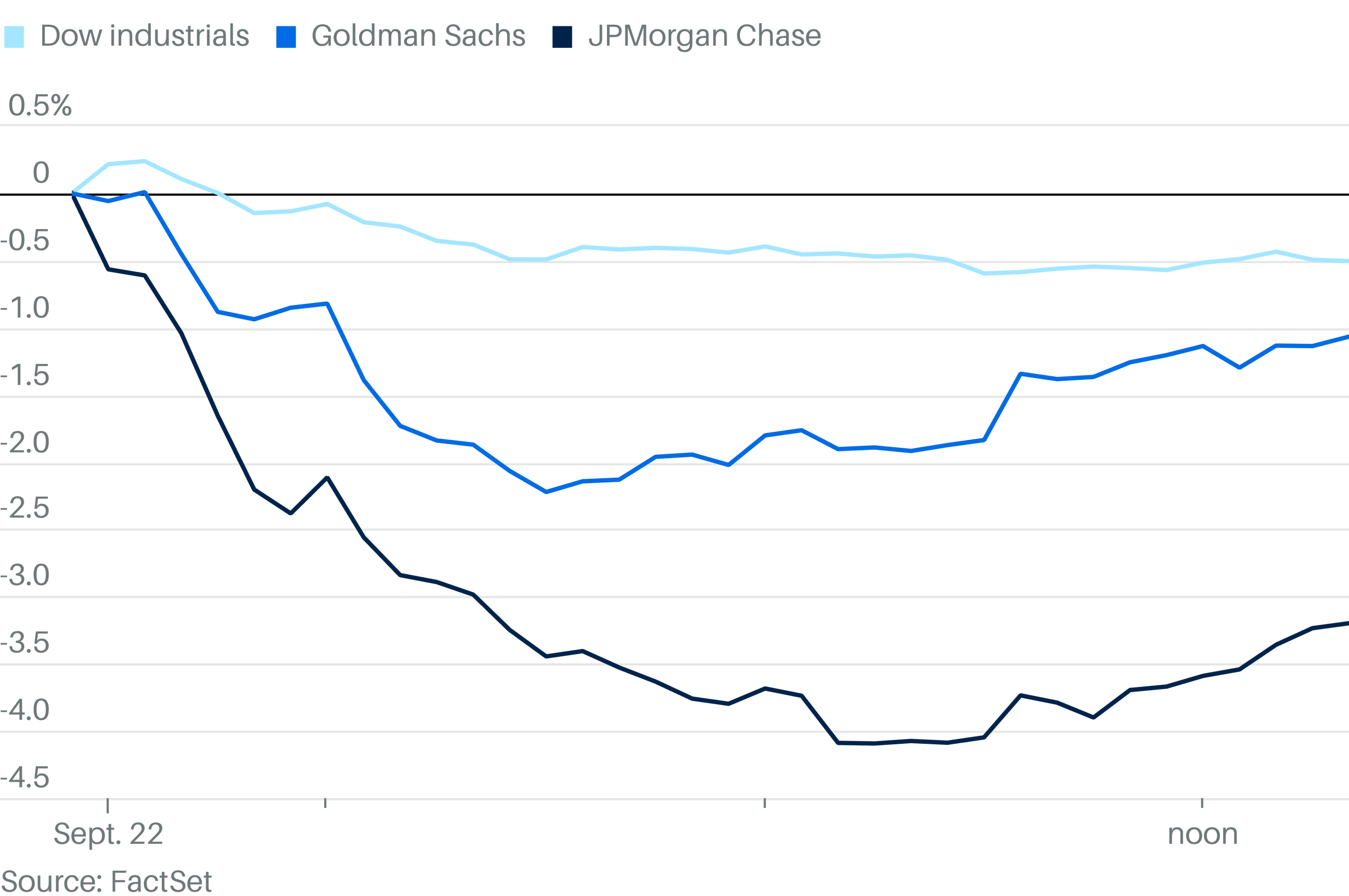
The Dow Jones Industrial Average was trading lower thanks to bank stock weakness.
The blue-chip index dropped 0.5%, or 232 points. Goldman Sachs and JPMorgan Chase were the two biggest stocks weighing on the Dow, contributing 105- and 75-point drags, respectively.
Goldman and JPMorgan stocks weren’t the only bank stocks struggling on Tuesday. In fact, the State Street SPDR S&P Bank ETF was on track for its lowest close in over three months, according to Dow Jones Market Data, amid its longest losing streak since March.
Half of the new intake expected to be through apprenticeships, graduate programmes, internships and trainee roles
Alan Jones Press Association Industrial Correspondent
13:45, 23 Sep 2026
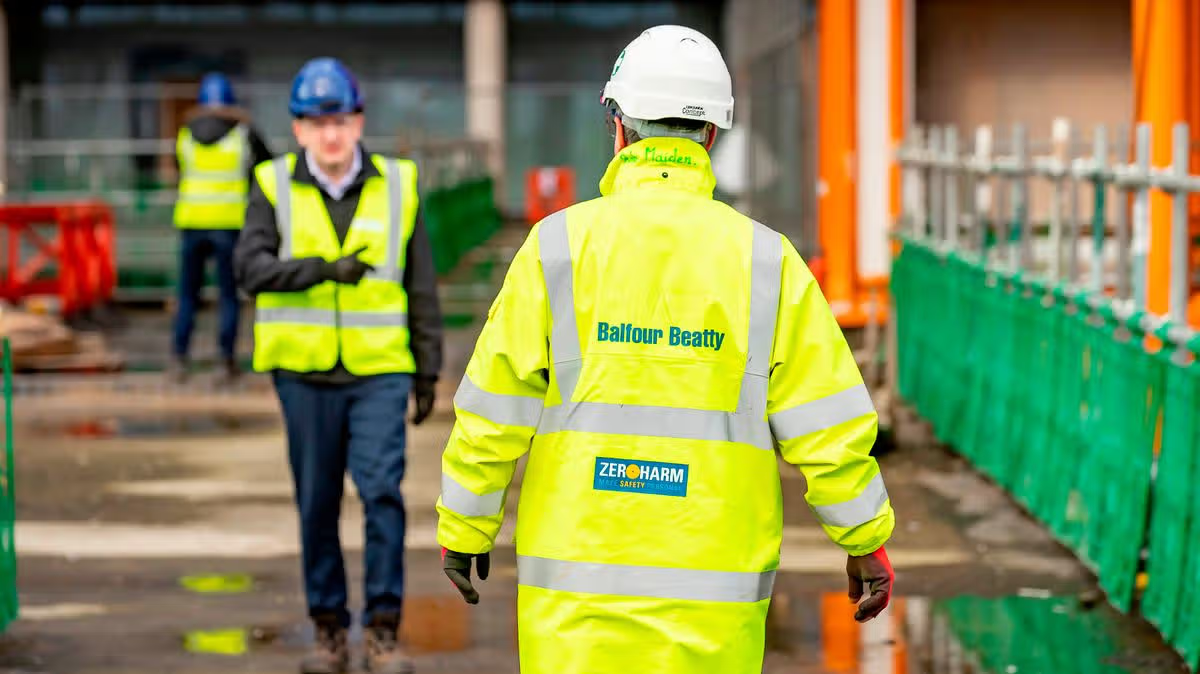
Balfour Beatty is planning to create more jobs across the country(Image: Birmingham Mail)
Construction behemoth Balfour Beatty has unveiled plans to expand its UK headcount by 2,000 over the next two years.
Advertisement
The firm said its workforce will grow to 16,000, a 30% rise in four years, as it scales up to deliver the nation’s next generation of critical infrastructure.
Philip Hoare, group chief executive at Balfour Beatty, said: “Britain’s infrastructure ambitions will only be realised if the country has the capacity, capability and skills to deliver them.
“Expanding our workforce by 2,000 is a clear vote of confidence in the market. It shows the scale of opportunity ahead and our commitment to investing in the people, projects and technical expertise that will power Britain’s future.”
The company said early-career talent will form a significant part of the recruitment drive, noting that apprentices, graduates, interns and trainees already account for roughly 9% of Balfour Beatty’s UK workforce.
Advertisement
Approximately half of the new recruits are anticipated to come through routes including apprenticeships, graduate programmes, internships and trainee positions.
Business Secretary Jonathan Reynolds said: “This is exactly what we want to see – a big British company backing Britain and creating 2,000 more jobs.
“We’ve got a huge amount of work to do to get growth in every postcode over the next few years.
“So having British firms investing in people here, and training up the next generation to do those jobs, is really good news.”
Advertisement
Balfour Beatty has bases across the UK, including its Regional Civils arm in Warrington and Power Transmission & Distribution hubs in Derby and Motherwell.



























































You must be logged in to post a comment Login