
Business
US stocks: S&P 500 ends nearly flat as US-Iran talks help stocks pare losses


The S&P 500 and Nasdaq recovered from their session lows after Reuters reported that US and Iranian negotiators were exploring a phased path to ending the war. The proposed plan would involve Tehran reopening the Strait of Hormuz and Washington lifting its economic blockade of Iran.
US and Iranian leaders traded barbs this week at the UN General Assembly. Brent crude climbed about 4% to $107 a barrel after a Houthi missile attack on Saudi Arabia revived concerns about supply disruptions.
“This just reinforces the view that we’re dealing with one major market catalyst right now,” Bill Northey, senior investment director at US Bank Wealth Management, told Reuters. “It’s really all about oil and inflation and the effect on interest rates, and then the interest rate cascading across the capital markets.”
Major AI stocks were mixed. Microsoft and Broadcom fell about 1%, while Advanced Micro Devices gained 1%.

Meta Platforms rose 3.4%, a day after the social media company unveiled a small handheld device designed for use with its recently launched AI assistant.
Oracle dropped 4.1% after a report said the company had issued a “force majeure” notice concerning a New Mexico data center. Blue Owl, the project’s developer, fell 5%.Treasury yields climbed, with the 30-year bond yield reaching its highest level since 2004.
Meanwhile, the S&P 500 lost 2.20 points, or 0.03%, to end at 7,703.83 points, while the Nasdaq Composite gained 1.76 points, or 0.01%, to 26,937.79. The Dow Jones Industrial Average fell 162.41 points, or 0.32%, to 51,349.18.
The S&P 500 has traded just below 19 times expected earnings this week, its lowest valuation since 2023, according to LSEG data. AI-related heavyweights have accounted for much of the recent increase in earnings expectations.
US President Donald Trump welcomed Chinese President Xi Jinping to the White House for a summit expected to be rich in symbolism but offer limited substance on issues including AI, trade, Taiwan and the Middle East war.
Data released on Wednesday pointing to strong business activity strengthened expectations that the Federal Reserve could raise interest rates again after last week’s 25-basis-point increase. Traders are pricing in a nearly 70% chance of another hike next month, according to the CME FedWatch Tool.
New York Fed President John Williams, a voting member of the Federal Open Market Committee, said on Thursday that it was reasonable to expect the central bank might need to raise rates again before the end of the year.
MGM Resorts tumbled 11% after media mogul Barry Diller’s People Inc. withdrew its proposal to acquire the casino operator.
(Disclaimer: This article is based on inputs from agencies. These do not represent the views of The Economic Times)

Business
Sydney Financial Firm AGS Group Acquires Hartley Financial Amid Aggressive Wealth Sector Competition

SYDNEY — Sydney-based financial planning and accounting firm AGS Financial Group has completed the full acquisition of Hartley Financial and Tax & Wealth, expanding its regional footprint and absorbing established advisory talent amid tightening competition across Australia’s wealth management industry.
The strategic acquisition adds approximately $2.6 million in annual revenue to AGS Group. The deal integrates Hartley’s established client base and operations across three physical office locations—two in New South Wales and one in Victoria—into AGS’s broader multidisciplinary service network.
Geographic Expansion and Talent Acquisition Rationale
The acquisition provides AGS Financial Group with immediate physical hubs in markets where the firm already maintained client relationships and prospective leads but lacked local operational facilities. Under the integration structure, Hartley’s offices in Picton and Sutherland in New South Wales, as well as Parkdale in Victoria, will join AGS’s existing office network spanning North Sydney, Norwest, Hurstville, Miranda, South Melbourne, and Brisbane.
To streamline operations following the transaction, Hartley’s former Mascot office in New South Wales was closed, with existing clients redirected to nearby branches in Picton and Sutherland or offered continuous digital service options. Founder David Hartley is staying involved through the transition phase to ensure operational continuity for long-standing clients.
“What attracted us to Hartley was that we didn’t need to change how they work to make this fit,” stated Paul Bolstad, Chief Executive Officer of AGS Financial Group, regarding the transaction. “They run the same integrated model we do, with planning, tax, accounting, and lending under one roof, and they hold the same values. Their focus has never been the single transaction, it’s the end outcome and the relationship behind it.”
Navigating Post-Royal Commission Talent Shortages
Beyond physical expansion, the acquisition directly addresses structural talent shortages across the Australian financial advice sector. Industry-wide regulatory reforms introduced following the Royal Commission into Misconduct in the Banking, Superannuation, and Financial Services Industry led to elevated professional standards and education requirements, resulting in a contracting pool of qualified financial planners nationwide.
While AGS actively cultivates new advisory talent internally, acquiring established firms allows wealth managers to rapidly expand professional capacity without incurring extended recruitment timelines. By bringing Hartley’s experienced advisers, brokers, and tax specialists into its corporate structure, AGS expands its client servicing capacity while maintaining operational efficiency.
The transition updates the licensing framework for Hartley’s wealth management practice, bringing financial advice operations under AGS’s primary license as an Authorised Representative of Akumin Financial Planning. Meanwhile, Hartley’s existing client base gains access to specialized AGS practice areas, including comprehensive retirement modeling, aged care strategy, estate planning, and self-managed superannuation fund (SMSF) administration.
Strategic Objectives Driving the Acquisition
- Absorbing experienced financial advisers, mortgage brokers, and accountants to mitigate industry-wide talent shortages following regulatory reforms.
- Securing established physical office locations in Picton, Sutherland, and Parkdale to support existing local client leads and regional market presence.
- Consolidating operational back-office functions while integrating specialized advisory services across SMSF administration, aged care planning, and risk management.
Industry Outlook and Wealth Management Consolidation
The transaction highlights an ongoing wave of corporate consolidation across Australia’s mid-tier wealth management and accounting sectors. As compliance overheads rise and client demand for multidisciplinary wealth solutions grows, integrated advisory firms are increasingly leveraging mergers and acquisitions to achieve operational scale.
As integration proceeds, market analysts expect mid-sized advisory groups to continue acquiring independent boutique practices. By pairing localized client service models with centralized compliance, lending, and tax infrastructure, consolidated wealth management firms aim to capture greater market share across competitive regional demographics.

Pivot Bio CEO Chris Abbott discusses how record-high diesel prices are squeezing American farmers ahead of the harvest season. He also explains the financial impact on agricultural operations and the broader economy.
Record-high diesel prices are squeezing American farmers during harvest season, raising the risk that higher production costs could eventually hit consumers at the grocery store.
Pivot Bio CEO Chris Abbott joined FOX Business’ Taylor Riggs on “Mornings with FOX Business” to discuss how rising diesel and fertilizer costs are pressuring farmers and threatening to push food prices higher.

High diesel prices are driving up costs for farmers and threatening higher food prices. (Mark Mirko/Connecticut Public / Getty Images)
Diesel prices have climbed to a national average of $6.51 per gallon as global supply disruptions tied to conflicts in Iran and Ukraine strain fuel markets. U.S. farmers depend heavily on diesel to run tractors, combines and other equipment, making the surge particularly painful during harvest season.
NATIONAL AVERAGE PRICE FOR DIESEL HITS NEW RECORD HIGH AMID IRAN CONFLICT
“If you think about the ripple effect of that, higher diesel and input costs mean the marginal acre may come out of production or the marginal investment doesn’t happen. And so you get lower yield. When you get a lower yield, you get [a] higher price. So it can be a vicious cycle as input costs rise very quickly,” Abbott said.
Fortescue founder and Executive Chairman Dr. Andrew Forrest joins Stuart Varney to discuss the company’s $6.2 billion green energy project to eliminate diesel use. He urges North America to farm its own solar and wind energy.
Abbott said stronger corn prices could encourage higher productivity and help soften the blow, but he warned the pressure may not disappear quickly.
“We certainly look like we’re facing higher food prices and higher protein prices for at least a year or so to come,” he said.
PETER SCHIFF PREDICTS ECONOMIC ‘DOWNTURN,’ HIGHER OIL PRICES: ‘I DON’T THINK IT’S OVER’
The fuel crunch is hitting an agricultural sector already facing elevated input costs. Abbott said fertilizer prices are also moving higher as growers begin making purchases for 2027, adding another layer of uncertainty for farm budgets.
Former Energy Secretary Dan Brouillette joins ‘Varney & Co.’ to discusses President Donald Trump weighing a diesel export ban and California electricity pricing in 2025.
“There’s no other solution for our farmers in the United States… We must get the cost of farming and the volatility down, full stop. You cannot argue that,” Abbott said. “And so you need new technology. You need new support programs for growers to adopt innovation, to take that cost down.”
A FRESH MIDTERM HEADACHE FOR THE GOP JUST HIT A NATIONAL RECORD
Abbott also expressed skepticism that short-term restrictions on diesel exports would solve the underlying problem, arguing that fuel operates in a global market and temporary supply controls would do little to address the structural pressures facing producers.
Business
Anthropic seeks Palantir-style voting control for seven co-founders ahead of IPO, The Information reports

Anthropic seeks Palantir-style voting control for seven co-founders ahead of IPO, The Information reports

The Bahnsen Group founder and managing partner David Bahnsen discusses President Donald Trump’s economic policies as the federal deficit reaches $1.8 trillion in the first 10 months of fiscal 2026 on ‘Kudlow.’
Curbing the federal government’s roughly $2 trillion budget deficit would help reduce the affordability challenges American households are facing, a new analysis finds.
The nonpartisan Committee for a Responsible Federal Budget (CRFB) published a report on Wednesday detailing how reducing the federal budget deficit over both the near- and long-term could improve affordability issues for Americans through fiscal policy changes involving tax and spending policies.
CRFB finds that reducing the deficit can provide an affordability boost by tempering inflation, lowering interest rates, reducing cost pressures stemming from government policies, boosting private investment and preventing future affordability crises that could be caused by the insolvency of Social Security and Medicare.
“Fiscal policy alone cannot solve all affordability challenges,” CRFB noted, adding that monetary policy, regulation, plus policies related to housing, trade, foreign, labor and education are also significant factors, including at the state and local level. “But responsible fiscal policy can play an important role.”
FEDERAL BUDGET DEFICIT REACHES $2T IN FIRST 11 MONTHS OF FISCAL YEAR 2026, CBO REPORTS

The federal government is running a roughly $2 trillion budget deficit this fiscal year. (J. David Ake/Getty Images)
“Conversely, expansionary fiscal policy – attempts to ease affordability concerns with subsidies, tax cuts, or spending measures financed by borrowed funds – is likely to worsen affordability challenges over time by boosting inflation, interest rates, and the cost of what is being subsidized,” the group wrote.
CRFB said that fiscal policies geared toward deficit reduction, such as higher taxes or limited federal spending and transfers from the government to households, reduce excessive consumer spending and inflationary pressures facing households.
Reducing inflation, which has been above the Federal Reserve’s 2% target for five-and-a-half years and is currently about 3.4% year over year, can also give the central bank room to lower short-term interest rates.
“Deficit reduction lowers interest rates through two channels. First, lower deficits reduce inflationary pressure and thus make it easier for the Federal Reserve to cut short-term interest rates (or reduce the need for the Fed to increase interest rates). Second, a lower stock of debt reduces the interest rates the Treasury needs to offer on long-term debt in order to attract buyers,” the report said.
US NATIONAL DEBT HITS $40 TRILLION MILESTONE FOR FIRST TIME EVER

Reducing federal deficits can reduce inflationary pressures that hit household budgets. (Spencer Platt/Getty Images)
CRFB noted that the Congressional Budget Office (CBO) estimates that every 1 percentage point reduction in debt-to-GDP ratio lowers interest rates by about 2 basis points. That means current interest rates are about 1.5 percentage points higher than they would be if the U.S. debt-to-GDP ratio was still at 2001 levels and hadn’t tripled in the last 25 years.
Healthcare costs are a key area where government reforms within programs like Medicare and Medicaid can reduce both costs to the government and consumers. For example, CRFB noted policies to lower drug prices, reduce overpayments, and reform provider payments can lower premiums and coinsurance costs for Medicare enrollees.
Lower federal deficits can also boost private investment, as CBO estimated that every dollar of federal borrowing “crowds out” about 33 cents of private investment – meaning firms invest less in areas that can boost productivity and workers’ wages.
CRFB noted CBO’s 2025 findings that stabilizing the debt as a share of GDP would boost real per-person income growth by one-tenth over the next three decades compared to their baseline and over 44% compared to a higher government debt scenario.
ONE TYPE OF SOCIAL SECURITY ADJUSTMENT COULD CUT THE 75-YEAR SHORTFALL IN HALF

Reducing budget deficits reduces the risk of a fiscal crisis and gives the government more flexibility during recessions, CRFB noted. (Elizabeth Frantz/File Photo/File Photo/Reuters)
That would amount to income per person growing by $46,500 with debt stabilized, or $32,350 if the debt is rising rapidly – an increase of about $14,250 individually and nearly $36,000 per household if the debt is stabilized.
Cost reductions and new tax revenues to shore up the solvency of Social Security and Medicare would also help prevent an affordability crisis from hitting seniors, who would face immediate benefit cuts if the trust funds that help finance those programs are depleted in the next decade as they’re currently projected to.
Social Security is facing an estimated 22% shortfall in 2032 when its trust fund reaches its projected depletion, which would trigger an automatic 22% cut for beneficiaries – roughly $500 per month in current monthly benefits.
CRFB added that deficit reduction could help the U.S. better prepare itself for future recessions, which can cause affordability challenges due to higher unemployment and slower income growth as well as higher government spending on relief programs. It can also stave off a future fiscal crisis caused by excessive growth in the national debt.
GET FOX BUSINESS ON THE GO BY CLICKING HERE
“Responsible deficit reduction is not just an abstract concern for fiscal policymakers focused on bringing spending and revenue in line; it is one of the most powerful levers policymakers have to make daily life more affordable for American families,” CRFB said.

Ares fund withdrawal requests decline as private credit redemptions ease

Cupid has gained another 149% in 2026 after surging 583% in 2025, while Blue Pearl Agriventures has crashed 92% this year after rising 564% last year. The sharp divergence shows that a multibagger return in one year does not automatically protect investors in the next. In several cases, the biggest winners of 2025 have become the biggest losers of 2026.
Cupid is the strongest continuation trade in the list. The stock had rallied 583% in 2025 and has gained another 149% in 2026 so far. SML Mahindra has also extended its rally, rising 69% this year after a 183% gain in 2025.
Apollo Micro Systems, Gabriel India, Axiscades Technologies and Lumax Auto Technologies have also stayed in favour. Apollo Micro Systems is up 50% in 2026 after gaining 136% last year. Gabriel India has advanced 46% after a 113% rise in 2025, while Axiscades Technologies is up 43% after rising 112% last year. Lumax Auto Technologies has gained 37% this year after a 139% rally in 2025.
Aditya Birla Capital and Jayaswal Neco Industries have managed to stay positive, but only modestly. Aditya Birla Capital is up 11% in 2026 after rising 101% in 2025. Jayaswal Neco has gained just 3% this year after a 124% gain last year.
The pressure is more visible in the rest of the pack. Hindustan Copper has slipped 2% in 2026 after a 109.16% rise in 2025. L&T Finance is down 4% after gaining 133% last year. Force Motors, which had rallied 216% in 2025, has fallen 16% in 2026.
The biggest reversals have come from the most dramatic 2025 winners. Midwest Energy, which had surged 4,284% in 2025, is down 27% in 2026. Ashapura Minechem has fallen 39% after a 125% gain last year.Also Read: Chasing IPO debut highs? All 10 listing multibaggers of last 2 years bleed negative returns
Elitecon International and Blue Pearl Agriventures have seen the steepest fall. Elitecon had jumped 881% in 2025, but crashed 91% in 2026. Blue Pearl Agriventures, which gained 564% last year, is down 91% this year.
The data reveals that buying after a stock has already multiplied can work only if earnings, valuations and liquidity continue to support the move. Once the market turns cautious, the same stocks can fall faster because expectations are already stretched.
The split also shows that the market is becoming more selective. Stocks with stronger business momentum or sector tailwinds have held up. Those that ran far ahead of fundamentals have corrected sharply.
What’s ahead for Indian markets
The near-term backdrop is not easy for high-momentum stocks. Global cues have turned more challenging after the Federal Reserve’s latest rate hike, with higher US bond yields, a stronger dollar, firm crude prices and pressure on the rupee becoming key variables for emerging markets.
Sachin Shah, Executive Director and Fund Manager at Emkay Investment Managers, said the Fed’s latest rate hike may have been largely expected, but the impact on India goes beyond the 25-basis-point move.
“For Indian equities, the bigger transmission channels could be US bond yields, the dollar, crude oil and the rupee — and the way these four variables interact could determine the next leg for markets,” Shah said.
He said elevated US Treasury yields, a stronger dollar, higher crude prices and the rupee near record lows have changed the risk-reward equation for global investors allocating money to emerging markets.
“At the same time, higher US yields are making fixed income increasingly competitive with equities for global capital,” Shah said.
Data: Ritesh Presswala
Disclosure: This article has been written by Podishetti Akash, who is not a SEBI-registered Research Analyst or an Investment Adviser. Podishetti Akash and her ‘relative(s)’ (as defined under Section 2(77) of the Companies Act, 2013) do not hold any financial interest in the companies mentioned in this article as of the date of publication. The views/recommendations mentioned in this article, wherever applicable, are those of the respective SEBI-registered Research Analyst/brokerage and have been reproduced/reported with due attribution. They should not be construed as the views or recommendations of The Economic Times Digital or the journalist. Readers are advised to consider the original research report and make their investment decisions based on their own assessment. Brokerage disclaimers here.
Business
LARRY KUDLOW: Netanyahu’s barn burner of a speech makes the case for moral clarity against antisemitism
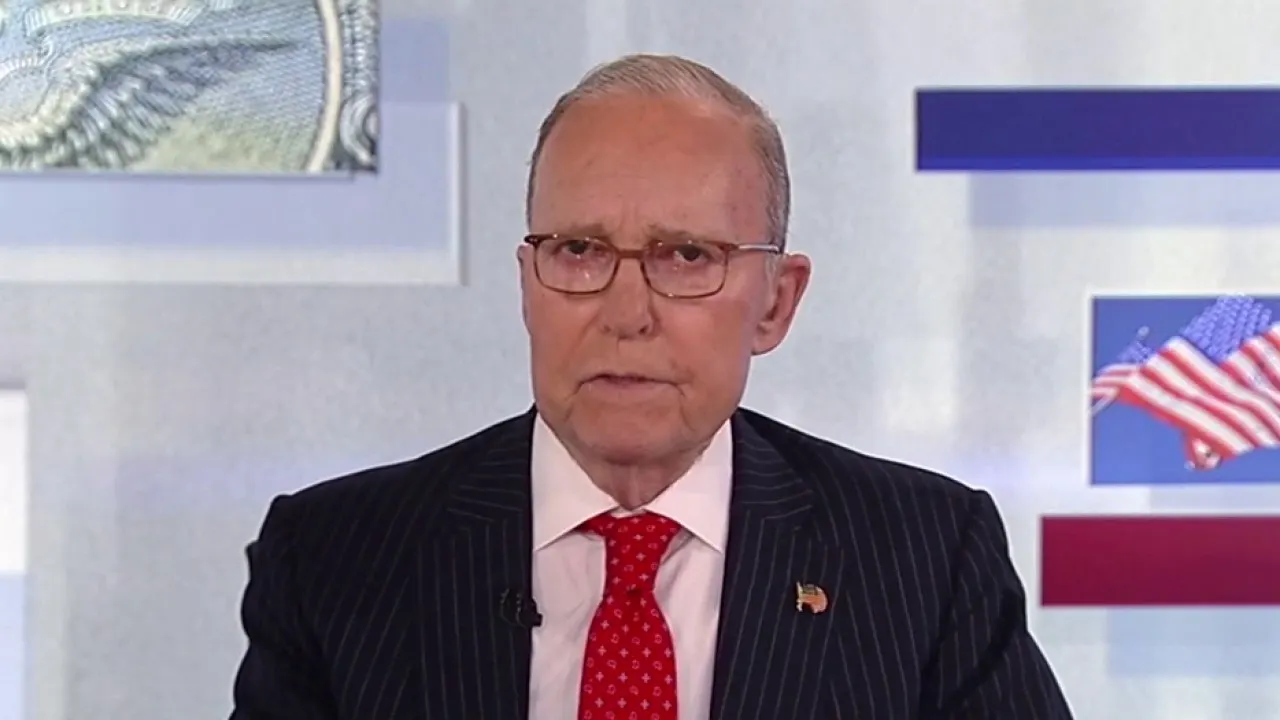
Prime Minister Benjamin Netanyahu stood at the podium of the United Nations General Assembly hall and absolutely tore into all of the multiplying progenitors of antisemitism around the world. He jumped right in by calling out UN members that walked out ahead of his speech. “Before I begin, just a quick announcement. If there are any other moral cowards who haven’t yet left this hall, please do so now.”
By the way, a lot of moral cowards left, but a lot of people with moral backbones stayed and applauded Mr. Netanyahu on any number of occasions. Just as surprisingly, there were a lot of applause lines for President Trump the day before.
It was a remarkable speech. He regards himself as the leader of world Jewry, and no one can deny him that platform. He has basically governed Israel for nearly 30 years. Through thick and thin. Through the wars and the massacres. And the labyrinths of domestic politics. Including his moving Israel into free-market prosperity, despite the constant attacks their people have suffered.
I first met him about 30 years ago when he was finance minister, running for prime minister, and asked a number of us to help him develop free market policies. In a sense, though, all that is beside the point. Today, he stood up in the UN and blasted antisemitism. And he consistently praised Mr. Trump as his trusted partner.
As he put it: “In this battle against the barbarians. We’ve had no greater partner than President Trump. I thank him. I thank him for his bold leadership. He boldly confronted an enormous danger to America, Israel and the world. Decades ago, he understood that if left unchallenged, the fanatic ayatollahs who chant Death to America, death to Israel would eventually carry out their mad fantasies. So Israel and America acted together not only to protect ourselves, but to save civilization.”
Having praised his friend Mr. Trump, he then proceeded to skewer his main enemy today, Mayor Zohran Mamdani. I don’t even want to paraphrase, so here’s the main quote: “So to all those spreading these lies about my country and about our brave soldiers, whether they sit in this hall or in the office of the anti-Semitic mayor of New York, I say this. Shame on you. Shame on you for distorting the facts. Shame on you for inverting victim and aggressor. Shame on you for spitting in the face of truth, Mr. Mamdani. Since you were elected mayor of this city, many Jews no longer feel safe in New York. They talk to me. They tell me this isn’t the city we remember. It changed so quickly. Now it’s no wonder you praise criminals convicted of supporting Hamas. You count as friends people like Hassan Piker, who said America deserved 9/11.”
Yet he wasn’t finished: “You falsely, repeatedly accuse Israel of genocide. Mr. Mamdani, you try to stop me from coming here,” and “you tried to silence me. Well, you can’t silence me. You can’t silence the truth. And here’s the simple truth. It was a simple truth. Israel didn’t commit genocide. Israel prevented genocide”
Yet it’s not only Mamdani at New York, antisemitism is spreading around the world. And Mr. Netanyahu spared no one. The premier asserted: “In New York, Jews are threatened on the way to synagogue. Jews have been stabbed in the streets. Jews are demonized. Targeted. They’re targeted simply for being Jews. Jews have been murdered in Sydney, Manchester, Montreal. Boulder, Colorado. They’ve been attacked in Los Angeles, London, Paris, Berlin, Washington, DC.”
Then he turned to his principal protagonist over the years, Iran, which has financed the war against Israel from Hamas and Hezbollah, and virtually every terrorist organization. Saying going to war was one of the easiest decisions he ever made as prime minister. He has dedicated his premiership down through the years, not only to stopping the arc of Iranian terrorism, but to prevent a murderous dictatorship from developing nuclear weapons.
Right here, let me say that he and Mr. Trump are succeeding in stopping nuclear weapons. Which brings me to Mr. Netanyahu’s vision pivot, where he said that “it’s only a matter of time that in Iran, something incredible will happen. The power of the people will overcome the people in power. I want you to listen to my words carefully one day, and it may not be far away. The Iranian people will be free. Their murderous regime will be toppled by its lies, by its corruption, by its cruelty. This evil regime will fall. And we will all celebrate that day.”
This is a wondrously positive vision, adjacent to Mr. Netanyahu’s earlier rallying cry, that “We will continue to win because we have no other choice.” It parallels Mr. Trump’s positive vision for humanity, that he said to great applause on Tuesday.
There was much more to the prime minister’s brilliant speech, about the Iranian tyrants who butchered and maimed tens of thousands of their own people, and the Biblical reference that Jews have been in the Golan heights since the days of Moses. The hideous barbaric Hamas slaughter of 1,200 Israelis and others, and the heroism that Israel recovered all of the hostages, both dead and alive. This is a speech everyone should read.
Finally, right outside my apartment building, there are hundreds of protesters, because I live in the same neighborhood where Mr. Netanyahu and his team stay. I don’t exactly welcome these protestors, but in a sense I do, because this is a free country and we believe in freedom of speech and freedom of religion. We are different than Iran, or Hamas, or Hezbollah, or the whole axis of terrorism, that regrettably still exists.
As I always do, though, I thank the cops for their service and protection. And then I thank Benjamin Netanyahu for his bravery.
Business
Sebi clears PRIM route for PMS players to invest in mutual funds, SIFs; Rs 25 lakh minimum ticket

Under the new framework, an existing portfolio manager will be able to offer PRIM as a separate investment approach, with a minimum ticket size of Rs 25 lakh.
The move could expand the scope of PMS beyond direct equity and other traditional portfolio-management strategies by allowing managers to construct professionally managed portfolios using mutual fund and SIF products, suggest experts.
The regulatory change also comes at a time when investors have access to a growing range of mutual fund products, but portfolio construction, asset allocation and periodic rebalancing remain important challenges.
Also Read: Sebi board approves FPI play in non-agri commodity derivatives, expands scope of PMS
PMS access widens through mutual fund route
Commenting on the development, Vikas Khemani, Chairman, Association of Portfolio Managers in India (APMI), said the SEBI board’s decision marks a significant step forward for the PMS industry.
According to Khemani, allowing portfolio managers to offer mutual fund and SIF-based strategies at a Rs 25 lakh ticket size could widen access to professionally managed portfolios while keeping the framework within a regulated structure.
He added that the industry views the move as a step towards greater innovation and participation, while maintaining focus on governance and transparency.
The PRIM framework will allow PMS players to invest in direct plans of mutual funds, including ETFs, index funds and SIFs offered by Indian asset management companies. This gives portfolio managers another route to construct portfolios without necessarily relying on direct stock selection.
From product selection to portfolio management
Sandeep Jethwani, Co-founder, Dezerv, said the significance of PRIM goes beyond simply providing investors with another route to access mutual funds.
According to Jethwani, access to mutual funds is no longer the primary challenge for investors. The bigger challenge is deciding which funds to own, how much to allocate, when to rebalance and how to remain disciplined through different market cycles.
Jethwani cited Dezerv’s research based on more than 8 lakh portfolio reviews, which he said showed that over half of investor portfolios underperformed their benchmarks.
He attributed this gap, in part, to behavioural and portfolio-construction issues, including investors entering funds after periods of strong performance, holding overlapping funds, misallocating capital or struggling to remain invested during market volatility.
“PRIM changes this by putting these decisions with a regulated portfolio manager,” Jethwani said, adding that the framework creates clearer accountability for fund selection, allocation, rebalancing and navigating market cycles.
MF-only PMS model gets regulatory recognition
The move could also provide greater visibility to PMS models that use mutual funds as the primary investment vehicle rather than relying predominantly on individual stocks.
Jethwani noted that Dezerv launched a mutual-fund-only PMS in 2022, at a time when stock-based PMS was the more common industry model. The firm believed professional portfolio management could help investors use mutual funds more effectively across market cycles.
He described SEBI’s decision to create a formal route for such strategies as a significant validation of the model.
Dezerv said its flagship mutual-fund-only PMS strategies currently manage Rs 8,674 crore, with a four-year live track record.
(Disclaimer: Recommendations, suggestions, views, and opinions given by experts are their own. These do not represent the views of the Economic Times)

Airbus identifies A321neo quality issue, says no safety risk
Business
Everpure Shares Soar 17.44% to New High as CEO Calls Data Storage Firm’s Growth an ‘Inflection Point’

SANTA CLARA, Calif. — Shares of Everpure Inc., the data storage and management company formerly known as Pure Storage, surged 17.44% to $128.77 in Wednesday trading, adding $19.12, pushing the stock to a fresh high as investors continued reacting to an ambitious growth outlook the company laid out at its annual investor meeting earlier this week.
The rally extends a rapid run for Everpure shares, which climbed 6.41% on Tuesday alone following the company’s 2026 Financial Analyst Meeting, held at company headquarters in Santa Clara. That gain came on top of a broader surge that has carried the stock from the low $90s just weeks earlier to recent closes above $120, a move of roughly 30% over a relatively short span, driven by a combination of strong underlying financial results, inclusion in a major stock index, and an aggressive new long-term growth outlook.
At Tuesday’s investor meeting, Everpure outlined what it described as four strategic growth vectors underpinning its expansion plans: its core storage business alongside a related “Core AI” offering, Modern Data Software, Scale AI, and Hyperscale Solutions. The company said its traditional core storage business is expected to continue gaining market share, while the three newer growth areas, Modern Data Software, Scale AI and Hyperscale Solutions, are projected to account for roughly 20% of total company revenue by fiscal 2030.
Everpure Chief Executive Officer Charlie Giancarlo described the company’s current position in stark terms during the presentation, saying Everpure is at an “inflection point” as it expands beyond its traditional storage business into enterprise data management and hyperscale computing solutions.
The company reaffirmed its fiscal 2027 guidance at the meeting, projecting revenue of between $5.03 billion and $5.07 billion, representing year-over-year growth of 37% to 38%, alongside non-GAAP operating income of $940 million to $960 million, an increase of 48% to 51% from the prior year. Looking further ahead, Everpure introduced a preliminary fiscal 2028 outlook, projecting revenue of $7 billion to $7.3 billion, representing growth of 39% to 45%, with non-GAAP operating income projected at $1.7 billion to $1.9 billion, implying year-over-year growth of 80% to 100%. The company said its capital allocation priorities going forward include organic investment, maintaining balance-sheet strength, strategic acquisitions and share repurchases.
That ambitious guidance followed a strong second-quarter earnings report in August, when Everpure posted sales of $1.186 billion, comfortably ahead of the $1.097 billion analysts had expected, alongside adjusted earnings of 70 cents per share, beating the 58-cent consensus estimate.
Wednesday’s gains also continue to reflect investor enthusiasm tied to Everpure’s addition to the S&P 500 index, effective at the market open on September 21, when the company replaced The Trade Desk among the index’s 500 constituent companies. Everpure Chief Financial Officer Tarek Robbiati framed the milestone as a validation of the company’s recent execution. “Joining the S&P 500 is a powerful validation of the disciplined execution and progress our team has delivered quarter after quarter,” Robbiati said. “As enterprises race to make their data AI-ready, this milestone reflects the strength of our financial results and the confidence the capital markets place in our strategy. We are energized for what’s ahead.”
Index inclusion of this kind often triggers substantial buying activity independent of a company’s underlying fundamentals, since funds that track the S&P 500 are required to purchase shares of any newly added company to maintain alignment with the index, a dynamic that market analysts have said contributed meaningfully to Everpure’s rapid share price appreciation in the days surrounding the rebalance.
Wall Street’s assessment of the stock has grown increasingly bullish in recent weeks. Needham analyst Matthew Calitri initiated coverage of Everpure with a Buy rating and a $140 price target on September 17, citing robust customer demand and channel checks pointing to rising storage needs even after recent price increases. Morgan Stanley has maintained an Overweight rating on the stock, though the firm has told clients it prefers to buy into any post-earnings weakness rather than chase the stock higher ahead of the company’s most recent print, a stance that reflected caution about how richly the stock’s recent rally had already priced in expectations for strong results.
Not every assessment of the stock’s valuation has been as favorable. An analysis from GuruFocus flagged Everpure as significantly overvalued following its gains earlier this week, with the stock trading roughly 40% above the firm’s estimated fair value at the time, even as the same analysis assigned the company a GF Score of 79 out of 100, reflecting above-average financial health and growth prospects overall.
Everpure, founded in 2009 by John Colgrove and John Hayes, operated for 16 years under the name Pure Storage before rebranding to its current name in 2026. The company describes its platform as helping organizations manage their data more efficiently while reducing energy consumption, positioning its technology as particularly well-suited to the demands of artificial intelligence workloads that require rapid, reliable access to large volumes of data.
With shares having climbed roughly 70% since the start of the year even before Wednesday’s gain, and with the company now guiding toward accelerating profit growth through fiscal 2028, investors are likely to continue watching closely for execution against that ambitious roadmap, particularly given how much of the stock’s recent rally appears tied to expectations for continued strong performance across its newer AI, hyperscale and modern data software growth areas.

2026 Week 3 NFL odds, lines, start times, schedule: Picks, predictions for Packers-Falcons, every other game

Asteroid Occultation Lets Amateurs Map Space Rocks

7 Business Mistakes to Avoid | Smart Awareness | Financial Discipline Motivation Video 2026

Weekend Open Thread – Corporette.com

Weekend Open Thread: Talbots – Corporette.com

Memory prices are slowing because buyers ran out of money
7 Business Mistakes to Avoid | Smart Awareness | Financial Discipline Motivation Video 2026

20% Interest Truck: Our Financial Nightmare! #shorts

The Reality of Trading#stockburner#stockmarket #tradermindset #crypto #shortvideo #learning #live
-
 Fashion6 days ago
Weekend Open Thread: Talbots – Corporette.com
-

 Tech4 days ago
Researchers escape OpenAI Codex sandbox to run commands on host
-

 Crypto World2 days ago
Goldman Sachs and Deutsche Bank Agree: The S&P 500 Rally Isn't Over
-

 Crypto World4 days ago
Who Needs CLARITY Anyway? ARB Could See 70X Increase: Hodler’s Digest
-

 Crypto World6 days ago
Circle launches Arc Studio AI agent for building onchain apps
-

 Fashion11 hours ago
8 iPhone Accessories That Add Personality
-

 Crypto World7 days ago
Mortgage and refinance interest rates today, Thursday, September 17, 2026
-
 NewsBeat6 days ago
Trump says US has reached an agreement to take permanent control of Greenland’s security
-

 Crypto World6 days ago
Trading Bitcoin on Robinhood? Why 2% Spread Has Traders Worried
-

 Crypto World6 days ago
Bitcoin price breaks channel as RSI climbs to 63
-

 Business4 days ago
Analog Devices (ADI) Bets $1.35 Billion on Chips that Let Machines Think for Themselves
-

 Tech3 days ago
Google’s $899 Googlebook is a bet that you’ll buy a new laptop for Gemini
-

 Tech5 days ago
Trump suggests rebranding AI with a new name, says he’s also creating an AI Force
-

 Crypto World4 days ago
Coinbase, Robinhood, Circle Seen as Tokenized-Stock Winners
-
 Business2 days ago
Oil Price Today (September 23): Crude oil below $100 on hopes of US-Iran talks. What did Trump say?
-

 Crypto World6 days ago
World Money launches in 150+ countries with Stripe
-

 Crypto World6 days ago
Silver prices recover quickly, hitting weekly high today
-

 Crypto World2 days ago
Trump-Xi Polymarket Odds for Handshake Hit 50%
-

 Crypto World24 hours ago
Bitcoin Threatens Sub-$84,000 Breakdown as Long Liquidations Spike
-

 Entertainment2 days ago
These 17 Fall Amazon Dresses Seriously Look Like Anthropologie
You must be logged in to post a comment Login