Connect with us

Business

NSE’s modest listing puts spotlight on muted gains from big IPOs

Published

on

NSE’s modest listing puts spotlight on muted gains from big IPOs
The relatively modest stock market debut of the National Stock Exchange (NSE) has put the spotlight on the listing performance of India’s biggest IPOs, as several of the recent ones have struggled to deliver the kind of listing pop often associated with a buoyant primary market. NSE gained 2% on the listing day, while many of the other large issues in recent years either listed at a discount or managed only modest gains.

NSE listing performance highlights struggles of India's recent big IPOs<br>ET Bureau

Read more: Snapdeal parent AceVector raises Rs 189 crore from anchors; Negen, Singularity among top investors
Hyundai Motor India, which raised ₹27,870 crore in October 2024 in India’s largest IPO by issue size, fell 7.1% on listing day. LIC, which raised ₹20,557 crore in May 2022, dropped 7.7% on debut, while One97 Communications, the operator of Paytm, tumbled 27.2%. Tata Capital, which raised ₹15,512 crore in October 2025, managed a gain of 1.3% on listing day.
Read more: NSE shares list with gains on debut day: How much Radhakishan Damani, Raamdeo Agrawal & other ace investors’ stakes are now worth
The record has been mixed after up to one year of listing, though there have been exceptions. LG Electronics India surged 48.2% on its debut and is currently about 48% above its issue price. ICICI Prudential Asset Management, which listed in December 2025, is about 47% above its offer price.

Continue Reading
Click to comment

You must be logged in to post a comment Login

Leave a Reply

Business

SSO: Near-Term Bullish Trend Can Be Quickly Reversed By Macroeconomic Conditions

Published

on

polygonal bull and bear shape writing by lines and dots over Innovation Technology background, trading and finance investment concept

SSO: Near-Term Bullish Trend Can Be Quickly Reversed By Macroeconomic Conditions

Continue Reading

Business

Peninsula records minor MRE lift at Lance

Published

on

Peninsula records minor MRE lift at Lance

Yes. Corporate subscriptions are available for teams and organisations, with discounted rates as user numbers increase. Pricing starts from $1,625 + GST per user.
Get in touch
to discuss the right option for your organisation.

Business News subscriptions are used by executives, investors, consultants and professionals who need to stay informed and make better decisions about the WA market. When you subscribe you’ll get

  • Unlimited access to WA’s most trusted business journalism
  • Data & Insights — detailed profiles of WA companies, people, projects and deals
  • MyBN — a personalised feed based on the companies, people and sectors you follow
  • Special publications and industry reports
  • Daily and weekly email newsletters

Data & Insights is a research tool built specifically for the WA market. It draws on more than 30 years of Business News reporting, updated regularly to reflect what’s happening now. Use it to:

  • Look up detailed profiles of WA companies, including financials, directors and ownership
  • Find decision-makers and track their career movements
  • Research live and completed projects across WA industries
  • Monitor deals, appointments and market activity
  • Access industry rankings and league tables

Data & Insights is updated daily by our dedicated research team, which uses the latest announcements, ASX filings and editorial coverage to keep our person, company, list and project records up to date.

Business News welcome all opportunities to make our dataset accurate, complete and current, so if you have an update request, please email the team at
general@businessnews.com.au, and we’d be happy to assist.

Advertisement

MyBN
is part of every subscription. It’s your personalised view of Business News. You can follow the companies, people, sectors and projects that matter to you, and get a news feed and alerts tailored to your interests. You can save articles to read later and retain only what you need.

Only subscribers have full access to all content on the Business News website.

Advertisement

If staying informed about the WA economy is part of your job, and/or you’re looking for networking opportunities in WA, Business News is built for you.

Business News subscribers are:

  • Executives and directors tracking competitors, clients and market movements
  • Investors and advisers researching companies, deals and industry trends
  • Consultants and professionals staying across sectors relevant to their clients
  • Business owners looking for leads, context and market intelligence

Most Business News publications cover national or global markets. Business News is focused entirely on Western Australia, which means the journalism, the data and the intelligence are all built around WA companies, people and projects — not adapted from a national feed. Data & Insights, included with every subscription, combines more than 30 years of WA-specific editorial research with live business data. There’s no comparable product for the WA market.

Advertisement

The Morning Digest Email provides a comprehensive wrap of the major headlines, relevant to WA business, and includes with a snapshot of the overnight news covering oil, gold and ASX-listed companies.

The Afternoon Wrap Email focuses on the news covered by our team of journalists during the course of the working day, including exclusive stories and analysis, all of which relates to WA business and the local economy.

The BN Weekender Email contains a wrap of the Business News from the week that was, highlighting the top stories in each area of WA business.
Sign up for free.

Advertisement

We’re happy to help.
Get in touch
and our team will come back to you.

Advertisement
Continue Reading

Business

Flock Safety camera hack yields 1.6M images, but expert says network safe

Published

on

Flock Safety camera hack yields 1.6M images, but expert says network safe

A stolen Flock Safety license-plate camera yielded roughly 1.6 million images after hackers physically removed and reverse-engineered the device, but a former Secret Service cybercrime expert says the incident does not appear to have compromised Flock’s broader cloud network.

Jason Brown, director of customer advisory and counter-fraud lead at threat intelligence firm iCOUNTER, spent 25 years with the U.S. Secret Service and specialized in cybercrime.

Advertisement

Brown told FOX Business that the distinction between accessing one physically stolen camera and breaching Flock’s network is critical.

“The biggest thing I keep hammering at home [is] that Flock was never compromised,” Brown said. “So there’s never been a large dump of information out of their network.”

AUSTRALIAN PRIME MINISTER SAYS OPENAI AGENT ACCESSED GOVERNMENT HEALTH WEBSITE, RAISES ‘EXTREME CONCERN’

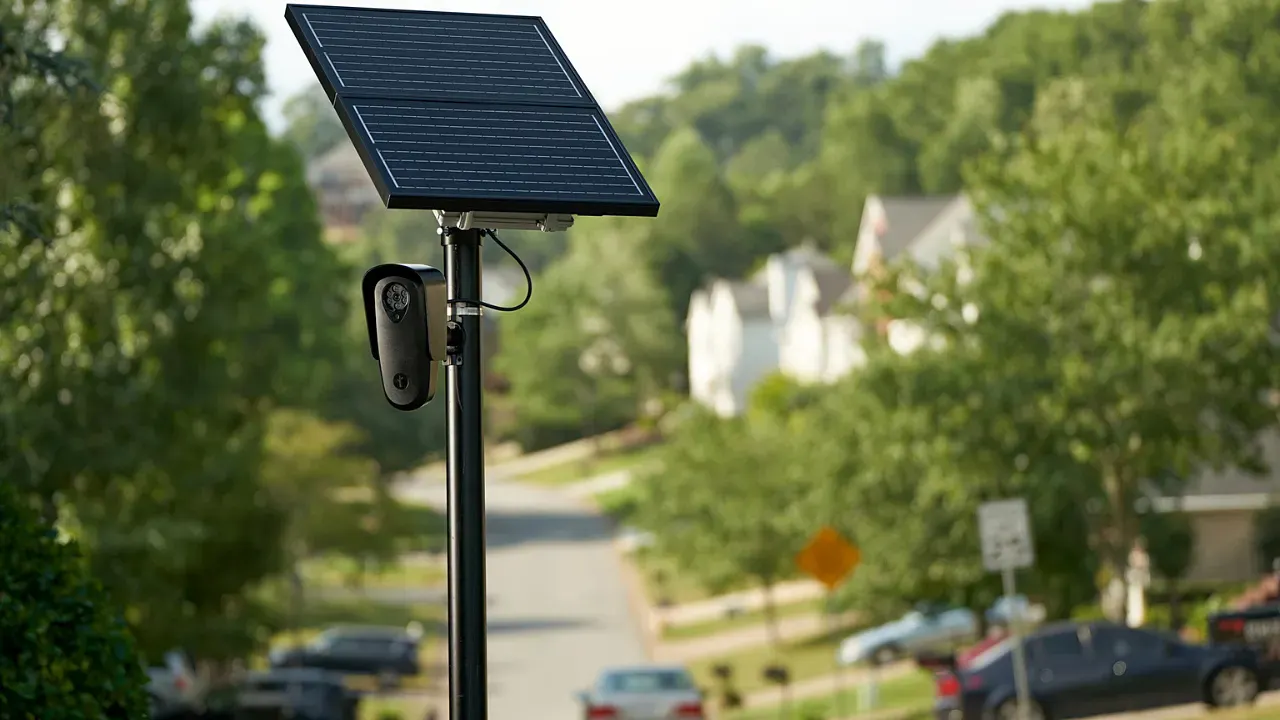
A Flock Safety automated license plate reader camera

Hackers physically removed a Flock Safety license-plate camera and reverse-engineered the device, recovering roughly 1.6 million images, according to WIRED. (Getty Images / Getty Images)

According to WIRED, hackers physically removed a Flock camera from above a roadway and reverse-engineered it. They reportedly discovered encrypted and unencrypted portions of the device’s storage and recovered an encryption key stored on the camera that allowed them to unlock additional data.

Advertisement

“This was a situation where somebody physically had access to a camera because they stole it off of a pole, took it home, and then did backward engineering on that camera,” Brown said.

“That did not give them the capability to actually log into the cloud portion of Flock, and nothing in the cloud of Flock proper was accessed.”

According to WIRED’s analysis, the recovered logs covered roughly 21 days of activity, including 1.6 million images, 50,200 vehicles and 27,000 short video clips.

Flock cameras capture images and short videos of passing vehicles, which are transmitted to the company’s cloud infrastructure for processing and can then be searched by authorized law enforcement users.

Advertisement

OPENAI, 100+ COMPANIES WARN OF COMING SURGE IN AI-POWERED CYBERATTACKS, CALL FOR GLOBAL DEFENSE PUSH

Former U.S. Secret Service cybercrime expert Jason Brown

Former U.S. Secret Service cybercrime expert Jason Brown told FOX Business that hackers’ access to a physically stolen Flock camera did not amount to a breach of the company’s broader cloud network. (FOX Business / FOXBusiness)

Brown characterized the stolen-camera incident and an earlier security issue in which some cameras temporarily became accessible over the internet as isolated events rather than evidence, based on what he knows, of a broader compromise of Flock’s system.

“They are one-off situations and don’t show a larger problem for the Flock system that I’m aware of,” Brown said.

Brown said some cameras had previously been remotely accessible because of weak authentication controls, but said the issue was addressed and did not result in access to Flock’s cloud infrastructure.

Advertisement

He said Flock reports that about 97% of law enforcement agencies using the system now have multifactor authentication enabled.

Brown also argued that the presence of a Flock camera should not change how people conduct themselves in public.

“Should a person conduct themselves differently because a Flock camera is there? I would argue no,” he said.

BANKS WARN AI SHOPPING AGENTS COULD INCREASE RISK OF SCAMS, FRAUD AND DATA PRIVACY BREACHES

Advertisement
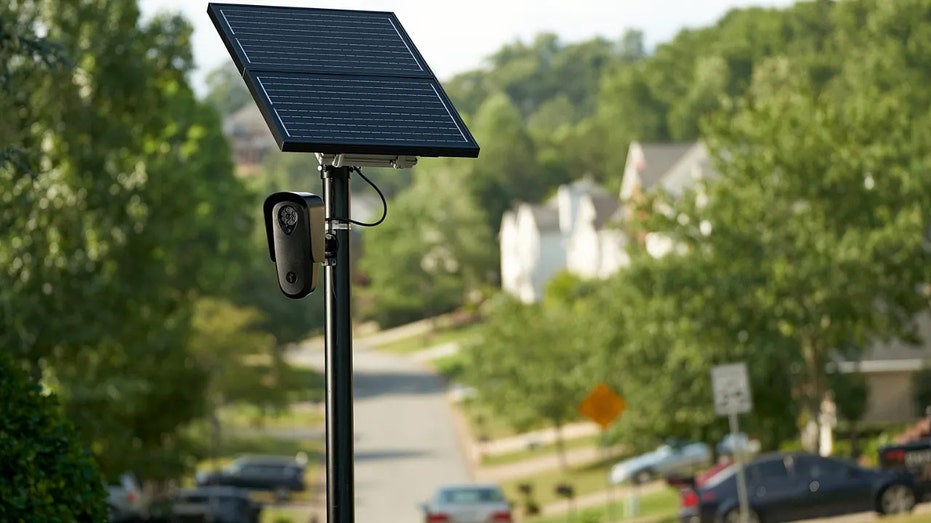
A Flock Safety camera

Flock Safety cameras capture images and short videos of passing vehicles that can be searched by authorized law enforcement users. (Flock Safety / Unknown)

“We’ve seen good uses of the technology, where individuals, a murder is committed in one city and the individuals responsible for it were identified by Flock cameras in another city,” he continued. “You know that that’s a positive, but we all have to understand that whenever we’re out in public, we do not have a reasonable expectation of privacy. We are in public. Anybody can take a picture of us at any time. It may not be the polite thing to do, but anybody can do it at any point in time.”

“The debate of do you have Flock in your community – that’s a debate for the community,” Brown added.

Still, Brown said the incident illustrates a broader cybersecurity issue involving third-party and supply-chain risks “that many corporations would see.”

Brown said the rapid advancement of artificial intelligence makes addressing those risks increasingly important.

Advertisement

“The security posture of everything is changing by the minute,” he said.

GET FOX BUSINESS ON THE GO BY CLICKING HERE

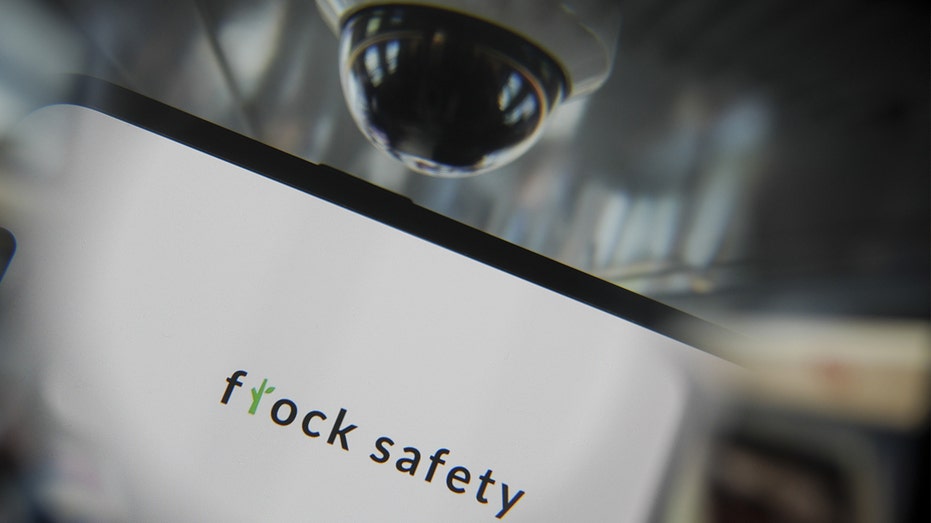
In this photo illustration, the Flock Safety logo is being displayed on a mobile phone screen on March 20, 2025. (Osmancan Gurdogan/Anadolu via Getty Images / Getty Images)

“We have [to] gather intelligence on what is happening with the third parties and then work with those third parties before the incident even occurs to ensure that they are secure, so our customers are ultimately secured,” he continued. “And in this day of AI, the speed and the veracity of that only increases by the minute.”

FOX Business has reached out to Flock for comment.

Advertisement
Continue Reading

Business

foreign exchange reserves: Safety most important in managing forex reserves says RBI Deputy Governor Rohit Jain

Published

on

foreign exchange reserves: Safety most important in managing forex reserves says RBI Deputy Governor Rohit Jain
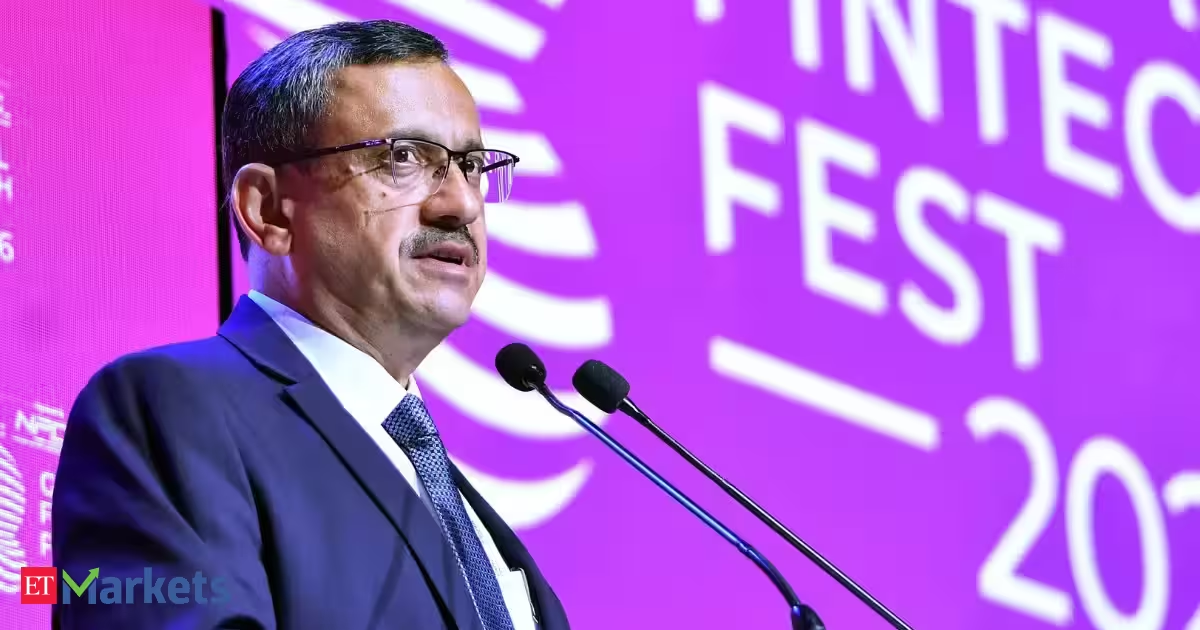
Mumbai: Safety of foreign exchange reserves is the most important consideration before the Reserve Bank of India (RBI) because reserves are ultimately borrowed funds which have to be handled very carefully, deputy governor Rohit Jain said. Return should not be the only consideration when deploying these reserves and that is why a lot of care is taken to deploy these funds.

Jain who as deputy governor is responsible for departments of external investments, foreign exchange and risk management among others said in response to a question by State Bank of India (SBI) managing director Ravi Ranjan at the SBI Banking and Economics Conclave.

Read more: India’s forex reserves drop $4.92 billion to $780.78 billion as of September 11

“We track market variables and parameters very closely. We keep on the lookout for better opportunities. The principal considerations in managing forex reserves are three, safety, liquidity and return. All three are important but the order is also important. Safety, liquidity and return (in that order). Because these are borrowed funds, these forex reserves have to be handled very carefully,” Jain said. He pointed that the latest foreign exchange reserves at $781 billion is the highest ever reserves the country has ever had and is the fifth largest in the world.

Advertisement

“Return should not be the only consideration when deploying these reserves and that is why a lot of care is taken. Very clear objective frameworks are laid out and we manage these reserves with the intent that they provide very strong external resilience for the country and foreign investors and foreign counterparties have the confidence that the country has enough forex reserves to support its needs,” Jain said in an elaborate reply on how the regulator will manage the $133 billion received through the FCNR (B) scheme.


Read more: RBI revises FCNR(B) inflows upwards to USD 133 billion after robust response from NRIs
Later speaking to reporters on the sidelines of the conference Jaina said in the meeting with the regulator, banks have expressed confidence that the new funds due to the FCNR (B) inflows will be absorbed. “Banks will take their own call based on credit demand which is fairly broad based. There is no concern on the deployment of the deposits,” Jain said.Replying to another question on state governments increasingly resorting to market borrowings for financing their gross fiscal deficit, Jain said that the RBI has been telling states to do more reissuances so that the secondary market activity develops which state governments have been complying with.

“We have also focused on a benchmark issuance strategy which we have been doing for the central government. We are now asking state governments also to adopt a benchmark issuance strategy and so far 19 states have already adopted this new strategy. The remaining states are also likely to join in shortly. This will greatly improve the liquidity and the secondary market in the state government security and I believe that we will be able to manage these state government borrowings much better,” Jain said.

In his speech at the conference, Jain said that financial institutions must develop the institutional capacity to identify technology vulnerabilities early, make informed decisions, limit the impact of disruptions, protect customers and recover critical services. “Technology investment should be treated also as a risk investment – it is an investment in continuity, confidence and financial stability. Scale in digital payments and financial services must not come at the expense of trust and resilience. AI is expected to fundamentally change financial services – but governance must precede scale,” Jain said.

Advertisement
Continue Reading

Business

Huge revamp for old cotton mill that could be at risk of collapse

Published

on

Business Live

Mialex plans to rescue and refit Grecian Mill

How the revamped Grecian Mill on Worsley Road North in Walkden could look.

How the revamped Grecian Mill on Worsley Road North in Walkden could look(Image: Drome / Mialex)

A former cotton mill on the verge of collapse could soon be transformed into 64 new apartments, shops and cafes. Grecian Mill on Worsley Road North in Walkden is in a ‘dilapidated and deteriorating’ condition, with the structure suffering a partial collapse in 2021.

Advertisement

Now town planners Mialex Ltd have submitted plans to rescue and modernise the building, transforming the currently ‘uninhabitable’ upper floors into seven duplex and 55 residential apartments. The ground floor would hold around 135 sqm of commercial space, including a cafe and offices. The developer also plans to include an internal winter garden and external landscaping.

Much of the Victorian building would be kept and restored, with some more modern extensions due to be demolished. A ‘sawtooth roof’ would crown the red-brick base, drawing from the historic shape of mill architecture, according to designs by Drome Architects.

If approved by the council’s planning department, the plans could present ‘a considered and deliverable strategy for the long-term reuse of a prominent but severely deteriorated historic mill complex’, says a planning statement.

The statement continued: “The proposals offer a robust and balanced response to a complex site. They secure the reuse of an important historic structure, remove unsafe and poor-quality elements, improve the townscape contribution of the site, and deliver new homes on previously developed land in a sustainable location.”

Advertisement

The plans come as the building continues to decline. In February 2021, part of the structure collapsed, sending substantial sections of masonry crashing through the roof of the garage below. The A575 was temporarily closed and emergency works had to be carried out to secure the building.

According to recent surveys, the mill ‘remains in poor condition’ with internal floors and the roof ‘severely impacted by delay’, according to developers. The Victorian building is at risk of further deterioration without ‘extensive remediation works’.

To find all the planning applications, traffic diversions, road layout changes, alcohol licence applications and more in your community, visit the Public Notices Portal.

Advertisement
Continue Reading

Business

Tokenised Deposits vs Stablecoins: Why Thailand’s Cautious Path Differs from Hong Kong and Singapore

Published

on

Malaysian E-Commerce Startup Borong Leads Asia-Pacific's Fastest-Growing Companies Ranking
  • Hong Kong and Singapore are advancing tokenised deposits into live commercial use, with major banks including HSBC and Standard Chartered already serving institutional clients on blockchain-based treasury platforms. Thailand is pursuing a parallel but slower path, designing a fully reserved, baht-pegged stablecoin intended first for wholesale interbank settlement.
  • The divergence reflects differing regulatory philosophies rather than differing destinations. Banks across the region are favouring tokenised deposits over stablecoins partly due to deposit insurance protections and lighter compliance requirements, while Thailand’s sequenced approach prioritises design completeness and public consultation over speed to market.

Asia-Pacific’s financial institutions have split into two distinct tracks in the race to build programmable digital money. Hong Kong and Singapore are already moving tokenised deposits into commercial production, while Thailand is deliberately taking a slower, more sequenced route toward a baht-pegged stablecoin. The contrast says as much about regulatory philosophy as it does about market readiness, and it is shaping where institutional capital and infrastructure investment land next.

Hong Kong moves from pilot to real money

Hong Kong’s tokenisation programme has gone furthest, fastest. In November 2025 the Hong Kong Monetary Authority shifted its tokenised deposit pilot from test transactions to real-value settlement, bringing in seven banks to issue tokenised deposits and settle interbank transfers on a shared platform: Bank of China (Hong Kong), China Construction Bank (Asia), Fubon Bank, Fusion Bank, Standard Chartered Hong Kong, Bank of East Asia and HSBC. Asset managers BlackRock and Franklin Templeton joined as participants alongside Hong Kong Exchanges and Clearing and payment network JETCO.

The initial focus is tokenised money market fund transactions, letting banks and asset managers manage liquidity and treasury positions in real time rather than waiting on traditional settlement cycles. The programme runs through all of 2026, using Hong Kong’s existing Real Time Gross Settlement system before the HKMA upgrades to 24/7 settlement in tokenised central bank money. Four themes frame the wider experimentation: fixed income and investment funds, liquidity management, green and sustainable finance, and trade and supply chain finance.

Standard Chartered has already taken the model commercial. Its Hong Kong and Singapore units launched a tokenised deposit solution built on Ant International’s blockchain treasury platform, Whale, moving the collaboration from pilot to production and covering HKD, CNH, USD and SGD for Ant’s intragroup treasury flows. HSBC has gone further still, debuting its Tokenized Deposit Service in Hong Kong with Ant International as first client before extending the product to corporate clients in the US and UAE in the first half of 2026.

Singapore leans on corporate treasury use cases

Singapore’s push has centred on the same Standard Chartered-Ant International partnership, with the bank’s Singapore unit enabling SGD and USD transactions that interoperate with the Hong Kong leg’s HKD, CNH and USD capabilities. For Ant International, which runs merchant services and treasury solutions for SMEs worldwide, the appeal is near real-time, 24/7 liquidity movement between entities without relying on traditional correspondent banking rails.

Advertisement

More broadly, Singapore is positioning itself alongside Hong Kong and the UAE as a jurisdiction that can combine regulatory clarity with credible financial infrastructure to attract institutional stablecoin and tokenisation business, a competitive dynamic playing out as more of the region’s fintech investment concentrates in fewer, better-regulated hubs.

Why banks prefer tokenised deposits for now

The tilt toward tokenised deposits over stablecoins is not incidental. Regulatory reclassification is doing much of the work: both the EU’s MiCAR framework and the US GENIUS Act treat most stablecoins as e-money tokens requiring specific licensing that many issuers do not hold, while tokenised deposits, as regulated bank liabilities, sidestep that compliance burden entirely. There is also a protection gap that matters to treasurers moving large balances: stablecoins carry no deposit insurance, whereas tokenised deposits do.

The competitive pressure behind this shift is real. In IBM’s 2026 banking survey, 42 percent of executives said it was likely that major corporations would issue their own stablecoins, a scenario that could erode banks’ transaction fees, deposit bases and customer data. Sixty-three percent of corporate banking executives now see providing tokenised services, rather than resisting them, as their primary role going forward.

Thailand’s wholesale-first, carbon-linked approach

Thailand is building toward the same destination by a different, slower road. The Bank of Thailand’s design study for a baht-backed stablecoin is nearing completion, with a strict full-reserve requirement: tokens pegged 1:1 to the baht and backed by reserves held in segregated accounts at licensed institutions, redeemable on demand. Public hearings are expected before the end of 2026, with formal regulations targeted for late 2026 or early 2027, as Thailand Business News has reported.

Advertisement

The sequencing is deliberate. BoT governor Vitai Ratanakorn has said the stablecoin will function first as a settlement instrument between licensed financial institutions, with any public rollout considered only afterward, an approach that mirrors Hong Kong’s wholesale-first pilot more than it does a retail-facing product launch. Authorities are also examining a role for the stablecoin in carbon credit trading, tying the initiative to Thailand’s net-zero commitments alongside its payments modernisation goals.

This builds on groundwork already laid through the BoT’s wholesale CBDC work under Project Inthanon and mBridge, and its Programmable Payment Sandbox, launched in 2024 and expanded in December 2025 to test baht-backed stablecoins and programmable payment use cases under supervision. The central bank has also used the period to tighten enforcement around unregulated settlement loops, including a crackdown that saw roughly 5,000 accounts linked to peer-to-peer renminbi payment activity suspended between February 2025 and May 2026.

What the contrast means

Hong Kong and Singapore are racing ahead on live, bank-led infrastructure serving multinational treasuries today. Thailand, by contrast, is building toward the same wholesale settlement function but insisting on a completed design study, full-reserve rules and public consultation before anything goes live, a pace consistent with the BoT’s broader caution on digital assets. That gap creates near-term opportunity for regional banks and treasury platforms operating out of Hong Kong and Singapore, but it also means Thai institutions have longer to prepare for a framework designed to avoid the reserve and redemption gaps that regulators elsewhere are still working through.

For now, the practical test will be the BoT’s public hearings later this year and the results emerging from its sandbox, both of which will determine whether Thailand’s cautious sequencing pays off in a more resilient rollout, or simply cedes first-mover advantage to its regional rivals. The broader pattern is one Thailand Business News has tracked across Southeast Asian fintech more generally: rapid regional growth running up against fragmented, jurisdiction-by-jurisdiction regulation that leaves institutions weighing speed against consistency.

Advertisement
Continue Reading

Business

Verbio SE 2026 Q4 – Results – Earnings Call Presentation (OTCMKTS:VBVBF) 2026-09-25

Published

on

OneWater Marine Inc. (ONEW) Q1 2026 Earnings Call Transcript

This article was written by

Seeking Alpha’s transcripts team is responsible for the development of all of our transcript-related projects. We currently publish thousands of quarterly earnings calls per quarter on our site and are continuing to grow and expand our coverage. The purpose of this profile is to allow us to share with our readers new transcript-related developments. Thanks, SA Transcripts Team

Continue Reading

Business

Trump hosts Xi for state dinner at the White House

Published

on

Chinese leader Xi Jinping raises his champagne flute during a toast at a state dinner in the White House hosted by US President Donald Trump

When the BBC entered the dining hall for the dinner, SpaceX CEO Elon Musk was standing over a table and appeared to be telling an entertaining story that had two others nearby barreled over with laughter.

Defence Secretary Pete Hegseth was at another table, with a serious look on his face. His wife is sat beside him, with Jared Kushner and White House chief of staff Monica Crowley nearby.

The White House invited scores of US officials, as well as conservative broadcasters, tech industry bosses, social media CEOs and other corporate executives.

Attendees included members of Trump’s cabinet, as well as family members like his children Ivanka, Eric and Tiffany.

Advertisement

Bosses from the tech industry in attendance included Apple’s Tim Cook, OpenAI’s Sam Altman, Google’s Sundar Pichai, Amazon’s Jeff Bezos and Nvidia’s Jensen Huang.

Both Cook and Huang were seated at the same table as Trump and Xi. As was Musk, who previously worked in Trump’s administration leading the effort to shrink government.

Other companies whose leaders were in attendance include General Motors, Visa, Paramount Skydance, ExxonMobil and more.

Social media mogul Mark Zuckerberg also attended, as well as Jeff Yaas, the American billionaire who owns a share of TikTok.

Advertisement

“Everybody wanted to be there,” Trump said ahead of the event. “I would say you have the entire tech world, the entire banking world, and a lot more.”

But one notable absence was Anthropic – one of the biggest and most valuable AI firms in the world. The BBC has asked Anthropic if it was invited, or if they chose not to be there.

Continue Reading

Business

What's the smallest amount you'd ask a friend to pay back?

Published

on

Yasmin Rufo smiles while a young man points at the camera wearing jeans and a New York City T-shirt.

We ask New Yorkers to share the smallest amount they’d ask a friend to pay back.

Continue Reading

Business

Sampo buys back 5.05 million shares in week 39

Published

on


Sampo buys back 5.05 million shares in week 39

Continue Reading

Trending

Copyright © 2025