
Crypto World
Solana’s 150-millisecond settlement upgrade reaches second public test network


Alpenglow changes how validators, the computers that check transactions, agree on the network’s records. They will exchange votes directly instead of recording those votes as transactions inside blocks, the batches of transactions added to the blockchain. Agreement can then take one or two voting rounds.
Removing those votes will also make some Solana activity charts fall. Transaction totals that include validator votes will shrink even if users make just as many payments and trades. The Foundation has told data providers to adjust their comparisons.
Services that build transaction histories also need to keep competing candidate blocks separate until the network selects one. Mixing their contents could produce an incorrect record.
Applications that simply send transactions and read account balances require no migration, according to the Foundation’s guide.
The speed figure remains a target derived from simulations, rather than a demonstrated result under live-market conditions. Wallet processing and exchanges’ own deposit checks can add further waiting time.
No firm launch date has been announced for the live network. Anza’s software schedule tentatively allows feature activations to resume Sept. 28, but does not identify that date as Alpenglow’s launch.

New guidance from US Securities and Exchange Commission (SEC) staff says the tokens people get for staking ether are not securities, as long as they work purely as receipts.
The agency’s Division of Corporation Finance published the guidance on Friday. Three years ago, the same agency made a crypto exchange pay $30 million over staking.
What SEC Staff Said About Staked ETH
Staking means locking up coins to help run a blockchain, in return for rewards. Liquid staking services give users a tradable token as proof of the coins they locked up.
Securities come with registration and disclosure rules. The Howey test, a 1946 Supreme Court standard, asks whether buyers expect to profit from other people’s work.
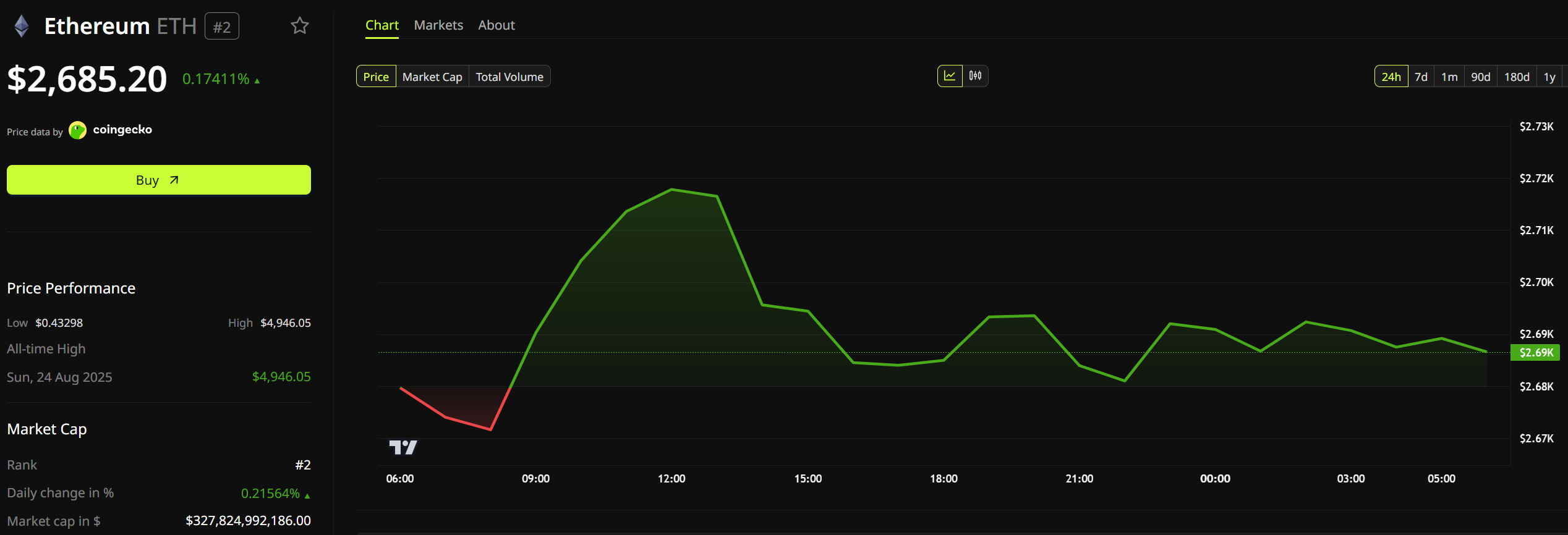
According to the FAQs, a staking receipt token is a “digital tool” when the coin behind it is a digital commodity. In a March 17 interpretation, the SEC and the Commodity Futures Trading Commission (CFTC) named 16 digital commodities. Ether (ETH), trading near $2,685, was one of them.

How Staking Went From SEC Target to Staff Approval
In February 2023, Kraken paid $30 million and shut down its US staking service to settle SEC charges. The agency said Kraken advertised yearly returns as high as 21%.
“Whether it’s through staking-as-a-service, lending, or other means, crypto intermediaries, when offering investment contracts in exchange for investors’ tokens, need to provide the proper disclosures and safeguards required by our securities laws,” Gary Gensler, then the SEC chair, issued a warning.
Four months later, the SEC sued Coinbase and called its staking program an unregistered securities offering. The agency dropped that case in February 2025.
Staff statements in May and August 2025 then said that protocol staking and liquid staking do not involve securities offerings.
The One Condition Is That the Token Stays a Receipt
The catch is in how staff define a receipt. The token cannot change the rights attached to the staked ETH or add extra rewards.
The provider also cannot lend, pledge, or reuse the deposited coins. The token also does not set or fix the rewards. That is the difference from Kraken, which advertised its own return figures.
Not everyone at the SEC agreed with this approach. Commissioner Caroline Crenshaw said the August 2025 liquid staking statement relied on assumptions that may not match how real programs work. She titled her response “Caveat Liquid Staker.”
The same FAQs also covered token buybacks, where a project spends its own money buying its tokens back from the market. On a network that already works, announcing a buyback does not count as a promise that could turn the token into a security. On an unfinished network, however, pitching a buyback as a way to earn returns could still count.
The FAQs themselves say they carry no legal force. That weighs more now that the Clarity Act, a bill to split crypto oversight between the SEC and the CFTC, has failed in the Senate this month.
In March, BeInCrypto reported that analysts said regulators had already delivered most of the bill’s promises. The same analysis pointed out the weak spot. Unlike a law, guidance can be withdrawn by a future administration.
The post SEC Clarifies New Rules For Staked Ethereum appeared first on BeInCrypto.
Although the official deadline passed last week without confirmation of a successful deployment, the Core Team behind the popular project has finally issued a statement that not only announces the Protocol 27 update but also outlines another one in the works.
As usual, they urged all node operators to update their software to the new version and set the deadline for October 13.
One Down, Another One Coming
CryptoPotato previously reported that Protocol 27, which was just announced as implemented, is part of a lengthy series of upgrades throughout the year. It began in February with version 19.6, while others, such as 20.2, 22, 25, and 26, followed suit with a few delays. Protocol 27 was presented as the last planned upgrade in that particular sequence and was initially targeted for September 15.
The team failed to notify its vast user base by that date whether the update had been successfully deployed, but many on X speculated that it was live. Nevertheless, Pi Network announced hours ago that Protocol 27 is in the history books and set its sights on the next one, even though 27 was supposed to be the last.
Protocol 28 focuses on improving how the network and its applications operate under the hood. One of the changes addresses delays involving transaction data, while another will allow developers to upgrade groups of smart contracts simultaneously rather than handling them individually. The protocol will also introduce a safer method for modifying stored data as applications evolve.
Node operators must update their nodes by October 13, while the Mainnet protocol upgrade is scheduled for October 16.
Following the successful completion of the Protocol 27 upgrade on Pi Mainnet, Pi Testnet has upgraded to Protocol 28.
Protocol 28 improves how the network handles delays in transaction data and enables developers to upgrade groups of smart contracts at once and change stored… pic.twitter.com/zUuMMbRnrO
— Pi Network (@PiCoreTeam) September 25, 2026
PI Rebounds
The project’s native token has been quite volatile lately. In the past week alone, it had dropped to under $0.083 before the bulls took charge and pushed it to a multi-week peak of $0.094. However, another rejection followed that drove it to $0.085.
The more favorable market conditions for altcoins have helped in the past 12 hours, as PI currently sits above $0.09 after a 5.5% increase on a 24-hour scale. Its market cap has reclaimed the $1 billion level, according to CMC data, making it the 65th-largest cryptocurrency by that metric.

The post Pi Network’s Latest Major Upgrade Is Finally Complete: What Pioneers Should Know appeared first on CryptoPotato.
Crypto World
Bitcoin tops $87K, Fed drafts stablecoin rules, Bitget hit by $351M hack | Weekly recap

In this week’s edition of the weekly recap, Bitcoin reached an eight-month high above $87,000 before pulling back, the Federal Reserve proposed rules for U.S. stablecoin issuers, and Bitget suspended withdrawals after a $351.6 million wallet breach. The developments led to a week that also brought a major USDC agreement, new uses for bank-issued stablecoins, and a New York lawsuit against Polymarket.
Summary
- Bitcoin briefly topped $87,000 as U.S. spot ETFs drew about $1.7 billion over two sessions.
- The Fed proposed reserve and approval rules for stablecoin issuers under its supervision.
- Bitget suspended withdrawals after unauthorized transfers affected an estimated $351.6 million in assets.
- Binance bought roughly $100 million in Circle shares and agreed to promote USDC for five years.
- SoFi began using its bank-issued stablecoin to settle transactions across a $25 billion card program.
Bitcoin reaches $87,000 as ETF buying returns
- Bitcoin climbed past $87,000 after clearing resistance near $82,000. HashKey Group researcher Tim Sun linked the move to easing oil and Treasury yields, short covering, and stronger U.S. spot ETF demand. He said the ETF inflows followed the initial breakout rather than starting it.
- U.S. spot Bitcoin ETFs then took in about $999 million on Sep. 21 and $714.7 million on Sep. 22. Bitcoin later retreated toward $84,000 despite continued inflows. According to crypto.news market coverage, futures traders added more than $2 billion in positions during the advance, raising the amount of leverage behind the rally.
Fed proposes stablecoin reserve and bank approval rules
- The Federal Reserve released two proposed GENIUS Act rules on Sep. 24. One would require payment stablecoins issued by firms under its supervision to be fully backed by permitted assets, including short-term U.S. Treasury bills and other highly liquid holdings. It would also set capital and risk-control requirements.
- The second proposal sets out how an insured state member bank would seek Fed approval for a stablecoin-issuing subsidiary. Both drafts remain open to change. A 60-day public comment period will begin after their publication in the Federal Register.
Bitget suspends withdrawals after $351.6 million breach
- Bitget reported unauthorized wallet transfers on Sep. 24 affecting an estimated $351.6 million in assets. The exchange suspended withdrawals while allowing deposits and trading to continue during its investigation and system repairs.
- Bitget said its preliminary findings pointed to a breach of backend systems rather than a private-key leak. Blockchain tracker Lookonchain estimated that 102.93 million XRP, worth about $157.48 million, made up the largest portion of the stolen assets. The exchange had not confirmed who carried out the attack.
Binance buys $100 million Circle stake in USDC deal
- Binance purchased about $100 million in Circle shares through a private placement completed on Sep. 17 and reported this week. The purchase covered approximately 1.24 million shares.
- Under a new five-year agreement, Binance will promote USDC across its platform, while Circle will pay monthly incentives tied to qualifying USDC balances. The agreement replaces earlier arrangements between the companies. Binance is restricted from selling, transferring, or hedging the shares for up to two years, though it retains voting rights.
SoFi puts SoFiUSD into Mastercard card settlement
- SoFi and Mastercard said on Sep. 22 that transactions in SoFi Bank’s $25 billion card program are now settling using SoFiUSD. The bank-issued stablecoin operates within Mastercard’s payment network, while merchants can receive funds without holding the token themselves.
- The companies are also examining SoFiUSD for merchant settlement, cross-border payments, and remittances. The announcement marks a live use of a U.S. bank-issued stablecoin in card infrastructure, rather than a proposed payment trial.
New York sues Polymarket over alleged illegal gambling
- New York Attorney General Letitia James sued Polymarket on Sep. 24, alleging that it offered event contracts to state residents without a gambling license and allowed people under 21 to use the platform. The state is seeking an end to the alleged unlicensed activity, restitution, fines, and forfeiture of gains it says were earned illegally.
- The case adds to New York’s actions involving Kalshi, Coinbase Financial Markets, and Gemini Titan. It came a day after all 11 Democrats on the Senate Banking Committee called for a public hearing on prediction markets.
Strategy resumes Bitcoin purchases with 950 BTC
- Strategy bought 950 BTC for $75.7 million between Sep. 14 and Sep. 20, ending a two-week pause. Its Sep. 21 SEC filing put its total holdings at 846,000 BTC, purchased for about $63.8 billion.
- During the same period, the company spent about $174 million repurchasing STRC preferred shares. It reported no sales under its at-the-market share programs for the week, while its deployable U.S. dollar cash balance fell to about $1.05 billion.
ARK Invest tokenizes venture fund interests
- ARK Invest and Securitize announced tokenized interests in the ARK Venture Fund, beginning on Ethereum. Eligible investors can hold a blockchain-based interest in the fund, whose portfolio includes OpenAI, Anthropic, Stripe, and Databricks.
- The tokens represent fund interests rather than direct ownership of those portfolio companies. A Sep. 21 SEC order permits ARK to offer the tokenized share class under specified conditions, making the regulatory terms part of the U.S. rollout.
Canada’s six largest banks test tokenized deposits
- Canada’s Big Six banks formed a joint project to explore transfers of tokenized Canadian-dollar deposits. Bank of Montreal, CIBC, National Bank of Canada, RBC, Scotiabank, and TD are participating.
- The first phase will focus on transfers between regulated institutions. The proposed tokens would remain liabilities of the issuing banks, which distinguishes them from separately issued stablecoins backed by reserve assets. The banks have described wider payment uses as a later possibility rather than a live service.
ECB asks EU to change MiCA stablecoin reserve floors
- The European Central Bank and the EU’s national central banks asked for changes to MiCA’s stablecoin reserve rules. Current rules require issuers to keep at least 30% of reserves in commercial bank deposits, rising to 60% for stablecoins classed as significant.
- The central banks proposed liquidity requirements based on asset maturity instead. They warned that heavy redemptions from a large stablecoin could put pressure on banks holding its deposits. Their request is a recommendation; it has not changed MiCA’s existing requirements.
KelpDAO and LayerZero dispute responsibility for $292 million exploit
- KelpDAO sued LayerZero and co-founder Bryan Pellegrino in British Columbia over an April attack that drained approximately 116,500 rsETH, valued at $292 million. KelpDAO alleges that LayerZero failed to disclose risks and secure infrastructure used in the transfer.
- LayerZero disputes the claim. It says KelpDAO’s verifier setup created the single point of failure that allowed forged cross-chain messages. Pellegrino called the lawsuit meritless and said he would defend the case.
Cosmos Hub secures 1.23 million ATOM after Neutron attack
- Cosmos Hub validators moved 1,227,121 ATOM linked to a Neutron governance attack into a recovery wallet after halting the network for about 24.5 hours. Roughly 1.73 million stolen ATOM had reached Cosmos Hub from Neutron.
- The recovery wallet requires four of six signers to approve a transfer. A Cosmos Hub governance vote is required before the secured tokens can be returned. Another 168,990.9 ATOM reached the attacker after the restart and was moved to Osmosis and sold.

Austria, Vienna, Statue of Thucydides the Greek philosopher in front of Parliament building.
Eye Ubiquitous | Universal Images Group | Getty Images
BEIJING — China is embracing the idea of competition without confrontation, by invoking an academic concept.
“The Thucydides Trap can be overcome,” Chinese President Xi Jinping said on arriving at the White House to meet U.S. President Donald Trump on Thursday, according to the Chinese side’s official readout.
That framing contrasts with the rhetorical question he posed at the May summit of whether the two countries could avoid the Thucydides Trap.
The Thucydides Trap, popularized by Harvard professor Graham Allison in the early 2010s, refers to how tensions between a rising and ruling power have historically often resulted in a war.
Thucydides was an Athenian general in ancient Greece. His historical record of the Peloponnesian War described how Athens’ rapid rise in power alarmed Sparta and made war between the two city-states inevitable.
Allison has met Xi and visited China multiple times, including in June 2026 for a World Economic Forum event. Allison was founding dean of Harvard’s Kennedy School, which for decades trained many of China’s government officials.
The academic previously worked in the U.S. government as Assistant Secretary of Defense under President Bill Clinton in the 1990s and Special Advisor to the Secretary of Defense under President Ronald Reagan in the 1980s.
Xi referred to the Thucydides Trap during a rare interview published by HuffPost in 2014.
“We all need to work together to avoid the Thucydides Trap — destructive tensions between an emerging power and established powers, or between established powers themselves,” Xi said.
A new bottom line?
The Chinese leader’s state visit to the U.S. this week was his first in 11 years. A state media article following his 2015 visit noted Xi’s interest in the Thucydides Trap reflected his view that it’s major powers’ suspicion of each other, rather than any sense of inevitability, that results in the conflict that the term predicted.
Xi’s comment on Thursday about overcoming the Thucydides Trap followed remarks on peaceful coexistence — that the U.S. and China can have “healthy” competition without confrontation.
“It should be a race of catching up with one another, not a wrestle in which one either wins or loses,” Xi said, adding the two countries’ militaries should improve crisis communication and prevention.
This establishment of a bottom line — competing intensely without military conflict — is the “most significant political outcome” of the summit, Cui Shoujun, a professor at Renmin University of China’s School of International Studies, said in Chinese, translated by CNBC. “This injected certainty into the volatile bilateral relationship.”
Trump’s comments on Xi’s arrival at the White House only emphasized general collaboration.
The U.S. president has yet to comment on Taiwan around this summit, despite Xi calling on the U.S. to “oppose ‘Taiwan independence,’” according to Beijing’s readout of the two presidents’ talks on Thursday.
—CNBC’s Anniek Bao contributed to this report.

Summer Mersinger, a former U.S. Commodity Futures Trading Commission (CFTC) commissioner, is stepping down as CEO of the Blockchain Association and will leave the advocacy group at the end of the year. The change comes after one of the organization’s top legislative priorities stalled in Congress, underscoring how quickly momentum in Washington can shift for crypto policy groups.
On Friday, the Blockchain Association said Mersinger will step down on Oct. 16, when Kristin Smith—who previously led the organization—returns as interim CEO. Mersinger joined the Blockchain Association in June 2025 after departing the CFTC three years ahead of the scheduled end of her second term as a commissioner.
Key takeaways
- The Blockchain Association announced a leadership transition: Summer Mersinger will exit as CEO on Oct. 16, with Kristin Smith returning as interim CEO.
- Mersinger’s tenure emphasized stablecoin-focused policy efforts, including the GENIUS Act, and efforts to improve regulatory clarity across the SEC and CFTC.
- One major legislative priority—tied to a Senate “clarity” effort for digital assets—failed to advance on a cloture motion, raising the likelihood of delay into later Congresses.
- The association did not publicly address what the leadership change could mean for its remaining 2027 policy strategy.
Leadership transition at the Blockchain Association
The Blockchain Association’s announcement sets a clear timeline for the organization’s top leadership. Mersinger will step down as CEO on Oct. 16, aligning with Kristin Smith’s return as interim CEO. The group also indicated that Mersinger will leave the organization by year’s end.
According to Mersinger, her move to the association was driven by a desire for clearer regulatory “rules of the road” and a unified policy voice in Washington. She joined the advocacy group after leaving the CFTC earlier than the completion of her second term, which many observers interpreted as a shift from regulator to policy advocate.
Stablecoins and regulatory clarity remain the headline of her tenure
In explaining Mersinger’s impact, the Blockchain Association pointed to her work advancing the “Guiding and Establishing National Innovation for US Stablecoins” framework—commonly referred to as the GENIUS Act. The organization also credited her with efforts aimed at improving regulatory clarity with both the Securities and Exchange Commission (SEC) and the CFTC.
The emphasis on stablecoin legislation is notable because stablecoin policy has been a recurring flashpoint for U.S. crypto regulation. For advocacy groups, stablecoins are often treated as a practical focal point: they are already widely used for payments, trading, and settlement, while lawmakers continue to debate how existing securities and commodities regimes should apply.
Importantly, the association’s statement did not limit itself to stablecoins alone; it suggested a broader goal of clarifying enforcement and compliance expectations across agencies. That matters to market participants because regulatory uncertainty can translate into higher compliance costs, delayed product launches, and shifting legal risk assessments—especially for firms operating at the boundary between securities-like activity and commodities-like activity.
The setback in Congress changes the political clock
While the Blockchain Association highlighted GENIUS Act progress, it did not mention another Senate effort that had been repeatedly urged by the organization: the Digital Asset Market Clarity Act, which had been under consideration in the Senate.
Previously, the Blockchain Association pushed lawmakers to support the measure, sharing calls for action through its social media channels. However, coverage noted that the bill failed to gain enough votes during a cloture motion earlier this month, according to the original reporting cited by Cointelegraph.
Experts expect that outcome to leave the legislation in limbo until 2027—an extended delay that can be consequential for an advocacy group’s strategy. Legislative priorities that do not clear procedural hurdles often lose momentum as attention moves to other issues or as new political dynamics take over. For stakeholders watching U.S. crypto regulation, it also suggests that near-term certainty may remain difficult to achieve even when industry support for a framework is visible.
The timing is especially relevant for leadership decisions. The association’s communications did not explicitly tie Mersinger’s departure to any single vote outcome, but the context is difficult to ignore: a major policy push appears to have stalled right as she is exiting.
What comes next for the group—and what to watch
The Blockchain Association did not immediately respond to questions about what Mersinger’s plans are beyond her departure, including any strategy for 2027. That leaves open a key question for members and observers: whether the organization will adjust its legislative priorities or shift its messaging focus as the political calendar extends.
With Kristin Smith stepping in as interim CEO, attention will likely turn to how the group reallocates its efforts—particularly whether it keeps pursuing the Senate clarity push or doubles down on alternative paths, such as agency-level rulemaking or narrower frameworks like stablecoins. For crypto industry participants, the leadership handoff may signal continuity in advocacy priorities, but the legislative calendar suggests that tangible progress may still depend on votes and procedural outcomes that can take months to overcome.
Readers should watch for any new statements from the association on its legislative roadmap after the cloture failure, along with signals from congressional leadership on whether any crypto-related bills can move without being trapped in extended procedural delays.
Crypto World
Ripple news: XRP Ledger upgrade delayed 10 days after validators reset activation clock

An XRP Ledger upgrade expected to activate Sept. 29 has been pushed back by at least 10 days after validator support briefly fell below the level required to turn it on.
The feature, called Batch, would let users submit up to eight transactions together. Its all-or-nothing option could let a buyer pay for a tokenized asset and receive it in one operation, preventing either side of the trade from completing alone.
RippleX’s head of engineering, Ayo Akinyele, previously told CoinDesk that projects were being built around Batch and that Ripple would share more about work with asset managers once the feature went live.
“Some projects are already being built with Batch in mind, so activation would allow that work to move closer to production,” he said. He did not name the partners or give launch dates.
The corrected upgrade, formally named BatchV1_1, regained support from 30 of 35 trusted validators on Sept. 25, according to the XRPL amendment dashboard. That started a fresh two-week countdown, putting its earliest activation at Oct. 9 around 14:46 UTC if support holds.
Crypto World
Inside the ‘Shielded Bitcoin’ paper that proposes private BTC payments using Zcash tech
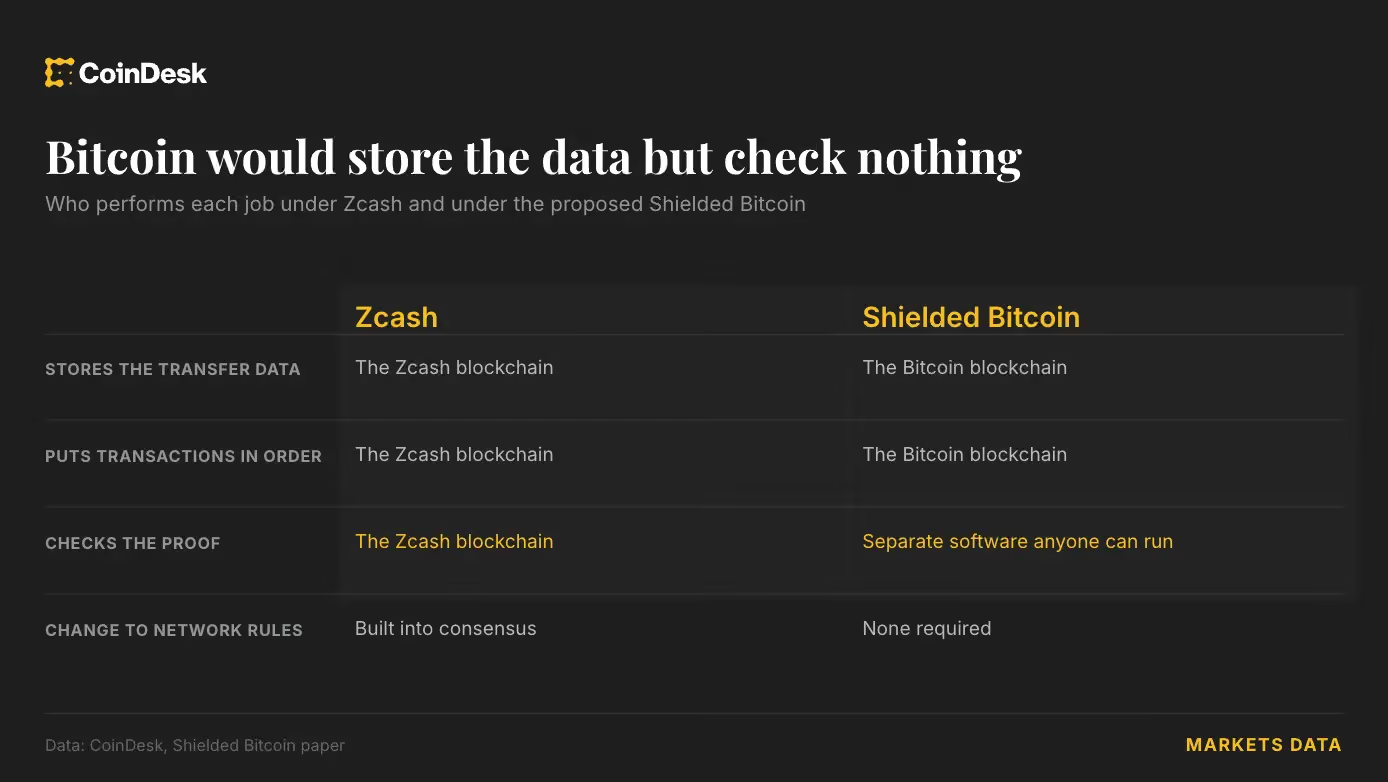
Privacy has become a practical concern in recent months as developers try to make cryptocurrencies useful for payroll, business payments and everyday spending. Ordinary bitcoin transactions permanently expose amounts and addresses, but once an address is linked to a company or person, other payments associated with it become easier to follow.

Ethereum is also reviewing a proposal for a shared private pool that would let people transfer ether and other tokens without publicly revealing payment details. Its authors cite payroll, treasury management and donations among the uses poorly served by fully public transactions.
How Zcash works
Zcash lets users choose between transparent payments, whose addresses and amounts are public, and shielded payments that encrypt those details. Its shielded pools held about 4.9 million ZEC on Friday, up 14% from July 30, according to CoinDesk calculations using ZecStats data. That represents roughly 29% of issued coins, worth about $7.8 billion following the rally.
Zcash recorded roughly 63,000 shielded transactions last week, its busiest week for private transfers since 2022 and fourth-highest on record. Across the network, reported transfer volume exceeded $23 billion, the largest weekly total since 2021 and second-highest in its history.

Zcash has attracted both investor money and attention amid those metrics. By early September, ZEC had gained more than 2,300% over the preceding year and crossed $1,000. It extended the rally above $1,600 on Wednesday.

New warnings circulating among iPhone users link a malicious Safari-based attack to a potential exposure of cryptocurrency wallet secrets, including private keys and seed phrases. However, the threat intelligence firm that analyzed the specific Safari sample says it has not been able to independently confirm an actual theft from a compromised victim tied to that exact code.
In a statement provided to Cointelegraph, SlowMist said the campaign it investigated appears to reuse techniques from an earlier iOS exploit chain known as DarkSword. While multiple reports urged users to update immediately and cited an especially broad iOS window—“iOS 13 through iOS 26.5” in some coverage—SlowMist cautioned that this range should be treated as preliminary until the company can demonstrate reproducible technical evidence for the latest versions.
Key takeaways
- SlowMist has not independently confirmed a real victim compromise or confirmed crypto theft tied to the exact Safari sample it analyzed.
- The strongest technical evidence from SlowMist focuses on iOS 18.4 through 18.6.2.
- SlowMist says the suspected Safari exploit chain reuses techniques from Google-disclosed DarkSword, rather than being the same as the separate FomoPeek incident.
- The analyzed malware includes functionality aimed at reading and decrypting data from Apple Keychain, which can contain sensitive wallet-related information.
- Even without proof of a successful extraction on every targeted device, SlowMist still recommends updating iOS and avoiding suspicious links.
Why the iPhone warnings remain uncertain
Multiple reports this week prompted immediate iOS updates, warning that malicious Safari pages could potentially expose crypto private keys and seed phrases. Some of those reports referenced a wide range of iOS versions, extending from iOS 13 to iOS 26.5.
SlowMist’s assessment is more restrained. The company told Cointelegraph that it has not independently verified a victim device compromised by the particular Safari attack sample it reviewed. It also indicated that the iOS range appearing in public warnings may be broader than what it can technically support right now.
In particular, SlowMist said it “prefer[s] to avoid stating that iOS 26.5 is affected until there is reproducible technical evidence,” and noted its strongest evidence spans iOS 18.4 through 18.6.2. That distinction matters for users and organizations because overbroad impact claims can either create unnecessary fear on unexposed versions or, conversely, obscure where defenses should be prioritized first.
What SlowMist says was reused from DarkSword
The Safari campaign is not being treated by SlowMist as an entirely new exploitation method. According to SlowMist, the attack reuses techniques from DarkSword, an iOS exploit chain disclosed by Google’s Threat Intelligence Group (GTIG) in March. Google described DarkSword as having been used by multiple threat actors since at least November 2025, and documented the exploit chain publicly in a dedicated threat intelligence post.
SlowMist said its own MistEye threat intelligence team—led by chief information security officer 23pds—first identified relevant activity in early May. Later, SlowMist published its analysis of the “WYINCC” Safari campaign on Sept. 4, describing how the malicious page presented a lure related to a free virtual private server service.
SlowMist reported that when the page was opened in Safari on an iPhone, the exploit code could load without necessarily requiring an additional user click. Apple later patched the vulnerabilities used in the chain, and SlowMist stated that those underlying weaknesses had already been disclosed and fixed.
Importantly, SlowMist also separated this issue from a different investigation it previously ran regarding FomoPeek—an iOS App Store-related incident described in earlier Cointelegraph coverage. SlowMist characterized the Safari attack as distinct from that separate App Store compromise vector.
Targets inside the device: Apple Keychain and wallet exposure
Beyond the exploit mechanism, SlowMist highlighted what the malicious sample was trying to access. In its analysis of the sample, the firm said the code included capabilities to interact with Apple’s Keychain—retrieving and decrypting information stored there. SlowMist added that the code could also access app files and shared app data, which could potentially include sensitive data handled by crypto wallet applications.
At the same time, SlowMist emphasized limits in what can be proven from static or controlled analysis. The company said the sample “demonstrates the collection capability and the intended targets,” but does not automatically prove successful extraction from every wallet or every targeted device.
Critically, SlowMist said it did not execute the full chain on a real victim device, which is why it cannot identify a specific victim whose device it independently confirmed was successfully compromised by that exact sample.
Recommendations: update, avoid links, and move funds if exposed
Even with those uncertainties, SlowMist urged iPhone users to take practical defensive steps. The firm advised updating to the latest iOS security updates available for affected devices and avoiding suspicious links—especially those delivered via unsolicited messages or pages that promise free services.
For users who cannot update immediately or who face elevated risk, SlowMist pointed to Apple’s Lockdown Mode as an additional layer of defense. However, the company cautioned that it has not confirmed Lockdown Mode fully blocks this specific Safari attack.
SlowMist also offered guidance for wallet users who believe their credentials may have been compromised. Its recommendation was to move assets to a newly generated wallet created on a clean device rather than continuing to use potentially exposed private keys or seed phrases.
As more technical details become available, the key question for investors, traders, and wallet users is whether reproducible evidence will narrow the affected iOS versions further—and whether researchers can confirm how often, and under what conditions, the Keychain access successfully results in usable wallet secret extraction on real devices. For now, the safest approach remains the straightforward one highlighted by SlowMist: update promptly, be cautious with Safari links, and treat any suspected seed or key exposure as a reason to rotate credentials immediately.
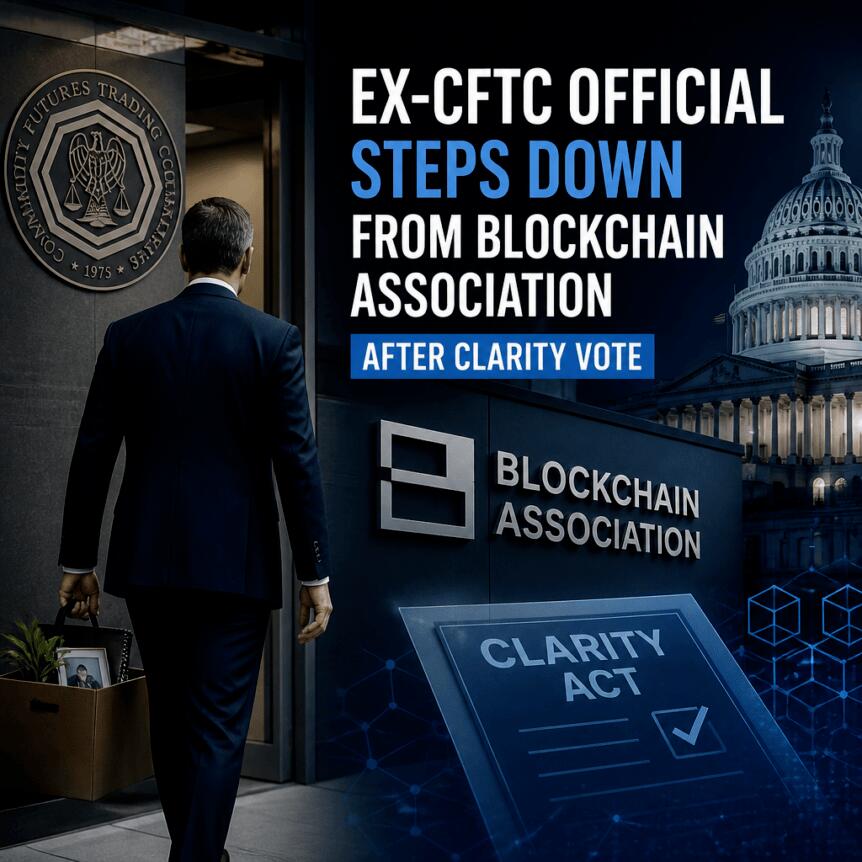
Summer Mersinger, the former US Commodity Futures Trading Commission (CFTC) commissioner who led the Blockchain Association, will step down as chief executive as the advocacy group heads into its next chapter. The organization says Mersinger will leave the role on Oct. 16 and will depart the Blockchain Association at the end of the year.
In a move the group framed as a return to familiar leadership, Kristin Smith—Blockchain Association’s former CEO—will take over as interim CEO on Oct. 16 while continuing her existing position as president of the Solana Policy Institute.
Key takeaways
- Summer Mersinger will step down as CEO of the Blockchain Association on Oct. 16.
- Kristin Smith is set to return as interim CEO while remaining president of the Solana Policy Institute.
- The Blockchain Association cited progress on stablecoin policy, including work connected to the GENIUS Act.
- The group’s update did not mention a separate stablecoin/regulatory push in the Senate that failed to advance earlier this month.
Why the CEO transition is happening
The Blockchain Association said Mersinger’s departure follows a setback for one of the organization’s key legislative priorities in Congress. The group’s announcement indicates it sees the leadership change as timed with a period of renewed advocacy, starting with Smith’s interim return.
Mersinger joined the Blockchain Association in June 2025 after leaving the CFTC years earlier than the planned end of her second commissioner term. Her background at the regulator is a core part of the story: the association emphasized that she joined the industry effort to build a unified policy message in Washington.
“I came here from the CFTC because I believed this industry deserved clear rules of the road and a credible, unified voice making the case for them in Washington,” Mersinger said in remarks tied to her departure, according to the Blockchain Association’s announcement.
Legislative focus: GENIUS Act and broader “clarity” goals
In explaining her tenure, the Blockchain Association pointed to Mersinger’s efforts related to the Guiding and Establishing National Innovation for US Stablecoins (GENIUS Act). The organization also credited her work with achieving more regulatory clarity across both the Securities and Exchange Commission (SEC) and the CFTC.
That emphasis matters because US crypto policy remains fragmented between agencies and often depends on how lawmakers define stablecoins and other digital assets. For advocacy groups, demonstrating progress toward a workable regulatory framework—rather than only case-by-case enforcement—can shape how seriously Congress treats proposed bills and how businesses plan compliance strategies.
A Senate setback the association didn’t highlight
While the Blockchain Association highlighted stablecoin-related work around GENIUS, it did not reference a separate Senate measure it had previously urged lawmakers to support. In earlier outreach, the association pushed for the Digital Asset Market Clarity Act—a bill described in coverage as being under consideration in the Senate.
According to reporting linked in the original announcement’s context, the Senate failed to move the legislation forward. The measure was not able to secure enough votes in a cloture motion earlier this month, with expectations that it could remain stalled until later in the decade—potentially stretching into 2027.
The Blockchain Association did not provide immediate details on what the leadership change means for its plans for 2027, nor did it outline a replacement strategy for the stalled legislation in the information provided with this CEO update.
Leadership change and what to watch next
With Mersinger stepping down on Oct. 16 and Kristin Smith taking over as interim CEO, the next phase of the Blockchain Association’s legislative campaign may hinge on how it reframes its priorities after the Senate cloture result. Investors and builders watching US crypto regulation will want to pay close attention to whether the organization pivots to alternative bills, refines its approach to stablecoin definitions, or focuses more on agency-level guidance given the SEC/CFTC dynamics mentioned by the association.
For now, the key uncertainty is timeline: the stalled Senate effort suggests near-term momentum may be limited, even as internal leadership transitions prepare the advocacy group for the legislative calendar ahead. Readers should watch for updates on the association’s next set of targets in Congress and whether the “clarity” push remains centered on stablecoins—or broadens to other parts of the digital asset market.
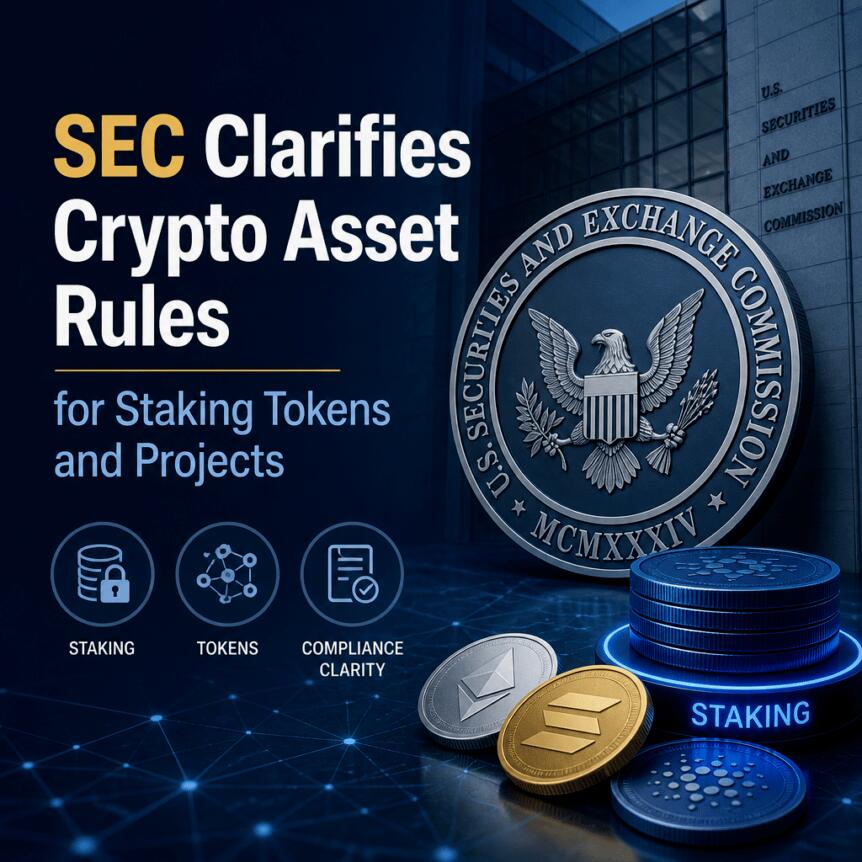
The SEC Division of Corporation Finance released new crypto guidance on September 25 covering staking receipt tokens, wrapped assets, buybacks, and functional networks. The update explains how certain crypto activities may not create investment contracts under existing federal securities laws. However, the guidance represents staff views and does not create new legal requirements.
The latest FAQs clarify how SEC staff evaluates different crypto assets and network activities. The document focuses on whether specific actions involve ongoing managerial efforts linked to investment expectations. Therefore, the guidance highlights conditions that may affect how digital assets are treated under securities laws.
The SEC staff explained that some crypto assets can operate as digital tools rather than securities. The analysis also depends on each digital asset’s structure, purpose, and operation.
SEC Explains Staking Receipt Token Treatment Under Crypto Rules
The new guidance addresses staking receipt tokens issued through blockchain-based staking services. These tokens can represent ownership of underlying digital assets while allowing users to track their staking positions. Therefore, the SEC staff said some staking receipt tokens may function as digital commodities.
The guidance also explains that liquid staking providers may issue tokens connected to protocol-based systems. In these cases, the tokens can represent claims linked to staked assets rather than traditional investment contracts. However, the classification depends on the facts surrounding each network and token structure.
Additionally, the SEC staff noted that the agency has not approved or rejected the FAQ responses. Instead, the document provides staff interpretations based on current federal securities law principles. Therefore, crypto projects must still consider their individual operations and structures.
Functional Networks And Crypto Buybacks Receive Updated SEC Views
The SEC staff also guided when crypto networks may move beyond investment contract concerns. The analysis focuses on whether an issuer continues performing essential managerial activities for digital asset holders. Therefore, network development and maintenance alone may not always represent managerial efforts.
The guidance explains that functional networks can continue operating through security improvements, software updates, and community development. Moreover, these activities may support network operations without creating an investment contract. The SEC staff emphasized that decentralization can influence this evaluation.
Crypto buybacks also received attention in the updated FAQs. The staff explained that buybacks involving active networks may not automatically indicate issuer efforts that support an investment contract. However, buybacks promoted as generating returns could receive different consideration depending on the circumstances.
The SEC staff further noted that network functionality plays an important role in evaluating crypto activities. Before a network becomes functional, issuer actions may carry different legal implications. Therefore, project structures and promotional methods remain important factors.
SEC Reviews Crypto Marketing Statements And Platform Promotion Rules
The guidance also covers statements made by crypto companies when promoting their products and services. The SEC staff said general support for existing network utility does not automatically create an investment contract. Therefore, ordinary communications about network use may receive different treatment.
However, promotional statements can create concerns when they connect future issuer actions with expected financial returns. The SEC staff indicated that the details and context of each statement remain important. Consequently, crypto companies must consider how they present plans and developments.
The FAQs also address whether trading platforms automatically become crypto promoters. The SEC staff explained that platforms must meet the existing Securities Act definition of a promoter before receiving that classification. Therefore, operating a crypto marketplace alone does not determine promoter status.
The latest SEC guidance adds further clarity to ongoing discussions around digital assets and securities rules. It outlines how staking tokens, functional networks, buybacks, and promotions may receive different treatment. However, each crypto project requires separate evaluation based on its specific activities and structure.

Trump Criticized For Naming Strait Of Hormuz After Himself

Trainer points to jockey error as Haaland aims for redemption in 2026 Murray Bridge race

Prime Video’s Newest Mega Streaming Bundle Exposes an Even Bigger Viewership Problem





-

 Crypto World3 days ago
Goldman Sachs and Deutsche Bank Agree: The S&P 500 Rally Isn't Over
-

 Tech5 days ago
Researchers escape OpenAI Codex sandbox to run commands on host
-

 Fashion2 days ago
8 iPhone Accessories That Add Personality
-

 Crypto World5 days ago
Who Needs CLARITY Anyway? ARB Could See 70X Increase: Hodler’s Digest
-

 Tech6 days ago
Trump suggests rebranding AI with a new name, says he’s also creating an AI Force
-

 Business5 days ago
Analog Devices (ADI) Bets $1.35 Billion on Chips that Let Machines Think for Themselves
-

 Crypto World3 days ago
This Bearish Netflix Stock Trade Can Cash In On Video Streaming Giant’s Woes
-

 Crypto World5 days ago
Coinbase, Robinhood, Circle Seen as Tokenized-Stock Winners
-
 Crypto World4 days ago
Trump-Xi Polymarket Odds for Handshake Hit 50%
-

 Entertainment3 days ago
These 17 Fall Amazon Dresses Seriously Look Like Anthropologie
-

 Tech5 days ago
Google’s $899 Googlebook is a bet that you’ll buy a new laptop for Gemini
-

 Crypto World2 days ago
Crude Oil Prices Pressured by Diplomatic Hopes in the Middle East
-
 Business3 days ago
Oil Price Today (September 23): Crude oil below $100 on hopes of US-Iran talks. What did Trump say?
-
 Crypto World2 days ago
Bitcoin price tests $83,600 Supertrend support after $87K rejection
-
 NewsBeat7 days ago
Ed Sheeran protegees Katseye UNFOLLOW star… days after Macklemore was dropped from his tour over Free Palestine remarks
-
 Crypto World2 days ago
Bitcoin Threatens Sub-$84,000 Breakdown as Long Liquidations Spike
-
 Crypto World4 days ago
Meta Jumps 11% As Muse Shines and Investors Show an Appetite for Advancing AI
-

 Crypto World3 days ago
Did Jim Cramer Just Give GameStop Stock the Kiss of Death When He Said the Turnaround Is Working?
-
 Crypto World5 days ago
Bitcoin price holds above $81K as key catalysts line up
-

 Crypto World5 days ago
ARB Price Signals Spur Speculation of 70x Upside in Hodler Digest
You must be logged in to post a comment Login