
Business
Crewe’s First-Ever Electric SUV Is a Genuine Looker With 876 Horsepower, Reviewers Say

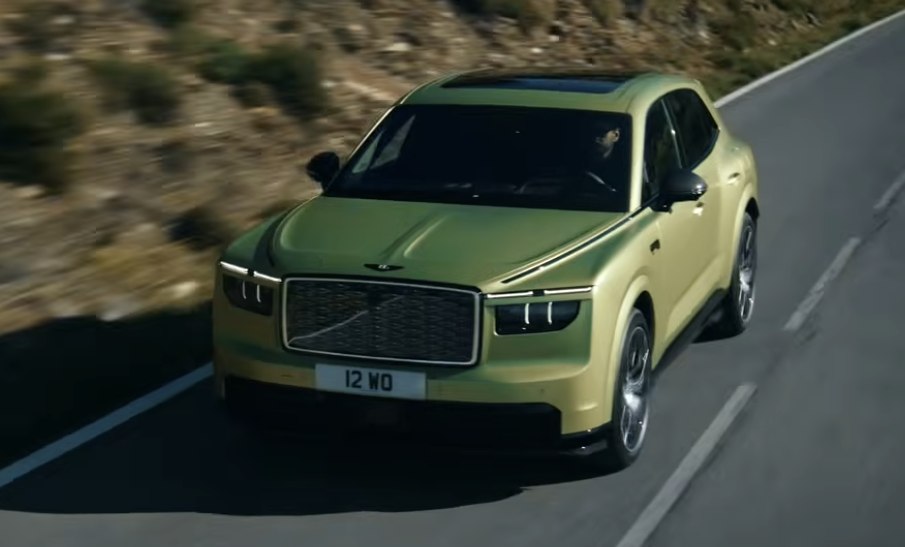
Bentley has unveiled the Torcal, its first fully electric model and the first entirely new Bentley in a decade, and early impressions from journalists who have seen and driven the car suggest the British luxury automaker has produced a genuinely compelling entry into the electric SUV market rather than a compromised transitional model.
The Torcal is built on the Premium Platform Electric architecture shared across the Volkswagen Group, the same underlying platform used by the Porsche Cayenne Electric. According to Bentley, the SUV is available in two trims: a standard Torcal producing up to 821 brake horsepower and 1,194 newton-meters of torque, and the more powerful Torcal S, which delivers up to 876 brake horsepower, or 888 metric horsepower, and 1,350 newton-meters, or 996 pound-feet, of torque, making it the most powerful production Bentley ever built. Bentley says the standard Torcal accelerates from zero to 60 miles per hour in 3.4 seconds, while the Torcal S completes the same sprint in as little as 2.8 to 2.9 seconds, figures the company describes, with characteristic understatement, as “sufficient.”
Power comes from a 113-kilowatt-hour battery pack, of which 108 kilowatt-hours are usable, feeding dual electric motors mounted on each axle for standard all-wheel drive. Bentley says the standard Torcal delivers 375 miles of range on the WLTP testing cycle, a figure expected to translate to somewhat lower results, likely north of 300 miles, under the stricter EPA testing standard used in the United States. The Torcal’s 800-volt electrical architecture supports DC fast charging at up to 400 kilowatts, allowing the battery to charge from 10% to 80% in approximately 16 minutes.
Reviewers who have seen the Torcal in person have generally praised its design as a successful modern interpretation of Bentley’s traditional styling language. Motor1’s assessment described the car as adapting Bentley’s classic, squared-off grille into a pattern of light-up crystal diamonds, clear-centered on the standard model and black-filled on the S trim, giving the front end an upright, aggressive character distinct from the more rounded, aerodynamically driven designs common among competing electric SUVs. The outlet called the Torcal “one of the best-looking EVs I’ve seen,” while noting the influence of the shared Cayenne platform remains visible in the vehicle’s wheelbase and roofline when viewed in profile.
Top Gear’s review offered a similarly favorable take on the design, while noting the illuminated grille, built using 76 hand-applied LED diamonds according to Bentley, makes the car strikingly visible on the road, particularly at night. The outlet described Bentley’s overall approach as designing the Torcal to “blend seamlessly into its existing lineup,” an EV built to avoid drawing attention to its electric drivetrain specifically, in contrast with more overtly futuristic electric SUV designs from rival luxury brands.
The interior has drawn particularly strong praise across multiple reviews. Edmunds described the Torcal’s cabin as “one of Bentley’s best ever,” highlighting new design touches including multilayer pressed wood trim, wool upholstery options, exposed aluminum, and real metal buttons with knurled texturing. The review also praised Bentley’s approach to digital interface design, noting that starting the vehicle triggers a video sequence in the gauge cluster designed to resemble light shining through crystal, an attempt to give the digital experience what the reviewer described as an analog feel consistent with Bentley’s traditional craftsmanship.
The Autopian’s review focused heavily on the Torcal’s dynamic capabilities, noting the vehicle’s substantial braking hardware, with standard iron discs measuring 16.5 inches in diameter at the front and 14.56 inches at the rear, expandable to 17.2 inches and 16.1 inches, respectively, with the optional carbon ceramic brake package. The outlet positioned the Torcal favorably against other ultra-luxury electric SUVs currently on the market, contrasting it with Mercedes-Benz’s electric G-Class, criticized for its limited 239 miles of range at a comparable price point, and the Cadillac Celestiq, whose broader market positioning the reviewer described as still unclear.
Bentley has also emphasized battery longevity as a specific design priority for the Torcal, given the brand’s positioning of its vehicles as long-term heirlooms rather than short-ownership-cycle products. According to Top Gear’s reporting, the Torcal’s nickel-manganese-cobalt-aluminum battery chemistry is designed to retain 90% of its original capacity after 100,000 miles of driving, a durability target Bentley has specifically highlighted given its cars’ traditional role as vehicles intended to be passed down across generations.
Pricing for the Torcal starts at approximately $200,000 in the United States, according to Edmunds, positioning it as a new, more accessible entry point into the Bentley lineup below the existing Bentayga SUV, despite carrying nothing resembling entry-level features or materials. In the United Kingdom, Autocar reported the Torcal starting at £173,000, positioning it as a direct electric rival to high-end Range Rover models. The vehicle arrives roughly a year later than Bentley had originally planned, reflecting a broader revision to the company’s electrification strategy, and represents a new, fourth model line for the brand rather than a direct electric replacement for any existing Bentley model.
With reviewers consistently praising the Torcal’s design, interior craftsmanship and performance credentials, Bentley’s first fully electric model appears, based on early impressions, to have avoided the pitfalls that have affected some other ultra-luxury electric SUV launches from rival automakers, positioning the Torcal as a genuine, credible entry into the growing high-end electric SUV segment rather than a compromised first attempt at electrification.


Are investors expecting too many hikes from the ECB?

Iran insists on diplomacy after Trump rejects Hormuz peace plan


Stone Fox Capital is an RIA from Oklahoma. Mark Holder is a CPA with degrees in Accounting and Finance. He is also Series 65 licensed and has 30 years of investing experience, including 15 years as a portfolio manager. Mark leads the investing group Out Fox The Street where he shares stock picks and deep research to help readers uncover potential multibaggers while managing portfolio risk via diversification. Features include various model portfolios, stock picks with identifiable catalysts, daily updates, real-time alerts, and access to community chat and direct chat with Mark for questions. Learn more.
Analyst’s Disclosure: I/we have no stock, option or similar derivative position in any of the companies mentioned, and no plans to initiate any such positions within the next 72 hours. I wrote this article myself, and it expresses my own opinions. I am not receiving compensation for it (other than from Seeking Alpha). I have no business relationship with any company whose stock is mentioned in this article.
The information contained herein is for informational purposes only. Nothing in this article should be taken as a solicitation to purchase or sell securities. Before buying or selling any stock, you should do your own research and reach your own conclusion or consult a financial advisor. Investing includes risks, including loss of principal.
Seeking Alpha’s Disclosure: Past performance is no guarantee of future results. No recommendation or advice is being given as to whether any investment is suitable for a particular investor. Any views or opinions expressed above may not reflect those of Seeking Alpha as a whole. Seeking Alpha is not a licensed securities dealer, broker or US investment adviser or investment bank. Our analysts are third party authors that include both professional investors and individual investors who may not be licensed or certified by any institute or regulatory body.


Seeking Alpha’s transcripts team is responsible for the development of all of our transcript-related projects. We currently publish thousands of quarterly earnings calls per quarter on our site and are continuing to grow and expand our coverage. The purpose of this profile is to allow us to share with our readers new transcript-related developments. Thanks, SA Transcripts Team

Paul Corcoran is the founder and CEO of Agent, a full-service marketing agency and certified B Corp with studios in Liverpool and Manchester.
Founded in 2006, Agent marks 20 years this year and has been named in The Sunday Times Best Places to Work 2026, its second consecutive year on the list. In July the agency co-hosted its second Good Growth Summit in Manchester, which brought together more than 200 senior leaders from business and government. He tells Business Matters why he leads with his heart and his head in equal measure, and why founders should never pull the ladder up behind them.
What do you currently do at Agent?
I am the CEO and founder at Agent, a full-service marketing agency that has studios in Liverpool and Manchester. It is my job to set the strategic direction of our growing agency and to position us so that we can achieve our aims of doing powerfully good work for our clients.
What was the inspiration behind your business?
I was extremely keen to create something that I did not believe was already in the marketplace when I started Agent, 20 years ago. I wanted to create an agency that had a two-pronged approach: it could do good business and work hand in glove with clients, but also have a very, very clear eye on leading with purpose.
Two decades on, I feel that we continue to achieve that twin ambition of driving and creating work.
How does Agent put that purpose into practice?
Agent became a certified B Corp in July 2025 with a B Impact score of 84.6, which is independent recognition of how we treat our people, our communities and the planet. We are proud to be part of a B Corp movement that has grown significantly in the UK over the past decade.
In 2025 we co-launched the Good Growth Summit, and this July we held the second one in Manchester with vocL and the North West Business Leadership Team. It brought together more than 200 senior leaders from the public and private sectors to explore how businesses can drive growth that benefits people, places and the planet.
Who do you admire?
I admire a range of people. Principally, I admire those who use their business and their networks and their privilege for good. That could be by creating job opportunities, or by inspiring the next generation of talent, as we do with our not-for-profit sister enterprise Agent Academy, which we set up in 2014 and which has now benefited more than 5,000 young people.
It could also be just by leading businesses in the way they need to be led, which is with a mind not just on the bottom line of the annual report but on the wider impact that businesses can have on people and places.
I look to leaders like Juergen Maier, who was formerly the chair of Great British Energy, and Emma Degg, who is CEO of the North West Business Leadership Team. But I also admire the people I choose to work with, day in, day out, in my senior leadership team and the wider team at Agent.
Looking back, is there anything you would have done differently?
Of course, because no founder will ever tell you, truthfully, that they got everything right first time. Unfortunately, we do not get the opportunity to change history, so it is about how you react when things do not go to plan.
My gut instinct is incredibly important to me. Relying on your gut feeling and using it as your own personal barometer for whether something feels right or feels wrong is something that I feel should never be underestimated.
What defines your way of doing business?
Using my heart and my head in equal measure. I am passionate about trying to do things the right way. It can be something of a balancing act and you will not always get it right.
But I think it is extremely important for leaders to be able to show their working out, and at the same time be able to put their hands up and say when things have not gone the way they might have envisaged.
I want to be trusted by my team and build relationships with all of them. Whether they are the most senior or most junior person, it is really important to me that everyone feels that they have got a place in the spaces that the business inhabits. Creating cultures in work that are highly ambitious but also warm and welcoming is what I see as the key to success.
What advice would you give to someone starting out?
The gang that you build and surround yourself with is really important. Make sure that you have got lots of different people and personalities around you who will give you advice and guidance and who can recognise opportunities as they come. But they also need to feel comfortable critiquing and challenging you too.
And you also definitely need to remember to give back as much as you receive, so you are making sure that others can learn and grow in the same way that you have. Do not just send the ladder back down there once. Make sure it stays there permanently.

Sudan has been at war since April 2023, when fighting broke out between the Sudanese Armed Forces (SAF), led by General Abdel Fattah al-Burhan and the Rapid Support Forces (RSF), led by General Mohamed Hamdan Dagalo. The fighting has destroyed infrastructure and caused what the United Nations has described as the world’s worst humanitarian crisis.
Despite the war, the two countries are pressing ahead with a maritime boundary file that has remained unresolved for more than half a century.
Critics argue that with Sudan deeply divided and without a constitutional government, a binding treaty affecting future generations and the country’s sovereign rights is being pursued without input or ratification from a Sudanese parliament. Sudanese political analyst Ammar Siddiq told The Standard that without elected legislative institutions, al-Burhan has no constitutional mandate to finalise agreements of this scale on his own.
A half-century wait and sudden
The dispute dates back to the 1960s, when valuable mineral deposits were found beneath the seabed between the Saudi and Sudanese coasts.
In May 1974, the two countries signed an agreement to regulate the exploitation of these resources. Under the agreement, Sudan holds exclusive sovereign rights over the seabed extending eastward from its coast to the point where the water is 1,000 metres deep, and Saudi Arabia holds the same rights off its own coast. The area between the two forms a common zone in which both countries have equal rights.
The 1974 deal managed economic exploitation rather than settling a final border. It established a Saudi-Sudanese Red Sea Joint Commission to oversee exploration, funded primarily by the Saudi government.
The two governments announced plans in 2019 to revive the agreement. A joint committee met on September 20, 2025, to discuss amendments to a final draft, The Standard reported. In October 2025, al-Burhan postponed the final agreement until Sudan settled its own maritime and land border with Egypt, according to the same report.
Critics ask why the arrangement was never formalised as a boundary. They also question whether Saudi Arabia, the wealthier and more technically capable partner, stands to gain disproportionately if the terms are settled under current conditions.
Economists at the Kiel Institute for the World Economy estimate the mineral reserves in the common zone at billions of dollars.
Al-Burhan at the Centre of the New Delimitation Drive
Al-Burhan, Sudan’s de facto ruler, appears increasingly willing to finalise the maritime border deal despite questions over his legitimacy and the war in his country. Saudi Arabia is among the army’s main foreign backers, the Irish Times reported. Analysts say al-Burhan is seeking Saudi financial and military support to sustain his war effort.
Foreign affairs journalist Graham Matthews argued in Modern Diplomacy in August that Saudi Arabia is emerging as the main regional underwriter of al-Burhan’s effort to turn battlefield gains into a political settlement on his own terms.
On September 14, 2026, al-Burhan chaired a meeting of a Sudanese committee working within the financial and investment framework of the Saudi-Sudanese Supreme Council for Strategic Cooperation and Coordination. The two countries’ foreign ministers signed the council’s founding agreement in Riyadh on August 17, according to the Sudan News Agency.
The meeting named the Sea Ports Corporation as the main federal agency coordinating civilian and military bodies. It gave the corporation’s executive secretariat direct access to historical maps and archival documents on the Red Sea and maritime borders.
The meeting also agreed to create a technical committee of the National Boundary Commission and the Sudanese Navy to review legal frameworks and draft a technical delimitation plan. It approved developing national maritime monitoring centres in coordination with Saudi Arabia’s ports of Jeddah and Yanbu.
Eight days later, on September 22, US State Department spokesperson Tommy Pigott said in a statement that neither the SAF nor the RSF, nor their leaders, represent legitimate, constitutional governance for Sudan. Sudan’s Foreign Ministry rejected the statement the following day, Middle East Monitor reported.
Sudan restarted legal preparations for delimiting its maritime baselines in February 2025, drawing on submissions it made to the United Nations in 2017. That year, Khartoum formally objected to the 2016 maritime boundary agreement between Egypt and Saudi Arabia over its link to the disputed Halayeb Triangle, and Egypt rejected Sudan’s claim in a December 2017 declaration to the UN.
Shift in Red Sea Dynamics and Sovereign Risks
The push comes amid intensified regional rivalry over maritime security, energy routes and port access across the Red Sea and the Bab al-Mandab Strait. Saudi Arabia is expanding its influence on both shores, while the authority in Port Sudan relies heavily on outside political and financial support.
Talks between the two governments have moved toward maritime management and economic jurisdiction, with the Supreme Council for Strategic Cooperation and Coordination playing a growing role in relations between Riyadh and al-Burhan’s administration.
The technical work has raised concern inside Sudan. With no elected legislature to review or ratify international treaties, questions remain over the legal validity of any final, binding border agreement signed during a civil war.

New College of Florida President and former state Education Commissioner Richard Corcoran tells Fox Digital why AI must serve as a research tool to sharpen critical thinking rather than replace it.
Artificial intelligence (AI) is transforming how colleges and universities educate students and prepare them for the workforce.
As higher education works to establish guidelines around AI, they must address a larger picture: How can students use AI without losing critical skills?
In an interview with Fox Digital Business, Richard Corcoran, president of New College of Florida and the state’s former education commissioner, said AI could either strengthen education or create shortcuts that weaken the learning process.
“I think it could be a great thing, and it could be a very dangerous thing,” Corcoran told Fox News Digital. “It’s how we manage it and what we do from here.”
Artificial intelligence is transforming colleges and universities. (Getty Images, File / Getty Images)
AI tools are already being used across the U.S. by students to brainstorm, summarize information and improve writing skills. Universities are responsible for adapting and creating guidelines for students’ success.
Corcoran said universities should focus on teaching students how to think critically and evaluate information rather than preparing them for a specific job or technical skill.
“You’ve got to go back and teach those critical thinking skills,” Corcoran said. “You’ve got to have all those soft skills. You have to have them be great thinkers.”
He also said that AI could be a great use for universities to operate more effectively. Colleges can use technology in student recruitment, marketing, human resources and administrative work.
MELANIA TRUMP URGES AI ‘VIGILANCE,’ SAYS AMERICANS NEED TO GET EDUCATED

Students use laptops during college class as universities navigate the growing use of AI in higher education. (Getty Images, File)
By using AI in these areas, universities are able to run smoothly and effectively.
“AI tools in achieving efficiency have been excellent,” Corcoran said.
At the same time, the growth of AI is also forcing universities to rethink what skills students need to learn before entering the workplace. As technology is doing more entry-level tasks, employers are starting to look for skills centered on communication and creativity.
Corcoran said New College has sought to combine technology and the liberal arts in its curriculum.
This approach is designed to help students apply AI in practical ways while still using their critical thinking skills.
OVERRELIANCE ON AI COULD REPLACE ‘SOCIAL INTELLIGENCE’ IN THE WORKPLACE, PROTOCOL EXPERT WARNS

People walk toward an office building as universities prepare students for a workforce increasingly shaped by AI (Michael Nagle/Bloomberg via Getty Images, File)
Corcoran also pointed to New College’s senior thesis requirement as an example of how students can use AI without allowing it to replace independent thought.
Students may use AI to assist with research or drafting, but they must defend their work before a panel of professors.
GET FOX BUSINESS ON THE GO BY CLICKING HERE
“AI can help you draft that document,” Corcoran said. “It cannot help you defend it standing before three professors.”
As AI continues to develop, universities will continue to adapt their policies.
The challenge, Corcoran said, will be ensuring that AI remains a tool that enhances education rather than a substitute for learning.
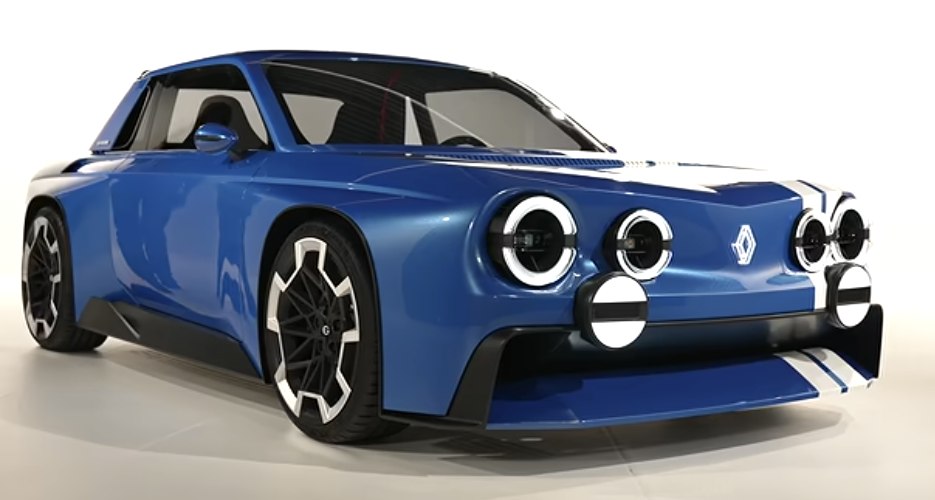
The car was shown Sept. 24 at the Renault Carwalk and is due on the brand’s stand at the Paris Motor Show from Oct. 12 to 18. After that it is earmarked for the Renault Collections museum in Flins, France, planned to open in about 15 months. Flins is where the original 8 was built.
Alexandre Malval, Renault’s vice president of design, said: “With Renault 8 Gordini Concept, we wanted to spark emotion by drawing on both our heritage and modern times, bringing together the icons of yesterday and the future. This exercise in style sets out to reinvent Renault 8 Gordini for the modern day. The aim of this coupé is to inspire emotion and capture the imagination of all car enthusiasts. And when I talk about emotion, I’m not talking about nostalgia, but real passion for cars.”
On the stance he added: “We updated the distinctive styling of the original Renault 8, which was virtually symmetrical from front to rear, to give it a more dynamic look. With the flowing cabin lines, wide track, prominent wings and wheels of 19 inches at the front and 20 inches at the rear, it appears to hug the road.”
Romain Gauvin, Renault’s concept design chief, told Autocar: “The original 8 was a very humble car, a sort of working class hero. We wanted to keep that honesty for this concept. It’s not a two-metre-wide, 1000bhp machine: it’s still approachable and makes you smile.”
Asked about a production run, Gauvin said: “Production is not something we considered for this car. It is really a one-off concept. But I’m a designer, so if the company decides to make a production run out of it, I would be very happy to make it.”
Thomas Altet, a color and materials designer, said: “The colour of the concept car was inspired by Bleu de France, the signature colour of the original Renault 8 Gordini.”
The concept measures 4.12 meters long, 1.88 meters wide and 1.27 meters tall — short, wide and very low. Renault lists a single rear electric motor at about 270 horsepower, or 266 bhp / 198 kW in some briefings, driving the rear wheels. Torque, battery size, range, weight and 0-60 times were not published. The body is described as carbon. The front end is treated as a single lift-off panel, a motorsport nod that also hides shut lines.
Round lamps recall the 1962–71 Renault 8. Extra spotlights echo period rally cars. White Gordini stripes run as a graphic that ties the windscreen grille to the tail lamps. Staggered 19- and 20-inch wheels and a deep diffuser complete the café-racer brief Renault used in its press language.
The original 8 Gordini of 1964 put a tuned, rear-mounted four-cylinder of about 95 horsepower in a four-door family shell. Rear drive and a light tail made it a cheap way to learn car control. Jean Ragnotti and other French rally names used similar cars as trainers. Amédée Gordini’s name later sat on hotter Clios before Alpine absorbed the performance role.
This concept is not that car. It is a two-door, two-seat show piece after an internal contest of more than 300 sketches. Two designs were modeled at 2:5 scale; the final car mixed both. It follows other heritage one-offs: an electric R17 restomod with Ora Ïto and the Renault 5 Diamant art car with Pierre Gonalons. Unlike those collaborations, the 8 Gordini was designed in-house and is the first studio show car under Malval.
Renault has put the 4 and 5 back into production as EVs. Autocar and others note that Alpine already covers small sports cars, which weakens the business case for a second compact two-seater with a revived tuner badge. Auto Express reported that, at unveiling, Renault had no plan for a road-legal version.
A review of the object, not a road test, stops at what can be seen. Proportions are the story: shorter than many hot hatches, wider than the old 8, low enough that the glasshouse looks perched. The power figure is in Alpine A110 territory, not hypercar theater. Without a published curb weight, that number is a brochure line.
What buyers cannot do is order one. What designers can do is lift lamps, stripes, blue paint and the idea of a small rear-drive coupe into later Clios or Alpines. That is the usual job of a Carwalk car.
Paris will judge the surface. The museum will keep the artifact. Until Renault opens an order book, the 8 Gordini of 2026 remains a 270-hp electric sculpture with rally lights and a designer’s smile — not a car you can drive home.
‘The Big Money Show’ panel discusses U.S. automakers urging Congress to ban Chinese EVs.
President Donald Trump on Saturday said that he has approved new fuel economy standards that end the Biden-era electric vehicle mandate.
“The Dumocrats cost our Great Auto Manufacturers $Billions, forced Americans into cars they never wanted, and wasted Billions on Chargers that were never built,” Trump wrote on Truth Social Saturday afternoon.
The president added that the new standards will “take the waste out of building cars in America. That means LOWER PRICES, saving families thousands on a new, beautiful, and safe car — Far better than the Environmental Monsters that we were building heretofore. Every Manufacturer, from General Motors to Ford to Stellantis, has called me wanting to build here, and now they can!”
He said his administration is investing $100 billion in American autos.
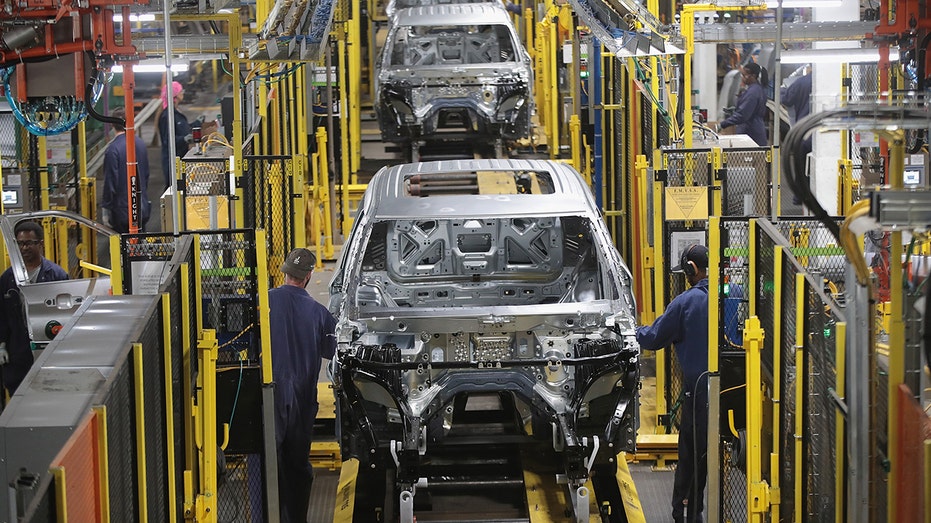
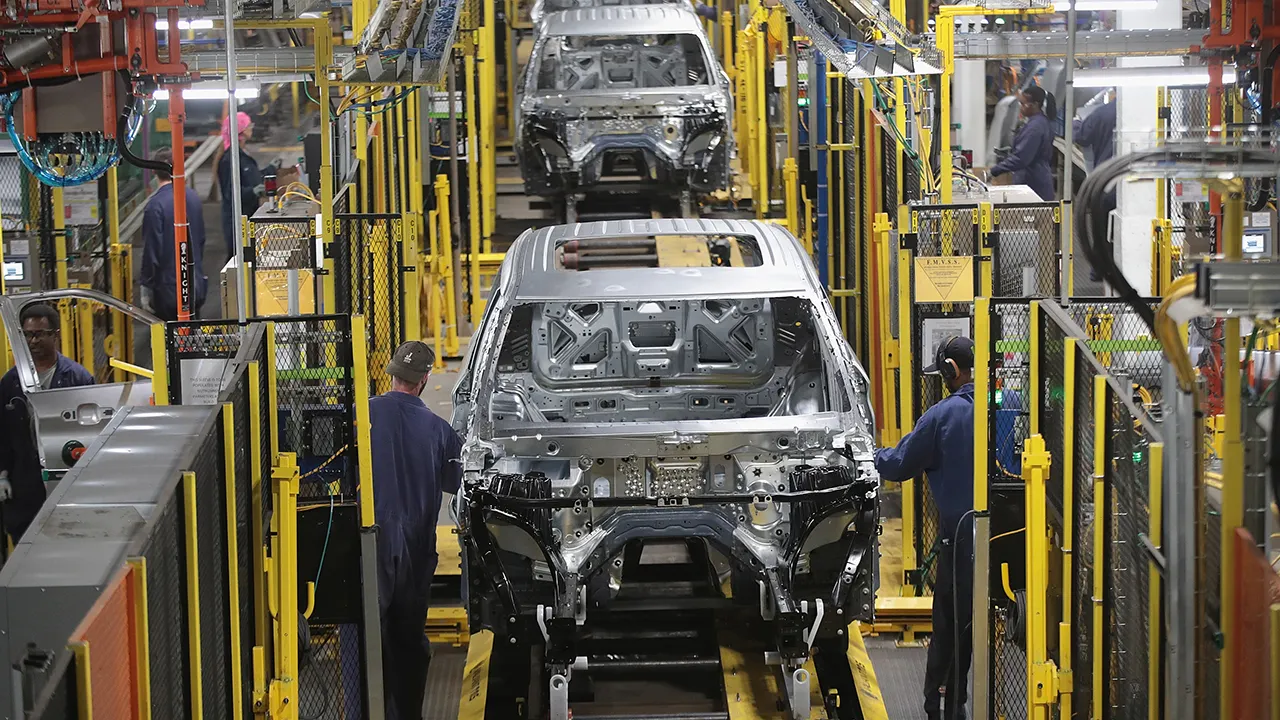
Workers assemble Ford vehicles at the Chicago Assembly Plant on June 24, 2019 in Chicago, Illinois. (Scott Olson/Getty Images / Getty Images)
“The Plants are coming back, and Jobs are returning, to Michigan, Ohio, Indiana, South Carolina, and all over our Country,” he said. “Thank you to our Great Secretaries of Transportation and Commerce, Sean Duffy and Howard Lutnick.”
Former President Joe Biden’s Environment Protection Agency issued stricter fuel emissions standards in 2024 that would require automakers to build more electric vehicles in the coming years.
TRUMP ADMIN AXES ‘GREEN NEW SCAM’ APPLIANCE RULES AS EUROPE BAKES IN BRUTAL HEAT
Trump also ended Biden’s electric vehicle tax credits last year in the One Big Beautiful Bill Act.
Ford CEO Jim Farley hailed Trump’s plan last year to lower fuel standards as a “victory for affordability and common sense.”
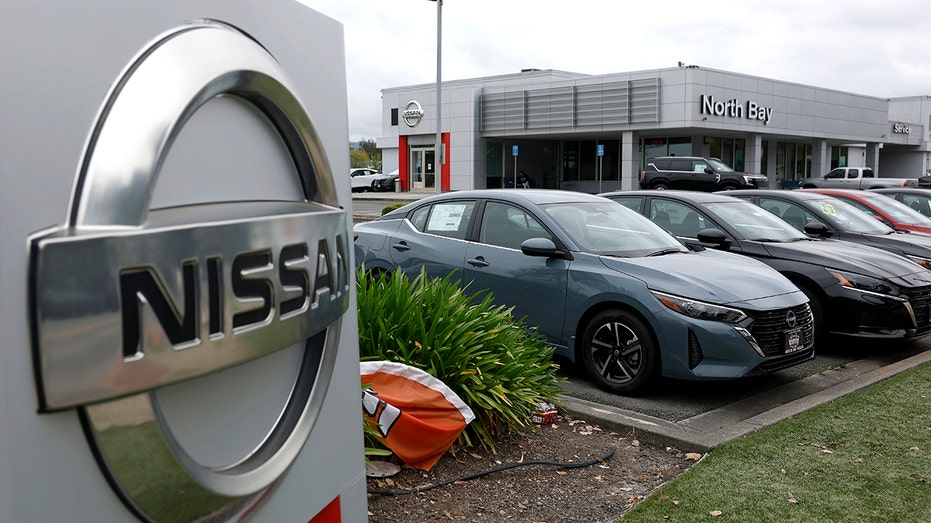
Brand new Nissan cars are displayed on the sales lot at North Bay Nissan in Petaluma, California last year. (Justin Sullivan/Getty Images)
“As the president said, we will be able to offer more affordability on our popular models, and we’ll be able to launch new vehicles built in America that are more affordable because of this rule change,” he told “Fox & Friends” in December.
Trump also signed a trio of congressional resolutions in June ending California’s restrictive rules for diesel engines and mandates on elective vehicle sales, with Trump celebrating that his signature “will kill the California mandates forever.”
CALIFORNIA’S INSANE PLAN TO REGULATE WHAT TIRES WE BUY IS FULL OF HOT AIR
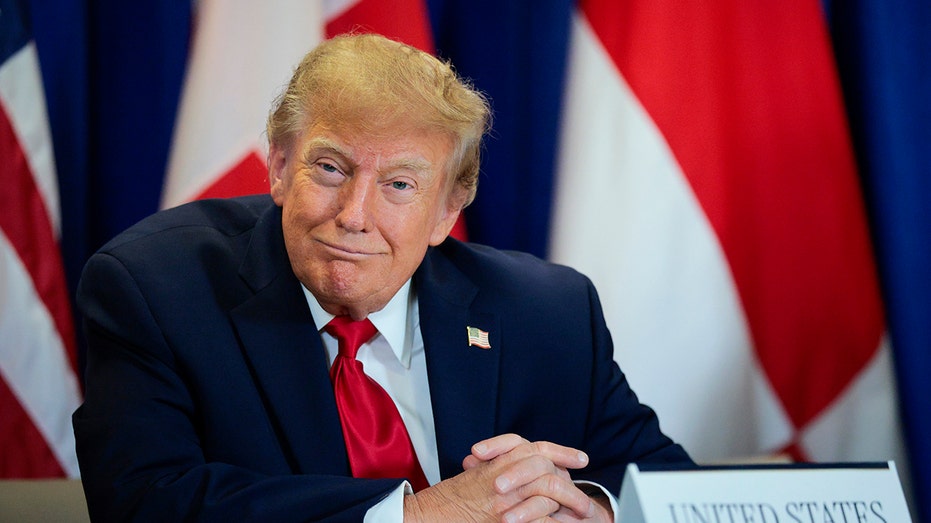
President Donald Trump on Saturday said that he has approved new fuel economy standards that end the Biden-era electric vehicle mandate. (Chip Somodevilla/Getty Images / Getty Images)
“Under the previous administration, the federal government gave left-wing radicals in California dictatorial powers to control the future of the entire car industry all over the country, all over the world, actually,” Trump said before signing the resolutions.
“They approved Governor Gavin ‘Newscum’s’ ridiculous plan to impose a 100% ban on all new gas-powered cars within a very short period of time,” he said. “Think of this, you can’t buy any other car except an electric powered car, and in California they have blackouts and brownouts. They don’t have enough electricity right now.”
CLICK HERE TO DOWNLOAD THE FOX NEWS APP
Fox News Digital’s Emma Colton and Kristen Altus contributed to this report.

Dentsply Sirona's Troubles Are Nothing To Smile About (Downgrade)

8 Horror Books That Are Perfect From Start to Finish

Games companies should try to appeal more to older people – Reader’s Feature
Are investors expecting too many hikes from the ECB?





-

 Crypto World4 days ago
Goldman Sachs and Deutsche Bank Agree: The S&P 500 Rally Isn't Over
-

 Tech6 days ago
Researchers escape OpenAI Codex sandbox to run commands on host
-

 Fashion3 days ago
8 iPhone Accessories That Add Personality
-
 Fashion1 day ago
Weekend Open Thread: J.McLaughlin – Corporette.com
-

 Crypto World6 days ago
Who Needs CLARITY Anyway? ARB Could See 70X Increase: Hodler’s Digest
-

 Entertainment4 days ago
These 17 Fall Amazon Dresses Seriously Look Like Anthropologie
-

 Business6 days ago
Analog Devices (ADI) Bets $1.35 Billion on Chips that Let Machines Think for Themselves
-

 Crypto World6 days ago
Coinbase, Robinhood, Circle Seen as Tokenized-Stock Winners
-

 Crypto World4 days ago
This Bearish Netflix Stock Trade Can Cash In On Video Streaming Giant’s Woes
-

 Crypto World4 days ago
Trump-Xi Polymarket Odds for Handshake Hit 50%
-

 Tech5 days ago
Google’s $899 Googlebook is a bet that you’ll buy a new laptop for Gemini
-

 Crypto World3 days ago
Crude Oil Prices Pressured by Diplomatic Hopes in the Middle East
-

 Crypto World3 days ago
Bitcoin price tests $83,600 Supertrend support after $87K rejection
-
 Business4 days ago
Oil Price Today (September 23): Crude oil below $100 on hopes of US-Iran talks. What did Trump say?
-

 Crypto World3 days ago
Bitcoin Threatens Sub-$84,000 Breakdown as Long Liquidations Spike
-

 Crypto World5 days ago
Meta Jumps 11% As Muse Shines and Investors Show an Appetite for Advancing AI
-

 Crypto World4 days ago
Did Jim Cramer Just Give GameStop Stock the Kiss of Death When He Said the Turnaround Is Working?
-

 Crypto World6 days ago
Bitcoin price holds above $81K as key catalysts line up
-

 Crypto World6 days ago
ARB Price Signals Spur Speculation of 70x Upside in Hodler Digest
-
 Crypto World5 days ago
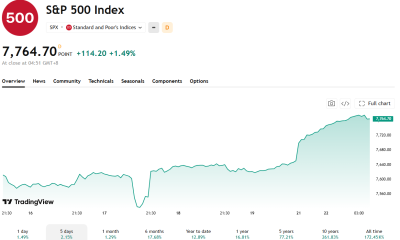
Trump, Xi Meet on S&P 500's Best Day Since Early August: Will Markets Stay Bullish?
You must be logged in to post a comment Login