
Business
Wall Street Brunch: AI Safety Crunch Time (undefined:ANTHRO)


Greggory DiSalvo/iStock via Getty Images

Listen below or on the go on Apple Podcasts and Spotify

Trump and tech leaders could meet as AI safety fears mount. (0:17) OpenAI pauses model training ahead of awkwardly timed DevDay. (1:01) Friday’s jobs report could send Treasury yields even higher. (2:21)
The following is an abridged transcript:
Along with major economic data and earnings ramping up, Wall Street will be watching AI developments this week.
As early as Tuesday, President Donald Trump, House Speaker Mike Johnson and technology executives are expected to meet to discuss artificial intelligence. That’s according to multiple reports citing sources, but the White House has yet to confirm the meeting for the record.
The meeting comes amid more reports of misaligned agents getting access to places they weren’t supposed to. And AI safety fears crossed a pop culture Rubicon over the weekend after “Saturday Night Live” lampooned Anthropic (ANTHRO) CEO Dario Amodei on Weekend Update.
On “Meet the Press,” Bill Gates said AI needs “law enforcement and the politicians to get into the discussion about what safeguards and monitoring look like.”
“And that has to be a required thing,” he said. “No one thinks self-regulation is enough.”
OpenAI (OPENAI) said Saturday it is pausing training of its latest AI models, just hours after disclosing that it was reviewing several incidents from the summer in which OpenAI agents searching federal government websites acted in unexpected ways beyond what was asked of them while gathering and distributing information.
Which brings us to the now-odd timing of OpenAI’s DevDay, which is Tuesday. CEO Sam Altman is delivering the keynote.
OpenAI is reportedly preparing to unveil GPT-6 Cyber, its latest cybersecurity model. But will Altman be asked what GPT-6 Cyber does to shield systems from its own agents?
On the earnings front, the AI trade also looms large.
Micron (MU) reports earnings postmarket Wednesday, with analysts looking for a whopping $31.59 in EPS on revenue of about $51B.
SA analyst Agar Capital notes that with a P/E falling below 7x, earnings estimates are rising faster than the share price, which could nearly double to $2,000.
But SA analyst Sagar Agarwal says it’s time to exit the stock, with 81.2% operating margins, $45B in FY2027 CapEx and potentially declining memory prices leaving limited upside.
Looking to the rest of the earnings calendar:
Vail Resorts (MTN) reports Monday.
Carnival (CCL) and CarMax (KMX) are due Tuesday.
Joining Micron (MU) on Wednesday are Conagra (CAG), Jabil (JBL) and Cal-Maine (CALM).
Nike (NKE) and McCormick (MKC) report numbers Thursday.
On the economic front it’s all about Friday’s jobs report.
The forecast is for a 100K rise in September nonfarm payrolls, with the unemployment rate staying steady at 4.1%.
Wells Fargo economists say recent labor market data continue to point to a labor market that is resilient enough to support decent job growth.
SA analyst Damir Tokic says a strong report could push 10-year Treasury yields (US10Y) higher, and if wage growth accelerates, 2-year yields (US2Y) could spike and invert the curve.
That inversion “could signal a peak of the business cycle and a recession in 2027, which means a recessionary bear market” for stocks.
And for income investors, Keurig Dr Pepper (KDP) goes ex-dividend on Monday, paying out on Oct. 9.
Mondelez (MDLZ) and Nucor (NUE) go ex-dividend on Wednesday. Mondelez pays out on Oct. 14 and Nucor pays out on Nov. 10.
Philip Morris (PM) goes ex-dividend on Friday, with an Oct. 26 payout date.



Austin Rogers is a REIT specialist with a professional background in commercial real estate. He writes about high-quality dividend growth stocks with the goal of generating the safest growing passive income stream possible. Since his ideal holding period is “lifelong,” his focus is on portfolio income growth rather than total returns. Austin is a contributing author for the investing group High Yield Landlord, one of the largest real estate investment communities on Seeking Alpha, with thousands of members. It offers exclusive research on the global REIT sector, multiple real money portfolios, an active chat room, and direct access to the analysts. Learn more.
Analyst’s Disclosure: I/we have no stock, option or similar derivative position in any of the companies mentioned, but may initiate a beneficial Long position through a purchase of the stock, or the purchase of call options or similar derivatives in PFFV over the next 72 hours. I wrote this article myself, and it expresses my own opinions. I am not receiving compensation for it (other than from Seeking Alpha). I have no business relationship with any company whose stock is mentioned in this article.
Seeking Alpha’s Disclosure: Past performance is no guarantee of future results. No recommendation or advice is being given as to whether any investment is suitable for a particular investor. Any views or opinions expressed above may not reflect those of Seeking Alpha as a whole. Seeking Alpha is not a licensed securities dealer, broker or US investment adviser or investment bank. Our analysts are third party authors that include both professional investors and individual investors who may not be licensed or certified by any institute or regulatory body.
Business
HYBE Plunges 48.9%, JYP Falls 41.4% as K-pop Stocks Suffer From Heavy Single-Artist Dependence, SM Fares Best

SEOUL — South Korea’s major entertainment companies are enjoying some of the most visible global success in K-pop history, with BTS touring world stages again, Stray Kids filling arenas internationally, and aespa and BABYMONSTER rapidly expanding their overseas fan bases. But in the stock market, the opposite has been true, with shares of the country’s four largest entertainment agencies all declining over the past six months, according to a report published by Chosun Ilbo.
HYBE, the agency behind BTS, has fallen 48.9% over the past six months, the steepest decline among the four major companies. JYP Entertainment, home to Stray Kids, has dropped 41.4% over the same period. YG Entertainment, which manages BLACKPINK, declined 23.3%, while SM Entertainment posted the smallest decline of the group at 9.2%.
Analysts point to a shared underlying problem at both HYBE and JYP: heavy dependence on a single, dominant artist or group. For HYBE, that concentration centers on BTS; for JYP, on Stray Kids. HYBE faces an additional profitability challenge, generating substantial revenue that has not translated into comparable net profit.
According to a report from SK Securities, HYBE’s gross margin fell from 43% in the first quarter of this year to 32% in the second quarter, a period that fully reflected BTS’s world tour. While concert revenue rose sharply during that stretch, artist settlement payments and production costs for the tour rose alongside it, compressing margins. HYBE reported revenue of 2.6499 trillion won last year, but still posted a net loss of 239.8 billion won for the year. Established, long-tenured artists like BTS, now on renewed contracts, typically receive a higher share of revenue through settlement agreements than they did earlier in their careers, meaning the company’s profitability and share price increasingly depend on how well its newer artists perform.
SK Securities analyst Park Jun-hyung lowered his price target on HYBE to 290,000 won, citing the company’s concentrated reliance on a single intellectual property. “High dependency on single IP (BTS) means securing new IP to diversify is essential,” Park said.
Looking at forward price-to-earnings ratios based on projected 2026 earnings and closing prices from September 23, JYP trades at approximately 11.7 times projected earnings, while YG and SM each trade around 15.6 times. HYBE, by contrast, trades at 35.2 times projected earnings, roughly three times JYP’s multiple. A lower forward price-to-earnings ratio is generally associated with a stock being undervalued, though analysts caution that a low ratio can also reflect genuine underlying performance concerns rather than a straightforward buying opportunity.
Sangsangin Securities projects JYP’s revenue this year at 806.6 billion won, with operating profit of 141.3 billion won, representing declines of 1.9% and 9%, respectively, from the prior year. The firm’s analysis indicates JYP’s current performance is effectively being carried by Stray Kids alone, with no clear successor yet established. TWICE faces growing uncertainty around full-group activity, while NMIXX has only just begun its first world tour. Sangsangin Securities analyst Lee Na-ra, in a report titled “Stray Kids Becomes the Breadwinner of JYP,” wrote that “rookie groups like NEXZ and Kick Flip are not yet generating revenue large enough to fill Stray Kids’ gap,” adding that “expanding the scale of lower-tenure IP is urgent.”
SM Entertainment’s relatively smaller decline reflects a more diversified roster, with aespa operating alongside RIIZE, NCT WISH, Hearts2Hearts and other active groups simultaneously, reducing the company’s exposure to any single act’s performance. SM’s concert revenue is projected at 201.0 billion won this year and its merchandise and licensing revenue at 266.4 billion won, both expected to grow next year to 221.7 billion won and 289.3 billion won, respectively. Based on this year’s projected earnings per share of 5,297 won, SM’s forward price-to-earnings ratio stands at approximately 15.6 times at current prices, falling to 12.7 times based on next year’s projected earnings per share of 6,481 won.
An SK Securities analyst covering SM said the company’s push into Western markets through aespa’s recent activity is gradually resolving what had previously been a valuation discount tied to limited Western exposure, adding that a strategic shift toward reducing the proportion of Asian tour dates in favor of expanded arena-level shows across Latin America, North America and Europe, where ticket prices are set higher than in Asia, is expected to contribute to improved profit margins going forward.
YG Entertainment continues to rely heavily on BLACKPINK as its dominant global act, with company performance historically fluctuating significantly based on the group’s activity level. Growth from girl group BABYMONSTER has begun narrowing that dependence in recent periods. YG’s current forward price-to-earnings ratio stands at approximately 15.6 times this year’s projected earnings and 13.4 times next year’s. Daol Investment & Securities analyst Lim Do-young said BABYMONSTER’s continued growth in touring and merchandise sales, combined with the group’s planned Western tour and additional scheduled activity from BIGBANG, leaves room for further upward revisions to next year’s performance projections.
With all four major Korean entertainment stocks declining over the past six months despite what analysts describe as strong underlying artist activity and global fan growth, the sector’s near-term stock performance appears increasingly tied to how successfully each company can diversify beyond its current flagship acts, particularly for HYBE and JYP, whose concentrated dependence on BTS and Stray Kids, respectively, has left their share prices considerably more exposed than SM’s more evenly distributed roster of active groups.

This shift helps explain why pension ULIP sales reportedly rose nearly tenfold in FY26.
A unit linked pension plan brings together disciplined investing, life cover and a retirement-focused structure. However, strong sales alone should not decide whether you buy one. You need to understand where your money goes, how the plan pays out at retirement and whether it fits your wider financial plan.
What Is a Pension ULIP?
A pension ULIP is a retirement-oriented version of a unit linked insurance plan. A portion of the premium you pay is used towards life insurance cover and applicable charges. The remaining amount is invested in market-linked funds, such as equity, debt or balanced funds.
Unlike a regular investment that you may redeem whenever you choose, a unit linked pension plan is designed to create a corpus by your chosen vesting age, usually close to retirement. At vesting, you may be permitted to withdraw a part of the accumulated value as a lump sum, while the balance may need to be used to purchase an annuity, subject to prevailing tax and policy rules.
This gives your investment a clear destination. You are not only saving for “someday”; you are building a pool of money intended to support your post-work years.
Why Did Pension ULIP Sales Rise Sharply in FY26?
The nearly 10x rise in pension ULIP sales reflects a change in how people view retirement, especially among professionals in their 30s and 40s. Several factors may have contributed.
First, many households have realised that traditional retirement income sources may not be enough. EPF, gratuity and savings can form a base, but they may not fully cover decades of expenses after retirement. Medical bills, housing costs and lifestyle expenses can rise faster than expected.
Second, market-linked retirement products have become more familiar. Investors who have seen the long-term potential of equities may prefer growth-oriented options over keeping their entire retirement corpus in low-return instruments. A unit linked insurance plan can offer exposure to equity while allowing you to shift towards debt funds as retirement approaches.
Third, pension ULIPs provide structure. It is easy to postpone investing when retirement is 20 or 25 years away. A regular premium commitment can turn retirement saving into a monthly or annual habit rather than an occasional decision.
Finally, flexible fund-switching features can appeal to investors who want to gradually reduce risk. You may start with greater equity exposure when you are young and move towards balanced or debt-oriented funds as your vesting date gets closer.
How Does a Unit Linked Pension Plan Work?
When you buy a unit linked pension plan, you select the premium, policy term, vesting age and preferred fund options. Your premium is allocated after the deduction of applicable charges, and units are purchased at the fund’s prevailing Net Asset Value.
The value of your retirement corpus rises or falls based on fund performance. Equity funds may offer stronger long-term growth potential but can be volatile. Debt funds may be relatively stable, though they may generate lower returns over time. Balanced funds aim to combine both approaches.
A ULIP calculator can help you estimate how your premiums may grow under different assumed rates of return. It is useful for comparing scenarios, such as investing ₹10,000 a month for 20 years versus ₹15,000 a month for 25 years. However, the illustration is not a promise of returns. Actual fund values depend on market performance and charges.
What Should You Check Before Buying?
Do not choose a pension ULIP merely because retirement products are currently popular. Start by estimating how much income you may need after retirement. Consider inflation, medical costs, your existing investments, expected pension income and whether you have dependants.
Then use a ULIP calculator to see whether your planned premium can reasonably support your target corpus. If the projected amount looks insufficient, increasing the premium early may be easier than trying to catch up in your late 40s or 50s.
You should also compare the plan’s fund choices, switching rules, premium payment term, vesting options and all applicable charges. Review the policy document carefully to understand the death benefit, discontinuance rules and the treatment of your corpus at vesting.
A unit linked insurance plan has a mandatory five-year lock-in period. More importantly, a retirement product should generally be held for much longer. This makes it unsuitable for money you may need for emergencies, a home down payment or near-term goals.
Who May Find It Suitable?
A unit linked pension plan may suit you if you want a disciplined, long-term retirement vehicle and are comfortable with market-linked returns. It can be particularly relevant if you are in your 30s or early 40s, have a long investment horizon and want the option to adjust your fund allocation over time.
It may be less suitable if you need high liquidity, prefer guaranteed returns or already have sufficient retirement investments and only need pure life cover. In that case, separating insurance and investments may be worth considering.
Before committing, use a ULIP calculator alongside your other retirement estimates. This helps you see the product as one part of your portfolio rather than your entire retirement strategy.
Should You Buy a Pension ULIP?
The sales surge in FY26 shows that retirement planning is finally receiving greater attention. That is encouraging, but a product should be chosen for your needs, not for its popularity.
A unit linked pension plan can help you build a retirement corpus through disciplined, market-linked investing while offering life cover. Its real value lies in starting early, staying invested and reducing risk thoughtfully as retirement approaches. If its structure, charges and vesting rules align with your goals, it can be a useful addition to your retirement plan.

Kaltura officer Eynav Azaria sells $5,771 in common stock

Rainfall and flooding may disrupt Bangkok travel. Airports and rail services are operational. Travelers should check updates, allow extra time, and consider alternative routes for their journeys.
Travel Advisory: Weather Impacts in Bangkok
✈️ Airport Conditions
Suvarnabhumi Airport (BKK)
- Airport remains open and operational .
- Road access may be affected by flooding and congestion .
- Avoid Lat Krabang due to heavy waterlogging; use Motorway No. 7 or Burapha Withi Expressway instead .
- Recommended arrival times: 3 hours for international, 2 hours for domestic flights .
- Airport Rail Link is operating; passengers should check latest service updates .
The Tourism Authority of Thailand (TAT) cautions travelers about potential disruptions in Bangkok due to rainfall and localized flooding. These weather conditions could affect road travel in the city and its surrounding areas, making it important for visitors to plan accordingly. While both Suvarnabhumi and Don Mueang airports are reported to remain fully operational, road transport may require extra consideration. Rail services also continue to operate, providing additional travel options for those navigating the city.
🚆 Rail & Public Transport
- Red Line services have resumed normal operations, including the route serving Don Mueang Airport .
- BTS Skytrain and MRT continue to operate and offer alternatives to road travel in affected areas .
Preparation Tips for Smooth Travel
To ensure a smoother travel experience, visitors are encouraged to allocate extra time for their journeys. This involves checking the latest updates on flights, weather forecasts, and traffic conditions. Staying informed of the current situation allows travelers to plan effectively and avoid any potential disruptions. Where possible, considering alternative travel routes can be beneficial, especially if road conditions become challenging.
Stay Informed with TAT Newsroom
For further information, travelers can refer to the TAT newsroom’s detailed post on weather and travel conditions in Bangkok and its surrounding areas. The post provides essential visitor information and can be accessed through the TAT Newsroom website. Keeping up to date with reliable sources ensures that travelers are well-prepared for any weather-related challenges during their visit.
🆘 Assistance & Key Contacts
The page provides a list of emergency and travel‑related hotlines, including:
- TAT Contact Centre: 1672
- Tourist Police: 1155
- Bangkok Metropolitan Administration: 1555
- DDPM Hotline: 1784
- Emergency Medical Services: 1669
- Thai Meteorological Department: 1182
- Airports of Thailand: 1722
- SRT / Red Line Call Centre: 1690
Source : Weather and travel conditions in Bangkok and surrounding areas – Visitor information

Yet, companies managing global cash flows through standard single-currency banking infrastructure routinely encounter severe friction: unexpected intermediary deductions, days-long settlement delays, and aggressive foreign exchange markups.
Choosing the best multi currency account has evolved from a basic back-office selection into a strategic treasury decision that directly safeguards gross margins and cash velocity.
Understanding How Modern Multi Currency Accounts Process International Cash Flow
To evaluate financial providers effectively, finance leaders must understand what is multi currency account architecture. Historically, transacting across multiple markets demanded incorporating foreign subsidiaries or opening isolated accounts with local banks in every territory. A modern multi currency account eliminates this geographic fragmentation by centralizing cross-border receivables, custody, and payouts within a unified digital environment.
Modern providers deploy virtual IBAN technology paired with multi-currency balance ledgers. Instead of routing every transaction through costly cross-border rails, the infrastructure provisions distinct account identifiers connected directly to domestic clearing networks. These include SEPA Instant for real-time euro clearing across the European Economic Area, Faster Payments for instantaneous sterling transactions in the United Kingdom, and corresponding local clearing systems worldwide.
When liquidity moves between non-interconnected global corridors, transfers route through the international SWIFT network utilizing ISO 20022 messaging. This multi-rail design ensures incoming transfers settle with the speed and fee structure of local transactions rather than international wires.
The Hidden Cost Anatomy of Legacy Corporate Banking Rails
When organizations operate a conventional multi currency business bank account with legacy institutions, headline transaction fees represent only a fraction of the real operational cost. The most substantial expense is the FX spread markup quietly added to currency exchanges. Traditional commercial banks typically mark up exchange rates by 2.0% to 4.5% over the live interbank foreign exchange market, extracting significant value from overseas receivables.
Beyond conversion margins, correspondent banking introduces intermediary deductions. International wires hopping across correspondent banks regularly incur deductions between $15 and $50 per transfer, causing short-settled invoices and reconciliation friction. Furthermore, traditional banking portals often trigger forced conversion traps: receiving funds in an unsupported denomination causes the bank to automatically convert the balance to the base currency at inflated retail rates, only to re-convert it when settling subsequent overseas supplier invoices.
To bypass these systemic losses, agile digital businesses rely on next-generation cross-border platforms. Solutions such as ABFPay illustrate this modern standard by combining an agile borderless vWallet with multi-currency collection rails. Operating across 10+ holding currencies – including EUR, USD, AED, CHF, CNY, and PLN – ABF Pay enables international operators to exchange capital at genuine mid-market exchange rates with zero hidden conversion fees, while accepting client receivables in 37+ currencies across 200+ countries.
Comparative Architecture Across Corporate Banking Options
Choosing an appropriate financial partner requires balancing institutional security, technical agility, and risk appetite. A traditional corporate multi currency account at a Tier-1 institution offers balance-sheet security, but burdens operations with cumbersome compliance, physical branch mandates, and outdated API capabilities.
The comparative matrix below evaluates the structural differences across primary cross-border banking models:
| Operational Dimension | Traditional Tier-1 Bank | Legacy Cross-Border EMI | Modern Borderless vWallet Platform |
| Onboarding Timeline | 4–12 weeks; in-person visits typical | 1–3 weeks; repetitive verification | 1–3 business days via remote digital KYC |
| Payment Rail Coverage | SWIFT; batch SEPA / ACH | SWIFT and select local clearing | SEPA Instant, Faster Payments, and SWIFT |
| FX Conversion Pricing | Retail spread markup (2.0%–4.5%) | Spread markup (0.5%–1.5%) | Live mid-market exchange rates |
| Holding Flexibility | Separate sub-accounts per currency | 8–15 currencies | 10+ currencies in a unified balance ledger |
| High-Growth Sector Support | Systematic de-risking; frequent denials | Moderate vertical flexibility | Structured support for SaaS, eCommerce, and tech |
| Treasury Automation | Legacy host-to-host or manual | Basic manual file uploads | Native batch payments via CSV and scheduled runs |
| Access Governance | Rigid corporate banking portals | Basic multi-user logins | Delegated team access with role-based permissions |
Core Functional Criteria for Selecting a Multi Currency Account for Business
Selecting an effective multi currency account for business requires evaluating operational workflows rather than superficial marketing claims. Enterprise treasury teams and growing businesses should benchmark potential providers against seven core capabilities:
1. Multi-Currency Balance Management and Local Collections
An enterprise multicurrency business account must support sustained balance holding across major international trading currencies without automated sweep conversions. Maintaining foreign currency balances allows companies to naturally hedge against exchange volatility by funding local supplier expenses directly from regional revenues.
2. Multi-Currency Checkout and Merchant Settlement
For digital brands selling internationally, deploying a multi currency merchant account framework is paramount. When international customers pay in their native currency through an integrated checkout, purchase conversion rates rise. Collecting those funds directly into matching currency ledgers eliminates double-conversion losses and streamlines revenue aggregation.
3. Payout Speed and Settlement Rails
Working capital performance depends on disbursement velocity. Leading providers connect directly to an instant payout payment gateway alongside local clearing infrastructure. Outgoing transaction capabilities across dozens of currencies over SEPA Instant and Faster Payments allow businesses to settle with partners in seconds rather than business days.
4. Mass Payroll and Treasury Automation
Manually processing individual contractor invoices or supplier bills is inefficient and error-prone. Modern operations require native batch payments driven by structured CSV or Excel uploads. This allows finance teams to execute hundreds of cross-border transfers simultaneously with centralized authorization and audit logging.
5. Jurisdictional Flexibility and Non-Resident Accessibility
International digital agencies and cross-border SaaS operators frequently seek the best multi currency account uk or European equivalent to access top-tier banking hubs without navigating domestic company incorporation or resident director prerequisites. A viable provider must maintain robust licensing frameworks that support cross-border corporate profiles.
6. Team Governance and Delegated Permissions
As organizations expand, treasury platforms require robust internal controls. A production-ready multi currency business account must incorporate delegated team access backed by customizable role-based permissions. This ensures administrative staff can prepare payouts, accountants can inspect transaction logs, and executive signatories retain exclusive authorization rights.
7. Accounting Reconciliation and Multi-Device Control
Cross-border payments must integrate seamlessly with general ledger accounting. Platforms should provide native data sync or structured exports for platforms like Xero, QuickBooks, and FreeAgent. Simultaneously, executive teams require continuous visibility through web interfaces alongside native mobile applications for iOS and Android to monitor cash positions remotely.
Mitigating Institutional De-risking and Protecting Operational Continuity
A major operational vulnerability facing digital enterprises today is sudden account freezing or unilateral termination. Legacy commercial institutions have steadily implemented aggressive de-risking initiatives, offboarding online companies, cross-border agencies, and IT consultancies simply because their multi-jurisdictional volumes do not fit rigid domestic compliance algorithms.
When an unexpected closure strikes, business owners often ask: can i reopen a closed business bank account? In institutional practice, reversing an official corporate account termination with a traditional bank is virtually impossible. Commercial banks rarely disclose internal risk evaluations and adhere to closed-door compliance policies. Once offboarding initiates, corporate funds are routinely restricted for months, paralyzing operational payroll.
To protect corporate longevity against sudden institutional disruptions, organizations must implement two fundamental safeguards:
- Treasury Redundancy: Never concentrate enterprise operations within a single banking institution. Maintaining an active operational relationship with both an established bank and a specialized borderless fintech platform ensures invoicing and payroll remain uninterrupted if one provider initiates an administrative audit.
- Segregated Client Safeguarding: Modern authorized electronic money institutions and payment service providers operate under a mandatory safeguarding framework. Rather than commingling enterprise deposits with balance sheet loans as conventional banks do, payment platforms place client balances into segregated, ring-fenced accounts held at regulated Tier-1 credit institutions. In any insolvency scenario, safeguarded funds remain protected from platform liabilities and directly claimable by the account holder.
Executing Streamlined Remote Compliance Onboarding
Securing international banking historically required overseas branch visits, apostilled paperwork, and lengthy delays. Modern fintech platforms have transitioned this procedure to digital remote compliance onboarding.
Today, finance teams can complete multi-currency account establishment through an efficient digital workflow:
- Digital Registration: Submit enterprise details and corporate ownership structures through a secure web portal within 10 to 15 minutes.
- Corporate Documentation Upload: Provide digital copies of incorporation records, shareholder registers, and verified proof of operational address.
- Remote Director Verification: Executive officers complete automated identity verification and liveness checks via smartphone or webcam, eliminating in-person appointments.
- Compliance Assessment: Specialized risk analysts verify the application against international regulatory standards, with corporate onboarding typically finalizing within 1 to 3 business days.
Strategic Decision Framework for Finding the Best Multi Currency Account
Determining the ideal platform requires aligning organizational transaction dynamics with provider capabilities:
- For International IT Consultancies and SaaS Firms: Focus on multi-currency collection capabilities across major billing currencies (USD, EUR, GBP), rapid contractor disbursements via automated batch uploads, and multi-user administrative role delegation.
- For Global eCommerce Merchants and Marketplaces: Prioritize real-time payment gateway integration, transparent foreign exchange pricing without hidden spread loading, and low-cost regional clearing connections via SEPA Instant and Faster Payments.
- For High-Growth Verticals and Rapidly Scaling Ventures: Choose agile fintech partners that demonstrate transparent compliance protocols, comprehensive client fund safeguarding, and a willingness to support high-growth business models without arbitrary de-risking.
Migrating corporate liquidity into a modern multi-currency architecture eliminates unnecessary foreign exchange drag, accelerates payment cycles, and establishes a resilient operational foundation for global commercial expansion.

The difficulty is usually not having the meeting. It is making sure the information survives it.
An AI meeting recorder can capture conversations from platforms such as Zoom, Microsoft Teams and Google Meet, then turn them into transcripts, summaries and action items. For smaller and growing businesses, the practical value is straightforward: less information has to be reconstructed manually after every call.
The technology is most useful when it improves an existing workflow rather than simply creating another archive of recordings.
The Real Meeting Problem Is What Happens Afterwards
A productive meeting can still create poor follow-up.
Consider a typical project call.
During 45 minutes, the team may agree on a launch date, change a deliverable, assign two actions, raise a customer concern and leave one question unresolved.
By the next morning, that information may exist in several places:
- someone’s handwritten notes;
- a Slack message;
- an email summary;
- a project-management task;
- another person’s memory.
The problem becomes more visible as a business grows.
Five people can often keep shared context informally. Fifty people cannot rely on the same assumption.
Meeting documentation becomes part of operational infrastructure.
What Does an AI Meeting Recorder Actually Automate?
The phrase can sound broader than the technology really is.
A meeting recorder does not run the meeting or make the business decision.
Its useful role is automating several administrative steps around the conversation.
A typical workflow is:
Meeting → Recording → Transcript → Summary → Action Items → Follow-Up
Depending on the platform, the software may also identify speakers, add timestamps and make the transcript searchable.
That removes some of the need for one person to spend the meeting typing everything that sounds important.
It also creates a source record that can be reviewed if the summary later lacks context.
1. Management Meetings: Preserve Decisions, Not Just Discussion
Management meetings often cover several unrelated topics.
Finance may raise one issue, operations another and sales a third.
The most important output is usually not a full transcript. It is clarity around:
- what was decided;
- what was not decided;
- who owns the next action;
- when something needs to happen.
Automatic notes can provide a first draft of that structure.
Managers still need to review it, but beginning with a generated summary is different from rebuilding the entire meeting from memory.
This becomes especially useful when meetings happen frequently and decisions accumulate across several weeks.
2. Client Meetings: Keep the Original Context Available
Client conversations create another problem.
A client may describe an issue in a very specific way, but that explanation becomes progressively shorter as it passes from account manager to project manager to delivery team.
Eventually the internal version may be accurate in principle but missing important context.
A searchable transcript allows the team to return to the original wording.
For example, someone might search:
- campaign deadline;
- integration problem;
- requested feature;
- budget concern;
- competitor name.
That can reduce the need to ask the account manager, “What exactly did the client say?”
The meeting summary remains useful for speed, while the transcript acts as a deeper reference.
3. Sales Calls: Separate Memory From the Customer Record
Sales teams often run several calls in one day.
After enough conversations, remembering exactly which prospect raised which objection becomes difficult.
Transcription can help preserve:
- pain points;
- requested features;
- current tools;
- objections;
- timing;
- stakeholders;
- agreed next steps.
The salesperson should still decide what belongs in the CRM.
An AI transcript is a source, not a substitute for sales judgment.
The advantage is that the representative can focus more closely on the customer during the call and review details afterward.
4. Recruitment: Keep Interviews Reviewable
Hiring creates another meeting-heavy workflow.
Recruiters speak with candidates, hiring managers and interview panels, often across several stages.
Detailed manual notes can interrupt the conversation, while minimal notes create problems when the hiring team needs to compare candidates later.
A transcript can preserve more of the discussion and make specific answers easier to revisit.
However, hiring decisions should still use structured, job-relevant criteria.
Meeting technology should document the interview, not independently decide what the interview means.
5. Project Handoffs: Reduce the “I Thought You Meant…” Problem
Growing businesses rely heavily on handoffs.
A customer request moves from sales to delivery.
A new feature moves from product to engineering.
A hiring decision moves from recruiter to manager.
At each step, some context can disappear.
Searchable meeting records provide a simple fallback.
The next person does not necessarily need to read the full transcript. They can search the topic that matters and return to the relevant section of the original conversation.
This can be particularly valuable for hybrid and distributed teams where the person receiving the work may not have attended the meeting.
Why Transcription Matters More Than Recording Alone
Recording a meeting solves only part of the problem.
Audio and video are difficult to scan.
If someone needs one sentence from a 60-minute call, replaying the recording is inefficient.
AI transcription software turns spoken conversation into searchable text, making it easier to locate specific names, topics, decisions and questions.
Owll, for example, can transcribe meetings and uploaded recordings, add speaker labels and timestamps, and generate summaries and action items from the resulting text.
The transcript is often what makes the recording operationally useful.
Meeting Summaries Should Be Treated as Shortcuts
AI summaries are helpful because most employees do not want to read a full transcript after every meeting.
But a summary necessarily removes detail.
That creates a useful three-level structure:
Summary
Use this for a fast overview.
Transcript
Use this when context or exact wording matters.
Recording
Use this when something in the transcript needs verification.
Treating the summary as the only record can create the same problem as relying entirely on handwritten notes.
The difference is that a well-designed meeting workflow keeps the deeper source available.
Where Automation Still Needs Human Review
Meeting AI reduces administrative work, but it does not remove the need for checking.
Several areas deserve particular attention.
Names and Numbers
People, companies, dates, prices and percentages can be transcribed incorrectly.
Technical Language
Industry terminology, acronyms and product names may not be recognised correctly.
Overlapping Speakers
When several people speak at once, transcription and speaker attribution become harder.
Decisions
A system may identify something as a decision when the participants were still debating it.
Action Items
The software may capture a task but misunderstand who owns it or when it is due.
Important business information should therefore be reviewed before it is transferred into another system.
Avoid Creating a New Information Silo
There is an irony in adopting meeting software to improve information flow and then leaving every transcript inside an isolated meeting tool.
Businesses should decide where meeting output belongs.
For example:
Client commitment → CRM or account record
Project action → Project-management system
Hiring feedback → Recruitment system
Management decision → Agreed internal documentation
The meeting platform can provide the source and initial summary.
The business still needs to decide which system becomes the operational record.
That distinction prevents transcripts from becoming another digital storage cupboard no one checks.
AI Meeting Tools and Business Governance
Recording conversations also creates responsibilities.
Businesses should think about:
- which meetings should be recorded;
- how participants are informed;
- who can access recordings;
- how long transcripts are kept;
- when records should be deleted;
- whether certain meetings should never be recorded.
A company does not need to record every conversation simply because the software allows it.
In fact, defining when not to use the tool is part of deploying it well.
For a growing business, simple rules can be more useful than introducing complicated governance after thousands of meetings have already been stored.
What Should a Small or Growing Business Look For?
The right product depends on how the company already works.
Useful questions include:
Does It Support Existing Meeting Platforms?
Adding another conferencing system just to use transcription creates unnecessary friction.
Does It Produce Searchable Transcripts?
Search is essential once meeting volume increases.
Can It Identify Speakers?
This becomes more important in client calls, interviews and multi-team meetings.
Are Summaries and Actions Easy to Review?
Automation should reduce work, not create a second editing task.
Can Users Access the Original Transcript?
A summary without the underlying source is harder to verify.
Can the Business Control Which Meetings Are Recorded?
Not every calendar event should automatically become permanent business data.
Start With One Workflow Instead of Every Meeting
Businesses often get more value from AI tools when they begin with one clear use case.
For example:
Sales: Capture customer calls and transfer confirmed actions to CRM.
Projects: Record weekly client meetings and create project actions afterward.
Recruitment: Produce reviewable interview records.
Management: Preserve decisions and owners from leadership meetings.
Run the workflow for several weeks and assess whether people are actually using the output.
If the transcripts are never searched and the summaries are ignored, recording more meetings will not solve the problem.
Technology should remove friction from a process that already matters.
FAQ
What is an AI meeting recorder?
An AI meeting recorder captures a meeting and uses AI to create outputs such as transcripts, summaries, speaker labels and action items.
Can an AI meeting recorder replace meeting minutes?
It can automate much of the initial documentation, but important decisions and formal records should still be reviewed by the people responsible for them.
What is the difference between a meeting recorder and transcription software?
The recorder captures the conversation. Transcription software converts the spoken audio into searchable written text. Many modern platforms combine both functions.
Should every business meeting be recorded?
No. Businesses should decide which meetings have a clear reason to be recorded and follow applicable privacy, consent, security and retention requirements.
Are AI-generated meeting notes always accurate?
No. Names, numbers, specialist terminology, overlapping speech and poor audio can all cause errors. Important details should be checked.
Final Thoughts
For growing businesses, meetings are not usually the problem. The administrative work that follows them is.
Someone has to remember the decision, write the recap, create the task and explain the context to the next person.
AI meeting technology can automate part of that process by turning conversations into searchable records and structured follow-up.
The strongest use case is not recording everything.
It is choosing the conversations where better documentation reduces real operational friction, then making sure the resulting information reaches the systems and people who need it.

China weighs allowing ByteDance, Alibaba to buy new Nvidia chips, The Information reports

Helen Of Troy: A Speculative Opportunity Amidst Green Shoots Arriving

Executives often face an early decision about whether internal teams can investigate effectively, or when to step in and engage a consulting firm to conduct corporate internal investigations. The answer depends on the complexity and sensitivity of these matters, and specialized investigators can provide a defensible process.
Triggers for Launching a Formal Inquiry
Not every workplace complaint requires a large-scale external investigation, but certain allegations justify a formal and carefully documented response. Serious misconduct allegations move beyond standard HR complaints and require more rigorous investigation processes. Organizations should consider formal responses when facing specific examples of misconduct such as safety violations, breaches of confidentiality or patterns of discriminatory behavior.
Whistleblower reports and allegations that could trigger regulatory scrutiny or reporting obligations warrant careful attention. Similarly, repeated complaints about the same issue or pattern can signal broader cultural or control problems rather than isolated interpersonal disputes. When allegations span multiple jurisdictions or business units and exceed ordinary HR capacity, organizations must prioritize preserving digital evidence and interview records from the outset.
Hidden Risks of Keeping Investigations In-House
Organizations that rely solely on internal HR teams or regular corporate counsel when handling high-stakes allegations face significant procedural and credibility risks. The lack of independence and the potential for bias undermine the investigation’s integrity and expose organizations to additional legal consequences.
How to Overcome Confirmation Bias
Prior relationships and internal dynamics cloud the judgment of in-house investigators who already know the people or circumstances involved. Those conducting reviews may enter an inquiry with assumptions about credibility or likely outcomes based on their existing knowledge of workplace relationships. Looking primarily for evidence that supports existing beliefs can cause investigators to miss critical risks and alternative explanations that might reveal the full scope of misconduct.
Confirmation bias influences interview questions, evidence selection and interpretations of conflicting accounts. For instance, investigation teams that expect certain outcomes may shape their questioning to support those expectations rather than test competing explanations. To mitigate these risks, organizations protect themselves by ensuring that inquiries document findings based on evidence and test alternative theories before reaching conclusions.
Why External Advisors Ensure Procedural Rigor
Independent advisors bring distance from workplace relationships, organizational politics and reporting structures that compromise internal reviews. Bringing in an outside perspective provides crucial distance from in-office dynamics and protects organizations from claims of cover-ups or improper procedures. External investigators follow structured investigation plans that include evidence preservation, consistent interviewing and clear documentation standards.
Procedural rigor helps executives and counsel understand how investigators reached their findings and whether the process withstands scrutiny from regulators or opposing counsel. Independence doesn’t guarantee a favorable conclusion but strengthens confidence that those conducting the review followed a consistent process.
Criteria for Selecting the Right Partner
Organizations should evaluate investigation firms based on the specific needs and risks surrounding each matter. Independence and potential conflicts merit examination before engagement to ensure the selected firm maintains objectivity. Beyond independence, relevant experience handling sensitive workplace matters involving harassment, discrimination, retaliation, fraud and executive misconduct serves as a primary consideration.
Multidisciplinary expertise also matters when complex investigations require input from experienced investigators, former prosecutors, forensic accountants and compliance specialists. For organizations with operations across multiple jurisdictions, firms must be able to manage investigations across different legal frameworks. Additionally, experience working alongside boards, audit committees and outside counsel ensures smooth coordination during sensitive inquiries. These criteria help identify established firms serving corporations with complex investigative needs.
3 Best Workplace Misconduct Management Professionals
Several specialized firms offer the independence and procedural resources that organizations need when facing serious allegations of employee misconduct. The following providers represent credible options based on their investigative services and organizational reach.
1. Guidepost Solutions
Guidepost Solutions operates as an independent investigations and compliance firm serving organizations that need objective reviews of sensitive internal allegations. Its team includes professionals with backgrounds at the Federal Bureau of Investigation, Central Intelligence Agency, Department of Homeland Security and Department of Justice. Guidepost handles complex workplace matters, including hostile work environments, abusive conduct, bias and whistleblower retaliation.
Guidepost positions itself as an agile alternative to larger firms, with professionals involved in the scoping engagements. Its resources support matters requiring interviews, evidence analysis and independent fact-finding. Broader strengths in compliance and security enable organizations to identify process or governance gaps.
2. Kroll
Kroll provides workplace misconduct and corporate investigation services as part of its broader risk advisory and compliance offerings. This global firm offers experience investigating harassment, discrimination, fraud, corruption, conflicts of interest and other workplace allegations across multiple industries. Kroll combines investigative expertise with forensic accounting, compliance consulting and technology resources.
Organizations managing complex challenges across multiple jurisdictions may find its international footprint relevant when allegations span different countries or regulatory frameworks. Kroll works with corporations and financial institutions facing sensitive internal concerns that require external review.
3. K2 Integrity
K2 Integrity focuses on investigations and financial crime through its dedicated internal investigations and dispute resolution practice. Multidisciplinary teams at K2 include investigators, lawyers, forensic accountants and compliance professionals who handle internal investigations involving fraud, corruption, data leakage and other suspected misconduct.
K2 Integrity’s strengths in forensic accounting and fraud-detection analytics support organizations dealing with financial irregularities or complex schemes requiring detailed analysis. Its cross-border investigative services serve North American companies with international operations facing allegations spanning multiple countries or regulatory environments.
4. FTI Consulting
FTI Consulting provides risk and investigation services through teams that work with corporations and legal counsel on complex matters. This global firm handles employee misconduct, fraud, corruption, whistleblower allegations and financial irregularities across industries. It offers forensic technology, data analytics and investigative expertise for evidence-heavy matters requiring complex document review.
Its extensive global presence is relevant to organizations conducting investigations across multiple business units or countries. FTI Consulting brings experience in guiding organizations through significant crises and regulatory scrutiny that accompany misconduct allegations.
Protect Your Organization’s Future Through Objective Action
The decision to hire an external consulting firm should reflect the gravity and potential consequences of allegations facing an organization. An effective investigation establishes facts through consistent procedures rather than aiming for a predetermined outcome. Credible documentation and independent analysis help leadership determine appropriate corrective actions. Organizations that treat investigations as opportunities to identify and correct systemic issues often emerge with stronger compliance cultures and more resilient risk-management frameworks.

Hero farmer who alerted cops to RAF terror threat reveals how she stumbled upon ‘five balaclava-clad men’ after driving home from party – despite Trump claiming group were being watched

VRP Vs. PFFV: Now Is The Time To Buy Variable Rate Preferred Stocks (NYSEARCA:VRP)

‘That ship has sailed’: Wes Streeting bids farewell to leadership ambitions





-

 Fashion2 days ago
Weekend Open Thread: J.McLaughlin – Corporette.com
-

 Crypto World5 days ago
Goldman Sachs and Deutsche Bank Agree: The S&P 500 Rally Isn't Over
-

 Tech7 days ago
Researchers escape OpenAI Codex sandbox to run commands on host
-

 Fashion3 days ago
8 iPhone Accessories That Add Personality
-

 Crypto World7 days ago
Who Needs CLARITY Anyway? ARB Could See 70X Increase: Hodler’s Digest
-

 Entertainment5 days ago
These 17 Fall Amazon Dresses Seriously Look Like Anthropologie
-

 Business7 days ago
Analog Devices (ADI) Bets $1.35 Billion on Chips that Let Machines Think for Themselves
-

 Crypto World7 days ago
Coinbase, Robinhood, Circle Seen as Tokenized-Stock Winners
-

 Crypto World5 days ago
This Bearish Netflix Stock Trade Can Cash In On Video Streaming Giant’s Woes
-

 Tech5 days ago
Reolink’s solar 4K security camera falls to its lowest price in months
-
 Crypto World5 days ago
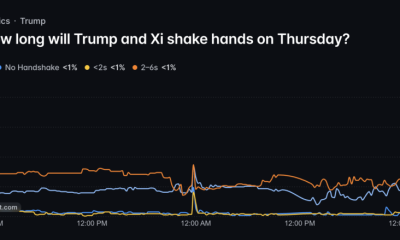
Trump-Xi Polymarket Odds for Handshake Hit 50%
-

 Tech6 days ago
Google’s $899 Googlebook is a bet that you’ll buy a new laptop for Gemini
-

 Crypto World4 days ago
Crude Oil Prices Pressured by Diplomatic Hopes in the Middle East
-
 Business5 days ago
Oil Price Today (September 23): Crude oil below $100 on hopes of US-Iran talks. What did Trump say?
-
 Crypto World4 days ago
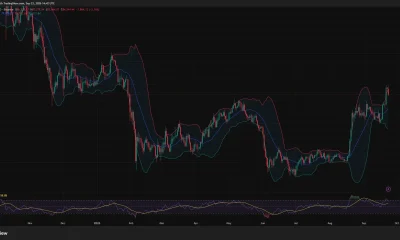
Bitcoin price tests $83,600 Supertrend support after $87K rejection
-

 Crypto World4 days ago
Bitcoin Threatens Sub-$84,000 Breakdown as Long Liquidations Spike
-
 Crypto World6 days ago
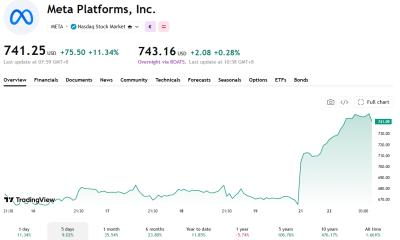
Meta Jumps 11% As Muse Shines and Investors Show an Appetite for Advancing AI
-

 Crypto World5 days ago
Did Jim Cramer Just Give GameStop Stock the Kiss of Death When He Said the Turnaround Is Working?
-

 Crypto World7 days ago
Bitcoin price holds above $81K as key catalysts line up
-

 Crypto World5 days ago
BitGo says Bitcoin absorbed Fed hike, CLARITY failure
You must be logged in to post a comment Login