
Business
Helen Of Troy: A Speculative Opportunity Amidst Green Shoots Arriving




Yet, companies managing global cash flows through standard single-currency banking infrastructure routinely encounter severe friction: unexpected intermediary deductions, days-long settlement delays, and aggressive foreign exchange markups.
Choosing the best multi currency account has evolved from a basic back-office selection into a strategic treasury decision that directly safeguards gross margins and cash velocity.
Understanding How Modern Multi Currency Accounts Process International Cash Flow
To evaluate financial providers effectively, finance leaders must understand what is multi currency account architecture. Historically, transacting across multiple markets demanded incorporating foreign subsidiaries or opening isolated accounts with local banks in every territory. A modern multi currency account eliminates this geographic fragmentation by centralizing cross-border receivables, custody, and payouts within a unified digital environment.
Modern providers deploy virtual IBAN technology paired with multi-currency balance ledgers. Instead of routing every transaction through costly cross-border rails, the infrastructure provisions distinct account identifiers connected directly to domestic clearing networks. These include SEPA Instant for real-time euro clearing across the European Economic Area, Faster Payments for instantaneous sterling transactions in the United Kingdom, and corresponding local clearing systems worldwide.
When liquidity moves between non-interconnected global corridors, transfers route through the international SWIFT network utilizing ISO 20022 messaging. This multi-rail design ensures incoming transfers settle with the speed and fee structure of local transactions rather than international wires.
The Hidden Cost Anatomy of Legacy Corporate Banking Rails
When organizations operate a conventional multi currency business bank account with legacy institutions, headline transaction fees represent only a fraction of the real operational cost. The most substantial expense is the FX spread markup quietly added to currency exchanges. Traditional commercial banks typically mark up exchange rates by 2.0% to 4.5% over the live interbank foreign exchange market, extracting significant value from overseas receivables.
Beyond conversion margins, correspondent banking introduces intermediary deductions. International wires hopping across correspondent banks regularly incur deductions between $15 and $50 per transfer, causing short-settled invoices and reconciliation friction. Furthermore, traditional banking portals often trigger forced conversion traps: receiving funds in an unsupported denomination causes the bank to automatically convert the balance to the base currency at inflated retail rates, only to re-convert it when settling subsequent overseas supplier invoices.
To bypass these systemic losses, agile digital businesses rely on next-generation cross-border platforms. Solutions such as ABFPay illustrate this modern standard by combining an agile borderless vWallet with multi-currency collection rails. Operating across 10+ holding currencies – including EUR, USD, AED, CHF, CNY, and PLN – ABF Pay enables international operators to exchange capital at genuine mid-market exchange rates with zero hidden conversion fees, while accepting client receivables in 37+ currencies across 200+ countries.
Comparative Architecture Across Corporate Banking Options
Choosing an appropriate financial partner requires balancing institutional security, technical agility, and risk appetite. A traditional corporate multi currency account at a Tier-1 institution offers balance-sheet security, but burdens operations with cumbersome compliance, physical branch mandates, and outdated API capabilities.
The comparative matrix below evaluates the structural differences across primary cross-border banking models:
| Operational Dimension | Traditional Tier-1 Bank | Legacy Cross-Border EMI | Modern Borderless vWallet Platform |
| Onboarding Timeline | 4–12 weeks; in-person visits typical | 1–3 weeks; repetitive verification | 1–3 business days via remote digital KYC |
| Payment Rail Coverage | SWIFT; batch SEPA / ACH | SWIFT and select local clearing | SEPA Instant, Faster Payments, and SWIFT |
| FX Conversion Pricing | Retail spread markup (2.0%–4.5%) | Spread markup (0.5%–1.5%) | Live mid-market exchange rates |
| Holding Flexibility | Separate sub-accounts per currency | 8–15 currencies | 10+ currencies in a unified balance ledger |
| High-Growth Sector Support | Systematic de-risking; frequent denials | Moderate vertical flexibility | Structured support for SaaS, eCommerce, and tech |
| Treasury Automation | Legacy host-to-host or manual | Basic manual file uploads | Native batch payments via CSV and scheduled runs |
| Access Governance | Rigid corporate banking portals | Basic multi-user logins | Delegated team access with role-based permissions |
Core Functional Criteria for Selecting a Multi Currency Account for Business
Selecting an effective multi currency account for business requires evaluating operational workflows rather than superficial marketing claims. Enterprise treasury teams and growing businesses should benchmark potential providers against seven core capabilities:
1. Multi-Currency Balance Management and Local Collections
An enterprise multicurrency business account must support sustained balance holding across major international trading currencies without automated sweep conversions. Maintaining foreign currency balances allows companies to naturally hedge against exchange volatility by funding local supplier expenses directly from regional revenues.
2. Multi-Currency Checkout and Merchant Settlement
For digital brands selling internationally, deploying a multi currency merchant account framework is paramount. When international customers pay in their native currency through an integrated checkout, purchase conversion rates rise. Collecting those funds directly into matching currency ledgers eliminates double-conversion losses and streamlines revenue aggregation.
3. Payout Speed and Settlement Rails
Working capital performance depends on disbursement velocity. Leading providers connect directly to an instant payout payment gateway alongside local clearing infrastructure. Outgoing transaction capabilities across dozens of currencies over SEPA Instant and Faster Payments allow businesses to settle with partners in seconds rather than business days.
4. Mass Payroll and Treasury Automation
Manually processing individual contractor invoices or supplier bills is inefficient and error-prone. Modern operations require native batch payments driven by structured CSV or Excel uploads. This allows finance teams to execute hundreds of cross-border transfers simultaneously with centralized authorization and audit logging.
5. Jurisdictional Flexibility and Non-Resident Accessibility
International digital agencies and cross-border SaaS operators frequently seek the best multi currency account uk or European equivalent to access top-tier banking hubs without navigating domestic company incorporation or resident director prerequisites. A viable provider must maintain robust licensing frameworks that support cross-border corporate profiles.
6. Team Governance and Delegated Permissions
As organizations expand, treasury platforms require robust internal controls. A production-ready multi currency business account must incorporate delegated team access backed by customizable role-based permissions. This ensures administrative staff can prepare payouts, accountants can inspect transaction logs, and executive signatories retain exclusive authorization rights.
7. Accounting Reconciliation and Multi-Device Control
Cross-border payments must integrate seamlessly with general ledger accounting. Platforms should provide native data sync or structured exports for platforms like Xero, QuickBooks, and FreeAgent. Simultaneously, executive teams require continuous visibility through web interfaces alongside native mobile applications for iOS and Android to monitor cash positions remotely.
Mitigating Institutional De-risking and Protecting Operational Continuity
A major operational vulnerability facing digital enterprises today is sudden account freezing or unilateral termination. Legacy commercial institutions have steadily implemented aggressive de-risking initiatives, offboarding online companies, cross-border agencies, and IT consultancies simply because their multi-jurisdictional volumes do not fit rigid domestic compliance algorithms.
When an unexpected closure strikes, business owners often ask: can i reopen a closed business bank account? In institutional practice, reversing an official corporate account termination with a traditional bank is virtually impossible. Commercial banks rarely disclose internal risk evaluations and adhere to closed-door compliance policies. Once offboarding initiates, corporate funds are routinely restricted for months, paralyzing operational payroll.
To protect corporate longevity against sudden institutional disruptions, organizations must implement two fundamental safeguards:
- Treasury Redundancy: Never concentrate enterprise operations within a single banking institution. Maintaining an active operational relationship with both an established bank and a specialized borderless fintech platform ensures invoicing and payroll remain uninterrupted if one provider initiates an administrative audit.
- Segregated Client Safeguarding: Modern authorized electronic money institutions and payment service providers operate under a mandatory safeguarding framework. Rather than commingling enterprise deposits with balance sheet loans as conventional banks do, payment platforms place client balances into segregated, ring-fenced accounts held at regulated Tier-1 credit institutions. In any insolvency scenario, safeguarded funds remain protected from platform liabilities and directly claimable by the account holder.
Executing Streamlined Remote Compliance Onboarding
Securing international banking historically required overseas branch visits, apostilled paperwork, and lengthy delays. Modern fintech platforms have transitioned this procedure to digital remote compliance onboarding.
Today, finance teams can complete multi-currency account establishment through an efficient digital workflow:
- Digital Registration: Submit enterprise details and corporate ownership structures through a secure web portal within 10 to 15 minutes.
- Corporate Documentation Upload: Provide digital copies of incorporation records, shareholder registers, and verified proof of operational address.
- Remote Director Verification: Executive officers complete automated identity verification and liveness checks via smartphone or webcam, eliminating in-person appointments.
- Compliance Assessment: Specialized risk analysts verify the application against international regulatory standards, with corporate onboarding typically finalizing within 1 to 3 business days.
Strategic Decision Framework for Finding the Best Multi Currency Account
Determining the ideal platform requires aligning organizational transaction dynamics with provider capabilities:
- For International IT Consultancies and SaaS Firms: Focus on multi-currency collection capabilities across major billing currencies (USD, EUR, GBP), rapid contractor disbursements via automated batch uploads, and multi-user administrative role delegation.
- For Global eCommerce Merchants and Marketplaces: Prioritize real-time payment gateway integration, transparent foreign exchange pricing without hidden spread loading, and low-cost regional clearing connections via SEPA Instant and Faster Payments.
- For High-Growth Verticals and Rapidly Scaling Ventures: Choose agile fintech partners that demonstrate transparent compliance protocols, comprehensive client fund safeguarding, and a willingness to support high-growth business models without arbitrary de-risking.
Migrating corporate liquidity into a modern multi-currency architecture eliminates unnecessary foreign exchange drag, accelerates payment cycles, and establishes a resilient operational foundation for global commercial expansion.

The difficulty is usually not having the meeting. It is making sure the information survives it.
An AI meeting recorder can capture conversations from platforms such as Zoom, Microsoft Teams and Google Meet, then turn them into transcripts, summaries and action items. For smaller and growing businesses, the practical value is straightforward: less information has to be reconstructed manually after every call.
The technology is most useful when it improves an existing workflow rather than simply creating another archive of recordings.
The Real Meeting Problem Is What Happens Afterwards
A productive meeting can still create poor follow-up.
Consider a typical project call.
During 45 minutes, the team may agree on a launch date, change a deliverable, assign two actions, raise a customer concern and leave one question unresolved.
By the next morning, that information may exist in several places:
- someone’s handwritten notes;
- a Slack message;
- an email summary;
- a project-management task;
- another person’s memory.
The problem becomes more visible as a business grows.
Five people can often keep shared context informally. Fifty people cannot rely on the same assumption.
Meeting documentation becomes part of operational infrastructure.
What Does an AI Meeting Recorder Actually Automate?
The phrase can sound broader than the technology really is.
A meeting recorder does not run the meeting or make the business decision.
Its useful role is automating several administrative steps around the conversation.
A typical workflow is:
Meeting → Recording → Transcript → Summary → Action Items → Follow-Up
Depending on the platform, the software may also identify speakers, add timestamps and make the transcript searchable.
That removes some of the need for one person to spend the meeting typing everything that sounds important.
It also creates a source record that can be reviewed if the summary later lacks context.
1. Management Meetings: Preserve Decisions, Not Just Discussion
Management meetings often cover several unrelated topics.
Finance may raise one issue, operations another and sales a third.
The most important output is usually not a full transcript. It is clarity around:
- what was decided;
- what was not decided;
- who owns the next action;
- when something needs to happen.
Automatic notes can provide a first draft of that structure.
Managers still need to review it, but beginning with a generated summary is different from rebuilding the entire meeting from memory.
This becomes especially useful when meetings happen frequently and decisions accumulate across several weeks.
2. Client Meetings: Keep the Original Context Available
Client conversations create another problem.
A client may describe an issue in a very specific way, but that explanation becomes progressively shorter as it passes from account manager to project manager to delivery team.
Eventually the internal version may be accurate in principle but missing important context.
A searchable transcript allows the team to return to the original wording.
For example, someone might search:
- campaign deadline;
- integration problem;
- requested feature;
- budget concern;
- competitor name.
That can reduce the need to ask the account manager, “What exactly did the client say?”
The meeting summary remains useful for speed, while the transcript acts as a deeper reference.
3. Sales Calls: Separate Memory From the Customer Record
Sales teams often run several calls in one day.
After enough conversations, remembering exactly which prospect raised which objection becomes difficult.
Transcription can help preserve:
- pain points;
- requested features;
- current tools;
- objections;
- timing;
- stakeholders;
- agreed next steps.
The salesperson should still decide what belongs in the CRM.
An AI transcript is a source, not a substitute for sales judgment.
The advantage is that the representative can focus more closely on the customer during the call and review details afterward.
4. Recruitment: Keep Interviews Reviewable
Hiring creates another meeting-heavy workflow.
Recruiters speak with candidates, hiring managers and interview panels, often across several stages.
Detailed manual notes can interrupt the conversation, while minimal notes create problems when the hiring team needs to compare candidates later.
A transcript can preserve more of the discussion and make specific answers easier to revisit.
However, hiring decisions should still use structured, job-relevant criteria.
Meeting technology should document the interview, not independently decide what the interview means.
5. Project Handoffs: Reduce the “I Thought You Meant…” Problem
Growing businesses rely heavily on handoffs.
A customer request moves from sales to delivery.
A new feature moves from product to engineering.
A hiring decision moves from recruiter to manager.
At each step, some context can disappear.
Searchable meeting records provide a simple fallback.
The next person does not necessarily need to read the full transcript. They can search the topic that matters and return to the relevant section of the original conversation.
This can be particularly valuable for hybrid and distributed teams where the person receiving the work may not have attended the meeting.
Why Transcription Matters More Than Recording Alone
Recording a meeting solves only part of the problem.
Audio and video are difficult to scan.
If someone needs one sentence from a 60-minute call, replaying the recording is inefficient.
AI transcription software turns spoken conversation into searchable text, making it easier to locate specific names, topics, decisions and questions.
Owll, for example, can transcribe meetings and uploaded recordings, add speaker labels and timestamps, and generate summaries and action items from the resulting text.
The transcript is often what makes the recording operationally useful.
Meeting Summaries Should Be Treated as Shortcuts
AI summaries are helpful because most employees do not want to read a full transcript after every meeting.
But a summary necessarily removes detail.
That creates a useful three-level structure:
Summary
Use this for a fast overview.
Transcript
Use this when context or exact wording matters.
Recording
Use this when something in the transcript needs verification.
Treating the summary as the only record can create the same problem as relying entirely on handwritten notes.
The difference is that a well-designed meeting workflow keeps the deeper source available.
Where Automation Still Needs Human Review
Meeting AI reduces administrative work, but it does not remove the need for checking.
Several areas deserve particular attention.
Names and Numbers
People, companies, dates, prices and percentages can be transcribed incorrectly.
Technical Language
Industry terminology, acronyms and product names may not be recognised correctly.
Overlapping Speakers
When several people speak at once, transcription and speaker attribution become harder.
Decisions
A system may identify something as a decision when the participants were still debating it.
Action Items
The software may capture a task but misunderstand who owns it or when it is due.
Important business information should therefore be reviewed before it is transferred into another system.
Avoid Creating a New Information Silo
There is an irony in adopting meeting software to improve information flow and then leaving every transcript inside an isolated meeting tool.
Businesses should decide where meeting output belongs.
For example:
Client commitment → CRM or account record
Project action → Project-management system
Hiring feedback → Recruitment system
Management decision → Agreed internal documentation
The meeting platform can provide the source and initial summary.
The business still needs to decide which system becomes the operational record.
That distinction prevents transcripts from becoming another digital storage cupboard no one checks.
AI Meeting Tools and Business Governance
Recording conversations also creates responsibilities.
Businesses should think about:
- which meetings should be recorded;
- how participants are informed;
- who can access recordings;
- how long transcripts are kept;
- when records should be deleted;
- whether certain meetings should never be recorded.
A company does not need to record every conversation simply because the software allows it.
In fact, defining when not to use the tool is part of deploying it well.
For a growing business, simple rules can be more useful than introducing complicated governance after thousands of meetings have already been stored.
What Should a Small or Growing Business Look For?
The right product depends on how the company already works.
Useful questions include:
Does It Support Existing Meeting Platforms?
Adding another conferencing system just to use transcription creates unnecessary friction.
Does It Produce Searchable Transcripts?
Search is essential once meeting volume increases.
Can It Identify Speakers?
This becomes more important in client calls, interviews and multi-team meetings.
Are Summaries and Actions Easy to Review?
Automation should reduce work, not create a second editing task.
Can Users Access the Original Transcript?
A summary without the underlying source is harder to verify.
Can the Business Control Which Meetings Are Recorded?
Not every calendar event should automatically become permanent business data.
Start With One Workflow Instead of Every Meeting
Businesses often get more value from AI tools when they begin with one clear use case.
For example:
Sales: Capture customer calls and transfer confirmed actions to CRM.
Projects: Record weekly client meetings and create project actions afterward.
Recruitment: Produce reviewable interview records.
Management: Preserve decisions and owners from leadership meetings.
Run the workflow for several weeks and assess whether people are actually using the output.
If the transcripts are never searched and the summaries are ignored, recording more meetings will not solve the problem.
Technology should remove friction from a process that already matters.
FAQ
What is an AI meeting recorder?
An AI meeting recorder captures a meeting and uses AI to create outputs such as transcripts, summaries, speaker labels and action items.
Can an AI meeting recorder replace meeting minutes?
It can automate much of the initial documentation, but important decisions and formal records should still be reviewed by the people responsible for them.
What is the difference between a meeting recorder and transcription software?
The recorder captures the conversation. Transcription software converts the spoken audio into searchable written text. Many modern platforms combine both functions.
Should every business meeting be recorded?
No. Businesses should decide which meetings have a clear reason to be recorded and follow applicable privacy, consent, security and retention requirements.
Are AI-generated meeting notes always accurate?
No. Names, numbers, specialist terminology, overlapping speech and poor audio can all cause errors. Important details should be checked.
Final Thoughts
For growing businesses, meetings are not usually the problem. The administrative work that follows them is.
Someone has to remember the decision, write the recap, create the task and explain the context to the next person.
AI meeting technology can automate part of that process by turning conversations into searchable records and structured follow-up.
The strongest use case is not recording everything.
It is choosing the conversations where better documentation reduces real operational friction, then making sure the resulting information reaches the systems and people who need it.

China weighs allowing ByteDance, Alibaba to buy new Nvidia chips, The Information reports

Executives often face an early decision about whether internal teams can investigate effectively, or when to step in and engage a consulting firm to conduct corporate internal investigations. The answer depends on the complexity and sensitivity of these matters, and specialized investigators can provide a defensible process.
Triggers for Launching a Formal Inquiry
Not every workplace complaint requires a large-scale external investigation, but certain allegations justify a formal and carefully documented response. Serious misconduct allegations move beyond standard HR complaints and require more rigorous investigation processes. Organizations should consider formal responses when facing specific examples of misconduct such as safety violations, breaches of confidentiality or patterns of discriminatory behavior.
Whistleblower reports and allegations that could trigger regulatory scrutiny or reporting obligations warrant careful attention. Similarly, repeated complaints about the same issue or pattern can signal broader cultural or control problems rather than isolated interpersonal disputes. When allegations span multiple jurisdictions or business units and exceed ordinary HR capacity, organizations must prioritize preserving digital evidence and interview records from the outset.
Hidden Risks of Keeping Investigations In-House
Organizations that rely solely on internal HR teams or regular corporate counsel when handling high-stakes allegations face significant procedural and credibility risks. The lack of independence and the potential for bias undermine the investigation’s integrity and expose organizations to additional legal consequences.
How to Overcome Confirmation Bias
Prior relationships and internal dynamics cloud the judgment of in-house investigators who already know the people or circumstances involved. Those conducting reviews may enter an inquiry with assumptions about credibility or likely outcomes based on their existing knowledge of workplace relationships. Looking primarily for evidence that supports existing beliefs can cause investigators to miss critical risks and alternative explanations that might reveal the full scope of misconduct.
Confirmation bias influences interview questions, evidence selection and interpretations of conflicting accounts. For instance, investigation teams that expect certain outcomes may shape their questioning to support those expectations rather than test competing explanations. To mitigate these risks, organizations protect themselves by ensuring that inquiries document findings based on evidence and test alternative theories before reaching conclusions.
Why External Advisors Ensure Procedural Rigor
Independent advisors bring distance from workplace relationships, organizational politics and reporting structures that compromise internal reviews. Bringing in an outside perspective provides crucial distance from in-office dynamics and protects organizations from claims of cover-ups or improper procedures. External investigators follow structured investigation plans that include evidence preservation, consistent interviewing and clear documentation standards.
Procedural rigor helps executives and counsel understand how investigators reached their findings and whether the process withstands scrutiny from regulators or opposing counsel. Independence doesn’t guarantee a favorable conclusion but strengthens confidence that those conducting the review followed a consistent process.
Criteria for Selecting the Right Partner
Organizations should evaluate investigation firms based on the specific needs and risks surrounding each matter. Independence and potential conflicts merit examination before engagement to ensure the selected firm maintains objectivity. Beyond independence, relevant experience handling sensitive workplace matters involving harassment, discrimination, retaliation, fraud and executive misconduct serves as a primary consideration.
Multidisciplinary expertise also matters when complex investigations require input from experienced investigators, former prosecutors, forensic accountants and compliance specialists. For organizations with operations across multiple jurisdictions, firms must be able to manage investigations across different legal frameworks. Additionally, experience working alongside boards, audit committees and outside counsel ensures smooth coordination during sensitive inquiries. These criteria help identify established firms serving corporations with complex investigative needs.
3 Best Workplace Misconduct Management Professionals
Several specialized firms offer the independence and procedural resources that organizations need when facing serious allegations of employee misconduct. The following providers represent credible options based on their investigative services and organizational reach.
1. Guidepost Solutions
Guidepost Solutions operates as an independent investigations and compliance firm serving organizations that need objective reviews of sensitive internal allegations. Its team includes professionals with backgrounds at the Federal Bureau of Investigation, Central Intelligence Agency, Department of Homeland Security and Department of Justice. Guidepost handles complex workplace matters, including hostile work environments, abusive conduct, bias and whistleblower retaliation.
Guidepost positions itself as an agile alternative to larger firms, with professionals involved in the scoping engagements. Its resources support matters requiring interviews, evidence analysis and independent fact-finding. Broader strengths in compliance and security enable organizations to identify process or governance gaps.
2. Kroll
Kroll provides workplace misconduct and corporate investigation services as part of its broader risk advisory and compliance offerings. This global firm offers experience investigating harassment, discrimination, fraud, corruption, conflicts of interest and other workplace allegations across multiple industries. Kroll combines investigative expertise with forensic accounting, compliance consulting and technology resources.
Organizations managing complex challenges across multiple jurisdictions may find its international footprint relevant when allegations span different countries or regulatory frameworks. Kroll works with corporations and financial institutions facing sensitive internal concerns that require external review.
3. K2 Integrity
K2 Integrity focuses on investigations and financial crime through its dedicated internal investigations and dispute resolution practice. Multidisciplinary teams at K2 include investigators, lawyers, forensic accountants and compliance professionals who handle internal investigations involving fraud, corruption, data leakage and other suspected misconduct.
K2 Integrity’s strengths in forensic accounting and fraud-detection analytics support organizations dealing with financial irregularities or complex schemes requiring detailed analysis. Its cross-border investigative services serve North American companies with international operations facing allegations spanning multiple countries or regulatory environments.
4. FTI Consulting
FTI Consulting provides risk and investigation services through teams that work with corporations and legal counsel on complex matters. This global firm handles employee misconduct, fraud, corruption, whistleblower allegations and financial irregularities across industries. It offers forensic technology, data analytics and investigative expertise for evidence-heavy matters requiring complex document review.
Its extensive global presence is relevant to organizations conducting investigations across multiple business units or countries. FTI Consulting brings experience in guiding organizations through significant crises and regulatory scrutiny that accompany misconduct allegations.
Protect Your Organization’s Future Through Objective Action
The decision to hire an external consulting firm should reflect the gravity and potential consequences of allegations facing an organization. An effective investigation establishes facts through consistent procedures rather than aiming for a predetermined outcome. Credible documentation and independent analysis help leadership determine appropriate corrective actions. Organizations that treat investigations as opportunities to identify and correct systemic issues often emerge with stronger compliance cultures and more resilient risk-management frameworks.

BRUSSELS — Two years after Belgium banned recreational use of nitrous oxide, the gas remains one of the country’s most visible drugs, its brightly branded canisters littering parks, nightclub entrances and residential streets even as the substance has become entangled with organized crime networks and a costly waste-management crisis.
Near Brussels-North railway station, discarded nitrous oxide cylinders, black canisters marketed with flashy branding, lie scattered beneath rubbish bins, a sight so common that refuse collectors barely react to it anymore. The canisters have become a persistent feature of the urban landscape, abandoned in parks, piled beside roads and dumped in residential streets across the capital.
Beyond the litter, the canisters pose a direct financial threat to waste infrastructure. When crushed during processing, the pressurized cylinders can explode violently, damaging machinery and forcing incinerators to shut down. “Each explosion costs around a quarter of a million euros,” said Nathalie Debast of the Flemish Association of Cities and Municipalities. The organization estimated the total damage bill reached 12 million euros in 2025 alone.
Deborah Apelmaen, commissioner of the Brussels-Midi police zone, has watched the drug’s popularity spread steadily through the capital’s nightlife over recent years. “Nitrous oxide has been popular for several years as a cheap party drug,” Apelmaen said. “You see it in nightclubs, at festivals, at raves. Anyone arriving with cylinders immediately becomes popular.” The coronavirus pandemic accelerated the trend, according to the report, as young people gathered in parks, warehouses and private parties while bars and clubs remained closed, an environment well suited to a drug that is cheap, portable and easy to share.
Unlike many other illicit substances, nitrous oxide has been marketed with the aesthetics of celebration rather than danger, packaged in bright colors with sweet flavors and playful branding, and promoted heavily online. “There’s a lot of marketing through Snapchat and TikTok,” Apelmaen said. “The packaging is attractive, which makes it appear harmless.”
Apelmaen was direct about the actual risks involved. “It’s extremely dangerous,” she said. “For 10 to 30 seconds, users lose touch with reality completely. Someone driving through the city in that condition no longer sees other road users.”
Belgium officially banned the recreational use, sale and possession of nitrous oxide two years ago, exempting medical, technical and food-industry purposes. Police welcomed the legal change. “The ban gives us more room to act,” Apelmaen said. “We can issue fines of up to 500 euros per cylinder in Brussels and refer cases to prosecutors.”
The ban has nonetheless produced unintended consequences, with the trade increasingly shifting into organized criminal networks rather than disappearing. Federal police dismantled a gang distributing nitrous oxide across Belgium earlier this year, seizing more than 7,000 cylinders in the operation. “Nitrous oxide is now circulating through the same channels as other drugs,” Apelmaen acknowledged. “You see professionalisation, organised delivery systems and much larger cylinders designed for group use.”
The drug’s accessibility and brief, intense high have contributed to its spread. A single cylinder costing around 50 euros can entertain a group for an evening, with the high typically lasting less than a minute but intense enough to encourage repeated use. One recovering user, identified only as Frederick, described how casually he first encountered the drug at age 19. “I went to illegal parties where it was offered to me,” he said. “It looked innocent. You didn’t have to search for it.” He described the initial appeal candidly. “You’re completely high for a moment,” he recalled. “Sounds echo. You see double.” That experience did not remain harmless for him. “I became addicted,” he said. “Nitrous oxide destroyed my brain cells. I could no longer function properly physically.” His addiction eventually spiraled alongside other substance use and led to several years in psychiatric care. “I had completely lost control,” he said. “When people hear the word addiction, they think of heroin or cocaine. Not laughing gas.”
Fred Laudens of the Flemish Expertise Centre for Alcohol and Other Drugs explained the specific nature of the drug’s addictive potential. “It seems harmless, but it isn’t,” Laudens said. “It’s not physically addictive in the traditional sense, but psychologically it can become very addictive because people constantly want to repeat the feeling.” Heavy, sustained use has been linked to nerve damage, vitamin B12 deficiency and, in extreme cases, paralysis, while inhaling directly from pressurized cylinders can cause severe frostbite injuries due to the gas’s extremely low temperature.
Survey data on usage rates has clashed with the drug’s visible presence in cities. Fewer than one in 50 Flemish secondary school pupils reported using nitrous oxide in a 2024 survey, with similarly low figures from university surveys across Flanders and Brussels. Laudens said those numbers likely understate the true scope of the problem. “A relatively small group can still create a huge amount of nuisance,” he said, adding that surveys often miss vulnerable populations, including homeless people and marginalized users in large cities. Separately, Belgium’s road safety institute, VIAS, found in a 2023 survey that 7% of motorists admitted to driving under the influence of nitrous oxide within the previous year.
Waste figures suggest the ban has done little to curb overall circulation of the gas. According to Interafval, the Flemish umbrella organization for waste-management bodies, the number of cylinders collected at recycling centers rose 35% in 2025 compared with the previous year, with more than 3,200 explosions recorded in incinerators over the same period. Sint-Truiden Mayor Ludwig Vandenhove described a worsening local picture, with dozens of cylinders now collected weekly in his municipality alone. “We only see the problem growing,” Vandenhove said. “The ban apparently doesn’t solve much.”
Interior Minister Bernard Quintin pushed back against characterizations of the legislation as an outright failure. “At least police forces now have a clear legal framework to intervene systematically,” he said. Municipal authorities are nonetheless pressing for additional measures, including stricter controls on online sales, expanded prevention campaigns and greater support for waste processors managing the ongoing risk of explosions. The federal government has asked Belgium’s National Drug Commission to prepare a new action plan.
The European Union is moving toward tighter restrictions as well, with plans to ban larger nitrous oxide cartridges entirely starting in 2027, permitting only tiny containers under 24 milliliters too small for recreational use.
Some Belgian cities have experimented with more pragmatic responses in the meantime. Ghent introduced a scheme last year offering residents 5 euros for every nitrous oxide cylinder handed in through the city’s waste system, with proceeds credited to municipal waste accounts. Louise Blondé of waste company Ivago addressed early concerns that the incentive might inadvertently encourage use. “That concern existed,” Blondé said, “but most cylinders are handed in by volunteers cleaning the streets, not by users.” Ghent’s waste incinerator has not suffered a major shutdown from nitrous oxide explosions since the program began, according to the report, even as smaller blasts continue to occur.
With criminalization failing to eliminate the drug’s presence and its colorful, flavored packaging continuing to obscure its genuine risks, from nerve damage and psychiatric harm to dangerous driving and organized criminal distribution, Belgian authorities appear likely to continue weighing additional enforcement, prevention and waste-management measures as the canisters keep accumulating on city streets.

Franklin Resources, Inc. [NYSE:BEN] is a global investment management organization with subsidiaries operating as Franklin Templeton and serving clients in over 150 countries. Franklin Templeton’s mission is to help clients achieve better outcomes through investment management expertise, wealth management and technology solutions. Through its specialist investment managers, the company offers specialization on a global scale, bringing extensive capabilities in fixed income, equity, alternatives and multi-asset solutions. With more than 1,300 investment professionals, and offices in major financial markets around the world, the California-based company has over 75 years of investment experience and over $1.4 trillion in assets under management as of June 30, 2023. For more information, please visit franklintempleton.com and follow us on LinkedIn, Twitter and Facebook.

Heathrow Airport has warned that its planned third runway might be delayed by four years due to planning and regulatory issues.
The government had hoped the new runway at the UK’s busiest airport, estimated to cost £33bn, would open by 2035.
But Heathrow sees this deadline as increasingly difficult to deliver without further steps to simplify the planning process. It said on Saturday that it hoped to secure planning permission by 2029 and then open the runway “within a decade”.
The Department for Transport (DfT) said the project’s timeline had “always been ambitious” and that it would continue to work with stakeholders “at pace” on the matter.
The airport said its “core scenario” had always been to open a new runway within a decade of securing planning permission.
It said it was encouraged by the chancellor’s efforts to streamline infrastructure and remove regulatory bottlenecks, and promised to continue to work with ministers, airlines and stakeholders to “progress the planning application with pace”.
Former chancellor Rachel Reeves announced the government’s support for the project in January 2025 as a means to grow the economy, and Prime Minister Andy Burnham – who was previously critical – said he was “open-minded” about the scheme when he came to office.
Despite attracting wide opposition from environmental campaigners and local resident groups, the project is expected to create around 100,000 jobs and provide a major boost to the economy as part of a wider £49bn modernisation of the airport.
The expansion would mean demolishing hundreds of homes, diverting rivers, and rerouting the M25 motorway between junctions 14 and 15 through a tunnel under the new runway.
The number of flights from the site, currently capped at 480,000 a year, could go up to 720,000 – or nearly 2,000 a day on average.

TUCSON, Ariz. — A longtime friend of missing 84-year-old Nancy Guthrie has publicly asked the public and online communities to give her daughter Annie and son-in-law Tommaso Cioni privacy, revealing that the couple has returned to town and their son is back in school, nearly eight months after Nancy’s disappearance.
Nancy Guthrie, the mother of “Today” show co-anchor Savannah Guthrie, was reported missing from her home in Tucson’s Catalina Foothills neighborhood on February 1. She is believed to have had dinner with Annie the evening before her disappearance and was reportedly dropped off at her own home by Tommaso following that dinner, making the couple among the last people known to have seen her.
Lauren Serpa, a close friend of Nancy Guthrie, shared the update about Annie and Tommaso in a Facebook post, confirming the couple’s return and asking the public to respect their privacy. “As everybody knows, Annie and Tommaso are back in town, and their son is back in school. I am requesting everybody to please leave them alone,” Serpa wrote. She went on to describe the toll the past several months have taken on the couple. “This has been a long six months for them. They deserve to lead a normal life without always being stalked and observed by people.”
Annie and Tommaso have faced sustained public scrutiny since Nancy’s disappearance, despite Pima County Sheriff Chris Nanos having repeatedly stated that neither of them is considered a suspect in the case. That scrutiny intensified further after former NewsNation journalist Ashleigh Banfield publicly suggested Tommaso could potentially be involved in the case, a claim that has not been substantiated by investigators and remains at odds with the sheriff’s department’s own public statements clearing the couple.
The renewed attention on Annie and Tommaso’s whereabouts follows a broader pattern that has defined much of the public conversation around the Nancy Guthrie case throughout the year, with self-styled online investigators and social media accounts repeatedly speculating about the couple’s movements, location and potential involvement, often based on unverified claims rather than confirmed information from law enforcement. Serpa’s post represents a direct, personal appeal from someone close to the family pushing back against that continued scrutiny, rather than an official statement from investigators or the Guthrie family’s spokesperson.
Investigators have continued describing the broader case as active, even as no suspect has been publicly named and no arrest has been announced in the nearly eight months since Nancy was first reported missing. The Pima County Sheriff’s Department has said its investigation continues to rely on forensic evidence, digital records and surveillance footage review, working in coordination with the FBI, though the department has provided limited additional public detail about the investigation’s progress in recent weeks.
Serpa’s appeal reflects a tension that has run throughout the Guthrie case since its earliest days: the balance between the intense public interest generated by Savannah Guthrie’s profile as a national television anchor and the personal toll that scrutiny has placed on family members who have already been cleared by investigators. For Annie and Tommaso specifically, that tension has included not only online speculation about their movements and potential involvement, but also, according to Serpa’s characterization, a persistent sense of being watched and followed by members of the public and online communities following the case closely.
The Guthrie family, including Savannah, has continued to make public appeals throughout the case seeking information that could help investigators locate Nancy or identify a suspect, even as other family members like Annie and Tommaso have largely avoided public statements of their own, a distinction Serpa’s post appears intended to help protect going forward now that the couple and their son have returned to their usual routine, including the child’s return to school.
As of the most recent available information, neither the Pima County Sheriff’s Department nor the Guthrie family’s official representatives have issued additional public statements addressing Annie and Tommaso’s return to town specifically, beyond what Serpa shared in her personal post. The broader investigation into Nancy Guthrie’s disappearance remains ongoing, with authorities continuing to process tips and evidence without having publicly identified a suspect.
With Serpa’s appeal for privacy circulating alongside continued public interest in the case, the coming weeks are likely to test whether the renewed attention on Annie and Tommaso’s return subsides in response to her request, or whether the pattern of sustained public scrutiny that has followed the couple since February continues even as they attempt to resume a more normal daily routine for themselves and their son.
Business
Does Steph Curry Have Any Shot at an NBA Title in 2027? Oddsmakers and Analysts Say the Odds Are Long

SAN FRANCISCO — As the Golden State Warriors prepare for the 2026-27 NBA season, oddsmakers and analysts are largely skeptical that Stephen Curry has a realistic path to another championship, even as the 12-time All-Star continues to play at a high level well into his late 30s.
Sportsbooks have priced the Warriors as significant long shots to win the title. Caesars lists Golden State’s championship odds at plus-5000, implying roughly a 1.96% probability, while BetRivers has the team at plus-6000, or about a 1.64% implied chance. Curry’s individual MVP odds sit even longer, at plus-10000, or under 1%, according to Caesars.
Curry, now 38 and set to turn 39 during the season, continued producing strong individual numbers in 2025-26, averaging 26.6 points, 3.6 rebounds, 4.7 assists, 1.1 steals and 0.4 blocks per game. But the roster around him has been shaped heavily by injuries and age. Jimmy Butler III tore his ACL in January 2026, and Moses Moody has also been sidelined, leaving the Warriors, according to multiple analysts, likely relegated to Play-In Tournament territory rather than genuine title contention if those absences persist into the new season.
Golden State’s roster otherwise remained largely intact heading into the year, retaining Draymond Green, Kristaps Porzingis and Al Horford, with 24-year-old rookie Yaxel Lendeborg, the 11th overall pick and a member of Michigan’s 2026 NCAA championship team, as the primary new addition. That continuity has come with a notable cost: the Warriors have become the oldest team in the league, and some statistical indicators point to specific decline among their veteran core. According to analysis cited by NewsBeep, Golden State’s defense was statistically better with Green off the floor last season, only the second time that has occurred in his career, with Green allowing the highest shot quality as a closest defender of his career, raising questions about whether the decline reflects age, a one-year anomaly, or some other factor.
Former NBA player Stephen Jackson offered a blunt assessment of the Warriors’ prospects during an appearance on his “All the Smoke” podcast. Asked directly whether this version of the Warriors has a real shot at winning the title, Jackson did not hesitate. “Nah, I don’t,” Jackson said, according to DraftKings. “That’s asking a lot from Steph right now.”
Curry himself has acknowledged how significantly the season’s outlook shifted once Butler and Moody went down with injuries. Speaking with NBA insider Nick Friedell of The Athletic, Curry addressed the change directly. “When Jimmy got hurt, and Moses got hurt, the whole calculus of everything changes,” Curry said, a comment that has been interpreted as reflecting the team’s more measured, patient approach to this stretch of its rebuild around Curry.
Not every assessment of the Warriors has been entirely dismissive. ClutchPoints’ season preview noted that the team’s fortunes still come down heavily to health, both for Curry, Green, Porzingis and Horford, and for Butler and Moody’s eventual returns to the court. The outlet noted that people within the Warriors organization believe the current roster has depth and skill comparable to the 2021-22 championship team, which similarly defied expectations en route to beating the Boston Celtics in the NBA Finals that year. That same preview acknowledged the unpredictability inherent in any Curry-led team, writing that “anything can really happen with the Warriors this season,” including the possibility that the front office tears down the roster around Curry and pursues a more significant rebuild at the trade deadline instead.
CBS Sports’ broader championship prediction market analysis placed the Warriors outside the tier of teams considered most likely to win the 2026-27 title, a group led by the Oklahoma City Thunder, New York Knicks and Boston Celtics, with the Denver Nuggets, Toronto Raptors and Los Angeles Lakers cited as having a “puncher’s chance” based on recent championship history. Even so, the same analysis explicitly acknowledged Golden State as a team capable of producing a surprise run, noting “there’s always the possibility for some Stephen Curry magic,” a framing that positions the Warriors as a longer-shot wildcard rather than a leading contender.
Speculation about a potential trade sending Curry elsewhere, including to the Boston Celtics or Orlando Magic, has also circulated periodically, though people close to the situation have downplayed the likelihood of such a move. That speculation has further quieted following Curry’s recent decision to sign a two-year, $116 million contract extension with the Warriors, a deal that includes a player option for the 2028-29 season and keeps him tied to the only franchise he has played for through what would become his 21st NBA season, signaling his own continued commitment to finishing his career in Golden State regardless of the team’s shorter-term title prospects.
With the season still ahead and Butler and Moody’s health remaining the most significant variables shaping the Warriors’ outlook, most oddsmakers and analysts continue to view Golden State as an unlikely championship contender for 2026-27, even as few are willing to rule out entirely the possibility that Curry, at this stage of his career, still has one more deep playoff run left in him if the roster around him can stay healthy at the right moment.

Trump: Oil prices will plummet after war ends ‘very soon’

Timber stack on fire in Green Hammerton near York

Routing, Privacy, Trust and Key Differences

How to Choose the Best Multi Currency Account for Your Business





-

 Fashion2 days ago
Weekend Open Thread: J.McLaughlin – Corporette.com
-

 Crypto World5 days ago
Goldman Sachs and Deutsche Bank Agree: The S&P 500 Rally Isn't Over
-

 Tech7 days ago
Researchers escape OpenAI Codex sandbox to run commands on host
-

 Fashion3 days ago
8 iPhone Accessories That Add Personality
-

 Crypto World7 days ago
Who Needs CLARITY Anyway? ARB Could See 70X Increase: Hodler’s Digest
-

 Entertainment5 days ago
These 17 Fall Amazon Dresses Seriously Look Like Anthropologie
-

 Business7 days ago
Analog Devices (ADI) Bets $1.35 Billion on Chips that Let Machines Think for Themselves
-

 Crypto World7 days ago
Coinbase, Robinhood, Circle Seen as Tokenized-Stock Winners
-

 Crypto World5 days ago
This Bearish Netflix Stock Trade Can Cash In On Video Streaming Giant’s Woes
-

 Tech5 days ago
Reolink’s solar 4K security camera falls to its lowest price in months
-

 Tech6 days ago
Google’s $899 Googlebook is a bet that you’ll buy a new laptop for Gemini
-
 Crypto World5 days ago
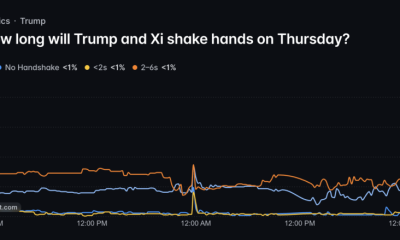
Trump-Xi Polymarket Odds for Handshake Hit 50%
-

 Crypto World4 days ago
Crude Oil Prices Pressured by Diplomatic Hopes in the Middle East
-
 Business5 days ago
Oil Price Today (September 23): Crude oil below $100 on hopes of US-Iran talks. What did Trump say?
-
 Crypto World4 days ago
Bitcoin price tests $83,600 Supertrend support after $87K rejection
-
 Crypto World4 days ago
Bitcoin Threatens Sub-$84,000 Breakdown as Long Liquidations Spike
-
 Crypto World6 days ago
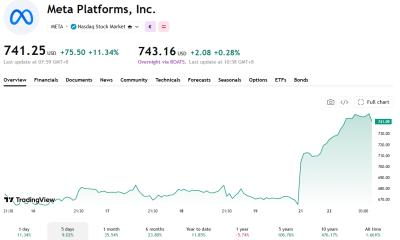
Meta Jumps 11% As Muse Shines and Investors Show an Appetite for Advancing AI
-

 Crypto World5 days ago
Did Jim Cramer Just Give GameStop Stock the Kiss of Death When He Said the Turnaround Is Working?
-

 Crypto World6 days ago
Bitcoin price holds above $81K as key catalysts line up
-

 Crypto World5 days ago
BitGo says Bitcoin absorbed Fed hike, CLARITY failure
You must be logged in to post a comment Login