Madonna, Taylor Swift and Sienna Spiro celebrating wins at the 2026 VMAs
BTS also picked up three awards off the back of their hit Swim, and it was a big night for British singer-songwriter Sienna Spiro, who took home the coveted Best New Artist title, following in the footsteps of recent recipients Doja Cat, Olivia Rodrigo and Chappell Roan.
Here’s the full list of all the artists who came out on top at the 2026 VMAs…
The North East is already delivering the Prime Minister’s vision
Advertisement
For decades, governments have promised to tackle the North-South divide. Yet despite numerous initiatives, too many communities have continued to see investment, opportunity and economic power concentrated elsewhere.
Prime Minister Andy Burnham’s commitment to the reindustrialisation of the North is built on a simple but powerful principle: “good growth in every postcode.”
It is an ambition that goes beyond economic statistics. It recognises that successful places are built on confidence, skills, educational opportunity and community as much as they are on investment and jobs.
A vision already taking place across the North East
Advertisement
To be clear, reindustrialisation is not about recreating the industries of the past. It is about creating the industries of the future and ensuring that regions with the talent, capability and ambition to succeed are given the opportunity to do so.
The North East region has long been one of Britain’s industrial powerhouses, defined by generations of engineering and manufacturing excellence. Today, it is building a new future around advanced manufacturing, defence, technology and space – sectors that will be critical to the UK’s future economic prosperity and national security.
Few sectors demonstrate this opportunity more clearly than space.
Advertisement
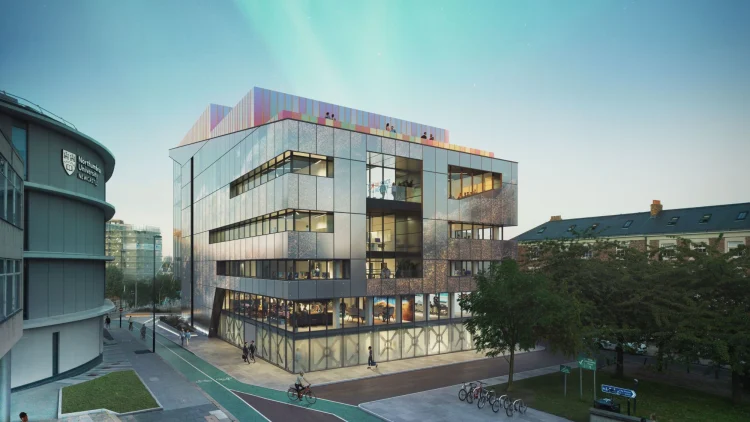
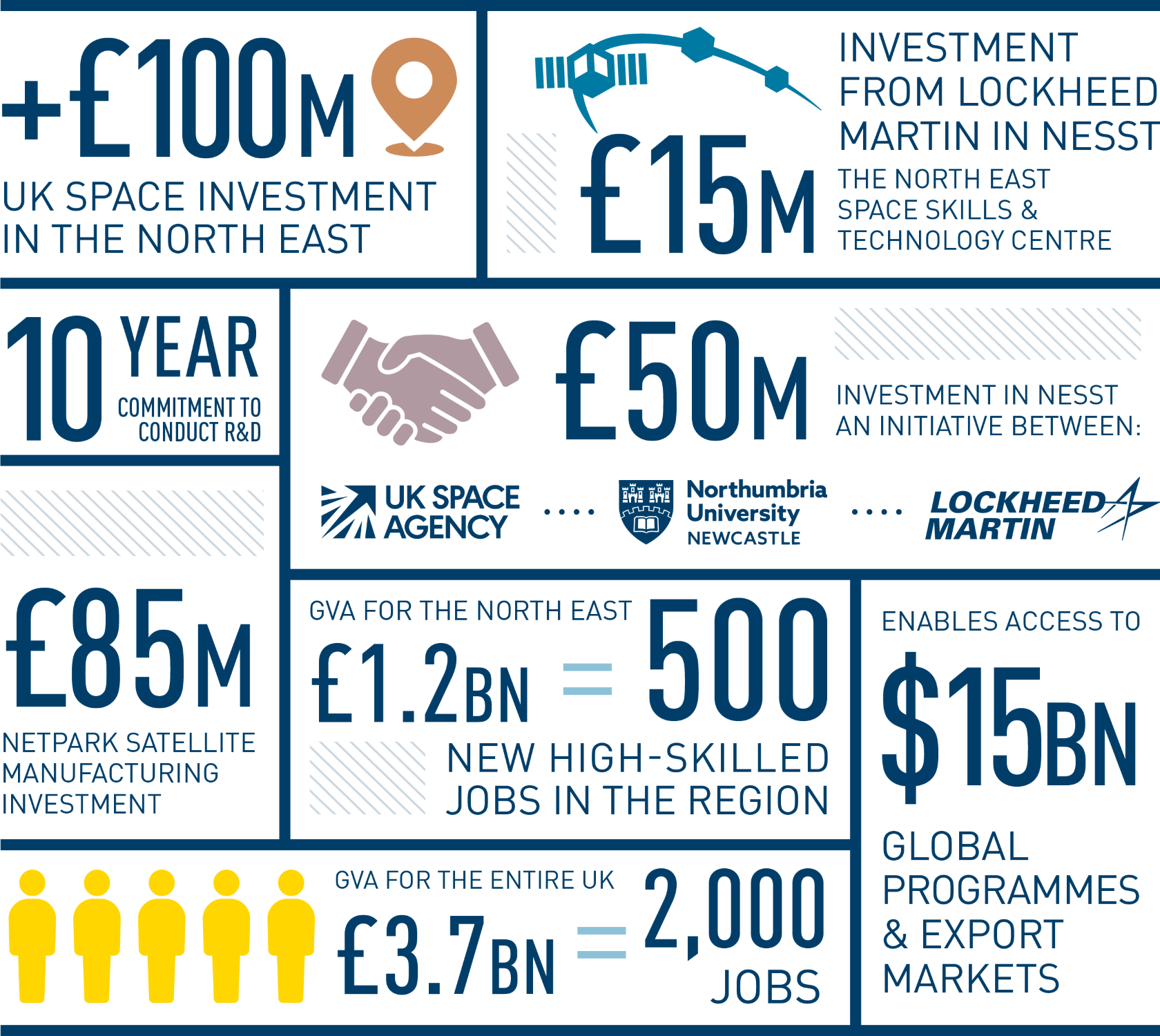
Lockheed Martin Space UK – which has had a presence in the UK for 85 years – has already made a significant impact in the region through its partnership with Northumbria University and the UK Space Agency to create the North East Space Skills and Technology Centre (NESST). The initiative combines industry expertise with academic excellence to develop the technology, innovation and talent pipeline needed to support the UK’s growing space economy.
NESST embodies the collaborative approach that successful reindustrialisation requires. The centre brings together industry, government and education while creating clear pathways into high-value careers for local people.
The company’s commitment to the region could soon expand further through plans for a satellite manufacturing facility at NETPark near Sedgefield, one of the UK’s leading science and technology campuses.
Investing for the future, today
Advertisement
Importantly, the North East is not simply preparing for future investment. It is ready today.
Paul Livingston, Chief Executive UK and NATO for Lockheed Martin said:
Click to enlarge
“The North East has the talent, ambition and industrial heritage to play a leading role in Britain’s reindustrialisation. By bringing together industry, academia and government, we can create highly skilled jobs and help deliver growth and opportunity across the region.”
More than £20m has already been invested in preparing NETPark for advanced manufacturing opportunities, creating a development-ready location for companies seeking to establish cutting-edge facilities. Combined with the region’s engineering expertise, growing technology ecosystem and strong infrastructure, the foundations for a thriving space manufacturing cluster are already in place.
The skills pipeline is equally compelling. NESST is due to open shortly, with the first cohort of 30 students beginning a new aerospace-focused degree programme designed to equip the next generation of engineers and technologists with the skills required by the UK’s growing space sector.
Advertisement
Such an investment would represent a major boost not only for the North East but for the UK’s ambitions in space and advanced manufacturing. It would directly support the Prime Minister’s objective of creating a North that can manufacture, innovate, export and compete on the global stage.
Championing the future
The company’s confidence in the region is shared by North East Mayor Kim McGuinness, who has consistently championed both the defence and space sectors as engines of future prosperity.
Her argument is simple. The North East already possesses the industrial capability, workforce and determination required to succeed. What it needs is greater investment and the opportunity to compete.
Advertisement
Kim McGuinness, Mayor of the North East, said:
“For too long, too much investment has been concentrated in too few places. But we have a plan to show what is possible when global industry backs the people of the North East.
“Becoming home to this major Lockheed Martin Space UK manufacturing facility would be transformational for our region. Not only would it create high-value jobs and opportunities for people in Durham and across the North East, it would also help to attract further investment, suppliers, innovators and space businesses to locate here. That is how we build a globally recognised space cluster and deliver lasting economic growth for communities across our region.”
That shared ambition led to the recent Memorandum of Understanding between the North East Mayoral Strategic Authority and Lockheed Martin Space UK, strengthening collaboration around investment, skills and industrial development.
Advertisement
The case for investment is strengthened further when viewed through the lens of national security.
As highlighted by the MP for Newcastle Central and West, Chi Onwurah, the North East sends more young people into the Armed Forces than any other region of the UK and yet receives the lowest level of Ministry of Defence spending.
That disparity presents an opportunity as much as a challenge. As the UK seeks to strengthen sovereign capabilities, increase resilience and invest in the industries that support national security, the North East offers a region with a proven record of service, a highly skilled workforce and infrastructure that is ready to support future growth.
Investment in defence and space would not simply support economic growth. It would strengthen national resilience while ensuring that a region which contributes so much to the nation’s defence benefits more directly from the opportunities created by that commitment.
Advertisement
Kim McGuinness, Mayor of the North East, continued:
“The scale of the opportunity is substantial. Plans include approximately £100m of investment and the potential creation of up to 2,000 new jobs across the UK, including around 500 highly skilled roles in the North East. These positions would support satellite manufacturing, advanced engineering, technology development and supply chain growth while helping strengthen the UK’s sovereign space capability.
Supporting that growth will require a strong pipeline of talent. Encouragingly, that work is already underway.”
Establishing the educational pipeline
Advertisement
New College Durham recently secured designation as an Advanced Manufacturing Technical Excellence College (AMTEC), further strengthening the region’s ability to develop the advanced engineering and manufacturing skills required by future employers.
Alison Maynard, Deputy Principal at New College Durham said that “we see AMTEC playing a vital role in connecting and integrating the North East’s rich industrial, research, and innovation assets, creating a bridge between major developments such as NESST and Lockheed Martin’s planned facility at NETPark.”
Together, initiatives such as NESST, AMTEC and NETPark demonstrate that the North East has already assembled many of the ingredients required for long-term success: investment, infrastructure, innovation, skills and collaboration.
For a Prime Minister committed to delivering growth in every postcode, the North East offers a compelling example of what success can look like.
Advertisement
The region is not waiting for growth to arrive. It is creating it.
Through advanced manufacturing, space technology, education and strategic investment, the North East is demonstrating how reindustrialisation can strengthen the economy, support national resilience and create opportunity for future generations. The infrastructure is ready. The skills pipeline is growing. The partnerships are in place.
A senior BBC security expert has rejected Donald Trump’s claims that an alleged plot to attack a military base was foiled by a US and UK intelligence operation.
Five men were arrested on suspicion of explosive and terrorism offences on Sunday following a tip-off by a farmer about suspicious activity near RAF Fairford in Gloucestershire.
The base has been used by America to launch air raids on Iran since the war began earlier this year.
The farmer who raised the alarm told the BBC: “It shouldn’t be necessary for someone like me to alert RAF Fairford of the presence of three large suspicious vehicles and a group of masked men.”
He said: “They were looking to do big damage to our fort, and working with the British worked out great.
“It may have been Scotland Yard, I don’t know. We worked with a lot of them.
“We had them under view for a long time, and we got them. Thank you.”
Advertisement
Speaking on Radio 4’s Today programme, BBC security correspondent Frank Gardner said there was “a clear inconsistency” between Trump’s claims and what appears to have actually happened.
He said: “I would give a lot more credence to what we’ve heard from the eyewitness, from the farmer.
“From people I’ve spoken to yesterday in Whitehall, I’ve been told this was not an intelligence-led operation.
“Counter-terrorism police are leading the investigation, Gloucestershire police are leading the response, but there’s no indication that this was a plot where the US and UK were working hand in hand tracking these people. If they were, this wouldn’t have happened.
Advertisement
“So I don’t understand why Donald Trump is saying we have these people under view for a long time. I don’t know where he got that from, because if they did then how on earth were they allowed to wander round Gloucestershire putting on masks and driving vans allegedly with explosives in them?”
Gardner also said claims that Iran were behind the alleged incident “doesn’t make a lot of sense politically” given the regime in Tehran wants to end the war in their country.
He said the only other possible culprits were Russia or UK-based jihadists.
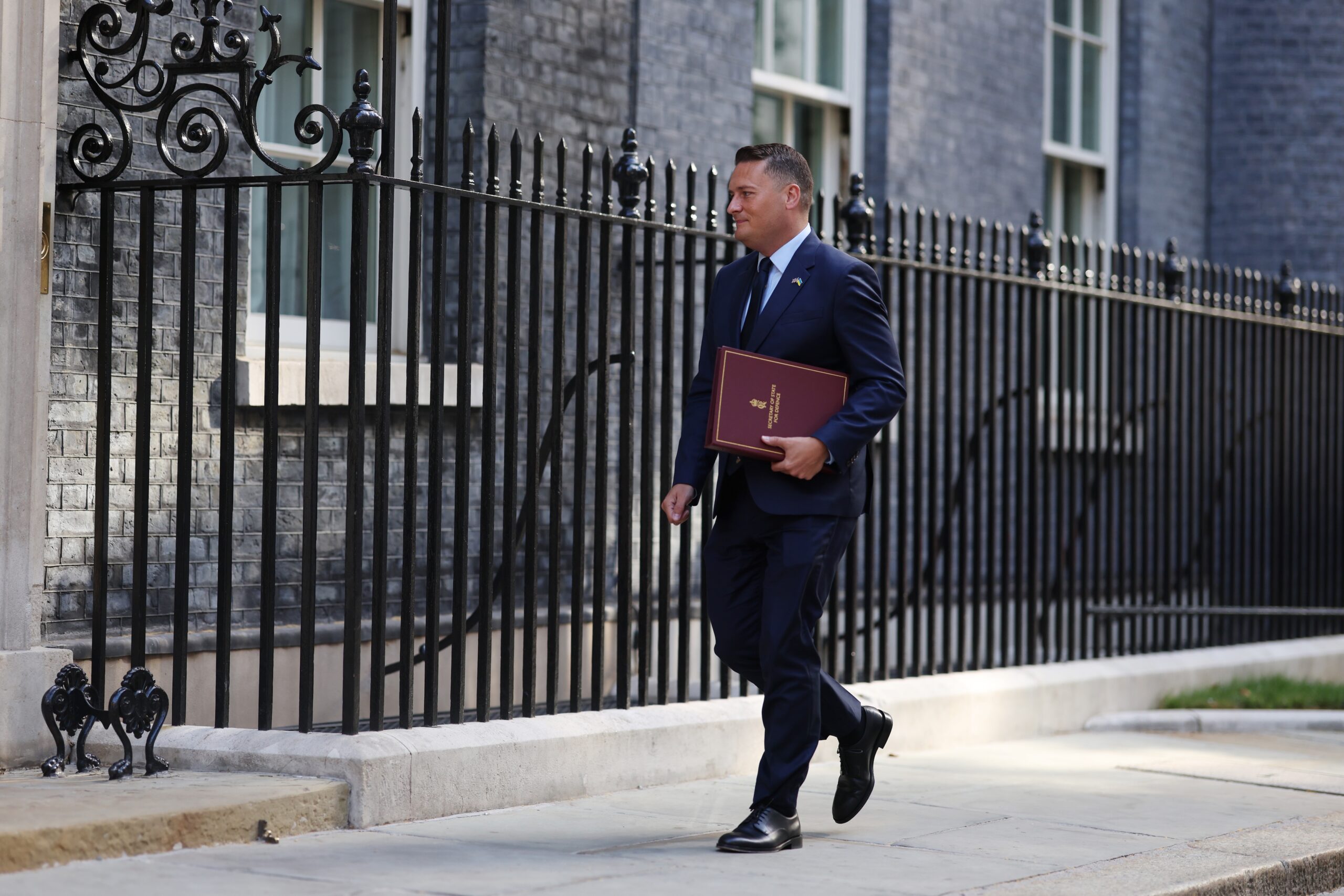
Defence secretary Wes Streeting said the farmer who raised the alarm “has a partial picture” of what led to the five men’s arrests.
Advertisement
He added: “I won’t go beyond that in terms of commenting on operational security matters.”
Listen to Commons People, the podcast that makes politics easy. Every week, Kevin Schofield and Kate Nicholson unpack the week’s biggest stories to keep you informed. Join us for straightforward analysis of what’s going on at Westminster.
As the Portman Group marks 30 years of its Code of Practice, its success in shaping responsible marketing in the UK is clear. Meanwhile, government plans on alcohol labelling must reflect the effectiveness of existing widespread voluntary industry standards
Since its introduction in 1996, the Portman Group’s Code of Practice has been a pioneering system of self-regulation, shaping how alcohol is named, packaged and promoted across the UK. The 30th anniversary is a moment for reflection and a reminder of what effective regulation looks like: clear proportionate rules, independent oversight, and the flexibility to reflect changes in society.
Advertisement
Over the last three decades, the Code has provided a clear, enforceable framework to ensure marketing remains socially responsible while supporting a diverse and innovative market.
The Code also addresses a central challenge: ensuring alcohol is marketed responsibly without relying solely on legislation. Its rules are clear: products must not appeal particularly to under-18s, encourage excessive consumption, or target vulnerable groups. The Code, now in its sixth iteration, has also evolved alongside new changes in marketing and society, such as introducing stronger protections against racist, sexist or other potentially offensive marketing in 2019, with a new review to be conducted soon.
A key strength of this system is its independence and accessibility. Complaints can be submitted by anyone – including MPs – and are adjudicated by an Independent Complaints Panel, with the Portman Group acting as secretariat. This ensures decisions are impartial, consistent and evidence-based, maintaining trust among producers, policymakers and the public.
Advertisement
Its impact is evident: more than 200 products have been removed or amended following rulings made by the Panel.
Producers almost always co-operate with the Portman Group to keep marketing responsible, but in rare cases products can be removed from shelves in partnership with retailers, via measures underpinned by the Licensing Act 2003 guidance.
The Portman Group also works proactively with the industry by providing free and confidential advice to all alcohol producers to assist them in complying with the Code when launching new products or marketing campaigns.
Separately, the Portman Group’s voluntary Best Practice Guidance on alcohol labelling sets out expectations regarding health information to consumers. These standards are widely applied across the UK market: over 99 per cent of UK alcohol products carry pregnancy warnings; 96 per cent carry unit information; and 89 per cent carry the UK Chief Medical Officers’ Low-Risk Drinking Guidelines – providing consumers with a roadmap to moderation. Additionally, around two-thirds (62 per cent) carry calorie information and close to half carry further warnings against drink driving (48 per cent) or underage drinking (41 per cent).1
Advertisement
Keeping the Portman Group at the heart of alcohol labelling
The UK government shortly intends to consult on alcohol labelling to ‘build on’ existing voluntary commitments. The Best Practice Labelling Guidance is a well-established, highly compliant set of recommendations that should act as a solid foundation for this process to ensure that consumers are provided with clear, consistent and actionable information. We encourage the government to work in partnership with the Portman Group as a pro-growth regulator and take advantage of our experience in setting and applying standards for alcohol labelling.
Finally, we hope all parliamentarians will join us in celebrating the 30th anniversary of the Portman Group Code of Practice as an internationally respected model for self-regulation, continuing its important work protecting consumers for many years to come.
John Healey will pledge a “new age of industrialisation” for Britain in his speech to Labour conference.
The chancellor is expected to confirm that three new floating docks for the Royal Navy’s submarine service at HM Naval Base Clyde will be built through a UK-only competition. The project, known as Programme Euston, will provide maintenance for the UK’s fleet of nuclear submarines, including inspections, upgrades and repairs.
Healey is expected to draw on his South Yorkshire roots in his first address to Labour conference as chancellor. “My politics were shaped by the industrial heartlands of South Yorkshire”, he is set to say.
“Today, on the site of the Orgreave pit, is Rotherham’s Advanced Manufacturing Park. Our coal mines are not coming back. But this is how Britain’s industrial past is being remade now for the modern world.
Advertisement
“This is the new age of industrialisation. A new confidence in Britain.”
The chancellor will also commit at least £115 million to a new marine research vessel, which is due to be operational in the early 2030s.
Both projects will be delivered by British companies, as part of what Labour describes as a greater focus on using taxpayers’ money to boost national security while supporting British jobs.
Healey said: “Britain has a proud shipbuilding heritage, and every pound of this strategic investment in a critical sector is backing British jobs on the Clyde and businesses across the UK, supporting growth in every postcode.
Advertisement
“By backing British shipyards, we are not only boosting national security but also securing resilience in the industries that will drive growth today while building the capabilities the country needs for the future.”
Wes Streeting, the defence secretary, said defence spending “should make Britain stronger in every sense”.
He said: “That means backing British by buying British wherever our industry can deliver.
“HM Naval Base Clyde is at the heart of our submarine service. Programme Euston will modernise it for decades to come, while backing British shipyards, workers and engineering.
Advertisement
“That is defence driving the reindustrialisation of Britain and strengthening our sovereign capability.”
As ever, the MTV Video Music Awards brought together some of the biggest names in music on Sunday evening.
Between A-list performers from the likes of Charli XCX, Raye and Lisa, nominees that included Taylor Swift, PinkPantheress and Sombr plus plenty more surprises over the course of the evening, the ceremony was a typically star-studded one – which means plenty of red carpet photos for us all to make our way through the next morning.
A selection of must-see looks from the 2026 VMAs
Jordan Strauss/Invision/AP
It was a strong night for British talent, with the aforementioned Charli, Raye and PinkPantheress being joined by UK stars including Emma Bunton – who presented Madonna with one of her several wins – previously-announced performer MNEK and Best New Artist recipient Sienna Spiro.
Advertisement
Meanwhile, international guests like Lisa, Troye Sivan, Teyana Taylor, Tyla, Normani and Adam Lambert pulled out all the stops when it came to their wardrobe choices as they were pictured making their way into this year’s event, which was held at the Peacock Theatre in Los Angeles.
These are all the red carpet photos you need to see from the 2026 MTV Video Music Awards…
One millennial Redditor recently explained how they spend “way too much time” on their phone and social media and have realised “how cyclical everything is, how much noise there is, and how little impact” it now has on their life.
They asked: “Is anyone else kinda just checking out of everything?”
Advertisement
Plenty of people could relate to this sensation. “I’m finding myself watching nothing but 90s/00s nostalgia videos lately. I really can’t cope with this hell anymore,” said one commenter.
“I think our generation is just burned the f out,” said another. “We are onto our one millionth ‘once in a lifetime event’ now. We were sold a bunch of ‘work hard’ lies that aren’t paying off. Most of us are one big financial problem away from complete financial ruin. Who wouldn’t be burnt out?”
It’s swiftly becoming the norm to check out – and often it’s not because people don’t care, it’s self-preservation. As one respondent shared: “Same. The past couple [of] years I followed the news a lot because so [much] crazy shit has happened, but lately I’m like.. yeah whatever.
“And it’s not OK, I know this, but it just has less and less impact. I’m very desentisised to horrible events. I almost feel like I am less human than I was 10 years ago. Like it’s slowly eating at my emotional abilities. It sucks.”
Advertisement
Why do we end up so ‘checked out’?
Feeling “checked out” can be understood as “the mind’s response to feeling that there is simply too much to process”, said counsellor Edward Hopgood.
“We are now surrounded by a constant stream of information, news, social media, advertising and popular culture, much of it designed to capture and hold our attention,” he explained.
“Even when we are not actively seeking it out, information can be coming at us throughout the day. For some people, this can begin to feel overwhelming.”
Advertisement
Counsellor Rose Fisher notes how while evolutionarily, we would’ve benefitted from local, immediate information that was relevant to our social group or survival, now we receive information that isn’t necessarily even geographically or psychologically relevant to us – and it is endless.
“We are exposed to far more information than we can meaningfully attend to, process, and integrate,” said Fisher, who is a member of Counselling Directory, “therefore, at some point, we have to stop taking it all in fully.”
When we become overloaded, we might then “check out” to cope.
Putting into perspective just how much things have changed in a relatively short amount of time, and how we’ve had to adapt to this bombardment of information, counsellor Annabelle Hird recalled how just over 25 years ago, many of us witnessed in real time the Twin Towers being struck by hijacked planes.
Advertisement
“The world was in shock as we saw the atrocity unfold, televised live into our workplaces and homes. It was probably the first time our knowledge of such an event was quite so instant and the impact was felt across the globe,” she said.
Fast forward to now, said the mental health expert, “and we go about our business with the news of wars, genocide, natural disaster and economical collapse gently humming in the background”.
“We find ourselves less easily shocked and more able to take on this information without it changing how we live our lives. It has become ‘normal’ to learn of terrible things.”
This can all contribute to what’s been dubbed ‘outrage fatigue’, that emotional exhaustion and almost numbness that can come from repeated exposure to outrage-inducing news or events.
Advertisement
While people might initially spring into action at something that seems unjust and morally wrong – for example, genocide – as they become bombarded with more and more outrage (which, let’s face it, social media algorithms are pretty good at doing) they can begin to increasingly feel like there’s nothing they can do. Apathy kicks in. People shy away.
Counselling Directory member Becky Walsh suggested that when people feel checked out, “it can feel like not caring”. But, she noted, the opposite is likely to be true.
“Hypoarousal is when the nervous system gets to a point of emotional overwhelm. This is when we can reach a state of ambivalence to the news and current affairs,” she said. “It doesn’t mean we don’t care, just that it’s too much for our nervous system and we gently close ourselves off in a form of self-protection.”
“
It has become ‘normal’ to learn of terrible things.”
Advertisement
– Annabelle Hird
Some of the other signs you might be “checking out” include becoming less emotionally present, going onto autopilot or finding it difficult to concentrate.
“In the short term, this can create some distance from everything that feels demanding. It can be the mind’s way of saying, this is too much right now,“ said Hopgood.
Overload might also trigger the opposite effect, “for some people it can produce increased checking, anxiety or agitation,” said Fisher.
Advertisement
What can we do about it?
While mental health experts stress there’s not anything concerning about occasionally needing to switch off, if “checking out” becomes a default state, this might signal you need to take action, as it’s essentially a sign you’re overwhelmed and burnt out.
“If someone notices themselves becoming mentally checked out, it can be helpful to approach this with curiosity rather than self-criticism,” said Hopgood.
“Instead of asking, ‘Why can’t I concentrate?’, they might ask, ‘What am I taking in at the moment, and is it more than I have the capacity for?’. Sometimes the answer may be that they simply need less stimulation.”
Advertisement
If you do recognise that you need less stimulation, the key is often taking a step back. And yes, that might mean a digital detox – or at the very least, limiting device usage. (If you struggle to put your phone away, there are tools like Brick that can enforce this for you.)
“It can be useful to put some boundaries around our consumption of media, news and social media,” Hopgood continued.
“Rather than allowing an app, news cycle or media source to determine when it gets our attention, we can make a conscious decision about when and what we consume.
“Setting time limits, switching off notifications, having periods without screens, or choosing particular times to catch up with the news can help us take some control back.”
Advertisement
Fisher advises turning off your device when you start to feel “checked out” and, instead, spending time in nature; with a friend; or reading a book.
Grounding techniques can also help bring us back to the present. Hopgood advises “noticing your breathing, feeling your feet on the floor, stepping outside, or spending time doing something that requires your attention without constantly introducing new information, even for a brief time”.
If you do instigate some form of digital detox, Hird advises setting boundaries around engagement when reintroducing the use of apps and devices.
“Counselling can also be helpful,” she said. “It offers a safe and time-boundaried space to talk through and explore some of the issues that keep us up at night. It can be a very supportive tool for those who want to be able to function, but do not want to detach themselves from world events.”
Advertisement
Help and support:
Mind, open Monday to Friday, 9am-6pm on 0300 123 3393.
Samaritans offers a listening service which is open 24 hours a day, on 116 123 (UK and ROI – this number is FREE to call and will not appear on your phone bill).
CALM (the Campaign Against Living Miserably) offer a helpline open 5pm-midnight, 365 days a year, on 0800 58 58 58, and a webchat service.
The Mix is a free support service for people under 25. Call 0808 808 4994 or email help@themix.org.uk
Rethink Mental Illness offers practical help through its advice line which can be reached on 0808 801 0525 (Monday to Friday 10am-4pm). More info can be found on rethink.org.
What do you call a country that harbours Islamic terrorists, that gives them citizenship, that lends them a base from which to plot jihad against infidels and Jews in other countries? Move over Afghanistan and Qatar – Britain might just be giving you a run for your money.
Meet Mr X – the anonymous Hamas operative who was arrested in central London last November over his alleged involvement in plotting to attack Jewish community centres, Israeli diplomats and pro-Israel demonstrations in Germany and Austria. He is awaiting trial and, if convicted, faces extradition to Germany.
X came to the UK more than a decade ago. He was granted asylum, then indefinite leave to remain, then full-blown citizenship – despite the fact he was a former bodyguard of Hamas chief Ismail Haniyeh, was the son of another Hamas official, and had previously been arrested in Egypt for allegedly smuggling guns into Gaza. As The Sunday Times points out in its staggering exposé, this was all ‘public knowledge’ when he settled here.
Advertisement
Welcome to Britain, where a tweet about trans people could scupper your next DBS check, but a well-documented history of jihadism is no barrier to being granted citizenship. Whatever comes of X’s trial, the wilful, maddening naivete of the British state where Islamism is concerned is now plain for all to see.
Had it not been foiled, the Hamas-led plot in Germany and Austria could have been the worst attack inflicted on European Jewry since the war. After Israeli and German intelligence got wind of the plans, Berlin worked in tandem with Austria, Denmark and the UK to nab seven suspects and recover weapons, including an AK-47.
Advertisement
X stands accused of transporting handguns and ammunition to a storage depot in Vienna. Security sources told The Sunday Times he was an ‘essential’ part of the plot, which was being ‘overseen by senior figures in Hamas’. He even recorded a pre-massacre video, masked and armed, in front of a Hamas flag.
And he did all this while living in Britain, where he was posing as a humble suburban IT consultant when he wasn’t scuttling off to Turkey and Qatar – Hamas’s two main international bases. Damningly, The Sunday Times notes he was ‘not thought to have been a priority for the British security services as he began coordinating with Hamas terrorists on the continent [of Europe]’.
Advertisement
This obscene story speaks to officialdom’s remarkable complacency regarding Islamism in general and Hamas in particular. Hamas’s military wing was proscribed as a terrorist organisation in 2001, but this was not extended to its political wing until 2021, when the authorities finally realised this was a meaningless distinction. In that time, Britain became a destination of choice for leaders of Hamas and its parent party, the Muslim Brotherhood, with many of them citing persecution at the hands of the Egyptian state as grounds to claim asylum here.
X certainly wasn’t the only one to take advantage of our suicidal hospitality. Muhammad Sawalha, a leader of Hamas in the West Bank, arrived in the 1990s. The scumbag is still here, despite a US indictment in 2004 alleging he never stopped working for Hamas, was involved in ‘secret talks about “revitalising” terrorist acts’ in Israel, and helped to launder money for military operations.
There’s more. Sawalha was one of the founders of the Muslim Association of Britain, one of the groups behind the anti-Israel hate marches. And the chef’s kiss? He lives in a council house in Colindale, north London, which he bought at a tidy discount under the Right to Buy scheme. No doubt we’ll soon find out he’s been coining it in from PIP too, such is the ease with which Islamofascists have been taking this country for mugs.
Advertisement
Mere incompetence does not explain this. It wouldn’t have taken much intel to realise Sawalha or Mr X should never have been allowed into Britain at all, let alone to make a life here. The same goes, by the way, for the Abedis, a family of Libyan Islamists who claimed asylum in the UK in the 1990s, only for son Salman to say thank you by blowing up young girls at the Manchester Arena.
The British state struggles to take Islamist ideology at its word. Hamas’s founding charter committed it to the annihilation of Israel and the murder of Jews in 1988. And yet it took the UK another 30 years to proscribe the organisation fully. Meanwhile, Sawalha was allowed to settle in the London borough of Barnet, which has the highest Jewish population of any area in Britain.
For far too long, the establishment has been making these insane decisions and evading any scrutiny. Remarkably, Mr X was originally granted anonymity by a judge for 100 years, meaning journalists wouldn’t be able to name him until 2125, until The Sunday Times challenged it. (The public will now learn his name once legal proceedings are concluded.) Who would have benefitted from this, other than X and the cretins at the Home Office who let him into our country? Thank God for the free press.
Advertisement
Now, let’s have a reckoning. A Britain that rolls out the red carpet to barbarians who want to kill Jews and destroy Western civilisation cannot expect to survive. The people of Europe are being forced to pay the price – some of them, the ultimate price – for decades of Islamist appeasement. If the story of Mr X – with his British passport, his Hamas flag and his guns – doesn’t rouse our elites from their moral slumber, nothing will.
Regular readers will know I’ve become very interested in the history and culture of Ireland. I listen to the Irish Times brilliant INSIDE POLITICS each week and am fascinated by the machinations of the country’s politics.
For a supposedly neutral country, it’s taken an interesting stance on Israel and Gaza. Interesting is perhaps not the word for it. Hypocritical and bizarre would be two other words.
For Ireland the mantra is simple. Gaza good, Israel bad. There is no attempt at nuance. No attempt to understand anything from either an Israel or Jewish viewpoint. And the vast majority of the Irish people are behind their government’s stance.
How many Jewish people are there in Ireland? Take a moment, take a guess? If Ireland had the same proportion of the population there would be around 25,000. In Ireland there are only 2,700 Jews. I wonder why.
Advertisement
James Joyce wrote in his epic Ulysses, which is probably Ireland’s most famous work of literature: “Ireland, they say, has the honour of being the only country which never persecuted the Jews – and do you know why? She never let them in.”
In the Second World War Ireland took in only a few hundred Jewish refugees. So neutral were they that the Irish Taoiseach, Eamon de Valera, delivered a personal message of condolence to the German Embassy on the day Hitler died.
This week, Ireland has been obsessed by a debate over whether their national football team should be playing Israel in a double header Nations League qualifier. The arguments have to be seen or heard to be believed. The Irish goalkeeper has refused to play. Indeed the FA asked UEFA to ensure they didn’t have to play Israel at all. UEFA told them where to stick their request. So the two matches are being played in Hungary and Serbia, with the first leg tonight. (Ireland won 3-0).
Last month, the Irish cricket team played five one day matches against Afghanistan, a country which reduces women to the status of slaves. Was there a peep of protest from anyone? No. No Jews involved, obviously.
Advertisement
Ireland’s attitude to Jews and Israel is a stain on its reputation. I don’t support the Israeli government. I don’t support many of its actions in Gaza. But I understand why it had to react after October 7th. That terrible day barely rates a mention in the debate about Gaza in Ireland.
The Irish team wore black armbands tonight in remembrance of those killed in Gaza. Perhaps they should have also worn black armbands on their other arms in remembrance of the kidnapped Bibas babies whom Hamas strangled. Also of course, of the hundreds of men, women and children raped, decapitated and murdered by Hamas on and following October 7th.
And is if this weren’t crazy enough, Ireland’s Classic Hits Radio station has banned its DJs from playing Ed Sheeran songs over the removal of a singer from his concert tour – a decision Sheeran himself had nothing to do with. Virtue signalling, performative dickheads.
Wes Streeting has appeared to rule out ever standing to become leader of the Labour Party in the future, saying it is “quite a liberating position to be in.”
Speaking at a Fabian Society fringe event at Labour conference, the defence secretary said he was, for the first time in his political life, not angling for the top job.
“I am – for the first time since I was probably about 15 years old – not running to be leader of the Labour party, and it’s quite a liberating position to be in”, Streeting said in comments reported by Times journalist Aubrey Allegretti.
Asked whether that was the case “for now”, Streeting replied: “That ship has sailed.”
Advertisement
Sounds like Wes Streeting has ruled out another future leadership bid 👀
He tells a Fabian fringe event: “I am – for the first time since I was probably about 15 years old – not running to be leader of the Labour party, and it’s quite a liberating position to be in.”
Streeting resigned as secretary of state for health and social care in May 2026 after professedly losing confidence in Keir Starmer as prime minister.
Advertisement
Streeting held talks with Starmer in 10 Downing Street at the height of the May 2026 Labour leadership crisis, which followed the recent local elections and simultaneous elections to the devolved Scottish Parliament and Senedd Cymru. The health secretary was in the building for just 16 minutes before departing. Reports later indicated that Streeting, in the prime minister’s company, had privately stated his intention to resign and challenge Starmer for the Labour leadership.
Streeting, having delayed to avoid interrupting the state opening of parliament, formally submitted his resignation at 1:00 pm on 14 May.
In the days that followed his resignation, Streeting indicated he would stand in a future Labour leadership election. The comments came as part of an appearance at the annual Progress/Progressive Britain conference in London. Streeting was also highly critical of his party’s record since at least 2015.
Advertisement
He stated: “We haven’t had a debate in the Labour Party about who and what we’re for in more than a decade. The moral emergency of antisemitism in our party left little room for intellectual renewal or policy debate on the centre left.
“We then had a dishonest leadership contest, followed by an overcautiousness in opposition. Interesting policy ideas couldn’t be floated because we were too afraid of what the Tories might say, so we said nothing. Instead of a willingness to challenge ideas and kick the tyres, debate was viewed as division and shut down.”
However, following the sensational June 2026 Makerfield by-election, which returned Andy Burnham to parliament, Streeting endorsed Burnham and abandoned his own leadership bid. The former health secretary said he had spoken to Burnham “at length” in recent days.
In a post to social media, he stated: “We could spend the summer exaggerating small differences, or we can roll up our sleeves and help him to deliver the change our party and country needs. That is the choice I am making and I hope that everyone else will back Andy, too.”
Advertisement
Streeting was appointed as defence secretary after Burnham entered 10 Downing Street as prime minister.
Donald Trump has claimed the men arrested at a US air base in the UK were “looking to do big damage”.
British police arrested five people on suspicion of explosive and terrorism offences on Sunday.
It came after a tip-off that the three suspicious vans were heading towards the RAF Fairford, a military airfield which has previously been used to target Iran.
Britain previously gave the US approval to use its military bases to launch defensive strikes against Iran as part of the ongoing conflict.
Advertisement
A major incident was declared earlier today at the scene.
The five men were arrested and held on suspicion of preparation of a terrorist act, and police say they believe the incident is now contained.
British Counter Terrorism Policing said in a statement that they were in the early stages of an investigation and working with partners to understand the circumstances of the incident.
But Trump was much more open, telling reporters in the US: “It was fantastic. Working with Britain, it was an amazing job.
Advertisement
“We had them under investigation. They were looking to do big damage to our fort, and working with the British worked out great.
“It may have been Scotland Yard, I don’t know. We worked with a lot of them.
“We had them under view for a long time, and we got them. Thank you.”
UK defence secretary Wes Streetingresponded to Trump’s remarks, telling reporters: “This is my first experience as defence secretary of responding live to President Trump and I’m sure it won’t be the only occasion.
Advertisement
“I’m sure you will understand that I’m not going to comment on a live operation and operational security matters.
“I don’t think it will come as a surprise to anyone that given the importance of Fairford – not just to the UK but to the US – we’ve been working closely with our American friends, and I’ve been in touch during the course of today with my counterpart, Pete Hegseth.”
Prime minister Andy Burnham thanked the police and armed forces on X, saying: “I know today’s incident near RAF Fairford will be deeply concerning for local residents and for many people following developments across the country.”
Iran’s Revolutionary Guards previously claimed any UK site which is used to target Iran would be a legitimate target.
Advertisement
The UK responded by insisting its armed forces were ready to protect the country from any attack.
Listen to Commons People, the podcast that makes politics easy. Every week, Kevin Schofield and Kate Nicholson unpack the week’s biggest stories to keep you informed. Join us for straightforward analysis of what’s going on at Westminster.























































You must be logged in to post a comment Login