“Without this manual, nobody will really succeed in deploying autonomous AI that we can trust to make decisions and understand how we actually work,” UiPath founder and CEO Daniel Dines said on Wednesday.
Dines used his keynote at FUSION, UiPath’s annual conference at the Wynn Las Vegas, to make the case for that manual. He then introduced the product UiPath built to write it: UiPath Cartographer, which builds what the company calls a “Map of Work”.
The event marked ten years since UiPath’s first, held in London in 2016 for about a hundred people, Dines said. The company then had around $3 million to $4 million in annual recurring revenue and a few dozen customers. He told the audience it is now crossing $2 billion, with more than 10,000 customers.
The main stage at UiPath FUSION in Las Vegas, 23 September 2026 — Credit: UiPath
Three things LLMs cannot do
Dines said he wrote a book, The Work That Remains, with AI. He used Claude and ChatGPT side by side, one as ghostwriter and sparring partner, the other for editorial review. Every attendee will get a copy.
Writing it, he said, led him to three limits of large language models. The first is consequence. An LLM does not bear the consequences of its actions, and he said most enterprise actions have them. The second is learning.
“LLMs don’t learn. They have memory, and memory is a very different thing from learning,” Dines said.
The third is what he called exactness. LLMs are probabilistic, he said, while a payment has to be right every time. Dines said he sees no technology on the horizon that fixes these three limits.
Advertisement
For an LLM to work inside a company’s processes, Dines said, it needs a complete, detailed manual of that work. No company has one, he added, and consultants’ versions go out of date within weeks.
How Cartographer builds the map
Cartographer takes in process charts, process-mining diagrams, documents and standard operating procedures. It can also question a subject-matter expert, ask them to record their screen and ask why they took a different path. From that, it produces a first Map of Work. Dines called that first map “inevitably incomplete”.
Coding agents then build automations from the map. When an agent handles a case, a human reviews its suggestion and makes corrections. UiPath stores those corrections in what it calls a Decision Ledger and feeds new exceptions back into the map, Dines said.
According to UiPath’s announcement, its coding agents are now generally available. Claude Code, Cursor, Codex and Antigravity can also work natively on its platform. Cartographer is available now, and the company did not give pricing.
Advertisement
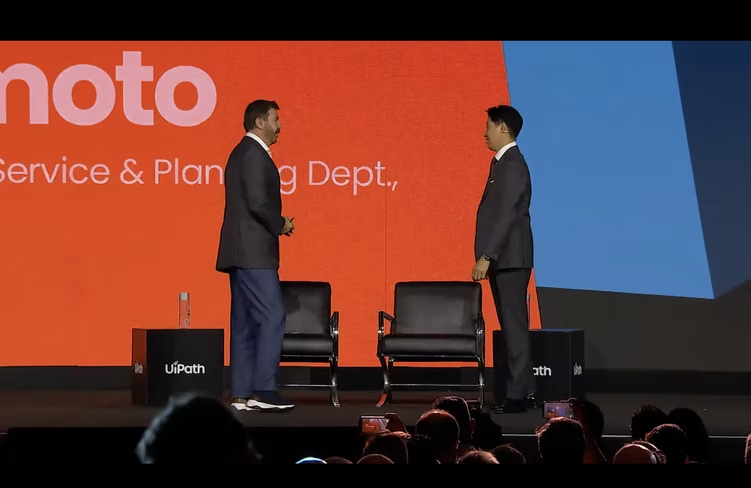
Daniel Dines and Kei Yamamoto of SMBC at UiPath FUSION in Las Vegas, 23 September 2026 — Credit: UiPath
SMBC: 73% is not enough
Kei Yamamoto of Sumitomo Mitsui Financial Group (SMBC), which Dines called one of UiPath’s largest customers, said the bank has automated more than six million hours since 2017. That freed roughly 3,000 employees for other roles, he said. This year, an accounting agent built with UiPath received more than 10,000 reimbursement requests in one month.
“If a process has three steps and each is 90% accurate, end-to-end accuracy drops to about 73%, not acceptable for accounting,” Yamamoto said.
SMBC now combines rules, historical data, generative AI and human checkpoints, so exceptions go to people. Yamamoto said the bank plans to test Cartographer next.
Customers on caution
On a customer panel, Nikki Harper of Mayo Clinic said teams first have to understand a process end to end. William Abrams of Medline said production at 73% accuracy is “unthinkable” for his company, because its hospital customers expect 99%. He added that agents running across the business seem like more autonomy than Medline or its customers are comfortable with yet.
A second panel covered UiPath Test Cloud and what UiPath calls a “dark testing factory”, where testing runs autonomously. Forrester analyst Diego Lo Giudice said the goal should not be full autonomy for its own sake.
“The dark testing factory has a future if it builds trust,” Lo Giudice said.
The cover of Daniel Dines’s book The Work That Remains, shown during his FUSION keynote on 23 September 2026 — Credit: UiPath
“Keep hiring juniors”
Dines closed on the workforce. He said AI cannot provide initiative or will, and that people give AI its goals. He called the decline in hiring juniors the wrong approach, a view he has voiced before. He has also told bosses not to cut jobs too fast because of AI.
Junior hires now have to learn from the people around them, not by writing simple functions AI can already write, he said. Senior staff, in turn, need to mentor them.
In a busy month for tech, Beats has added a new pair of headphones to its ever-growing range – the Beats 360.
With a promise of Beats’ best ever ANC, sound and comfort from a pair of headphones, it’s fair to say the Beats 360 sounds impressive. But how do the headphones look set to compare to the four-star Beats Studio Pro?
Ahead of our Beats 360 review, we’ve compared its specs to the Beats Studio Pro and noted the differences between the over-ear headphones below.
The Beats 360 is available to order now, with an RRP of £299.95. The headphones come in a choice of four colours – Sky, Cloud, Pink and Black – and will come with colour-coordinated earcup and headband cushions.
Advertisement
SQUIRREL_PLAYLIST_10208788
You can also purchase different coloured earcups and headband cushions separately with Cushion Kits. At the time of writing, you can purchase the Cushion Kits for just £9.95 directly from Apple. Just note this price will rise to £49.95 eventually.
Advertisement
Following the Beats 360’s launch, the Beats Studio Pro is now cheaper than before, with a new RRP of £249.95.
Beats 360 promises 1.75x better ANC
Beats explains that the 360 benefit from “1.75x better” ANC than the Studio Pro. Hailed as the brand’s most powerful ANC technology to date, Beats explains the 360’s acoustic system, combined with the technology means the 360 delivers a “powerful, immersive listening experience”.
The Beats 360 is also fitted with Transparency mode that allows some external noise into the headphones.
Advertisement
Advertisement
But how does this compare to the Studio Pro. During our time with the headphones, we found the Studio Pro offered a very strong noise-cancelling performance and managed to remove ambient and noisy public transport sounds effectively. While we did note the Studio Pro struggled to suppress wind, we were left impressed with its natural sounding Transparency mode.
Beats Studio Pro. Image Credit (Trusted Reviews)
With this in mind, we expect the Beats 360 to offer an even stronger ANC performance to the Studio Pro. We’ll be sure to update this versus once we review the headphones.
Beats 360 has interchangeable ear and headband cushions
Like the Beats 360, the Beats Studio Pro comes in a choice of four colour options, including Black, Deep Brown, Navy and Sandstone. However, the Beats 360 not only offers a more eye-catching range of colours as standard (Sky, Cloud, Pink and Black), but you can also swap the earcup and headband cushions too.
Beats 360. Image Credit (Trusted Reviews)
So, although the Beats 360 comes with colour-matched cushions as standard, you can choose to buy knit Cushion Kits in six colours – Black, Cloud, Pink, Sky, Navy and Volt (which is a vibrant yellow), or choose UltraPlush Kits in either Black and Cloud. The latter is the same engineered leather that’s found on the Studio Pro.
Advertisement
Beats 360 has an IPX4 rating
Not only does Beats state the 360 headphones offer its best ever ANC, sound and comfort, but the cans are the first over-ears from the brand to sport an IPX4 rating. That means the headphones can withstand splashes of water, rain and sweat without causing harm to the product.
Advertisement
Beats 360 introduces a wireless-first design
The Beats 360 has a wireless-first design which frees up room in the headband for a lighter and more comfortable pair of headphones. This means the earcups each have their own separate chip and separate battery antenna with a connecting cable between them just for charging, resulting in a more lightweight pair of headphones.
That’s not to say the Studio Pro isn’t a comfortable pair of headphones. However, although generally we found the Studio Pro to be comfortable, our reviewer noted that earpads were slightly too small for his ears. With that in mind, it’s advisable to check the sizing before you buy.
Beats Studio Pro offers longer battery
We were impressed with the Beats Studio Pro’s battery life. Although Beats claims a pretty solid 40 hours of battery life with ANC off, we found in our tests that actually the Studio Pro could provide 40 hours with ANC on – meaning Beats underestimated the headphone’s power.
Beats Studio Pro. Image Credit (Trusted Reviews)
Advertisement
In comparison, the Beats 360 promises up to 32 hours of battery life and a five-minute charge results in an hour of audio playback too. We’ll have to wait until we review the headphones to see how well they really perform.
Early Verdict
Thanks to its improved ANC, comfortable and lightweight design and the inclusion of an IPX4 rating, the Beats 360 look set to be a brilliant pair of headphones that’ll likely suit most users well. However, if you’re sporting the Studio Pro pair, then we’d argue that there’s perhaps no reason to upgrade just yet.
Advertisement
On the other hand, if you’re torn between the two and want a more affordable pair of Beats that still offers a solid listening experience, then the Studio Pair is a great choice thanks to its recent price drop.
We’ll update this versus once we review the Beats 360.
The update to Siri AI will eventually reach the HomePod line. While that is a certainty, it may not be available on the models that are currently in homes.
The HomePod and HomePod mini were left out of the Siri AI party at WWDC, and the updated digital assistant hasn’t yet become available on the smart speaker. However, it is still something widely expected to be on the way.
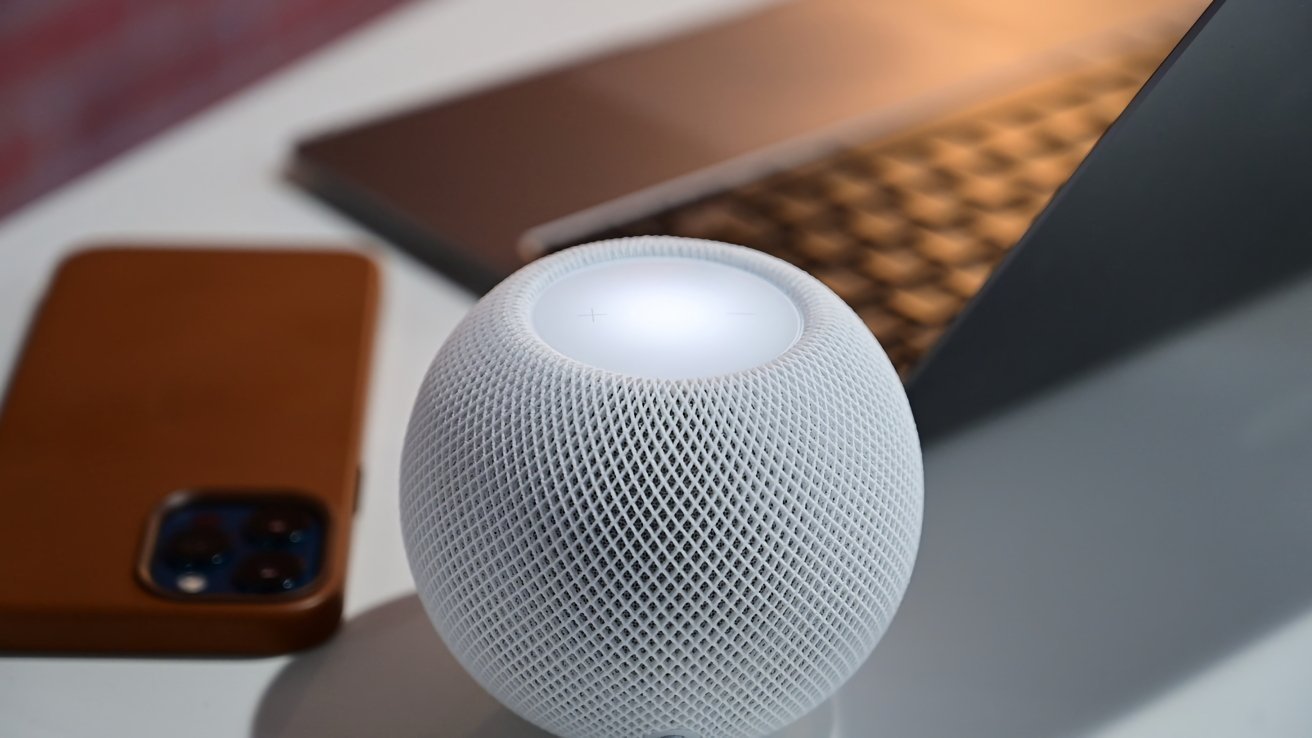
A leaker known as “pdfu” posted to X about Siri AI on HomePod. The account shares that Linwood, the in-house name for the new Siri AI project, is included as part of audioOS 27 also known as HomePod Software 27, but it’s not being used.
Get ready for Siri AI on HomePod.
audioOS 27 includes Linwood, the system behind Siri AI, plus a new look and sound for Siri on HomePod. May require new hardware.
Advertisement
The new status lights emphasize white, blue and orange, matching Siri AI’s palette on other devices.
The account shares a look at the new status lights that will closer match how Siri AI appears on other platforms. It looks generally whiter in construction, rather than the colorful swirl of the existing Siri.
Advertisement
It also adds that Siri AI may require new hardware to function properly. The HomePod is apparently “accepted” as a Siri AI-capable device, but activation is currently blocked.
Water is wet
It is a given that Apple will be adding Siri AI support to the HomePod in the future. As such a Siri-centric device, it would be extremely hard to imagine Apple leaving off that update from the smart speaker range.
Some form of spec-bump update to the HomePod mini will happen in the future. So far, that is thought to consist of a chip update to the S9 or S10 SIP instead of the S5 currently in use.
Support for Wi-Fi 7, Bluetooth 6, and Thread is also anticipated, as well as a second-generation Ultra Wideband chip.
Advertisement
There is speculation that Apple is preparing a wider update than the HomePod mini, with a new Apple TV and a frequently rumored Home Hub also on the horizon. Apple Stores are also allegedly preparing for the smart home catalog overhaul with changes to a few Avenue segments.
[This is a sponsored article withMDEC, but the editorial team had full control over the content. ]
If you still think Malaysia’s role in the global semiconductor industry begins and ends with chip assembly and testing, it’s time to get up to speed.
Since the National Semiconductor Strategy (NSS) was launched in May 2024, Malaysia has been working to own more of the blueprint, building capabilities in chip design, advanced packaging, and engineering to move up the semiconductor value chain. Complementing these efforts, the Malaysia Digital (MD) national strategic initiative supports the growth of high-value digital industries while strengthening Malaysia’s competitiveness in the global digital economy.
The government has committed RM25 billion in fiscal support under the NSS. Within a year of its launch, the initiative has already attracted over RM63 billion in semiconductor investments. Realising these ambitions will require not only investments, but also a strong ecosystem of innovative Malaysian technology companies capable of competing globally.
Advertisement
The goal? To build at least 10 Malaysian companies that generate up to RM10 billion in revenue from design and advanced packaging, and 100 more inching towards that RM1 billion mark.
But strategy means nothing without companies on the ground actually executing it, and Malaysia already has a growing list of contenders doing exactly that. Here are eight companies demonstrating what this ascent looks like in practice.
This firm is probably the name most investors associate with Malaysian semiconductors, and for good reason. The company has built a strong reputation for packaging the radio frequency chips that power your 5G smartphones.
That packaging business has made Inari hugely profitable; profitable enough that it has RM2.14 billion cash reserve that it’s pouring into something more ambitious: advanced chip packaging for AI hardware.
As AI servers and data centres demand increasingly powerful and complex chips, the packaging process becomes more difficult. Multiple chips often need to be stacked or connected with extreme precision to work as one unit.
Advertisement
By mastering this skill, Inari Amertron is establishing itself among the ranks of companies defining the next generation of AI hardware.
It might have a hairline crack or a misaligned connection that nulls it as a defective product, and as chips get smaller and more complex, the cost of a single manufacturing error skyrockets. But these defects are too small for the human eye to catch, so what could manufacturers rely on?
This is what Malaysia Digital (MD) status company ViTrox comes in, with its machines that scan chips using cameras and X-rays to spot such critical issues.
As the world races to build AI servers and next-generation processors, ViTrox is helping ensure those chips meet the standards required to power them, supporting the technological foundations needed for Malaysia’s growing AI ecosystem.
MD status company SkyeChip is arguably one of the strongest proof points for what the NSS is trying to build: a homegrown chip designer.
Most Malaysian semiconductor companies build or package chips designed by someone else, but SkyeChip does the opposite. It designs the blueprint of a chip from scratch, the same way an architect designs a building before construction begins, then licenses or sells that design.
The Penang-based company recently unveiled the MARS1000, Malaysia’s first locally designed edge AI processor built using advanced 7nm process technology.
With over 300 engineers, more than 100 patents filed, and a successful Bursa Main Market listing that raised RM352 million, SkyeChip now sits at the very start of the semiconductor value chain.
The Diversifiers: Taking semiconductor skills into new industries
The same automation systems that run chip factories don’t stay there.
For Greatech Technology, its engineering behind robotic systems, precision automation, and smart vision technology was eventually extended into a new frontier: EV battery production.
Advertisement
The company’s systems, designed to handle microscopic tolerances on chip components, found a natural fit in EV battery pack assembly, where even minor misalignments can affect performance and safety.
From there, the footprint widened. Today, Greatech Technology’s automation systems sit across EVs, solar energy, medical devices, and semiconductors alike.
Similar to ViTrox, Pentamaster Corporation makes automated testing equipment that checks whether a finished product actually works the way it’s supposed to. The difference is that Pentamaster focuses more on functional testing than defect-spotting.
But nowadays the company is moving away from the sluggish automotive segment towards AI and medical manufacturing.
As of earlier this year, Pentamaster’s semiconductor-linked and EV-related automation business has reportedly been gaining momentum, driven by rising demand for power electronics and testing systems used in next-generation vehicles.
Advertisement
With a third production plant under development and design centres planned in California and Munich, the company is steadily expanding its global footprint.
Headquartered in Melaka, D&O Green Technologies produces the high-performance LED packages and chips that power both the exterior and interior lighting systems inside your car. This includes headlamps, brake lights, as well as LEDs behind instrument clusters, climate controls, and infotainment screens.
As more and more vehicles go electric, though, automotive lighting systems are getting more sophisticated and serve as expressive designs.
This shift has helped position D&O within a growing global automotive LED market, where it ranks among the leading players supplying international OEMs. In fact, as of 2022, the company commanded a 7% market share—the fourth-largest in the world.
Advertisement
Its automotive LED components are distributed across key global markets, including China, Japan, Europe, and North America.
The Enablers: Doing the less visible but essential work
Sitting in a space that is easy to overlook but difficult to replace, Aurelius Technologies creates the internal electronics that power larger industrial systems.
The company builds electronic manufacturing services (EMS) products such as printed circuit board assemblies (PCBAs), sub-assemblies, and full box-build systems. These form the internal control and processing units inside industrial equipment, communications hardware, and semiconductor-adjacent applications.
Beyond that, Aurelius Technologies has expanded its capabilities into multicomponent semiconductor modules and IoT-linked electronics.
Based in Shah Alam, MD status company QES Group operates at a part of the semiconductor ecosystem that rarely gets attention, but quietly determines how fast factories can scale.
The company acts as the access layer between global equipment makers and the factories that need them—sourcing, distributing, and integrating inspection and test equipment for semiconductor and electronics manufacturing lines.
Advertisement
QES also installs, calibrates, and maintains these systems, ensuring that the equipment continues to function long after it enters the factory floor.
In manufacturing environments where downtime can halt entire production lines, keeping these systems running becomes just as critical as installing them in the first place.
Sitting one step further upstream are two precision machining specialists: Coraza Integrated Technology and UWC Berhad. They’re both Penang-based and publicly listed, supplying the precision-machined metal components, enclosures, and structural parts that equipment makers like Vitrox and Pentamaster rely on to build their machines.
What’s so significant about these eight companies?
More than just individual success stories, what’s really interesting is how these Malaysian companies connect to one another.
Advertisement
“The Pioneers” set the standards that other semiconductor companies should strive to meet. Next, “The Diversifiers” absorb those standards, sharpen their capabilities, and carry Malaysian manufacturing expertise into new industries. Lastly, “The Enablers” make sure those capabilities spread to smaller companies that can’t build them alone.
This is the NSS’s real bet: A whole ecosystem of companies where each pulls the next one up, thereby collectively shifting Malaysia’s standing in the global technology supply chain.
The investment momentum suggests the opportunity is real, while the companies profiled here demonstrate that Malaysia has the capability to capture greater value across the semiconductor ecosystem.
As the National Semiconductor Strategy continues to gain momentum, companies like these will play an important role in supporting the aspirations of Malaysia Digital 2030 (MD2030), while strengthening the technological foundations needed to realise Malaysia’s vision of becoming an AI Nation by 2030.
Advertisement
The chips, in more ways than one, are on the table.
Streaming is getting more expensive again. Disney is the latest media giant to raise prices for its streaming services, adding to a growing pattern across the industry. The increases come roughly a year after Disney’s last major streaming price hike.
Disney is raising the price of its ad-free Disney+ and Hulu bundle to $21.99 a month, up from $19.99, whereas the ad-free stand-alone plans are each rising to $21.49 per month, up from $18.99. The company is also increasing the price of its stand-alone ad-supported Disney+ and Hulu plans to $12.49 a month.
The new prices are reflected on Disney+’s support page. Bloomberg was the first to report the changes.
Disney+ and Hulu are hardly alone. Streaming companies have spent the past several years steadily increasing prices. Peacock and Apple TV also raised prices in August, while Netflix increased prices earlier this year.
Advertisement
When Disney+ launched in 2019, its basic monthly subscription cost $6.99. Since then, the service has gradually moved further away from that intro price as Disney has tried to turn streaming into a profitable part of its entertainment business.
The latest increases come as streaming remains an increasingly important part of Disney’s overall business. In its third-quarter 2026 results, Disney said entertainment streaming revenue from Disney+ and Hulu rose 11% to $5.5 billion, driven by subscriber growth and the impact of previous price increases.
At the same time, Disney appears to be exploring new ways to expand its streaming business beyond simply raising subscription prices.
The company has reportedly explored the possibility of introducing a free tier for Disney+. This could put the company in more direct competition with platforms such as YouTube and Tubi, which have been capturing a growing share of consumers’ viewing time.
Advertisement
Earlier this month, Disney+ also introduced “Playlists,” a new feature designed to help users discover and continuously watch curated selections of content.
The company is making changes on the technology side as well. Disney recently hired Karandeep Anand as its first-ever chief technology officer. Anand is the former CEO of Character.AI, a company Disney previously accused of infringing on its intellectual property.
When you purchase through links in our articles, we may earn a small commission. This doesn’t affect our editorial independence.
Cybersecurity company OPSWAT found a login bypass and a crash bug in TP-Link’s Tapo C200 cameras
TP-Link has extended that to include its C120 offering too
Anyone on the same network could get admin access, live video, and recordings without requiring the owner’s credentials
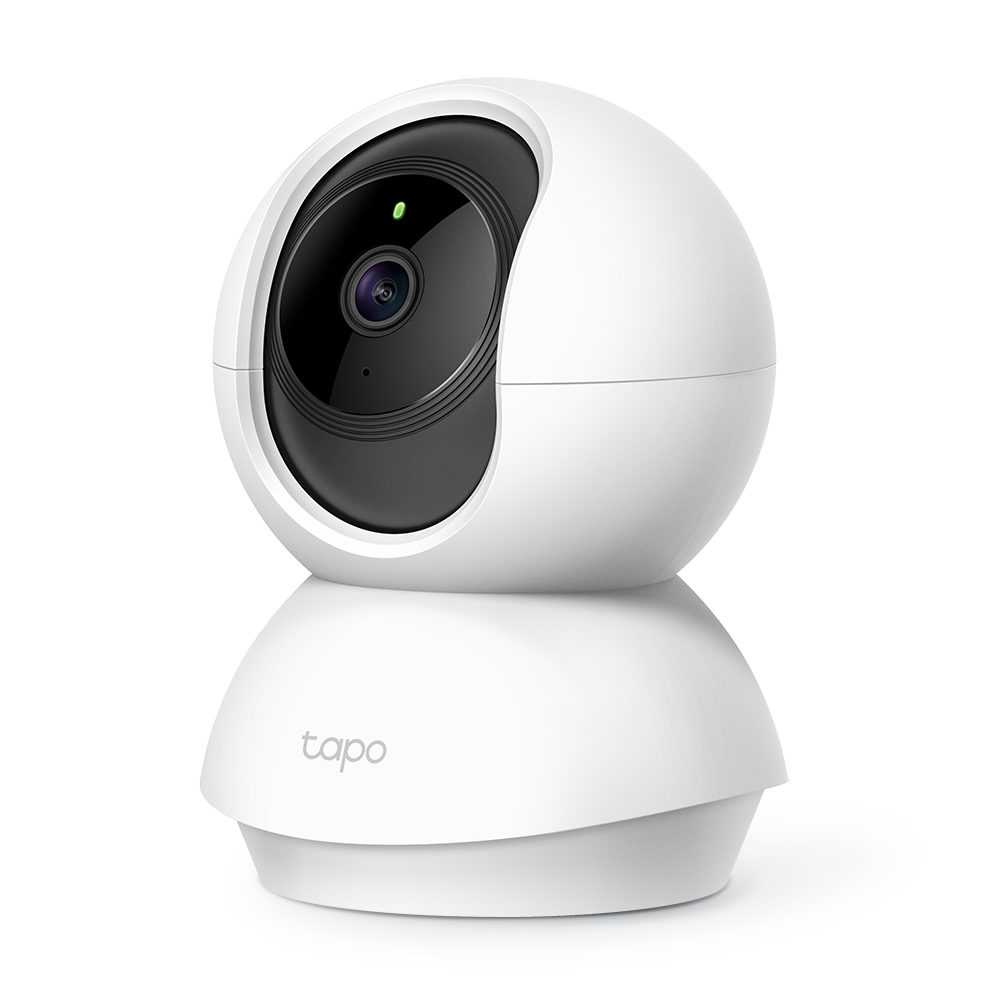
Security researchers at OPSWAT have detailed two high-severity flaws in TP-Link’s Tapo C200, a pan-and-tilt indoor camera listed on Amazon for $26.99 and sold as a baby monitor and pet camera.
The more serious issue is that someone on the same network can log in as the camera’s administrator without the password, accessing the live feed and stored recordings.
At least one other bug, which OPSWAT rates as critical in the same disclosure but does not detail, has not been published.
Latest Videos FromTechRadar
Advertisement
A localized login that requires no authentication
(Image credit: TP-Link)
The TP-Link Tapo C200, as we noted in previous coverage of the incident, isn’t just another security camera that happens to be vulnerable; it is one of the most popular models on the market, clocking in at over 3,000 sales on Amazon alone.
The Tapo C120, in its current iteration, sells over 5,000 units monthly, even as the advisory notes that its V1 hardware version is currently compromised until users update the firmware on their devices.
Both SKUs have received firmware updates that patch the vulnerabilities (CVE-2026-15315 & CVE-2026-15316), which are assigned ‘high’ scores of 8.7 and 7.1, respectively. However, according to TP-Link, CVE-2026-15316 does not affect the C120 camera.
However, the former vulnerability is the more pressing of the two and, according to OPSWAT, is particularly problematic for users because of how the C120 and C200 cameras function.
Sign up to the TechRadar Pro newsletter to get all the top news, opinion, features and guidance your business needs to succeed!
Both run a local management interface over HTTPS and use a challenge-response login designed to prove a client knows the owner’s password. Khoi Tran, a graduate fellow at OPSWAT, and his mentor, Thai Do of the company’s Unit 515 team, found a second verification path in which, under certain conditions, a value the camera hands out during login can be sent back and accepted as a valid authentication response.
Advertisement
The result is an administrator session after a small number of requests, with no password, no existing session, and no requirements for the new ‘owner’. As a result, access includes live video, stored footage, and configuration changes.
OPSWAT’s researchers pointed out that a C200 used as a baby monitor would expose “live video, night vision, crying detection and two-way audio.”
The second flaw, CVE-2026-15316, affects only the C200 and sits in its Wi-Fi onboarding code. Sending the camera an oversized chunk of encrypted Wi-Fi credential data can crash its HTTPS service or restart the device outright, cutting the owner off from management and monitoring until it recovers.
Advertisement
The attacks are somewhat limited in scope: users aiming to exploit such vulnerabilities would need to be on the same Wi-Fi network, or within a certain trusted ecosystem, to begin with.
For now, users upgrading to TP-Link’s newest firmware, issued for both models, rectifies both issues, but there might already be another security patch in the works: OPSWAT also found “a critical vulnerability that could allow an attacker to fully compromise the camera,” which could then serve as a foothold inside the network.
It is currently holding off on publishing any details about the vulnerability as it waits for TP-Link to issue a patch that rectifies the situation. Neither OPSWAT nor TP-Link, however, has provided a timeline for when the patch will be available to end users.
When Elon first took over Twitter with grand plans to “bring back free speech,” I tried to help him run through the standard content moderation learning curve that basically every site created by a clueless tech bro runs through. They all start with “we’re the free speech site, we allow everything!” and very quickly someone points out that “everything” includes blatantly illegal child sexual abuse material (CSAM). I’ve since been told by multiple former X employees that Elon definitely saw that article and… absolutely hated it.
Anyway, soon after that Elon announced that “removing child exploitation is priority #1,” though also suggested people point out CSAM in replies to him if they saw it (which is not how that should be done at all, since it would just point more people to CSAM).
There was also little to no evidence that stopping CSAM was actually “priority #1” seeing that he fired most of the trust & safety team so that at one point there were fewer than 10 specialists working on CSAM. This caused X’s attempts at stopping CSAM to completely fall apart, with experts in the space seeing plenty of evidence that the problem was growing on the platform, rather than shrinking. It probably didn’t help that Musk personally intervened to reinstate the banned account of a conspiracy theorist he really liked after that conspiracy theorist posted one of the most infamous, and most horrifying CSAM images known to authorities.
Of course, that was in the early days. One would hope that a few years further up the learning curve, he’d have learned something. But this is Elon we’re talking about. Last year there was a report that one of the major tool providers for CSAM detection, Thorn, had cut off X, because Elon refused to pay the bill. At the time, X responded angrily to anyone asking about the Thorn situation by claiming that they had put in place their own, better technology to spot CSAM.
How’s that going? Not too well, according to the NY Times, which worked with the Canadian Center for Child Protection to scan X for known abuse imagery. The report covers two separate findings, both of which are alarming. First, there have been obviously lots of reports (and a growing number of lawsuits) regarding claims of Grok producing CSAM. Much of the early reporting, though, didn’t clearly distinguish between actual CSAM and images that are still horrifying and problematic, but probably don’t legally qualify as CSAM.
Advertisement
However, the Canadian Center for Child Protection is certainly able to determine what is actual CSAM, and they were able to find dozens of images that Grok created that appeared to qualify:
In December and January, Grok’s X account produced millions of images ofpeople with their clothing removedin response to prompts from users. After a public outcry, X said it would halt the account from producing those images.
Later, the Canadian center found 65 instances in which Grok created sexualized or exploitative images of children before X halted the bot. During that time frame, users also prompted the chatbot to edit clothed photos of known victims of childhood sexual abuse and depict them in lingerie or bikinis.
Equally as concerning, though, was that the NY Times was able to use PhotoDNA, the baseline tool that many web services use to identify known CSAM via hash matching, and found even more examples this year:
The Times conducted its own scan for child sexual abuse material on X by writing an automated computer program that searched for related terms without displaying the images, which are illegal to view. Links to the images were sent to a Microsoft service that checked whether they were included on lists of known abusive material compiled by the National Center for Missing and Exploited Children and other child safety groups. Matches were verified by analysts at the Canadian Center for Child Protection.
The Times found more than 75 images between January and June. The program The Times wrote reported the images to the authorities. The images were removed, but some had been viewed hundreds of times.
Advertisement
This matters because stopping CSAM is a never-ending game of whac-a-mole when it comes to new material. But, for the most part, that’s not true for old material. PhotoDNA and a few similar offerings have gotten quite good at catching the set of “known” images that circulate over and over, and blocking those before they ever hit a site is baseline competency in trust & safety. These images should never have made it to the site, let alone “viewed hundreds of times.”
One explicit photo The Times’s automated program found on X, which has been known to authorities for at least seven years, showed a young girl with fluid on her face being raped orally. The post of the photo, which advertised the sale of similar illegal content, was publicly available for over an hour in March and received 16 likes and nine reposts from other users before The Times found and reported it.
The person depicted in the image, now an adult, said in an interview that she believed X profited from her abuse and further victimized her by not stopping the image from being shared.
“They’re getting benefits from my abuse, and it just feels like it’s never going to stop,” the woman said of X. She spoke on the condition of anonymity because she has been stalked by people who viewed images of her abuse online. “I get angry that I’m still having to go through this decades later, and that there doesn’t seem to be real-life consequences for people.”
The whole joke in that speedrun piece from four years ago was that Level One lasts about five minutes. You announce that anything goes, someone points out that “everything” includes CSAM, and you quickly learn how to start fighting CSAM — because that’s the one bit of content moderation that everyone agrees on. And the easiest version of that, catching the known images via hash-matching, has had obvious battle tested tooling for years. Elon chose not to use them, insisting he’d built something better himself (perhaps with Grok?). Yet, what he built appears to have been outperformed by a NY Times reporter with a script and access to the PhotoDNA API.
Advertisement
Four years in, and Elon still hasn’t cleared Level One of the curve. Yikes.
As concern over AI safety and rogue agents continue to make headlines, it’s no surprise that cybersecurity stocks are rising, or that investors are pouring massive amounts of capital into startups trying to build the next generation of security for an AI-native world. We’re even seeing companies like Instinct and Simile bring in nine-figure checks and valuations that wouldn’t have made sense a few years ago.
With a front row seat to it all is Shardul Shah, a partner at Index Ventures who’s spent nearly two decades investing in cybersecurity and enterprise software — including six consecutive rounds in cloud security startup Wiz, which Google acquired for $32 billion earlier this year in one of its largest acquisitions ever.
On this episode of TechCrunch’s Equity podcast, Shah joins Rebecca Bellan to break down why he thinks periodic, human-in-the-loop security can’t keep up anymore, and why Index continues investing in AI-native security companies at stages that once required much more proof.
This article is crossposted from IEEE Spectrum’s careers newsletter. Sign up now to get insider tips, expert advice, and practical strategies, written in partnership with tech career development company Parsity and delivered to your inbox for free!
If you have kids, they’re probably back in school right now after the summer break. Mine are too.
My kids range from 9 to 20 years old, and lately I’ve been thinking a lot about what their future careers are going to look like.
The more I use AI, the more convinced I am that it’s a multiplier, not a substitute.
Give a great researcher AI tools and they can accelerate their research. Give an experienced software engineer the same tools and they can build at an incredible rate. But put those tools in the hands of someone without foundational knowledge and you often get something else you’re used to seeing way too much of: slop.
We’ve all seen the vibe-coded applications that barely work. Our inboxes are filled with emails that sound suspiciously identical. Teachers are reading papers that sound like they were all written by the same person. That “person” has the last name GPT.
Advertisement
When everyone has access to the same tools, having an actual voice becomes a differentiator.
Ironically, strong writing skills might be MORE important because of AI, not less. Text is still the primary way we communicate with these models, so being able to clearly articulate what you want improves what you get back.
But more importantly, writing teaches you to develop ideas of your own.
AI can help you express your opinion. It shouldn’t manufacture one for you.
Advertisement
2. Learn to speak
Like written communication, speaking skills are now at a premium—but for a different reason.
We live in a strange moment. We’re more digitally connected than ever, while often feeling increasingly isolated from one another. At the same time, we’re seeing renewed interest in conferences, meetups, communities, and in-person experiences.
When human interaction feels scarce, communication becomes more valuable.
There’s a timeless book, originally published 90 years ago, that teaches these interpersonal skills, and it’s probably more valuable for engineers than another white paper on how neural networks work: How to Win Friends and Influence People.
An AI can generate a presentation for you, but it can’t convincingly deliver it to a skeptical audience. That takes emotional intelligence.
3. Learn to be bored
This might be the hardest one.
We have engineered boredom almost completely out of our lives. There’s always a podcast to listen to, a notification to check, a video to watch, a feed to scroll, or now an AI to talk to.
Advertisement
Go for a walk without headphones. Eat without looking at a phone. Sit in the car without immediately reaching for something to fill the silence, and let your mind wander.
Because boredom isn’t wasted time. It’s a breeding ground for original ideas.
The danger I worry about isn’t that AI becomes too intelligent, but that we become too willing to outsource the uncomfortable parts of thinking.
The students going back to school today will enter a workforce filled with technology that I couldn’t have imagined when I was their age. I have no idea what the dominant AI model will be by then or even what interacting with a computer will look like.
Advertisement
That’s exactly why I don’t want to optimize their education around today’s tools. I want them to learn the skills that will outlive the tools.
Software engineers have entered a new era of code review. The strategies they’re now testing will determine whether AI can actually provide code that’s faster and more reliable when you factor in the review process. If it can, what does that mean for the entry-level engineers who are still learning to code on their own?
In response to a barrage of actions by the U.S. federal government to limit legal immigration, tech companies are adapting their search for top talent. IEEE Spectrum looked into the responses to proposed changes, like higher fees for H-1B visa applications.
As AI changes the job market and day-to-day work of engineers, young professionals are often told they need to be adaptable. But what does adaptability actually look like in practice? The skill has different definitions depending on who you ask, but with the right mindset and support from leadership, adaptability can help keep you afloat.
My YouTube algorithm is sacred, with years of data about my preferences and viewing history fermenting into whatever videos it picks for my home screen. YouTube’s algorithm, while not perfect, sure knows what I want to see. The current top three videos on my front page are an Apple Watch analysis, a Big Brother season 28 update, and something called “I Lost to the Muppets” from comedian Chris Fleming. Click. Click. Click.
As part of its Made on YouTube event Wednesday, Google released several new features, including a Custom Feeds button for adjusting what videos pop up on your front page. It’s a rare chance for users to directly tweak their algorithmic feed on YouTube, in ways that go beyond just pressing thumbs up on a video or blocking a creator.
To try it out, users can click the Your custom feeds button below the search bar and type a request for the feed they’d like to see. YouTube uses large language models to process your request and whip up a freshly personalized homepage. “I want a rainy Shanghai vibe: café jazz, street food, and vlogs,” read one of my suggested prompts.
Courtesy of YouTube
YouTube tested Custom Feeds as an experimental feature earlier this year, before deciding that it was a good fit. The company plans to roll it out soon as an option for all US users, whether viewing on mobile, desktop, or TV.
Advertisement
“Users are always telling us that they want more control,” says Emily Moxley, YouTube’s vice president of product management. “They want more ability to steer their algorithm. With custom feeds, we’re giving them a natural-language way that they can do that. They can tell us exactly what they want.”
So, I told YouTube exactly what I wanted to see: “Gooey macaroni and cheese recipe videos, Caleb Hearon clip compilations, and crystal singing bowl videos under 15 minutes.” And the feed it generated was exactly that. My perfect zen blend for rotting on the couch after a long day. YouTube suggested potential additions to expand my prompt, like “uploaded this month” and “without talking or commentary.” Not bad.
The Custom Feeds button sits next to other topic tabs below the search bar, like “Music” and “Podcasts.” Experimenting with this tool doesn’t replace your standard homepage, which you can access anytime by clicking the “All” button. Users can save multiple custom feeds.
Platforms like YouTube have used machine learning tech for years to build your social media feeds. Now, in the age of generative AI, YouTube is building on that technological foundation and introducing a new way to use AI to build custom video feeds, the company announced at Made on YouTube on Wednesday.
You will soon be able to build multiple custom feeds of recommended videos by prompting YouTube like you would a chatbot, using plain language. So you can have feeds dedicated to specific subjects, like photography or college football, and YouTube creates dedicated tabs on your homepage for each feed. This will be rolling out across desktop, TV and mobile in the US next month.
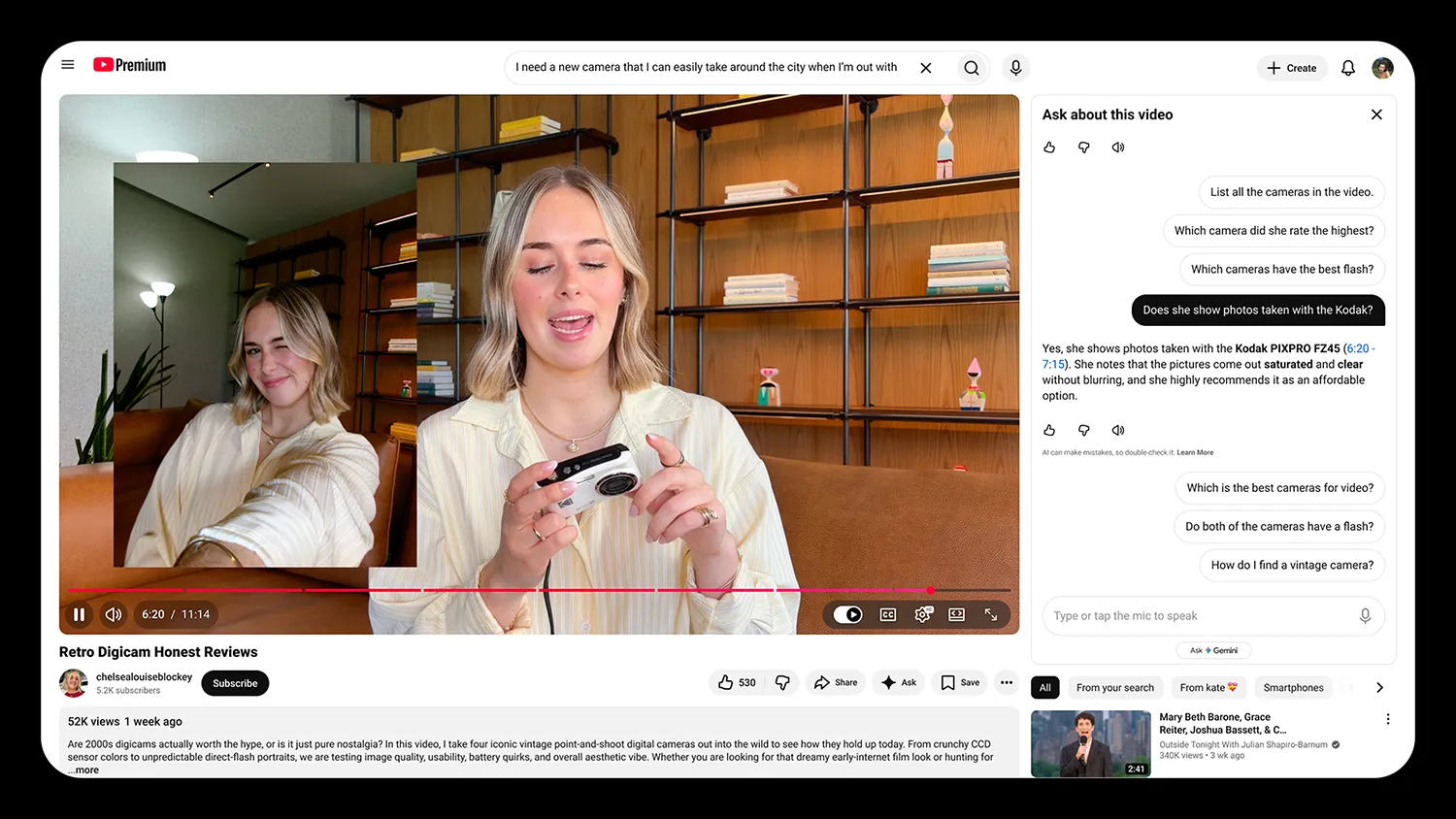
YouTube’s experimental Ask YouTube tool lets you search for videos with AI, and it’s expanding its capabilities. Now, if you search for information about a new product, like the new iPhone Duo, the Ask YouTube AI can compile information from videos and outside sources. It uses that information to build comparison tables, among other things. You can click on a video that the tool surfaces and continue asking questions on the video’s watch page.
It is somewhat similar to how a chatbot can search the web for information, compile it and cite its sources. But similar to the decline in traffic that digital publishers have seen with the rise of generative AI, there is a risk that YouTube’s AI-enhanced search may eliminate the need for people to click on video links and consume original content.
Advertisement
“Our goal is to connect viewers with the right video faster. With Ask YouTube, we expect watch time to remain steady or improve,” a YouTube spokesperson told CNET. Other AI features, such as chapters and AI-generated summaries, “showed no negative impact on watch time; instead, they helped retain viewers.” Videos included in the AI search’s answers will “prominently display the video title and channel name,” the spokesperson said.
The AI takeover of YouTube has been an ongoing project for its parent company, Google, in recent years. While creators have been using AI to edit and create videos, leading to an onslaught of AI slop, the platform has been integrating new tools powered by Google’s Gemini models. Now, YouTube is focusing its AI efforts on personalization, both for viewers and creators, to ultimately keep us scrolling and monetize content. It is also adding Gemini as a content creation assistant to Shorts and the YouTube Create app.
YouTube has been under fire this year as a landmark court decision found that Meta and Google designed their sites to be intentionally addictive to children and teens, harming their mental health. YouTube has denied this, saying it’s a streaming platform, not a social media platform. Many child safety researchers and advocates are worried about social media sites adding more AI features. We’ve already seen how AI features can harm kids, such as in the case of Reuters’ 2025 investigation that found Meta’s AI chatbots on Instagram would engage in sexual and romantic roleplay with children.
Creator-specific tools coming to YouTube
YouTube is introducing a dedicated tool for episodic content, called Shorts series. This will let content creators designate videos as part of a dedicated series, with season and episode numbers. As more content creators are investing in serialized content — think Sydney Jo’s The Group Chat series or microdramas — this tool will allow people to separate and highlight these videos from the rest of their posts. Viewers will be able to more easily find and watch these videos. The series will live on a creator’s page as a playlist. Only creators in YouTube’s partner program will have access at launch, available on web, mobile and TV.
YouTube is also offering creators two new ways to personalize content for their viewers. Creators will be able to test multiple thumbnails and preview clips for their videos. YouTube will serve the video to real viewers, and depending on each thumbnail and video cut’s performance, it will match a viewer with the version YouTube thinks they will be most likely to click on. This kind of personalization is a key part of AI’s promise for digital marketers.
Advertisement
Auto dubbing, or real-time audio translation, will be available for livestreams, starting with English and Spanish, with plans to expand to additional languages in the future. YouTube is also expanding how creators can monetize their content with a new affiliate partnership with Amazon.
Katelyn Chedraoui
Reporter 2
Katelyn is a reporter with CNET covering artificial intelligence, including chatbots, image and video generators. Her work explores how new AI technology is infiltrating our lives, shaping the content we consume on social media and affecting the people behind the screens. She graduated from the University of North Carolina at Chapel Hill with a degree in media and journalism. You can reach her at kchedraoui@cnet.com.
See full bio




























![LISA - 'MONEY' Dance Practice [Mirrored]](https://wordupnews.com/wp-content/uploads/2026/02/1770259125_maxresdefault-80x80.jpg)






































You must be logged in to post a comment Login