It isn’t quite hailing frequencies open, but researchers from Harvard claim they’ve picked up a radio signal directly from a nearby exoplanet. Before you get too excited, planets in our solar system also emit RF, so no one credible is claiming these are extraterrestrial reruns of their version of I Love Lucy, but it is the first time they’ve localized a radio signal to an exoplanet, in this case, Beta Pictoris B.
Speaking of space, the asteroid formerly known as 1981 EC26 is now sporting a new moniker: (14331) Alyankovic. If you think that sounds like (Weird) Al Yankovic, you aren’t wrong. The Tucson Star reports that, thanks to the efforts of several planetary scientists who are also Weird Al fans, the International Astronomical Union made the name official. Apparently, another asteroid now bears a name in honor of Weird Al’s predecessor, Tom Lehrer.
The postmarketOS — er — Nura logo.
If you follow open mobile phone software, you probably know the name postmarketOS, a Linux distribution based on Alpine aimed at mobile phones and tablets. Well, now you can forget it. The project announced a name change, so we’re now talking about Nura. Why Nura? According to the team, it is a shortened form of Nuraghe, some granite structures in Sardinia that are over 5,000 years old. The FAQ mentions that postmarketOS was hard to remember. We aren’t sure Nura is that much more memorable. Perhaps they should have pivoted to Phonz OS.
High performance JavaScript.
Ever write an Arduino “sketch?” We’d bet you have. You might know that Arduino forked from Wiring, and Wiring was, actually, an offshoot of Processing. There is another Processing offshoot, p5.js, and it, unsurprisingly, looks a lot like Arduino. Now p5.js can access your GPU via WebGPU, and if you want to learn about CPU programming, there’s a page for that.
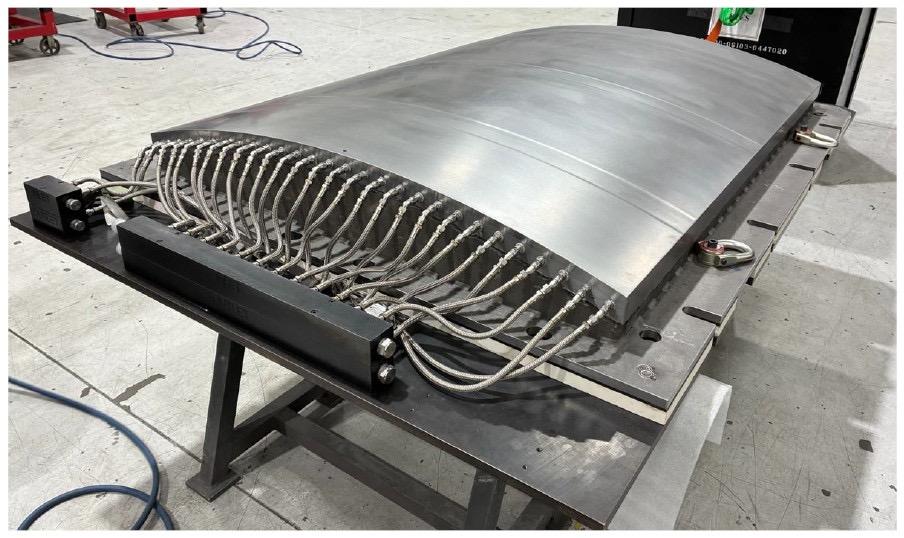
A 2-ton 3D-printed die (photo credit: Baker Industries)
We all want a metal 3D printer, but even when you get one, it isn’t likely to be turning out two-ton dies. Unless, of course, you work for a big national laboratory. The die is six feet long and four feet wide. Apparently, it will be shaping some thermoplastic composite for us in experimental aircraft.
We always thought transformers were a way to step AC voltages up or down. Or maybe they were a Lou Reed album. Then they were toy robots. Now they are the power behind AI chatbots. If you are as confused as you are, this transformer (of the AI kind) explainer might help you.
If you can find the old 2011 Kindle 4 that slipped behind your couch cushions a few years ago, you might be able to load a mainline Linux kernel on it soon. The patches are out there, and the kernel supports a lot of even stranger things, like the IBM System/390, the Sega Dreamcast, and the Nintendo GameCube.
Advertisement
See something interesting that you think would be a good fit for our weekly Links column? Drop us a line, we’d love to hear about it.
Social media has become central to how businesses communicate with customers, promote their brands, and build trust. But as businesses have relied more on these channels, they have also become a more attractive target for cybercriminals.
New research has found that social media impersonation and defamation have risen from the fifth greatest cyber threat last year to the top expected cybersecurity threat over the next three years. The data also revealed that employee and executive impersonation, including deepfakes, has entered the top five areas of risk for the first time.
Elliott Champion
Senior Director of Technology for Brand Protection at CSC.
These findings point to a wider challenge for security teams. Cybercriminals are still trying to compromise systems, but they are also increasingly using other ways to exploit legitimate brands’ hard-earned trust. That trust might sit in a senior leader’s online profile, a brand’s social media presence, a customer service account, a domain name, or a website that looks legitimate at first glance.
Latest Videos FromTechRadar
Advertisement
For security leaders, this means the attack surface is no longer defined only by infrastructure they own and control. It also includes the public-facing channels where customers, employees, and partners interact with the company every day.
Security strategies now need to reflect that reality. A threat may start with a fake profile, but it rarely stays there.
Advertisement
Fake profiles and fraudulent customer service accounts are not new tactics, but they are becoming more prevalent and are increasingly being used as entry points for phishing, fraud, counterfeit sales, and wider brand abuse.
And this is all happening at a time when cybersecurity teams are already under pressure. Recent research found that 72% of senior technology leaders said the level of cybersecurity threats faced by their organization in 2025 was either “critical” or “very critical”.
Sign up to the TechRadar Pro newsletter to get all the top news, opinion, features and guidance your business needs to succeed!
On social media, criminals can meet potential victims where they are already used to engaging with brands. Fake accounts can be used to share malicious links, promote fraudulent schemes, spread false information, or pose as legitimate support channels.
Advertisement
Attackers may then direct users to a “second location”, such as a lookalike website, fake login portal, or phishing page, where victims are encouraged to enter account credentials, payment information, or other sensitive data.
A separate but related risk is counterfeiting. Fraudulent social media accounts can impersonate legitimate brands to advertise fake goods, directing customers to websites where counterfeit products are presented as genuine. In both cases, criminals are using the trust associated with a recognized brand to make the next step of the attack appear credible.
The impact can also go beyond fraud and counterfeiting. Impersonation or fake accounts can be used to spread false or defamatory claims about a company or its employees, potentially damaging reputation and customer confidence even when no direct financial fraud takes place.
Advertisement
As such, social media abuse, domain impersonation, and identity-based fraud should be treated as part of the same threat landscape.
AI is making impersonation faster and more convincing
AI is making impersonation faster and more convincing. Criminals can use AI tools to imitate a brand’s tone of voice, generate convincing customer messages, produce realistic imagery, or create more credible fake profiles at speed.
Deepfakes, synthetic audio, and AI-generated content can also strengthen employee or executive impersonation, particularly when combined with information gathered from multiple sources. For example, an attacker could create a fake executive profile and use AI-generated messages that mimic how that individual communicates, making requests or links appear more credible.
Advertisement
But AI is only one part of the threat. Attackers can also use established techniques to build the infrastructure behind impersonation campaigns. Domain generation algorithms (DGAs), for example, can produce large numbers of plausible lookalike web addresses to support phishing and impersonation campaigns. DGAs are not inherently AI-powered, but they remain a concern for security leaders, with 86% of respondents viewing them as a threat.
These domains can then be combined with fake social media profiles to create a more convincing digital presence. A fake executive account may point to a fraudulent landing page. A counterfeit product post may direct customers to a lookalike domain.
For customers and employees, these attacks are becoming harder to identify based on appearance alone. The signs of fraud may be subtle, and by the time an impersonation attempt is reported, the campaign may already have moved to another account, page, or domain.
Advertisement
Businesses need a more connected approach to protecting trust
Social media impersonation should be treated as part of the wider cybersecurity strategy, rather than as a standalone brand or communications issue. That requires coordination between the teams responsible for protecting organizations, their people, and their customers.
Attacks often move from a fake profile to a lookalike domain, phishing page, or fraudulent website, so companies need a connected view of where threats are emerging. Social media teams may spot one warning sign. Security teams may see another. Legal or brand protection teams may hold the takedown process. A coordinated approach can help companies respond more effectively.
Alongside those measures, organizations need continuous monitoring across social media, domains, websites, and other public-facing digital assets to identify impersonation, brand abuse, and related threats occurring beyond infrastructure they directly control. Bringing these signals together can help teams recognize when activity across different channels forms part of the same campaign.
Clear processes for investigation, escalation, and takedown are essential, particularly as AI enables campaigns to spread, adapt, and reappear rapidly. Businesses need to know who owns the response, what evidence is needed, and how quickly action can be taken.
Advertisement
Technology will also play a growing role. More than half of respondents, 57%, confirmed that they use AI-based monitoring and enforcement solutions, while 44% use AI-based solutions for threat detection and fraud prevention. Given the 24/7 nature of the internet and how quickly malicious accounts and materials can appear, some level of automated detection is increasingly important for identifying threats at scale.
This is an important step, but tools alone will not solve the problem. Companies need the right governance, clear ownership, and close collaboration between security, legal, marketing, and digital teams.
The goal should be to detect and stop impersonation before it reaches customers, employees, or partners and causes wider damage.
Advertisement
Looking ahead
Social media is no longer simply a communications platform that sits outside the traditional cybersecurity perimeter. It has become one of the main environments in which criminals exploit trust, impersonate legitimate people, and manipulate victims into falling for fraud.
As AI makes these attacks faster and more convincing, businesses will need to connect social media protection with their broader approach to identity, domains, and digital brand security. This means monitoring for threats across the full online journey, sharing intelligence between teams, and responding before an impersonation campaign has time to spread.
The companies best equipped to protect customers will recognize that trust itself has become a target and treat the channels where that trust is built as a core part of their cybersecurity strategy.
This article was produced as part of TechRadar Pro Perspectives, our channel to feature the best and brightest minds in the technology industry today.
The views expressed here are those of the author and are not necessarily those of TechRadarPro or Future plc. If you are interested in contributing find out more here: https://www.techradar.com/pro/perspectives-how-to-submit
Facepalm: If you were a thief with a penchant for stealing vehicles, a couple of trailers emblazoned with Nvidia logos are going to be tempting targets. Sadly for the criminals who did steal these two units, they never contained hundreds of thousands of dollars’ worth of GPUs; each one was filled with 20,000 pounds of sand.
The thieves’ mistake was that the trailers had more than just Nvidia’s logo on them: they also bore the name PlusAI, an autonomous truck startup that is working with Nvidia on its self-driving technology and AI software.
Rather than hauling around very expensive Nvidia equipment, PlusAI simulates how the cargo loads react to road conditions by packing its semi-trailers with sand. A lot of sand.
“PlusAI uses simulated loads in its trailers to assist with research and development testing,” Lauren Kwan, a company spokesperson, told Wired.
Advertisement
It was only discovered that the trailers had been stolen when a friend of a top PlusAI executive saw them near their workplace in Newark, California, and rang the exec to congratulate them on their success.
This set off alarm bells as the trailers weren’t supposed to be in that location. As far as the company knew, they were docked outside its warehouse, half a mile away.
It appears that the thieves hooked up the trailers to their own cabs and drove off. When they stopped to see what incredibly valuable goods they’d pilfered, one can only imagine their disappointment at finding half a beach in each container. It’s believed that they then simply left after breaking open the doors, abandoning the units.
The case is currently under investigation by police, and no arrests have been made. Nvidia has yet to respond to a request for comment.
Advertisement
The AI boom and resulting increase in data center hardware prices have made the technology a prime target for thieves. It was reported in August that two recent cases involved criminals appearing to have used car crashes to separate trucks from their security escorts before the shipments vanished, suggesting the drivers may have also been part of the heist.
In June, California Highway Patrol recovered more than $2.2 million in merchandise allegedly stolen in three separate incidents. The recovery included eight pallets of Celestica server switches made for Meta, valued at $550,000.
Your phone may be all you need until battery life, navigation or rough conditions start getting in the way.
StoryTime Studio/Shutterstock
Most of what a casual cyclist wants from a bike computer can already be accomplished with a smartphone. Install it in a secure handlebar mount and it will give you turn-by-turn directions, log a ride and display your speed, distance and elapsed time. If you’re just commuting or take the occasional weekend ride, it’s hard to convince yourself that you need to buy another screen for your handlebars.
A fitness smartwatch makes that decision more difficult. An Apple Watch can track heart rate and cycling activity, connect to Bluetooth speed, cadence and power sensors, and display the workout on an iPhone through a full-screen Live Activity. That means a bike computer must address a problem you actually have. For a lot of riders, it won’t do that.
Advertisement
Your phone and watch may already be enough
Maksim Safaniuk/Shutterstock
The phone has an obvious cost advantage since you already paid for it. A good mount is much cheaper than a dedicated cycling computer and apps can be used for navigation and GPS ride recording.
Google Maps provides bicycle directions in areas where it supports them, but there’s one annoying thing if you’re going somewhere where reception is not great: cycling directions don’t work offline, even if you’ve downloaded the map of the area. There are apps like Komoot and Ride with GPS that can do offline cycling navigation, but some features may require a subscription or map purchase.
An old GPS-equipped phone can also serve as a good bike computer. Fill it up with routes via Wi-Fi and leave your primary phone in a safer location, since GPS recording and downloaded navigation do not require an active SIM.
A smartwatch completes the picture by collecting heart rate and other fitness metrics during exercise, with the phone managing the map. Even the battery-life argument becomes less of a factor on the occasional long ride when you throw a small power bank in a bag.
Advertisement
There are still compromises. Your daily driver is left out on the ride to deal with rain, direct sunlight, crashes and whatever else the road or trail has in store. It’s also consuming battery that you might need for calls or emergencies. And if you’re uploading regular routes to a fitness service, check its privacy settings before casually publishing a very accurate map of where you leave home every morning.
When the compromises become routine, it makes sense to use a bike computer
Karolis Kavolelis/Shutterstock
Dedicated hardware begins to outpace the phone on battery life. Today’s bike computers can run GPS and navigation while keeping the display visible for many hours without touching your phone’s battery. That matters more to endurance riders, bikepackers and anyone regularly spending half a day in the saddle.
Purpose-built hardware also earns points when the weather gets ugly. Bike computers are built around secure mounting and water resistance, and many include controls that can be operated even in rain, mud or gloves. For serious riders, they can be paired with power meters, heart-rate straps, cadence sensors, rear-facing radar and more via Bluetooth or ANT+.
Advertisement
That doesn’t mean that the smartphone is second-rate. Its larger screen is sometimes better for checking a map, locating a restaurant or altering plans mid-ride. Some bike computer safety features also still require a paired phone for data, so don’t assume that you’ll be leaving your handset at home when you get a bike computer.
The better question is whether these annoyances happen often enough to justify another device. If a phone mount, smartwatch and occasional power bank get you through your rides without much fuss, keep your money. Once preserving phone battery, all-day navigation, wet-weather controls or dedicated sensor support stop being hypothetical problems, a bike computer starts earning its place on the handlebars.
Aoibheann Daly has been recognised by the European Commission for her project and will go on to participate at Regeneron ISEF in 2027.
Irish student and Stripe Young Scientist and Technology Exhibition (YSTE) winner Aoibheann Daly has won a core prize at the European Union Contest for Young Scientists 2026 (EUCYS).
The ceremony in Kiel, Germany, which was held from 22 to 27 September, saw more than 140 young scientists from 36 European and international guest teams showcase their research across a range of scientific disciplines.
Daly received the Special Jury Award for Youth, which is awarded directly by the European Commission and according to EUCYS, is given in recognition of the delivery of the best scientific projects presented during the contest.
Advertisement
Her project, GlioScope: Multi-task Deep Learning and Causal AI for Glioma and Glioblastoma Profiling, utilises AI intelligence to enable doctors to diagnose and treat brain cancer. The project aims to improve patient care, deliver significant healthcare benefits and save valuable time.
Daly will go on to participate as a finalist at Regeneron ISEF 2027 in Los Angeles, California.
Commenting on the win, Daly said, “Receiving a core prize at EUCYS and being selected as a finalist for Regeneron ISEF 2027 is an incredible honour. To represent Ireland on the European stage was already a privilege, and I’m hugely grateful to the Stripe Young Scientist & Technology Exhibition, my teachers, family and everyone who supported me along the way.”
Alison Ahern, the head of Stripe Young Scientist and Education Partnerships, added, “We are incredibly proud to see Aoibheann receive a core prize at EUCYS 2026, and to be selected to participate as a finalist at Regeneron ISEF 2027 in Los Angeles, California.
Advertisement
“From the moment she presented her project at the Stripe Young Scientist & Technology Exhibition, it was clear that her work combined scientific rigour, innovation and real-world impact. To see that recognised on the European stage is a proud moment for Irish science, and reflects the extraordinary standard of young scientific talent in Ireland which we at Stripe are honoured to play a small part in.”
Don’t miss out on the knowledge you need to succeed. Sign up for the Daily Brief, Silicon Republic’s digest of need-to-know sci-tech news.
When you go off-roading, you expect things to get a little messy — mud on the fenders, some chip damage on the rims, etc. But you may be surprised when you see your tires are blue underneath the mud. For the most part, the blue color you’re seeing is usually a reaction after your tires are exposed to certain chemicals, heat, or mud.
Tires contain a wide range of chemicals in their composition, including benzothiazoles, chlorinated paraffins, melamines, and others that may be considered toxic to the environment. If these chemicals migrate to the surface of the tire, there could be a reaction when exposed to UV rays, heat, certain cleaning products, or mud particles. Some mud can have abrasive particles that wear down a tire, exposing the blue tone underneath and reacting with the chemicals inside the tire. So if you see blue on your tires after an off-roading adventure, it doesn’t necessarily mean your vehicle is damaged, but it could stain the tires if you don’t try to wash it off.
Advertisement
How to maintain off-roading tires (to avoid blue staining)
Dmitry Molchanov/Shutterstock
If you want to avoid blue stains on your sidewalls, you need to properly maintain your off-roading tires, which requires a few extra measures. First, you should reduce the air pressure before tackling a trail to improve traction on challenging surfaces and obstacles. This also reduces wear and tear on the tread since you won’t be slipping as often. You will also want to check your shocks, since off-roading relies so heavily on suspension. Shocks are meant to absorb the impact of your tires on the ground — your tires will take the brunt of these impact if your shocks aren’t working as intended. This can cause uneven wear as you go over bumpier and more uneven surfaces.
While most drivers know to rotate their tires, off-roaders also have to consider their spare — this ensures that all five tires have equal wear and gives each one a break. Those with a full-size spare will have to learn the clockwise five-tire rotation pattern to ensure each one spends time as a spare. Tire alignment is also important if you want even wear, but you may need to go to someone who better understands lifted trucks and SUVs.
Advertisement
After you go off-roading, you’ll want to clean off your tires to remove debris and avoid the possible blue staining. Rinse them, then use a stiff tire brush to scrub specialized tire cleaner on the tread and a softer brush for the sidewalls. Rinse again, then dry the tire with a clean towel. You’ll want to avoid cleaners with harsher chemicals in case it interacts with the tire chemicals that have risen to the surface. You may even want to consider tire sealant. Lastly, store your tires away from the heat and sun, and consider tire covers to slow down any cracking in the rubber.
We may receive a commission on purchases made from links.
The Bosch brand is one with many different areas of focus. It’s a key brand in the household appliance industry, and of course it also makes a wide array of hand and power tools. You’ll find numerous Bosch-badged tools and accessories in the hands of professionals and homeowners looking for good durability and favorable pricing. The company is among the best German tool brands on the market, offering tools and tool service in around 150 countries.
Advertisement
With so many pieces of gear contained within Bosch’s catalog, it’s only natural that many of them would be niche finds or specialized variants of standard tools, designed to handle hyper-specific tasks that users might encounter. Everything from unique drilling tools to high-powered cutting equipment designed to go above and beyond the casual user’s needs can be found. These tools represent some of the most specialized equipment Bosch has to offer, meant to support the most niche tasks.
Advertisement
Expert 18V 6-Inch Random Orbit Sander
The orbital sander is a mainstay in any toolkit, but not every one is built with the same capabilities. Bosch’s Expert 18V 6-Inch Random Orbit Sander is larger than is typical for this kind of tool. It’s priced at $389 at Acme Tools and features an adjustable speed rating between 5,000 and 10,000 RPM. The tool’s ³⁄₁₆-inch orbital motion offers rapid material removal, rated for up to 50% more than a standard 18V Bosch model. It also features a dust canister that includes a HEPA filter for a more effective collection function and a cleaner overall workspace.
The tool is designed to provide the sort of premium experience that professional woodworkers and others who spend exorbitant amounts of time tackling finishing touches on building jobs need in their tools. It operates with a unique body shape, creating a more ergonomic handle structure for a comfortable grip over longer periods of use. It’s also part of the AmpShare system, which means it’s designed to operate interchangeably with other brands’ 18V catalogs.
Advertisement
18V Press Tool Kit
The 18V Press Tool Kit features ½, ¾, and 1-inch jaws. It comes boxed up in a carrying case and also features a charger and 4.0Ah. The kit’s also quite expensive, which immediately relegates it to the professional sphere, selling for $2,719 at Acme Tools (although there is a promotion as of mid-September with a 10% discount). This is key tool for plumbers, as it makes secure pipe connections without using solder or a torch. The clamping force it produces is also suitable for use on pipes with water present, as well, making it a versatile and fast acting plumbing option.
This press tool features a rotatable head, making it able to access pipe segments in areas that are difficult to reach. It features a 3-second cycle time, so if you’ve got a lot of plumbing installation work to do, it shouldn’t take an undue amount of time. There’s also an LED work light built into the tool and it works with both Bosch and Rothenberger (another quality German tool brand specializing in these kinds of tools) press jaws.
Advertisement
18V 14-Inch Dry Cut Saw
Cutting demanding material like tile, rebar, or brick frequently falls outside capabilities of the sorts of power saws used by home improvers and DIYers. As such, tools like the 18V 14-Inch Dry Cut Saw from Bosch are usually found on job sites and other working environments that fall into more niche categories. The tool is priced at $755 on Amazon and offers mobile cutting to support all manner of high intensity needs. It also features a laser line that helps line up cuts with exacting precision. There’s even a K-adapter integrated into the tool for holding round material up to 4½ inches in diameter, providing coverage for both square and round stock.
This tool is specifically designed for cutting metal. It can handle angle iron, metal pipe, banded rebar, and banded drywall metal studs, as well as other metal stock. It features miter cutting capabilities, turning up to 45 degrees to the left. This is another Bosch tool that operates in the AmpShare system, giving it even more versatility. As the name implies, this tool cuts with a dry blade rather than adding a stream of water into the mix.
Advertisement
18V 5-Inch Concrete Surface Grinder
Grinding concrete surfaces is by all accounts a niche task that only professional tool users tend to perform. It’s something you’d do after pouring a concrete pad, for instance. That’s not to say DIYers won’t ever require the use of this kind of tool, but that the task falls outside the purview of most casual tool users. Bosch offers the 18V 5-Inch Concrete Surface Grinder, retailing for $735 at Acme Tools (with a free, 8Ah high power battery added as a promotion). It’s a battery operated solution, and in its kit variant the unit comes with a 5.0Ah battery and charger. The setup also includes a diamond cup wheel and two bristle brushes.
Advertisement
The tool’s power-to-weight ratio is best in class, delivering the equivalent of 13 amps of corded power to support fast material removal. The top handle rotates to accommodate a range of gripping requirements and it utilizes a guard and shroud system that is adjustable and helps to catch debris for a cleaner work environment, working well with other personal protective equipment you’ll use to remain in compliance with OSHA’s five basic safety rules. The tool helps smooth out surfaces after a pour or handle bulk removal during surface preparation before a different kind of installation. It offers three speed settings ranging from 2,600 to 8,500 RPM for a range of applications in various environments and across use cases.
Advertisement
18V Brushless Biscuit Joiner
Cutting recesses in the sides of boards is rarely necessary for rough timber work. If you’re finishing a basement, building a half wall to break up space in your home, or installing shelves in a closet, this isn’t a tool that will come into the picture. However, fine woodworking often requires pieces of wood together, end to end or side to side. Among the important tools that woodworkers rely on, the 18V Brushless Biscuit Joiner is certainly a niche piece of equipment, but it’s vital for some woodworking projects.
Priced at $315 (Acme Tools) as a bare tool, this piece of equipment cuts recessed spaces in the sides of the boards so that you can insert biscuits into them for a larger glueable surface when mating up boards. Biscuits are small, often oval-disc shaped pieces of wood, designed sit within the slots cut by this tool to create a bit of additional rigidity and a notable increase in interior surface area. They will go unnoticed in the finished product, and they can make a world of difference in how strong the glue joint ultimately becomes. This tool features a depth selection knob that allows you to adjust between #0, #10, and #20 biscuits, and it features an adjustable fence that can be set at an angle up to 90 degrees with positive detents at common measurements.
Advertisement
18V Brushless High Torque Mixer
Just about any drill can mix up a slurry to perform concrete work, plastering, or other jobs involving wet-mixed materials. Among some of the most versatile drill attachments you can find online and in hardware stores, mixing paddles are some of the most common. However, most drills aren’t actually designed to handle this kind of work, and a purpose-built mixing tool like the 18V Brushless High Torque Mixer is a much better option if you plan on mixing up big batches. It’s listed for $379 on Amazon.
The difference really comes down to what the tools are designed to output. A typical combi-drill produces plenty of torque, certainly, but it’s designed for fast speeds to allow for quick drilling or fastening through timber and other material. In contrast, this piece of equipment produces a maximum speed of 720 RPM. Its low speed and high torque output allow it to churning through material even when it becomes a gloopy mess that wants to slow things down. It also includes a two-handle design for better grip and control while standing directly over your bucket, which is a notable improvement over the alternative. It also features soft start technology that reduces splashing when you initiate the tool alongside integrated kickback controls.
Advertisement
18V High Torque ½-Inch Right Angle Drill
There are many great right angle drills on the market, and the Bosch 18V High Torque ½-Inch Right Angle Drill is a highly rated option among them. It features two speed settings, ranging up to 1,800 RPM in its second gear to produce fast drilling when a rapid pace is required. It also includes dual kickback controls to minimize bucking when bind-up occurs. Its 7-pound weight may seem quite heavy, but it’s actually rather lightweight for a right angle drill. This is a piece of equipment that’s frequently more powerful than a standard power drill, and typically requires two-handed operation. In a relative sense, a tool this weight should be reasonably maneuverable while still delivering solid performance and power.
The tool can handle up to 5-inch holes when paired with a hole saw, 2⁹⁄₁₆-inch holes with self-feed bits. This makes it a punchy option for larger hole requirements or for drilling longer segments into workpieces. The right angle drill is particularly useful when handling tasks involving rough-in work through joists and stud wall constructions. The tight confines of these areas make using a right angle drill sometimes the only practical option for getting a straight cut through the timber once it is secured in position. The tool is available for $299 at Lowe’s as a bare tool.
Advertisement
18V 16-Gauge Metal Shear
The 18V 16-Gauge Metal Shear ($345 at Acme Tools, with an added 4.0Ah battery promotion, as of mid-September) is, of course, a metal cutting tool. It runs with a brushless motor underpinning its performance, giving the tool durable and powerful cutting prowess that matches a 700W corded model’s capabilities. This piece of equipment features an ergonomic barrel grip shape and is lightweight, putting up a 3¾-pound figure on the scale. It delivers a 3,200 SPM blade speed and features quality of life enhancements like distortion- and waste-free cutting capabilities and a soft start to make the tool easier to initiate.
Advertisement
This is designed for cutting sheet metal, and as such it’s not something that’s going to take up space in many casual tool users’ collections. From the specs, it appears powerful and effective at its job, but metalworking isn’t a common theme among DIYers seeking to make routine improvements around their homes or other living spaces. This is a potentially valuable addition for home mechanics working on project cars and others who naturally encounter metal parts, however. Instead of using an angle grinder, which can be a nerve-wracking tool to operate and often leaves jagged, uneven cut lines in your workpiece, this shear is meant to make more delicate and precise cuts for replacement parts or patches.
Advertisement
Non-Contact Voltage Tester with Flashlight (24 to 1,000V AC Rated)
Among some of the biggest mistakes you can make while handling electrical repairs, failing to use proper safety gear to test your work environment is potentially the most egregious. This is a simple workflow error rather than something that arises from a gap in knowledge or skill — it’s simply vital to know if the wiring you’re working with is live.
The Non-Contact Voltage Tester with Flashlight (24 to 1,000V AC Rated) can help support this mission effectively. It features a durable construction with an ergonomic rubber grip and TPE reinforced housing, making it jobsite-ready and capable of withstanding drops of up to 6 feet. It offers dual voltage range compatibility, With a standard 90 to 1,000V testing range and a lower 24V minimum threshold for both typical and low voltage applications. It’s also rounded out with an IP67 rating, making it great for use in challenging working environments.
The tool features a belt clip, so it should be easy to carry in a pocket or on a tool belt. It also utilizes an integrated flashlight, which is a handy addition considering that many electrical repair tasks will take place with the lights off. It features voltage indication using colored LED lights: Green for no voltage, red when voltage is detected, and orange for low voltage settings. It’s found at Home Depot for $47.
Advertisement
18V Brushless 9-Inch Cut Off Saw
Sometimes known as a “consaw” because it’s frequently used to cut concrete, the cut off saw can come in either electric and gasoline powered builds, with electric models offering the notable ability to be used indoors as a result of its emission-free operation. The battery-powered 18V Brushless 9-Inch Cut Off Saw is a $689 purchase at Acme Tools as a bare tool.
This saw comes with a 9-inch cutting wheel that offers over 3 inches in maximum cutting depth. The tool features a six-position cutting guard that allows you to adjust for a variety of cutting needs and working angles. It also operates with a wraparound handle and ergonomic design for better control. it can be used in either wet or dry cutting, with a simple water shutoff valve that allows you to swap between functions as necessary. This is a relatively lightweight option, weighing just under 12 pounds, and therefore delivers good control and the ability to use the tool for longer sessions without fatiguing too badly. This is also another tool offered under the AmpShare system.
Advertisement
12V 11.5-Foot Handheld Inspection Camera
Installation and repair tasks aren’t always straightforward. You’ll often encounter challenges in gaining access to certain areas, and in many cases, it can be impossible to progress beyond early stages without something like the 12V 11.5-Foot Handheld Inspection Camera in your arsenal. Running new wires, for instance, requires you to be able to find both ends that you’re looking to connect, ideally without destroying the wall in between. An inspection camera allows you to thread the end into the recessed space in order to evaluate what you’re working with in areas that are impossible to view otherwise.
Advertisement
This tool features an 11.5 foot camera cord, offering plenty of reach to tackle jobs behind walls, in recessed areas under the hood of a project car, an in HVAC settings, to name a few. It’s listed for $540 at Amazon.
The camera features a high resolution, enhanced display with a 5-inch screen that captures color images and video. It features an ergonomic handle and integrated connectivity that allows you to upload images directly to a computer via USB-C cable, with one included in the tool’s packaging. The camera runs on Bosch’s 12V battery system, making it lightweight and easier to maneuver than a larger, alternative 18V tool.
Advertisement
18V Brushless Threaded Rod Cutter
The 18V Brushless Threaded Rod Cutter ($365 at Acme Tools) eliminates the need to cut metal rods with a hacksaw or angle grinder. That difference is only marginal for anyone who only needs to cut a few lengths for a single project. However, frequent repetition of this task can become cumbersome without something specifically designed to handle the work.
This is because cutting just about any kind of metal component with a handheld hacksaw or a blunt instrument of destruction like the angle grinder often creates uneven faces and edges. Getting the cut precisely where you want it isn’t always easy, and you’ll often leave a burr on the end of your workpiece, adding another step that needs to be completed before the material is ready for use. Otherwise, you’ll risk deep cuts from the smallest of protrusions, as well as damage to other components. This tool promises burr-free cuts with the ability to cut up to ½-inch threaded rods with a range of multi-cutting dies. It features an auto stop function with an adjustable depth gauge to add key precision and consistency to your cuts.
Advertisement
12V Drill/Driver with 5-in-1 Flexiclick System
Your drill/driver combo very well may be the most used tool in your collection. It’s a versatile piece of equipment that’s called for in just about every project type you’ll encounter. However, some drills offer enhanced function with unique augmentations. The 12V Drill/Driver with 5-in-1 Flexiclick System ($224 at Walmart) is one of these tools and comes with four head attachments that expand on what a standard drill can do. The two primary standouts here are the offset and 90-degree heads (although there’s also a hex bit holder and keyless chuck, as well), allowing you to handle fastener driving at odd angles without breaking a sweat.
These attachments could be critically important for furniture making and plenty of repair tasks that require stripping down components and then eventually having to put the whole thing back together. The tool comes as a kit with a carrying case, charger, two 2.0Ah batteries, and the four heads. These drill attachments can be oriented in any of 16 positions, and they feature the ability to rotate without removing the head, giving you the ability to adjust on the fly with ease.
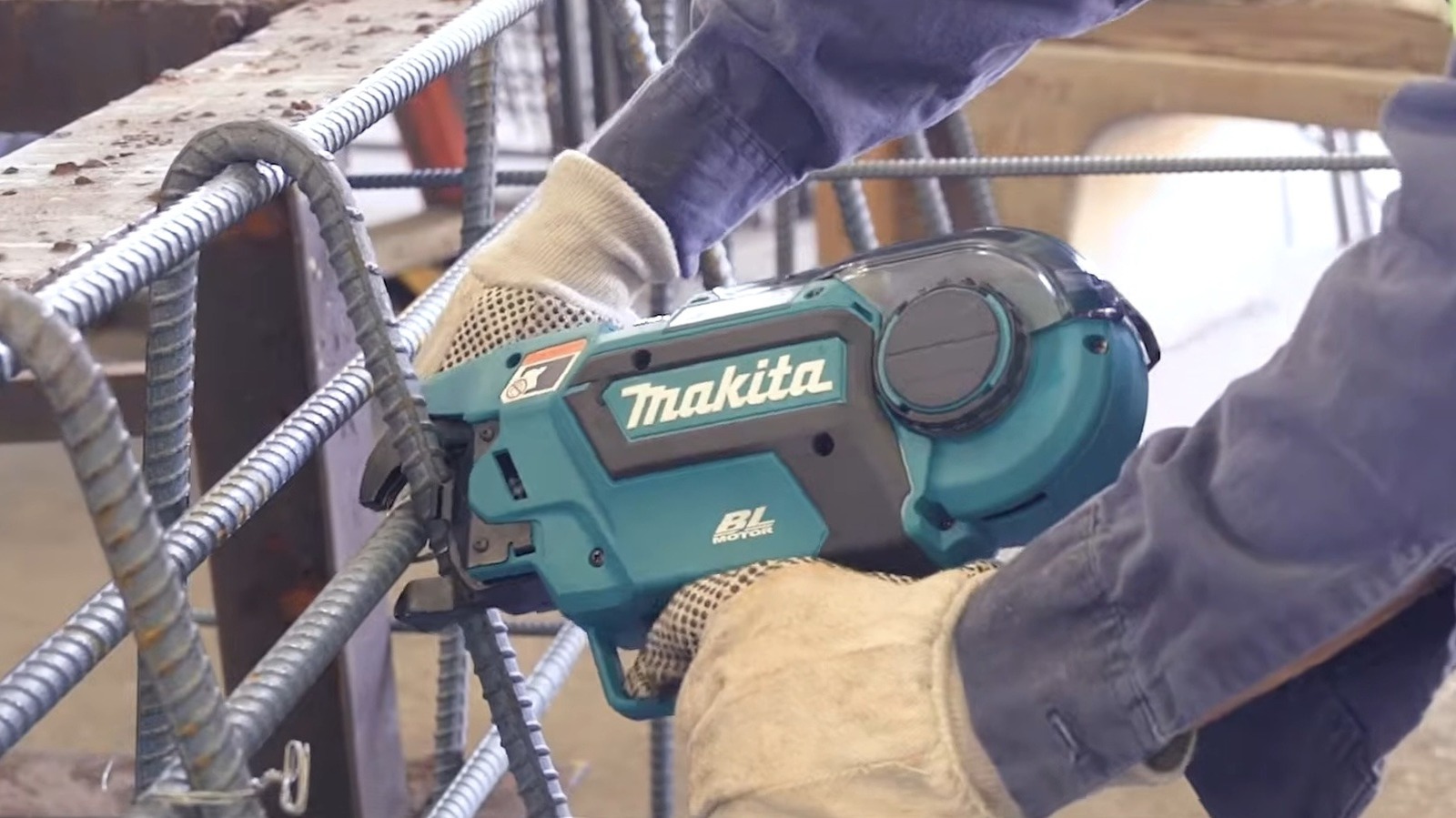
Makita offers several different battery systems for cordless tools. It has a small 12V system called CXT for compact handheld tools. There’s the 40V XGT system for larger, mostly outdoor tools. For its largest system, there’s ConnectX, which is designed for commercial tools. In the middle of it all is probably Makita’s most versatile and common system: the 18V LXT system. With these batteries, you have the ability to power everything from a drill driver to a lawn mower.
The LXT line doesn’t conform to one thing, though. LXT-branded tools come in three different categories. There are the LXT X2 tools that require two 18V batteries to properly power the tool, but the bigger difference is between LXT Premium and LXT Sub-Compact tools. Both use the same 18V LXT batteries, but there’s a clear difference between them — mostly, it comes down to size.
Advertisement
Makita designs the LXT Sub-Compact tools to resemble the feel of holding a smaller tool that would normally only use a 12V battery, but it has the performance of a tool that has an 18V battery. Despite the “Premium” in the name, LXT Premium tools are Makita’s name for its standard 18V tools. The two lines share many tools, whether it’s a drill/driver or a circular saw, so with a Sub-Compact model, you’re essentially getting a smaller version. You can easily tell the difference because LXT Premium tools’ primary color is Makita’s signature teal, while LXT Sub-Compact tools are primarily black. While size may be the main difference, you can see more discrepancies if you look at the details of each tool.
Advertisement
An LXT Premium and Sub-Compact tool-to-tool comparison
To see how the LXT Premium and LXT Sub-Compact lines differ, compare and contrast an equivalent tool from each line. A great test case is one of the most common tools out there: a cordless half-inch drill/driver. The LXT Premium tool is 6-7/8 inches long and weighs 4.65 pounds, which includes the weight of a battery. Meanwhile, the Sub-Compact version of this tool is 5-7/8 inches long and weighs only 2.9 pounds with a battery. While that may be much easier to hold, it delivers far less power.
The Sub-Compact drill/driver can generate 350 in.-lb. of maximum torque. That’s paltry compared to the whopping 970 in.-lb. of maximum torque achieved by the Premium model. Both drill/drivers have two variable-speed settings, but the Premium maxes out at 550 and 1,800 RPM, while the Sub-Compact gets to 500 and 1,700 RPM. In terms of how far it can actually drill into a particular material, the Sub-Compact can get up to 1-7/16 inches into wood, but the Premium can get a full two inches. Where they come out on the same level is with steel, each offering a half-inch drilling capacity.
Beyond the tools themselves, there’s also the price difference. Because they’re smaller and less powerful, the LXT Sub-Compact tools cost less than the LXT Premium ones. With these drills, the Sub-Compact model goes for $139, with the Premium one retailing for $159. It’s up to you to determine whether you want a lighter, less expensive option or a more powerful one.
Are AI chatbots quietly shaping the perceptions of U.S. voters? Voters trying to educate themselves about candidates “are unknowingly being served partisan talking points in the guise of neutral news summaries,” write two news researchers in Politico magazine:
Leading AI chatbots cite partisan websites masquerading as independent local news outlets nearly half of the time when people ask about candidates and issues that the partisan sites have covered in the midterm campaign, according to a new audit by NewsGuard, an organization focused on news reliability where we work as analysts… NewsGuard prompted seven leading AI tools with queries based on recent coverage of candidates and issues by 12 pink slime sites — six left-leaning and six right-leaning. The results were stark. Collectively, the chatbots cited pink slime sites along with other sources in 48.2 percent of their responses.
In 7.7 percent of responses, pink slime sites were the only sources at all that were cited in chatbot responses, although other sources appeared in the source list provided at the end of the response.
None of the AI tools received results they’d probably be eager to boast about, though the percentage of chatbots’ responses that cited a pink slime site had a relatively large range: 70.8 percent for OpenAI’s ChatGPT, 54.2 percent for Microsoft’s Copilot, 54.2 percent for Perplexity, 50 percent for Anthropic’s Claude, 41.7 percent for Google’s Gemini; 37.5 percent for Meta AI and 29.2 percent for xAI’s Grok… The seven chatbots were also collectively three times more likely to cite left-leaning pink slime sites (cited in 36.3 percent of responses) than their right-leaning counterparts (cited in 11.9 percent of responses) — though that may have more to do with the progressive sites’ far more frequent posting than any political bias from the chatbots.
Advertisement
“While citing the pink slime sites, only one chatbot response out of 168 total queries noted the partisan nature of the source,” the article points out.
But they also note that the real problem seems to be that consumer-oriented AI chatbots just “use much of the internet’s content — regardless of the reliability or standards of the source — to frame their answers.”
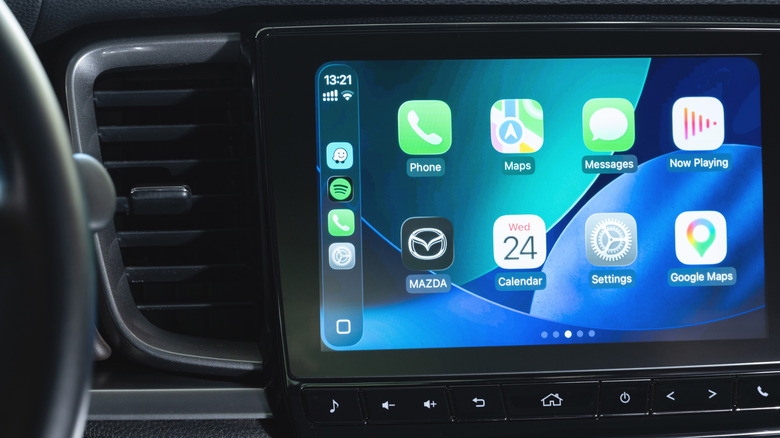
A few tricks provide a seamless Google Maps experience in your car with CarPlay.
Chinnapong/Shutterstock
Apple Maps has improved a lot since its troubled launch, but many people still prefer Google Maps. That could be because of the traffic data, better business listings or just out of habit. The good news is that you can use Google Maps in Apple CarPlay just like any other supported app.
Apple has always been restrictive when it comes to changing the iPhone’s default apps. In the EU and Japan, local regulations allow you to choose your favorite navigation app as the default. This means when you ask Siri for directions or tap an address, your iPhone and CarPlay will use your preferred app instead of Apple Maps. If you’re in one of these regions, you’ll find this toggle in the Default Apps menu on your iPhone, located under Settings > Apps. Select Google Maps as your default maps tool there for the best experience.
Otherwise, Apple Maps will remain the default navigation app on CarPlay, but there are a few tricks you can use to improve your navigation experience with Google Maps in your car. While it’s not particularly smooth, one of the easiest is adding “on Google Maps” to the end of Siri requests in the car to avoid Apple Maps opening by default.
Advertisement
Adding Google Maps to your CarPlay Home Screen
PixieMe/Shutterstock
If you’re outside the EU and Japan, there are still ways to use Google Maps in CarPlay more seamlessly. One is to place Google Maps on the first page of your CarPlay Home Screen: in your iPhone’s Settings, go to General > CarPlay. Choose on your car and select Apps. Here, you can rearrange the order in which apps appear on your Home Screen — just drag Google Maps near the top and it’ll be one of the first apps you see in your car.
If Google Maps isn’t showing up on CarPlay at all, this is the first place to look. Of course, you’ll need to download Google Maps to your iPhone from the App Store first (among the dozens of CarPlay apps available). Scroll to the bottom of this menu and tap the green Plus icon to add it if needed.
Adding Google Maps to your CarPlay dashboard is another method to reach it faster. Instead of looking for the app every time, you can add a widget for quicker access. Go back to CarPlay’s settings on your iPhone, but this time, tap Widgets instead of Apps. There, find and add a Google Maps widget.
Advertisement
Some cars also offer a split-screen CarPlay dashboard, accessible by swiping right to the leftmost panel. This usually includes a mini-map. Start a route in Google Maps once, and it should take over that panel from then on.
Other tricks for fast navigation
PixieMe/Shutterstock
There are other best practices within the Google Maps app that will make navigation easier on CarPlay. Adding your home and work addresses is a good first step, so you can start common routes with a single tap.
To configure these, open Google Maps on your iPhone and tap your profile picture at the top-right. Then go to Settings > Location & privacy. Scroll down until you find Home and work addresses. Select this, then use the three-dot menu for each option to add or adjust it as needed. They’ll be waiting for you on CarPlay.
Advertisement
When going on a long trip, having offline maps downloaded is important, especially to avoid problems if you lose your cellular connection. Again in Google Maps on your iPhone, tap your profile picture and select Offline Maps. Choose the areas you want to keep downloaded for navigation without an internet connection. It’s a good idea to download these maps using a Wi-Fi connection, since maps of large cities can use a lot of data.
You can also change how the map looks. Tapping the compass button switches between north-up and heading-up, and the day and night themes can be set to change automatically if you visit Settings > Appearance in CarPlay. Don’t forget to change other important CarPlay settings, too.
The speed that computers have gotten smaller is a bit mind-bending. Most of us now walk around with computers in our pockets that would have rivaled the supercomputers from a few decades ago. And, although it seems like the speed at which things are getting smaller and faster has slowed a bit compared to the rapid pace of the 90s and 00s, some truly minuscule computers are accessible nowadays. So much so that it’s possible to do useful computing inside a walnut shell.
The first step in this build is to crack into a walnut. Most have a natural seam that separates two hemispheres, so splitting it open, enjoying a small snack, and then adding some small neodymium magnets on the inside of that seam to close up the shell is not too difficult. From there, some LEDs were installed at various points in the shell, with an ESP32-C3 installed in the middle to control everything and oriented so that its USB port is still accessible.
Although putting a small microcontroller in a nutshell might seem like a novelty, [JSK-koubou] is actually using the LEDs to perform a useful task. The walnut sits in his living room and connects to a home automation system through the ESP32, and when it receives a command it uses the LEDs to send infrared signals to non-connected devices. Hiding projects in unexpected places is a fun pastime, like this Meshtastic node hidden in a landscape light.




































































You must be logged in to post a comment Login