
Tech & AI
Added-Lane Vs. Merge Signs: The Difference Drivers Miss



Road signs should be very distinct from one another, but some signs out there look somewhat similar. One such example of this is the added-lane sign and the merge sign. Both of these are yellow, diamond-shaped signs to signal a warning to drivers, and they feature an arrow pointing up with another line curving to point up as well. With a merge sign, the curve line folds right into the main arrow, but with the added-lane sign, it’s its own separate arrow that runs parallel to the main arrow. Plus, there will be a dotted vertical line between the two arrows.
The merge sign is signaling to drivers that two lanes of traffic are about to combine into a singular lane. The added-lane sign, on the other hand, is signaling that a separate lane of road will be joining the flow of traffic. This may seem self-explanatory, but there may be instances where drivers are confused by road signs or misjudge what’s expected of them when they see these signs. This falls on drivers on both the road going straight and the road joining it, whether merging or not.
In the case of added-lane signs, there are some drivers who see this as a merge sign. Roadway joining drivers immediately try to move into the main road lane, while the other drivers have the right to maintain exactly how they’ve been driving. The opposite is true, too. Some main road drivers may try to move into the adjoining lane too soon and dangerously pull in front of those drivers. When you see this sign, expect to stay in your own lane for a little bit before trying to switch lanes.
The many mistakes of merging

Drivers who are merging onto the main road don’t have the right of way. You must adjust to the rhythm of the flow of traffic, not the other way around. This is why there will often be yield signs at the merge point as well. Mergers also need to be aware of how much roadway there is to merge. Sometimes there are signs that read “No Merge Area,” meaning there’s no buffer; if you’re merging, you must do it immediately. It’s also important for merging drivers to speed up to meet the speed limit as they enter the main road, so as to not disrupt the flow of traffic. Mergers must always use their turn signals, arguably the most important action of all.
There are things drivers on the main road need to keep in mind here, too, as just continuing forward without a care because you have the right of way is dangerous. If possible, give room to those who are merging. You can do this by switching lanes to open up space on the road, but if that’s not possible, it’s good to adjust your speed a bit to best find a way for the merging driver to get in behind or in front of you.
Another important thing to remember is if traffic is backed up and moving slowly, don’t use the merge lane to try and get around that standstill traffic. This is both incredibly dangerous and could result in fines and/or citations, depending on where you live. Merging is one of the trickiest parts of driving, so minimizing its risk is always a good thing.

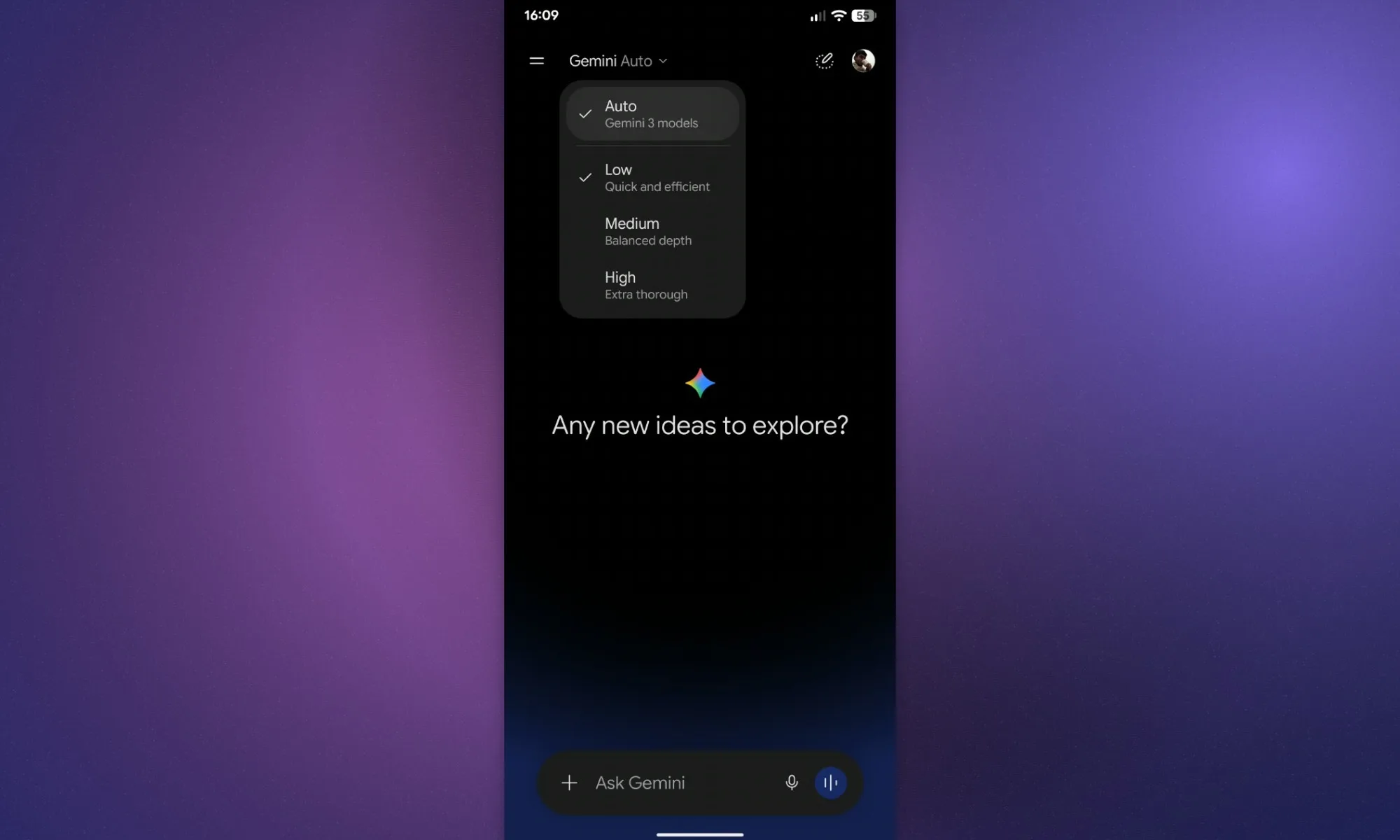
The downgrade Google announced last week is now starting to show up on free Gemini accounts. The old model picker is disappearing, leaving a single Auto option in its place. Instead of deciding whether to use Flash, Pro, or another available model, free users now hand that choice over to Google.
Auto will handle most everyday prompts with Flash-Lite. If Gemini decides a request needs more reasoning, it can move the task to Flash or Pro on its own. There is one important catch, though. Turning off smart model selection means every response falls back to Flash-Lite, so the only way free users can reach stronger models is by letting Google make the call (via 9to5Google). Google is giving people another kind of control at the same time, but it works very differently from choosing a model yourself.
Google is giving users effort controls instead
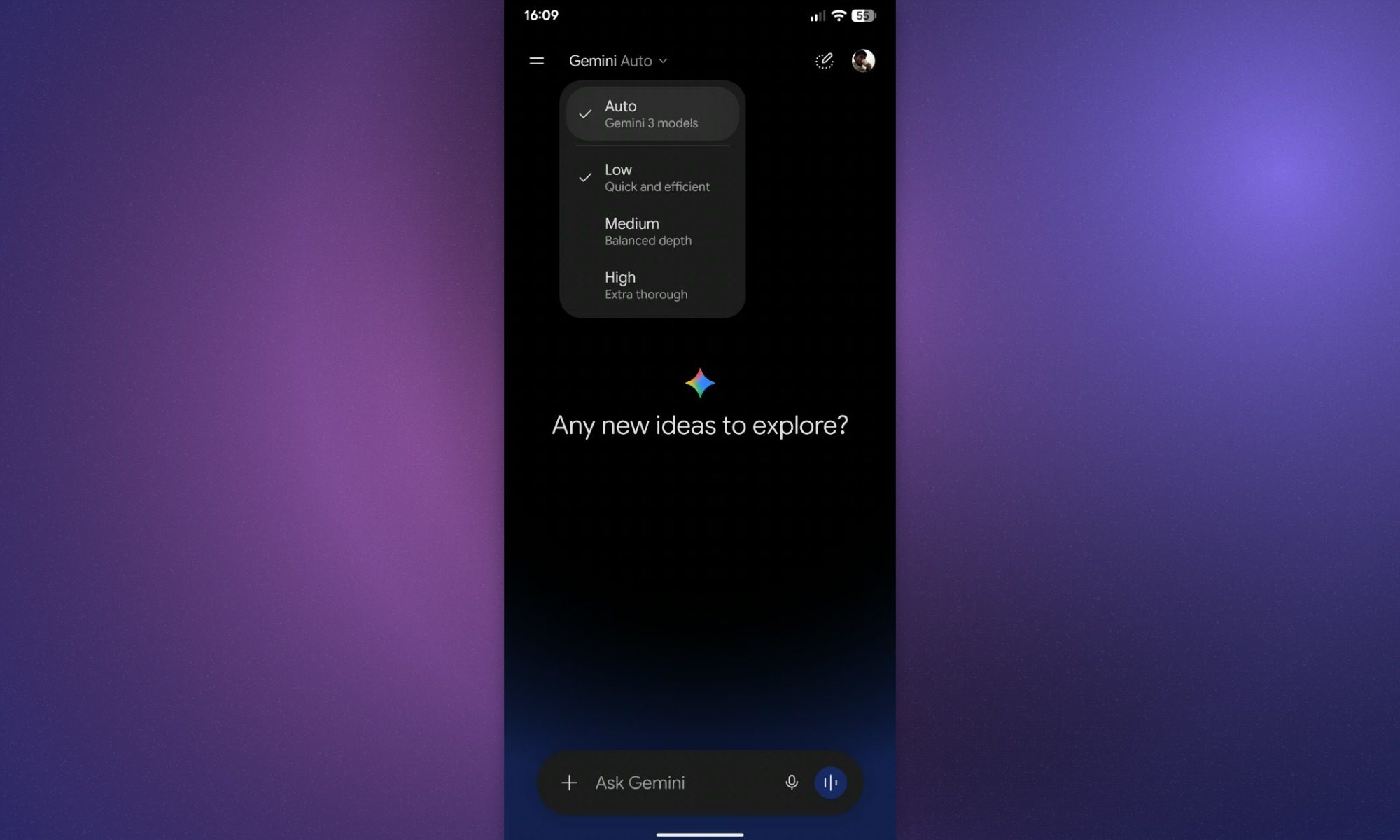
Low, Medium, and High effort levels are rolling out across Gemini, replacing the previous Extended option. Low prioritizes speed, High gives the system more room to work through difficult prompts, and Medium sits between the two. The result is a slightly odd split in how much control free users actually have. They can choose how much reasoning they want Gemini to apply, but the model doing that work is now largely out of their hands.
Gemini is becoming harder to use without paying

Google has been pushing Gemini deeper into its hardware and software ecosystem. The new Pixel phones already have a boatload of AI features, and now the new Googlebook laptops, which put Gemini at the center of the experience, have also arrived. The company is also bundling paid AI plans with some of that hardware, and of course, once you get used to these more capable models, you will feel the difference when you switch back to the free tier. Google has not said the change is meant to push free users toward a subscription. Still, taking direct model choice away gives paying customers another clear advantage.

Phoronix reports on a presentation this week by Meta engineer Gregory Price at the Linux Plumbers Conference in Prague:
With today’s memory shortages, high prices, and ever increasing memory capacity needs, Meta engineers have been working on Compressed RAM (“CRAM”) for Linux.
This hardware-offloaded compression still allows cacheline/byte access to compressed memory and in turn a better implementation than the likes of ZRAM and Zswap. Very promising is that there is near-native performance to raw DRAM speeds with CRAM… For end-users that may already be relying on the likes of Zswap or ZRAM, CRAM is offering near-native DRAM speeds. Read-only data is shown to be as fast as the raw DRAM performance. And for memory writes, CRAM is much faster than ZRAM or Zswap or plain swap.
“Most of the individual pieces needed to support CRAM are already mainline,” the article points out.
Tom’s Hardware writes that “It uses a private NUMA node (essentially, a ghost CPU) instead of pretending to be a block device, and this lets Linux continue using all of its memory semantics, including migration and ballooning, to manage CRAM.”
Because CRAM is stored in RAM and treated as RAM, with full cacheline/byte access, it can be accessed in a read-only fashion with little delay; just the cost of hardware-offloaded compression…
Even when you enable writes, CRAM is still much faster than ZRAM; 5.4x in the worst tested case of 20% writes. That’s a huge drop from the 452x read-only case, but keep your context; a 5.4x speedup is still titanic. The massive performance cliff when writes are involved comes down to the need to page fault and migrate folios back to the original NUMA domain, as you can’t write directly to compressed data; you’d corrupt everything…
While the obvious target of the work here (given its origin at Meta Platforms) is big Linux servers, ZRAM and Zswap are used all over the Linux ecosystem, even on machines as constrained as the Steam Deck. Many distributions enable one or the other by default. CRAM seems like it could offer a considerable speed-up for some of these machines, so hopefully it finds its way into the kernel once the remaining implementation questions are answered.


Read more of this story at Slashdot.
Tech & AI
A Grief-Stricken Road Trip, The Traitors On The Go And Other New Indie Games Worth Checking Out


Forever Ago
Developer: Third Shift
Publisher: Annapurna Interactive
Platforms: Steam (Windows; Steam Deck Verified), Epic Games Store, PlayStation 5, Nintendo Switch 2, Xbox Series X/S, Xbox for PC
Price: Usually $20, with a 10 percent launch discount (PS Plus required for the PS5 discount). Also available on Game Pass Ultimate and PC Game Pass
There are several aspects of Forever Ago that didn’t totally work for me. The storytelling is occasionally clumsy and it’s sometimes functionally clunky. For instance, prompts to interact with items tended to disappear and it often took a few moments of adjustment for them to pop back up. But despite these issues, I feel like I was supposed to play this game right now.
Forever Ago is a road trip adventure that tells the story of Alfred, an older man who’s on a scavenger hunt of sorts. It factors in several of the places and memories that shaped his relationship with his late wife, Audrey, who set up this quest for him. As you might imagine, things don’t really go according to plan. It’s a tale about dealing with grief, discovering one’s self after losing a defining part of their life and the incessant march of time. You’ll explore, take photos, do some light puzzle solving and meet other characters.
The story is affecting (if not particularly novel) while the writing and Piotr Michael’s portrayal of Arthur make it easy to sympathize with this abrasive, struggling character. Clark Aboud’s lovely score even helped me get that one Bon Iver song the title references out of my head.
What strikes me the most about Forever Ago is its slow, deliberate pace, even if it’s not particularly long. My mind is often racing at 100 miles an hour and distractions snatch away my attention more often than I’d like. Forever Ago was absorbing enough to capture my full focus. Most importantly, it feels honest and sincere. I found it soothing and had to sit with my thoughts for a while after finishing it, which means it achieved what the developers intended.
The Traitors: Interactive Game
Developer: Fusebox Games
Platforms: iOS, Android
Price: Free, with in-app purchases
Despite my best intentions, I am hooked on the latest season of The Celebrity Traitors. I am generally terrible at social deception games since I’m a rotten liar so, as with the aforementioned Among Us spinoff, a single-player spin on the format could be fun.
The action plays out in similar fashion to the show. The aim is to survive until the end of the game, either as a Faithful or Traitor. After picking a character trait, you’ll choose daily outfits, tackle missions to increase the prize pot, forge alliances with other characters and either try to vote out Traitors or eliminate Faithfuls. I don’t love that there are microtransactions here, but I’ll still give it a go.
Shil
Developers: OSM Games, Nuostabūs Žaidimai
Publisher: OSM Games
Platform: Meta Quest. Coming to Steam later
Price: $15
The last time I heard about this trippy-looking puzzle platformer, back in May, it was supposed to be hitting Steam and VR next year, but it’s already out on Meta Quest. The developers used silhouettes and a two-tone art style to create some striking visuals that mask secrets and threats.
The latest trailer for this horror-inflected game is almost enough to make me want to snap up a Quest headset so I can play it now. Maybe the Steam version (a release date for which is said to be coming “very soon”) will prompt me to finally hook up the PS VR2 adaptor that’s been next to my PC for over a year.
Echo Weaver
Developer: Moonlight Kids
Publisher: Akupara Games
Platforms: Steam (Windows, Mac; Steam Deck Verified; demo available), Xbox Series X/S, Xbox One, Xbox for PC, PS5 (with a one-hour trial for PS Plus Premium members), Switch 2
Price: Usually $20, with a 10 percent discount on Steam until October 22. Also available on Game Pass Ultimate and PC Game Pass
In similar fashion to my favorite game from last year, a “Metroidbrainia” called Öoo, you’ll need to have your thinking cap on while playing Echo Weaver. Unlike in many Metroidvanias, your progress here is gated by your knowledge rather than unlockable powers. You’ll start with all of the abilities you need to beat the game, but it might take you a while to figure out what they are and how to use them.
You’ll also need to conquer a time loop. Here, time is a resource you can consume to heal, trade and even open up new routes. I’m into the art direction of this game, and I always enjoy having a glaive as a weapon. This particular one has reality-bending powers, which makes it even more appealing. While I may sometimes struggle with puzzles, there’s little I like more in games than that “a-ha!” moment when you hit upon a solution. Echo Weaver seems like it could have quite a few of those.


Today’s engineers face an unprecedented acceleration in AI hardware complexity, as explained in the recent research article “Revisiting Edge AI: Opportunities and Challenges.” The article examines the rapid growth of edge AI and the challenges it creates, including resource constraints, model architecture limitations, and network demands across edge-AI deployments.
The acceleration is driven by a fundamental shift in how modern AI models are built and scaled. As the models have become much larger and more complex, they are computationally more demanding because they contain more parameters and require more calculations.
To meet the demands of scaling deep neural networks, the industry is increasingly developing AI chips that are designed for specific tasks.
One major reason is that moving data between memory and the processor has become a major limitation on AI performance.
The movement to confront the hardware bottleneck—the AI memory wall—has altered the trajectory of semiconductor innovation, shifting architectural priorities toward domain-specific accelerator platforms.
No longer can engineers evaluate systems statically; they must master joint hardware design and network-algorithm co-optimization to navigate the critical trade‑offs between throughput, latency, and operational efficiency.
The challenges are addressed in the new AI Processor Architecture, Design Principles, and Performance program, developed by IEEE Educational Activities with support from the IEEE Computer Society.
Topics covered
The five-course program provides a structured exploration of AI processor technologies, from fundamental design principles to advanced architectures and real-world deployment.
The topics are:
- Fundamental principles of design and functionality.
- Practical insights into advanced architectures.
- Understanding neural processing units for industry deployment.
- Emerging trends and evolving architectures.
- Designing for edge, cloud, quantum, and the Internet of Things (IoT).
The program addresses the needs of professionals across the AI hardware ecosystem, including hardware architects, chip designers, embedded systems developers, data‑center hardware engineers, and innovators exploring next‑generation processor ecosystems.
It is also valuable for those transitioning into AI chip design or seeking to understand the architectural forces shaping modern machine learning acceleration. For many, it provides the bridge between theoretical knowledge and the collaborative, cross‑disciplinary reasoning required in engineering environments.
The program is designed to explore how modern AI processors are conceived, structured, and optimized. The architectural layers that define contemporary AI hardware will be covered, including compute units, memory hierarchies, dataflows, and the performance characteristics that emerge from design decisions. The curriculum bridges theory and application, enabling participants to interpret architectural foundations, analyze trade‑offs, and understand how hardware structures shape computational efficiency across diverse environments.
By the end of the courses, learners will be able to evaluate processor behavior with the analytical precision expected of professionals working at the frontier of AI hardware design.
AI-generated avatars explain concepts
The program also uses a dialogue‑driven learning approach. Learners view conversations between AI-generated avatars that engage in scenario‑based dialogues. The avatars represent engineers tackling the same problems from various perspectives based on their different roles. The simulated storytelling and dialogues make advanced engineering concepts approachable without sacrificing depth or interactivity, because the user is occasionally challenged to decide the correct answer that leads to the best course of action.
A hardware engineer might push back against a systems engineer’s demands, for example, revealing the friction between physical constraints and algorithmic ambition. A computational validation specialist might interrogate a chip performance engineer’s optimism, exposing the gap between theoretical throughput and real‑world behavior. A heterogeneous systems architect could debate a multiprocessor coordination specialist about synchronization overheads, while a standards development engineer discusses regulatory implications with a technology strategy and compliance architect.
In the final course, an IoT systems architect and an embedded AI optimization engineer dissect the realities of deploying AI in constrained environments.
By the end of the course, learners will be able to evaluate processor behavior with the analytical precision expected of professionals working at the frontier of AI hardware design.
The avatar-driven learning environment creates a psychologically safer environment for learners, who might feel intimidated by traditional expert‑led videos. Research published in 2024 in IEEE Transactions on Learning Technologies showed that avatar‑based instruction can increase a learner’s confidence by up to 25 percent and improve retention of complex technical material.
Each course concludes with a module in which the two experts from different disciplines debate, question, and challenge each other’s assumptions.
Modeling expert reasoning through dialogue
The cross‑disciplinary conversations can do more than explain concepts; they can model how experts think. They can reveal the negotiations behind architectural choices, the competing priorities that shape system design, and the analytical rigor required to balance performance, efficiency, scalability, and compliance.
Learners observe engineering discourse, gaining insight into the reasoning patterns that drive innovation in AI processor development.
The program goes further by interrupting the dialogue at key moments and inviting the learner to step in. Instead of passively absorbing information, the learner decides how to resolve a trade‑off, predict the outcome of a design choice, or select the most defensible engineering path. The experience can feel less like a course and more like an apprenticeship inside an engineering team.
By merging rigorous technical content with an innovative, dialogue‑driven delivery model, the program sets a standard for teaching advanced engineering. It captures the complexity of real‑world problem‑solving, humanizes the learning experience, and challenges participants to think like the engineers who are defining the future of AI hardware. It is not simply a new course; it is a new way of learning.
For individual access, visit the IEEE Learning Network.
For customized organizational options, contact a content specialist to discuss volume pricing.
From Your Site Articles
Related Articles Around the Web


Records from US and international patent offices reveal that Meta has purchased 419 patents covering head-mounted displays, XR glasses, and VR tracking technologies developed by Sony between 2010 and 2022. The deal suggests an abrupt change of heart at Sony, whose senior VP, Eric Lempel, claimed in 2024 that VR…
Read Entire Article
Source link
Tech & AI
The INIU Outdoor Rugged Series Steps Off the Grid With a Power Bank That Is Fast, Tough, and Built for the Wild

When you think about a simple weekend getaway or a hike, everything eventually comes down to power. And it is tough when, by day two of a backcountry route, your phone battery is down to a single bar and the trail ahead is longer than planned.
It is a familiar moment for anyone who likes to spend real time outdoors, and it is exactly the scenario INIU Outdoor built its new Rugged Series around.
Answering the call of the wild, INIU introduces INIU Outdoor, a new product line built to survive real-world field use. The debut Rugged Series includes the Rugged 10000 and 20000 power banks, plus a Solar Panel 28W. INIU Outdoor claims this is the first professional-grade power ecosystem to successfully marry extreme durability, like IP67 dust and water protection, with fast charging, built-in lighting, and a genuinely compact, lightweight design ready for any gear loadout.
Bridging the Gap Between Rugged and Portable

Anyone who has shopped for a rugged power bank knows the trade-offs that usually come with the category. Most competitors lean heavily into one strength, such as rugged modularity, ultralight portability, or pure durability, while cutting corners on charging speed, weight, capacity, or protection elsewhere. INIU Outdoor is positioning the Rugged Series to close that gap with a more carry-friendly, outdoor fast-charging solution.
Backing up that claim, the Rugged Series combines IP67 protection and 1.2-meter drop-tested durability with up to 65W fast charging. Rather than using bulky hard plastic, INIU Outdoor opted for rounded, silicone-armored bodies that are comfortable to carry and prevent scratches to the rest of your gear. They are also genuinely lightweight, with the Rugged 10000 weighing just 195.7 grams and the larger 20000 coming in at 353.2 grams. While the 65W output handles power-hungry devices like lightweight laptops and drones, an Automatic Low-Current Mode safely adjusts the charge for smaller essentials like earbuds without risking battery damage.
Designed with the Outdoors in Mind

Off the grid, the Rugged Series functions as a cohesive outdoor ecosystem rather than just a battery. Each unit features a built-in light with three distinct settings: a steady white light for setting up camp, a steady red light to preserve night vision, and a flashing red light for emergencies or group visibility. Moreover, a convenient D-ring attachment lets you clip the power bank directly to your pack, and a standard 1/4-inch, 20-thread makes it compatible with tripods, camera mounts, and other gear you already carry. INIU Outdoor describes the overall design as refined and practical without compromise.
For longer stints in the wild, the Solar Panel 28W pairs directly with the power banks to harness sunlight when outlets are not an option. Rounding out the ecosystem, INIU Outdoor backs the lineup with 18-layer safety protection and a 5-year warranty, positioning these units as long-term investments compared to more disposable charging gear.
Does the Rugged Series Belong in Your Kit?

INIU Outdoor is already establishing its outdoor credibility as the official power partner of the American Hiking Society and through a new partnership with Strava. But after all the attention we have drawn to its heavy-duty specs, this new lineup is not aimed solely at seasoned professionals. While the core audience includes guides, photographers, long-distance cyclists, and frequent backpackers, the brand is also positioning it for casual campers, remote workers, and anyone who wants dependable backup power for travel or home emergencies.
As for the rollout, the Rugged 10000 launches on October 9, 2026, with the Rugged 20000 following on November 1, 2026.
Ultimately, at the trailhead with a gear checklist in hand, INIU Outdoor bets on its Rugged Series as the one item no longer in question, ensuring you stay powered up from the very first step to the final mile.
Digital Trends partners with external contributors. All contributor content is reviewed by the Digital Trends editorial staff.
Reuters reports:
Flock plans to let go of about 18% of its employees, people with direct knowledge of the plans said on Thursday, as the maker of AI-powered surveillance cameras and license-plate readers faces mounting opposition to its products from communities and lawmakers….
The company has about 1,500 employees [with job cuts hitting 270 employees]. Flock faces growing scrutiny from regulators, lawmakers, and privacy advocates, despite drawing strong investor interest among venture capitalists. A recent Reuters/Ipsos poll showed Americans are divided on whether Flock cameras are a good idea. Some 38% of the country supports the use of Flock cameras in their community, compared to 47% who oppose their use.
A related story… In Texas this week a county commissioner decommissioned all 61 of their Flock surveillance cameras and license plate readers, according to a local news report. County residents “have raised serious questions about who can access this data, what vendors can disclose, improper searches, and records being kept after data expires,” the precinct’s Chief Public Affairs Officer said.
Read more of this story at Slashdot.

Mike Flanagan is a busy man. Just this week, his TV series remake of Stephen King‘s horror classic, Carrie, premiered on Prime Video. Clayface, the body-horror movie inspired by the DC Comics character, for which he cowrote the script, hits theaters on Oct. 23.
Now, he’s onto promoting his next completed project, The Exorcist: Martyrs, a film he called “the scariest movie I’ve ever made,” while at Friday’s Blumhouse panel at New York Comic Con.
If you’ve been keeping track, Flanagan’s name has been attached to the iconic horror franchise, which began in 1973 and is based on the William Peter Blatty novel of the same name. Since Linda Blair terrified audiences as the demon-possessed young girl, Regan MacNeil, the movie series expanded. There have been sequels, a prequel and even a short-lived TV show.
In 2023, David Gordon Green attempted to reboot the franchise with The Exorcist: The Believer. Now, it’s Flanagan’s turn.
The Exorcist: Martyrs gives a new spin on the Exorcist canon and injects a Minderhunter-style serial killer narrative element into the mix. If you watched the TV series I mentioned above, you’ll notice a similar procedural vibe in the brand-new trailer that dropped during the panel. And if you’re an Exorcist III stan, I’m sure you’ll be happy with the just released clip, as it’s got that similar brooding feeling here.
The Exorcist: Martyrs stars Scarlett Johansson as an NYPD detective tracking a serial killer named Father Sunday (John Leguizamo), who uses Catholic iconography in his kills. Chiwetel Ejiofor, fresh out of The Backrooms, also stars in the film, opposite Laurence Fishburne, Sasha Calle and Jacobi Jupe.
If you’ve been yearning for the Mike Flanagan era of Oculus and The Haunting of Hill House, The Exorcist: Martyrs feels like the filmmaker is back in his terrifying groove. While I’m still waiting for his adaptation of Stephen King’s The Dark Tower to see the light of day, this will have to do.
The Exorcist: Martyrs premieres in theaters on Friday, March 12, 2027.


When Jeff Bezos sat down on Blue Origin’s Cape Canaveral factory floor for an interview with Fox News’ Bret Baier earlier this week, he laid out an unapologetic defense of free enterprise and wealth creation.
“Success is not villainy,” Bezos said.
The Amazon founder’s point was simple: building a massively successful enterprise isn’t something society should apologize for or view with suspicion, it’s the natural result of creating something people actually want.
“There’s nothing wrong with making unbelievably good chicken that people love,” Bezos said, referencing the growth of Raising Cane’s and why restaurant entrepreneurs deserve their wealth. “And it doesn’t make him a bad person.”
Bezos, who stepped down as CEO of Amazon in 2021 and left Seattle for Miami in 2023, is currently the second richest person in the world with an estimated net worth of $380 billion, according to Forbes.
Bezos and Amazon transformed the Seattle region. The company now employs roughly 50,000 corporate and tech workers in the Puget Sound region, divided between its primary headquarters in Seattle and its growing operational footprint in Bellevue.
And his recent comments come at a key moment for Washington state, where voters will decide on Initiative 645 — a high-profile ballot measure aimed at repealing the state’s recently enacted high-earner tax and prohibiting future income taxes.
Bezos, along with other business leaders like former Starbucks CEO Howard Schultz, have claimed that scapegoating wealthy entrepreneurs risks driving away innovation. Bezos argued that politicians targeting business leaders are misdiagnosing the problem, noting that while affordability and social challenges are real, heavy-handed government interventions often fail to solve them.
“If there’s a politician who’s picking villains and pointing fingers, that probably means they don’t have a solution,” Bezos said. He noted that executives who relied on blame-shifting inside his own companies “wouldn’t be in our company for long.”
Watch the full interview below where Bezos also discusses the impact of AI on jobs, the need to beat China in the race to the moon and orbital data centers in space. The portion of the interview where Bezos notes that “success is not villainy” starts in minute 16.

The new office will be Revolut’s first permanent base in Singapore
Revolut will open a new office at Collyer Quay Centre, a mark of its expansion plans in Singapore and the region, the London-headquartered fintech company said on Oct 8.
It will also invest nearly S$350 million in Singapore over the next five years, spanning product innovation, business growth and the expansion of its local workforce.
The new office, occupying 8,880 sq ft on the ninth floor of Collyer Quay Centre, is slated to open in early 2027, with the company’s name displayed on the building. Revolut currently operates out of co-working space WeWork at Funan.
In an interview with The Business Times, Revolut Singapore and South-east Asia chief executive Raymond Ng said the move reflects the company’s intention to deepen its local roots.
“It’s a very significant moment for us,” he said. “Having our own office and our own logo… signals to the local authorities and users that we are going to be deeply rooted in this market.”
He added that the Singapore base will serve as a launch pad for Revolut’s broader Asian ambitions, supported by a favourable regulatory environment and a deep talent pool.
The move comes after the close of a secondary share sale in Sept 2026, which sources said valued Revolut at US$115 billion (S$147 billion), unchanged from its valuation after a Jul secondary sale and up from US$75 billion (S$96 billion) in 2025. The company’s pretax profit for 2025 was £1.7 billion (S$2.8 billion).
“From our Singapore base, we will drive our regional expansion efforts across Asia,” Ng said. “We want to be their daily app, not a travel app, because our ultimate aim is to be all things money to our users.”
More local jobs to be created
Revolut, which entered Singapore in 2019, now employs nearly 170 people here, but plans to grow its headcount to more than 300 over the next three years.
The firm has nearly doubled its Singapore headcount in 2025 and plans to hire more people across engineering, product, data and artificial intelligence.
“As we expand, we want to hire more Singaporeans and create more local financial leaders who can eventually form the next generation of senior management,” Ng said.
He told The Business Times that the company plans to keep its current workforce mix of 70% locals and 30% foreigners.
Pee Beng Kong, executive vice-president of the Economic Development Board, said Revolut’s near-doubling of its team and expansion of its product capabilities will “strengthen our fintech ecosystem and create valuable opportunities for local talent to develop skills and experience in a fast-growing sector.”
Staying ahead of rivals
In a crowded market of digital banks and multi-currency wallets, Revolut has been expanding its core offering from a travel-focused card into an everyday financial-management app.
When asked how it plans to stand out from competitors offering similar financial tools, Ng pointed to the company’s tiered subscription model, which bundles lifestyle and productivity perks directly into its financial services.
In Aug, Revolut launched a new top-tier subscription, Ultra, which the company said offers users S$10,000 in annualised lifestyle value through bundled partnerships.
“A lot of traditional financial institutions or fintechs focus on a single product, but we are building a financial super-app with lifestyle services embedded,” Ng said.
He added that Revolut is “one of the few companies in Singapore offering tiered products from free plans to paid subscriptions,” and that product design is guided by three questions: “Are we solving a consumer problem?”, “Are we delivering convenience?” and “Are we offering a great experience?”
In 2025, Revolut’s domestic transaction volumes in Singapore grew by more than 30% year on year and now account for nearly half of all user activity. Peer-to-peer payment volumes rose by almost 40%, while virtual card usage and the number of wealth and trading customers each grew by more than 55%.
Its business segment has also gained significant traction. The local business-customer base expanded fivefold in 2025, and between Aug 2025 and Aug 2026, corporate deposit balances and transfer volumes tripled, while merchant card-payment volumes surged tenfold.
Globally, the platform serves more than 80 million retail customers and 850,000 businesses, with operations in Singapore, Japan, India, The Philippines, Australia and New Zealand.
- Read other articles we’ve written on Singaporean businesses here.
Featured Image Credit: Revolut

Stephen King Officially Defeats Alan Ritchson’s ‘Reacher’ in 1 Week

Gemini’s free tier now forces users into automatic model selection

How the Fashion Industry Is Embracing Inclusive Hair Solutions


-

 Sports2 days ago
Saracens’ Venter Brands Premiership Rugby ‘Autocratic’ Over £5,000 Media Fine
-
 Entertainment2 days ago
10 Flawless Movies With the Cleverest Protagonists
-

 Sports2 days ago
Enzo Maresca all smiles as Man City return to training after guilty verdict
-

 Sports2 days ago
Southampton’s Eckert Spared Ban as FA Suspends Six-Week Sentence Over Spygate
-
 Sports2 days ago
Asiad selection row: Para-shooters allege corruption; PCI denies claims | Asian Games 2026
-

 Sports1 day ago
Multiple Power Four programs face College Sports Commission investigations over alleged NIL cap evasion
-

 Crypto2 days ago
Crypto.com Teams Up With Insilico Terminal to Give Traders Free Pro-Level Tools
-

 Sports6 hours ago
College Football Week 6 Bets: Three Picks for Saturday’s Biggest Games
-

 Sports1 day ago
Morocco and Senegal await AFCON final verdict after arbitration hearing – Sports
-

 Crypto18 hours ago
Mashinsky Accepts Lifetime Industry Ban and Up to $35 Million in Conditional Payments | The Defiant
-

 Tech & AI2 days ago
ICE Emails Discuss Using Palantir-Supported Tool to Investigate Voter Fraud
-
 Crypto10 hours ago
Robinhood Chain slowdown spreads from fees to trading as transactions fall 40%
-
 Crypto2 days ago
ESMA gives EU crypto platforms 3 months to drop non-MiCA stablecoins such as USDT
-

 Sports3 days ago
Harry Kane Ties Peter Shilton’s 125-Cap England Record in Wembley Win Over Czech Republic
-

 Sports12 hours ago
Saudi oil crisis affects Neom project, 2034 World Cup plans
-

 Tech & AI5 days ago
Common Mistakes You Should Avoid When Using Foldable Phones
-

 Sports2 days ago
Internationals make history with emphatic Bridges Cup win at Trump Turnberry | News
-

 Crypto2 days ago
Bitcoin ETF Outflows Hit $485M, Erasing October Inflows
-

 Sports18 hours ago
Eagles stars Barkley and Smith ruled out of London game against Jaguars
-
 Sports2 days ago
Arsenal statement adds to Man City misery after guilty 115 verdict
You must be logged in to post a comment Login